If you’re a CS student or a developer with two years of experience, you’ve probably worried about AI will replace Software Developers. Then it’s valid to worry about that. So, are Software Developers at risk? Some of them are, and it’s not the group most people assume.
Indeed shows software developer openings increased 11% yoy, marketing an increase faster than postings overall, with an April 2026 permanent software developer occupations higher than one year earlier. It still directs software developer work to rise 15% through 2034.
When postings rebounded, 71% of the increase came from senior roles. Indeed’s data shows senior postings up 13.5% since January 2025 while entry-level postings fell 6.3%. The profession isn’t shrinking. The door at the bottom is getting narrower.
Why Freshers Are Feeling It First
Stanford’s 2026 AI Index found that employment for Software Developers aged 22 to 25 has fallen nearly 20% since late 2022. The same report puts AI’s productivity boost in software development at 26%.
When you combine these two facts, the logic is apparent. The tasks that trained junior engineers — boilerplate code, fixing a few bugs frequently, test cases and little CRUD screens — are what AI tools are good at the most. One engineer can now cover more ground, thus a manager wonders whether they need to hire another fresher.
Take the exact percentages with some caution. Different studies measure different things and different time windows. Entry-level postings are down 28% from their 2022 peak and 6.3% since early 2025. The direction is consistent. The size of the drop isn’t.
Companies that rethink what a junior does, less typing code and more reviewing, testing and understanding systems, still want juniors. Companies that simply stop hiring are the ones driving the numbers down. What the IBM move suggests is that the job isn’t disappearing. It’s being redefined.
TCS, Infosys, HCLTech and Tech Mahindra have restarted or expanded fresher hiring for FY27, with an emphasis on AI/frontier-engineering skills. Accenture has pulled out of a custom-software-engineer role at least one time.
Writing code is turning into the cheap part. The real value lies in knowing whether the code actually works. Developers who analyze AI-mistakes that leave security risks, understand scalability issues in that code and align technical decisions with business goals. These tasks are much harder than simply writing a code.
That’s why senior demand is holding up. It’s also the awkward catch-22 for freshers: companies want judgment, and judgment normally comes from years of doing the work AI now handles.
What Indian Developers Should Do Now
You can’t out-type an AI tool, so don’t try. Here’s what moves the needle.
You want to build something that runs. If you have developed any tool that runs and deployed then its value is higher than any certificate on a side project that hasn’t been deployed. Hiring managers look for proof you can ship, debug, and not just recite.
Open AI tools use, and then begin to audit them. Develop code with them and then debug it. Interviewers are not less, but more concerned with you being able to avoid a bad suggestion.
The code itself is surrounded by so much. That is where design, databases, testing, cloud basics, and security play in where human judgment is still needed.
Aim at places that still train juniors. Agencies, product startups and firms with structured fresher programs are likelier to hire and mentor you than a team that’s trimming headcount.
Pick a project you already built and add a section to its README called “What the AI got wrong.” Document three real mistakes an AI tool made while you built it and how you fixed them. That one page shows exactly the skill the market is paying for.
Conclusion
The profession isn’t ending. But the old route of learning syntax, joining a big team and getting trained on the job is getting shaky. The developers who do well from here will be the ones who can prove they think, not just type. AI Is Changing Tech Jobs so polished your skills to become eligible for the current open positions.
If you are interested in joining AIF then it is a golden opportunity for you to apply for IAF AFCAT 02/2025 Recruitment Form. There are a total of 284 vacancies in AIF. Candidates can register online from the direct link in the article. Notification releases for this recruitment and vacancy are great in various branches. Anyone who has a graduation degree with a 60% score is eligible to apply.
Exam Conducting by
Indian Air Force
Total Vacancies
284
IAF AFCAT
Candidates who are interested in the Indian Air Force (IAF) can apply online. This recruitment process fills 284 vacancies in AIF.
Ground Duty Technical or Non-Technical: 20-26 Years
Educational Qualification
Flying Branch: Any Graduate with 60% marks and must have passed Physics and Mathematics in 10+2.
Ground Duty (Technical): Bachelor’s degree in the relevant engineering stream with 60% marks.
Ground Duty (Non-Technical): Graduate with any stream with 60% marks or equivalent.
Application Fee
AFCAT Entry (for all Candidates)
550/-
NCC Entry
NIL
Mode
Online
It is necessary to pay the Application fee for AFCAT entry candidates. The application deadline for paying the fee is 01/07/2025 ensure to pay the fee before the last date. The NCC special entry candidates are free from any fee. This step validates your application, and without it, your form will stay invalid.
Documents Required
Recent passport-sized photograph
Scanned signature
Class 10+2 and Graduation mark sheet
Caste and domicile certificates (if applicable)
Selection Process
Online Examination
AFSB Interview:
Medical Examination
Multiple-choice questions covering General Awareness, Verbal Ability, Numerical Ability, and Reasoning.
Shortlisted candidates will attend an interview conducted by the Air Force Selection Board.
The Final selection in AIF is based on the medical fitness and merit of the candidates.
The RRB RPF Sub-Inspector exam is considered as one of the toughest national level exam in India and it is conducted by Railway Recruitment Board under the Ministry of Railways. The exam is held to select eligible and committed candidates for the post of Sub Inspector in Railway Protection Force, a specialized security force which ensures the safety of railway passengers, railway premises, and vital rail components in every zone of Indian Railways.
RPF SI Recruitment is prestigious post and government job and it has good salary package, so, that is way it is most demanded exam in our country. The exam is conducted as computer based test (CBT) in 15 languages apart from English such as Hindi, Urdu, Tamil, Telugu, Kannada, Odia, Malayalam, Marathi, Gujarati, Bengali, Assamese, Punjabi, Manipuri and Konkani, for the convenience of candidates from all corners of the country.
Eligibility Rules for RPF Sub-Inspector
Will you be entitled for the RPF Exam or not? Those who fulfill the Railway Protection Force eligibility criteria can apply for this prestigious job.
Age Limit: The upper age is 28 years on 1st July of the year of recruitment and the lower is 20 years. However, various relaxations applicable for different categories is stated as below:
SC/ST
5 years
OBC
3 years
domiciled Candidates from J&K and LadakhOR Central Government employees
UR/EWS – 5 yearsOBC – 8 yearsSC/ST – 10 years
Widows
UR/EWS – 2 yearsOBC – 5 yearsSC/ST – 7 years
Educational Qualification: The candidate should possess a Bachelor’s Degree in any stream from a recognized university for RPF Sub-Inspector exam. The requirement of Graduation is in place to get a basic intellectual knowledge which is required to hold duties of administration and leadership in security services.
Nationality: You must be an Indian citizen for this recruitment.
Physical Fitness Standards: Basic eligibility does not specifically state this, nonetheless candidates have to be physically fit to meet with the standards laid down in the efficiency test and physical measurement which are critical to the selection procedure.
Posting choices are due to the candidates holding down their preferred location during the filling of the preference form as the posts are spread across multiple railway zones in India which include Eastern Railway, Southern Railway, RPSF (Railway Protection Special Force) and many other zones. Since candidates can opt for postings near their home state/region, this zonal arrangement makes the exam less inaccessible.
Exam Pattern and Question Distribution
The knowledge of exam pattern is needed for the strategic preparation. The RPF SI exam is a single level exam which is conducted in the form of an online computer-based test, having multiple choice questions, which is of 2 hours duration.
There are three sections in the RPF SI Exam:
General Awareness (50 Questions, 50 Marks): This section is an evaluation of your knowledge about Indian history, the Indian constitution, polity, geography, Indian economy, the general science, sports, current national and international events and also a few questions on current governments recently introduced. The questions test both your static and dynamic awareness or knowledge of current affairs.
Arithmetic (35 Questions, 35 Marks): The arithmetic section includes questions on number systems expansion, simplification by BODMAS rule, ratio and proportion, percentage, profitable loss, interest calculation on SI and CI, time and work question average time related queries and simple topic of algebra.
General Intelligence and Reasoning (35 Questions, 35 Marks): Assess your ability to think logistically and solve problems through verbal and non-verbal reasoning and General Intelligence via questions on Analogies, Classifications, Coding Decoding, Series Completion, Blood Relations, Directions, Logical Reasoning and Pattern Recognition.
To promote accuracy rather than the recklessness of wild guesses, each correct answer is awarded one mark, while for each wrong answer one-third of a mark is deducted. The exam is available in fifteen different Indian languages but most of the candidates opt either Hindi or English.
Topic-Wise Syllabus Breakdown
General Awareness Topics
Domestic and International news, political scenes, social conditions, notable events and progress, awards and accolades.
Indian history is divided into independence movements, ancient India, medieval India, modern India and significant historical personalities.
Indian Constitution: Sections and their significance, process of making amendments, rights to the individuals and guiding principles of state policy
Physical and Global geography, environmental concerns, and Indian geography basics.
General Science: All Physics, Chemistry and Biology topics for Class 10–12
Athletics, such as football, great players, artistic genres, music, dance, literary, performing arts performances sport and culture.
Arithmetic Topics
Number system: prime and composite numbers, divisibility, whole numbers, and HCF, and LCM
Simplification: BODMAS rule application, square roots, decimals, and fractions
Ratio and Proportion: Sharing issues, partnerships, direct and indirect proportion, and mixtures
Percentage: Simple percentage calculations, percentage increase or decrease
Cost price, selling price, profit and loss, discount and percentage of profit and loss
Simple and compound interest: applications of principal, rate and time, and formulae
Time and Work: Pipe and cistern problems, work and work efficiency, work with wages
Average: Weighted averages, age-related averages, and averages formulas
Algebra: Basics of algebraic expressions and linear equations
General Intelligence and Reasoning Topics
Analogies: Finding relationships between word pairs
Classification: Categorizing similar items and identifying the odd one out
Coding- Decoding: Decoding the pattern of coded messages
Finding pattern in numerical or alphabetic series is called Completion of series.Blood Relations: Understanding family relationships
Directions: Solving puzzles on directions
Logical Reasoning: Understanding the statement and making the argument
Finding unseen patterns in logical or visual series
Selection Process For RPF Sub-Inspector
RPF SI Selection Process is the multi-level RPF SI selection process that aims to assess the candidates on various parameters. Understanding all stages enable you to be prepared in every possible way.
Computer-Based Test (CBT) at Stage 1: The initial challenge is a 90-minute pen and paper test consisting of 120 questions. A high score is required to advance to the second stage, as this round finishes off a large number of applicants.
Stage 2: The candidates who clear the CBT are called for the Physical Efficiency Test (PET) and Physical Measurement Test (PMT). The PMT is a measurement of height and chest for male applicants, and height for female applicants. The Physical Efficiency Test examines physical stamina by way of demanding routines.
Stage 3Document Verification (DV): The PET/PMT qualified candidates are called for the document verification. At this stage, the information provided by the candidates is matched with the original educational certificates, caste certificate and identity proofs.
Stage 4 involves a complete Medical Examination by CAPF/Govt. Your medical examination confirms that you have the physical ability to do your demanding job.
Salary and Job Benefits
The RPF Sub-Inspector post is attractive for various reasons like good income, stable government job and good facility.
Salary Structure
The 7th CPC has fixed the minimum pay for RPF SI as Rs 35,400 per month with a grade pay of Rs 4,200. Yet the net pay, after subsidy and deductions, is Rs. 43,000 and Rs. 54,162 per month.
Additional Allowances and Benefits
Medical Facilities: Comprehensive coverage for the healthcare of you and your family
Travel and Transfer Allowance: Assistance with relocating and traveling for work
Pass and Privilege Ticket Orders: Discount train travel for you and your family
Education Support: Support for your children’s education
Provident Fund (PF): A provident fund is a savings cum retirement benefit scheme available to all salaried classes of individuals
Gratuity: Lumpsum on exit
Application Fee and Where To Apply
The fee structure is designed keeping in mind everyone and also in compliance with the government norms. Rs 500 as the fee for General, OBC, and EWS candidates. SC, ST, PH ( hearing impaired) candidates and all women candidates are required to pay only Rs.250.
You do the entire application online at the RRB site (rpf.indianrailways.gov.in). This allows you to apply from anywhere in India.
Preparation Tips and Strategy
Success in RPF SI exam requires a solid study plan along with theoretical knowledge and that of practicing. Candidates must focus on the General Awareness section by keeping them updated with current affairs on a monthly basis, practice regular mock test for improving accuracy, and to be able to perform in a limited time. The sensible marking scheme and relatively small extent of syllabus make this test attainable with concentrated 4-6 months of preparation.
Conclusion
The RPF SI exam provides a golden opportunity to all the educated candidates to get a respectable government job. It means steady work, good pay and a major part in keeping the nation safe. Determination, good Study material and regular Practice can make your Dream of becoming RPF Sub-Inspector into Reality.
Starting to prepare for the SSC CGL exam to establish your career in the government job is the dream success in many student’s lives. But understanding how you can achieve this success among the lakh of students is important. Many students give up because it is hard to achieve high rank for post selection. There — Best GC Teacher for SSC CGL is needed to strategically prepare and cover every topic.
Many students make a mistake to take the General Studies section lightly and get doomed. This part is crucial in this exam to boost your final score. Unlike Math or Reasoning, GS covers many subjects —
History
Geography
Indian Polity
General Science
Economics’
Static GK
So, let’s explore the Best GS teachers for SSC CGL exam, their unique styles and platforms.
Khan Sir
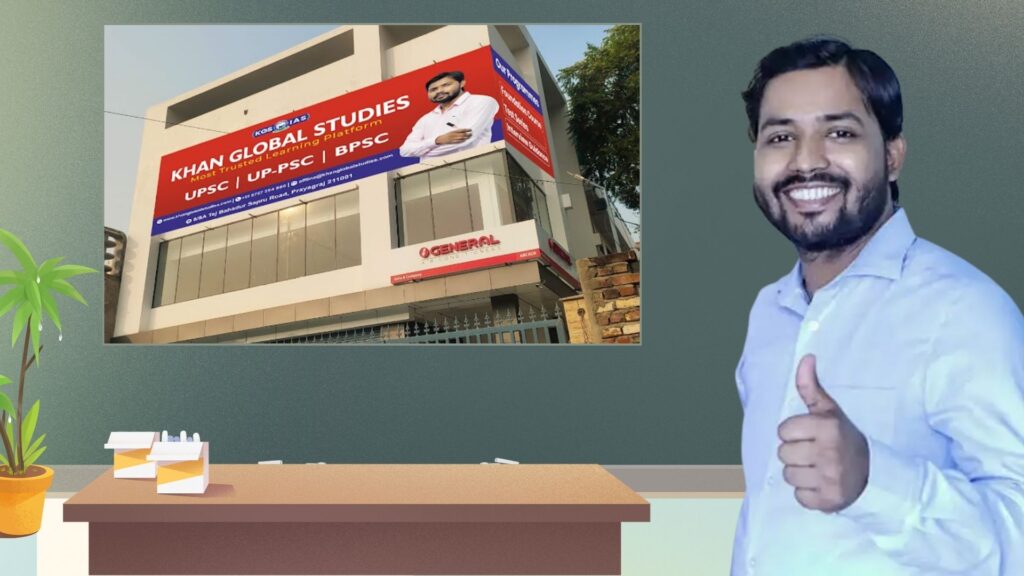
Khan Sir is an Indian educator who offers a wider range of courses through Youtube which makes 19 million subscribers within three years and is still consistently growing. He provides both offline and online coaching glasses with extensive coverage of core subjects. His general studies courses are designed for strategic preparation for competitive exams like SSC CGL. He motivates students through his lectures. He is using practical examples for simplifying the complex concepts of subjects including History (Ancient, Medieval, Modern), Geography (Physical, Indian, World), Polity (Indian Constitution), Economics, Science, and Current Affairs.
The “GS Crash Course by Khan Sir & Team,” is basically designed for SSC CGL aspirants to understand more precisely concepts. Khan Global Studies offers test series, daily quizzes, sessions for solving doubts, previous year questions and a vast range of study material.
Many students praised his teaching style and ability to explain every concept with real world examples which makes it easier to learn for students. KGS delivers high-quality education at an affordable price which makes it a well-equipped facility for rural students who are unable to join offline classes.
Manikant sir (The Study IAS)
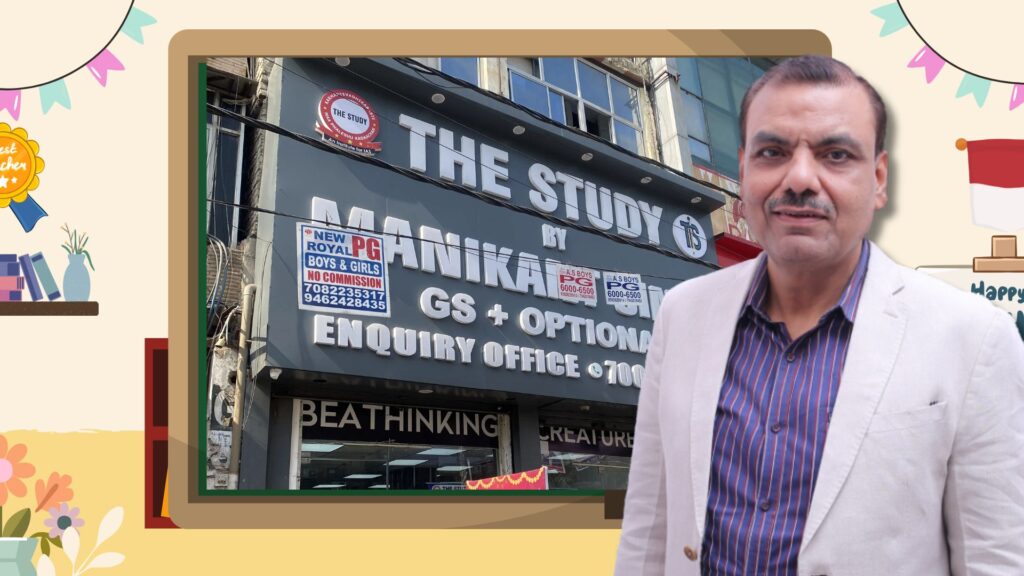
Manikant Singh is an experienced educator who offers a wider range of lectures which focuses on core subjects for competitive exams like SSC CGL. His strong fundamental pursuit of General Studies, especially History which is beneficial for the aspirants. The Study IAS offers both offline and online platforms for students to access all the available resources for the exam.
Students are showing good response because of his teaching style to explain each concept with clarity through his experience. His strong potential to provide strategic requirements for the preparation of SSC CGL exam is helpful.
Parmar Sir (Parmar SSC)
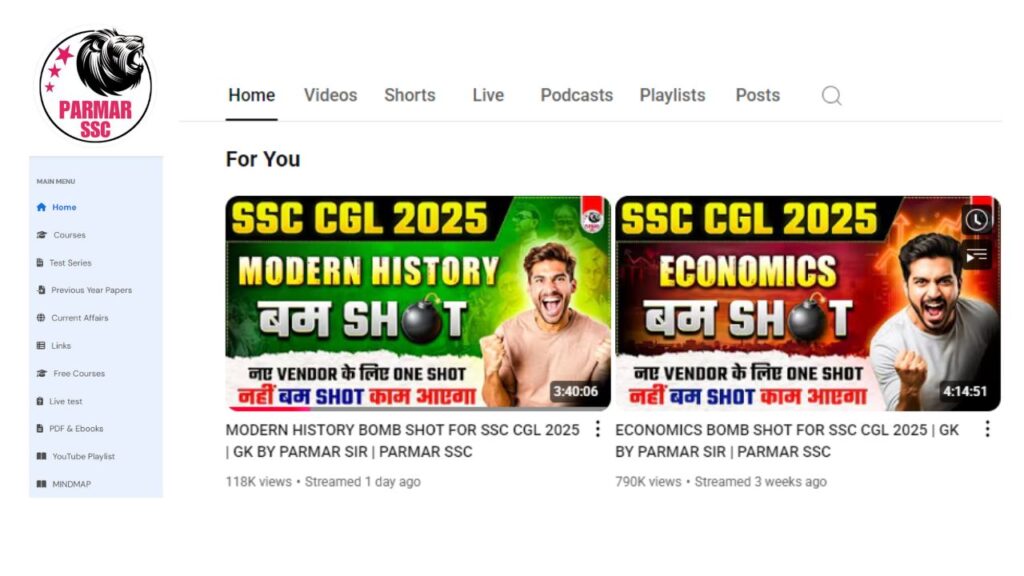
Parman sir is highly recommended by most of the former students who have appeared in SSC CGL exam. His experienced knowledge of General Studies is basically providing the core content that is relevant to this competitive exam. His teaching style is different and also offers a variety of courses and test series through Youtube channel and Parmar Academy.
The course is specifically designed to cover subjects like Basic GK, History, Polity, Geography, and Science. His content is focused on strategic preparation by analyzing and solving previous year’s questions. Students can learn every core topic in both languages (Hindi & English).
Amandeep Sharma
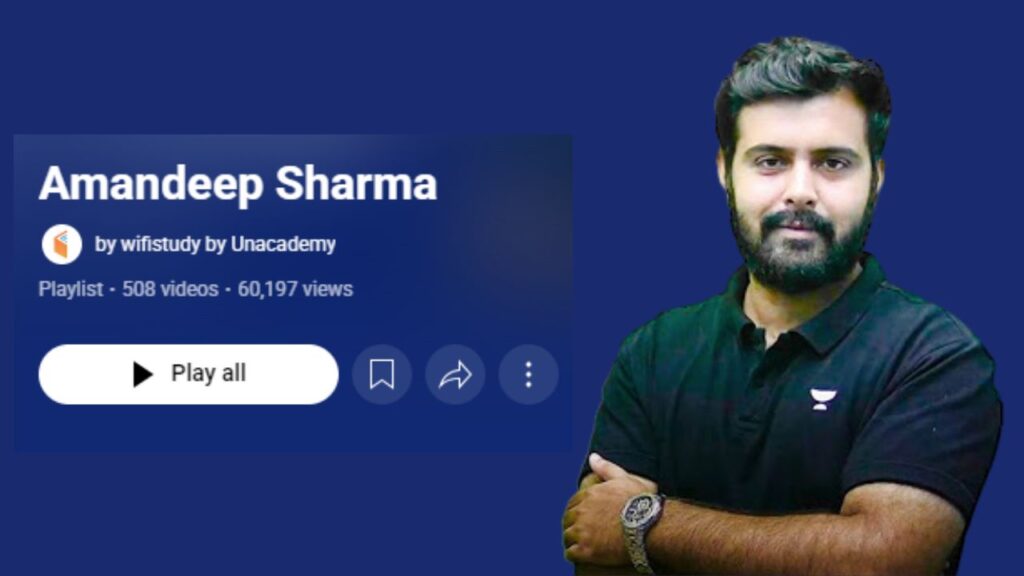
Amandeep Sharma specializes in General Studies and provides online education though learning platforms like Unacademy and Testbook. He is also known for his teaching ability to make complex problems easily understandable for the students through previous year questions technique and explanation style.
He has more than 5 years experience teaching over 100,000 students for many competitive exams, especially SSC CGL. Some of his lectures are also available on Youtube where students can start preparing for SSC CGL.
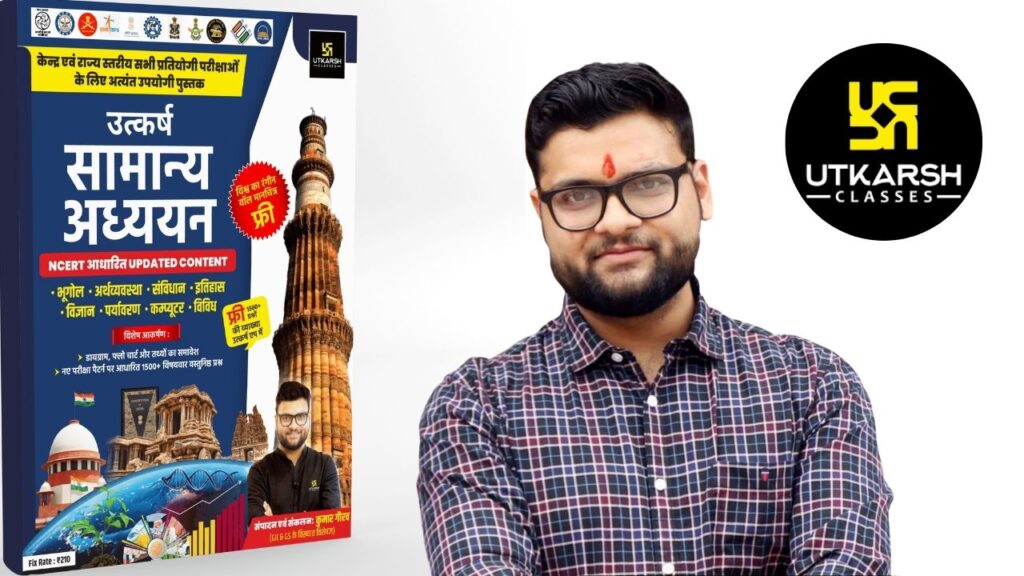
Gaurav Kumar by Utkarsh
Gaurav Kumaris a General Studies educator who focuses on current affairs as well to provide every topic detailed explanation for SSC aspirants. He is providing online classes focused on topics such as history, geography, polity, static GK, and basic science, integrating them with current affairs. Ideal for students who want to cover every topic with deeper knowledge and relevant current events.
His engaging style often uses storytelling, mnemonics, and unique examples to make learning more easier. Classes are both free & paid through Utkarsh Classes app and on youtube.
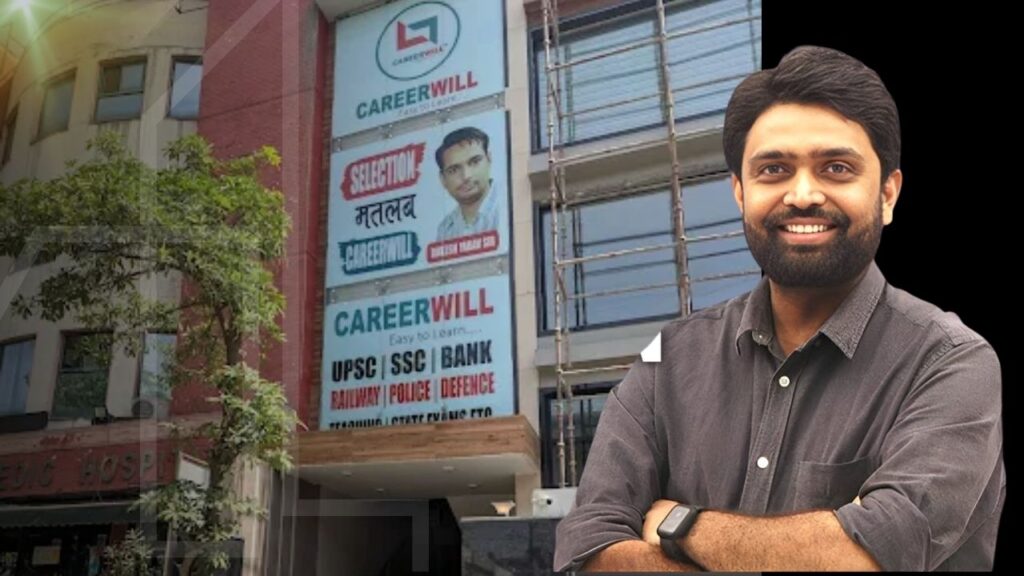
Abhishek Suman by Careerwill
Abhishek Suman is an online educator with proficient knowledge of General Studies to prepare students for competitive exams like SSC CGL. His history lessons are not boring, this unique ability makes him the best history teacher. He covers variety of topics which comes in a question paper including Polity, Static GK, and modern and ancient history.
Students who want to study with detailed explanations for each topic can consider taking his lessons. He is teaching on Careerwill and also prepares previous year questions for helping students to simplify the complex topics with a vast range of GK syllabus.
Smart Preparation Strategy and Time Management
You can’t just read every topic in GS, you need to prepare strategically. Just remember these factors while learning:
Weightage of the section: check previous year’s papers to analyze questions and which topic has covered up more. While Polity and Static GK has come more often and covers vast areas of the section.
Focus on Concepts: don’t just rote learning, understanding each concept will help remember for a long time.
Make Short Notes: Short notes, bullet points, and charts are helpful to remember and in quick revision.
Daily revision: Take 20-40 minutes extra for revising everything you have studied.
PYQ’s Practice: practice makes a man perfect, applies on the competitive exam, solving previous year questions will help you analyze how much you understand the topic.
Time Management: you have to divide your time accordingly for all topics and give extra time to your weak concepts.
General Studies is an important section of SSC CGL exam paper which students have to prepare. But it’s hard to prepare without a mentor. These Best GS Teachers for SSC CGL are delivering each topic in detail with a unique way of teaching to help you beat the competition.
This year’s Festive Season Sale In October will bring many new offers and discounts on electronic products — massive offers hit on smartphones. If you’ve been sitting on an upgrade — whether that’s finally moving off a three-year-old Galaxy or jumping into the iPhone ecosystem for the first time — this is the window the entire Indian smartphone retail calendar builds toward.
When the sale is live, which smartphone will actually get a discount and what’s coming to this season, know everything before planning around.
When Does the Festive Season Sale Start?
The Amazon Great Indian Festival 2026 is going live on October 8 with no closing date, so treat this as a multi-week sale. Prime members get early access from October 7. This Festive Season Sale has flagged on many categories, including mobile phones, electronics, home appliances, and fashion. With 160,000 seasonal jobs secured by Amazon to handle the load, this shows how big this year’s event is expected to be.
Flipkart’sBig Billion Days 2026 goes live for everyone on October 9, a day after Amazon, with early access on October 8 for Flipkart Plus, Flipkart Black and select co-branded credit card holders. Flipkart has also been running a slower build-up than usual: Early Bird Deals started September 24, and official price reveals on flagship phones have been trickling out since September 26.
October 7–9 for early access across both platforms, then the main event running through most of October. If you’re the type who wants to plan a purchase around the calendar rather than react to a flash notification, mark October 7 as your first checkpoint.
What Discounts and Bank Offers to Expect
Neither platform has published final smartphone pricing yet — genuinely, this is one area where numbers are still moving daily, and anyone claiming exact final prices two weeks out is guessing. What’s confirmed on the banking side is more solid:
On Amazon, SBI credit and debit card users get a flat 10% instant discount on eligible transactions, including EMI purchases, and Amazon has said overall discounts across electronics could run up to 80%, with an additional 10% on top for SBI cardholders. There’s already a Prime Coupon Bonanza running ahead of the main event, offering up to ₹6,000 off select Samsung and Sony televisions — a hint at how aggressive the electronics category is shaping up to be.
On Flipkart, Axis Bank and ICICI Bank cardholders get a 10% instant discount on eligible debit and credit card transactions, Flipkart Plus and Black members get up to 12% additional card discount, and Bajaj Finance EMI options are being pushed hard for higher-ticket purchases like flagship phones. Flipkart is projecting discounts climbing as high as 90% across electronics, appliances, fashion and home decor — though that ceiling figure almost always applies to accessories and older inventory rather than current-generation flagships.
Best Smartphone Deals Expected This Festive Season
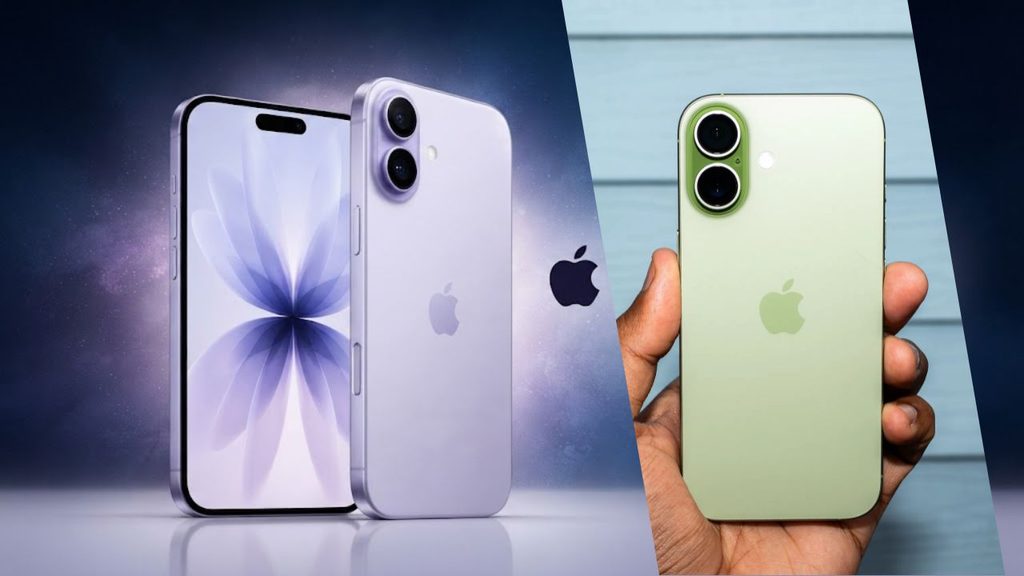
1. iPhone 17 (256GB) — Best for iOS Upgraders on a Budget
The launch price of iPhone 17 is ₹82,900 for 256GB storage but if you purchase 512GB, the price rises up to ₹1,02,900. Flipkart’s dropping iPhone 17 price under ₹80,000 during Big Billion Days. From above Rs 1 lakh to Rs 80 thousand, the difference is quite big.
At a sub-₹80,000 price point, this is the cheapest true current-generation iPhone has ever launched into a festive sale with outstanding features including 6.3-inch Super Retina XDR display, A19 chip, dual rear camera system. It is available in 5 colours — Black, White, Mist Blue, Sage and Lavender.
Limitation: You still don’t get the telephoto lens or ProMotion display that the Pro models carry, so heavy zoom-shooters and gamers chasing 120Hz will feel the gap. But a perfect model for anyone upgrading from an older iPhone who needs a clear camera and high-end features.
2. Samsung Galaxy S25 Ultra — Best Flagship Value Pick
Samsung put the launching price ₹1,29,999 on Galaxy S25 Ultra which was around ₹84,999 after a discount during Amazon’s July Prime Day and as low as ₹94,999 during the May Great Summer Sale and both offers flagged by the same retailer. Now it’s preparing for the festive push. Expect festive pricing to land in a similar ₹85,000–₹95,000 band.
You’re getting a phone that was a ₹1.3 lakh flagship a year ago for roughly two-thirds the price. Buyers who are searching for best cameras and display smartphones can afford the Snapdragon 8 Elite for Galaxy chipset, which still holds up against 2026 competition. The flagship specifications 6.9-inch Dynamic AMOLED 2X display at up to 2,600 nits brightness, 12GB RAM, titanium frame with Corning Gorilla Armor 2 glass.
Limitation: It’s now the previous generation — no Galaxy S26’s Snapdragon 8 Elite Gen 5 or the newer Privacy Display feature, and Samsung’s software support clock started a year earlier than on the S26.
3. Samsung Galaxy S26 Ultra — Best for the Latest Hardware
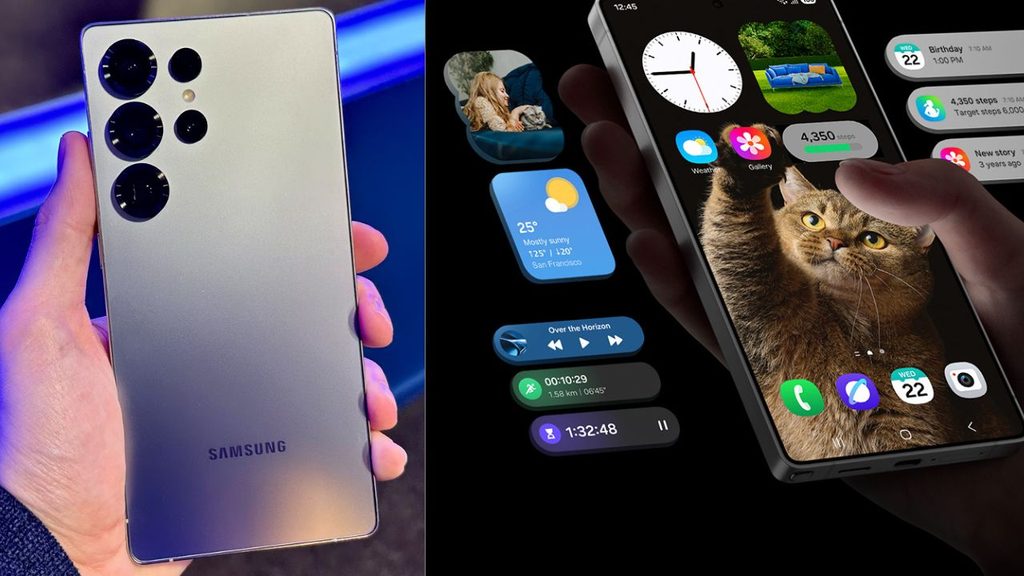
Another Samsung’s flagship model launched in 2026 at ₹1,39,999 for 12GB+256GB and for higher storage, price rises up to ₹1,59,999 for 512GB and ₹1,89,999 for 16GB+1TB. This smartphone is delivering a high-end technology — Snapdragon 8 Elite Gen 5 for Galaxy, 6.9-inch display and first built-in Privacy Display for limiting side-angle screen visibility. The festive offer lands near ₹1,24,999 because July sale cuts to the same.
A 200MP main camera with an absolute hardware system which can’t be broken easily. Buyers who are looking for 2026 latest smartphones at a range over 1 lakh, this is the best time to think about it.
Limitation: Because it’s this fresh, don’t expect S25 Ultra–style 35% festive cuts. If your budget caps around ₹1 lakh, the S25 Ultra is the more realistic festive buy.
4. Samsung Galaxy S25 FE — Best Mid-Flagship Pick
Flipkart teased S25 FE deals alongside the S25/S25 Ultra as part of its Big Billion Days smartphone lineup, Galaxy S25 FE discounted prices will land near ₹60,000. Buyers who can’t afford S26 Ultra for the series design language and camera hardware, this one provides them the same two features at an affordable range in this festive season.
Limitation: Detailed specs and confirmed pricing are still pending official reveal — if you need certainty before buying, wait for Flipkart’s price-reveal window closer to the sale date rather than an early-bird listing.
Compare iPhone 17 vs. Galaxy S25 Ultra On an Overview
iPhone 17 (256GB)
Galaxy S25 Ultra (256GB)
Expected festive price
Under ₹80,000
₹85,000–95,000 (based on recent 2026 sale pricing)
Display
6.3″, Super Retina XDR
6.9″, Dynamic AMOLED 2X, 2,600 nits
Standout strength
Cleaner ecosystem, resale value
Bigger screen, S Pen support, titanium build
If display size and a stylus matter more to you than the Apple ecosystem, the S25 Ultra is the better festive buy at a comparable post-discount price. If you want the newest chip generation with the smallest footprint, the iPhone 17 wins.
Don’t Lock Into One Platform Too Early
Amazon and Flipkart are running near-identical bank-offer structures this year, but the specific phone deals won’t be identical — Samsung’s S25 Ultra pricing has historically differed by a few thousand rupees between the two platforms in past sales, and the same is likely this October.
Check both listings once early access opens on October 7–8 before finalising a purchase; a single-retailer comparison isn’t a real comparison.
If your budget is under ₹80,000 and you want the newest possible chip, wait for the iPhone 17’s Festive Season Sale price to drop and buy it in the first 48 hours of early access — historically, the steepest festive cuts on genuinely new-generation phones show up early, before stock tightens.
If you’re chasing flagship specs on a ₹85,000–95,000 budget, the Galaxy S25 Ultra is the stronger buy this cycle, since last year’s flagship pricing has already proven it can fall that far. And if you specifically want Samsung’s newest chip and can stretch past ₹1.2 lakh, hold out for the S26 Ultra rather than compromising — buying older hardware you’ll regret in a year isn’t really a discount.
One practical step regardless of which phone you pick: add it to your Amazon or Flipkart wishlist now, and note the current listed price before October 7. That’s the only way to verify a “festive discount” is real rather than a price that was quietly bumped up the week before the sale.
The SBI Clerk Recruitment 2025 is started as it was released officially on the SBI website. You can check the notification for the entire process details of the recruitment. The examination is expected to happen on 20th September 2025, if you want to apply for this post then fill the form before the closing date.
Eligibility Criteria for SBI Clerk Recruitment 2025
Education: Candidates must have a valid graduation degree from a recognized university or college. Final year students can also apply but they must have proof of the passed graduation exam at the time of selection.