Best Private University in India for Quality Education and Innovation

Best Private University in India

The scenario of higher education in India has been a significant transfigurement in last 10 years. It is no longer the case that the best private universities in India are the only standard setters for excellence. Private universities today are reinventing the world-class education allowing them to differentiate in quality academics, through leading-edge innovation and creating environments where students are not just learning but also creating, discovering and leading. 

Well, if you are looking for higher education in India then it is important to know what the differences are in the top private universities. They are not simply teaching bodies but they are breeding grounds for tomorrow’s captains of industry, researchers and innovators who will chart courses through industries and address global challenges. 

The Top Contenders

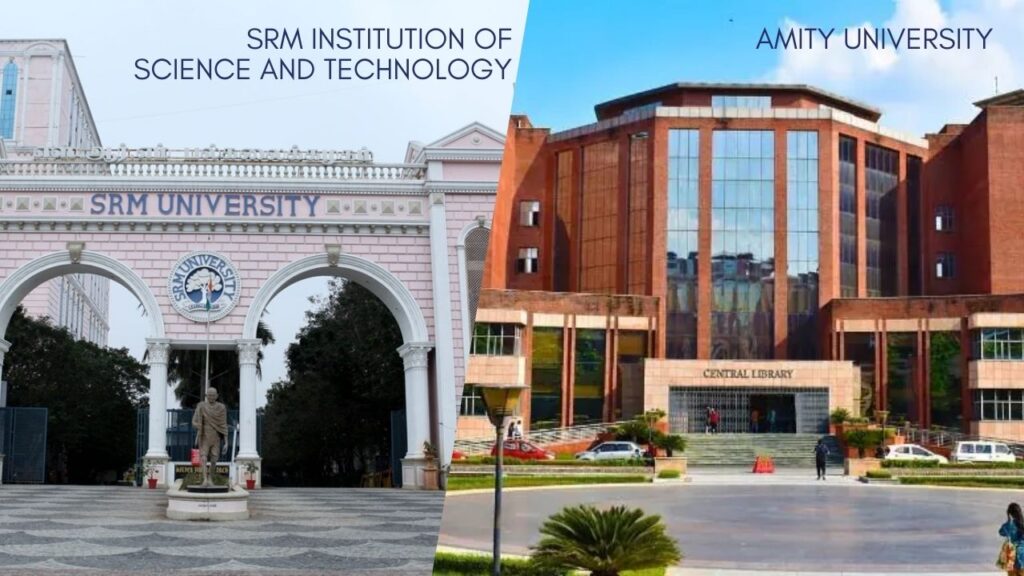
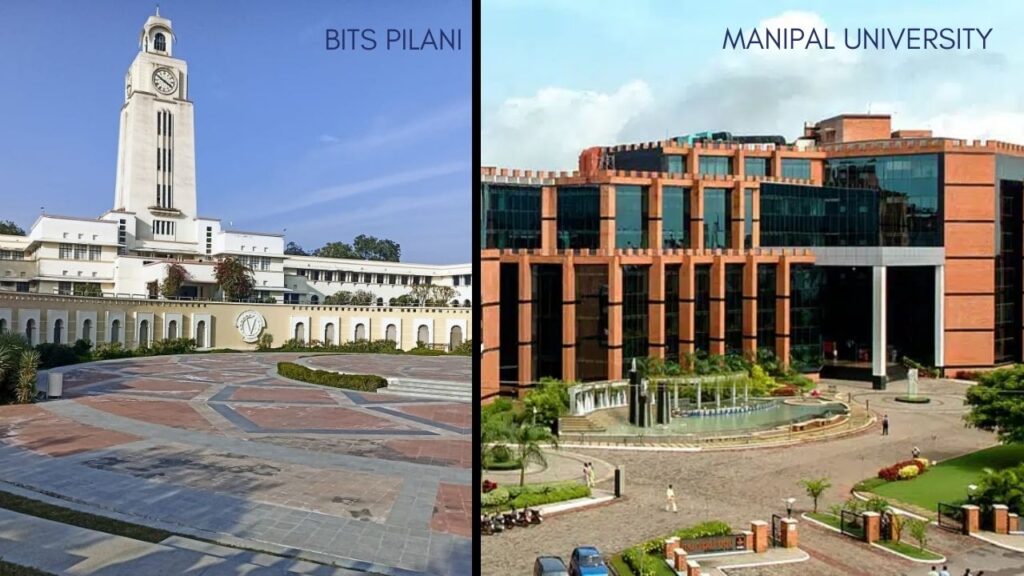
In the NIRF 2025 rankings, the private university sector is led by a few good institutions. The Manipal Academy of Higher Education (MAHE) emerges 3rd among universities across the country and stands as the best private university in the country. Closely following are BITS Pilani at rank 7, Amrita Vishwa Vidyapeetham at rank 8, VIT Vellore, LPU, Amity University and SRM Institution of Science and Technology at rank 11. 

However, not only in rankings, Ashoka University is transforming Indian higher education. Ranked as the best new-age private university and awarded as the “University of the Year (Emerging)” in 2025 at the FICCI Higher Education Summit, Ashoka is the future of liberal arts and interdisciplinary education in India. 

Manipal Academy of Higher Education (MAHE) Amrita Vishwa Vidyapeetham
BITS PilaniVIT Vellore
SRM Institution of Science and TechnologyAmity University
Ashoka UniversityLovely Professional University (LPU)

What Makes These Universities Stand Out?

Research and Innovation at the Core

Today’s private universities know that good teaching without innovation is half-truth. BITS Pilani has been especially creative in institutionalizing research amongst students. The institute, since 2023, has published more than 6,500 research papers in journals with average impact factor more than 4.1, filed 325+ patents, completed 13+ technology transfers, and incubated 138+ deep-tech startups with a combined valuation of over USD 300 million.These are not simply figures—they represent actual technology developed by students and professors that are reshaping markets and addressing real-world problems. 

The Manipal Academy too has made huge investment in innovation infrastructure. Its Innovation Centre is a dynamic ecosystem that offers seed funding, incubation support, mentorship for patent filing and commercialization. The university has a state-of-the-art Central Analytical Instrumentation Facility (CAIF) with world class instruments such as SEM, NMR, XRD which enables interdisciplinary research in emerging areas like material science, biotech etc. 

Ashoka University has now set up the Ashoka-Zeiss Core Imaging Facility, the first such facility in India, which caters to high end research in Cell Biology, Biophysics and Structural Biology. Inspiringly, in 2025, Ashoka was awarded the highest distinction for its research and innovation activities, demonstrating a strong commitment to advancing the frontiers of knowledge.

Faculty Excellence and Academic Rigor

The standard of faculty decides the standard of education. These elite private colleges have gone all out in trying to hire outstanding scholars, researchers, practitioners. Amity University has right faculty student ratio to provide quality education in meaningful mentorship and is supported by 2,100+ well experienced faculty members in helping 37,000 students in different campuses.​

The curriculum at these schools is more than just textbooks. Many elite private universities weave in industry perspectives into their curriculum through guest lectures, internships and group work. That means students learn not only the theoretical underpinnings, but real-world applications and evolving industry issues. 

Global Partnerships and International Exposure

It is always true that in a connected world, you need global exposure to get a good education. Ashoka University, one of India’s leading liberal arts universities, has partnered with 60+ prestigious institutions globally across 28 countries and five continents including Yale University, Sciences Po, University of Melbourne, EYH Paris. Partner organizations also provide opportunities for interaction with group and field trips during semester exchanges, summer programs, research collaborations and faculty exchange. 
Similarly, Manipal University holds joint research programmes with top-notch institutions worldwide and is funded for research by various agencies such as DST, CSIR, AICTE. This global network ensures that students have access to an array of perspectives and world class academic resources. 

Placement Excellence and Career Readiness
Quality education in the end translates into job opportunities. Manipal Academy secured more than 90% placement in 2025, with 8,000+ students placed across multiple programs. The highest package for engineering students went up to ₹69.25 LPA with average package of ₹12.31 LPA. Top recruiters: Microsoft, Amazon, Deloitte, IBM, Standard Chartered, and BookMyShow. 

Inclusive Accessibility and Scholarships

Although being good quality generally carries a cost, many leading private universities understand that that should be manageable. These schools provide merit-based scholarships, aid packages and need-based grants so that gifted students aren’t turned away because of money. 

The Innovation Ecosystem

What really sets the best private universities of today apart is their strategies for innovation across the board. BITS Pilani has created a number of innovation tracks to address a range of contexts – SPARKLE for transdisciplinary problem solving, SOLVE for applied innovation and PIEDS (Pilani Innovation & Entrepreneurship Development Society) along startup development.​

Ashoka University launched the Young Scholars Programme: Innovators in Science & Tech (YSP IST). It’s for the high schoolers and it’s a 10 day live-in camp. It enables them to learn difficult subjects such as environmental chemistry, neuroscience, quantum computing and genetic engineering. These camps help create future inventors. They also ignite science curiosity at a young age.  

Read More 👉 Top Agriculture College in Uttar Pradesh: Courses, Fees & Admission Details

Choose Your Path Wisely

Choosing a university is a very personal matter. If you are interested in a multidisci­plinary education close to industry, Manipal Academy is excellent if you like comprehensive education with strong links to industry. If you want the best research and entrepreneurship route, BITS Pilani is unparalleled. Ashoka University, for those interested in liberal arts with a global outlook, provides a new frontier in Indian higher education.

What matters most is knowing what you want. Are you a basic researcher? Do you want to build startups? Are you looking for global exposure? The finest private Indian universities today cater to such journeys 

The Future of Private Higher Education

The Indian private university sector is evolving fast. They are not simply copying public universities, they are innovating, conducting cutting edge research and drawing talent from around the world. This focus on quality, innovation, research and international collaboration is indicative of a vibrant, competitive ecosystem, and students stand to gain immensely from this.

Keep in mind as you start your higher education journey, Rankings are just one measure. What makes a school is its learning community, the quality of its faculty, the substance of its research, and its aspiration to produce not just accomplished professionals but responsible global citizens. India’s finest private universities are increasingly making the case that they can indeed deliver exactly that.

Conclusion

India’s leading private universities are transforming higher education with cutting-edge research, global outlook, industry-centred curriculum, and incubators of innovation. From BITS Pilani’s entrepreneurial culture to MAHE’s research excellence and Ashoka’s revolutionary liberal arts model, you will find a way to map out a future-ready career.

So when you’re picking your uni, focus on what suits your ambitions – be it research, startups, global learning or industry know-how. 

Ultimately, these top private colleges in India are showing that they can shape not just degrees, but the leaders of tomorrow. 

Leave a Comment

Your email address will not be published. Required fields are marked *

ICSI CSEET Result 2025 OUT: Direct Link to Download July Scorecard Now!

ICSI CSEET Result 2025 OUT

ICSI announced the results for the Company Secretary Executive Entrance Test which was held 5th & 7th of July. candidates who are present in ICSI CSEET exam can now check their result through the link in the article. You can see your subject-wise scores in a scorecard, subjects included Quantitative aptitude, Reasoning and General awareness, Business communication, legal aptitude, and business environment. 

Candidates must secure a 40% score in each subject for clearing this exam and 75% students have passed in may session. Candidates can re appear in the examination when the next session is announced in November 2025.

Highlights of the ICSI CSEET Result 2025

Exam NameCSEET 2025

Conducting Body
Institute of Company Secretary of India
Exam Date05 & 07 July, 2025
Result ModeOnline
Official WebsiteClick Here

ICSI CSEET Result 2025 – Important Dates

ICSI CSEET Result Date16/July/2025
Registration Starts for November 16/June/2025
Last Date for November Session15/October/2025
CSEET November Exam Date9/November/2025

Read More 👉 TS POLYCET Seat Allotment 2025 Phase 1 Declared – Check Your College Now!

Steps To See Scorecard For ICSI CSEET 2025

To check the result, you can simple go to the ICSI website:

  1. Find the July Result 2025 Link (mostly present on the notice section).
  2. Once the link is active you can click on it. 
  3. The page will appear to enter your ID and DOB. 
  4. After log in check the Result of ICSI CSEET 2025.
  5. Download and save it on your device.

ICSI CSEET 2025 Eligibility

  • 12th completed OR entered in the graduation students are eligible for the exam.
  • Only those who have a bachelor’s degree are eligible to apply directly for the CS executive position.
Important Dates
Result noticeClick Here
Download ResultUpdate Soon
Official WebsiteClick Here

Leave a Comment

Your email address will not be published. Required fields are marked *

MPSC Exam Calendar 2025: All Key Dates & Details

MPSC Exam Calendar 2025

Maharashtra Public Service Commission is an organization to proceed recruitment for various posts through competitive exams. News The MHRD has released details regarding the examination dates, pattern, eligibility, fees and selection process. The schedule incorporates also approved modifications and updates to the latest developments. This is the most important tool for aspirants who are going for MPSC exams to prepare and aware about updates. 

Major MPSC Exams Calendar For Early Preparations

MPSC Rajyaseva Exam

Notification Release18th/March/2025
Application 28/March—17/April/2025
Prelims Exam Date9th/November/2025
Vacancies385 
Posts State Civil Services, Forest Services, Civil Engineering Services
Mains Exam29th/March—26th/April/2026
ResultJuly/2026

MPSC Group B Combined Services Exam

Notification Release29/July/2025
Application 1—21/August/2025
Prelims Exam Date21st/December/2025
Vacancies282
Mains Exam17th/May/2026

MPSC Group C Combined Services Exam

Notification ReleaseLast of the 2024
Prelims Exam Date1/June/2025
ResultOctober/2025
Mains Exam29/June/2025

Other Major MPSC Exams

Forest Service Main 5—9/May/2026
Civil & Agricultural Main Exam 202516th/May/2026
Group C Combined Prelims4th/January/2026
Group C Combined Main 7/June/2026

Eligibility For MPSC Exams

The educational standard is usually graduation for most of the examinations. 

The age limit is 18 to 38 years as general, but may change for post to post and reserved category. For more details on age relaxation, criteria, please refer to the official notification. 

Read More :- SSC Exam Calendar 2025-26: Check Full Schedule, Upcoming Exam Dates and Notifications

Selection Process

The process of MPSC exams is 3 tiered for all major exams.

Prelims: Objective/MCQs papers, on qualifying basis Rajyaseva, 2 papers (GS & Aptitude/Language), Group B & C as per notification.

Mains: Several papers of different subjects, including a language paper, a general studies paper and papers on the candidate’s discipline. Marks obtained here are useful for final merit.

Interview and Document Verification: After qualifying in Mains, candidates are called for Interview and Document Verification. 

Guide to Download Calendar MPSC Exam Calendar 2025

  1. Check on the official website of MPSC.
  2. Search for MPSC Exam Calendar 2025 as it holds a link for the pdf.
  3. Every year exam calendar is available, you can download by clicking it, the pdf will download automatically.
  4. Keep it safe to be prepared early for the competitive exams.

Recommendations to Keep Updated for The MPSC Exams

Refer to the official website and download the pdf of the entire exam schedule and notification for more information.

Prepare as per syllabus: Prelims: General studies, aptitude. Mains are subject specific (history, polity, geography, HRD, economy) etc.

Keep track of result & admit card dates: Dates are susceptible to change due to unforeseen circumstances like floods, administrative rescheduling.

Vacancies: High number of posts particularly for Rajyaseva and Group B and C, leads to tough competition. 

Leave a Comment

Your email address will not be published. Required fields are marked *

How to Crack State PSC Exams in First Attempt: Strategy & Resources

Govt. jobs are undoubtedly one of the most safe and respected career options in India and passing the State Public Service Commission (PSC) exam in first attempt is a dream for many aspirants. As the competition is rising and the syllabus is vast, it sometimes feels like a difficult mountain to scale. But, with the right approach, intelligent study techniques, and diligent efforts, passing the exam is not an impossible dream. The crux is to understand the syllabus in depth, follow the right resources and adhere to a disciplined schedule that would cover both prelims & mains preparation.

Quick Thoughts Gathering to Begin With

  1. Download official syllabus + all past papers of 8 years.
  2. Make a list of books you own/need (start with NCERTs).
  3. Select optional subject.
  4. Put together a weekly schedule you can live with.
  5. Create a one-pager daily current affairs file.
  6. Enroll in test series / good coaching (online/offline) and commit to weekly mocks.
  7. Start your NCERTs (goal: 2–3 chapters/day).

Big-picture study strategy (what to study & why)

Build bedrock knowledge first: NCERTs (6–12) for History, Geography, Economics, and Pol. These give a clean conceptual base.

Proceed to standard books for each subject (more below). Read for understanding, not rote.

Current affairs daily — newspaper + short notes. Link events to static syllabus.

Notes + revision cycle — Make short revision notes (1–2 pages) per topic; revise them frequently.

Practice smartly: MCQs for prelims + answer writing under time pressure for mains. Mains wins jobs — practice answer structure & linking facts to syllabus keywords.

Mocks & feedback: Do full length mocks and get answers evaluated (peer/mentor) and you improve your answer style and technique of scoring.

Recommended core resources (common, high-utility) 

(You will need to add in your state-specific books / local history that you must have from your state board / PSC Recommended Readings)

  1. Cover Basics 

NCERTs 6–12 — History, Geography, Pol. Science, Economics (start here).

Indian Polity — M. Laxmikanth (efficient + concise for governance & state-centred comparative questions).

Modern Indian History — Spectrum’s A Brief History of Modern India / Bipin Chandra (for depth).

Indian Economy — Ramesh Singh or any good concise economy book, supplemented with RBI / Economic Survey summaries.

Geography — Certificate Physical & Human Geography (G.C. Leong) or equivalent concise books.

Environment & Ecology — normal environment compendium/ class notes, track Recent Events.

State-specific history & polity — whatever books your PSC cites, in addition to local gazetteers and state government documents.

  1. Current affairs & general reading

One daily national newspaper (The Hindu / Indian Express) or their summaries. Government releases: Press Information Bureau (PIB), state government portals, official reports (for schemes and facts). Monthly magazines or current affairs compendiums (good for revision).

  1. Practice

Collection of previous years’ PSC papers (must have). A good questionbank or mock test series (free/paid) for practicing in time bound manner. Answer writing notebooks (keep one for mains answers). 

Sample schedules — choose according to the time you have

If you have 12 months

1st to 4th month: complete NCERTs + standard books for GS I–III fundamentals; decide optional & finish fundamentals.

Months 5 to 8: Complete other standard books + begin consolidating notes; begin on PYQs.

9th and 10th months: High-intensity test series – full-length prelim mock test every week; augments revision of weak topics.

Months 11–12: Final run through + daily PYQs + last-mile current affairs. Mains answer practice (if prelim cleared).

If you have 6 months

1st month: Preparation for NCERTs + syllabus mapping + optional selection.

2nd to 4th month: Read standard books, prepare short notes, solve MCQs and PYQs.

Month 5: Rigorous mock tests (prelim-benchmarked); Time management to be calibrated.

Month 6: Re-visit everything + frequent mock tests + current affairs wrap-up.

If you have three months

  • Fast NCERT reading + priority standard book chapters on some important subjects.
  • Study 7-10 hours a day: current affairs in the morning, theory in bulk in mid-day, MCQs + past papers in the evening.
  • Mocks repeatedly at intervals of 3-4 days Analyze each. 

Prelims strategy (objective test)

A good preparation strategy would be to start with the NCERTs along with one standard book per subject to establish a strong base. While learning content, same importance should be given to speed and accuracy by daily practicing MCQs gradually going to 500 – 1000 in a week. To gain maximum returns in minimum time, concentrate on high-yield topics such as Polity, the Constitution, Economy (primarily basic indices), Geography (with emphasis on map work), Environment, and Current Affairs. The Previous Year Questions (PYQs should be backbone of your preparation as it helps you to identify the areas/themes which the exam repeatedly tests). 

Also Read : Top 10 List of Exams Conducted by UPSC After Graduation in 2025

Mains strategy (subjective / descriptive)

Start writing answers from the early days of preparation, while upgrading yourself with the ability to write a good structured answer that has an introduction, a well-structured body (with headings or bullet points, if necessary) and a brief conclusion or way forward. Static knowledge and linking current affairs with theoretical knowledge need to be a part of answers as they give depth and relevance to answers. At the mid-stage of your preparation, doing a full answer paper every week – both essays and GS papers — is useful in developing regularity and you can increase the frequency as the exam comes closer. Regular assessment or peer review also is necessary, as it improves presentation as well as the density of content, leading to more effective answers. 

Interview / personality test

Prepare short biographical stories related to: accomplishments, academic projects, work experience and expertise in optional subjects. Stay informed on regional issues and national affairs. Conduct mock interviews with mentors or peers, concentrate on clear communication, serenity, and concise responses. 

Common Mistakes to Avoid

  • Learning everything superficially diminishes its utility; depth is much more valuable than breadth across different fields at surface level isn’t very rewarding.
  • Disregarding previous years’ papers is the biggest blunder as these papers bring out the themes that repeat, the patterns of questions and the areas to be concentrated.
  • Not timing yourself while you practise MCQs or while writing answers results in bad speed and poor accuracy in the exam.
  • Too many resources create noise and confusion, while focusing one’s attention on too few resources creates blind spots. A small set of high quality, reliable resources is the best bet for clarity and retention.
  • Avoiding regular revision destroys the power of retention; one should revise systematically and at frequenter intervals to be able to recite confidently and be assured of long term recall. 

Conclusion

How to Study Smart for First Attempt State PSC (Public Service Commission) Exam It is not about studying for countless hours, but it is about studying smart by keeping focus and being consistent. This trip requires a very clear mind, discipline, and a problem-solving attitude. Candidates with the right resources and guidance, along with consistent practice and revision, can not only cram for the exam but gain the confidence to ace at the Interview round. Wait for it… Success in the competitive exam is for those who start early, prepare strategically and have a firm belief till last that they will pass the exam. 

Leave a Comment

Your email address will not be published. Required fields are marked *

UPSC CDS 1 Recruitment 2026 Notification, Eligibility, Application Dates Guide

UPSC CDS 1 Recruitment 2026

The Union Public Service Commission (UPSC) has notified the Combined Defence Services (CDS) Examination 1 for the year 2026. This recruitment is for a number of academies that are the Indian Military Academy (IMA), Indian Naval Academy, Air Force Academy and Officer Training Academy and the number of vacancies is 450+.

The application form filling process will start from 10th/December/2025 and the last date to apply for the UPSC CDS 1 2025 will be 30th/December/2025. Interested and Eligible candidates are advised to read the official notification before apply online for understand the eligibility, Application Fee, Age Limit, Salary, Selection Process before applying for it.

Candidates need to visit the UPSC official website for detailed information and application. Before the time ends, you need to make sure that each one of the necessary information is filled accurately. 

Follow These Dates To Apply

Application Start10/December/2025
Last Date For Application30/December/2025
Fee Payment last date30/December/2025
Correction DateUpdate Soon
Admit Card DateUpdate Later
Exam Date12/April/2026

UPSC CDS 1 Age Limit & Application Fee

CategoryAge LimitPosts Expected
IMA & INA 19 — 24 years450+
Air Force 20 —- 24 years
OTA 19 —- 25 years
Gen/ OBC/ EWS₹200
SC/ ST0

UPSC CDS 1 Vacancy & Educational Qualification

The courtesy details of UPSC CDS 1 Eligibility 2025 are mentioned below:

  1. Indian Military Academy (IMA): The candidate will have to hold a Bachelor’s Degree in any discipline/stream from any recognized University/Institution in India.
  2. Indian Naval Academy: The candidate must hold a Bachelor’s Degree in Engineering or equivalent from a recognized university/institute in India.
  3. Air Force Academy: Candidate should have passed 10+2 with Physics and Mathematics in any stream from a recognized board or have a Bachelor of Engineering/Bachelor of Technology or similar qualification from recognized university.
  4. Officer Training Academy: The Candidate must have a Bachelor’s degree in any Discipline/stream from any recognized university or Institution in India.

For more and latest updates you can go through the official UPSC CDS 1 Recruitment 2025 Exam Notification. 

Read More 👉 Railway Protection Force Constable: Salary, Selection, and Exam Details – complete guide

Salary & Allowances

The candidate can earn up to Rs 1,77,500 per month with allowances as per government norms. The starting salary can be less with Rs 56,100 for entry level candidates.

Guide to Apply UPSC CDS 1 Online

How to Apply for UPSC CDS 1 Recruitment 2025: Apply Online through the official website of UPSC.

1. Know Details from UPSC CDS 1 Notification 2025 PDF.

2. Click on the “apply online” link or go to the Official UPSC website: upsc.gov.in.

3. Fill UPSC CDS 1 2025 Online Application Form.

4. Upload all the documents as per the notification.

5. Remit the requisite application fee by one of the modes available.

6. Take a print out of the application form once it is filled for your records. 

Apply OnlineLink Activate Soon
Download NotificationLink Activate Soon
Official WebsiteClick here

Leave a Comment

Your email address will not be published. Required fields are marked *

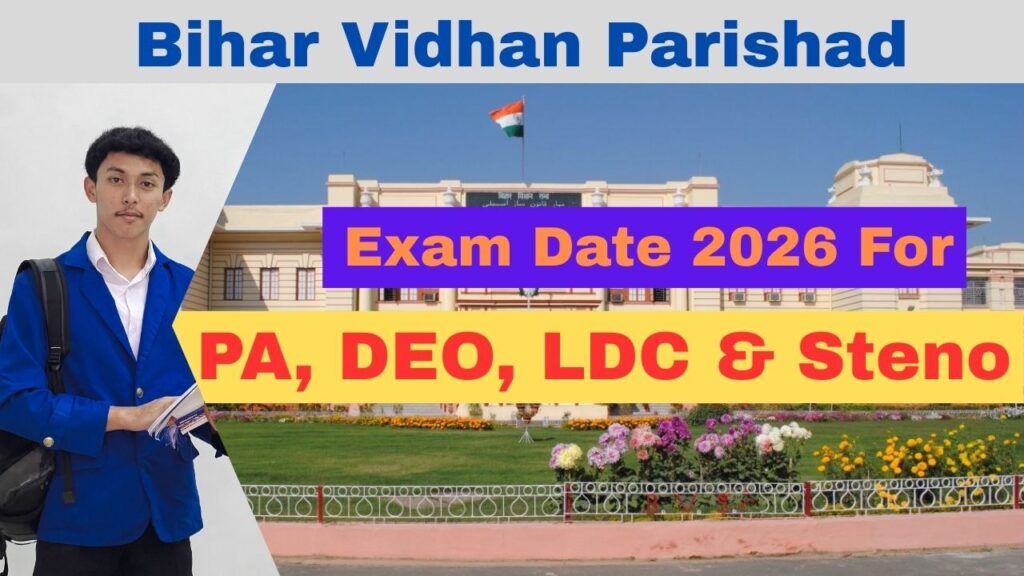
Bihar Vidhan Parishad PA, DEO, LDC & Steno Recruitment 2026

Bihar Vidhan Parishad

Bihar Vidhan Parishad BVP Recruitment 2025: Bihar Vidhan Parishad (BVP) under Government Of Bihar has invited BVP Recruitment application for 64 vacancies of Personal Assistant, Data Entry Operator (DEO), Lower Division Clerk (LDC), Stenographer posts. Eligible candidates can apply from 28 November 2025 to 05 January 2026. The applicant must be above 18 years of age and there is an age limit for maximum which is 42 years on 01 August 2025. For more information, candidates can visit the official website or read the notification. 

If you are an intermediate pass or graduate or a sure shot middle class, you are sure to get posts in Bihar Vidhan Parishad: the door is open for all. 

Dates, Application Fee & Short Details of Bihar Vidhan Parishad Recruitment

OrganizationBihar Vidhan Parishad
PostsPersonal Assistant, DEO, LDC & Stenographer Post
Vacancy 64
Application FeeRs. 100/
Last Date To Apply05/January/2026
Fee Payment Last Date07/January/2026
Exam DateUpdate Soon
Official WebsiteClick Here
PositionVacanciesMinimum QualificationStarting Salary of a Candidate
Personal Assistant—PA7UG Degree/Stenography 100 wpm & also Typing Speed 30 wpm₹44,900 accor. to 7th pay Level 7
Data Entry Operator—DEO35Intermediate Marksheet/133 keystrokes per minute₹25,500 accor. To the (Level 4)
Lower Division Clerk—LDC10Intermediate Marksheet/Speed should be 30 wpm₹19,900 – ₹63,200 (Level 2)
Stenographer12Graduation/Stenography 80 wpm/Typing 30 wpm₹25,500 – ₹81,100 (Level 4)

The position of DEO is undoubtedly the star of this recruitment with a staggering 35 vacancies – your chances of selection are truly bright! But don’t rule out the PA position if you have the stenographic skills, the pay is unbelievable at Level 7, it affords the best financial package of any job. 

Read More :- A Complete Guide to Cybersecurity Courses for Beginners and Career Switchers

Age Limit For Bihar Vidhan Parishad Recruitment

Minimum Age Limits

PostMinimum Age
DEO / LDC18 Years
Steno / PA21 Years

Maximum Age Limits

CategoryMaximum Age
General / EWS Male37 Years
General / EWS Female40 Years
BC / EBC (Male & Female)40 Years
SC / ST (Male & Female)42 Years

Follow These Instructions to Apply For These Posts

  1. Interested and eligible candidates may apply online for Bihar Vidhan Parishad posts on 05 January 2026.
  2. Click under the “Apply Online” tab in the Useful Links section below to redirect to the submission page.
  3. Or, Apply directly from the official website of Bihar Vidhan Parishad for the post. 
  4. Submit the application form after you finish carefully. 
Useful Links
Apply OnlineClick Here
Download NotificationClick Here
Official WebsiteClick Here

Leave a Comment

Your email address will not be published. Required fields are marked *

Scroll to Top