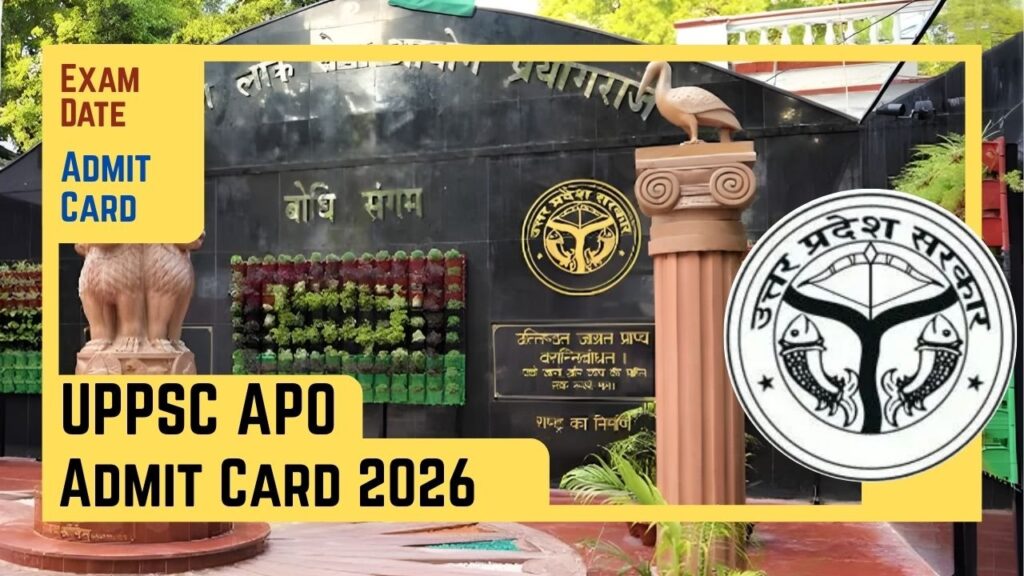
The wait has ended for thousands of law graduates in Uttar Pradesh. UPPSC APO Admit Card 2026 Out – Download Uttar Pradesh Public Service Commission Assistant Prosecution Officer Hall Ticket at official website of UPPSC. If you’ve been studying the books, memorizing sections of the newly written laws, and keeping track of every notification, this is the “green light” you’ve been waiting for.
The post of Assistant Prosecution Officer (APO) is among the most prestigious posts in the state’s legal system, and with 182 vacancies this year, the competition is fierce as ever. This is your ultimate guide to everything on the admit card, about the exam and how to survive the last days of your preparation.
Candidates should have done LLB from a recognised university by UGC and approved by Bar Council of India. They should be citizens of India (or in case of special provisions for subjects of Nepal/Bhutan, Tibetan refugees prior to 1962, or certain migrants). The reservation benefits are applicable for the Uttar Pradesh Domicile holders only, rest of the candidates will be treated in unreserved category.
Age Criteria
From 21-40 years old candidates are allowed for this exam and age relaxation detail given below:
Category
Age Relaxation
Max Age
SC/ST/OBC (UP)
+5 years
45
PwD (UP)
+15 years
55
Women (UP domicile)
+5 years
45
Ex-servicemen
Service years
Per
The 2026 Exam Pattern
This year is crucial as the syllabus is revised to include the repeal of old colonial-era laws and their replacement with the new Indian legal regimes. The Prelims are a screening test, your marks for them will not get added to your final merit list, but you will have to clear the cut-off for them to be eligible for Mains.
Prelims Structure (150 Marks)
General Knowledge (50 Marks): This section includes Indian History, National Movement, World Geography and Current Affairs.
Law (100 marks): The big change here is you’re no longer tested on the old IPC, CrPC and Evidence Act, but on the Bharatiya Nyaya Sanhita (BNS), Bharatiya Nagarik Suraksha Sanhita (BNSS) and Bharatiya Sakshya Adhiniyam (BSA).
Add U.P. Police Act and the Indian Constitution both for better preparation.
Beware of Negative Marking! There is a penalty or mark deduction of 0.33 (1/3rd) for every incorrect answer. If you don’t know the answer, you’re usually better off not guessing blindly.
Follow These Steps to Download Your UPPSC APO Admit Card 2026
The process has been made digital and is fairly simple to execute through the One-Time Registration (OTR). How to download hall ticket without any glitch:-
Go to the Portal: Visit the website of UPPSC.
Locate the Link: Find the “Important Alerts” section. A link will be available to Download UPPSC APO Admit Card 2026.
Input Your Information: To retrieve your hall ticket, you must have OTR number, Date of Birth and Gender.
Confirmation: Type Captcha as is or select Captcha as you are told to from the screen.
Download, Print and Save: As soon as your admit card is displayed on your screen, download it.
Pro-tip: Print at least 2–3 copies. Put one in your bag, one in your house for backup.
Category
Fee (₹)
General/OBC/EWS
125
SC/ST/Ex-Servicemen
65
PwD
25
Selection Stages
Preliminary Exam: Paper objective type with negative marking (150 marks, 2 hours) on General Knowledge and Law; only for screening, with 0.33 negative marking.
Mains Exam: 500 marks of question paper came which you have to solve in Descriptive manner. It contains law and general studies questions and its important one as the marks are included in the final merit list.
Interviews (50 marks) are given on the basis of their interview which is conducted mostly on legal knowledge, communication and suitability.
It’s important to prepare well for 150-mark prelims as it’s an entry gate for the mains and avoid guesses because of 0.33 negative marking. After prelims, focus on descriptive Mains (500 marks) where your legal depth will shine, and an interview of 50 marks that tests clarity and conviction. You’ve already the qualification, and you have paid the fees, and you’ve cleared the first hurdle — now take the plunge with discipline for one of 182 most coveted legal posts in UP.
Conclusion
The UPPSC APO Admit Card 2026 release is coming near and it is a final chance for those follower who is wants to get 182 APPO post in Uttar Pradesh. The exam is set to be held on March 22, so candidates can now gear up for their last phase of preparation by revising important legal concepts, attempting mock tests, and making sure that they have all the requisites for the exam day.
The scenario of higher education in India has been a significant transfigurement in last 10 years. It is no longer the case that the best private universities in India are the only standard setters for excellence. Private universities today are reinventing the world-class education allowing them to differentiate in quality academics, through leading-edge innovation and creating environments where students are not just learning but also creating, discovering and leading.
Well, if you are looking for higher education in India then it is important to know what the differences are in the top private universities. They are not simply teaching bodies but they are breeding grounds for tomorrow’s captains of industry, researchers and innovators who will chart courses through industries and address global challenges.
The Top Contenders
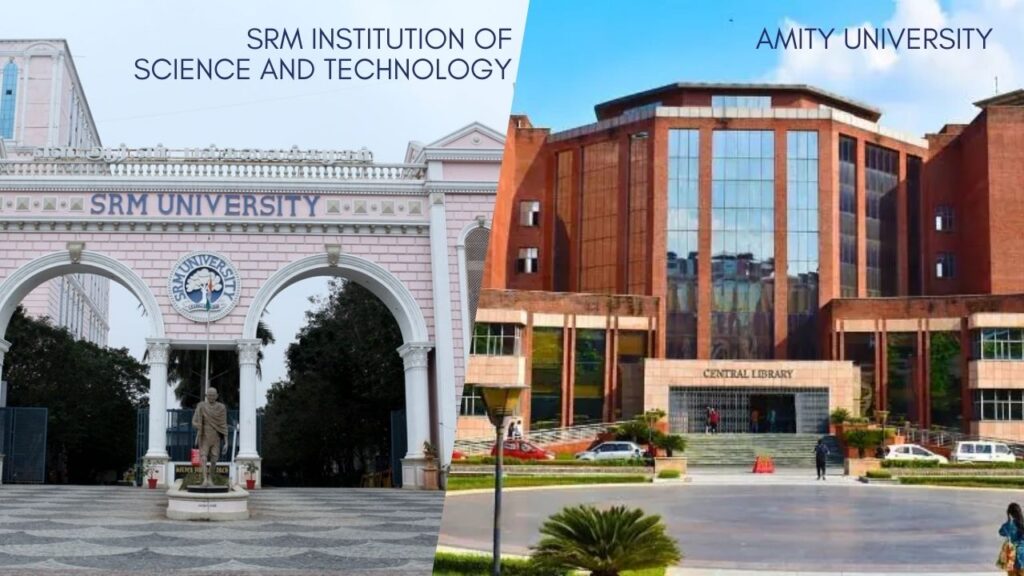
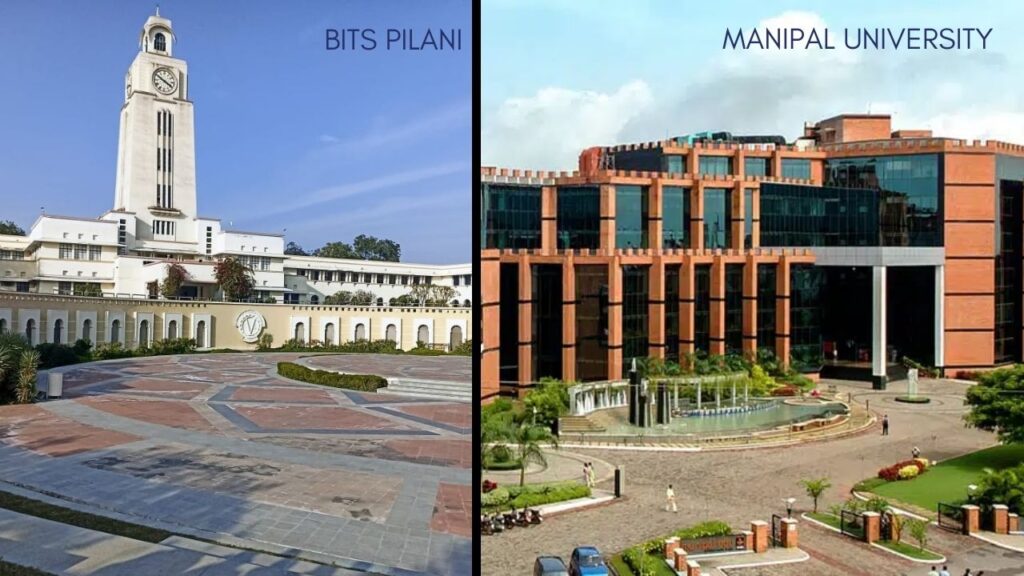
In the NIRF 2025 rankings, the private university sector is led by a few good institutions. The Manipal Academy of Higher Education (MAHE) emerges 3rd among universities across the country and stands as the best private university in the country. Closely following are BITS Pilani at rank 7, Amrita Vishwa Vidyapeetham at rank 8, VIT Vellore, LPU, Amity University and SRM Institution of Science and Technology at rank 11.
However, not only in rankings, Ashoka University is transforming Indian higher education. Ranked as the best new-age private university and awarded as the “University of the Year (Emerging)” in 2025 at the FICCI Higher Education Summit, Ashoka is the future of liberal arts and interdisciplinary education in India.
Manipal Academy of Higher Education (MAHE)
Amrita Vishwa Vidyapeetham
BITS Pilani
VIT Vellore
SRM Institution of Science and Technology
Amity University
Ashoka University
Lovely Professional University (LPU)
What Makes These Universities Stand Out?
Research and Innovation at the Core
Today’s private universities know that good teaching without innovation is half-truth. BITS Pilani has been especially creative in institutionalizing research amongst students. The institute, since 2023, has published more than 6,500 research papers in journals with average impact factor more than 4.1, filed 325+ patents, completed 13+ technology transfers, and incubated 138+ deep-tech startups with a combined valuation of over USD 300 million.These are not simply figures—they represent actual technology developed by students and professors that are reshaping markets and addressing real-world problems.
The Manipal Academy too has made huge investment in innovation infrastructure. Its Innovation Centre is a dynamic ecosystem that offers seed funding, incubation support, mentorship for patent filing and commercialization. The university has a state-of-the-art Central Analytical Instrumentation Facility (CAIF) with world class instruments such as SEM, NMR, XRD which enables interdisciplinary research in emerging areas like material science, biotech etc.
Ashoka University has now set up the Ashoka-Zeiss Core Imaging Facility, the first such facility in India, which caters to high end research in Cell Biology, Biophysics and Structural Biology. Inspiringly, in 2025, Ashoka was awarded the highest distinction for its research and innovation activities, demonstrating a strong commitment to advancing the frontiers of knowledge.
Faculty Excellence and Academic Rigor
The standard of faculty decides the standard of education. These elite private colleges have gone all out in trying to hire outstanding scholars, researchers, practitioners. Amity University has right faculty student ratio to provide quality education in meaningful mentorship and is supported by 2,100+ well experienced faculty members in helping 37,000 students in different campuses.
The curriculum at these schools is more than just textbooks. Many elite private universities weave in industry perspectives into their curriculum through guest lectures, internships and group work. That means students learn not only the theoretical underpinnings, but real-world applications and evolving industry issues.
Global Partnerships and International Exposure
It is always true that in a connected world, you need global exposure to get a good education. Ashoka University, one of India’s leading liberal arts universities, has partnered with 60+ prestigious institutions globally across 28 countries and five continents including Yale University, Sciences Po, University of Melbourne, EYH Paris. Partner organizations also provide opportunities for interaction with group and field trips during semester exchanges, summer programs, research collaborations and faculty exchange.
Similarly, Manipal University holds joint research programmes with top-notch institutions worldwide and is funded for research by various agencies such as DST, CSIR, AICTE. This global network ensures that students have access to an array of perspectives and world class academic resources.
Placement Excellence and Career Readiness
Quality education in the end translates into job opportunities. Manipal Academy secured more than 90% placement in 2025, with 8,000+ students placed across multiple programs. The highest package for engineering students went up to ₹69.25 LPA with average package of ₹12.31 LPA. Top recruiters: Microsoft, Amazon, Deloitte, IBM, Standard Chartered, and BookMyShow.
Inclusive Accessibility and Scholarships
Although being good quality generally carries a cost, many leading private universities understand that that should be manageable. These schools provide merit-based scholarships, aid packages and need-based grants so that gifted students aren’t turned away because of money.
The Innovation Ecosystem
What really sets the best private universities of today apart is their strategies for innovation across the board. BITS Pilani has created a number of innovation tracks to address a range of contexts – SPARKLE for transdisciplinary problem solving, SOLVE for applied innovation and PIEDS (Pilani Innovation & Entrepreneurship Development Society) along startup development.
Ashoka University launched the Young Scholars Programme: Innovators in Science & Tech (YSP IST). It’s for the high schoolers and it’s a 10 day live-in camp. It enables them to learn difficult subjects such as environmental chemistry, neuroscience, quantum computing and genetic engineering. These camps help create future inventors. They also ignite science curiosity at a young age.
Choosing a university is a very personal matter. If you are interested in a multidisciplinary education close to industry, Manipal Academy is excellent if you like comprehensive education with strong links to industry. If you want the best research and entrepreneurship route, BITS Pilani is unparalleled. Ashoka University, for those interested in liberal arts with a global outlook, provides a new frontier in Indian higher education.
What matters most is knowing what you want. Are you a basic researcher? Do you want to build startups? Are you looking for global exposure? The finest private Indian universities today cater to such journeys
The Future of Private Higher Education
The Indian private university sector is evolving fast. They are not simply copying public universities, they are innovating, conducting cutting edge research and drawing talent from around the world. This focus on quality, innovation, research and international collaboration is indicative of a vibrant, competitive ecosystem, and students stand to gain immensely from this.
Keep in mind as you start your higher education journey, Rankings are just one measure. What makes a school is its learning community, the quality of its faculty, the substance of its research, and its aspiration to produce not just accomplished professionals but responsible global citizens. India’s finest private universities are increasingly making the case that they can indeed deliver exactly that.
Conclusion
India’s leading private universities are transforming higher education with cutting-edge research, global outlook, industry-centred curriculum, and incubators of innovation. From BITS Pilani’s entrepreneurial culture to MAHE’s research excellence and Ashoka’s revolutionary liberal arts model, you will find a way to map out a future-ready career.
So when you’re picking your uni, focus on what suits your ambitions – be it research, startups, global learning or industry know-how.
Ultimately, these top private colleges in India are showing that they can shape not just degrees, but the leaders of tomorrow.
Six months into college, nobody’s complaining about their laptop’s benchmark scores. They’re complaining about their shoulders. A 2 kg laptop doesn’t feel heavy in a store demo — it feels heavy on the fourth flight of stairs to a 9 a.m. class, or on the walk from hostel to library with three textbooks and a water bottle sharing the same bag. That’s the real case for lightweight student laptops: not a spec-sheet flex, but something you’ll actually carry every single day for the next three or four years.
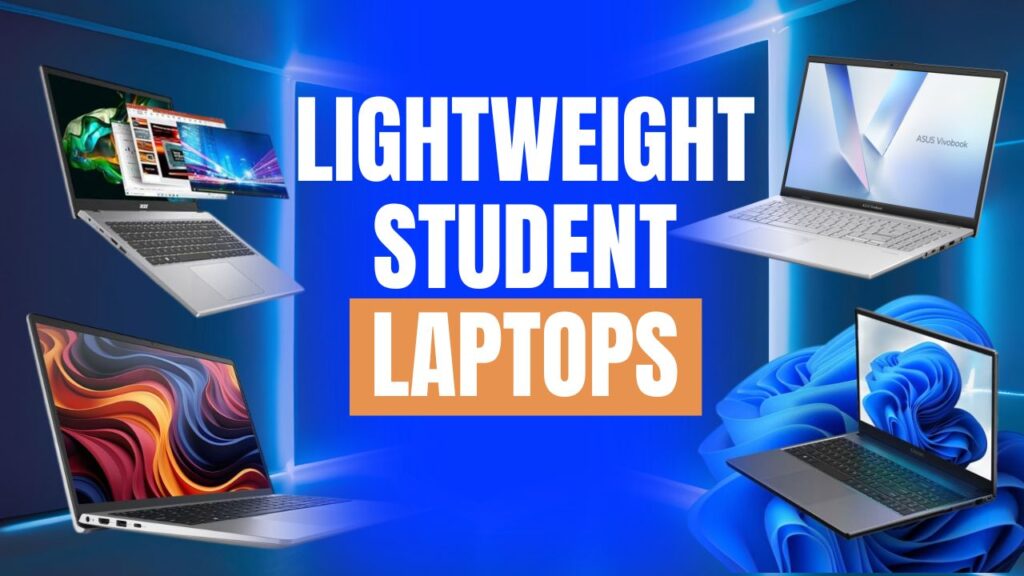
Here is a list that sticks to laptops built with that in mind — machines with a confirmed weight under roughly 1.5 kg, or ones explicitly built and marketed as ultraportables where the brand hasn’t published an exact figure for every configuration. Starting from ₹30,000 and goes up to premium models of laptops and every laptop is mentioned with their outstanding features to let you decide which one fits for you.
The prices mentioned below for each laptop as of August 2026 across Indian retailers but they always vary in festive season, so check the live price on online platforms like Amazon and Flipkart or offline store before buying it.
What “Lightweight” Actually Means for a Student Laptop
Under 1.5 kg is the number worth remembering — that’s roughly where a 14-inch laptop stops being a minor inconvenience in a backpack and starts being genuinely easy to forget you’re carrying. Below that, most manufacturers are using magnesium-aluminum alloy or a denser polycarbonate blend instead of the thicker plastic shells common on budget 15.6-inch machines.
The trade-off is usually battery capacity and port selection — thinner chassis mean smaller batteries and fewer full-size ports, so you’ll see more USB-C-only designs and dongles in this category. Screen size matters too: a 14-inch panel can shave 200–300 grams off an otherwise identical 15.6-inch laptop, which is why several picks below come in 14-inch variants specifically. If you genuinely need the extra screen real estate for CAD software or spreadsheet-heavy coursework, that’s a fair trade to make consciously — just don’t assume a 15.6-inch “slim” laptop weighs the same as its 14-inch sibling, because it usually doesn’t.
The Best Lightweight Student Laptops in 2026
1. CHUWI CoreBook X Pro — Under ₹30,000
Processor: Intel Core i5-12450H
RAM: 16GB (upgradeable)
Best for: Tightest budgets
If you still want a genuine H series processor, pick CHUWI CoreBook X Pro for ₹30,000 which is a hard ceiling. Instead of U-chip, its offer 12th‑gen Intel Core i5‑12450H and 16 GB of RAM. Combining them will give you excellent performance which you can get in a laptop which costs you twice and both the RAM and SSD are user‑upgradeable later.
The only drawback is CHUWI is a Chinese brand so it’s hard to find service centers in most regions in India compared to Dell, HP, Lenovo, or Acer. if something goes wrong then it takes longer to repair than usual. Exact weight figures also aren’t always independently confirmed, so check it carefully before buying.
2. Dell Vostro 14 3440 — ₹39,990
Weight: 1.46 kg
Processor: Intel Core i3
Best for: Portability-first budget pick
This is the most lightweight student laptop with 1.46 kg at ₹39,990. Dell Vostro is a proven reliable laptop with Core i3 for daily office work, support smooth streaming, and browsing with multiple tabs but it gets stuck when you attend zoom call, play spotify with chrome tabs.
It also offers business-grade hinges and a keyboard that doesn’t get loosen quickly on daily typing. This is a sensible choice for students who want to read PDF’s, make presentations, and complete assignments which don’t require compute-heavy operations.
3. Acer Aspire 15 AS15-42 — ₹40,999
Processor: AMD Ryzen 7 7730U
RAM: 16GB
Storage: 512GB Gen4 SSD
Best for: Performance-per-rupee
Give a few hundred extra and get a totally different laptop which supports Ryzen 7 7730U processor and 16GB RAM which most laptops do not offer at this price point. If students want to buy a lightweight student laptop for coding, data work, or large operation tasks which require more cores rather than raw single-thread speed.
Acer doesn’t prominently list an exact weight for this configuration but the size of the 15.6‑inch chassis suggests that it will noticeably heavier that the 1.46 kg Vostro. If you need a reliable and well-performing laptop over portability then pick this one.
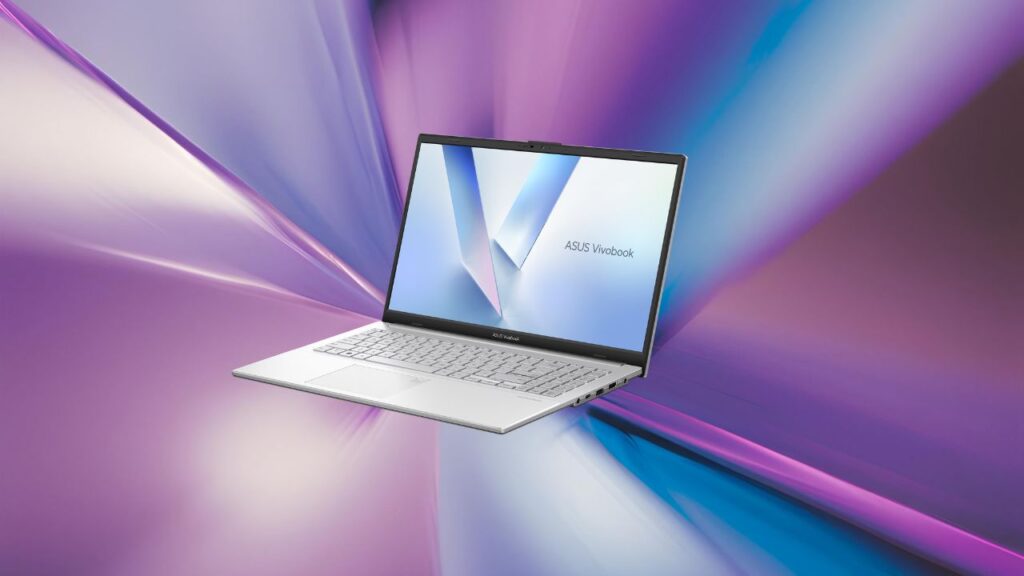
4. ASUS Vivobook Go 15 (2026) — ₹46,990
Category: Ultrabook
GPU: AMD Radeon (integrated)
Best for: Mid-range Windows ultraportable
Its name defined its purpose overall, ASUS launched this Vivobook Go 15 especially for students to carry it easily wherever they go. This new 2026 variant is built with AMD-powered chip and Radeon graphics for more high performance and support for everyday multitasking than Intel’s equivalent integrated graphics.
Exact RAM and storage vary by the specific SKU you land on, and ASUS’s spec sheet for this listing doesn’t pin down a precise weight — the smaller 14-inch Vivobook Go models have historically landed between 1.3–1.5 kg, so this is a reasonable proxy, but confirm the number on the exact variant before ordering.
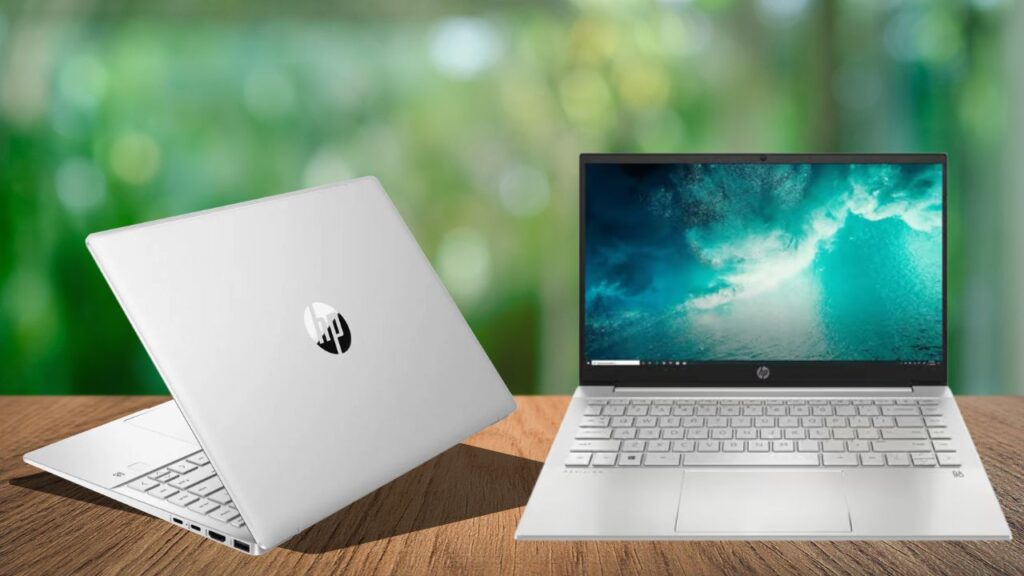
5. HP Pavilion Plus 14 — ₹69,990–₹79,999
Processor: Intel Core i5-1335U (13th Gen)
RAM: 16GB DDR5
Storage: 512GB SSD
Best for: Video calls and note-taking as daily habits
This is the thinnest laptop in the Pavilion range making it best for students who use the laptop for video calls and take notes directly. The 16GB of DDR5 and a genuinely sharp Full HD panel with a solid webcam of HP Pavilion Plus 14, make it noticeably better for online classes than most laptops at this price.
Price may fluctuate according to the retailer and offers in your area but this one genuinely listed between ₹69,990 to ₹79,999. You can compare its prices across various platforms before ordering it.
6. Apple MacBook Air 13″ (M4) — ₹89,990 (MRP ₹97,900)
Weight: 1.24 kg
Battery: Up to 18 hours video playback
Best for: Design, media, and Apple-ecosystem students
There is no fan noise, long-lasting battery which survives the whole day with you, and 1.24 kg weight that lets you carry it anywhere. Apple’s silicon efficiency consistently holds up in everyday use. This is the lightest and longest-running laptop on this list with honest value.
The present cost is ₹97,900 but Flipkart offer brings down the price to ₹89,990. The price has been varying a few times in the last months and still is, so better check the exact price before ordering.
The only downside is that many engineering programs and courses that involve a lot of CAD are not compatible with macOS exclusively, so be sure to check what you will need, or what your specific programs require, before making the switch.
Dell Vostro 14 vs Acer Aspire 15: Different Purpose in Same Price
The price difference is just ₹1,000 but ideal for students with totally different purposes, so it’s worth putting them side by side directly.
Dell Vostro 14 3440
Acer Aspire 15 AS15-42
Price
₹39,990
₹40,999
Weight
1.46 kg (confirmed)
Not confirmed — expect heavier
Processor
Intel Core i3
AMD Ryzen 7 7730U
RAM
Not specified in listing
16GB
Storage
Not specified in listing
512GB Gen4 SSD
Best for
Carrying it everywhere without thinking about it
Coding, multitasking, heavier workloads
If you’re choosing between these two, the question to ask yourself isn’t “which is better” — it’s “do I carry this laptop more often than I max it out.” Arts, commerce, and most humanities students will rarely hit the Vostro’s ceiling and will feel the weight difference every day. Engineering, CS, and design students doing real compute work will hit the Vostro’s ceiling within a semester and should take the Aspire’s extra RAM and cores over the lighter chassis.
Which Laptop Should You Actually Buy
Under ₹30,000 and not fussed about brand recognition: the CHUWI CoreBook X Pro gives you specs nothing else at this price matches, provided you’re comfortable with a smaller service network.
Around ₹40,000 and your coursework is reading- and writing-heavy: the Dell Vostro 14 3440 is the lightest confirmed option in this bracket and built to survive years of daily use.
Around ₹40,000 and your coursework involves code, data, or design tools: the Acer Aspire 15 AS15-42 gives you real multi-core performance for barely more money, at the cost of some portability.
₹47,000 range, want a Windows ultrabook rather than a budget laptop: the ASUS Vivobook Go 15 is the pick, with the caveat that you should confirm the exact weight and RAM on your specific variant before paying.
₹70,000–₹80,000 and you’re on video calls constantly: the HP Pavilion Plus 14’s webcam, display, and DDR5 memory earn their premium over the cheaper picks on this list.
₹90,000 and up, and battery life or a fanless, silent machine matters more than Windows-specific software: the MacBook Air M4 is the lightest and longest-lasting laptop here, full stop — just confirm your course doesn’t require Windows-only tools first.
None of this is a push to spend more than you need to. Most students finish a degree comfortably on the ₹40,000 tier; the ₹70,000-plus laptops earn their price mainly if you’re on calls all day or you specifically want the Apple ecosystem.
Two Things That Matter More Than Weight (But Get Ignored)
Weight gets all the attention because it’s the easiest thing to compare across a spec sheet, but two other factors decide whether a laptop actually holds up through a degree.
RAM you can’t upgrade later. Several budget laptops in this price range solder RAM directly to the motherboard, which means the 8GB you bought with is the 8GB you’re stuck with for the laptop’s entire life. This matters more each year as browsers, note-taking apps, and coursework software get heavier — 8GB that felt adequate on day one can feel tight by the second semester. Where a listing doesn’t explicitly say “upgradeable” or list a soldered/DDR5 spec, it’s worth asking the seller directly before you buy, especially on marketplace listings where the exact SKU isn’t always obvious from the product photo.
Charging reality in a hostel room. A laptop rated for 10+ hours on paper is genuinely useful if you’re not fighting for a plug point between four roommates and a limited number of sockets. USB-C charging (as on the MacBook Air and most of the ultraportables above) means you can share a charger with your phone or a power bank in a pinch — a proprietary barrel-pin charger, common on some budget Windows laptops, means losing that one cable is a bigger problem than it sounds. If your hostel setup involves shared or limited charging points, weigh this alongside battery life rather than treating them as separate factors.
Where to Buy (and How to Not Overpay)
Don’t lock into a single retailer before comparing — Flipkart, Amazon India, Croma, and Reliance Digital regularly carry the same laptop at different prices, and the gap can run into a few thousand rupees on any given week.
Several brands, including HP, Dell, and Lenovo, run student-ID discount programs periodically that aren’t always visible on the main listing page, so it’s worth checking the brand’s own site alongside the marketplace listing.
Big sale windows — Flipkart’s Big Billion Days in October and Amazon’s Great Indian Festival are typically when the steepest cuts show up, so if your purchase isn’t urgent, timing it around one of those is the single easiest way to save money on any laptop on this list.
Here you can get a list of lightweight student laptops which helps you understand which one fits you better. The laptop which lets you do your work smoothly and easy to carry anywhere is the best one, not the premium price laptops. So read and check by yourself carefully before ordering it because the price can go down or high with time.
TSCHE has announced the result of the examination held on 8 June and 9 June, Candidates can now check their results online. This exam is an entrance key for admission to MCA and MBA programs across Telangana. Candidates can find the link to the official website in the article to check their results.
If you don’t know how to download your result, there is a step-by-step guide to check and download your ICET result. After the result declaration, shortlisted candidates can now prepare for the counselling round. It will be announced later on the website. Keep checking for updates on the counselling process.
Details For The ICET Result 2025
Conducting Body
Telangana State Council of Higher Education
Exam Name
Integrated Common Entrance Test
Purpose
The Telangana government conducts this exam as an entrance exam for admission in Universities and affiliated colleges across Telangana.
Page appears on the official website on your browser.
Enter your credentials to check the result. (Registration number, DOB)
Result will show up on the screen.
You save and download it for a hard copy.
Minimum Marks for ICET 2025
TSCHE has set some limitations for the examination qualifying marks. According to their rule, minimum qualifying marks for general and OBC candidates must be at least 50 marks out of 200. Meanwhile, there are no minimum marks for reserved categories like SC/ST.
These minimums will have to be acquired by the students to secure admission in universities for MCA and MBA programmes.
The link is active now for RRB ALP Admit Card 2026 for the candidates who prepare for CBT–1 exam. They can download the RRB ALP Admit Card 2026 from 9th February 2026, and Hall tickets can be now downloaded from the official websites of the RRBs. Exam candidates for February 13, 16, 17, 18 can now download admit cards. Get yours before the test dates!
RRB ALP Admit Card 2026 Release Dates
The release of the RRB ALP Admit Card 2026 is after the notification on exam dates, which stated that candidates have enough time to prepare.
Exam Date
Admit Card Release Date
13th February 2026
9th February 2026 (Released)
16th February 2026
12th February 2026 (Released)
17th February 2026
13th February 2026 (Released)
18th February 2026
14th February 2026
Age Limit
Applicants must fall within the age limit of 18-30 years as on 1st July, 2025. There are age relaxations – such candidates from certain categories can apply under relaxed age limits:
Age relaxation of 5 years is applicable for the SC/ST candidates.
3 years age relaxation for OBC candidates only.
Required Qualifications
The eligibility criteria is that he should be passed in matriculation(10th) from a recognized board and he should be either ITI pass in the respective trade or diploma in engineering from any recognized institute.
It is necessary for the candidates to check their qualifications and their technical skills because it is most required for the post of Assistant Loco Pilot.
Fitness Requirement
The candidates should fulfill the prescribed medical and physical standards of RRB to be considered fit for the work.
How to Access The Admit Card For ALP Exam
To download the admit card, candidates are required to visit the official website of RRB.
Find and click on the RRB ALP Admit Card 2026 section, candidates have to login using their registration details to get the download link of the document.
Candidates should hold the hard copy of the admit card on the day of the exam as the admit card is mandatory for the entry to the exam center.
Admit Card contains examination center name, city, date of exam, subject name, candidate’s name and roll number.
Salary
The RRB ALP salary 2026 is structured to offer competitive pay. The starting salary of the candidates selected for the post of Assistant Loco Pilots are entitled to Rs 19,900 to Rs 35,000 per month as per the 7th Pay Commission salary.
The salary is made up of the basic pay and several allowances. These allowances include the following – Dearness Allowance, Night Duty Allowance, Special Allowance.
The total salary is likely to further increase with the course of time as there are promotions. When the aspirants grow in their careers, then also increments come, taking their earnings to some more sums.
Selection Process
The selection for RRB ALP 2026 consists of multiple stages intended to test the ability of the candidates. The process normally consists of:
Computer Based Test (CBT) Stage I: This first qualifying examination is of 75 marks and covers various subjects.
Computer-Based Test (CBT) Stage II: Those who qualify in the first stage will go to the second stage, which is even more detailed.
Computer Based Aptitude Test (CBAT): Candidates also are required to appear for the CBAT on their application for certain positions within the Loco Pilot organization to measure their suitability for the job.
Document Verification: The successful candidates will be subjected to verification of their qualifications and credentials after the assessment tests.
Training: who cleared all the above stages can now get trained and start their job.
The procedure is separated into several parts, focusing primarily around a Computer-Based Test (CBT).
Exam Pattern
CBT—Stage 1
Parameter
Details
Test Stage
Computer-Based Test—Stage 1 (CBT-1)
Duration
60 minutes
Total Questions
75
Maximum Marks
75
Purpose
Screening test to assess candidates’ preliminary knowledge in various subjects
CBT—Stage 2
Parameter
Details
Test Stage
Computer-Based Test —Stage 2 (CBT-2)
Structure
Two parts: Part A and Part B
Part A Subjects
Mathematics, General Intelligence & Reasoning, Basic Science
Part B Subjects
Technical Ability
Computer-Based Test for Aptitude and Trade (CBAT)
The test has been made mandatory for the eligible candidates for some Loco Pilot posts and it checks their suitability for the work.
Verification of Documents
To establish the eligibility and credentials of the candidates. Candidates must provide valid documents of the information they claim to have.
Medical Examination
The final selection will include a medical examination for candidates who qualify the document verification. It is mandatory to check any disease, or health issue in the candidates that makes the post inconvenient.
Syllabus for RRB ALP 2026
The syllabus for RRB ALP 2026 primarily encompasses on Number system, decimal, fraction ratio and more from mathematics, logic and reasoning for increase critical thinking using analogies, series, sequence, syllogism, General science focus on basic bio, chemistry, and physics that helps in understanding simple phenomena. General Knowledge from history, events, and current affairs are important then technical abilities will give you clear engineering and technology questions from the ALP exams.
There are numerous 12th Pass Government Jobs 2025 in India where students can secure their stable career in the specific sector including defense, banking, admin, and public sector undertakings (PSUs). Read the full article to know about job roles, salary, eligibility, and future scope for 12th-pass candidates.
Top 10 Government Jobs for 12th Pass
The government is spreading job vacancies for 12th-pass candidates in 2025. You can also secure your career in a specific sector.
There are the following job roles in various sectors:
Police and Defense
The defense sector has many job roles after 12th pass candidates
Police Constable
Police Sub-Inspector (some states may require graduation for this job role but some recruit after 12th)
National Defence Academy (NDA)
Technical Entry Scheme (TES) – Indian Army
Agniveer Scheme
Military Nursing Service (MNS)
Railway Jobs after 12th pass
Railway job offers a good salary to the candidates, you can apply after 12
Junior Clerk Cum Typist
Commercial Cum Ticket Clerk
Trains Clerk
Railway Group D Posts
Ticket Collector
Ticket Examiner
Banking Jobs after 12th pass
There are Government banks where candidates can apply after 12 but they must pass the exam with a good score. This sector provides long-term career stability.
Clerk
Data Entry Operator
Sales Executive
Banking Assistant
Cashier
Peon
Public Sector Undertakings (PSUs)
Junior Assistant/Apprentice
Technician
Fieldworker
Helper
SSC Jobs (Staff Selection Commission)
Data entry jobs
Lower Clerk
Postal
Assistant
Eligibility Criteria for Government Jobs After 12th-pass
Similar Eligibility Criteria across these Sectors
There is some eligibility for these roles in Railway, defense, SSC, PSU, and banking are same. Let’s talk about the common criteria for the job roles.
Nationality: Candidates must be the Indian Citizen Age Limit: The minimum age must be 18 years or older, and the maximum age should be exceeded by the sector and category of the person. You can check these exact eligibility requirements while applying for the specific role. Educational Qualification: Candidates should pass 10+12 with a 50% score in any stream.
Key Difference in Eligibility Criteria
Railway: For a Technical post in the Railway, the candidate must have an ITI/Diploma. Physical Tests are necessary for Group D positions.
Defense: Only Unmarried candidate apply for NDA post Candidate must have good health and pass the medical tests
SSC: Age Limit vary for some posts For Clerical post typing test will be included
Banking: The Bank Officer post requires graduation, candidates must have a degree in a similar field for this job role Computer skills are required in bank jobs
PSU: GATE score required for the technical posts The minimum age required in the range (21-27) may vary according to the various categories.
Government exams candidates take after 12th
There are some competitive exams which are conducted by the government for the various job roles in each sector. If you want a government job, you must pass the exam (every job role has different exams)
If you want a Job in the Indian Army, navy, or Air Force, You have to attempt the National Defense Academy (NDA) exam and score well to secure a job role.
For entry-level jobs in banking, you need to take the IBPS clerk exam.
If you want to go in Police jobs you must attempt State Police Constable Exams that are conducted by the state government.
For clerks, assistants, and data entry operator job roles candidates must pass the SSC CHSL.
Indian Railway offers jobs for the candidates who passed RRB NTPC.
Conclusion
You can apply for 12th Pass Government Jobs 2025 and secure the rewarding career for a lifetime. Every sector has different job roles, just stay focused and clear out the competitive exams. Stay updated with the official notification for latest vacancies in defense, railway, SSC, and PCU to apply early.