BSc Physiotherapy (BPT): Course Details, Eligibility, Fees & Career Scope

BSc Physiotherapy

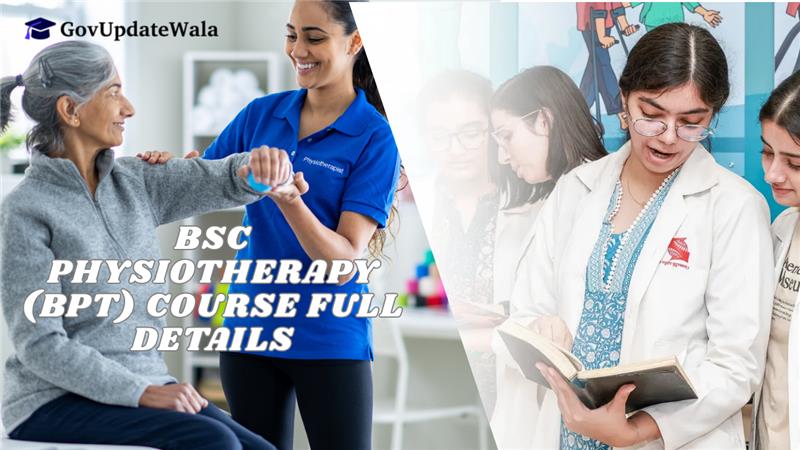
BSc physiotherapy is a 4-year undergraduate professional course, that can be opted by those students who wish to pursue a career in healthcare services or wish to provide care to patients through physical rehabilitation and therapeutic care. The course gives you a thorough knowledge of human body anatomy, movement science and modern physiotherapy techniques as medical science and clinical practice. Due to increasing emphasis on physical well-being, rehabilitation, and sports medicine, physiotherapy has become a well-established and sought after profession and BSc Physiotherapy is a particularly good academic option for students who take interest in patient care, science of recovery and holistic health. 

Overview of BSc Physiotherapy

The bachelor’s degree in physiotherapy is an application of clinical and science based physiotherapy. This course is conducted for four years both for theoretical sessions and practical training where the course participants learn basics of anatomy and physiology as well as methodology of physical therapy. 

Students also complete clinical placements or internships where they have the opportunity to work with patients who have a range of bodily ailments. This practical experience is key to acquiring the skills you need to become a physiotherapist. 

Course Curriculum for BSc Physiotherapy

The BSc Physiotherapy course combines theory and practice in equal measure to develop sound clinical and professional competence. It begins with core modules in anatomy, physiology, biochemistry, pharmacology, assessment techniques, research methodologies, and communication skills in order to build a robust base.

Students also take higher-level courses in rehabilitation techniques, therapeutic interventions, sports physiotherapy, kinesiology, and biomechanics in the second year. It also involves clinical training with practical placements, enabling students to put their knowledge into practice in real-life healthcare environments. Assessment of learning in physiotherapy is by written papers and practical examinations and project work, all of which are designed to ensure students’ all-round competence in the practice of physiotherapy. 

Eligibility for BSc Physiotherapy

The requirements for admission to a Bachelor of Science (BSc) in Physiotherapy would vary from one institute to another and is subject to the individual decisions of the institute. 

Basic academic requirement: candidates generally should have completed their 12th-grade higher secondary education with not less than 50% aggregate in science stream. 

Eligibility for BSc Physiotherapy

Requirements for Subjects: Apart from the total percentage, he/she has to compulsorily pursue some core subjects in class 12. The essential subjects to be studied usually are:

  • Physics
  • Chemistry
  • Biology

These are important subjects because they help you learn basics which are required to know the human body, its functions and scientific rules which are applied in physiotherapy. 

Further Information: Vocational qualifications such as BTECs may be accepted by some institutions in addition to or in place of equivalent qualifications, subject to their individual application requirements. 

The best universities might also have additional requirements such as entrance examinations (NEET, CUET, or state-level exams) or interviews to assess candidates. 

Admission Process in Best Universities of India

Admission for the BSc Physiotherapy course is based on entrance exam conducted either by individual colleges or through centralized examination system. 

These are the most common entrance exams: 

  • NEET 
  • CUET 
  • KCET 
  • IPU CET 
  • LPU NEST 

Application Process

  1. Get/Download the Application Form: Students can either download the application form for the respective college or university from the official website or they can get the application form from the college or university itself by visiting the institute. 
  2. Submission of Documents: Documents to be submitted are usually the Class 10 and Class 12 mark sheets, photographs, identity proof, etc. as per the norms of the institution.
  3. Entrance Exam: Aspirants need to take the designated entrance test by the specified deadlines of the college/university.
  4. Cut-off list/Interview: When the entrance examinations are over, the college may announce a cut-off list/interview for finalizing the admission on the basis subject and other criteria.
  5. Confirm Admission: After this, the qualified candidates have to confirm their admission by submitting the requisite fee and the formalities for the same are provided by the concerned institution. 

Fees Range in India’s Best Colleges

In India, the BSc Physiotherapy course fees in the top institutes are generally in a range of INR 50,000 – 3,00,000 per year depending on whether it is a government or private institution. 

Some of the top ranks such as All India Institute of Medical Sciences (AIIMS) and Christian Medical College (CMC) can command fees on the higher end of this, while others have much lower overall costs of training due to government subsidies.

All in all, the expenditure of Bsc Physiotherapy Education varies in different countries and institutions and it is recommended to explore each college for further information about tuition fee and living expenditure. 

Future Opportunities

Career Focus with BSc Physiotherapy in India

BSc Physiotherapy is a good career option and has a very bright future in India as the demand of qualified physiotherapists is increasing all over the world. Graduates have several options to choose from, including options that are designed to work with patients that have different needs and in different healthcare environments. 

Clinical Physiotherapy

One of the primary career opportunities is that of a Clinical Physiotherapist, which allows the graduates to work in hospitals, clinics and rehabilitation centers. Physiotherapists assess and treat patients in institutions, but may also be employed as independent consultants. Students can assess as orthopedics, neurology, pediatrics, geriatrics, and cardiopulmonary physiotherapy. 

Sports Physiotherapy

Another important area is Sports Physiotherapy which relates the treatment and prevention of sports injuries. Sports physiotherapists work with athletes to improve performance and prevent injuries and they may be found working with sports teams and gymnasiums. 

Rehabilitation Therapy

Rehabilitative is a key discipline the physiotherapists are concerned with rehabilitation and restoration of motion and function to people. Physiotherapy is important for post operative rehabilitation after surgery. It helps to regain function, manage pain and discourage complications, which are essential elements in the promotion of the best recovery. 

Academic and Research Opportunities

The graduates can also go for academics, and teach the candidates in Physiotherapy in colleges and universities. Opportunities for higher education like MPT (Master of Physiotherapy) or even PhD will also add on to career options. 

Government and Private Sector

BSc Physiotherapy graduates can apply for jobs in both the government and private sector. Qualified physiotherapists are in demand in government hospitals, health campaigns, non-governmental organizations (NGO), but they also have important positions in private clinics, companies, health care programs and sports clubs. 

Career Focus with BSc Physiotherapy Abroad

Working abroad can increase chances of finding a job for physiotherapy graduates. Countries like Australia, Canada, Germany and Switzerland are very friendly to international physiotherapists and in many cases allow for foreign trained professionals to obtain licensure.

Professional Growth

Professional development is necessary in the field of physiotherapy. Additional to the physiotherapy degree, many physiotherapists also get specialised qualification/education in the field of paediatric physiotherapy, geriatrics or rehabilitation to name a few.

Work within international physiotherapy organizations and/or attend workshops or conferences in a foreign country to further your career development and to acquire a competitive advantage make you more marketable as a graduate when you’re seeking employment. 

Salary Expectations

In India, a physiotherapist’s average annual salary is INR 1,018,527 (USD 12,300). Fresher physiotherapists are paid around INR 15,000 to 25,000 per month (varies as per employer and city conditions) or can get a stipend from the higher education institute from where they had studied. 

With more experience, salaries are estimated at INR 50,000 – 80,000 per month. 

Canadian physiotherapists can count on earning from $70,000 to 85,000 USD, which is quite a high salary when compared to that of other countries. Newly graduated physiotherapists in Australia generally earn a salary of around AUD 65,000 which grows significantly for more finding its way to up to around AUD 140,000 in senior positions or clinical educators.

Physiotherapists in Gulf countries like Saudi Arabia, UAE, Qatar, also enjoy good pay scales. Staff physical therapists in these areas typically make between USD 3,500 and 5,000, while senior therapists could be paid up to 6,000 USD or more per month.

The salary forecasts for physiotherapists indicate a wide range depending on region of work, sector specialisation and level of experience. 

BSc Physiotherapy Comparison with BPT

The BSc physiotherapy is more a scientifically based approach covering a wide range, but the Bachelor of Physiotherapy (BPT) is also mixed with a considerable amount of practical training, which focuses on the therapeutic procedures and assessment methods required in the industry. BPT courses may also focus on the use of physiotherapy in different clinical areas so graduates can find employment there too. 

BSc Physiotherapy Comparison with BPT

The BPT course is innovatively crafted which equips students not only with theoretical knowledge but also with practical expertise required to evaluate, diagnose and treat various physical disorders, thus it is a good option for students who want to pursue a career in which they help patients regain mobility and quality of life vision enabled by physical rehabilitation. 

Overall, BSc and the BPT in physiotherapy provide different routes to a career in physiotherapy BSc offers a wider scientific base and BPT concentrates more on clinical aspects and therapeutic procedures. Both courses could lead to rewarding careers in the ever changing area of physiotherapy, specific to the interests and talents of the graduates. 

Conclusion

BSc Physiotherapy is a great opportunity to explore what a rewarding healthcare career could be like, with well-rounded knowledge in sciences, clinical practice and career types. Physiotherapy today is a dynamic and expanding profession all over the world including our country with multifaceted activities starting from hospital, sports rehabilitation to research, academic and international exposure.

Whether students are going into clinical practice, further education, or opportunities abroad, they will graduate from this program with the knowledge, skills and confidence to guide their growth. In essence, BSc Physiotherapy it not just a degree—it is a journey to a rewarding career dedicated to improving mobility, health and quality of life. 

Leave a Comment

Your email address will not be published. Required fields are marked *

Top Highest Paying Government Jobs in India That Pay Like Private Sector!

top highest paying government jobs in India

If you are preparing for a government job, consider these top Highest Paying Government Jobs in India. Whether you have a background in science, commerce, or arts are eligible in various sectors. Becoming a scientist in the government sector is the best decision for engineers who want to take a chance on space research and solar system activities.

PSUs and Railways also offer high-paying jobs with additional benefits like allowance and career growth. So, choose the right path for your career to establish financial stability. Private sector doesn’t provide job security, pensions, and other perks while government sectors provide more than high salaries.

ISRO Scientists are highly trained engineers and researchers in India. They optimized their research on space exploration missions such as moon operations and other planets. They are innovative in designing and developing systems that capture real-time data of weather, disaster, or any other activity on the globe. Launching space materials to become the no.1 leader in technology around the whole world.

  • Eligibility: You must have a bachelor’s degree in Engineering or Technology like ECE, ME, CE, etc.
  • Salaries:
    • Entry-level pay – Rs. 56,000 – 70,000 per month.
    • Mid-Level Pay – Rs. 5 lakhs – 10 lakhs per month.
    • Senior Level Pay – Rs. 20 lakhs – 30 lakhs per month.
  • Benefits: 
  • Housing Allowance 
  • Travel Allowance
  • Dearness Allowance
  • Medical and LTC
  • Professional Growth
  • Career Progression: Level 10 to director levels with increment of salaries, level includes leadership and projects heads with also great responsibilities. Scientists evolving in big projects and achievements can have a chance to grow to the next level fast, the higher the level, the bigger the responsibilities but worth it all. 

DRDO Scientists are greatly admired because they are the most talented engineers who are responsible for specializing the defense technologies such as missiles, electronic materials, radars, and many more things that are helping our Armed Forces to stay ahead while under attack. They build advanced communication systems so they cannot be easily hacked, and research on new technologies like AI, ML & Cybersecurity to ensure support for the operational needs. Working with the military and shielding them with technologies is one of the pride jobs.

  • Eligibility: Master’s degree in Engineering like MS/PhD. To enter into a scientist position at DRDO, you must clear the entrance like SET or GATE.
  • Salaries (7TH Pay Commission):
    • Scientist B – Rs. 56,000 per month.
    • Scientist C – Rs. 67,700.
    • Scientist D – Rs. 78,800.
    • Scientist E – Rs. 1,23,100.
    • Scientist F – Rs. 1,31,100.
    • Scientist G – Rs. 1,44,200.
    • Secretary Level – Rs. 2.25 lakhs.
  • Benefits:
  • Housing Allowance up to 24%
  • Travel Allowance
  • Dearness Allowance
  • Medical and LTC
  • Professional Allowance per year.
  • Merit-Based Promotion
  • Career Progression: DRDO offers personal training in their institutions at Pune and Mussoorie are DIAT & ITM  respectively. Whether you want to acquire higher qualifications as a DRDO scientist or a chance for foreign deputation for training for specific assignments, you can go on further with any option.

Working for infrastructure, maintenance, and railway track construction is part of the IRSE officer’s job. Safety, bridges, and tunnel development and maintenance are also under this job. The major projects also involved new railway lines, and coordination with other departments for operations like these.

  • Eligibility: B.tech or BE in Civil Engineering. For entering into an IRSE position in Indian Railway, you must clear the UPSC ESE exam.
  • Salaries:
    • Entry-Level: Rs. 56,100 + allowance per month.
    • Senior-Level: Rs. 35 lakhs per year. 
  • Benefits:
  • Housing Allowance up to 50%
  • Travel Allowance
  • Dearness Allowance
  • Medical and LTC
IRSE Officers (Indian Railway Service of Engineers)

IRTS officers simply manage train operations, logistics, and other commercial disciplines that ensure the train reaches on time. The time track really disturbs other processes if they’re delayed due to a lack of attentiveness. So IRTS makes sure to check every process and transport that goods and passengers on time. Planning schedules for trains, and supervising operations both on trains and stations. Handling logistics and managing tickets to deliver the best services.

  • Eligibility: 50% of recruitment happens directly, and 50% is promoted from Group B. Candidates must have cleared the UPSC Service Exam.
  • Salaries:
    • Basic Salary – Rs. 56,000 per month.
    • Mid-Level Pay – Rs. 15 lakhs.
    • Senior-Level Pay – Rs. 2 lakhs.
  • Benefits:
  • Housing Allowance up to 24%
  • Travel Allowance
  • Dearness Allowance
  • Training at IIM & IIT
IRTS Officers

IAS officers are highly respected in Indian Society. The responsibility that comes with a badge is the top-level administration, where the administrator manages government policies, schemes, and daily operations related to states or cities at the national level. By acting as District Magistrates or Collectors they are maintaining law and order within the country. They have the responsibility to advise ministers, formulate policies, and ensure establishing success by managing any disaster.

  • Eligibility: Candidates must have cleared the UPSC Service Exam after passing their Graduation in any stream.
  • Salaries: 
  • Basic Salary – Rs.60,000 per month.
  • Mid-Level Pay (DM/Secretary) – Rs. 1.2 lakhs.
  • Senior-Level Pay (Cabinet Secretary) – Rs. 2.7 lakhs.
  • 50% dearness allowance
  • 8-24% housing allowance
IAS Officer

Indian Police Service: Leaders who lead police departments in states by investigating crimes, controlling any drug activities, and catching serial killers. Maintaining peace and preventing terrorism are their core responsibilities. Supervising team, implementing technologies in policy, and handling security under the protocol. Great responsibilities pay on a high-scale.

  • Eligibility: Candidates must have cleared the UPSC Service Exam after passing their Graduation in any stream.
  • Salaries: 
  • Basic Salary (DSP/ASP) – Rs. 80,000 per month.
  • Mid-Level Pay (SP) – Rs. 1.2 lakhs.
  • Senior-Level Pay (DGP) – Rs. 2.5 lakhs.
IPS Officers

NTPC is the largest organization in India for producing electricity from coal and gas. India’s reliable energy sector is responsible for serving energy around the country. They are establishing production, also expanding India’s renewable energy with solar and wind power projects.

  • Eligibility: Candidates must have cleared the PSU Exams. B.tech or Engineering degree with GATE scores. 
  • Salaries: Basic Salary – Rs. 60,000 per month. Additional allowances like housing, dearness, medical, and pension.

Oil & Natural Gas Corporation: It explores and drills for oil to make power that supplies to the industries, houses, and vehicles. Produces gas and oil for supply all over India and reduces reliance on other countries. It acts as empowering the country and cutting ties with other countries.

  • Eligibility: Candidates must have cleared GATE or PSU exams. B.tech or Engineering degree. 
  • Salaries: From Rs. 60,000 to 1.8 Lakhs per month to 1.4 Lakhs per month. Additional allowances like housing, dearness, medical, and pension.
Oil & Natural Gas Corporation

BEL is responsible for leading in radars, missile systems, and NAV systems. It specializes in providing national-level security and defense systems mainly in electronics.

  • Eligibility: Candidates must have cleared GATE or BEL exams. B.tech or Engineering degree in electronics or telecommunication. 
  • Salaries: From Rs. 1.5 Lakhs – 2.5 Lakhs per month. Additional allowances like housing, dearness, medical, and pension.
Bharat Electronics Limited

HAL works for defense in the air, they manufacture aero-engines, aircraft, and helicopters for the Indian armed forces. Most of the defense production is handled by the Hindustan Aeronautics Limited. The recruitment process for the jobs in the organization happens through the PSU exams.

  • Eligibility: Candidates must have cleared GATE or PSU exams. B.tech in aerospace or engineering in any other related field.
  • Salaries: From Rs. 1.25 Lakhs per month. Additional allowances like housing, dearness, medical, and pension.
Hindustan Aeronautics Limited (HAL)

There are a lot of bank jobs in the government sector that you can apply for if you are interested in finance, accounting, and management. Government bank’s roles including Probationary officer, Specialist Officer, and Managerial Roles are high-paying positions.

  • Eligibility: 
  • Probationary Officer (PO): Graduation in any stream.
  • Clerk: Graduation in any stream from a recognized college.
  • Specialist Officer (SO): Engineering degree for IT officer and MBA for marketing officer (relevant degree for specific posts).
  • Managerial Position: Post-Graduation with experience.
  • Benefits: Housing allowance, Travel allowance, and dearness allowance.
  • Salaries: Rs. 50,000 to ₹1,00,000 per month

Read More 👉 MPPSC Food Safety Officer Recruitment 2025 – High-Paying Govt Job! Apply Online Now

Defense services are highly respectable jobs in India that provide job security, pride, and high salaries. It requires both focus and physical fitness for selecting the roles in defense service, especially on the high-level jobs that pay high salaries.

  • Eligibility: 
  • Indian Army: 12th in any stream and Passed the NDA/CDS exam.
  • Soldier Ranks: 10th and 12th passed from a recognized board (depending on the roles).
  • Indian Air Force (IAF): 

Graduate in Physics + Maths for Pilots roles

Engineering degree for technical roles.

Graduation in any stream for non-technical roles.

  • Indian Navy: Officer Cadre roles required NDA/CDS pass + INET for specific branches.
  • Salaries: Rs. 56,000 to ₹2,50,000 per month.

Leave a Comment

Your email address will not be published. Required fields are marked *

Government Teaching Jobs in India 2026: Latest Vacancies, Eligibility & Recruitment Updates

Government Teaching Jobs in India

If you have ever wanted to impact society on a large scale and have a stable, secure job with great benefits, teaching for the government might be just right for you. In 2026, the government’s education department in India is experiencing a massive surge in job offerings and thousands of opportunities are available in schools and colleges across the country. Whether you’re a new graduate with a teaching degree, or a career changer, there has never been a better time to pursue a Government Teaching Jobs in India.

The beauty of governmental teaching jobs is not just the competitive salary packages, but the unbeatable job security, lifetime pension benefits, and the gratification of making a difference in the lives of young minds. With India making massive investments in education infrastructure, the need for qualified teachers has never been greater. 

The Current Recruitment Landscape

2026 is going to be a critical juncture for aspiring teachers in India. Big organizations are hiring at a scale that’s never been seen before:

Kendriya Vidyalaya Sangathan (KVS) has released the notification for 9126 posts for both teaching and non-teaching posts. These elite central government schools provide some of the best teaching jobs in the country for Trained Graduate Teachers (TGT) and Post Graduate Teachers (PGT) in several subjects.​

Navodaya Vidyalaya Samiti (NVS), which runs high standard residential schools all over rural India is also inviting application for 5841 posts. If you love to deliver quality education in rural areas and you have commitment then NVS is the best place to do that. 

Delhi Subordinate Services Selection Board (DSSSB), India’s largest recruiter, has thrown open the window with 5,346 vacancies for Trained Graduate Teachers and 1,180 vacancies for Primary Teachers. If you have your heart set on becoming a teacher in the capital of India, never let a spring pass without applying for some of the most competitive jobs on the planet.​

Uttar Pradesh, the most populous state in India, is also to recruit around 2 lakh (200,000) teachers in three phases by 2026. This montage of recruitment speaks volumes of the opportunities that exist for Indian teachers!

However outside of these large providers numerous Sainik Schools, state governments and educational boards release notifications throughout the year making teaching opportunities a steady flow. 

What You Need to Qualify

One of the biggest myths is that there are complex eligibility criteria to apply for teaching jobs. Actually the rest is simple, and the ones that are should have been enough to allow talented people to get into the profession.

When it’s About Becoming Primary Teachers 

Along with the 12th standard or its equivalent examination with at least 50% aggregate from a recognized board, you also need to clear the Central Teacher Eligibility Test (CTET) or your State Teacher Eligibility Test (TET) and have either a 2-year Diploma in Elementary Education (D.El.Ed. or 4-year Bachelor of Elementary Education (B.El.Ed.). 

When it’s About Becoming Trained Graduate Teachers 

You must have 50% marks in your subject along with B.Ed. You have to qualify CTET as well as state TET exam. TGT teachers usually teach classes 6-10. 

For Post-Graduate Teachers (PGT)

For the dreamers who still went for higher education. A minimum of 50% marks in a master’s degree in your subject along with the B.Ed qualification is required. Classes 11-12 and specialisations are handled by PGT teachers.​

For Railway and Sainik School Teaching Posts

The eligibility is almost same, but with minor changes as per organization type. Age limit varies from 21 to 40 years as per category.​

The CTET Advantage In Teaching Jobs

The Central Board of Secondary Education (CBSE) the Central Teacher Eligibility Test (CTET) is a boon for teachers in the making. Why it’s so good: 

Validity of CTET Score: It is now clear that CTET score validity has been increased – CTET scores will now be your lifelong companion, which means you don’t have to sit again for the exam even after years of so-called re-preparation.​

Pan-India Mobility : After qualifying CTET, you can apply to teach in central government schools such as Kendriya Vidyalayas, Navodaya Vidyalayas or union territory schools throughout the nation—not just in your native state.

Exams Advantage: Performing well in CTET examination also enhances your chances to get superior teaching job in central govt schools for which the pay and perks are the most lucrative.

The CTET examination for 2026 is scheduled for the 8th of February, and the application process is already open. The Paper I is conducted for the aspirants who want to teach classes 1 to 5 and Paper II is conducted for the aspirants want to teach 6 to 8 classes. Percentage required — You should a minimum of 60% to qualify! 

Salary and Benefits: Why Government Teaching Pays Off

Teaching is no longer a low paying job. Teaching professionals in India have a lot to smile now as they receive an extremely attractive pay scale:

Primary Teachers: A primary teacher will start with approx ₹35,400 as basic pay (₹42,000-₹45,000 with allowances) and can go up to ₹50,000+ in a decade through promotions and increments.​

Trained Graduate Teachers (TGT): with a basic pay of ₹44,900 (₹59,282 with allowances) and it can go up to ₹ 60,000-70,000 with incentives and experience. 

Post-Graduate Teachers (PGT) : Having the highest salaries at school level at a basic pay of ₹47,600 (₹ 56,320 with allowances) and may go beyond ₹75,000-80,000 per month with allowances and increments.​

Apart from the salary, teachers of the government get:

Dearness Allowance (DA): At present DA is about 38% of the Basic Pay and it is revised twice a year considering inflation

House Rent Allowance (HRA) : An additional monthly allowance is given to the employee based on his/her duty Station/location of post.

Transport Allowance: Very good for teachers and further higher in urban.

Medical Facility: Free medical treatment for you and your family in any hospital recognised by the bank’s medical cell.

Gratuity: A lump-sum amount on retirement

Pension Security: Immerse your lifestyle in wealth, NPS is the default pension plan for civil servants which guarantees a lifelong pension of fixed amount in return for financial security in old age.

Leave Benefits: Maternity Leave – 180 days, Paternity Leave – 15 days.

Benefits for Education of Your Children: Education benefits for your children, and your own kids’ education, consider scholarships and fee concessions. 

Read More 👉 Top IET Lucknow CSE Placements – Highest Packages, Recruiters & Career Growth in 2025

Types of Government Teaching Jobs

If you want to teach in India, these are some of the options that attract different types of teachers.

Central Government Schools 

KVS and NVS posts provide the most secure, stable and highest paid teaching jobs along with good perks and national level working.

State Government Schools 

Every state holds its own TET recruitment which provides the benefit of local stability and a home state posting ideally if you want to stay close to your family.

Railway Schools

Recruitment of teachers through Railway Recruitment Board (RRB) which invites applications from eligible candidates for the post of Teacher in various categories with attractive salary and benefits.

Sainik Schools

These elite military backed schools provide teacher with added advantage of working in a disciplined teaching, with great infrastructure and exposure to.

Delhi Government Schools 

The DSSSB recruitment leads to some of the best schools in India at Delhi, now opened for applications. 

The Selection Process

Knowing what to expect in the selection process enables you to be strategic in your preparation. Usually the procedure the candidates have to go through includes a written test to check your subject knowledge and teaching methodology (for TGT/PGT), verification of your qualification in which your educational certificates are scrutinized and in some cases a demo class/test on teaching is conducted where you have to teach a subject to a panel.​

This regimented process guarantees that only the most dedicated, and highest qualified teachers make it to the system. 

Preparation Tips

  • Start by preparing seriously for the CTET or your state TET – these are the pillars of your teaching career. 
  • Enroll in coaching centers if necessary, concentrate on the subject and solve the question papers on a regular basis. 
  • Have good communication skills and be aware of the policies of education. 
  • And more than anything, have a real love for teaching – that comes across waves in interviews and demo classes. 

Conclusion

Government teaching jobs in India will be more than just a job—they will provide a chance to contribute to building India’s future, along with monetary compensation and social prestige. With tens of thousands of vacancies, competitive pay, generous benefits, and a defined career ladder, now is an excellent time to enter this noble profession.

Whether it is the joy of imparting knowledge, the stable job and pension benefits, or the chance to do something for society, government teaching remains a profession that earns you respect for life. The options are there, the way is clear, and your teaching future is just around the bend. So take that leap of faith today—register for CTET, prepare well and stake your claim as an educator of India’s tomorrows. 

Leave a Comment

Your email address will not be published. Required fields are marked *

How to Apply for Bihar Police SI Recruitment 2026

Bihar Police SI

Bihar Police SI: Are you dreaming of Serving your State as a Police? The Bihar Police Subordinate Services Commission (BPSSC) SI recruitment is your best shot at securing a prestigious and well-paid job in the police department. With 1799 Vacancies Released under Advt. This is the high time to apply, as this is to best government jobs in bihar. Let me take you through all the information you need about the SI post from How To Apply to Salary Structure and Career Opportunities. 

What Exactly is a Sub Inspector in Bihar Police?

The Sub Inspector (SI), also known as “Daroga” in Hindi, is an important office in the police force that is scathing about peace, social security, and law in their areas of jurisdiction. Consider them as the police station department of operations. They’re not just desk jockeys — SI’s participate in field operations, investigations, and oversee junior officers. 

They tend to have their hands in all sorts of things like registering First Information Reports (FIRs), investigating crimes, maintaining law and order, and even supervising constables. From conducting raids, to building relationships with the community, to litigating cases in court, SI’s work is ever-changing and requires one to be physically and mentally strong. 

What Does an SI Actually Do?

Let me give you the drab realities of what your daily life as an SI looks like. You’ll have multiple critical jobs to do:

  • Crime Investigation: After investigating the crimes registered in your jurisdiction, you will be required to register FIRs and collect evidence.
  • Supervision: You will also be responsible for the supervision of constables and other junior staff, who you will deploy for patrols and duties.
  • Law and Order: Conducting patrolling at regular intervals so as to check on illegitimate activities and to keep the peace intact.
  • Court Appearances & Litigation Liaison: Handle routine court appearances and day-to-day inquiries from the court, and monitor court administrative compliance. 
  • Community Relations: Establishing reports with the public and keeping in contact with those who live in an area.
  • Paper Trail: Recordkeeping, report writing and office work.
  • Raids & Operations: You will be part of the raids and operations on criminals, but under senior officers.

Basic Eligibility Requirements

Before you start dreaming about recruiting, let’s make sure you meet a couple of very basic eligibility requirements. The good news is that the criteria are straightforward and relatively broad. 

Educational Qualification

You are required to have a bachelor’s degree in any stream from a recognized university. It doesn’t matter whether in any stream – arts, science, commerce or else. All that is required is that you have a valid graduation certificate. You can apply if you are in your final year too, but you will have to submit your degree certificate at the time of document verification. 

Age Limit

CategoryMalesFemales
General20-37 yearsUp to 40 years
OBC/EBCUp to 40 yearsUp to 40 years
SC/STUp to 42 yearsUp to 42 years

Nationality & Other Requirements

you should be an Indian citizen. There is no explicit ban on how many times you can try, just keep in mind you should be within the age limit for each time you apply. 

Note: You will be disqualified by the BPSSC at any stage if you are found ineligible. 

Read More 👉 DSSSB MTS Recruitment 2026: Apply Online for Multi-Tasking Staff Posts

How to Apply For Bihar Police Subordinate Services Commission (BPSSC) SI?

The Application Process is completely online. Here are the steps:

Step 1: Registration

Then go to the official website bpssc.bihar.gov.in and on the Apply Online link for Sub Inspector (SI) recruitment to apply. Register with your e-mail ID and mobile number and then enter basic details like name, date of birth and address. 

Step 2: Pay the Application Fee

The application fee is only ₹100 for all categories, including male, female, and transgender candidates. You have the option to pay by credit card, debit card, net banking or UPI. 

Step 3: Complete Your Application

Now we’ll get to the bottom line. Fill in your educational qualifications, address details etc and upload your photograph and signature. Make sure your photo is 3.5cm × 4.5cm and meets the above requirements. You will also need to upload your certificates and documents applicable to that notification. 

Step 4: Submit and Save

After reviewing everything, submit. Make a printout of the application form and retain it for your records. 

Exam Pattern and Syllabus

To get selected as SI in Bihar police you need to pass through different phases of examination which include your knowledge, physical fitness and your suitability to be the police officer. 

Stage 1: Preliminary Written Examination

Prelims is your first step in the race. It is an objective examination having 100 multiple choice questions in the paper worth 200 marks, with 2 marks allotted for each question. You have two hours to take it. The entire examination is based on General Knowledge and Current Affairs and has questions on:

  • Indian History, 
  • Geography of India, 
  • Indian Polity, 
  • Indian Economy, 
  • Science and Technology, 
  • Art and Culture, 
  • Sports, Awards and recent national and international News. 

There’s negative marking – 0.2 marks get deducted for every wrong answer. You must obtain a minimum of 30% marks to be eligible. Around 20 times the number of vacancies (about 35,980 candidates for 1799 posts) will be shortlisted for the mains examination. 

Stage 2: Mains Written Examination

Once you clear the prelims, a main examination is held which is tougher and more comprehensive in nature.The mains has two papers, 200 marks each: 

Paper I: General Hindi is Preliminaries level to be computed from the following items: grammar, comprehension, vocabulary, synonyms, antonyms and sentence correction. You get 2 hours.

Paper II: General Studies is the second and lengthier paper assessing your knowledge in a wide array of subjects namely Civics, Indian History, Indian Geography, General Science, Economics, Current Affairs, and Mathematics with Mental Ability. This paper also duration of two hours.

All in all, you would be taking 200 questions from both the papers, carrying 400 marks altogether. The qualifying nature of mains is merit based and about 6 times the number of vacancies are called for the physical test. 

Stage 3: Physical Efficiency Test (PET) and Physical Standard Test (PST)

CategoryHeight (cm)Chest (cm) MinWeight Requirement
Males (General/OBC/EBC/EWS)16879Proportionate to height
Males (SC/ST)16079Proportionate to height
Females155Minimum 48 kg
TransgenderAs determinedAs determinedAs determined

Stage 4: Document Verification and Medical Examination

Finally, after you pass the physical standards, you will be subjected to the document verification at which you must bring all your original certificates, and a medical examination to prove that you are physically and mentally capable to perform police duties. The health check includes vision, hearing and general health. 

Exam Dates of Bihar Police SI 

Remember to appear in The Bihar Police SI Prelims Exam will be held on 18 & 21/January/2026. Two sessions will be conducted on both days:

First Shift: 10:00 AM to 12:00PM (Report at 08:30 AM)

Second Shift: 2:30 PM to 4:30 PM (Report at 1:00 PM)

The admit cards were released on 30th december 2025 so download it from the official website. 

Basic Salary Structure

AllowanceAmount (₹)
Basic Pay35,400 per month
Dearness Allowance (DA)4,248
House Rent Allowance (HRA)2,124 to 5,664
Ration Money Allowance3,000
Transport/City Aid600 to 1,500
Medical Allowance1,000
Uniform Allowance900
Vehicle Allowance2,500

All these factors combine to result in a monthly salary of ₹49,772 to ₹54,212. 

Salary Growth Over Time

The interesting thing is your payslip doesn’t stay the same. You will get yearly bumps to your pay that will keep increasing your basic pay every year. After 5 years of service, with the consideration of increments and possible revisions in DA, your salary in hand may be around ₹58,000 to ₹62,000 per month and more than this with a promotion. 

Career Growth of SI

It’s not just the starting salary that makes the job attractive, the role is a springboard to a very rewarding career. The promotion ladder is simple and hierarchical:

SI → Inspector → Deputy Superintendent of Police (DSP) → Additional SP (ASP) → Superintendent of Police (SP)

You advance to a greater pay matrix level with each promotion resulting in tremendous salary hikes. For instance if you are promoted to Inspector your basic pay could rise to a higher stage with which you also get increments in all the allowances.

Promotion is on merit performance on seniority experience and departmental examinations. Good work, solving cases, and maintaining a clean record can fast-track your career.​ 

Conclusion

To be a BPSI is not only a government job but also it is a duty to serve in the society, uphold the law and order and a career opportunity to earn good name with good growth. The pay is good, the work is steady, and the potential for promotion is significant. Here is your opportunity to bring about a change with 1799 vacancies to be filled.

If you are eligible and interested to work hard then no one can stop you from applying. Begin your preparation today, keep on pace and best of luck. The dream to become a Daroga and to make you proud Bihar Police is definitely within your reach! 

Leave a Comment

Your email address will not be published. Required fields are marked *

HPSC Recruitment For PGT Post Graduate Teacher (PGT) Computer Science 2026

HPSC Recruitment

The HPSC Recruitment for 2026 Post Graduate teacher (PGT) Computer science Vacancy is out. There are a total of 1,672 posts and the process of application is going on. Those interested in this job can apply on-line from 16/February/2026 to 09/March/2026. Here is a golden opportunity  for all the aspirants who want to become a teacher in Haryana. 

Candidates should meet the eligibility criteria as per the HPSC to apply for the Teaching Posts. There is full information regarding eligibility, application fees, exam pattern and selection procedure in the notification. Applicants are advised to go through this notification carefully of HPSC Recruitment to ensure that they meet the eligibility criteria. 

Application Fees of HPSC Recruitment

CategoryFee
General/EWS/OBC₹1,000
SC/BC/PwD/Ex-Serviceman₹250
Females₹250
PH (Divyang)No fee

Schedule For Haryana HPSC PGT Teacher

EventDate
Notification Release5/February/2026
Online Application Start16/February/2026
Application Deadline9/March/2026 
Fee payment deadline9/March/2026

Education Requirement

QualificationDetails
M.Sc. Computer Science2-year regular course 
MCA3-year regular course
BE/B.Tech in Computer Science/ITFrom recognized university, minimum 55% aggregate 

Age Limit

CategoryAge Range
Minimum18 years
Maximum42 years (relaxations apply) 

Application Process

  1. View the Official Notification Or Apply Online: Interested candidates can apply online through the HPSC website.
  2. Now, go to the “Recruitment” section, check and click on the advertisement for PGT Computer Science.
  3. Select the option for Online Registration. Make sure you provide the correct number and DOB for registration in this step.
  4. Then, after registering for an account, you can complete your application form with the necessary details. It includes the details of educational qualification, ID, etc.
  5. Now, make the payment of the application fee as specified in the notification. You need to ensure that you do this step otherwise your application will not proceed further.
  6. After filling the form and making the payment of the fee, you may attach the required documents and submit the application. 

NOTE: Do keep a printout of your application form and payment slip for your reference. 

Read More:- BSc Dialysis Technology: Course Details, Eligibility, Salary & Career Scope

Selection Process and Exam Pattern 

The PGT selection procedure of HPSC Recruitment is meant to be a just and fair assessment through a simple two-tier exam system where your basic knowledge as well as expertise in the subject is tested.

1. Screening Test:

This is the initial level of screening. It combines your general knowledge with rudimentary knowledge of your subject to get rid of the non-serious and non-able candidates.

2. Subject Knowledge Test:

This is the main exam phase. It examines more deeply into your subject and examines what extent your conceptual clarity, understanding and hold of the subject is.

The selected candidates may be called for interview which will be concentrated for personality, communication/interactive skill and teaching aptitude after these written tests. 

Total Questions100 
Total Marks100 
Marking Scheme+1 mark per correct answer (0.25 negative marking in screening test) 

Syllabus for the HPSC PGT Exam

The HPSC PGT syllabus is very well crafted, as it is designed to impart teaching basics along with in-depth subject knowledge, guiding candidates to prepare in a comprehensive and methodical manner. It’s not just a test of what you know—it’s also a test of how well you know teaching.

General Topics (Applicable to all Subject)

These components are designed to focus on developing effective teaching practices:

Educational Psychology: Provides knowledge of how students learn, think, and grow, as well as some significant theories of learning and development.

Pedagogy: Practical teaching techniques, teaching in the classroom as well as learning to learn.

TLM (Teaching-Learning Materials): Related to production, use and management of TLM for efficient and effective classroom learning. 

Subject Specific Knowledge 

Each PGT subject has its own defined detailed syllabus by HPSC which is depth orientated and specialised.

For instance: For example, in Computer Science — Data structures, searching and sorting, algorithm analysis, graph theory getting solid computational and logical foundations.

English: A focus on reading comprehension, critical thinking and analysis of texts is effectively promoted by the syllabus. 

Conclusion

The application for HPSC Recruitment for PGT Computer Science 2026 is expected to be filled with aspiring candidates who wish to establish their career in the teaching field through this Haryana Public Service Commission Teaching jobs. With 1,672 vacancies dealing with a transparent selection process & a well-structured exam pattern, this recruitment serves as the best platform to enter into Haryana education. 

If you qualify for the eligibility and have the enthusiasm to teach, now is your time to take the plunge. Smart Preparation, Strategic Syllabus, brief Application Procedure & Get all Official Notifications. HPSC Recruitment 2026 can be the stepping stone for a bright and safe career in the Haryana’s Education System with hard work and integrity. 

GovUpdatewala is your trusted source for real-time updates on government exams and jobs in India. We provide verified info on SSC, UPSC, Banking, Railways, Defense, and Teaching exams. From syllabus and patterns to important dates and career tips — we support aspirants at every step.

Leave a Comment

Your email address will not be published. Required fields are marked *

TANUVAS Rank List 2025 Released – Check Merit List @ adm.tanuvas.ac.in | Gov Update Wala

TANUVAS Rank List 2025 Released

Provisional Rank List has been announced by the Tamil Nadu Veterinary and Animal Sciences University for admission. Candidates Shortlisted for BVSc & AH, B.Tech in Food, Poultry, and Dairy technology courses can find their names on the TANUVAS Rank List 2025. You can find the official website link to visit and check the list.

Bachelor of Veterinary Science is a five years and 6 months course which offers one year internship. Meanwhile, B.Tech courses in different fields are four years.

TANUVAS Online Form Dates

Tamil Nadu Candidates Online Form Date Starts26/May/2025
Last Date of Registration20/June/2025
NRIs Online Form Starts26/May/2025
NRIs Last Date of Registration27/June/2025

Eligibility For TANUVAS Admission 2025

CourseEligibility
B.Tech12th completed with a minimum 50% score in PCM.
BVSc & AHCandidates must score 60% marks in class 12th.Subjects should be biology and vocational (africultural, dairy, or poultry).

Read More 👉 MPESB Recruitment 2025: Primary Teacher Vacancies Announced – Apply Now!

Follow the steps to download TANUVAS Rank List 2025

  1. Click on the official website link provided here.
  2. Official website of TANUVAS will appear then click on the admission.
  3. Enter your login credentials to check your rank status.
  4. After confirming your details, click on submit.
  5. The result will be shown on your screen, download it on your device.

For further process keep updated with the recent notification from the official website regarding the admission.

Useful Links for TANUVAS Rank List 2025

Download NotificationClick Here
B.V.Sc & AH academic Rank List DownloadClick Here
B.V.Sc & AH vocational Rank List DownloadClick Here
B.Tech Rank List DownloadClick Here
Check Provisional Rank ListClick Here
Official WebsiteClick Here

Leave a Comment

Your email address will not be published. Required fields are marked *

Scroll to Top