The Uttarakhand Subordinate Service Selection Commission (UKSSSC) published an official notification for online form for UKSSSC Police Constable & Other Post Recruitment 2026. There are 1,694 vacancies for candidates who have passed 12th class. Check all the details and get direct links to apply for various posts.
Application form portal opens from November 25, 2026 to December 25, 2026. Read the full notification before applying for UKSSSC Police Constable & Other Post Recruitment.
UKSSSC Police Constable & Other Post Recruitment Overview
Item
Details
Recruiting body
Uttarakhand Subordinate Service Selection Commission (UKSSSC)
UKSSSC Police Constable & Other Post Recruitment Post-Wise Breakdown
Post
Vacancies
District Police Constable (Male)
464
PAC/IRB Constable (Male)
284
District Police Constable (Female)
238
Fireman (Male/Female)
201
Forest Guard
171
Special Tiger Guard
75
Jail Warder
117
Female Jail Warder
27
Secretariat Guard
54
Excise Constable
45
Transport Constable
18
Total
1,694
How To Apply for UKSSSC Police Constable & Other Post Recruitment 2026
Go to the official UKSSSC portal.
Open Recruitment / Online Application and select the link for Advt. No. 84/UKSSSC/2026 — Constable & Other Posts.
If you are a new applicant, complete One-Time Registration (OTR) using your valid mobile number and email ID; if you already have UKSSSC credentials, log in with them.
Fill in personal, contact, educational, domicile and reservation details exactly as they appear on your documents.
Select your eligible post(s) and post preference, such as District Police Constable, PAC/IRB Constable, Fireman, Forest Guard, Jail Warder, Excise Constable, Transport Constable or Secretariat Guard.
Upload the required documents, including a recent passport-size photograph, signature, Class 10 certificate, both sides of your Aadhaar card, and applicable reservation or hill-area certificates.
Pay the application fee online, then preview the form carefully and submit it.
Download and save the final application receipt/PDF; check that the application status is “Completed”.
UKSSSC Police Constable Application Fees
Category
Fee
Unreserved / Uttarakhand OBC
Rs. 300
Uttarakhand SC, ST, EWS, PwD
Rs. 150
Orphan candidates
No fee
Documents to keep ready
Class 10 certificate for name and date-of-birth verification.
Class 12 certificate/mark sheet, as the recruitment requires Intermediate qualification.
Aadhaar card—upload both sides.
Passport-size photograph and signature in the prescribed format.
Category, domicile, PwD, ex-serviceman, hill-area, or other entitlement certificates, if applicable.
Who Can Apply — Eligibility For UKSSSC Police Constable & Other Post Recruitment
Qualifications: Class 12 (Intermediate) from Uttarakhand Board/UP Board or equivalent.
Age Limit: Generally 18-25 till 1st July 2026 for the posts of Police Constable, PAC/IRB, Fireman, Forest Guard and Special Tiger Guard. Other posts have different age caps, for example 21-35 for Jail Warder and 18-35 for Excise Constable.
Age Relaxation: Candidates belonging to Uttarakhand SC/ST/OBC category get 5 year concession. PwD candidates get a 10 year concession. Ex-servicemen get concession for their period of service and an additional 3 years, as per notification.
Preference: Territorial Army service of two or more years and/or an NCC ‘B’ or ‘C’ certificate can be used to gain preference when there is a tie in candidature.
Applicants must pass the PST and PET. Police Constable/PAC/IRB males should be at least 165cm tall. The female minimum height is 152cm. Certain relaxations are available for ST and hill area candidates. Male chest measurements are also relevant.
Police Constable/PAC/IRB candidates undertake a PET which comprises a javelin throw, long jump, running and chin-ups. In addition females complete a 25 x 4m shuttle. Candidates are disqualified if they do not achieve the required scores in any parts of the test.
Selection Process
PST and PET — qualifying physical screening and physical-efficiency assessment.
Written examination — offline, OMR-based, 100 marks, 2 hours, with 1/4 negative marking for wrong answers.
Document verification and medical examination — for candidates proceeding further in the recruitment process.
The final merit list is based on the written examination score.
UKSSSC Police Constable & Other Post Recruitment Direct Links
Bhopal is emerging as a hub for higher education, it already has a reputation for its diverse institutes. Let’s look at these top 10 Private Engineering Colleges in Bhopal. These colleges not only offer the best quality education but also advanced labs, strong faculty support, and placement. Some students got high packages from top companies.
If you’re planning to pursue B.Tech or M.Tech in 2025, these colleges will provide you with world-class education. Check out insights on faculty, academics, admissions, fees, and placements.
Top 10 Private Engineering Colleges in Bhopal
1. IES College of Technology
IES provides a conducive academic environment for students who aspire to pursue engineering careers in top-level companies. The college focuses on technical skills along with soft skills, which helps students become industry-ready.
Faculty & Infrastructure The faculty here is experienced, though a few departments might still benefit from more industry exposure. Labs and classrooms are well-equipped.
Admission & Fees After clearing JEE Main, students must appear in the Madhya Pradesh Engineering Counselling. The total fee is around ₹2,63,000 for B.Tech.
Placements Companies like TCS, Infosys, and Wipro visit regularly. The average package is between ₹3.5 and ₹4 LPA.
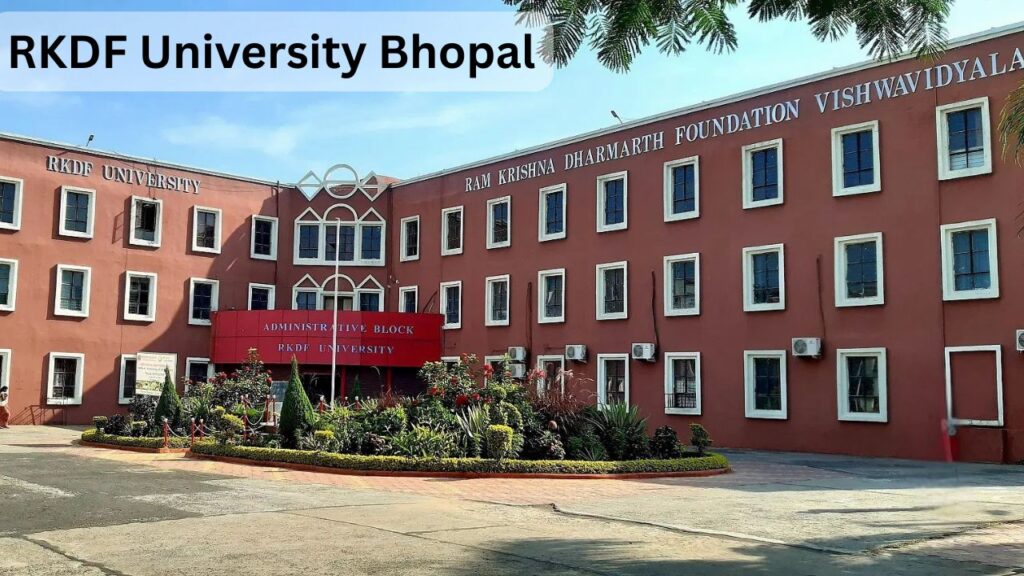
2. RKDF University Bhopal
RKDF offers a wide range of courses and flexible admission. It’s ideal for students looking for an affordable engineering option with decent facilities.
Faculty & Learning: Faculty quality is average to moderate, but for self-motivated students, it can still be a good launchpad.
Admission Process: Admissions are mostly merit-based or through direct admission. The total fees for the B.Tech course range between ₹2 Lakh and ₹2.6 Lakh.
Placement: Campus placement support is available but mostly attracts local or small-scale recruiters. The average salary is ₹2.5 LPA.
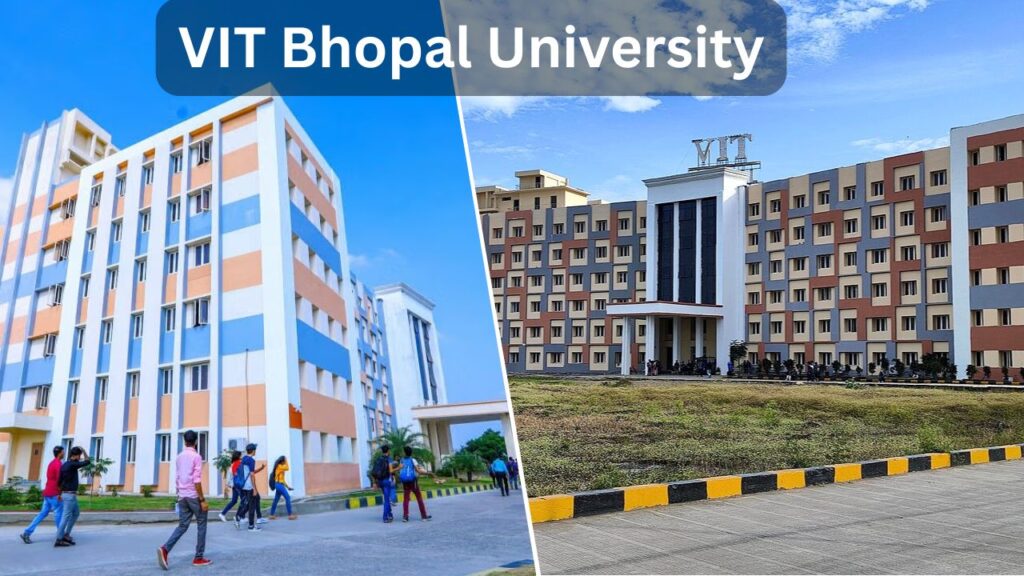
VIT Bhopal is a top-tier college for engineering as it offers high-standard labs, global curriculum, and strong international tie-ups. Ideal for students who want to achieve top-class education.
Faculty & Facilities With a mix of academic and industry experience faculty is providing an advanced level of techniques and tips to guide their students. The college campus is modern, Wi-Fi-enabled, with smart classrooms and research labs.
Admission Criteria Admissions are through VITEEE or JEE Main. The total fee is around ₹6.98 to ₹11.12 lakh for B.Tech.
Placements Top companies such as Microsoft, Dell, and Cognizant participate. Highest packages have crossed ₹20 LPA, while average remains at ₹5–6 LPA.
4. Acropolis Institute of Technology & Research
Acropolis Institute of Technology & Research is a top-notch college for B.Tech. College’s innovative way of teaching and focus on practical assessment is what makes them iconic for those students who want to go into the research field. If students aim for entrepreneurship, this might be a good option for pursuing engineering.
Academics & Staff Well-structured curriculum and helpful faculty. Some departments, like CSE and IT, are especially strong.
Admissions & Cost Admission via JEE/MPTU counseling. The total fees lie around ₹2.94 to ₹3.72 lakh.
Placement Scenario Offers good placements for tech branches, with average packages around ₹4 LPA. Mass recruiters like Wipro and Capgemini are common.
5. Bansal Institute of Research & Technology
This college has various placement opportunities due to its involvement in the larger Bansal group. The college maintained its reputation with an academic environment and technical training. It’s a safe choice for students who want structured learning.
Faculty The faculty members provide support to students in developing their skills to maintain their resumes ready for jobs. Students did get guest lectures from industry professionals.
Admission Info JEE Main scores are accepted for admission. Annual fees are approximately ₹90,000 – 3.68 Lakhs for B.Tech, depending upon the branch.
Placements: Placement is fairly consistent, especially in CS, EC, and mechanical streams. Students can get an average package of around ₹3–4 LPA.
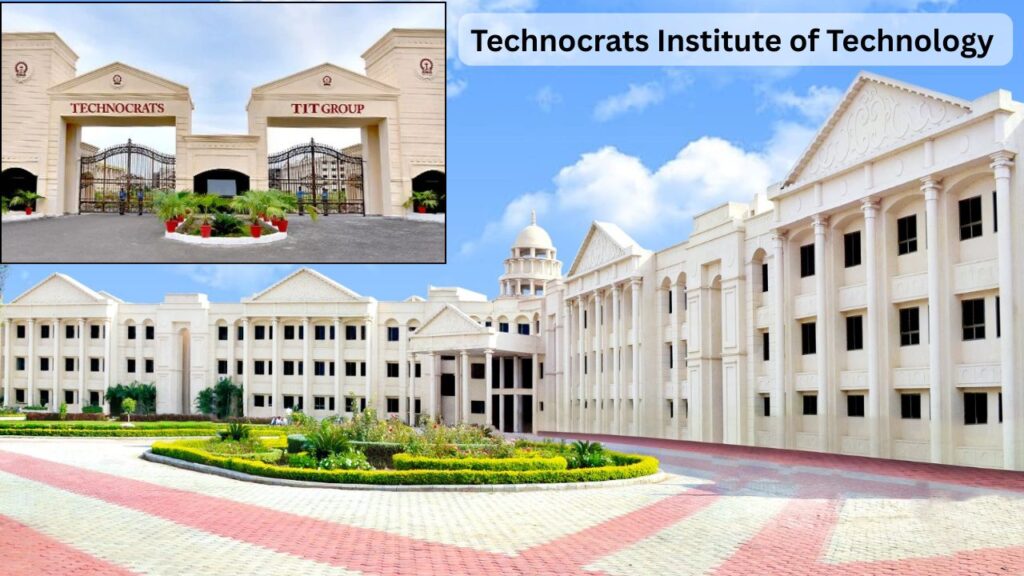
6. Technocrats Institute of Technology
Technocrats Institute of Technology: This is a great option for students who don’t want to just pursue a degree but also want a chance to step into the industry with a good package. It has a huge alumni network and excellent infrastructure.
Faculty & Education: Most departments have PhD-qualified professors. It offers not just theory but also encourages students for practical learning, coding bootcamps, and projects.
Admission Procedure: Students must have a good score in JEE Mains. Selected candidates have to appear in the MP Online Counseling. Fees are around ₹1.8L for B.Tech.
Placement Overview Excellent placement record, especially for CSE and IT. The college has a good placement record, students can get an average package of ₹4.5 LPA.
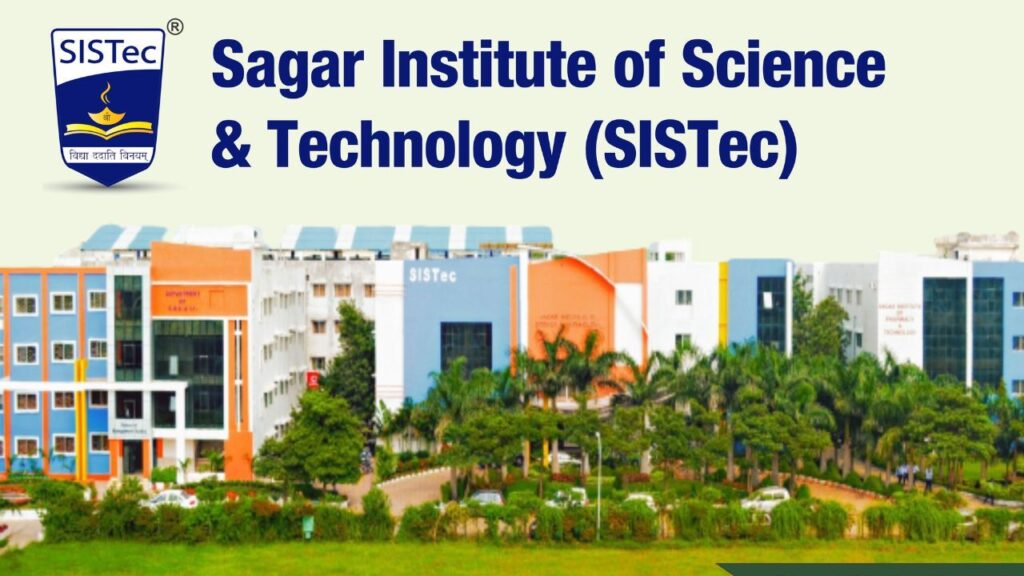
7. Sagar Institute of Science and Technology
SISTec is known for its student-centric approach, active coding culture, and good ROI. It focuses on both academic learning and personality development.
Faculty & Campus The college offers experienced staff, supportive mentors, and regular tech fests to make their students more engaged with their engineering. A good option for engineering studies and college Infrastructure is above average.
Fees & Admission The fee is about ₹2.1-3.6 Lakhs for B.Tech. Students need to clear the JEE Main with a good score for admission.
Placements Offers decent placement in both core and IT sectors. Companies like TCS, HCL, and Byju’s visit the campus. Average CTC is ₹4 LPA.
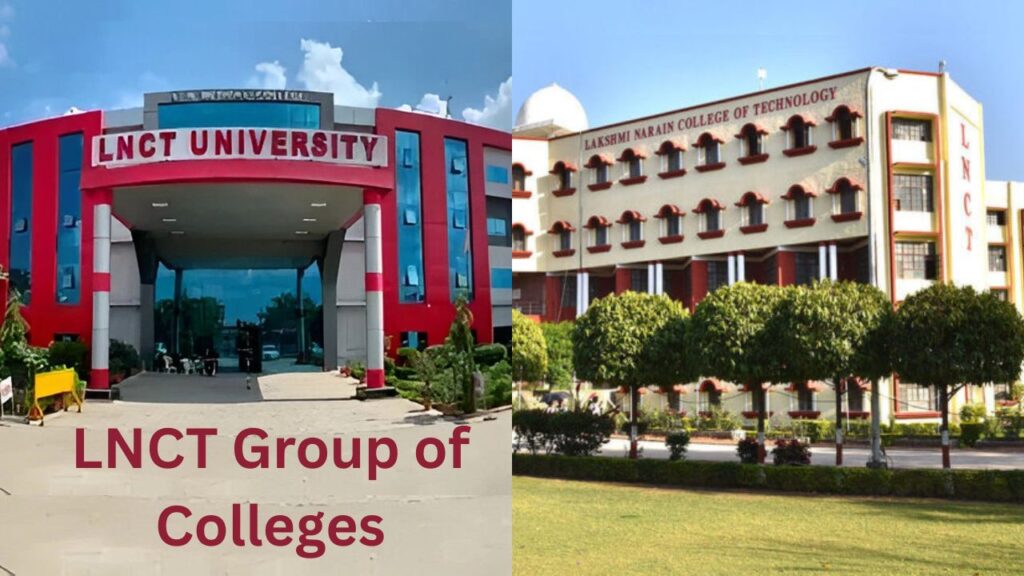
8. LNCT Group of Colleges
LNCT is a well-established name in Bhopal’s private education ecosystem. It has a reputation for being disciplined and result-oriented.
Teaching & Exposure The faculty is one of the strongest in Bhopal’s private college circle. Labs, libraries, hostels and all meet modern standards.
Admission & Fee Structure Admissions through JEE Main. Fees range from ₹2.39 to ₹3.25 lakhs for B.Tech, depending on the branch.
Placement Performance LNCT has excellent placement stats with the highest package touching ₹19 LPA in 2024. The average package is around ₹5.5 LPA.
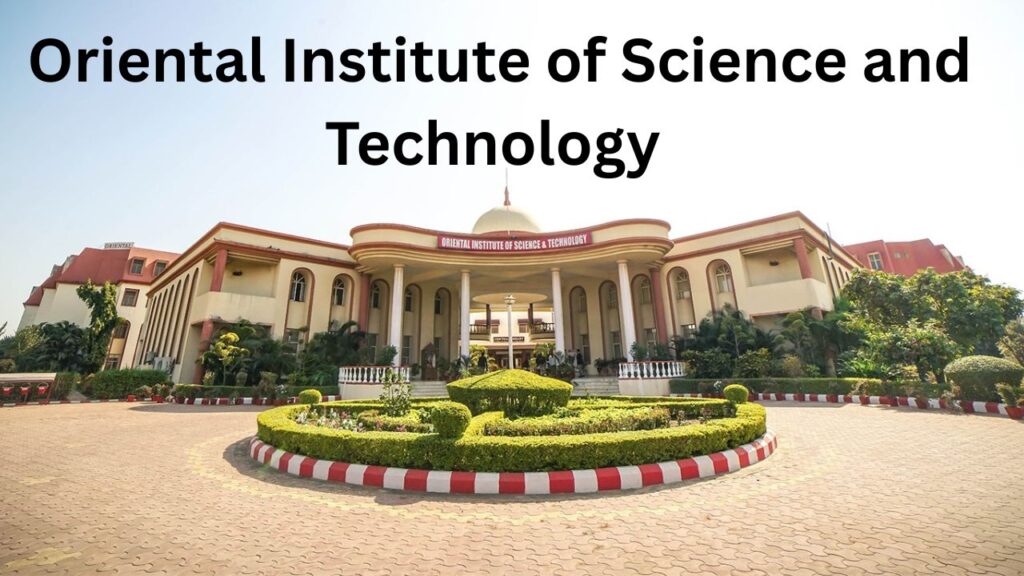
9. Oriental Institute of Science and Technology
This is also a private college that has acquired a reputation for delivering engineering courses for years. Students get plenty of opportunities after having a B.Tech degree from this college. It offers excellent academic education and practical training.
Faculty & Infrastructure
The strong faculty is very supportive and the campus is amazing. Great infrastructure includes modern lecture rooms, research labs, and innovation centers where students can grow their ability to innovate and research.
Admission & Fees
JEE Main scores are acceptable for admission and MP DTE counselling. The fee is around Rs. 4.20 lakh, depending on the branch.
Placement Opportunity
The record of this college for placement of its students is high. If you want an average package around Rs. 4.2 LPA, then get the admission.
10. Patel Group of Institutions
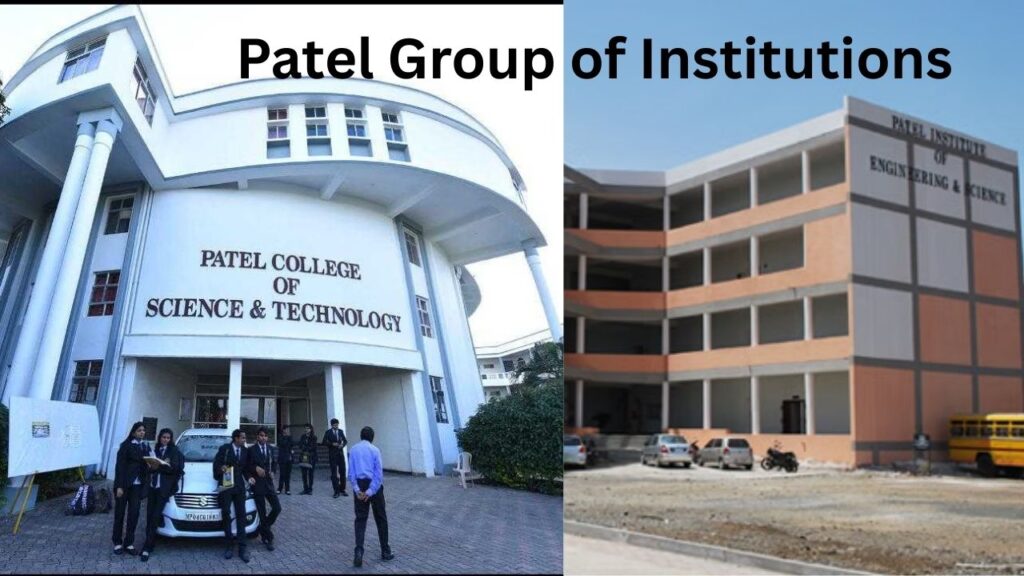
If you are a resident of Bhopal, you can choose the Patel Group of institutions for B.Tech because it has a great reputation for providing industry-aligned technical education. Students can get their admission at a low fee here in comparison to others but they can get world-class education with regular training sessions.
Faculty & Infrastructure
Experienced faculty members encourage students to engage in project-based learning. It has decent infrastructure including, well-equipped labs, WiFi, and dedicated training programs.
Admission & Fees
JEE Main and MP Online Counselling will get you selected in this college. B.Tech course fee is around 1.60L-2.24L for the entire course.
Placement Opportunity
Companies like Wipro and Zensar are recruiting students from this campus and offer an average package of Rs. 3.5 – 4 LPA.
Conclusion
These are the Best Private Colleges for Engineering in Bhopal that will help you train your mind with their academic environment, strong faculty support, and practical training. Whether you want to pursue bachelor or masters, they offer both UG and PG level programs for students who want to build their career in top industries.
If you’re curious about what it takes to be a Human Resources (HR) professional, you’re in the right place. Over the past 10 years, the HR Professional Courses has undergone significant transformation, shifting away from an administrative role to gaining importance and recognition as a strategic business partner in organizational culture, employee satisfaction and business performance. This all-in-one resource will take you through the Need to Knows of building a fulfilling HR career in India, whether you are a fresher exploring career options or a career changer seeking a meaningful direction.
What Does an HR Professional Actually Do?
Before we get into courses and salaries, let’s demystify the day-to-day life of a HR professional. Despite the stereotype that human resources is just paperwork and policies, HR employees today wear many hats. You will participate in strategic talent acquisition to seek and recruit candidates aligned with company values and who will drive growth. You’ll design and deliver programs to upskill the employees, mentor junior staff, and help them grow their career within the company.
On the compliance and policy side, you will be monitoring the company’s compliance with labour laws, conducting employee relations with tact, mediating disputes equitably and managing the full spectrum of employee life from hiring to offboarding. Compensation and benefits policies are your domain too: You develop the strategies, coordinate the performance reviews, and you can even assist with organizational development by working with your leaders on future staffing and succession planning. In today’s world of data and analytics, many HR professionals are also utilizing analytics to monitor indicators such as employee engagement, retention rates and hiring effectiveness to drive additional business improvements.
The joy of human resources is that each day is different, with issues ranging from handling a difficult employee complaint to developing a creative new-hire program or spearheading an organization-wide change effort.
Educational Roadmap To Become HR Professional
The great thing about HR career paths is that there is no single “correct” path. To your education and current level of career aspirations, you can add several points of entry:
After 12th Grade
If you have completed the high school you can go for the Diploma in Human Resource Management. These 1-3 year courses are available at a cost of Rs 50,000 to Rs 2,00,000 according to the classification of institution as a government or a private one. Alternatively, you can do 3 years of Bachelor’s degree (BBA, BA, BS) in HR or something related. Government College fee is goes from ₹1-8.5 lakhs and for private college fee is from ₹3-16.25 lakhs.The eligibility criterion is generally 50-60% in 12th class.
For Graduates
If you already hold a bachelor’s degree (in any stream as per your undergraduate major), you can go forward for professional certificates or a post graduate diploma. A professional certificate of 6-12 months costs between ₹20,000 and ₹1,00,000, while a post graduate diploma for 1-2 years is valued at ₹50,000-₹1,20,000. These courses are great if you want to make a move into HR for then a full 2 year MBA.
MBA / PGDM Route
If you are looking for an overall business education with focus on HR, a 2 year MBA or PGDM in Human Resources fees vary from ₹ 2-27 lakhs based on the tier of the college and the location. These programs on the repel need entrance exams as CAT, SNAP, MAT, or XAT. Top tier institutions such as IIM, XLRI have higher fee yet provide excellent placement package and networking.
Professional Certifications
Professional certification is also valuable in addition to formal education. The popular certification include CHRG (Certified Human Resource Generalist) which has fees of ₹50,000-₹2, 00,000.
The CHRM (Certificate in Human Resource Management) is priced at ₹90,000-₹8,00,000 and the CHRP (Certified Human Resource Professional) costs ₹80,000-₹4, 00,000.Two globally-oriented credentials that also have value on an international basis are the SHRM-CP (Society for Human Resource Management Certified Professional) and the aPHR (Associate Professional in Human Resources) both of which are recognized by employers in many countries around the world.
Eligibility Requirements You Need to Know
For Diploma Courses: You need to pass 12th grade exam with minimum 45% in aggregate.
For Bachelor’s Degrees: Obtain 50-60% in 12 grade; some colleges require entrance exams.
For M.B.A. Directly after 10+2: Achieved a minimum of 60% in your 12th grade exams; passed entrance exams such as CAT, MAT, SNAP, or XAT.
HR-Related Certifications: Many certifications such as SHRM-CP have prerequisites of at least 3 years of HR work experience in an HR function, whereas entry-level aPHR caters to HR novices or individuals beginning their journey in HR.
Starting Salary For HR
Entry level HR professionals in India get a good pay as per market standard. An HR fresher gets a salary in the range of ₹15,000-₹30,000 per month, which comes around ₹3-5 LPA per annum. However, this might differ drastically depending on a few things such as:
By Role: HR recruiters and coordinators normally begin with salaries of ₹18,000–₹26,000 per month and HR analysts with good technical skills can make ₹25,000–₹35,000 per month from the very start.
By Education: Tier-1 MBA (HR) pass-outs have high salary prospects of ₹30,000–₹40,000 per month and BBA or BA grad can make ₹18,000–₹25,000 per month.
By Industry: It is not always that an HR company gives you a chance but you can get IT, finance and e-commerce industries offer for an HR with starting pay of ₹28, 000 to ₹35, 000.
By Location: Metrocities like Bengaluru and Delhi offer great pay to HR Professionals.
Career Growth
Indian HR salaries have increased 24% from 2019, this is higher compared to IT sector’s 6.5% CAGR. This signals the rising level of strategic importance that HR has in organizations.
Career Progression Timeline
Start as an HR Assistant or Coordinator (0-2 years), then advance to HR Generalist or Specialist (2-10 years) in areas such as L&D Manager or Recruiter, then go to HR Manager or HR Business Partner (5-10 years) and subsequently to executive positions which include Director, Head of HR, or CHRO (10+ years).
Salary Growth by Experience
A fresher can typically expect a starting salary of ₹3–5 LPA. As you gain more experience, this can be anywhere from ₹11-15 LPA at HR Manager level, ₹20-25 LPA in senior specialist roles and anywhere between ₹40-150+ LPA for CHRO of a large company. The steepest rise in salary is generally seen between 10 to 13 years of experience- whereby the median CTC varies around ₹38 LPA.
Emerging High-Growth Specializations
For maximum growth, strategic HR roles are the way to go. HR Analytics Managers earn ₹40-60 LPA, Salary & Benefits Managers earn ₹28-42 LPA, and Diversity & Inclusion Managers earn close to ₹20 LPA. These positions are growing at 15-22% per year because they have a direct effect on business results.
Conclusion
The Job growth of approximately 7% over the next ten years will add about 17,400 new jobs and is expected for the HR occupation. Instead of being automated out of existence like some admin jobs, strategic HR roles are increasingly precious. You get to work with people, solve truly complex organizational issues, shape company culture, and have a tangible impact on whether employees are happy at work.
”The investment, be it ₹50,000 for a diploma or ₹20 lakhs for an MBA, gets returned fast in the form of a competitive pay package and strong career growth. More than who you’re working for, it is the work, financial and personal fulfilment you are creating.
First, decide on the HR professional Courses that best matches your current qualifications and your career timeline, learn core HR skills to get started, and don’t overlook the impact certifications can have in helping you stand out.
There are various courses for Business Analyst that will help you understand what Business Analyst is and why it is used in today’s changing world. This field is profitable for those who are interested in numbers and understand insights because analysing data and making strategic decisions to grow a company or business on a higher level is a responsibility of a Business Analyst.
Why Business Analysts Are in Demand Right Now
The numbers tell the story. It is witnessing a high compound annual growth rate (CAGR) of 35.8% during the forecast period of 2025 to 2030 The booming market for the Indian data analytics in 2025 The expanding Indian data analytics market in 2025. The U.S. Bureau of
Labor Statistics, which projects a growth rate of 11% for business analyst jobs through 2032, is significantly higher than the average growth rate for all occupations. Simply put, there are more positions for business analysts open than there are qualified professionals to fill them.
this is not only a matter of having jobs. It’s about how much you can make and whether you enjoy your work. In India, the average salary for a business analyst starts from ₹3–7 lakhs per year for freshers and can go up to ₹25–40 lakhs per annum for senior professionals. The average business analyst salary in the US is about $109k a year, with top money earners moving beyond $132k in tech hubs such as San Francisco. These are not small numbers—to the contrary, they represent real, stable, good-paying career opportunities and all that sort of thing.
Understanding What a Business Analyst Actually Does
Before you start taking courses, you should have a clear sense of what this job is about. Business analysts are, at their core, the intermediary between business challenges and technology solutions. They are also professional problem solver where they day by day activities are getting requirements from stakeholders, analyze the business procedures, find inefficiencies, recommend solutions based on data to enhance the performance of a business.
On any given day, a business analyst might be:
Performing deep-dive stakeholder interviews to gain a clear view of the business needs and requirements
Querying and analyzing data with tools like Excel, Power BI, Tableau to uncover trends and insights
Building reports, presentations, dashboards, flow charts to share findings
Working with IT teams to delivery and support technical solutions
Delivering insight and recommendations on courses of action to senior leaders and key decisions makers
The position commands a unique blend of technical knowledge and business acumen along with soft skills. You need to know about data analysis and databases, but you also need to talk to non-technical stakeholders. And it’s the ability to do all three that makes the role so valuable — and so in demand.
Best Bachelor’s Degrees to Become a Business Analyst
Bachelor’s degree is required by most business analyst jobs. The good part is that the degree doesn’t have to be exactly the one in business analysis. Companies are flexible when it comes to your educational background as long as you have proven your knowledge and skills in the relevant fields.
Bachelor’s degree with relevant field of study includes:
Business Administration or Management
Finance or Accounting
Economics
Information Technology (IT) or Computer Science (CS)
Data Analytics or Data Science
Statistics
If you have a bachelor’s in any of these subjects or even a ballpark related one—you’re already halfway there. A good number of individuals move into business analyst positions from related professions such as finance and data analysis, as well as project management.
For those seeking to make their mark at the senior level or as a business analytics leader, a master’s degree is often a big help. Dozens of professionals get their MBA, MBA in Business Analytics, or attend a specialized Master program in Data Analytics or Business Intelligence. These higher level qualifications will give you the technical know-how and open doors to more lucrative positions and quicker career advancement.
Short-Term Certification Courses For Business Analyst
If you want to get into the field fast without spending years on a master’s degree, certification courses are your golden ticket. These courses are designed for business analysis practitioners and usually last between 6 weeks and 6 months, covering business analysis tools and techniques.
IMS Proschool – Business Analytics Course is one of the leading analytics institute in India. They are known for effectively bridging the gap between theory and application and are well established with levels of comprehensive training with Excel, Power BI, SQL, and statistical analysis. They focus on hands-on learning so you work on real projects you can show to employers.
Simplilearn’s Business Analyst Course is IIBA (the International Institute of Business Analysis, the gold standard in the industry) compliant. They provide for everything: Excel, Power BI dashboarding, requirement analysis and agile methodologies. This course contains CBAP and CCBA exam prep, which are internationally recognized certificates.
Image credit: Simplilearn
ExcelR – Business Analyst Certification Training is known for providing a good mix of theory and practical knowledge. The curriculum incorporates real case studies and projects, so you’ll finish the program with a portfolio that gets the attention of potential employers.
Techcanvass – Business Analyst Certification is best for if you are looking for IIBA aligned training. They provide a comprehensive learning path for ECBA (Entry Certificate in Business Analysis), CCBA (Certification of Competency in Business Analysis) and CBAP (Certified Business Analysis Professional) with weekend classes that are suitable for working professionals.
EdX – Business Analysis Professional Certificate(Lehigh University) is an excellent choice if you want a globally recognized credential from a good university. This is excellent if you want something internationally recognized and that too without leaving India.
Mastering the Essential Tools and Skills
Perhaps the most compelling feature of contemporary business analyst training is the fact that you get taught the precise tools that companies want you to have. Here’s what you’ll typically cover:
Data Analysis and Visualization Tools:
Excel: Functions, pivot tables, Power Query, and VBA automation
Power BI enables users to connect to their data sources, transform the raw data into meaningful information, and then build interactive dashboards to visualize data.
Tableau is also a great tool to create colorful visualizations and strategic dashboards that can be very informative in decisions making.
Also, SQL is necessary if you want to query and work with databases directly, or perform any significant data manipulation, as it allows you to efficiently extract and manage your data.
With these tools, you can analyze and visualize your data with great impact.
Business Analysis Methodologies:
Gathering and writing requirements
Process mapping, business process improvement,
Stakeholder management and communication
Agile and Scrum methodologies
Strategic planning and SWOT analysis
Soft Skills Development:
Critical thinking and problem-solving
Effective business communication
Project management fundamentals
Data storytelling and presentation skills
Global Recognition for Your Skills
If you want to be taken seriously in the industry, getting certified can help. These are not just nice to have, they are increasingly expected by current and future employers particularly for mid-level and senior roles.
IIBA Certifications (International Standard)
The International Institute of Business Analysis provides a tiered pathway for certification. IIBA certifications demonstrate to employers your dedication and skill in the field. Certified Professionals with these designations consistently report increased salaries and more job opportunities. The salaries of business analyst in India is also quite good, those who are CBAP certified can earn a lot more than their uncertified counterparts with the same years of experience.
ECBA (Entry Certificate in Business Analysis): Designed for novices and individuals looking to break into the field of business analysis. At least 900 hours of business analysis work must be verified. This certification attests that you are familiar with basic business analysis principles.
CCBA (Certification of Competency in Business Analysis): The intermediate level, which requires 3000 hours of business analysis within the last 5 years. It demonstrates the capability to apply business analysis techniques and concepts.
CBAP (Certified Business Analysis Professional): The highest level certification, for which 7,500 hours of business analysis work experience in the prior ten years is required. It’s an industry best practice and that’s typically what translates into higher salaries, more leadership roles.
In India, the starting salary of a business analyst is ₹3–7 LPA. This depends on your degree, certifications, city of work & Industry.
This is a genuine salary escalates in India:
Newbie (0–2 years): ₹3–7 lakhs per annum
Mid-level (3–5 years): ₹8–15 lakhs per year
Experienced (6+ years): 17–38.5+ lakhs per annum
But a paycheck isn’t just earned with experience. It’s much more to do with specialization and skills. Business analysts with experience in financial services (banks, insurance companies, investment firms), technology, or consulting industries tend to earn 10-20% more than those in other industries. Similarly, skills such as Python, R, advanced SQL, machine learning knowledge can supercharge your income.
Average US Business Analyst salary: Entry level or beginner Business Analyst salaries ranged from $70,000 to $80,000 in 2014.41 Mid-career Business Analysts could expect to earn between $100,000 to $120,000 in the United States. Senior Business Analyst or Specialist pay is typically $138,000+. Location is also important; San Francisco, New York City, and Seattle pay much more than smaller cities.
The Roadmap For Business Analyst
Phase 1: Foundation (Month 1-3)
Sign up for a business analyst certification training. Select one that best fits your learning style and schedule. Learn enough about Excel, the basics of business analysis and SQL to get started.
Phase 2: Specialization (Month 4-6)
Get your certification. Learn Power BI or Tableau. In case of a cream applicant is probably serious about the domain of the field you want to pursue an ECBA certification. Develop 2–3 projects from your course to create a portfolio.
Phase 3: Entry Level Role (6-12 months)
Apply for junior business analyst or business analyst associate roles. I will add: You don’t have to have perfect experience at this point – companies will train you on methodologies and domain knowledge. Go start earning experience in the field.
Stage 4: Growth (second and third years)
Go for the CCBA certification. Get more specialized in your niche. Progress to more complex assignments with more stakeholders to manage. You should expect your pay to escalate to ₹8-12 lakhs in India or $80,000-$95,000 in the U.S.
Step 5: Senior Role (Years 4+)
Get the CBAP qualification if it is upward career mobility you are seeking for. Progress to senior analyst positions, manage teams, or focus in fields such as product management, strategy, or technical business analysis. Senior positions will pay a lot more and have a wider impact on the rest of the company.
Conclusion
The business analyst sector is growing rapidly, and with good reason. It’s mentally stimulating, well-paid, and ever more essential to the success of an organization. Take the short certificate course, a master’s degree or a combination of the two – whatever form of business analyst education you decide to invest in, the payoff will be well worth it.
Start the key is to. Don’t get analysis paralysis. Choose a good program, learn the core tools and concepts, and start building a portfolio with real projects if you want to get hired. The skills are important, but it’s your demonstrated ability to use those skills with real work that gets you hired.
The business analyst position is ideal for a person who enjoys problem solving and working with data and who wants to have an influence in an organization’s decision making. If that describes you, take that first step today. The job prospects, the salary and the intellectual gratification at the end of it are more than worth it.
The application form of JEECUP 2026 (for Engineering, Architecture, Pharmacy, Application Arts & Craft) is now available. JEECUP is an entrance exam at the state level for admission in good government and private polytechnic colleges in Uttar Pradesh.
It is a great chance for students to acquire practical knowledge and make a career in areas such as Computer Science, Mechanical Engineering, Civil Engineering and Modern Office Management.
UP Polytechnic JEECUP—Dates and Application Fee
Event
Tentative Schedule
Notification Release
15/January/2026
Application Form Dates
15/January—30/April/2026
Correction Date
26—30/April/2026
Exam Date
15—22/May/2026
Result Declaration
30/May/2026
Counseling Process
Update Later
Category
Fee Amount
General/OBC
Rs. 300 + Bank Charges
SC/ST
Rs. 200 + Bank Charges
Group-Wise Course Details and Eligibility
Group
Course Category
Eligibility
Group A
Engineering & Technology Diploma
Class 10th
Group B
Agriculture Engineering
Pass 10th with Subjects—Maths & Science
Group C
Home Science, Textile, etc.
Class 10th
Group E
Diploma in Pharmacy
12th Marksheet (PCM/PCB)
Group I
Diploma in Aircraft
12th Marksheet (PCM)
Group K
Diploma in Modern Office Mgmt.
Class 12th (Any Stream)
UP Polytechnic JEECUP Exam Structure
You must attend the examination offline with your admit card. The 100 MCQs contain questions from the syllabus of 10th, 12th, or ITI as it is based on your course choice and there is no negative marking, the students are advised to answer all the questions.
Prepare for the counselling session after the exam which is conducted online. You may select your choice of colleges and lock your choices by logging in. The seat allocation will be according to your JEECUP rank and category.
UPESSC UP Primary Teacher Recruitment 2026 form will close today (15/October/2026) and candidates who haven’t paid the fee should do it right now before your application is revoked. This is the selection examinations and recruitment for teaching and education-service posts in Uttar Pradesh.
Primary teachers are eligible to teach Classes 1 to 5 in Uttar Pradesh government/basic education schools. This is the doorway to pass through with a good score to get this opportunity. UPESSC announced 12,405 posts under the Primary Teacher Recruitment 2026.
UPESSC UP Primary Teacher Recruitment 2026 Timeline
Event
Date
Notification release
15 September 2026
Online application start
16 September 2026
Last date to apply and pay fee
15 October 2026
Application correction window
19 October 2026
Written examination
3–4 December 2026
Admit card / exam city details
To be announced by UPESSC
Who Are Eligible For Primary Teacher Recruitment 2026
Education: You must carry a degree in any discipline with a teacher training certificate. There are approved elementary-education qualifications such as D.El.Ed. OR B.El.Ed OR BTC. If you have both then clarify the TET exam and if you have passed Teacher Eligibility Test (Primary-Lv), you are eligible for this post.
Age: You must be 21 to 40 years old as on July 1, 2026. Your age on the day you apply doesn’t matter. Only your age on that date does.
Age relaxation: The upper limit is higher for some candidates. Age relaxation means teachers get more years in service, 5 years is given for SC/ST/OBC and 15 years to PwBD. If you are someone whose father or mother is also a government school teacher then you get 3 more years. Shiksha Mitras can apply up to age 60
How to Fill The Form
Click on the link to get on the official website of UPESSC.
If you haven’t done One-Time Registration yet, do it now with your own mobile number and email ID.
After that you will receive credentials to login and click on the Primary Teacher Recruitment 2026 notification.
Fill all the details including your DOB, category, qualifications, and other specific information asked in the form.
Review what you fill because any spelling mistake can cost you later.
Enter your preferences, choose wisely according to your lifestyle.
Upload your documents such as photo, sign, certificates.
Pay the amount and submit the form. Download the copy to keep it safe.
Application Fee
Category
Fee
General / UR / OBC / EWS
₹1,000
SC / ST
₹500
PwBD / Divyangjan
₹300
UPESSC UP Primary Teacher (Assistant Teacher) Recruitment 2026 Exam Pattern
Particular
Details
Exam mode
Offline, OMR-based pen-and-paper test preprod.
Question type
Multiple-choice questions (MCQs)
Total questions
120
Total marks
120
Duration
2 hours
Marking
+3 for each correct answer
Negative marking
-1 for each incorrect answer
If you are going to prepare according to the section-wise then here is the order from maximum marks and question to the lowest.
30 marks/question: Hindi, Sanskrit and English
25 marks/question: General Knowledge, Current Affairs and Reasoning, IT, Life Skills and related sections
16 marks/question: Mathematics
8 marks/question: Science, Environment and Social Studies, Teaching Skills / Pedagogy
The UP Primary Teacher recruitment will test your knowledge and how well you can teach kids. The language section covers comprehension, vocabulary and error spots. Math covers basic calculations and easy problems and physics, chemistry, and biology’s basic definitions and units are covered in the science section.
Social studies covers basic knowledge of Uttar Pradesh infrastructures and common topics of environment while current events and general knowledge covers Uttar Pradesh-specific topics, culture and polity along with International events. Basic knowledge of Tech is also asked from you and reasoning like puzzles, coding-decoding, Venn diagrams also come.
The teaching section covers your ability to handle children which is needed to teach them at their level of understanding. It accesses your teaching methods, professional ethics and classroom management.
Overall, the paper expects you to handle a Class 5 textbook confidently and to understand how a child learns from it.
Dearness Allowance, HRA, travel allowance and other admissible benefits as per UP government rules
Conclusion
UPESSC UP Primary Teacher Recruitment 2026 is an opportunity for teachers to get eligible for teacher 1–5 classes in government school. It is a high-paying path for the talented teachers who can make the children’s future brighter.
If you have passed the TET exam and have a certificate of teaching then you are eligible to apply for this application. The window closes soon so those who have already filled the application must start revising the syllabus and take mock tests to beat the competition.