RRVUNL JE, Junior Assistant Recruitment 2026: Dates, Eligibility, and Exam Pattern 

RRVUNL JE, Junior Assistant Recruitment

If you’ve been waiting for the Rajasthan Rajya Vidyut Utpadan Nigam Limited to open the portal for candidates to apply for RRVUNL JE, Junior Assistant Recruitment 2026. Total vacancies are 2,005 which will be after the test on various positions including Junior Engineer, Junior Accountant, and Junior Assistant / Commercial Assistant-II. The timeline ends on August 25,  2026 but you have plenty of time from August 5 to apply.

RRVUNL JE, Junior Assistant Recruitment 2026 Short Notice Detail

RRVUNL has issued a short notice for the recruitment of posts in Five Rajasthan Power Utilities, namely, RVUN, RVPN, JVVN, AVVN, and JdVVN. Under Advertisement No. RVUN/Rectt./2026-27/01, the notification includes three types of posts – Junior Engineer (Electrical, Civil, Mechanical), Junior Accountant, and Junior Assistant/Commercial Assistant-II. 

The 2,005 figure is the combined total across all three; the post-wise and utility-wise split hasn’t been published yet and is expected with the detailed notification. If Junior Assistant is your target, keep an eye on that breakdown before you start serious preparation.

Who Are Eligible For This Recruitment

For the Junior Assistant / Commercial Assistant-II post, the qualification bar is straightforward: graduation in any discipline from a recognized university. No specific subject requirement, which is exactly why this post draws such heavy competition every cycle — it’s open to arts, commerce, and science graduates alike.

Age will be calculated as on January 1, 2026, and the usual government relaxations for reserved categories will apply. The exact minimum and maximum age limits for this cycle hadn’t been confirmed in the short notice at the time of writing, so don’t lock in your eligibility assumptions from last year’s cycle — wait for the detailed notification before you rule yourself in or out.

Key dates on your calendar

EventDate
Online Apply Start Date05 August 2026
Online Apply Last Date25 August 2026
Last Date For Fee Payment25 August 2026
Exam DateNotify Later

Treat everything from the detailed notification as the final word — short notices exist to give candidates a heads-up on timelines, not to lock in every eligibility detail.

The selection process — two phases, no interview

RRVUNL has kept this refreshingly simple: there’s no personal interview for these posts. Selection comes down to a written exam followed by document verification, and for Junior Assistant specifically, a second phase most candidates underestimate.

Phase-I is a computer-based test (CBT) — objective-type multiple choice questions, carrying 40% weightage in the final selection.

Phase-II is a Computer Proficiency Test: typing speed and efficiency checks in both Hindi and English. This phase carries 60% weightage — more than the written exam itself.

That weightage split is the single most important thing to internalize if you’re serious about this post. A lot of candidates pour every hour into GK and reasoning practice and treat typing as an afterthought to sort out “closer to the date.” For Junior Assistant, that’s backwards. If your Hindi and English typing speed isn’t already exam-ready, start now — it’s worth more to your final score than the written paper.

What The Written Exam Actually Tests

The Phase-I paper for Junior Assistant and Commercial Assistant-II covers five areas: General English, General Hindi, Reasoning and Mental Ability, Mathematics, and General Knowledge & Everyday Science. It’s a 120-minute objective paper with negative marking of 0.25 for each wrong answer, so accuracy matters as much as coverage — guessing blindly on a paper with this negative marking structure can cost you more than it earns.

The reasoning section leans on standard topics: number and letter series, coding-decoding, analytical reasoning, mirror images, and clock-based questions. Maths covers the usual government-exam staples — simple and compound interest, time and work, time and distance, HCF-LCM, ratios, and simplification. Hindi tests grammar, vocabulary, comprehension, and muhavare (idioms), while English mirrors that at a similar difficulty level. None of this is unfamiliar territory if you’ve prepared for any state-level clerical exam before — the syllabus is conventional, which makes cutoffs high and margins thin.

Salary and Pay Structure

RRVUNL has confirmed a starting salary around ₹33,800 per month for Junior Engineer posts, paid under the Level 10 pay matrix, along with Dearness Allowance, House Rent Allowance, Transport Allowance, and medical benefits. What hasn’t been separately confirmed yet is the exact Junior Assistant pay figure — most of what’s public so far centers on the JE post. 

Until it’s specifically stated in the detailed notification of RRVUNL JE, Junior Assistant Recruitment 2026, don’t presume Junior Assistant gets that salary too; in most of the state power utility recruitments, Junior Assistant and Junior Engineer have different pay levels. 

How To Apply For RRVUNL JE, Junior Assistant Recruitment 2026

Applications go through the official RRVUNL/Rajasthan power utilities recruitment portal once it opens on August 5. The process of RRVUNL JE, Junior Assistant Recruitment 2026 follows the standard pattern: 

Register first then login using User Id, Password along with Captcha, enter required details for education and personal information, photograph and signature in the prescribed format, pay the processing fee and submit the online application. 

Keep scanned copies of your graduation certificate, category certificate (if applicable), and ID proof ready in advance — form-filling day is not the time to be scrambling for document scans.

How to Prepare For The Exam

With the RRVUNL JE, Junior Assistant Recruitment 2026 application window closing August 25, here’s the realistic sequence: 

  • Verify your eligibility against the detailed notification the moment it drops, complete your form early rather than in the last 48 hours.
  • Start splitting your prep time between the written syllabus and typing practice from day one — not after Phase-I is behind you. 
  • Given the 60% weightage on the Computer Proficiency Test, candidates who start typing practice late are competing at a real disadvantage against those who’ve been building speed for weeks. 

That’s the edge worth building now, while the form is still open.

Conclusion 

RRVUNL JE, Junior Assistant Recruitment 2026 is a golden door to get recruited in the state of Rajasthan with five power utilities. Junior Assistant aspirants must note that though the written exam is important, the Computer Proficiency Test has a weightage of 60% and therefore, typing speed and accuracy are as important as the subject knowledge. 

The end date for submission of the online application is 25.08.2023, so complete the registration process before that date. Stay tuned for detailed notification of each post-wise vacancy and eligibility criteria. Start preparing for both the tests from day one to get a better chance of selection.

Leave a Comment

Your email address will not be published. Required fields are marked *

UPSC CDS 1 Recruitment 2026 Notification, Eligibility, Application Dates Guide

UPSC CDS 1 Recruitment 2026

The Union Public Service Commission (UPSC) has notified the Combined Defence Services (CDS) Examination 1 for the year 2026. This recruitment is for a number of academies that are the Indian Military Academy (IMA), Indian Naval Academy, Air Force Academy and Officer Training Academy and the number of vacancies is 450+.

The application form filling process will start from 10th/December/2025 and the last date to apply for the UPSC CDS 1 2025 will be 30th/December/2025. Interested and Eligible candidates are advised to read the official notification before apply online for understand the eligibility, Application Fee, Age Limit, Salary, Selection Process before applying for it.

Candidates need to visit the UPSC official website for detailed information and application. Before the time ends, you need to make sure that each one of the necessary information is filled accurately. 

Follow These Dates To Apply

Application Start10/December/2025
Last Date For Application30/December/2025
Fee Payment last date30/December/2025
Correction DateUpdate Soon
Admit Card DateUpdate Later
Exam Date12/April/2026

UPSC CDS 1 Age Limit & Application Fee

CategoryAge LimitPosts Expected
IMA & INA 19 — 24 years450+
Air Force 20 —- 24 years
OTA 19 —- 25 years
Gen/ OBC/ EWS₹200
SC/ ST0

UPSC CDS 1 Vacancy & Educational Qualification

The courtesy details of UPSC CDS 1 Eligibility 2025 are mentioned below:

  1. Indian Military Academy (IMA): The candidate will have to hold a Bachelor’s Degree in any discipline/stream from any recognized University/Institution in India.
  2. Indian Naval Academy: The candidate must hold a Bachelor’s Degree in Engineering or equivalent from a recognized university/institute in India.
  3. Air Force Academy: Candidate should have passed 10+2 with Physics and Mathematics in any stream from a recognized board or have a Bachelor of Engineering/Bachelor of Technology or similar qualification from recognized university.
  4. Officer Training Academy: The Candidate must have a Bachelor’s degree in any Discipline/stream from any recognized university or Institution in India.

For more and latest updates you can go through the official UPSC CDS 1 Recruitment 2025 Exam Notification. 

Read More 👉 Railway Protection Force Constable: Salary, Selection, and Exam Details – complete guide

Salary & Allowances

The candidate can earn up to Rs 1,77,500 per month with allowances as per government norms. The starting salary can be less with Rs 56,100 for entry level candidates.

Guide to Apply UPSC CDS 1 Online

How to Apply for UPSC CDS 1 Recruitment 2025: Apply Online through the official website of UPSC.

1. Know Details from UPSC CDS 1 Notification 2025 PDF.

2. Click on the “apply online” link or go to the Official UPSC website: upsc.gov.in.

3. Fill UPSC CDS 1 2025 Online Application Form.

4. Upload all the documents as per the notification.

5. Remit the requisite application fee by one of the modes available.

6. Take a print out of the application form once it is filled for your records. 

Apply OnlineLink Activate Soon
Download NotificationLink Activate Soon
Official WebsiteClick here

Leave a Comment

Your email address will not be published. Required fields are marked *

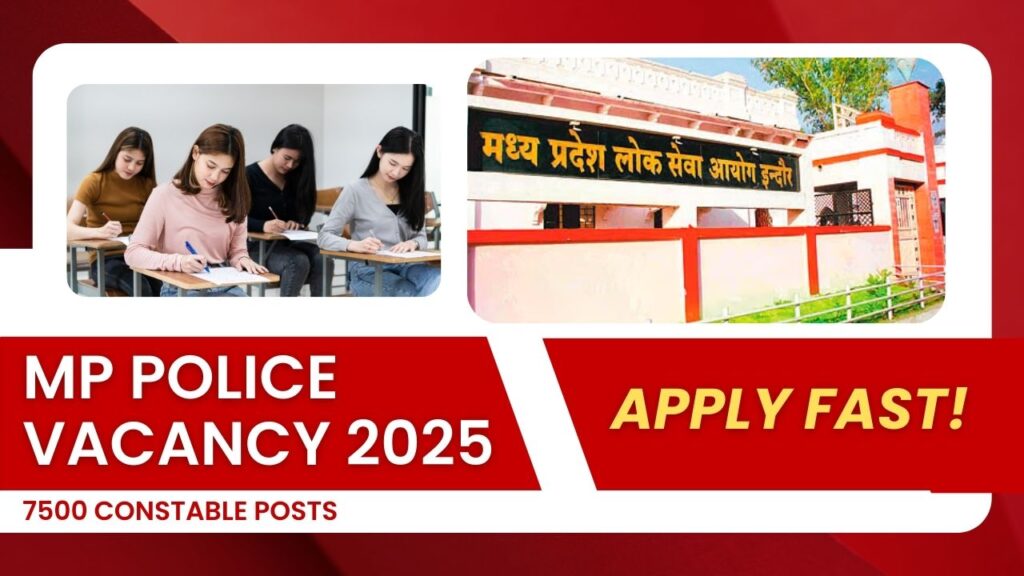
MP Police Vacancy 2025: 7500 Constable Posts, Apply Fast!

Candidates can fill the application form of MP Police Vacancy 2025 for Constable posts. Candidates will apply online until the last date of submission. You can download the official notification to check every detail according to this selection. There are several vacancies around 7500 that will be filled through this selection process. Please check the eligibility criteria and age limit before applying for the constable post (General Duty). 

Candidates must be physically fit and have no health issues because after the written examination you are summoned for the physical and medical test. It is mandatory to pass these tests for the job role. 

MP Police Vacancy 2025 Highlights and Important Dates

OrganizationMadhya Pradesh Employee Selection Board
PostConstable
Number of Vacancies7500
Last date of Application29th September 2025
Selection ProcessWritten Exam → Physical → Fitness Test Medical Test
Official WebsiteClick Here
Application Starts On15th September 2025
Application Ends On29th September 2025
Exam Date30th October 2025
Admit CardUpdate Soon
ResultUpdate Soon

Eligibility Criteria

Educational QualificationClass 10th marksheet with a good score or 10+2 marksheet from a recognized board.
Age limitGen (male): 18 – 33 yearsReserved category got age relaxation up to 38 years

Read More 👉 CAT Exam Syllabus 2025: Complete Section-Wise Guide to Crack the Test

Application Fee 

General Category Rs. 500
SC, ST, OBC, EWSRs. 250

Instructions to Fill The MP Police Constable Application

Before applying for the MP Police Constable Bharti in 2025, candidates should know the instructions and eligibility criteria. This application will register your name for the examination that will happen in October. You will get selected after clearing this examination and then you are summoned for the next procedure. 

Let’s read this instruction to apply online:

  1. Visit on the official website where the link of the application is open.
  2. Click on that link and add your details in the form that appears on your screen on MPESB website. 
  3. Attach your valid documents with the application form and click to submit.
  4. Before the final submit, check all the filled details of yours to make sure everything’s correct.
  5. Save the copy of the application for your future reference.
Useful Links
Application FormClick Here
Official NotificationClick Here
Official Website Click Here

Leave a Comment

Your email address will not be published. Required fields are marked *

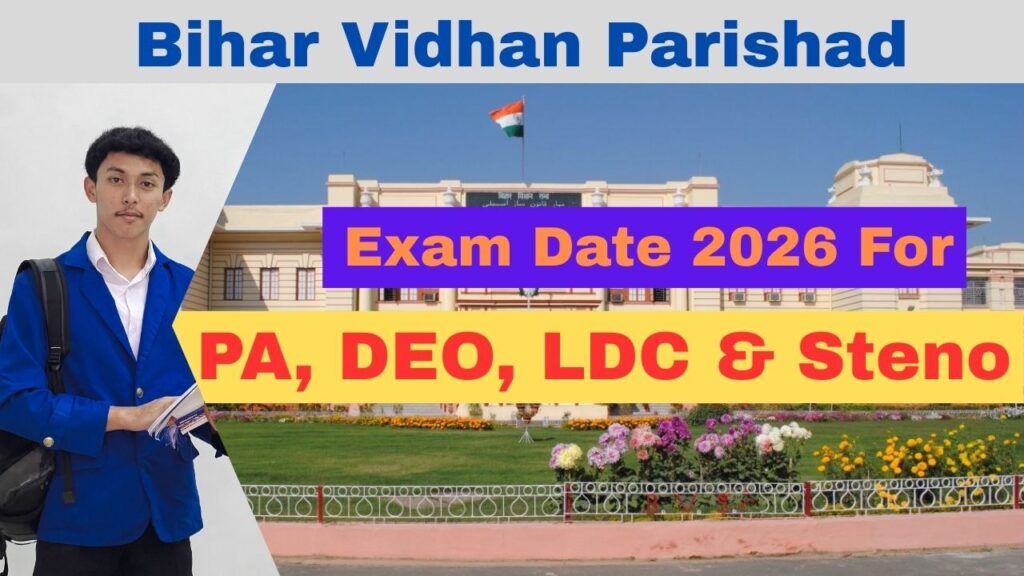
PA, DEO, LDC & Steno Posts Exam Date 2026 is Out Check Bihar Vidhan Parishad Site

Bihar Vidhan Parishad

For Bihar students, a stable, prestigious government job is what defines success in life and as such many are drawn to the Bihar Vidhan Parishad (Legislative Council) for it. It’s been a long preparation but finally, the air is starting to clear. If you have been constantly refreshing the official website and browsing notification bars, you have already filled the application forms.

Now the exam dates for the recruitment for the posts of Personal Assistant (PA), Data Entry Operator ( DEO ), Lower Division Clerk ( LDC ), and Stenographer are now declared. 

Schedule for Exam

The preliminary exam is being held on 05/April/2026 for PA, DEO, and LDC posts which is being filled with the aspirants who score best in this exam.

Starts Apply 28/November/2025
Ends on 05/January/2026
Last Date For Fee07/January/2026
Exam Date05/April/2026

Eligibility For Exam

Applying for Personal Assistant (PA): You must have a degree of a valid university in your hand from any stream and Stenography speed of 100 words per minute (wpm).

For the Stenographer: Stenography speed of 80 wpm with the degree of graduation.

Data Entry Operator (DEO): 8000 words with accuracy per hour speed of typing is required with 12th Certification.

Applying for Lower Division Clerk (LDC): You must have 12th marksheet and 30 wpm of typing speed in both Hindi and English.

Vacancy and Salary Level

This single-day agenda offers some clarity for the 64 vacancies that thousands have applied for. Although the application process ended in January 2026 following a number of extensions, the attention is now firmly on the home straight of revision. 

Post NameTotal VacanciesPay Scale (Level)Key Qualification
Personal Assistant (PA)07Level-07 (₹44,900–1,42,400)Graduate + 100 wpm Steno
Data Entry Operator (DEO)35Level-04 (₹25,500–81,100)12th Pass + 8000 key-depressions/hr
Stenographer12Level-04 (₹25,500–81,100)Graduate + 80 wpm Steno
Lower Division Clerk (LDC)10Level-02 (₹19,900–63,200)12th Pass + 30 wpm Typing

Selection Process

It is not only a written test competition in this recruitment; it is also a competition of knowing the technique of running on the ground. Since these posts are of administrative and technical nature, the Bihar Vidhan Parishad conducts the following stages:

  1. Preliminary/Written Examination: This is the first hurdle. It is basically a general awareness general arithmetic, reasoning and language (Hindi or English).
  2. Skill Tests For PA and Stenographers: You will appear for a shorthand (Stenography) test which is tough as it requires 80–100 wpm.

For DEO, and LDC: Must clear Typing Tests and Computer Tests. Be it key depressions of the hour or the words per minute, accuracy is equally important as speed.

  1. Document Verification & Medical: The end of the road to qualify for meeting all legal and physical condition for the state government. 

Admit Card Download

The admit card is going to be released in March 2026 before the exam so students can download it from the official website. It is a ticket to your exam which is not going to appear on your doorstep. 

Follow these Steps to download: 

  1. Check out to the official site
  2. Login to check your admit card.
  3. Put in your Registration Number and Date Of Birth/Password to login.
  4. Download, have it laminated and get a colour print out.

Note: It will be available five days before the exam so keep checking on the site. It may not show sometimes due to high traffic on the server. 

Read More:- UPPSC APO Admit Card 2026 Out: Check Exam Center and Date

Preparation Strategy

If you have a little time for preparation or you want to revise over three weeks. Here are a few things you can do to beat this examination:

  • Keep A Watch On Current Affairs: Bihar related current affairs and Indian polity are all time favorites in Vidhan Parmanch exams. Revise the recent laws and the state’s schemes.
  • Practice Typing/Steno Daily: The pressure of the exam hall is different from doing practice at home.
  • Practice Papers: Begin untimed with full-length test papers with the clock ticking. This will allow you to make during the General Awareness, Reasoning and Time Sessions.
  • Revise Computer fundamentals: For DEO and LDC posts, questions on MS Office shortcuts, internet protocols, and basic hardware are frequently asked. 

What to Carry to the Exam Center?

  • Admit Card with fully laminated
  • Adhaar or Pan Card copy
  • Passport photo of yours

Conclusion

Bihar Vidhan Parishad Recruitment Exam 2026 is very important for those aspirants who want to make their career in Government Sector. Now that the exam date is out, the entire attention should be on smart revision, regular practice and time management. PA, DEO, LDC, and Stenographer post in UPSC documents, each form is precise and fast at each stage of the application process. Follow the instructions and stay up to date with official notifications, download your admit card on time and have all necessary documents ready. If you eat the right strategy and commitment, this could be your door for a successful career in the Bihar legislative arm. 

Leave a Comment

Your email address will not be published. Required fields are marked *

Top 10 Mobile Apps for Government Exam Preparation in 2025

Top 10 Mobile Apps for Government Exam Preparation

The struggle of preparing for competitive exams is a common issue, students find it hard to get helpful resources. The top 10 Mobile Apps for government exam preparation will be helpful for you. It’s not about knowing the apps but understanding which app has a particular resource for your exams is challenging, especially when you’re just starting. There may be dozens of apps promising “success” and “selection,” but let me be honest with you, only a few are genuinely helpful

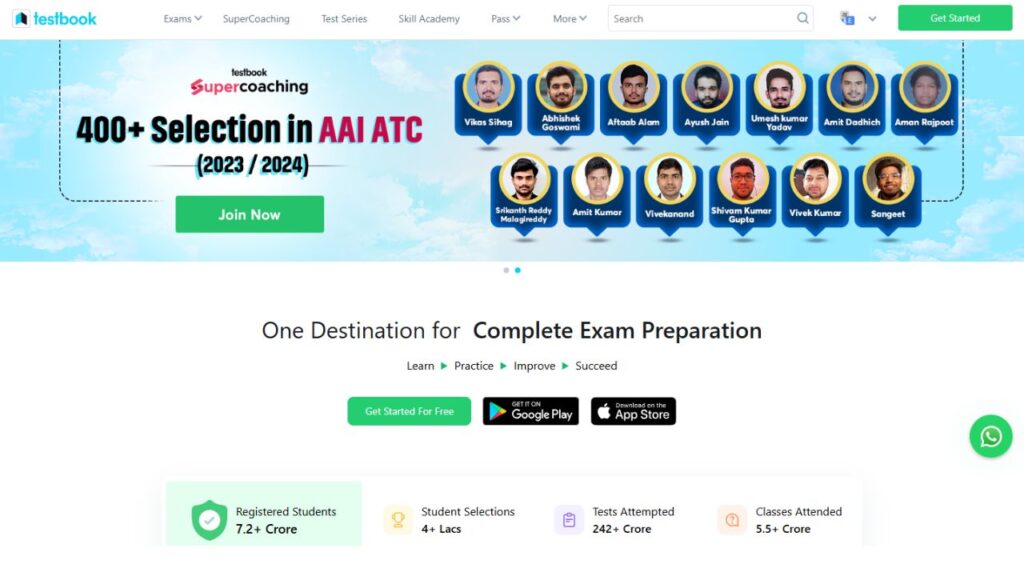
Testbook – The All-Rounder You Can Trust

If you are someone who wants to prepare for SSC, PSUs, RRB, Defence, or even State-level exams, Testbook is your best starting point. This App has a simple design which makes it user-friendly and powerful mock tests. After each test you have, it generates a detailed performance report like where you’re weak and how much time you spent on each question. It’s used by more than 5 crore students across India. Even if you’re just in 10th or 12th now, you can start building your basics here slowly.

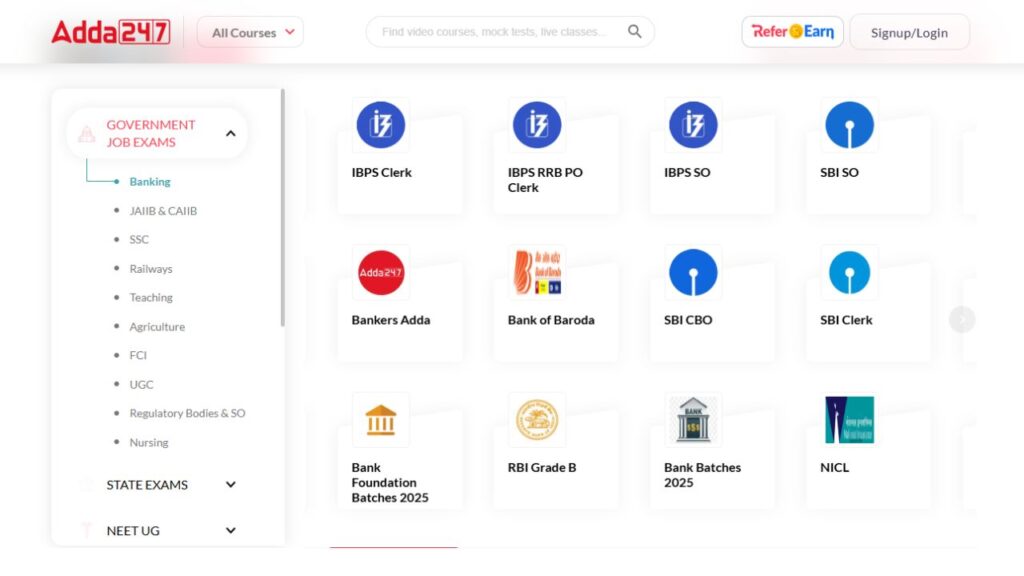
Adda247 – Best for Hindi Medium and Bilingual Students

If you want to learn in your native language like Hindi or want preparation in both Hindi and English, Adda247 is a great option. It’s very popular for Government Exams. This app provides daily notes on current affairs, live video classes, free PDFs, and QAs. The best part is you will also find motivational sessions and free YouTube content from their teachers. Many girls from small towns mentioned that they prepare for their exams with this app on Google Reviews. 

Unacademy – Learn Live from Top Educators

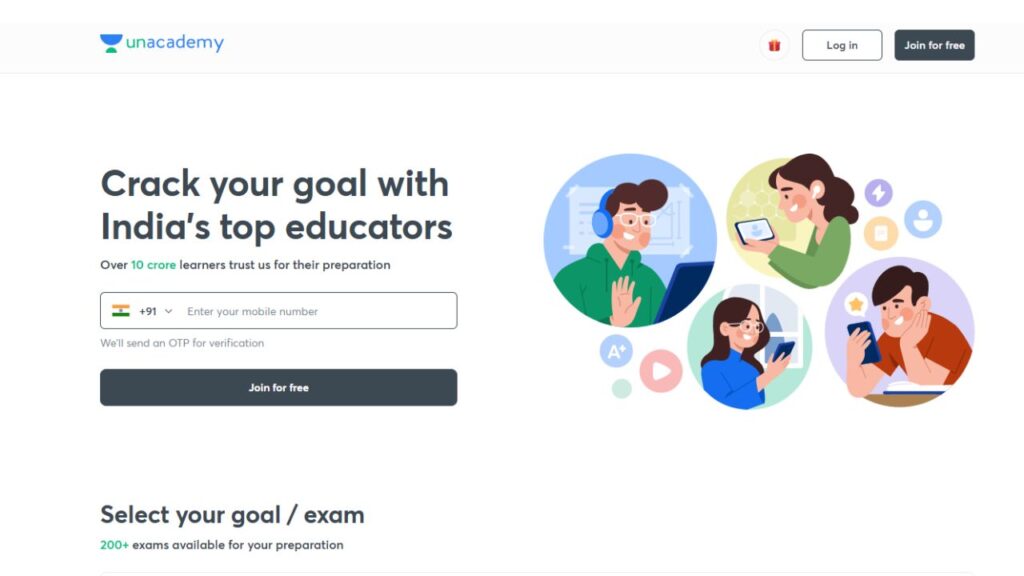
Unacademy is perfect if you like learning from live classes rather than just reading PDFs or solving MCQs. Some students are capable of learning by listening faster than notes. Concepts were explained by the top educators in a detailed manner. Whether it’s UPSC, SSC, Bank, or State PSC exams, you’ll get proper guidance. With this app, you can record a live session to watch later. The app offers more features in the paid version but many free classes are also available.

Careerwill App – Structured Courses for Serious Learners

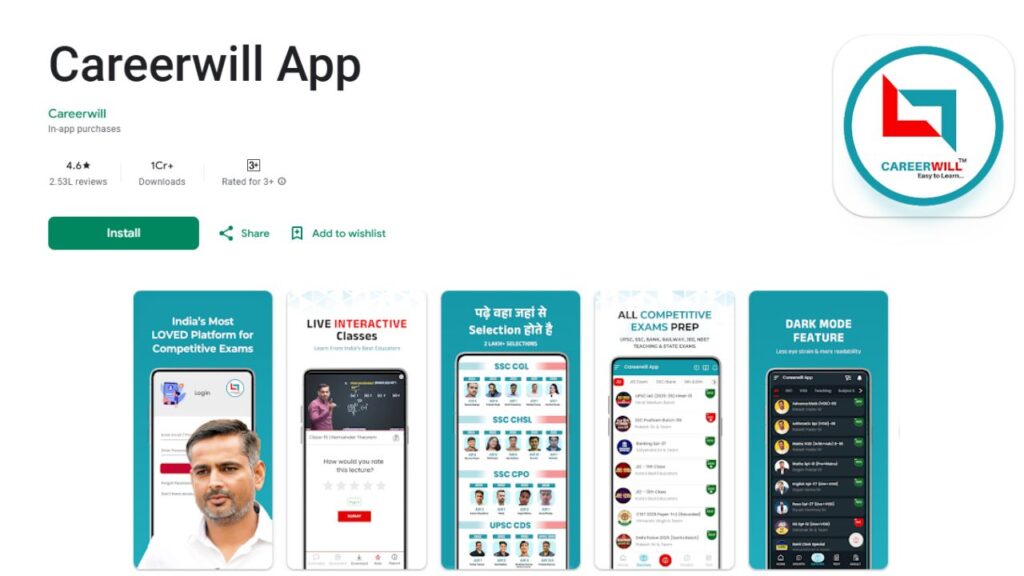
This app is preferred for senior people who want to switch their careers to a government job. If you like planning, schedules, and a fixed timetable, Carerwill can be a solid choice. Start preparing with the help of top educators on this app. They provide quality content and latest exam patterns to prepare fast and strategically to level up in competitive exams. It’s especially good for students who don’t want to get lost in a lot of syllabi but need the right direction.  

Smartkeeda – Best for Practice and Analysis

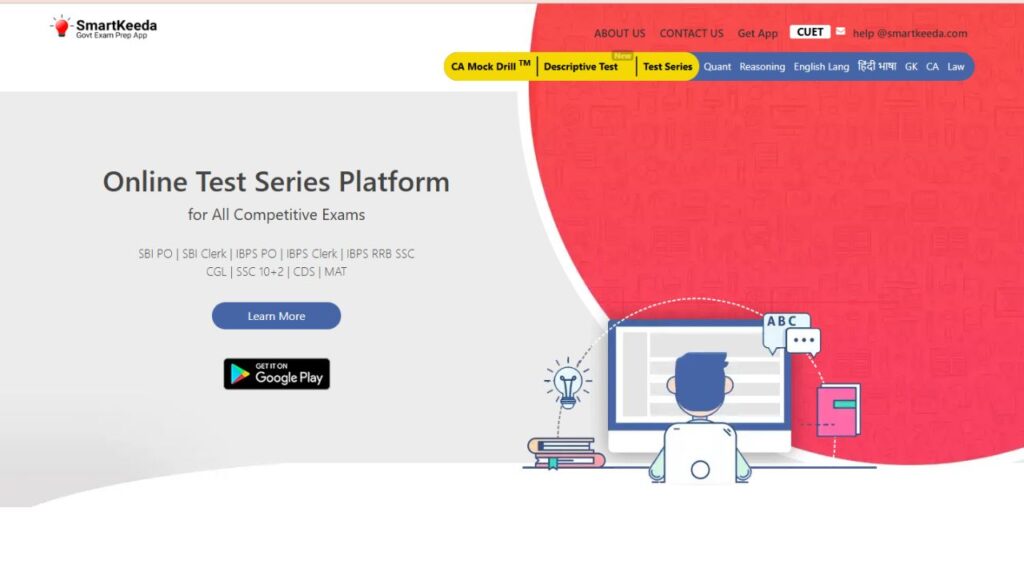
It’s not just about reading but you need strategic planning to cover all the points which help you clear out the exam. Practicing with Smartkeeda which prepared you for Banking, SSC, and Insurance exams. Their time-based analysis, solution quality, and explanation format are top-notch. Many toppers credit their success to Smartkeeda’s mocks. If you are full of knowledge and just need to polish your exam content then this is the best app.  

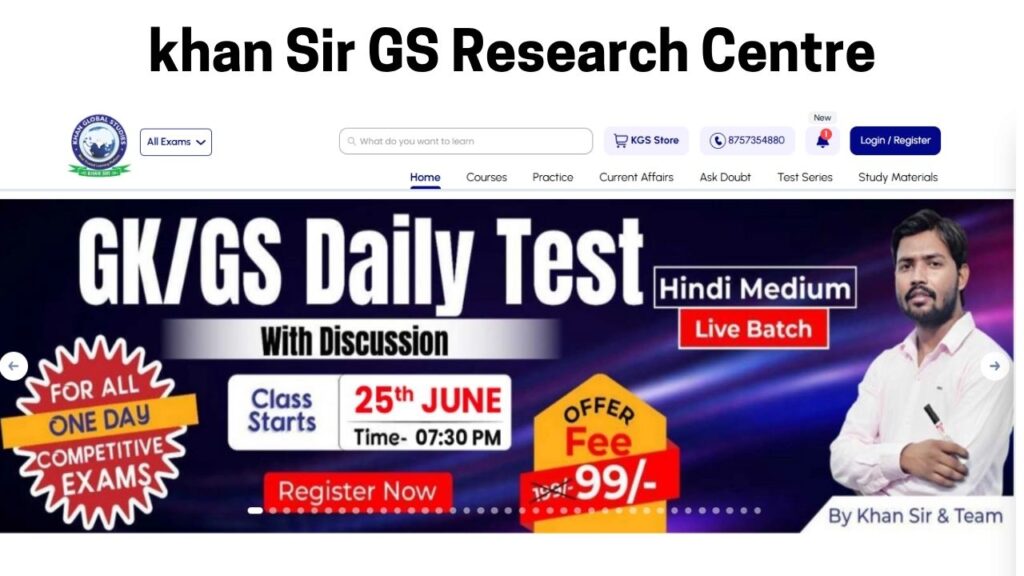
Khan Global studies is an ideal app for those who want to assess the deeper knowledge in each subject to score in 90 above. You must have to give time consistently to prepare for the competitive exams. It offers live lectures, test series, and study material for UPSC, MPPSC, RRB, SSC, PSU, NDA, CPF, AirForce, and many more. You can record lectures for later revision. This app is launched by Khan Sir, use this app to level up your preparations.

Students of primary classes have dreamed about becoming an IAS or IPS, and this app is perfect for them. The language is easy to understand and makes them prepare with time and effort. After following up with ClearIAS, the app focuses purely on civil services preparation. It gives current affairs, daily MCQs, subject-wise notes, and strategy sessions. 

If you’re someone already thinking of a future in the Banking sector, CrackitToday is made for specific banking exam preparation. This app includes daily quizzes, monthly PDFs, and a ranking system that tells you where you stand. So, be smart to download and start preparing today. The user interface is very beginner-friendly so anyone can use it easily. The app keeps updating its content with new trends and expected questions.

Another interesting option for daily practice is Kadmik. If you love challenging games then consider this app as your career saver. Start your study without getting bored. It also has the option for you to earn points, climb leaderboards, and revise previous mistakes. It has questions for SSC, Banking, and Aptitude tests. Ideal for those who want to engage in fun while studying.  

PW is well-designed and contains solid questions. Ideal for those who want to prepare seriously without wasting time. It is best for peaceful study for JEE, NEET, SSC, UPSC, GATE, and Railways exams. The App rating is 4.6 and many students praised its content quality.

Read More 👉 Top Highest Paying Government Jobs in India That Pay Like Private Sector!

Staying regular and starting early is a smart choice for students who want a career in government jobs. Don’t run here and there for resources just download the app according to your needs. Confusion begins when you start using too many apps at once. 

  • To get study materials and start preparing from scratch, use Testbook or Unacademy.
  • If you want to learn in Hindi, download Adda247.
  • Students preferring coaching structures and videos can go for Byju’s exam prep.
  • Help to build study habits, use Qudoo or Kadmik. 
  • Revised helpful apps: Smartkeeda and CrackitToday. These apps are masters in building your concepts solid.

Before you start your journey for a government job. Consider these apps on your mobile to help you get one step ahead in the competition. Many students had to search for books, ask teachers, and sit in crowded coaching classes. These top 10 Mobile Apps for government exam preparation are helpful to start your journey.

Don’t try too many questions in a single day, just try to be consistent and everything’s wrapped up naturally. Your journey may seem long now but with the right tools and mindset, you can achieve your goal. So choose your app smartly. Make a daily habit. Start small. And stick to it.

Leave a Comment

Your email address will not be published. Required fields are marked *

CBSE vs State Board: Choose the Right Board For Primary Education

Comparison of Different Boards

Educational boards have different advantages and disadvantages for students in India. Schools are the first stage for students to build their knowledge and shape their minds for a career. A student’s entire future depends on it. If you are a parent or educator then you must understand that when it comes to the classic debate of CBSE vs State Board, there is no one-size-fits-all answer.

There are factors including a student’s learning style, future goal, or central/state opportunities which can help you to decide the right one. So, let’s walk through this guide which explains the core differences between CBSE and State Board to help you make the right decision.

What is The CBSE Board?

CBSE offers a standard curriculum for students, schools authorized by CBSE board offer the same syllabus whether it is in Mumbai or Lucknow. This is best for students who change their cities frequently, so their studies won’t be disturbed. It is managed under the Union Government and heavily focused on Science and Mathematics. Schools offer both medium English and Hindi.

What is a State Board?

In India, every state has its own educational board for schools. The curriculum is designed to have one state’s language along with English as the primary language. For example, Hindi/Sanskrit in UP board and Marathi in Maharashtra board. It is focused heavily on the state’s geography, history, culture with leaning more towards science and mathematics. 

Best board for students who are aiming for state-level government exams or jobs. The lessons are also easy and point-to-point that will help students to easily understand their topic within less time.

Core Differences in CBSE vs State Board

To understand which board is better, we need to compare them across several critical parameters.

1. Curriculum and Syllabus

CBSE: The syllabus has been designed considering NCERT curriculum which is more inclined towards integrated theory and practical aspects. Students who have high level of analytical thinking can easily handle the CBSE syllabus as it is not based on rote learning. 

State Board: They punch a lighter syllabus but are heavily skewed towards a local language, history and geography. That curriculum would not be gone into with the same depth in CBSE.

2. Difficulty Level and Grading

CBSE: The exam structure is tough and built to test students’ reasoning skills. Scoring basically depends on continuous and multiple exams in a year which reduces the pressure of a single final exam. overall difficulty level is high in CBSE board for students. 

State Board: Traditionally, this has come down to relatively simple calculations and memory-based tests. The end of year board examination is the most important one. In general, students consider that it is simpler to get high marks in the State Board exams as questions are more direct. 

3. Alignment with Competitive Exams

If student wanted to make their career in government sector then choose accordingly. 

CBSE: If the goal is to crack national-level entrance exams like the JEE or NEET as these are the biggest exams for engineering and medical students, CBSE board students have advantage because their exam curriculum are same as students’ high school syllabus. 

If student is thinking about central government jobs like IRS or defence job, the analytical foundation built by CBSE gives them a distinct edge.

State Board: State boards are excellent if the target is state-level engineering and medical entrance exams (like UPSEE or MHT-CET). They are also highly beneficial for state civil services exams, as the localized curriculum provides a strong base in regional general knowledge.

4. Extracurriculars and Holistic Development

CBSE: There is an active promotion of academic and non-academic activities by the board. The majority of the CBSE schools possess strong infrastructure in sports, arts, and debate and consider them as part of the curriculum. 

State Board: It’s all studied-based. There are some extracurricular activities, but these are generally subordinate and become dependent on the management of the particular school and what they can provide. 

Read More:- Skill Development Courses For Indian Students

Which Board Should You Choose?

The decision ultimately boils down to what you envision for the student’s future.

Choose CBSE if:

  • You are moving all over India because of your parent’s job.
  • The student is targeting national-level exams (JEE, NEET) or central government jobs.
  • You need a syllabus that’s focused on concepts and their application, and not on memorising.
  • You want the best of both worlds, academically and extra-curricularly with the extracurricular side not taking a back seat. 
  • You are looking for a balanced approach with equal focus on extracurricular development.

Choose State Board if:

You live in one state permanently and have no intention of moving. 

The student intends to enter the civil service, but only in that particular state. 

You want the student to be well versed in regional languages and local customs.  

The student is involved heavily in passions outside of school (like competitive sports or music production) and needs a more forgiving academic schedule.

Conclusion

No board is naturally “best” or “worst.” They are just for different uses.

The CBSE board reigns supreme for national competitiveness and standardized pan-India education. It equips students for the tough national exams and is very analytical in its method of teaching. hly analytical approach to learning.

State Boards provide a localized, accessible, and culturally relevant education. They tend to be more flexible, granting students additional time to partake in outside activities or to prepare for opportunities at the state level. 

Evaluate students’ strengths, talk about their long-term objectives and what board is best suited for their individual path. Choose the right one over the best. 

Leave a Comment

Your email address will not be published. Required fields are marked *

Scroll to Top