Candidates with a Psychology degree or a B.Ed. have a golden chance to secure a stable and well-paying job right now. ITBP Head Constable (Education & Stress Counsellor) post application form is active until 27 October 2026. Apply early to hold your seat because the Indo-Tibetan Border Police Force announced only 16 available positions.
Everything about ITBP Head Constable from schedule to how to fill the form is given below. Read and check the official notification before applying for this post.
Overview of ITBP Head Constable Recruitment 2026
Detail
Information
Post
Head Constable (Education & Stress Counsellor), Group C, Non-Gazetted
Don’t confuse this with the other ITBP Head Constable drive from the same month, for Motor Mechanic. That one is male-only and has 21 posts. Women can apply here, and that’s the main reason this notification is worth a closer look.
Who Can Apply for ITBP Head Constable (Education & Stress Counsellor)?
You need a bachelor’s degree with Psychology as a subject, or a bachelor’s degree plus a B.Ed. or Bachelor of Teaching. One is enough. A history graduate with a B.Ed. is eligible. A BA Psychology graduate can also apply without a teaching qualification. Final-year students don’t, because the degree must be completed by the closing date.
The age band is 20 to 25 years as on 27 October 2026. That is narrower than the usual 18 to 25 for ITBP constable posts. The relaxations up to 28 for OBC (non-creamy layer) and 30 for SC/ST candidates, with extra relaxation for ex-servicemen. Confirm your relaxation period in the official notification PDF.
The application fee is reported as ₹100 for male General, OBC and EWS applicants, with women, SC/ST candidates and ex-servicemen exempt.
ITBP Head Constable Vacancy 2026
Fourteen seats are for men and two for women. Beyond that, the category-wise split is unclear. The two women’s seats make that category the tightest on a per-seat basis. The pool of applicants is also smaller than for a general constable drive, since the role needs a specific degree. Smaller doesn’t mean easy, though. Sixteen seats is sixteen seats.
ITBP Head Constable Selection Process: Physical Tests Come First
The order is Physical Efficiency Test (PET), Physical Standard Test (PST), written examination, document verification, then a Detailed Medical Examination, with a Review Medical Examination available on appeal. Putting the physical stages before the written paper is the opposite of what many exam-takers expect. A candidate who scores well on psychology and fails the run is out.
PET Standards
Category
Race
Long Jump
High Jump
Male
1.6 km in 7 minutes 30 seconds
11 feet
3.5 feet
Female
800 metres in 4 minutes 45 seconds
9 feet
3 feet
Written Examination
This is a Computer-Based Mode exam with 100 objective questions and each mark carries one mark. There is no negative marking and you are given only two hours to complete it. The paper is prepared in bilingual language so it won’t be difficult to understand the question.
Qualifying this exam is important to go to the next stage of the selection process. ITBP prepares merit lists according to written examination scores.
Documents and Medical Test
At document verification, candidates must produce original certificates, including educational qualification proof—such as a recognised degree with Psychology, or a degree along with B.Ed./B.T.—along with matriculation, category and domicile documents where applicable.
The final stage is the DME, conducted under CAPF medical guidelines. Candidates found medically unfit may be considered for the RME, where applicable.
None of the later dates are out yet. PET/PST, the written exam, document verification and the medical will be announced separately on the ITBP portal. The exam pattern, number of questions and negative marking aren’t public either.
ITBP Head Constable Salary
The selected candidates get a job and their starting salary at ITBP Head Constable is ₹25,500 and a ceiling of ₹81,100. It is disbursed under Pay Level 4 on the 7th CPC matrix. The allowances including Dearness, house, posting-based allowance are also added in the salary.
Postings can include border and high-altitude locations, which carry extra allowances. A newly appointed candidate at the starting basic pay of ₹25,500 will generally receive a monthly gross salary above the basic pay after allowances, while net pay depends on deductions
How to Apply for ITBP Head Constable Education & Stress Counsellor 2026
Open the official website of ITBP and register yourself first with the correct Email and Mobile number. Then login to fill the Head Constable (Education & Stress Counsellor) application form.
Fill the exact details asking in each box of application form, upload your documents along with your photo, sign, and pay the fee to process the application.
Before submitting, review every detail carefully, because edits aren’t allowed afterwards. Download the confirmation page.
Keep ready your 10th certificate (for date of birth), your degree marksheets, your Psychology proof or B.Ed. certificate, and your category certificate if you’re claiming reservation.
If you’re relying on an “equivalent” to a B.Ed., expect to produce an equivalence certificate at document verification.
One prep tip: start your running now, before you open any psychology notes. The PET comes first and failing it ends your application regardless of your marks.
Apply if you meet either degree route and fall within the age band. The competition is thinner than for a mass constable drive, and Level 4 pay is secure central government pay. Skip it if your degree has neither Psychology nor a B.Ed., because document verification is where those applications end.
If you’re a woman with a qualifying degree, apply early. Two seats won’t wait for the last week. Submit at least three days before 27 October so a portal crash doesn’t decide your future.
If you are in the last semester of B.Tech or you got the first internship, and it requires VS Code, three Docker containers, Android Studio’s emulator, and eighteen Chrome tabs open at once on a laptop your parents bought you in 2021 with 4GB of RAM. That’s the moment most Indian coders realise their machine is the bottleneck, not their skills. And they started looking for the Best Laptops for Coding and Programming.
A gaming laptop’s RTX 4070 is dead weight if you’re building REST APIs all day, and a fanless ultrabook will choke the moment you spin up a local Postgres instance alongside two VMs. What actually matters for most development work — web, app, backend, data — is RAM headroom, a fast NVMe SSD, sustained CPU performance, and a keyboard you can survive eight hours on. A dedicated GPU only earns its price tag if you’re doing CUDA-based ML work, training models locally, or running the Android Studio emulator constantly.
Make sure that your laptop has 16GB RAM, not 8GB — Chrome alone with dev tools open can eat 4-6GB. Picking 24-32GB when you’re running Docker and VMs together. If there are SDKs, node_modules folders, and Android SDK files that take up to 50 GB itself then pick 512GB NVMe SSD. The best CPUs of current-gen are Intel Core Ultra 5, AMD Ryzen 5/7, or Apple M-series and these are the best options for IDEs and compilers. Coders don’t need a higher-end chip unless they’re compiling large codebases consistently.
You must understand that laptop prices in India move fast, sometimes 8-10% within a few weeks around sale events. Every price below is what these models were listed at in the first half of August 2026 on Flipkart, Amazon, or the brand’s own India store — treat them as a strong reference point, not gospel, and check the live price before you check out.
Common Mistakes Indian Buyers Make When Choosing a Coding Laptop
The “i5 always beats i3” assumption costs people money every single sale season. Code compilation goes smoother in a 13th Gen Core i3 with 16GB RAM laptop than 11th Gen i5 with 8GB, because for coding, RAM headroom and SSD speed is more important than processor tag on it. Check the generation and RAM on it.
The second mistake is buying a gaming laptop “just in case” you need the GPU later. Unless you already know you’re headed into machine learning, computer vision, or heavy Android emulator work, that RTX card is dead weight adding to the price, the heat, and the battery drain — money better spent on RAM or storage.
The third mistake which most ‘students and I’ made was to pick a laptop with a good processor and ignore the screen size and keyboard which is necessary for coding. They bothered a lot when you sit for 8 hours with it and fix errors. If you are shopping online then check practical reviews or sit with it on a story.
This is the finest and most expensive laptop but offers excellent performance with Apple M4 chip, 16GB unified memory, 256GB SSD, that help running programs smoothly. It doesn’t get shut down when you are working in a campus because 18 hours of battery life makes it possible with no fan noise.
With price around ₹89,990-97,900, macOS delivers a Unix-based environment — a native terminal, Homebrew, and zero WSL workarounds. So there is no need for WSL during your production, you can just focus on your development tools. However, if you are installing Xcode, Docker Desktop, and multiple projects then a 256GB SSD is less than you need for your project. The files are big and you need more space so pick 512GB version if your budget allows.
Students enrolled in a Full-stack and iOS development programs that require macOS and not Windows can select this laptop for their best use.
2. ASUS Vivobook S16 OLED (Core Ultra 5 225H, 16GB/512GB)
ASUS offers not just a laptop but a digital book with 16-inch OLED display for ₹85,990. With Intel Core Ultra 5 225H processor, 16GB LPDDR5X, 512GB SSD, of space it runs every software and program very smoothly. You can use this machine for multi-tasking and production on a genuinely large, colour-accurate screen that helps in working in a single laptop with split-pane coding without an extra monitor on one side.
You must be aware that OLED panels are more prone to burn-in with static IDE toolbars left on screen for hours so be careful with that. Most people recommend to dim the brightness or use auto-hide dock settings. Otherwise it’s the best machine for developers who want big screens on work or on campus without lugging a 17-inch brick.
3. ASUS Zenbook 14 OLED (Core Ultra 7 255H, 32GB/1TB)
Raise the budget and buy ASUS Zenbook 14 OLED at ₹1,31,990. If you need to run large codebases and softwares likeDocker, two VMs, and a browser with 20 tabs simultaneously then you need a system that is built on Intel Core Ultra 7 255H, 32GB LPDDR5X, 1TB SSD. Not any other laptop is worth at this price point than ASUS with 14-inch 3K OLED, Thunderbolt 4.
There is no drawback than its premium price for a 14-inch laptop. But this is the best piece for Data Scientists and Backend Engineers doing heavy multitasking who are not planning to buy another laptop for the next four years.
4. Lenovo IdeaPad Slim 5 (Ryzen AI 5 330, 16GB/512GB)
If your budget allows, you can check out the Lenovo IdeaPad Slim 5 laptop specs. An AMD Ryzen AI 5 330 processor which gives excellent performance, 16GB RAM, 512GB SSD in ₹97,890. Best for coders with 14-inch display, and an integrated NPU for on-device AI tasks.
Its value is increasing day-by-day because AMD’s price-to-performance here beats most Intel equivalents at this exact price point. But the issue is RAM is soldered on some variants so carefully check the exact model and the upgradation system before you buy it. Either way this is the best laptop for developers who want better performance.
5. Lenovo ThinkPad E14 Gen 5 (13th Gen Core i5-1335U, 16GB/512GB)
If your budget is low and you want a laptop on which you can easily run large codebases then this ₹74,990 Lenovo ThinkPad E14 Gen 5 is best for you. It built on Intel Core i5-1335U and offering space of 16GB RAM, 512GB SSD which makes it perfect for backend and enterprise developers.
When you sit for hours on coding and typing then you realize ThinkPad keyboards with spill-resistant are amazing and 14-inch WUXGA IPS display for working on multiple softwares. But it won’t be good in integrated graphics and also plain IPS panels feel dated next to the OLED competition at this price.
6. HP OmniBook 3 (AMD Ryzen AI 300 series)
HP OmniBook 3 is available at just ₹69,999 with features that any coder needs for their production. AMD Ryzen AI 300 processor with a 50 TOPS NPU which remarkably out-performs every task and other laptop at this price point. The big display of 14-inch and 15.6-inch, both are available with FHD display, HP True Vision camera.
But the power that the display consumes is high, it tops out at 250 nits so this is not good for working outdoors where you can’t get a power source. Overall laptop performance is good enough for students and early-career developers who have less budget.
7. Dell Inspiron 15 3520 (12th Gen Core i5-1235U, 16GB/512GB)
Intel Core i5-1235U (12th Gen) laptop is fantastic for web developers or early backend developers who want the nearest service center and have less budget. It comes with 16GB DDR4, 512GB SSD which is good for handling compilation with a big screen of 15.6-inch but 120Hz brightness of display is not good enough to see for 8 hours or outside. That doesn’t matter for coders because they mostly do coding inside and in-office so modern AI-focused processor at this competitive price is a good choice.
8. Acer Aspire Lite AL15-41 (Ryzen 5 5625U, 16GB/512GB)
AMD Ryzen 5 5625U is good but the U series might get stuck during multi-tasking so it is good only for college students who started learning coding. Space is given for running IDE smoothly and compilation with 16GB DDR4, 512GB SSD but do not run any task simultaneously. The 15.6-inch FHD display and metal body is convenient for students to carry it for college.
One thing about the Acer Aspire Lite is good that they give a proper 16GB configuration, not 8GB at just ₹56,990. It is rare to find this kind of laptop which supportsDocker and multiple IDE instances open without raising any issue.
9. Acer Aspire 3 A324-53 (13th Gen Core i3, 16GB/512GB)
Acer Aspire 3 offers 13th Gen i3 with 16GB RAM, provides sufficient performance for coding and beats older i5 laptops in day-to-day development work. The newer processor matters more than the i5 badge because coding needs a system who handles new libraries and data. The tech evolves every year that’s why upgrades or new versions support more tasks and software easily than older models.
Specifications are Intel Core i3 13th Gen, 16GB RAM, 512GB SSD are given at ₹46,900 which is affordable for most of the students and new developers who need VS Code, Python, and Java to run smoothly. 15.6-inch FHD IPS is good for coding so it won’t affect on eyes but there is no discrete graphics and a plain plastic chassis, it’s designed for work rather than premium looks.
The RTX 4060 is a great pick for developers who are working for CUDA-based machine learning, local AI models, andAndroid Studio emulator running full-speed with hardware acceleration. As ML engineers, Android developers who lean on the emulator daily need AMD Ryzen 7 7435H, 24GB RAM, 512GB SSD, NVIDIA RTX 4060 8GB, all of it.
Anyone doing local AI/GPU work can afford it in ₹1,03,290. But it’s actually built for gaming purposes and battery life is shorter so it is difficult to work without sitting near a power source.
11. HP OmniBook 5 (Snapdragon X Elite, 16GB/1TB)
You can get a Qualcomm Snapdragon X Elite X1-26-100 processor, 16GB RAM, 1TB SSD for ₹87,990 from HP. don;t get confused because it uses an ARM-based processor so you can expect issues of compatibility while running some development tools. Its always-on connectivity, and Copilot+ PC support is amazing with excellent battery life that can easily last through a full workday. You can buy it if you work mostly in browser-based IDEs, lightweight scripting, or cloud-hosted dev environments but check your specific toolchain before buying.
MacBook Air M4 vs ASUS Vivobook S16 OLED: The Real Choice Most Buyers Face
Most people narrow this list down to “Mac or Windows,” so here’s the direct comparison:
MacBook Air M4 (16GB/256GB)
ASUS Vivobook S16 OLED (16GB/512GB)
Price
₹89,990-97,900
₹85,990
Storage
256GB (upgrade recommended)
512GB
Battery life
Up to 18 hours
Roughly 8-10 hours real-world
OS/tooling
macOS, native Unix terminal
Windows 11, WSL2 for Linux tooling
Best trade-off
Battery and build quality, less storage
More storage and screen real estate, shorter battery
And if your stack includes iOS, native Unix tools, or you’re often travelling without a charger, the MacBook Air wins. If you’re on Windows-only enterprise tools, need the extra storage right away, or want a larger screen for the same price, the Vivobook S16 is the superior purchase.
Which One Should You Actually Buy?
If you are a first year budget student then Acer Aspire 3 A324-53 is the decent option. Its 16GB RAM and price under ₹47,000 make it more appropriate for coding than a costlier i5 laptop with just 8GB RAM. If you want better all-round performance and more potential to grow, the Acer Aspire Lite AL15-41 or Lenovo IdeaPad Slim 5 are decent choices for Docker and running multiple IDEs without breaking the bank at under ₹80,000.
If you’re doing CUDA, local ML training, or heavy Android emulator work, skip everything else and get the Lenovo LOQ with the RTX 4060 — no other laptop here will keep up. And if you want a machine that will still feel fast in three years and don’t mind paying for it, it comes down to the MacBook Air M4 for Unix-native workflows or the ASUS Zenbook 14 OLED if you’re staying on Windows and want 32GB as standard.
A quick note on operating system, since it comes up in every comments section: Linux dual-boot is still viable on nearly every Windows laptop on this list if you’d rather skip WSL2 entirely, though ThinkPads and the Acer/Dell budget picks tend to have the smoothest driver support for that route.
macOS gives you native Unix without the dual-boot hassle, but locks you out of any Windows-only enterprise software your future employer might require — worth checking if you’re already targeting a specific industry like banking or government-adjacent IT, where Windows is still often mandated.
Check current pricing on Flipkart, Amazon.in, Croma, or the brand’s official India store before buying — several of these models moved 8% or more in the past month alone, in both directions. And if a listing shows a price noticeably below everything here, treat it as a flag to double-check the seller and warranty terms rather than an automatic win.
When you are searching for the Best Laptops for Coding and Programming, you are expecting one simple answer but it isn’t. The best one is the one which fits in your budget, works efficiently, and is durable to handle all your workload. So make a list of 2-3 laptops which come into your budget and work needs then compare their pricing and look for a special discount offer before buying it.
If you are buying online then check practical reviews and videos from people who have actually used it before and work on it so you can get an idea whether it is good for you or not.
Securing a government job is tough but once you commit to your goal with the right strategy, you can beat any exam. Right now, BTSC Lab Assistant Recruitment is alive and you can also apply if you are interested in tech and science. Make your career stable, secure and well-paid with Bihar Technical Service Commission (BTSC) massive recruitment drive for the post of Laboratory Assistant.
Total vacancies are 1091 but there are various roles which you can get after clearing the exam, it may require different skills or eligibility. The mandatory requirement is a diploma in engineering or a science degree from a recognized university. This opportunity is designed to bring skilled individuals into the state’s educational framework.
Dive deep into the more detailed information on BTSC Laboratory Assistant Recruitment for securing a job.
BTSC Lab Assistant Recruitment Overview
BTSC Lab Assistant Recruitment is for filling the crucial support posts in Engineering Colleges and Polytechnics across the State. This facility is to bridge the gap for technical skilled staff in educational hubs as well as for eager candidates who wish to shape their career in government sector for life.
Parameter
Details
Recruiting body
Bihar Technical Services Commission (BTSC)
Post name
Laboratory Assistant
Total vacancies
1091 posts
Pay scale
Pay Level‑6, Entry Pay: ₹35,400 per month
Online apply dates
Start: 06‑04‑2026; Last date: 06‑05‑2026
Selection process
Written exam (Computer‑Based Test) followed by Document Verification and Merit list
Mode of application
Online through BTSC / notified portals (from 06‑04‑2026)
Exam / admit card
Exam date & admit card availability to be notified later
Date To Remember For BTSC Laboratory Assistant
Application Starts
06/April/2026
Application Ends
06/May/2026
Exam Date
Update Later
Result Date
Update Later
Eligibility For This Recruitment
Age Requirements
The minimum age to apply is 18 years as on 1st August, 2026. Candidates can apply till 37 years. This requirement applies on both Male and Female candidates belonging to the General category and BC and EBC candidates and they get age relaxation up to 40 years.
The maximum age limit is further relaxed up to 42 years for SC/ST candidates which gives a good chance for experienced individuals to make into the government.
Educational Qualifications
That’s when the BTSC Lab Assistant Recruitment becomes beautifully open to everyone. The 1091 posts are separated into various advt numbers (Advt. No. 02/2026 to 13/2026), each relating to a particular academic area.
Working in a field like Civil, Mechanical, Electrical, Computer Science, Electronics, your focus must align with your past education, having a 3 year regular Diploma in the specific branch from a recognised institute under AICTE will open the door for you.
For the Science discipline (Advt. No. 12/2026) which alone has 164 vacancies, aspirants who hold a regular Bachelor’s Degree in Physics, Chemistry, or Mathematics from a UGC recognized university can apply.
Statistical Breakdown of BTSC Lab Assistant Recruitment Vacancies
The amount of posts is staggering, and the allocation is very beneficial for modern technological fields. This broad allocation means that no matter what your technical discipline is, there is probably a place with your name on it.
Engineering Discipline
Number of Posts
Computer Science and IT
252
Civil Engineering
166
Mechanical Engineering
166
Electrical Engineering
166
Electronics Engineering
146
Textile Engineering
20
Automobile Engineering
4
Chemical Engineering
2
Printing Engineering
2
Ceramics Engineering
2
Selection Process BTSC Laboratory Assistant Recruitment
Those days are gone when the recruitment process was very confusing and unpredictable. But now BTSC opted for a transparent 2-tier selection process.
A computer-based test of 75 marks and 25 marks are dedicated to Work Experience. So, the total marks is 100 which tests your technical knowledge. The questions are made from the syllabus that aligns strictly with your diploma or degree curriculum. You have already cleared your foundational concept and now you can crack this exam with a simple revision.
If you have professional bihar government contract work experience in the relevant field, you are awarded bonus marks – usually at the rate of 5 marks for each successful year of service. This gives some advantage to experience people in the business, but the heavy 75% weighting on the CBT makes it so that newcomers, well informed candidates can easily make the cut by doing well on the written exam.
Search for the Advertisement of BTSC Lab Assistant Recruitment and click on it.
The registration page will open, now you have to put in a valid email or phone to create an account.
Then login back to complete the application form with correct details.
Once you carefully fill out the educational, personal, and communication sections. Attach all your necessary documents before submitting it.
Scanned photo, signature, marksheets and certificates in a correct format and size.
Pay the application fee of Rs. 100 online after submitting the application.
Make a copy of this application for proof in future.
Salary and Benefits to Secure a Laboratory Assistant Position
Getting a job as a Laboratory Assistant under BTSC Lab Assistant Recruitment is to have a very competitive salary scale. Most of the positions related to this are Level-6 in the pay matrix. Basic pay is at ₹35,400.
Taking into account the usual government allowance like the Dearness Allowance (DA), House Rent Allowance (HRA) and traveling allowance, your in-hand salary will probably be a fat ₹40,000 to ₹45,000 every month. It’s a better opportunity than private jobs at this time.
But career contentment is about more than the money. You will be working in fast-paced technical environments, running advanced labs, and playing a direct role in the practical education of future engineers and scientists. It offers an unusual combination of hands-on technical work, a standard work schedule and the absolute job security that only a state government position can provide.
You need a focused strategy to clear the CBT. First of all download the official syllabus for your trade. Don’t bother studying general aptitude if the emphasis is very much on core technical disciplines. Gather your old textbooks from college – they’re your best friends right now. Practicing past years’ papers for similar state/junior/junior exams in similar subjects will actually give you a big boost in dealing with the Question Pattern. Finally, as time handling plays an important role in a CBT, practicing online mock exams will enable you increase your speed and accuracy to attain a high rank.
Conclusion
BTSC Lab Assistant Recruitment is not another employment notification, it is a life-defining moment for the technical graduates in Bihar. Surely there will be a lot of competition, at least for such a good paying and secure post. Dust off your old notebooks, make up a strict study regimen, and focus yourself on conquering the CBT.
If you are scrolling through countless lists of btech colleges in lucknow and thinking, which one actually provides placements, then you are thinking the right way. The divide between the top government institutes and a run-of-the-mill private college in Lucknow isn’t just a matter of name-brand — it’s a 4x difference in average salary packages.
For a family with a moderate income that is spending ₹4–15 lakh on a four-year degree, that gap makes the difference between the degree paying for itself in two years or becoming a drain on their finances.
The Two-Tier Reality of BTech Education in Lucknow
The engineering scene in Lucknow operates on two parallel tracks with little coming of its divergence.
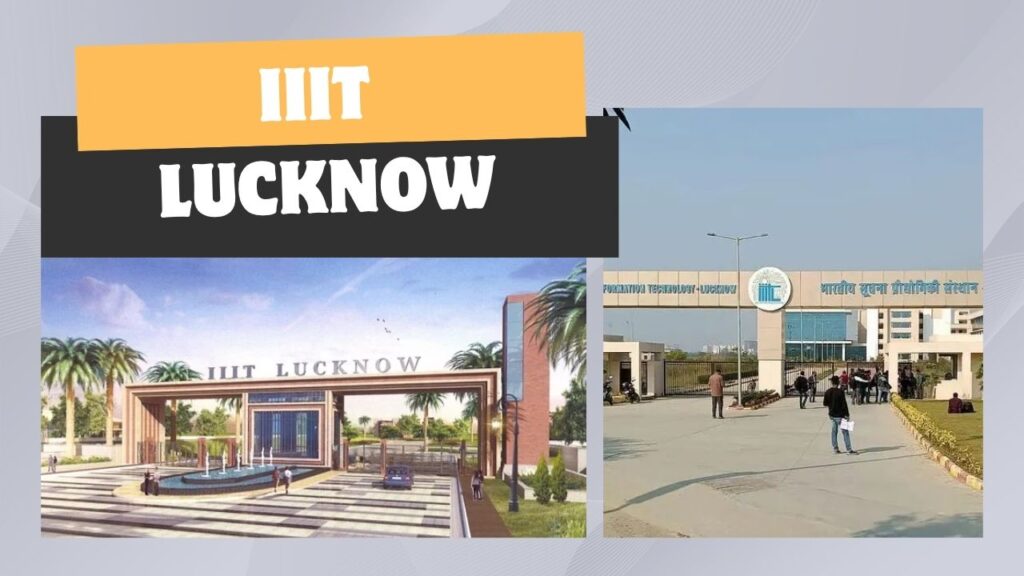
On one end is IIIT Lucknow, an Institute of National Importance operating under a PPP model between the Ministry of Education, Government of Uttar Pradesh and UP Electronics Corporation. That institute reported an average BTech package of ₹33.71 LPA for 2025, with the highest offer reaching ₹145 LPA — figures that give a run for their money to the mid-tier IITs.
Besides this, there are 53 private engineering colleges, the majority of which are affiliated to Dr. A.P.J. Abdul Kalam Technical University (AKTU) with average packages of ₹4–6 LPA. In between these two is IET Lucknow which is the premier state govt college under AKTU offers 8.2 LPA total fee is just 3.44-4.04 lacs for 4years.
This isn’t just about prestige. The JEE Main rank for IIIT Lucknow Computer Science branch closed at 8,540 (General All India) in 2025, while IET Lucknow’s CSE closed at around the rank of 35,763 via UPTAC counselling. The difference of 27,000 ranks corresponds to around 1.5 percentile points.
Top Government BTech Colleges in Lucknow
IIIT Lucknow (Indian Institute of Information Technology)
IIIT Lucknow is an Institute of National Importance operating under PPP model, formed in 2015-16 by the Government of UP, with the financial support from the MHRD, Government of India along with UP Electronics Corporation. The institute offers only BTech programs in computer science based areas – Computer Science & Engineering, Information Technology, CS-AI and CS-Business.
Entry to these institutes is through JEE Main and then JoSAA counselling — just like the NITs and IITs. 96.17 % of students (201/209) of BTech got placed in the 2025 placement season with a median package of ₹26 LPA. The tuition fees for the entire four-year course ranges from ₹9.6 —- 10.23 lakhs, excluding the cost of hostel.
The culture of coding here has been likened to that in top NITs. In contrast to regular state colleges, IIIT-L has a laser focused curriculum on software engineering, algorithms and data science. Companies like Microsoft, Goldman Sachs, Google, LinkedIn, and Directi have come to these colleges for placement drives.
IET Lucknow (Institute of Engineering and Technology)
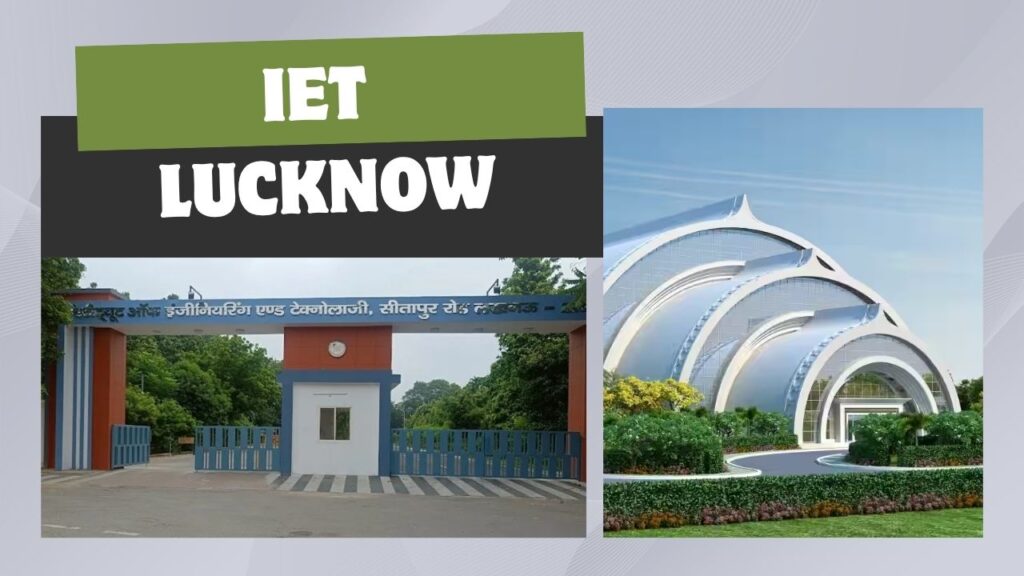
IET Lucknow is listed in the top colleges of Engineering colleges of Lucknow, established in 1984. This government institute is administered by AKTU’s Executive Council and offers eight different fields in BTech. Those eight disciplines are Computer Science, Electronics & Communication, Civil, Mechanical, Electrical, Chemical, and Information Technology.
The admission process is tough as students have to go through UPTAC counselling (not JoSAA) after passing JEE Mains. Previous year students get placement packages up to ₹8.2 LPA and the highest package goes up to ₹49 LPA shown in the record. Total four year fees of IET-L sit between ₹3.44–4.04 lakhs that make up to ROI, you pay roughly ₹4 lakhs and routinely secure placements averaging above ₹8 LPA.
The campus environment is academic and advanced, providing the strongest ecosystem in the city for students who are targeting core engineering branches to settle down in government jobs.
University of Lucknow
University of Lucknow is every engineering first choice as it serves various disciplines in engineering programs. Students settle down with an average package of ₹6.5 – 8.0 LPA and this four year degree costs ₹1.2 – 1.4 lakhs, which is a good choice for a middle class person. Admission routes include JEE Main and LUGET.
The campus environment is surrounded with technical studies, civil services or management exam preparation. It balanced the core culture of academic and practicality, making it a perfect choice for UPSC aspirants who want an engineering degree as a backup.
CIPET Lucknow (Central Institute of Petrochemicals Engineering and Technology)
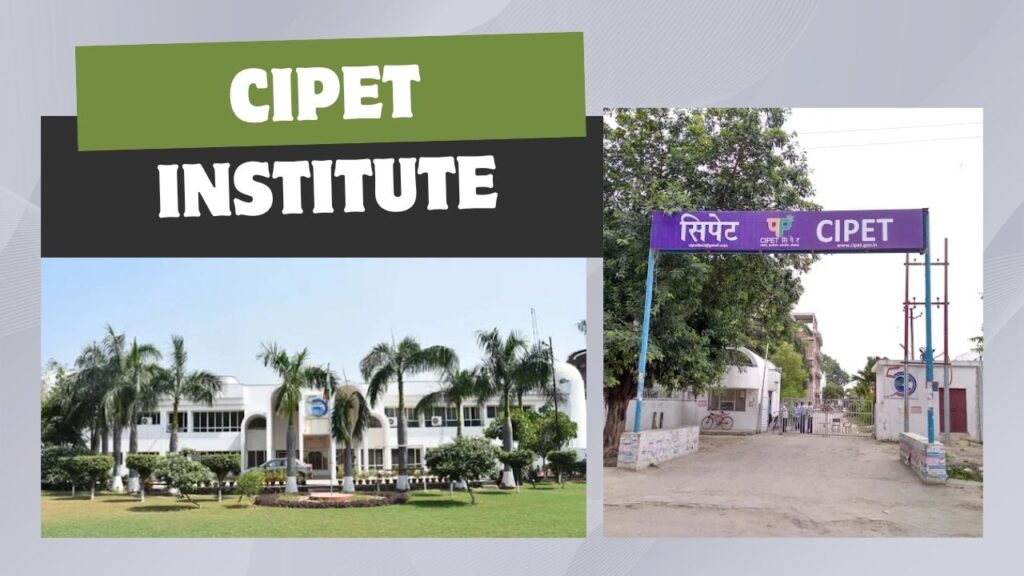
CIPET operates under the Ministry of Chemicals and Fertilizers, the best choice for students who want to build a career in chemical engineering. The institute focuses on plastics engineering and manufacturing technology while maintaining the strong connection to industries in automotive, packaging, and petrochemicals sectors where demand for specialized engineering talent is high.
The annual fees of course sits between ₹75,000–85,000 and delivers exceptional ROI for students in future. The placement rate is also high in this field, near-100% in manufacturing sectors.
Leading Private BTech Colleges in Lucknow
Integral University
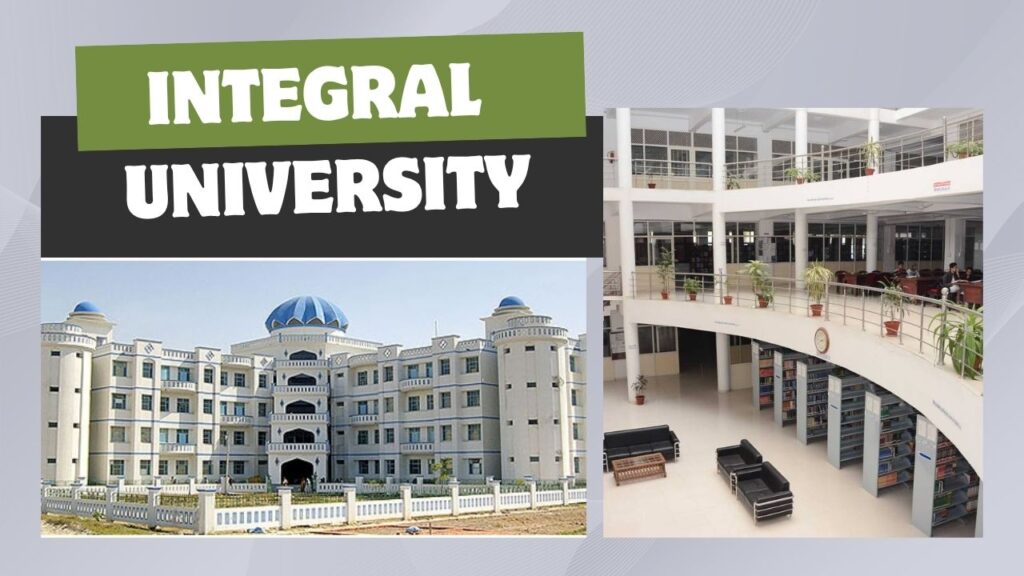
Integral University became one of the best Lucknow engineering colleges after it came into the NIRF 2025 Engineering ranking bands (201–300). Its unique position is built upon the faculty strength and curriculum of the university in research infrastructure and emerging specializations like Cloud Computing and AI.
These advanced choices are growing the university’s reputation world-wide and best for students who plan to pursue higher education or research careers. This institution carries NAAC A+ and provides a higher academic environment which gets students average packages of ₹4.5 – 7.2 LPA shown in reports. The annual fees of ₹1.5 –1.7 lakhs.
Amity University Lucknow
Amity University got NAAC A+ accreditation with corporate-level infrastructure that gives students an opportunity for learning with soft-skills training, global immersion programs, and placement drives featuring TCS, Wipro, HCL, and IBM. Reports say the average package students can get is up to ₹6.5 LPA and annual fees is ₹3.1 —- 4.5 lakhs.
Amity builds their students with strong communication skills — a profile that consulting firms and client-facing tech roles value. But it can be affordable for some students as its total fees for four years is ₹16–20 lakhs.
Babu Banarasi Das University (BBDU)
BBDU is one of the biggest universities in Lucknow with a wider range of programs. It offers BTech courses in multiple disciplines at ₹1.4 — 1.8 lakhs fees annually. Students can get an average package on their placement is around ₹5.2 —- 6.8 LPA but students have to pass JEE Main or BBDU-ET entrance exam.
If students miss IET Lucknow, after getting 35,000–60,000 in JEE Main can get admission in BBDU as it offers a reliable middle-of-the-funnel option without exorbitant fees.
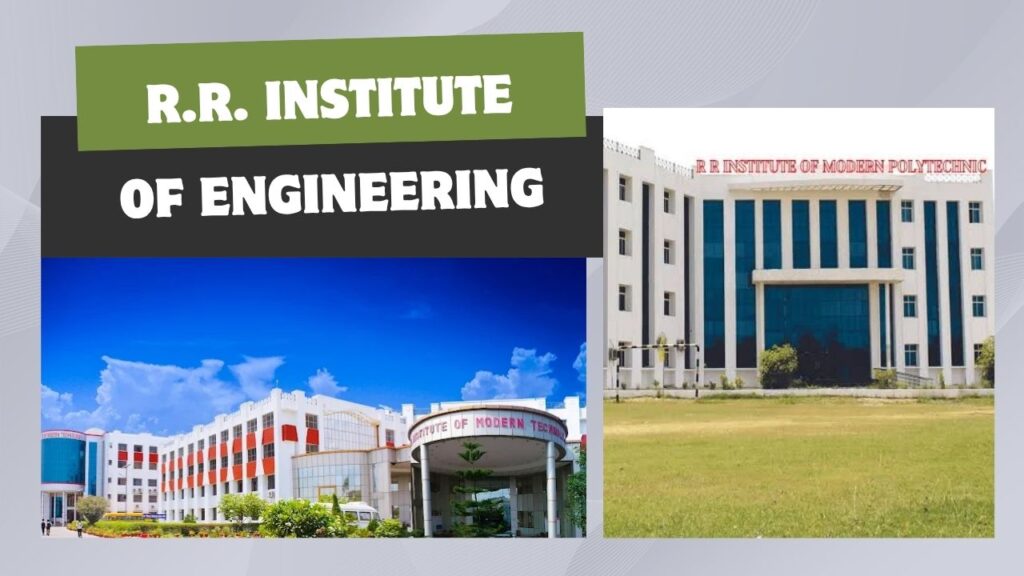
R.R. Group of Institutions (RRGI/RITM)
RRGI/RITM offers a strong curriculum and practical exposure for BTech students which polishes their skills in specific disciplines. ₹4.5 – 6.0 LPA range of package after finishing four year degree which cost students ₹80,000 – 1.1 lakhs per year.
If students miss a seat in government college, they can get admission here. It’s a practical option for middle class families since its ROI is also good, and a consistent placement record.
Comparison of Best BTech Colleges in Lucknow: Fees vs. Placement ROI
College Name
Ownership
Total 4-Year Fee
2025-26 Avg Package
Best Specialization
IIIT Lucknow
Govt (PPP)
₹9.6–10.23 L
₹33.71 LPA
CSE, AI, IT
IET Lucknow
State Govt
₹3.44–4.04 L
₹8.2 LPA
Core Engg, CSE
Lucknow University
State Govt
₹4.8–5.6 L
₹7.5 LPA
Civil, Electrical
Amity University
Private
₹16–20 L
₹7.8 LPA
Biotech, Cyber
Integral University
Private (Deemed)
₹6–7 L
₹5.5 LPA
Cloud, AI
BBDU
Private
₹5.6–7.2 L
₹6.0 LPA
Data Science
RRGI
Private
₹3.2–4.4 L
₹4.8 LPA
Mech, CSE
CIPET
Central Govt
₹2 L
₹5.0 LPA
Plastics Engg
If software engineering at product-based companies is your goal, IIIT Lucknow operates in a different league. For core engineering with government job preparation, IET Lucknow delivers unmatched ROI.
BTech Admission Process in Lucknow: JoSAA vs. UPTAC
There is a rule to take admission in BTech — whether you choose government or private college, the pathway is critical but it is mandatory to test your knowledge.
JoSAA (Joint Seat Allocation Authority)
Students can take admission through JoSAA counselling to IIIT Lucknow, IITs, NITs, and IIITs nationwide. It happens every year in June, you can register and be ready for counselling rounds. It will finish till July last week but you must have a JEE Main 2026 score and 75% aggregate in Class 12. The portal is josaa.nic.in.
If students want to take admission in any 60+ AKTU-affiliated colleges across Uttar Pradesh then registering UPTAC is the best choice. Registration happens every year in mid-June on uptac.admissions.nic.in. You must have a JEE Main 2026 score with 45% in PCM with valid documents.
IIIT Lucknow uses JoSAA only. IET Lucknow and all private AKTU colleges use UPTAC only. You must register for both systems separately if you want to keep both options open.
Meanwhile many private universities run their own entrance exam for admission or offer direct admission on merits of students in 12th. So you must secure above 60% in PCM to be eligible for BTech course.
JEE Main 2025 Cutoffs: What Ranks Actually Got In
IIIT Lucknow CSE (General All India): 8,540 (Round 1)
IIIT Lucknow CS-AI (General All India): 8,844 (Round 1)
IET Lucknow CS-AI (General): 35,388 (Round 1)
IET Lucknow CSE (General): 35,763 (Round 4)
IET Lucknow ECE (Open State): 48,263
IET Lucknow Electrical (Open State): 59,465
IET Lucknow Mechanical (Open State): ~1,00,306
Placement Reality: Beyond the “Highest Package” Marketing
College catalogs are full of boasts about the ₹62 LPA or ₹145 LPA offers from abroad. That’s important, but the numbers don’t tell you what the median looks like. IIIT Lucknow’s median package (26 LPA) is more telling than its highest package (145 LPA). The IET Lucknow median of 6.15 (NIRF 2024 data) LPA is a much better reflection of what one can expect than the highest offer of 49 LPA.
Private Lucknow colleges claim ₹4-6 LPA as average package and ₹15-20 LPA as maximum IT package for top performers. It is the placement percentage — the ratio of students who got a job to those eligible to get a job — that is more important than the maximum package. The 96.17% placement record of IIIT Lucknow (201 / 209 students) is outstanding. IET Lucknow reports 60% to 70% placement, 50+ recruiters. Private colleges are a mixed bag, some find it hard to place even 50% of their batch.
For the cost-conscious and less brand-conscious, Lucknow has many government and government-aided schools:
College
Fees
Admission Through
Package
BSP Lucknow (Bhabha Polytechnic)
₹69,000 total for four years
UPTAC
₹3 LPA
AIET Lucknow (Ambalika Institute)
₹1–1.4 lakhs
UPTAC
₹4 LPA
CIPET Lucknow
₹2 lakhs total for four years
UPTAC
₹3 LPA
IET Lucknow
₹3.44–4.04 lakhs total
UPTAC
₹3.5 LPA
Eligibility Criteria for BTech Admission in Lucknow
Students must have physics, chemistry, and math in their class 12th with a score above 60%.
JEE Mains is mandatory for most colleges.
UP domicile candidates get preference under the home state quota in UPTAC counselling.
Conclusion
If you have finished your 12th with PCM and want to pursue BTech, that means you need to prepare yourself for challenges and competition. This is a vast field with multiple opportunities but there are thousands of students who pass every year from these Best BTech Colleges in Lucknow and secure a well-paying job in multinational companies.
You can also join the government sector (Railway technician, Airlines, ISRO) by getting admission in government college, it doesn’t mean that private colleges won’t make you eligible, government colleges have a wider range of placement drives. Understand the process of admission before making a decision because most students fail to keep the track.
Students can check fees and salary packages that companies offer as it matters to build a secure career.
In the new digitized India, fake job offers are becoming common. Let’s take a look at how to verify if a Job Offer is real or fake. Whether a private or government job, scams often happen in both sectors. Mostly, freshers get wrapped up in scammer’s false offer letters because they don’t have a clue from the real industry. Scammers often use real companies’ names to fool you out and ask for money as a security deposit. Here are the signs that can help you to spot a fake job offer and protect yourself.
How to Identify Fake Private Job Offers
1. They Ask You To Pay Money
Always remember the fact that real companies never ask for any kind of money from you. They hire on the basis of a person’s qualifications and skills. If they ask you any of the following:
Registration Fee
Internship Fee
Security Deposit
Job Guarantee
They‘re scamming you, and freshers get stuck into this thing once in their lifetime because they are easily manipulated by seeing a chance to start their career. No reputable company charges you to give a job, whether it’s a government or private.
2. Offering High Paying Salary
If they are offering Rs. 50,000 or Rs. 1 Lakh per month for just entry-level jobs. Think about it, getting a job with such a salary and without any experience is kind of a miracle, and miracles don’t happen in real time. These are usually fake because real companies check your skills and experience before offering big packages.
3. No Official Interview Process
Real companies always hire you after an interview session whether it’s a government or private sector. If they say “NO INTERVIEW REQUIRED”, they are a red flag. Even if they ask for an interview on WhatsApp or Google Meet, you must check their company’s visibility on Google or LinkedIn. If they are not seen on any of the social platforms then it is a fake company. There are several rounds in the selection process:
Application review
HR round
Written Test
Technical Interview (if applying in the technical round)
Assessment
Experience Proof (if you have any)
Document Verification when you get selected after the interview.
4. Unprofessional Emails or Offer Letter
Fake company’s emails or offer letters does not contain any of the following:
Email ID: Fake company has emails including gmail.com or yahoo.com. However real companies own their domains like tcs.com or hdfcbank.com
Grammar Mistakes: You can check the spelling mistakes or errors in their mail or offer letter because they usually do that. If the scammers are pro they can send you a fluent message. So, try other things to check.
Company Logo or details: Real offer letters always present their logo and company details like location, contact, and terms are clearly written on the letter.
5. Missing Company Details
If you are suspicious about the job offer, you must check their company name, details, and address. People who were scammed before by the same company also shared reviews on social media platforms. Search for the company first and don’t just be impressed by vague job descriptions like “work from home” or online project”.
6. Pressure To Accept The Offer Letter
If they say that job vacancies will be filled up sooner and accept the offer letter now. It is a really big fish in the pond, real companies always will give you time to think about it. So, take your time to check everything out about the company. Fake recruiters often say these things:
Hurry! Limited seats.
Confirm today or you will lose the job.
Register now with half payment.
They ask you to pay anything like a security fee.
7. The Company Has No Online Presence or Bad Reviews
If they post online about the hiring check their company page, people reviews, or employees. If others have been cheated they usually post on social media for others to be aware of the scam. Real company has an official website, LinkedIn profile, and no bad reviews.
Tips To Stay Safe From Scammed Jobs
If a company asks for your Aadhaar Card, PAN Card, or Bank Details before the interview or official joining. It’s a fake company that wants to take advantage, freshers or experienced are advised to not share any personal details before the official joining.
Big companies review your resume on these websites and then ask for the interview round if they’re satisfied with your resume. The interviews are usually taken by the interviewer on screening or on-site.
Government Jobs often recruit candidates by a competitive examination by the particular organization. The announcement of the vacancies on the various posts will be presented on the official website.
There are a lot of advertising papers on the wall in India that promise government jobs without an exam or get selected directly for government jobs. They are scamming you surely, making money in the name of a government job is common in India.
1. Fake Agents Promising Jobs
If you ever cross paths with any agent who claims to get you hired because he has some connection on the inside in any sector like Railways/SSC/UPSC. They ask you to pay 50k or 60k for direct selection, never give them money.
Government jobs are only given through the examination and any details about the job process or list of candidates that are selected always came through from an official website for every government organization. There is no middleman who can get you a job.
2. Fake Job Portals
Scammers copy the real website that looks like the real website and fool people around. Here is an example of a fake and real website difference:
Fake: sscrecruitment.com
Real: ssc.nic.in
3. Fraud Coaching Centres
Spot fake claims from coaching centres like:
100% job guarantee in SSS/Railway.
Get placement after the course.
Be alert of these scams because no coaching centres can guarantee to give you a government job or help you get one. Only your exam performance and qualifications decide your selection for a government job.
How to Stay Safe From Fake Government Job
You can apply for a government job through their official website. Whether you are applying in Railways, Scientist, Clerk, IAS, IPS, or any other post. The official websites for government jobs are:
If you are applying for a private job or government job, always double-check the offer letter and recruitment process. In both sectors, people are hired only by their performances, whether it’s experience, assessment, or merit list. The candidates who clear out the rounds of the selection process can get a job. If you don’t know How to Verify If a Job Offer Is Real or Fake? You can check out the signs to spot fake offers. Getting a real job takes effort, no shortcut can replace that.
If you are seeking a job in the public sector, it may be useful to know that there are some differences between central government and state government jobs. This guide is for you to understand these differences, Government employees are responsible for controlling and monitoring public rights, administration, and discipline within the country. State government employees work for the individual state and central government employees act at the national level.
The government employee acts under the service laws that regulate the conditions of work including authority, recruitment, promotion, transfer, and other perks. The recruitment bodies for central government employees are UPSC, RRB, and SSC, and for state governments are UPPSC, TNPSC, and MPPSC, etc.
In the central government, employees can be transferred across the country but state government employees can serve within the state. Transfers typically happen.
State Government Objectives:
State governments function at the regional level, operating within the boundaries of individual states.
They handle police, agriculture, and public order by implementing laws.
According to the state’s situation, a legislative body can pass the law.
Each state has a Chief Minister, who leads the administration of the state.
He is the highest authority of an individual state that manages the budget, expenditure, and ensures the development projects run smoothly.
States can make their own rules but it doesn’t mean that they can violate any central laws.
They have to align with the legal boundaries and National objectives.
Central Government Objectives:
The central government functions at a national level and administers the entire nation.
It makes laws on union list topics under the Constitution such as defense, foreign relations, and banking among others.
The prime minister is responsible for national administration as he is the executive head and holds the highest authority.
State governance works have been monitored by the central government under the constitution.
Central government develops and executes policies at the national level. Supports national budgets, funds, and foreign issues.
Difference Between Central Government and State Government
Authority: Central government employees get more power than the state-level employees because the state-level are set to rule the state and region of the country. The central government covers the whole country’s operations.
Legal Powers: According to the Indian constitution, the state government can work in the department for the items that come under the state list. Meanwhile, the central government can take action under national security, foreign affairs, and banking.
Powers that both have: Some powers are given to both for some important areas like healthcare, education, and criminal laws. They work together as they share responsibility and the coordination helps to run operations smoothly.
Central Government Jobs
State Government Jobs
Indian Administrative Service
State Administrative Service: Tehsildar, Sub-Divisional Magistrate
Indian Police Service
State Police Service (DSP, SI, Constable)
Indian Revenue Service (IRS) Officer
State Public Service Commission (PSC) – Administrative & Technical posts
Indian Foreign Service (IFS) Officer
State Education Department: Government School Teacher, Lecturer, Principal
In the State Judiciary department: Judges, Court Clerk, Legal Assistant, Stenographer
Public Sector Undertakings: Trainee, Managers, Executive roles, Engineer, Officers
State Revenue Department: Officer, Revenue Inspector, Lekhpal, Deputy, Clerk
Central Departments: Assistant Director,Scientist, specialist, Engineer, Regional Officer
State PSUs: Engineer, Technician, Assistant in state-run corporations
Postal Services: Assistant, Postman
Local Bodies: JE, Clerk, Sanitary Inspector
Teaching: Central University Faculty, Professor, School teacher.
Agriculture Department: Agriculture Officer, Development Officer, and Extension Officer
Why Central Government Jobs Offer Better Career Growth Than State Jobs
When it comes to professional growth for long-term development and a high salary, central government jobs often have the upper hand over state-level positions. Let’s look into the factors that backed up this statement:
1. Wider Career Scope
Central government employees usually get the chance to work on nationwide projects and schemes. The nationwide projects provided larger benefits such as expanding their work experience, providing a diverse and high-level career path for their professional growth. So, these perks come with central government jobs, not from state departments.
2. Faster and Transparent Promotions
The larger project initiatives often provide a quality of experience to the person that can help in fast promotion. Internal promotions through departmental examination often happen and deserving candidates can usually get the chance to climb the career ladder faster. In many state services where the process can be slower or less systematic.
3. National Recognition of Experience
Another major point is that the experience of central government employees is more valued than state department employees. If someone decides to switch roles and departments then it is harder for a state-level employee than a central-level employee as it carries more weight in their resume.
4. Exposure to a Global Network
Working in the central government, dealing with foreign affairs sometimes opens a wider range of interactions and helps build a network from various departments. This act helps them develop their mind with administrative skills and also helps build valuable connections that can support future growth and collaborations.
5. Pay Scale
State government jobs have followed the central pay commission. It may vary depending on the state’s financial growth and decisions. Meanwhile, central government jobs have to pay under the 7th Pay Commission.
Conclusion
Whether you are preparing for a job as an engineer or officer in the government sector. You can decide which job you can apply for that aligns with your future goal after learning the difference between central government and state government jobs. Their salaries, posts, authorities, and many more. You must know the differences between the two for your career growth.