Top 10 Mobile Apps for Government Exam Preparation in 2025

Top 10 Mobile Apps for Government Exam Preparation

The struggle of preparing for competitive exams is a common issue, students find it hard to get helpful resources. The top 10 Mobile Apps for government exam preparation will be helpful for you. It’s not about knowing the apps but understanding which app has a particular resource for your exams is challenging, especially when you’re just starting. There may be dozens of apps promising “success” and “selection,” but let me be honest with you, only a few are genuinely helpful

Testbook – The All-Rounder You Can Trust
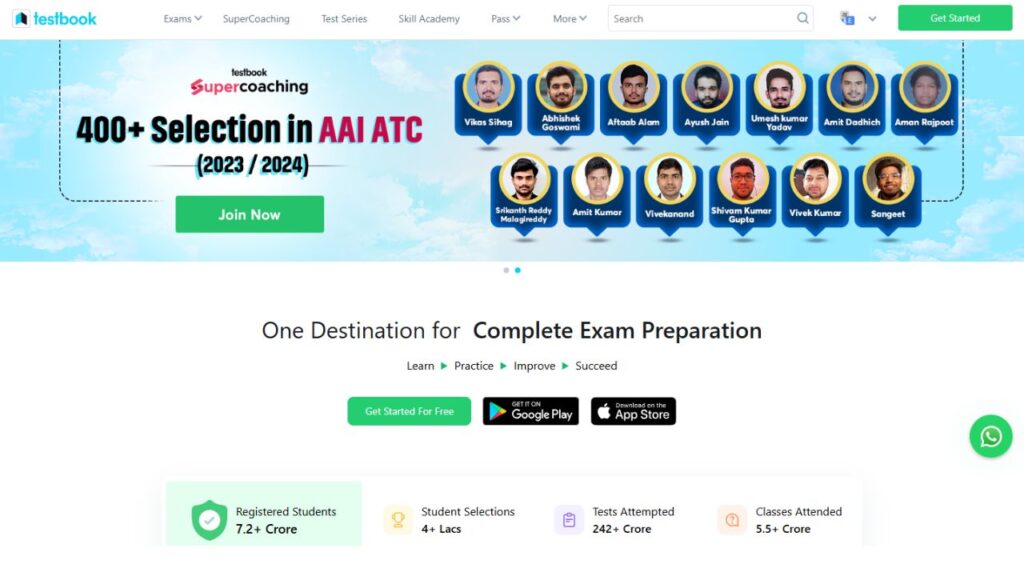
If you are someone who wants to prepare for SSC, PSUs, RRB, Defence, or even State-level exams, Testbook is your best starting point. This App has a simple design which makes it user-friendly and powerful mock tests. After each test you have, it generates a detailed performance report like where you’re weak and how much time you spent on each question. It’s used by more than 5 crore students across India. Even if you’re just in 10th or 12th now, you can start building your basics here slowly.

Adda247 – Best for Hindi Medium and Bilingual Students
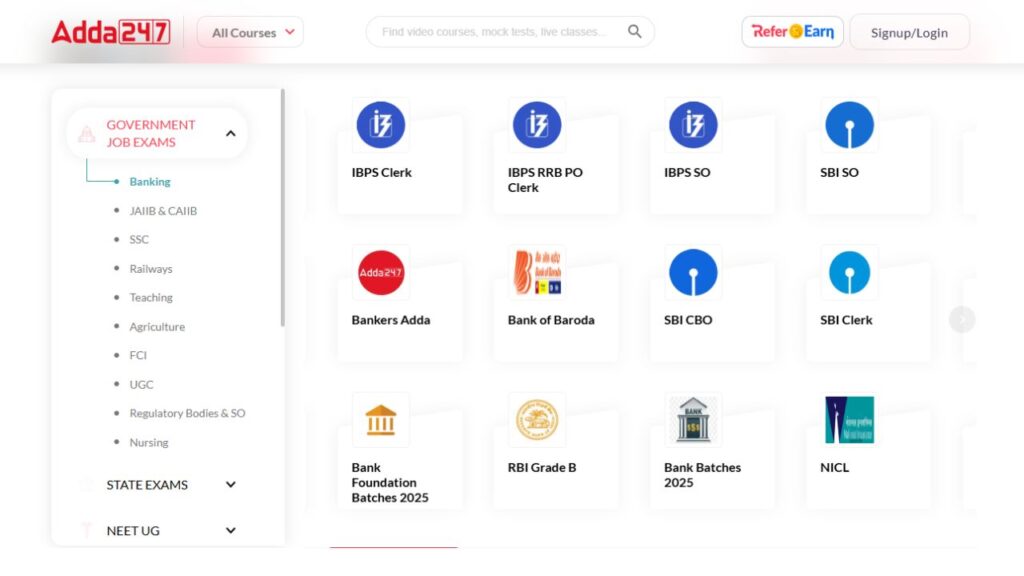
If you want to learn in your native language like Hindi or want preparation in both Hindi and English, Adda247 is a great option. It’s very popular for Government Exams. This app provides daily notes on current affairs, live video classes, free PDFs, and QAs. The best part is you will also find motivational sessions and free YouTube content from their teachers. Many girls from small towns mentioned that they prepare for their exams with this app on Google Reviews. 

Unacademy – Learn Live from Top Educators
Unacademy is perfect if you like learning from live classes rather than just reading PDFs or solving MCQs. Some students are capable of learning by listening faster than notes. Concepts were explained by the top educators in a detailed manner. Whether it’s UPSC, SSC, Bank, or State PSC exams, you’ll get proper guidance. With this app, you can record a live session to watch later. The app offers more features in the paid version but many free classes are also available.

Careerwill App – Structured Courses for Serious Learners
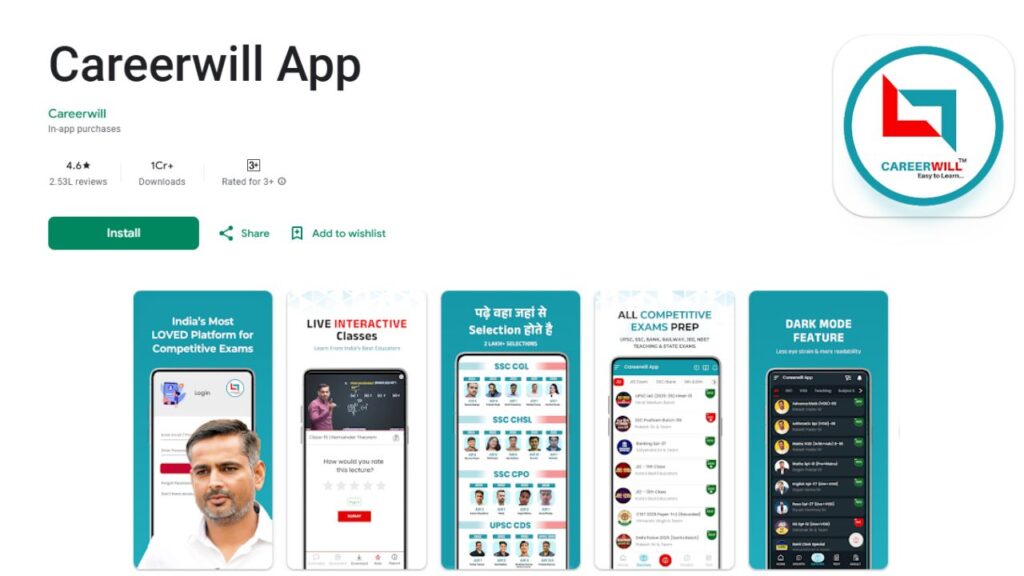
This app is preferred for senior people who want to switch their careers to a government job. If you like planning, schedules, and a fixed timetable, Carerwill can be a solid choice. Start preparing with the help of top educators on this app. They provide quality content and latest exam patterns to prepare fast and strategically to level up in competitive exams. It’s especially good for students who don’t want to get lost in a lot of syllabi but need the right direction.  

Smartkeeda – Best for Practice and Analysis
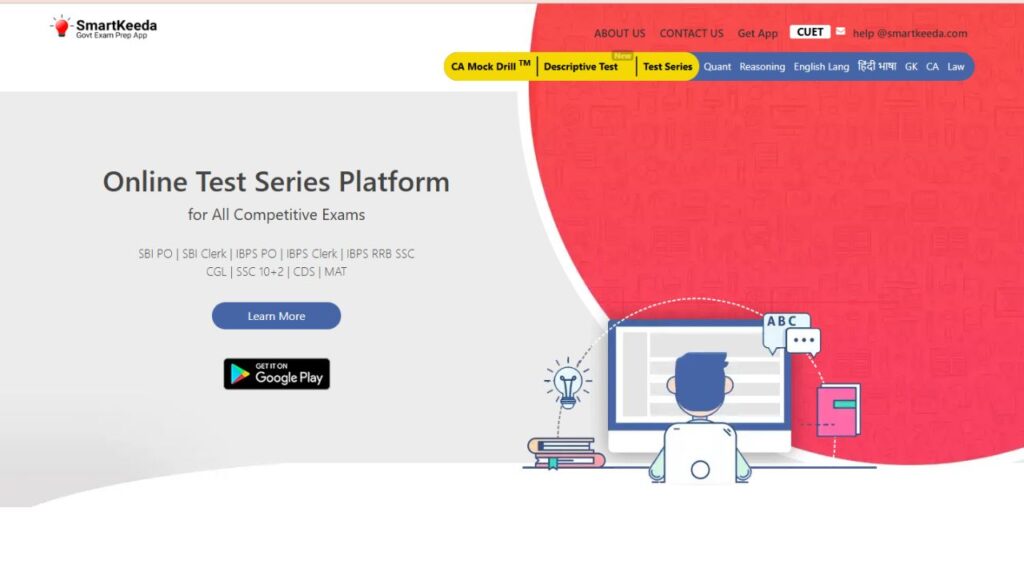
It’s not just about reading but you need strategic planning to cover all the points which help you clear out the exam. Practicing with Smartkeeda which prepared you for Banking, SSC, and Insurance exams. Their time-based analysis, solution quality, and explanation format are top-notch. Many toppers credit their success to Smartkeeda’s mocks. If you are full of knowledge and just need to polish your exam content then this is the best app.  

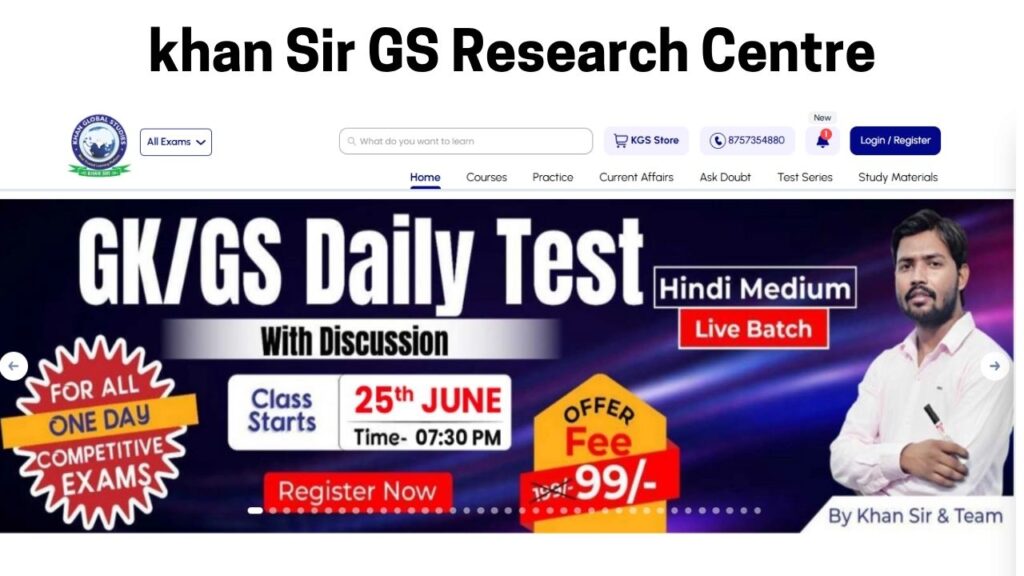
Khan Global studies is an ideal app for those who want to assess the deeper knowledge in each subject to score in 90 above. You must have to give time consistently to prepare for the competitive exams. It offers live lectures, test series, and study material for UPSC, MPPSC, RRB, SSC, PSU, NDA, CPF, AirForce, and many more. You can record lectures for later revision. This app is launched by Khan Sir, use this app to level up your preparations.

Students of primary classes have dreamed about becoming an IAS or IPS, and this app is perfect for them. The language is easy to understand and makes them prepare with time and effort. After following up with ClearIAS, the app focuses purely on civil services preparation. It gives current affairs, daily MCQs, subject-wise notes, and strategy sessions. 

If you’re someone already thinking of a future in the Banking sector, CrackitToday is made for specific banking exam preparation. This app includes daily quizzes, monthly PDFs, and a ranking system that tells you where you stand. So, be smart to download and start preparing today. The user interface is very beginner-friendly so anyone can use it easily. The app keeps updating its content with new trends and expected questions.

Another interesting option for daily practice is Kadmik. If you love challenging games then consider this app as your career saver. Start your study without getting bored. It also has the option for you to earn points, climb leaderboards, and revise previous mistakes. It has questions for SSC, Banking, and Aptitude tests. Ideal for those who want to engage in fun while studying.  

PW is well-designed and contains solid questions. Ideal for those who want to prepare seriously without wasting time. It is best for peaceful study for JEE, NEET, SSC, UPSC, GATE, and Railways exams. The App rating is 4.6 and many students praised its content quality.

Read More 👉 Top Highest Paying Government Jobs in India That Pay Like Private Sector!

Staying regular and starting early is a smart choice for students who want a career in government jobs. Don’t run here and there for resources just download the app according to your needs. Confusion begins when you start using too many apps at once. 

  • To get study materials and start preparing from scratch, use Testbook or Unacademy.
  • If you want to learn in Hindi, download Adda247.
  • Students preferring coaching structures and videos can go for Byju’s exam prep.
  • Help to build study habits, use Qudoo or Kadmik. 
  • Revised helpful apps: Smartkeeda and CrackitToday. These apps are masters in building your concepts solid.

Before you start your journey for a government job. Consider these apps on your mobile to help you get one step ahead in the competition. Many students had to search for books, ask teachers, and sit in crowded coaching classes. These top 10 Mobile Apps for government exam preparation are helpful to start your journey.

Don’t try too many questions in a single day, just try to be consistent and everything’s wrapped up naturally. Your journey may seem long now but with the right tools and mindset, you can achieve your goal. So choose your app smartly. Make a daily habit. Start small. And stick to it.

Leave a Comment

Your email address will not be published. Required fields are marked *

PCS Exam (Provincial Civil Services): Roles, Structure and Selection Process

PCS Exam (Provincial Civil Services)

PCS Exam (Provincial Civil Services) is an important pillar for the state administration in Indian states. And this is what closely shapes the state through its good governance, which is ultimately determined by the effective application of the policies and programmes. This blog will be a brief account of what PCS is about, the exam pattern for PCS, the recruitment procedure, the responsibilities, duties to be performed by PCS officers and importance of civil services in the Indian scenario. 

What is PCS?

The Provincial Civil Services (or PCS Exam) is an administrative services of state, which works under state government. Whereas every state in India has its own civil services responsible for law and order of the state, execution of the policies of the government and delivery of services to the citizens. The PCS officers are state government officers and are posted at various levels to district administration, revenue and welfare of public. 

Importance of PCS

Administrative Backbone: The PCS Exam is considered to be the backbone of the state administration, as it is the vehicle for enforcement of the government at the village level.

Service to Public: Public servants under the PCS Exam have the duty of dispensing important public services — health, education, infrastructure.

Implementation of Policies: They are also instrumental in the execution of several government plans and programmes for the citizens.

Local Governance: In many cases, PCS officers serve in local governments, which brings them closer to the population they administer. 

Structure of PCS

State Administrative Service (SAS)

  • The State Administrative Service (SAS), a key component of PCS Exam, is equivalent to IAS at the state level that deals with core district administration. 
  • Officers begin their careers as Deputy Collectors or Sub-Divisional Magistrates (SDMs) and are District revenue officers in charge of implementing Schemes such as MNREGA and PMAY, Revenue matters, Public grievances and Disaster management. 
  • After 8-10 years they get promoted to DM at Pay Level 10 (₹56,100–₹1,77,500) along with benefits like official residence, vehicles, and allowances. 
  • It is conducted through PCS Exam Prelims, Mains and Interview, is having a bachelor’s degree and aged between 21-40. For instance, in UPPCS, one can expect SAS posts to start as Naib Tehsildars in tehsils. 

State Police Service (SPS)

  • The State also has its own police force namely the State Police, which is the principal law enforcement agency.
  • DSPs are recruited through PCS Exam with physical tests as mandatory duties include investigation of crimes, dealing with cybercrime, providing security to VIPs, managing traffic and community policing and from there you can be promoted to the ranks of Superintendent of Police or DIG.  
  • Pay levels vary from 10-12 (₹56,100–₹2,08,300) with uniform and arms allowances. 
  • Relevant for graduates between the ages of 21-40, is popular in urban-heavy states like Uttar Pradesh, where DSPs combat Noida crime surges. 

State Revenue Service (SRS)

  • Land Revenue and Taxation and Records is a branch of the State Revenue Service (SRS) that acts as the keeper of land revenue and taxation and related records, it is directly linked with the highest levels of the member starting from entry level as Naib Tehsildars through PCS exams. 
  • The Officers are responsible for issuing caste/income certificates, they settle land disputes under various acts like UP Zamindari Abolition, they also collect stamp duty and also supervise mutation, they also get promoted as Tehsildars or Additional Collectors. 
  • Level 10 Pay is inclusive of rural-related allowances. 
  • Awareness of land laws is indispensable for this cadre and for an agrarian state like Rajasthan where water and wastelands are such a big issue. 

Other Services

PCS has a number posts such as State Forest Service (SFS) for wildlife conservation and anti poaching (like Uttarakhand PCS). It also contains the State Engineering Service (SES) in public works and irrigation (MPCPS). 

Other posts include BDOs, Commercial Tax Officers, and many state specific posts like Bagasse Officers in Bihar. 

Percentage varies 40-50% SAS, 20-30% Police, Technical background preferred for technical posts. It used to have its own state level administration which was only after 8+ years that were IAS/IPS. 

Read More:-India Post GDS 2026 Recruitment Notification & Apply Guide

Recruitment Process of PCS in Detail

Who Can Apply

The candidates should meet the following criteria to apply for the PCS officer:

Qualification: The minimum requirement for this is a bachelor’s degree from an accredited institution. 

Age Limit: The age limit is generally 21-32 years, with relaxation in upper age limit for reserved categories.

Nationality: The applicant should be an Indian citizen or a non-resident Indian and he should fulfill certain criteria laid down by the state government. 

Examination Process

Generally, the recruitment procedure for PCS Exam is as follows:

  • Preliminary Examination: This is an objectivity-type exam which measures the general knowledge and awareness level of aspirants. It acts as a test in eliminating the candidates for the main exam.
  • Main Examination: The eligible candidates who have successfully qualified in the preliminary exam can apply for the main exam. These are descriptive type papers based on different subjects like general studies, language and optional subjects.
  • Interview: In this round candidates are assessed on their personality, communication ability and whether they have the makings to be part of the civil services. 
  • Final Selection: Final merit list will be prepared on the basis of result of main exam and Interview. 

Roles and Responsibilities of PCS Officers

PCS officers are given a multitude of duties, depending on where they are posted. Some of the most important ones are:

What is a District Collector? 

The District collector is the head of the district administration and is responsible for the collection of revenue, maintenance of law and order, and implementation of various development schemes. 

Sub-Divisional Officer (SDO): 

SDO is the chief officer of a sub-division and the officer-in-charge of administration at the sub-divisional level, monitors developmental works in the sub-division along with maintenance of law and order. 

Tehsildar

This officer is responsible for revenue collection, maintenance of land records, settlement of land disputes, and execution of government schemes at the grass root level at tehsil level. 

Block Development Officer (BDO)

At the block, BDOs have to implement, run and monitor the rural development programmes, coordinate with the local bodies, and attend to public grievances and be the communication between the Government and the rural people. 

Challenges Faced by PCS Officers

Having the title of a PCS officer is a prestigious and fulfilling job, but it has its share of challenges:

  • Work Pressure: Officers are regularly under tremendous pressure to meet deadlines and provide output on a timely basis.
  • Political Interference: The political environment is not always easy for the officers to perform its duties in the political interference of nature.
  • Public Expectations: Expectations from the street can be very high, and officers have to try to live up to them with limited resources.
  • Corruption: Nowhere is the battle more difficult to win, or the temptation to strangle it with myriad legs more prevalent than in the PCS system. 

The Significance of PCS in Society

The importance of PCS Exam in society is invaluable. These officers play a crucial role in determining the future of the state and in translating government policies into action. They serve as the government’s interface with citizens to redress grievances and promote development.

Furthermore, the PCS allows people to positively give back to society. It draws passionate and driven people looking to have an impact in their communities. The feeling of doing service to the public and being part of the process of governance is only one among many reasons which make the PCS a dream for many. 

Conclusion

The PCS Exam (Provincial Civil Services) is the catalyst of the state administration in India. It provides an exciting and challenging career for those who love public service and governance. With its organised selection procedure, varied assignments, and the chance to bring about positive changes in society, PCS continues to lure men and women of talent dedicated to the nation. As we march forward for building a New and Modi-led India, the role of PCS officers will be no less important in spearheading this change and in ensuring the effective governance of the state.

So, for the candidates who are willing to apply for the exam, knowing about the PCS exam and preparing well can give them a good career in civil services, through which they can contribute to their state and the country. 

Leave a Comment

Your email address will not be published. Required fields are marked *

Best Government Jobs After 10th

Best Government Jobs After 10th

There are many government jobs in various sectors that require minimum qualifications candidates can apply after they pass 10th with any recognised board.

  1. Asha worker
  2. Para legal volunteer
  3. ICTC driver
  4. PGT or TGT
  5. Data entry operator
  6. Medical Officer
  7. Staff Nurse
  8. Peon
  9. Attendee
  10. FLC Counsellor
  11. Caseworker
  12. ITI Trade Apprentice
  13. Apprentice
  14. Constable
  15. Tax Assistant
  16. Havaldar
  17. General Duty Attendant
  18. Electrician
  19. Office Assistant

Step 1: Go to the official Government and select the location and position you want to apply for.
Step 2: Jump to the dashboard to find the online application link and click on it.
Step 3: Some empty blanks show on the screen to get your information including contact number, username, and password then complete verification.
Step 4: Follow up on the notification and upload a photograph (passport size, no filter), and signature within the prescribed format.
Step 5: To complete the process pay an application fee.
Step 6: Preview the form for any mistakes.

Note: There may be some changes in the application form according to the position in which you are applying for. So, check well before filling out the details in the form.

Also Read: SSC CGL Syllabus 2025 Explained

  • Candidates must pass 10th standard from a recognized board.
  • Candidates must score above 50% score in the 10th standard to apply in the sectors including Railways, Defence, and Banking.
  • Candidate age should be 18 or above, some posts may require an age between 36 and 40 years. Check the official notification for the specific post to confirm the age limit.
  • Age relaxation is provided for SC/ST, candidates from the general category may not have that. Reserved category candidates should check their age relaxation on the official government website.
  • The Candidate must be an Indian Citizen.

The salary range depends on the position and location of the candidates, it may differ in various sectors. However, the government gives some other benefits along with the salary which are medical expenses, pension plans, and bonuses.

Most entry-level government jobs starting salary in the range of ₹5,200 to ₹20,000

  • Railway Track Maintainer :- ₹18,000 – ₹22,000
  • Postman :- ₹20,000 – ₹25,000
  • Paramedical workers :- ₹10,000
  • Gramin Dak Sewak :- ₹10,000 – ₹14,000
  • Defence Soldier :- ₹25,000 – ₹30,000
  • Clerk/Assistant :- ₹25,000 – ₹30,000

If you are applying for the Railway Group D posts, it includes:

  • Computer Based Test (CBT)
  • Physical test
  • document verification

It is mandatory to clear the exam for the position you applied for

  • Railway: Track maintainer, Helper, Technician, Assistant.
  • SSC Multi-tasking Staff (MTS): Conducted by Staff Selection Commission.
  • Indian Army Soldier: Soldier (General duty), soldier Technical, Clerk.
  • Indian Navy Tradesman Mate & Matrix Recruitment (MR): Tradesman Mate and Matric Recruit in the Indian Navy.
  • Indian Air Force Group C Civilian Posts: Multi Tasking Staff, lower division clerk, Cook
  • State Police Constable Exam
  • Indian Post Gramin Dak Sevak (GDS): Postal department jobs including GDS are open for 10th pass.
  • Border Security Force (BSF) Constable Tradesman
  • Central Reserve Police Force (CRPF) Constable
  • Indian Coast Guard Navik
  • Polytechnic Entrance Exams: entrance exam for diploma in engineering courses.
  • Olympiads (NSO, IMO, IEO, NCO): both on national and international level exams.
  • Indian Navy SSR & MR: To enter the Indian Navy entry level jobs.All India Entrance Exam for Scholarship (AIEES): scholarship exam for 10 class students.

Many students want to do a government job. In India, people want to grab the opportunity as soon as possible. After 10th anyone (Indian Citizen) can apply for entry-level positions in sectors including Railway, Medical Staff, Apprentice, Postal and Defense.

Can I apply for railway jobs after 10th-pass?

Yes, You can apply for railway jobs in India after 10th. Indian Railway offers many entry-level jobs for 10th-pass candidates, particularly in Group D.

Which government exams can I take after 10th?

After 10th you can apply for Railway jobs, Apprentice, postal, and defense. These are the sectors you can get into after clearing the exams.

Is there any police job available after 10th class?

Yes, there are many jobs in defense you can apply for after 10th. The most common entry-level position is a Police Constable.
There are available posts after 10th in Police: Constable (General Duty), Senior Police Constable, Junior Constable, Technical and Tradesman Posts (in some forces), Auxiliary Police, and Firemen.

What is the salary of 10th pass government jobs?

The starting salary range for the 10th pass government employee is ₹5,200 to ₹20,000. The salary is increasing after the promotion of the candidate in a particular sector.

Leave a Comment

Your email address will not be published. Required fields are marked *

ITI Admission Fees in Government College: Complete Fee Structure Guide

ITI Admission Fees in Government College: Complete Fee Structure Guide Are you interested in Technical and Vocational Education Training (TVET) as a career option? A good Industrial Training Institutes(ITI) is a great way to learn a practical skill and get a job in a short span of time. How much does it really cost to join a government ITI? is probably among the most frequent questions that are buzzing in your mind if you have been looking for ITI courses. So let's get started with the full ITI Admission Fees in Government College details before jumping on the admission portal. Quick Overview of Fee Breakdown This is the fee structure in short for an Electrician course at a typical government ITI to make your career brighter. This will help you understand the budget of the two year course. Charge Amount Admission Fee –Given one time ₹100 Registration Fee –Given one time ₹50 Monthly Tuition ₹2,400 (₹100 × 24 months) Caution Money – given back later ₹250 Examination Fees ₹200 Student Welfare Funds ₹300 Total Approximate Cost ₹3,300 Note: The caution deposit is refundable on successful completion and your effective expenditure comes to approximately ₹3,050 for two years — Now that’s reasonably priced! Understanding the ITI Fee Structure The nice thing about government ITIs is that they are hilariously cheap when compared to private ones. With private ITI colleges charging fees ranging from ₹5,000 to more than ₹1,000,000 per year, fees of the government ITI colleges are affordable and it goes from ₹1,000 to ₹20,000 per year. So, students from all financial backgrounds can get quality technical education. But it's not just a single figure for the fee structure to pay and forget about it. The fees in government ITIs are divided into several heads, each of which is for a certain purpose. Knowing what all these entails will allow you to plan your finances so you don’t get a shock when it is time for admission. Tuition Fee: The Core Cost The tuition fee is the staple of your yearly outgoings. It is from ₹100 to ₹150 per month at most government ITIs in India which works out to be from ₹1,200 to ₹1,800 per year. For reference, the West Bengal government ITIs charge a total fee of ₹30 per month as a tuition fee, implying that you will be spending only ₹180 for the entire six-month course. These vary from state to state and institution to institution, so be mindful!​ The annual tuition fee for regular trainees, however, is Rs 1,800 (Rs 150 per month) at some government institutions such as the National Skill Training Institute (NSTI) in Patna. Yet if you are from SC/ST, you pay a lot less – just Rs 600 per year (Rs 50 per month). It is indicative of the government’s resolve to open the door of education to the underprivileged sections of the society. Admission Fee: One-Time Payment Consider the entry to the admission fees for the institution you are wants to apply. This is a one-time fee that you pay once you join and not every year. The admission fee is usually around ₹100 to ₹300 for most government ITIs. This is phenomenally low, and includes the cost of processing your application, verification of your documents, and the registration procedures.​ Interestingly, some institutes offer concessions to SC/ST students. For example, SC/ST students will have to pay Rs 25 instead of Rs 100 as admission fee. Registration Fee There is also a registration fee separate from the admission fee and the registration fee is usually between ₹30 to ₹200. This is for registering your enrolment with the records of the institute and getting you listed with the official registers. It’s a non-refundable fee which is paid generally at the time of verification of admission.​ Again, if you belong to SC/ST category you may get waived off from paying this fee in some institutes. Caution Money: A Security Deposit Important to understand: Caution money isn’t a fee that you are wasting. It’s a security deposit that is refunded. You pay it once (usually between ₹ 100 to ₹ 500) while admitting and you get it on successfully completing the course. This sum of money serves as a kind of insurance to keep students finishing their training and disciplined. Additional Funds and Charges In addition to the basic fees, the Govt ITI s also levies different student welfare and infrastructure enhancement funds which may be used for welfare activities of the students, for up-gradation or improvement in infrastructure. These might include: Gymkhana Fee Up to ₹100 To get along with sports and extracurricular activities Student Welfare Funds ₹50 to ₹375 Contributing to overall student development programs Placement Registration Fee Approximately ₹50 Helping the institute organize campus placements Smart Card Fund Around ₹200 For issuing digital identity cards Examination Fee At the time of examination, an institute usually levies a test fee of ₹25 to ₹100 per attempt. This includes the cost of holding exams, drafting question papers and conducting tests. Total Annual Cost For ITI Government Add all this up and see what the real number you’re looking at is. For a normal engineering trade class (say Electrician or Fitter) in a government ITI. First Year Fee is in range between ₹2,400 — ₹3,500 Subsequent Years As it vary on state, ₹1,500 to ₹2,000/year Delhi institute registration fee is Rs.200, so if you are applying there then this is the amount you have to pay at the time of verification along with the other applicable fees, which is quite nominal. Special Provisions and Exemptions For Girl Students A large number of Government ITIs provide relaxation to female trainees. Girl students are exempted from tuition fees as well as examination fees at institutes such as Patna's NSTI, rendering the course free for girls (the only exception being other compulsory deposits and fees). A few states have adopted similar policies to incentivize women to take up technical trades. For Reserved Categories There are hefty discounts for students who belong to the SC, ST, OBC or EWS category. Tuition is often waived or discounted to a token sum. In the ITIs of Odisha, the admission fees are waived for the trainees from SC, ST and women category whose family annual income is less than `2.5 lakhs, they have to pay only the caution money. For Persons with Disabilities (PwD) The government ITIs are said to extend exemptions and concessions to the special needs students, because 'they are handicapped and the financial burdens of study should be thrown off from their shoulders'. State-Wise Variations For the Fee of ITI One should note that the ITI fees vary according to states since education is a subject of state in Indian federalism. For instance, in Tamil Nadu, government ITIs charge anywhere between ₹5,000 and ₹7,000 per year, while in Himachal Pradesh, they charge between ₹6,000 and ₹8,000. With competition fees, states such as Bihar, Uttar Pradesh, and Rajasthan have the biggest network of government ITIs. Conclusion When you take into account that you are learning practical skills that are directly applicable to jobs in the public and private sectors, that is a huge amount of bang for your buck. Whether you are just finishing school and want to start your career or are planning a career change, government ITI courses provide a cost-effective, quality route to technical proficiency. The best way to get the most update on ITI Admission Fees in Government College is to go on your state’s ITI official website, check under what category you fit under for exemptions and email the best would be to the lucky one you want to attend for any questions. Your path to a rewarding career might be more affordable than you think! Meta title : ITI admission fee in government college. full fee guide 2025 Meta desc : Complete guide on ITI admission fees in government colleges: tuition, admission, exam fees, concessions for girls and reserved categories. Cost details for full 2 ​​years. Url : iti-admission-fees-in-government-college Focus Keyword : ITI Admission Fees in Government College Government ITI Fee Structure ITI Government College Fees 2025 ITI Course Fees in Government Institute ITI Fees for Girls & Reserved Category

Are you interested in Technical and Vocational Education Training (TVET) as a career option? A good Industrial Training Institutes(ITI) is a great way to learn a practical skill and get a job in a short span of time. How much does it really cost to join a government ITI? is probably among the most frequent questions that are buzzing in your mind if you have been looking for ITI courses. So let’s get started with the full ITI Admission Fees in Government College details before jumping on the admission portal.

Quick Overview of Fee Breakdown

This is the fee structure in short for an Electrician course at a typical government ITI to make your career brighter. This will help you understand the budget of the two year course.

ChargeAmount
Admission Fee –Given one time₹100
Registration Fee –Given one time₹50
Monthly Tuition ₹2,400 (₹100 × 24 months)
Caution Money – given back later₹250
Examination Fees₹200
Student Welfare Funds₹300
Total Approximate Cost₹3,300

Note: The caution deposit is refundable on successful completion and your effective expenditure comes to approximately ₹3,050 for two years — Now that’s reasonably priced! 

Understanding the ITI Fee Structure

The nice thing about government ITIs is that they are hilariously cheap when compared to private ones. With private ITI colleges charging fees ranging from ₹5,000 to more than ₹1,000,000 per year, fees of the government ITI colleges are affordable and it goes from ₹1,000 to ₹20,000 per year. So, students from all financial backgrounds can get quality technical education.

But it’s not just a single figure for the fee structure to pay and forget about it. The fees in government ITIs are divided into several heads, each of which is for a certain purpose. Knowing what all these entails will allow you to plan your finances so you don’t get a shock when it is time for admission. 

Tuition Fee: The Core Cost

The tuition fee is the staple of your yearly outgoings. It is from ₹100 to ₹150 per month at most government ITIs in India which works out to be from ₹1,200 to ₹1,800 per year. For reference, the West Bengal government ITIs charge a total fee of ₹30 per month as a tuition fee, implying that you will be spending only ₹180 for the entire six-month course. These vary from state to state and institution to institution, so be mindful!​

The annual tuition fee for regular trainees, however, is Rs 1,800 (Rs 150 per month) at some government institutions such as the National Skill Training Institute (NSTI) in Patna. Yet if you are from SC/ST, you pay a lot less – just Rs 600 per year (Rs 50 per month). It is indicative of the government’s resolve to open the door of education to the underprivileged sections of the society. 

Admission Fee: One-Time Payment

Consider the entry to the admission fees for the institution you are wants to apply. This is a one-time fee that you pay once you join and not every year. The admission fee is usually around ₹100 to ₹300 for most government ITIs. This is phenomenally low, and includes the cost of processing your application, verification of your documents, and the registration procedures.​

Interestingly, some institutes offer concessions to SC/ST students. For example, SC/ST students will have to pay Rs 25 instead of Rs 100 as admission fee. 

Read More 👉 CAT 2025 Exam Analysis: Difficulty Breakdown for VARC, DILR & QA

Registration Fee

There is also a registration fee separate from the admission fee and the registration fee is usually between ₹30 to ₹200. This is for registering your enrolment with the records of the institute and getting you listed with the official registers. It’s a non-refundable fee which is paid generally at the time of verification of admission.​

Again, if you belong to SC/ST category you may get waived off from paying this fee in some institutes.

Caution Money: A Security Deposit

Important to understand: Caution money isn’t a fee that you are wasting. It’s a security deposit that is refunded. You pay it once (usually between ₹ 100 to ₹ 500) while admitting and you get it on successfully completing the course. This sum of money serves as a kind of insurance to keep students finishing their training and disciplined.

Additional Funds and Charges

In addition to the basic fees, the Govt ITI s also levies different student welfare and infrastructure enhancement funds which may be used for welfare activities of the students, for up-gradation or improvement in infrastructure. These might include: 

Gymkhana FeeUp to ₹100To get along with sports and extracurricular activities
Student Welfare Funds₹50 to ₹375Contributing to overall student development programs
Placement Registration FeeApproximately ₹50Helping the institute organize campus placements
Smart Card FundAround ₹200For issuing digital identity cards

Examination Fee

At the time of examination, an institute usually levies a test fee of ₹25 to ₹100 per attempt. This includes the cost of holding exams, drafting question papers and conducting tests. 

Total Annual Cost For ITI Government

Add all this up and see what the real number you’re looking at is. For a normal engineering trade class (say Electrician or Fitter) in a government ITI. 

First YearFee is in range between ₹2,400 — ₹3,500
Subsequent YearsAs it vary on state, ₹1,500 to ₹2,000/year 

Delhi institute registration fee is Rs.200, so if you are applying there then this is the amount you have to pay at the time of verification along with the other applicable fees, which is quite nominal.  

Special Provisions and Exemptions

For Girl Students

A large number of Government ITIs provide relaxation to female trainees. Girl students are exempted from tuition fees as well as examination fees at institutes such as Patna’s NSTI, rendering the course free for girls (the only exception being other compulsory deposits and fees). A few states have adopted similar policies to incentivize women to take up technical trades. 

For Reserved Categories

There are hefty discounts for students who belong to the SC, ST, OBC or EWS category. Tuition is often waived or discounted to a token sum. In the ITIs of Odisha, the admission fees are waived for the trainees from SC, ST and women category whose family annual income is less than `2.5 lakhs, they have to pay only the caution money. 

For Persons with Disabilities (PwD)

The government ITIs are said to extend exemptions and concessions to the special needs students, because ‘they are handicapped and the financial burdens of study should be thrown off from their shoulders’. 

State-Wise Variations For the Fee of ITI

One should note that the ITI fees vary according to states since education is a subject of state in Indian federalism. For instance, in Tamil Nadu, government ITIs charge anywhere between ₹5,000 and ₹7,000 per year, while in Himachal Pradesh, they charge between ₹6,000 and ₹8,000. With competition fees, states such as Bihar, Uttar Pradesh, and Rajasthan have the biggest network of government ITIs. 

Conclusion

When you take into account that you are learning practical skills that are directly applicable to jobs in the public and private sectors, that is a huge amount of bang for your buck. Whether you are just finishing school and want to start your career or are planning a career change, government ITI courses provide a cost-effective, quality route to technical proficiency. 

The best way to get the most update on ITI Admission Fees in Government College is to go on your state’s ITI official website, check under what category you fit under for exemptions and email the best would be to the lucky one you want to attend for any questions. Your path to a rewarding career might be more affordable than you think! 

Leave a Comment

Your email address will not be published. Required fields are marked *

MTech vs MBA in 2025: Who Earns More and Why? Find Out Now!

MTech vs MBA who earns more

Most of the students after completing their graduation get more confused about their postgraduation than they were for the graduation. The most comparable degrees are MTech vs MBA in 2025, where both offer a well-opted career growth of Indian students. The postgraduate degree can open doors for more salary positions and knowledge if you have pursued it from the top college. BTech, BCA, and BSc (Computer Science) students get confused while choosing their higher education. Let’s make one thing clear — MTech vs MBA comparison is important because you must know the difference of value that both degrees hold in the industries.

MTech can offer you a wide range of fields such as Mechanical, Electrical, Computer Science, Civil, Electronics, Aerospace, AI, Data Science, Biotechnology, Chemical, and Cybersecurity. Whether you choose Mechanical or AI but know one thing that today’s world is evolving more into AI and cybersecurity. So, while selecting your career just check out the fastest growing field to fast career growth.

On the other hand, an MBA also offers a diverse range of fields such as management in marketing, operations, IT, Resources of the company. So, sometimes the same companies which can offer you an engineering position can also hire you as a manager because the company needs brilliant minds who can manage things to run everything smoothly.

Understanding Importance of MTech vs MBA in 2025 

MTech can offer you a path as an engineer in the industry, while an MBA can offer you a position of assistant manager, manager, operation leader, and many more. 

Closer Look to MTech

Candidates who are interested in Mathematics, Physics, and Chemistry can choose to opt this degree for building their career in engineering. The core skills for this field are technical, logical, critical which require your attention and full focus on the education.

Closer Look to MBA

MBA is a master of business administration for acquiring skills that need to manage and run operations in the industry. The core subjects in MBA are Managerial Economics, HR Management, Operation Management, Strategic and Accounting Management.

Is MTech Degree Worth in 2025?

In recent days, the world is evolving in tech, so the requirements of techies are increasing day-by-day. But MTech from top universities are worth the placement in top companies which offer you a great salary. MTech will get you ready for the cutting-edge products of the industries such as Artificial Intelligence, Electric Vehicles, or Semiconductors design. The sharp innovative minds are worth the value of an MTech degree.

How Valuable is an MBA in 2025?

An MBA from a top business school is worth it in 2025. This degree will increase your chances to a higher level position in the corporate companies. There are opportunities for you to join international companies. The departments like finance, consulting, and management can offer you a great path to reach for the high salary. 

Career Opportunities & Top Companies

Now the difference starts between both the degrees. The role, companies, and responsibility are different for both fields. 

For an MTech Graduates: There are various job roles in the companies like Design Engineer, R&D Engineer, AI/ML, Assistant Software Engineer, Senior Software Engineer, VLSI Design and Data scientist in the Google, Infosys, Wipro, Intel, Siemens, Tata, Mahindra, ISRO, and DRDO.

For MBA Graduates: Job roles are manager in consultant, Product, Marketing, Brand, Investment Banker, Financial Analyst, and Operation Head in top companies like BCG, Goldman Sachs, Morgan, Procter & Gamble, Hindustan Unilever, and Microsoft.

If you have noticed, some companies are mentioned in both because they hire  M.Techs for core tech roles and MBAs for product management and business strategy roles.

Who Earns More in 2025?

It’s not that simple because it totally depends on the knowledge and skills of the candidates. The recent placement report from top MBA colleges (IIM, ISB) have shown the average package of MBA graduates is Rs. 28-35 LPA. 

On the other hand, MTech graduates from top colleges (IIT, NIT) have a bit lower average salary package of around Rs. 20-28 LPA but candidates with polished skills in trendy departments like AI, VLSI design, can also get higher packages of around Rs. 40-50 LPA.

Read More 👉 Top Government MTech Colleges in India You Must Know in 2025

Why The Difference Between MTech & MBA in 2025 

If you want to climb instantly with high income then MBA from top IIM colleges can help you get an average package of around Rs. 25 LPA. This can justify your massive investment for education that is why it is called an ROI program. 

An M.Tech provides a rock-solid foundation for a career but you must have adapted expertise in tech. Your salary growth also depends on your skills and technical knowledge to build core products for the company to establish their growth. You will be heading towards your long-term financial rewards in technology-focused leadership roles.

Conclusion

Choose to Pursue MBA if:

  • You have great skills in communication, leadership, and strategic management.
  • You are interested in business, finance, and regular operation,
  • You want a good salary package from the start of your career.

Choose to Pursue MTech If: 

  • You have command on core concepts of technical education.
  • You want to follow your passion in engineering.
  • You are a quick learner that helps you adapt to new technologies fast.

The choice does not depend on MTech vs MBA in 2025 but it’s all about passion vs management, depth vs breadth. Choose wisely because your career will become a part of your life. So, having a goal that aligns with your interest is important and worthy.

Leave a Comment

Your email address will not be published. Required fields are marked *

Top 10 MCA Colleges in Bangalore – Best Picks for 2025

MCA colleges in Bangalore

If you’re planning to pursue MCA and are confused about the colleges that offer MCA programs with top education. Check out the top 10 MCA Colleges in Bangalore, and know their fee and specialty to clear out your confusion. You can get more confused with more options. There are a lot of institutions making big promises, and choosing the right college isn’t easy. I have put together a genuine list of the top MCA colleges to help you make a practical and informed decision. 

Top 10 MCA Colleges in Bangalore – Updated for 2025

You can get to know the top-tier colleges in Bangalore that have great reputations and genuine placement offers. Their records of placement are high in the past and offer an academic environment. Their fees are high but worth it for your stable career.

1. New Horizon College of Engineering 

The NHCE is affiliated with AICTE and UGC which offers MCA programs to the students who want to establish their career in tech. The education provides strong industry concepts. MCA toppers who scored in PGCET or KCET can get a 50% scholarship. If you want to study in this college then prepare well for the entrance exam. MCA fee is around 2-4 lakh annually. This college got an A from NAAC. It offers a strong placement package with Rs. 7-8 LPA from top companies like TCS, Wipro, and Cognizant.

2. RV College of Engineering

RV College offers an MCA program for around Rs. 1.2 lakhs per year (gov quota). Students who get admission through management quota, a fee of 4.5 lakhs annually. Admission through PGCET and KMAT for non-Karnataka candidates. The average placement package is around Rs. 5–8 LPA. 

3. Christ University, Bengaluru

Christ University is a top-tier college, A+ accredited by NAAC. This university offers an MCA program of around Rs. 4.6 lakhs. By clearing their entrance exam, shortlisted candidates will go to the assessment round. The college rules are strict to train their students industry-ready. It offers placement packages with 5-6 LPA by top companies like Amazon, Deloitte, and Google.

4. Presidency College

It is a fully private college, ideal for those who want direct placement after MCA. 90% of students get placement with an average package of 8 LPA. The MCA fee for this college is about 3-4 lakhs for 2 years. Admission through PGCET/KMAT or entrance exam. It is the best option for UG students who want an MCA degree for their career growth. It offers strong faculty support and soft-skills training.

5. Kristu Jayanti College 

This college is a good choice for an MCA program. Students can get their MCA degree with a Rs. 1.8–2.20 lakh fee. The ranking of this college is A++ accredited by NAAC. Top #2 universities in Bangalore offer smart classrooms, auditoriums, libraries, and hostels. To get admission to this university, you must clear KMAT or PGCET and then Interview. Top recruiters including IBM, Capgemini, and Morgan offer an average package of 4–5 LPA.

6. PES University 

UG students who want to study in PES’s MCA program if they want direct placement in MNCs. The fee is Rs. 3.5 – 4 lakhs for 2 years. To get admission to this university, clear the entrance exam, and then interview. PES university students get an average placement package for 6-12 LPA from companies like Amazon, TCS, and Cognizant.

Also Read: Government Job vs Private Job: Which Career Offers a Better Future in 2025?

7. Mount Carmel College 

It got an A+ from NAAC, and Mount Carmel College offers an MCA program. To get admission in this course you must clear the entrance exam and then interview. It offers a placement package of 4 LPA by the top tech companies. MCA fee is 2-3 lakhs in Mount Carmel College. 

8. M. S. Ramaiah Institute of Technology 

This college got an A accredited by NAAC. Total tuition fee is around 4.9 lakh for 2 years. Admission through entrance tests like PGCET/KMAT, counseling, and fee submission. This university does not offer direct admission. It offers placement packages from companies like Wipro and Infosys of 6-8 LPA. 

9. CMR Institute of Technology 

This is one of the top engineering colleges in Bangalore, accredited by NAAC A++. CMRIT offers a 3-year MCA program at a fee of Rs. 9-11 lakhs. The admission process happens via PGCET or KMAT scores. So, the merit list will decide your admission to this college. After that, the counselling process for every candidate happens at VTU. The placement package is 6.24 LPA for MCA students from top recruiters like Infosys and Deloitte.

10. Jain University

This university conducts direct admission through its entrance exam. Fee offered by Jain University is Rs. 3.9 lakhs approx. It offers a modern curriculum and focuses on delivering advanced techies for companies like Google, Amazon, and Dell. For MCA students, there are 90% placement offers with 6.7 LPA from tech companies. 

Read More 👉 Top 10 MBA Colleges in India with Fees, Ranking & Placement 2025

Quick Comparison Table:

College NameMCA Fee (Total/Annual)Entrance Exams (Main)Placement % / Avg. Package (LPA)Top RecruitersKey Highlights
New Horizon College of Engineering₹2–4 lakh/yearPGCET, KCETAvg: ₹7–8 LPATCS, Wipro, Cognizant50% scholarship for toppers, strong industry connect
RV College of EngineeringGovt: ₹1.2 lakh/yearMgmt: ₹4.5 lakh/yearPGCET, KMATAvg: ₹5–8 LPAInfosys, DellFull-semester industry internship
Christ University, Bengaluru₹4.6 lakh (total)University EntranceAvg: ₹5–6 LPAAmazon, Deloitte, GoogleStrict rules, industry-ready training, assessment round
Presidency College₹3–4 lakh (2 years)PGCET, KMAT, Entrance90% placed, Avg: ₹8 LPAInfosys, TCSStrong soft-skills training, direct placements focus
Kristu Jayanti College₹1.8–2.4 lakh Entrance exam (PGCET), InterviewAvg: ₹4–5 LPAIBM, Capgemini, MorganTop #2 in Bangalore, modern campus, smart classrooms
PES University₹3.5–4 lakh (2 years)University Entrance, InterviewAvg: ₹6–12 LPAHCL, TCS, CognizantDirect MNC placement, advanced tech curriculum
Mount Carmel College₹2.5–3 lakh (total)Entrance, InterviewAvg: ₹4 LPAInfosys, Amazon, FlipkartWomen’s college, modern infrastructure
M. S. Ramaiah Institute of Tech.₹4.9 lakh (2 years)PGCET, KMAT, CounsellingAvg: ₹6–8 LPAWipro, InfosysNo direct admission, strong placement support
CMR Institute of Technology₹9–11 lakh (3 years)PGCET, KMATAvg: ₹6.24 LPAInfosys, Deloitte3-year MCA, top recruiters, modern campus
Jain University₹3.9 lakh (total)University Entrance90% placed, Avg: ₹6.7 LPAGoogle, Amazon, DellModern curriculum, high placement rate

How to Get Admission in These Colleges?

1. Through Entrance Exams

Most of the top colleges’ admissions happened through PGCET and KMAT examinations. You can take the PGCET exam if you belong to another state, not from karnataka. Here is the following list for each exam:

  • Karnataka PGCET 
  • KMAT
  • CUET (for Christ)
  • JET (Jain University)
  • PESSAT (PES University)

2. Eligibility

  • Candidates must have a Bachelor’s degree such as BSc/BCA in CS, IT, Or equivalent.
  • Minimum 50% marks especially in maths & physics (45% for reserved category)
  • Some colleges require Math in 12th or graduation.

Tips to Choose the Right MCA College

Masters in CS or IT to get placement in top companies is a good choice but it’s hard to choose which college is best. You must remember the following points to select the right college which opens up the path for your career. 

  1. History about the college and their placement rate, reviews on social media with proof.
  2. Look at Faculty Experience, and the top educator’s style of teaching. 
  3. If you are a resident of Bangalore then Visit the Campus If Possible.
  4. Getting in touch with Current Students or Alumni through platforms like LinkedIn will help you understand more better.
  5. Prefer MCA from colleges that offer coding and internship support.

Conclusion

Bangalore is already a tech hub so colleges are prepared to offer high-quality and real-world industry exposure. If you are serious about establishing a tech career then these top 10 MCA Colleges in Bangalore will help train you for industry-ready. MCA is a master’s degree to become a software engineer. So, choose the right college for your career growth. 

Leave a Comment

Your email address will not be published. Required fields are marked *

Scroll to Top