The CUET UG Answer Key 2025 is officially released by NTA, it helps lakhs of aspirants to bring clarity and relief for the exam. Students must clear this exam to secure a seat in central universities across India. If you’ve prepared yourself then check the answer key to verify your answers. Check out the Answer Key 2025 directly from the link in this article. If you want to know more details about this exam, you visit the official website.
The answer key really matters to the aspirants because it provides self-evaluation to enhance the confidence and knowledge of aspirants. It builds trust in transparency for the evaluation system. If the students get confused after finding out the question then it is easy for them to understand quickly.
Exam Name
CUET UG
Eligibility
12th Passed Minimum Marks: 50% marks
CUET UG
It is an entrance exam for admission to UG courses in the central government universities across India.
Click on the login and enter your details such as your application number and password to view the question paper.
Challenge the question to view answers, then download the PDF.
The question ID is shown next to the correct option.
Application Fee
General
1000/-
EWS/OBC
900/-
SC/ST/PH
800/-
Additional subject charges
General
400 for each
EWS/OBC
375 for each
SC/ST/PH
350 for each
How to Challenge the CUET UG Answer Key
Log in with your CUET application number and password.
Navigate to the challenge answer key section and click on that to challenge that question.
To claim, Input your correct explanation with clear proof for the answer.
Pay the amount of fee for each objection.
Conclusion
The CUET UG Answer Key 2025 is a reliable source for the correct answer to your questions. Aspirants can claim the objection with proof along with the payment. It helps improve an aspirant’s confidence and clarity for the exams. By offering the direct link, ensuring the announcement will reach the aspirants. So, never miss an update from the website about CUET UG.
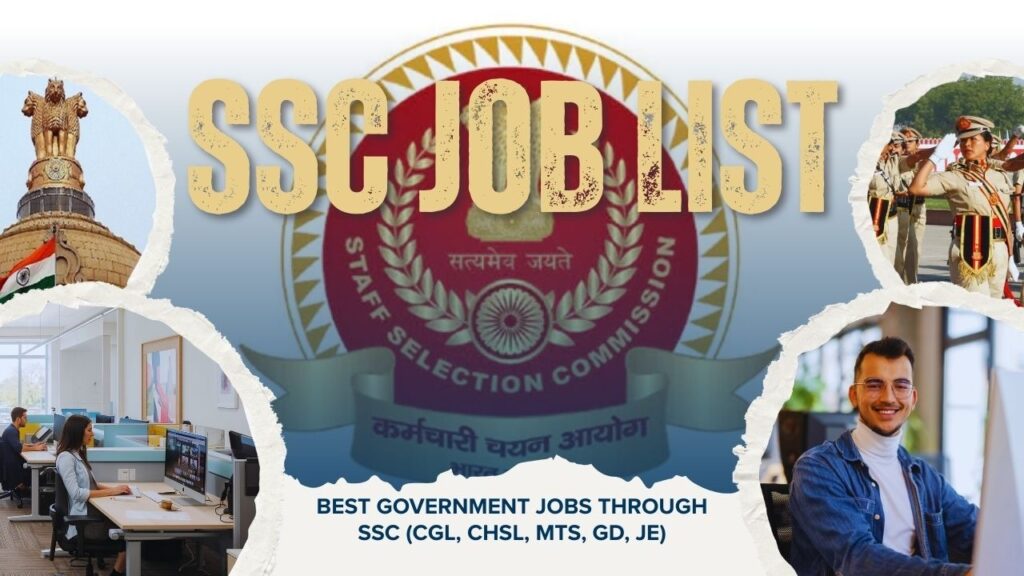
For decades, a government job has been the most lucrative career option in India. These SSC Job List 2026 will help you to take the right direction of your career. As we head into 2026, the Staff Selection Commission (SSC) still remains the dream gate for lakhs of aspirants to get their foot into stability, respect and serving the nation.
If you are preparing your career roadmap for this year, then getting to know about the huge range of SSC jobs is step one! From the Central Secretariat to paramilitary forces, desk-bound jobs to high-octane field jobs, the SSC 2026 calendar is bulging.
So, here is the detailed information of Your SSC Job List 2026 by Exams and Qualification.
SSC Combined Graduate Level (CGL)
The SSC CGL which is popularly known as ‘Mini-IAS’ exam is the most reputed exam for selection to Group B and C posts in various SSC Job List 2026 in ministries and departments. Candidates need to have a Bachelor’s Degree in any stream to be eligible.
Some of the SSC Job List 2026 under SSC CGL are:
1. Assistant Section Officers (ASOs) watchful policy realization in the Central Secretariat Service (CSS) in the Ministry of External Affairs (MEA), or Intelligence Bureau (IB) or the ASOs business is largely on one’s table at any rate!Desk based post of execution policy.
2. Roles in the Ministry of Finance related to taxation that are high-paying and profitable are Income Tax Inspector and GST Inspector.
3. AAO or Assistant Audit Officer – Indian CAG This is the Gazetted post In SSC CGL under the Indian Comptroller and Auditor General (CAG) and working with the Indian Comptroller & Auditor General this post is unique.
4. Sub-Inspector in CBI: This post is for those who are willing to serve in the National Investigative Agency.
SSC Combined Higher Secondary Level
SSC CHSL is a great opportunity for 12th pass candidates to get an entry level post in the government sector.
Job Roles:
1. These posts (Junior Secretariat Assistant and Lower Divisional Clerk) are the best paying jobs at entry level which are the backbone of office administration and are indispensable to the smooth working of the office.
2. Data Entry Operator (DEO): Hold the responsibility for maintenance of essential Government files, up-to-date and complete, with accuracy.
This examination leads to secure and respectable employment within government organizations.
SSC MTS & Havaldar
This is an excellent opportunity to enter in the Multi Tasing Staff job role or Havaldar, 10th pass candidates can get a central government job/staff.
Job Roles:
MTS (Multi Tasking Staff): It serves as a kind of general office support, some such duties include, running files, pushing files from one desk to another, housekeeping in office space, across various government ministries.
Havaldar: Havaldar post Candidate Should belong to Central Board of Indirect Taxes & Customs (CBIC) and Central Bureau of Narcotics (CBN). The duties of the security personnel are all field-based i.e. they are related to security and watch and ward.
SSC GD Constable
The SSC GD Constable 2026 Recruitment if you would like to serve in uniform and keep yourself physically fit, then consider it. The exam is held for recruitment to various Paramilitary forces like:
BSF —-Border Security Force
CISF —-Central Industrial Security Force
CRPF —-Central Reserve Police Force
ITBP —-Indo-Tibetan Border Police
SSB —-Sashastra Seema Bal
AR —Assam Rifles
Qualification Criteria: The applicants must have cleared 10th standard with some physical standards in order to be eligible for the recruitment.
SSC CPO
The SSC CPO exam is a good chance for the ones who want to be a Sub-Inspector (SI). It is a tough but rewarding path to take. Candidates are required to have a graduation degree and Qualify Physical Endurance Test to be eligible.
Selected candidate have the opportunity to serve in prestigious position like Sub-Inspector in Delhi Police (which is considered one of the most orderly police service) or Sub-Inspector in Central Armed Police Forces (CAPFs) – BSF, CRPF and more.
SSC Specialized Exams
Stenographer (Grade C & D)
If you are good at shorthand typing and can crack SSC Exam then SSC Stenographer may be a door for you to enter into government jobs.
Via this exam candidate is selected for the post of Stenographer in various ministries, departments and organizations of Government.
The core responsibilities of this role involve providing dictation assistance to senior officials, drafting official documents, processing correspondence and carrying out administrative tasks.
They frequently are called upon to assist higher-ranking officers, making it a key supporting position in the government system. You can get a great pay from this job role as it requires your skills.
Junior Engineer
The SSC Junior Engineer exam is disputed for the candidates who have a Diploma/Degree from the recognized board in a relevant field of engineering i.e. Civil, Mechanical, Electrical etc.
The result of SSC Junior Engineer Exam contains qualified candidates who are selected for appointment in various government departments, organizations such as public works, infrastructure, etc.
They also oversee such projects as cleaning and maintaining government buildings and roads, write technical reports, and verify that engineering projects conform to safety and quality requirements.
SSC Selection Posts (Phase XIV):
The Staff Selection Commission Selection Post Exam is a good opportunity to get a government job for the person who has educational qualification of 10th pass 12th pass and Graduates.
Unlike other SSC exams which appoint the candidates for common posts, this exam appoints candidates for distinct and specialised posts in various central government departments.
These posts can be for Scientific Assistant or Laboratory Attendant or even Library Clerk, Data Entry Operator or Technical Assistant. Every post has different eligibility criteria and different skills that are needed as per the requirement of department.
Due to the wide range of posts, the Selection Post examination is an ideal platform for the people who are having professional or vocational qualifications and interested to work in a particular domain in the government sector.
Job Security: Students can rely on their jobs for lifetime as it is not like private jobs undisputed, particularly in times of economic downturn.
Work-Life Balance: There are public holidays and weekends leave can be more relaxful and also on the weekdays you have to work only 9 to 5.
Salary and Perks: The salary is very competitive with the 7th Pay Commission norms. Benefits such as HRA (House Rent Allowance), DA (Dearness Allowance) and medical benefits for family are some of the major highlights.
Social Prestige: It is a centrally administered ministry, so it has a good standing in society to serve in it or the national police force.
SSC Job List 2026 Exam Timeline
The SSC Job List 2026 exam timeline is given for the students to take an idea to begin their journey, accurate date and time are declared by the official website of SSC. Students who are interested in any of these job posts can check the official notice of the exam on the official website.
Exam Name (2026)
Notification Date (Expected)
Exam Month
CGL
March/2026
May—June/2026
CHSL
April/2026
July—Sept/2026
MTS
June/2026
Sept—Nov/2026
CPO
May/2026
Oct–-Nov/2026
GD
Sept//2026
Jan—March/2027
Conclusion
Whether you are a 10th-pass student or a postgraduate engineer, the SSC Job List 2026 has all the opportunities for you. The only question you must ask yourself is which post defines my personality better? If you love discipline and being outdoors, go for CPO or GD, if you love a quiet office and wielding admin powers, go for CGL.
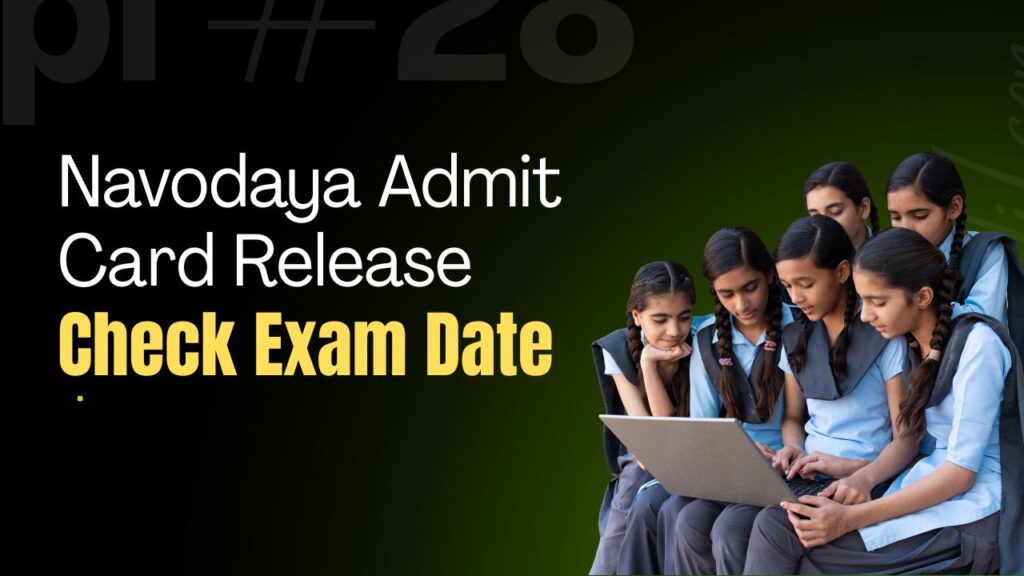
NVS Class 6 Admit Card 2025: NVS (Navodaya Vidyalaya Samiti) released the NVS Class 6 Admit Card 2025 for the JNV 6 Selection Test Download. The Class 6 entrance written exam date is October 11, 2025, 654 places are available. Candidates can now also download the exam city intimation slip for the NVS Lateral Entry 5th Class from the official website after entering their further details. These documents can be found at the direct link here or from the official site.
Official Dates For Navodaya Vidyalaya NVS Class 6
Event
Date
Notification Date
30 May 2025
Application Start
30 May 2025
Apply Online Last Date
27 August 2025
Exam City Available
Update Soon
Admit Card
17 November 2025
Exam Date
13 December 2025
Result Date
Notify Soon
Total Seats and Age Limit
Seats
654
Students Born Between
01-05-2014 to 30-07-2016
Past Education
Passed 5th from any recognized school
Exam Details For Navodaya Vidyalaya NVS Class 6
Subject
Questions
Marks
Duration
Mental Ability Test
40
50
60 Minutes
Arithmetic Test
20
25
30 Minutes
Language Test
20
25
30 Minutes
Total
100
100
02 Hours
Additional Exam Details:
Exam Mode: OMR Based
Exam Medium: English / Hindi
Negative Marking: No
Step-by-Step Guide to Download Admit Card For NVS Class 6
How to Download Navodaya Vidyalaya NVS Class 6 Admit Card 2025 follow these steps:
1. Go to the official site @navodaya.gov.in or the direct link given.
2. Click on “Navodaya Vidyalaya NVS Class 6 Admit Card/ Hall Ticket 2025” Link.
3. Fill in your Application Number and Date of Birth.
4. Click on the Submit button.
5. After this, you will get your admit card on your computer screen. DownloadH, save or print your admit card for further reference.
6. Don’t forget to take printout of your admit card and one valid photo id to the examination centre.
After completing 12th with Physics, Chemistry and Mathematics, students are looking for engineering colleges to secure their seat early in Top 6 Best Engineering Colleges in Varanasi. Whether you are a citizen of Varanasi or another city, these best colleges will help you get quality education, faculty support, industry exposure, and exquisite training with their quality resources. They provide a strong curriculum for students to assess every knowledge and get ready for a job in top companies.
Explore the full details on these colleges admission insights, fee and placement record. It will help you decide to choose the one for yourself.
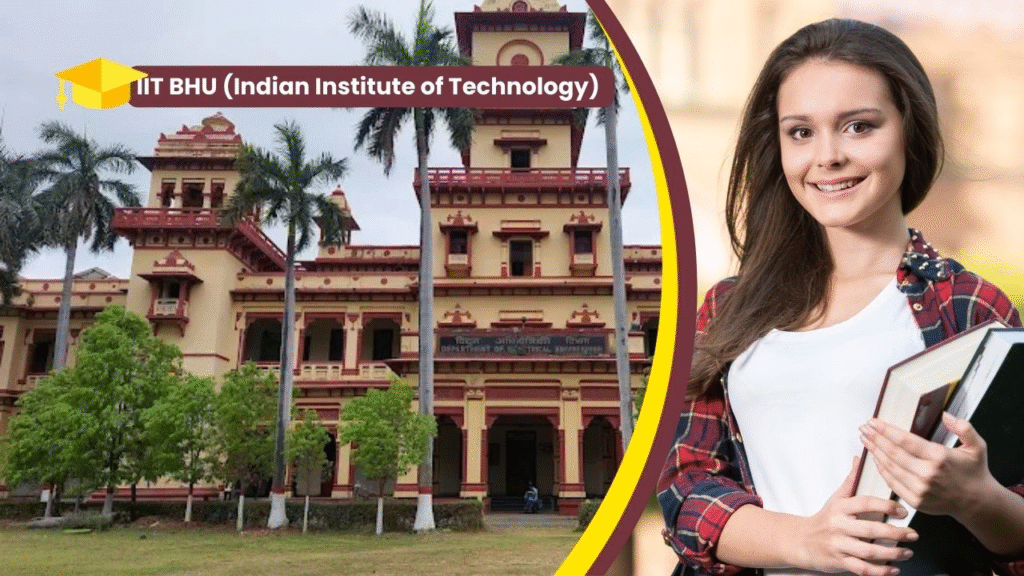
1.IIT BHU (Indian Institute of Technology, Banaras Hindu University)
IIT BHU : The oldest university in Varanasi which is well-known for its specializations and academic values. It offers world-class education in every field of students. The largest university for technical studies, students from other states came to study here because of their strong curriculum and placement opportunities.
Admission Insights
For B.Tech: JEE Main and JEE Advanced exam is mandatory to clear, 12th completed with at least 75% score in Physics, Chemistry, Math. admission is also based on JoSAA counselling, seat allocated according to the counseling.
For MTech: GATE score is necessary for the proceedings of admission which followed COAP counseling to allocate seats.
Other courses: Entrance exams like IIT JAM for MSc required for the admission.
Specializations Offered
IIT offers a wider range of programs in each field, some of them are incredibly popular due to their worldwide demand. The various specializations are Computer, Electronics, Mechanical, Electrical, Chemical, Metallurgy, Mining, Ceramic, Pharmaceutical, Civil engineering.
These specializations come on both undergraduate or postgraduate level. Undergraduate degree (B.Tech) is a 5 year course and postgraduate degree (M.Tech) is a 2 year course. Many other courses including MSc, BPharma, MPharma, and PhD programs are also offered in this college.
Placement and Fees
For BTech: Fee is approximately Rs. 8.35 lakhs for the entire program, it may vary on the course’s specializations. Hostel and extra fee are excluded from the entire fee.
Its placement record is good, and offers opportunities around the globe for engineering students. The salary packages vary depending on the students’ placement, ranging from 7 LPA to 14 LPA.
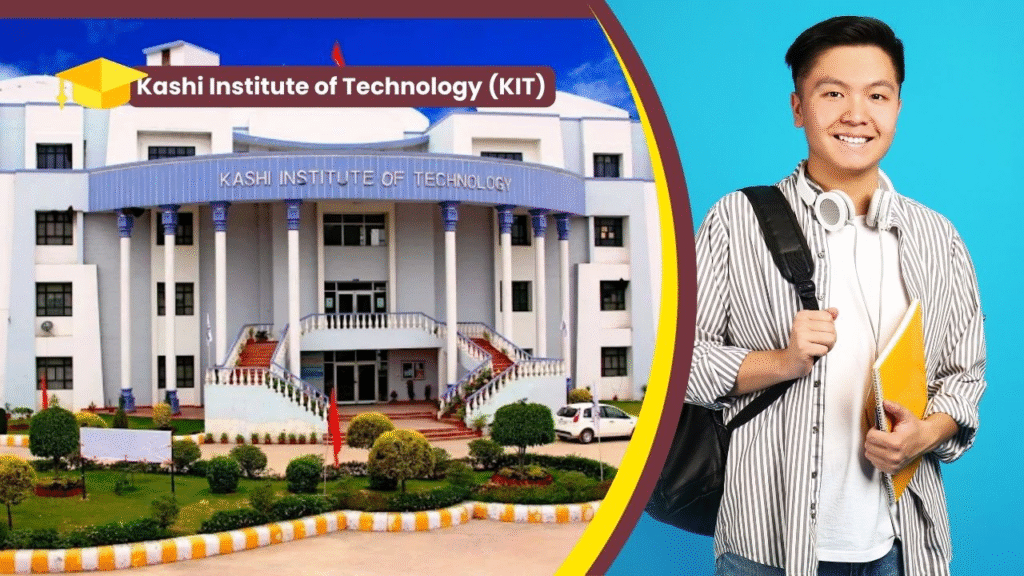
2.Kashi Institute of Technology (KIT)
Kashi Institute of Technology is popular among students for delivering a strong curriculum and training sessions for engineering students. It offers technology, science, and management courses for students to establish their career in their respective field.
Admission Insights
JEE Main is accepted for BTech admission. Another entrance exam is required for the specific courses in this university. 12th percentage must be above 45% with physics, chemistry, math at least to get an admission in BTech.
Specializations Offered
Undergraduate: B.Tech in various specializations including CS, Mechanical, Civil, Machine Learning, Biotechnology, IT, AI, Electronics, and Electrical engineering. MCA, BCA courses are also available in Kashi Institute of Technology. Diploma in engineering are also available in CS, electrical, and IT at low fees.
B.Tech fee is around Rs. 1.25 Lakhs for a year and it varies on the specific field of specialization. Diploma courses cost you around Rs. 1.8 lakhs for the entire course.
Placement opportunity for all the students is higher, recorded around 70% placement done in previous year. The salary package for BTech graduates in any specific field ranges between Rs. 3.36 – 4.8 LPA. The package is also dependent on the company size and specialization course of the students, it can go up to 18 LPA.
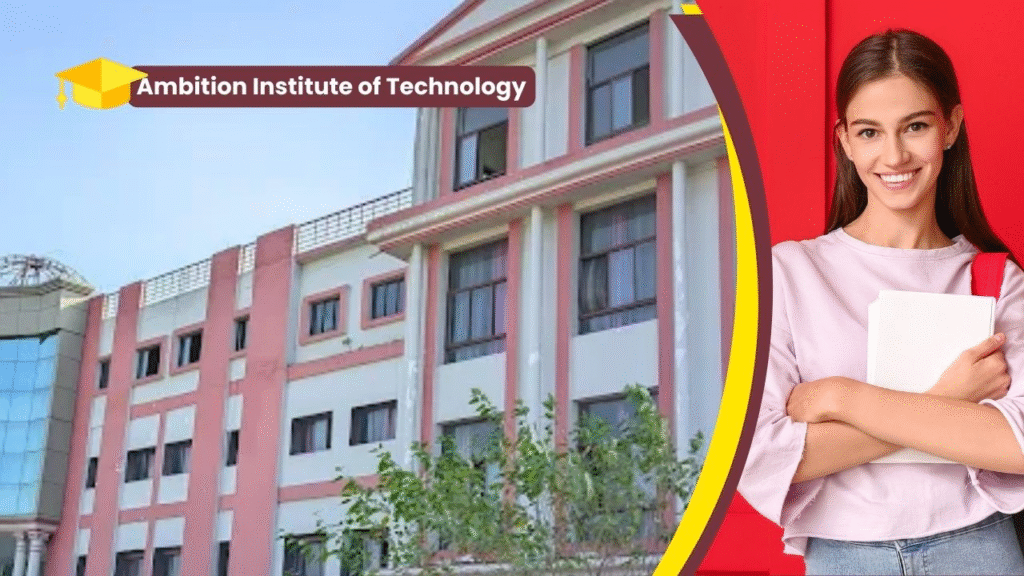
3.Ambition Institute of Technology
Ambition Institute of Technology is a well-known university for engineering courses. Many students prefer to get a higher education in specific specializations. Polytechnic and diploma courses are available in this institute for engineering.
Admission Insights
For admission in this institute, students must meet the eligibility criteria of university. It requires 35% in 10th marksheet and entrance exams should be cleared by the students like JEECUP.
Specializations Offered
Polytechnic and diploma courses in various specializations included computer science, electrical, mechanical, electronic, chemical, electrical, automobile, production engineering, and information technology. These courses duration is 3 years.
Placement and Fees
The total fee for the 3 year diploma course is around Rs. 1,00,800. Placements are offered for every student with a good percentage from the top companies. Major industries like Suzuki Motor, Bajaj, and Reliance offer salary packages around Rs. 3 LPA but international companies can offer up to Rs. 20 LPA.
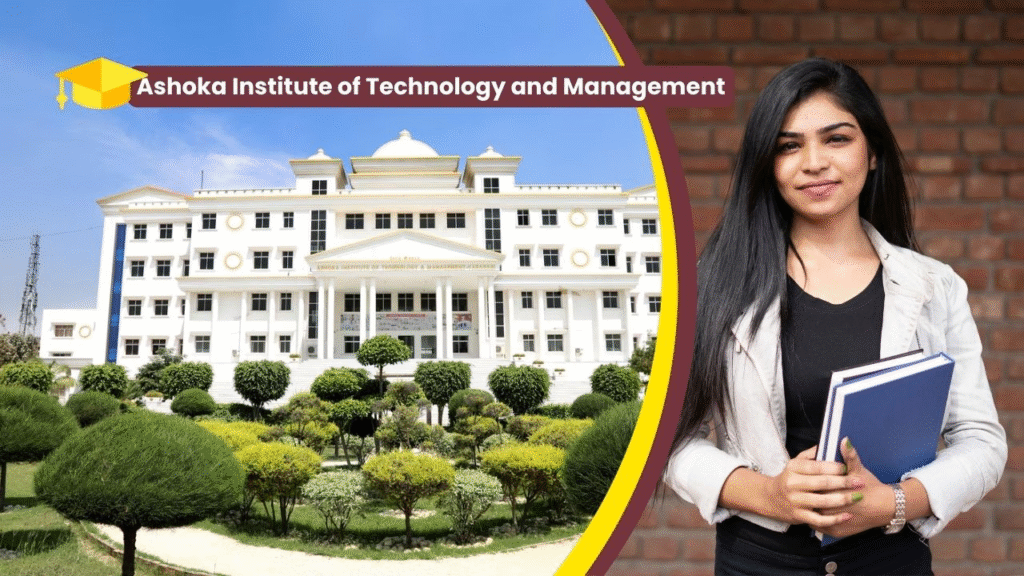
4.Ashoka Institute of Technology and Management
Ashoka Institute of Technology and Managementwas established in 2010 offering engineering and management courses across various fields. It is affiliated with A.P.J. Abdul Kalam University and approved by AICTE. It provides good infrastructure with labs, smart classrooms, library, auditorium, and sports field, medical facility, and cafeteria. Strong curriculum with experienced faculty to deliver quality education.
Admission Insights
JEE Main and advanced scores are mandatory for engineering programs and AKTU counselling is a final selection round for admission in BTech. 10+2 with PCM percentage must be above 60% for general and above 55% for reserved category.
For Postgraduation: Graduation degree is necessary with 50% score, UPCET PG and CUET score are required for the admission in master program
Specializations Offered
BTech in various Specializations — Computer Science, Civil, Mechanical, Electronics, Electrical, Biotechnology / Artificial Intelligence & Machine Learning.
Placement and Fees
B.Tech fee for the entire course is around Rs. 5.16 lakhs. Training and soft skills fee is included but it may fluctuate as it depends on the specific courses. Check the official website of the college for exact details.
Placement offers are high, around Rs. 4.5 LPA but salary package depends on the recruiters that can be up to Rs. 7.6 lakhs.
5.MP Institute of Management and Computer Application
MP is a private institution providing Management and Computer Application advanced education. It was established in 2004 in Varanasi and approved by AICTE. It is well-known for high-quality education delivered through various programs.
Admission Insights
Admission in BCA is done on the merits of students. It is mandatory to complete 10+2 with a good score and Mathematics as a subject in 12th.
Specializations Offered
MP Institute of Management and Computer Application offers Bachelor of Computer Science and postgraduation in Data Science and Artificial Intelligence. PGDM courses available to open further opportunities.
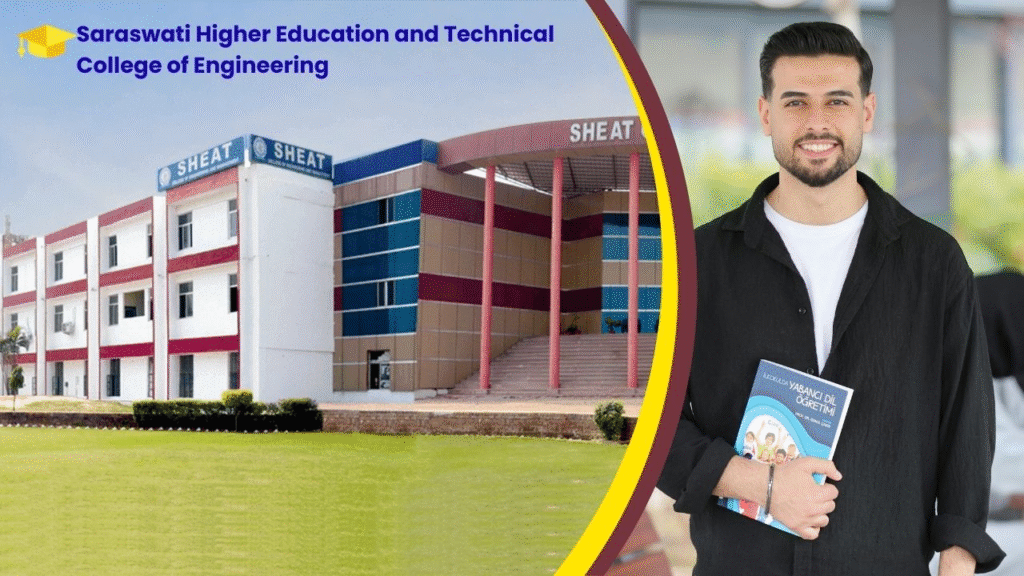
6.Saraswati Higher Education and Technical College of Engineering
Saraswati Higher Educationand Technical College of Engineering is a private college with a wider range of courses. It was established in 2008 and approved by AICTE to provide world-class education. It offers not only theoretical lectures but Lab projects and workshops to develop students’ skills. The college also provides a huge library, sports field, cafeteria, shuttle services, medical and ATM facilities.
Admission Insights
Admission is based on the scores of entrance exams such as UPSEE or AKTU entrance test for BTech and MTech.
The seat allotted after the examination results through counseling. For BTech, students must complete their 10 and 12th with above 60% and Math, Physics, Chemistry must have as a subject in 12th. GATE or UPSEE score is required for MTech program, it must be above 50%.
Specializations Offered
BTech offers various specializations: Civil, Electrical, Electronics, Mechanical, Computer Science & Information Technology. The college also provided these specializations at the post graduate level.
Diploma courses are also available in the engineering field but admission process and fee may differ to each other.
Placement and Fees
BTech fee depends on the specific specialization, it varies from Rs. 3 Lakh to Rs. 15 lakh. BCA fee is around Rs. 3.40 lakh for 3 year degree program.
This college performs placement drives for students after training modules, mock interviews, and prepares them to connect with recruiters such as TCS, Banks, Bajaj, Reliance etc. Previous year students got placement packages around Rs. 6.42 LPA from HikeEdu and the highest package around Rs. 12 LPA from Tata.
Conclusion
Choosing the right college totally depends on your budget and preferences, while these Top 6 Best Engineering Colleges in Varanasi will provide strong syllabus, excellent teaching style, and real-world projects to assess every knowledge for the specific field. BTech or MTech is not an easy degree, it requires focus and right support to score well and understand every concept of the deeper topics to become an engineer. That is why the right college is important to choose for engineering.
The MPESB Recruitment 2026 application form reopens on 13 October and closes on 27 October 2026. This is the Madhya Pradesh Employees Selection Board’s combined drive for Group 3 Sub Engineer, Sahayak Manchitrakar (Draftsman), Technician and equivalent posts, and the rules have shifted since the first notice.
Look into the MPESB recruitment drive to understand eligibility criteria, age limit, how to apply for the different posts to get the well-paying job. Keep follow up the dates for the next phase on the official website.
MPESB Group 3 Sub Engineer Recruitment 2026 Date
MPESB posted the first Group-3 notice on 18 August for 1,040 posts which was cancelled and brought next month the combined recruitment exam of Group 3 posts. The application window was opened from 29 August to 12 September 2026 then it shut down.
The MPESB Group 3 Sub Engineer recruitment 2026 application re-opens because the number of posts increased and the reservation roster was revised. Anyone who applied earlier can edit their form during the correction window.
The form is open again because the number of posts increased and the reservation roster was revised. Anyone who applied earlier can edit their form during the correction window.
Event
Date
First application window
29 Aug – 12 Sep 2026
Reopened form starts
13 Oct 2026
Last date to apply
27 Oct 2026
Correction window
13 – 28 Oct 2026
Computer-based test
Dec 2026 – Jan 2027 (exact date not confirmed)
Posts and Vacancies
The pre-reopening notification counted 1,700 posts across 131 post codes, spread over departments, directorates and polytechnic colleges. Because posts were added, that total is probably out of date, and the reopened notice does not give one grand figure.
The Public Works Department lists 225 and 68 Sub Engineer posts in two groups, Indore Development Authority has 41 and 3, Survey and Land Records has 14 Surveyor posts, and Geology and Mining has 4 Mineral Surveyor posts. Polytechnic colleges add Laboratory Technician and Draftsman posts in ones and twos.
Education and Age Requirement
Different posts require different qualifications from you so apply for the post that matches your degree. If you have done graduation in engineering then you can apply for Group-3 Sub Engineering post. Candidates must check the official notification before applying.
Age: 18 to 40 years
MP relaxation: SC, ST, OBC and women candidates of Madhya Pradesh can get up to 45 years, subject to official rules.
Aadhaar: registration is mandatory.
Employment exchange: Madhya Pradesh residents need a live registration. Check yours is active before you open the form, because an expired one is the kind of problem that surfaces on the last day.
Application Fee
Unreserved candidates pay ₹500 per post. SC, ST, OBC, EWS and PwD candidates who are Madhya Pradesh residents pay ₹250. Backlog posts under direct recruitment carry no fee. The portal charge is reported at ₹20 for the kiosk or MP Online route.
How to Apply Online MPESB Recruitment 2026
Open esb.mp.gov.in and log in to your MPESB profile.
Look at the notification and click on “Group-3 Combined Recruitment Exam” which will redirect you to the form page.
Choose whichever post you are trying for based on your education.
Upload documents that are required with your application and pay the fee.
Submit and use the correction window to fix errors. But review the application before submit to avoid any correction later.
Documents such as ID, education certificates, domicile, and employment exchange card ready before you start filling the application form.
Exam Pattern and a Prep Tip
The exam dates are still unconfirmed but you can prepare yourself for the 200 marks question paper which also cuts off 0.25 marks if you give the wrong answer. This is a computer-based test held in two shifts for 3-hours. The test provides you bilingual in Hindi and English, with four options per question.
After the test, you are called for the document verification and a medical exam, and this is where you have to be sure that you must have the proof of the information you are provided in the application and no health issues.
The application closes at the end of the month and exam starts after two months so there is a lot of time for you to start three-hour mocks now and track how many questions you skip. Blind guesses will eat up your marks, so aim to learn which question you can skip without losing your rank. This practice will also reduce your time to solve every question.
If you have a diploma and engineering degree in any field, you can fill the form. Don’t wait for the 27 October, apply early to secure your position.
If you applied in September, log in during the correction window and recheck your post preferences, since the added posts may offer better options than the ones you picked. If your qualification only loosely fits a post, read that department’s recruitment rule first, because a rejected application costs you the fee and the cycle.
The Union Public Service Commission (UPSC) has notified the Combined Defence Services (CDS) Examination 1 for the year 2026. This recruitment is for a number of academies that are the Indian Military Academy (IMA), Indian Naval Academy, Air Force Academy and Officer Training Academy and the number of vacancies is 450+.
The application form filling process will start from 10th/December/2025 and the last date to apply for the UPSC CDS 1 2025 will be 30th/December/2025. Interested and Eligible candidates are advised to read the official notification before apply online for understand the eligibility, Application Fee, Age Limit, Salary, Selection Process before applying for it.
Candidates need to visit the UPSC official website for detailed information and application. Before the time ends, you need to make sure that each one of the necessary information is filled accurately.
Follow These Dates To Apply
Application Start
10/December/2025
Last Date For Application
30/December/2025
Fee Payment last date
30/December/2025
Correction Date
Update Soon
Admit Card Date
Update Later
Exam Date
12/April/2026
UPSC CDS 1 Age Limit & Application Fee
Category
Age Limit
Posts Expected
IMA & INA
19 — 24 years
450+
Air Force
20 —- 24 years
OTA
19 —- 25 years
Gen/ OBC/ EWS
₹200
SC/ ST
0
UPSC CDS 1 Vacancy & Educational Qualification
The courtesy details of UPSC CDS 1 Eligibility 2025 are mentioned below:
Indian Military Academy (IMA): The candidate will have to hold a Bachelor’s Degree in any discipline/stream from any recognized University/Institution in India.
Indian Naval Academy: The candidate must hold a Bachelor’s Degree in Engineering or equivalent from a recognized university/institute in India.
Air Force Academy: Candidate should have passed 10+2 with Physics and Mathematics in any stream from a recognized board or have a Bachelor of Engineering/Bachelor of Technology or similar qualification from recognized university.
Officer Training Academy: The Candidate must have a Bachelor’s degree in any Discipline/stream from any recognized university or Institution in India.
For more and latest updates you can go through the official UPSC CDS 1 Recruitment 2025 Exam Notification.
The candidate can earn up to Rs 1,77,500 per month with allowances as per government norms. The starting salary can be less with Rs 56,100 for entry level candidates.
Guide to Apply UPSC CDS 1 Online
How to Apply for UPSC CDS 1 Recruitment 2025: Apply Online through the official website of UPSC.
1. Know Details from UPSC CDS 1 Notification 2025 PDF.
2. Click on the “apply online” link or go to the Official UPSC website: upsc.gov.in.
3. Fill UPSC CDS 1 2025 Online Application Form.
4. Upload all the documents as per the notification.
5. Remit the requisite application fee by one of the modes available.
6. Take a print out of the application form once it is filled for your records.