RSSB Agriculture Supervisor Recruitment 2026 has released the notification for 1100 Rajasthan Agriculture Supervisor Vacancy 2026. Submission of application will start from 13th/January/2026 and the deadline for submission of application is 11th/February/2026. All aspirants who want to avail this chance can visit the official website (rssb.rajasthan.gov.in) and download the detailed notification and apply through online mode for the same to check more about the eligibility, application fee, age limit, salary and selection procedure.
Make sure to complete registration on or before the stated dates. The pay scale is between ₹29,200 and ₹92,300 per month, with allowances as per government rules.
RSSB Agriculture Supervisor Recruitment Dates
Event
Date
Notification Date
06/January/2026
Application Start Date
13/January/2026
Application Last Date
11/February/2026
Fee Payment Date
11/February/2026
Correction Last Date
14/February/2026
Admit Card Date
Before Exam
Exam Date
18/April/2026
Result Date
UpdateLater
Application Fee For the Online Form
Category
Fee Amount
Gen/ OBC/ EBC (CL)
₹600/-
EBC/ OBC (NCL)/ EWS
₹400/-
SC/ ST/ PH (Divyang)
₹400/-
Correction Charge
₹300/-
Rajasthan Agriculture Supervisor Age Limit & Education
Eligibility for Rajasthan Agriculture Supervisor Recruitment Exam 2026 for all candidates: 18-40 years. The applicant must be 12th Class passed with Agriculture or B.Sc. in Agriculture/Horticulture or equivalent from a recognized board/ university/ institution in India. Moreover the candidates need to know written Hindi in Devnagari script and should be familiar with Rajasthan culture.
There are 944 vacancies in all out of which 156 seats are for women. For more information applicants are advised to go through the Official RSSB Rajasthan Agriculture Supervisor Recruitment Exam Notification 2026.
Follow these Steps to Apply Online
The Rajasthan Staff Selection Board (RSMSSB) will release the detailed notification for RSSB Rajasthan Agriculture Supervisor Bharti 2026. rsmssb.nic.in) RSMSSB has started the submission of the online application from 13 January 2026. To apply for RSSB vacancies
1. Check Your Eligibility: Before file RSSB Rajasthan Agriculture Supervisor Notification 2026, To check your eligibility and requirements.
2. Go to the official website and apply online through the booking ‘Apply Online’.
3. Fill in the live RSSB Rajasthan Agriculture Supervisor Online Application Form 2026 accurately.
4. Insert the required documents as mentioned in the notification.
5. Submit the requisite application fee through the mode of payment prescribed.
6. After successful submission of the application you can take print out of the application form for future reference.
For more such resources such as mock test, practice materials, education books to help your study, and overview of government exams, check out tools to help you with your study.
The SBI Clerk Recruitment 2025 is started as it was released officially on the SBI website. You can check the notification for the entire process details of the recruitment. The examination is expected to happen on 20th September 2025, if you want to apply for this post then fill the form before the closing date.
Eligibility Criteria for SBI Clerk Recruitment 2025
Education: Candidates must have a valid graduation degree from a recognized university or college. Final year students can also apply but they must have proof of the passed graduation exam at the time of selection.
Everyone gets confused about choosing their career path. When the context is about Government Jobs vs Private Jobs, there is always a debate among youths. While most people prefer having a good lifestyle, a stable career, and growth in their lives. With growing comparison of Which Career Offers a Better Future in 2025? It’s important to know about both of them so you can make a wise decision in your life.
Let’s explore the real differences between Government and Private Jobs, do not get confused about the path. This honest comparison will help you to decide which one is best for you.
What Defines a Government Job?
When a local, state, or central government offers you a job in different ministries like defense, railways, PSUs, and teaching are called a government jobs.
Advantages of Government Jobs in 2025
Unmatched Job Security:
If you want to work in a safe environment with job security, government jobs are best. Once you clear the exam and get selected, there is no chance to be fired like in the private sector unless there is some serious misconduct.
Stable Work-Life Balance:
You have to work usually from 9 to 5 with weekends off. Those who wish to spend great time with family, and care about health, and mental peace, can consider a government job.
Retirement Benefits:
If you want to enjoy pension, gratuity, and GPF in a government job, choose this career. Retirement perks provide future stability. So, this is something that private jobs won’t offer you even if you are on a senior level.
Respect in Society:
Whether it’s an IAS officer, bank PO, railway officer, school teacher, or a professor, these roles are highly respectable in India. Everyone wants to be treated well, especially in small towns and rural India.
Perks and Allowances:
These jobs come with multiple benefits in your life that reshape your future. It offers HRA, DA, travel allowances, medical reimbursements, paid leaves, LTC, and more.
Disadvantages of Government Jobs
Very Competitive Entry
The competition is held among lakhs of candidates and you have to rank up for the job. So, it is hard but with smart preparation, you can clear any exam for a government job. There are thousands of vacancies each year in this sector.
Slow Career Growth
Promotions are often based on seniority, not performance. You have to wait for a long time to get a promotion to a higher level. Some posts may need internal assessment for the higher position jobs. You could be waiting 10–15 years to move to a higher post.
Limited Learning
Most government jobs are routine-based. Except for scientist jobs, there is less innovation and opportunities to get into the government sector. No new experimenting for new projects, this is the reason why you cannot have career growth so easily.
Transfers and Bureaucracy
Many government roles come with frequent transfers, especially in jobs like IAS, IPS, Armed Forces or bank roles. The relocation of the job is not good for family-oriented people. They have to leave everyone behind for their job. Also, the system which is outdated and has bureaucratic hurdles may give you headaches.
Private jobs are offered by private companies, startups, MNCs, or international firms. These companies offer 8-29 LPA for those candidates who have experience and get to the senior level. The average salary package for the freshers is 2-3 LPA. Private jobs are available in different sectors such as IT, hospitals, education, finance, e-commerce, media, and more.
Advantages of Private Jobs in 2025
Higher Salaries and Incentives
With the right skills, especially in tech, finance, or management, you can earn ₹10–25 LPA with experience for a few years. You can go abroad for more packages due to currency value. Performance bonuses in the management sector are good, and stock options and incentives in sales and marketing are also common.
Faster Promotions
Private companies reward performance, not age or time. They promote you if you deliver results more innovative and useful. You can grow faster than the government employee and sometimes switching companies helps double your salary within a year.
New-Age Work Culture
This new implementation in the work environment of the private sector is incredible. People now have flexible hours, remote work, hybrid setups, and relaxed dress codes, that give them relief when they get stuck in any emergencies. It also offers open communication with management to consider employee affairs in the company with their work.
Global Opportunities
Working in MNCs means working on different projects and learning new skills. The remote-first companies give you exposure to international clients, travel, and even relocation chances abroad. So, either you can work from home for international firms that will pay you in dollars or you can go abroad and set up a life there.
Learning and Upskilling
They gave you a chance to teach or learn through an online platform for their next project. You always find a chance to innovate and explore new things. Either online training or offline private institutes to give training on skills, especially in areas like AI, coding, marketing, data analysis, etc.
Disadvantages of Private Jobs
Job Insecurity
Downsizing, layoffs, and recession are common these days. They are firing thousands of candidates due to AI establishment in many sectors. The need for employment is decreasing in numbers. Your job isn’t guaranteed unless you constantly perform and upgrade your skills.
Long Working Hours
Many roles demand 9–12 hour workdays, and there is no Saturday & Sunday off in many departments. Sometimes, people have to work overtime.
No Pension After Retirement
Some rare companies are offering provident funds (EPF). It is a harsh reality but you’re mostly on your own after retirement.
Corporate Pressure and Politics
There are a lot of events nowadays where people seem to be getting depressed from office politics and unfair promotions to those people who have connections. Managers put pressure on employees to give 100% performance on tasks within a period. These all hurt health and motivation.
Comparison Table for Government vs Private Jobs in 2025
Factor
Government Job
Private Job
Job Security
Extremely High
Medium to Low
Starting Salary
₹25,000 – ₹60,000
₹30,000 – ₹1,50,000
Promotion Speed
Slow (seniority-based)
Fast (performance-based)
Learning Opportunities
Limited
Extensive
Work-Life Balance
Good Variable
Good Variable
Transfer Chances
High in many roles
Very low
Pension/Retirement
Yes
No
Entry Process
Through difficult exams
Interviews/skills-based hiring
Flexibility
Low
High (remote, hybrid options)
Social Status
Still respected highly
Depends on role & company
Which is Better in 2025 – Government or Private Job?
There’s no universal answer. This is a choice that depends on your goals, education, and risk-taking ability. If you want to shape your lifestyle better, point to your goal with less hectic jobs.
A Government Job is Better If:
You want a stable career by getting job security and peace of mind.
You’re okay with slow promotions because of long-term benefits with a fixed salary.
You’re the topper of your class due to your learning capabilities. You can prepare for competitive exams like UPSC, NTPC, SSC, RRB, or other exams.
You value retirement benefits like medical and house allowances, fixed hours, and respect in society.
A Private Job is Better If:
You want fast career growth because you are a quick learner, high income, and have skill-based success.
Get bored with the same work, you can enjoy dynamic work environments in private jobs, new challenges, and global exposure.
You are willing to take risks, learn continuously, understand new concepts easily, and adapt to change.
You are not interested in preparing for a competitive exam, you’re interested in tech, marketing, finance, startups, or remote jobs.
Real Advice for Job Seekers
Your future doesn’t decide in just one day. Take a breath and focus on the present, to achieve in the future you must start developing your skills now.
Think about what matters more to you. The energy you can put into specific work or subject. Examine yourself how hard you can work on any specific task, and point out that skill under your interests of work. Don’t decide right now just give it time like:
Invest in skills.
Even if you’re preparing for government exams, you can learn skills such as Excel, personality development, communication, coding, or digital marketing. Whether you decide on a private or government job, it will be required in both. They can be helpful anywhere.
Try Both If You Can.
While working in the private sector, start preparing yourself for government exams. Apply for a government job whenever you want to switch your career. Both paths are open if you’re strategic.
Don’t Fear Private Jobs.
The idea that private jobs are “unstable” is only true if you stop learning. Many professionals spend years in private jobs and then start their own businesses that provide great stability and income.
Build a Financial Backup.
Whatever job you do, if you are wasting your money that makes it impossible to save, invest, and plan for emergencies. That’s the real security.
So, instead of debating on Government Job vs Private Job. Know your strengths and motives, and take a wise option for your impeccable future.
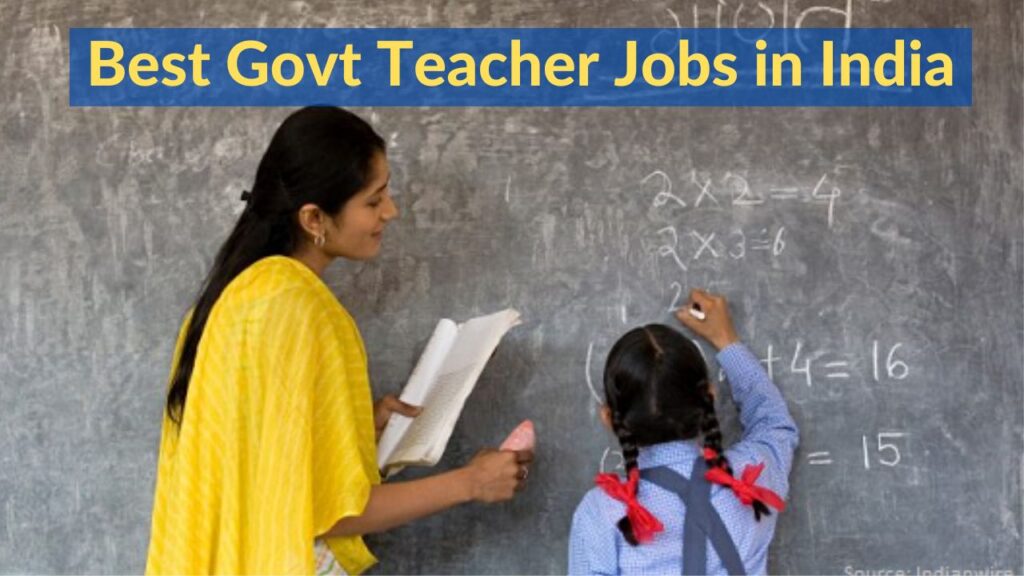
If you are considering teaching as a career option, here are some of the best govt teacher jobs you can look into. Government teachers are very respectable and offer high salaries with career stability. You can choose this profession if you are interested in teaching, there are several opportunities for aspiring teachers you can explore in this article. First of all, government jobs provide high perks such as a large pay scale, job security, promotions, and pensions. Second, it is not a very hectic profession. You can easily educate youngsters on specific subjects.
Top Government Teacher Jobs in India
1. Primary School Teachers (PRT)
Eligibility
B.Ed is compulsory or D.Ed
CTET-qualified or STET-qualified
Salary
Starting pay from ₹30,000 to ₹40,000 per month.
Allowance benefit
Recruitment Process for Primary School Teachers
If you are eligible to be a primary school teacher, you can apply for this position after passing the eligibility test conducted by the government. This is a written exam that includes the basics of the subjects. After passing the exam the next stage is document verification and interview. The interview is taken by the school or college directly after the document verification.
2. Trained Graduate Teachers
Eligibility
Graduate with any relevant subject
B.Ed degree and CTET certification. Both are required
Salary
Starting pay from ₹40,000 – ₹55,000 per month.
Dearness Allowance and House Rent Allowance
Requirement Process
The organizations like DSSSB, KVS, and state education are taking the exam for this role. Only the qualified teachers are eligible to teach in the Schools. If you are planning to establish a career as a government teacher then start preparing for the exam and beat the competition for securing a job role.
3. Post Graduate Teachers
Eligibility
Post-graduate degree in a specific subject
B.Ed qualification
CTET preferred in some states
Salary
Starting pay from ₹60,000 – ₹80,000 per month.
Recruitment Process
By clearing the National-Level exams like KVS, NVS, or any other state-specific, you can get a position as the post-graduate teacher in a school. It depends on your subject choice which teacher you can become and how much teaching experience you have.
Specialized Teaching Roles
Assistant Professors in Colleges
Assistant Professor is the first stage position as a teacher in any college or university. The candidate has to gain experience through this position for teaching as an associate professor. The requirement of experience is required in some colleges but a master’s degree is compulsory for this position. The qualification of PhD is mandatory, if you clear the NET are eligible for this role without the PhD. The NET/SLET qualified candidates are eligible for this position.
Eligibility
Master’s degree with at least 55% marks
NET or PhD qualification
Salary
Starting pay from ₹70,000 – ₹1,20,000 per month.
Research opportunity
Recruitment Process
The selection process for Assistant Professors in Colleges happened after clearing the UGC-NET exam or state-level exam. You will be selected for the next stage for an interview directly from college. Both stages are mandatory for assistant professor positions in any college.
Special Education Teachers
The special teachers are delivering education to those students who do not understand easily as they have a lack of development, intelligence, and emotional disabilities. The aim is to support these children in learning and help the students achieve their full potential in academic and social settings.
Eligibility
Bachelor’s/Master’s degree with at least 55% marks in Special education
RCI registration (Rehabilitation Council of India)
Salary
Starting pay from ₹45,000 – ₹60,000 per month.
Recruitment Process
The recruitment for the special education teacher is conducted by the state board or CBSE. NGOs are involved in this process too. This role requires teaching certification of specific special education, maybe it is not required by some states. Training is preferred for assessing knowledge of various disabilities like autism, dyslexia, or ADHD because it helps teachers to understand the child problem.
Centralized Teaching Jobs
Kendriya Vidyalaya Sangathan Teacher
The Kendriya Vidyalaya Sangathan is the organization under the government of India. The KVS teachers are responsible for this education system of all the schools under the central government, sometimes we call KVS teachers the heart of this system.
Eligibility
PRT: Graduation in a relevant subject (B.Ed/D.Ed, CTET)
TGT: Graduation with a B.Ed/D.Ed, CTET
PGT: Post-Graduation in a relevant subject + B.Ed
Age: 18-40 years
Salary
Salaries are as per the 7th pay commission, ranges between 40,000 to 90,000
Other benefits such as allowance and medical coverage is given to the teachers
Recruitment Process
The candidates have to take the written examination test for this position. The PRT, TGT, and PGT positions are require some specific examination clearance. You must clear the written exam then you go to the interview stage if you are selected in these two stages only then come on to the next stage which is the Skill Test. The Skill test is based on the specific post you are applying for like music, dance teacher, or any other category.
Navodaya Vidyalaya Samiti Teachers
The Navodaya Vidyalaya Samiti is also under the Ministry of education, which is the central government organization specializing in providing quality education to children from rural areas. This is a free education providing talented children. The motive of the teacher is to develop academic excellence in every area of the country.
Eligibility
TGT: Graduation with B.Ed/D.Ed, CTET
PGT: Post-Graduation in any relevant subject + B.Ed
Age: 18-50 years
Salary
Salary range between 40,000 to 85,000
Other benefits like allowance, and professional development
Recruitment process
You have to take the written examination that evaluates subjects of knowledge in aptitude, reasoning, and general awareness. The next step is an interview, if you are selected in the first step you are eligible for the interview. The last and final stage is a skill test which is taken for specific posts like music, art, or physical education. The recruitment for this position is published on the NVS official website.
State Government Teaching Jobs
State Education Board Teachers
The various state governments in India are recruiting teachers for the state education board education. The State Education Board Teacher has a responsibility to teach students according to the syllabus and exam pattern. The students came from urban and rural areas on this board. Teachers must maintain lesson plans and assist in implementing state-level education initiatives.
Types of State Education Board Teachers
Primary School Teachers
Teach students from 1 to 5
Upper Primary School Teachers
Teach students from 6 to 8
Secondary and Higher Secondary Teachers
Teach grades 9 to 12 specialized subjects such as Mathematics History, English, etc
Prepare them for the state exam
Recruitment Exams for Teacher Jobs
Central Teacher Eligibility Test (CTET)
This test is taken by the CBSE for PRT and TGT teachers.
State Teacher Eligibility Test (TET)
This exam is a state-specific exam taken under the state board like UPTET, HTET, etc.
Other Exams:
DSSSB (Delhi Subordinate Service Selection Board)KVS/NVS examsUGC-NET
Conclusion
There are a plethora of govt teacher jobs in India for you, whether you aim for teaching or government jobs, this is the best opportunity for you to teach in either school, college, or university. Check the eligibility criteria and selection process before applying for the teaching job. Keep track of the application process through the official website https://www.ncs.gov.in/ for these job roles.
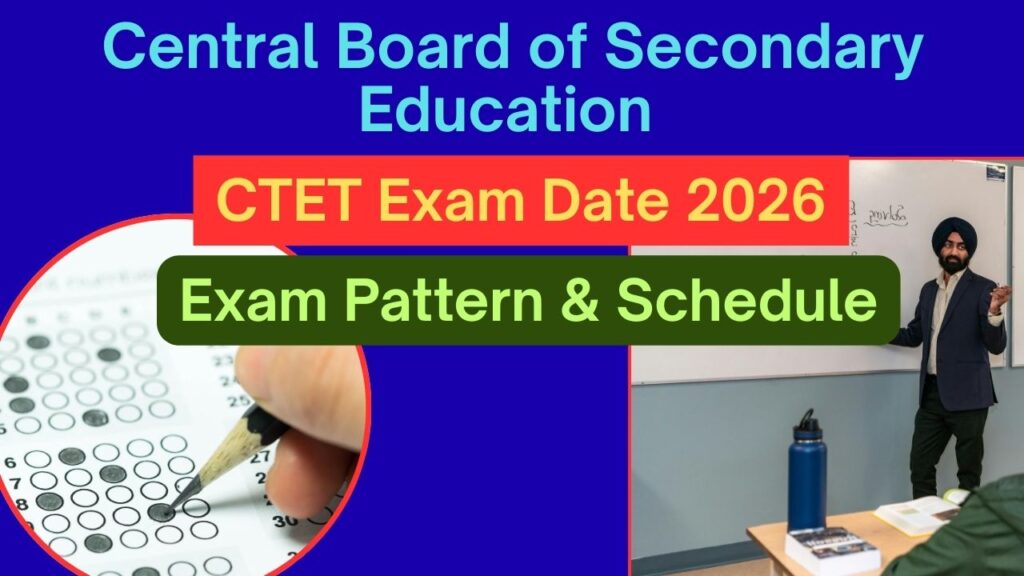
The Central Board of Secondary Education (CBSE) has issued the notification for CTET Exam Date 2026. The candidates applying for the position of teachers in India should note the date for this important exam. The CTET 2026 21st edition is going to be held on Sunday, 8 February 2026. If you want to make your career in teaching, then this is a good national level eligibility test to check your abilities.
Dates To Follow For CTET Exam
Event
Date
Application Start Date
27/November/2025
Last Date to Apply
18/December/2025
Exam Date
08/February/2026 (Sunday)
Result (Tentative)
March/2026
Exam Pattern & Schedule
Paper-1
9:30 AM — 12:00 PM
Paper-2
2:30 PM — 5:00 PM
Whereas Paper-1 is designed for class first to fifth, Paper-2 is structured from seventh to eighth class teacher. Both papers have 150 MCQs that carry 150 marks and the passing score is 60%.
Paper 1 Syllabus (Classes 1-5)
Paper 2 Syllabus (Classes 6-8)
Child Development & Pedagogy (30 marks) : Concepts of learning, psychology of the child.Language I & II (30 marks each) : ComprehensionMathematics (30 marks) : Numbers, shapes, operations.ENVIRONMENTAL STUDIES (30 marks) Family and Environment, Science Basics.
An excellent knowledge of theories and practices in child development and pedagogy etc. is necessary for the implementation of inclusive education.Language I & II (30 marks each): Advanced comprehension.Mathematics and Science (60 marks): Algebra, physics, biology.OR SOCIAL STUDIES (60 MARKS) : HISTORY, CIVICS, GEOGRAPHY.
The level 1 position offers Rs 9,300 to Rs 34,800 along with the Grade along with the Grade Pay of Rs 4200. While candidates can earn up to Rs. 34,800 with Grade Pay of Rs 4600 at Level 2 position.
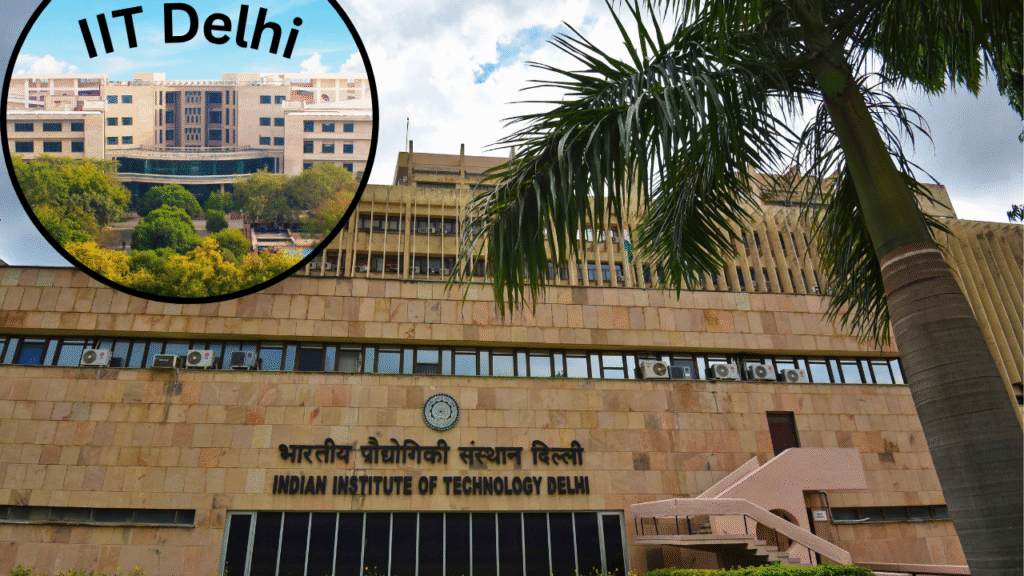
The IIT Delhi MBA is considered one among the best return on investment management course in India. Offering a perfect blend of quality education, good industry connect at a manageable fee, it enables students to dream big without the fear of being burdened with debts in private b-school cost. For 2025-27 batch, the total IIT Delhi MBA Fees 2025 is 12.17 lakhs which makes it one of the cost effective option in top management institutes of India.
IIT Delhi makes quality affordable with a transparent detailed batch-wise payment plan, clearly defined hostel and academic fees, and several options for financial assistance. In addition, the program provides a good return on investment (ROI) as the average placement package is ₹25.82 LPA, which further adds to the enunciation as a top choice for prospective business leaders.
IIT Delhi MBA Fee Structure
IIT Delhi MBA fee is ₹ 12.17 lakhs for 2025-27 batch and this makes it one of the least expensive top Indian b-schools. The fee is designed so that the students can derive maximum benefit from it, but still, it should be within the reach of students coming from varied financial backgrounds.
Complete Breakdown of Detailed Fee Components
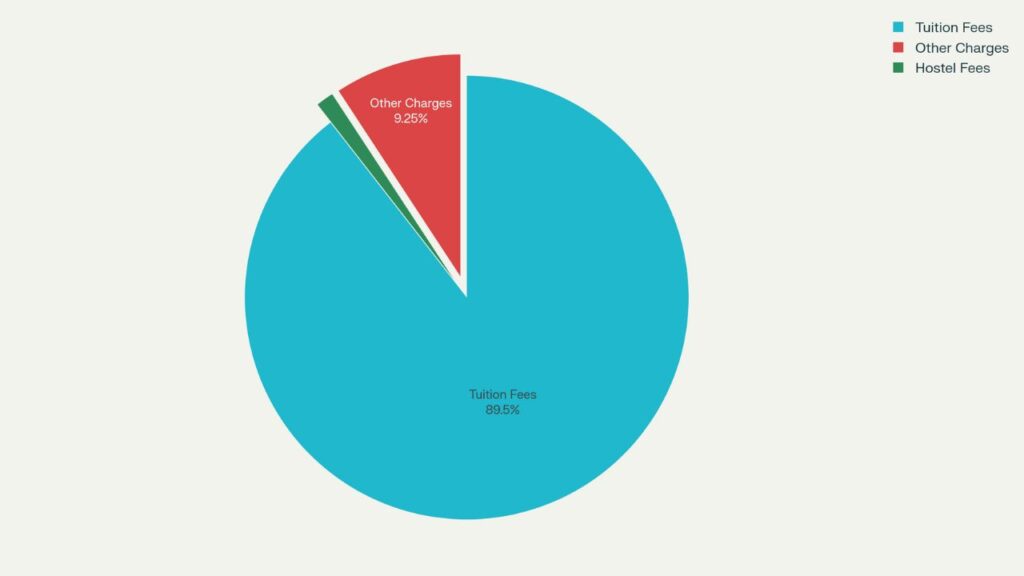
The tuition fee for the two-year course is ₹12,00,000, which is payable in four equal installments of ₹3,00,000 per semester. All the education fees, materials for courses and learning resources and even the use of campus facilities are covered by these fees. The total cost of accommodation in the dormitory for two years is Rs. 17,200 or 8,600 per semester.
Mess fees are to be paid extra and they vary according to consumption, hostel fees are Rs 8,600 per semester. Semester fees are 22,400 for academic and administrative purposes which include the use of internet, sports equipment, library and student-welfare programs.
Total tuition fees
₹12,00,000
Per semester
₹3,00,000
Total hostel
₹17,200
Per semester hostel
₹8,600
Academic charges
₹22,400
First Semester Payment Structure
The admission fee structure is categorized based on the candidate’s classification. The fee for the first term for candidates in the General, OBC, and EWS categories is ₹3,31, 000, inclusive of hostel fees and other relevant expenditure like tuition. Those who belong to the SC, ST or PwD categories, however, get a Tuition Fee Waiver. First term fees are drastically reduced for these categories to Rs 31, 000, which is only for the hostel and other miscellaneous expenses. This tiered fee system also reflects a commitment to ensuring equitable access to education, as well as to financial viability for marginalized populations.
How IIT Delhi MBA Fees Compare with Other Top Colleges
Comparison of MBA Fees Across Top Indian Colleges
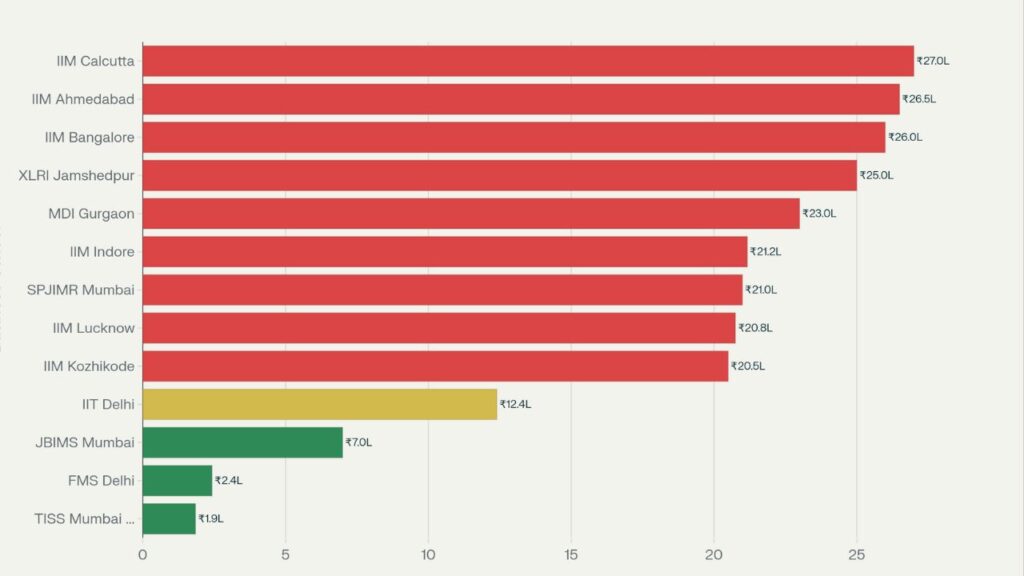
IIT Delhi offers great value for money as compared to other top b-schools in India. The fee structure makes it a kind of cross between the premium IIMs and the dirt cheap government ones.
Old IIMs (Higher Fee Range)
IIM Calcutta
₹27.00 lakhs
IIM Bangalore
₹26.00 lakhs
IIM Ahmedabad
₹26.50 lakhs
Newer IIMs (Moderate Fee Range)
IIM Lucknow
₹20.75 lakhs
IIM Kozhikode
₹20.50 lakhs
IIM Indore
₹21.17 lakhs
Private B-Schools
XLRI (Xavier School of Management) Jamshedpur
₹25.00 lakhs
ISB (Indian School of Business) Hyderabad
₹40.50 lakhs
MDI (Management Development Institute) Gurgaon
₹23.00 lakhs
SPJIMR (Shreyans Prasad Jain Institute of Management & Research ) Mumbai
₹21.00 lakhs
Budget-Friendly Government Colleges
FMS (Faculty of Management Studies) Delhi
₹2.43 lakhs
JBIMS (Jamnalal Bajaj Institute of Management Studies) Mumbai
₹7.00 lakhs
TISS (Tata Institute of Social Sciences) Mumbai
₹1.85 lakhs
Although these institutes charge very minimal fees, IIT Delhi gives a middle path with a reasonable fee structure and excellent results.
IIT Delhi MBA Program Cost Breakdown (Total ₹12.17 Lakhs)
Return on Investment Analysis
The exceptional 2024 Placement Performance demonstrates that IIT Delhi’s MBA Program offers a tremendous return on investment (ROI). Graduates are offered an average salary package of ₹25.82 LPA, the highest package is an impressive ₹41.13 LPA while the median package is ₹24.45 LPA. The program’s remarkable 100 percent placement record is a testament to its strong industry relations and career support. It is the most lucrative choice for an aspiring management professional for a total programme fee of ₹ 12.17 Lakhs. Students have managed their expenses for a few months after they start working.
Financial Support and Scholarship Options
IIT Delhi provides several support to the students who want to pursue MBA to ensure that everyone gets a chance of education. SC/ST/PwD students are entitled for 100% tuition fee waiver under category based benefits except for hostel and other fees. Furthermore, meritorious students are also eligible for merit scholarships, which are awarded on the basis of their programme-wide academic performance. Also, due to prestige of the institute, education loan for MBA course can be availed from all major banks. And given the school’s elite status, those loans typically carry competitive interest rates.
Payment Schedule and Methods
In order to ensure transparency and ease of understanding for all students, the fee payment follows a semester-wise structured format. As per the schedule of payment, the fee for the 1st semester is to be paid at the time of admission. Fees are payable at the beginning of each subsequent semester. For your convenience, the fee can also be paid in two installments over two years, making finances a little easier to manage.
Multiple modes of payments are available for easy transactions. Students can pay online from the time of official portals which ensures the safe and efficient process. Bank loans are disbursed by demand drafts. To suit different taste, there is also bank transfer payment option. This systematic procedure keeps the payment process formal and transparent, at the same time ensuring flexibility and accessibility to the students.
Why Choose IIT Delhi MBA
Academic Excellence
The institute, which was ranked 4th in Management by NIRF 2024, is renowned for its outstanding academics and is supported by a strong faculty having rich research and industry experience. The curriculum is broad-based and focuses on experiential learning to ensure that the students are well-prepared to face real-world challenges.
Industry Connections
It has great industry connections, and excellent placement support with top recruiters due to its vast alumni network in prestige companies, recurring industry interactions and guest lectures.
Facilities & Location Advantage
The modern facilities on the state of the art campus include a well-equipped library, state of the art computer laboratories, sports and leisure facilities. Opportunity to work in corporate offices and the institution is located strategically in Delhi NCR, the emerging business hub of India making it the best for commerce studies.
For Indian business schools, the IIT Delhi MBA delivers the best price, quality and outcomes combination you can get. With a total fee of Rs 12.17 lakhs, it holds itself at a higher standard than many of the private IIMs while giving exceptional value for money when compared with the ones that are more prestigious. Given the reputed brand, good placements and affordable fees, it is an excellent value for money for MBA aspirants.
Transparent breakdowns of fees and category-wise concessions ensure accessibility to students from diverse backgrounds. When viewed from the perspective of ROI, career opportunities and ranking experience, IIT Delhi MBArr its place among the topmost feasible options in India in business school arena.