CBSE vs State Board: Choose the Right Board For Primary Education

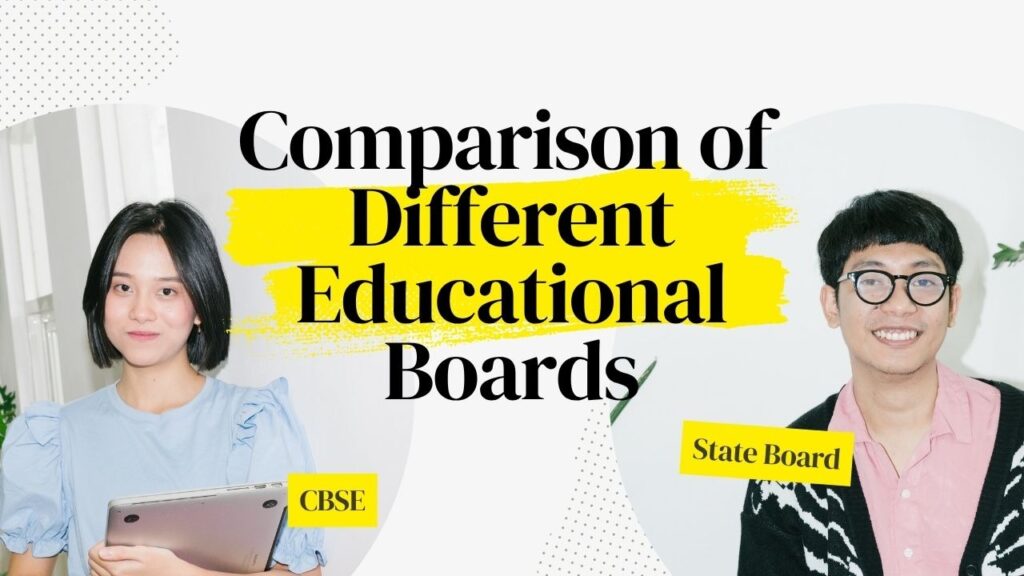
Comparison of Different Boards

Educational boards have different advantages and disadvantages for students in India. Schools are the first stage for students to build their knowledge and shape their minds for a career. A student’s entire future depends on it. If you are a parent or educator then you must understand that when it comes to the classic debate of CBSE vs State Board, there is no one-size-fits-all answer.

There are factors including a student’s learning style, future goal, or central/state opportunities which can help you to decide the right one. So, let’s walk through this guide which explains the core differences between CBSE and State Board to help you make the right decision.

What is The CBSE Board?

CBSE offers a standard curriculum for students, schools authorized by CBSE board offer the same syllabus whether it is in Mumbai or Lucknow. This is best for students who change their cities frequently, so their studies won’t be disturbed. It is managed under the Union Government and heavily focused on Science and Mathematics. Schools offer both medium English and Hindi.

What is a State Board?

In India, every state has its own educational board for schools. The curriculum is designed to have one state’s language along with English as the primary language. For example, Hindi/Sanskrit in UP board and Marathi in Maharashtra board. It is focused heavily on the state’s geography, history, culture with leaning more towards science and mathematics. 

Best board for students who are aiming for state-level government exams or jobs. The lessons are also easy and point-to-point that will help students to easily understand their topic within less time.

Core Differences in CBSE vs State Board

To understand which board is better, we need to compare them across several critical parameters.

1. Curriculum and Syllabus

CBSE: The syllabus has been designed considering NCERT curriculum which is more inclined towards integrated theory and practical aspects. Students who have high level of analytical thinking can easily handle the CBSE syllabus as it is not based on rote learning. 

State Board: They punch a lighter syllabus but are heavily skewed towards a local language, history and geography. That curriculum would not be gone into with the same depth in CBSE.

2. Difficulty Level and Grading

CBSE: The exam structure is tough and built to test students’ reasoning skills. Scoring basically depends on continuous and multiple exams in a year which reduces the pressure of a single final exam. overall difficulty level is high in CBSE board for students. 

State Board: Traditionally, this has come down to relatively simple calculations and memory-based tests. The end of year board examination is the most important one. In general, students consider that it is simpler to get high marks in the State Board exams as questions are more direct. 

3. Alignment with Competitive Exams

If student wanted to make their career in government sector then choose accordingly. 

CBSE: If the goal is to crack national-level entrance exams like the JEE or NEET as these are the biggest exams for engineering and medical students, CBSE board students have advantage because their exam curriculum are same as students’ high school syllabus. 

If student is thinking about central government jobs like IRS or defence job, the analytical foundation built by CBSE gives them a distinct edge.

State Board: State boards are excellent if the target is state-level engineering and medical entrance exams (like UPSEE or MHT-CET). They are also highly beneficial for state civil services exams, as the localized curriculum provides a strong base in regional general knowledge.

4. Extracurriculars and Holistic Development

CBSE: There is an active promotion of academic and non-academic activities by the board. The majority of the CBSE schools possess strong infrastructure in sports, arts, and debate and consider them as part of the curriculum. 

State Board: It’s all studied-based. There are some extracurricular activities, but these are generally subordinate and become dependent on the management of the particular school and what they can provide. 

Read More:- Skill Development Courses For Indian Students

Which Board Should You Choose?

The decision ultimately boils down to what you envision for the student’s future.

Choose CBSE if:

  • You are moving all over India because of your parent’s job.
  • The student is targeting national-level exams (JEE, NEET) or central government jobs.
  • You need a syllabus that’s focused on concepts and their application, and not on memorising.
  • You want the best of both worlds, academically and extra-curricularly with the extracurricular side not taking a back seat. 
  • You are looking for a balanced approach with equal focus on extracurricular development.

Choose State Board if:

You live in one state permanently and have no intention of moving. 

The student intends to enter the civil service, but only in that particular state. 

You want the student to be well versed in regional languages and local customs.  

The student is involved heavily in passions outside of school (like competitive sports or music production) and needs a more forgiving academic schedule.

Conclusion

No board is naturally “best” or “worst.” They are just for different uses.

The CBSE board reigns supreme for national competitiveness and standardized pan-India education. It equips students for the tough national exams and is very analytical in its method of teaching. hly analytical approach to learning.

State Boards provide a localized, accessible, and culturally relevant education. They tend to be more flexible, granting students additional time to partake in outside activities or to prepare for opportunities at the state level. 

Evaluate students’ strengths, talk about their long-term objectives and what board is best suited for their individual path. Choose the right one over the best. 
Leave a Comment

Your email address will not be published. Required fields are marked *

Best Online Coaching for UPSC – Top IAS Preparation

Cracking the UPSC exam isn’t that easy, you need the right strategy to prepare and beat the competition. These Best Online Coaching for UPSC will help you to cover every topic with practice test series that help you pinpoint your weak points and clear every doubt. The syllabus is vast and maintaining consistency is difficult, these online coachings offering both interactive session and recorded session to cover up. 

In a rising online education, these coaching are also growing as most of the students prefer to take online classes rather than finding offline coachings. Some of the most talked about online platforms are Drishti IAS, Vision IAS, Physics Wallah, Vajiram & Ravi, Clear IAS, Insight IAS, and Nirnay IAS.

Let’s check their best features and overview details to decide which one is right for you.

Drishti IAS

The Drishti IAS is most popular platform for IAS preparation, ideal for UPSC aspirants from both Hindi and English medium. It offers a structured and motivational teaching style which is helpful during UPSC preparation as it is the hardest exam. 

Best Features:

  • It is best for students who can give 15 to 16 months to this course with 400+ live classes. 
  • Extensive study material can help for learning
  • Excellent test series to improve regular practice, total of 24 mains and prelims tests available for 3 years.
  • No language barrier, it is easy for every student.

Vajiran and Ravi

Vajiram and Ravi coaching originated offline and marked a name in the top UPSC coachings and is now available online that delivers the same quality teaching for UPSC aspirants. 

Best Features:

  • Ideal for those who wanted to cover every topic with depth, 1000+ hours of lectures needed plenty of time.
  • Detail study and notes are also available for quality learning
  • Consistently maintain its record for producing toppers for years
  • Cost effective for providing best learning to ensure clarity for every doubt.

Read More 👉 Best Online Coaching for Bank Exam: Master Every Topic for Success

Clear IAS

Clear IAS is also one of the best online coaching which provides a super 50 program for specifically UPSC preparation. It is well-known for its focus on more personal guidance and small batches.  Ideal for aspirants who prefer self-paced learning with doubt clearing sessions at low fees.

Best Features

  • There are a large number of recorded lectures which can provide detailed learning for UPSC.
  • 700+ hours lectures and 1500+ study material
  • Test series to maintain daily practice for doubts clarity, mentorship support, and interview guidance.

Vision IAS

Vision IAS provides the best test series which are helpful to become habitual with the exam environment. It is famous for its analytical function that helps to track student’s practice records.

Best Features

  • Students can check their weak areas due to their recording track of assessments and make it strong by working on it.
  • Flexible batches is accessible to every aspirant
  • Free Resources is a great advantage for preparation. Topic-wise specific content, current affairs, and previous year questions are available for free. 

Physics Wallah

Physics Wallah is rapidly growing coaching and its UPSC preparation course is effective for cracking the exam. Its main advantage is delivering conceptual learning that helps students to remember and quickly adapt new concepts.

Best Features

  • Affordable price is accessible to everyone 
  • The teaching style is student-friendly that helps in complex problems to understand quickly.
  • Best for beginner students who began to prepare for UPSC
  • Strengthen every weak concepts and clear every doubt
  • Mentor support and recorded sessions.

Nirnay IAS

Nirnay IAS is available on the testbook platform which offers well-structured courses and practice-oriented strategy for UPSC preparation. It has gained attention in a little time due to its practice material and offline resources to self-study.

Best Features

  • Students who prefer to learn at their best time.
  • No regular classes, 30+ structured courses are best for quick preparation.
  • Cover prelims, mains, and other preparation topics
  • Mock test and previous years  papers for best practices 
  • Recorded lectures helpful to working professionals who don’t have time for live classes

Insights IAS

Insight IAS is also best for UPSC preparation at a low price. Aspirants can begin their preparation with quality study resources and test series with reasonable prices.

Best Features

  • Strong test series that structured properly for both prelims and mains
  • Best for beginners and advanced with its foundation courses 
  • Well-designed topic notes and syllabus clarity for effective learning
  • Affordable courses, every student can get quality education at their own pace
Coaching NameKey StrengthBest Suited For
Drishti IASBilingual, motivational teachingStructured, mentor-led prep
Vision IASAnalytics & test feedbackData-driven learners
Physics WallahSimplified basics, low costBeginners on budget
Nirnay IASModular & practice-heavySelf-paced learners
Vajiram & RaviLegacy, detailed coverageSerious long-term prep
Clear IASAffordable with mentorshipSelf-motivated learners
Insights IASBudget + good contentDisciplined planners

How to Choose the Right Platform

Identify your learning style – if you need someone to push or motivate you consistently for UPSC, Drishti & Vision provide teacher interaction which might help you. Clear IAS, Nirmay or Insights are best for those who prefer to learn at their own pace.

Check your budget – PW, Clear IAS, and Insight are affordable but if you are ready to invest more, Vajiram & Ravi or Vision offers premium packages.

Test Series – if you want insightful and exam-focused test series then Vision and Insights are the best option. Drishti IAS is also providing detailed study and exam based test series.

Conclusion

The Best Online Coaching for UPSC isn’t the one with popularity or your friend is joining, someone’s opinion doesn’t help you to get the right platform. The right platform matters because every student’s mind works differently, they understand differently. Even in their preferred language, they are unable to grasp the concept of the topic. So, it might be best for you to take a demo class from online coachings, if you understand well about the topic due to clear explanations, or teaching style that might be your destined platform for UPSC preparation.

Leave a Comment

Your email address will not be published. Required fields are marked *

UPSSSC Agriculture Technical Assistant Preparation: Complete Guide to Cracking AGTA Exam

UPSSSC Agriculture Technical Assistant preparation

If you are an agriculture graduate from UP and want to grab a secure government job, then UPSSSC Agriculture Technical Assistant Preparation is crucial to get this golden opportunities. With 3,446 posts announced recently in the recruitments, this Group-C job with the Department of Agriculture not only offers you secure job in India’s largest state but also a meaningful work in serving the farmers of the state.

But here is the reality check: clearing this exam is not just about being B.Sc. The competition is stiff, the syllabus is vast and the exam pattern itself has some quirks that can take you by surprise. Having reviewed the new notification and strategies adopted by the successful candidates, I have tried to make this guide exhaustive to help you in your preparation journey. 

Are You Qualified?

You must fulfill the UPSSSC Eligibility Criteria to apply for the UPSSSC. As on the date of notification, your age should be 21 years to 40 years. But the SC/ST/OBC candidates are allowed to get the relaxation on age as per the rule of the state government. Applications received from ineligible candidate(s) will be rejected, so check your eligibility before applying. 

Degree: Graduation in the Agricultural field is required as your knowledge is beneficial for a job. It must come from a recognized university or college.

List of course are good choice for your degree:

  • B.Sc. (Hons.) Agriculture
  • B.Sc. Horticulture / B.Sc. (Hons.) Horticulture
  • B.Sc. Forestry / B.Sc. (Hons.) Forestry
  • B.Tech (Agriculture Engineering)
  • B.Sc. (Hons.) Science from a University of Agriculture and Technology

The PET catch: Since 2022, UPSSSC has made the UP Preliminary Eligibility Test (PET) mandatory for every candidate to pass this exam with required score then applying for any main exam of AGTA.

Exam Pattern Decoded

There are no multiple phases for the AGTA, you just have to clear this one and the powerful UPSSSC Agriculture Technical Assistant recruitment exam with document verification and grab your chance for a government job. 

  • Total Questions: 100 objective-type MCQs
  • Total Marks: 100 
  • 1 Question = 1 Mark
  • Duration: 2 hours 
  • For incorrect answer, ¼ mark will be deduct

This marking system indicates that you need accuracy in your answer rather than attempting.

Subject-wise Distribution

SubjectQuestionsMarks
Crop Science2525
Biotechnology, Plant Breeding & Crop Physiology1010
Soil & Water Conservation1515
Agriculture Extension55
Agriculture Economics & Schemes55
Dairy & Animal Husbandry55
Computer Concepts & IT1515
General Information of Uttar Pradesh2020
TOTAL100100

What You Actually Need to Study

Part 1: Core Agriculture (65 Marks)

Crop Science involves the Study of various cereals, pulses, and oilseeds and also covers modern agricultural practices such as integrated, natural and organic farming. So you have to know about seed production, about pest management, about post-harvest technology and storage systems. Let’s get real—what is a field officer going to tell farmers?

Biotechnology & Plant Breeding covers Genetics Concepts, Photophosphorylation, Respiration, and Plant Metabolism. ISE don’t memorize definitions; actually understand what biotechnology is and how it works, and how it’s used in agriculture now.

Soil & Water Conservation involves Master soil properties, erosion control, fertilizer classification, irrigation, and watershed management.. I think the 15 questions are generally easy if you have your basics clear.

Agriculture Extension covers rural development concepts, farmer’s schemes issued by the Government, and training methods. This ties right into what you’re doing in your future job.

Agricultural Economics has MBA contents such as MSP (Minimum Support Price) of various Crops, Agriculture commodities trading, import-export strategies and UP’s One Trillion Economy plan. Be a regular user of agri policies.

Dairy & Animal Husbandry includes a lot of practical training but what’s the right way to do Animal Breeds, Feed management, Milk production, Poultry farming, Diseases management. Even if you were a crop science major, don’t sleep on this 5-mark question. 

Part 2: Computer and IT (15 Marks)

This isn’t just basic computer know-how anymore. The syllabus cover crucial IT related questions which means you need study hard:

  • It involves from Hardware, software and operating system to MS Word and MS Excel operations
  • Internet Protocol and Email Management
  • Digital financial instruments and e-Governance
  • New technologies – AI, Machine Learning, Big Data, IOT and India’s IT feats

You don’t have to think that new technologies are not needed, the first rule for the tech engineer is opting for new technologies every year. So, AI and Machine Learning are now part of an agriculture exam. The UPSSSC needs officers with a flair for technology who can put traditional farming together with digital India. 

Part 3: UP General Knowledge of 20 marks

To succeed in this field, one should have deep knowledge of history, culture, art and architecture of Uttar Pradesh. A good understanding of its physical geography with its climatic differences, soil groups, forest, wild life and mineral resources, will be found helpful. 

Also, a good knowledge of the state economy in terms of agriculture, industry and commercial conditions is essential. Keeping abreast with the day’s news and the work of the state government you shall further enrich yourself and make yourself even more capable. 

Selection Process

After clarifying the written test, candidates need to verify their documents (ID, Marksheets, DOB certificate, etc). The written test passing score is depending on your category. Final merit list will be made upon these scores not on interview as there is no interview.

UPSSSC Agriculture Technical Assistant Preparation Strategy

Crop Science and Soil Science is a very important part as they hold maximum marks in the exam. So, prepare well with understanding, not rote learning. BSc notes and NCERT agriculture textbooks are very helpful as resources for your study.

  • After clearing your basics, dive deeper with “A Textbook of Agricultural Field Crops” by V. Venkataraman to prepare for the Crop Science subject. 
  • And “Soil Science” by D.K. Das is a perfect option for Soil Science.
  • Many students recommended “Uttar Pradesh General Knowledge” by Dr. C.L. Khanna for increasing UP knowledge.
  • Try Youtube or free resources online to learn about Computers assets and other new techs related to the agriculture field.

The last Months 4-6 is given for the Practice & Revision of previous year papers for making a speed to solve fast in the exam. Weekly mock tests are best for your preparations. Everything is available on the internet, so do not stress about the resources. To avoid mark deduction, master to Maintain an error log.

Read More:- BSNL Recruitment 2026: Apply Online for 120 SET Vacancies, Eligibility & Full Details

What Makes This Exam Challenging?

There is a strategy and of course general scoring strategies are applicable too that candidates must follow to win in this agriculture based exams. What several candidates tend to miss is the fact there are non-agricultural parts like Computer (15 marks) and UP GK (20 marks), which have a big weightage of marks. Disregarding these can drastically hit your overall results.

How to approach the Stage II exams, Time Management is very helpful for Effective preparation. Although two hours is more than enough time, candidates often find themselves stuck on difficult questions, for instance in biotechnology, with not enough time left at the end to tackle items such as UP GK. so that way you can avoid that.

Also, academic knowledge from one’s degree is no place to rely on. The focus is not on theoretical understanding, but on practical application and problem-solving at field level. 

Before you start preparing for the AGTA exam, you must be aware that you must meet all the eligibility requirements (like qualifying the PET) for the same. Non-compliance of such requisites may result in jeopardizing a candidate’s whole preparation and risk that nothing has been achieved in all those years toiling. A complete scan of the eligibility dates is hence highly recommended to avoid any last minute surprises. 

Conclusion

The UPSSSC Agriculture Technical Assistant is one such post which will help in this regard. The active UPSSSC Agriculture Technical Assistant Recruitment 2026 Advertisement is a good opportunity for the job seekers. You should go for 6-8 Months UPSSSC Agriculture Technical Assistant Preparation to increase your chances of selection and should Follow the Syllabus Strictly. Your position on the merit list can be decided by the marks obtained. Get started on your preparation now with full dedication and consistency to get success in this very competitive selection. 

Leave a Comment

Your email address will not be published. Required fields are marked *

Top 10 Mistakes to Avoid While Preparing for UPPSC RO/ARO

UPPSC RO/ARO

Each year, countless graduates in Uttar Pradesh enroll in a coaching center or app, purchase a ton of GS books, and convince themselves this is the year they will make it to RO/ARO. Many of them will fail because they commit the same mistakes that could be avoided, even if they finish the entire syllabus. There are 10 mistakes to avoid while preparing for UPPSC RO/ARO.

If you want to earn your Samiksha Adhikari badge, the best thing you can do before opening one more book is to get a clear sense of what goes wrong for most aspirants. 

What Is UPPSC RO/ARO, Exactly?

RO/ARO stands for Review Officer and Assistant Review Officer, two of the most respected Group B posts recruited through the Uttar Pradesh Public Service Commission. These officers are posted at the state secretariat, the UP legislature secretariat, different government departments where they work on file inspection, preparation of policies, writing official letters in Hindi and English, etc. It isn’t a flashy, headline-grabbing post like PCS, but it comes with something many aspirants value even more — genuine job security, a respectable pay scale, steady promotions, and a real seat inside the machinery of state governance.

The examination, which is held in three parts, consists of a Preliminary examination (for aspirant screening), a Mains examination (which prepares the merit list) and a Skill or Typing Test (which packs the final selection). Sounds straightforward on paper. In practice, each of these three stages tests a completely different skill set, and that’s exactly where most preparation strategies fall apart.

Why This Exam Demands Full Dedication, Not Part-Time Effort

Here’s the part most aspirants underestimate: RO/ARO isn’t just a general knowledge test. It’s a rare combination of GS depth, Hindi language mastery, drafting precision, and typing speed, all rolled into one recruitment cycle. You could have Polity and Economy on your fingertips and still get eliminated at the typing test stage. You could ace your Prelims and then lose the plot in Mains because your Hindi essay writing was never taken seriously.

Add to this the sheer competition — UPPSC RO/ARO regularly draws hundreds of thousands of applicants for a few hundred vacancies. In a pool that dense, small inefficiencies in your preparation don’t just cost you marks, they cost you your entire attempt. That’s why this exam isn’t something you can prepare for in stray hours between other commitments. It needs a dedicated, structured block of time where GS, Hindi, current affairs, and typing practice all get their fair share, week after week.

Read More 👉 Government Jobs After Graduation in India: Complete Guide for 2026

How Early Should You Actually Start?

If you’re starting from scratch — no prior GS foundation, no typing practice, Hindi grammar rusty since school gives yourself a minimum of 10 to 12 months before the expected Prelims date. This gives you enough runway to build NCERT-level GS foundations, work through UP-specific static topics, develop a daily current affairs habit, and still leave 3 to 4 months purely for revision and mock tests.

If you already have a General Studies base from a previous PCS or SSC attempt, 6 to 8 months of focused preparation is realistic, provided you’re consistent. What you should never do is wait for the official notification to start preparing. UPSC RO/ARO is not conducted as per a fixed year, so there can be a short duration between notification and Prelims. Candidates who begin their preparation just after the release of the notification are almost always muggers and mugging does not survive a 200 question, negative marking paper. 

Eligibility Criteria You Need to Meet

You must have completed a bachelor’s from a recognized university in any subject and there is no specific stream requirement, which is one of the reasons why the exam has such a broad range of applicants. 

As regards age limit, the candidates belonging to General category are required to be 21 to 40 years of age as on the cut-off date with age relaxations applicable to upper age limit for OBC, SC/ST and other reserved categories as per Rules of UP Domicile. Indian nationality is mandatory, and candidates must meet UPPSC’s standard physical and character eligibility norms laid out in the official notification.

Note: exact eligibility requirements, age limit and relaxation, and total vacancy numbers are confirmed for every cycle in the UPPSC official notification for that cycle, so always cross-check on the UPPSC website before filling your form.

How Selection Actually Works for UPPSC RO/ARO

The journey to becoming an RO or ARO runs through three checkpoints, and clearing one doesn’t guarantee comfort in the next.

The Preliminary exam is a 200-mark objective paper covering General Studies and General Hindi, with a negative marking penalty of one-third mark for every wrong answer. It’s a qualifying stage only — your Prelims score doesn’t carry forward into the final merit, but a wrong strategy here (guesswork, poor time management, ignoring the negative marking) can knock you out before the real test even begins.

The Mains exam is where the actual merit list takes shape. It includes multiple descriptive and objective papers covering General Studies, General Hindi and Drafting, and a dedicated Hindi Essay paper. This stage rewards candidates who can write with clarity, structure their answers logically, and demonstrate genuine command over formal Hindi — not just candidates who’ve memorized facts.

Finally comes the Skill or Typing Test, a qualifying round where candidates must demonstrate a minimum typing speed, typically around 25 words per minute in Hindi typewriting. It sounds like a formality until you meet someone who cleared Mains comfortably and then lost their selection purely because they never practiced typing.

Read More 👉 Time Management Tips for Students and Government Job Aspirants

10 Mistakes to Avoid While Preparing for UPPSC RO/ARO

1. Treating Hindi as a formality instead of a scoring subject. A huge number of candidates assume Hindi will “sort itself out” because it’s their mother tongue. But it’s not true, original Hindi is tough and not like we speak in real life. UPPSC examines the formal grammar, vocabulary, comprehension and drafting at a level in Hindi paper which most of us have not reached since our school days. Skipping this section is one of the quickest ways to lose easy marks that other test takers are eagerly grabbing. 

2. Delaying typing practice until after Mains. This is possibly the costliest mistake in the entire selection process. Candidates pour a year into GS and Hindi, clear Prelims, clear Mains, and then discover in the last few weeks that their Hindi typing speed isn’t anywhere close to the required benchmark. Typing is a motor skill — it needs weeks of daily, disciplined practice, not a last-minute crash course. Start practicing typing from month one, in parallel with your GS preparation, not after.

3. Ignoring UP-specific General Studies content. Don’t cover everything in GS, UPPSC RO/ARO exam heavily rely on state-specific current events. So start gaining more knowledge of Uttar Pradesh’s history, geography, culture, government schemes, and current affairs. Skipping UP-specific content means leaving guaranteed marks on the table that a well-prepared local candidate will happily pick up.

4. Underestimating the negative marking in Prelims. With a one-third mark penalty for every wrong answer, blind guessing can do real damage to your score. Aspirants who walk into the exam hall without a clear elimination strategy — attempting only questions they’re reasonably confident about — often end up with a lower score than candidates who attempted fewer questions but did so smartly.

5. Not practicing descriptive writing and drafting. The Mains exam isn’t an extension of the objective Prelims. It demands structured essay writing, formal letter drafting, and precise official-language usage. Those who are doing full year ‘solely on objective style MCQ’ practice and who are not writing a full-length descriptive answer in timed conditions would get a rude shock when they finally sit for Mains. 

6. Studying in isolation without solving previous year papers. Studying alone without practicing past year papers. Reading the notes and highlighting the textbooks is productive, but it does not tell you how UPPSC formulates questions. Aspirants who do not go through previous year papers and full-length mock tests, usually end up entering the exam for real without ever having been under genuine pressure of exam-hall conditions. 

7. Chasing too many sources instead of trusting a core few. It’s very tempting to gather every available resource, be it YouTube playlists, telegram channels, coaching PDFs, when everyone around you is following a different resource. In actual fact, this divides your training and encroaches on time for revision. The same message from toppers is relentlessly repeated: choose a handful of trustworthy sources for GS, Hindi and current affairs and keep going through these for multiple revision cycles, rather than “starting afresh” with new material every couple of weeks.  

8. Neglecting current affairs until the final months. Current affairs isn’t something you can compress into a 30-day sprint before the exam. UPPSC draws questions from developments spread across the entire preparation window, particularly those tied to Uttar Pradesh’s state government initiatives. Aspirants who ignore monthly current affairs and try to cram a year’s worth of news in the final weeks usually retain very little of it under exam pressure.

9. Skipping revision in favor of constantly consuming new content. There’s a strange guilt many aspirants feel when they’re “just revising” instead of learning something new. But retention comes from repetition, not from the volume of fresh material you’ve covered once. Without scheduled revision cycles, most of what you studied eight months ago simply won’t be accessible to you on exam day, even if you technically “covered” it once.

10. Not building a realistic, disciplined daily routine. Perhaps the most common mistake of all — starting preparation with enthusiasm, studying erratically for a few weeks, then losing momentum entirely once motivation dips. RO/ARO preparation spans many months, and inconsistent, mood-driven study almost never survives that distance. A realistic daily timetable that balances GS, Hindi, current affairs, and typing practice, even if it’s just 4 to 5 focused hours a day, will consistently outperform sporadic 10-hour study binges followed by days of burnout.

Conclusion 

UPPSC RO/ARO gives its aspirants an actual chance to prepare for the exam with 3-stage evaluation of knowledge, language and skill, rather than the exam they assume it to be. The candidates who clear are not necessarily the ones with maximum hours of study put in, but  the ones who follow these 10 mistakes to avoid while preparing for UPPSC RO/ARO. 

Start your journey early to make it possible to select for this position. Only the ones who dedicate themselves for the preparation can beat the exam. 

Leave a Comment

Your email address will not be published. Required fields are marked *

Regular vs Distance Education: Which Is Better for You?

Student comparing Regular vs Distance Education with books and a laptop, symbolizing classroom learning and online flexibility

Choosing the right educational path after 12th with any stream is confusing. Many students want to work while pursuing their higher education and some of them want to focus on their studies properly. Regular vs Distance Education is best in their own perspective, whether you have an educational background in science, commerce or arts. Let’s look into this topic further to differentiate both the topics in more detail. To resolve the confusion, analyze – Which one holds more value? Which option is best for your career? 

I have seen many students and parents discussing this issue and get confused. Let me tell you one thing, it depends on your degree. Theoretical degree – you can get from distance but not MBBS or B.Tech because it requires practical experience.

In this article, we will look at both options by giving every detail of both education, so you can make a smart choice that fits your life, your goals, and your budget.

What is Regular Education?

Think of regular education as the traditional “college life” you see in movies. You have to:

  • Attend classes on a fixed schedule.
  • Go to a physical campus every day.
  • Talk and be responsive to your teachers and classmates face-to-face.
  • Some colleges are strict about the 75% attendance percentage.

Students who aim to learn not from just books but also from being part of a college community, participating in events, and living the campus life. 

What is Distance Education?

Distance education, also known as Open and Distance Learning (ODL), is all about flexibility. 

  • You study further in your choice of career from anywhere in India.
  • Take resources at your preference such as online materials, videos, and books.
  • You can study at your preferred time and have no issues with attending daily classes.
  • No face-to-face Interaction with teachers and students. Interaction happens mostly on online platforms or weekends.
  • You can manage work and study parallely. 

Top government-recognized universities like IGNOU and private ones like Symbiosis are offering distance education in India.

Quick Comparison for Regular vs Distance Education

FeatureRegular EducationDistance Education
LocationFixed CampusAnywhere in India
ScheduleDaily classesFlexible
CostVery High (Tuition + Living)Very Low (Mainly tuition)
InteractionFace-to-face with teachers/peersVirtual (Online forums, email)
DisciplineDriven by teachers & timetableRequires high self-discipline
Best ForPractical, lab-based coursesTheory-based courses, upskilling

Regular Education – Pros & Cons

Pros:

  • Networking Growth: You can have a chance to grow your network in the same field for more career benefits. Strong relations to both students and teaching can develop your communication skills.
  • Direct Teacher Guidance: You can respond to teacher’s questions and ask them individually to clear your doubt. Some teachers are good at encouraging students for their career.
  • Campus Life: Extra curricular activities and sports can be beneficial for your mental and physical health. Overall development is something you only get on campus.

Cons:

  • Expensive: Some students can’t afford college fees, but they need to hold the degree to grow in their career. 
  • No Flexibility: You cannot work a full-time job if you are attending regular classes. Part-time jobs can give you any experience for your career. If you want to prepare for any competitive exam then distance education is a good option.
  • Relocation for Studies: Students who live in lower regions have to move out for studies and it will be difficult for them.

Read More 👉 BTech vs BSc vs BA in 2025: Which Degree Offers the Best Future Scope?

Distance Education – Pros & Cons

Pros:

  • Affordable: Anyone can afford distance education fees because these are half of the regular degree fees.
  • Earn While You Learn: You can do both at the same time – working full time and take your lessons whenever you get free. 
  • Prepare for Competitive Exam: You can also prepare for the competitive exams.
  • Accessible from Anywhere: A student from a small town can get a degree from a top university in Delhi without leaving their hometown.

Cons:

  • Needs Self-Discipline: You need to focus on self-study because there is no teacher to push you.
  • The Digital Divide: While Improving, Still many students do not have laptop or wifi access to their home for study.
  • Limited Practical Labs: You can pursue master degree or theoretical education from distance education but for engineering and medical, you need hands-on lab experience.

Who Should Choose Regular Education?

  • Recent School Pass-outs (12th Graders): If you are young and want the full college experience, and your family can afford it, regular mode is a great choice.
  • Students Pursuing Technical/Lab Courses: For degrees like B.Tech, MBBS, or pure sciences, the hands-on practical training in a regular college is essential. These courses are not valuable for career and UGC also prohibits them.
  • Structured Environment: Many students are not able to study on their own so they need big support from teachers to help them stay on track.

Who Should Choose Distance Education?

  • Working Professionals: If you are already in a job and want to upskill for a promotion (e.g., getting an MBA), distance education is perfect.
  • Homemakers: women who can’t afford to attend regular classes because of their responsibilities can choose to continue their study from distance education 
  • Competitive Exam Aspirants: UPSC, SSC, Railways or banking aspirants often take a distance B.A. or B.Com degree to meet the eligibility criteria while focusing on their main preparation.
  • Students in Rural: They mostly need to move out for education and some students can afford this, they can get quality education at their doorstep.

Career Scope & Recognition in India

This is the most important part. The University Grants Commission (UGC), the main body for higher education in India, has officially stated that degrees from Regular, Distance (ODL), and Online modes are to be treated as equivalent.

This means if a job requires a B.Com degree, a B.Com from IGNOU is just as valid as a B.Com from Delhi University for applying to that job, including government jobs. In 2025, Indian companies care more about your skills and whether your degree is from a UGC-recognized university, not the mode you studied in.

Universities Delivers Regular & Distance Education

Top Universities for Regular Degree

Read More 👉 MTech vs MBA in 2025: Who Earns More and Why? Find Out Now!

Top Universities for Distance Degree

Top Universities for Both (Distance & Regular)

  • NMIMS 
  • Amity University
  • Lovely Professional University

Conclusion

There is no single answer for this confusion, you must think about the option that aligns with your career, situation and budget.

Choose Regular Education if: 

  • You can afford
  • You are a recent school graduate
  • You want an immersive campus experience

Choose Distance Education if: 

  • You need flexibility
  • want to study while working 
  • limited budget
  • focused on a competitive exam.

In today’s India, both paths can give you a better career if you have developed skills in yourself. There is no 100% guarantee in both education that you can get a placement. What can give you guarantee is your hard work and improved skills. The right path is the one that takes you to your destination without derailing your life.

Leave a Comment

Your email address will not be published. Required fields are marked *

Indian Police Service IPS: How to Crack and Become IPS Officer

Indian Police Service

If you’re dreaming about the Indian Police Service (IPS) standing tall as a law and peace officer in the Indian Police Service. Whatever got you started on this dream, pursuing it in real life is more than just a passion to do. It requires a sharp strategy to prepare accordingly and what’s right to study. Not everything is important. 

Instituted in 1948 as a successor to the British colonial-era Indian Imperial Police, the IPS is the ground holder of India’s internal security system. But the reality check is that every year lakhs of candidates chase this dream and only a few hundred come out successful. So what separates those who make it and those who don’t? More often than not, it is the preparation strategy. 

Understanding the Battlefield: The Three-Stage War

Know what you are getting into before you go to the books and notes. The UPSC Civil Services Examination (CSE) is a rigorous three-tiered exam which tests not only your knowledge but stamina, analytical abilities & character. 

First Level— The Preliminary Examination 

Think of the Prelims as the bouncer at the door to that exclusive club — it sifts out the wheat from the chaff. It consists of two objective papers, each of two hours duration and carrying 200 marks. 

Paper – I is General Studies—current events, history, geography, polity, economy, environment and general science. The Civil Services Aptitude Test (CSAT), now known as Paper II, tests your concepts on comprehension, logical reasoning, decision making and basic numeracy. It is qualifying in nature and it just needs 33% to pass.  

Do not make the mistake to understand that Prelims score is gonna add in the final merit list, it’s important to score for going into the next stage but it doesn’t hold final value. So don’t get that to take it lightly because 97-98% of candidates are eliminated at this stage. 

Second Level: The Main Examination 

If Prelims is a sprint, Mains is like running a marathon. Nine descriptive papers across a few days with a total of 1750 marks designed to push how well you know what you know and how well you can express complex thoughts when you’re under a lot of stress.

The pattern is: two qualifying papers (English and an Indian language), one Essay paper (250 marks), four General Studies papers ranging from Indian heritage to ethics and integrity (250 marks each), and two papers on your chosen Optional subject (250 marks each).

The hard copy elective also has an impact on your total score with a weightage of 500 marks. Choosing the appropriate subject is very important. Although you have a whole bunch of popular subjects like Geography, History, Public Administration, Political Science etc, it is always advisable to go with the subject you are really interested in rather than seeing what others have taken up. 

Third Level: The Personality Test (The Interview)

The remaining 275 marks are given in the Personality Test, during which an UPSC panel evaluates your mental alertness, critical thinking, communication skills, leadership potential, and moral uprightness. They don’t want to know-your-everything; they want well-rounded people who can manage the enormous burden of public service. 

Check Your Eligibility For Indian Police Service

Nationality

IPS is only open to Indian citizens. The UPSC CSE permits Nepali, Bhutanese and Tibetan refugees (who came before 1 January 1962) to apply for certain services like IAS and IFS, the Indian Police Service, however, is limited to Indian citizens. 

Qualification

You must have a bachelor’s degree from a recognized university – all streams are acceptable.  If you’ve studied English Literature, Engineering or Zoology, you can apply.

Important caveat for final-year students: You may apply for the Preliminary examination as a final year student, but you need to submit degree certificate before going in for the Mains.  Don not count on your provisional certificate to arrive in time—make your plans accordingly.

Final MBBS students can also apply, but they have to submit a certificate from their university. 

Age Limit

CategoryAge LimitCut-off Birth Date (for 2026 exam)
General/EWS21-32 years2/August/1993 to 1/August/2005
OBC21-35 years (3 years relaxation)2/August/1990 to 1/August/2005
SC/ST21-37 years (5 years relaxation)2/August/1988 to 1/August/2005
PwBD21-42 years (10 years relaxation)2/August/1983 to 1/August/2005
Ex-servicemen5 years relaxation2/August/1988 to 1/August/2005

Attempts Restrictions

CategoryNo. of Attempts
General/EWS6 attempts
OBC9 attempts
SC/STUnlimited (until age 37)
PwBD9 attempts (until age 42)

The Physical Reality: More Than Just Books

Unlike IAS, Indian Police Service has certain physical eligibility condition which you need to fulfill. Male candidates should have a minimum height of 165 cm (160 cm for ST and some other categories) and must have chest measurements of 84 cm along with expansion. Female applicants need 150 cm height (145 cm for ST) .

Myopia shall not be more than minus 4.00D and hypermetropia shall not be more than plus 4.00D. Color blindness is a disqualification as well as squint. Begin training for your physical fitness right away — don’t wait until you have the written exam behind you. 

Height Requirements category-wise:

CategoryMaleFemale
General/OBC/SCMinimum 165 cmMinimum 150 cm
ST (except SC/OBC)Minimum 160 cmMinimum 145 cm
Gorkhas, Garhwalis, etc.Minimum 160 cmMinimum 145 cm

Read More:- AIIMS Nursing Officer Recruitment (NORCET-10) – 3600+ Vacancies, Eligibility, Exam Date & Apply Online

Application Process To Apply

  1. Stay tuned to the official UPSC website for the latest updates/notification of IPS. 
  2. After the notification is released, download it carefully and go through all the instructions and wait for the online process to start.  
  3. Check all the dates and fill the application before the deadline. 
  4. Fill valid and correct details in the form and then attached requisite documents with the application.
  5. Submit the form and the application fee is applicable.
  6. Print it for the proof in future and prepare yourself for the toughest examination.
CategoryFee
General/EWS/OBC (Male)₹100
SC/ST/PwBD/Female (All categories)Exempt (₹0)

Conclusion

Becoming an Indian Police Service officer is not only about passing an exam, it’s about dedicating oneself to a life of discipline, service, bravery, and accountability. Everything about the process, from meeting the eligibility and physical criteria to surviving one of the most competitive exams in the country, requires one to be consistent, resilient and long-term driven. Luck or short-cuts don’t make you succeed in this path- it takes strategy, smart preparation, mental toughness and commitment.

If you really want to see yourself in that uniform, leading from the front and serving the country, begin today—lay your groundwork, condition your body and mind, and approach preparation as a way of life, not a phase. The road to IPS is tough, but to those who make it through, it is one of the most dignified and influential careers in India. 

GovUpdatewala is your trusted source for real-time updates on government exams and jobs in India. We provide verified info on SSC, UPSC, Banking, Railways, Defense, and Teaching exams. From syllabus and patterns to important dates and career tips — we support aspirants at every step.

Leave a Comment

Your email address will not be published. Required fields are marked *

Scroll to Top