BSc Emergency and Trauma Care

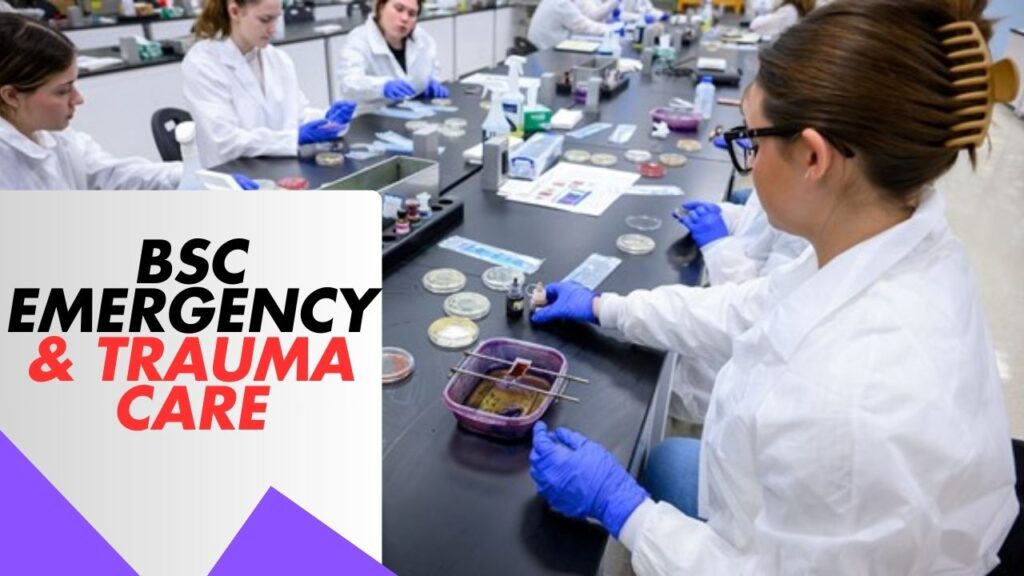
BSc Emergency and Trauma Care

In the intense hospital setting, there is a place where seconds count and the word “routine” hasn’t been uttered in years. It’s the Emergency Room (ER) after BSc Emergency and Trauma Care. Although the faces with which we most commonly associate life saving are those of the doctors and nurses, there is an equally specialised group of para-professionals working with them: Emergency and Trauma Care Technologists.

Requirement for BSc Emergency and Trauma Care

A candidate must possess 10+2 in Science (PCMB/PCMC) & it’s important to know that some colleges asked for a 45%- 55% minimum score. This course prepares students to pursue a career on an emergency basis like when an urgent requirement of a doctor arise in an emergency room, on an operating table etc.

English is normally compulsory subject in class 12th and you should be minimum of 17 years of age at the time of the admission, medical fitness certificate is also required at times. 

Duration and Course Subjects

The 3-­4-year BSc Emergency and Trauma Care course enables students with the necessary skills and knowledge to deliver care to the traumatized and the emergency patient. The content sequentially increases in complexity starting with the basic sciences and advancing to clinical interventions.

The following topics are repeatedly addressed:

Basic Sciences

  • Human Anatomy 
  • Physiology 
  • Biochemistry 
  • Pathology 
  • Microbiology

Emergency Care 

  • Emergency Medical Services 
  • Pre-hospital Trauma Life Support 
  • CPR & Airway Management 
  • Hemorrhage Control

Clinical Emergencies 

  • Medical Emergencies 
  • Trauma & Surgical Emergencies 
  • Pediatric and Special Population Emergencies 
  • Critical Care Technology

The program is focused on theoretical and clinical training, designed to equip students to manage high-stakes trauma environments with both assurance and thoroughness. 

Semester Breakdown

SemesterCore Subjects
1st/2ndAnatomy, Physiology, Biochemistry, Intro to EMS, Pharmacology
3rd/4thMedical Emergencies, Trauma Emergencies, Pathology, Biostatistics
5th/6thDisaster Management, Patient Monitoring, Advanced Life Support

Mail Skill You Must Have

While the “BSc” part of the title sounds academic, the job is deeply emotional. You will become a patient’s life-saver on the worst day of their life.

Empathy in the moment is a talent they don’t always rate you on, but it’s the most important one you’ll have. You’re not just treating a body but also confronting the panic and worry and sorrow of the people surrounding it. Those relatives, too, are often in over their heads, and those patients are frightened. You’ve got to be a genuinely kindhearted person to remain calm, tell them everything will be all right and comfort them while you are doing something like firing up a ventilator.  

Career Goal 

The demand for graduates from the BSc Emergency & Trauma Care course continues to grow within the health care industry, with opportunities for employment with both public and private providers, transport­ focused roles in emergency situations, and roles such as the immediate stabilization of patients. It is one of the best courses which open your professional way with good packages because experience in this field has many different responsibilities. 

Roles & Responsibility 

RoleResponsibility
Trauma TechnicianTake part in Trauma Cases with surgeons and ER doctors to stand as a pillar on saving lives.
Emergency Medical Technician (EMT)Quick Response to save life’s on the spot emergencies techniques. 
Flight ParamedicWorking on air ambulances or rescue helicopters for remote locations.
Critical Care AssistantManaging patients in the ICU who require constant monitoring.
Disaster Management OfficerWorking with Social Work Organisations like NGOs or governments to plan responses to natural disasters.

Top Employers

SectorExamples
HospitalsApollo, Fortis, Max Healthcare, Medanta
Ambulance ServicesGVK EMRI, Air Ambulance
Government/OtherIndian Red Cross, Fire Department Emergencies, Disaster Organizations

Jobs Salary After BSc Emergency & Trauma Care

The BSc Emergency & Trauma Care salary in India varies as per the job position, skills, experience, work location (metros like Delhi, Bangalore provide higher salary) and type of the company. For 3 to 5 years of experience, the salary can be 5 — 8 lakhs per year along with allowances for shifts or overtime. 

Salary by Role

RoleFresher Salary (₹/month)Experienced salary in LPA
Emergency Medical Technician20,000-40,0003-7
Trauma Care Technician25,000-50,0005-8
ER Coordinator30,000-55,0005-9
Disaster Specialist40,000-70,0006-10

How to Get Government Jobs After This Degree

For government job after BSc Emergency & Trauma Care, concentrate on the paramedical recruitment in state health departments, NHM, and hospitals as these are the very places that consider this as a preferred degree for EMT and trauma-related Jobs.

Preparation includes watching portals, acquiring certifications such as BLS/ACLS, and passing written tests or interviews. 

Steps to make a career in government healthcare or allied services: 

  1. Get updated: Get into the habit of visiting the official websites regularly i.e. NHM, State Health Society, ESIC, AIIMS, and 108 Ambulance Services. These sites raise alerts for complainants for job notification, recruitment-related news and other information which might help you get one step closer to your dream job.
  2. Boost your profile: Having professional certification can do wonders in polishing up your resume. Courses like BLS (Basic Life Support), ACLS (Advanced Cardiovascular Life Support) and ITLS (International Trauma Life Support) bring weightage to your profile. Along with these certifications, relevant field experience 1-2 years will make a great difference in your selection. 
  3. Apply and Prepare: Apply online for exams that generally comprise multiple choice questions (MCQs) on anatomy, emergency care, and general information. 
RecruiterRoles7th CPC Salary
NHM/State Health Societies EMT/ParamedicRs 25500—81100 at Level-4 Rs 35400—1,12,400 at Level-6 
AIIMS/Government Hospitals and ESICTrauma Technician, ER AssistantRs 25000—50,000 entry role
Armed Forces/Disaster BodiesAmbulance TechnicianVaries by level

The Future of Emergency Care

As medicine becomes more specialized, the need for full-time trauma providers is growing exponentially. We are going from “general” care to “specialized,” rapid response. With the advent of smart ambulances and telemedicine, an Emergency & Trauma Care alumnus is no longer a mere “aide”, they are a high-tech clinician leading the cutting-edge of medicine. 

Conclusion

A BSc Emergency & Trauma Care is not just an academic qualification; it is a key which opens the door to the human condition. It is a profession for the strong, the fast-thinking and the kind. If you’re looking for a career in which you’ll keep on learning, and where you can tell people, “You really needed me today,” this is the road for you. 

Leave a Comment

Your email address will not be published. Required fields are marked *

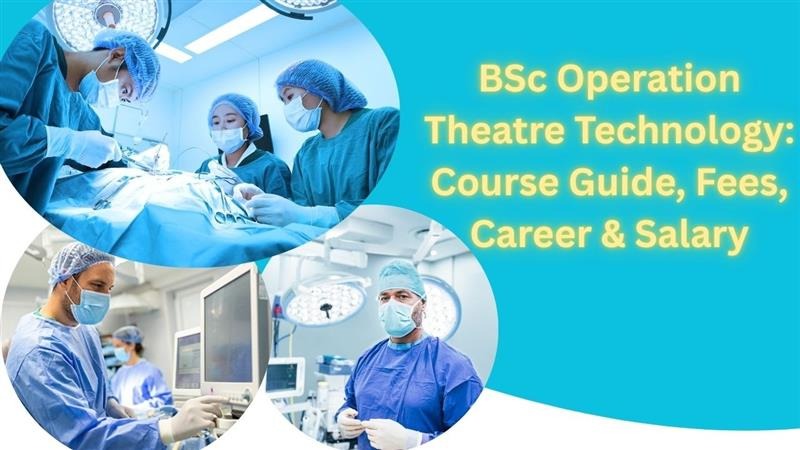
BSc Operation Theatre Technology: Course Guide, Fees, Career & Salary

BSc Operation Theatre Technology

If you’ve ever seen a surgical scene in a film, the camera almost always lingers on the surgeon. While behind every successful operation, there is a team, who make everything run smoothly silently in the background. One of the most vital members of the team is Operation Theatre Technologists. Degree in BSc Operation Theatre Technology (BSc OTT) trains students to undertake this pivotal position in the healthcare organisation. 

It is a professional undergraduate course for aspirants who wish to collaborate with surgeons, anesthesiologists and nurses within the operating room. From instrument preparation to ensuring sterility to direct procedure support, OT technologists are paramount to patient safety and managing successful surgeries.

For the students who are interested in medicine but do not want to do MBBS, BSc Operation Theatre Technology course has emerged as a very lucrative career option with rising demand in hospitals across India and abroad. 

What is BSc Operation Theatre Technology About?

BSc OTT (BSc Operation Theatre Technology) is an undergraduate course which makes you ready to be the backbone of surgeries. OT professionals ensure the operating theater is clean, equipment works flawlessly and patients are protected during their surgical journey, above and beyond what the surgeons have time to do themselves. The training enables you to work as a surgical technologist with surgeons and anesthesiologists in the operating room, as a surgical instrument sterilizer, and an assistive user of the advanced technology on which today’s surgical procedures rely.Consider it the technical conductor of an orchestra where every instrument must play perfectly in time. 

Course Duration and Structure: What to Expect

This is the interesting part and also the part you should keep a very close eye on because it changes depending on where you study.

Standard Duration: BSc Operation Theatre Technology is a 3-year course and accompanied by the attendance of a 6 month to 1 year mandatory internship.However, a few top listed universities such as SRM University, Apollo University provide the option of pursuing it as a 4 year course.Professional training in anesthesia technology is provided along with OT management. 

Welcome to Year 1, Are you ready to make a start all you need to do is dust off your knowledge for the big four; Anatomy, Physiology, Biochemistry and Microbiology. But it’s not like just cramming textbooks. You will also begin to understand more general nursing principles, as well as the language that healthcare professionals really speak on a daily basis. Think of it as learning to walk before you run.

The second year is when things start to get a bit more “real”. You’ll advance into pharmacology, gain surgical skills, and for the first time — enter the realm of OT management and sterilization techniques. That’s when you start to realize how all that stuff you learned in Year 1 actually relates to what takes place in an operating room.

Year 3 is where it gets real. You will be learning advanced surgical procedures, anesthetic methods and intensive care. There’s a similar emphasis on quality control, because in medicine, precision and responsibility aren’t optional, they are everything.

Then you do the Internship and that is where everything changes. No more simulations. No more hypotheticals. You’ll be in a real hospital operating theatre, assisting in real surgeries on real patients. Yes, it’s intense. And I was tested in ways I never thought I would be. After all, it is the final stage of your training, but also the most important one, because this is when you stop being a trainee and start becoming a practitioner.  

Are You Eligible For BSc Operation Theatre Technology?

Check your qualification before applying for the admission into this course, Here’s what you need based on official university guidelines:

Educational Background: You need to have done Class 12 (10+2) in Science stream with Physics, Chemistry And Biology (PCB) as core subjects. Some universities allow Mathematics instead of Biology, but the latter is the better choice.

Minimum Marks: Most organizations expect you to have minimum 50% aggregate marks in your PCB. While 55% and 60% needed for the top colleges like AIIMS Delhi and Brainware University.

Age Limit: Starting from 17 and the upper age limit is usually 40 years, with 5% relaxation for reserved categories.

Medical Fitness: A compulsory medical certificate of fitness from a government medical officer must make sense since you’ll be hectoring life. 

Admission Process: How to Get In

If you’ve been panicking over entrance exams, here’s some relief. The cut throat competition is not that much higher as compared to BSc Operation Theatre Technology when it comes to MBBS seats. It’s really not too bad if you know what to expect.

For most colleges, both government and private, it all boils down to your Class 12 PCB percentage. That’s it. If you work hard in your board exams, that work directly opens doors for you here. No complicated formulas, no years of entrance prep — just your actual academic performance talking.

A few universities want to play it their own way. There is no one all India entrance test for BSc Operation Theatre Technology but a few institutions/universities conduct their own tests or they accept students based on their CUET scores for admission. 

Course Fee

As we all presume that it’s not always a career choice that’s based on passion, but also what makes practical sense for you and your family. 

BSc Operation Theatre Technology fees: The good news here is BSc Operation Theatre Technology is really one of the less costly healthcare courses you will find anywhere, more so if you get a government college seat. We’re talking anywhere from ₹10,000 to ₹50,000 per annum and that is fairly affordable when you compare with most private medical courses. For a lot of students, this is what separates the dream from the doable. 

Private colleges have, as one would expect, a more varied selection. Most are in the range of ₹50,000 to ₹2,50,000 per annum, but among the premium institutions the total cost of the course can go up to ₹10 lakhs for the entire programme. 

That’s a big cost, so you should consider what you’re getting in return — facilities, faculty, hospital partnerships, and placement assistance all make a difference. Other expenses like books and hostel costs are not included in these fees.

A majority of the government hospitals and colleges provide scholarships or stipends for pursuing internships. It is helpful for taking ideas on how things work. So look into what assistance you’re eligible for before you commit anything. That one conversation or Google search could save you a pretty meaningful amount of money over four years. 

Where Can Your Career Take You?

Here’s where your heart might skip a beat (and I mean that in the best possible way). The Indian healthcare sector is booming and OT technologists are highly demanded.

  • OT Technician/Technologist: Your main role will be to assist in surgeries and help in the theatre
  • Anesthesia Technologist: Role required to keep monitor patients and machines.
  • Surgical Assistant: Assisting doctors/surgeons during operations.
  • CSSD Technician: Crucial industrial service in central sterile supply departments
  • Emergency Care Technician: Managing Critical Care and Trauma Cases 

Salary Expectations

You can have a good career in this field and it no doubt grows much better with intense experience. For freshers 0-1 years experienced, they get paid from 15k to 25k in government hospitals with job security, pension and all other benefits.

Private hospitals salary ranges from minimum 20k to 35k and maximum 40k in top corporate chains.

₹ 30,000 to ₹ 50,000 per month – With 2 to 5 years Experience Team leader Position holders And Private sector job holders.

Senior Experienced – If you are a senior with 5+ years of experience, you can earn anywhere between 50,000 to 80,000+ Rs per month, be it managerial role or any other specialized area. So, this just build up that how much you can get financial support and more out of this career.  

Read More:- Bihar BPSC APO Recruitment 2026: Eligibility, Vacancy & Apply Online

The Next Step After BSc Operation Theatre Technology Course

Having gained experience in BSc Operation Theatre Technology, expanses of job associated with go up in professional life are endless. Experts may become teachers to mentor and educate students who want to become OT technologists, or they may apply their skills in medical equipment sales, with firms such as Siemens or GE Healthcare, which can be quite rewarding. 

Also, a career in hospital management through MBA in Hospital Management can lead to the door to the top management. 

Specialization is also a viable option for career growth with specialized certifications in robotic surgery, endoscopy and critical care. Learning always pays off for career growth. 

Postgraduate studies such as MSc in Operation Theatre Technology or Anesthesia Technology allow individuals to take on advanced clinical roles, while MBA in Hospital Administration qualifies one for leadership opportunities. 

PG Diplomas in Critical Care or specific Surgical Procedures, along with Certifications in Robotic Surgery, Laparoscopy or Medical Coding, also enhance the career prospects. It is through these career paths that professionals can grow both personally and professionally but at the same time make a meaningful impact on the healthcare sector. 

Conclusion

BSc Operation Theatre Technology is not only a degree, it’s an opportunity to be a crucial part of life saving surgeries. With the healthcare industry in India expected to grow to $638 billion by 2025 and the medical device market expanding at 28% per year, the need for talented OT practitioners is strengthening.

You’ll be at the heart of the hospital, seeing medical miracles every day, and have a stable, respectable career with real upward mobility. If you envisage a career in India’s best AIIMS hospitals or want to work abroad, this degree takes you there.

The operating room isn’t for everyone—it’s stressful, physically and mentally exhausting, and you have to be totally exact. But for those who have the passion for healthcare and the disposition to work in a high-pressure set-up, BSc Operation Theatre Technology provides a career path, that allows you to make a difference in the lives of patients — each and every day. 

Leave a Comment

Your email address will not be published. Required fields are marked *

Scroll to Top