Top 10 MCA Colleges in Bangalore – Best Picks for 2025

MCA colleges in Bangalore

If you’re planning to pursue MCA and are confused about the colleges that offer MCA programs with top education. Check out the top 10 MCA Colleges in Bangalore, and know their fee and specialty to clear out your confusion. You can get more confused with more options. There are a lot of institutions making big promises, and choosing the right college isn’t easy. I have put together a genuine list of the top MCA colleges to help you make a practical and informed decision. 

Top 10 MCA Colleges in Bangalore – Updated for 2025

You can get to know the top-tier colleges in Bangalore that have great reputations and genuine placement offers. Their records of placement are high in the past and offer an academic environment. Their fees are high but worth it for your stable career.

1. New Horizon College of Engineering 

The NHCE is affiliated with AICTE and UGC which offers MCA programs to the students who want to establish their career in tech. The education provides strong industry concepts. MCA toppers who scored in PGCET or KCET can get a 50% scholarship. If you want to study in this college then prepare well for the entrance exam. MCA fee is around 2-4 lakh annually. This college got an A from NAAC. It offers a strong placement package with Rs. 7-8 LPA from top companies like TCS, Wipro, and Cognizant.

2. RV College of Engineering

RV College offers an MCA program for around Rs. 1.2 lakhs per year (gov quota). Students who get admission through management quota, a fee of 4.5 lakhs annually. Admission through PGCET and KMAT for non-Karnataka candidates. The average placement package is around Rs. 5–8 LPA. 

3. Christ University, Bengaluru

Christ University is a top-tier college, A+ accredited by NAAC. This university offers an MCA program of around Rs. 4.6 lakhs. By clearing their entrance exam, shortlisted candidates will go to the assessment round. The college rules are strict to train their students industry-ready. It offers placement packages with 5-6 LPA by top companies like Amazon, Deloitte, and Google.

4. Presidency College

It is a fully private college, ideal for those who want direct placement after MCA. 90% of students get placement with an average package of 8 LPA. The MCA fee for this college is about 3-4 lakhs for 2 years. Admission through PGCET/KMAT or entrance exam. It is the best option for UG students who want an MCA degree for their career growth. It offers strong faculty support and soft-skills training.

5. Kristu Jayanti College 

This college is a good choice for an MCA program. Students can get their MCA degree with a Rs. 1.8–2.20 lakh fee. The ranking of this college is A++ accredited by NAAC. Top #2 universities in Bangalore offer smart classrooms, auditoriums, libraries, and hostels. To get admission to this university, you must clear KMAT or PGCET and then Interview. Top recruiters including IBM, Capgemini, and Morgan offer an average package of 4–5 LPA.

6. PES University 

UG students who want to study in PES’s MCA program if they want direct placement in MNCs. The fee is Rs. 3.5 – 4 lakhs for 2 years. To get admission to this university, clear the entrance exam, and then interview. PES university students get an average placement package for 6-12 LPA from companies like Amazon, TCS, and Cognizant.

Also Read: Government Job vs Private Job: Which Career Offers a Better Future in 2025?

7. Mount Carmel College 

It got an A+ from NAAC, and Mount Carmel College offers an MCA program. To get admission in this course you must clear the entrance exam and then interview. It offers a placement package of 4 LPA by the top tech companies. MCA fee is 2-3 lakhs in Mount Carmel College. 

8. M. S. Ramaiah Institute of Technology 

This college got an A accredited by NAAC. Total tuition fee is around 4.9 lakh for 2 years. Admission through entrance tests like PGCET/KMAT, counseling, and fee submission. This university does not offer direct admission. It offers placement packages from companies like Wipro and Infosys of 6-8 LPA. 

9. CMR Institute of Technology 

This is one of the top engineering colleges in Bangalore, accredited by NAAC A++. CMRIT offers a 3-year MCA program at a fee of Rs. 9-11 lakhs. The admission process happens via PGCET or KMAT scores. So, the merit list will decide your admission to this college. After that, the counselling process for every candidate happens at VTU. The placement package is 6.24 LPA for MCA students from top recruiters like Infosys and Deloitte.

10. Jain University

This university conducts direct admission through its entrance exam. Fee offered by Jain University is Rs. 3.9 lakhs approx. It offers a modern curriculum and focuses on delivering advanced techies for companies like Google, Amazon, and Dell. For MCA students, there are 90% placement offers with 6.7 LPA from tech companies. 

Read More 👉 Top 10 MBA Colleges in India with Fees, Ranking & Placement 2025

Quick Comparison Table:

College NameMCA Fee (Total/Annual)Entrance Exams (Main)Placement % / Avg. Package (LPA)Top RecruitersKey Highlights
New Horizon College of Engineering₹2–4 lakh/yearPGCET, KCETAvg: ₹7–8 LPATCS, Wipro, Cognizant50% scholarship for toppers, strong industry connect
RV College of EngineeringGovt: ₹1.2 lakh/yearMgmt: ₹4.5 lakh/yearPGCET, KMATAvg: ₹5–8 LPAInfosys, DellFull-semester industry internship
Christ University, Bengaluru₹4.6 lakh (total)University EntranceAvg: ₹5–6 LPAAmazon, Deloitte, GoogleStrict rules, industry-ready training, assessment round
Presidency College₹3–4 lakh (2 years)PGCET, KMAT, Entrance90% placed, Avg: ₹8 LPAInfosys, TCSStrong soft-skills training, direct placements focus
Kristu Jayanti College₹1.8–2.4 lakh Entrance exam (PGCET), InterviewAvg: ₹4–5 LPAIBM, Capgemini, MorganTop #2 in Bangalore, modern campus, smart classrooms
PES University₹3.5–4 lakh (2 years)University Entrance, InterviewAvg: ₹6–12 LPAHCL, TCS, CognizantDirect MNC placement, advanced tech curriculum
Mount Carmel College₹2.5–3 lakh (total)Entrance, InterviewAvg: ₹4 LPAInfosys, Amazon, FlipkartWomen’s college, modern infrastructure
M. S. Ramaiah Institute of Tech.₹4.9 lakh (2 years)PGCET, KMAT, CounsellingAvg: ₹6–8 LPAWipro, InfosysNo direct admission, strong placement support
CMR Institute of Technology₹9–11 lakh (3 years)PGCET, KMATAvg: ₹6.24 LPAInfosys, Deloitte3-year MCA, top recruiters, modern campus
Jain University₹3.9 lakh (total)University Entrance90% placed, Avg: ₹6.7 LPAGoogle, Amazon, DellModern curriculum, high placement rate

How to Get Admission in These Colleges?

1. Through Entrance Exams

Most of the top colleges’ admissions happened through PGCET and KMAT examinations. You can take the PGCET exam if you belong to another state, not from karnataka. Here is the following list for each exam:

  • Karnataka PGCET 
  • KMAT
  • CUET (for Christ)
  • JET (Jain University)
  • PESSAT (PES University)

2. Eligibility

  • Candidates must have a Bachelor’s degree such as BSc/BCA in CS, IT, Or equivalent.
  • Minimum 50% marks especially in maths & physics (45% for reserved category)
  • Some colleges require Math in 12th or graduation.

Tips to Choose the Right MCA College

Masters in CS or IT to get placement in top companies is a good choice but it’s hard to choose which college is best. You must remember the following points to select the right college which opens up the path for your career. 

  1. History about the college and their placement rate, reviews on social media with proof.
  2. Look at Faculty Experience, and the top educator’s style of teaching. 
  3. If you are a resident of Bangalore then Visit the Campus If Possible.
  4. Getting in touch with Current Students or Alumni through platforms like LinkedIn will help you understand more better.
  5. Prefer MCA from colleges that offer coding and internship support.

Conclusion

Bangalore is already a tech hub so colleges are prepared to offer high-quality and real-world industry exposure. If you are serious about establishing a tech career then these top 10 MCA Colleges in Bangalore will help train you for industry-ready. MCA is a master’s degree to become a software engineer. So, choose the right college for your career growth. 
Leave a Comment

Your email address will not be published. Required fields are marked *

CBSE Group A, B & C Admit Card 2026 Download Link, Exam Date

CBSE Group A, B & C Admit Card

Central Board of Secondary Education (CBSE) is going to hold the Group A, B & C Tier-1 examination for various posts including Racing Officer, Assistant Secretary, Assistant Director, Accounts Officer, Junior Translation Officer, Junior Accountant, Junior Assistant, Assistant Professor and Superintendent. From 31 January 2026 To 01 February 2026. Candidates who will qualify the examination will be recruited for these posts as per the final result to be declared by CBSE. 

In December 2025, the application form was filled and candidates who are waiting for the exams can now check their admit card. If the link is still not open then check again after a few hours on the official website of cbse.nic.in

To download these, candidates will need the Application Number and Date of Birth. And no need to carry the exam hall ticket after downloading it for the exam. 

CBSE Group A, B & C Important Dates

EventDate
Notification Date02/December/2025
Application Start02/December/2025
Apply Online Last Date27/December/2025 (Extended)
Fee Payment Date27/December/2025
Correction Date29 & 30/December/2025
Exam City Date (Tier-1)17/January/2026
Admit Card Date (Tier-1)Before Exam
Exam Date (Tier-1)31/January/2026 to 01/February/2026
Result DateNotify Later

CBSE Group A, B & C Recruitment – Age Limit

CriteriaDetails
Minimum Age18 Years
Maximum Age27 / 30 / 35 Years (Post-wise)
NoteFor detailed age relaxation rules, read the official CBSE Notification 2025

Group A Posts – Vacancy & Eligibility

Post NameVacanciesStudy
Assistant Secretary08Undergraduate Required
Assistant Professor & AD (Academics)12PG Degree (55% marks) or equivalent from a recognised university (category-wise relaxation applicable)
Assistant Professor & AD (Training)08PG Degree or equivalent from a recognised university
Assistant Professor & AD (Skill Education)07PG Degree or equivalent from a recognised university
Accounts Officer02Graduate/postgraduate in Economics, Commerce, Accounts, Finance, Business Studies or Cost Accounting or any other professional qualification like MBA (Finance), CA, ICWA. 

Group B Posts – Vacancy & Eligibility

Post NameVacanciesStudy
Superintendent27Bachelor’s degree in any discipline having basic knowledge of computer and typing speed 35 WPM in English or 30 WPM in Hindi. 
Junior Translation Officer09PG Degree in Hindi or English or equivalent

Group C Posts – Vacancy & Eligibility

Post NameVacanciesStudy
Junior Accountant16Intermediate Marksheet; Necessary Subjects including Accountancy / Commerce / Economics / Business Studies / Finance with good typing speed
Junior Assistant35Intermediate Marksheet; speed of typing should be 35 WPM in English or 30 in WPM in Hindi. 
CategoryGroup A PostsGroup B & C Posts
Gen / OBC / EWS₹1750/-₹1050/-
SC / ST / ESM / PH / All Female₹250/-₹250/-
Total Posts124

Read More 👉 RBI Bank Office Attendant Recruitment 2026: Notification, Apply Online & Details

CBSE Group A, B & C Admit Card 2026 Download 

How To Download Your CBSE Group A, B & C Admit Card 2026?

1. Visit the official CBSE website or tap on the direct link given below.

2. Search and click on the link for CBSE Group A, B & C Admit Card/Hall Ticket 2026 Download.

3. Fill in your Application Number and Date of Birth in the given column.

4. Press “Submit”.

5. Your admit card will be displayed on the screen. Save it or take a print out for future reference.

6. Bring with you a hard copy of your admit card and a valid photo ID when you appear for the examination and submit the same at the examination centre. 

Apply nowClick Here
Admit CardLink Activate Soon
Official WebsiteClick Here

Leave a Comment

Your email address will not be published. Required fields are marked *

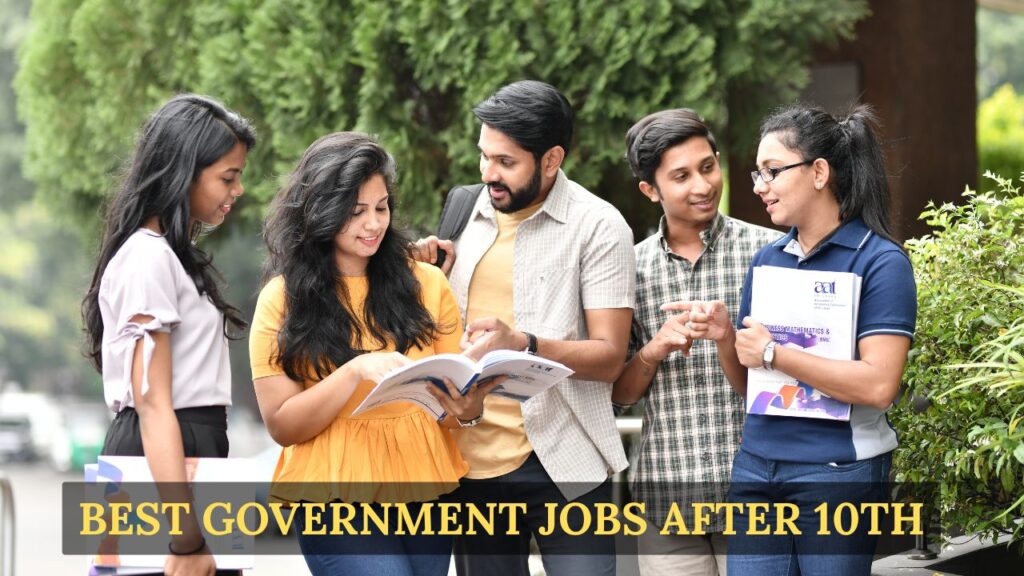
Best Government Jobs After 10th

Best Government Jobs After 10th

There are many government jobs in various sectors that require minimum qualifications candidates can apply after they pass 10th with any recognised board.

  1. Asha worker
  2. Para legal volunteer
  3. ICTC driver
  4. PGT or TGT
  5. Data entry operator
  6. Medical Officer
  7. Staff Nurse
  8. Peon
  9. Attendee
  10. FLC Counsellor
  11. Caseworker
  12. ITI Trade Apprentice
  13. Apprentice
  14. Constable
  15. Tax Assistant
  16. Havaldar
  17. General Duty Attendant
  18. Electrician
  19. Office Assistant

Step 1: Go to the official Government and select the location and position you want to apply for.
Step 2: Jump to the dashboard to find the online application link and click on it.
Step 3: Some empty blanks show on the screen to get your information including contact number, username, and password then complete verification.
Step 4: Follow up on the notification and upload a photograph (passport size, no filter), and signature within the prescribed format.
Step 5: To complete the process pay an application fee.
Step 6: Preview the form for any mistakes.

Note: There may be some changes in the application form according to the position in which you are applying for. So, check well before filling out the details in the form.

Also Read: SSC CGL Syllabus 2025 Explained

  • Candidates must pass 10th standard from a recognized board.
  • Candidates must score above 50% score in the 10th standard to apply in the sectors including Railways, Defence, and Banking.
  • Candidate age should be 18 or above, some posts may require an age between 36 and 40 years. Check the official notification for the specific post to confirm the age limit.
  • Age relaxation is provided for SC/ST, candidates from the general category may not have that. Reserved category candidates should check their age relaxation on the official government website.
  • The Candidate must be an Indian Citizen.

The salary range depends on the position and location of the candidates, it may differ in various sectors. However, the government gives some other benefits along with the salary which are medical expenses, pension plans, and bonuses.

Most entry-level government jobs starting salary in the range of ₹5,200 to ₹20,000

  • Railway Track Maintainer :- ₹18,000 – ₹22,000
  • Postman :- ₹20,000 – ₹25,000
  • Paramedical workers :- ₹10,000
  • Gramin Dak Sewak :- ₹10,000 – ₹14,000
  • Defence Soldier :- ₹25,000 – ₹30,000
  • Clerk/Assistant :- ₹25,000 – ₹30,000

If you are applying for the Railway Group D posts, it includes:

  • Computer Based Test (CBT)
  • Physical test
  • document verification

It is mandatory to clear the exam for the position you applied for

  • Railway: Track maintainer, Helper, Technician, Assistant.
  • SSC Multi-tasking Staff (MTS): Conducted by Staff Selection Commission.
  • Indian Army Soldier: Soldier (General duty), soldier Technical, Clerk.
  • Indian Navy Tradesman Mate & Matrix Recruitment (MR): Tradesman Mate and Matric Recruit in the Indian Navy.
  • Indian Air Force Group C Civilian Posts: Multi Tasking Staff, lower division clerk, Cook
  • State Police Constable Exam
  • Indian Post Gramin Dak Sevak (GDS): Postal department jobs including GDS are open for 10th pass.
  • Border Security Force (BSF) Constable Tradesman
  • Central Reserve Police Force (CRPF) Constable
  • Indian Coast Guard Navik
  • Polytechnic Entrance Exams: entrance exam for diploma in engineering courses.
  • Olympiads (NSO, IMO, IEO, NCO): both on national and international level exams.
  • Indian Navy SSR & MR: To enter the Indian Navy entry level jobs.All India Entrance Exam for Scholarship (AIEES): scholarship exam for 10 class students.

Many students want to do a government job. In India, people want to grab the opportunity as soon as possible. After 10th anyone (Indian Citizen) can apply for entry-level positions in sectors including Railway, Medical Staff, Apprentice, Postal and Defense.

Can I apply for railway jobs after 10th-pass?

Yes, You can apply for railway jobs in India after 10th. Indian Railway offers many entry-level jobs for 10th-pass candidates, particularly in Group D.

Which government exams can I take after 10th?

After 10th you can apply for Railway jobs, Apprentice, postal, and defense. These are the sectors you can get into after clearing the exams.

Is there any police job available after 10th class?

Yes, there are many jobs in defense you can apply for after 10th. The most common entry-level position is a Police Constable.
There are available posts after 10th in Police: Constable (General Duty), Senior Police Constable, Junior Constable, Technical and Tradesman Posts (in some forces), Auxiliary Police, and Firemen.

What is the salary of 10th pass government jobs?

The starting salary range for the 10th pass government employee is ₹5,200 to ₹20,000. The salary is increasing after the promotion of the candidate in a particular sector.

Leave a Comment

Your email address will not be published. Required fields are marked *

UPSSSC Lekhpal Online Form 2025: Apply Online for 7,994 Revenue Posts

UPSSSC Lekhpal Online

UPSSSC Lekhpal Online: If you are busy preparing for government exams in Uttar Pradesh, now is the time for good news. The wait for one of the most awaited recruitments is finally over! The Uttar Pradesh Subordinate Services Selection Commission (UPSSSC) has started the UPSSSC Lekhpal Online Recruitment 2025

With a whopping 7,994 vacancies, this is not just a job alert, it’s a golden chance for thousands of aspirants like you to get a high paying government job. The application link has been activated from yesterday i.e. December 29 2025, so let’s get straight to the point and have a look at what all you need to know to grab this opportunity. 

Key Dates & Details at a Glance

EventDate
Application Start Date29/December/2025
Last Date to Apply28/January/2026
Fee Payment Deadline28/January/2026
Correction Window Closes4/February/2026
Application Fee₹25 (For all categories)
Age Limit18–40 Years

Vacancy Breakdown For Lekhpal

Knowing the rival is the first step. The commission has made available a clear breakdown of the 7,994 seats for various categories. Look out the chart whether you are from the General category or seeking a reservation? Here is the breakup of posts: 

Vacancy Breakdown For Lekhpal

Distribution for UPSSSC Lekhpal in a Category-wise

Firstly, the General (UR) Category is on the top with more than 4000 seats and then there is an almost equal split between OBC and SC candidates. This huge number of vacancies will make the cutoff competitive yet manageable with good preparation.  

Are You Eligible?

Before you hurry to the cyber cafe or switch on your laptop, let us confirm your eligibility. The rules are simple but hard:

Educational Qualification: The candidate should have completed 10+2 from any recognized board.

Top PET Requirement: And this is the most important part. You must hold a valid score card from UPSSSC PET 2025. The Mains exam will be short listed solely on your PET 2025 normalised score. 

Read More:- Best Courses for Business Analyst: Learn, Certify & Grow

How to Apply For UPSSSC Lekhpal Online

  1. Visit the official website of UPSSSC Lekhpal Online
  2. Click on the live notice link of Lekhpal recruitment.
  3. Sign in with your PET 2025 Registration Number. Most of your details will be auto-filled.
  4. Post your recent passport size D.O.B. & signature if not already posted.
  5. Make the application processing fee of ₹25.
  6. Apply and keep a print out of the form for future reference. 
Useful Links
Apply OnlineClick Here
Download NotificationClick Here
Official WebsiteClick Here

Leave a Comment

Your email address will not be published. Required fields are marked *

CG Fire Department Form 2025 Released – Apply Now for 295 Vacancies at Gov Update Wala

CG Fire Department Form 2025 for recruitment. The application starts from 1st July 2025, you can apply online until 31st July 2025. There are various roles in this department, Download the notification for detailed eligibility and post vacancies through the link mentioned in the article. Candidates who have passed their 10th & 12th classes can apply for these posts.

OrganisationChhattisgarh CGHGCD
PostsCG Fire Department
Purpose The CG Fire Department is starting to recruit candidates for various posts through this process.
Vacancies295
Application Last Date31 July 2025
Age LimitMin 18 years; Max 28 years
Official WebsiteClick Here

Important Dates for CG Fire Department Form 2025 for recruitment

Application Starts01 July 2025
Application Ends31 July 2025
Fee payment Last Date31 July 2025
Exam DateUpdate Soon
Correction Last Date10 August 2025

Read More 👉 NEST Result 2025 Declared – Download Scorecard & Check Rank Now!

Steps for Filling Online Application 2025

Go to the CGHGCD official website to apply for the post. After registration, check updates for the admit card and exam dates. You can find the official website link or apply directly from the link provided here.

  1. Click on the official website link and the page will appear on your screen.
  2. Go through Recruitment → Link for Chhattisgarh fire and emergency services → Registration (New User) OR View application status with Registration ID and Password. 
  3. Start filling in your details carefully. 
  4. Before submitting, attach the necessary documents (if required) and pay the amount of application.
  5. Download and save it for a hard copy.
Application Fee
General/OBC/EWSRs. 300
SC/ST/PWDRs. 200 
Important Links
Apply NowClick Here
Download NotificationClick Here
Official WebsiteClick Here

Leave a Comment

Your email address will not be published. Required fields are marked *

How to Crack State PSC Exams in First Attempt: Strategy & Resources

Govt. jobs are undoubtedly one of the most safe and respected career options in India and passing the State Public Service Commission (PSC) exam in first attempt is a dream for many aspirants. As the competition is rising and the syllabus is vast, it sometimes feels like a difficult mountain to scale. But, with the right approach, intelligent study techniques, and diligent efforts, passing the exam is not an impossible dream. The crux is to understand the syllabus in depth, follow the right resources and adhere to a disciplined schedule that would cover both prelims & mains preparation.

Quick Thoughts Gathering to Begin With

  1. Download official syllabus + all past papers of 8 years.
  2. Make a list of books you own/need (start with NCERTs).
  3. Select optional subject.
  4. Put together a weekly schedule you can live with.
  5. Create a one-pager daily current affairs file.
  6. Enroll in test series / good coaching (online/offline) and commit to weekly mocks.
  7. Start your NCERTs (goal: 2–3 chapters/day).

Big-picture study strategy (what to study & why)

Build bedrock knowledge first: NCERTs (6–12) for History, Geography, Economics, and Pol. These give a clean conceptual base.

Proceed to standard books for each subject (more below). Read for understanding, not rote.

Current affairs daily — newspaper + short notes. Link events to static syllabus.

Notes + revision cycle — Make short revision notes (1–2 pages) per topic; revise them frequently.

Practice smartly: MCQs for prelims + answer writing under time pressure for mains. Mains wins jobs — practice answer structure & linking facts to syllabus keywords.

Mocks & feedback: Do full length mocks and get answers evaluated (peer/mentor) and you improve your answer style and technique of scoring.

Recommended core resources (common, high-utility) 

(You will need to add in your state-specific books / local history that you must have from your state board / PSC Recommended Readings)

  1. Cover Basics 

NCERTs 6–12 — History, Geography, Pol. Science, Economics (start here).

Indian Polity — M. Laxmikanth (efficient + concise for governance & state-centred comparative questions).

Modern Indian History — Spectrum’s A Brief History of Modern India / Bipin Chandra (for depth).

Indian Economy — Ramesh Singh or any good concise economy book, supplemented with RBI / Economic Survey summaries.

Geography — Certificate Physical & Human Geography (G.C. Leong) or equivalent concise books.

Environment & Ecology — normal environment compendium/ class notes, track Recent Events.

State-specific history & polity — whatever books your PSC cites, in addition to local gazetteers and state government documents.

  1. Current affairs & general reading

One daily national newspaper (The Hindu / Indian Express) or their summaries. Government releases: Press Information Bureau (PIB), state government portals, official reports (for schemes and facts). Monthly magazines or current affairs compendiums (good for revision).

  1. Practice

Collection of previous years’ PSC papers (must have). A good questionbank or mock test series (free/paid) for practicing in time bound manner. Answer writing notebooks (keep one for mains answers). 

Sample schedules — choose according to the time you have

If you have 12 months

1st to 4th month: complete NCERTs + standard books for GS I–III fundamentals; decide optional & finish fundamentals.

Months 5 to 8: Complete other standard books + begin consolidating notes; begin on PYQs.

9th and 10th months: High-intensity test series – full-length prelim mock test every week; augments revision of weak topics.

Months 11–12: Final run through + daily PYQs + last-mile current affairs. Mains answer practice (if prelim cleared).

If you have 6 months

1st month: Preparation for NCERTs + syllabus mapping + optional selection.

2nd to 4th month: Read standard books, prepare short notes, solve MCQs and PYQs.

Month 5: Rigorous mock tests (prelim-benchmarked); Time management to be calibrated.

Month 6: Re-visit everything + frequent mock tests + current affairs wrap-up.

If you have three months

  • Fast NCERT reading + priority standard book chapters on some important subjects.
  • Study 7-10 hours a day: current affairs in the morning, theory in bulk in mid-day, MCQs + past papers in the evening.
  • Mocks repeatedly at intervals of 3-4 days Analyze each. 

Prelims strategy (objective test)

A good preparation strategy would be to start with the NCERTs along with one standard book per subject to establish a strong base. While learning content, same importance should be given to speed and accuracy by daily practicing MCQs gradually going to 500 – 1000 in a week. To gain maximum returns in minimum time, concentrate on high-yield topics such as Polity, the Constitution, Economy (primarily basic indices), Geography (with emphasis on map work), Environment, and Current Affairs. The Previous Year Questions (PYQs should be backbone of your preparation as it helps you to identify the areas/themes which the exam repeatedly tests). 

Also Read : Top 10 List of Exams Conducted by UPSC After Graduation in 2025

Mains strategy (subjective / descriptive)

Start writing answers from the early days of preparation, while upgrading yourself with the ability to write a good structured answer that has an introduction, a well-structured body (with headings or bullet points, if necessary) and a brief conclusion or way forward. Static knowledge and linking current affairs with theoretical knowledge need to be a part of answers as they give depth and relevance to answers. At the mid-stage of your preparation, doing a full answer paper every week – both essays and GS papers — is useful in developing regularity and you can increase the frequency as the exam comes closer. Regular assessment or peer review also is necessary, as it improves presentation as well as the density of content, leading to more effective answers. 

Interview / personality test

Prepare short biographical stories related to: accomplishments, academic projects, work experience and expertise in optional subjects. Stay informed on regional issues and national affairs. Conduct mock interviews with mentors or peers, concentrate on clear communication, serenity, and concise responses. 

Common Mistakes to Avoid

  • Learning everything superficially diminishes its utility; depth is much more valuable than breadth across different fields at surface level isn’t very rewarding.
  • Disregarding previous years’ papers is the biggest blunder as these papers bring out the themes that repeat, the patterns of questions and the areas to be concentrated.
  • Not timing yourself while you practise MCQs or while writing answers results in bad speed and poor accuracy in the exam.
  • Too many resources create noise and confusion, while focusing one’s attention on too few resources creates blind spots. A small set of high quality, reliable resources is the best bet for clarity and retention.
  • Avoiding regular revision destroys the power of retention; one should revise systematically and at frequenter intervals to be able to recite confidently and be assured of long term recall. 

Conclusion

How to Study Smart for First Attempt State PSC (Public Service Commission) Exam It is not about studying for countless hours, but it is about studying smart by keeping focus and being consistent. This trip requires a very clear mind, discipline, and a problem-solving attitude. Candidates with the right resources and guidance, along with consistent practice and revision, can not only cram for the exam but gain the confidence to ace at the Interview round. Wait for it… Success in the competitive exam is for those who start early, prepare strategically and have a firm belief till last that they will pass the exam. 

Leave a Comment

Your email address will not be published. Required fields are marked *

Scroll to Top