Top Companies in IIT Placements 2025: Top Hiring Firms, Salary Trends & Full Details

Top Companies in IIT Placements 2025

The Indian Institutes of Technology (IITs) have yet again proven their exceptional placement performance in 2025, with Top Companies in IIT vying for the brightest minds from India’s top engineering colleges. This year’s placement season has seen a wide range of records being broken, record high salary packages, more international offers, and companies from more diverse sectors attending the campus recruitment drives. So here’s a (rough) full picture of which companies are recruiting picking up on which salary issues, and the trends within the ever-morphing IIT scene. 

Record-Breaking Numbers and Overall Trends

The very fact the 2024-25 placement season has been outstanding for IIT students appears to be an under-statement. As per the latest official figures, top IITs like IIT Delhi and Bombay have received over 1,200 job offers each, and more than 1,150 unique students have been placed in the first phase alone. What’s more heartening is the jump in offers in all salary buckets including the premium packages of more than one crore per annum. For instance, IIT Bombay has received 22 offers beyond the one crore mark in 2024-25 as against 16 in the previous year, a stupendous rise of 37.5%. 

The highest salary package in India among IITs hovered at a staggering ₹2.2 crore per annum, offered by Da Vinci Derivatives, an IIT Bombay CSE student for a position at Amsterdam. Meanwhile, the international packages have gone even higher at the top IITs, with the highest international offer at IIT Bombay at ₹3.67 crore per annum. These figures signify an exceptionally lucrative market for the IIT graduates in India as well as abroad. 

The Tech Giants Lead the Charge

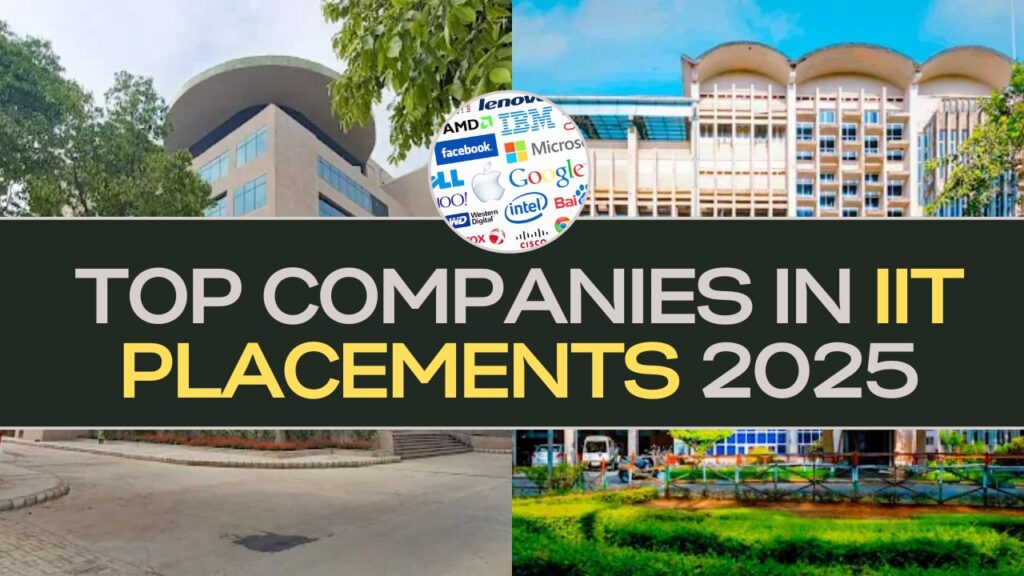
With reference to hires from IITs, the large tech firms continue to dominate. Microsoft, Google, Amazon, Apple, Meta and Qualcomm are the biggest recruiters in pretty much all the IITs. These companies — known as the MAANG or FAANG firms — compete fiercely for talent and are willing pay top packages for it. 

The Tech Giants Lead the Charge

At IITB, it was again Google, Microsoft, Amazon and NVIDIA that turned out to be the biggest hiring companies. IITB reports suggest, M.Tech CSE students from IIT Bombay got offers in the range of ₹30 to ₹46 LPA with an average of ₹30 LPA. The CSE students at IIT Delhi received even higher average packages, hovering at around ₹34 LPA and with maximum figures reaching as high as ₹48 LPA from Google, Microsoft and Atlassian. 

Emerging Sectors and Diverse Opportunities

While technology continues to dominate recruitment, the 2025 placements season saw a considerable number of hiring from the finance, consulting, and core engineering domains. At IIT Delhi, the placement breakup shows that 34% of the total placement was in core technical companies, followed by 

  • IT – 20%, 
  • Consulting – 14% and 
  • Management – 13%. 

This diversification is indicative of a changing career landscape for IIT graduates.​

Emerging Sectors and Diverse Opportunities

In the finance and consulting arena, companies such as Goldman Sachs, BCG (Boston Consulting Group), McKinsey, JP Morgan Chase, Barclays and American Express are well represented on IIT campuses. These firms provide typical packages between ₹35 and ₹45 LPA for beginners, with substantial growth in the money for high performers. 

SectorKey CompaniesTypical Package Range (LPA)Offer Share % 
Technology (IT)Google, Microsoft, Amazon, NVIDIA, Qualcomm, Atlassian30-4820%
Core TechnicalTexas Instruments, Intel, Micron Tech, Tata, Reliance20-3534%
ConsultingBCG, McKinsey, Barclays35-4514%
FinanceGoldman Sachs, JP Morgan, American Express35-454%
Management/AnalyticsMeesho, OLA, PayU, Quadeye25-4013% / 7%

Average Packages and Salary Trends

There is now a trend in salaries in 2025 toward increasing when compared to past years. The average package offered by IIT Bombay rose from ₹21.8 LPA in 2023-24 to ₹23.5 LPA in 2024-25 – an increment of 7.7%. The average package reported by IIT Delhi is around ₹32 LPA for all programmes with an average of around ₹21.9 LPA being offered to BTech students and ₹32 LPA to MTech students. Students at IIT Kanpur were offered an average package of ₹ 26.27 LPA and IIT Madras continues to keep its average package competitive at approximately ₹17-20 LPA for all its programmes.​

Interesting is also how salaries differ depending on branch. The best packages are still offered to Computer Science and Engineering (CSE), for which the median predefined offers also exceed ₹30 LPA at top IITs. After that comes Electrical Engineering and then mechanical, civil engineering students generally get packages between ₹15-25 LPA based on which sector they go for. 

Global Opportunities and International Offers

Among the most eye-popping trends in the 2025 placement season has been the uptick in overseas offers. With all-India (national) offers counting towards overall highest packages, IIT Delhi witnessed more than 50 international offers in Phase 1 from over 15 companies across countries including USA, Japan, Netherlands, South Korea, Taiwan, UAE, and the UK. This indicates rising global demand and better pay packages for graduate-level engineers from India, as well as multinational companies increasingly hiring IIT graduates for global roles.​

The salaries of firms providing roles for the international are notably higher, which is between 30-50% increase on domestic norms especially for roles in developed countries. The offer by Da Vinci Derivatives of ₹3.67 crore for an Amsterdam is an illustration of this trend. 

Read More 👉 Best IIT College in Uttar Pradesh – Complete Ranking & Admission Guide

Sector-Wise Breakdown and Career Paths

Recruitment has gotten more and more multifaceted. Although software development engineers and data scientists are paid the most in the tech industry, core engineering roles, especially at companies such as Tata, Reliance, BPCL and Schlumberger, lure students focused on manufacturing, energy and infrastructure. 

Public sector undertakings (PSUs): Organisations PSU are – ISRO, DRDO, BARC they always remain to be answer to bring in the best brains, it’s just the pay package is slightly low, but they offer Job Security, Prestige, and for those who want to make a long term career they offer Career Growth.​

Zomato, Ola, Swiggy, Flipkart and other startups/unicorns have also been leading recruiters, especially for those students who are attracted to growing-stage companies and entrepreneurial environments. These companies usually have competitive packages including stock options and have energetic work cultures. 

Lowest Packages and Market Reality For IITians

While the highest salaries make the headlines, it is essential to look at the overall picture. At IIT Bombay, the lowest packages were reported at ₹4 LPA for the year 2024-25, a steep fall from the ₹5.4 LPA in the previous year. This decrease is indicative of the tightening recruitment at entry level by companies and the influence of economic cycles on entry-level jobs in certain industries. 

Tips for IIT Students in the Current Job Market

IIT students now who are about to go in for placements can glean quite a few pointers from 2025 trends. 

  • For one, technical excellence and programming ability especially would be unlikely to diminish for technology roles. 
  • Second, gaining domain knowledge through internships greatly enhances placement potential– internship conversion rates to PPOs (Pre-Placement Offer) continue to be robust at most IITs. 
  • Third, the increasing number of AI and data analytics positions means that skills in machine learning and data science can be extremely useful. 
  • And finally, don’t forget that foreign opportunities may lead to significantly better paychecks and career advancement. 

Conclusion

The placement seasons of IIT’s in 2024-25 can undoubtedly be called as a landmark year with the highest ever packages, varied sectoral participation and opportunities extending across the globe. With companies such as Microsoft, Google, Amazon, and Goldman Sachs battling for top talent and average pay packages trending upward, IIT graduates continue to be among the most in-demand professionals in India and beyond. 

Adaptable, knowledgeable, and able to think critically—even in the face of rapidly changing landscapes in higher education and the corporate world— these qualities among others that IIT students possess which ensures that they are valuable assets to employers across the globe. 

For prospective engineers dreaming of trying out for IIT admissions, these placement trends act as a strong inspiration showing how great career and financial benefits await them, down the line, if they make it to these premier institutions. 

Leave a Comment

Your email address will not be published. Required fields are marked *

Indian Police Service IPS: How to Crack and Become IPS Officer

Indian Police Service

If you’re dreaming about the Indian Police Service (IPS) standing tall as a law and peace officer in the Indian Police Service. Whatever got you started on this dream, pursuing it in real life is more than just a passion to do. It requires a sharp strategy to prepare accordingly and what’s right to study. Not everything is important. 

Instituted in 1948 as a successor to the British colonial-era Indian Imperial Police, the IPS is the ground holder of India’s internal security system. But the reality check is that every year lakhs of candidates chase this dream and only a few hundred come out successful. So what separates those who make it and those who don’t? More often than not, it is the preparation strategy. 

Understanding the Battlefield: The Three-Stage War

Know what you are getting into before you go to the books and notes. The UPSC Civil Services Examination (CSE) is a rigorous three-tiered exam which tests not only your knowledge but stamina, analytical abilities & character. 

First Level— The Preliminary Examination 

Think of the Prelims as the bouncer at the door to that exclusive club — it sifts out the wheat from the chaff. It consists of two objective papers, each of two hours duration and carrying 200 marks. 

Paper – I is General Studies—current events, history, geography, polity, economy, environment and general science. The Civil Services Aptitude Test (CSAT), now known as Paper II, tests your concepts on comprehension, logical reasoning, decision making and basic numeracy. It is qualifying in nature and it just needs 33% to pass.  

Do not make the mistake to understand that Prelims score is gonna add in the final merit list, it’s important to score for going into the next stage but it doesn’t hold final value. So don’t get that to take it lightly because 97-98% of candidates are eliminated at this stage. 

Second Level: The Main Examination 

If Prelims is a sprint, Mains is like running a marathon. Nine descriptive papers across a few days with a total of 1750 marks designed to push how well you know what you know and how well you can express complex thoughts when you’re under a lot of stress.

The pattern is: two qualifying papers (English and an Indian language), one Essay paper (250 marks), four General Studies papers ranging from Indian heritage to ethics and integrity (250 marks each), and two papers on your chosen Optional subject (250 marks each).

The hard copy elective also has an impact on your total score with a weightage of 500 marks. Choosing the appropriate subject is very important. Although you have a whole bunch of popular subjects like Geography, History, Public Administration, Political Science etc, it is always advisable to go with the subject you are really interested in rather than seeing what others have taken up. 

Third Level: The Personality Test (The Interview)

The remaining 275 marks are given in the Personality Test, during which an UPSC panel evaluates your mental alertness, critical thinking, communication skills, leadership potential, and moral uprightness. They don’t want to know-your-everything; they want well-rounded people who can manage the enormous burden of public service. 

Check Your Eligibility For Indian Police Service

Nationality

IPS is only open to Indian citizens. The UPSC CSE permits Nepali, Bhutanese and Tibetan refugees (who came before 1 January 1962) to apply for certain services like IAS and IFS, the Indian Police Service, however, is limited to Indian citizens. 

Qualification

You must have a bachelor’s degree from a recognized university – all streams are acceptable.  If you’ve studied English Literature, Engineering or Zoology, you can apply.

Important caveat for final-year students: You may apply for the Preliminary examination as a final year student, but you need to submit degree certificate before going in for the Mains.  Don not count on your provisional certificate to arrive in time—make your plans accordingly.

Final MBBS students can also apply, but they have to submit a certificate from their university. 

Age Limit

CategoryAge LimitCut-off Birth Date (for 2026 exam)
General/EWS21-32 years2/August/1993 to 1/August/2005
OBC21-35 years (3 years relaxation)2/August/1990 to 1/August/2005
SC/ST21-37 years (5 years relaxation)2/August/1988 to 1/August/2005
PwBD21-42 years (10 years relaxation)2/August/1983 to 1/August/2005
Ex-servicemen5 years relaxation2/August/1988 to 1/August/2005

Attempts Restrictions

CategoryNo. of Attempts
General/EWS6 attempts
OBC9 attempts
SC/STUnlimited (until age 37)
PwBD9 attempts (until age 42)

The Physical Reality: More Than Just Books

Unlike IAS, Indian Police Service has certain physical eligibility condition which you need to fulfill. Male candidates should have a minimum height of 165 cm (160 cm for ST and some other categories) and must have chest measurements of 84 cm along with expansion. Female applicants need 150 cm height (145 cm for ST) .

Myopia shall not be more than minus 4.00D and hypermetropia shall not be more than plus 4.00D. Color blindness is a disqualification as well as squint. Begin training for your physical fitness right away — don’t wait until you have the written exam behind you. 

Height Requirements category-wise:

CategoryMaleFemale
General/OBC/SCMinimum 165 cmMinimum 150 cm
ST (except SC/OBC)Minimum 160 cmMinimum 145 cm
Gorkhas, Garhwalis, etc.Minimum 160 cmMinimum 145 cm

Read More:- AIIMS Nursing Officer Recruitment (NORCET-10) – 3600+ Vacancies, Eligibility, Exam Date & Apply Online

Application Process To Apply

  1. Stay tuned to the official UPSC website for the latest updates/notification of IPS. 
  2. After the notification is released, download it carefully and go through all the instructions and wait for the online process to start.  
  3. Check all the dates and fill the application before the deadline. 
  4. Fill valid and correct details in the form and then attached requisite documents with the application.
  5. Submit the form and the application fee is applicable.
  6. Print it for the proof in future and prepare yourself for the toughest examination.
CategoryFee
General/EWS/OBC (Male)₹100
SC/ST/PwBD/Female (All categories)Exempt (₹0)

Conclusion

Becoming an Indian Police Service officer is not only about passing an exam, it’s about dedicating oneself to a life of discipline, service, bravery, and accountability. Everything about the process, from meeting the eligibility and physical criteria to surviving one of the most competitive exams in the country, requires one to be consistent, resilient and long-term driven. Luck or short-cuts don’t make you succeed in this path- it takes strategy, smart preparation, mental toughness and commitment.

If you really want to see yourself in that uniform, leading from the front and serving the country, begin today—lay your groundwork, condition your body and mind, and approach preparation as a way of life, not a phase. The road to IPS is tough, but to those who make it through, it is one of the most dignified and influential careers in India. 

GovUpdatewala is your trusted source for real-time updates on government exams and jobs in India. We provide verified info on SSC, UPSC, Banking, Railways, Defense, and Teaching exams. From syllabus and patterns to important dates and career tips — we support aspirants at every step.

Leave a Comment

Your email address will not be published. Required fields are marked *

WBSSC Result 2025 Declared – Direct Link to Check Your Score & Rank

WBSSC Result 2025

The WBSSC Result 2025 is available on the official site from 16.11.2025 to 14.12.2025. By submitting your Roll Number / Application Number and Blind Box Number on the website, you can check your result. WBSSC SLST has officially opened the link to download the SLST exam result which will fill the 35,726 positions. For your convenience, we also played with a link to download the result. 

The candidates are suggested to verify the cutoff marks and the merit list to know the next stage of selection process. For more information and updates, the candidates are advised to regularly visit the WBSSC website. 

Key Dates to Follow Up

Application Start16/June/2025
Last Date to Apply Online14/July/2025
Exam City AvailableAs Per Schedule
Admit Card Date15/August/2025
Exam Date (Class 09–10)07/September/2025
Exam Date (Class 11–12)14/September/2025
Result Date07/November/2025
Interview Date17/November/2025

Class 09 to 10 Assistant Teacher Salary

Basic Pay₹33,400 per month
Pay LevelPay Level 11
House Rent Allowance₹4,008 (12% on basic)
Medical Allowance₹500
Dearness Allowance (3% on basic)₹1,002
Gross Salary₹38,910
Professional Tax (PTax)₹150
In-Hand Salary₹38,760

Class 11 to 12 WBSSC SLST Salary

Basic Pay₹42,600 per month
Pay LevelPay Level 15
House Rent Allowance₹5,112 (12% on basic)
Medical Allowance₹500
Dearness Allowance (3% on basic)₹1,278
Gross Salary₹49,490
Professional Tax (PTax)₹200
In-Hand Salary₹49,290

Selection Process for WBSSC SLST Teacher Position 

There are various stages in the WBSSC SLST 2025 selection process to test the aspirants in different aspects. Initially, candidates appeared for a written examination to assess their expertise in the domain. Then officials scrutinize school records, to verify the education and value. Those who pass now go on to a panel interview that assesses speaking ability, subject matter expertise, and job fit. Followed by a teaching demo to assess teaching skills and classroom management. Top choices then confirm that the papers are real. A health check is the last to fulfil basic fitness criteria. That’s the step-by-step process to getting the right people for the job.

Read More 👉 IIT Delhi MTech Fees Structure — Complete Details of Tuition, Hostel & Other Charges

Guide to Follow for Downloading the WBSSC SLST Result

  1. Visit the official site to download the WBSSC SLST Result 2025 or simply click on the direct link which will be updated on this page. 
  2. Search for the option to “download the result” link and click on it. When the page opens, provide Your Roll Number or Application Number and Your Date of Birth. 
  3. Hit the Submit button to continue. 
  4. After confirming, a result will be shown on your screen. 
  5. Download/save your scorecard or take a print if required for further reference. 
  6. Verify all the details twice, so that there are no mistakes in the procedure. 
Useful Links
Download ResultClick Here
Official NotificationClick Here
Official WebsiteClick Here

Leave a Comment

Your email address will not be published. Required fields are marked *

Aerospace Engineering Courses: Complete Guide to Soar into the Sky with the Right Education

Aerospace Engineering Courses

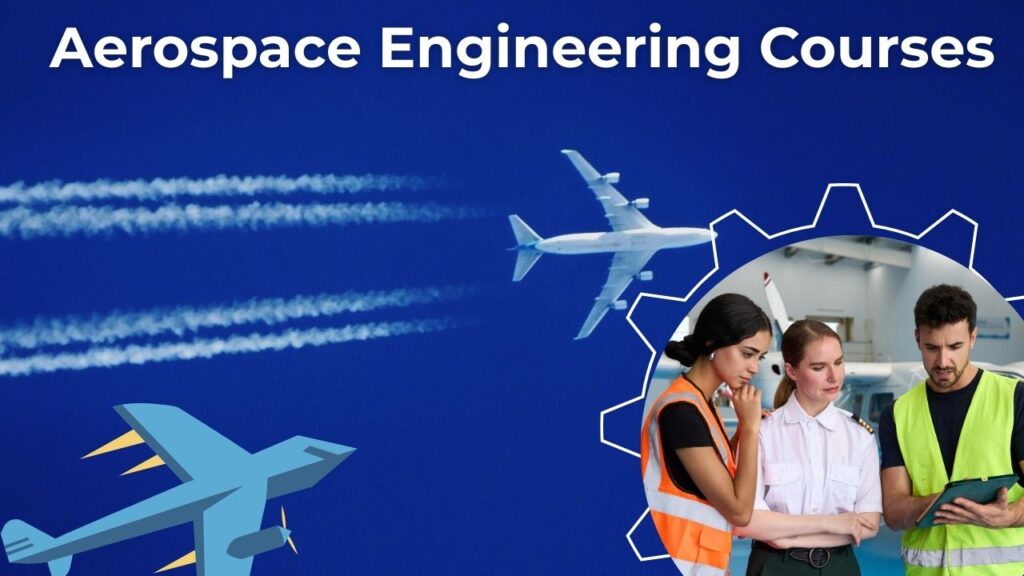
If you have ever been curious as to how the planes you ride on stay in the air or how a rocket can travel all the way to space, then you think like an aerospace engineer. From Aerospace Engineering Courses, eligibility criteria to future scope and interesting specializations available, this all you need to know guide will help you make an informed decision which you take for pursuing aerospace engineering course in India.

The Indian aerospace industry is booming. ISRO, DRDO, HAL, and a host of private companies are actively hunting for talented engineers to design, build and fly planes and spacecraft. With increasing demand and attractive salary packages, this is the way to your dream career. 

What Exactly is Aerospace Engineering?

Aerospace engineering is the primary engineering discipline concerned with the design, construction, science and technology of aircraft and spacecraft. It is a combination of physics, mathematics, materials science, and advanced tech that address real life problems in the fields of aviation and space travel. 

The range of activities in this field is so broad that it divides into four key specializations:

Aeronautics — This pertains to air within the atmosphere and includes such things as commercial jets, military planes, helicopters, drones (UAVs), and blimps. Aeronautical engineers study flow-air, aircraft design, motion, and propulsion.

Astronautics — A subject of business such as astronauts, rockets, satellites and all the stuff that goes beyond the atmosphere. Astronautical engineers specialize in orbital mechanics, satellite communications, rocket propulsion, and space exploration missions.

Avionics — These are the electronics and computers used in an aircraft and spacecraft. Avionics engineers create the system software of navigation, communication and autopilot systems, etc., in raw air borne machines.

Defense Technologies — This area concentrates on military, and its ability to develop and deploy new systems involving missiles, defense technologies, military drones and weaponized technology. This is important part of national security and defense system. 

Aerospace Engineering Courses

Now let’s move on to the various types of courses under aero space engineering. Whether you are a high school beginner or already have a bachelor’s degree, there is a path for you.

1.Diploma in Aerospace Engineering (3 Years) 

If you are looking forward to pursue a career in aerospace engineering, you can opt for the Diploma in Aerospace Engineering from a reputable board after 10th class.

This is good to start if you have done your 10th grade. It is not really theoretical but ‘practical’ which provides aerospace technologies experience. 

AspectDetails
Duration3 years
Eligibility10th pass with Mathematics and Science (minimum 50% marks)
FocusPractical skills and industry-ready training
Career PathCan pursue B.Tech (lateral entry) or start working
Average Fees₹2-4 Lakh for the entire program

2. Bachelors in Aerospace Engineering — B.Tech (4 Years)

It serves the largest client base and is considered the gateway course for professional aerospace. It is a bachelor’s degree course and the eligibility is 10+2 with Physics, Chemistry and Mathematics (PCM). 

AspectDetails
Duration4 years (8 semesters)
Eligibility12th pass with PCM (minimum 50-60% depending on college)
AdmissionBased on JEE Main Score, state-level exams, or direct merit
Average Fees₹ 2-2.5 Lakh/year in government; ₹5-10 Lakh/year in Private colleges
Total Program Cost₹4-40 Lakh depending on college type

The B.Tech is an all-inclusive course which includes theory and practical based knowledge. Subjects like mathematics, physics, and general engineering will be included in your first two years for foundation then you can choose specializing in aerospace-related subjects in your third year.

3. M.Tech in Aerospace Engineering (2 Years)

M.Tech in Aerospace suits better for those who want a higher level of education in aerospace engineering. Building a professional level career internationally, you must need this degree.

AspectDetails
Duration2 years (4 semesters)
EligibilityB.Tech/BE in Aerospace or related field with 55% minimum marks
AdmissionThrough GATE exam (for government colleges) or merit-based (private)
Average Fees₹40,000-1 Lakh/year in Government; ₹2-4 Lakh/year in Private colleges
Career AdvantageHigher salaries, research opportunities, senior positions

Job opportunities for M.Tech graduates are applicable in research, designing and higher level management. Top companies and research centres look for M.Tech holders for their specialised projects. 

4. Ph.D. in Aerospace Engineering (3-5 Years)

“This Is for the Research and Innovative Curious”. It’s the top aerospace engineer qualification for those who want to know how to research and innovate. 

AspectDetails
Duration3-5 years
EligibilityM.Tech or equivalent with GATE qualification
FocusOriginal research and innovation
OpportunityTeaching, research at ISRO, universities, private labs

5. Aerospace Engineering Few Months Certification Courses 

In just 6 months to 1 year duration, you can enhance knowledge or skills in certain areas. It is best for hands-on experience in a specific field.

Course TypeDurationCostSuitable For
CAD and Aircraft Design6 months₹20,000-50,000Working professionals, students
Avionics Systems6-8 months₹30,000-60,000Interested in Electronics
Propulsion Systems3-6 months₹15,000-40,000Engineers wanting specialization
Aerospace Materials4-6 months₹25,000-50,000Manufacturing professionals

B.Tech Aerospace Engineering Core Subjects

YearSemestersEssential Subjects
1st YearSem 1-2Mathematics/Physics/Chemistry help develop problem-solving skillsEngineering Mechanics/Thermodynamics/Fluid Mechanics/ and Basic Electronics introduce how physical laws apply to real engineering systems.
2nd YearSem 3-4Gas Dynamics and Aerodynamics, which explain how air behaves around aircraftPropulsion and Aircraft Structures teach how engines work and how aircraft are builtStrength of Materials and Computer Programming strengthen technical and analytical skills.
3rd YearSem 5-6You study higher-level aerodynamics, flight dynamics, and structural analysis Heat Transfer and Avionics.
4th YearSem 7-8You learn advanced tools like Computational Fluid Dynamics (CFD)Aircraft Design and Systems

Aerodynamics describes how air moves around air and is an important factor in the level of efficiency of airflow around the wings.

  • Propulsion: Discussion of jet engines, rockets, turboprops
  • Structures deals with building an aircraft to be as strong as possible but still as light as possible.
  • Stability and control the motion of an aircraft.
  • CFD Computational Fluid Dynamics: Uses computers to emulate airflow — a modern necessity
  • Aircraft Design: All of the above are brought to bear on realistic, total aircraft design projects.
  • Most B.Tech courses will involve a lot of lab work, wind tunnel testing, simulators and a capstone design project where you actually design an aircraft or spacecraft. 

Who Are Eligible For Aerospace Engineering

B.Tech (Undergraduate)Need to pass 12th class with PCMB or PCB and should have obtained 50 to 60% marks Meet the age criteria of 17 to 28 yearsEntrance exams such as JEE Main, State Level Exam etc
M.Tech (Postgraduate)Hold a valid B.Tech/BE degree in Aerospace or equivalent with 55% marks Valid GATE score (for government colleges)
DiplomaAfter 10th with Mathematics and Science having 50% marks as a minimum15 years as a minimum age
Lateral Entry to B.Tech 3-year engineering diplomaBSc in Physics, Chemistry, Mathematics

Where Will Aerospace Engineers Work?

OrganizationTypeSpecializationSalary Range (Fresh)
ISROGovernmentSatellites, space missions, rocket development₹8-10 LPA
DRDOGovernmentDefense systems, missile technology₹7-10.5 LPA
HAL (Hindustan Aeronautics)GovernmentAircraft manufacturing, defense₹7-9.5 LPA
Boeing IndiaInternationalAircraft systems, defense solutions₹8-12 LPA
Airbus IndiaInternationalAircraft manufacturing, maintenance₹7-10 LPA
GE AviationInternationalAerospace engine design₹7-9 LPA
Rolls-Royce IndiaInternationalPropulsion systems₹8-11 LPA
Tata Advanced SystemsPrivateAircraft components, defense₹7-11 LPA
Godrej AerospacePrivateSpace and defense hardware₹5.5-7.5 LPA

Salary & Career Growth 

India's aerospace engineering salary

Aerospace Engineering Salary Progression in India

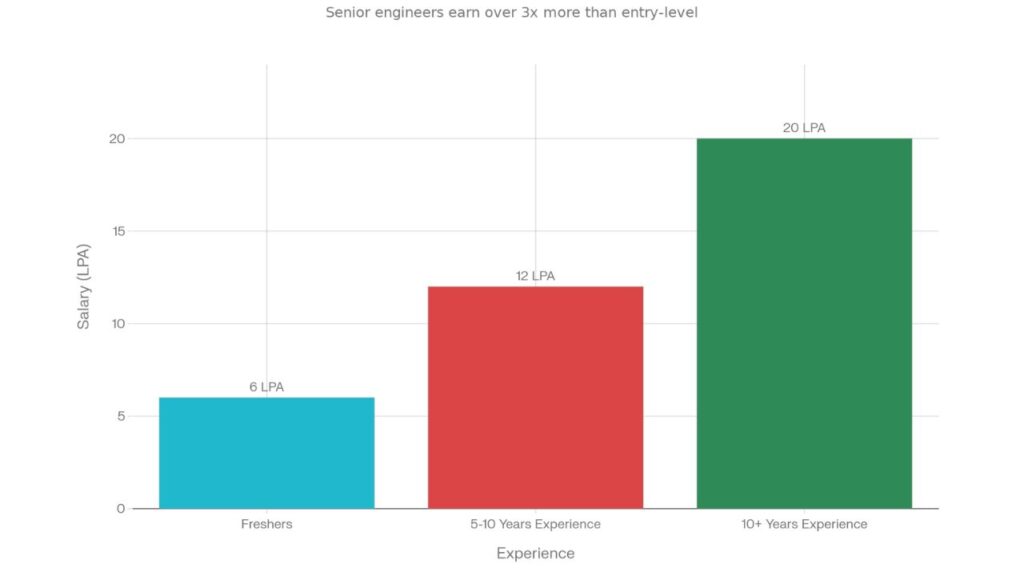
LevelsSalary — LPAMonthly IncomeStages
Fresher (0-1 year)₹4.5-7₹37,500-58,333Graduate joining first job
2-5 years₹8-12₹66,667-1,00,000Intermediate engineer
5-10 years₹8-15₹66,667-1,25,000Senior engineer or team lead
10+ years₹15-25+₹1,25,000-2,08,000+Manager, specialist, researcher

Salary by Sector:

SectorFresher PackageExperienced Package
Government (ISRO, DRDO, HAL)₹7-10 LPA₹20+ LPA
Private Indian Companies₹5-9 LPA₹12-18 LPA
International Companies (Boeing, Airbus)₹8-12 LPA₹20-28+ LPA
Startups & Newer Companies₹4.5-6.5 LPA₹10-14 LPA

The Future Looks Bright

India’s aerospace engineering salary will increase by 20-25% by 2030 and is highly influenced by demand in electric aircraft, AI integration, space exploration, and green aviation related technologies, suggest the industry projections. .

Read More 👉 HR Professional Courses: Get Complete Guide on Career Path, Salary & Growth

The Roadmap To Become Aerospace Engineer

Year 1 & 2: Begin From Basics

The initial two years are dedicated to core subjects such as mathematics, physics and general engineering. These years are tough, but necessary. If you have a strong base in these stuff, then you can understand high level stuff in aero easily later on. 

Year 3: Where Aerospace Engineering Gets Exciting

In year 3, the real aerospace journey begins. You then go on to such specialised areas as aerodynamics, propulsion and aircraft structures.  

Year 4: Major Project and Real-World Problem Solving

Senior year is spent mostly on a senior project. You could design an airplane, build spacecraft systems, or even study a real problem in aerospace engineering. Many of these projects are sponsored by industry, giving students real-world experience and making them more employable. 

Internships: The Key to Career Growth

The majority of aerospace engineering programs require 2 to 3 internships, such as summer and at times semester-long training. Top organizations including ISRO, HAL and Boeing hire interns on a regular basis. This hands on experience is invaluable and it contributes a lot in building a strong resume and career in future. 

Choose Your Specializations

SpecializationFocusScopePreferred Companies
AerodynamicsAirflow, drag reduction, aircraft efficiencyAircraft design, researchISRO, Airbus, NASA etc
PropulsionEngines in Jet engines, space rocketsEngine design, space missionsGE Aviation, Rolls-Royce, ISRO
Flight Dynamics & ControlAircraft stability, autopilots, guidance systemsControl systems, UAVsBoeing, HAL, Airbus
Aircraft StructuresMaterials, stress analysis, lightweight designDesign Structure, & aerospace manufacturingAirbus, HAL
AvionicsRadio System, navigation, ElectronicsUAVs & Avionics Boeing, DRDO

Best Aerospace Engineering Colleges in India

CollegeTypeLocationSpecialization
IIT BombayGovernmentMumbaiAll specializations
IIT MadrasGovernmentChennaiAircraft & Space
IIT KharagpurGovernmentWest BengalAll specializations
IIT KanpurGovernmentUttar PradeshAll specializations
Mahindra UniversityPrivateHyderabadComprehensive curriculum
SRM ISTPrivateChennaiModern labs & industry focus
Chandigarh UniversityPrivatePunjabIndustry-driven curriculum
Ramaiah InstitutePrivateBangaloreWell-equipped facilities
Manipal AcademyPrivateBangaloreResearch-oriented

Conclusion

Aerospace Engineering Courses aren’t simple, it’s a journey through innovation, precision and human ability. Whether you want to design the next generation of commercial planes, put satellites into space, or work on autonomous drones, this is a field with limitless options.

The Indian aerospace industry is poised for growth. With ISRO’s ambitious space programs, HAL’s indigenous aircraft development and international partnerships with Boeing and Airbus, there is no dearth of opportunities. And if you are in the top performers, the world is your sky. 

Leave a Comment

Your email address will not be published. Required fields are marked *

UPSC CDS 1 Recruitment 2026 Notification, Eligibility, Application Dates Guide

UPSC CDS 1 Recruitment 2026

The Union Public Service Commission (UPSC) has notified the Combined Defence Services (CDS) Examination 1 for the year 2026. This recruitment is for a number of academies that are the Indian Military Academy (IMA), Indian Naval Academy, Air Force Academy and Officer Training Academy and the number of vacancies is 450+.

The application form filling process will start from 10th/December/2025 and the last date to apply for the UPSC CDS 1 2025 will be 30th/December/2025. Interested and Eligible candidates are advised to read the official notification before apply online for understand the eligibility, Application Fee, Age Limit, Salary, Selection Process before applying for it.

Candidates need to visit the UPSC official website for detailed information and application. Before the time ends, you need to make sure that each one of the necessary information is filled accurately. 

Follow These Dates To Apply

Application Start10/December/2025
Last Date For Application30/December/2025
Fee Payment last date30/December/2025
Correction DateUpdate Soon
Admit Card DateUpdate Later
Exam Date12/April/2026

UPSC CDS 1 Age Limit & Application Fee

CategoryAge LimitPosts Expected
IMA & INA 19 — 24 years450+
Air Force 20 —- 24 years
OTA 19 —- 25 years
Gen/ OBC/ EWS₹200
SC/ ST0

UPSC CDS 1 Vacancy & Educational Qualification

The courtesy details of UPSC CDS 1 Eligibility 2025 are mentioned below:

  1. Indian Military Academy (IMA): The candidate will have to hold a Bachelor’s Degree in any discipline/stream from any recognized University/Institution in India.
  2. Indian Naval Academy: The candidate must hold a Bachelor’s Degree in Engineering or equivalent from a recognized university/institute in India.
  3. Air Force Academy: Candidate should have passed 10+2 with Physics and Mathematics in any stream from a recognized board or have a Bachelor of Engineering/Bachelor of Technology or similar qualification from recognized university.
  4. Officer Training Academy: The Candidate must have a Bachelor’s degree in any Discipline/stream from any recognized university or Institution in India.

For more and latest updates you can go through the official UPSC CDS 1 Recruitment 2025 Exam Notification. 

Read More 👉 Railway Protection Force Constable: Salary, Selection, and Exam Details – complete guide

Salary & Allowances

The candidate can earn up to Rs 1,77,500 per month with allowances as per government norms. The starting salary can be less with Rs 56,100 for entry level candidates.

Guide to Apply UPSC CDS 1 Online

How to Apply for UPSC CDS 1 Recruitment 2025: Apply Online through the official website of UPSC.

1. Know Details from UPSC CDS 1 Notification 2025 PDF.

2. Click on the “apply online” link or go to the Official UPSC website: upsc.gov.in.

3. Fill UPSC CDS 1 2025 Online Application Form.

4. Upload all the documents as per the notification.

5. Remit the requisite application fee by one of the modes available.

6. Take a print out of the application form once it is filled for your records. 

Apply OnlineLink Activate Soon
Download NotificationLink Activate Soon
Official WebsiteClick here

Leave a Comment

Your email address will not be published. Required fields are marked *

SSC JE vs RRB JE: Which Govt Job Offers Better Salary, Growth & Stability in 2025?

SSC JE vs RRB JE

The debate between SSC JE vs RRB JE occurs between the engineering graduates who want government jobs. Both paths offer good packages with future growth. Aspirants must know about their selection process and job roles before stepping into the path. 

The Staff Selection Commission is conducting an exam for selecting candidates in Central government departments and ministries such as CPWD, CWS, and MES for the Junior Engineer role. The exam structure consists of two papers – Paper 1 & Paper 2 with 200 and 300 marks respectively.

Railway Recruitment Boards is conducting an exam for recruiting Junior Engineers for Indian Railways. This exam structure varies on – CBT 1, 2, document, and medical test for ensuring that you are able for field work or not. The competition is high in RRB JE recruitment so it is hard to beat it.

Understanding of Importance for SSC JE and RRB JE Comparison?

Both jobs have some similar benefits but there are other differences which makes them unique in their area of work. 

Similarities: Both RRB JE and SSC JE offer the same salary packages of around Rs. 50,000 to Rs. 60,000 (7th pay commission). Additional perks are the same including Housing Allowance, Dearness, Travel, Medical, Pension. A degree or diploma in engineering is required for these positions.

Differences: SSC JE engineering posted in departments of government while RRB JE works in Indian Railways. Frequent transfer, fast promotion, and field work mostly in the RRB. SSC offers slower promotion, desk & field work, no frequent transfers. 

Read More 👉 RRB JE Syllabus 2025: CBT 1 & CBT 2 Exam Pattern Explained

Major Departments Covered Under SSC JE and RRB JE

Every year SSC and RRB conduct exams for junior engineers recruitment for various departments. CPWD, MES, Central Water Commission, National Technical Research, BRO by the SSC. Indian Railways departments are in all zones from Northern to Southern and Eastern to Western.

Job Role & Work Environment

SSC JE roles are majorly related to the desk work with some supervision. If candidates have the ability to work in the office environment daily which needs skills such as planning, reporting, administrative then it is the best choice. Some tasks may need technical on-site work but not as much as RRB JE.

RRB JE offers field and operational work which is on-ground tasks. The engineers in the railway sector are expected to be involved in maintenance and operational duties.

Salary Structure in 2025

The salary structure for RRB JE and SSC JE in 2025 by level 6th (7th pay commission). Here is the detailed overview of the structure:

Pay LevelLevel 6 (Group B, Non-Gazetted)
Basic Pay₹35,400
Pay Scale Range₹35,400 – ₹1,12,400
Grade Pay (Old system)₹4,200
Dearness Allowance (DA)Around 17%-50% (varies; example 17% ≈ ₹6,000)
Travel AllowanceCities = ₹3,600Other Places = ₹1,800
Gross Salary RangeApprox. ₹46,000 to ₹63,700 (depending on city & allowances)
In-Hand Salary₹50,000 to ₹60,000 per month (after deductions such as PF, tax)

Career Growth & Promotions

SSC JE has more senior level positions and performance based promotion that offer you long-term benefit. Each promotion gives you an increment in your salary and offers diverse roles in various departments.

RRB JE is highly secure but offers fewer higher positions. Mostly need technical specialization within railways and promotion through different exams.

Posting Location & Transfers

SSC JE is less frequent in postings so it is best for those who want to settle down in one place with family. If you want fixed hours of working this path is guaranteed to provide you that. No changes in regular life but sometimes project-specific relocation happens in urban areas.

RRB JE postings are unpredictable as they can offer you rural areas and frequent changes in the location may be problematic for someone who doesn’t want regular changes in life. 

Job Stability & Security

SSC JE is a very stable job which offers security for the role and no elimination from the post until something serious misconduct occurs. RRB JE also offers job security because there are no layoffs in the government sector. And the need for staff is essential for safety and functioning Indian railways.

Read More 👉 RRB Group D Exam Date 2025 Out Soon – Check Syllabus, Admit Card & Hall Ticket Link

Work Culture & Facilities

SSC JE Work Culture

Most departments have fixed hours of working with professional, disciplined, and well-defined roles. Day-to-day responsibilities for reporting and documentation are basically a part of the job. Employees are satisfied with terms of stability, salary, promotions, and additional benefits. But what attracts them most is their work environment and professionalism. 

RRB JE Work Culture & Facilities

Working employees are showing satisfaction level while their passion meets with the largest sector of India. Technical and field workers experience additional perks of traveling and community culture which is not applicable in most of the jobs. But some people might have problems with disturbing locations.

Which is Better for You?

Seeing your friend or any relative working in SSC or RRB is good but making your life decision based on looking for them having a great life isn’t good. Try to find out your abilities and interests which are important to meet the needs of the job. 

If you are passionate about traveling and exploring new challenges while experiencing some issues such as away from hometown and not stable work-life balance. If you are okay with this then you can choose RRB JE job otherwise, go for the second option i.e. SSC JE. 

SSC JE offers stability and working in departments which offer mostly office-based technical jobs. You can have the same perks as railways but can actually have a life with your family.

What Should Aspirants Aim for?

Prefer SSC JE if:

  • You need to maintain balance in your work and personal life.
  • You are an engineer & a woman and want to have a good government job.
  • You want a mix of both on-ground and desk jobs.
  • Work culture is quite impressive, it is well-structured, faster promotions, and wider career growth.

Prefer RRB JE if:

  • You prefer to work in railways, field work, and fully operational duties.
  • You want a challenging life and are passionate about travelling.
  • Unique railways additional perks like medical facilities, and railway passes.

Conclusion

Both have vast opportunities for you and both are government jobs. It depends on you to choose which sector aligns with your interest and skills. The debate for SSC JE vs RRB JE is consistently growing as their salary and job security is high. In 2025, if you are deciding for your future after engineering then this guide will help you to explore details for both of them.

Leave a Comment

Your email address will not be published. Required fields are marked *

Scroll to Top