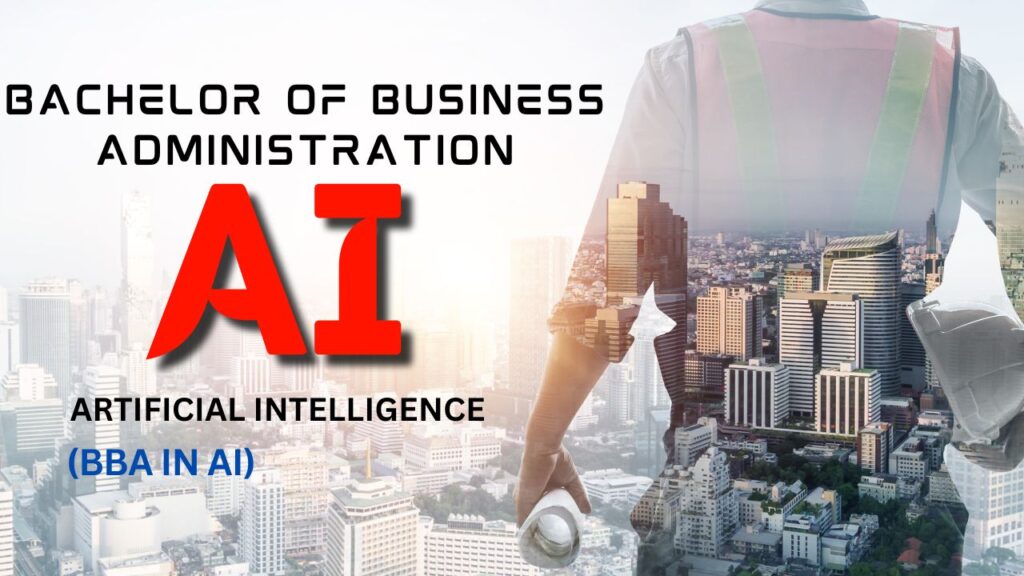
BBA in Artificial Intelligence: Course Details, Admission, Fees and Career Scope

BBA in Artificial Intelligence

Changes in the world are happening so fast, and artificial intelligence is at the center of them all. If you are a Class 12 student considering your future course of study, the Bachelor of Business Administration in Artificial Intelligence (BBA in AI) is more than just a degree—it’s your chance to shape the future while earning a stable career in one of the most in-demand areas today. This programme stands for an exceptional blend of business management and state of the art AI technology that is transforming the business operations around the world.

Why BBA in AI Matters More Than Ever

You may have heard the term “artificial intelligence” (AI) thrown around a lot, but what does that actually mean for your job? AI isn’t some far-off science fiction concept anymore, it’s baked into the apps you use every day, from Netflix recommendations to banking fraud alerts. Businesses in every sector — healthcare, finance, manufacturing, e-commerce — are scrambling to adopt AI in their operations. That means there is a great opportunity for graduates with knowledge of business strategy and AI technologies. 

Instead of traditional BBA programs that just teach the basics of business or engineering degrees that focus only on technical skills, a BBA in AI is really both. You study business principles such as management, finance, and marketing as well as machine learning, data analytics, and applications of AI. With this cross-domain training, you have an extremely strong value proposition to potential employers as you can convert AI technicalities to business use cases and create meaningful innovation. 

Understanding the SET 2026 Pathway

If you want to pursue the BBA in AI through SET 2026, then here’s what you need to know. The Symbiosis Entrance Exam (SET) is your pathway to Symbiosis Artificial Intelligence Institute (SAII), IILM, IIMT, & many more. SET 2026 Exam will be held on 2nd May and 10th May 2026. There are approximately 760 seats in total through the SET at the Symbiosis institutes, which is a very competitive but rewarding process of selection. The application form from these universities is expected to be released From December 2025 to March 2026 for admission. ​

You should have passed Class 12 with at least 50% aggregate marks (45% for SC/ST students) to be eligible. The good news is that you can also apply if you have not got your Class 12 result, but will need to upload your certificate of passing later. The SET exam itself is simple – it’s a one-hour online test with multiple-choice questions (MCQs) in English and there’s no negative marking. 

The syllabus includes the following: General English, Logical Reasoning, Quantitative Skills, and General Awareness. The application fee is INR 2,250, and the test is held in over 80 cities across the country, so you have no excuse for not knowing where you can take it. 

Read More :- CTET Exam Date 2026: Notification, Exam Schedule, Application Dates and Complete Details

BBA in AI Curriculum

The SAII BBA in AI program curriculum is well planned as per the NEP 2020 directives and it provides an exit policy which is flexible. This means you can earn qualifications progressively — a Certificate after Year 1, a Diploma after Year 2, or proceed to complete your full Bachelor’s degree after Year 3, with an option for Honours or Honours with Research in Year 4.​

This isn’t just a matter of learning about theoretical concepts. Practicing real industry issues in project-based courses, obtaining hands-on experience in AI-specialized laboratories and studio spaces, receiving industry mentoring, and doing internships that connect the theory studied in classrooms and application in real industry.

Students can use the core curriculum to learn the basics of AI, machine learning, statistics and programming alongside more traditional business course topics. You will also study a number of specialist modules tailored to your individual interests, whether you want to work in healthcare technology, financial services, marketing analytics, or in the creative industries. 

Career Opportunities After BBA in AI

BBA in AI pass outs are earning good salaries and have excellent career options. New graduates usually receive packages ranging from 6 to 10 LPA followed by huge pay hikes as they gain experience and specialization. AI/ML Researchers or Data Scientists at mid-level earn ₹7-14 LPA, and a senior AI/ML Architect commands ₹10-20 LPA or more.​

The career options are extremely varied. I can imagine it as being either AI Business Analyst – making the data-driven business decisions for a company. You could be a Product Manager for AI platforms and guide the building of new solutions. 

Digital Strategy Consultants With AI Credentials Are Especially Needed as Organizations Seek to Transform Digitally. Data Science to Business Strategy Business Intelligence Experts While there are numerous talented experts in business intelligence, few possess a robust knowledge of both data science and business strategy, making their services highly sought after in today’s economy. 

More than 74% of Indian employers are expected to recruit freshers for AI jobs in 2025, witnessing a 22% year-on-year growth in fresher opportunities. Top companies including Amazon Web Services (AWS), Microsoft, Google Cloud, Meta, IBM, Infosys, TCS, HCLTech and Tech Mahindra are aggressively hiring freshers with skills in AI and business. Even startups and fintech firms are engaged in a bidding war for talent, paying lip smacking packages and offering work on bleeding edge projects. 

The Skills You’ll Need

For this profession you need communication and technical skills. Technical background is having knowledge in programming languages, mainly python, the standard of the industry for AI and ML. You also have to be well versed in math, statistics, and data science. As a part of your toolkit, you will have to understand machine learning algorithms, deep learning methodologies and frameworks such as TensorFlow and PyTorch.

But it’s not all code and algorithms. You’ll also need to be a critical thinker, a problem solver, and an effective communicator — because at the end of the day you’ll be explaining some pretty complex AI concepts to non-technical stakeholders in business environments. Creativity and an open mind are critical since you will have to solve new problems that may not have textbook answers. 

Fees and Financial Considerations

Cost transparency is important. BBA in AI from top Symbiosis institutes are between ₹1 lakh to 3 lakhs per annum but it depends on your chosen institute and mode of delivery. The range of total fees for 3 years for top institutions is around ₹ 3 lakhs and ₹ 9 lakhs but it varies from one institute to another. There are a few cheaper BBA programs through online or distance mode, where the entire program costs between ₹1.5 and ₹1.68 lakhs.​

So important to add that most schools do provide scholarships/financial aid in some way for need or merit – so don’t let fees be the only thing that stops you from applying if this is your passion. 

There are a number of colleges in India that provide BBA in Artificial Intelligence (AI)/ BBA in Data Analytics or BBA in Machine Learning, as per the demand in emerging field of business over the technology. Important information regarding fees, admission procedure, and recognitions including accreditations for particular colleges are mentioned in the following paragraphs, which are curated from authentic sources. 

CollegeProgram NameTotal Fees (INR)Admission ProcessRecognition
IIMT University, MeerutBBA in Data Analytics & AI (3 years)2.25 Lakh ​10+2 merit, assessment test, PI, CUET UG accepted, ₹2,000 application fee ​UGC approved, NAAC A Grade ​
IILM University— GurgaonBBA (Hons.) for 4 years with AI13.60 Lakh ​Eligibility-based (10+2), specific process via official site ​Private university (UGC implied) ​
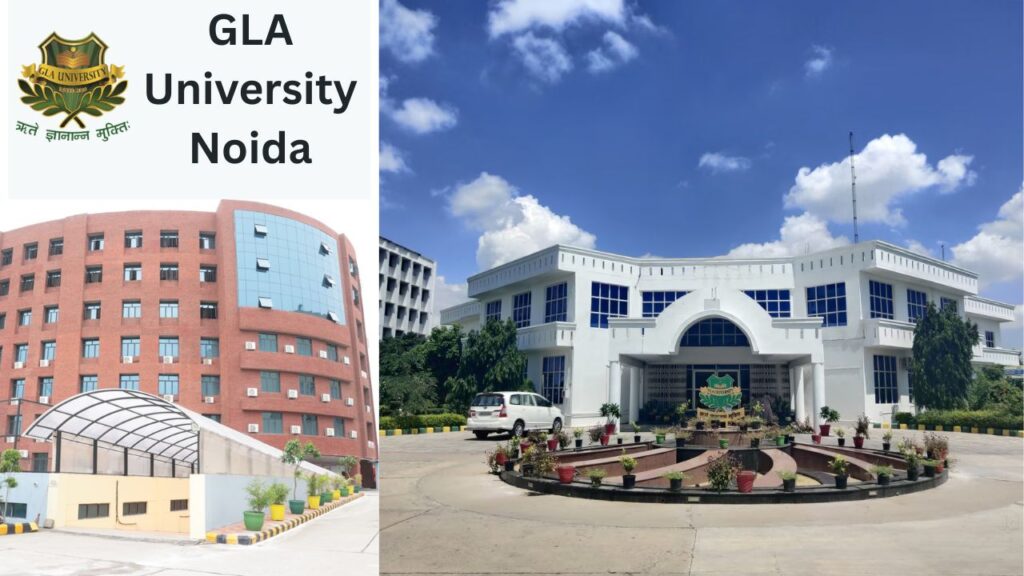
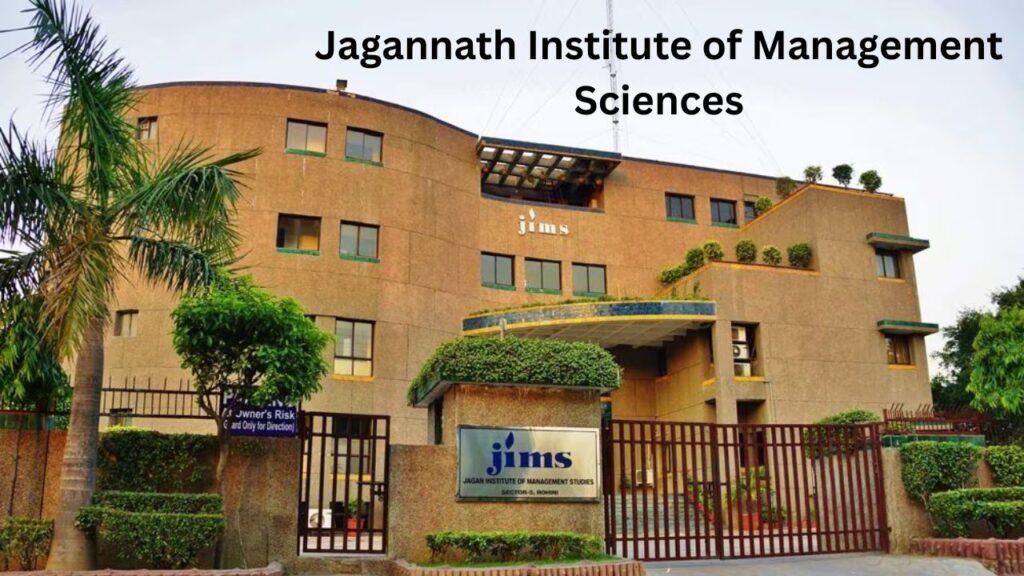
Jagannath University—-NCRBBA in Artificial Intelligence in Business 1.50 Lakh (₹37,500/semester x 4) ​10+2 with 50%, merit/JUEE entrance + PI; ₹500 application fee ​Private university ​
LPU—- (Lovely Professional University)BBA in AI & ML3.00-7.20 Lakh (₹1-2.4 Lakh/year) ​10+2 with 45-60%; LPUNEST/CUET ​UGC recognized, high rankings ​
Graphic Era University— DehradunBBA in AI & Data Science (3 years)5.04-5.27 Lakh ​Online application (₹1,500 fee); 10+2 eligibility ​NAAC A+ Grade, UGC

Note that fees are the estimated total tuition fees (excluding one-time fees such as registration fee), and are subject to change, please check with the official website.

Conclusion

Selecting a BBA in AI with SET 2026 is opting for an opportunity laden future. The blend of business and technology results in graduates who are in high demand in today’s market place. You’re not just earning a degree — you’re staking your claim at the convergence of two powerful currents: strategic business thought and transformative technology.

Generic graduates are not what the world needs—it needs industry-ready professionals who can leverage AI to solve business problems, bring innovations, and deliver business value. If you’re inquisitive, analytical, enjoy problem solving, and want to make a difference with a rewarding career, BBA in AI through SET 2026 may just be what you are seeking. Begin to prepare for SET today, and the future of business and technology. 

Leave a Comment

Your email address will not be published. Required fields are marked *

Top 10 MCA Colleges in Bangalore – Best Picks for 2025

MCA colleges in Bangalore

If you’re planning to pursue MCA and are confused about the colleges that offer MCA programs with top education. Check out the top 10 MCA Colleges in Bangalore, and know their fee and specialty to clear out your confusion. You can get more confused with more options. There are a lot of institutions making big promises, and choosing the right college isn’t easy. I have put together a genuine list of the top MCA colleges to help you make a practical and informed decision. 

Top 10 MCA Colleges in Bangalore – Updated for 2025

You can get to know the top-tier colleges in Bangalore that have great reputations and genuine placement offers. Their records of placement are high in the past and offer an academic environment. Their fees are high but worth it for your stable career.

1. New Horizon College of Engineering 

The NHCE is affiliated with AICTE and UGC which offers MCA programs to the students who want to establish their career in tech. The education provides strong industry concepts. MCA toppers who scored in PGCET or KCET can get a 50% scholarship. If you want to study in this college then prepare well for the entrance exam. MCA fee is around 2-4 lakh annually. This college got an A from NAAC. It offers a strong placement package with Rs. 7-8 LPA from top companies like TCS, Wipro, and Cognizant.

2. RV College of Engineering

RV College offers an MCA program for around Rs. 1.2 lakhs per year (gov quota). Students who get admission through management quota, a fee of 4.5 lakhs annually. Admission through PGCET and KMAT for non-Karnataka candidates. The average placement package is around Rs. 5–8 LPA. 

3. Christ University, Bengaluru

Christ University is a top-tier college, A+ accredited by NAAC. This university offers an MCA program of around Rs. 4.6 lakhs. By clearing their entrance exam, shortlisted candidates will go to the assessment round. The college rules are strict to train their students industry-ready. It offers placement packages with 5-6 LPA by top companies like Amazon, Deloitte, and Google.

4. Presidency College

It is a fully private college, ideal for those who want direct placement after MCA. 90% of students get placement with an average package of 8 LPA. The MCA fee for this college is about 3-4 lakhs for 2 years. Admission through PGCET/KMAT or entrance exam. It is the best option for UG students who want an MCA degree for their career growth. It offers strong faculty support and soft-skills training.

5. Kristu Jayanti College 

This college is a good choice for an MCA program. Students can get their MCA degree with a Rs. 1.8–2.20 lakh fee. The ranking of this college is A++ accredited by NAAC. Top #2 universities in Bangalore offer smart classrooms, auditoriums, libraries, and hostels. To get admission to this university, you must clear KMAT or PGCET and then Interview. Top recruiters including IBM, Capgemini, and Morgan offer an average package of 4–5 LPA.

6. PES University 

UG students who want to study in PES’s MCA program if they want direct placement in MNCs. The fee is Rs. 3.5 – 4 lakhs for 2 years. To get admission to this university, clear the entrance exam, and then interview. PES university students get an average placement package for 6-12 LPA from companies like Amazon, TCS, and Cognizant.

Also Read: Government Job vs Private Job: Which Career Offers a Better Future in 2025?

7. Mount Carmel College 

It got an A+ from NAAC, and Mount Carmel College offers an MCA program. To get admission in this course you must clear the entrance exam and then interview. It offers a placement package of 4 LPA by the top tech companies. MCA fee is 2-3 lakhs in Mount Carmel College. 

8. M. S. Ramaiah Institute of Technology 

This college got an A accredited by NAAC. Total tuition fee is around 4.9 lakh for 2 years. Admission through entrance tests like PGCET/KMAT, counseling, and fee submission. This university does not offer direct admission. It offers placement packages from companies like Wipro and Infosys of 6-8 LPA. 

9. CMR Institute of Technology 

This is one of the top engineering colleges in Bangalore, accredited by NAAC A++. CMRIT offers a 3-year MCA program at a fee of Rs. 9-11 lakhs. The admission process happens via PGCET or KMAT scores. So, the merit list will decide your admission to this college. After that, the counselling process for every candidate happens at VTU. The placement package is 6.24 LPA for MCA students from top recruiters like Infosys and Deloitte.

10. Jain University

This university conducts direct admission through its entrance exam. Fee offered by Jain University is Rs. 3.9 lakhs approx. It offers a modern curriculum and focuses on delivering advanced techies for companies like Google, Amazon, and Dell. For MCA students, there are 90% placement offers with 6.7 LPA from tech companies. 

Read More 👉 Top 10 MBA Colleges in India with Fees, Ranking & Placement 2025

Quick Comparison Table:

College NameMCA Fee (Total/Annual)Entrance Exams (Main)Placement % / Avg. Package (LPA)Top RecruitersKey Highlights
New Horizon College of Engineering₹2–4 lakh/yearPGCET, KCETAvg: ₹7–8 LPATCS, Wipro, Cognizant50% scholarship for toppers, strong industry connect
RV College of EngineeringGovt: ₹1.2 lakh/yearMgmt: ₹4.5 lakh/yearPGCET, KMATAvg: ₹5–8 LPAInfosys, DellFull-semester industry internship
Christ University, Bengaluru₹4.6 lakh (total)University EntranceAvg: ₹5–6 LPAAmazon, Deloitte, GoogleStrict rules, industry-ready training, assessment round
Presidency College₹3–4 lakh (2 years)PGCET, KMAT, Entrance90% placed, Avg: ₹8 LPAInfosys, TCSStrong soft-skills training, direct placements focus
Kristu Jayanti College₹1.8–2.4 lakh Entrance exam (PGCET), InterviewAvg: ₹4–5 LPAIBM, Capgemini, MorganTop #2 in Bangalore, modern campus, smart classrooms
PES University₹3.5–4 lakh (2 years)University Entrance, InterviewAvg: ₹6–12 LPAHCL, TCS, CognizantDirect MNC placement, advanced tech curriculum
Mount Carmel College₹2.5–3 lakh (total)Entrance, InterviewAvg: ₹4 LPAInfosys, Amazon, FlipkartWomen’s college, modern infrastructure
M. S. Ramaiah Institute of Tech.₹4.9 lakh (2 years)PGCET, KMAT, CounsellingAvg: ₹6–8 LPAWipro, InfosysNo direct admission, strong placement support
CMR Institute of Technology₹9–11 lakh (3 years)PGCET, KMATAvg: ₹6.24 LPAInfosys, Deloitte3-year MCA, top recruiters, modern campus
Jain University₹3.9 lakh (total)University Entrance90% placed, Avg: ₹6.7 LPAGoogle, Amazon, DellModern curriculum, high placement rate

How to Get Admission in These Colleges?

1. Through Entrance Exams

Most of the top colleges’ admissions happened through PGCET and KMAT examinations. You can take the PGCET exam if you belong to another state, not from karnataka. Here is the following list for each exam:

  • Karnataka PGCET 
  • KMAT
  • CUET (for Christ)
  • JET (Jain University)
  • PESSAT (PES University)

2. Eligibility

  • Candidates must have a Bachelor’s degree such as BSc/BCA in CS, IT, Or equivalent.
  • Minimum 50% marks especially in maths & physics (45% for reserved category)
  • Some colleges require Math in 12th or graduation.

Tips to Choose the Right MCA College

Masters in CS or IT to get placement in top companies is a good choice but it’s hard to choose which college is best. You must remember the following points to select the right college which opens up the path for your career. 

  1. History about the college and their placement rate, reviews on social media with proof.
  2. Look at Faculty Experience, and the top educator’s style of teaching. 
  3. If you are a resident of Bangalore then Visit the Campus If Possible.
  4. Getting in touch with Current Students or Alumni through platforms like LinkedIn will help you understand more better.
  5. Prefer MCA from colleges that offer coding and internship support.

Conclusion

Bangalore is already a tech hub so colleges are prepared to offer high-quality and real-world industry exposure. If you are serious about establishing a tech career then these top 10 MCA Colleges in Bangalore will help train you for industry-ready. MCA is a master’s degree to become a software engineer. So, choose the right college for your career growth. 

Leave a Comment

Your email address will not be published. Required fields are marked *

Difference Between CBSE and ICSE: Which Board is Better for Your Future?

Students studying in classrooms representing CBSE and ICSE boards, highlighting differences in learning styles

Finding out the Difference Between CBSE and ICSE is important because it matters for the future of students. In India, ICSE (Indian Certificate of Secondary Education) affiliated schools are expensive but recognized internationally, and have become popular among students who want to achieve international opportunities. 

And CBSE (Central Board of Secondary Education) has a wide range of affiliated schools which makes it cheaper but effective for national-level exams. Both have different teaching methods, syllabus structure, exam pattern & marks, and career opportunities.

This comparison is not for making it good or bad, showing their strengths and weaknesses will help students to decide better for their future.

Overview of CBSE and ICSE

CBSE – Central Board of Secondary Education

  • CBSE board is run under the Government of India.
  • A wider range of schools are affiliated to CBSE.
  • It is more on the side of theoretical education and focuses on subjects like Science & Maths.
  • Popular among aspirants of NEET, JEE, NDA, and UPSC as it covers all the exams syllabus concisely. 

ICSE – Indian Certificate of Secondary Education

  • Council for the Indian School Certificate Examinations (CISCE) is a private education board which governs ICSE board.
  • As compared to CBSE, schools affiliated to ICSE in India and abroad are less in numbers.
  • It focuses on both theoretical and practical knowledge equally on all subjects including arts, science, and languages.
  • Its balanced education is valued internationally.

Curriculum and Teaching Style

CBSE curriculum is more structured and straightforward, it does not contain any extra details on any topic which makes it less but precise for exams. It prioritizes subjects like Science and Mathematics, designed with theoretical conceptual knowledge which makes it ideal for competitive exams. Other subjects like English and Hindi have fewer chapters and syllabi in comparison to ICSE. It is best for the engineering, medical, or government exams focused students.

ICSE curriculum is designed with lengthy explanations and balanced across subjects. It also focuses on other subjects like Literature, language and practical projects for balanced education. ICSE boards students have to study in-depth of each subject. That feels burdened sometimes but it improves analytical ability. It is best for overall knowledge, communication skills, and global recognition opportunities seeking students.

Read More 👉 Meet the Best History Teacher for Competitive Exams Who Can Boost Your Score

Difficulty Level

CBSE is easier in comparison to ICSE as it has a concise syllabus that covers easily within less time. It encourages more theoretical knowledge than projects. Students can easily clear exams with less academic pressure but it improves basic knowledge. ICSE is more detailed on every topic and stressing on projects, lab world, internal assessments making it heavier for children to cover. But it is best for building overall skills that improves analytical thinking.

Examination Pattern and Grading System

CBSE follows a continuous and comprehensive evaluation system to reduce exam stress and declaring results in CGPA Cumulative Grade Point Average system. Questions in the exam are based on the NCERT books. 

ICSE follows marks-based evaluation and grades are assigned according to the percentage. Questions asked in exams need both depth of knowledge and analytical ability to represent the answer. In the final result, 20-30% makes are dependent on the internal assessments so projects are becoming necessary.

Recognition in India and Abroad

CBSE is recognized in major schools in India, making it best for students who plan to continue study in India. It is popular among the JEE, NEET, NDA and UPSC aspirants. ICSE is recognized globally by foreign universities. Developing language and communication skills with its english-oriented syllabus can help students to continue their studies in foreign universities. 

Language and Communication Skills

If students want to continue their studies abroad, develop communication skills, and aim for jobs where language like English will be needed then ICSE is the best option because CBSE is more focused on Science and Maths. However, CBSE emphasizes English and Hindi but not on the higher level.

Which is More Expensive?

Many government schools are affiliated to CBSE board which make it affordable for the students. Private CBSE schools also have affordable fees in comparison to ICSE affiliated schools. More expensive due to their huge curriculum, projects, and emphasis on quality teaching.

Career and Competitive Exams

Competitive exams aspirants prefer to study in CBSE affiliated schools because it covers a more concise syllabus on important subjects like Economics, Maths and Science. However, ICSE boards schools produce creative minds. They emphasize on English Language & Literature, and analytical skills to help students secure their career in international companies.

Pros and Cons at a Glance

CBSE ProsCons
Easier syllabusLack of strong foundation in English and humanities
Affordable FeesLimited application-based learning
20,000+ schools
Ideal for competitive exams
ICSE ProsCons
Tough syllabusMore-time consuming
International RecognitionExpensive schools
Strong English and analytical skillsLess useful for Indian competitive exams
Encourages overall development

Which Board Should You Choose?

It totally depends on your future goals, aiming to make your career in the medical field, engineering, or government sector then CBSE is a good option because it contains an overall concise syllabus that is needed to study in most of the Indian entrance exams. CBSE board students also can go abroad but they have to study hard even on their english and communication skills. Where ICSE is providing overall development, students can go abroad for higher studies with strong language skills and well-rounded knowledge. 

Both boards have their strengths and weaknesses, for making the right decision, students should choose their board according to their interest, learning style, and career plan. 

FeatureCBSEICSE
Curriculum FocusScience & Math oriented, exam-basedBalanced syllabus, includes languages & arts
Difficulty LevelEasier, conciseDetailed, more challenging
Teaching StyleTheoretical, less projectsPractical, project-based, strong English focus
RecognitionBest for Indian exams (NEET, JEE, UPSC)Internationally valued, good for global studies
EvaluationCGPA/percentage, NCERT-style questionsMarks-based, detailed assessment + projects
LanguageModerate EnglishStrong English & literature
AvailabilityWidely available, govt. & private schools, affordableLimited, mostly private and costlier
ExtracurricularAcademics priority, fewer activitiesEqual focus on academics & extracurriculars
Best ForStudents preparing for Indian competitive examsStudents aiming for holistic or overseas education

Conclusion

Which board is best is a little bit complex, you must know the Difference Between CBSE and ICSE before you select your board. Students and parents both have to understand what are the career goals and which board is good for their children. Some students are not able to handle the tough syllabus of ICSE and some students want to go abroad, so it should be according to your plan not by other people’s recommendation.

Leave a Comment

Your email address will not be published. Required fields are marked *

Medical vs Engineering: Which Career Will Make You More Successful in 2025

Medical vs Engineering

If you are an Indian student in Class 10, 11, or 12, chances are you’ve heard a version of this line at least a dozen times. The age-old battle between Medicine and Engineering is a part of our DNA. For generations, these two streams have been seen as the ultimate tickets to a successful, secure, and respectable life.

The world is rapidly changing in 2025 with a lot of new career options for students. But when it comes to choosing between two different careers, everyone gets confused: Which path is better? Medical or Engineering? 

It’s a big decision of your life, both careers need your full potential whether you are preparing for NEET or JEE. It affects your life and your parent’s life too. Choose your path which aligns with your interest and skills.

The First Hurdle: The Challenging Road of Education

Before you can even dream of a stethoscope or a high-tech lab, you have to cross the battlefield of entrance exams. This is the first and most critical difference.

NEET (for Medical): The Marathon of Memory

  • The Exam: This is a single entrance exam for admission in MBBS. In 2024, over 23 lakh students fought for just over 1 lakh MBBS seats. The competition is insane.
  • The Challenge: Tons of topics to cover in Physics, Chemistry, and especially Biology, inside and out. It’s less about complex problem-solving and more about incredible memory, accuracy, and speed.
  • The Journey: The path is long. The time period is 5.5 years for MBBS with an internship certificate. After becoming a doctor at beginner level. You must do a postgraduate degree (MD/MS) to become professional, which is another 3 years after clearing another tough entrance exam, NEET-PG.
  • The Cost: Government medical colleges are very affordable (a few lakhs for the entire course). But getting a seat is like winning a lottery. You must be ready to invest ₹50 lakh to over ₹1 crore for MBBS course and more for postgraduation.

JEE (for Engineering): The Sprint of Logic

  • The Exam: This is a two-step process. JEE Main is the first filter. If you clear it, you can get into NITs and other good colleges. Admission in IITs is tough, you need to clear JEE Advanced.
  • The Challenging Step: If you are interested and have deep understanding in Maths, chemistry and physics, preparing for JEE isn’t that hard for you. But you must prepare with right strategy to beat the competition and get a chance for better college option. Because without a valuable degree, you will not get a high package of jobs. 
  • The Journey: A B.Tech degree is 4 years long. After this, you are an engineer and can start working immediately. A postgraduate degree (M.Tech) is an option, not a necessity, unless you want to get into research or specialised teaching roles.
  • The Cost: The fee for IITs and NITs is around ₹8-12 lakhs for the entire course, which is much more affordable than private medical colleges. Private engineering colleges have a huge range, from a few lakhs to ₹20-25 lakhs.

The stress of Kota coaching factories, the pressure from family, the fear of “wasting a year” – it’s real for both aspirants. A medical journey requires your time and money to become a doctor. You have to make commitments for this career.

Read More 👉 Top Engineering Govt Jobs in India 2025 – High Salary

Career Scope & Opportunities in 2025?

Engineering: it offers a diverse range of opportunities on national and international level.

The word ‘engineer’ is broad. The opportunities in 2025 depend heavily on your branch.

  • Computer Science & IT: This is the king of the jungle right now. With AI, Machine Learning, Data Science, and Cybersecurity booming, a skilled software engineer from a good college can land a job even before their final exams. 
  • Electronics & Communication: This field also requires engineers for running a network, designing for semiconductors, and automation. ECE engineers can get a lot of opportunities with a good salary package.
  • Mechanical & Civil: These are ‘evergreen’ branches. If students have skills and ability to construct, manufacture, and renewable energy then they can pick this career for their career.
  • Abroad: IIT or NIT qualified engineers are well-respected globally. With the right skills you can work on large projects abroad such as the US, Europe, and Australia.

Medical: Job security, secure future, and Respect in society

With an increasing health crisis, everyone needs a doctor who can cure and treat them. After MBBS, Medical training is also mandatory for every student. India has a huge shortage of doctors, with a doctor-patient ratio far below WHO recommendations.

  • In India: A doctor will never be jobless. You can have plenty of options like your own clinic, work in government or private hospitals. After specialization (e.g., cardiologist, dermatologist, oncologist), you will be demanded everywhere. The respect you get from society is unparalleled.
  • Abroad: MBBS degree is a door to open many options abroad but to work in countries like the US or UK, you need to clear their licensing exams (USMLE for the US, PLAB for the UK). Indian doctors can apply for them after a few years of experience in India because it is tough and expensive but the financial rewards and quality of life can be extraordinary.

Salary & Financial Growth

This is where the paths differ significantly.

  • Engineering: if you have done engineering in computer science from a reputed college or IIT, you can get a good placement package from top companies. IITs can get a starting package of ₹20-30 LPA. For other branches and colleges, it might be in the ₹6-12 lakh range. Your professional growth depends on how fast you can update your skills.
  • Medical: The financial journey is a slow burn. During your internship and PG residency, you earn a stipend, not a salary (around ₹25,000 to ₹80,000 per month depending on the state and college). The real earning starts after you are nearly 30 years old. But once you are a specialist, your earning potential is immense and stable. A successful specialist in a city can earn lakhs per month, far surpassing most engineers.

The Verdict: Engineering gives you a 6-8 year head start in earning. Medicine promises higher and more stable lifetime earnings, but you have to wait for it.

Read More 👉 Top 10 Central Universities in India 2025 – NIRF Ranking with Full Details

Work-Life Balance & Job Satisfaction

Success isn’t just about your bank balance. It’s about being happy.

A Doctor’s Life:

Heavy responsibility of a patient, being available for emergencies. So, this is not just a regular desk job. You need deal with many new things:

  • The Bad: The hours are brutal. Health crises can happen anytime-anywhere but being a doctor it’s your responsibility to be available for your patients. There are no weekends or festivals when there’s an emergency. Be ready to deal with everyday life and death situations. The small mistake can cost a life, so being focused and emotionally stable is mandatory to handle.
  • The Good: The job satisfaction is on another level. The feeling of saving a life or healing someone is a reward that money can’t buy. The trust and respect you receive from your patients and community are profound.

An Engineer’s Life:

Being an engineer is about creating and solving problems.

  • The Bad: Especially in the IT sector, there’s pressure of deadlines, project delivery, and constantly learning new technologies to stay relevant. Burnout is a real risk. Your job security is often tied to the performance of your company and the economy.
  • The Good: You often have more predictable work hours (though this can vary wildly). You have your weekends off. The work sometimes gives you hard challenges, but a lot of benefits like you can start your own side business after years of experience. You get to build things that millions of people might use, which is a great feeling.

What Should YOU Choose?

Forget about your friend’s suggestions. Forget about what your relatives will say. Ask yourself these questions with an honest heart.

Choose Engineering if:

  • You are fascinated by how things work. You are able to solve complex problems within less time and have a logical and analytical mind.
  • You love to solve quizzes from Maths and Physics.
  • Quickly understands new technologies and skills throughout your life. You don’t have a problem with quick changes in your professional world.
  • You want a faster entry into the professional world and want to start earning relatively early.
  • You are a creator and a builder at heart, whether it’s software, machines, or bridges.

Choose Medical if:

  • You have a deep, genuine desire to help people directly. Your primary motivation is service.
  • You have incredible patience and are prepared for a decade-long educational journey before you are fully settled.
  • You have quickly memorized diagrams and names of the phenomenon. You must adapt a habit to study consistently for very long hours.
  • You love to care about others and have strength to handle the pressure of life and death situations calmly. 
  • You want lifelong respect and a long-term future for your career.

In the end, there is no “better” field. There is only a “better fit” for you. A happy and successful engineer will always do better in life than a frustrated and burnt-out doctor, and vice-versa.

Success in 2025 and beyond will not come from choosing the most popular or the highest-paying stream. It will come from choosing the path where your natural interests and skills lie. It will come from choosing a profession that you won’t just ‘do’ for a living, but one that you will be proud to live every single day. So, talk to your parents, talk to people from both fields, and most importantly, listen to your own heart. The right answer is right there.e-old battle between Medicine and Engineering is a part of our DNA. For generations, these two streams have been seen as the ultimate tickets to a successful, secure, and respectable life.

Leave a Comment

Your email address will not be published. Required fields are marked *

UP Police Computer Operator Grade-A Online Form 2025: Apply, Dates & Eligibility

UP Police Computer Operator

If you have completed 12th with a science subject and are interested to join the Uttar Pradesh Police Force then this is the chance to transform your life! The application process has begun for the Uttar Pradesh Police Recruitment & Promotion Board (UPPRPB) Computer Operator Grade-A vacancies – the total number of vacancies is 1,352. So, let’s get into all that we need to know about this golden opportunity. 

A career with UP Police is an excellent opportunity for youth having technology savvy to establish their bright future in law-enforcement. With 1,352 vacancies available and a good pay scale of Level-4 (₹25,500 – ₹81,100), this job is not only offering colorful career but also financial security. The registration is valid for both men and women across the UP, so the whole terrain of the state could participate in it. 

Mark Your Calendar With These Dates

EventDate
Online Application StartDecember/16/2025
Registration DeadlineJanuary/15/2026
Fee Payment Last DateJanuary/15/2026
Fee Correction WindowJanuary/16-18/2026
Exam DateTo be notified
Admit Card ReleaseNotify Later

Do You Qualify For This Post?

RequirementDetails
Age Limit18-28 years
Educational Qualification10+2 with Physics & Mathematics
Computer CertificationDOEACC ‘O’ Level OR Diploma in IT/Computer/Electronics Engineering
Hindi Typing Speed25 words per minute (WPM)
English Typing Speed30 words per minute (WPM)

Category-wise Vacancy Breakdown

CategoryVacancies
General577
Other Backward Classes (OBC)364
Scheduled Caste (SC)283
Scheduled Tribe (ST)128

Read More 👉 BBA in Artificial Intelligence: Course Details, Admission, Fees and Career Scope

Simple Steps to Fill The Form

The procedure of application for Uttar Pradesh Police Recruitment and Promotion Board (UPPBPB) is easy and in online mode only. Step by step instructions are provided below:

1. Visit the official page of UPPBPB at the official website which is also mentioned in the article.

2. Sign up with a valid mobile number and email id.

3. Follow the guidelines to complete the One-Time Registration (OTR).

4. Fill in the details in the application form correctly related to your Personal and Educational Qualification etc.

5. Attach all relevant documents, i.e. mark sheets, certificates, a recent photograph and the signature.

6. Submit the application fee as applicable through the online mode.

7. Complete this and then apply with your full application and print the confirmation page for your document.

Make sure that all the information they are providing is true and correct, and that the files they upload are according to the size, format, etc. specified above so that they don’t have to face any trouble. 

Application Fee
General/OBC/EWS₹500
SC/ST₹400

Selection Process

StageDescription
Written Examination200 MCQ questions (400 marks)
Typing TestHindi & English typing skill test
Document VerificationAuthenticate original certificates
Final Merit ListBased on written exam performance

Exam Pattern

The question paper has a General Hindi, General Knowledge, Mental Aptitude/Reasoning and Computer Science section. All the three sections contain 50 questions and every question carries two marks thereby the maximum score for the paper is 100 marks. 

Useful Links
Apply HereClick Here
Download NotificationClick Here
Official WebsiteClick Here

Leave a Comment

Your email address will not be published. Required fields are marked *

Indian Police Service IPS: How to Crack and Become IPS Officer

Indian Police Service

If you’re dreaming about the Indian Police Service (IPS) standing tall as a law and peace officer in the Indian Police Service. Whatever got you started on this dream, pursuing it in real life is more than just a passion to do. It requires a sharp strategy to prepare accordingly and what’s right to study. Not everything is important. 

Instituted in 1948 as a successor to the British colonial-era Indian Imperial Police, the IPS is the ground holder of India’s internal security system. But the reality check is that every year lakhs of candidates chase this dream and only a few hundred come out successful. So what separates those who make it and those who don’t? More often than not, it is the preparation strategy. 

Understanding the Battlefield: The Three-Stage War

Know what you are getting into before you go to the books and notes. The UPSC Civil Services Examination (CSE) is a rigorous three-tiered exam which tests not only your knowledge but stamina, analytical abilities & character. 

First Level— The Preliminary Examination 

Think of the Prelims as the bouncer at the door to that exclusive club — it sifts out the wheat from the chaff. It consists of two objective papers, each of two hours duration and carrying 200 marks. 

Paper – I is General Studies—current events, history, geography, polity, economy, environment and general science. The Civil Services Aptitude Test (CSAT), now known as Paper II, tests your concepts on comprehension, logical reasoning, decision making and basic numeracy. It is qualifying in nature and it just needs 33% to pass.  

Do not make the mistake to understand that Prelims score is gonna add in the final merit list, it’s important to score for going into the next stage but it doesn’t hold final value. So don’t get that to take it lightly because 97-98% of candidates are eliminated at this stage. 

Second Level: The Main Examination 

If Prelims is a sprint, Mains is like running a marathon. Nine descriptive papers across a few days with a total of 1750 marks designed to push how well you know what you know and how well you can express complex thoughts when you’re under a lot of stress.

The pattern is: two qualifying papers (English and an Indian language), one Essay paper (250 marks), four General Studies papers ranging from Indian heritage to ethics and integrity (250 marks each), and two papers on your chosen Optional subject (250 marks each).

The hard copy elective also has an impact on your total score with a weightage of 500 marks. Choosing the appropriate subject is very important. Although you have a whole bunch of popular subjects like Geography, History, Public Administration, Political Science etc, it is always advisable to go with the subject you are really interested in rather than seeing what others have taken up. 

Third Level: The Personality Test (The Interview)

The remaining 275 marks are given in the Personality Test, during which an UPSC panel evaluates your mental alertness, critical thinking, communication skills, leadership potential, and moral uprightness. They don’t want to know-your-everything; they want well-rounded people who can manage the enormous burden of public service. 

Check Your Eligibility For Indian Police Service

Nationality

IPS is only open to Indian citizens. The UPSC CSE permits Nepali, Bhutanese and Tibetan refugees (who came before 1 January 1962) to apply for certain services like IAS and IFS, the Indian Police Service, however, is limited to Indian citizens. 

Qualification

You must have a bachelor’s degree from a recognized university – all streams are acceptable.  If you’ve studied English Literature, Engineering or Zoology, you can apply.

Important caveat for final-year students: You may apply for the Preliminary examination as a final year student, but you need to submit degree certificate before going in for the Mains.  Don not count on your provisional certificate to arrive in time—make your plans accordingly.

Final MBBS students can also apply, but they have to submit a certificate from their university. 

Age Limit

CategoryAge LimitCut-off Birth Date (for 2026 exam)
General/EWS21-32 years2/August/1993 to 1/August/2005
OBC21-35 years (3 years relaxation)2/August/1990 to 1/August/2005
SC/ST21-37 years (5 years relaxation)2/August/1988 to 1/August/2005
PwBD21-42 years (10 years relaxation)2/August/1983 to 1/August/2005
Ex-servicemen5 years relaxation2/August/1988 to 1/August/2005

Attempts Restrictions

CategoryNo. of Attempts
General/EWS6 attempts
OBC9 attempts
SC/STUnlimited (until age 37)
PwBD9 attempts (until age 42)

The Physical Reality: More Than Just Books

Unlike IAS, Indian Police Service has certain physical eligibility condition which you need to fulfill. Male candidates should have a minimum height of 165 cm (160 cm for ST and some other categories) and must have chest measurements of 84 cm along with expansion. Female applicants need 150 cm height (145 cm for ST) .

Myopia shall not be more than minus 4.00D and hypermetropia shall not be more than plus 4.00D. Color blindness is a disqualification as well as squint. Begin training for your physical fitness right away — don’t wait until you have the written exam behind you. 

Height Requirements category-wise:

CategoryMaleFemale
General/OBC/SCMinimum 165 cmMinimum 150 cm
ST (except SC/OBC)Minimum 160 cmMinimum 145 cm
Gorkhas, Garhwalis, etc.Minimum 160 cmMinimum 145 cm

Read More:- AIIMS Nursing Officer Recruitment (NORCET-10) – 3600+ Vacancies, Eligibility, Exam Date & Apply Online

Application Process To Apply

  1. Stay tuned to the official UPSC website for the latest updates/notification of IPS. 
  2. After the notification is released, download it carefully and go through all the instructions and wait for the online process to start.  
  3. Check all the dates and fill the application before the deadline. 
  4. Fill valid and correct details in the form and then attached requisite documents with the application.
  5. Submit the form and the application fee is applicable.
  6. Print it for the proof in future and prepare yourself for the toughest examination.
CategoryFee
General/EWS/OBC (Male)₹100
SC/ST/PwBD/Female (All categories)Exempt (₹0)

Conclusion

Becoming an Indian Police Service officer is not only about passing an exam, it’s about dedicating oneself to a life of discipline, service, bravery, and accountability. Everything about the process, from meeting the eligibility and physical criteria to surviving one of the most competitive exams in the country, requires one to be consistent, resilient and long-term driven. Luck or short-cuts don’t make you succeed in this path- it takes strategy, smart preparation, mental toughness and commitment.

If you really want to see yourself in that uniform, leading from the front and serving the country, begin today—lay your groundwork, condition your body and mind, and approach preparation as a way of life, not a phase. The road to IPS is tough, but to those who make it through, it is one of the most dignified and influential careers in India. 

GovUpdatewala is your trusted source for real-time updates on government exams and jobs in India. We provide verified info on SSC, UPSC, Banking, Railways, Defense, and Teaching exams. From syllabus and patterns to important dates and career tips — we support aspirants at every step.

Leave a Comment

Your email address will not be published. Required fields are marked *

Scroll to Top