Bihar Panchayati Raj Technical Assistant Recruitment starts from 26 May 2025 in Bihar. Candidates who are willing to join a government job on a Technical Assistant post, this is the best time to take a chance for your career. There are a large number of candidates who wish to apply for this position as this is a golden opportunity for them. The department has announced the recruitment process for 2025 to fill the vacancies in the Technical Assistant Post.
Highlights of the Bihar Panchayati Raj Technical Assistant Recruitment
Exam Conducting Body
Bihar Panchayati Raj Department
Post Name
Technical Assistant
Job Location
Bihar
Bihar Panchayati Raj Technical Assistant
It is conducted to recruit for the Technical Assistant Post, especially in Bihar. Interested candidates can apply online to ensure their stable career.
The total number of vacancies is 942 for the Technical Assistant post. This post requires a diploma in Civil Engineering from any recognized university. Apply for this post if you wish to build a stable career and secure your future that will give you lifetime joy. Bihar Panchayati Raj Technical Assistant Recruitment starts on 26 May 2025 and ends on 25 June 2025. Apply online to grab the opportunity in this government job as soon as possible. Kindly check the all details on the official website mentioned in this article for documents required and Form filing or you can directly apply from the link provided in the article.
When thinking about starting a career in engineering then choosing among the top BTech Colleges in India is the priority for every student. The race for a Bachelor of Technology (BTech) course has gotten much tougher and thrilling as there are plethora of options for would-be engineers across the country. If you’re a Class 12 student planning to appear for entrance exams or a parent navigating the admissions maze, this one-stop guide will give you an overview of the current scenario of top BTech colleges in India, their rankings, placements and admission criteria.
Understanding the Current Landscape: NIRF Rankings 2025
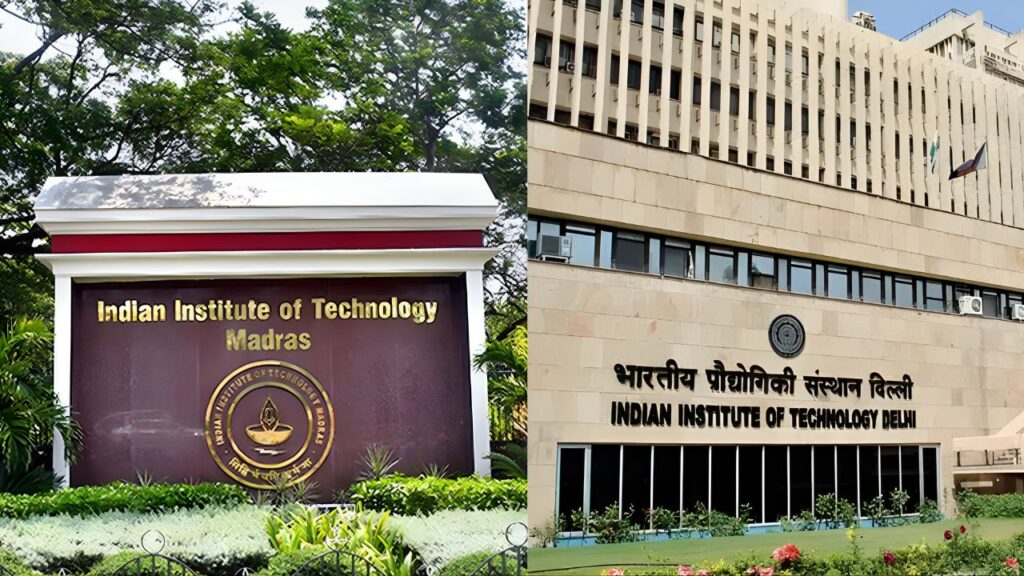
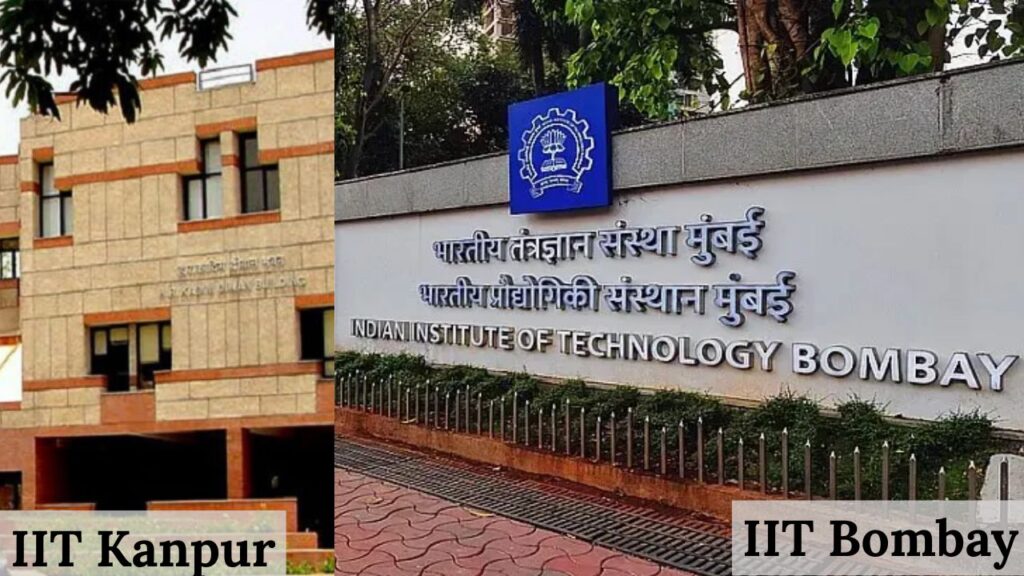
Indian BTech Colleges NIRF Ranking 2025 is considered as the standard for deciding the best BTech colleges in India. As per the updated list, IIT Madras ranked 1st once again for the ninth straight year, further consolidating its hold on engineering. The top five Engineering institutes in India according to NIRF 2025 are IIT Madras, IIT Delhi, IIT Bombay, IIT Kanpur, and IIT Kharagpur.
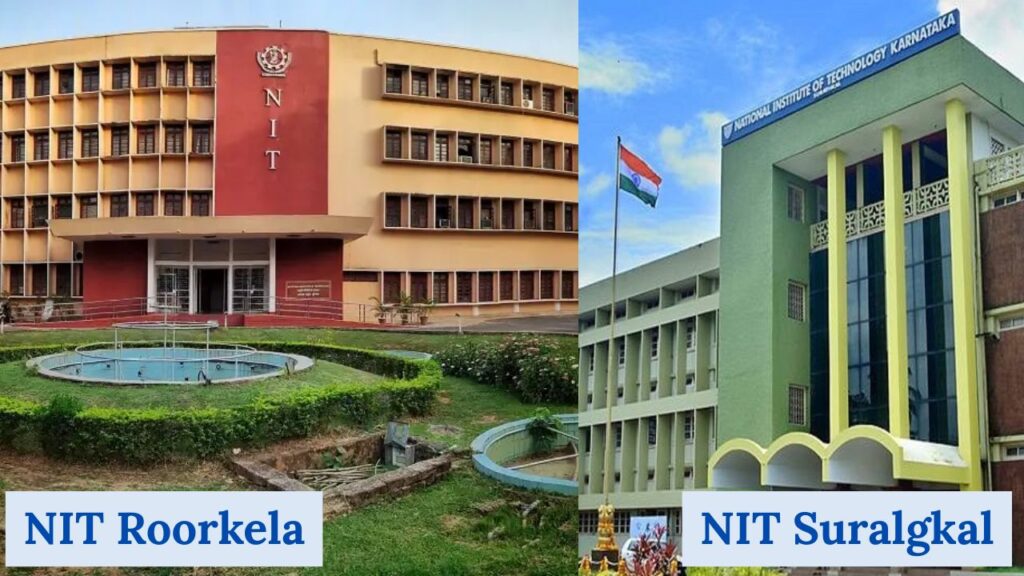
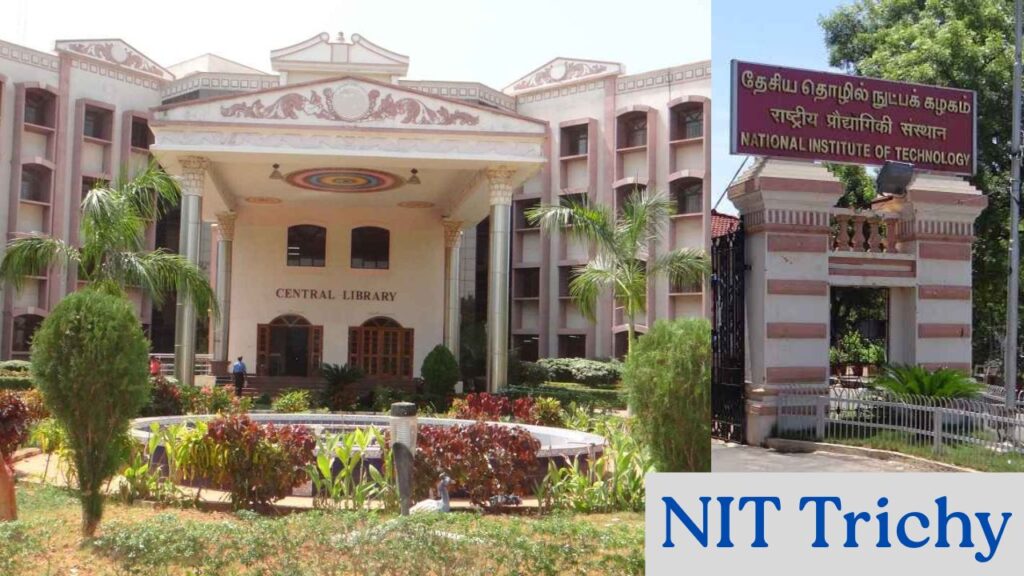
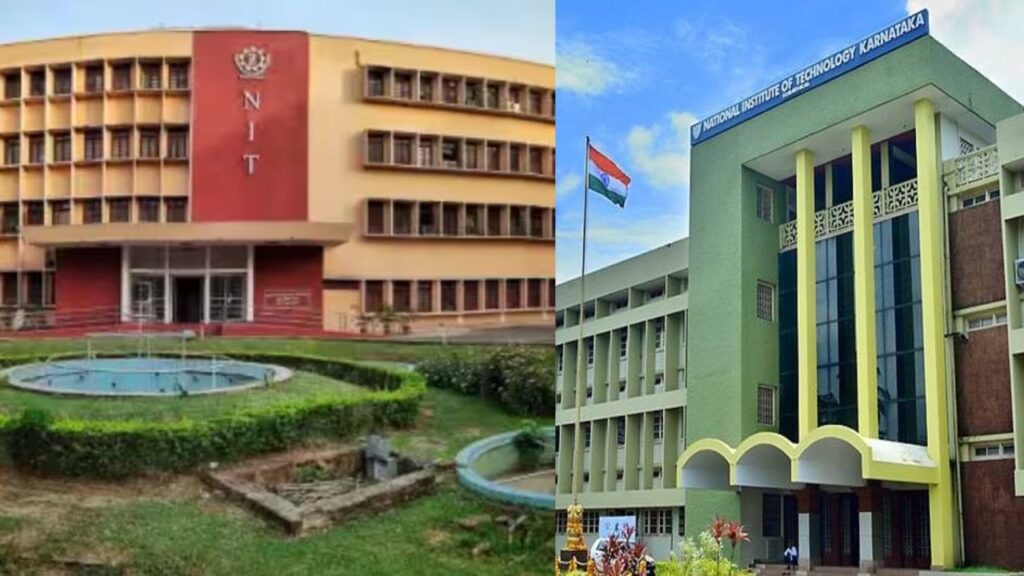
But the story is not all IITs, the NIRF Rankings are not limited to the only IITs. As far as the National Institutes of Technology (NITs) are considered, only NIT Trichy emerges among the top 10 at rank 9 in the list, which speaks about the immense competition in rankings. Following NIT Trichy we have the older NITs like NIT Roorkela, NIT Suralgkal, we have NIT Calicut who all regularly get top 25!
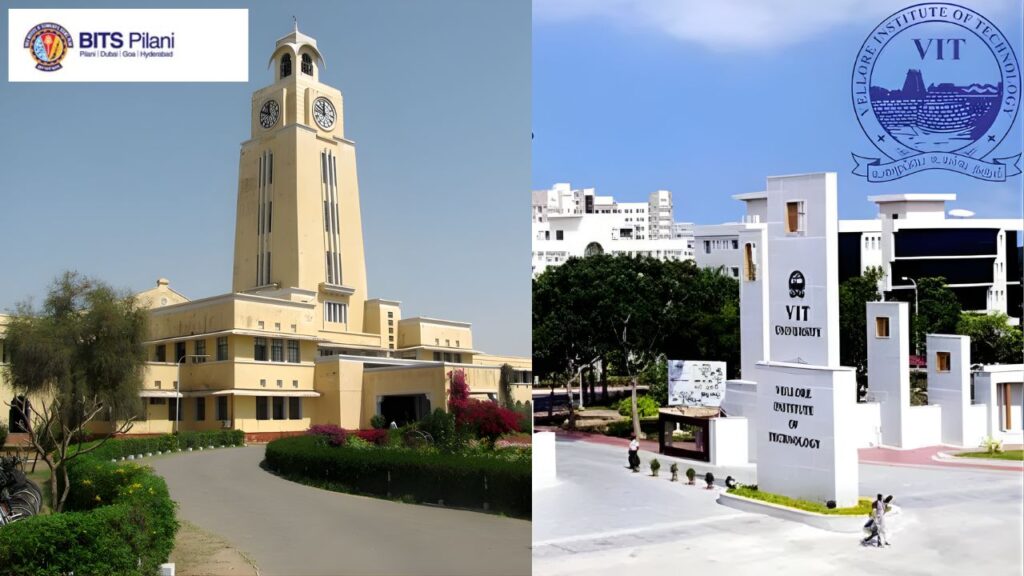
Private institutes have also made a place for themselves, with BITS Pilani at Rank 11 and VIT Vellore at Rank 16 in NIRF 2025. These colleges are no joke, they do provide a world class education and you will have no problem finding employment.
The Tier System
In addition to the usual rankings, a number of industry insiders grade schools according to tiers based on placement results, presence of recruiters, and number of competitive cutoffs. This gives a more refined sense of the college pecking-order.
Tier 1 (Premier Institutes) consists of the legendary IITs such as IIT Bombay, IIT Delhi, IIT Madras, IIT Kanpur, IIT Kharagpur, IIT Roorkee, IIT Hyderabad, and IIT Guwahati. These are also engineering colleges which dream destinations for most engineering aspirants. Indian academics are tough and placement records are also excellent.
Tier 1.5 (Strong and Competitive) has institutes such as IIT BHU (Varanasi), IIT Indore, BITS Pilani, IIT Ropar, IIT Gandhinagar, NIT Trichy, NIT Surathkal, and NIT Warangal. These universities have good academics and employment potential and have gained significant traction in reputation.
Tier 2 (Well established with Consistent Track Records) Institutes of the second tier like IIT Mandi, IIT Jodhpur, IIT Bhubaneswar, IIT ISM Dhanbad, NIT Rourkela, NIT Calicut, BITS Goa, BITS Hyderabad, and the likes, boast of consistent placement records coupled with strong alumni network. These are established institutes and provide assured opportunities for students for career growth and links with industry.
Placement Statistics
While selecting a college, the chief concern is usually the placement. Let’s dig into the real figures. The average salary package at IIT Bombay soared to ₹23.5 LPA in the 2024 placement drive, showing a 7.7% rise from last year’s ₹21.8 LPA. The highest package at IIT Bombay soared to a staggering ₹3.67 crore, with 22 students bagging offers scaling the ₹1 crore per annum mark.
The placement rate for IIT Bombay’s BTech programme is a healthy 74.53%, with 1,475 students placed out of 1,979 registered. Curiously, Computer Science Engineering is the most in demand branch with 230 offers, then closely matched by Electrical Engineering (232) and again by Mechanical Engineering (229).
The average package at IIT Kanpur hiked up to ₹26.27 LPA, whereas IIT Delhi saw an average package of ₹17.60 LPA with a highest package of ₹2.05 crore. These statistics attest to the amazing value top engineering colleges provide their students.
Admission Process For B.Tech
Anyone with ambitions to be a part of these institutions should know the process of meteoric rise, which is Understanding the process of admissions is essential for any aspirant who wants to get into these esteemed organizations. The route for BTech admission in India: Your Class 12 results and entrance exams largely decide your fate.
An all India examination termed JEE Main is required to be passed by the candidates for admission to the institutes like IITs, NITs. Candidates are required to qualify in JEE Advanced, which is the next level after JEE Main, for seeking admission to IITs. JEE Advanced for admission to IITs can be attempted only by JEE Main rank holders (JEE Main is qualifying exam for JEE Advanced), and seat allotment in IITs is done on the basis of JEE Advanced ranks alone.
The eligibility criteria is simple, but important: candidates should have completed class 12th (science stream with physics, chemistry, and mathematics) with minimum marks of 50% to 75% which varies as per the institute and category. For reserved category contenders the qualification is generally 65%.
The BTech admission schedule is designed in a manner that helps you to plan well in advance. Application period: It may be from November to March of next year, subject to specific entrance examination.
Entrance exams are generally held in April-June, followed by counselling and seat allotment after the exams then classes usually start around August or September.
Cutoff Ranks Matters
In top colleges, an applicant with a JEE Main rank less than 5,000 can expect to get one of the top five NITs. For example, NIT Trichy’s Computer Science Engineering has an opening and closing rank of 1000-2000 in general category, NIT Surathkal’s CSE has ranks in the range of 1500-3500.
General
91-95
EWS
79-83
OBC-NCL
77-81
SC
58-62
ST
44-48
Under this category, the likely cutoff percentile for JEE Main 2025 is General (91-95), EWS (79-83), OBC-NCL (77-81), SC (58-62), ST (44-48). But, all these are predictions based on the past year’s trends of the exam, the actual figure of cutoff may be different.
Popular BTech Specializations
The present day BTech courses are not only confined to traditional engineering branches. Computer Science Engineering (CSE) leads the list as the most preferred branch for a bright career in software development, data science and cybersecurity.
But today the BTech branches in the specializations are far more than the CSE. Mechanical Engineering, Civil Engineering, ECE (Electronics and Communication Engineering), and IT (Information Technology) are still the standard choice but some new fields are emerging that are taking over the engineering world. AI and Data Science, Cyber Security, Cloud Computing, Biomedical Engineering, and Robotics and Automation Engineering are the courses currently making waves owing to high demand in industry.
Emerging disciplines such as these are the future of engineering, and firms looking to attract the best graduates in those niche are already hard-pressed to come up with competitive salary packages.
Understanding the Financial Reality
It is also necessary to consider the expenses related to BTech. The entire course fee amountfor government colleges like NITs and IITs is generally between ₹8.35 lakhs and ₹9.17 lakhs which is really affordable considering the kind of opportunities these institutes offer.
Private universities such as BITS Pilani have much higher fees at ₹23.9 lakh for the full course, although they do have a variety of advantages such as more flexible curricula and better placement results.
With a low fee structure of ₹8.35 lakh, IIT BHU, Varanasi also has the highest ROI of 239.52%, due to a median package of ₹20 LPA.
Conclusion
Selecting a BTech college is among the most crucial decisions in your academic life. Despite the importance of rankings and placement statistics, you must keep in mind your interests, what you want to do in your career and your personal circumstances. If you’re going for the elite IITs, the perpetually decently performing NITs, or the private ones like BITS Pilani, do remember that your success depends as much on how hard you work as how good your education institution is.
Start your JEE Main preparation today, aim for a good rank, and keep track of the dates of the admission process. After all the efforts and proper guidance, it’s not going to be long before you’re striding down the hallways of the top engineering colleges in India, ready to make a mark on the world.
Finding a stable, respected, and rewarding job in Bihar is not hard because government jobs can provide you with all of these features. I have maintained a list of the Best Government Jobs in Bihar along with their details. Whether you are a 10th, 12th pass, graduate, or even a postgraduate, there are roles in various government ministries and departments for different-level jobs.
Government jobs are still the first choice for many because of job security, high salary, reputation, and long-term benefits like a pension. Whether you’re from a rural or urban background, Bihar has options for all.
Each job has different eligibility, salary, and exams for selection. Worth applying for any government job because it will also provide you with career growth.
Top 10 Best Government Jobs in Bihar
1. BPSC – Administrative Services
This exam is designed to recruit high-level administrative roles. One of the best and hardest exams in Bihar. Popular posts include:
Deputy Collector
Block Development Officer (BDO)
Revenue Officer
DSP (Police Officer)
Supply Inspector
Eligibility
Age Limit
Selection
Salary
Graduate in any stream
21–37 years
Prelims → Mains → Interview
₹50,000 – ₹70,000/month
2. Bihar Police Jobs
If you are interested in the defense sector then you can apply for this job. There are different roles in the Bihar Police Service:
Sub-Inspector
Constable
Assistant Sub-Inspector
Inspector
Eligibility
Age Limit
Selection Process
Salary
12th pass to Graduation (depending on post)
18–37 years
Written Test + Physical Efficiency Test + Medical Exam
₹25,000 – ₹45,000/month
3. Bihar Teacher Recruitment Exam by BPSC
If you want to work in a Peaceful job, with long holidays, ideal for women and parents, teaching jobs have gained a lot of attention in Bihar, especially among women with thousands of vacancies in recent years. Popular posts include:
Primary Teacher (Class 1–5)
Upper Primary (Class 6–8)
PGT (Higher Secondary)
TGT (Secondary School)
Eligibility
Selection Process
Salary
D.El.Ed/B.Ed + CTET/Bihar TET
Written Test conducted by BPSC
₹30,000 – ₹50,000/month (based on class level)
4. Bihar Staff Selection Commission (BSSC) Jobs
BSSC is another body that recruits thousands of candidates for various roles which offers plenty of vacancies and it’s easy to prepare. Popular posts include
Clerk
LDC (Lower Division Clerk)
Assistant
Data Entry Operator
Stenographer
Eligibility
Age Limit
Selection Process
Salary
12th pass or Graduation
18–37 years
Written Test + Skill Test (for some posts)
₹20,000 – ₹40,000/month
5. Bihar Court Jobs (High Court & District Court)
These are all office-based jobs which offer fixed working hours. Judiciary departments in Bihar offer non-legal posts like:
Various roles for local development recruited under schemes like MGNREGA and PMAY, Bihar Government hires for local development roles like:
Panchayat Secretary
Block Program Officer
Technical Assistant
Computer Operator
Rozgar Sevak
Eligibility
Selection Process
Salary
Why Apply
Graduate or Diploma in a related field
Written Test + Document Verification/Interview
₹20,000 – ₹35,000/month
Local postings, social impact, and less stressful work
7. Health Department Jobs (NHM Bihar)
If you are interested in working for the health department then Bihar health sector jobs are in demand after COVID, especially under the National Health Mission (NHM). Popular posts include:
Community Health Officer (CHO)
Staff Nurse
Pharmacist
ANM / GNM
Lab Technician
Eligibility
Selection Process
Salary
Diploma/Degree in Nursing OR Pharmacy
Written Test + Document Verification
₹25,000 – ₹40,000/month
8. Bihar Rural Development Department
Government-funds schemes are implemented under this department. These schemes are initiated for the Bihar Development projects. You can apply for these roles if you are interested in office-based and project-related work. Some common posts are:
Gramin Awas Sahayak
Account Assistant
MIS Executive
Junior Civil Engineer
Eligibility
Selection Process
Salary
ITI/Diploma/Graduate
Written Test + Skill/Trade Test
₹18,000 – ₹35,000/month
9. Banking Jobs in Bihar
If you want financial security and fast promotions then banking jobs can offer you that. The Bihar government recruits candidates for public banks each year. You can apply for the following common posts:
Clerk (Office Assistant)
Probationary Officer (PO)
Officer Scale I, II, III
Eligibility
Selection Process
Salary
Graduation in any discipline
IBPS Prelims → Mains → Interview
₹30,000 – ₹60,000/month
10. Group D & 10th Pass Jobs
Those with basic education can apply for Group D posts in the railways or post offices. There are several jobs that are common:
Railway Group D (Helper, Track Maintainer)
Postman/Gramin Dak Sevak
Peon, Watchman, Office Assistant in various departments
Eligibility
Selection Process
Salary
10th pass
Merit-based or a simple written test
₹18,000 to ₹30,000 per month
Tips to Get a Government Job in Bihar
Start early Preparation: For common posts, Group D has easy exams that can be prepared within 4-6 months but some exams like BPSC or BSSC take 6–12 months of preparation.
Know the syllabus and exam pattern: Focus on Bihar GK, Current Affairs, Math, and Reasoning more.
Practice daily: To finish the exam in a given time you need to be prepared with practice like Mock tests.
Stay updated: Check on recruitment announcement on the official Bihar Government website. Here are the websites for Bihar government job updates:
Keep multiple options open: Know your interest in the field and then apply for the role but apply for at least 2-3 roles to increase chances.
Conclusion
There is no shortage of good government jobs in Bihar if you are ready to prepare and stay consistent. Don’t waste your time thinking that you can’t beat the competition, the core syllabus and the right strategy for exams can help you get high level jobs.
Whether you’re aiming for a high-ranking BPSC officer post or want a peaceful teacher’s life, the Bihar government also gives a chance to 10th pass students who want to start earning early and become a government employee. Choose any of the Top 7 Best Government Jobs in Bihar that ensure respect, stability, and financial peace for the long term.
If you are among the lakhs of aspirants who are going to appear in the UPSSSC PET Syllabus 2026 exam, you are already aware of the procedure — this exam is the filter. Clear it and a plethora of Group B and Group C government jobs in Uttar Pradesh awaits you. If you fail to clear it, and none of those Mains exams even become an option.
This is why having a proper understanding of the syllabus From day one is more important than just diving in and doing some random practice sets.
So, let’s analyze the UPSSSC PET Syllabus 2026. What is asked in the exam, marks distribution of each section and how you should prepare to crack the exam.
What Exactly Is UPSSSC PET?
UPSSSC PET refers to the Preliminary Eligibility Test, which is organized by the Uttar Pradesh Subordinate Services Selection Commission. Think of it less as a “final” recruitment test and more as a preliminary screen.
It’s compulsory — you cannot even fill out the application form without a valid PET scorecard. If you pass the PET test, your score is good for three years, so you can use it to apply for multiple positions during that period without having to retake the test.
The examination is offline on pen and paper using OMR sheet and it is for basic level aptitude and general awareness and not for anything very technical or domain specific.
Exam Pattern: The Numbers You Need to Know
Before diving into subjects, it helps to understand the shape of the paper:
Feature
Details
Total questions
100
Total marks
100 (1 mark per question)
Duration
2 hours
Negative marking
0.25 marks deducted for every wrong answer
Question type
Objective, multiple-choice with four options
That quarter of a mark negative marking is worth remembering — guessing blindly can damage your score, so accuracy is as important as speed here.
Subject-Wise Breakdown
The UPSSSC PET Syllabus is spread across roughly 15 sections, each with a fixed number of questions and marks. Here’s how it typically looks:
Indian History & Indian National Movement (5 questions, 5 marks each — 10 total) This spans a broad history, including the Indus Valley Civilization, Vedic culture, Jainism/ Buddhism, and leaves off at the Maurya, Gupta, Mughal dynasties and the freedom struggle. Questions on the Swadeshi Movement, Civil Disobedience Movement and the rise of revolutionary nationalism, the Quit India Movement, personalities like Netaji Subhash Chandra Bose and the Azad Hind Fauj.
Geography (5 questions, 5 marks) Topography of India and the world, lakes and rivers and their valleys, underground water, Himalayas, deserts, minerals, political mapping, weather conditions, India Times, and population trends and movements of people.
Indian Economy (5 questions, 5 marks) This is a narrative of India’s economic path from 1947 to 1991 and thereafter — the Five-Year Plans, the mixed economy model, the green revolution, bank nationalization, the 1991 economic reforms, and more recently GST and post-2014 structural/sector reforms.
Indian Constitution & Public Administration (5 questions, 5 marks) The Fundamental Rights and Duties, Directive Principles, parliamentary and federal system, relations between the Union and the States, the judiciary, and local government through Panchayati Raj institutions.
General Science (5 questions, 5 marks) Basic Physics, Chemistry, and Biology — roughly at a Class 12 difficulty level, so nothing too advanced, but you do need conceptual clarity.
Elementary Arithmetic (5 questions, 5 marks) Integers, percentages, basic calculations, square and cube roots, powers, means and such basic and general topics in math.
General Hindi (5 questions, 5 marks) Grammar-related — synonyms, antonyms, one-word substitutions, gender differentiation, homophones, idioms, and proverbs, frequent mistakes, and quizzes on famous writers and their productions.
General English (5 questions, 5 marks) Basic grammar rules along with an unseen passage to test comprehension.
Logical Reasoning (5 questions, 5 marks) A fairly mixed bag — blood relations, coding-decoding, number series, syllogisms, venn diagrams, direction sense, puzzles, statement-conclusion questions, and hysteresis. .
Current Affairs (10 questions, 10 marks) World and national events — that’s where being on top of the recent news really serves you well.
General Awareness (10 questions, 10 marks) A miscellany of neighboring countries, capitals and currencies, Indian states and UTs, national and international day, sports, art and culture, awards, famous books and authors and environment related issues.
Hindi Unseen Passages (10 questions, 10 marks) Two comprehension passages in Hindi to test reading and interpretation skills.
Graph Interpretation (10 questions, 10 marks) Two graphs, testing your ability to read and analyze data quickly.
Table Interpretation (10 questions, 10 marks) Similar to graph analysis, but with tabular data instead.
The following three sections — passages in Hindi, graphs and tables — carry 30 marks in total. That’s almost a third of your total marks, and it’s often the section that candidates underestimate the most.
Considering how dispersed this syllabus is, trying to learn everything at the last minute is just not going to cut it. A better way to think about this is to think of this as a marathon, not a sprint:
Prioritize the data interpretation sections. As graphs, tables and Hindi passages are for 30 marks, regular practice in this section can give you an advantage over other candidates who concentrate only on GK.
Don’t skip static GK for the sake of current affairs. History, geography, economy, and polity constitute 20 marks, and these topics remain static — once you study them thoroughly, they are yours forever.
Revise Hindi grammar rules actively. Many candidates, especially those confident in Hindi, tend to get careless here. Small grammatical nuances trip people up more often than expected.
Practice with a timer. Two hours for 100 questions sounds comfortable, but data interpretation and comprehension sections eat up time fast if you’re not used to them.
Use previous year papers. They’re one of the best ways to understand the actual difficulty level and question framing, rather than relying purely on assumptions about what “might” come.
The UPSSSC PET Syllabus isn’t designed to be intimidating — it’s designed to test whether you have a well-rounded, functional understanding of general knowledge, basic aptitude, and language skills. The trick isn’t studying harder in isolation; it’s studying smart, giving weight to sections based on their actual mark share, and revising consistently rather than in bursts.
If you have ever been curious as to how the planes you ride on stay in the air or how a rocket can travel all the way to space, then you think like an aerospace engineer. From Aerospace Engineering Courses, eligibility criteria to future scope and interesting specializations available, this all you need to know guide will help you make an informed decision which you take for pursuing aerospace engineering course in India.
The Indian aerospace industry is booming. ISRO, DRDO, HAL, and a host of private companies are actively hunting for talented engineers to design, build and fly planes and spacecraft. With increasing demand and attractive salary packages, this is the way to your dream career.
What Exactly is Aerospace Engineering?
Aerospace engineering is the primary engineering discipline concerned with the design, construction, science and technology of aircraft and spacecraft. It is a combination of physics, mathematics, materials science, and advanced tech that address real life problems in the fields of aviation and space travel.
The range of activities in this field is so broad that it divides into four key specializations:
Aeronautics — This pertains to air within the atmosphere and includes such things as commercial jets, military planes, helicopters, drones (UAVs), and blimps. Aeronautical engineers study flow-air, aircraft design, motion, and propulsion.
Astronautics — A subject of business such as astronauts, rockets, satellites and all the stuff that goes beyond the atmosphere. Astronautical engineers specialize in orbital mechanics, satellite communications, rocket propulsion, and space exploration missions.
Avionics — These are the electronics and computers used in an aircraft and spacecraft. Avionics engineers create the system software of navigation, communication and autopilot systems, etc., in raw air borne machines.
Defense Technologies — This area concentrates on military, and its ability to develop and deploy new systems involving missiles, defense technologies, military drones and weaponized technology. This is important part of national security and defense system.
Aerospace Engineering Courses
Now let’s move on to the various types of courses under aero space engineering. Whether you are a high school beginner or already have a bachelor’s degree, there is a path for you.
1.Diploma in Aerospace Engineering (3 Years)
If you are looking forward to pursue a career in aerospace engineering, you can opt for the Diploma in Aerospace Engineering from a reputable board after 10th class.
This is good to start if you have done your 10th grade. It is not really theoretical but ‘practical’ which provides aerospace technologies experience.
Aspect
Details
Duration
3 years
Eligibility
10th pass with Mathematics and Science (minimum 50% marks)
Focus
Practical skills and industry-ready training
Career Path
Can pursue B.Tech (lateral entry) or start working
Average Fees
₹2-4 Lakh for the entire program
2. Bachelors in Aerospace Engineering — B.Tech (4 Years)
It serves the largest client base and is considered the gateway course for professional aerospace. It is a bachelor’s degree course and the eligibility is 10+2 with Physics, Chemistry and Mathematics (PCM).
Aspect
Details
Duration
4 years (8 semesters)
Eligibility
12th pass with PCM (minimum 50-60% depending on college)
Admission
Based on JEE Main Score, state-level exams, or direct merit
Average Fees
₹ 2-2.5 Lakh/year in government; ₹5-10 Lakh/year in Private colleges
Total Program Cost
₹4-40 Lakh depending on college type
The B.Tech is an all-inclusive course which includes theory and practical based knowledge. Subjects like mathematics, physics, and general engineering will be included in your first two years for foundation then you can choose specializing in aerospace-related subjects in your third year.
3. M.Tech in Aerospace Engineering (2 Years)
M.Tech in Aerospace suits better for those who want a higher level of education in aerospace engineering. Building a professional level career internationally, you must need this degree.
Aspect
Details
Duration
2 years (4 semesters)
Eligibility
B.Tech/BE in Aerospace or related field with 55% minimum marks
Admission
Through GATE exam (for government colleges) or merit-based (private)
Average Fees
₹40,000-1 Lakh/year in Government; ₹2-4 Lakh/year in Private colleges
Career Advantage
Higher salaries, research opportunities, senior positions
Job opportunities for M.Tech graduates are applicable in research, designing and higher level management. Top companies and research centres look for M.Tech holders for their specialised projects.
4. Ph.D. in Aerospace Engineering (3-5 Years)
“This Is for the Research and Innovative Curious”. It’s the top aerospace engineer qualification for those who want to know how to research and innovate.
Aspect
Details
Duration
3-5 years
Eligibility
M.Tech or equivalent with GATE qualification
Focus
Original research and innovation
Opportunity
Teaching, research at ISRO, universities, private labs
5. Aerospace Engineering Few Months Certification Courses
In just 6 months to 1 year duration, you can enhance knowledge or skills in certain areas. It is best for hands-on experience in a specific field.
Course Type
Duration
Cost
Suitable For
CAD and Aircraft Design
6 months
₹20,000-50,000
Working professionals, students
Avionics Systems
6-8 months
₹30,000-60,000
Interested in Electronics
Propulsion Systems
3-6 months
₹15,000-40,000
Engineers wanting specialization
Aerospace Materials
4-6 months
₹25,000-50,000
Manufacturing professionals
B.Tech Aerospace Engineering Core Subjects
Year
Semesters
Essential Subjects
1st Year
Sem 1-2
Mathematics/Physics/Chemistry help develop problem-solving skillsEngineering Mechanics/Thermodynamics/Fluid Mechanics/ and Basic Electronics introduce how physical laws apply to real engineering systems.
2nd Year
Sem 3-4
Gas Dynamics and Aerodynamics, which explain how air behaves around aircraftPropulsion and Aircraft Structures teach how engines work and how aircraft are builtStrength of Materials and Computer Programming strengthen technical and analytical skills.
3rd Year
Sem 5-6
You study higher-level aerodynamics, flight dynamics, and structural analysis Heat Transfer and Avionics.
4th Year
Sem 7-8
You learn advanced tools like Computational Fluid Dynamics (CFD)Aircraft Design and Systems
Aerodynamics describes how air moves around air and is an important factor in the level of efficiency of airflow around the wings.
Propulsion: Discussion of jet engines, rockets, turboprops
Structures deals with building an aircraft to be as strong as possible but still as light as possible.
Stability and control the motion of an aircraft.
CFD Computational Fluid Dynamics: Uses computers to emulate airflow — a modern necessity
Aircraft Design: All of the above are brought to bear on realistic, total aircraft design projects.
Most B.Tech courses will involve a lot of lab work, wind tunnel testing, simulators and a capstone design project where you actually design an aircraft or spacecraft.
Who Are Eligible For Aerospace Engineering
B.Tech (Undergraduate)
Need to pass 12th class with PCMB or PCB and should have obtained 50 to 60% marks Meet the age criteria of 17 to 28 yearsEntrance exams such as JEE Main, State Level Exam etc
M.Tech (Postgraduate)
Hold a valid B.Tech/BE degree in Aerospace or equivalent with 55% marks Valid GATE score (for government colleges)
Diploma
After 10th with Mathematics and Science having 50% marks as a minimum15 years as a minimum age
Lateral Entry to B.Tech
3-year engineering diplomaBSc in Physics, Chemistry, Mathematics
Where Will Aerospace Engineers Work?
Organization
Type
Specialization
Salary Range (Fresh)
ISRO
Government
Satellites, space missions, rocket development
₹8-10 LPA
DRDO
Government
Defense systems, missile technology
₹7-10.5 LPA
HAL (Hindustan Aeronautics)
Government
Aircraft manufacturing, defense
₹7-9.5 LPA
Boeing India
International
Aircraft systems, defense solutions
₹8-12 LPA
Airbus India
International
Aircraft manufacturing, maintenance
₹7-10 LPA
GE Aviation
International
Aerospace engine design
₹7-9 LPA
Rolls-Royce India
International
Propulsion systems
₹8-11 LPA
Tata Advanced Systems
Private
Aircraft components, defense
₹7-11 LPA
Godrej Aerospace
Private
Space and defense hardware
₹5.5-7.5 LPA
Salary & Career Growth
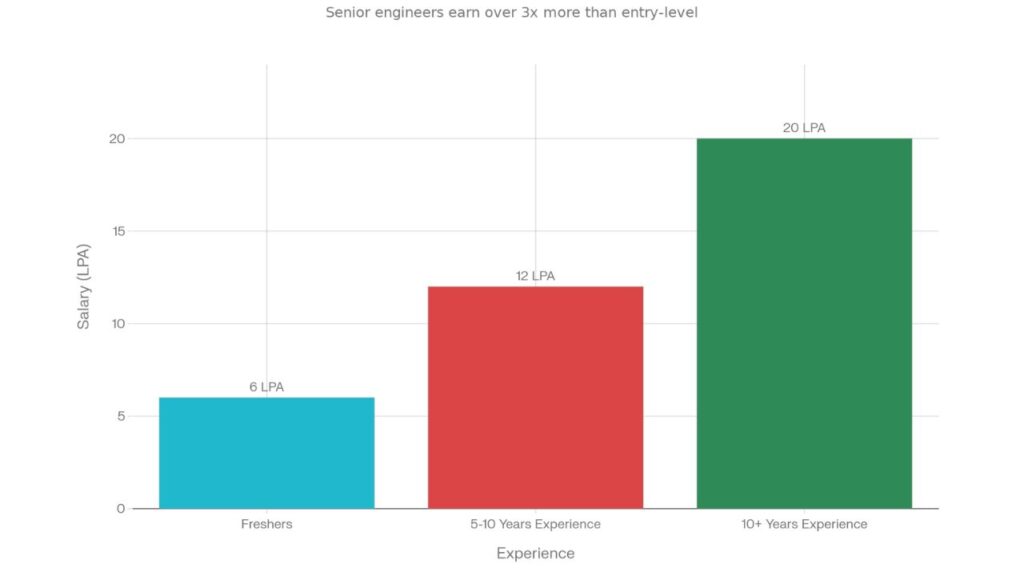
Aerospace Engineering Salary Progression in India
Levels
Salary — LPA
Monthly Income
Stages
Fresher (0-1 year)
₹4.5-7
₹37,500-58,333
Graduate joining first job
2-5 years
₹8-12
₹66,667-1,00,000
Intermediate engineer
5-10 years
₹8-15
₹66,667-1,25,000
Senior engineer or team lead
10+ years
₹15-25+
₹1,25,000-2,08,000+
Manager, specialist, researcher
Salary by Sector:
Sector
Fresher Package
Experienced Package
Government (ISRO, DRDO, HAL)
₹7-10 LPA
₹20+ LPA
Private Indian Companies
₹5-9 LPA
₹12-18 LPA
International Companies (Boeing, Airbus)
₹8-12 LPA
₹20-28+ LPA
Startups & Newer Companies
₹4.5-6.5 LPA
₹10-14 LPA
The Future Looks Bright
India’s aerospace engineering salary will increase by 20-25% by 2030 and is highly influenced by demand in electric aircraft, AI integration, space exploration, and green aviation related technologies, suggest the industry projections. .
The initial two years are dedicated to core subjects such as mathematics, physics and general engineering. These years are tough, but necessary. If you have a strong base in these stuff, then you can understand high level stuff in aero easily later on.
Year 3: Where Aerospace Engineering Gets Exciting
In year 3, the real aerospace journey begins. You then go on to such specialised areas as aerodynamics, propulsion and aircraft structures.
Year 4: Major Project and Real-World Problem Solving
Senior year is spent mostly on a senior project. You could design an airplane, build spacecraft systems, or even study a real problem in aerospace engineering. Many of these projects are sponsored by industry, giving students real-world experience and making them more employable.
Internships: The Key to Career Growth
The majority of aerospace engineering programs require 2 to 3 internships, such as summer and at times semester-long training. Top organizations including ISRO, HAL and Boeing hire interns on a regular basis. This hands on experience is invaluable and it contributes a lot in building a strong resume and career in future.
Choose Your Specializations
Specialization
Focus
Scope
Preferred Companies
Aerodynamics
Airflow, drag reduction, aircraft efficiency
Aircraft design, research
ISRO, Airbus, NASA etc
Propulsion
Engines in Jet engines, space rockets
Engine design, space missions
GE Aviation, Rolls-Royce, ISRO
Flight Dynamics & Control
Aircraft stability, autopilots, guidance systems
Control systems, UAVs
Boeing, HAL, Airbus
Aircraft Structures
Materials, stress analysis, lightweight design
Design Structure, & aerospace manufacturing
Airbus, HAL
Avionics
Radio System, navigation, Electronics
UAVs & Avionics
Boeing, DRDO
Best Aerospace Engineering Colleges in India
College
Type
Location
Specialization
IIT Bombay
Government
Mumbai
All specializations
IIT Madras
Government
Chennai
Aircraft & Space
IIT Kharagpur
Government
West Bengal
All specializations
IIT Kanpur
Government
Uttar Pradesh
All specializations
Mahindra University
Private
Hyderabad
Comprehensive curriculum
SRM IST
Private
Chennai
Modern labs & industry focus
Chandigarh University
Private
Punjab
Industry-driven curriculum
Ramaiah Institute
Private
Bangalore
Well-equipped facilities
Manipal Academy
Private
Bangalore
Research-oriented
Conclusion
Aerospace Engineering Courses aren’t simple, it’s a journey through innovation, precision and human ability. Whether you want to design the next generation of commercial planes, put satellites into space, or work on autonomous drones, this is a field with limitless options.
The Indian aerospace industry is poised for growth. With ISRO’s ambitious space programs, HAL’s indigenous aircraft development and international partnerships with Boeing and Airbus, there is no dearth of opportunities. And if you are in the top performers, the world is your sky.
NEET PG 2025 Admissions Exam Date Out for the advanced programs in the medical field. If you want to prepare yourself for the National Eligibility cum Entrance Test for Postgraduate (NEET PG) 2025 check the exam pattern and syllabus. Check the admit card before the examination date. Check the official notification and stay updated about the exam details. Before applying candidates must meet eligibility criteria and hold the MBBS certificate. NEET PG 2025 is one the crucial examinations for post-graduation across India. The exam is scheduled for 3 August 2025, and thousands of candidates are preparing to appear in this exam for MS/MD/PG Diploma courses.
Highlights of NEET PG 2025
Exam Conducting Body
National Board of Examination
Exam Name
NEET PG
Purpose
Entrance Exam for MS/MD/PG Diploma
NEET PG 2025 Admissions Exam
This is an entrance exam for advanced training programs for those who want growth in their medical field. You can appear in the exam if you have completed your MBBS.
Candidates must hold an MBBS degree from the Medical Council of India. Better with the proof of Pass Certificate of MBBS for this exam. It is mandatory to complete a one-year rotating internship program before applying for NEET PG 2025. There is no upper age limit for this exam so anyone can take this exam but candidates who are interested in advanced medical courses must have a valid registration certificate issued by the MCI.
NEET PG 2025 Admissions Exam Details
Exam Pattern for the NEET PG 2025
Section
No of Questions
Marks
Clinical Subjects
100
400
Pre-Clinical Subjects
50
200
Para-Clinical Subjects
50
200
The duration is 3 hours & 30 minutes for the NEET PG 2025 paper. The marking of answer in the paper is +4 for the correct answer and -1 for the wrong answer as negative marking. Students should prepare well and efficiently for this examination as it is the entrance exam for the post-medical courses. Students get admission to Medical College/University after clearing this exam.
Perks of This Exam
Specialization Opportunities: For students who want to study advanced medical courses and wish for medical training in their specific field, this is the best option for them.
Prestigious Institutions: Offers a chance to study in reputed institutions.
Career Growth: To enhance the practical ability and concepts for better job roles and salaries.
Selection Process
Written Examination
Result Declaration
Counseling Process
The First stage of this exam is a computer-based objective-type question and the level of question is hard, exam covering the MBBS syllabus
Check the NBE portal on the day of result declaration, search your name in the merit list for qualified candidates.
Counseling conducted by MCC for the qualified candidates for seat allocation in MS/MD/PG Diploma course
Syllabus for NEET PG 2025
Section
Key topics
Clinical Subjects
General Surgery, Gynecology and Pediatrics, and General Medicine