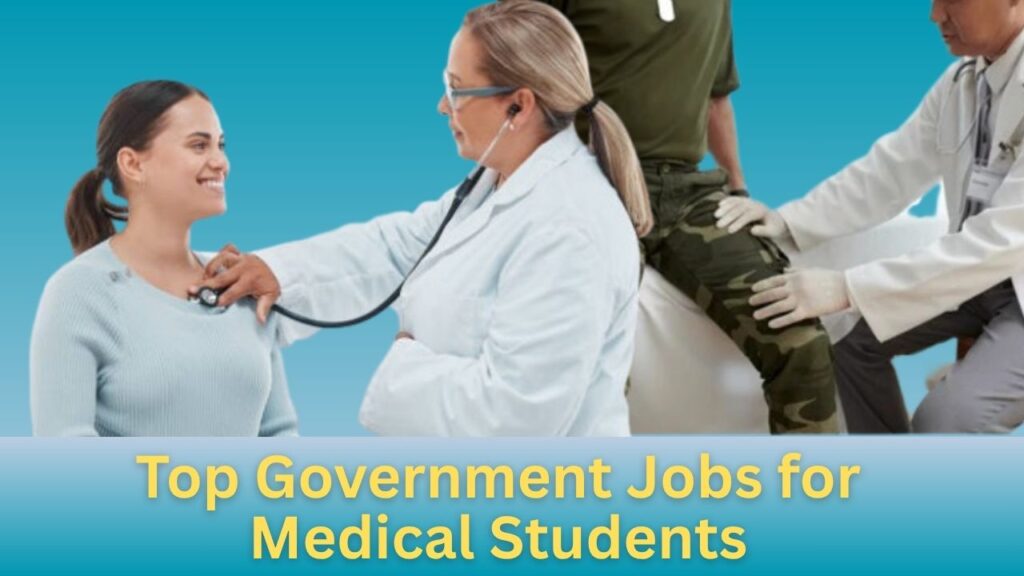
Top Government Jobs for Medical Students in 2025 You Shouldn’t Miss!

Top Government Jobs for Medical Students in 2025

Choosing a government job after a medical degree is a wise option for your career. Find top government jobs for medical students and stay updated on the recruitment notification. The competition is high, and it’s not easy to get a job in the medical field. The selection process might be difficult with a lot of competition but keep focus on preparation. With the right preparation, you can be a medical officer in defense or other public sectors.

Medical Officer

Becoming a Medical Officer is worth the MBBS degree. Many MBBS graduates prefer to become a Medical Officer in a government hospital rather than in any private hospital. The role requires the responsibility to provide healthcare services, manage the hospital, and treat patients.

Government hospitals recruit medical officers through examinations such as the State Public Service Commission, the Union Public Service Commission, and the National Health Missions.
This post allows you to diagnose patients, manage hospitals, and lead junior staff. Rural areas require such types of public services for health care.

Eligibility: You must have an MBBS degree and valid registration in any medical council.
Salary range: The starting salary is 50,000 and rises to 100,000/month. Government hospitals pay the doctors according to their experience and location.
Selection Process: The recruitment for this job starts with the written exam, and then the shortlisted candidates are called for an interview. After these processes, candidates will be selected for a medical officer position if they clear the interview.

Armed Forces Medical Services

If you want your future to be a little more adventurous, join the Armed Forces Medical Services. It provides medical services to the Army, Navy, and Air Force medical units to heal them during national emergencies. If you are physically and medically fit then this post is a good match for you. It’s a respectable post and has a great pay-scale. After clearing the examination, you will be called for an interview and then a medical examination. You must meet the medical standards of this position even if you passed all the stages.

Eligibility: MBBS graduate and valid certification from MCI.
Salary range: Medical officers in the army have starting salaries of 75,000, plus additional benefits. The salary will increase with experience and performance.
Selection Process: Candidates shortlisted for the interview are given a level of commissioned officer.

Combined Medical Services

MBBS graduates can work with the central government agencies UPSC CMS exam. Combined Medical Services gives roles like General Duty Medical Officer (GDMO), etc. The work depends on the job role but mostly involves outpatient care, emergency, and administration. These roles are assigned in organizations like the Railway, Municipal Corporations, and the Central Health Services.
The recruitment process happens each year, and candidates should have prepared well to clear the exam and achieve their goals. These roles offer a stable career, respect, and a chance to secure long-term benefits.

Eligibility: Graduate with MBBS with valid registration from MCI.
Salary range: 56,100 to 1,77,500 per month, salary range varies on the candidate’s experience.
Selection process: After clearing the UPSC exam, candidates are shortlisted for the interview and selected for their role.

AIIMS and Other Central Government Institutes

JIPMER, AIIMS, and PGIMER are the exam-conducting bodies that recruit medical professionals for roles like Junior Resident, Senior Resident, and Medical Officers. These jobs are well-paid and reputed jobs for Indian doctors.

Working with these research centers is the best chance to improve practical skills and exposure to medical research.

Posts: Doctor, healthcare professional, research scientist, administrative.
Eligibility: MBBS or MD graduates with medical certificate.
Salary range: These posts give a huge pay scale once you get experience. Candidate’s starting salary is 35,000 then rise to 1,77,500 with additional benefits.
Selection process: Written Exam, Interview for the respective post.

Indian Council of Medical Research

If you want to go into the research and public health field not just clinical practice then explore various opportunities by ICMR. It has a big role playing in biomedical research. If you’re interested in epidemiology, clinical trials can step into this role. You can apply for roles like Research Officer, Project Associate, or Scientist but it offers a promotion with more experience.

You have to focus and study hard to be able to beat this competition and secure a role for your lifetime stability.

Posts: Scientists B/C/D, Research (Junior, Senior), Administrator.
Salary range: These posts have a good pay-scale. Candidate’s starting salary is 35,000 and with experience it will increase to 1,77,500 per month.
Selection process: Screening test, Interview.

State Health Services

There are several health departments in India that frequently announce vacancies for doctors, dentists, and practitioners. Some states often offer posts including Community Health, Rural Medical Officer, or District Medical Officer. Recruitment for these roles is through state PSCs. If you wish to have a good salary and job security, you can consider applying for this role after MBBS.

Posts: Medical Officer, District Medical Officer
Salary range: Candidate’s starting salary is 50,000 and with performance, it will increase to 1,00,000 per month.
Selection process: The candidates are recruited through exams then they are shortlisted for an interview.

Public Sector Undertakings (PSUs)

Not just engineers but PSUs also recruit for medical field candidates where companies like Coal India, ONGC, BHEL, NTPC, and GAIL give the posts according to the interview base. Many students score well in MBBS so they’re recruited directly by PSUs but interview is mandatory for these roles. If you’re seeking a less hectic medical career then this is the perfect role for you. The pay scale is highly impressive and also has additional perks.

Posts: The work involves implementing government schemes for healthcare and other initiatives.
Salary range: The salary ranges between 40,000 to 1,20,000 per month.
Selection process: Recruited by public health sectors like NTPC or BHEL.

Conclusion

Working in government organizations after a medical degree is a great deal of pride. You serve the nation whether as an army medical officer or just in a government hospital. People who can’t afford private hospital expenses come to the government hospital. Your work directly affects public health, especially for the rural people. However, it is difficult to secure a government job in the medical field but you can achieve it with the right preparation and stay updated for the latest jobs. Keep an eye on recruitment notifications on official websites to apply for government jobs.


Leave a Comment

Your email address will not be published. Required fields are marked *

UPTET Online Form 2026: Eligibility, Timeline and Other Details

UPTET Online Form 2026

UPTET Online Form 2026 portal is open to receive applications from the interested candidates or who want to make a career in teaching. D.El.Ed students or you have been around looking for this moment can apply now on the official website. Because after 4 long years, a whole new set of rules will be established, UPTET Online Form 2026 might just be your opportunity to make a difference in education. 

Aspirants who wish to apply for these jobs in UP Schools must check their eligibility first, instructions, fees and the updates of this form. 

Keep The Dates Marked for UPTET Online Form 2026

EventDate
Notification Released20/March/2026
Online Applications Start27/March/2026
Application Deadline26/April/2026
Correction Window Close01/May/2026
Exam Dates2—4/July/2026

UPTET Certificates Validity

Before, the qualification lapsed after five years, compelling a lot of aspirants to appear again in the exam just to remain qualified. Now, once you clear UPTET 2026, you are good for life. No more worries about expire-dates and reappear-ing every two years.

Another important update: The requirements for eligibility have been relaxed. As per the recent notification, all the D.El.Ed trainees including in-service assistant teachers are eligible to apply. This brings to a big problem where previously nearly 3 lakh aspirants were left out. If you are training at present or you are teaching already, you can teach, you’re in the running. 

Understanding the Basics: Paper 1 vs. Paper 2

Before you are going to fill in the form in hurry, you should know that which paper is applicable to you:

  • Paper 1 is for candidates who wish to teach Classes 1 to 5 (Primary Level)
  • Paper 2 is applicable for aspirants who want to teach Classes 6 to 8 (Upper Primary Level)
  • Both Papers if you want to remain eligible from Class 1 to 8

Paper 1 is for people who adore the energy of young children and want to establish foundational skills. Paper 2 is tough because it is prepared for those teachers who can teach more deeper topics to older children. Taking both the examination is best shot if you are confused. 

Application Fees for UPTET Online Form 2026

CategoryOne PaperBoth Papers
General/OBC₹600₹1,200
SC/ST₹400₹800
Persons with Disabilities₹100₹200

Step-by-Step Guide to Fill The Form

Keep the valid documents, photo, ID ready to fill the application because one small error can lead you to miss this opportunity. 

  • Step 1: Visit the official portal, which is the official website of UPTET and register with email or phone, and generate your profile.
  • Step 2: Adhaar ID, Passport size photo, Signature on Paper, Marksheets of passed qualification be ready to be scanned or attached.
  • Step 3: Login on the site again to complete the UPTET Online Form 2026 application. 
  • Step 4: Fill every block of each section and re-check it then attach your valid documents.
  • Step 5: Submit the form with paying its fees through online payment methods.
  • Step 6: Make sure to keep the copy of the application with yourself in a hard copy.

Eligibility Details for the Applicants

For Paper 1 (Primary Level):

  • D.El.Ed/BTC pursuing or completed students are eligible to apply.
  • Any degree + B.Ed completed students with a minimum 50% score.
  • 12th + 4-year B.El.Ed completed course is required to fill this application.

For Paper 2 (Upper Primary)

  • 2-year D.El.Ed/BTC  + Any Degree
  • Graduation/Masters + B.Ed also required 
  • 4-year BSc/B.El.Ed course + 12th Marksheet

Candidates who are fit in this range 18 to 35 years can apply.

Read More:- UPSSSC Agriculture Technical Assistant Preparation: Complete Guide to Cracking AGTA Exam

Conclusion

The UPTET Online Application Form 2026 is your chance to make your dream to become a teacher come true. You can take this exam which is valid for lifetime now and its eligibility is expanded. So, apply before the timeline ends.

As you can face server crashes or document mishaps or panic while filling the form. Begin your preparation today, we will collect your documents this week and it further guide you through the entire process. 

Leave a Comment

Your email address will not be published. Required fields are marked *

Best Nursing Colleges in Lucknow with Fees, Courses & Admission 2025

Nursing Colleges in Lucknow

If you are compassionate about caring for people then nursing will open up a path for a dynamic and rewarding career. Nurses are in demand in health care centers, private, and government hospitals. Degree, diploma, and certification courses are available in the Best Nursing Colleges in Lucknow with details of admission, fee, and placement opportunities.

Many students aim for a stable career, personal fulfillment, and a chance to care for others. Nursing is the best option for them, and it is easy. 

Some colleges admit students through entrance exams and some conduct direct admissions. Whether you pursue a Bachelor’s degree or a Diploma, you can get a lot of opportunities in this field.

Best Nursing Colleges in Lucknow

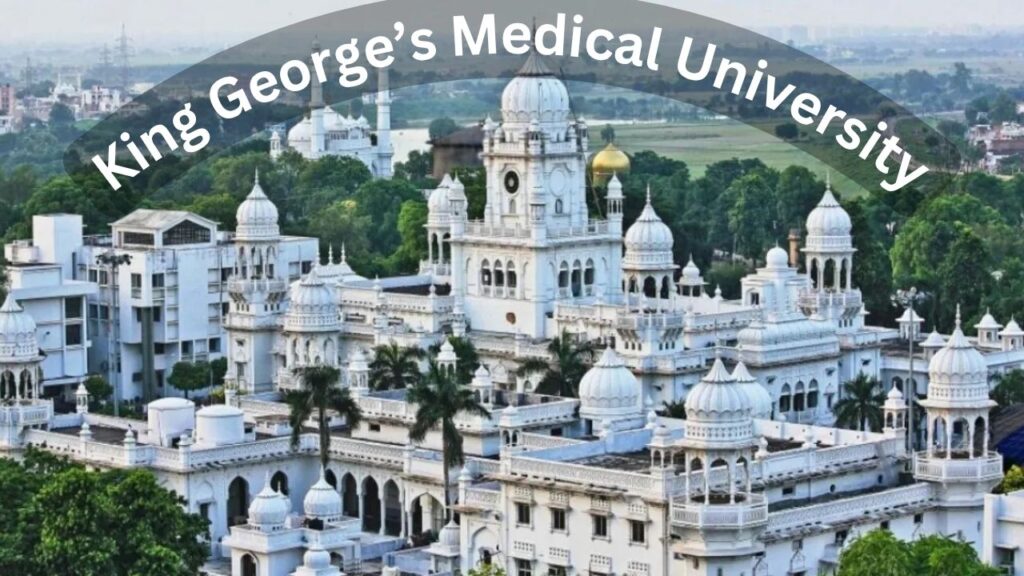
King George’s Medical University

Nursing students at King George’s Medical University in Lucknow during clinical training

King George’s Medical University: You can make a golden career if you get a chance to pursue nursing from the KGMU which is located in Lucknow, Uttar Pradesh. NAAC A+ accredited and experienced faculty can provide you with advanced knowledge. B.Sc Nursing from the Medical University costs between Rs. 48,000 and Rs. 3,00,000 for the entire course. Students can get a lot of opportunities after this course, average packages offer around Rs. 7.2LPA.  

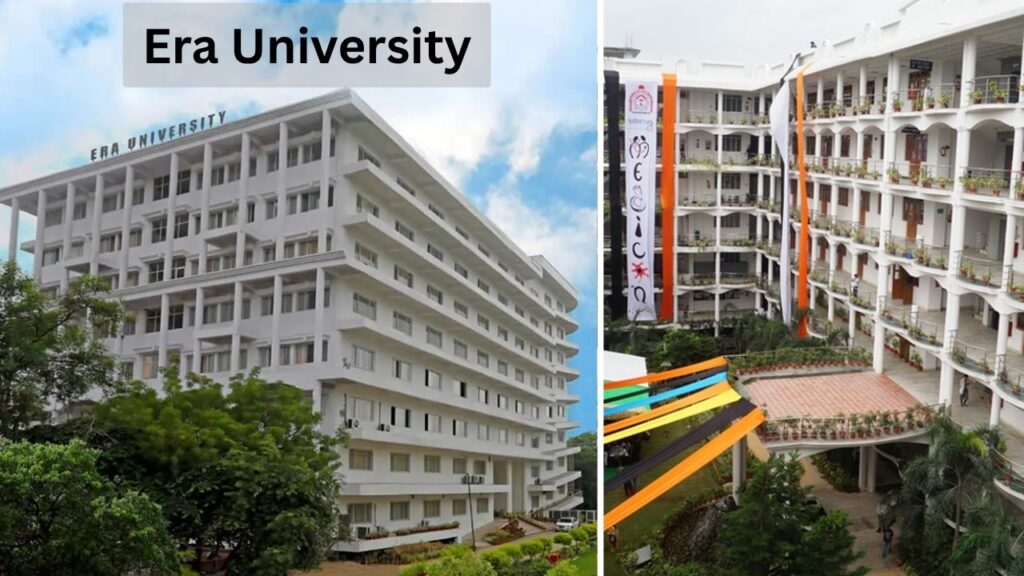
Era University

Era University nursing lab with students learning under faculty supervision.

Era University is new but growing faster with its advanced medical courses. The advancement in practical training will help students to learn and research. Admission is processed based on class 12th marks. The nursing course annual fee is around Rs. 50,000. The modern infrastructure and experienced faculty are strongly supportive in providing students with effective learning. 

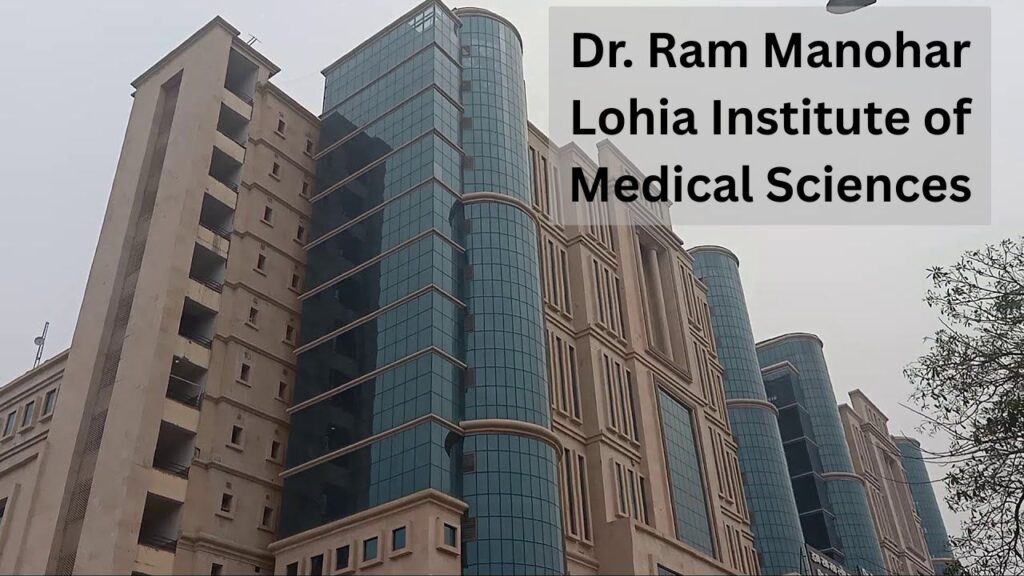
Dr. Ram Manohar Lohia Institute of Medical Sciences

Students at RMLIMS Lucknow attending a nursing class.

RMLIMS is a government institution that offers many medical courses that have great value. The total fee of Rs. 3.90 lakhs for the RMLIMS Nursing course. Admission happens through CNET with a good score. Students can secure positions in the government hospitals.

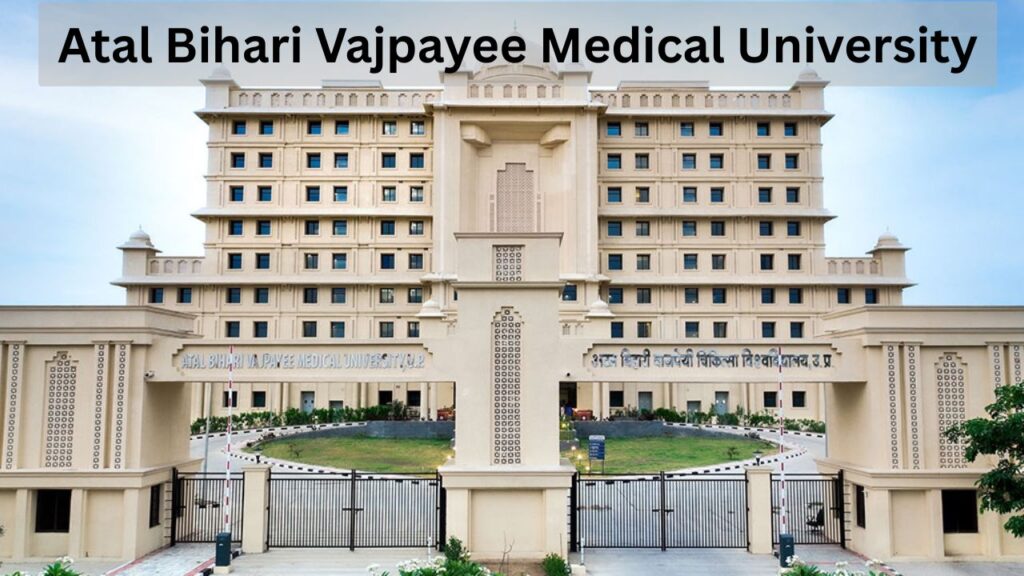
Atal Bihari Vajpayee Medical University

 Nursing students engaged in a group discussion at Atal Bihari Vajpayee Medical University.

Atal Bihari Vajpayee Medical University: This is a government institute for medical courses, with nursing as one of them. Students pursuing nursing courses from this college can get opportunities with top packages and a stable life. Students must appear in the CNET exam for admission. Total fee of Rs. 1.25 lakhs for the graduate program in nursing. Placement in government hospitals and research institutes is possible from this college. 

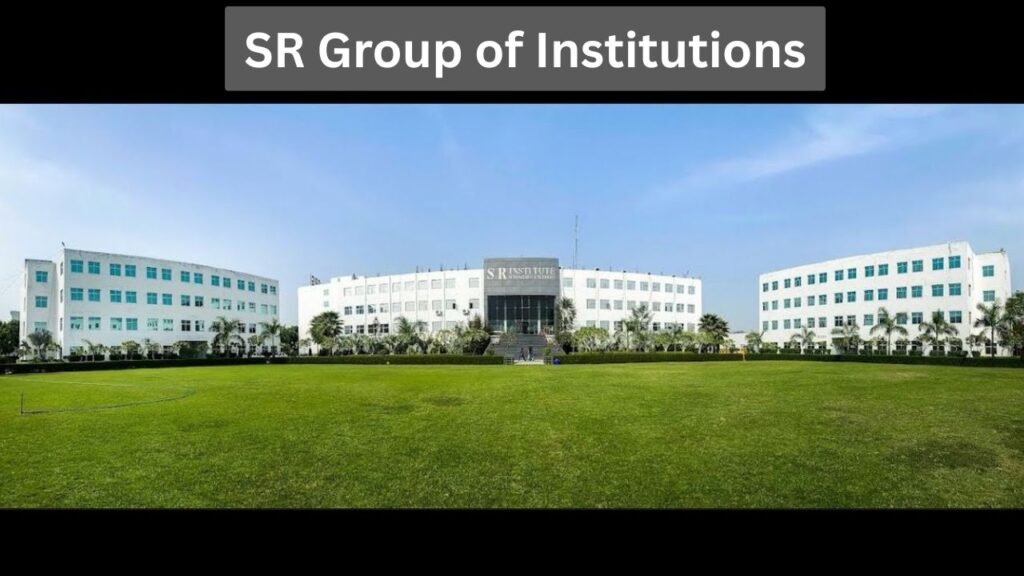
SR Group of Institutions

SR Group nursing students practicing patient care in a skills lab.

SR Group of Institutions: This is the best private institution for nursing courses as it offers practical training and a modern lab which helps students to engage with their work practically so they can gain skills and improve themselves to work more confidently and perfectly. The nursing course fee is around Rs. 58,000. Students get various opportunities after completing the course due to the institute’s support in placement. 

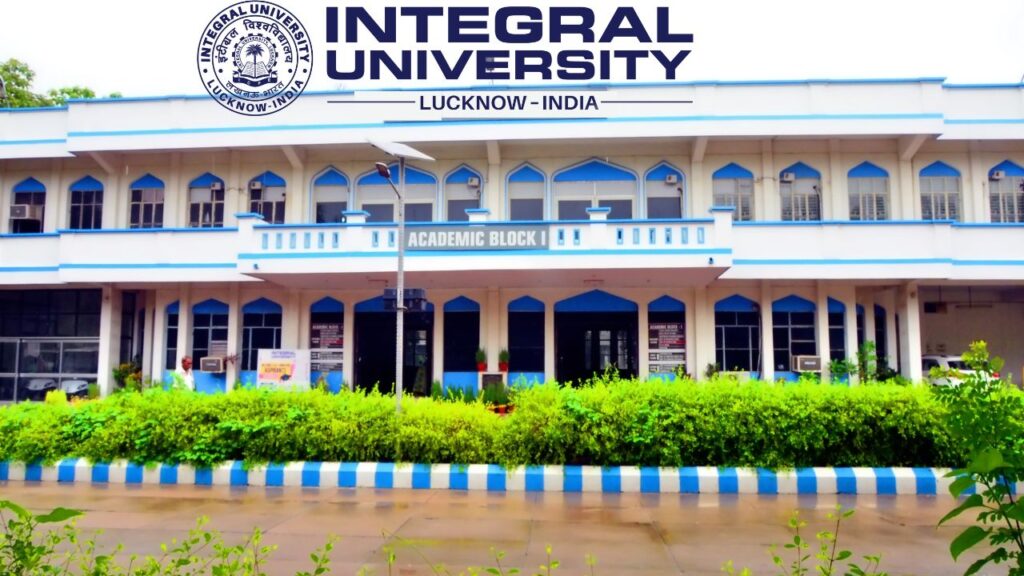
Integral University

Integral University, Lucknow

Integral University has a strong faculty and is best for providing educational quality but it can be costly for most students. B.Sc Nursing fee is around Rs. 1.45 lakh for a year. Total sum up of 5.6 lakh for the 4-year course which can be expensive. So, if you can afford it then you can take admission by applying online on the official website. 

Bora Institute of Allied Health Sciences

This institution offers various courses and nursing is one of them. Total fee for B.Sc Nursing is approximately Rs. 4.50 lakh. BIAHS is a world-class institute that conducts admissions through CNET. Be sure to score well on the entrance exam for admission. 

Read More 👉 Medical vs Engineering: Which Career Will Make You More Successful in 2025

Career Opportunities With Nursing Course

Nursing courses from these colleges offer a lot of opportunities in private and government hospitals, health centers, and research labs. Nurses are in high demand in India because of their skills and work ethic. Graduating from a top college can secure a high package in the best organizations. You can also go abroad for higher studies and work there in healthcare.

Why Choose Lucknow for Nursing?

These top institutions in Lucknow are not just best in faculty and their campus but for educational qualification and training. Nurses trained from these colleges are best in their work because the high-quality practical exposure and understanding of their purpose to care for people is their motive from the beginning of their course. Ethics ensures that students are not just skilled professionals but compassionate caregivers, this is about more than medicine.

Types of Nursing Courses

Degree Courses

  • B.Sc Nursing is a graduation degree for students who want both theoretical and practical training in their studies.
  • Post Basic B.Sc Nursing is the best option for those who have completed their diploma and want to have a UG degree to upgrade their education qualifications.
  • M.Sc Nursing is a postgraduate program for those students who have completed their graduation and aim for leadership roles.
Course NameDurationEligibilityTypical FeesCareer Outcome
B.Sc Nursing4 years10+2 (Science: PCB & English), 45-50% marks₹20,000–₹2.5 lakh/yrRegistered Nurse, Staff Nurse
Post Basic B.Sc Nursing2 yearsGNM + Registered Nurse License₹40,000–₹1.75 lakh/yrSenior Nurse, Supervisor
M.Sc Nursing2 yearsB.Sc Nursing/Post Basic B.Sc Nursing₹50,000–₹2 lakh/yrNurse Educator, Manager

Diploma Courses

  • GNM is a diploma course for those who can’t afford degree programs; a diploma in nursing is also valuable. Many students start working after graduation and continue their studies for better positions.
  • ANM is best for those who are compassionate about maternal and child health care. Mostly demanding of community health workers.
Course NameDurationEligibilityTypical FeesCareer Outcome
GNM (General Nursing & Midwifery)3 years + 6 months internship10+2 (Any stream, 40-45% marks)₹10,000–₹5 lakh totalStaff Nurse, Clinical Nurse
ANM (Auxiliary Nurse Midwifery)2 years10+2 (Any stream, 40-45% marks)₹15,000–₹80,000/yrCommunity Health Worker

Certificate Courses

These are the short-term courses for those who aim to enter nursing but can’t afford expensive degrees and have a long time for their studies. These are the best options but jobs are mostly offered for maternal care and home care.

Course NameDurationEligibilityTypical FeesCareer Outcome
Certificate in Maternal and Child Health Nursing6 months–1 year10+2 or Nursing Diploma₹3,000–₹35,000Maternal/Child Health Aide
Certificate in Home-based Health Care6 months10+2 or Nursing Diploma₹3,000–₹35,000Home Care Nurse

Conclusion 

Nursing is about caring for patients at their most vulnerable state. With the help of these courses, you can enhance your skills to provide care in hospitals, health centers, and NGOs. Make sure to choose the right college for professional skills and practical training. These Best Nursing Colleges in Lucknow can offer you practical exposure, ethical foundation, and a culture of compassion to grow your career. Strong mentorship and support are the most encouraging parts. Graduates have placement options in India and abroad are high.

Leave a Comment

Your email address will not be published. Required fields are marked *

JEE Main Result 2026 – Eligibility, Syllabus, Dates, Pattern Explained

JEE Main Result

The JEE Main 2026 exam has been made the necessary academic test for Indian engineering aspirants since now for the engineering aspirants. On 16th February 2026, candidates who appeared for the exam will be able to check the JEE Main Result 2026 for January session. JEE Main is a system that requires one to be mentally strong, strategically enduring and regulation-tight  not only about ability. 

JEE Main Result the gateway exam for prestigious technical institutions in the country including the National Institutes of Technology (NITs), Indian Institutes of Information Technology (IIITs), and Centrally Funded Technical Institutes (CFTIs) the exam goes through a scale of participation that is unprecedented globally. Because it also serves as the single entrance path to the JEE Advanced, it represents a major turning point for the Indian education system. 

The information shows a strong increase in registrations with more than 1.35 million candidates for Session 1 alone. This demographic bulge requires a granular analysis of the test’s structural elements, including eligibility rules and the statistical normalization of scores. 

NTA Reforms & Administrative Changes in JEE Main 2026

In a bid to ensure the sanctity of the procedure, the NTA has brought in game changing measures:

  • Biometric Security : Now there is a “Live Photograph” taken during application that restricts impersonation.
  • Operative Changes: The test will be given on multiple dates and will require an advanced statistical “normalization” process to equate different levels of difficulty.
  • JEE Main Result Timeframes: Although administrative delays such as the Session 1 result postponement from February 12 to February 16, 2026 — do induce stress, they are vital for thorough validation of data. 

Examination Schedule and Timeline 

The NTA has adopted a two-tier system for the hour long sessions, offering candidates a tactical cushion. This enables students to view the January attempt as a baseline and the April attempt as a fine-tuning move.

The JEE Main Result 2026 Session 1 

Paper 1 (B.E. / B.Tech) was held on January 21, 22, 23, 24, and 28 over multiple days, while Paper 2 (B.Arch/Planning) was held on January 29.

The JEE Main Result delay is due to the complexity of the normalization process, it is now expected on February 16. For the NTA to be fair, it must normalize the scores within the millions of data points. 

Session 2 Dates 

EventSession 1 (January)Session 2 (April)
Application WindowConcluded1—25/Feb/ 2026
Exam Dates21–29/Jan/20262–9/Apr/2026
JEE Main Result Declaration16/Feb/202620/Apr/2026 (Expected)

Eligibility Architecture: The 75% Rule and Beyond

It is necessary to know the funnel of eligibility to avoid getting disqualified in the stage of admission process.

Age and Attempts Age: There is no upper age limit for JEE Main, however some institutions may have their own fixed limits.

The Three-Year Window: You should have passed Class 12 in 2024, 2025 or appearing in 2026.

Attempts: The exam can be attempted for three consecutive years by the candidates. 

The Performance Threshold

But the access to NITs, IIITs and CFTIs is limited by eligibility criteria that includes:

General/OBC-NCL/EWS: Minimum 75% in aggregate in class 12th.

SC/ST: 65% aggregate minimum.

Option 2: Be in the Top 20 percentile of your respective Board. 

State of Eligibility

Your ‘Home State Quota’ will be decided on the basis of the state of examination of your Class 12, not your residential status. For example, a student of Bihar coaching in Kota (Rajasthan) will come under Rajasthan Home State quota. 

Read More:- Railway RRB ALP Admit Card 2026: Download Now From Direct Link

Examination Pattern For JEE Main

AspectDetails
Exam ModeComputer-Based Test (CBT); focuses on application and speed.
Total Marks300
Duration3 Hours
SubjectsPhysics, Chemistry, Mathematics (each with two sections)
Section A20 Mandatory MCQs per subject
Section B10 Numerical Value Questions (NVQs) per subject; attempt any 5
Penalty Rule-1 negative marking for both MCQs and NVQs; precision required

Subject-Wise Syllabus Breakdown

Mathematics, Physics and Chemistry have strategic places where one must focus to improve performance:

Mathematics:  

Learn Calculus and Algebra well as they are the basics.Don’t ignore Vectors and 3D Geometry as these are very easy and carry good amount of marks in examinations.Also focus on Coordinate Geometry, Matrices and Statistics for high yield.

Physics:  

Concentrate on concepts and the use of the formulas. Modern Physics, Semiconductors = very good marks, not much calculation. Things are inevitably going to move around in your lab, so you need to be comfortable with experimental skills, especially Vernier Calipers and Error Analysis, handy points as well.

Chemistry:  

Chemistry is a very efficient subject for which you could save a lot of time and spend more time in Mathematics.  

Physical Chemistry: Be good at numericals to do well.  

Inorganic Chemistry: Be good in p-block trends;solidify your knowledge of Coordination Compounds.  

Organic Chemistry: Learn the reaction mechanisms and Biomolecules,bcoz they are very important.

Your study time can be better used and your score can be higher by focusing on these areas with the greatest yield. 

Post-Session 1 Roadmap to April

Reviewing how you did in January is the first step towards doing well in April.

  • Category A (98+ Percentile): Begin dedicating 70% of your time to JEE Advanced questions.
  • Category B (90-98 Percentile): Look for “low-hanging fruit.” Earn higher accuracy in Physics and Chemistry to enter the elite group.
  • Category C (<90 Precentile): Go back to basics. Concentrate your efforts on the most common chapters that ask questions instead of covering all the syllabus. 

The “Golden Window”

To Those Who Are Taking Boards In Feb-March The gap between the last Board exam and JEE on April 2 is crucial. Prepare Board to learn NCERT concepts which are directly used in the questions of Inorganic Chemistry and theoretical Physics. 

JoSAA & CSAB Counselling Process 2026

Admissions counselling for engineering in India is not limited to just ranking, as the Centralised Joint Seat Allocation (JoSAA) Authority in six rounds of seat allotment. Candidates may opt Freeze to accept and confirm their seat, Float to accept their seat and appear for seat updation in subsequent rounds, or Slide to retain the seat and try for an improved branch in the same institute. If there are still vacant seats after the JoSAA rounds, the procedure is continued by CSAB through special rounds which tend to be the last chance for many students with lower ranks to get an admission in a reputed NITs and other top institute. 

Conclusion

JEE Main 2026 is not just a good entrance exam—it is a good portal to sift through all the engineering institutes in the top Indian engineering colleges. Success is based on more than just knowledge: you also need to have a plan, be consistent, and make smart decisions. From understanding the exam pattern and eligibility criteria to utilising both attempts to the maximum and managing JoSAA–CSAB counselling effectively, every step will determine your outcome. Clarity, discipline, long term vision and direction in studying helped these students not only to qualify, but to open the right “doors” for their future. 

Leave a Comment

Your email address will not be published. Required fields are marked *

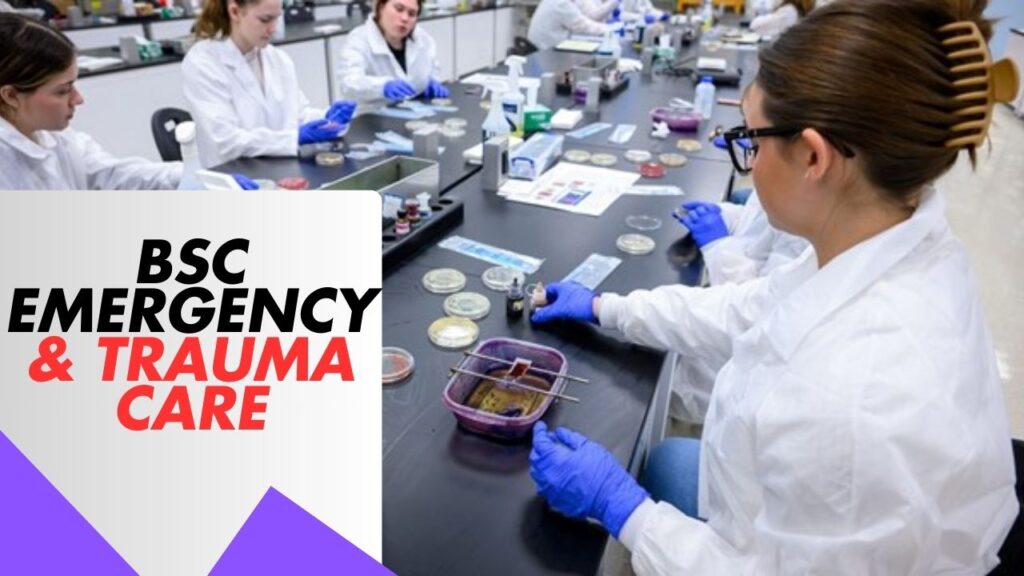
BSc Emergency and Trauma Care: Get Trained to Serve in Emergencies

BSc Emergency and Trauma Care

In the intense hospital setting, there is a place where seconds count and the word “routine” hasn’t been uttered in years. It’s the Emergency Room (ER) after BSc Emergency and Trauma Care. Although the faces with which we most commonly associate life saving are those of the doctors and nurses, there is an equally specialised group of para-professionals working with them: Emergency and Trauma Care Technologists.

Requirement for BSc Emergency and Trauma Care

A candidate must possess 10+2 in Science (PCMB/PCMC) & it’s important to know that some colleges asked for a 45%- 55% minimum score. This course prepares students to pursue a career on an emergency basis like when an urgent requirement of a doctor arise in an emergency room, on an operating table etc.

English is normally compulsory subject in class 12th and you should be minimum of 17 years of age at the time of the admission, medical fitness certificate is also required at times. 

Duration and Course Subjects

The 3-­4-year BSc Emergency and Trauma Care course enables students with the necessary skills and knowledge to deliver care to the traumatized and the emergency patient. The content sequentially increases in complexity starting with the basic sciences and advancing to clinical interventions.

The following topics are repeatedly addressed:

Basic Sciences

  • Human Anatomy 
  • Physiology 
  • Biochemistry 
  • Pathology 
  • Microbiology

Emergency Care 

  • Emergency Medical Services 
  • Pre-hospital Trauma Life Support 
  • CPR & Airway Management 
  • Hemorrhage Control

Clinical Emergencies 

  • Medical Emergencies 
  • Trauma & Surgical Emergencies 
  • Pediatric and Special Population Emergencies 
  • Critical Care Technology

The program is focused on theoretical and clinical training, designed to equip students to manage high-stakes trauma environments with both assurance and thoroughness. 

Semester Breakdown

SemesterCore Subjects
1st/2ndAnatomy, Physiology, Biochemistry, Intro to EMS, Pharmacology
3rd/4thMedical Emergencies, Trauma Emergencies, Pathology, Biostatistics
5th/6thDisaster Management, Patient Monitoring, Advanced Life Support

Mail Skill You Must Have

While the “BSc” part of the title sounds academic, the job is deeply emotional. You will become a patient’s life-saver on the worst day of their life.

Empathy in the moment is a talent they don’t always rate you on, but it’s the most important one you’ll have. You’re not just treating a body but also confronting the panic and worry and sorrow of the people surrounding it. Those relatives, too, are often in over their heads, and those patients are frightened. You’ve got to be a genuinely kindhearted person to remain calm, tell them everything will be all right and comfort them while you are doing something like firing up a ventilator.  

Career Goal 

The demand for graduates from the BSc Emergency and Trauma Care course continues to grow within the health care industry, with opportunities for employment with both public and private providers, transport­ focused roles in emergency situations, and roles such as the immediate stabilization of patients. It is one of the best courses which open your professional way with good packages because experience in this field has many different responsibilities. 

Roles & Responsibility 

RoleResponsibility
Trauma TechnicianTake part in Trauma Cases with surgeons and ER doctors to stand as a pillar on saving lives.
Emergency Medical Technician (EMT)Quick Response to save life’s on the spot emergencies techniques. 
Flight ParamedicWorking on air ambulances or rescue helicopters for remote locations.
Critical Care AssistantManaging patients in the ICU who require constant monitoring.
Disaster Management OfficerWorking with Social Work Organisations like NGOs or governments to plan responses to natural disasters.

Top Employers

SectorExamples
HospitalsApollo, Fortis, Max Healthcare, Medanta
Ambulance ServicesGVK EMRI, Air Ambulance
Government/OtherIndian Red Cross, Fire Department Emergencies, Disaster Organizations

Jobs Salary After BSc Emergency & Trauma Care

The BSc Emergency and Trauma Care salary in India varies as per the job position, skills, experience, work location (metros like Delhi, Bangalore provide higher salary) and type of the company. For 3 to 5 years of experience, the salary can be 5 — 8 lakhs per year along with allowances for shifts or overtime. 

Salary by Role

RoleFresher Salary (₹/month)Experienced salary in LPA
Emergency Medical Technician20,000-40,0003-7
Trauma Care Technician25,000-50,0005-8
ER Coordinator30,000-55,0005-9
Disaster Specialist40,000-70,0006-10

How to Get Government Jobs After This Degree

For government job after BSc Emergency and Trauma Care, concentrate on the paramedical recruitment in state health departments, NHM, and hospitals as these are the very places that consider this as a preferred degree for EMT and trauma-related Jobs.

Preparation includes watching portals, acquiring certifications such as BLS/ACLS, and passing written tests or interviews. 

Steps to make a career in government healthcare or allied services: 

  1. Get updated: Get into the habit of visiting the official websites regularly i.e. NHM, State Health Society, ESIC, AIIMS, and 108 Ambulance Services. These sites raise alerts for complainants for job notification, recruitment-related news and other information which might help you get one step closer to your dream job.
  2. Boost your profile: Having professional certification can do wonders in polishing up your resume. Courses like BLS (Basic Life Support), ACLS (Advanced Cardiovascular Life Support) and ITLS (International Trauma Life Support) bring weightage to your profile. Along with these certifications, relevant field experience 1-2 years will make a great difference in your selection. 
  3. Apply and Prepare: Apply online for exams that generally comprise multiple choice questions (MCQs) on anatomy, emergency care, and general information. 
RecruiterRoles7th CPC Salary
NHM/State Health Societies EMT/ParamedicRs 25500—81100 at Level-4 Rs 35400—1,12,400 at Level-6 
AIIMS/Government Hospitals and ESICTrauma Technician, ER AssistantRs 25000—50,000 entry role
Armed Forces/Disaster BodiesAmbulance TechnicianVaries by level

The Future of Emergency Care

As medicine becomes more specialized, the need for full-time trauma providers is growing exponentially. We are going from “general” care to “specialized,” rapid response. With the advent of smart ambulances and telemedicine, an BSc Emergency and Trauma Care alumnus is no longer a mere “aide”, they are a high-tech clinician leading the cutting-edge of medicine.

 Read more: MPESB Group 5 Paramedical Recruitment 2026

Conclusion

A BSc Emergency and Trauma Care is not just an academic qualification; it is a key which opens the door to the human condition. It is a profession for the strong, the fast-thinking and the kind. If you’re looking for a career in which you’ll keep on learning, and where you can tell people, “You really needed me today,” this is the road for you. 

Leave a Comment

Your email address will not be published. Required fields are marked *

CUET UG Answer Key 2025 Out – Check Now on Gov Update Wala!

CUET UG Answer Key 2025 Out – Gov Update Wala Official

The CUET UG Answer Key 2025 is officially released by NTA, it helps lakhs of aspirants to bring clarity and relief for the exam. Students must clear this exam to secure a seat in central universities across India. If you’ve prepared yourself then check the answer key to verify your answers. Check out the Answer Key 2025 directly from the link in this article. If you want to know more details about this exam, you visit the official website.

The answer key really matters to the aspirants because it provides self-evaluation to enhance the confidence and knowledge of aspirants. It builds trust in transparency for the evaluation system. If the students get confused after finding out the question then it is easy for them to understand quickly.

Exam NameCUET UG
Eligibility12th Passed Minimum Marks: 50% marks
CUET UG It is an entrance exam for admission to UG courses in the central government universities across India.
Application Starts01/03/2025
Application Ends24/03/2025
Correction Date26-27/03/2025
Exam Date8 May to 1 June 2025
Admit CardClick Here
Download Answer KeyClick Here
Check Answer Key NoticeClick Here
Official WebsiteClick Here

Read More 👉 Top Government Jobs After MBA in 2025 You Shouldn’t Miss!

How to Check the CUET UG Answer Key on Gov Update Wala

  • Visit official website https://cuet.nta.nic.in/
  • Click on the login and enter your details such as your application number and password to view the question paper.
  • Challenge the question to view answers, then download the PDF.
  • The question ID is shown next to the correct option.

Application Fee

General 1000/-
EWS/OBC900/-
SC/ST/PH800/-
Additional subject charges 
General400 for each
EWS/OBC375 for each
SC/ST/PH350 for each

How to Challenge the CUET UG Answer Key

  • Log in with your CUET application number and password.
  • Navigate to the challenge answer key section and click on that to challenge that question.
  • To claim, Input your correct explanation with clear proof for the answer.
  • Pay the amount of fee for each objection.

Conclusion

The CUET UG Answer Key 2025 is a reliable source for the correct answer to your questions. Aspirants can claim the objection with proof along with the payment. It helps improve an aspirant’s confidence and clarity for the exams. By offering the direct link, ensuring the announcement will reach the aspirants. So, never miss an update from the website about CUET UG.

Leave a Comment

Your email address will not be published. Required fields are marked *

Scroll to Top