The NEET PG exam city slip has been released with only the details of the city, the exact location of the exam centre will be provided later. Candidates can download NEET PG 2025 exam city slip from the official website of National Board of examination in Medical Sciences. The admit card will be released on 31/July/2025 for more details of the exam. You can download your exam city slip and admit card from the official website.
Exam Name
National Eligibility cum Entrance Test Postgraduate
Exam Conducting Body
National Board of Examination in Medical Sciences
Status
Exam City Slip Released
Purpose
Entrance exam for admission in postgraduate medical courses like MD or MS.
Certification: Internship certificate after MBBS, State Medical Council registration certificate.
Age Limit: No maximum age is declared.
Number of Attempts: No limit
Selection Process
After qualifying the exam, candidates are eligible for the next stage which is a counselling process for seat allocation. The NEET PG Counselling conducts on various stages – Registration, Choice filing, Seat Allotment, then reporting. After the seat allotment candidates must confirm the seat to complete the admission process.
The Joint Entrance Examination Council has declared the result of the entrance exam which is held between 15 Jan to 20 May, 2025 in Uttar Pradesh. UP Polytechnic JEECUP Results 2025 is going to release on 23rd June 2025. Candidates who have attempted the examination can check their scorecard on the official website (https://jeecup.admissions.nic.in/ ). This is a state level examination for the admission in polytechnic institutes for the diploma courses.
Candidates’ wait is over, the link will activate soon and they can check their scorecard and download it for the future. The next step is counselling for the shortlisted candidates to take admission in polytechnic college. Answer key was released in June 2025. You can check from the official site about the details for the courses.
The domain of paramedical sciences is an exciting path for students who have completed high school to explore the diverse aspects of the healthcare sector. In line with increasing need for trained personnel, Paramedical Courses Career Roadmap consist of specific training on diagnostics, emergency care, treatment and rehabilitation.
These Paramedical Courses aim not only to provide technical knowledge but also to train students to overcome professional challenges in an ever-changing healthcare environment, which is the reason why this is such a popular career path for young aspirants.
Here, we provide a full-fledge career guide for all the high school graduates who aspire to establish a career in paramedical services in the near future. Here, we will discuss your eligibility, the course, different specializations, the procedure to move into the sector and a variety of attractive career options after you complete it.
Why Choose a Paramedical Courses?
Types of paramedical jobs have also been included in the lists of healthcare occupations. What questions do you have about paramedics? They also play a vital role in critical diagnosis, emergency and outpatient treatment as well as in patient rehabilitation.Reasons to choose a job in paramedical science include:
In high demand: Health care is growing. The reports state that the need for paramedical technicians will increase by 20-25% over the next few years, especially in the developing countries.
Endless Career Paths: There are endless career paths in paramedic including Emergency Medical Technician (EMT), Medical Laboratory Technologist, or taking a leap into new-age disciplines like telemedicine and health informatics.
Personal and Social Satisfaction: In direct patient care and its positive impact on society, the paramedical professionals have the greatest chance for both professional fulfillment and job security permanently.
This has opened up a window of opportunity for high school graduates to make a career in the healthcare sector through paramedical courses.
Eligibility and Requirements for High School Graduates
The path to a good paramedical career begins with the right academic background. For class 12 board takers, the online eligibility criteria for admission are as follows:
Educational qualifications: A high school diploma with science subjects like biology, chemistry and physics is mandatory. Many paramedical centers have the expectation that students will excel in those subjects because they are the basis of the more difficult material taught in further courses.
Basic Certifications:You can get some extra certifications like basic life support (BLS) or CPR Training which can help you stand out. These credentials not only prepare candidates for the hands-on practical aspects of healthcare, but also attest to their dedication to the field.
Entry Exams and Selection Process: A few courses may have an entrance exam or an aptitude test, and have an admission process that involves showing your enthusiasm for the science and health care.
These essential qualifications allow high school graduates to pursue a variety of Paramedical Courses, and so the door is opened to a multifaceted education.
Courses and Specializations in the Paramedical Field
There are various types of Paramedical Courses that you can opt for—certificate and diploma courses to full degree courses. Theoretical as well as practical knowledge is imparted, so students gain a good understanding of what is required at workplaces in hospitals and other healthcare facilities.
Below is a table with a brief summary of some of the specializations with the work they do and place of work:
Specialization
Role
Work Settings
Medical Laboratory Technologist
Blood, Blood Fluids, Tissues Testing
Diagnostic center, Hospitals, Research Facility
Radiology Technician
X-rays, MRIs, CT scans using machines
Radiology Center
Emergency Medical Technician (EMT)
Provide First-Aid in Emergency
ER, Ambulance
Physiotherapist
Engage with Patients for Rehab and guide them
Rehabilitation Clinics and Hospitals
Anesthesia Technologist
Assisting with Anesthesia
Operation room
Other Roles (Optometrist, Dental Hygienist, Speech Therapist, Occupational Therapist)
Patient Special Care
Mostly private clinics
This table is a sample of the multiple occupations which are available for the paramedical candidates but, all of them may vary in their complexity and challenges. The courses in these disciplines usually consist of lectures and laboratories and/or clinical rotations and or paid or unpaid work placements that provide students with hands-on experience required to work in their chosen field.
Steps to a Successful Paramedical Career
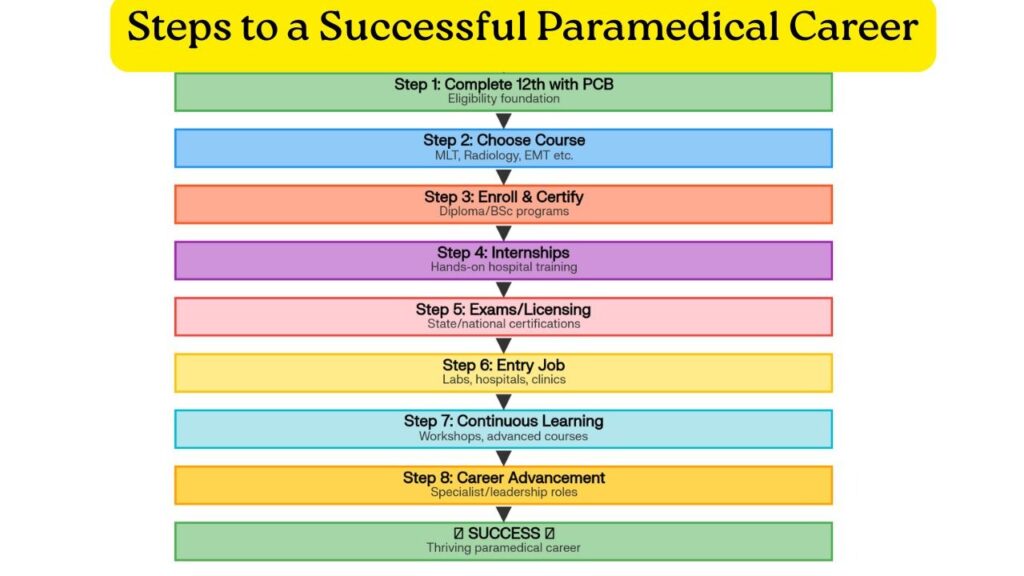
A step-by-step advance is necessary for a career in paramedical work. The given flowchart depicts the straightforward career opportunity for the regular high school pass outs:
The flowchart of Paramedical Courses shows the process step by step: Begin with a solid academic foundation, apply practical experience, get certified, and then specialize or move into management. Each phase relies on the previous one to build depth and breadth of skills in the professionals.
Career Opportunities in the Paramedical Courses
Paramedical professions have a wealth of options and opportunities that go well beyond the usual roles. After completing their education, students can work in multiple fields such as:
Hospital Environments: A large portion of paramedical professionals employed in hospitals include them in the diagnosis, patient care, and testing.
Diagnostic and Imaging Centers: Medical Laboratory Technologist, Radiology Technician and other allied health professionals play an essential role in identifying and diagnosing countless diseases.
EMS: EMTs and Paramedics are needed now as much as ever in ambulance services and emergency departments, where making split-second decisions in a pump-driven environment is part of the job.
Trend Trailers: As telemedicine and health informatics matures, more jobs are likely to emerge for people focused on the convergence of healthcare and technology.
Own Business: Many practitioners have transitioned from practicing to owning their own clinic, laboratory, or home healthcare service, and some contribute to the field by working in their own business while enjoying the personal freedom associated with being your own boss.
The positive growth in the healthcare industry along with technology enhancements is expected to create additional jobs, which makes it a promising field for people looking to build a career in this industry.
Benefits of a Paramedical Career
Benefits of a career in paramedics are numerous and high school graduates can look forward to a great future (Check out some of the pros and cons about joining this career below):
Employment Security: Increasing Paramedic jobs healthcare needs worldwide ensure a stable and promising future for paramedical practitioners.
High Salary: The salaries for a number of these positions are competitive, commensurate with their unique skill set and important responsibilities.
Variety of Opportunities: You can find job opportunities to suit your interest, whether that be hands-on with patient care, supporting diagnostics or working with new technology.
Personal Satisfaction: A career in paramedicine not only is financially rewarding, but it can positively affect the lives of thousands of patients and the community at large.
Career Advancement: Many health services have in place a career progression (e.g. the Paramedic Practice Advancement Ladder) to include rewarding experience and ongoing professional development.
Institutional Support for Aspiring Paramedical Professionals
There are many reputed colleges which offer good facilities and infrastructure for students who want to make a career in paramedical. For example:
Belarani Institute of Paramedical & Allied Sciences: The Training provided is more practical oriented by the experts with well experienced trainers and Placement Support to the students on completion of their Training.
LifeLine EMS: Nowhere is this more true than in Southern California where LifeLine EMS provides seamless EMT to Paramedic pathways, comprehensive training, mentorship programs and well-defined internal career promotion tracks.
Colleges like Foothill College and The George Washington University: The programs which run the gamut from short-term, intensive 11.5-month programs to long-term degree programs include classroom instruction, skills labs, clinical rotations and field internships designed to fully prepare students to meet the challenges of the profession.
These schools do more than train students in the latest tools and technology, they create cultures where a commitment to lifelong learning and professional success is ingrained.
Conclusion
Paramedical Courses Career Roadmap: High school graduates opting for a profession in paramedical sciences not only ensure a bright and stable career but also play an important role in the advancement of global healthcare. With the right skills and commitment, as the industry continues to grow, there will be countless opportunities for those dedicated to pursuing a career path with endless potential.
So whether you’re interested in the accuracy of laboratory diagnostics, the life-saving measures of emergency services, or the professional practice of physiotherapy and more, there’s no doubt that your career in the paramedical sector will be fulfilling and rich with opportunity. Begin your journey today and discover the opportunity to have a real impact on the lives of many.
LLB students should prepare themselves for MPPSC ADPO Recruitment 2026 because the notification was dropped by the Madhya Pradesh Public Service Commission. It’s already revised the vacancy count once and reopened the application window. Those students who missed the chance before can now apply and don’t miss the second chance. The application window will close soon.
Check all the details here before applying and be prepared for the exam.
MPPSC ADPO 2026 Notification
The original notification for the Assistant District Public Prosecution Officer post was published on 10 March 2026, and the online applications were available from 9 April 2026 to 8 May 2026. By then the number of vacancies was fixed at mere 17 posts.
Then, on 6 July 2026, MPPSC did something candidates should pay close attention to: it revised the vacancy count upward — dramatically to 107 posts, and reopened the application form from 10 July to 24 July 2026. So if you haven’t submitted your form yet, this is not a “check it out next week” situation.
In case you missed the deadline, you can submit an extra ₹3,000 late fee for submissions between 25–31 July 2026. So don’t lose it because if you lose and then after that, a steeper ₹25,000 late fee applies from 1 August through 23 September 2026. That second window is punishing but it exists only for those who are stuck in any situation.
The admit card will be released before the written exam which is scheduled for 18 October 2026.
Category
Application Fee
General / Other State Candidates
₹500
EWS / OBC / SC / ST / PwD (PH)
₹250
Late Fee (09–15 May 2026)
₹3,000
Late Fee (16 May–23 Sep 2026)
₹25,000
Correction Fee (if applicable)
₹50
One thing worth flagging honestly: several sources still describe the current vacancy revision and application reopening as based on limited official detail, with full notification specifics like sectional exam pattern and fee breakup expected to be confirmed alongside the final notification PDF. If you’re relying on this article weeks from now, cross-check the numbers against the notification hosted at mppsc.mp.gov.in before you finalize anything — MPPSC has already shown once this cycle that it will revise figures mid-process.
Eligibility: Who Can Actually Apply
The qualification bar is straightforward on paper but worth reading carefully.
You need a Bachelor’s Degree in Law (LLB) from a recognized university. That’s the baseline. Beyond that, candidates with a First Division in Law, or two or more years of completed legal practice, or a higher legal qualification, will be given preference at the final selection stage — so it’s not just a qualifying criterion, it can actually move your rank.
Age limits: students who are above 21 and below 40 years can apply, calculated as on 1 January 2027. Relaxation is given only to reserved category candidates under MP government rules; you can check the exact limit on official notification of MPPSC ADPO recruitment 2026 rather than believing in the previous cycle.
Category
Maximum Age Limit (years)
Relaxation (years)
General (Unreserved)
40
–
SC / ST / OBC (MP domicile)
45
+5
Women (MP domicile)
45
+5
Government Servants (MP)
45
+5
PwD (Persons with Disabilities)
As per govt rules
As per govt rules
Ex‑Servicemen
40 + service period + 3 years*
Service + 3 years
On domicile: reserved category vacancies (SC/ST/OBC/EWS/Women/Divyang) are applicable only to Madhya Pradesh domicile candidates, while out-of-state candidates will be considered only for unreserved posts. This matters if you’re a law graduate from outside MP hoping to use a reservation category — you can’t, for this recruitment.
Selection runs in two stages: a Computer-Based Test (CBT), followed by an Interview. The CBT is an objective exam testing general awareness and legal knowledge, and Part A of the paper has 50 questions worth 150 marks, weighted heavily toward Madhya Pradesh’s history, geography, politics, and economy. The law component forms the second part of the written test, though the exact question count and marks split for the law section hasn’t been confirmed in what I could find — don’t assume it mirrors GK proportionally without checking the syllabus PDF.
Salary: expect Pay Matrix Level 10, with basic pay ranging roughly from ₹56,100 to ₹1,77,500 per month, plus DA, HRA, and other standard allowances under MPPSC service rules. One older source lists an outdated pay-scale figure (₹9,300–34,800 grade pay), which reflects the pre-revised pay commission structure — go with the Pay Matrix figures, since those reflect the current system.
Important Update for This Year on MPPSC ADPO Recruitment 2026
Two things separate the MPPSC ADPO recruitment 2026 cycle from a routine annual notification.
First, the six-fold vacancy jump — from 17 to 107 — inside four months is unusual and suggests MPPSC recalibrated its Home Department requirement estimates mid-cycle, possibly to align with actual prosecutor shortages across MP’s districts.
Second, the syllabusfor this cycle is explicitly built around India’s new criminal codes: BNS, BNSS, and BSA now form the core of prosecution work, alongside Constitutional Law and MP-specific special legislation.
If you were preparing off IPC/CrPC/Evidence Act notes from a 2023 or earlier cycle, that material is now legacy reference at best because the exam is built on the replacement codes.
Don’t split your remaining prep time evenly across GK and Law.
With Part A alone carrying 150 marks concentrated on Madhya Pradesh-specific history, geography, and current affairs, and the law section demanding fluency in three brand-new codesmost law schools only started teaching seriously in the last two years, your highest-leverage move between now and October is building a tight comparison chart mapping old IPC/CrPC sections to their BNS/BNSS equivalents.
Coaching platforms like Drishti Judiciary have already publishedBNS-BNSS-BSA comparative material — use that as your spine rather than trying to reconstruct it from bare acts alone.
Conclusion
If you’re eligible and haven’t applied for MPPSC ADPO Recruitment 2026, today (24 July 2026) is your last day before late fees kick in. If you’ve already applied, your next concrete date is 8 October for the admit card and 18 October for the exam — everything in between is prep time, and the BNS/BNSS/BSA transition is where marks will actually be won or lost this cycle.
Keep the official MPPSC portal bookmarked; given how this notification has already changed once, treat every number here as current-as-of-today rather than fixed until the exam.
Candidates who are waiting to apply for the Peon post in various departments such as Rajasthan High Court, State Judicial Academy, Legal Services, District Court, and District Legal Services can apply now. Rajasthan High Court Peon Recruitment 2025 process starts from 27 June 2025. Candidates are advised to fill out the application form before the last date of registration.
Recruitment Steps for the Rajasthan High Court Peon Recruitment
The selection for this post happens in 5 stages – written exam, candidates who have passed the exam are eligible for the interview. Document verification, Medical examination, and when candidates have passed all these stages, his/her name is shortlisted in the list.
Click on the link given on the official website or directly from this article.
Fill out the empty boxes with the required details.
Attach the necessary documents with the application.
You have to pay an application fee to complete your application and submit it.
Save it for future reference.
Eligibility For Rajasthan High Court Peon
Candidates must pass their 10th for applying to this position. Good knowledge of Devnagri and Rajasthan culture. Candidates are advised to check these eligibility details more from the notification.
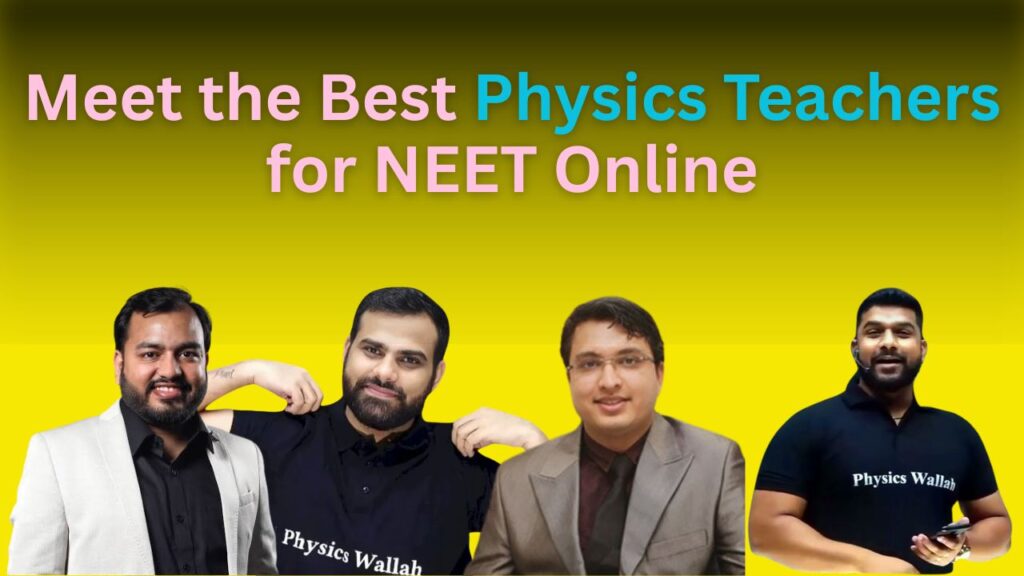
When Preparing for NEET exam you should know the core subjects to focus for scoring well. Physics is an important subject in this exam which is tough to prepare for, that’s where the top physics teacher steps in to get you prepared for the physics. You can prepare physics concepts easily when you Meet the Best Physics Teacher for NEET Online with their full details in this article.
NEET is an entrance exam for admission in medical college or university, students who have completed their 12th with PCB have already started preparing for this exam. To get admission in a government medical college, the cutoff marks is 686-144 for general and 143–113 for reserved category to qualify.
Why Physics Matters in NEET
To enhance your power of conceptualization and analyzing ability, these factors are the reason for physics to be involved in the NEET examination. Most importantly, this section can get you high scores in exams because everyone can solve biology and chemistry sections but solving physics questions is what gets them low marks. To secure your seat in the medical college you must score high and for that you must prepare physics well.
Best Physics Teachers for NEET 2025
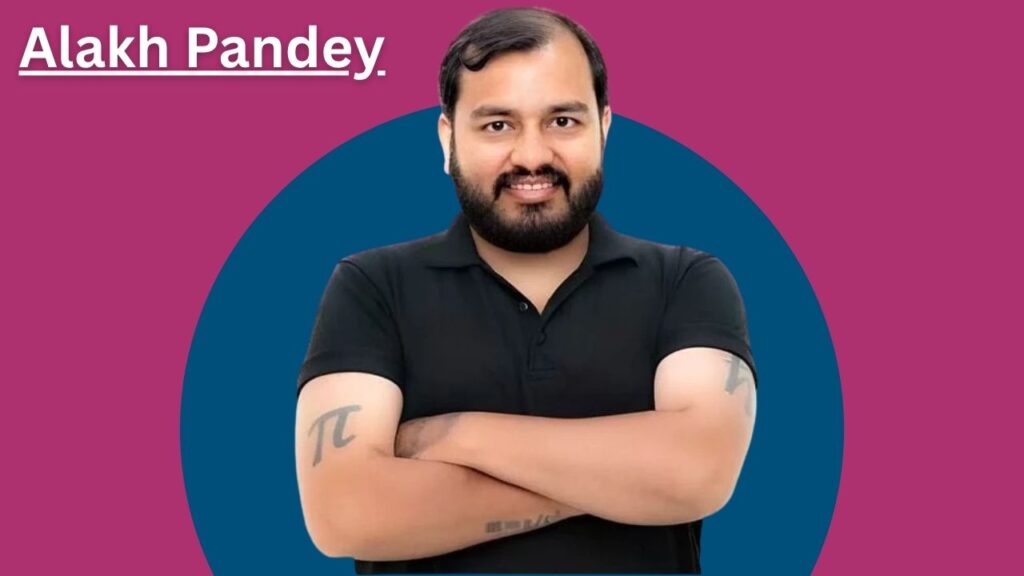
Alakh Pandey
Alakh Pandey launched the app “PhysicsWallah” in 2020 which expanded rapidly with a 1 billion valuation. He also launched offline centers later in many states of India. The best ed-tech platform for preparation of competitive exams like JEE, NEET, and Other exams.
His teaching style is unique, especially in physics. He simplifies the most complex concepts and provides effective exam strategies to help students prepare according to their exams. Millions of students are reaching out to him for their exam preparation.
Nitin Vijay
Nitin Vijay started teaching on Youtube in his youth to provide aspirants a top class education, making complex topics understandable, and encouraging students to learn. You can take his lectures on youtube free of cost and start preparation today.
His teaching style is unique and understandable for the students who are beginners in physics. He encourages communication with students and challenges them to question. His motivational teaching has shown some lights in the TED talk too.
Er. Pradeep
He delivers interactive methods to enhance student’s understanding and participation. His tech-enable teaching practices makes him more unique in delivering complex concepts points for better understanding.
Students have shown the best results who have already taken lectures on youtube. He helps many students to beat competitive exams. Taking his Physics lecture for NEET is a good option for you.
He is an experienced teacher for physics and provides students with the best education. He motivates students to learn and practice physics questions. Ideal for those who are looking for teaching who can guide you step-by-step on NEET examination.
He shares tricks and tips for completing the course fast. Students who have no time left for long preparations can watch his lectures.
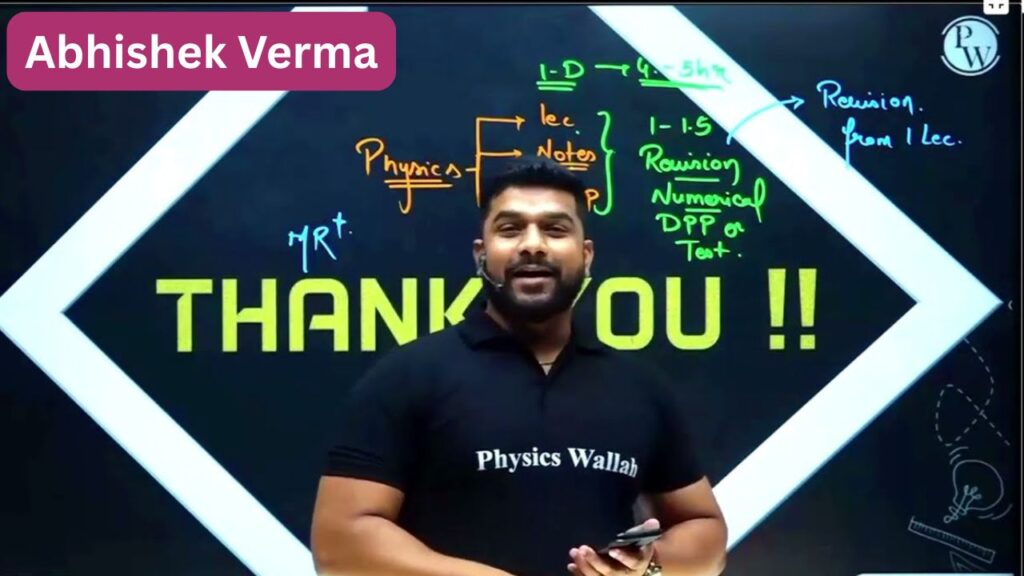
Abhishek Verma
He is also one of the best Physics teachers who teaches many NEET students and helps them crack the exam. He explains more precisely to understand the concepts deeply.
His series of NEET crash courses on Youtube is an all-in-one series for preparation. Students who don’t want to get different sources for each concept can watch his lectures in one series that covers all the important topics.
Prof. Dhananjay Kumar
He is the best teacher who encourages students for self-learning. It is good to make students understand that self-study makes them understand more deeply. He brings advanced concepts into his teaching and fostering critical thinking.
You can complete you preparation on complex topics of physics with the help of Prof. Dhananjay Kumar. His simplicity in lectures can get you serious notes on important concepts.
It’s not just an easy answer to give because it all depends on you. Before starting to take any lecture or enrolling any platform, remember these points:
Methods and experience of teaching of that particular teacher.
Take his first class to know if he is able to help you understand those concepts.
Lectures should include doubt-solving sessions.
If you still get confused, check the student’s feedback online.
A Quick Comparison For Physics Teachers for NEET
Teacher
Platform
Teaching Highlight
Ideal For
Alakh Pandey
PhysicsWallah
Clear concept explanation
Beginners & revision seekers
Nitin Vijay
Motion NEET
Motivating, engaging
Building fundamentals
Er. Pradeep
YouTube
Tech-based, interactive
Visual and practical learners
Prof. Dhananjay Kumar
YouTube
Conceptual clarity
Students needing deep understanding
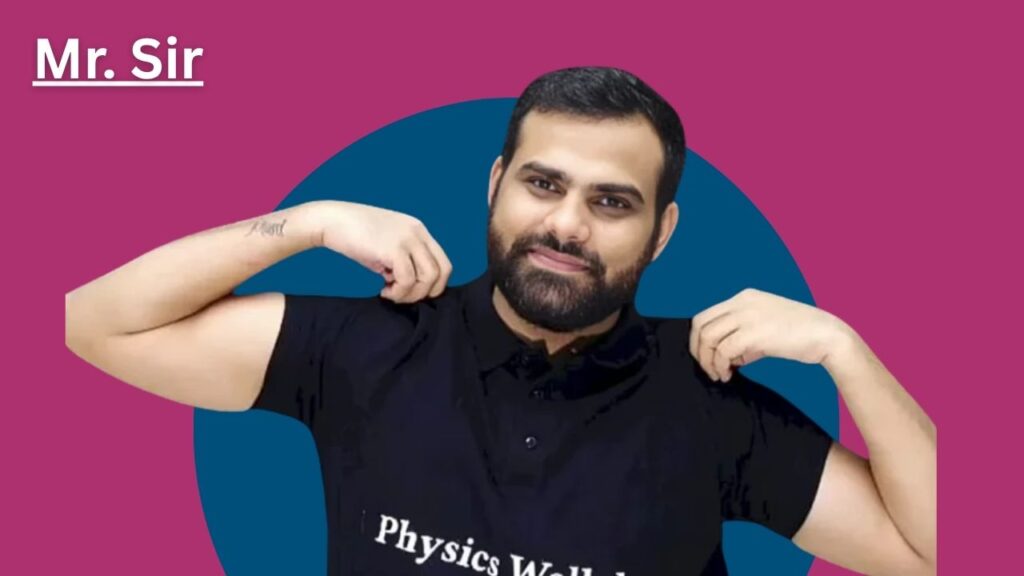
Mr. Sir
YouTube
Structured, tips-focused
Quick revision, last-minute prep
Abhishek Verma
YouTube
Crash course expert
All-in-one revision
How Online Learning Platforms Aid NEET Preparation
Lectures are available all the time, you can study at your own pace.
You can take lessons from anywhere, no need to rush for the classes.
Recorded sessions will help you learn again if you are not able to understand at once.
There are multiple choices in teachers.
Consistently practicing online mock tests can help you track your progress.
Conclusion
NEET students often get confused when they have to choose the right teacher, coaching or lectures to study. Physics is the toughest subject but with the right strategy and explanation, students can get ready for the exam with full preparation. I have prepared a list of Best Physics Teachers for NEET, you can check in this article. Whether you choose Alakh Pandey or Prof. Dhananjay Kumar, just makes sure which one’s teaching style is the most helpful for you to understand the concepts. It doesn’t matter if it has tons of views or not, what matters is being able to understand the topics.