DSSSB MTS Recruitment 2026: The Delhi Subordinate Services Selection Board (DSSSB) has released the Notification for the Recruitment of Multi Tasking Staff (MTS) vacancies for the Year 2026. There are 714 posts in all. The application form submission will start from 17th December, 2025 and will end on 15th January, 2026. Eligible and interested candidates may apply online from the official DSSSB website. Candidates can check the detailed notification for eligibility criteria, application fee, age limit, salary, selection procedure, etc.
Follow the link to download the detailed notification and to apply. Hope you apply if you qualify. Information regarding eligibility criteria, application fee, age limit, salary and selection process is provided in the notification. Make sure you have gone through the official notification before you apply.
Union Public Service Commission (UPSC) has released the Civil Services (IAS) and Indian Forest Service (IFS) Prelim 2026 notification, now apply for 933 prestigious Union Government posts in Civil Services (IAS) and IFS 2026.
The online application process to fill up the posts began on February 04, 2026. Eligible candidates who aspire to join India’s top administrative services can apply through the official website on or before February 24, 2026.
Prelims will be held on 24 May 2026, Admit cards to be issued soon. Mains follow in August, but focus on Prelims first.
Follow These Event Dates For UPSC Civil Services IAS/IFS Pre Recruitment 2026
Event
Date
Online Apply Start Date
04/February/2026
Last Date for Fee Payment
24/February/2026
Pre Exam Date
24/May/2026
Admit Card
Before Exam
Result Date
Updated Soon
Application Fees
General/OBC/EWS,
₹100
SC/ST/PwD/women
NIL
Eligibility Essentials
You should have a bachelor’s degree from a recognized university.
Age Limit: The age of the applicants for this post should be between 21 to 32 Years (as on 01/August/2026) i.e. they should not be born before 02 August 1994 and after 01/August/2005.
Age Relaxation: As per Govt. Norms, the relaxation in age will be given- 3 yrs for OBC candidate, 5 yrs for SC/ST candidate, more relaxation would be admissible for PwD and Ex-servicemen candidates.
Citizenship: The rules are applicable for Indian citizens or as.
Go to the official website (upsc.gov.in) to apply. or upsconline.nic.in.
Apply through the pre-registration (One-Time Registration or OTR) if new
Complete Part I (personal information) and Part II (upload photograph and signature, pay fee).
Charges: ₹100 for General/OBC/EWS, no charge for SC/ST/PwD/women.
Verify all before you submit the application.
Print the form for future reference
What is Exam Pattern
Prelims consists of two papers: GS Paper I (200 marks, counts for merit) and CSAT (qualifying). There is also negative marking, so approach is important. It’s your way to Mains — only rankers move ahead.
Most of the students prefer to study in private colleges because of the faculty support in education, practical training, and placement opportunities. If you have completed 12th with PCB, you must pursue a medical degree from the best colleges. So, I have listed some of the Top Private Medical Colleges in South India.
If you are from South India and confused about the college for medical studies then this guide will help you select the one. Every student must clear NEET-UG before stepping into the medical field. It is the most common entrance exam for admission to colleges.
Top Private Medical Colleges in South India
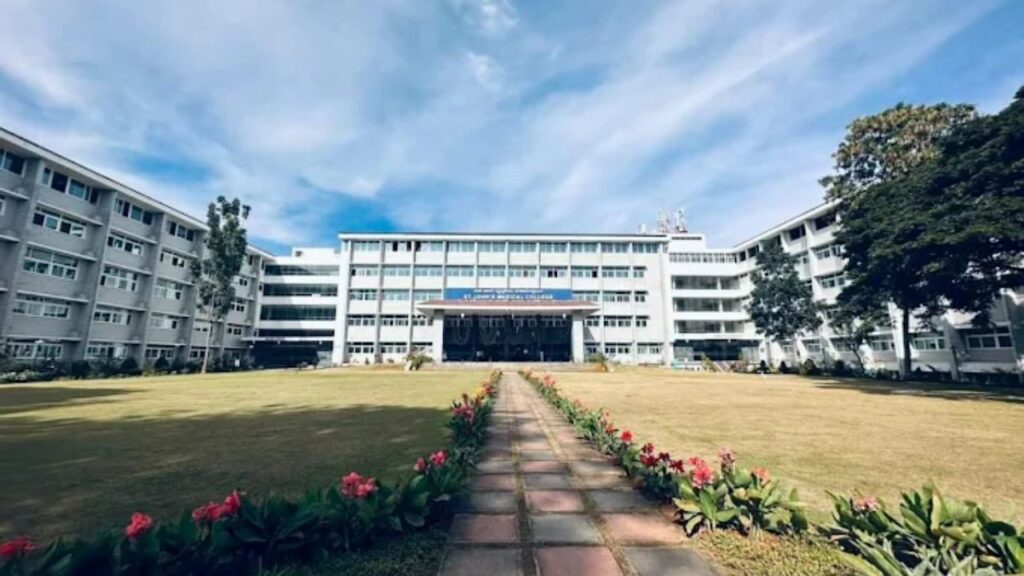
1. St. John’s Medical College
St. John’s Medical College: This private college is situated in Karnataka and is the oldest college. If you want to study in this reputed college then you should prepare for the entrance to take admission. It has a legacy of producing some of the finest medical professionals who serve both in India and abroad. The college is known for its value-based education, strong research backing, and vast hospital network.
Admission Process
Fee (General)
Placement & Package
NEET-UG required; apply via Karnataka state counseling (KEA); seats under General + Management quota
Approx ₹6.28 lakhs/year
Placements in St. John’s Hospital or through govt postings; avg. ₹7–10 LPA (PG); ₹20k–₹25k/month internship
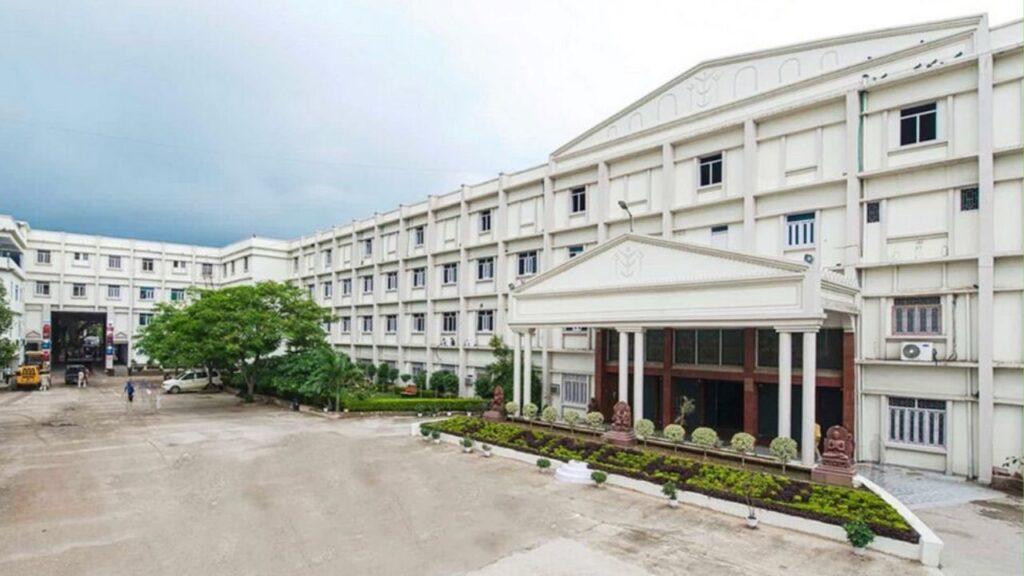
2. Narayana Medical College
Narayana Medical College in Andhra Pradesh. If you are a citizen of this state, you can take admission here. It also has a flow of patients as it integrates college and hospital which helps students gain real-time clinical experience. It has one of the largest private teaching hospitals in the region and offers advanced training in medicine and surgery.
Admission Process
Fee (General)
Fee (Management)
Placement & Package
NEET-UG mandatory; apply via Dr. NTRUHS counseling portal; management quota for non-local students
₹12.50 lakhs/year
₹24+ lakhs/year
Good absorption into Narayana Hospital network; avg. ₹6–8 LPA after PG; ₹15k–₹20k/month internship
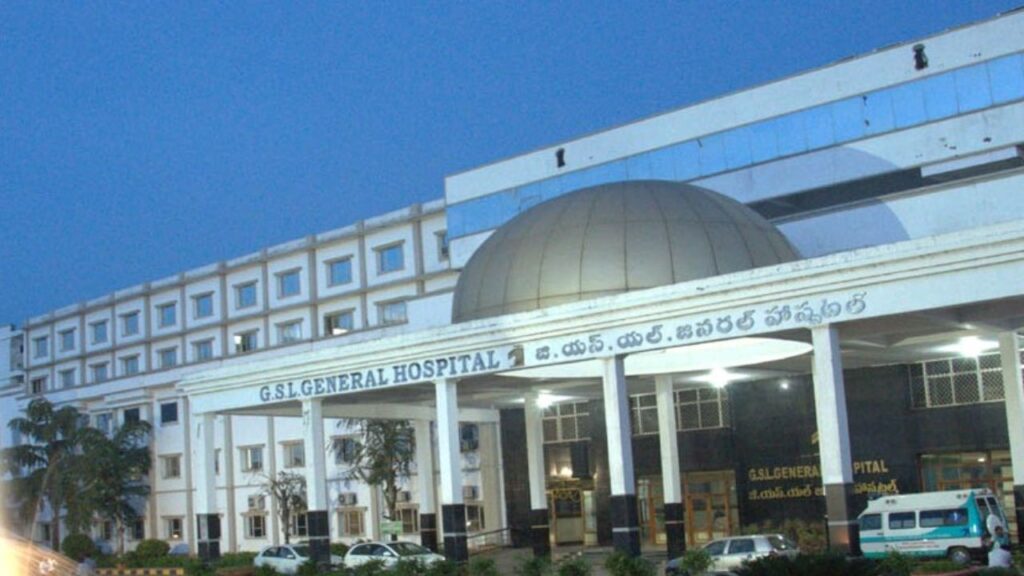
3. GSL Medical College, Rajahmundry
GSL Medical College is best for those students who want a good education but at an affordable fee. The infrastructure is modern, and the hospital on campus sees a good variety of patients, allowing students to learn practically from early on.
Admission Process
Fee (General)
Fee (Management)
Placement & Package
NEET-UG, Dr. NTRUHS counseling; management seats at higher fees
₹12 lakhs/year
₹24 lakhs/year
Andhra hospitals/PG; Avg. ₹5–6 LPA after PG; ₹18k/month internship
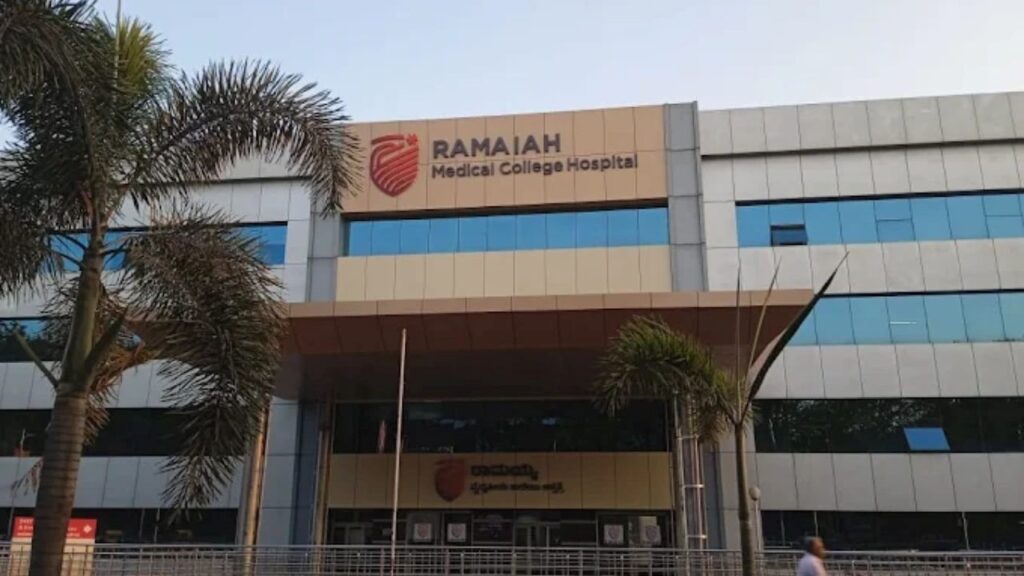
M.S. Ramaiah Medical College is offering high class education and advanced practical training to the future doctors. It’s known for high academic standards, overall world collaboration, and a strong hospital for clinical training.
Admission Process
Fee
Placement
Average Package
NEET-UG qualification is a must, Seat allotment happens through KEA-CET and All-India counseling. NRI and management quota are available.
₹10.9 lakhs for one year for general students ₹40+ lakhs for the Mgmt/NRI students.
Students can choose to study for further medical courses and medical opportunities also happen in the college.
The salary package depends on the skills and knowledge of the students. Average salary package is ₹8–12 LPA
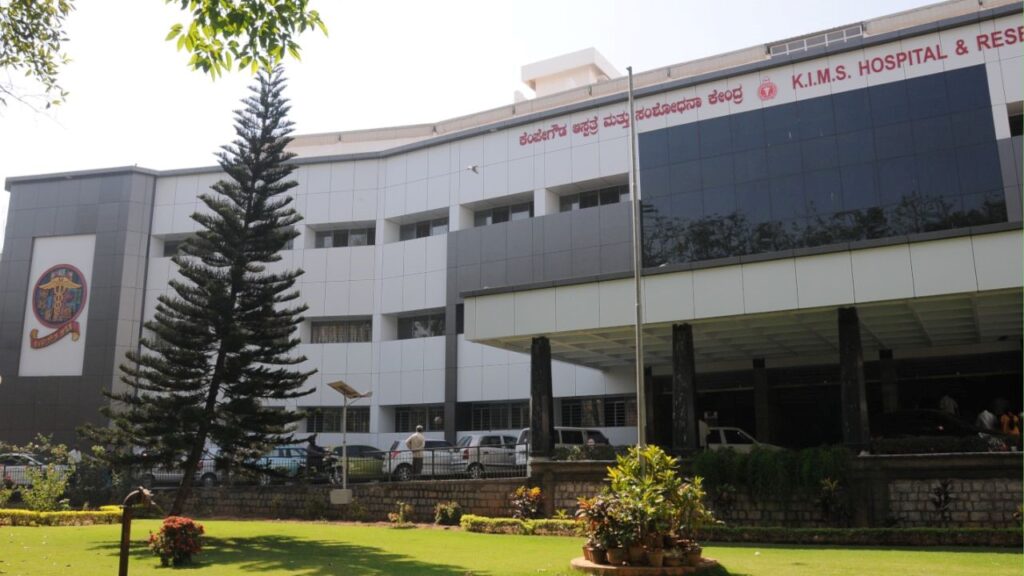
5. Kempegowda Institute of Medical Sciences
KIMS is a well-established private college with a strong hospital setup. Students have got the opportunity for practical training. The institution is affordable compared to other top private options, making it a favorite for middle-income families.
Admission Process
Fee
Placement
Average Package
Students have to clear NEET-UG and apply via KEA counseling (Karnataka). Management quota also available
₹7.1 lakhs per year (General), ₹35+ lakhs (Mgmt)
Self hospital offers and other hospital offers are also given to the students.
Students can have a lot of opportunities from this college and average package is around ₹5–8 LPA after PG; ₹20k/month during internship
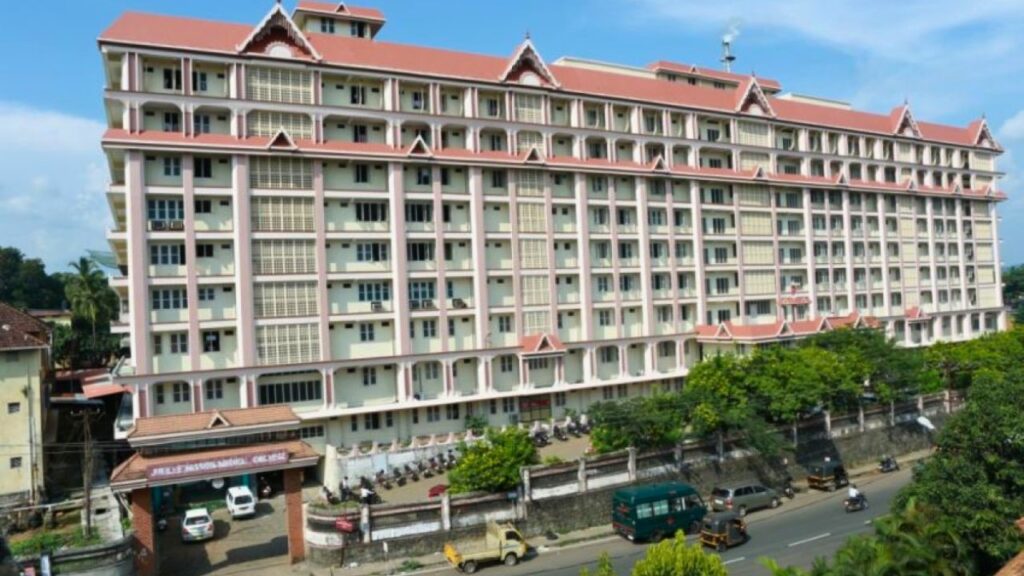
6. Jubilee Mission Medical College
Jubilee Mission Medical College: Jubilee Mission is a church-run institution known for its ethical approach to medicine and patient care. It offers quality education with emphasis on hands-on training and moral values.
Admission Process
Fee
Placement
Average Package
NEET-UG is required Apply through Kerala state counseling (CEE Kerala). Management and NRI quotas available
₹7.5 lakhs for one yearIt vary upon the courses
High number of students pursue PG; some absorbed into church-run hospitals
Students can get the salary package around ₹6–9 LPA (post-PG); ₹22k per month internship.
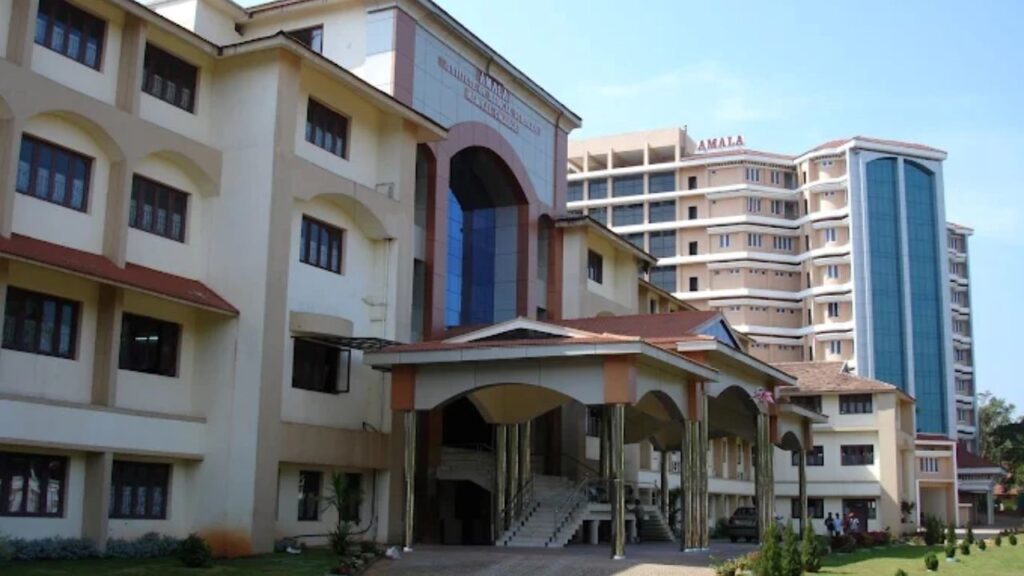
7. Amala Institute of Medical Sciences
Amala Institute of Medical Sciences: Amala offers medical courses such as MD, MS, and MBBS for students to establish their career in the medical field. It offers students practical training opportunities in a hospital environment. It provides a peaceful learning environment and good exposure through its well-equipped hospital.
Admission Process
Fee
Placement
Average Package
NEET-UG is mandatory.Students can apply via CEE Kerala. Seats under general, management, and NRI quotas
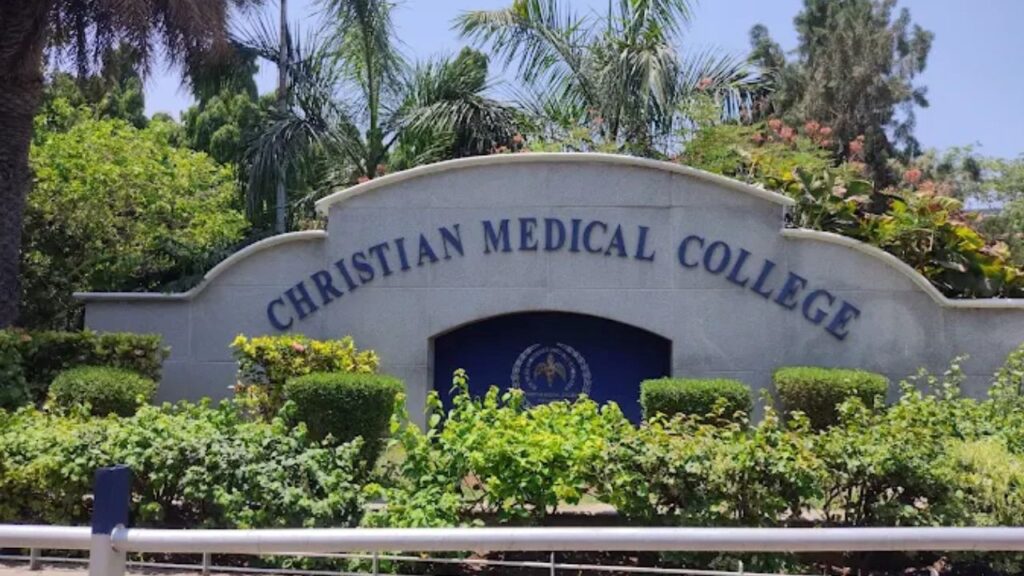
Christian Medical College (CMC): If you want to be a doctor in India’s best hospitals, this college provides excellent healthcare education and research. Although it’s a minority institution, it offers world-wide opportunities. With its top-notch education making it extremely hard to get into.
Admission Process
Fee
Placement
Average Package
NEET-UG required Must clear CMC’s own selection criteria after NEET Minority Christian candidates given preference
Approx ₹48,530/year (highly subsidized)
Top placements in India and abroad
₹10–15 LPA (PG level); internship ₹20–25k/month
9. SRM Medical College
SRM Medical Collegeis best in providing world class education and training to the students for improving their medical skills. It has good hostel facilities and student diversity.
Admission Process
Fee
Placement
Average Package
Admission via NEET-UG Apply through MCC AIQ or direct via SRM NRI quota available
₹25 lakhs/year (MBBS); ₹35–40 lakhs for PG
Absorption in SRM Hospital; good PG placements
₹6–8 LPA after PG; ₹20k/month during internship
10. Apollo Institute of Medical Sciences and Research
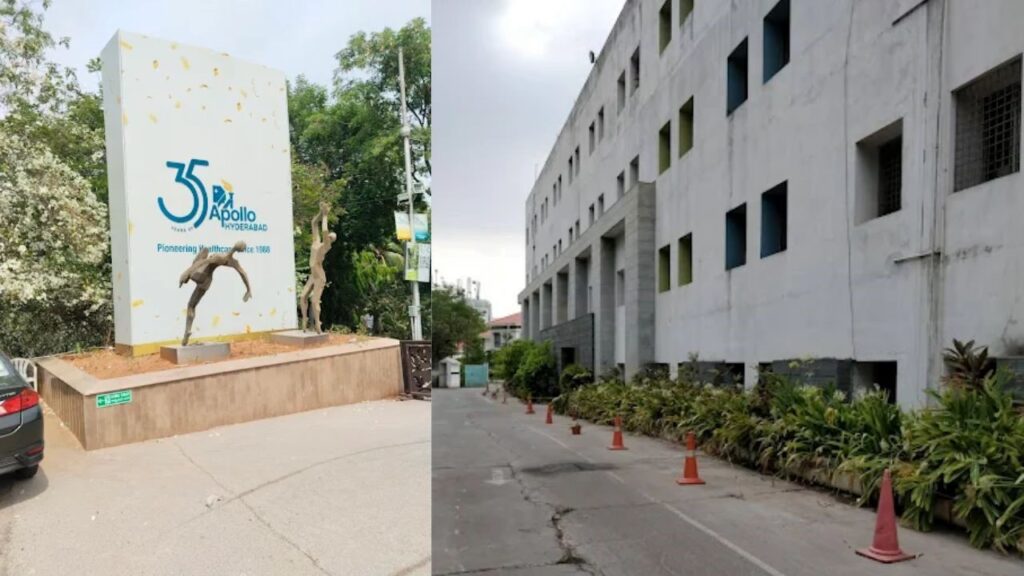
Apollo Institute of Medical Sciences and Research: This institute offers one of the best corporate-style clinical exposures as it is connected to Apollo hospital. Students get trained under experienced doctors in a real-world hospital setting.
Admission Process
Fee
Placement
Average Package
Must qualify NEET-UG Apply through Telangana state counseling (KNRUHS) Management quota available
₹15.6 lakhs/year (General),
Apollo Group directly hires top interns and PGs
₹7–9 LPA; internship stipend around ₹25k/month
Conclusion
While deciding to grow in the medical field, the best college is the first step you consider for better opportunities and practical training. Choose according to your budget, goals, and career path among the Top Private Medical Colleges in South India.
If you are among the lakhs of aspirants who are going to appear in the UPSSSC PET Syllabus 2026 exam, you are already aware of the procedure — this exam is the filter. Clear it and a plethora of Group B and Group C government jobs in Uttar Pradesh awaits you. If you fail to clear it, and none of those Mains exams even become an option.
This is why having a proper understanding of the syllabus From day one is more important than just diving in and doing some random practice sets.
So, let’s analyze the UPSSSC PET Syllabus 2026. What is asked in the exam, marks distribution of each section and how you should prepare to crack the exam.
What Exactly Is UPSSSC PET?
UPSSSC PET refers to the Preliminary Eligibility Test, which is organized by the Uttar Pradesh Subordinate Services Selection Commission. Think of it less as a “final” recruitment test and more as a preliminary screen.
It’s compulsory — you cannot even fill out the application form without a valid PET scorecard. If you pass the PET test, your score is good for three years, so you can use it to apply for multiple positions during that period without having to retake the test.
The examination is offline on pen and paper using OMR sheet and it is for basic level aptitude and general awareness and not for anything very technical or domain specific.
Exam Pattern: The Numbers You Need to Know
Before diving into subjects, it helps to understand the shape of the paper:
Feature
Details
Total questions
100
Total marks
100 (1 mark per question)
Duration
2 hours
Negative marking
0.25 marks deducted for every wrong answer
Question type
Objective, multiple-choice with four options
That quarter of a mark negative marking is worth remembering — guessing blindly can damage your score, so accuracy is as important as speed here.
Subject-Wise Breakdown
The UPSSSC PET Syllabus is spread across roughly 15 sections, each with a fixed number of questions and marks. Here’s how it typically looks:
Indian History & Indian National Movement (5 questions, 5 marks each — 10 total) This spans a broad history, including the Indus Valley Civilization, Vedic culture, Jainism/ Buddhism, and leaves off at the Maurya, Gupta, Mughal dynasties and the freedom struggle. Questions on the Swadeshi Movement, Civil Disobedience Movement and the rise of revolutionary nationalism, the Quit India Movement, personalities like Netaji Subhash Chandra Bose and the Azad Hind Fauj.
Geography (5 questions, 5 marks) Topography of India and the world, lakes and rivers and their valleys, underground water, Himalayas, deserts, minerals, political mapping, weather conditions, India Times, and population trends and movements of people.
Indian Economy (5 questions, 5 marks) This is a narrative of India’s economic path from 1947 to 1991 and thereafter — the Five-Year Plans, the mixed economy model, the green revolution, bank nationalization, the 1991 economic reforms, and more recently GST and post-2014 structural/sector reforms.
Indian Constitution & Public Administration (5 questions, 5 marks) The Fundamental Rights and Duties, Directive Principles, parliamentary and federal system, relations between the Union and the States, the judiciary, and local government through Panchayati Raj institutions.
General Science (5 questions, 5 marks) Basic Physics, Chemistry, and Biology — roughly at a Class 12 difficulty level, so nothing too advanced, but you do need conceptual clarity.
Elementary Arithmetic (5 questions, 5 marks) Integers, percentages, basic calculations, square and cube roots, powers, means and such basic and general topics in math.
General Hindi (5 questions, 5 marks) Grammar-related — synonyms, antonyms, one-word substitutions, gender differentiation, homophones, idioms, and proverbs, frequent mistakes, and quizzes on famous writers and their productions.
General English (5 questions, 5 marks) Basic grammar rules along with an unseen passage to test comprehension.
Logical Reasoning (5 questions, 5 marks) A fairly mixed bag — blood relations, coding-decoding, number series, syllogisms, venn diagrams, direction sense, puzzles, statement-conclusion questions, and hysteresis. .
Current Affairs (10 questions, 10 marks) World and national events — that’s where being on top of the recent news really serves you well.
General Awareness (10 questions, 10 marks) A miscellany of neighboring countries, capitals and currencies, Indian states and UTs, national and international day, sports, art and culture, awards, famous books and authors and environment related issues.
Hindi Unseen Passages (10 questions, 10 marks) Two comprehension passages in Hindi to test reading and interpretation skills.
Graph Interpretation (10 questions, 10 marks) Two graphs, testing your ability to read and analyze data quickly.
Table Interpretation (10 questions, 10 marks) Similar to graph analysis, but with tabular data instead.
The following three sections — passages in Hindi, graphs and tables — carry 30 marks in total. That’s almost a third of your total marks, and it’s often the section that candidates underestimate the most.
Considering how dispersed this syllabus is, trying to learn everything at the last minute is just not going to cut it. A better way to think about this is to think of this as a marathon, not a sprint:
Prioritize the data interpretation sections. As graphs, tables and Hindi passages are for 30 marks, regular practice in this section can give you an advantage over other candidates who concentrate only on GK.
Don’t skip static GK for the sake of current affairs. History, geography, economy, and polity constitute 20 marks, and these topics remain static — once you study them thoroughly, they are yours forever.
Revise Hindi grammar rules actively. Many candidates, especially those confident in Hindi, tend to get careless here. Small grammatical nuances trip people up more often than expected.
Practice with a timer. Two hours for 100 questions sounds comfortable, but data interpretation and comprehension sections eat up time fast if you’re not used to them.
Use previous year papers. They’re one of the best ways to understand the actual difficulty level and question framing, rather than relying purely on assumptions about what “might” come.
The UPSSSC PET Syllabus isn’t designed to be intimidating — it’s designed to test whether you have a well-rounded, functional understanding of general knowledge, basic aptitude, and language skills. The trick isn’t studying harder in isolation; it’s studying smart, giving weight to sections based on their actual mark share, and revising consistently rather than in bursts.
Most of the students after completing their graduation get more confused about their postgraduation than they were for the graduation. The most comparable degrees are MTech vs MBA in 2025, where both offer a well-opted career growth of Indian students. The postgraduate degree can open doors for more salary positions and knowledge if you have pursued it from the top college. BTech, BCA, and BSc (Computer Science) students get confused while choosing their higher education. Let’s make one thing clear — MTech vs MBA comparison is important because you must know the difference of value that both degrees hold in the industries.
MTech can offer you a wide range of fields such as Mechanical, Electrical, Computer Science, Civil, Electronics, Aerospace, AI, Data Science, Biotechnology, Chemical, and Cybersecurity. Whether you choose Mechanical or AI but know one thing that today’s world is evolving more into AI and cybersecurity. So, while selecting your career just check out the fastest growing field to fast career growth.
On the other hand, an MBA also offers a diverse range of fields such as management in marketing, operations, IT, Resources of the company. So, sometimes the same companies which can offer you an engineering position can also hire you as a manager because the company needs brilliant minds who can manage things to run everything smoothly.
Understanding Importance of MTech vs MBA in 2025
MTech can offer you a path as an engineer in the industry, while an MBA can offer you a position of assistant manager, manager, operation leader, and many more.
Closer Look to MTech
Candidates who are interested in Mathematics, Physics, and Chemistry can choose to opt this degree for building their career in engineering. The core skills for this field are technical, logical, critical which require your attention and full focus on the education.
Closer Look to MBA
MBA is a master of business administration for acquiring skills that need to manage and run operations in the industry. The core subjects in MBA are Managerial Economics, HR Management, Operation Management, Strategic and Accounting Management.
Is MTech Degree Worth in 2025?
In recent days, the world is evolving in tech, so the requirements of techies are increasing day-by-day. But MTech from top universities are worth the placement in top companies which offer you a great salary. MTech will get you ready for the cutting-edge products of the industries such as Artificial Intelligence, Electric Vehicles, or Semiconductors design. The sharp innovative minds are worth the value of an MTech degree.
How Valuable is an MBA in 2025?
An MBA from a top business school is worth it in 2025. This degree will increase your chances to a higher level position in the corporate companies. There are opportunities for you to join international companies. The departments like finance, consulting, and management can offer you a great path to reach for the high salary.
Career Opportunities & Top Companies
Now the difference starts between both the degrees. The role, companies, and responsibility are different for both fields.
For an MTech Graduates: There are various job roles in the companies like Design Engineer, R&D Engineer, AI/ML, Assistant Software Engineer, Senior Software Engineer, VLSI Design and Data scientist in the Google, Infosys, Wipro, Intel, Siemens, Tata, Mahindra, ISRO, and DRDO.
For MBA Graduates: Job roles are manager in consultant, Product, Marketing, Brand, Investment Banker, Financial Analyst, and Operation Head in top companies like BCG, Goldman Sachs, Morgan, Procter & Gamble, Hindustan Unilever, and Microsoft.
If you have noticed, some companies are mentioned in both because they hire M.Techs for core tech roles and MBAs for product management and business strategy roles.
Who Earns More in 2025?
It’s not that simple because it totally depends on the knowledge and skills of the candidates. The recent placement report from top MBA colleges (IIM, ISB) have shown the average package of MBA graduates is Rs. 28-35 LPA.
On the other hand, MTech graduates from top colleges (IIT, NIT) have a bit lower average salary package of around Rs. 20-28 LPA but candidates with polished skills in trendy departments like AI, VLSI design, can also get higher packages of around Rs. 40-50 LPA.
If you want to climb instantly with high income then MBA from top IIM colleges can help you get an average package of around Rs. 25 LPA. This can justify your massive investment for education that is why it is called an ROI program.
An M.Tech provides a rock-solid foundation for a career but you must have adapted expertise in tech. Your salary growth also depends on your skills and technical knowledge to build core products for the company to establish their growth. You will be heading towards your long-term financial rewards in technology-focused leadership roles.
Conclusion
Choose to Pursue MBA if:
You have great skills in communication, leadership, and strategic management.
You are interested in business, finance, and regular operation,
You want a good salary package from the start of your career.
Choose to Pursue MTech If:
You have command on core concepts of technical education.
You want to follow your passion in engineering.
You are a quick learner that helps you adapt to new technologies fast.
The choice does not depend on MTech vs MBA in 2025 but it’s all about passion vs management, depth vs breadth. Choose wisely because your career will become a part of your life. So, having a goal that aligns with your interest is important and worthy.
Nainital Bank Recruitment 2025: Nainital Bank invites applications from eligible candidates for the posts of Clerk CSA, PO and SO. The application process started on 12 December 2025 and the last deadline for applying is 01/January/2026. The candidates need to be 21 years old at least and the maximum age limit is 40 years. For more information visit the official website to see the notification.
Event
Date
Online Apply Start Date
12/December/2025
Online Apply Last Date
01/January/2026
Last Date for Fee Payment
02/January/2026
Exam Date
18/January/2026
Admit Card Release
Before Exam
CSA CLERK Form Fees
Rs. 1000
PO/SO Form Fees
Rs. 1500
The Eligibility For the Clerk CSA, PO and SO Recruitment
The age limit for different posts in Nainital Bank are: While the candidates for the posts of CSA, PO and IT officer must be aged between 21 to 32 years. The age limit for the posts of Manager IT and Manager Risk (Grade-II) is from 25 years to 35 years. Likewise, applicants for the posts of CA or Manager-Law (Grade-II) must be 25 to 40 years of age. Nainital Bank also grant the relaxation of age as per policy.
The agency has declared 175 jobs in different posts. These are 71 vacancies for the post of Customer Service Associate (CSA) / Clerk, 64 vacancies for Specialist Officers (SO) and 40 vacancies for Probationary Officers (PO). Eligible aspirants may apply for the posts applicable to them after reading the instructions.
Follow These Steps To Apply Online
Browse the official website of Nainital Bank and go to the Recruitment tab. Click on the link for Nainital bank Recruitment.
Log in with your username and password and fill out the multi-page form one relevant step at a time with your personal information, education, employment, and post preferences.
Kindly upload your latest passport size photograph and signature in the given format.
Attach you valid documents which support your claim of education qualifications and ID proof.
Pay the application fee online through various payment methods, and finalize the application by click on submit.