HPSC Recruitment For PGT Post Graduate Teacher (PGT) Computer Science 2026

HPSC Recruitment

The HPSC Recruitment for 2026 Post Graduate teacher (PGT) Computer science Vacancy is out. There are a total of 1,672 posts and the process of application is going on. Those interested in this job can apply on-line from 16/February/2026 to 09/March/2026. Here is a golden opportunity  for all the aspirants who want to become a teacher in Haryana. 

Candidates should meet the eligibility criteria as per the HPSC to apply for the Teaching Posts. There is full information regarding eligibility, application fees, exam pattern and selection procedure in the notification. Applicants are advised to go through this notification carefully of HPSC Recruitment to ensure that they meet the eligibility criteria. 

Application Fees of HPSC Recruitment

CategoryFee
General/EWS/OBC₹1,000
SC/BC/PwD/Ex-Serviceman₹250
Females₹250
PH (Divyang)No fee

Schedule For Haryana HPSC PGT Teacher

EventDate
Notification Release5/February/2026
Online Application Start16/February/2026
Application Deadline9/March/2026 
Fee payment deadline9/March/2026

Education Requirement

QualificationDetails
M.Sc. Computer Science2-year regular course 
MCA3-year regular course
BE/B.Tech in Computer Science/ITFrom recognized university, minimum 55% aggregate 

Age Limit

CategoryAge Range
Minimum18 years
Maximum42 years (relaxations apply) 

Application Process

  1. View the Official Notification Or Apply Online: Interested candidates can apply online through the HPSC website.
  2. Now, go to the “Recruitment” section, check and click on the advertisement for PGT Computer Science.
  3. Select the option for Online Registration. Make sure you provide the correct number and DOB for registration in this step.
  4. Then, after registering for an account, you can complete your application form with the necessary details. It includes the details of educational qualification, ID, etc.
  5. Now, make the payment of the application fee as specified in the notification. You need to ensure that you do this step otherwise your application will not proceed further.
  6. After filling the form and making the payment of the fee, you may attach the required documents and submit the application. 

NOTE: Do keep a printout of your application form and payment slip for your reference. 

Read More:- BSc Dialysis Technology: Course Details, Eligibility, Salary & Career Scope

Selection Process and Exam Pattern 

The PGT selection procedure of HPSC Recruitment is meant to be a just and fair assessment through a simple two-tier exam system where your basic knowledge as well as expertise in the subject is tested.

1. Screening Test:

This is the initial level of screening. It combines your general knowledge with rudimentary knowledge of your subject to get rid of the non-serious and non-able candidates.

2. Subject Knowledge Test:

This is the main exam phase. It examines more deeply into your subject and examines what extent your conceptual clarity, understanding and hold of the subject is.

The selected candidates may be called for interview which will be concentrated for personality, communication/interactive skill and teaching aptitude after these written tests. 

Total Questions100 
Total Marks100 
Marking Scheme+1 mark per correct answer (0.25 negative marking in screening test) 

Syllabus for the HPSC PGT Exam

The HPSC PGT syllabus is very well crafted, as it is designed to impart teaching basics along with in-depth subject knowledge, guiding candidates to prepare in a comprehensive and methodical manner. It’s not just a test of what you know—it’s also a test of how well you know teaching.

General Topics (Applicable to all Subject)

These components are designed to focus on developing effective teaching practices:

Educational Psychology: Provides knowledge of how students learn, think, and grow, as well as some significant theories of learning and development.

Pedagogy: Practical teaching techniques, teaching in the classroom as well as learning to learn.

TLM (Teaching-Learning Materials): Related to production, use and management of TLM for efficient and effective classroom learning. 

Subject Specific Knowledge 

Each PGT subject has its own defined detailed syllabus by HPSC which is depth orientated and specialised.

For instance: For example, in Computer Science — Data structures, searching and sorting, algorithm analysis, graph theory getting solid computational and logical foundations.

English: A focus on reading comprehension, critical thinking and analysis of texts is effectively promoted by the syllabus. 

Conclusion

The application for HPSC Recruitment for PGT Computer Science 2026 is expected to be filled with aspiring candidates who wish to establish their career in the teaching field through this Haryana Public Service Commission Teaching jobs. With 1,672 vacancies dealing with a transparent selection process & a well-structured exam pattern, this recruitment serves as the best platform to enter into Haryana education. 

If you qualify for the eligibility and have the enthusiasm to teach, now is your time to take the plunge. Smart Preparation, Strategic Syllabus, brief Application Procedure & Get all Official Notifications. HPSC Recruitment 2026 can be the stepping stone for a bright and safe career in the Haryana’s Education System with hard work and integrity. 

GovUpdatewala is your trusted source for real-time updates on government exams and jobs in India. We provide verified info on SSC, UPSC, Banking, Railways, Defense, and Teaching exams. From syllabus and patterns to important dates and career tips — we support aspirants at every step.


Leave a Comment

Your email address will not be published. Required fields are marked *

BTech vs BSc vs BA in 2025: Which Degree Offers the Best Future Scope?

BTech vs BSc vs BA in 2025: Which Degree Offers the Best Future Scope?

In today’s world, students must choose their field in which they have interest. Whether you choose BTech vs BSc vs BA in 2025, the future scope is consistently growing, if you follow the right direction. The right direction means if you are interested in teaching then BSc and BA is a good option but if you want to grow in the tech industry then BTech is the right option for you. Focus and the right college is also a matter to build your established career. 

Graduation is the first step in your career so take it wisely. The primary focus of BTech is Engineering & Technology. While BSc opens a path for you in science and research areas. BA is leading you towards further education to get a specialization in any specific subject. Students who are preparing for government exams can also pursue BA after 12th but many posts require other degrees. Before taking any action, you must check eligibility carefully for your future scope. 

Tips To Choose the Field for Graduation

Remember your passion, what you want to become in future? By acknowledging these questions, you can find the answer within yourself and then check the path to reach there. Once you know where to go, you will not get confused about your education. BA and BSc are easy courses, meanwhile BTech is hard, so if you want to become an engineer then you must pursue a BTech degree. 

If you want to become a Teacher, Journalist, Social Worker, HR, or Government Employee then BA is the best option for you. You can pursue other Technical courses and Specializations after BA. If you are interested in Teaching Science, Research, Nursing, or Higher Degrees, you can pursue a BSc. 

Comparison of BTech vs BSc vs BA

BTech (Bachelor of Technology), BSc (Bachelor of Science), and BA (Bachelor of Art) are highly demanding careers which offer a wider range of opportunities to the students. Their comparison is primarily focused on the career scope, course duration, course fees, eligibility and course curriculum.

Course Content of BTech vs BSc vs BA

BTech is a professional degree to deliver hands-on learning for engineering and technology. To advance technology with innovative minds is the motive of the industries. Colleges maintain their curriculum of BTech with application-based skills to get their students industry ready. It covers technical and applied aspects of specific engineering disciplines such as Mechanical, Civil, Computer Science, Chemical, Electrical, and Information Technology.

BSc is a graduation degree with more theoretical education in pure science like Physics, Chemistry, Zoology, Botany, Computer Science, IT, Statistics, Economic, Aeronautics, etc. It offers core concepts on the theories of science & technologies which get you focused on more research methodologies and theoretical understanding.

BA is involved in more Literature, History, Economics, Psychology, Sociology, Political Science, Geography, Journalism, Public Administration, and Social Work. It focuses on more theoretical concepts, creative writing and analytical skills, that is why it is perfect for those who want to become a professor in any of the subjects.

Read More:- SSC JE vs RRB JE: Which Govt Job Offers Better Salary, Growth & Stability in 2025?

Courses Duration 

  • BTech is entirely four years with one year internship. 
  • Standard BSc is a three year course which can be extended in specific programs such as Integrated program or BSc Honors.
  • BA standard degree is a total of three years course but BA honors is extended for four years. 

Eligibility for BTech, BSc, BA Courses

BTech & BSc graduation requires a 10+2 marksheet with science subjects including Physics, Chemistry, Biology & Mathematics. Admission in BSc can be done through an entrance test or direct admission. During BTech admission, you may have to clear JEE Mains/ Advanced which is hard to score well.

Students can take admission in BA after completing their 10+2 in any stream. It is not necessarily important to come from a science or commerce background. Students from arts, commerce, or science are eligible for BA.

Best Future Scope for BTech vs BSc vs BA

BTech Graduates are developing skills in engineering roles in departments of IT, Manufacturing, Chemical, Electrical, Production, Civil, Biomedical. After BTech, students can get a high salary in engineering roles from the top companies like Tata, IBM, Amazon, TCS, Infosys, Cisco, Godrej, and Siemens.

BSc Graduates are offering students a diverse range of opportunities to become job ready but for a higher scope, you should consider a master’s degree after BSc. There are some other specializations in technical courses, data science, and machine learning that can be helpful for getting a job in tech industries. You can also pursue higher education in pure science to become a lecturer or professor.

BA degree is offering many opportunities in further education for research, teaching, nursing, and creative arts & writing. Students can take a BA degree to establish a career in any specific field of subject. It offers many opportunities in the departments like HR, Media & Journalism, Social Work, Event Management, Hotel Management, Content Writer, Digital Marketing, Business Analyst, and Government Sector. Some of these require a diploma or certificate course for applying to the particular role.

How Can You Choose the Best Course?

There is a final answer for that because it all depends on your interest and budget. Let’s start from the lower budget course to the highest budget course:

Choose BA if:

  • You want to become a teacher, professor, analyst, content creator, digital marketing, sales executive, owning a business or preparing for a government job. 
  • You can’t afford the heavy expenses of the course.
  • You are working professionally and want to continue your education.
  • You want to pursue another degree (MA, BEd, LLB) or diploma and don’t want to burden yourself with a ton of syllabus.

Choose BSc if:

  • You are interested in science and want to research into this field.
  • You want to become a professor in a science subject.
  • You cannot afford BTech so you can choose BSc with a technical subject.
  • You are not prepared for the entrance tests, direct admission can happen in BSc.
  • You want further studies after graduation.

Choose BTech if:

  • You want to become an Engineer, interested in Physics, Chemistry, and mathematics.
  • You can afford to study from a recognized college.
  • You want the highest salary package after graduation.
  • You want a structured program to grab industry opportunities. 
  • Higher education like MTech for leadership roles in tech-driven industries. 

How do BTech, BSc, and BA degrees differ in career prospects

A comparison table will be good to observe the differences easily among them:

DegreeKey Career ProspectsTypical RolesSalary and Opportunities
BTechTechnology, engineering, IT, manufacturingSoftware engineer, mechanical engineer, data scientist, IT consultantHigher starting salaries, strong industry demand, direct recruitment in technical roles
BScResearch, academia, pharmaceuticals, environment, governmentResearch scientist, lab technician, data analyst, teacherModest starting salaries, very good with advanced qualifications, flexible career paths
BAHumanities, social sciences, media, civil servicesJournalist, teacher, public relations officer, civil servantGenerally requires higher studies for career growth, diverse but less technical roles

Conclusion

Whether it is a debate of BTech vs BSc vs BA, you can choose your degree according to your interest and need for your career scope. Let’s explore the differences in each degree’s details and career scope which can help you to decide the right degree for you. It’s a turning point of your life after 12th, you can’t decide just in a second. You have to list out your choices, interest, and budget then come back to this article to explore every detail for the BTech, BSc, and BA degree future scope.

Leave a Comment

Your email address will not be published. Required fields are marked *

SSC Exam Calendar 2025-26: Check Full Schedule, Upcoming Exam Dates and Notifications

SSC Exam Calendar 2025-26

The SSC has announced the SSC Exam Calendar 2025–26 on its official website, so start preparing for the upcoming exams. More than 10 lakh candidates appear out of 50 exams conducted by the SSC every year after 10th, 12th or graduation for jobs in various central government departments and ministries.

This year SSC Calendar (Important Dates) for SSC Exam 2025 (20, 25, 26) contains all info regarding SSC Exams for CGL, CHSL, JE GD Constable, Delhi Police, Steno orga, Stenographer post holders. Candidate can check important events such as notification release date, application dates, exam dates from the schedule to know about the upcoming events which should be useful in your preparation. 

Check Out The SSC Exam Calendar 2025-26

More than five million candidates take the SSC exams for government jobs once in a year after either 10th, 12th or graduation. The revised SSC calendar includes all notification, application, and exam dates for the 2025-26 cycle, providing transparency and a clear path for the candidates. 

Exam NameSchedule Period
SSC Constable (Driver)-Male in Delhi Police ExamJuly to December 2025
Head Constable (Ministerial) in Delhi PoliceJuly to December 2025
Head Constable (AWO/TPO)July to December 2025
Constable (Executive) July to December 2025
Grade C Stenographer July to February 2026
Constables and Rifleman in Assam October to February 2026
JSA/LDC January to March 2026
SSA/UDCJanuary to March 2026
ASO January to March 2026

Key Details for Aspirants

  • All SSC examinations are held at the designated centers across all over India in Online mode only.
  • Updates are posted on the official SSC website (https://ssc.gov.in). Aspirants are advised to track the notifications and deadlines for application.
  • Dates of the examination are liable to change due to unforeseen circumstances, keep watching official notifications for updates if travelling or taking study leaves. 
  • There are more levels/phases to the selection process; CGL, CHSL and JE have additional rounds after Tier 1. 
  • Admit cards, syllabus and other directions for the candidates are issued just before the exam, so keep visiting the official website of SSC regularly. 

Follow the Guide to Download the SSC Exam Calendar 2025-26 

1. Go To The Official Website of SSC, which is mentioned in this article. 

2. Now Search for the SSC exam calendar in the Notification on SSC Exam Schedule 2025-26. 

3. Open the link and download the calendar in pdf file OR you can just download it directly from the link section of this article. 

4. Download the pdf file in your device. 

5. Keep this file save or print for future uses. 

The SSC timetable for the 2025-26 session is designed as per the pattern of previous years and it clearly indicates that there are 5 stages in the exam process.Changes or modifications, if any, will be notified on the official website of SSC. 

Useful Links
Download SSC Exam CalendarClick Here
Official WebsiteClick Here


Leave a Comment

Your email address will not be published. Required fields are marked *

Top NEET Colleges in Lucknow with High Ranks, Fees, Seats and Details

Top NEET Colleges in Lucknow

Lucknow, the Capital of Uttar Pradesh, has now become a prominent area for medical education in India. If you’re a NEET aspirant looking to get admission in a good medical college, then the city of Lucknow holds an impressive list of both government and private colleges who are recognized at the national and international level. For those who are looking for an economical government seat or want to know the top private colleges with world-class amenities, this article will help you in knowing the top NEET colleges in Lucknow, along with detailed information about the rankings, fee structure, availability of seats and the USP of each institute.  

Understanding the Medical College Landscape in Lucknow

Before we get into the names of specific colleges, it is necessary to know that the medical education in Lucknow is multi-faceted and thriving. Ranging from government colleges with very minimal fees to super premium private colleges having infrastructure at par with global standards. It has national level post graduate institutes, century old undergraduate medical colleges and some of the best private medical colleges in the country with rigorous academic regimen and modern day teaching methodologies.​  

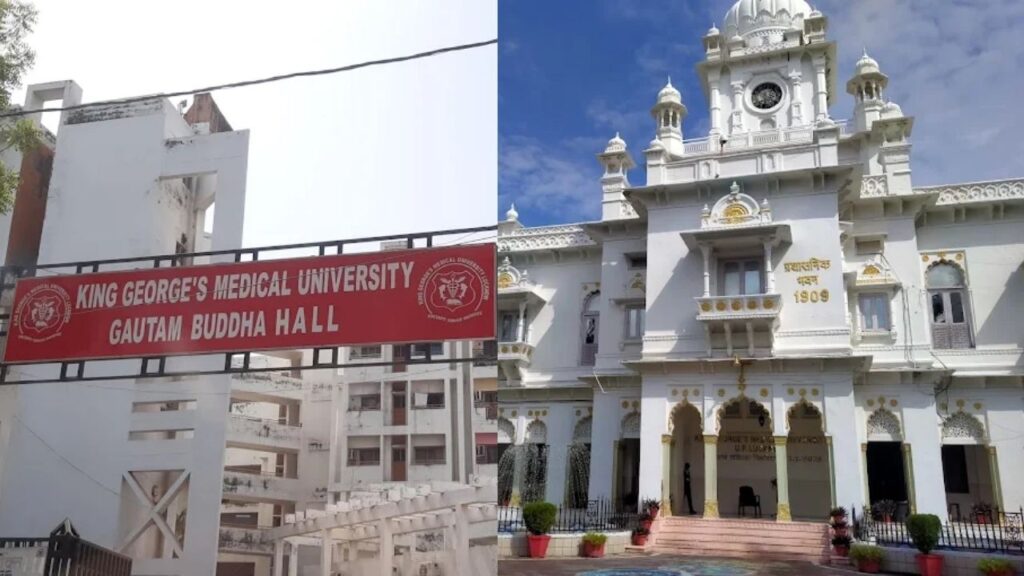
King George’s Medical University (KGMU)

King George's Medical University
Ranking & Recognition
KGMU is a premier medical college in India and is ranked 8th in the NIRF 2025 medical college ranking. KGMU has been a synonym of medical excellence in North India, that has been a legacy for more than a century. The university is well known for its research in oncology, transplant sciences and infectious-disease genomics. 
Fees & Seat 
The KGMU MBBS seat matrix is a total of 250 seats, with 15% seats allotted to the All India Quota and 85% seats are for State Quota. For state quota candidates, the fee per year is about ₹54,600, and for non-resident students, it is ₹3,52,400 per year, which is really cheap. There are some who will say they can afford higher fees but the reality is that a total fee of around rupees 2.38 lakhs for a 5.5 year (4.5 years of classwork and 1 year internship) course is a bargain for a quality medical education. 
NEET Score
King George’s Medical University takes students through NEET score which is expected to be around 625-635 marks. 
Hostel & Campus Life
The charges for Single Seater room is of Rs. 3600/- per annum and the electricity charges are Rs. 3500/-. On the other hand, the Double Seater Room is available for Rs. 2400/- per annum electricity charges are to be paid separately. 

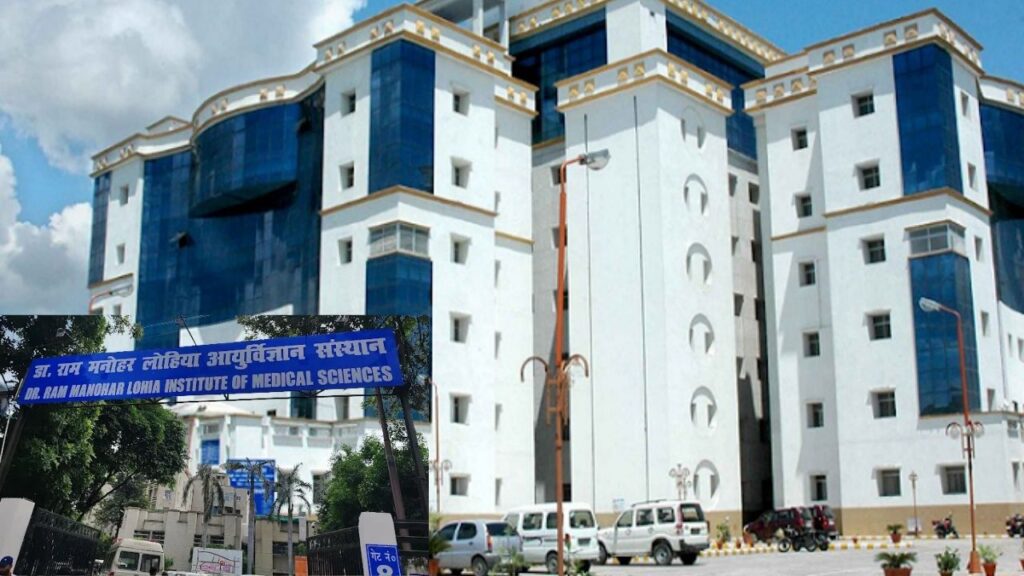
Dr. Ram Manohar Lohia Institute of Medical Sciences

Dr. Ram Manohar Lohia Institute of Medical Sciences
Ranking & Recognition
RMLIMS was formed and became operational as a State University from 2018 and has the distinction of being ranked at 61 position among Medical Colleges (NIRF 2025) which is a great achievement with an overall score of 982/2000. The institute has been established in Gomti Nagar in a spacious 42 acres campus with ultramodern infrastructure.  
Seat Distribution & Admission
The college has 200 seats in MBBS from this year, out of which 50% will be filled through All India Quota (AIQ) by MCC and 50% will be filled under State Quota by UP NEET counselling. This balance accommodates opportunities also for candidates at the state level in addition to the national level. 
Fee Structure
For the whole course, the Rs 1.82 lakh fee of MBBS at RMLIMS is one of the cheapest among all government medical colleges. The fee for the year is around Rs 49,700 which covers all tuition and examination fees.  
NEET Score Required
General category 2024 cutoff rank was approximately 2683. For AIQ seats, the aspirants who want to take admission must have been targeting a rank below 2000 with NEET score of 640 marks or above. Due to domicile preferences, the state quota cutoff rank is usually slightly lower.  
Internship & Career Prospects
Students doing internship at RMLIMS get stipend from ₹10,000 to ₹16,000 per month. The university also has 100% placements, with its students getting jobs in renowned organisations like the SGPGI, KGMU, PSUs and private hospitals.   

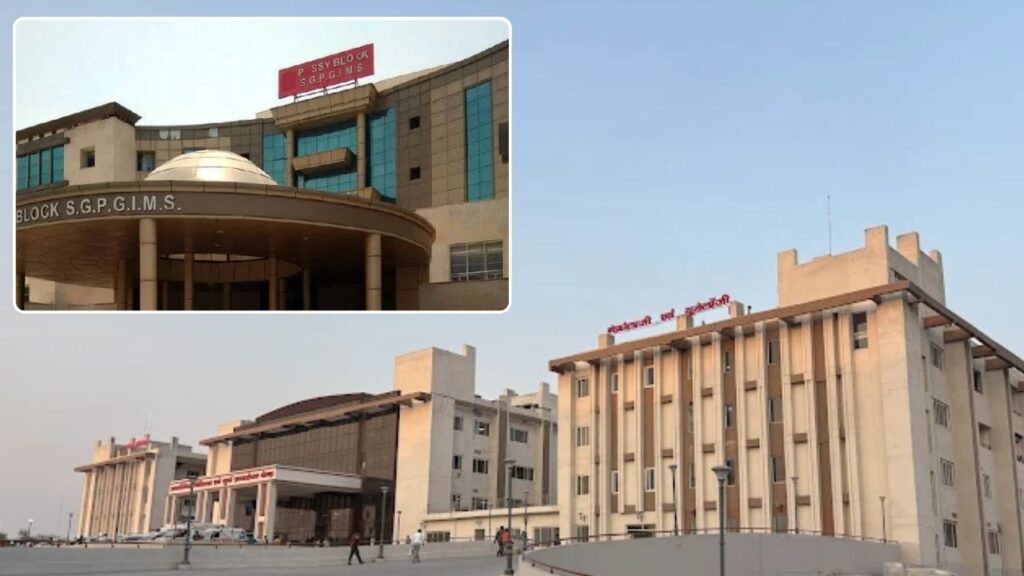
Sanjay Gandhi Medical Sciences Institute

Sanjay Gandhi Medical Sciences Institute
National Stature & Rankings
SGPGIMS is an institute of national importance and ranks 5th in India as per NIRF 2025 with a laudable score of 70.09. The university is known for its high standards in teaching, research, and clinical services and is one of the best medical institutes in India.   
Important Note on SGPGIMS
SGPGIMS is an institute for post graduate and superspeciality courses. For MBBS UG, only KGMU and RMLIMS. However, for post graduation for a specialist, SGPGIMS is the be all and end all.  

Top Private Medical Colleges in Lucknow

Candidates who are looking for private medical colleges that have good infrastructure and other facilities can check out the following list containing the best private medical colleges in Lucknow. 

Era’s Lucknow Medical College and Hospital

Era’s Lucknow Medical College has been ranked 32 by India Today 2024 and it is one of the best paramedical colleges in India which provides 200 MBBS seats every year the highest in any pmt college in India. The National Medical Commission (NMC) recognizes the university, and the institution is NABH accredited which implies high educational standards.​

Era's Lucknow Medical College and Hospital

The complete MBBS course fee at Era’s Lucknow is approximately ₹16.6 lakhs p.a, making the the total 5 year program fee to be ₹71.16 Via. NEET cut off 2024 was a general category closing rank of 375,564 as per UP state counselling data.

Era’s is attached to a 750-bed teaching hospital with more than 1,690 OPD cases each day, which is remarkable clinical exposure. The faculty of the college is well qualified doctors and institutions have UG & PG courses. 

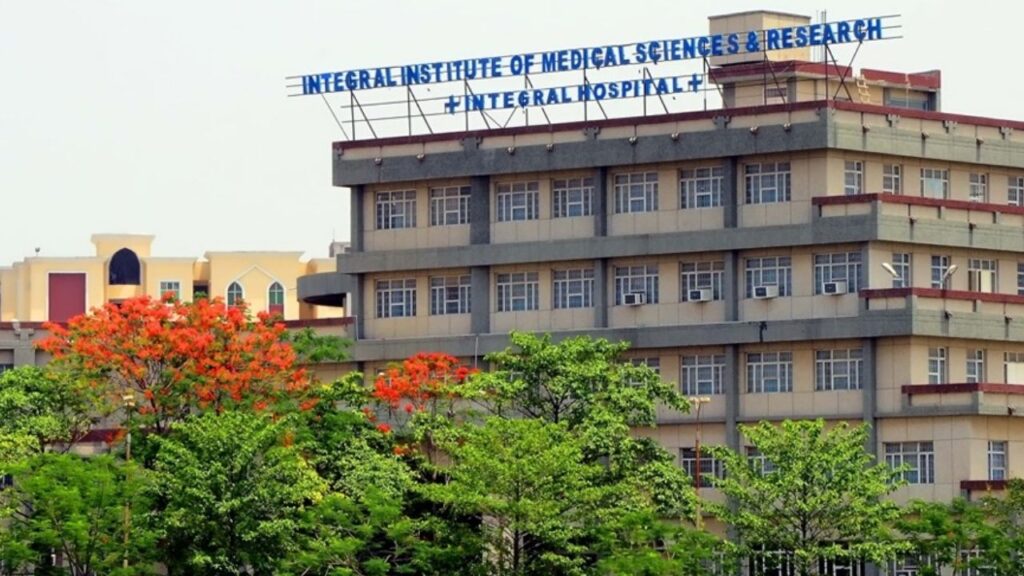
Integral Institute of Medical Sciences & Research 

IIMSR Lucknow was established in 2013 and it provides 150 seats for the course of MBBS and is placed at 118th position in NIRF Ranking with 825 score. The yearly fee is ₹11,40,000, while the overall fees for the course is ₹81 lakhs which include the cost of living in the hostel, mess etc.​

Integral Institute of Medical Sciences & Research 

For 2024, U.P State Counselling the general category closing rank was approximately 428,214. College infrastructure is good and gives internship stipend of Rs. 12,000 – 18,000 per month as per MCI. 

Career Institute of Medical Sciences (CIMSH)

CIMSH has 150 MBBS seats with a fee of ₹71.1 lakhs per year. The closing rank for general in 2024 was 452,601, which is a bit higher than some of the other best private colleges.

Career Institute of Medical Sciences (CIMSH)

The college follows the norms stipulated by the National Medical Commission and imparts overall medical education with clinical training in associated hospital. 

Comparative Fee Structure Overview

Government Colleges
KGMU₹2.38 lakhs total : ₹54,600 annually
RMLIMS₹1.82 lakhs total (₹49,700 annually)
Private Colleges
Era’s Lucknow₹71.16 lakhs total (₹16.6 lakhs annually)
Integral University₹81 lakhs total (₹11.4 lakhs+ annually)
Career Institute₹71.1 lakhs total (approximately ₹14.2 lakhs annually)

Understanding NEET Cutoffs and Rankings

The NEET cutoff denotes the threshold-score and rank prescribed for getting the admission, the one that is the basic requirement aspirants have to meet. It’s important to keep in mind that cutoffs differ wildly between types of applicants:

AIQ (All India Quota) – It tends higher competitiveness, with higher cutoffs, through the MCC for admission.

State Quota – For students of Uttar Pradesh only, higher cutoffs are generally included because of domiciliary preference.

For most government colleges like KGMU, a score of 700+ in NEET for AIQ, 690+ for state quota is a safe bet for gen category aspirants. It would help if you aimed for 640+ marks in RMLIMS if you belong to a competitive category.​

The cutoff of private colleges is very fluctuating as per intake and managing members. But do keep in mind that the fees are significantly higher at Private colleges with lower cutoff ranks.

Read More 👉  Bihar BSSC Inter Level Online Form 2025: Apply Online, Dates & Eligibility

Preparing for NEET to Secure Admission

With a 650+ score in NEET, you have great chances in top government colleges. A 600+ score makes you competitive to RMLIMS as well, below 600 scores are mainly for the private colleges or least ranked government colleges. 

Begin your NEET study preparations around 12-18 months prior to the exam. Work on making concepts crystal clear, no rote learning. Enroll in good coaching if required, be consistent in your studies, and take mock tests frequently to know about your progress. Remember, NEET is to test on your knowledge, analytical abilities and time management. 

Internship Opportunities and Career Prospects

One major benefit of doing medicine in Lucknow is the quality of the internship. Government colleges provide stipend for internship in the range of ₹12,000 to ₹20,000 per month whereas private colleges generally pay ₹12,000 to ₹18,000 per month. And more importantly, lucknow medical colleges have so many diversified medical affiliated hospitals and specialty centers.

After your MBBS then have good scope in lucknow for Post Graduation especially through SGPGIMS which has been nationally recognized for its PG courses. Many graduates of MBBS from Lucknow Colleges like KGMC secure seats in premier institutions for further specialisation. 

Conclusion

The medical colleges in Lucknow provide an all-round ecosystem for quality education at different price brackets. Be it a merit-cum-based student looking at government institutes or a well-heeled parent to afford the best of private institutes in the city, Lucknow has some to match your dreams. The secret is to know what are your strengths, financials, career goals and select based on that.

Start your preparation seriously, be consistent and “Believe in yourself”. Lucknow is one city where you can certainly “make it” if you set your mind to it, your determination and efforts and get into one of the best colleges there is, there is no doubt about that. The right college choice is what starts you on your journey to becoming a compassionate and skilled doctor – and when it comes to that, Lucknow certainly has some great places to get the journey started. 

Leave a Comment

Your email address will not be published. Required fields are marked *

Periyar University Result 2025 Declared – Check Scores & Download Marksheet Now!

Periyar University Result 2025

Students of Periyar University’s wait is over as it declared the result 2025 on its official website. Periyar University Result 2025 is available, students can check the scores of UG & PG exams conducted in February & April 2025, and download them from the direct link given below. Courses included BA, BSc, BCom, MA, MSc, MCom, BBA, and BCA results out now. 

The Periyar University result is crucial for higher studies admissions. For Students who want to enter professional programs, or apply for a job, this mark sheet will serve as proof of your best academic qualification. 

Read More: NTA NEET UG Result 2025 Out – Click Here to Check Your Score Now!

Periyar University Result 2025 Details

ExamSeptember session exam
Conducting BodyPeriyar University
PurposeUG & PG Courses
Exam DateFebruary & April 2025
Result DateJune/2025
Result AvailableOnline
Get ResultClick Here
Official WebsiteClick Here

Steps to Check Periyar University Result 2025

  1. To see your result you must log in on the official website of the university.
  2. Go to the examination section.
  3. You have to enter your credentials such as registration number and DOB.
  4. Click on submit to get the result. 
  5. View your mark sheet and download it for future use.

Important Links 

ApplicationClick Here
Download NotificationClick Here
Get ResultClick Here
Telegram ChannelClick Here
Official WebsiteClick Here

Leave a Comment

Your email address will not be published. Required fields are marked *

ITI Admission Fees in Government College: Complete Fee Structure Guide

ITI Admission Fees in Government College: Complete Fee Structure Guide Are you interested in Technical and Vocational Education Training (TVET) as a career option? A good Industrial Training Institutes(ITI) is a great way to learn a practical skill and get a job in a short span of time. How much does it really cost to join a government ITI? is probably among the most frequent questions that are buzzing in your mind if you have been looking for ITI courses. So let's get started with the full ITI Admission Fees in Government College details before jumping on the admission portal. Quick Overview of Fee Breakdown This is the fee structure in short for an Electrician course at a typical government ITI to make your career brighter. This will help you understand the budget of the two year course. Charge Amount Admission Fee –Given one time ₹100 Registration Fee –Given one time ₹50 Monthly Tuition ₹2,400 (₹100 × 24 months) Caution Money – given back later ₹250 Examination Fees ₹200 Student Welfare Funds ₹300 Total Approximate Cost ₹3,300 Note: The caution deposit is refundable on successful completion and your effective expenditure comes to approximately ₹3,050 for two years — Now that’s reasonably priced! Understanding the ITI Fee Structure The nice thing about government ITIs is that they are hilariously cheap when compared to private ones. With private ITI colleges charging fees ranging from ₹5,000 to more than ₹1,000,000 per year, fees of the government ITI colleges are affordable and it goes from ₹1,000 to ₹20,000 per year. So, students from all financial backgrounds can get quality technical education. But it's not just a single figure for the fee structure to pay and forget about it. The fees in government ITIs are divided into several heads, each of which is for a certain purpose. Knowing what all these entails will allow you to plan your finances so you don’t get a shock when it is time for admission. Tuition Fee: The Core Cost The tuition fee is the staple of your yearly outgoings. It is from ₹100 to ₹150 per month at most government ITIs in India which works out to be from ₹1,200 to ₹1,800 per year. For reference, the West Bengal government ITIs charge a total fee of ₹30 per month as a tuition fee, implying that you will be spending only ₹180 for the entire six-month course. These vary from state to state and institution to institution, so be mindful!​ The annual tuition fee for regular trainees, however, is Rs 1,800 (Rs 150 per month) at some government institutions such as the National Skill Training Institute (NSTI) in Patna. Yet if you are from SC/ST, you pay a lot less – just Rs 600 per year (Rs 50 per month). It is indicative of the government’s resolve to open the door of education to the underprivileged sections of the society. Admission Fee: One-Time Payment Consider the entry to the admission fees for the institution you are wants to apply. This is a one-time fee that you pay once you join and not every year. The admission fee is usually around ₹100 to ₹300 for most government ITIs. This is phenomenally low, and includes the cost of processing your application, verification of your documents, and the registration procedures.​ Interestingly, some institutes offer concessions to SC/ST students. For example, SC/ST students will have to pay Rs 25 instead of Rs 100 as admission fee. Registration Fee There is also a registration fee separate from the admission fee and the registration fee is usually between ₹30 to ₹200. This is for registering your enrolment with the records of the institute and getting you listed with the official registers. It’s a non-refundable fee which is paid generally at the time of verification of admission.​ Again, if you belong to SC/ST category you may get waived off from paying this fee in some institutes. Caution Money: A Security Deposit Important to understand: Caution money isn’t a fee that you are wasting. It’s a security deposit that is refunded. You pay it once (usually between ₹ 100 to ₹ 500) while admitting and you get it on successfully completing the course. This sum of money serves as a kind of insurance to keep students finishing their training and disciplined. Additional Funds and Charges In addition to the basic fees, the Govt ITI s also levies different student welfare and infrastructure enhancement funds which may be used for welfare activities of the students, for up-gradation or improvement in infrastructure. These might include: Gymkhana Fee Up to ₹100 To get along with sports and extracurricular activities Student Welfare Funds ₹50 to ₹375 Contributing to overall student development programs Placement Registration Fee Approximately ₹50 Helping the institute organize campus placements Smart Card Fund Around ₹200 For issuing digital identity cards Examination Fee At the time of examination, an institute usually levies a test fee of ₹25 to ₹100 per attempt. This includes the cost of holding exams, drafting question papers and conducting tests. Total Annual Cost For ITI Government Add all this up and see what the real number you’re looking at is. For a normal engineering trade class (say Electrician or Fitter) in a government ITI. First Year Fee is in range between ₹2,400 — ₹3,500 Subsequent Years As it vary on state, ₹1,500 to ₹2,000/year Delhi institute registration fee is Rs.200, so if you are applying there then this is the amount you have to pay at the time of verification along with the other applicable fees, which is quite nominal. Special Provisions and Exemptions For Girl Students A large number of Government ITIs provide relaxation to female trainees. Girl students are exempted from tuition fees as well as examination fees at institutes such as Patna's NSTI, rendering the course free for girls (the only exception being other compulsory deposits and fees). A few states have adopted similar policies to incentivize women to take up technical trades. For Reserved Categories There are hefty discounts for students who belong to the SC, ST, OBC or EWS category. Tuition is often waived or discounted to a token sum. In the ITIs of Odisha, the admission fees are waived for the trainees from SC, ST and women category whose family annual income is less than `2.5 lakhs, they have to pay only the caution money. For Persons with Disabilities (PwD) The government ITIs are said to extend exemptions and concessions to the special needs students, because 'they are handicapped and the financial burdens of study should be thrown off from their shoulders'. State-Wise Variations For the Fee of ITI One should note that the ITI fees vary according to states since education is a subject of state in Indian federalism. For instance, in Tamil Nadu, government ITIs charge anywhere between ₹5,000 and ₹7,000 per year, while in Himachal Pradesh, they charge between ₹6,000 and ₹8,000. With competition fees, states such as Bihar, Uttar Pradesh, and Rajasthan have the biggest network of government ITIs. Conclusion When you take into account that you are learning practical skills that are directly applicable to jobs in the public and private sectors, that is a huge amount of bang for your buck. Whether you are just finishing school and want to start your career or are planning a career change, government ITI courses provide a cost-effective, quality route to technical proficiency. The best way to get the most update on ITI Admission Fees in Government College is to go on your state’s ITI official website, check under what category you fit under for exemptions and email the best would be to the lucky one you want to attend for any questions. Your path to a rewarding career might be more affordable than you think! Meta title : ITI admission fee in government college. full fee guide 2025 Meta desc : Complete guide on ITI admission fees in government colleges: tuition, admission, exam fees, concessions for girls and reserved categories. Cost details for full 2 ​​years. Url : iti-admission-fees-in-government-college Focus Keyword : ITI Admission Fees in Government College Government ITI Fee Structure ITI Government College Fees 2025 ITI Course Fees in Government Institute ITI Fees for Girls & Reserved Category

Are you interested in Technical and Vocational Education Training (TVET) as a career option? A good Industrial Training Institutes(ITI) is a great way to learn a practical skill and get a job in a short span of time. How much does it really cost to join a government ITI? is probably among the most frequent questions that are buzzing in your mind if you have been looking for ITI courses. So let’s get started with the full ITI Admission Fees in Government College details before jumping on the admission portal.

Quick Overview of Fee Breakdown

This is the fee structure in short for an Electrician course at a typical government ITI to make your career brighter. This will help you understand the budget of the two year course.

ChargeAmount
Admission Fee –Given one time₹100
Registration Fee –Given one time₹50
Monthly Tuition ₹2,400 (₹100 × 24 months)
Caution Money – given back later₹250
Examination Fees₹200
Student Welfare Funds₹300
Total Approximate Cost₹3,300

Note: The caution deposit is refundable on successful completion and your effective expenditure comes to approximately ₹3,050 for two years — Now that’s reasonably priced! 

Understanding the ITI Fee Structure

The nice thing about government ITIs is that they are hilariously cheap when compared to private ones. With private ITI colleges charging fees ranging from ₹5,000 to more than ₹1,000,000 per year, fees of the government ITI colleges are affordable and it goes from ₹1,000 to ₹20,000 per year. So, students from all financial backgrounds can get quality technical education.

But it’s not just a single figure for the fee structure to pay and forget about it. The fees in government ITIs are divided into several heads, each of which is for a certain purpose. Knowing what all these entails will allow you to plan your finances so you don’t get a shock when it is time for admission. 

Tuition Fee: The Core Cost

The tuition fee is the staple of your yearly outgoings. It is from ₹100 to ₹150 per month at most government ITIs in India which works out to be from ₹1,200 to ₹1,800 per year. For reference, the West Bengal government ITIs charge a total fee of ₹30 per month as a tuition fee, implying that you will be spending only ₹180 for the entire six-month course. These vary from state to state and institution to institution, so be mindful!​

The annual tuition fee for regular trainees, however, is Rs 1,800 (Rs 150 per month) at some government institutions such as the National Skill Training Institute (NSTI) in Patna. Yet if you are from SC/ST, you pay a lot less – just Rs 600 per year (Rs 50 per month). It is indicative of the government’s resolve to open the door of education to the underprivileged sections of the society. 

Admission Fee: One-Time Payment

Consider the entry to the admission fees for the institution you are wants to apply. This is a one-time fee that you pay once you join and not every year. The admission fee is usually around ₹100 to ₹300 for most government ITIs. This is phenomenally low, and includes the cost of processing your application, verification of your documents, and the registration procedures.​

Interestingly, some institutes offer concessions to SC/ST students. For example, SC/ST students will have to pay Rs 25 instead of Rs 100 as admission fee. 

Read More 👉 CAT 2025 Exam Analysis: Difficulty Breakdown for VARC, DILR & QA

Registration Fee

There is also a registration fee separate from the admission fee and the registration fee is usually between ₹30 to ₹200. This is for registering your enrolment with the records of the institute and getting you listed with the official registers. It’s a non-refundable fee which is paid generally at the time of verification of admission.​

Again, if you belong to SC/ST category you may get waived off from paying this fee in some institutes.

Caution Money: A Security Deposit

Important to understand: Caution money isn’t a fee that you are wasting. It’s a security deposit that is refunded. You pay it once (usually between ₹ 100 to ₹ 500) while admitting and you get it on successfully completing the course. This sum of money serves as a kind of insurance to keep students finishing their training and disciplined.

Additional Funds and Charges

In addition to the basic fees, the Govt ITI s also levies different student welfare and infrastructure enhancement funds which may be used for welfare activities of the students, for up-gradation or improvement in infrastructure. These might include: 

Gymkhana FeeUp to ₹100To get along with sports and extracurricular activities
Student Welfare Funds₹50 to ₹375Contributing to overall student development programs
Placement Registration FeeApproximately ₹50Helping the institute organize campus placements
Smart Card FundAround ₹200For issuing digital identity cards

Examination Fee

At the time of examination, an institute usually levies a test fee of ₹25 to ₹100 per attempt. This includes the cost of holding exams, drafting question papers and conducting tests. 

Total Annual Cost For ITI Government

Add all this up and see what the real number you’re looking at is. For a normal engineering trade class (say Electrician or Fitter) in a government ITI. 

First YearFee is in range between ₹2,400 — ₹3,500
Subsequent YearsAs it vary on state, ₹1,500 to ₹2,000/year 

Delhi institute registration fee is Rs.200, so if you are applying there then this is the amount you have to pay at the time of verification along with the other applicable fees, which is quite nominal.  

Special Provisions and Exemptions

For Girl Students

A large number of Government ITIs provide relaxation to female trainees. Girl students are exempted from tuition fees as well as examination fees at institutes such as Patna’s NSTI, rendering the course free for girls (the only exception being other compulsory deposits and fees). A few states have adopted similar policies to incentivize women to take up technical trades. 

For Reserved Categories

There are hefty discounts for students who belong to the SC, ST, OBC or EWS category. Tuition is often waived or discounted to a token sum. In the ITIs of Odisha, the admission fees are waived for the trainees from SC, ST and women category whose family annual income is less than `2.5 lakhs, they have to pay only the caution money. 

For Persons with Disabilities (PwD)

The government ITIs are said to extend exemptions and concessions to the special needs students, because ‘they are handicapped and the financial burdens of study should be thrown off from their shoulders’. 

State-Wise Variations For the Fee of ITI

One should note that the ITI fees vary according to states since education is a subject of state in Indian federalism. For instance, in Tamil Nadu, government ITIs charge anywhere between ₹5,000 and ₹7,000 per year, while in Himachal Pradesh, they charge between ₹6,000 and ₹8,000. With competition fees, states such as Bihar, Uttar Pradesh, and Rajasthan have the biggest network of government ITIs. 

Conclusion

When you take into account that you are learning practical skills that are directly applicable to jobs in the public and private sectors, that is a huge amount of bang for your buck. Whether you are just finishing school and want to start your career or are planning a career change, government ITI courses provide a cost-effective, quality route to technical proficiency. 

The best way to get the most update on ITI Admission Fees in Government College is to go on your state’s ITI official website, check under what category you fit under for exemptions and email the best would be to the lucky one you want to attend for any questions. Your path to a rewarding career might be more affordable than you think! 

Leave a Comment

Your email address will not be published. Required fields are marked *

Scroll to Top