If you love solving puzzles and investigating small incidents in your life then your mind is already adapted with critical thinking. If you are interested in biology, it will be a bonus point to choose to become a MPPSC Scientific Officer.
The Madhya Pradesh Public Service Commission (MPPSC) regularly recruits Scientific Officers to work in the state’s Forensic Science Laboratories (FSL). If you have a strong education degree with biology and chemistry then you can apply for this role. It is one of the most unique, respected, and fascinating government jobs out there.
It requires specialized skills as this is such a specialized role, you probably have a lot of questions like how can you apply for this role?
Here is the whole guide to become a Scientific Officer and eligibility criteria to apply for the MPPSC Scientific Officer role.
What Does an MPPSC Scientific Officer Actually Do?
You probably imagine a government job as tons of files on the desk and endless tasks to complete. But the role of a Scientific Officer is entirely different.
The Criminal Justice system needs a man with expertise to identify and analyze the founding elements (evidence) from a crime scene. This duty comes with a huge responsibility that is why the Scientific Officer considered the backbone of the criminal justice system. If you are selected for this job, you will be posted in any forensic labs across Madhya Pradesh.
The job is divided into different disciplines based on your educational background:
Physics Division: Marks on the wall, floor, crack glass, tool marks, are the expertise of the Scientific Officer (physics division) who has to analyze the crime scenes and examine crime scene photographs.
Chemistry & Toxicology Division: Any crime conducted using chemicals, illicit drugs, explosives, are the Chemistry & Toxicology Division Scientific Officer responsibility to examine. He also tests for poisons in biological samples.
Biology & Serology Division: Involves with biology evidence like DNA from hair and blood stain and profiling is Biology & Serology Division Scientific Officer responsibility.
In this role, you are not working in the lab. The police department and court rely upon your reports. It can literally make or break a criminal investigation. So, it’s a strong sense of ethics and absolute precision.
Who Can Apply?
Since it’s such a technical position, you can’t just walk in with a regular bachelor’s degree. The MPPSC needs experts on the subject.
Educational Qualifications:
You need a Master’s degree (M.Sc.) but choose a particular subject according to the requirement of the division.
You can choose Physics or Forensic Science in both BSc and MSc if you want to enter a physics division.
You can choose Chemistry or Forensic Science in both BSc and MSc if you want to enter a chemistry division.
You can choose Botany, Zoology, Biochemistry, Microbiology, Genetics, or Forensic Science in both BSc and MSc if you want to enter a Biology division.
Age Limit:
For candidates from Madhya Pradesh the age limit is generally 21 to 40 years. But, a big age relaxation is there mentioned for SC/ST/OBC candidates, women candidates and govt employees of mp. The upper age limit for the candidates applying from out of madhya pradesh is usually 28 or 30 years, as per the particular notification.
The Exam Pattern
The MPPSC selection process for this post is quite simple. There are generally two stages: a written exam (OMR-based) and an interview.
So, Let’s check at the written exam: It is in two parts and the full exam is of 450 marks with 50 marks for the interview.
Part A: General Knowledge and Computer Knowledge (150 Marks)
This is the stumbling block for many science students. Maybe you’re a genius in the lab, but you›ve also got to know your state. Part A comprises of:
B) General Knowledge of Madhya Pradesh – History, geography, economy, arts and culture of MP. You have to know the state like the back of your hand.
National and International Current Affairs: What the world and India is up to at present.
Information and Communication Technology: Basic computer literacy, internet, cybersecurity and e-governance.
Part B: Your Subject Specialization (300 Marks)
This is your moment to shine. B is completely specific to the subject you applied for (Physics, Chemistry, or Biology). The syllabus of this part is actually your whole M.sc. You can anticipate deep, conceptual, and technical multiple choice questions.
One mark can be cut from your answer sheet if you answer incorrectly and give you 3 marks for the right answer.
Scientific Officer is a Class-II Gazetted Officer post. So this is equal to respect to and you enjoy a good pay scale. The pay scale and the grade pay of the basic pay fall under a very comfortable range of pay (usually basic pay would be in the range of Rs. 56,100 as per 7th Pay Commission).
After including DA, HRA and other government benefits, your net salary becomes very attractive. In addition, you receive unbeatable job security afforded by a state government position, plus health care and a pension plan.
Conclusion
MPPSC Scientific Officer is not merely a job, rather it’s a platform to utilize your scientific knowledge for the welfare of the society. It’s hard, mind-bending work, and a fantastic feeling.
The competition exists, but as the eligibility is limited to certain post-graduate degrees, the crowd is much lesser when compared to common exams like the State Service Exam (PCS). You don’t have to compete against millions; you have to compete against your peers.
If you have the prescribed qualification and a planned study schedule, then there is no way this exam can not be cleared by you. Be clear with your concepts, be updated with current affairs of mp and start your preparation from today itself. Good luck!
If you are scrolling through countless lists of btech colleges in lucknow and thinking, which one actually provides placements, then you are thinking the right way. The divide between the top government institutes and a run-of-the-mill private college in Lucknow isn’t just a matter of name-brand — it’s a 4x difference in average salary packages.
For a family with a moderate income that is spending ₹4–15 lakh on a four-year degree, that gap makes the difference between the degree paying for itself in two years or becoming a drain on their finances.
The Two-Tier Reality of BTech Education in Lucknow
The engineering scene in Lucknow operates on two parallel tracks with little coming of its divergence.
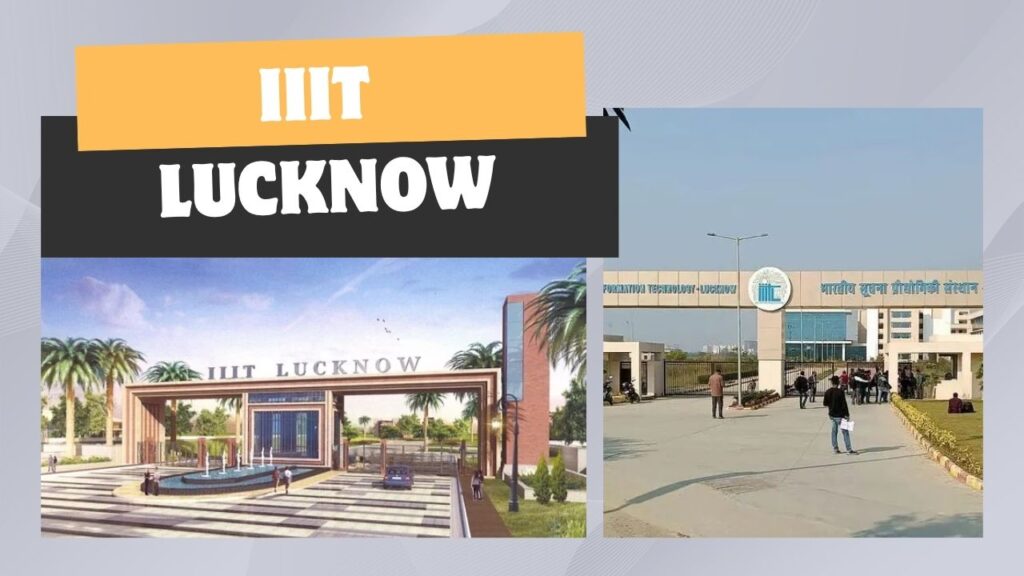
On one end is IIIT Lucknow, an Institute of National Importance operating under a PPP model between the Ministry of Education, Government of Uttar Pradesh and UP Electronics Corporation. That institute reported an average BTech package of ₹33.71 LPA for 2025, with the highest offer reaching ₹145 LPA — figures that give a run for their money to the mid-tier IITs.
Besides this, there are 53 private engineering colleges, the majority of which are affiliated to Dr. A.P.J. Abdul Kalam Technical University (AKTU) with average packages of ₹4–6 LPA. In between these two is IET Lucknow which is the premier state govt college under AKTU offers 8.2 LPA total fee is just 3.44-4.04 lacs for 4years.
This isn’t just about prestige. The JEE Main rank for IIIT Lucknow Computer Science branch closed at 8,540 (General All India) in 2025, while IET Lucknow’s CSE closed at around the rank of 35,763 via UPTAC counselling. The difference of 27,000 ranks corresponds to around 1.5 percentile points.
Top Government BTech Colleges in Lucknow
IIIT Lucknow (Indian Institute of Information Technology)
IIIT Lucknow is an Institute of National Importance operating under PPP model, formed in 2015-16 by the Government of UP, with the financial support from the MHRD, Government of India along with UP Electronics Corporation. The institute offers only BTech programs in computer science based areas – Computer Science & Engineering, Information Technology, CS-AI and CS-Business.
Entry to these institutes is through JEE Main and then JoSAA counselling — just like the NITs and IITs. 96.17 % of students (201/209) of BTech got placed in the 2025 placement season with a median package of ₹26 LPA. The tuition fees for the entire four-year course ranges from ₹9.6 —- 10.23 lakhs, excluding the cost of hostel.
The culture of coding here has been likened to that in top NITs. In contrast to regular state colleges, IIIT-L has a laser focused curriculum on software engineering, algorithms and data science. Companies like Microsoft, Goldman Sachs, Google, LinkedIn, and Directi have come to these colleges for placement drives.
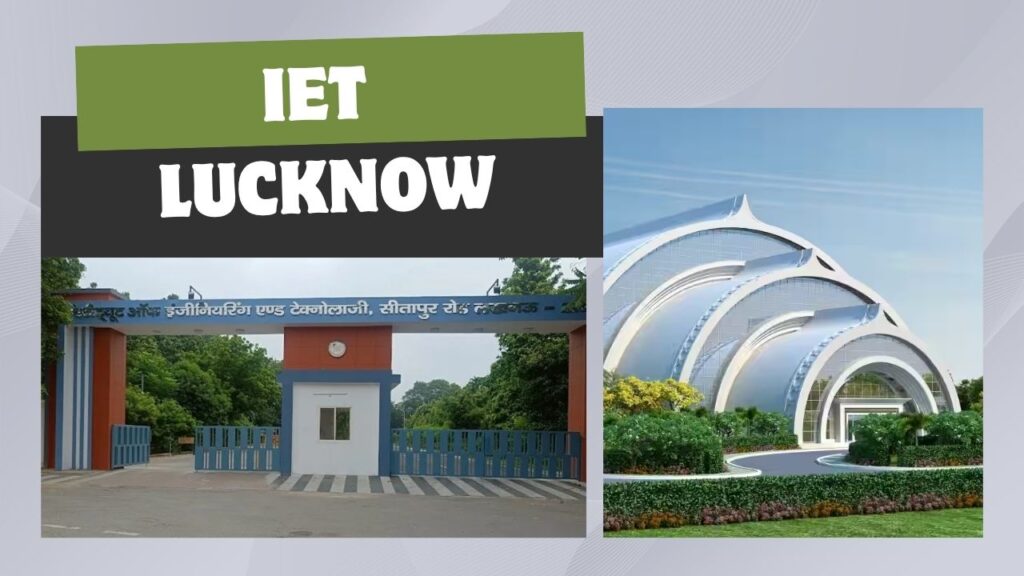
IET Lucknow (Institute of Engineering and Technology)
IET Lucknow is listed in the top colleges of Engineering colleges of Lucknow, established in 1984. This government institute is administered by AKTU’s Executive Council and offers eight different fields in BTech. Those eight disciplines are Computer Science, Electronics & Communication, Civil, Mechanical, Electrical, Chemical, and Information Technology.
The admission process is tough as students have to go through UPTAC counselling (not JoSAA) after passing JEE Mains. Previous year students get placement packages up to ₹8.2 LPA and the highest package goes up to ₹49 LPA shown in the record. Total four year fees of IET-L sit between ₹3.44–4.04 lakhs that make up to ROI, you pay roughly ₹4 lakhs and routinely secure placements averaging above ₹8 LPA.
The campus environment is academic and advanced, providing the strongest ecosystem in the city for students who are targeting core engineering branches to settle down in government jobs.
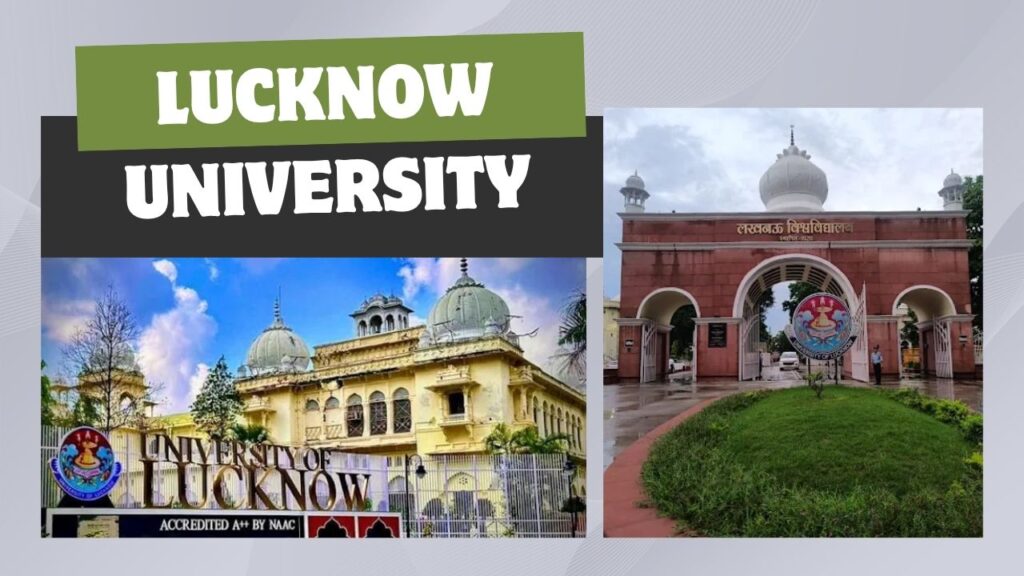
University of Lucknow
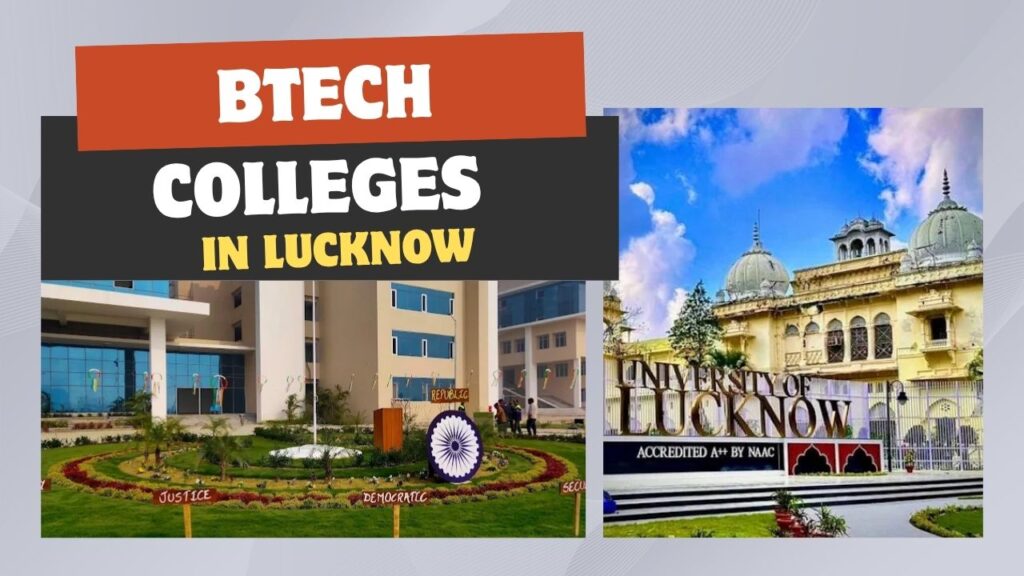
University of Lucknow is every engineering first choice as it serves various disciplines in engineering programs. Students settle down with an average package of ₹6.5 – 8.0 LPA and this four year degree costs ₹1.2 – 1.4 lakhs, which is a good choice for a middle class person. Admission routes include JEE Main and LUGET.
The campus environment is surrounded with technical studies, civil services or management exam preparation. It balanced the core culture of academic and practicality, making it a perfect choice for UPSC aspirants who want an engineering degree as a backup.
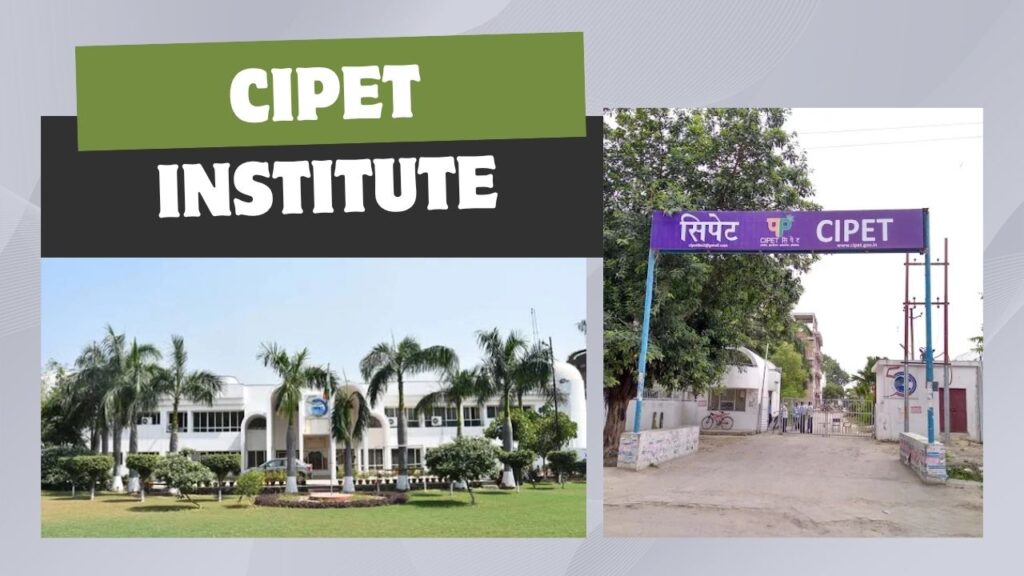
CIPET Lucknow (Central Institute of Petrochemicals Engineering and Technology)
CIPET operates under the Ministry of Chemicals and Fertilizers, the best choice for students who want to build a career in chemical engineering. The institute focuses on plastics engineering and manufacturing technology while maintaining the strong connection to industries in automotive, packaging, and petrochemicals sectors where demand for specialized engineering talent is high.
The annual fees of course sits between ₹75,000–85,000 and delivers exceptional ROI for students in future. The placement rate is also high in this field, near-100% in manufacturing sectors.
Leading Private BTech Colleges in Lucknow
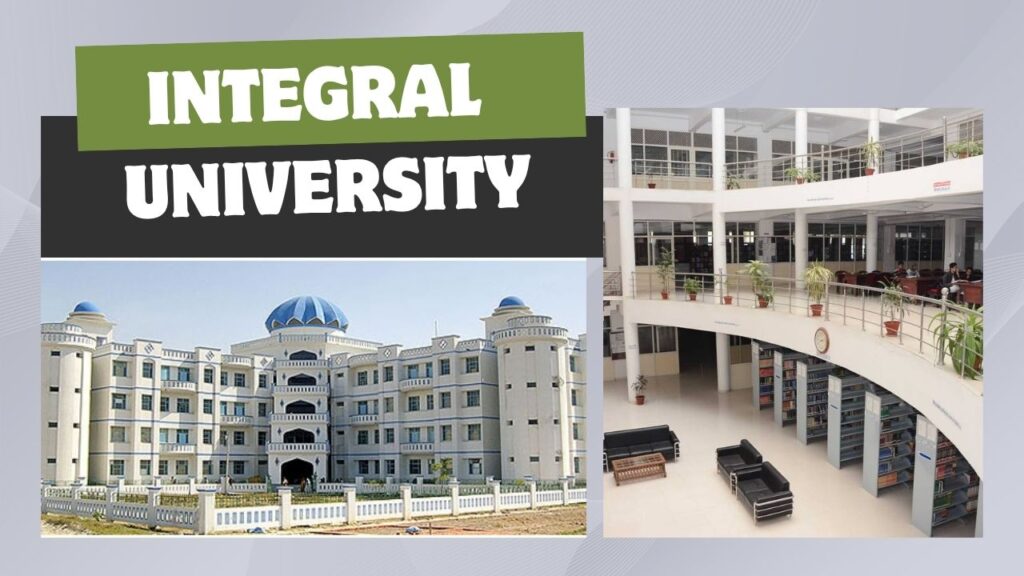
Integral University
Integral University became one of the best Lucknow engineering colleges after it came into the NIRF 2025 Engineering ranking bands (201–300). Its unique position is built upon the faculty strength and curriculum of the university in research infrastructure and emerging specializations like Cloud Computing and AI.
These advanced choices are growing the university’s reputation world-wide and best for students who plan to pursue higher education or research careers. This institution carries NAAC A+ and provides a higher academic environment which gets students average packages of ₹4.5 – 7.2 LPA shown in reports. The annual fees of ₹1.5 –1.7 lakhs.
Amity University Lucknow
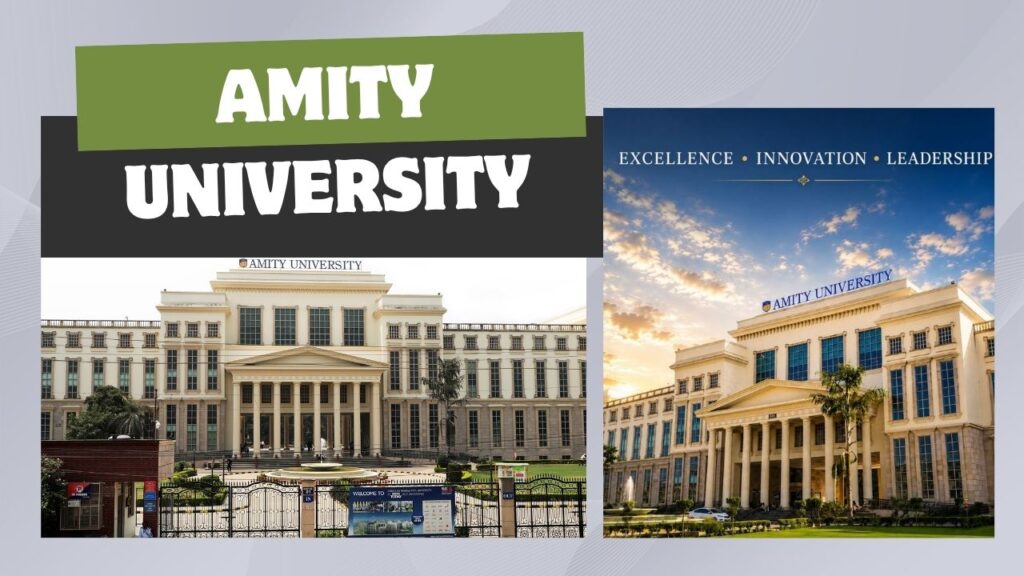
Amity University got NAAC A+ accreditation with corporate-level infrastructure that gives students an opportunity for learning with soft-skills training, global immersion programs, and placement drives featuring TCS, Wipro, HCL, and IBM. Reports say the average package students can get is up to ₹6.5 LPA and annual fees is ₹3.1 —- 4.5 lakhs.
Amity builds their students with strong communication skills — a profile that consulting firms and client-facing tech roles value. But it can be affordable for some students as its total fees for four years is ₹16–20 lakhs.
Babu Banarasi Das University (BBDU)
BBDU is one of the biggest universities in Lucknow with a wider range of programs. It offers BTech courses in multiple disciplines at ₹1.4 — 1.8 lakhs fees annually. Students can get an average package on their placement is around ₹5.2 —- 6.8 LPA but students have to pass JEE Main or BBDU-ET entrance exam.
If students miss IET Lucknow, after getting 35,000–60,000 in JEE Main can get admission in BBDU as it offers a reliable middle-of-the-funnel option without exorbitant fees.
R.R. Group of Institutions (RRGI/RITM)
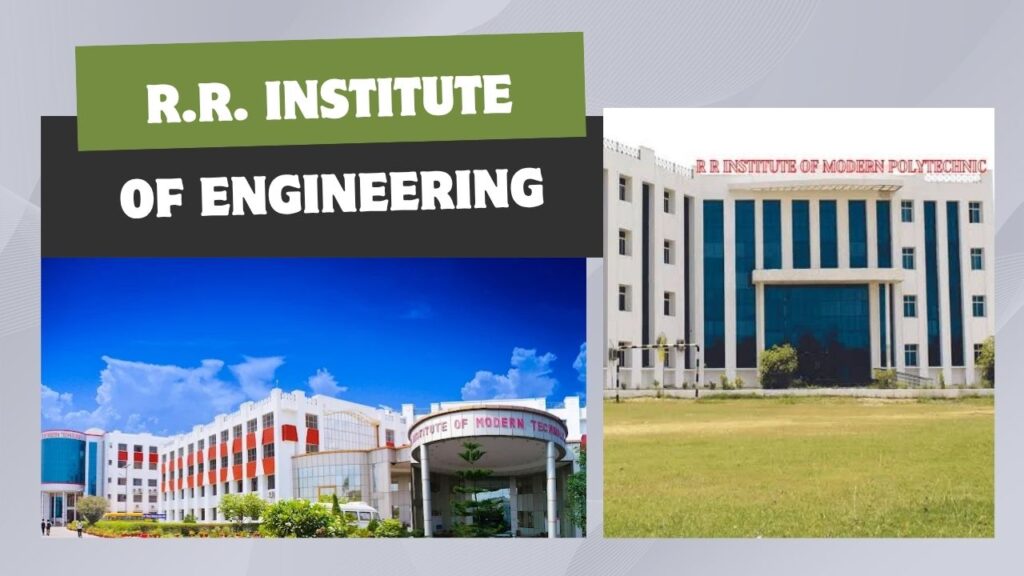
RRGI/RITM offers a strong curriculum and practical exposure for BTech students which polishes their skills in specific disciplines. ₹4.5 – 6.0 LPA range of package after finishing four year degree which cost students ₹80,000 – 1.1 lakhs per year.
If students miss a seat in government college, they can get admission here. It’s a practical option for middle class families since its ROI is also good, and a consistent placement record.
Comparison of Best BTech Colleges in Lucknow: Fees vs. Placement ROI
College Name
Ownership
Total 4-Year Fee
2025-26 Avg Package
Best Specialization
IIIT Lucknow
Govt (PPP)
₹9.6–10.23 L
₹33.71 LPA
CSE, AI, IT
IET Lucknow
State Govt
₹3.44–4.04 L
₹8.2 LPA
Core Engg, CSE
Lucknow University
State Govt
₹4.8–5.6 L
₹7.5 LPA
Civil, Electrical
Amity University
Private
₹16–20 L
₹7.8 LPA
Biotech, Cyber
Integral University
Private (Deemed)
₹6–7 L
₹5.5 LPA
Cloud, AI
BBDU
Private
₹5.6–7.2 L
₹6.0 LPA
Data Science
RRGI
Private
₹3.2–4.4 L
₹4.8 LPA
Mech, CSE
CIPET
Central Govt
₹2 L
₹5.0 LPA
Plastics Engg
If software engineering at product-based companies is your goal, IIIT Lucknow operates in a different league. For core engineering with government job preparation, IET Lucknow delivers unmatched ROI.
BTech Admission Process in Lucknow: JoSAA vs. UPTAC
There is a rule to take admission in BTech — whether you choose government or private college, the pathway is critical but it is mandatory to test your knowledge.
JoSAA (Joint Seat Allocation Authority)
Students can take admission through JoSAA counselling to IIIT Lucknow, IITs, NITs, and IIITs nationwide. It happens every year in June, you can register and be ready for counselling rounds. It will finish till July last week but you must have a JEE Main 2026 score and 75% aggregate in Class 12. The portal is josaa.nic.in.
If students want to take admission in any 60+ AKTU-affiliated colleges across Uttar Pradesh then registering UPTAC is the best choice. Registration happens every year in mid-June on uptac.admissions.nic.in. You must have a JEE Main 2026 score with 45% in PCM with valid documents.
IIIT Lucknow uses JoSAA only. IET Lucknow and all private AKTU colleges use UPTAC only. You must register for both systems separately if you want to keep both options open.
Meanwhile many private universities run their own entrance exam for admission or offer direct admission on merits of students in 12th. So you must secure above 60% in PCM to be eligible for BTech course.
JEE Main 2025 Cutoffs: What Ranks Actually Got In
IIIT Lucknow CSE (General All India): 8,540 (Round 1)
IIIT Lucknow CS-AI (General All India): 8,844 (Round 1)
IET Lucknow CS-AI (General): 35,388 (Round 1)
IET Lucknow CSE (General): 35,763 (Round 4)
IET Lucknow ECE (Open State): 48,263
IET Lucknow Electrical (Open State): 59,465
IET Lucknow Mechanical (Open State): ~1,00,306
Placement Reality: Beyond the “Highest Package” Marketing
College catalogs are full of boasts about the ₹62 LPA or ₹145 LPA offers from abroad. That’s important, but the numbers don’t tell you what the median looks like. IIIT Lucknow’s median package (26 LPA) is more telling than its highest package (145 LPA). The IET Lucknow median of 6.15 (NIRF 2024 data) LPA is a much better reflection of what one can expect than the highest offer of 49 LPA.
Private Lucknow colleges claim ₹4-6 LPA as average package and ₹15-20 LPA as maximum IT package for top performers. It is the placement percentage — the ratio of students who got a job to those eligible to get a job — that is more important than the maximum package. The 96.17% placement record of IIIT Lucknow (201 / 209 students) is outstanding. IET Lucknow reports 60% to 70% placement, 50+ recruiters. Private colleges are a mixed bag, some find it hard to place even 50% of their batch.
For the cost-conscious and less brand-conscious, Lucknow has many government and government-aided schools:
College
Fees
Admission Through
Package
BSP Lucknow (Bhabha Polytechnic)
₹69,000 total for four years
UPTAC
₹3 LPA
AIET Lucknow (Ambalika Institute)
₹1–1.4 lakhs
UPTAC
₹4 LPA
CIPET Lucknow
₹2 lakhs total for four years
UPTAC
₹3 LPA
IET Lucknow
₹3.44–4.04 lakhs total
UPTAC
₹3.5 LPA
Eligibility Criteria for BTech Admission in Lucknow
Students must have physics, chemistry, and math in their class 12th with a score above 60%.
JEE Mains is mandatory for most colleges.
UP domicile candidates get preference under the home state quota in UPTAC counselling.
Conclusion
If you have finished your 12th with PCM and want to pursue BTech, that means you need to prepare yourself for challenges and competition. This is a vast field with multiple opportunities but there are thousands of students who pass every year from these Best BTech Colleges in Lucknow and secure a well-paying job in multinational companies.
You can also join the government sector (Railway technician, Airlines, ISRO) by getting admission in government college, it doesn’t mean that private colleges won’t make you eligible, government colleges have a wider range of placement drives. Understand the process of admission before making a decision because most students fail to keep the track.
Students can check fees and salary packages that companies offer as it matters to build a secure career.
The golden opportunity is announced for all the Teachers in India through CTET exam 2026. Organized by CBSE, this country level examination is for teaching jobs in government and private schools for Class 1 to 8. Candidates who apply in December 2025 for this examination should get ready for the exams.
Notification Details
Exam notice is released for CTET exam 2026, you can also get official notification on the official website for all the details about the exam. Candidates who filled the forms in November — 18 December 2025 can prepare themselves for the examinations in prior time to avoid panic at the end.
CTET February 2026 Exam Dates and Format
Feature
Details
Exam Date
7 & 8 /February /2026 (Saturday & Sunday)
Mode of Exam
Offline (Pen & Paper / OMR Sheet)
Number of Cities
132 to 140 Cities Nationwide
Total Papers
For 1-5 Standard: Paper I; For 6-8 standard: Paper II
Question Type
150 Multiple Choice Questions
Total Marks
150 Marks per paper
Duration
150 Minutes (2.5 Hours)
Negative Marking
None
Language Options
Bilingual (Hindi/English) + 20 Regional Languages
Syllabus Overview
Paper 1 consists of questions from Child Development & Pedagogy, Language I & II, Science (for Science group), Social Studies (for Social studies group), Mathematics, and Environmental Studies, the emphasis is primarily on assessing the capability to teach at mali-ly school children.
Paper 2 deals with Child Development, Language I and II and options such as Maths/Science or Social Studies for senior levels.
Subjects stress pedagogy, theories of learning, and content of subjects based on guidelines of NCTE.
Pass requirement is 60% for general (55% for reserved).
Education and Age Limit Rule
There is no age limit here—everyone is welcome to apply, if you are Indian or you have Indian roots.
For Paper 1, you should have a minimum of 50% in 10+2 with a 2-year Diploma in Elementary Education (D.El.Ed) or graduation with B.Ed.
Paper 2: Graduation with minimum 50% marks and B.Ed or its equivalent like B.Ed (Special Education) is essential. .
Reserved Category (SC/ST/OBC/PwD) Candidates can get Relaxations of 5% less in qualifying marks.
Candidates who are appearing in the last year of their course are also eligible.
If you began your preparation for the IBPS PO with the mock tests of the last year, then your syllabus is already out of date with yesterday’s blueprint. The IBPS PO MT XVI cycle for 2026 has evolved quite a bit in terms of number of vacancies, in the Mains exam, and even in the rounds after the interview, so aspirants who do not revise their strategy might find themselves sitting in the exam hall solving a paper that is no more.
Here are the real differences this time around and what that means for how you prepare.
What Changed in IBPS PO MT XVI 2026
The IBPS PO MT XVI detailed notification was published on 30 June and 01 July 2026 on ibps.in, inviting applications for the posts of Probationary Officer and Management Trainee in 11 participating public sector banks for the recruitment year 2027–28.
The total number of vacancies mentioned in the first notification was 6,715. That figure has since shifted — as per the 20 July 2026 update from IBPS, the number stands at 7,365, which is approximately 29% more than last year’s intake.
Two banks, UCO Bank and Union Bank of India, had not yet submitted their vacancy numbers as of this update, so the final count may change once more before the end of the process. Bank of Baroda, Canara Bank, and Bank of Maharashtra currently have the largest number of vacancies.
The date for application also got extended. It was initially scheduled to end on 21 July 2026 but IBPS extended the last date to 26 July 2026. This year also brings something new with effect: a two-day correction window post registration closure, so candidates who find an error in their form after submission are not doomed by it.
Important Dates for IBPS PO MT XVI Recruitment 2026
Milestone
Date
Detailed notification released
30 June – 1 July 2026
Online application window
1 – 26 July 2026 (extended from 21 July)
Preliminary exam
22 & 23 August 2026
Main exam
4 October 2026
Personality Test / Interview
To be announced
Treat the interview and personality test dates as provisional until IBPS confirms them closer to the Mains result — that stage of IBPS PO MT XVI typically gets scheduled bank-wise, so your call letter will carry the exact date and centre.
Eligibility Criteria
To apply for IBPS PO MT XVI Recruitment, you need a graduation degree in any discipline from a recognised university, with your mark sheet or provisional degree certificate in hand at the time of registration — IBPS doesn’t accept “result awaited” candidates.
The age bracket is 20 to 30 years as on 1 July 2026; the usual government relaxations for reserved categories apply, but confirm the exact slab-wise relaxation against the official notification PDF rather than assuming it mirrors last year’s, since IBPS has been known to revise fine print between cycles.
The application fee is ₹175 for SC/ST/PwBD candidates and ₹850for everyone else, payable online through the IBPS portal.
Salary and Pay Scale
An IBPS PO MT XVI Recruitment selected candidate shall begin at the basic pay of ₹48,480. When DA, HRA and other allowances are included, the salary comes to around ₹74,000-76,000 per month in-hand, although it may vary based on place of posting and allowances structure of individual banks.
The Exam Pattern For IBPS PO MT XVI Really Diverges From Last Year
Prelims remains the same. It’s still 100 questions for 100 marks on English Language, Quantitative Aptitude and Reasoning Ability, with 60 minutes for the duration which is divided into three separate timers of 20 minutes each. A ¼ mark will be deducted for each wrong answer and your Prelims score is only a qualifying hurdle — it is not taken into account for the final merit list.
Mains is what makes IBPS PO MT XVI Recruitment seem an altogether different exam. The objective paper has increased from 145 questions to 170 questions, while the total marks remain 200 in a duration of 160 minutes. The English Language now asks more questions but awards fewer marks – 20, down from 40, so that each English question is worth less than it ever was.
General/Economy/Banking/Digital/Financial Awareness has been increased to around 50 questions for 60 marks and is one of the heaviest sections in the exam and also Data Analysis & Interpretation has been given more marks.
The subjective paper remains 25 marks for 30 minutes, although sources vary on whether it’s essay writing and comprehension or if it includes letter writing — do confirm this with your admit card and the official notice when released, don’t take either version for your final source of information.
Selection Process: Four Stages, Not Three
Where IBPS PO MT XVI Recruitment used to run Prelims, Mains, and Interview, this cycle adds a fourth step: a Personality Test, conducted after Mains and before the interview. It’s mandatory for anyone shortlisted, but non-qualifying — its purpose is to hand the interview panel a personality profile rather than to filter candidates out on its own.
The interview itself is still conducted by the individual participating banks, and you’ll need at least 40% to qualify (35% for SC/ST/OBC/PwD candidates).
Final merit combines Mains and Interview scores in an 80:20 ratio — Prelims marks play no role beyond getting you through the door.
One Preparation Tip You Shouldn’t Skip
Don’t wait until after Prelims to deal with the Mains shift. Because Banking Awareness and Data Analysis & Interpretation now carry noticeably more weight in IBPS PO MT XVI’s Mains paper, block out a fixed weekly slot — even 30 minutes, three times a week for RBI circulars, recent monetary policy changes, and current banking-sector news, starting today rather than after Prelims is done.
Candidates who leave Banking Awareness for a last-minute cram before Mains are the ones most exposed by this year’s restructured weightage.
The vacancy count for IBPS PO MT XVI Recruitment isn’t fully locked yet, with two banks’ numbers still pending, and the interview-stage calendar hasn’t been released. Keep checking ibps.in directly rather than relying on secondhand vacancy figures as you get closer to results — in a cycle with this many moving parts, the official notification is the only version worth trusting completely.
Conclusion
The IBPS PO MT XVI Recruitment 2026 notification came with more vacancies and a new selection process, so it is a good chance to grab for banking aspirants. Check your eligibility, apply online, and start preparing for Prelims and the revised Mains exam today.
There might be updates for vacancies and schedules from IBPS’s side, so keep visiting the official site for the latest notifications and do not trust other websites.
If you are waiting for a job in NICL Assistant Online Form 2026 then it is the right time to apply for the Assistant (Class III) position since there are a total 500 vacant seats, your chance of selection is high. National Insurance Company Limited opens the application portal until August 7, 2026, so apply early to secure a seat into a reputed government job in the insurance sector.
There is a lot of time for candidates to register and upload the documents. But before you start filling this online form, you must know a few important points to not get rejected.
Event
Date
Application Start Date
18 July 2026
Last Date to Apply Online
7 August 2026
Last Date for Fee Payment
7 August 2026
Phase I — Prelims Exam
27 August 2026
Phase II — Mains Exam
30 October 2026
Apply early, don’t wait until the final week. Government websites are known to slow down or crash when thousands of applicants access them on the final day, and a deadline missed here means waiting for the next cycle.
Vacancy Details
NICL will hire for 500 Assistant posts in the Class III cadre, with selected candidates getting posted to different states and union territories on regional lines. The job includes routine office and field work at the NICL Branch Point or the Branch Office.
Before you start filling the form, make sure you tick these boxes:
A graduation degree in any subject with a good score from any recognized university.
NICL Assistant 2026 age limit is 21 to 30 years. Reserved categories are given only reserved category candidates, you can check in the official notification.
It is important to know the regional language of the state you are applying for, as the Recruitment is held through a Regional Language Test.
Note: Choose the state where you are familiar with and know their native language to handle the job smoothly. If you select multiple locations, you application can get rejected so easily.
Application Fee
Category
Fee
UR, OBC, EWS
₹850
SC, ST, PwBD, Ex-Servicemen
No fee
Selection Process
NICL Assistant recruitment happens in three stages:
Preliminary Examination — objective-type, online
Main Examination
Regional Language Test
Only those candidates who qualify in the prelims can appear for the mains, and only those who qualify in mains can feature in the language test. Remember this tiered format when you are considering your preparation — there is about a two month gap between prelims and mains which is sufficient to address weak points if you start early.
Open NICL website and find the recruitment section or click on the link “Recruitment of 500 Assistant (Class III) 2026-27”.
If you are new then register yourself using a valid email ID or mobile number. Once you get the registration number, login again with that credentials.
Fill the entire application form for the NICL Assistant Online Form 2026 role and re-check every detail.
Select your preferred examination state and language.
Prepare your passport-size photograph, signature, left thumb impression, and certificates to upload it immediately.
Make a payment for the application by using a net banking or card (this step is skipped for those who are exempted).
Preview the form carefully before hitting final submit — once submitted, corrections aren’t usually allowed.
Download and save a copy of the final application form and payment receipt for your records.
A Few Things Worth Remembering
Offline applications aren’t accepted — this is an online-only process.
Remember to save your progress at each stage by clicking on “Validate Your Details” and “Save & Next” to avoid losing data halfway.
Have all your documents scanned and ready in the correct file size and format so you aren’t rushing to get everything together at the final step.
If you’re eligible and considering a stable, long-term career in the public-sector insurance space, this is a solid opportunity to apply for. Just don’t leave the form for the last two days.
Conclusion
Eligible candidates should fill the NICL Assistant Online Form 2026 right now and grab a chance to secure a seat in the Indian public-sector insurance company. NICL offers 500 vacant spaces which will be filled under a three-tier selection procedure.
Verify your eligibility, select the appropriate State and Regional language, and keep all requisite documents handy to avoid last-minute hassles before applying. And most importantly, submit your application in advance of the deadline on7 August 2026 to avoid any last minute technical problems and to allow yourself some time to start studying for the Preliminary Exam which is held on 27 August2026.
UP GNM Entrance Test UPGET is conducted for the aspiring Nurse. Nursing is a field of taking care of injured, weakened, and fighting for life in the hospital or private care center. It is considered as the most respected and important field in the medical field. If you enjoy helping people, being a nurse can provide a lot of personal reward and job security.
In the case of students of Uttar Pradesh who want to pursue this noble field, it is the best way to begin with the General Nursing and Midwifery (GNM) diploma course.
But how to get admission in the best nursing college in UP? That is exactly where the UP GNM Entrance Test (UPGET) enters the scene.
If you are a student perplexed about the UPGET, thinking who is it for, for what reason is it conducted or what to prepare, you have landed at the right place. In this complete guide for UPGET, we will cover each and every information regarding the UPGET exam, which will provide you with the latest updates as well as a clear path for your career.
What Is The UPGET Exam?
UP GNM Entrance Test UPGET is a way to proceed admission for those selected candidates who prefer to study 3 years General Nursing and Midwifery (GNM) diploma course.
Earlier the norms for GNM course admission were merit-wise based on the marks a student scored in their 10th and 12th board exams in uttar pradesh. But now, in a bid to make the admissions process more transparent and uniform, the Atal Bihari Vajpayee Medical University (ABVMU), Lucknow has been given the responsibility to conduct the UPGET.
This examination is for one time for all. After passing the UPGET, students will be admitted to any of the Government GNM Training Centers and Private Nursing Colleges.
(Latest Update: ABVMU officially conducting UPGET 2026 for the students, form portal is active from 29th April 2026 and exam will be held on 16th June 2026.)
Who Is This Test For?
UPGET is conducted for those candidates who aspire for a career in nursing and healthcare but not for 4-year B.Sc. Nursing degree. The UPGET is designed for the candidates who want to pursue a career in nursing and healthcare but do not wish to take the route for a four years B.Sc.Nursing course or are not qualified for the same.
Recent 12th Graduates: Those who have completed 12th standard (Intermediate) recently and want to enter the healthcare workforce at the earliest by opting for a 3-year diploma.
Students from Diverse Academic Backgrounds: Science students are the most preferred for medical fields, but through UPGET the GNM course opens doors for students belonging to Arts and Commerce stream too to apply for the same if they have English as one of the core subject and other minimum percentage bar is met.
Registered ANMs: Registered Auxiliary Nurse Midwives (ANMs) who wish to upgrade their qualification and career path can take this exam to shift to the higher GNM post.
Why Is The UPGET Conducted?
You may be thinking why an additional entrance examination is necessary when 12th-board marks are already there. Changing from a merit-based system to an entrance-exam system (UPGET) went through for several very compelling reasons:
Different education boards (CBSE, ICSE, UP Board) follow their own set of marking schemes. Some are very strict, some a bit lazy. UPGET is a fair examination where all candidates are assessed on the same question paper.
Nurses are going to deal with human lives. The government also wants to test students for a basic proficiency in science, logical thinking and English before they can enter government-run hospitals and the best private ones.
Students though would no longer have to run from private college to private college seeking to pay heavy donation fees, UPGET ushers a system of centralized counselling. You appear for one exam, get one rank and then you choose your college online on the basis of merit.
Eligibility Criteria For UP GNM Entrance Test UPGET
You must be above 17 years old and have no max age limit for this exam.
Intermediate passed candidates are eligible for this exam, with above scoring of 40% marks.
You must know basic English or study it as a subject in 12th.
Alternative Eligibility for ANMs
If you have passed the vocational course of ANM with a minimum of 40% marks or if you are registered as ANM and have qualifying marks, then you can apply for the UPGET.
Citizenship
Only Indian citizens are eligible for this exam. Possession of a valid Uttar Pradesh domicile certificate also assists in availing the benefits of state-sponsored reservations (SC/ST/OBC/EWS).
Syllabus: What To Study For UPGET?
The good thing about UPGET is that the syllabus is manageable, as opposed to NEET. It evaluates your fundamentals. Try each question (100 MCQs) as there is no negative marking.
Syllabus breakdown for right preparation:
1. General Science (Class 10th Level)
Basic aspects of Physics, Chemistry and Biology are discussed in this section. Nurses therefore understand the human body and chemicals at a fundamental level, so focus heavily on Biology (human anatomy, diseases, nutrition, cells) with a bit of basic Physio as well.
The questions on physics and chemistry are very basic—like motion, light, simple chemical reactions, and acids/bases. NCERT Science textbooks from Class 9 and Class 10 are very helpful to prepare yourself.
2. English (Class 12th Level)
A nurse needs to read medical charts, know what a prescription says and talk to people. Basic grammar rules, vocab, syno/anto-nyms, and correcting the sentences basically checks your ability to check the fundamentals of English.
3. General Knowledge & Current Affairs (Class 12th Level)
This part tests your general knowledge. It is on basic Indian history, geography, civics and some of the major current affairs(especially in health, science, and national news). Specially focus on healthcare schemes launched by the UP Government and the Central Government that are currently in progress.
Passing Marks & Required Score
Due to no negative marking for the UPGET exam, the average marks are on the higher side. But the criteria vary for the Government College and for a Private College.
There are required marks for the admission, 50% for Unreserved/General categories candidates and 40% for those who belong to SC/ST/OBC category.
You need to secure a seat with a higher score, Out of 100, aiming for a score of 75 to 85+ to take a chance. Private institutes will take you if you pass the cutoff marks along with the counseling process.
Step-by-Step Selection Process
Step 1: Candidates should visit the ABWMU Official website when the notification is out (Expected in April/May). You have to register,mention your personal and educational details,upload a live photograph and signature and pay the examination fee.
Step 2: Admit cards are mandatory as they act as an entry card in the examination. Candidates need to download them when the official release is declared a few days before the exam and visit their allotted examination center.
Step 3: The results will be declared by ABVMU on their portal. According to the scores, a state-wide Merit List is formed. Your position in this list is everything.
Step 4: Qualified applicants will apply for online counseling. You need to fill your “Choices” (Colleges you want to opt in the order of preference).
Step 5: Your college will be allotted to you on the basis of your rank, category and the options submitted. You have to accept the seat and then go to the college along with your original documents (12th mark sheet, Aadhar Card, Caste Certificate, Domicile) for verification and submission of fee.
What to Do If You Don’t Clear UPGET?
Failing an entrance exam can seem like the end of the world but in medicine, setbacks are par for the course. You have plenty of good backup options if you don’t get a high enough score for admission:
Take a Drop and Re-attempt, a dedicated 6-month preparation plan will almost guarantee a great rank next year.
You can also consider a 2-year ANM diploma course which is actually easier to get into.
There are other diploma courses which are highly demanded and are offered by the UP State Medical Faculty, including D.Pharma, DMLT, X-Ray Technician, or Physiotherapy.
If you are willing to pay a slightly higher fee, you can approach private institutions directly to inquire if they accept direct admissions without a top UPGET rank
Conclusion
The UP GNM Entrance Test UPGET is a big chance for the one who wants to make career in nursing and serving the people in the state of Uttar Pradesh. As the state government switches to entrance test system, it would now be merit-based and allowing students from diverse background to compete and make it to the top nursing institutions.
The way to success in UPGET is to know the syllabus, read the basic 10th science, refresh your English and keep updated with GK.