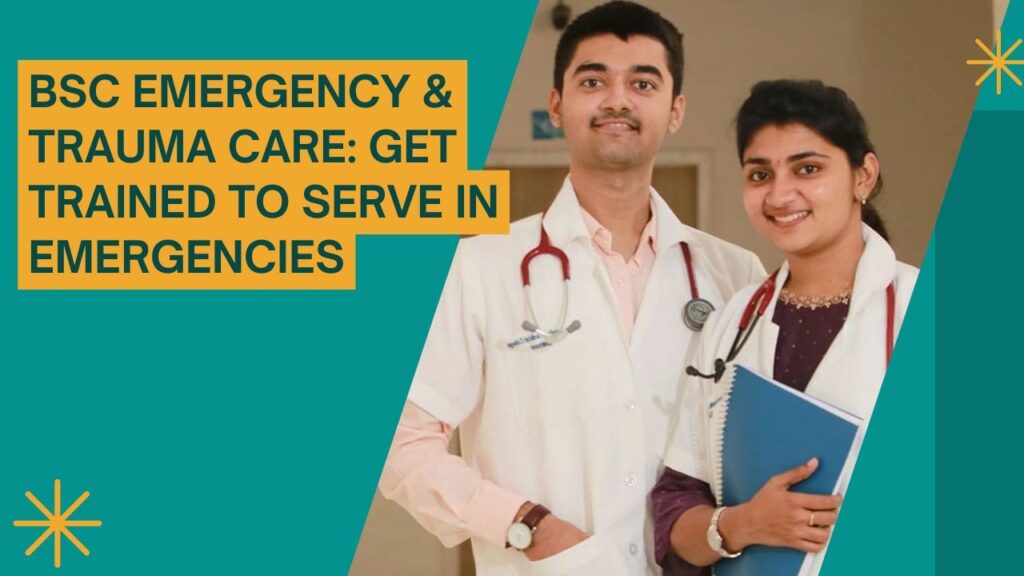
If you ever observed those intense medical dramas in which doctors and nurses race down hospital hallways, defibrillator in tow, barking orders as they work to stabilize a patient who has just barreled through the doors of the ER, and it makes you excited then BSc Emergency and Trauma Care course is for you. That’s emergency and trauma care in action and it’s what brings thousands of students to BSc Emergency and Trauma Care every year.
But this isn’t Grey’s Anatomy. You work yourself raw, sleeping little, but you come home satisfied. So if you’re thinking about going down this route, you really want to know what you’re getting into. So we’ll break down everything there is to know about this degree from what you’ll learn to where it can take you.
What is a BSc Emergency and Trauma Care?
BSc Emergency and Trauma Care is a program offered at the undergraduate level which may be completed in 3 or 4 years based on the country and university. Consider it your boot camp for handling life-or-death scenarios.
It is not a general nursing with medicine course but one that is focused very closely in that so that you can say first moments of care. The golden hour following traumatic injury, the decisions made in those split seconds during cardiac arrests, the controlled chaos of a mass casualty event. You’ll be calm in someone else’s horrible weather.
It combines clinical medicine, emergency procedures, and real-life trauma management. This isn’t theory — you’re training your hands and eyes to initiate CPR instantly, intubate a patient in 30 seconds, identify the early signs of internal hemorrhaging before it’s too late.
Breaking Down the Curriculum
First year is mostly about learning the basics: human anatomy and physiology and the rudimentary medical sciences.
You may also need to take general nursing basics and medical terminology. Do not underestimate this year—those anatomical minutiae you’re committing to memory? They will be essential when you’re trying to find a vein on a hypotensive trauma patient at 3 a.m.
Year Two is harder as you study emergency medical techniques, pharmacology and pathophysiology. Here you begin to know about some specific procedures with: airway management, wound care, bone stabilization and basic life support. You’ll probably spend a lot of time in simulation labs, getting practice with mannequins that can “die” if you screw up (no big pressure).
Year Three and beyond include in-depth study of complex trauma, disaster medicine, and subspecialty emergency medicine. We’re talking pediatric emergencies, the obstetric crisis, toxicology and psychiatric emergencies. Clinical rotations are coming— you’ll spend weeks real-time in EDs, ambulances, and trauma centers.
These days many courses also cover modules of disaster response and management of mass casualties. In the wake of the pandemic and worsening natural disasters, hospitals are in dire need of experts to orchestrate care when they run out of resources.
The Skills You’ll Actually Develop
Beyond science, this degree creates something else entirely: mental resiliency. You will learn how to survive under dire circumstances, make decisions using incomplete data, and speak with clarity in the middle of a breakdown.
Are there technical aspects that are important? Yes, you will be taught advanced cardiac life support (ACLS), trauma assessment, emergency medications, medical equipment, and more.
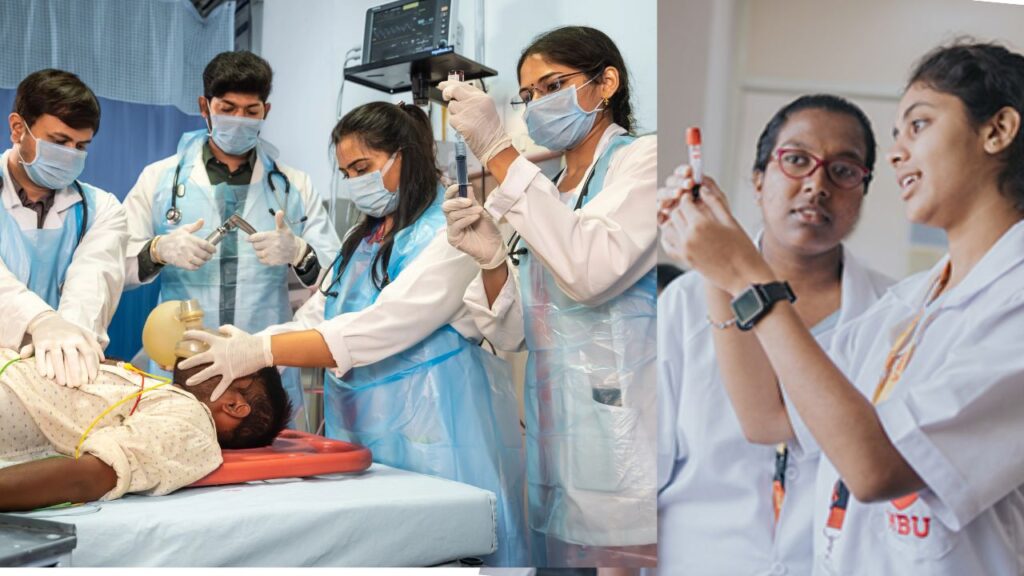
soft skills are important, too: You need to defuse an irate patient, calm a scared family, function like a well-oiled machine with a group of paramedics, no matter what their specialty, and document everything, even as the room spins out of your control.
Time management is your superpower. In EM you might be managing a dozen critical patients simultaneously, all yelling for your attention. You will get to triage to make tough decisions about who should be treated first on the basis of probabilities of survival. It’s emotionally exhausting and ethically challenging, but it has to be done.
Where Can This Degree Take You?
BSc Emergency and Trauma Care graduates have a reasonably unexpected variety of options when it comes to their career path. Sure, they mostly work as emergency department nurses or techs in hospitals — but that’s really just the tip of the iceberg.
Emergency medical services (EMS) has positions for paramedics and emergency medical technicians (EMTs). They have been able to choose to be flight nurses, which is critical care while transporting a patient by air. Others may become disaster specialists working for groups such as the Red Cross or state emergency management offices.
There are also increasing needs in industrial and corporate medical emergency services — such as oil rigs, mining operations, or large manufacturing plants that maintain on-site emergency response teams. Some graduates go on to work in emergency department management, where they oversee operations and quality improvement.
For the academically inclined, this degree also serves as a strong foundation for further study be that a Master’s in Emergency Medicine, Public Health, or even medical school. The clinical exposure and strong emergency medicine background really gave you a leg up.
Read More:- Uttar Pradesh Public Service Commission Release Result for LT Grade
Is BSc Emergency and Trauma Care Right for You?
The work hours are intense. Emergency medicine is a 24/7 endeavor, so nights, weekends, holidays are par for the course. The psychological impact is real, you will see death, massive trauma, and human misery on a regular basis. Rates of burnout are alarming in emergency medicine, and taking care of yourself isn’t optional, it’s survival.
The physical requirements have to be met as well. You’ll be running around on 12-hour shifts, hoisting patients, doing chest compressions that drain your whole body, and laboring in high-stress settings that send your cortisol through the roof.
So, decide whether you can cope up with all the hard stuff or not because emergency treatment methods are not really tough to learn. Whether you are working in a government or private hospital, you are needed immediately whenever patients arrive.
If you are still confused then talk with active paramedics and emt’s. Shadow in an ER if you can. Read trauma nurse and emergency doctor memoirs. The more grounded your expectations are, the better you will be.
Conclusion
A BSc Emergency and Trauma Care is not just a qualification, it is a promise to be there for people when it matters the most. It’s choosing to be competent under pressure rather than comfortable, team collaboration rather than individual glory, and patient outcomes rather than personal convenience.
The system could use some talented, empathetic emergency healthcare workers. If that’s you, this is your degree plan. Just be sure you’re running headlong after this career with your eyes open wide because once you get in that trauma bay, there’s no time to second-guess yourself.
GovUpdatewala is your trusted source for real-time updates on government exams and jobs in India. We provide verified info on SSC, UPSC, Banking, Railways, Defense, and Teaching exams. From syllabus and patterns to important dates and career tips — we support aspirants at every step.