ITI Admission Fees in Government College: Complete Fee Structure Guide

ITI Admission Fees in Government College: Complete Fee Structure Guide Are you interested in Technical and Vocational Education Training (TVET) as a career option? A good Industrial Training Institutes(ITI) is a great way to learn a practical skill and get a job in a short span of time. How much does it really cost to join a government ITI? is probably among the most frequent questions that are buzzing in your mind if you have been looking for ITI courses. So let's get started with the full ITI Admission Fees in Government College details before jumping on the admission portal. Quick Overview of Fee Breakdown This is the fee structure in short for an Electrician course at a typical government ITI to make your career brighter. This will help you understand the budget of the two year course. Charge Amount Admission Fee –Given one time ₹100 Registration Fee –Given one time ₹50 Monthly Tuition ₹2,400 (₹100 × 24 months) Caution Money – given back later ₹250 Examination Fees ₹200 Student Welfare Funds ₹300 Total Approximate Cost ₹3,300 Note: The caution deposit is refundable on successful completion and your effective expenditure comes to approximately ₹3,050 for two years — Now that’s reasonably priced! Understanding the ITI Fee Structure The nice thing about government ITIs is that they are hilariously cheap when compared to private ones. With private ITI colleges charging fees ranging from ₹5,000 to more than ₹1,000,000 per year, fees of the government ITI colleges are affordable and it goes from ₹1,000 to ₹20,000 per year. So, students from all financial backgrounds can get quality technical education. But it's not just a single figure for the fee structure to pay and forget about it. The fees in government ITIs are divided into several heads, each of which is for a certain purpose. Knowing what all these entails will allow you to plan your finances so you don’t get a shock when it is time for admission. Tuition Fee: The Core Cost The tuition fee is the staple of your yearly outgoings. It is from ₹100 to ₹150 per month at most government ITIs in India which works out to be from ₹1,200 to ₹1,800 per year. For reference, the West Bengal government ITIs charge a total fee of ₹30 per month as a tuition fee, implying that you will be spending only ₹180 for the entire six-month course. These vary from state to state and institution to institution, so be mindful!​ The annual tuition fee for regular trainees, however, is Rs 1,800 (Rs 150 per month) at some government institutions such as the National Skill Training Institute (NSTI) in Patna. Yet if you are from SC/ST, you pay a lot less – just Rs 600 per year (Rs 50 per month). It is indicative of the government’s resolve to open the door of education to the underprivileged sections of the society. Admission Fee: One-Time Payment Consider the entry to the admission fees for the institution you are wants to apply. This is a one-time fee that you pay once you join and not every year. The admission fee is usually around ₹100 to ₹300 for most government ITIs. This is phenomenally low, and includes the cost of processing your application, verification of your documents, and the registration procedures.​ Interestingly, some institutes offer concessions to SC/ST students. For example, SC/ST students will have to pay Rs 25 instead of Rs 100 as admission fee. Registration Fee There is also a registration fee separate from the admission fee and the registration fee is usually between ₹30 to ₹200. This is for registering your enrolment with the records of the institute and getting you listed with the official registers. It’s a non-refundable fee which is paid generally at the time of verification of admission.​ Again, if you belong to SC/ST category you may get waived off from paying this fee in some institutes. Caution Money: A Security Deposit Important to understand: Caution money isn’t a fee that you are wasting. It’s a security deposit that is refunded. You pay it once (usually between ₹ 100 to ₹ 500) while admitting and you get it on successfully completing the course. This sum of money serves as a kind of insurance to keep students finishing their training and disciplined. Additional Funds and Charges In addition to the basic fees, the Govt ITI s also levies different student welfare and infrastructure enhancement funds which may be used for welfare activities of the students, for up-gradation or improvement in infrastructure. These might include: Gymkhana Fee Up to ₹100 To get along with sports and extracurricular activities Student Welfare Funds ₹50 to ₹375 Contributing to overall student development programs Placement Registration Fee Approximately ₹50 Helping the institute organize campus placements Smart Card Fund Around ₹200 For issuing digital identity cards Examination Fee At the time of examination, an institute usually levies a test fee of ₹25 to ₹100 per attempt. This includes the cost of holding exams, drafting question papers and conducting tests. Total Annual Cost For ITI Government Add all this up and see what the real number you’re looking at is. For a normal engineering trade class (say Electrician or Fitter) in a government ITI. First Year Fee is in range between ₹2,400 — ₹3,500 Subsequent Years As it vary on state, ₹1,500 to ₹2,000/year Delhi institute registration fee is Rs.200, so if you are applying there then this is the amount you have to pay at the time of verification along with the other applicable fees, which is quite nominal. Special Provisions and Exemptions For Girl Students A large number of Government ITIs provide relaxation to female trainees. Girl students are exempted from tuition fees as well as examination fees at institutes such as Patna's NSTI, rendering the course free for girls (the only exception being other compulsory deposits and fees). A few states have adopted similar policies to incentivize women to take up technical trades. For Reserved Categories There are hefty discounts for students who belong to the SC, ST, OBC or EWS category. Tuition is often waived or discounted to a token sum. In the ITIs of Odisha, the admission fees are waived for the trainees from SC, ST and women category whose family annual income is less than `2.5 lakhs, they have to pay only the caution money. For Persons with Disabilities (PwD) The government ITIs are said to extend exemptions and concessions to the special needs students, because 'they are handicapped and the financial burdens of study should be thrown off from their shoulders'. State-Wise Variations For the Fee of ITI One should note that the ITI fees vary according to states since education is a subject of state in Indian federalism. For instance, in Tamil Nadu, government ITIs charge anywhere between ₹5,000 and ₹7,000 per year, while in Himachal Pradesh, they charge between ₹6,000 and ₹8,000. With competition fees, states such as Bihar, Uttar Pradesh, and Rajasthan have the biggest network of government ITIs. Conclusion When you take into account that you are learning practical skills that are directly applicable to jobs in the public and private sectors, that is a huge amount of bang for your buck. Whether you are just finishing school and want to start your career or are planning a career change, government ITI courses provide a cost-effective, quality route to technical proficiency. The best way to get the most update on ITI Admission Fees in Government College is to go on your state’s ITI official website, check under what category you fit under for exemptions and email the best would be to the lucky one you want to attend for any questions. Your path to a rewarding career might be more affordable than you think! Meta title : ITI admission fee in government college. full fee guide 2025 Meta desc : Complete guide on ITI admission fees in government colleges: tuition, admission, exam fees, concessions for girls and reserved categories. Cost details for full 2 ​​years. Url : iti-admission-fees-in-government-college Focus Keyword : ITI Admission Fees in Government College Government ITI Fee Structure ITI Government College Fees 2025 ITI Course Fees in Government Institute ITI Fees for Girls & Reserved Category

Are you interested in Technical and Vocational Education Training (TVET) as a career option? A good Industrial Training Institutes(ITI) is a great way to learn a practical skill and get a job in a short span of time. How much does it really cost to join a government ITI? is probably among the most frequent questions that are buzzing in your mind if you have been looking for ITI courses. So let’s get started with the full ITI Admission Fees in Government College details before jumping on the admission portal.

Quick Overview of Fee Breakdown

This is the fee structure in short for an Electrician course at a typical government ITI to make your career brighter. This will help you understand the budget of the two year course.

ChargeAmount
Admission Fee –Given one time₹100
Registration Fee –Given one time₹50
Monthly Tuition ₹2,400 (₹100 × 24 months)
Caution Money – given back later₹250
Examination Fees₹200
Student Welfare Funds₹300
Total Approximate Cost₹3,300

Note: The caution deposit is refundable on successful completion and your effective expenditure comes to approximately ₹3,050 for two years — Now that’s reasonably priced! 

Understanding the ITI Fee Structure

The nice thing about government ITIs is that they are hilariously cheap when compared to private ones. With private ITI colleges charging fees ranging from ₹5,000 to more than ₹1,000,000 per year, fees of the government ITI colleges are affordable and it goes from ₹1,000 to ₹20,000 per year. So, students from all financial backgrounds can get quality technical education.

But it’s not just a single figure for the fee structure to pay and forget about it. The fees in government ITIs are divided into several heads, each of which is for a certain purpose. Knowing what all these entails will allow you to plan your finances so you don’t get a shock when it is time for admission. 

Tuition Fee: The Core Cost

The tuition fee is the staple of your yearly outgoings. It is from ₹100 to ₹150 per month at most government ITIs in India which works out to be from ₹1,200 to ₹1,800 per year. For reference, the West Bengal government ITIs charge a total fee of ₹30 per month as a tuition fee, implying that you will be spending only ₹180 for the entire six-month course. These vary from state to state and institution to institution, so be mindful!​

The annual tuition fee for regular trainees, however, is Rs 1,800 (Rs 150 per month) at some government institutions such as the National Skill Training Institute (NSTI) in Patna. Yet if you are from SC/ST, you pay a lot less – just Rs 600 per year (Rs 50 per month). It is indicative of the government’s resolve to open the door of education to the underprivileged sections of the society. 

Admission Fee: One-Time Payment

Consider the entry to the admission fees for the institution you are wants to apply. This is a one-time fee that you pay once you join and not every year. The admission fee is usually around ₹100 to ₹300 for most government ITIs. This is phenomenally low, and includes the cost of processing your application, verification of your documents, and the registration procedures.​

Interestingly, some institutes offer concessions to SC/ST students. For example, SC/ST students will have to pay Rs 25 instead of Rs 100 as admission fee. 

Read More 👉 CAT 2025 Exam Analysis: Difficulty Breakdown for VARC, DILR & QA

Registration Fee

There is also a registration fee separate from the admission fee and the registration fee is usually between ₹30 to ₹200. This is for registering your enrolment with the records of the institute and getting you listed with the official registers. It’s a non-refundable fee which is paid generally at the time of verification of admission.​

Again, if you belong to SC/ST category you may get waived off from paying this fee in some institutes.

Caution Money: A Security Deposit

Important to understand: Caution money isn’t a fee that you are wasting. It’s a security deposit that is refunded. You pay it once (usually between ₹ 100 to ₹ 500) while admitting and you get it on successfully completing the course. This sum of money serves as a kind of insurance to keep students finishing their training and disciplined.

Additional Funds and Charges

In addition to the basic fees, the Govt ITI s also levies different student welfare and infrastructure enhancement funds which may be used for welfare activities of the students, for up-gradation or improvement in infrastructure. These might include: 

Gymkhana FeeUp to ₹100To get along with sports and extracurricular activities
Student Welfare Funds₹50 to ₹375Contributing to overall student development programs
Placement Registration FeeApproximately ₹50Helping the institute organize campus placements
Smart Card FundAround ₹200For issuing digital identity cards

Examination Fee

At the time of examination, an institute usually levies a test fee of ₹25 to ₹100 per attempt. This includes the cost of holding exams, drafting question papers and conducting tests. 

Total Annual Cost For ITI Government

Add all this up and see what the real number you’re looking at is. For a normal engineering trade class (say Electrician or Fitter) in a government ITI. 

First YearFee is in range between ₹2,400 — ₹3,500
Subsequent YearsAs it vary on state, ₹1,500 to ₹2,000/year 

Delhi institute registration fee is Rs.200, so if you are applying there then this is the amount you have to pay at the time of verification along with the other applicable fees, which is quite nominal.  

Special Provisions and Exemptions

For Girl Students

A large number of Government ITIs provide relaxation to female trainees. Girl students are exempted from tuition fees as well as examination fees at institutes such as Patna’s NSTI, rendering the course free for girls (the only exception being other compulsory deposits and fees). A few states have adopted similar policies to incentivize women to take up technical trades. 

For Reserved Categories

There are hefty discounts for students who belong to the SC, ST, OBC or EWS category. Tuition is often waived or discounted to a token sum. In the ITIs of Odisha, the admission fees are waived for the trainees from SC, ST and women category whose family annual income is less than `2.5 lakhs, they have to pay only the caution money. 

For Persons with Disabilities (PwD)

The government ITIs are said to extend exemptions and concessions to the special needs students, because ‘they are handicapped and the financial burdens of study should be thrown off from their shoulders’. 

State-Wise Variations For the Fee of ITI

One should note that the ITI fees vary according to states since education is a subject of state in Indian federalism. For instance, in Tamil Nadu, government ITIs charge anywhere between ₹5,000 and ₹7,000 per year, while in Himachal Pradesh, they charge between ₹6,000 and ₹8,000. With competition fees, states such as Bihar, Uttar Pradesh, and Rajasthan have the biggest network of government ITIs. 

Conclusion

When you take into account that you are learning practical skills that are directly applicable to jobs in the public and private sectors, that is a huge amount of bang for your buck. Whether you are just finishing school and want to start your career or are planning a career change, government ITI courses provide a cost-effective, quality route to technical proficiency. 

The best way to get the most update on ITI Admission Fees in Government College is to go on your state’s ITI official website, check under what category you fit under for exemptions and email the best would be to the lucky one you want to attend for any questions. Your path to a rewarding career might be more affordable than you think! 
Leave a Comment

Your email address will not be published. Required fields are marked *

UP Board Exam Date 2026 – Latest Time Table, Schedule & Updates

UP Board Exam Date 2026

UP Board Exam Date 2026 has been announced — and it will be the moment for students across Uttar Pradesh to stop waiting and start preparing. The Uttar Pradesh Board (UPMSP) has released the modified schedule for Class 10 and Class 12 on the official website upmsp.edu.in, Students can now check the revised time table for UP Board 2023 on the official site. As exams are from 18 February to 12 March 2026, students can now prepare study plan accordingly and stay free from last moment pressure. 

Whether you are finalizing your notes, giving last minute practice tests, or cramming difficult calculations, holding the official schedule brings a ne find structure to your day. To cater to the large number of candidates the board has also declared two shifts for the exam that will be conducted in well-organized manner at the centers across the state. 

So, the final schedule is here now, students can get ready for the first step in their life for their career journey. 

Revised Exam Dates For UP Board 2026

The board examinations for class 10 and 12 of this session (2026) will be conducted from 18 February to 12 March 2026. Now everyone can get relief about the exam dates because it’s time to prepare yourself for the final exam. The official time table was published in early November 2025 and it makes everyone’s life easier who is preparing for one of India’s biggest state board exams.​

So, whether you are cracking your last mock tests or memorizing those hard formulas, keep remember that this marksheet will be a valuable asset for the lifetime and make sure to mark these dates on your calendar. 

Two Shifts for the Board Exams

The board has mentioned that the exams will be conducted in the morning and afternoon to manage the large number of students:  

Morning Shift8:30 am to 11:45 am
Afternoon Shift2:00 pm to 5:15 pm

This system is better to handle the huge crowds, and it would allow everyone ample time to get to the exam site and take the paper with no rush whatsoever.​

Pro tip: It is wise to arrive at your exam center at least an hour before your shift begins. This will help you avoid facing last minute hassles or getting delayed and start your exam with a peaceful mind. 

Dates & Subjects For Board 2026

Some important dates and topics are as follows for the UP Board exams. This is a sample of how the major subjects for classes 10 and 12 are spread roughly across the dates, though the exact subject wise date sheet may vary:   

UP Board High School (Class 10)

DateShiftSubject
18/February/20268:30 am – 11:45 amHindi
18/February/20262:00 pm – 5:15 pmElementary Hindi
19/February/20268:30 am – 11:45 amComputer
20/February/20268:30 am – 11:45 amSocial Science
23/February/20268:30 am – 11:45 amEnglish
25/February/20268:30 am – 11:45 amScience
27/February/20268:30 am – 11:45 amMathematics
28/February/20268:30 am – 11:45 amSanskrit
9/March/20268:30 am – 11:45 amUrdu
12/March/20268:30 am – 11:45 amAgriculture

Note: For Class 12th, the afternoon shift will be given mostly but please check on the official website for accurate timing details of each paper.

To view or download a detailed subject-wise routine, you can visit the official website of UPMSP (upmsp.edu.in) and get the latest PDF timetable. 

What Changed in the Revised Time Table?

The most important modification of the schedule for 2026 is that the schedule adjustment applies to certain big papers such as Hindi. Earlier, Hindi (Both Class 10 & 12) was conducted in the same shift but due to the large number of students, the UP Board has now divided them. For instance, Class 10 Hindi will be held in the morning shift, and Class 12 Hindi will be held in the evening shift on the day. ​

The segregation is expected to check the latest rush at exam centers and the smooth and fair conduct of exams. In the same vein, the board also changed the shift for the Class 12 Sanskrit exam to lessen congestion. 

Exam Center Allocation

The UP Board is also adopting a digital, computer-based center allotment process for 2026. Within a radius of 7 – 15 km from your school or residence, you will be assigned an exam centre. This digital policy is aimed at ensuring that students do not have to travel too far and the centres are determined based on availability of infrastructure, safety etc.​

The process of center determination has already been initiated and it will be finalized by December 2025 so students can expect to know their exact centers for various courses. 

How to Download the Official Date Sheet

  1. Getting your official exam dates is super simple:
  2. Visit the Official UP Board Website: upmsp.edu.in 
  3. Check for the link “UP Board Time Table 2026” or “Date Sheet 2026” on the main page.
  4. Press the link of Class 10 or Class 12 as your requirement.
  5. Save the PDF and take a printout for future reference.
  6. Always trust on the official UPMSP website for the latest updates and don’t believe in rumours from non-official sources. 

Related Exam Updates 

  1. September 1, 2025 was the last date of submission of fee for board examination. School has confirmed all your details are correct or not on 6th of September 2025. Ensure that your details are correct before submission as corrections could be problematic afterwards.
  2. Correction Period: For any error in the registration form, a correction window was open from September 12 – 20, 2025.
  3. Admit Card: You’ll get your admit card through your school, or you can download them from the official site.​
  4. Lab Tests: These shall be held separately prior to the theory test, tentatively in January – February 2026. To be informed on dates by your school.

Useful Tips to Prepare for UP Board Exams

  • Make a revision schedule: The exam dates are now out, so decide on your revision topics and give yourself days to focus on tricky subjects.
  • Solve previous years’ papers: It makes you familiar with the pattern and important questions.
  • Schedule rest stops and downtime: You’re not getting any points for working yourself to the bone – you need to rest and relax to be able to focus.
  • Keep in touch with your teachers: Ask for help if you need it – don’t be afraid. 
  • The official updates, reschedules, or other notices would be announced on the UPMSP website only. 
  • Check regularly, as your admit card and practical exam dates are approaching.Don’t believe in rumours— rely on only official announcements for information about your board exams. 

Conclusion

The UP Board exam 2026 syllabus is now well-organized and clear, and some steps have been taken to make the experience fair and smooth for the students. The 2026 Olympics will take place from February 18 to March 12, 2026, and with all the major updates already out of the way, it’s time to set your mind to preparation with a calm and clear plan.

Keep in mind that you don’t need to work hard for a board exam to do well but work smart and timely. Good luck to all the candidates! may you get the results you want for all your efforts. 

Leave a Comment

Your email address will not be published. Required fields are marked *

Regular vs Distance Education: Which Is Better for You?

Student comparing Regular vs Distance Education with books and a laptop, symbolizing classroom learning and online flexibility

Choosing the right educational path after 12th with any stream is confusing. Many students want to work while pursuing their higher education and some of them want to focus on their studies properly. Regular vs Distance Education is best in their own perspective, whether you have an educational background in science, commerce or arts. Let’s look into this topic further to differentiate both the topics in more detail. To resolve the confusion, analyze – Which one holds more value? Which option is best for your career? 

I have seen many students and parents discussing this issue and get confused. Let me tell you one thing, it depends on your degree. Theoretical degree – you can get from distance but not MBBS or B.Tech because it requires practical experience.

In this article, we will look at both options by giving every detail of both education, so you can make a smart choice that fits your life, your goals, and your budget.

What is Regular Education?

Think of regular education as the traditional “college life” you see in movies. You have to:

  • Attend classes on a fixed schedule.
  • Go to a physical campus every day.
  • Talk and be responsive to your teachers and classmates face-to-face.
  • Some colleges are strict about the 75% attendance percentage.

Students who aim to learn not from just books but also from being part of a college community, participating in events, and living the campus life. 

What is Distance Education?

Distance education, also known as Open and Distance Learning (ODL), is all about flexibility. 

  • You study further in your choice of career from anywhere in India.
  • Take resources at your preference such as online materials, videos, and books.
  • You can study at your preferred time and have no issues with attending daily classes.
  • No face-to-face Interaction with teachers and students. Interaction happens mostly on online platforms or weekends.
  • You can manage work and study parallely. 

Top government-recognized universities like IGNOU and private ones like Symbiosis are offering distance education in India.

Quick Comparison for Regular vs Distance Education

FeatureRegular EducationDistance Education
LocationFixed CampusAnywhere in India
ScheduleDaily classesFlexible
CostVery High (Tuition + Living)Very Low (Mainly tuition)
InteractionFace-to-face with teachers/peersVirtual (Online forums, email)
DisciplineDriven by teachers & timetableRequires high self-discipline
Best ForPractical, lab-based coursesTheory-based courses, upskilling

Regular Education – Pros & Cons

Pros:

  • Networking Growth: You can have a chance to grow your network in the same field for more career benefits. Strong relations to both students and teaching can develop your communication skills.
  • Direct Teacher Guidance: You can respond to teacher’s questions and ask them individually to clear your doubt. Some teachers are good at encouraging students for their career.
  • Campus Life: Extra curricular activities and sports can be beneficial for your mental and physical health. Overall development is something you only get on campus.

Cons:

  • Expensive: Some students can’t afford college fees, but they need to hold the degree to grow in their career. 
  • No Flexibility: You cannot work a full-time job if you are attending regular classes. Part-time jobs can give you any experience for your career. If you want to prepare for any competitive exam then distance education is a good option.
  • Relocation for Studies: Students who live in lower regions have to move out for studies and it will be difficult for them.

Read More 👉 BTech vs BSc vs BA in 2025: Which Degree Offers the Best Future Scope?

Distance Education – Pros & Cons

Pros:

  • Affordable: Anyone can afford distance education fees because these are half of the regular degree fees.
  • Earn While You Learn: You can do both at the same time – working full time and take your lessons whenever you get free. 
  • Prepare for Competitive Exam: You can also prepare for the competitive exams.
  • Accessible from Anywhere: A student from a small town can get a degree from a top university in Delhi without leaving their hometown.

Cons:

  • Needs Self-Discipline: You need to focus on self-study because there is no teacher to push you.
  • The Digital Divide: While Improving, Still many students do not have laptop or wifi access to their home for study.
  • Limited Practical Labs: You can pursue master degree or theoretical education from distance education but for engineering and medical, you need hands-on lab experience.

Who Should Choose Regular Education?

  • Recent School Pass-outs (12th Graders): If you are young and want the full college experience, and your family can afford it, regular mode is a great choice.
  • Students Pursuing Technical/Lab Courses: For degrees like B.Tech, MBBS, or pure sciences, the hands-on practical training in a regular college is essential. These courses are not valuable for career and UGC also prohibits them.
  • Structured Environment: Many students are not able to study on their own so they need big support from teachers to help them stay on track.

Who Should Choose Distance Education?

  • Working Professionals: If you are already in a job and want to upskill for a promotion (e.g., getting an MBA), distance education is perfect.
  • Homemakers: women who can’t afford to attend regular classes because of their responsibilities can choose to continue their study from distance education 
  • Competitive Exam Aspirants: UPSC, SSC, Railways or banking aspirants often take a distance B.A. or B.Com degree to meet the eligibility criteria while focusing on their main preparation.
  • Students in Rural: They mostly need to move out for education and some students can afford this, they can get quality education at their doorstep.

Career Scope & Recognition in India

This is the most important part. The University Grants Commission (UGC), the main body for higher education in India, has officially stated that degrees from Regular, Distance (ODL), and Online modes are to be treated as equivalent.

This means if a job requires a B.Com degree, a B.Com from IGNOU is just as valid as a B.Com from Delhi University for applying to that job, including government jobs. In 2025, Indian companies care more about your skills and whether your degree is from a UGC-recognized university, not the mode you studied in.

Universities Delivers Regular & Distance Education

Top Universities for Regular Degree

Read More 👉 MTech vs MBA in 2025: Who Earns More and Why? Find Out Now!

Top Universities for Distance Degree

Top Universities for Both (Distance & Regular)

  • NMIMS 
  • Amity University
  • Lovely Professional University

Conclusion

There is no single answer for this confusion, you must think about the option that aligns with your career, situation and budget.

Choose Regular Education if: 

  • You can afford
  • You are a recent school graduate
  • You want an immersive campus experience

Choose Distance Education if: 

  • You need flexibility
  • want to study while working 
  • limited budget
  • focused on a competitive exam.

In today’s India, both paths can give you a better career if you have developed skills in yourself. There is no 100% guarantee in both education that you can get a placement. What can give you guarantee is your hard work and improved skills. The right path is the one that takes you to your destination without derailing your life.

Leave a Comment

Your email address will not be published. Required fields are marked *

RBI Grade B Admit Card 2025 – Direct Download Link, Exam Date & Instructions

RBI Grade B Admit Card 2025

RBI Grade B Admit Card 2023: Download Link Out – Candidates can start their exam preparation after the release date of RBI Grade B Admit card on the official website. Candidates can get the direct link to download the admit card and take a printout of it as it contains valid information of the candidate. There are 120 posts in total for Grade B and the exam will take place on 18th and 19th October 2025. 

Candidates can get the examination hall details in the admit card. Take your admit card along with you to the examination hall. It contained your name, roll number, and centre name etc., various positions are offered in this recruitment.  

Highlights & Important Dates of RBI Grade B Admit Card 2025

DetailInformation
OrganisationReserve Bank of India (RBI)
Post NameOfficer Grade B (General, DEPR, DSIM)
Total Vacancies120
Admit Card Release Date12th October 2025
Phase 1 Exam Date (General)18th October 2025
Phase 1 Exam Date (DEPR/DSIM)19th October 2025
Login Credentials NeededRegistration Number & Password/Date of Birth
Official WebsiteClick Here

Eligibility Criteria for RBI Grade B

Minimum Age21 years 
Maximum Age30 years 
Educational QualificationGraduation/Post-Graduation as per post requirements
Age RelaxationSC/ST: 5 years, OBC: 3 years, PwBD: up to 15 years

Read More 👉 SLPRB Final Result 2025 Declared – Download Constable & SI Merit List

Steps to Download RBI Grade B Admit Card 2025:

  1. Visit the RBI Official website www.rbi.org.in or click on the direct link for admit card.
  2. Go to ”Opportunities@RBI” or career opportunities.
  3. Download the Relevant MERIT, CUT OFF, and ANSWER KEY for the above said result/scheme from the link given below for may RBI Grade B Phase 1 Admit Card 2025.
  4. Type in registration number/roll number and password/date of birth.
  5. Verify Captcha, and Submit.
  6. Download the call letter in PDF form and print it out. 

Remember these points:

  • Arrive at the exam center much before the reporting time. 
  • Bring the printed admit card and an ID proof. 
  • Read all the rules and regulations given on the Hall Ticket and prescribed by the Exam Authorities. 
  • Use of mobile phones, calculators or any other electronic gadgets is not allowed in the examination hall.” 

Leave a Comment

Your email address will not be published. Required fields are marked *

Top NEET Colleges in Lucknow with High Ranks, Fees, Seats and Details

Top NEET Colleges in Lucknow

Lucknow, the Capital of Uttar Pradesh, has now become a prominent area for medical education in India. If you’re a NEET aspirant looking to get admission in a good medical college, then the city of Lucknow holds an impressive list of both government and private colleges who are recognized at the national and international level. For those who are looking for an economical government seat or want to know the top private colleges with world-class amenities, this article will help you in knowing the top NEET colleges in Lucknow, along with detailed information about the rankings, fee structure, availability of seats and the USP of each institute.  

Understanding the Medical College Landscape in Lucknow

Before we get into the names of specific colleges, it is necessary to know that the medical education in Lucknow is multi-faceted and thriving. Ranging from government colleges with very minimal fees to super premium private colleges having infrastructure at par with global standards. It has national level post graduate institutes, century old undergraduate medical colleges and some of the best private medical colleges in the country with rigorous academic regimen and modern day teaching methodologies.​  

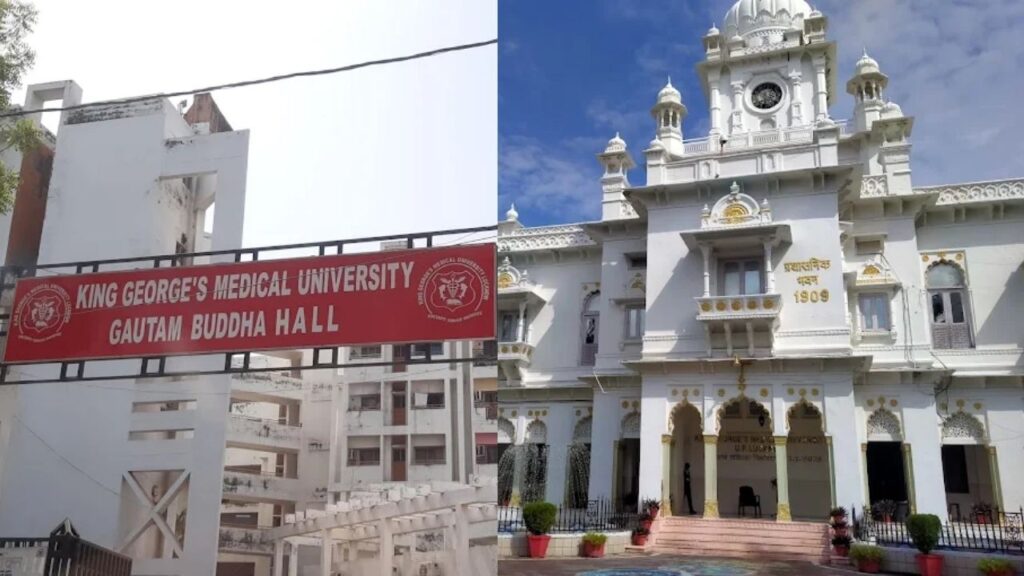
King George’s Medical University (KGMU)

King George's Medical University
Ranking & Recognition
KGMU is a premier medical college in India and is ranked 8th in the NIRF 2025 medical college ranking. KGMU has been a synonym of medical excellence in North India, that has been a legacy for more than a century. The university is well known for its research in oncology, transplant sciences and infectious-disease genomics. 
Fees & Seat 
The KGMU MBBS seat matrix is a total of 250 seats, with 15% seats allotted to the All India Quota and 85% seats are for State Quota. For state quota candidates, the fee per year is about ₹54,600, and for non-resident students, it is ₹3,52,400 per year, which is really cheap. There are some who will say they can afford higher fees but the reality is that a total fee of around rupees 2.38 lakhs for a 5.5 year (4.5 years of classwork and 1 year internship) course is a bargain for a quality medical education. 
NEET Score
King George’s Medical University takes students through NEET score which is expected to be around 625-635 marks. 
Hostel & Campus Life
The charges for Single Seater room is of Rs. 3600/- per annum and the electricity charges are Rs. 3500/-. On the other hand, the Double Seater Room is available for Rs. 2400/- per annum electricity charges are to be paid separately. 

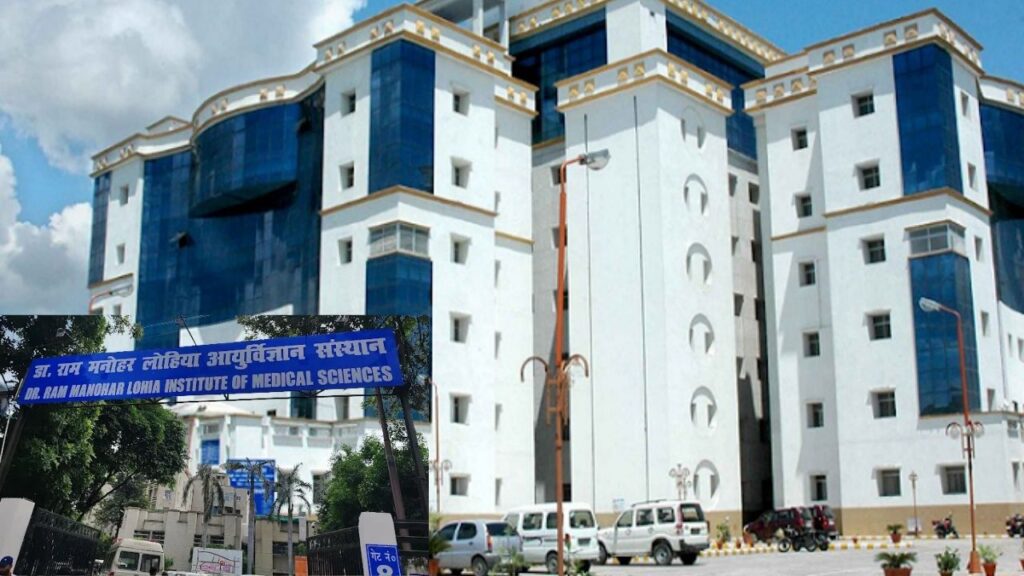
Dr. Ram Manohar Lohia Institute of Medical Sciences

Dr. Ram Manohar Lohia Institute of Medical Sciences
Ranking & Recognition
RMLIMS was formed and became operational as a State University from 2018 and has the distinction of being ranked at 61 position among Medical Colleges (NIRF 2025) which is a great achievement with an overall score of 982/2000. The institute has been established in Gomti Nagar in a spacious 42 acres campus with ultramodern infrastructure.  
Seat Distribution & Admission
The college has 200 seats in MBBS from this year, out of which 50% will be filled through All India Quota (AIQ) by MCC and 50% will be filled under State Quota by UP NEET counselling. This balance accommodates opportunities also for candidates at the state level in addition to the national level. 
Fee Structure
For the whole course, the Rs 1.82 lakh fee of MBBS at RMLIMS is one of the cheapest among all government medical colleges. The fee for the year is around Rs 49,700 which covers all tuition and examination fees.  
NEET Score Required
General category 2024 cutoff rank was approximately 2683. For AIQ seats, the aspirants who want to take admission must have been targeting a rank below 2000 with NEET score of 640 marks or above. Due to domicile preferences, the state quota cutoff rank is usually slightly lower.  
Internship & Career Prospects
Students doing internship at RMLIMS get stipend from ₹10,000 to ₹16,000 per month. The university also has 100% placements, with its students getting jobs in renowned organisations like the SGPGI, KGMU, PSUs and private hospitals.   

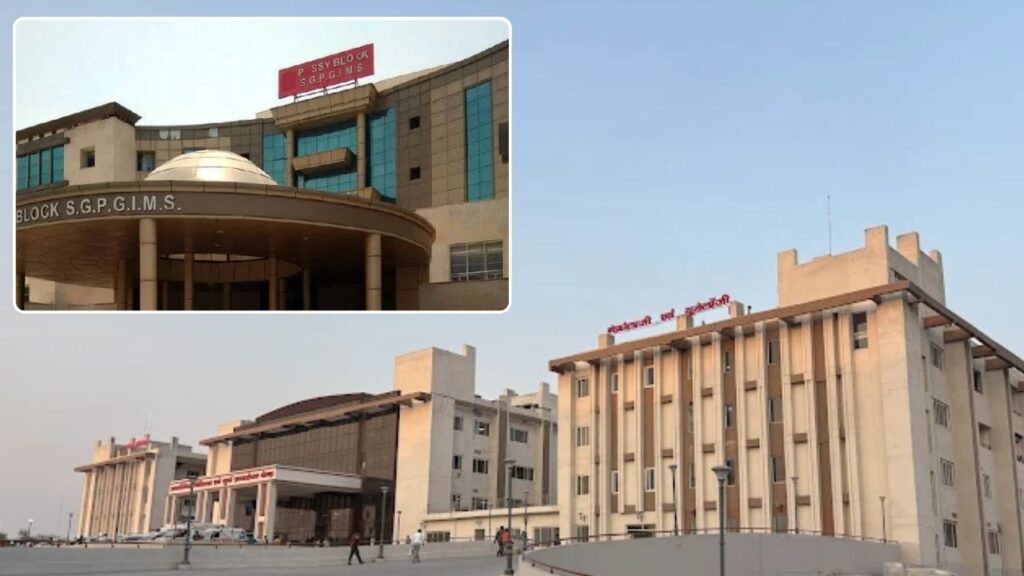
Sanjay Gandhi Medical Sciences Institute

Sanjay Gandhi Medical Sciences Institute
National Stature & Rankings
SGPGIMS is an institute of national importance and ranks 5th in India as per NIRF 2025 with a laudable score of 70.09. The university is known for its high standards in teaching, research, and clinical services and is one of the best medical institutes in India.   
Important Note on SGPGIMS
SGPGIMS is an institute for post graduate and superspeciality courses. For MBBS UG, only KGMU and RMLIMS. However, for post graduation for a specialist, SGPGIMS is the be all and end all.  

Top Private Medical Colleges in Lucknow

Candidates who are looking for private medical colleges that have good infrastructure and other facilities can check out the following list containing the best private medical colleges in Lucknow. 

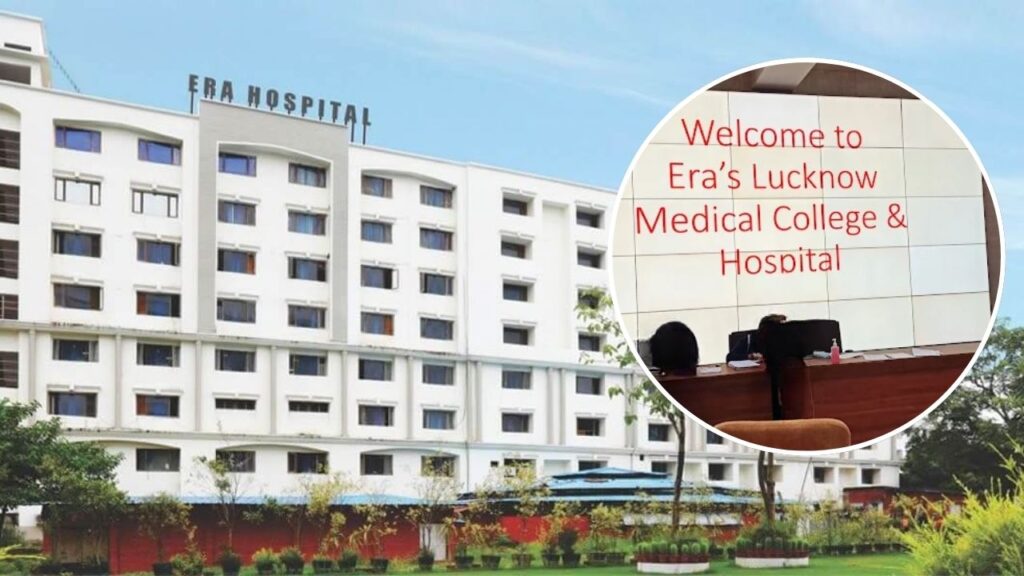
Era’s Lucknow Medical College and Hospital

Era’s Lucknow Medical College has been ranked 32 by India Today 2024 and it is one of the best paramedical colleges in India which provides 200 MBBS seats every year the highest in any pmt college in India. The National Medical Commission (NMC) recognizes the university, and the institution is NABH accredited which implies high educational standards.​

Era's Lucknow Medical College and Hospital

The complete MBBS course fee at Era’s Lucknow is approximately ₹16.6 lakhs p.a, making the the total 5 year program fee to be ₹71.16 Via. NEET cut off 2024 was a general category closing rank of 375,564 as per UP state counselling data.

Era’s is attached to a 750-bed teaching hospital with more than 1,690 OPD cases each day, which is remarkable clinical exposure. The faculty of the college is well qualified doctors and institutions have UG & PG courses. 

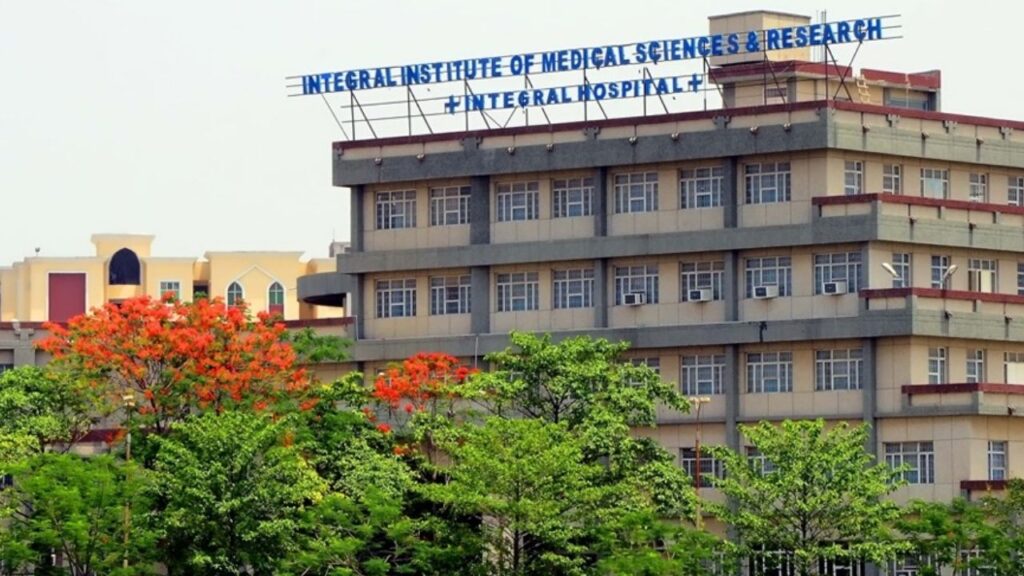
Integral Institute of Medical Sciences & Research 

IIMSR Lucknow was established in 2013 and it provides 150 seats for the course of MBBS and is placed at 118th position in NIRF Ranking with 825 score. The yearly fee is ₹11,40,000, while the overall fees for the course is ₹81 lakhs which include the cost of living in the hostel, mess etc.​

Integral Institute of Medical Sciences & Research 

For 2024, U.P State Counselling the general category closing rank was approximately 428,214. College infrastructure is good and gives internship stipend of Rs. 12,000 – 18,000 per month as per MCI. 

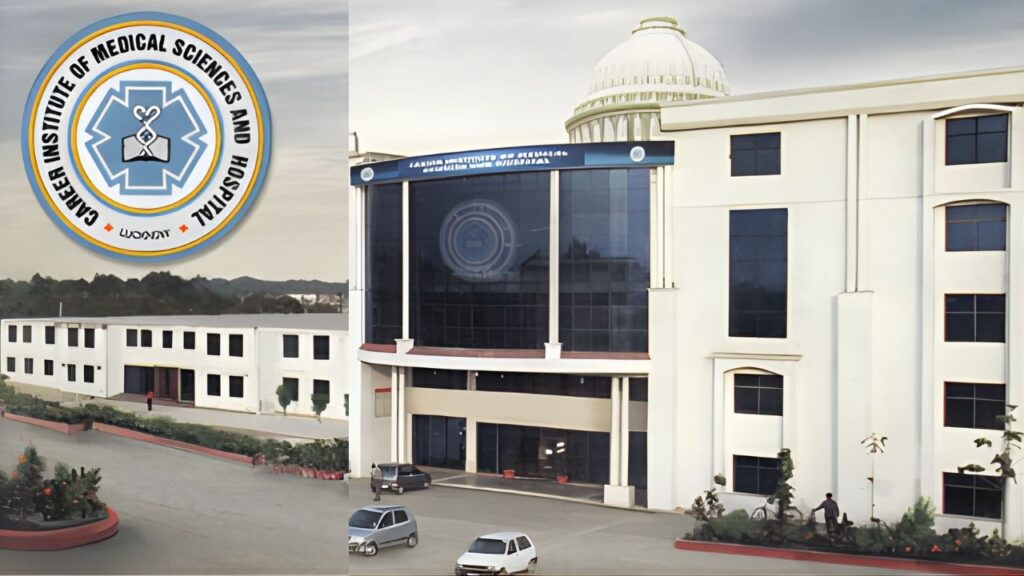
Career Institute of Medical Sciences (CIMSH)

CIMSH has 150 MBBS seats with a fee of ₹71.1 lakhs per year. The closing rank for general in 2024 was 452,601, which is a bit higher than some of the other best private colleges.

Career Institute of Medical Sciences (CIMSH)

The college follows the norms stipulated by the National Medical Commission and imparts overall medical education with clinical training in associated hospital. 

Comparative Fee Structure Overview

Government Colleges
KGMU₹2.38 lakhs total : ₹54,600 annually
RMLIMS₹1.82 lakhs total (₹49,700 annually)
Private Colleges
Era’s Lucknow₹71.16 lakhs total (₹16.6 lakhs annually)
Integral University₹81 lakhs total (₹11.4 lakhs+ annually)
Career Institute₹71.1 lakhs total (approximately ₹14.2 lakhs annually)

Understanding NEET Cutoffs and Rankings

The NEET cutoff denotes the threshold-score and rank prescribed for getting the admission, the one that is the basic requirement aspirants have to meet. It’s important to keep in mind that cutoffs differ wildly between types of applicants:

AIQ (All India Quota) – It tends higher competitiveness, with higher cutoffs, through the MCC for admission.

State Quota – For students of Uttar Pradesh only, higher cutoffs are generally included because of domiciliary preference.

For most government colleges like KGMU, a score of 700+ in NEET for AIQ, 690+ for state quota is a safe bet for gen category aspirants. It would help if you aimed for 640+ marks in RMLIMS if you belong to a competitive category.​

The cutoff of private colleges is very fluctuating as per intake and managing members. But do keep in mind that the fees are significantly higher at Private colleges with lower cutoff ranks.

Read More 👉  Bihar BSSC Inter Level Online Form 2025: Apply Online, Dates & Eligibility

Preparing for NEET to Secure Admission

With a 650+ score in NEET, you have great chances in top government colleges. A 600+ score makes you competitive to RMLIMS as well, below 600 scores are mainly for the private colleges or least ranked government colleges. 

Begin your NEET study preparations around 12-18 months prior to the exam. Work on making concepts crystal clear, no rote learning. Enroll in good coaching if required, be consistent in your studies, and take mock tests frequently to know about your progress. Remember, NEET is to test on your knowledge, analytical abilities and time management. 

Internship Opportunities and Career Prospects

One major benefit of doing medicine in Lucknow is the quality of the internship. Government colleges provide stipend for internship in the range of ₹12,000 to ₹20,000 per month whereas private colleges generally pay ₹12,000 to ₹18,000 per month. And more importantly, lucknow medical colleges have so many diversified medical affiliated hospitals and specialty centers.

After your MBBS then have good scope in lucknow for Post Graduation especially through SGPGIMS which has been nationally recognized for its PG courses. Many graduates of MBBS from Lucknow Colleges like KGMC secure seats in premier institutions for further specialisation. 

Conclusion

The medical colleges in Lucknow provide an all-round ecosystem for quality education at different price brackets. Be it a merit-cum-based student looking at government institutes or a well-heeled parent to afford the best of private institutes in the city, Lucknow has some to match your dreams. The secret is to know what are your strengths, financials, career goals and select based on that.

Start your preparation seriously, be consistent and “Believe in yourself”. Lucknow is one city where you can certainly “make it” if you set your mind to it, your determination and efforts and get into one of the best colleges there is, there is no doubt about that. The right college choice is what starts you on your journey to becoming a compassionate and skilled doctor – and when it comes to that, Lucknow certainly has some great places to get the journey started. 

Leave a Comment

Your email address will not be published. Required fields are marked *

O Level Course 2025: Complete Guide to Fees, Syllabus, Duration & Job Benefits

O Level Course 2025

Students who are interested in the Technical Field can achieve great heights in their career after pursuing NIELIT ‘O’ Level. It opens up the door in both private and government sectors as the requirement of an IT employee is needed everywhere. The world is evolving more into digitalization which has made this field wider and open more vacancies for the candidates. If you also want to make your career stable with a good career path, high-salary, and less hectic job then grab this course now.

Why NIELIT ‘O’ Level Matters in the Digital Age

Chasing after stable and well-paying jobs in India, job-seekers are often driven towards the public sector, where security of jobs and strong perks are widely considered as givens. In today’s increasingly digitised world, being in possession of a recognized and accredited Information technology qualification is not just an advantage – it is a requirement. The NIELIT ‘O’ Level course is at the Midnight of this requirement. 

It is officially considered the same as a Foundation Level CA course. This government approval is really important and gives you the edge that private not accredited courses can never get. The value of this certification is further ratified with its inclusion in the national framework, having been recognized under the National Skills Qualifications Framework (NSQF) at Level 4. 

What Job Roles Can You Get After NIELIT ‘O’ Level

The O Level was structured in such a way as to be responsive to the short-term technical needs of the then contemporary public and private sectors. The stated goal is to prepare students with the skills needed to work in today’s IT-enabled jobs. Among these targeted profiles are User Interface (UI) Designer, Web Designer, Web Publication Assistant, Office Automation Assistant, and IoT Application Integrator.These intentional integration with operational IT rather than simple clerical data entry clearly situates the course as a practical instrument for aspirants to take on current digital workplace requirements. 

Detailed Eligibility Criteria

The basic eligibility criteria require either passing 10+2, or holding a one-year ITI Certificate after Class 10, along with a minimum of one year of experience in the area related to the IT industry. 

The applicants who have passed second year of polytechnic engineering diploma after 10th standard from a government recognized institute are also eligible to apply. 

O’Level Course Duration 

The six-month timeline for graduates enables them to get this commonly required IT credential quickly, thereby reducing the amount of career time lost while waiting for certification. Hence, the ‘O’ Level serves as an important means for enhancing one’s eligibility in a short span of time after the completion of the degree. However, this registration remains valid for five years.

Why Is O’Level Course Value Increasing Day-By-Day?

Mastery in the Revised Syllabus

The importance of NIELIT ‘O’ Level certification in the present high technology world is that O level syllabus is regularly revised and updated which in turn helps to keep the students updated with the latest information and technology available. This syllabus is much beyond the basic knowledge of computing which is now considered old to cater to the demand of the industry for the skills and the industries supported the potential of having high paying jobs. 

Structure and Examination Pattern

The course is staffed with four core theoretical modules, the compulsory practical component, and a project. The four theory modules are:

M1-R5: Information Technology Tools and Network Basics

M2-R5: Web Designing & Publishing

M3-R5: Programming and Problem Solving through Python

M4-R5: Internet of Things and its Applications 

Detailed Module Analysis

All theory subjects will be assessed by a three hours written examination carrying 100 marks. Besides these theory papers candidates are required to pass one full practical examination (PR1-R5) based on the contents of all 4 theory modules, also carrying 100 marks and of three hours duration. Practical work is usually done at the institutionally approved places offering the course. A Project Work (PJ1-R5) is also necessary for certification. 

Read More 👉 Which Entrance Exam Is Best for MBA Abroad in 2025?

Official NIELIT Fees 

The cost a candidate has to bear when applying directly through NIELIT (without availing external tuition) is surprisingly small:

  • Registration Fee is Rs.500 and this registration is valid for 5 years. 
  • A Fee of ₹100.00 is applicable for processing exam applications per examination cycle.
  • The O’ level course fees for each module in the Revision 5 is 1,000 Rs. The total of four modules fee is Rs 4,000.
  • O Level Project Fee (once only for PJ1-R5 submission) The compulsory O Level project fee PJ1-R5 is only ₹100. 

Candidates pursuing O’Level courses from private institutions can get different fees or entire course fees. So, check the total fees amount for this course from the institutions you choose.

Career Pathways in the Private Sector and High-Paying Roles

The NIELIT O Level certification is an address both for private and government jobs. Although the public sector is considered to be the most stable, the private sector has many points of entry and is an important source of early career experience. 

Target Job Profiles 

The level of competence proven through ‘O’ Level is very applicable. There are plenty of O level benefits in government jobs. The roles targeted include vital gating roles such as UI Designer, Web Designer and IoT Application Integrator. Outside these roles, the certification still strongly validates the holder’s knowledge of key IT skills, such as being computer literate, managing data efficiently, using office automation tools, creating simple web applications, and handling databases. These skills are necessary for help desk, IT support, and web maintenance positions in a broad range of private industry. 

Salaries Offered by IT Sector

The average O level course jobs salary in the Private Sector after doing NIELIT ‘O’ Level is around 3 LPA (Lakhs Per Annum). This base figure amounts to roughly ₹ 25,000 per month which is considered as the minimum expectation for blue-collar jobs at the level of data entry operators, junior IT support, or clerical jobs with some know-how of office automation. 

However, In the government sector, For certain technical posts, including Scientific Assistant and some Assistant Programmer positions, that require or consider the O Level equivalency, the Basic Pay can be as high as ₹35,400 even at the entry level. The resulting In-Hand Salary typically settles between ₹45,000 and ₹50,000 per month.  

The Future After O’Level Course 

The NIELIT ‘O’ Level is not a standalone qualification, but it is the essential beginning in a standardized, government-approved system of IT certification that focuses on sustained career advancement. This Systematic faire up Turn is called the DOEACC octuplet. 

From ‘O’ to ‘A’ Level: Advanced Diploma Equivalence

Students may take NIELIT ‘A’ Level after successful completion of ‘O’ Level based on NIOS. This allowed the applicants to expand their skill set to a great extent in specialized areas like Advanced Post Graduate Diploma in Computer Application (APCDCA) or Advanced Diploma (AD) in Computer Hardware Maintenance and Networking. Passing of ‘A’ Level also allows access to mid-level private sector work and makes one more eligible for higher grade government technical posts. 

‘B’ Level and MCA Equivalence

For aspirants to senior management, software developer or research positions the NIELIT route ends with the B Level course. The ‘B’ Level is the high-end among the course level certifications of NIELIT and is professionally recognized by MHRD to be equivalent to Master of Computer Applications (MCA) Degree Course. 

Conclusion

The NIELIT ‘O’ Level is the anchor, pocket friendly and the only entry-level based examination for aspirants who aim at getting a high paying job along with stable income from Indian Public Sector IT for immediate term. It is the basic qualification that enables the accredited path to further study that is comparable to a Master’s degree, so a career begun in government IT isn’t just safe, it has a well-defined and boldly optimistic path for growth. 

Leave a Comment

Your email address will not be published. Required fields are marked *

Scroll to Top