Top Companies in IIT Placements 2025: Top Hiring Firms, Salary Trends & Full Details

Top Companies in IIT Placements 2025

The Indian Institutes of Technology (IITs) have yet again proven their exceptional placement performance in 2025, with Top Companies in IIT vying for the brightest minds from India’s top engineering colleges. This year’s placement season has seen a wide range of records being broken, record high salary packages, more international offers, and companies from more diverse sectors attending the campus recruitment drives. So here’s a (rough) full picture of which companies are recruiting picking up on which salary issues, and the trends within the ever-morphing IIT scene. 

Record-Breaking Numbers and Overall Trends

The very fact the 2024-25 placement season has been outstanding for IIT students appears to be an under-statement. As per the latest official figures, top IITs like IIT Delhi and Bombay have received over 1,200 job offers each, and more than 1,150 unique students have been placed in the first phase alone. What’s more heartening is the jump in offers in all salary buckets including the premium packages of more than one crore per annum. For instance, IIT Bombay has received 22 offers beyond the one crore mark in 2024-25 as against 16 in the previous year, a stupendous rise of 37.5%

The highest salary package in India among IITs hovered at a staggering ₹2.2 crore per annum, offered by Da Vinci Derivatives, an IIT Bombay CSE student for a position at Amsterdam. Meanwhile, the international packages have gone even higher at the top IITs, with the highest international offer at IIT Bombay at ₹3.67 crore per annum. These figures signify an exceptionally lucrative market for the IIT graduates in India as well as abroad. 

The Tech Giants Lead the Charge

With reference to hires from IITs, the large tech firms continue to dominate. Microsoft, Google, Amazon, Apple, Meta and Qualcomm are the biggest recruiters in pretty much all the IITs. These companies — known as the MAANG or FAANG firms — compete fiercely for talent and are willing pay top packages for it. 

The Tech Giants Lead the Charge

At IITB, it was again Google, Microsoft, Amazon and NVIDIA that turned out to be the biggest hiring companies. IITB reports suggest, M.Tech CSE students from IIT Bombay got offers in the range of ₹30 to ₹46 LPA with an average of ₹30 LPA. The CSE students at IIT Delhi received even higher average packages, hovering at around ₹34 LPA and with maximum figures reaching as high as ₹48 LPA from Google, Microsoft and Atlassian

Emerging Sectors and Diverse Opportunities

While technology continues to dominate recruitment, the 2025 placements season saw a considerable number of hiring from the finance, consulting, and core engineering domains. At IIT Delhi, the placement breakup shows that 34% of the total placement was in core technical companies, followed by 

  • IT – 20%, 
  • Consulting – 14% and 
  • Management – 13%. 

This diversification is indicative of a changing career landscape for IIT graduates.​

Emerging Sectors and Diverse Opportunities

In the finance and consulting arena, companies such as Goldman Sachs, BCG (Boston Consulting Group), McKinsey, JP Morgan Chase, Barclays and American Express are well represented on IIT campuses. These firms provide typical packages between ₹35 and ₹45 LPA for beginners, with substantial growth in the money for high performers. 

SectorKey CompaniesTypical Package Range (LPA)Offer Share % 
Technology (IT)Google, Microsoft, Amazon, NVIDIA, Qualcomm, Atlassian30-4820%
Core TechnicalTexas Instruments, Intel, Micron Tech, Tata, Reliance20-3534%
ConsultingBCG, McKinsey, Barclays35-4514%
FinanceGoldman Sachs, JP Morgan, American Express35-454%
Management/AnalyticsMeesho, OLA, PayU, Quadeye25-4013% / 7%

Average Packages and Salary Trends

There is now a trend in salaries in 2025 toward increasing when compared to past years. The average package offered by IIT Bombay rose from ₹21.8 LPA in 2023-24 to ₹23.5 LPA in 2024-25 – an increment of 7.7%. The average package reported by IIT Delhi is around ₹32 LPA for all programmes with an average of around ₹21.9 LPA being offered to BTech students and ₹32 LPA to MTech students. Students at IIT Kanpur were offered an average package of ₹ 26.27 LPA and IIT Madras continues to keep its average package competitive at approximately ₹17-20 LPA for all its programmes.​

Interesting is also how salaries differ depending on branch. The best packages are still offered to Computer Science and Engineering (CSE), for which the median predefined offers also exceed ₹30 LPA at top IITs. After that comes Electrical Engineering and then mechanical, civil engineering students generally get packages between ₹15-25 LPA based on which sector they go for. 

Global Opportunities and International Offers

Among the most eye-popping trends in the 2025 placement season has been the uptick in overseas offers. With all-India (national) offers counting towards overall highest packages, IIT Delhi witnessed more than 50 international offers in Phase 1 from over 15 companies across countries including USA, Japan, Netherlands, South Korea, Taiwan, UAE, and the UK. This indicates rising global demand and better pay packages for graduate-level engineers from India, as well as multinational companies increasingly hiring IIT graduates for global roles.​

The salaries of firms providing roles for the international are notably higher, which is between 30-50% increase on domestic norms especially for roles in developed countries. The offer by Da Vinci Derivatives of ₹3.67 crore for an Amsterdam is an illustration of this trend. 

Read More 👉 Best IIT College in Uttar Pradesh – Complete Ranking & Admission Guide

Sector-Wise Breakdown and Career Paths

Recruitment has gotten more and more multifaceted. Although software development engineers and data scientists are paid the most in the tech industry, core engineering roles, especially at companies such as Tata, Reliance, BPCL and Schlumberger, lure students focused on manufacturing, energy and infrastructure. 

Public sector undertakings (PSUs): Organisations PSU are – ISRO, DRDO, BARC they always remain to be answer to bring in the best brains, it’s just the pay package is slightly low, but they offer Job Security, Prestige, and for those who want to make a long term career they offer Career Growth.​

Zomato, Ola, Swiggy, Flipkart and other startups/unicorns have also been leading recruiters, especially for those students who are attracted to growing-stage companies and entrepreneurial environments. These companies usually have competitive packages including stock options and have energetic work cultures. 

Lowest Packages and Market Reality For IITians

While the highest salaries make the headlines, it is essential to look at the overall picture. At IIT Bombay, the lowest packages were reported at ₹4 LPA for the year 2024-25, a steep fall from the ₹5.4 LPA in the previous year. This decrease is indicative of the tightening recruitment at entry level by companies and the influence of economic cycles on entry-level jobs in certain industries. 

Tips for IIT Students in the Current Job Market

IIT students now who are about to go in for placements can glean quite a few pointers from 2025 trends. 

  • For one, technical excellence and programming ability especially would be unlikely to diminish for technology roles. 
  • Second, gaining domain knowledge through internships greatly enhances placement potential– internship conversion rates to PPOs (Pre-Placement Offer) continue to be robust at most IITs. 
  • Third, the increasing number of AI and data analytics positions means that skills in machine learning and data science can be extremely useful. 
  • And finally, don’t forget that foreign opportunities may lead to significantly better paychecks and career advancement. 

Conclusion

The placement seasons of IIT’s in 2024-25 can undoubtedly be called as a landmark year with the highest ever packages, varied sectoral participation and opportunities extending across the globe. With companies such as Microsoft, Google, Amazon, and Goldman Sachs battling for top talent and average pay packages trending upward, IIT graduates continue to be among the most in-demand professionals in India and beyond. 

Adaptable, knowledgeable, and able to think critically—even in the face of rapidly changing landscapes in higher education and the corporate world— these qualities among others that IIT students possess which ensures that they are valuable assets to employers across the globe. 

For prospective engineers dreaming of trying out for IIT admissions, these placement trends act as a strong inspiration showing how great career and financial benefits await them, down the line, if they make it to these premier institutions. 
Leave a Comment

Your email address will not be published. Required fields are marked *

BSc Emergency and Trauma Care: Get Trained to Serve in Emergencies

BSc Emergency and Trauma Care

If you ever observed those intense medical dramas in which doctors and nurses race down hospital hallways, defibrillator in tow, barking orders as they work to stabilize a patient who has just barreled through the doors of the ER, and it makes you excited then BSc Emergency and Trauma Care course is for you. That’s emergency and trauma care in action and it’s what brings thousands of students to BSc Emergency and Trauma Care every year.

But this isn’t Grey’s Anatomy. You work yourself raw, sleeping little, but you come home satisfied. So if you’re thinking about going down this route, you really want to know what you’re getting into. So we’ll break down everything there is to know about this degree from what you’ll learn to where it can take you. 

What is a BSc Emergency and Trauma Care?

BSc Emergency and Trauma Care is a program offered at the undergraduate level which may be completed in 3 or 4 years based on the country and university. Consider it your boot camp for handling life-or-death scenarios. 

It is not a general nursing with medicine course but one that is focused very closely in that so that you can say first moments of care. The golden hour following traumatic injury, the decisions made in those split seconds during cardiac arrests, the controlled chaos of a mass casualty event. You’ll be calm in someone else’s horrible weather.

It combines clinical medicine, emergency procedures, and real-life trauma management. This isn’t theory — you’re training your hands and eyes to initiate CPR instantly, intubate a patient in 30 seconds, identify the early signs of internal hemorrhaging before it’s too late. 

Breaking Down the Curriculum

First year is mostly about learning the basics: human anatomy and physiology and the rudimentary medical sciences. 

 You may also need to take general nursing basics and medical terminology. Do not underestimate this year—those anatomical minutiae you’re committing to memory? They will be essential when you’re trying to find a vein on a hypotensive trauma patient at 3 a.m.

Year Two is harder as you study emergency medical techniques, pharmacology and pathophysiology. Here you begin to know about some specific procedures with: airway management, wound care, bone stabilization and basic life support. You’ll probably spend a lot of time in simulation labs, getting practice with mannequins that can “die” if you screw up (no big pressure). 

Year Three and beyond include in-depth study of complex trauma, disaster medicine, and subspecialty emergency medicine. We’re talking pediatric emergencies, the obstetric crisis, toxicology and psychiatric emergencies. Clinical rotations are coming— you’ll spend weeks real-time in EDs, ambulances, and trauma centers.

These days many courses also cover modules of disaster response and management of mass casualties. In the wake of the pandemic and worsening natural disasters, hospitals are in dire need of experts to orchestrate care when they run out of resources. 

The Skills You’ll Actually Develop

Beyond science, this degree creates something else entirely: mental resiliency. You will learn how to survive under dire circumstances, make decisions using incomplete data, and speak with clarity in the middle of a breakdown.

Are there technical aspects that are important? Yes, you will be taught advanced cardiac life support (ACLS), trauma assessment, emergency medications, medical equipment, and more. 


soft skills are important, too: You need to defuse an irate patient, calm a scared family, function like a well-oiled machine with a group of paramedics, no matter what their specialty, and document everything, even as the room spins out of your control. 

Time management is your superpower. In EM you might be managing a dozen critical patients simultaneously, all yelling for your attention. You will get to triage to make tough decisions about who should be treated first on the basis of probabilities of survival. It’s emotionally exhausting and ethically challenging, but it has to be done. 

Where Can This Degree Take You?

BSc Emergency and Trauma Care graduates have a reasonably unexpected variety of options when it comes to their career path. Sure, they mostly work as emergency department nurses or techs in hospitals — but that’s really just the tip of the iceberg.

Emergency medical services (EMS) has positions for paramedics and emergency medical technicians (EMTs). They have been able to choose to be flight nurses, which is critical care while transporting a patient by air. Others may become disaster specialists working for groups such as the Red Cross or state emergency management offices. 

There are also increasing needs in industrial and corporate medical emergency services — such as oil rigs, mining operations, or large manufacturing plants that maintain on-site emergency response teams. Some graduates go on to work in emergency department management, where they oversee operations and quality improvement.

For the academically inclined, this degree also serves as a strong foundation for further study be that a Master’s in Emergency Medicine, Public Health, or even medical school. The clinical exposure and strong emergency medicine background really gave you a leg up. 

Read More:- Uttar Pradesh Public Service Commission Release Result for LT Grade 

Is BSc Emergency and Trauma Care Right for You?

The work hours are intense. Emergency medicine is a 24/7 endeavor, so nights, weekends, holidays are par for the course. The psychological impact is real, you will see death, massive trauma, and human misery on a regular basis. Rates of burnout are alarming in emergency medicine, and taking care of yourself isn’t optional, it’s survival.

The physical requirements have to be met as well. You’ll be running around on 12-hour shifts, hoisting patients, doing chest compressions that drain your whole body, and laboring in high-stress settings that send your cortisol through the roof. 

So, decide whether you can cope up with all the hard stuff or not because emergency treatment methods are not really tough to learn. Whether you are working in a government or private hospital, you are needed immediately whenever patients arrive.

If you are still confused then talk with active paramedics and emt’s. Shadow in an ER if you can. Read trauma nurse and emergency doctor memoirs. The more grounded your expectations are, the better you will be. 

Conclusion

A BSc Emergency and Trauma Care is not just a qualification, it is a promise to be there for people when it matters the most. It’s choosing to be competent under pressure rather than comfortable, team collaboration rather than individual glory, and patient outcomes rather than personal convenience.

The system could use some talented, empathetic emergency healthcare workers. If that’s you, this is your degree plan. Just be sure you’re running headlong after this career with your eyes open wide because once you get in that trauma bay, there’s no time to second-guess yourself. 

GovUpdatewala is your trusted source for real-time updates on government exams and jobs in India. We provide verified info on SSC, UPSC, Banking, Railways, Defense, and Teaching exams. From syllabus and patterns to important dates and career tips — we support aspirants at every step.

Leave a Comment

Your email address will not be published. Required fields are marked *

Periyar University Result 2025 Declared – Check Scores & Download Marksheet Now!

Periyar University Result 2025

Students of Periyar University’s wait is over as it declared the result 2025 on its official website. Periyar University Result 2025 is available, students can check the scores of UG & PG exams conducted in February & April 2025, and download them from the direct link given below. Courses included BA, BSc, BCom, MA, MSc, MCom, BBA, and BCA results out now. 

The Periyar University result is crucial for higher studies admissions. For Students who want to enter professional programs, or apply for a job, this mark sheet will serve as proof of your best academic qualification. 

Read More: NTA NEET UG Result 2025 Out – Click Here to Check Your Score Now!

Periyar University Result 2025 Details

ExamSeptember session exam
Conducting BodyPeriyar University
PurposeUG & PG Courses
Exam DateFebruary & April 2025
Result DateJune/2025
Result AvailableOnline
Get ResultClick Here
Official WebsiteClick Here

Steps to Check Periyar University Result 2025

  1. To see your result you must log in on the official website of the university.
  2. Go to the examination section.
  3. You have to enter your credentials such as registration number and DOB.
  4. Click on submit to get the result. 
  5. View your mark sheet and download it for future use.

Important Links 

ApplicationClick Here
Download NotificationClick Here
Get ResultClick Here
Telegram ChannelClick Here
Official WebsiteClick Here

Leave a Comment

Your email address will not be published. Required fields are marked *

Top NEET Colleges in Lucknow with High Ranks, Fees, Seats and Details

Top NEET Colleges in Lucknow

Lucknow, the Capital of Uttar Pradesh, has now become a prominent area for medical education in India. If you’re a NEET aspirant looking to get admission in a good medical college, then the city of Lucknow holds an impressive list of both government and private colleges who are recognized at the national and international level. For those who are looking for an economical government seat or want to know the top private colleges with world-class amenities, this article will help you in knowing the top NEET colleges in Lucknow, along with detailed information about the rankings, fee structure, availability of seats and the USP of each institute.  

Understanding the Medical College Landscape in Lucknow

Before we get into the names of specific colleges, it is necessary to know that the medical education in Lucknow is multi-faceted and thriving. Ranging from government colleges with very minimal fees to super premium private colleges having infrastructure at par with global standards. It has national level post graduate institutes, century old undergraduate medical colleges and some of the best private medical colleges in the country with rigorous academic regimen and modern day teaching methodologies.​  

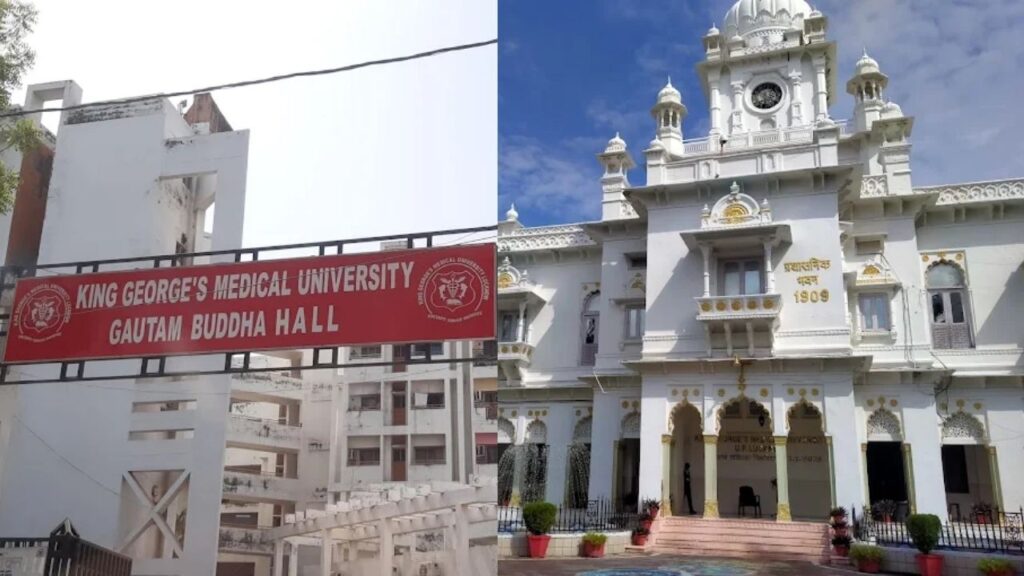
King George’s Medical University (KGMU)

King George's Medical University
Ranking & Recognition
KGMU is a premier medical college in India and is ranked 8th in the NIRF 2025 medical college ranking. KGMU has been a synonym of medical excellence in North India, that has been a legacy for more than a century. The university is well known for its research in oncology, transplant sciences and infectious-disease genomics. 
Fees & Seat 
The KGMU MBBS seat matrix is a total of 250 seats, with 15% seats allotted to the All India Quota and 85% seats are for State Quota. For state quota candidates, the fee per year is about ₹54,600, and for non-resident students, it is ₹3,52,400 per year, which is really cheap. There are some who will say they can afford higher fees but the reality is that a total fee of around rupees 2.38 lakhs for a 5.5 year (4.5 years of classwork and 1 year internship) course is a bargain for a quality medical education. 
NEET Score
King George’s Medical University takes students through NEET score which is expected to be around 625-635 marks. 
Hostel & Campus Life
The charges for Single Seater room is of Rs. 3600/- per annum and the electricity charges are Rs. 3500/-. On the other hand, the Double Seater Room is available for Rs. 2400/- per annum electricity charges are to be paid separately. 

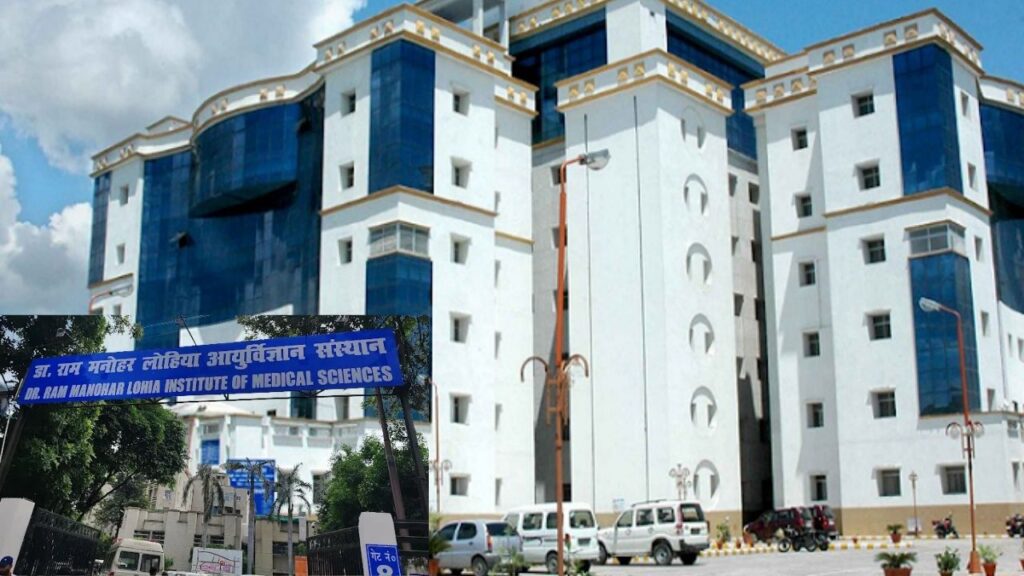
Dr. Ram Manohar Lohia Institute of Medical Sciences

Dr. Ram Manohar Lohia Institute of Medical Sciences
Ranking & Recognition
RMLIMS was formed and became operational as a State University from 2018 and has the distinction of being ranked at 61 position among Medical Colleges (NIRF 2025) which is a great achievement with an overall score of 982/2000. The institute has been established in Gomti Nagar in a spacious 42 acres campus with ultramodern infrastructure.  
Seat Distribution & Admission
The college has 200 seats in MBBS from this year, out of which 50% will be filled through All India Quota (AIQ) by MCC and 50% will be filled under State Quota by UP NEET counselling. This balance accommodates opportunities also for candidates at the state level in addition to the national level. 
Fee Structure
For the whole course, the Rs 1.82 lakh fee of MBBS at RMLIMS is one of the cheapest among all government medical colleges. The fee for the year is around Rs 49,700 which covers all tuition and examination fees.  
NEET Score Required
General category 2024 cutoff rank was approximately 2683. For AIQ seats, the aspirants who want to take admission must have been targeting a rank below 2000 with NEET score of 640 marks or above. Due to domicile preferences, the state quota cutoff rank is usually slightly lower.  
Internship & Career Prospects
Students doing internship at RMLIMS get stipend from ₹10,000 to ₹16,000 per month. The university also has 100% placements, with its students getting jobs in renowned organisations like the SGPGI, KGMU, PSUs and private hospitals.   

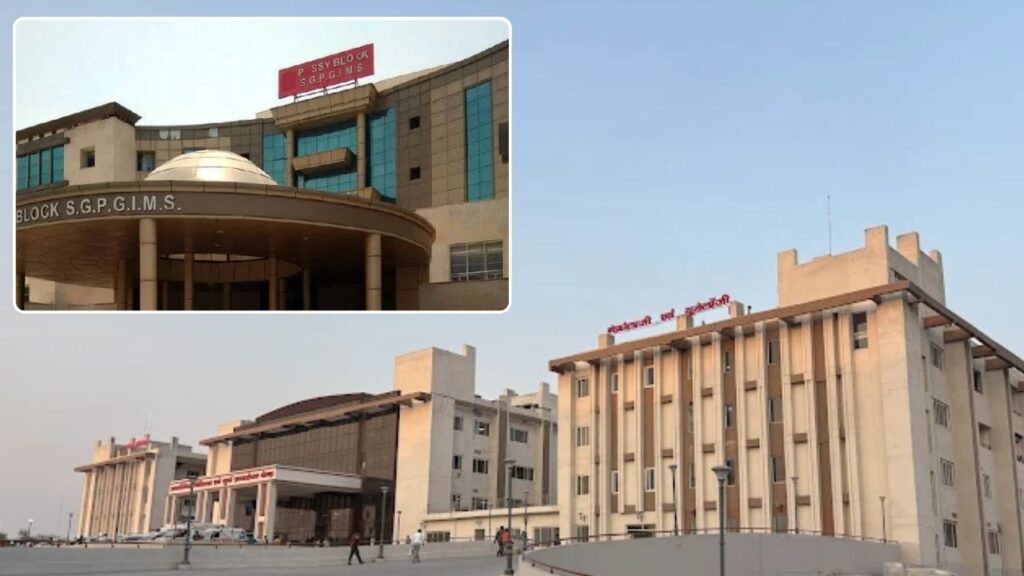
Sanjay Gandhi Medical Sciences Institute

Sanjay Gandhi Medical Sciences Institute
National Stature & Rankings
SGPGIMS is an institute of national importance and ranks 5th in India as per NIRF 2025 with a laudable score of 70.09. The university is known for its high standards in teaching, research, and clinical services and is one of the best medical institutes in India.   
Important Note on SGPGIMS
SGPGIMS is an institute for post graduate and superspeciality courses. For MBBS UG, only KGMU and RMLIMS. However, for post graduation for a specialist, SGPGIMS is the be all and end all.  

Top Private Medical Colleges in Lucknow

Candidates who are looking for private medical colleges that have good infrastructure and other facilities can check out the following list containing the best private medical colleges in Lucknow. 

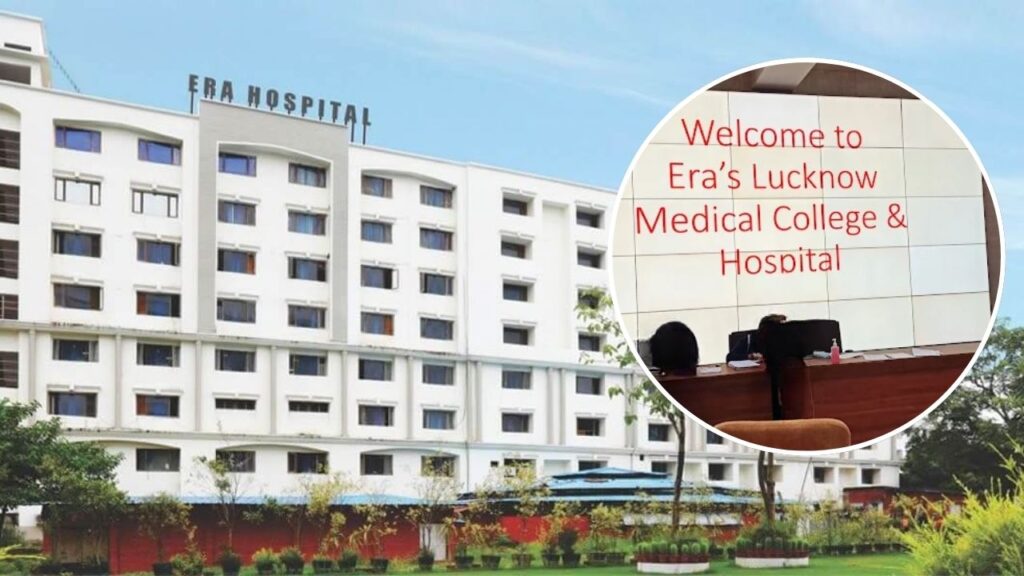
Era’s Lucknow Medical College and Hospital

Era’s Lucknow Medical College has been ranked 32 by India Today 2024 and it is one of the best paramedical colleges in India which provides 200 MBBS seats every year the highest in any pmt college in India. The National Medical Commission (NMC) recognizes the university, and the institution is NABH accredited which implies high educational standards.​

Era's Lucknow Medical College and Hospital

The complete MBBS course fee at Era’s Lucknow is approximately ₹16.6 lakhs p.a, making the the total 5 year program fee to be ₹71.16 Via. NEET cut off 2024 was a general category closing rank of 375,564 as per UP state counselling data.

Era’s is attached to a 750-bed teaching hospital with more than 1,690 OPD cases each day, which is remarkable clinical exposure. The faculty of the college is well qualified doctors and institutions have UG & PG courses. 

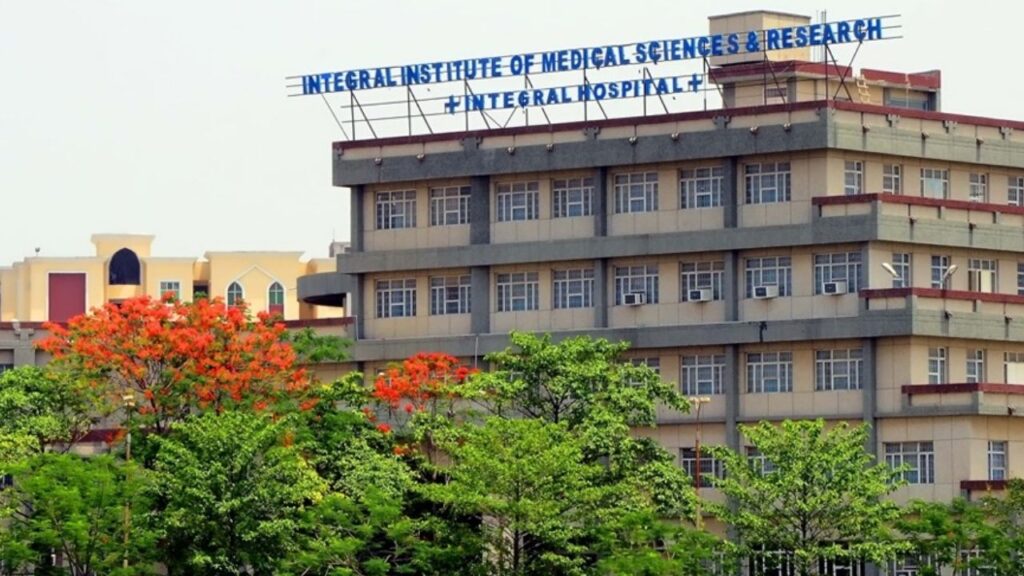
Integral Institute of Medical Sciences & Research 

IIMSR Lucknow was established in 2013 and it provides 150 seats for the course of MBBS and is placed at 118th position in NIRF Ranking with 825 score. The yearly fee is ₹11,40,000, while the overall fees for the course is ₹81 lakhs which include the cost of living in the hostel, mess etc.​

Integral Institute of Medical Sciences & Research 

For 2024, U.P State Counselling the general category closing rank was approximately 428,214. College infrastructure is good and gives internship stipend of Rs. 12,000 – 18,000 per month as per MCI. 

Career Institute of Medical Sciences (CIMSH)

CIMSH has 150 MBBS seats with a fee of ₹71.1 lakhs per year. The closing rank for general in 2024 was 452,601, which is a bit higher than some of the other best private colleges.

Career Institute of Medical Sciences (CIMSH)

The college follows the norms stipulated by the National Medical Commission and imparts overall medical education with clinical training in associated hospital. 

Comparative Fee Structure Overview

Government Colleges
KGMU₹2.38 lakhs total : ₹54,600 annually
RMLIMS₹1.82 lakhs total (₹49,700 annually)
Private Colleges
Era’s Lucknow₹71.16 lakhs total (₹16.6 lakhs annually)
Integral University₹81 lakhs total (₹11.4 lakhs+ annually)
Career Institute₹71.1 lakhs total (approximately ₹14.2 lakhs annually)

Understanding NEET Cutoffs and Rankings

The NEET cutoff denotes the threshold-score and rank prescribed for getting the admission, the one that is the basic requirement aspirants have to meet. It’s important to keep in mind that cutoffs differ wildly between types of applicants:

AIQ (All India Quota) – It tends higher competitiveness, with higher cutoffs, through the MCC for admission.

State Quota – For students of Uttar Pradesh only, higher cutoffs are generally included because of domiciliary preference.

For most government colleges like KGMU, a score of 700+ in NEET for AIQ, 690+ for state quota is a safe bet for gen category aspirants. It would help if you aimed for 640+ marks in RMLIMS if you belong to a competitive category.​

The cutoff of private colleges is very fluctuating as per intake and managing members. But do keep in mind that the fees are significantly higher at Private colleges with lower cutoff ranks.

Read More 👉  Bihar BSSC Inter Level Online Form 2025: Apply Online, Dates & Eligibility

Preparing for NEET to Secure Admission

With a 650+ score in NEET, you have great chances in top government colleges. A 600+ score makes you competitive to RMLIMS as well, below 600 scores are mainly for the private colleges or least ranked government colleges. 

Begin your NEET study preparations around 12-18 months prior to the exam. Work on making concepts crystal clear, no rote learning. Enroll in good coaching if required, be consistent in your studies, and take mock tests frequently to know about your progress. Remember, NEET is to test on your knowledge, analytical abilities and time management. 

Internship Opportunities and Career Prospects

One major benefit of doing medicine in Lucknow is the quality of the internship. Government colleges provide stipend for internship in the range of ₹12,000 to ₹20,000 per month whereas private colleges generally pay ₹12,000 to ₹18,000 per month. And more importantly, lucknow medical colleges have so many diversified medical affiliated hospitals and specialty centers.

After your MBBS then have good scope in lucknow for Post Graduation especially through SGPGIMS which has been nationally recognized for its PG courses. Many graduates of MBBS from Lucknow Colleges like KGMC secure seats in premier institutions for further specialisation. 

Conclusion

The medical colleges in Lucknow provide an all-round ecosystem for quality education at different price brackets. Be it a merit-cum-based student looking at government institutes or a well-heeled parent to afford the best of private institutes in the city, Lucknow has some to match your dreams. The secret is to know what are your strengths, financials, career goals and select based on that.

Start your preparation seriously, be consistent and “Believe in yourself”. Lucknow is one city where you can certainly “make it” if you set your mind to it, your determination and efforts and get into one of the best colleges there is, there is no doubt about that. The right college choice is what starts you on your journey to becoming a compassionate and skilled doctor – and when it comes to that, Lucknow certainly has some great places to get the journey started. 

Leave a Comment

Your email address will not be published. Required fields are marked *

Railway Protection Force Constable: Salary, Selection, and Exam Details – complete guide

Railway Protection Force Constable

RPF is one of the most popular and important central forces of India, providing a secured career and good remuneration both for male and female aspirants. If you are dreaming of getting a prestigious government job which provides security for your job and financial stability, RPF Constable is your stepping stone for a bright future. So let’s go deep down to the bottom with everything you need to know about this great career. 

Understanding RPF Constable Salary

The compensation package is fairly competitive for those who do not have a long track record in government employment. An RPF constable gets a basic pay of Rs. 21,700 per month for an RPF constable which looks low at first, but with various allowances the total amount becomes pretty attractive. 

Your salary after allowances addition is usually between Rs.26,000 to Rs.32,000 per month with the variation being based on the city of posting and the type of allowance you are entitled to. The consolidated monthly remuneration (all-inclusive) is between Rs. 37,420 and Rs. 44,460 which is equal to Rs. 3.12 lakhs to Rs. 3.84 lakhs annually.

There are different components of salary in the salary structure that makes your take-home pay higher. You get a Dearness Allowance (DA) of Rs 10,850 which is 50 per cent of your basic pay as a you help me keep pace with inflation. The HRA depends upon your place of posting and it lies between 8 – 30 percent of your basic salary. Transport Allowance and City-wise Others benefits add further to your income. 

The RPF salary becomes more alluring because of the regular increments, which are granted at the end of every year of the service. Moreover, you also avail medical facilities, pension schemes as per 7th Pay Commission recommendations and many more benefits which ensure financial stability for life. 

Read More 👉 Top B.Tech Colleges in India: Latest Ranking & Admission Guide

The Selection Process

The process to become an RPF Constable from a wannabe has a selection process that is fairly straightforward and designed to winnow out the best and fittest. Knowing the steps will give you a strategic edge in your preparation and you can rest assured when you go through the recruitment. 

Stage 1: Computer-Based Test (CBT)

The first barrier is the Computer-Based Test, which is the entirety of the selection process. The CBT comprises a 120 marks, 120 multiple-choice questions exam, and you are given 90 minutes to take it. You get one mark for each right answer, but here is the catch: you get one-third of a mark deducted for every wrong one, so choose wisely.​

The exam is held in Hindi, English, and in some regional languages so that aspirants from all backgrounds can take it without any difficulty. The level is of 10th standard but don’t take it lightly as questions asked would be based on your overall learning not only from memorizing. 

Stage 2: Mandatory Physical Efficiency Test and Physical Measurement Test (PET & PMT) For Candidates

Only the candidates, who qualify the CBT, are called for the Physical Test, This phase has two parts, which are both important in your selection.​

The Strength, Endurance and Fitness test tries out your strength, stamina and fitness through real activities. Male candidates are required to run 1600 meters in 5 minutes 45 seconds while female candidates are required to run 800 meters in 3 minutes 40 seconds. You only get one try for the running event—no second chances here, so train hard. And you also have the long jump and high jump tests where you’re given two tries. 

Leaping 14 feet in the long jump and 4 feet in the high jump is a requisite for male candidates. Female aspirants have much relaxed parameters: 9 feet for long jump and 3 feet for high jump. Note: ex-servicemen are not required to take the PET but they do have to clear the PMT.​

The Physical Measurement Test (PMT) measures your height and chest measurements against certain standards. The male applicants must hold a minimum height of 165 cm (160 cm for SC/ST categories), with an unexpanded chest measurement of 80 cm and an expanded chest measurement of 85 cm. Height requirements for Female Candidates is 157 cm (152 cm for SC/ST Categories). These measurements are to make sure you comply with the physical standards exigent of this job. 

Stage 3: Document Verification (DV)

Those who qualify in the PET and PMT are called for document verification, where your eligibility stands verified. You need to submit the originals for age proof, educational qualification, caste certificate (if any) and identity proof. 

Stage 4: Medical Examination

The end stage in selection is a medical examination in) depth by RPF medical officers. You should be fit according to medical category ‘B-1’ as per Indian Railway medical manual in order to consider for the post. 

RPF Constable Syllabus

First analyze the syllabus then start your preparations accordingly. The RPF Constable CBT syllabus consists of three crucial components considered equal in weightage covering other aspects of your aptitude.​

General Awareness (50 questions)

Here, you will be examined on the things happening now, history of India, geography, polity, Indian economy and general science. Topics such as Indian Constitution, fundamental rights and duties, directive principles, economic theories, environment, sports, art and culture and major breakthroughs in science are part of the Topics. So keep yourself updated with the current affair and a little bit knowledge of Indian history, geography and general knowledge for this section.  

Arithmetic (35 questions)

Mathematics is not only an instrument of calculation here, nevertheless it is also a matter of thinking and reasoning. The maths section covers number system, percentage, ratio and proportion, simple and compound interest, profit and loss, mensuration, time and work, speed and distance along with elementary algebra. Most of the questions focus on testing your conceptual understanding of math that you can relate to real-life, so it’s always better to have an idea on concepts than mug up formulas.  

General Intelligence & Reasoning (35 questions)

Your Mind & Reasoning ability are tested on topics like Analogies, Coding-Decoding, Number Series, Syllogism, Blood Relations, Seating Arrangement, and Non-Verbal Reasoning. Your performance in this region will get a healthy boost from developing logical thinking and practicing pattern recognition. 

Preparing Strategically for Success

To crack RPF Constable Exam, do preparation in a systematic way. Firstly, comprehend the syllabus in depth, then solve previous year papers on a large scale. Divide your time according to the level of each question in study time since each topic has equal weight. Information is updated frequently at the official RPF website (rpf.indianrailways.gov.in/RPF), so keep visiting for more notifications.

Don’t wait until the date of the PET slowly approaching for physical preparation. Start your workout regimen now—running, jumping and strength training should be daily activities. Academics are important, but so is physical fitness in this selection. 

Your RPF Constable career is tough but highly satisfying. After all, a little planning, hard work and a bit of luck is all you need to make your way through this process and reach a coveted post that will provide you not only with financial security and job stability, but respect in society, as well. Begin preparing now and earn your living in the Railway Protection Force. 

Conclusion

Being an RPF Constable is not only a government job but a career to serve in among the most disciplined and respected central forces of India. The financial outlook is good and long-term because you get a good starting salary with allowances, plus regular increments, medical benefits and pension security.

The selection procedure, although tough, transparent is doable with the right mix of brains and brawn. Having a knowledge of syllabus, daily practice for CBT and starting physical training for PET/PMT at an early stage will help you a lot in achieving success. 

If you have the right attitude, are disciplined, and able to concentrate hard, then the RPF Constable post can provide you with the pride and social standing besides financial independence and job security. Begin your preparation today, be consistent, and march confidently towards a bright future with RPF. 

Leave a Comment

Your email address will not be published. Required fields are marked *

SEBI Officer Grade A Recruitment 2025: Key Dates and Application Process 

SEBI Grade A Officer 2025

The SEBI Grade A recruitment 2025 notification has been released by Securities and Exchange Board of India (SEBI) for the General, Legal, Information Technology, Research, Official Language, Engineering (Electrical), and Engineering (Civil) posts. There are 110 vacancies are announced and the online application for the same has been started from 30 October 2025 from the website. Aspirants should go through the full notification for knowledgability eligibility criteria, application fees, age limit, pay scale, selection process, and more. More details and SEBI Grade A Online Registration Application Form 2025 are available from the link given on this blog and also on the official website. 

Dates & Application Fee For Online Form For SEBI Grade A Recruitment 2025 

EventDate
Short Notification Date08/October/2025
Application Start30/October/2025
Apply Online Last DateUpdate Soon
Correction DateUpdate Soon
Exam DateUpdate Soon
Application Fee
Gen/ OBC/ EWS₹1180/-
SC/ ST/ PWD₹118/-

Age Limit: Any hopefuls should be no older than 30 years as of September 30, 2025. This implies that their date of birth should be on or after October 1, 1995

Read More :- Navodaya Admit Card Release – Check Exam Date & Download Steps

Number of Vacancies With Required Eligibility Details

Post NameVacancyRequired Qualification
Grade A General56Master’s/PG Diploma (2 yrs) in Any Discipline, OR Bachelor in Law/Engineering, OR CA/CFA/CS/CMA, OR Equivalent from Recognized University/Board
Grade A Legal20Bachelor in Law OR Equivalent from Recognized University/Board, with 2 years Advocate experience
Grade A Information Tech22Bachelor in Engineering (Any Branch) OR Bachelor’s + PG in Computer Science/IT/Applications, OR Equivalent from Recognized University/Board
Grade A Research4Master’s/PG Diploma (2 yrs) in Economics, Commerce, Finance, Statistics, Data Science, etc., OR Equivalent from Recognized University/Board
Grade A Official Language3Master in Hindi/Hindi Translation with English OR in English/Sanskrit/Commerce/Economics with Hindi at Graduation, OR Equivalent from Recognized University/Board
Grade A Engineering (Electrical)2Bachelor in Electrical Engineering or equivalent; experience in electronic systems, maintenance, and project administration
Grade A Engineering (Civil)3Civil Engineering degree or equivalent, professional, project management, and CAD/CAM design

Exam Pattern 

Phase IOnline Examination (Two Papers)
Phase IIOnline Examination (Two Papers).
Phase IIIInterview

Salary And Benefits

The salary range is ₹62,500 to ₹1,26,100 per month, along with additional perks such as NPS Contribution, DA, Family, Local, Learning & Special Allowances, Medical benefits, LTC, Furnishing Scheme, Subsidized Lunch, and more.

Step-by-Step Guide for the SEBI Grade A Recruitment 2025 

  1. Read the details and instructions in the SEBI Grade A Notification 2025 PDF. 
  2. Just Get to the official website or click on the Apply Online link which is provided here. 
  3. Fill in the SEBI Grade A Online Application Form 2025 with correct details. 
  4. Upload the required documents as detailed in the notification. 
  5. Pay the fee for application, if any. 
  6. Make a print of the application as it is needed in the future. 
Useful Links
Apply NowClick Here
NotificationClick Here
Official WebsiteClick Here

Leave a Comment

Your email address will not be published. Required fields are marked *

Scroll to Top