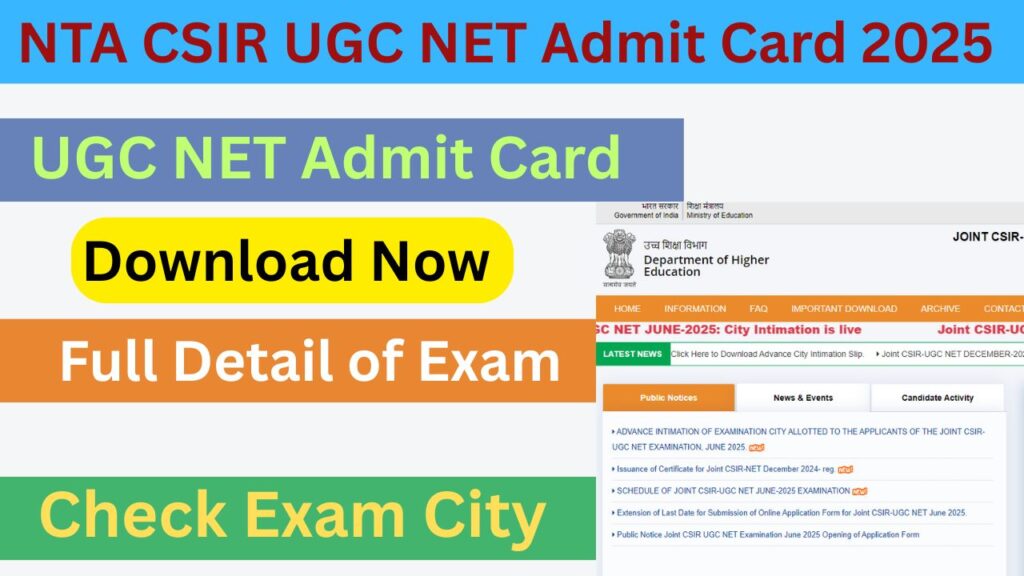
Candidates who have applied for the UGC NET exam can check their NTA CSIR NET Admit Card 2025 on the official website. Candidates must download their admit card to know the exact location of the exam centre. The admit card consists of Name, Exam centre, Exam Name, Shift Timing, Roll Number, etc.
There are a total of three parts – A, B, and C where part A contains objective-questions from general aptitude, the rest of the two parts are based on the subjects. Negative marking is applicable, so candidates must prepare well for this exam.
Bhopal is emerging as a hub for higher education, it already has a reputation for its diverse institutes. Let’s look at these top 10 Private Engineering Colleges in Bhopal. These colleges not only offer the best quality education but also advanced labs, strong faculty support, and placement. Some students got high packages from top companies.
If you’re planning to pursue B.Tech or M.Tech in 2025, these colleges will provide you with world-class education. Check out insights on faculty, academics, admissions, fees, and placements.
Top 10 Private Engineering Colleges in Bhopal
1. IES College of Technology
IES provides a conducive academic environment for students who aspire to pursue engineering careers in top-level companies. The college focuses on technical skills along with soft skills, which helps students become industry-ready.
Faculty & Infrastructure The faculty here is experienced, though a few departments might still benefit from more industry exposure. Labs and classrooms are well-equipped.
Admission & Fees After clearing JEE Main, students must appear in the Madhya Pradesh Engineering Counselling. The total fee is around ₹2,63,000 for B.Tech.
Placements Companies like TCS, Infosys, and Wipro visit regularly. The average package is between ₹3.5 and ₹4 LPA.
2. RKDF University Bhopal
RKDF offers a wide range of courses and flexible admission. It’s ideal for students looking for an affordable engineering option with decent facilities.
Faculty & Learning: Faculty quality is average to moderate, but for self-motivated students, it can still be a good launchpad.
Admission Process: Admissions are mostly merit-based or through direct admission. The total fees for the B.Tech course range between ₹2 Lakh and ₹2.6 Lakh.
Placement: Campus placement support is available but mostly attracts local or small-scale recruiters. The average salary is ₹2.5 LPA.
VIT Bhopal is a top-tier college for engineering as it offers high-standard labs, global curriculum, and strong international tie-ups. Ideal for students who want to achieve top-class education.
Faculty & Facilities With a mix of academic and industry experience faculty is providing an advanced level of techniques and tips to guide their students. The college campus is modern, Wi-Fi-enabled, with smart classrooms and research labs.
Admission Criteria Admissions are through VITEEE or JEE Main. The total fee is around ₹6.98 to ₹11.12 lakh for B.Tech.
Placements Top companies such as Microsoft, Dell, and Cognizant participate. Highest packages have crossed ₹20 LPA, while average remains at ₹5–6 LPA.
4. Acropolis Institute of Technology & Research
Acropolis Institute of Technology & Research is a top-notch college for B.Tech. College’s innovative way of teaching and focus on practical assessment is what makes them iconic for those students who want to go into the research field. If students aim for entrepreneurship, this might be a good option for pursuing engineering.
Academics & Staff Well-structured curriculum and helpful faculty. Some departments, like CSE and IT, are especially strong.
Admissions & Cost Admission via JEE/MPTU counseling. The total fees lie around ₹2.94 to ₹3.72 lakh.
Placement Scenario Offers good placements for tech branches, with average packages around ₹4 LPA. Mass recruiters like Wipro and Capgemini are common.
5. Bansal Institute of Research & Technology
This college has various placement opportunities due to its involvement in the larger Bansal group. The college maintained its reputation with an academic environment and technical training. It’s a safe choice for students who want structured learning.
Faculty The faculty members provide support to students in developing their skills to maintain their resumes ready for jobs. Students did get guest lectures from industry professionals.
Admission Info JEE Main scores are accepted for admission. Annual fees are approximately ₹90,000 – 3.68 Lakhs for B.Tech, depending upon the branch.
Placements: Placement is fairly consistent, especially in CS, EC, and mechanical streams. Students can get an average package of around ₹3–4 LPA.
6. Technocrats Institute of Technology
Technocrats Institute of Technology: This is a great option for students who don’t want to just pursue a degree but also want a chance to step into the industry with a good package. It has a huge alumni network and excellent infrastructure.
Faculty & Education: Most departments have PhD-qualified professors. It offers not just theory but also encourages students for practical learning, coding bootcamps, and projects.
Admission Procedure: Students must have a good score in JEE Mains. Selected candidates have to appear in the MP Online Counseling. Fees are around ₹1.8L for B.Tech.
Placement Overview Excellent placement record, especially for CSE and IT. The college has a good placement record, students can get an average package of ₹4.5 LPA.
7. Sagar Institute of Science and Technology
SISTec is known for its student-centric approach, active coding culture, and good ROI. It focuses on both academic learning and personality development.
Faculty & Campus The college offers experienced staff, supportive mentors, and regular tech fests to make their students more engaged with their engineering. A good option for engineering studies and college Infrastructure is above average.
Fees & Admission The fee is about ₹2.1-3.6 Lakhs for B.Tech. Students need to clear the JEE Main with a good score for admission.
Placements Offers decent placement in both core and IT sectors. Companies like TCS, HCL, and Byju’s visit the campus. Average CTC is ₹4 LPA.
8. LNCT Group of Colleges
LNCT is a well-established name in Bhopal’s private education ecosystem. It has a reputation for being disciplined and result-oriented.
Teaching & Exposure The faculty is one of the strongest in Bhopal’s private college circle. Labs, libraries, hostels and all meet modern standards.
Admission & Fee Structure Admissions through JEE Main. Fees range from ₹2.39 to ₹3.25 lakhs for B.Tech, depending on the branch.
Placement Performance LNCT has excellent placement stats with the highest package touching ₹19 LPA in 2024. The average package is around ₹5.5 LPA.
9. Oriental Institute of Science and Technology
This is also a private college that has acquired a reputation for delivering engineering courses for years. Students get plenty of opportunities after having a B.Tech degree from this college. It offers excellent academic education and practical training.
Faculty & Infrastructure
The strong faculty is very supportive and the campus is amazing. Great infrastructure includes modern lecture rooms, research labs, and innovation centers where students can grow their ability to innovate and research.
Admission & Fees
JEE Main scores are acceptable for admission and MP DTE counselling. The fee is around Rs. 4.20 lakh, depending on the branch.
Placement Opportunity
The record of this college for placement of its students is high. If you want an average package around Rs. 4.2 LPA, then get the admission.
10. Patel Group of Institutions
If you are a resident of Bhopal, you can choose the Patel Group of institutions for B.Tech because it has a great reputation for providing industry-aligned technical education. Students can get their admission at a low fee here in comparison to others but they can get world-class education with regular training sessions.
Faculty & Infrastructure
Experienced faculty members encourage students to engage in project-based learning. It has decent infrastructure including, well-equipped labs, WiFi, and dedicated training programs.
Admission & Fees
JEE Main and MP Online Counselling will get you selected in this college. B.Tech course fee is around 1.60L-2.24L for the entire course.
Placement Opportunity
Companies like Wipro and Zensar are recruiting students from this campus and offer an average package of Rs. 3.5 – 4 LPA.
Conclusion
These are the Best Private Colleges for Engineering in Bhopal that will help you train your mind with their academic environment, strong faculty support, and practical training. Whether you want to pursue bachelor or masters, they offer both UG and PG level programs for students who want to build their career in top industries.
Students who are interested in the Technical Field can achieve great heights in their career after pursuing NIELIT ‘O’ Level. It opens up the door in both private and government sectors as the requirement of an IT employee is needed everywhere. The world is evolving more into digitalization which has made this field wider and open more vacancies for the candidates. If you also want to make your career stable with a good career path, high-salary, and less hectic job then grab this course now.
Why NIELIT ‘O’ Level Matters in the Digital Age
Chasing after stable and well-paying jobs in India, job-seekers are often driven towards the public sector, where security of jobs and strong perks are widely considered as givens. In today’s increasingly digitised world, being in possession of a recognized and accredited Information technology qualification is not just an advantage – it is a requirement. The NIELIT ‘O’ Level course is at the Midnight of this requirement.
It is officially considered the same as a Foundation Level CA course. This government approval is really important and gives you the edge that private not accredited courses can never get. The value of this certification is further ratified with its inclusion in the national framework, having been recognized under the National Skills Qualifications Framework (NSQF) at Level 4.
What Job Roles Can You Get After NIELIT ‘O’ Level
The O Level was structured in such a way as to be responsive to the short-term technical needs of the then contemporary public and private sectors. The stated goal is to prepare students with the skills needed to work in today’s IT-enabled jobs. Among these targeted profiles are User Interface (UI) Designer, Web Designer, Web Publication Assistant, Office Automation Assistant, and IoT Application Integrator.These intentional integration with operational IT rather than simple clerical data entry clearly situates the course as a practical instrument for aspirants to take on current digital workplace requirements.
Detailed Eligibility Criteria
The basic eligibility criteria require either passing 10+2, or holding a one-year ITI Certificate after Class 10, along with a minimum of one year of experience in the area related to the IT industry.
The applicants who have passed second year of polytechnic engineering diploma after 10th standard from a government recognized institute are also eligible to apply.
O’Level Course Duration
The six-month timeline for graduates enables them to get this commonly required IT credential quickly, thereby reducing the amount of career time lost while waiting for certification. Hence, the ‘O’ Level serves as an important means for enhancing one’s eligibility in a short span of time after the completion of the degree. However, this registration remains valid for five years.
Why Is O’Level Course Value Increasing Day-By-Day?
Mastery in the Revised Syllabus
The importance of NIELIT ‘O’ Level certification in the present high technology world is that O level syllabus is regularly revised and updated which in turn helps to keep the students updated with the latest information and technology available. This syllabus is much beyond the basic knowledge of computing which is now considered old to cater to the demand of the industry for the skills and the industries supported the potential of having high paying jobs.
Structure and Examination Pattern
The course is staffed with four core theoretical modules, the compulsory practical component, and a project. The four theory modules are:
M1-R5: Information Technology Tools and Network Basics
M2-R5: Web Designing & Publishing
M3-R5: Programming and Problem Solving through Python
M4-R5: Internet of Things and its Applications
Detailed Module Analysis
All theory subjects will be assessed by a three hours written examination carrying 100 marks. Besides these theory papers candidates are required to pass one full practical examination (PR1-R5) based on the contents of all 4 theory modules, also carrying 100 marks and of three hours duration. Practical work is usually done at the institutionally approved places offering the course. A Project Work (PJ1-R5) is also necessary for certification.
The cost a candidate has to bear when applying directly through NIELIT (without availing external tuition) is surprisingly small:
Registration Fee is Rs.500 and this registration is valid for 5 years.
A Fee of ₹100.00 is applicable for processing exam applications per examination cycle.
The O’ level course fees for each module in the Revision 5 is 1,000 Rs. The total of four modules fee is Rs 4,000.
O Level Project Fee (once only for PJ1-R5 submission) The compulsory O Level project fee PJ1-R5 is only ₹100.
Candidates pursuing O’Level courses from private institutions can get different fees or entire course fees. So, check the total fees amount for this course from the institutions you choose.
Career Pathways in the Private Sector and High-Paying Roles
The NIELIT O Level certification is an address both for private and government jobs. Although the public sector is considered to be the most stable, the private sector has many points of entry and is an important source of early career experience.
Target Job Profiles
The level of competence proven through ‘O’ Level is very applicable. There are plenty of O level benefits in government jobs. The roles targeted include vital gating roles such as UI Designer, Web Designer and IoT Application Integrator. Outside these roles, the certification still strongly validates the holder’s knowledge of key IT skills, such as being computer literate, managing data efficiently, using office automation tools, creating simple web applications, and handling databases. These skills are necessary for help desk, IT support, and web maintenance positions in a broad range of private industry.
Salaries Offered by IT Sector
The average O level course jobs salary in the Private Sector after doing NIELIT ‘O’ Level is around 3 LPA (Lakhs Per Annum). This base figure amounts to roughly ₹ 25,000 per month which is considered as the minimum expectation for blue-collar jobs at the level of data entry operators, junior IT support, or clerical jobs with some know-how of office automation.
However, In the government sector, For certain technical posts, including Scientific Assistant and some Assistant Programmer positions, that require or consider the O Level equivalency, the Basic Pay can be as high as ₹35,400 even at the entry level. The resulting In-Hand Salary typically settles between ₹45,000 and ₹50,000 per month.
The Future After O’Level Course
The NIELIT ‘O’ Level is not a standalone qualification, but it is the essential beginning in a standardized, government-approved system of IT certification that focuses on sustained career advancement. This Systematic faire up Turn is called the DOEACC octuplet.
From ‘O’ to ‘A’ Level: Advanced Diploma Equivalence
Students may take NIELIT ‘A’ Level after successful completion of ‘O’ Level based on NIOS. This allowed the applicants to expand their skill set to a great extent in specialized areas like Advanced Post Graduate Diploma in Computer Application (APCDCA) or Advanced Diploma (AD) in Computer Hardware Maintenance and Networking. Passing of ‘A’ Level also allows access to mid-level private sector work and makes one more eligible for higher grade government technical posts.
‘B’ Level and MCA Equivalence
For aspirants to senior management, software developer or research positions the NIELIT route ends with the B Level course. The ‘B’ Level is the high-end among the course level certifications of NIELIT and is professionally recognized by MHRD to be equivalent to Master of Computer Applications (MCA) Degree Course.
Conclusion
The NIELIT ‘O’ Level is the anchor, pocket friendly and the only entry-level based examination for aspirants who aim at getting a high paying job along with stable income from Indian Public Sector IT for immediate term. It is the basic qualification that enables the accredited path to further study that is comparable to a Master’s degree, so a career begun in government IT isn’t just safe, it has a well-defined and boldly optimistic path for growth.
Students must be aware of the entire IIT BHU fee structure if they are planning to pursue the B.Tech degree for 4 years, as the Institute operates on an income- and category-based system. IIT BHU is considered one of the best value for money engineering colleges in India with good placements and govt backed fee waivers and the fee is moderate as compared to many other IITs.
The overall academic fee for four years for General/OBC/EWS students having an annual family income of more than ₹5 lakh is almost ₹10.4 lakh, while due to hefty tuition fee waivers, the students coming from lower income groups or reserved categories are charged a lot less. Students should also keep in mind that in addition to tuition realistic these fees are as well as hostel and mess charges while calculating up the actual four-year budget.
IIT BHU B.Tech Fees Overview
IIT BHU (Varanasi) has a caste cum income-based fee structure and hence what you have to pay depends both on your caste category as well as your annual income. Academic fees include the fees for tuition, examination, registration, hostel seat rent and other institutional charges, but mess fees must be paid separately every semester.
For a General/OBC/EWS student with income above ₹5 lakh per annum, the total academic cost for 4 years of B.Tech (not including mess and personal expenses) comes to around ₹10.41 lakh. The addition of hostel and mess makes the true 4 year cost regularly cross ₹11.5-12 lakh, based on yearly revisions and your lifestyle.
IIT BHU B.Tech Fees Fee Structure Table
The following is the approximate fee structure of B.Tech course of IIT BHU for 4 years for various categories and income slabs (Mess charges are not included). These figures are for indicative purpose for 2025-entry students and are subject to minor changes in future circulars.
Category
Admission Cost
Semester Fee
First-Year Total
4-Year Total
GEN/OBC/EWS with Income less than ₹5L
₹15,750
₹1,06,350
₹1,21,600
₹10,00,000
GEN/OBC/EWS with Income less than ₹1-5L
₹15,750
₹39,683
₹54,933
~₹3,20,000
GEN/OBC/EWS with Income less than ₹1L
₹15,750
₹6,350
₹21,600
~₹50,000
SC/ST/PwD with no income limitations
₹15,750
₹6,050
₹21,300
~₹48,000
Fee Structure in More Detailed Way
One-Time Charges at Admission
₹5,750
Refundable Deposits at Admission
₹9,000
Tuition Fee
₹1,00,000
Additional Charges
₹16,500 per semester
Realistic Budget: Academic + Hostel + Mess
While academic fees only are quoted in brochures, parents should calculate fees with hostel and mess included so as to not suffer a financial shock later. IIT BHU Hostel fee (seat rent plus utilities) is very nominal compared to fees, but mess bills are a hefty recurring cost.
Seat rent for the hostel and utilities: a few thousand rupees per semester (added to the normal semester fee).
Mess advance: usually ₹15,000–17,000 a semester – rates depend on the mess committee.
Estimated four-year mess cost: ₹1.2–1.4 lakh (based on eight regular semesters and modest inflation has been taken into account).
General/OBC/EWS Candidates who have their house income less than 5 lakh have a good all inclusive practical 4 year budget (academics+hostel+mess) would be around 12 lakh.
This is the lower fee budget particularly for those who receive full or partial tuition waivers, students with lower-income can have a shot at IIT BHU.
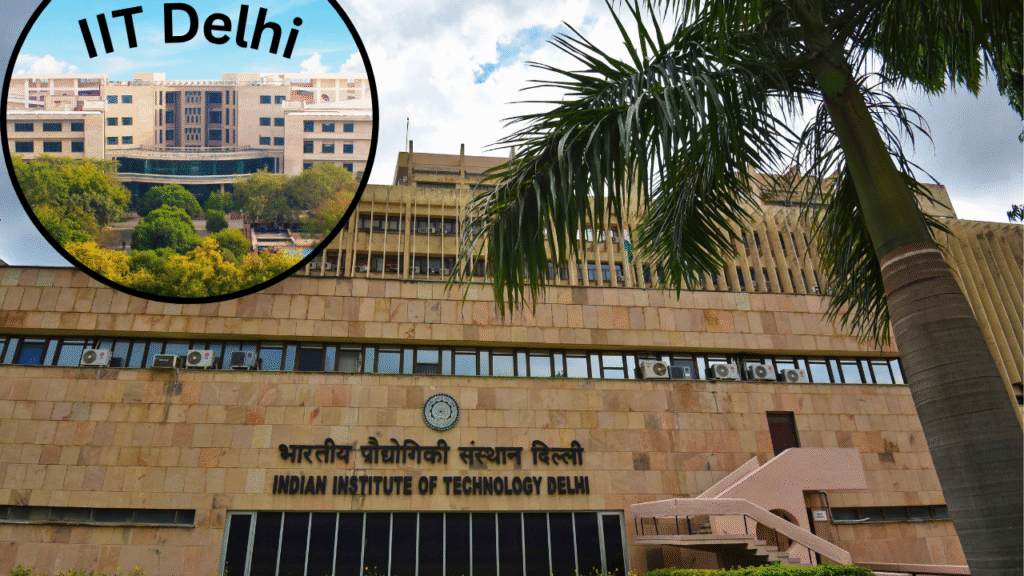
In order to get a sense of how affordable IIT BHU is, it makes sense to compare its 4-year B.Tech fee with that at other reputed institutes like IIT Delhi and BITS Pilani. The following amounts (approximates) are for General/OBC/EWS students with income above ₹5 lakh per year and do not include hostel/mess.
Both IIT BHU and IIT Delhi receive government subsidies that make the cost of tuition approximately ₹8–10 lakh for 4 years.
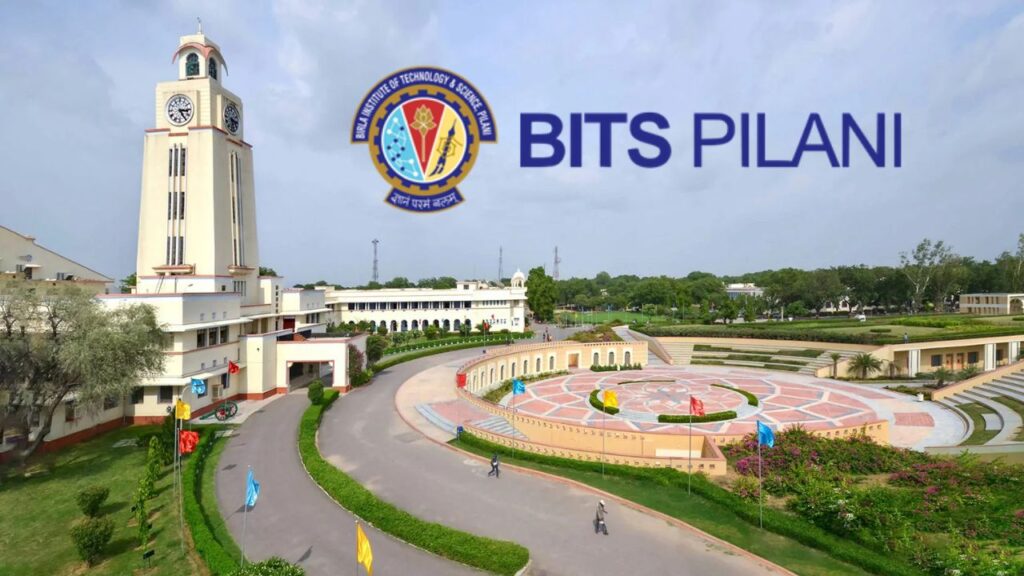
Since BITS Pilani is a private deemed institution the fees are much higher, the total cost for 4 years (including hostel and mess) can easily cross ₹22-24 lakh.
Fee Comparison With IIT Delhi And BITS Pilani
4-year BTech Academic Fee Comparison (2025)
IIT BHU and IIT Delhi 4-year fees are about ₹10.4 lakh and ₹8.6 lakh respectively for the same duration. Meanwhile, tuition fees at BITS Pilani vary from ₹19 lakh to ₹22 lakh for 4 years, not inclusive of inflation and full residential expenses.
For students who are granted income-based fee waiver or belong to SC/ST/PwD categories, IIT BHU becomes significantly better option over private colleges, as their burden of tuition fees is substantially reduced or waived off. This balance of modest fees, good placements and central government support is what makes IIT BHU one of the best ROI engineering options now available in India.
Conclusion
The B.Tech fee at IIT BHU is kept as per the income slabs of students, Hindi Medium assistance patches are provided. With substantial waivers for economically backward sections and SC/ST/PwD students, and government subsidies making the aggregate academic fee lesser than most of the premier institutes, IIT BHU promises one of the best ROI among the top engineering colleges.
The bottomline is that the 4-years cost of attendance remains affordable when compared to private institutes like BITS Pilani, whose fees can run to almost twice this amount, even after adding hostel and mess charges. If you are a student who wants a good mix of fees, quality education with good placements, IIT BHU is a very cost-effective and future proof bet.
JEECUP Counselling 2025 Live! If you want to secure a seat in Diploma courses, fill your choice. Please ensure that you fill in your preferred choice before the last date. UP Polytechnic JEECUP 2025 choice filling starts on 9 July 2025; you must check the official website for more detailed information. You can find the link for the official website here.
If you have been eyeing a career for yourself in Bihar’s judiciary, then your wait is now over. Bihar BPSC APO Recruitment 2026 has already started Bihar Public Service Commission is inviting applications for 300 posts in the Prosecution Department. Apply Now for BPSC APO, if you are a fresh law graduate or an advocate in search for stability with government, then this may be the perfect job opportunity for you!
Important Dates You Can’t Miss
Close Schedule for Bihar BPSC APO Recruitment 2026, So Please Mark Your Calendar Accordingly. The online submission of application was commenced on 27 February 2026 following the issuance of notification dated 25 February 2026. The essential thing was that until 20 March 2026 (date of closing of application) you can only make your application via the official site.
Exam Schedule is important to remember by those who are applying for this application because preparation goes along the way accordingly. It’s a smart move if you consider dividing your syllabus to this timetable until 15 JULY 2026, the date of the preliminary exam. That means if you begin now, you have about four months to get ready for it. It is a tough competitive post for government exams, so every day is important, so don’t waste this head start.
Event
Date
Notification Release
25/February/2026
Application Start
27/February/2026
Application End
20/March/2026
Prelims (Tentative)
15/July/2026
Breaking Down the Bihar BPSC APO Recruitment 2026 300 Vacancies
Let’s get numerical since knowing the distribution of vacancies already gives you an idea of your competitors. The 300 posts of Bihar BPSC APO Recruitment 2026 are evenly distributed with a particular emphasis on gender representation across the categories. Here’s what the landscape looks like:
The Unreserved (UR) category is allotted the maximum number of 129 posts, out of which 41 are for women. Next is the category by EBC (Extremely Backward Class) which comes at 64 posts (22 for women), followed by the SC aspirants that can avail 42 posts (15 for women). EWS candidates can contest 29 posts (10 for women), BC candidates can challenge for 25 posts (9 for women), while ST candidates are left with 7 posts (2 for woman). There’s also a special BC Women category with 4 posts.
Category
Posts
Women Reserved
UR
129
41
EWS
29
10
SC
42
15
ST
7
2
EBC
64
22
BC
25
9
BC Women
4
–
Total
300
99
What is more significant is the 35% horizontal reservation for women, which means 99 posts are specifically earmarked for women candidates. It is a big leap for equal representation of women in the prosecution services and also showcases Bihar’s stand for women empowerment in the legal profession.
Who is Eligible For BPSC APO?
Before you get too excited about the numbers, let’s make sure you qualify. The eligibility criteria are simple – you need an LLB degree from a recognized university, and you have to be eligible to practice as an advocate. Qualified means recognized Your law degree should be recognized and valid as per the Bar Council.
Students who cross the age of 21 are eligible as of 1 August 2026. The maximum age limit varies from category to category. The relaxed age limits are indeed a boon for aspirants from reserved categories as it allows them a bit more time, a bit more space to prepare, a bit more time to mature and seamlessly enter their career.
Getting chosen as an APO is a marathon, not a sprint, with three separate phases. First is the Preliminary examination – an objective test which is qualifying in nature. Think of it as the gatekeeper, you have to pass it and go to the next step, it is not counted towards final credit.
Then begins the real fight: the Mains Examination. This essay type of test has 1000 marks and here the real merit list is prepared. Personal Interview is the last step for your personality which is for 100 marks and it’s important to have good performance in both Mains and Interview rounds to be a part of the final merit list.
Exam Pattern for Bihar BPSC APO Recruitment 2026
The Prelims paper is a 4-hour marathon of 250 marks, split between General Studies (100 marks) and Law (150 marks). This 40:60 figure is a guide as to where to put your emphasis – although general knowledge is important, it’s your legal knowledge that will make you stand out.
The Mains exam is tougher, with 8 papers in General Studies, Hindi, English, Bharatiya Nyaya Sanhita 2023, Bharatiya Sakshya Adhiniyam 2023, Criminal and Civil Procedure, Constitutional Law and other applicable laws. Take note of the focus on recent legal changes such as the Bharatiya Nyaya Sanhita 2023 – this is not just about memorising old laws, but keeping abreast with India’s changing legal system.
Attractive Paycheck
So, let’s get to the practicalities – the pay. The chosen applicants will be placed in Pay Level-9 with a salary of ₹53,100 to ₹1,67,800 plus allowances including Dearness Allowance (DA) and House Rent Allowance (HRA). This, in Bihar’s context, is a cushy government package that provides financial security along with professional prestige.
How to Apply: The Digital Route
The entire process of applying to Bihar BPSC APO Recruitment 2026 is online at bpsc.bihar.gov.in.
First of all you have to make the OTR (One Time Registration) then you can fill the main application form.
To ensure a smooth and paperless process, submit your documents via DigiLocker.
You will receive a confirmation after submitting your form and paying the application fee, save it for your reference.
Pro tip: Don’t wait until the last week. Last-minute bugs and server crashes, are to be expected in the hot recruitments. Apply early, double check your details and keep a copy of the official notification pdf for your reference.
Conclusion
The Bihar BPSC APO Recruitment 2026 is not just an opportunity for one to grab any of those 300 posts, but an avenue towards serving justice, making a good career, and assisting the legal system of Bihar. Last date to receive the applications is 20th March 2026, so hurry now. Sharpen your legal acumen, brush up on current affairs and treat this examination with respect. Your path to becoming an Assistant Prosecution Officer begins with one step — a click on an official website link and Make it count!