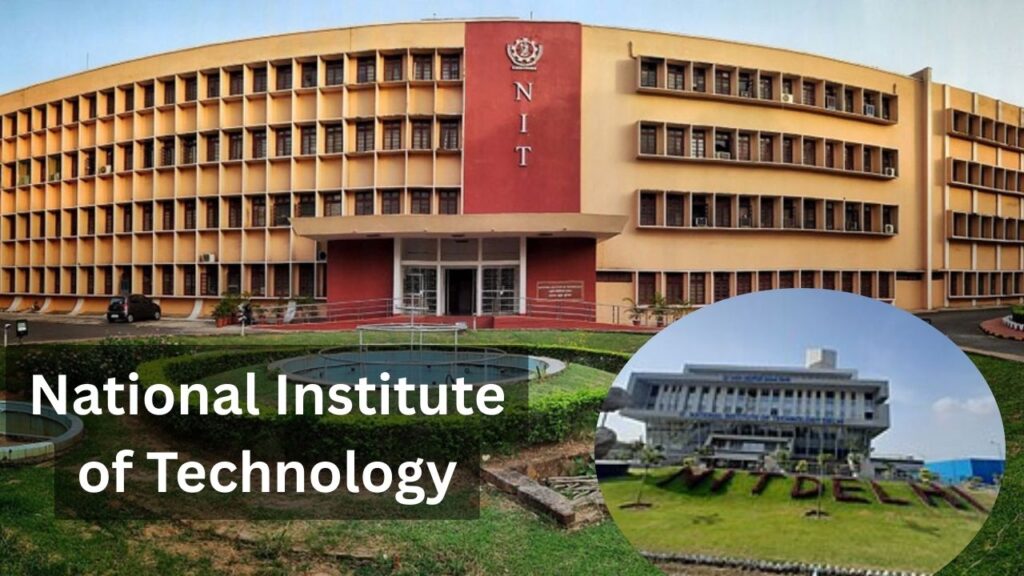
IIT Delhi MTech Fees Structure — Complete Details of Tuition, Hostel & Other Charges

IIT Delhi MTech Fees Structure

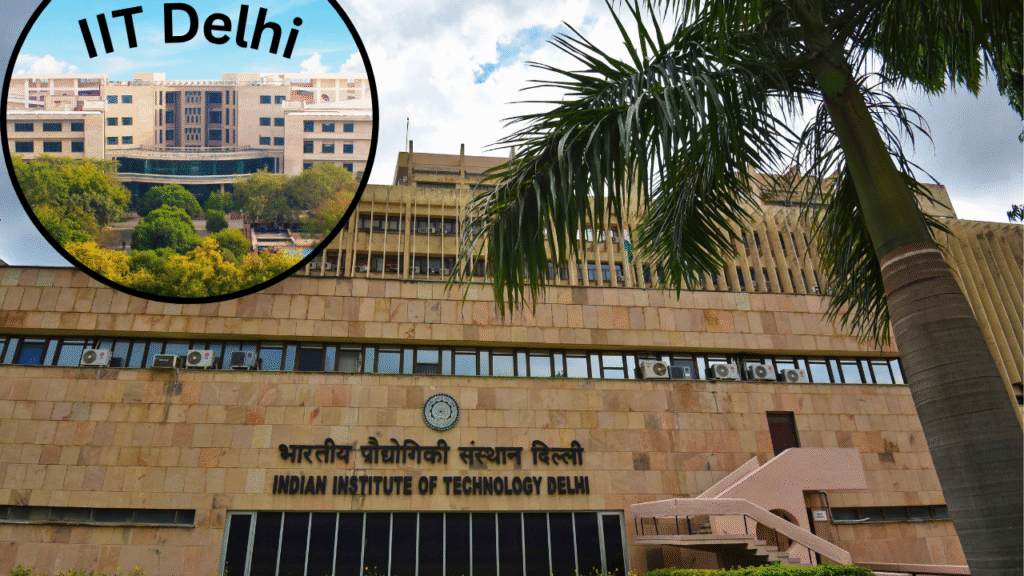
Opting for MTech at IIT Delhi is not merely registering for a degree it is an investment towards your future, career and your net worth. As many engineering students from India apply to join IIT Delhi for its strong academics and unbeatable placement records, however the biggest question among these is always How much is the IIT Delhi MTech fee structure and what is the overall financial investment to get an MTech. 

Breaking Down IIT Delhi MTech Fee Structure 2025 

Fee ComponentAmount
Tuition Fee (2 years)₹3,00,000
Other Fees₹80,600
Total Tuition Fees₹3,81,000
Semester-wise Tuition₹95,000 

The overall expense for MTech students in 2025 is that the total fee comes close to ₹3.81 lakhs. This amount covers all the needs of the institute for two years, including tuition, an annual charge, and several optional fees. Each and every General, OBC, and EWS student has to shell out ₹3 lakh for tuition fees. Over and above that, around Rs 81,000 is charged for services such as amenities, exam fees and registrationAdmission security and deposits are separate but are not a major concern as they’re refundable on graduation. 

Living in a hostel is an added cost — and IIT Delhi is reasonable as well as efficient in this regard. The normal hostel fee is around ₹86,000 per annum and mess bill, cost of living is extra, however these are still within limits if compared to private accommodation or city based rentals. Living on campus is not only about saving money, the convenience, access to on-campus resources, and vibrant student community truly enhance the educational experience. 

Fee Payment Schedules Made Simple

IIT Delhi is empathetic towards the realities of students. Rather than a wire one-time payment, the fees can be paid in installments either annually or each semester – the bulk of the payments amount approximately to ₹1.9 lakhs annually. This setup allows some breathing room — whether you’re relying on a scholarship, personal savings or family support. Upon admission, new students pay a lump sum that includes their first tuition payment and all nonrecurring fees (such as deposits and insurance). Payments are due at the beginning of each term or each year after that, and you’ll be kept up to date with automated reminders. 

Specializations and Tailored Costs

Specialization fees are uniform, irrespective of specialization of your choice — Computer Science, VLSI Design, Data Science, Structural Engineering, Power Electronics etc. Each MTech branch at IIT Delhi for 2025 will be charged ₹3.81 lakhs for General/OBC/EWS students. However, substantial waivers are provided to SC/ST and PwD candidates, enabling them to pursue top-tier education for a lot more talent.With 49 MTech specializations available, you don’t have to worry about “hidden” charges for popular or emerging streams.

Read More 👉 PNB LBO Application Form 2025 — Apply Online For Local Bank Officers 

Scholarships: Your Gateway to Savings

Financial considerations should never deter one’s educational aspirations, and IIT Delhi is just great at throwing open doors in the form of scholarships and financial aid. From the GATE fellowships point of view, each qualifying student is awarded a monthly fellowship which is more than enough to bear the costs of living and studies. On the other hand merit-bursaries provide an incentive to perform well, and for the less fortunate it makes sure finances aren`t an obstacle to get into university. Category waivers are automatic — SC, ST, and PwD students are exempt from paying tuition fees in full, and only a small annual fee applies. 

Better still, over and above the Institutional Support, you get to waive fees under Govt schemes (central and state) as well. There are separate scholarships for women, economically weaker sections, and innovation/entrepreneurship themes, and all the application processes are straightforward and transparent. The result?Almost every candidate finds that, whether on account of merit or need, the aggregate financial obligation at IIT Delhi for her/him is a good deal less than the sticker price. 

Total Expense Of The M.Tech at IIT Delhi

In addition to the usual ₹3.81 lakh tuition fees, hostel and living expenses are to be anticipated. Bid meals, living daily, material educational, y cargos al azar del campus, una realidad Todo incluido para estudiantes General/OBC/EWS se ubica cerca de ₹4.7 lakh para dos años. For SC/ST or PwD candidates, the number falls due to waivers to around ₹1.6 lakh – and in many cases less with strong scholarship cover. 

Career Prospects After M.Tech at IIT Delhi

Here is the killer: MTech  graduates from IIT Delhi have one of the highest placement records and average salaries in India. Highest packages hover around the ₹24–30 lakh per annum for CSE, DS, VLSI Design etc and average for all streams lies around ₹11–24 lakh. Recruiters include big global tech giants (think Google, Amazon, Microsoft), top Indian corporates, automotive innovators, and government PSUs. Alumni networks, career progression and R&D opportunities made IIT Delhi renowned – and they keep pushing its graduates ahead of the curve. 

In practical terms, this results in an immediate return on investment. Most alumni have recovered the money they spent in fees within a year of graduating. Either way, the “IIT” tag is not just prestige — it’s an entry pass to elite opportunities, startup culture, cutting-edge research, and rapid professional growth. 

Conclusion

The 2025 MTech from IIT Delhi is still a good value for money for any engg grad. The institute lives up to every promise when it comes to quality academics, a transparent fee structure, a robust scholarship program, and unparalleled placement outcomes. If you are enrolling make sure you have a look at the exact fee breakup by specialization, see scholarship possibilities and get ready for two years of bonfire and brews in your glass. For many tens of thousands of hopefuls, the cost is not a barrier — it is a bridge to a fruitful future. 

Leave a Comment

Your email address will not be published. Required fields are marked *

Supreme Court Law Clerk Recruitment 2026 Notification Details

Supreme Court Law Clerk Recruitment 2026

Supreme Court Law Clerk Recruitment 2026 of India announced notification released on 20 January 2026 and opened the portal to receive applications for Law Clerk-cum-Research Associate (LCRA) for the year 2026, marking a fantastic opportunity for budding legal minds. Supreme Court Law Clerk Recruitment is a paid position with 200 seats available and the stipend amounting to ₹80,000 per month, making it a prestigious and fulfilling experience.

The applications started on February 7, 2026 and should be sent through the official website of the Supreme Court of India (sci.gov.in). Interested candidates are advised to send their application before the last date 10th March 2026. This is an extraordinary opportunity to acquire priceless experience in the legal industry. 

Date Schedule for Supreme Court Law Clerk Recruitment

PhaseDate/Details
Notification20/January/2026
Application Window20/January —- 7/Feb 
Exam10/March/2026 
InterviewsJune/2026
JoiningAugust/2026

Quick Eligibility Check

  • You can apply if you are a fresh LLB graduate from the 3-year or 5-year program with a cumulative score of 55% across all years and have a degree from a University/Institute recognized by NLU or from the top-10 NIRF ranked law schools (2020-2024).
  • In the academic department, the standard is well defined and just: you require 55% marks in graduation minimum, with relaxation to 50% for SC/ST candidates. 
  • Age: As on 01/08/2026 Candidate should be under 32 years and above 20 years.
  • There’s no experience required but you have to go full-time no side hustles.

Its merit-based magic: shortlisting will be on the basis of a written exam (objective + subjective on law/constitution) followed by an interview for the toppers. Question on constitutional, IPC, current affairs. 

Read More👉 Allied Medical Courses Roadmap 2026: Eligibility, NEET, Courses & Career Scope

Selection Process

Candidates have to fill out the application form to access the admit card for the examination. Follow the three phase selection process for Law Clerk Recruitment 2026, online MCQ test, Written test then prepare yourself for interview. 

How to Fill Application and Fees

  1. You need to register yourself on the official website of SCI.
  2. Login with your credential to fill the entire details required to complete the form and check again.
  3. Submit Rs. 750 via online payment to complete the process 
  4. Print out your form for offline reference.
Useful Links
Download NotificationClick Here
Apply NowClick Here
Official WebsiteClick Here

Leave a Comment

Your email address will not be published. Required fields are marked *

Top Courses After 12th Arts With High Salary – Best Career Paths Revealed!

Top Courses After 12th Arts With High Salary – Best Career Paths Revealed!

Students might get confused with their career after completing 12th. If you’ve completed your 12th with Art’s stream then here are the top courses after 12th arts that will enhance the knowledge required for the competitive exams. It ensures job security, career stability and high salary. For a brighter future, you must choose the right career for yourself.

Other courses offer a lot of opportunities for high salaries. After 12th arts students can select the course that aligns with their interest. Whether you’re interested in journalism, fashion designing, or social working, the pay scale is higher than any corporate jobs.

Before introducing the top courses, I want to clear one thing for you, if you’re interested in a government job then these courses will help you learn the concepts which also help you clear the exams. By developing particular skills that are required for your path can help get a high salary. 

The course involves a syllabus related to the governance and public administration which is crucial to understand for the government department. Students must learn about the operations of government institutions, policies, and administrative processes. 

Career Opportunities: After BA in Public Administration can open up many career paths for you. This opens up for you a chance to be an IAS officer or IPS officer, it is not just a job but a pride to serve a nation, there are a lot of opportunities for you. 
Government Roles: IAS, IPS, IFS come in civil services, Government Administrative Services, Public Relations Officer, Administrative Officer, Public Policy and Research.
Salary Expectations: starting pay for the roles is ₹50,000 and rise up with experience to ₹2,50,000 per month

This course improves the understanding of management processes in the government department. Students must learn and focus on tasks and functions in the economics foundation so that they can understand these concepts and clear the recruitment process while the government bodies conduct competitive exams for various post related managerial departments.

Career Opportunities: You can work in both government or non-government organizations. But working in a government organization will enhance your chance of additional perks and future stability, management and entrepreneurship roles are required in the organizations to handle larger projects.

Government Roles: Administrative Officer, Finance Officer, Clerk, Assistant Manager, and Project Coordinator.
Salary Expectations: Starting Pay is ₹30,000 with level of positions, salary will increase to 1,00,000 per month

A law degree is very beneficial and has a lot of opportunities for career growth in the government sector. Students who are interested in law and justice can pursue this degree. It involves the legal system and laws.

Career Opportunities: From Advocacy in courts to the legal advisory in state government, there are multiple roles with higher salaries. Law and governance are big paths to achieve but focusing on the preparation for the exam can help you achieve your goal.

Government Roles: Judge, Magistrate, Legal Officer, Legal Advisor, Law Officer, Advocate for Central or State Government.
Salary Expectations: Salary is around ₹50,000 and raises to ₹1,00,000 per month.

If you want to become a teacher in a government school, you can pursue a Bachelor of Education which allows you to become a professional in teaching and make a stable career. This job pays on a high scale with additional benefits. Students can consider choosing this path with a specific subject so that they can teach in higher standards. This degree developed teaching skills and support with placement from many colleges.

Career Opportunities: Teaching roles in school, colleges, and universities, consultancy, administrative position in institutions. 
Government Roles: Primary Teacher, Assistant Professor, Lecturer, Trained Graduate Teacher, Post Graduate Teacher, Principal.
Salary Expectations: ₹40,000 to ₹70,000 per month. With experience it will increase up to  ₹1,50,000 per month.

Read More 👉 Top 10 High Salary Courses After 12th Science Without NEET – No Medical Exam Needed

Students who are interested in broadcasting, engaging in writing, observing, and also debating can choose this path. It requires people who investigate and write about it in an eye-catching way. However, old traditional ways for reporting news are changed now. Students more often have knowledge on digital media such as social platforms, web portals, or any other channel to report and engage in broadcast journalism.

Job Roles: Reporter, editor, News anchor, Photojournalist, Media Director, Social media manager, and Content writer.
Salary Expectations: 4-10 LPA, based on the experience and level of the journalists. 

Bachelor of Design (B.Des)

Students with the creative mind and designing skills can focus on this degree. It offers multiple opportunities in government departments dealing with culture programs, urban planning, and designs. Specializations include interior design, fashion design, and many more.

Government Roles: Designer required for heritage projects, cultural projects, Urban Planner.
Salary Expectations: ₹40,000 to ₹1,00,000 per month.

Students can pick this course, if they want to work for poor childrens and disabled people. It prepares students for roles to handle welfare programs and events for any organizations that helps to achieve their motives of building community.

Government Roles: Social Welfare Officer, Community Development Officer.
Salary Expectations: ₹30,000 to ₹75,000 per month.

The key is to align your career goals with your interests and natural skills. It totally depends on the efforts, strength, and your weaknesses. Research about the job roles and career scope with particular courses. Whether it is BA, BBA, Law, or Journalism without knowing the scope you can’t decide. 

Take career counselling, it helps many students to choose the right path for themselves. Don’t waste time by pursuing a degree with no scope for you.

By getting this, you can choose the right course and prepare for the path so you can beat their examination for entering into the field. Sometimes the path is tough to clear out but with the focus and right pattern, you can achieve your goal.

By choosing the right course and preparing for the competitive exam, Arts students can achieve their goal. For high salary roles students must have developed their skills under these programs so they can build a rewarding career with job security and financial stability. 

Leave a Comment

Your email address will not be published. Required fields are marked *

SSC Exam Calendar 2026–27: Complete SSC Exam Schedule

SSC Exam

If you’re a hopeful civil servant or job seeker looking for government employment, consider the SSC Exam Calendar 2026–27 as your BFF. It’s your personal schedule that tells you when to study, when to apply, and when to take your exams. The Staff Selection Commission has been released by the Staff Selection Commission 8th January 2026 we’ll decipher every minute detail for you in the simplest way. 

The SSC Calendar acts as your guide-walking tool on your government job journey, It informs you about the dates for release of notifications, when you can submit the online applications, the last date to submit applications, and most importantly, the date on which you have to appear in exams. The government issues over 80,000 vacancies every year at different levels (10th pass, 12th pass, and graduation), so missing even one crucial date could mean the loss of a golden opportunity. 

SSC Exam Calendar 2026: Notifications Come Out?

Different SSC exams have different dates. It began in March 2026 exams like Combined Graduate Level (CGL), Junior Engineer (JE), selection post phase-XIV release their notifications. If you’re applying to these, watch for March 2026. 

In April, there will be notifications for other popular exams such as the Combined Higher Secondary (CHSL), Stenographer, and Junior Hindi Translators (JHT).

Aspirants who are looking for Multi-Tasking (Non-Technical) Staff and Havaldar posts should wait for June 2026. In the meantime, there will be a Notification for Sub-Inspector (SI) Delhi Policy/CF in May 2026. 

Complete SSC Exam Schedule

Exam NameNotification MonthApplication Deadline
JSA/LDC Grade Limited Departmental Exam, 202516/March/20267/April/2026
SSC CGL 2026March/2026April/2026
Junior Engineer—JEMarch/2026April/2026
Selection Post Phase-XIV 2026March/2026April/2026
SSC CHSLApril/2026May/2026
SSC Stenographer Grade C & D April/2026May/2026
SSC Combined Hindi Translators April/2026May/2026
SSC—MTS & Havaldar June/2026July/2026
SSC Central Police OrganisationMay/2026June/2026
SSC GD Constable September/2026October/2026

When Will the SSC Exams 2026 Actually Happen?

The CGL exam, which comes under the most desired post in the SSC, will be held from May to June 2026. For those seeking to begin an engineering career, the Junior Engineer test is also conducted in May to June 2026. Candidates looking at CHSL (Combined Higher Secondary) level may expect it around July – September 2026.

The recruitment for Constables in CAPFs will surely be at the end, Exam dates in January to March 2027, so that will be among the last exams in this series. 

Stenographer and Hindi Translator (For words and typing speed per minute refer point 8 of ADD2) are also scheduled on August to September 2026. The Multi-Tasking Staff and Havaldar posts, which students eagerly flock towards, will hold examinations between September to November 2026. And if you are eyeing the Sub-Inspector post in Delhi Police or CAPF, you should be ready for October to November 2026. 

Read More 👉 Railway RRB Technician Exam Date 2026: CBT Schedule & Latest Updates

Ongoing SSC Exams 2026

There are a few exams în progress or are about to commence. The Delhi Police Head Constable (Ministerial) exam was conducted between 7th to 12th January 2026 and Delhi Police AWO/TPO exam was held from 15th to 22nd January 2026. The eagerly awaited SSC CGL Tier-II exam was held on 18 and 19 January, 2026. Starting from 4th February 2026, the SSC MTS exam is now in progress and recruitment for the post of SSC GD Constable has also begun from 23rd February 2026. 

Delhi Police Head Constable07—12/January/2026
Delhi Police AWO/TPO15—22/January/2026
SSC CGL Tier-II18 and 19/January/2026
SSC MTS04 / February / 2026
SSC GD Constable23 / February / 2026

Application Process Date For SSC Exams 

Usually, there is about a one month period from the release date of the notification to the last date for submitting an application. So when the notification comes out, don’t procrastinate! Register immediately, these deadlines are firm and you won’t get extensions because you forgot. Mark those days on your calendar, set your phone alarms and be sure to send before time runs out. 

Conclusion

The SSC Exam Calendar 2026 – 2027 is not only a timetable, it is your strategic planning guide. As there are many examinations conducted in a year, you can get a number of chances to get a dream government job. Maintain your organization and concentration and keep in mind that Every successful SSC aspirant was a Calendar-junkie. Take it along with you everywhere and success will be waiting for you. The official schedule can be downloaded from the SSC website at ( ssc.gov.in ) for more information. 

Download Official SSC Exam Calendar 2026

Download Calendar Click Here
Official WebsiteClick Here

Leave a Comment

Your email address will not be published. Required fields are marked *

Allied Medical Courses Roadmap 2026: Eligibility, NEET, Courses & Career Scope

Allied Medical Courses Roadmap 2026: Eligibility, NEET, Courses & Career Scope

In the constantly changing healthcare environment, the focus is changing. Doctors and nurses may be the public face of medicine, but there is a whole engine room of professionals holding the system together: the Allied Health Professionals. To become one, you need to break down the Allied Medical Courses Roadmap.

If you have ever asked yourself questions like “who runs that fancy MRI machine?”, “who handles the complex chemistry of a pathology lab?”, or “who assists a runner to walk again after a devastating injury?”, you have now become the proud owner of a glimpse into the world of Allied Health. 

As the 2026 Union Budget announced the addition of ten new allied health disciplines and targets to train one lakh professionals in five years, there is no better time to chart your path in this domain. 

What are Allied Medical Courses?

Allied Health Sciences (AHS) are career options in the healthcare sector where professionals work in tandem with doctors and provide diagnostic, technical, therapeutic and other support services. These courses are specialized rather than comprehensive like an MBBS. They’re the hands-on, practical side of medicine—taking the technology and therapy and making them work to save lives. 

Who Can Choose Allied Medical Courses?

These are the courses that are available for science stream students after 12th, and they consist of theory, practicals and also internships. Unlike MBBS, they are open (3-4 years), cheap (₹50k-₹5 lakhs total), and now NEET-compulsory under NCAHP for uniformity. Perfect for students looking at colleges like King George’ Medical University or the privates. 

Allied Medical Courses Roadmap

Charting a course for this vocation from high school to the hospital is going to be a bit of a balancing act, particularly with new rules set to be implemented in 2026. 

1. The Foundation (Class 12)

Allied health programs require a science core including physics, chemistry, and biology (PCB). Although certain diploma courses earlier admitted students from other streams, the drift in 2026 is towards making science a single stream for clinical jobs. 

2. The Entrance Era (NEET 2026 onwards)

As per the notification of National Commission for Allied and Healthcare Professions, NCAHP dated 31st May 2023 NEET UG is going to be made compulsory for admissions in various undergraduate allied courses from 2026-27. It implies that the “non-NEET” option to some of the best institutes is being gradually closed, which will help enhance the quality and professional recognition of the graduates. 

3. Choosing Your Path: Degree vs. Diploma

Bachelor’s Degree (B.Sc./BPT): Normally 3 to 4.5 years. They offer more theoretical knowledge and are oftentimes necessary for obtaining work permits in other countries.

Diploma (DMLT/DRT): 2 years in general. These “accelerated” tracks offer a practical focus on talent for students interested in moving quickly into the workforce. 

Read More:- UPSC Civil Services IAS/IFS Pre Recruitment 2026:  Notification, Dates & Apply Complete Guide

Top Allied Medical Specializations for 2026

CourseFocus AreaRole
BSc (MLT) — Medical Lab Technology Studying samples like blood, tissue, and other body fluids.Lab Technologist
Bachelor of Physiotherapy — BSc (BPT)Helping in regaining strength through Physical rehabilitation Physiotherapist
BSc with Radiology & ImagingScanning through X-rays, CT scans, and MRIs to detect injuriesRadiology Technologist
B.Sc. Anaesthesia & OT TechSupporting surgeons and managing ICUs.OT Technician
B.Sc. Cardiac Care TechnologyMonitoring heart health and ECGs.Cardiac Technician

Why Choosing an Allied Medical Courses Roadmap is Right?

Entry to workforce more quickly

While an MBBS requires 5.5 years (plus specializations), most allied health programmes make you career-ready within 3 to 4 years. This is your lane if you just want to start making a difference and earning sooner.

High Demand

There is a massive demand for healthcare technicians worldwide and skilled professionals capable of meeting that demand are difficult to find, making it a path to high opportunity around the globe. Expansion of the Regional Medical Hubs (introduced in 2026 Budget) is expected to generate thousands of jobs in diagnostics and rehabilitation in India alone. 

Technological Integration

If you’re a gadget geek or tech enthusiast, then Allied Health is the way to go. You don’t just read charts, you’re running some of the most sophisticated AI-enabled machines on the earth. 

Future Scope and Salary

The era when Allied Health was considered a “plan B” is behind us. By 2026, the starting salaries of freshers can vary from ₹2.5L per annum to ₹5L per annum based on the specialization. Specialized positions such as Perfusionists or Cardiac Technicians also attract even higher premiums.

Additionally these degrees have great international mobility. Countries such as the UK, the UAE and Canada have specific visa tracks for Allied Health workers, so this is really your ticket to a global career. 

Conclusion 

The Allied Medical Courses Roadmap isn’t a secret trail anymore — it’s a fast moving highway. With a government emphasis on skilling and the standardization of entrance exams, these professions are enjoying a newfound prestige.

If you love science but don’t want to go to medical school for ten years, the Allied Health track is a balanced, tech-forward, and profoundly satisfying way to go. 

Leave a Comment

Your email address will not be published. Required fields are marked *

Madras University Result 2025 Declared – Download Scorecard & Direct Link

Madras University Result 2025 Released – Check Now

Madras University has officially posted the results on their official website, Students who have given the examination of the V and VI semesters can check their results now. You can also check the result by following the direct link in this article. Those who are unsatisfied with the scores get an advantage to revaluation as per the university’s rules. 

Students can get their results with details such as name, registration number, year, subject-wise marks, obtained and total marks, and result status.

UniversityMadras University
LocationChennai, TN
BoardGovernment
Result LinkClick Here
Official WebsiteClick Here

Read More 👉 ICET Result 2025 Live: TS TG Rank Card Out, Download Your Scorecard Now!

Steps to Check Madras University UG Result 2025

  1. Go to the Official website of Madras University.
  2. Search the result of V and VI semester Link of UG programme. 
  3. Now you have to enter your credentials to see your result.
  4. You can download it for future use and print a hard copy.
  5. OR you can directly visit the result page by clicking on the link provided in the article.

How to Re-evaluate for answers

  1. Check the link given in this article for the revaluation of answers.
  2. You have to register with credentials like your enrollment number.
  3. Fill in the information with no blank columns left.
  4. You must pay the fee for the answer’s revaluation.
Check Result Server 1 | Server 2
Telegram ChannelClick Here
Revaluation Click Here
Download NotificationClick Here
Official WebsiteClick Here

Leave a Comment

Your email address will not be published. Required fields are marked *

Scroll to Top