IIT BHU Non-Teaching Recruitment 2026 is currently live, visit official website to fill the form. The online application time will end on 01/October/2026. It is conducted by the Indian Institute of Technology (Banaras Hindu University), Varanasi to fill 55 regular vacancies across various administrative, technical, engineering, library, and Rajbhasha cadres.
Candidates who are eligible for this recruitment can apply but make sure that you must have official educational documents in hand before applying. Other necessary documents are also required during filling the application.
Item
Detail
Organization
Indian Institute of Technology (Banaras Hindu University), Varanasi
Total vacancies
55 posts (Group B & C)
Application mode
Online via SAMARTH portal only
Online application window
25 Aug 2026 – 01 Oct 2026, 5:00 PM (last date extended)
Physical copy
Mandatory: printout + documents by Speed Post within 7 days of last date
Selection
Shortlisting + possible Screening/Written Test, GD, Presentation, Interview (as per post)
Nature of appointment
Regular with probation; institute may offer on contract basis in some cases
Application Fee
Post Group
General / EWS / OBC (Male)
SC / ST / PwBD / All Female
Group B (e.g., Junior Superintendent, Assistant/Junior Engineer, JTO)
₹500
Nil
Group C (e.g., Junior Technician, Junior Library Assistant)
The eligibility criteria depends on the posts you are applying for because it requires knowledge in that particular area.
Bachelor’s degree in any discipline with at least 55% marks for a Junior Superintendent and supervisory experience also required (3 years at Level 5 or equivalent).
Bachelor’s degree in B.Sc. or B.E./B.Tech or a Diploma in engineering with at least 55% marks for Junior Technician is required. But Diploma holders must also have 1 year of experience in the same field.
Civil Engineering post sets a rule that candidate must qualify B.E./B.Tech or 3-year Diploma in engineering and an experience certificate.
To apply for Assistant Engineer, you must have a B.E./B.Tech or Diploma in Civil/Electrical Engineering with extensive experience (5–8 years).
You are required for Bachelor’s/Diploma in Library & Information Science with 55% marks to Junior Library Assistant post.
The selection process typically includes an initial screening of applications, based on online data. Shortlisted candidates may be called for Written Test / Skill Test / Presentation or Interview (depending on the post requirements) and document verification.
Schedules will be sent only by email to registered IDs; no hard copies. Visit the official website of the IIT BHU to check the lists of shortlisted/non-shortlisted candidates. The reason is also mentioned there for your status.
Register → fill personal, educational, and experience details carefully (no edits after submission).
Upload photo/signature and required documents.
Pay application fee (if applicable).
Submit online by 01 Oct 2026, 5:00 PM.
Take a printout of the submitted form.
Now you have to send that printout along with copies of your required qualification documents and experience certificate by courier to the Registrar, IIT (BHU), Varanasi – 221005. Application No., Advertisement No., and Post Name & Code must be written on the envelope.
If you’re a serving Govt/Autonomous/Educational employee, ensure your application is forwarded through Proper Channel within 7 days of the last date; upload NOC & Vigilance Clearance (or produce at interview).
IIT BHU Non-Teaching Recruitment 2026 drive is on-going on an official portal. Apply now or you’ll miss the deadline, but check your eligibility before applying and download the official notification for more deeper details. The vacancy breakdown is given so you can guess the competition level for your exam.
The SSC CPO SI CAPF Online Form 2026 finally went live on 10 September, now you can go on the official website to fill it. The official notification of SSC CPO brings fewer seats and a reshuffled exam pattern. The Staff Selection Commission has opened applications for CPO Sub-Inspector posts in Delhi Police and Central Armed Police Force (CAPF) Exam 2026.
The window runs from 10 September to 30 September 2026, 11 PM, and if past years are anything to go by, the SSC server tends to buckle in the last 48 hours. Registering early isn’t just good advice, it’s basic risk management.
Details
Information
Exam name
SSC Sub-Inspector in Delhi Police and CAPFs Examination 2026
There are a total 1,871 vacancies for 2026 announced by SSC which is less in numbers from last year. Even after CISF’s new Fire wing added 234 posts to the count. Still it doesn’t beat last year’s vacancy count.
SSC CPO SI male seats rose from 142 to 205 and SI female vacancies doubled from 70 to 112 this year. CAPF SI (GD) postings, which usually get higher in number, have shrunk considerably this year.
Sub-Inspector in CAPF seats for male are 1173 and 147 for females. So the total empty seats in CAPF are 1320.
Sub-Inspector (Fire) in CISF also vacant for 234 male candidates. The category-wise distribution of seats is also accessible from the official notification. The conclusion is general category male seats are more in numbers than other categories or females.
Eligibility For SSC CPO in 2026
Education and Age Limit For SI: Any bachelor degree from a recognised university is accepted. Candidates’ age must lie between 20 to 25 years for Delhi Police SI and CAPF SI. The age relaxation is given for 3-years (OBC) and 5 years (SC/ST).
CISF SI (Fire) runs on a separate, wider band of 18 to 30 years, so if you’ve aged out of the general SSC CPO bracket, this is worth a second look.
Male applicants for Delhi Police SI (Executive) must hold a valid LMV driving licence — both motorcycle and car — on the day of the physical test, not on the day of application. If you don’t have one yet, start the process now; RTOs aren’t fast.
Candidates from specified hill areas, North-Eastern States and Sikkim
165 cm
80 cm unexpanded, 85 cm expanded
155 cm
Scheduled Tribe candidates
162.5 cm
77 cm unexpanded, 82 cm expanded
154 cm
Physical Endurance Test for SI Post
Candidate
Event
Requirement
Male
100-metre race
16 seconds
Male
1.6-kilometre race
6.5 minutes
Male
Long jump
3.65 metres in 5 attempts
Male
High jump
1.2 metres in 3 attempts
Female
100-metre race
18 seconds
Female
800-metre race
4 minutes
Female
Long jump
2.7 metres in 3 attempts
Female
High jump
0.9 metre in 3 attempts
What’s Changed in the SSC CPO SI CAPF Online Form 2026 Exam Pattern
SSC has restructured both papers for this cycle, and different question counts and marks splits for Paper I and Paper II.
Paper I remains the general screening test covering Reasoning, General Awareness, Quantitative Aptitude, and English Comprehension, and Paper II is the English Language and Comprehension paper, with negative marking of 0.25 for wrong answers carried over from the previous pattern.
For the exact number of questions and marks per section, go to the official notification PDF provided by the Staff Selection Commission.
How To Apply — SSC CPO SI CAPF Application Form
Visit on the official website mentioned in the above overview.
If you already have a One Time Registration (OTR) profile, log in and apply directly against the SSC SI in Delhi Police and CAPFs Examination, 2026 listing.
New applicants need to register first.
SSC is pushing Aadhaar-based authentication hard this cycle — opt into it, because it exempts you from photo and signature rejections on formatting grounds and saves you from carrying printed photo ID to the exam centre.
The photograph itself has to be captured live through the application at the time of registration; you can’t upload an old passport photo.
Signatures go in as a JPEG between 10 and 20 KB.
General, OBC, and EWS candidates pay a ₹100 application fee; women, SC/ST, PwBD, and ex-servicemen candidates are exempt, as usual.
Once you’ve paid and submitted, use the preview option before final submission of SSC CPO SI CAPF online form— corrections later are limited to a fixed window (8 to 10 October, per current reporting) and won’t cover every field.
Salary of Sub-Inspector in Delhi Police and Central Armed Police Force
Salary is given under Pay Level 6 of the 7th Pay Commission, candidates who get selected for SI post going to earn up to ₹35,400 which rise up to ₹1,12,400. The total in-hand salary of a SSC CPO SI CAPF is somewhere between ₹55,000 and ₹75,000 a month by adding allowances.
The fixed salary of Sub-Inspector is shared with you after the selection depending upon the location of your post, as metro postings pull the number toward the higher end because of city-category HRA.
Fill SSC CPO SI CAPF Online Form 2026 now to secure your seat because waiting for the last hour means you can make a mistake while filling the form in hurry or the site will crash down at the last minute and you’ll miss the chance.
So don’t take that risk and apply now for Sub-Inspector, prepare for the theory examination as well as physical standards. Check the eligibility and get your documents ready before going to fill the form.
Your admission letter has a deadline attached to it, and so does the deposit your college wants. That’s usually the exact moment families realise they need an education loan and have no idea where to start — which bank, which portal, how long it takes, or whether the college fee will actually reach the institute on time. Applying for an Education Loan online in India isn’t hard once you know the sequence, but doing it in the wrong order costs weeks you don’t have.
Here’s the sequence that actually works, plus the numbers most guides skip.
Start On The Vidya Lakshmi Portal, Not a Random Bank Branch
The government’s PM-Vidyalakshmi portal (pmvidyalaxmi.co.in) exists precisely to stop students from filling out ten different forms at ten different bank branches. It currently lists 86 education loan schemes from 38 banks, and lets you fill one Common Education Loan Application Form (CELAF) and send it to up to three lenders at once. Each bank evaluates it independently and responds through your dashboard — you compare offers side by side instead of chasing branch managers.
You can still apply directly through a bank’s own app (SBI YONO, HDFC’s portal, or an NBFC like Credila or Avanse), and for study-abroad loans that’s often faster. But if you’re not sure which lender fits your profile, the portal is the better starting point because it also flags which subsidy schemes you qualify for — more on that below.
The Standard Step-By-Step Process on the Portal
Register on The Portal
with your mobile number, email, and Aadhaar. You’ll set up a student login and can save your progress partway.
Fill The CELAF
Complete the Common Education Loan Application Form — personal and academic bio-data, course and institution details, total cost of education, and collateral info if applicable. One form covers every bank you apply to.
Search and Shortlist Schemes.
The portal shows which banks match your course, institute ranking, and loan amount, along with their listed interest rates.
Apply to up to 3 banks
Submit the same CELAF to up to three participating banks simultaneously. Each bank evaluates independently and responds through the portal.
Upload documents
KYC, admission letter, fee structure/cost estimate, income proof, academic records, and collateral documents (if the loan amount requires security) go up here. Track status in real time — sanctioned, under review, or query raised.
Respond to Bank Queries
Follow-up document requests, or interview calls show up directly on the dashboard if they ask for additional paperwork. Approval typically runs 15–30 working days depending on profile and paperwork.
Sanction and Disbursement
Loans are usually released in tranches per academic year — the first installment around admission time, the rest against fee receipts and progress certificates. Most banks send the amount as a demand draft or transfer straight to the institute, not to you.
Public sector banks typically take 15–25 days to sanction; NBFCs like Credila can do it in 7–14 days, which matters if your visa or admission deadline is tight.
Important Documents You Must Have For Education Loan
Admission letter with fee structure,
10th/12th mark sheets and entrance scorecard (JEE, NEET, CAT, GRE, whatever applies),
Aadhaar and PAN,
Co-applicant’s income proof (last two years’ ITR and Form 16, or salary slips),
Last six months’ bank statements,
Passport-size photos,
Collateral documents if your loan amount needs security.
Missing or blurry documents are the single biggest reason applications sit in “query raised” status for weeks.
How Much You Have To Repay in Education Loan Online
Headline rates change with every RBI repo revision, so treat these as indicative starting points as of mid-2026, not fixed numbers — confirm the current rate directly with the lender before you sign anything.
Lender
Indicative rate (p.a.)
Notes
SBI Scholar Loan (IIT/IIM/ISB/select institutes)
6.90% – 7.65%
Lowest rates available, but restricted to a specific institute list
Up to ₹20 lakh without collateral for eligible courses
Canara Bank
9.25% – 11.95%
Strong presence in South India
HDFC Bank
9.50% – 13.50%
Faster processing than most PSU banks
Axis Bank
9.50% – 13.50%
Similar positioning to HDFC
ICICI Bank
10.50% – 13.50%
Higher end of private-bank rates
HDFC Credila (NBFC)
~9.75% secured / ~10.25%+ unsecured
100% financing possible, sanction in days, but processing fee is 1–1.25% + GST
Avanse / Propelld (NBFC)
~10% – 13.5%
Collateral-free options up to ₹60–75 lakh, merit-based pricing
The gap between a PSU bank’s lowest rate and an NBFC’s unsecured rate can run 3–4 percentage points. On a ₹15 lakh loan over 10 years, that difference alone adds up to several lakh rupees in extra interest — it’s worth the extra week of paperwork to get a PSU sanction if your timeline allows it.
The Subsidy Most Students Never Check For
Two separate government schemes can cut your effective rate, and they’re easy to confuse:
PM-Vidyalakshmi interest subvention (launched November 2024) gives a 3% interest subvention on loans up to ₹10 lakh, during the study period and moratorium, if your family income is up to ₹8 lakh a year. It only applies if you’re admitted to a Quality Higher Education Institution — over 860 of them qualify, including all IITs, NITs, and IIMs, plus state institutions ranked 101–200 in the NIRF list. There’s also a 75% government credit guarantee on loans up to ₹7.5 lakh, which is why some banks will sanction you without asking for collateral or a guarantor.
Central Sector Interest Subsidy (CSIS) is the older scheme — it covers the full interest during moratorium, but only for families earning up to ₹4.5 lakh a year and only at a separate, narrower list of premier institutions. You can’t claim both on the same loan, so check which one your institute and income bracket actually qualify for before assuming you get nothing.
Apply for whichever subvention you’re eligible for through the same portal — it isn’t automatic.
What Happens Once You Start Your Repayment
Once repayment starts, the interest you pay (not the principal) is fully deductible under Section 80E of the Income Tax Act — no upper limit on the amount. The deduction runs for 8 years from when you start repaying, or until the interest is fully paid off, whichever comes first.
It applies to loans taken for your own, your spouse’s, or your children’s higher education, but only from a bank or a notified financial institution — a loan from a relative doesn’t qualify.
Girl students get an automatic 0.5% rate concession at most public sector banks — ask for it explicitly if it isn’t applied.
Pay simple interest during the moratorium if you can manage it, even partially. Left unpaid, it often compounds once repayment begins, and on a ₹10 lakh loan that gap can run into a couple of lakh rupees by the time you graduate.
Compare processing fees, not just the headline rate. SBI charges a flat ₹10,000; NBFCs typically charge 1–1.75% of the loan plus GST, which is a meaningful amount on a ₹50 lakh loan.
Check margin money requirements. PSU banks generally need you to fund 15% of the cost yourself for loans above ₹4 lakh (domestic) or above a certain threshold for study abroad; several NBFCs offer 100% financing instead.
Ask about prepayment penalties before signing with an NBFC — some charge 1–3% if you close the loan early, which matters if your income grows faster than expected.
What If Your Study Loan Application Gets Stuck?
Most delays trace back to one of four things:
Documents uploaded in the wrong format or half-legible, applying to a bank whose collateral rules don’t match the loan amount requested, assuming you qualify for a subsidy without checking the institute list first, and accepting the first offer instead of comparing at least two or three sanctioned terms side by side.
Register on the Vidya Lakshmi portal, shortlist one PSU bank and one NBFC so you have both a low-rate option and a fast-sanction backup, check which subsidy scheme your institute and income actually qualify for, and get your documents scanned before you start the form — not after a bank asks for them.
Conclusion
Understanding How to Apply for an Education Loan Online lets you avoid mistakes, get your documents ready at time, and not get your application stuck. If you want to pursue your education but can’t afford it, the study loan will help you achieve your dreams. Remember to check the bank’s interest and calculate the cost you have to pay later.
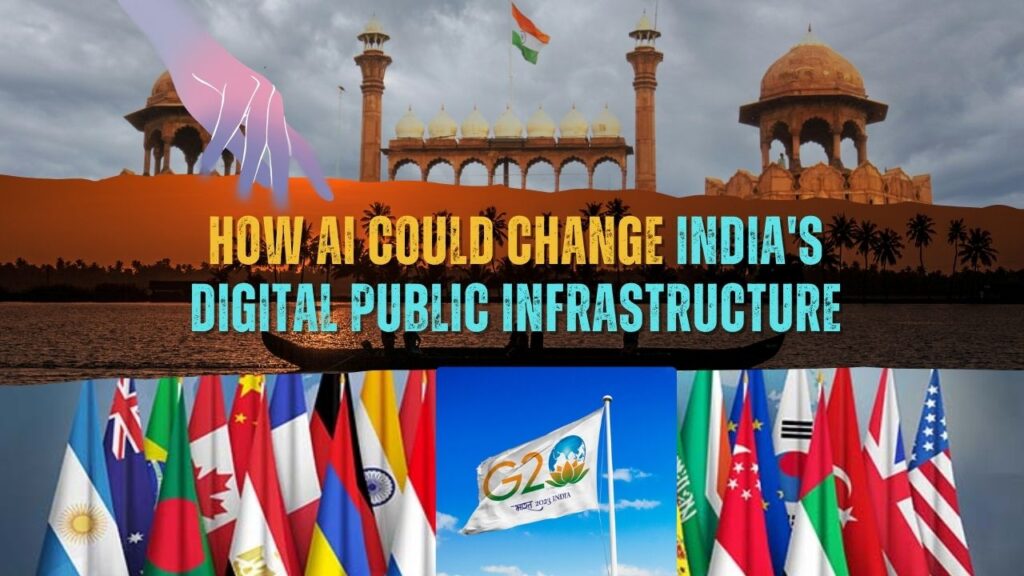
The shift from traditional systems to Digital India raises concerns about public privacy and security, as greater reliance on digital systems can create new opportunities for fraud and scams. Aadhaar is one pillar of what the government now calls India’s Digital Public Infrastructure and how AI could change that DPI for making it faster and more reliable is the biggest evolution.
Every month, close to 20 million people across India get turned away by a fingerprint scanner or a face-authentication camera that’s supposed to hand them a subsidised ration bag, a pension, or a bank withdrawal. That failure rate — a little over 6% of roughly 312 million Aadhaar-based authentications attempted monthly has stayed almost unchanged for a decade, according to UIDAI’s own parliamentary disclosures.
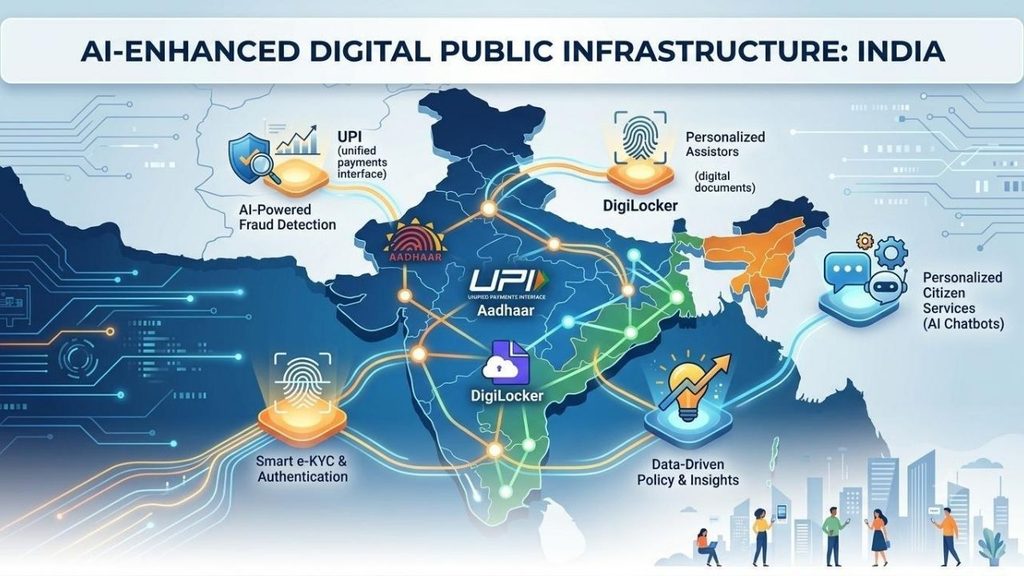
It’s a strange fact to sit with, because DPI includes the stack of identity, payments, and data-sharing rails — Aadhaar, UPI, DigiLocker, Account Aggregator, ONDC — that more than a billion Indians touch, often without realising it. AI is now being wired into nearly every one of those rails. Some of it is already live and working.
What Is India’s Digital Public Infrastructure
Aadhaar is the identity layer — a biometric ID held by nearly every adult in the country. UPI is the payments layer, the real-time system that lets any bank app talk to any other. DigiLocker and Account Aggregator are the document and data-sharing layers, letting people share verified paperwork or consented financial records instead of photocopies.
ONDC is the newest piece, an attempt to do for e-commerce what UPI did for payments: an open network any app can plug into, rather than one company owning the marketplace.
Each of these was built as plumbing — deliberately boring, interoperable infrastructure. AI is the first layer being added on top that isn’t boring at all, and it’s arriving fastest in fraud detection, credit, language, and now shopping.
Fraud Detection at a Scale No Human Team Can Watch
UPI now clears more than 750 million transactions a day, a number NPCI expects to keep climbing toward a billion. At that volume, catching fraud after the money has moved is close to useless — NPCI’s fraud-detection platform processes roughly 2 terabytes of transaction data daily and needs to score risk within about 20 milliseconds, fast enough to block a payment before it settles.
Its MuleHunter AI tool has already flagged more than 4.7 lakh mule accounts — the disposable, borrowed accounts fraud rings use to bounce stolen money through four to six hops before cashing out.
NPCI is now piloting what it calls a “federated model” with three or four banks: instead of pooling everyone’s raw transaction data in one place, banks and NPCI compare AI-generated risk scores on a customer, getting the benefit of shared pattern-matching without centralising anyone’s actual financial history.
NPCI’s leadership has said openly that the next leg of UPI’s growth depends on AI doing three jobs at once — catching fraud, extending credit based on payment history, and onboarding the next half-billion users through voice and regional-language interfaces instead of English-only screens.
Half of India Still Can’t Access Bank Credit
For decades, an MSME owner without three years of clean, bankable paperwork was mostly invisible to formal lenders — not un-creditworthy, just un-scoreable.
The Account Aggregator framework, built on the RBI’s 2016 Master Direction and NITI Aayog’s Data Empowerment and Protection Architecture, changed the plumbing: with a customer’s explicit consent, a lender can now pull real bank statements, GST filings, and insurance records through a single encrypted pipe instead of chasing PDFs.
As of the framework’s fourth anniversary in 2025, 112 financial institutions had gone live on both sides of that pipe, with hundreds more connected as data providers or users. AI models sit on top of that data flow, and lenders report the payoff is real: industry estimates put improvements in default-prediction accuracy at 15 to 25%, and processing times that used to run one to three weeks are increasingly settled same-day.
This isn’t unregulated black-box lending, though — RBI’s digital lending rules require a lender to explain, in terms a risk officer or auditor can actually interrogate, why a model approved or rejected an application, which puts a real ceiling on how opaque these systems are allowed to get.
No More Language Barrier: Treating Language Like Infrastructure
India has more than one language and an AI layer that drops the barrier between languages is Bhashini. In India, MeitY’s National Language Translation Mission became fully AI-powered translation engines and it now sits underneath every government services app from January 2026. Portals like DigiLocker, UMANG, e-Shram running into 22 Indian languages.
A Bhashini-powered voice assistant called Kumbh Sahaiyak used a Llama-based model to field pilgrim questions in 11 languages in real time — arguably the clearest proof yet that a DPI project can meet people in their own language at genuine crowd scale, not just in a pilot deck. If India’s Digital Public Infrastructure’s whole promise was ever about reaching people who can’t fill out an English form, Bhashini is the piece actually doing that, one API call at a time.
The Part AI Might Not Fix: Aadhaar’s Exclusion Problem
The government’s current bet is that AI-driven face authentication — rather than fingerprint or iris scanning, which struggle with a manual labourer’s worn fingerprints or an elderly person’s cataracts — will close that 6.5% failure gap.
It’s already been tested at real scale with UIDAI ran a face-authentication proof of concept at NEET-UG 2025 exam centres with the NTA and NIC, and by 2026 similar AI-camera verification, backed by liveness checks and a fingerprint or manual fallback, was standard at UPSC exam halls. Officials describe the results as promising.
Researchers who’ve actually gone door to door are less convinced: a survey across 32 villages in Jharkhand by economist Jean Drèze and co-authors found exclusion errors running as high as 20% in areas where biometric authentication was required for every ration purchase — and critics note that swapping fingerprints for face scans doesn’t remove the underlying design flaw, which is that a single biometric check, controlled by a ration dealer or bank teller rather than the beneficiary, decides whether someone eats that month.
There’s a second, quieter concern sitting alongside is the more AI systems sit on top of Aadhaar-linked data — UPI payments, SIM registrations, app logins — the easier it becomes to assemble a detailed behavioural profile of someone, usually described publicly as fraud prevention rather than surveillance. Both things can be true at once.
AI-based face authentication may genuinely cut into the 20-million-a-month failure count, and the same infrastructure may quietly expand what the state and private platforms can see about a person’s life. That tension, not a clean technical fix, is the actual story here.
Agents That Could Soon Shop and Transact for You
The newest layer is barely a layer yet. ONDC, India’s government-backed alternative to Amazon and Flipkart, runs on the open-source Beckn protocol, which had onboarded more than 900 network participants across grocery, food delivery, mobility, and financial services by 2026.
FIDE, the nonprofit behind Beckn, has already demonstrated BecknGPT — an experimental agent that lets a ChatGPT-style assistant browse and complete an ONDC purchase on a shopper’s behalf and mainstream apps including Swiggy, BigBasket, and Flipkart have started exposing their catalogues directly to AI shopping assistants.
It’s genuinely early, more demo than daily habit right now. But the direction matters: if UPI proved India could build a public payments rail that private apps compete on top of, ONDC plus AI agents is the government’s bet that the same model can work for commerce itself, without any single platform owning discovery.
Whatever India’s Digital Public Infrastructure domestic wrinkles, India has turned it into one of its more effective diplomatic exports.
During its 2023 G20 presidency, India pushed Digital Public Infrastructure as a global development model, the framework receiving endorsement from 20 member nations. By 2026, the cooperation agreements between India and other 23—24 countries have been signed for helping them build their own version of Aadhaar, UPI, or DigiLocker by sharing open-source blueprints rather than selling a finished product.
UPI itself is already live in eight-plus countries, from the UAE and Singapore to France and Mauritius, and Kenya is reportedly building a national digital-identity stack directly modelled on India’s approach.
Analysts who track this call it the “Aadhaar Paradox”: India is exporting a model with real, unresolved problems at home — the exclusion numbers above, heavy market concentration in UPI apps, ongoing data-protection debates — alongside genuine, population-scale successes that few other countries have managed.
Both halves of that sentence are true, and any AI layer India bolts onto its own DPI will likely travel abroad along with everything else.
What Determines Changing India’s Digital Public Infrastructure With AI Goes Well
A few concrete things to watch over the next year, rather than general optimism about AI transforming governance.
First, whether NPCI’s 30% market-share cap for individual UPI apps — currently set to take effect December 31, 2026 — actually holds this time, since two apps still control more than 80% of transaction volume and AI-driven credit and voice features could widen that gap further or finally give smaller players something to compete on.
Second, whether UIDAI’s AI-based face authentication measurably moves the 6.5% Aadhaar failure rate in its next couple of annual disclosures, or whether as analyzer expect — it just changes which biometric ends up failing people.
None of these are settled yet. Both will tell you, faster than any government press release, whether AI made India’s Digital Public Infrastructure more inclusive, or just faster at doing the same thing to the same people.
AI could make India’s Digital Public Infrastructure faster, more accessible, and better at handling problems that humans simply cannot manage at this scale. From spotting fraud across UPI transactions to helping lenders understand small businesses and breaking language barriers, the benefits are already becoming visible.
But the bigger question isn’t whether AI can make India’s Digital Public Infrastructure more efficient. It’s whether it can make it more inclusive without creating new problems along the way. Aadhaar’s authentication failures, concerns around data profiling, and the risk of AI-powered systems becoming harder to challenge show why speed alone isn’t enough.
India has already built the digital rails. The next phase is about deciding how intelligently, transparently, and fairly AI runs on top of them. The success of that shift will depend not just on better models, but on whether the people using these systems actually have fewer barriers when they need them most.
If you’ve been putting off a new iPhone purchase this month, that instinct is about to pay off. The iPhone 18 Pro launching next month means in September 2026, and unlike last year’s fairly incremental refresh, this generation brings changes that actually alter how the phone behaves day to day — not just how it looks in a colour catalogue.
The iPhone 18 Pro comes up with twelve new features that keep resurfacing across leaks from potential sources, and enough of them line up with each other that the list is worth taking seriously, even months before Apple confirms anything on stage.
When Is the iPhone 18 Pro Launching in India?
Apple has not confirmed an exact date of launch but people are guessing according to the leaks of iPhone 18 Pro that it will launch on September 8 and other sources have cited a September 9 date, with sales starting around September 18. Either way, expect the announcement in the first half of September and phones on shelves roughly a week or two later — India has landed in Apple’s first launch wave for the last several cycles, so there’s no reason to expect a delay this time.
The bigger structural change is that Apple is reportedly splitting its iPhone 18 lineup across two events for the first time. Only the iPhone 18 Pro, iPhone 18 Pro Max, and Apple’s first foldable iPhone are expected this fall. The standard iPhone 18, a budget iPhone 18e, and a second-generation iPhone Air are said to be held back until around March 2027. If that holds, it’s a genuine break from Apple’s usual one-event calendar, not just a rumor footnote.
The iPhone 18 Pro Launching Next Month With New Features: 12 Upgrades Leaks
1. A Smaller Dynamic Island
Apple’s Face ID flood illuminator is rumored to move under the display at the same time, allowing Apple to reduce the size of the pill-shaped cutout at the top of the display for the first time since its introduction.
2. LTPO+ Displays
Screen sizes stay put at 6.3 inches and 6.9 inches, matching the iPhone 17 Pro line. What’s new is LTPO+ panel technology, which is expected to squeeze out extra battery life without changing the physical footprint.
3. Variable Aperture Camera
The 48-megapixel main camera is rumored to gain a variable aperture — a first for iPhone — giving more control over depth of field. Given how small phone camera sensors are compared to a real DSLR, how much this actually improves photos in practice is still an open question.
4. A20 Pro Chip on 2nm
This would be Apple’s first chip fabricated on TSMC’s 2nm node, up from the 3nm A19 Pro. There’s likely to be a huge jump in both performance and power efficiency, even if Apple hasn’t yet released any figures.
5. Third-Generation C2 Modem
Apple’s in-house modem line continues past the C1 and C1X with a new C2 chip, expected to keep pushing speed and efficiency ahead of its predecessors.
6. 5G Connectivity via Satellite
Paired with the C2 modem, the iPhone 18 Pro is rumored to support satellite-based web browsing when there’s no Wi-Fi or cellular signal — useful well beyond emergency SOS messaging.
7. New N2 Wireless Chip
The chip that currently handles Wi-Fi, Bluetooth, and features like AirDrop and Personal Hotspot is due for an upgrade to N2. What specifically improves hasn’t leaked yet.
8. A New Dark Cherry Colourway
Reports consistently point to Dark Cherry replacing Cosmic Orange and Deep Blue as the standout shade, alongside Light Blue, Dark Gray, and Silver.
9. A Simplified Camera Control Button
Apple is expected to strip out touch sensitivity and haptic feedback from the Camera Control button, leaving a purely pressure-sensitive click — a response to complaints that the current button is fussy to use.
10. A Cleaner Rear Finish
The Ceramic Shield area around the MagSafe ring is rumored to move to a single frosted finish, replacing the two-tone look on current Pro models.
11. A Bigger Battery on the Pro Max
Alleged Chinese regulatory filings suggest the iPhone 18 Pro Max’s battery capacity could grow by close to 10% over the iPhone 17 Pro Max — a meaningful jump if it holds up.
12. A Thicker Pro Max Body
That extra battery could come with a price: the iPhone 18 Pro Max seems to be a bit thicker than the standard iPhone 18 Pro and last year’s Pro Max, according to leaks.
iPhone 18 Pro Price in India: What to Expect
Still, no one outside Apple knows the real figure, so consider anything below as a pre-launch estimate and not a quote. Indian retailers trackers like Smartprix, Cashify and LatestLY are now pointing towards a base price of ₹1,39,900 for the 256GB base model of the iPhone 18 Pro — which would be ₹5,000 more than the iPhone 17 Pro started from.
Some tech enthusiasts notes are less optimistic, citing rising costs for the 2nm chip and faster memory, with a few reports floating figures as high as ₹1,43,990 to ₹1,54,900 depending on storage tier and whether you’re looking at the standard Pro or Pro Max. The spread between these numbers is wide enough that none of them should be treated as settled until Apple confirms pricing at the keynote.
Should You Wait for the iPhone 18 Pro?
If you’re still on an iPhone 15 Pro or older, this generation is worth waiting for — the variable aperture camera and the A20 Pro’s efficiency gains are the kind of changes you’d actually notice in daily use, not just on a spec sheet. If you already own an iPhone 17 Pro, none of the 12 rumored changes look big enough on their own to justify an upgrade this cycle — the two most significant jumps, the larger battery and thicker body, apply mainly to the Pro Max.
And if price is what’s holding you back either way, keep an eye on the iPhone 17 Pro once the new lineup launches — Apple typically keeps the outgoing Pro model on sale at a reduced price, and that discount is usually the better deal in late September than paying full price for year-one rumors that haven’t been battle-tested yet.
The iPhone 18 Pro launching next month seems like a worthwhile upgrade in a nutshell, featuring a new A20 Pro chip, variable-aperture camera, smaller Dynamic Island, better connectivity, and bigger Pro Max battery. But keep in mind that all of the 12 features are still leaks until Apple officially unveils the phone.
If you have an older iPhone, then holding out for the September release is a good idea. If you’re already an iPhone 17 Pro owner, there’s probably no need to hurry unless the camera improvements or Pro Max battery life are plenty of temptation.
Your landlord isn’t waiting, the hospital isn’t waiting, and your bank’s personal loan officer just told you to come back “once you have three months of payslips.” That forces you to google for the Best App To Get Instant Loan Without Salary Slip because you need ₹20,000 urgently. Because there is no payslip coming from a freelancer, or small start ups owner.
This is the exact gap that a new generation of lending apps was built to close. Instead of a salary slip, they read your bank statements, your PAN and Aadhaar history, your UPI transaction pattern, and sometimes your GST filings, and turn that into a credit decision in minutes.
However, “no salary slip” doesn’t mean “no scrutiny” and it definitely doesn’t mean every app claiming this is safe to use. Below are the Best App To Get Instant Loan Without Salary Slip, let’s see what they actually cost, and how to tell a legitimate lender from a data-harvesting clone before you hand over your Aadhaar.
Why Salary Slips Stopped Being the Only Option
Banks built their lending rules around one kind of borrower: someone with a fixed monthly salary landing on the same date, from the same employer, verifiable on a letterhead. That description fits a shrinking share of India’s workforce. Freelancers, gig-platform workers, small traders, and contract staff earn real, trackable income — it just doesn’t arrive in payslip form.
Digital lenders solved this by switching the input. Instead of a payslip, they pull 3–12 months of bank statements to see how much money moves through your account and how consistently. Self-employed applicants can usually substitute ITR filings, GST returns, or business account statements.
Some apps go further and factor in your digital footprint — how long you’ve held your phone number, your UPI activity, even your app usage patterns to build a risk score. None of this is charity; it’s just a different, faster underwriting model, and it’s why approval on these apps can take minutes instead of the two-week wait typical of a bank.
Skipping The Salary Slip Doesn’t Mean The Requirement of Documents Ends
Skipping the salary slip doesn’t mean skipping documentation — it just shifts what counts as proof. Across the apps below, the standard ask is a PAN card, Aadhaar for e-KYC, and 3–6 months of bank statements showing regular inflows.
Self-employed applicants typically add one of: ITR filings for the last one or two years, GST returns if registered, or a business current-account statement. A few apps, like Fibe and mPokket, lean more heavily on alternative signals — how long you’ve had your phone number, your UPI transaction frequency, even basic device data — specifically for applicants who have no ITR or GST paperwork to show at all.
None of this is optional paperwork replaced by “trust us” — every legitimate lender still needs some way to estimate whether you can repay, it’s just reading your cash flow instead of your employer’s letterhead.
Best Instant Loan Apps Without a Salary Slip Are Listed
1. KreditBee — Best for Small, Fast Loans With No CIBIL History
KreditBee lends through Krazybee Services, an RBI-registered NBFC, and is built for speed on smaller ticket sizes. Loan amounts run from about ₹5,000 up to ₹10 lakh, with tenures between 3 and 60 months.
Interest rates officially start at 12% p.a., but that floor is reserved for the strongest profiles — most first-time or thin-file borrowers land closer to 24–29.95% p.a., and self-employed applicants specifically are often quoted in the 16–29.95% range.
Processing fees can run up to roughly 4–5% of the loan amount, deducted upfront from disbursal. The minimum income requirement is just ₹10,000 a month, and a CIBIL score isn’t mandatory.
Best for: someone who needs ₹10,000–₹50,000 fast and doesn’t have a credit history yet — not for large-ticket borrowing, since the cost climbs fast at that end.
2. Navi — Best for Lower Rates and Larger Loan Amounts
Navi, backed by Navi Finserv, is an app to check if your credit score is solid and you need more money for longer. Loan amounts stretch from around ₹10,000 to ₹20 lakh (some listings show up to ₹10 lakh depending on the product), with tenures up to 84 months.
Rates start near 9.9–9.99% p.a. for borrowers with a CIBIL score of 700+, but can rise to 29–45% p.a. for weaker profiles — a wider spread than most competitors, so the advertised low rate isn’t guaranteed.
Processing fees range from 0% to about 4% plus GST. Both salaried and self-employed applicants are eligible with a minimum score of roughly 650.
Best for: self-employed borrowers with a decent credit file who want a bigger loan without a bank’s paperwork.
3. Fibe (formerly EarlySalary) — Best for Speed
Fibe is an RBI-registered NBFC-P2P platform (license N-13.02139) built around a two-minute approval promise, using an AI model that scans over 100 data points instead of a payslip. Loan amounts go up to ₹5 lakh, rates start at 12% p.a., and it’s known for letting borrowers with no CIBIL score qualify by leaning on digital and social-footprint signals instead. It’s particularly active in Tier-2 and Tier-3 cities where bank branches and traditional documentation checks are less accessible.
Best for: first-time borrowers who need money today and can accept a higher rate in exchange for near-instant disbursal.
4. PaySense — Best for Consistent Self-Employed Income
PaySense, run on PayU Finance India’s lending infrastructure, uses risk-based pricing rather than one flat rate, so two applicants for the same amount can get different offers. Published eligibility asks for a minimum monthly income of ₹18,000 for salaried applicants and ₹20,000 for self-employed ones, with interest rates typically quoted between 14% and 36% p.a. depending on profile. It accepts a low or even zero CIBIL score, which makes it accessible, but that flexibility shows up in the rate you’re offered.
PaySense is the Best App To Get Instant Loan Without Salary Slip for self-employed borrowers with steady, provable cash flow who don’t yet have a strong credit file.
5. MoneyView — Best for Tier-2/Tier-3 Self-Employed Borrowers
MoneyView is frequently the first recommendation for salaried applicants outside metro cities and for self-employed or gig workers who want minimal paperwork. It’s positioned between the small-ticket apps and the larger NBFC lenders, with loan amounts up to around ₹10 lakh and rates generally in the low-to-mid double digits for stronger profiles, rising for thinner files — broadly comparable to KreditBee’s range, though it’s often described as steadier on collection practices in user reviews.
Best for: borrowers outside major metros who want a mid-sized loan without a Tier-1-city credit profile.
6. mPokket — Best for Students and Thin-File Gig Workers
mPokket is built specifically for people the traditional system ignores entirely — students and gig workers with little or no credit history. Loan sizes are smaller than the others on this list, aimed at short-term, small-amount needs like covering a bill or a temporary cash gap rather than a big-ticket expense. It shouldn’t be treated as a recurring source of funds — the sizes and terms make it best suited to occasional, short-duration borrowing.
Best for: students or new-to-credit gig workers who need a small amount and have nowhere else to turn.
How To Get an Instant Personal Loan Through Paytm, PhonePe, GPay, and Bhim
The same apps you use to split a dinner bill or pay your electricity bill can also get you a loan — often within minutes. Here’s how each one actually works:
Paytm
Open the Paytm app, head to the “Loans & Credit Cards” section, and tap “Personal Loan.” Paytm lets you apply anytime for an instant loan online in about two minutes, with a fully digital process and loan amounts ranging from ₹5,000 to ₹15 lakh, flexible tenure, and the option to foreclose anytime.
Paytm doesn’t lend the money itself — it partners with RBI-regulated NBFCs and banks who actually underwrite and disburse the loan. You’ll go through PAN and Aadhaar-based KYC either way.
PhonePe
Same idea, different app. PhonePe doesn’t hand out loans directly — it has partnered with various banks and NBFCs to offer instant loans, so you can apply without ever leaving the app. Loan amounts go up to ₹5 lakh, repayable over tenures of up to 60 months, at rates starting around 13% per annum, with the approved amount transferred straight to your bank account. Most lenders here look for a stable income and a credit score around 650 or higher.
Google Pay
Google Pay follows the same partner-lending model as Paytm and PhonePe — it doesn’t lend directly but connects you to its NBFC and bank partners for a pre-approved or application-based personal loan inside the app, with KYC handled digitally via Aadhaar and PAN.
BHIM
This one surprises people, since BHIM is best known as NPCI’s bare-bones UPI app. But it’s expanded: BHIM now lets you explore a personal loan without leaving the app, again through its network of lending partners rather than lending in-house.
How to Check an App Isn’t a Scam Before You Apply
RBI does not license individual apps — it regulates the bank or NBFC behind them. That distinction is the entire safety check:
Find the named NBFC or bank. A legitimate app discloses its lending partner clearly in the app, on the Play Store listing, or in the loan agreement. If you can’t find a specific company name, stop.
Verify that name on rbi.org.in or the RBI’s Digital Lending Apps directory before you submit any documents.
Never pay upfront. Processing fees, “insurance,” or “security deposits” requested before disbursal are the single most common fraud pattern. Legitimate lenders deduct fees from the loan amount after approval, not before.
Check what permissions it wants. A real KYC process needs your camera for a selfie and basic identity/banking access — not your full contact list, photo gallery, SMS logs, or call history. Apps that demand those are usually building leverage for harassment-based recovery later, not assessing creditworthiness.
Look for a Key Fact Statement (KFS). RBI’s digital lending rules require one before disbursal, listing the all-in APR, not just a headline interest rate. A “1% per month” rate can look harmless until the APR reveals fees stacked on top.
Confirm a named grievance officer with a phone number and email — not just a generic contact form.
If two or more of these are missing, treat the app as a red flag regardless of its Play Store rating, which is not proof of regulatory legitimacy. Because the best app to get instant loan doesn’t mean every app is trustworthy.
Advertising Rate Is Always Different From Actual Amount You Receive in Your Account
Headline interest rates on these apps are quoted per annum, but the real cost shows up in the APR, once processing fees and GST on those fees are added in. A concrete example: on a KreditBee loan disbursed at roughly ₹1 lakh, one published breakdown shows a ₹4,000 processing fee (4%), ₹720 GST on that fee, and ₹10 in documentation charges — pushing the effective APR to 29.66%, even though the headline rate for that borrower’s tier read lower.
The amount that actually lands in the bank account was around ₹95,270, not the full ₹1 lakh. This is exactly what the Key Fact Statement is meant to expose, and it’s why comparing apps on their advertised “starting from” rate alone is close to useless — always ask for the APR and the net disbursal amount before accepting an offer, not just the interest rate.
Which App Should You Consider For Instant Personal Loan?
If you’re a gig worker or freelancer with no credit history and need a small amount fast, start with KreditBee or Fibe.
If you’re self-employed with steady bank statements and want a lower rate on a bigger amount, check Navi or MoneyView first and let your CIBIL score decide between them.
If you’re a student or new to credit entirely, mPokket is built for exactly that gap, but treat it as a short-term bridge, not a repeat solution.
Conclusion
Whichever Best App To Get Instant Loan Without Salary Slip you land on, run it through the RBI-verification checklist above before you type in your PAN — that two-minute check is what separates a fair loan from a very expensive mistake.
The absence of a salary slip requirement is a documentation shortcut, not a signal that the loan is free of risk. A ₹20,000 loan at 28% p.a. with a 4% upfront fee still needs to be repaid on schedule, and missed EMIs on these apps report to CIBIL just like a bank loan would.
Borrow the amount you need for the problem in front of you, not the maximum the app is willing to approve — the higher your sanctioned limit looks, the more tempting it is to take more than the situation actually calls for.
Note: Rates, loan limits, and fees above reflect published figures as of mid-2026 and change frequently based on lender policy and individual credit profile — confirm current terms in-app before applying.