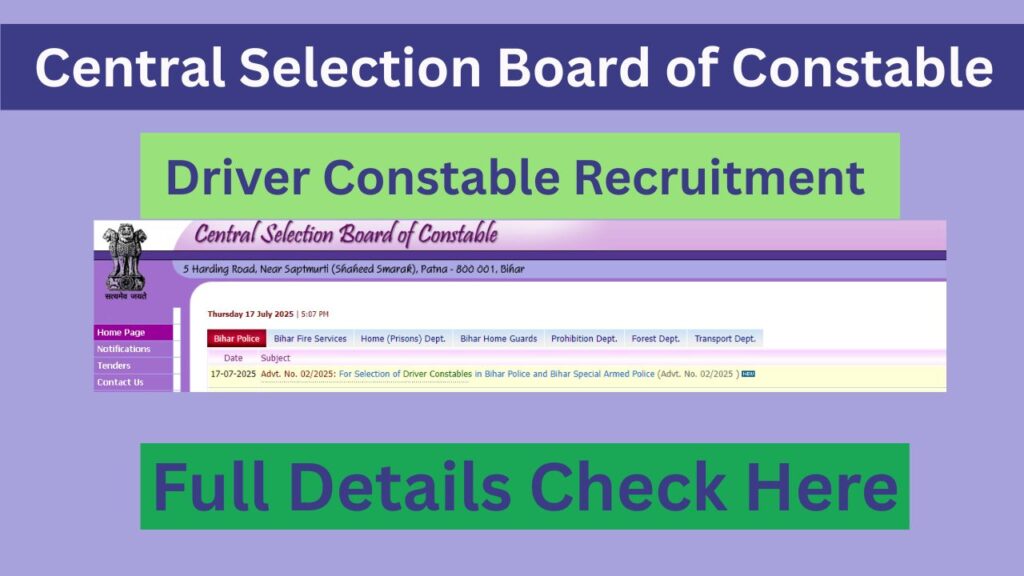
CSBC has officially announced the Driver Constable Recruitment 2025. Candidates who are waiting for this position can download the notification to check the full details of the recruitment. Always check updates on the official website to fill out the application.
Check the eligibility criteria before applying for this post. The initial pay of Driver Constable is around Rs. 30,000 to Rs. 40,100 per month including allowances as per Pay Level 3.
CSBC Driver Constable Recruitment 2025 – Short Details
Eligibility For CSBC Driver Constable Recruitment 2025
Qualification
Candidates have to pass 12th in any stream to be eligible for this position. If they have an equivalent education, they can also apply. Candidates must vary the educational qualification and age limit to meet the standard for eligibility criteria.
Age Limit
Minimum Age
20 years for all categories
Maximum Age
General–Male: 25 years OBC/EBC–Male: 27 years General/OBC/EBC–Female: 28 years SC/ST–both: 30 years
Necessary Documents for CSBC Driver Constable Recruitment 2025
Passport Size Photo
Signature
Educational certificate (marksheet)
Adhaar or PAN card
Income Certificate
Caste Certificate
Other certifications if you belong to special categories
LLB students should prepare themselves for MPPSC ADPO Recruitment 2026 because the notification was dropped by the Madhya Pradesh Public Service Commission. It’s already revised the vacancy count once and reopened the application window. Those students who missed the chance before can now apply and don’t miss the second chance. The application window will close soon.
Check all the details here before applying and be prepared for the exam.
MPPSC ADPO 2026 Notification
The original notification for the Assistant District Public Prosecution Officer post was published on 10 March 2026, and the online applications were available from 9 April 2026 to 8 May 2026. By then the number of vacancies was fixed at mere 17 posts.
Then, on 6 July 2026, MPPSC did something candidates should pay close attention to: it revised the vacancy count upward — dramatically to 107 posts, and reopened the application form from 10 July to 24 July 2026. So if you haven’t submitted your form yet, this is not a “check it out next week” situation.
In case you missed the deadline, you can submit an extra ₹3,000 late fee for submissions between 25–31 July 2026. So don’t lose it because if you lose and then after that, a steeper ₹25,000 late fee applies from 1 August through 23 September 2026. That second window is punishing but it exists only for those who are stuck in any situation.
The admit card will be released before the written exam which is scheduled for 18 October 2026.
Category
Application Fee
General / Other State Candidates
₹500
EWS / OBC / SC / ST / PwD (PH)
₹250
Late Fee (09–15 May 2026)
₹3,000
Late Fee (16 May–23 Sep 2026)
₹25,000
Correction Fee (if applicable)
₹50
One thing worth flagging honestly: several sources still describe the current vacancy revision and application reopening as based on limited official detail, with full notification specifics like sectional exam pattern and fee breakup expected to be confirmed alongside the final notification PDF. If you’re relying on this article weeks from now, cross-check the numbers against the notification hosted at mppsc.mp.gov.in before you finalize anything — MPPSC has already shown once this cycle that it will revise figures mid-process.
Eligibility: Who Can Actually Apply
The qualification bar is straightforward on paper but worth reading carefully.
You need a Bachelor’s Degree in Law (LLB) from a recognized university. That’s the baseline. Beyond that, candidates with a First Division in Law, or two or more years of completed legal practice, or a higher legal qualification, will be given preference at the final selection stage — so it’s not just a qualifying criterion, it can actually move your rank.
Age limits: students who are above 21 and below 40 years can apply, calculated as on 1 January 2027. Relaxation is given only to reserved category candidates under MP government rules; you can check the exact limit on official notification of MPPSC ADPO recruitment 2026 rather than believing in the previous cycle.
Category
Maximum Age Limit (years)
Relaxation (years)
General (Unreserved)
40
–
SC / ST / OBC (MP domicile)
45
+5
Women (MP domicile)
45
+5
Government Servants (MP)
45
+5
PwD (Persons with Disabilities)
As per govt rules
As per govt rules
Ex‑Servicemen
40 + service period + 3 years*
Service + 3 years
On domicile: reserved category vacancies (SC/ST/OBC/EWS/Women/Divyang) are applicable only to Madhya Pradesh domicile candidates, while out-of-state candidates will be considered only for unreserved posts. This matters if you’re a law graduate from outside MP hoping to use a reservation category — you can’t, for this recruitment.
Selection runs in two stages: a Computer-Based Test (CBT), followed by an Interview. The CBT is an objective exam testing general awareness and legal knowledge, and Part A of the paper has 50 questions worth 150 marks, weighted heavily toward Madhya Pradesh’s history, geography, politics, and economy. The law component forms the second part of the written test, though the exact question count and marks split for the law section hasn’t been confirmed in what I could find — don’t assume it mirrors GK proportionally without checking the syllabus PDF.
Salary: expect Pay Matrix Level 10, with basic pay ranging roughly from ₹56,100 to ₹1,77,500 per month, plus DA, HRA, and other standard allowances under MPPSC service rules. One older source lists an outdated pay-scale figure (₹9,300–34,800 grade pay), which reflects the pre-revised pay commission structure — go with the Pay Matrix figures, since those reflect the current system.
Important Update for This Year on MPPSC ADPO Recruitment 2026
Two things separate the MPPSC ADPO recruitment 2026 cycle from a routine annual notification.
First, the six-fold vacancy jump — from 17 to 107 — inside four months is unusual and suggests MPPSC recalibrated its Home Department requirement estimates mid-cycle, possibly to align with actual prosecutor shortages across MP’s districts.
Second, the syllabusfor this cycle is explicitly built around India’s new criminal codes: BNS, BNSS, and BSA now form the core of prosecution work, alongside Constitutional Law and MP-specific special legislation.
If you were preparing off IPC/CrPC/Evidence Act notes from a 2023 or earlier cycle, that material is now legacy reference at best because the exam is built on the replacement codes.
Don’t split your remaining prep time evenly across GK and Law.
With Part A alone carrying 150 marks concentrated on Madhya Pradesh-specific history, geography, and current affairs, and the law section demanding fluency in three brand-new codesmost law schools only started teaching seriously in the last two years, your highest-leverage move between now and October is building a tight comparison chart mapping old IPC/CrPC sections to their BNS/BNSS equivalents.
Coaching platforms like Drishti Judiciary have already publishedBNS-BNSS-BSA comparative material — use that as your spine rather than trying to reconstruct it from bare acts alone.
Conclusion
If you’re eligible and haven’t applied for MPPSC ADPO Recruitment 2026, today (24 July 2026) is your last day before late fees kick in. If you’ve already applied, your next concrete date is 8 October for the admit card and 18 October for the exam — everything in between is prep time, and the BNS/BNSS/BSA transition is where marks will actually be won or lost this cycle.
Keep the official MPPSC portal bookmarked; given how this notification has already changed once, treat every number here as current-as-of-today rather than fixed until the exam.
There are several Best MTech Colleges in India without Gate, you can take admission with other entrance exams and personal interviews. Some top colleges of India for MTech are IITs, NITs, Anna University, Delhi University, Banaras University, and some private universities such as BITS Pilani, VIT, SRM, and Jamia Millia Islamia. Let’s explore the best colleges in India which can offer you an MTech degree.
You don’t have to go through the GATE exam but still you need to score in their respective entrance exam. Some private institutes like VIT and SRM can offer MTech on merit. These colleges not just provide degrees but also offer placement opportunities to their students.
Best M Tech Colleges in India Without GATE
IIT Delhi
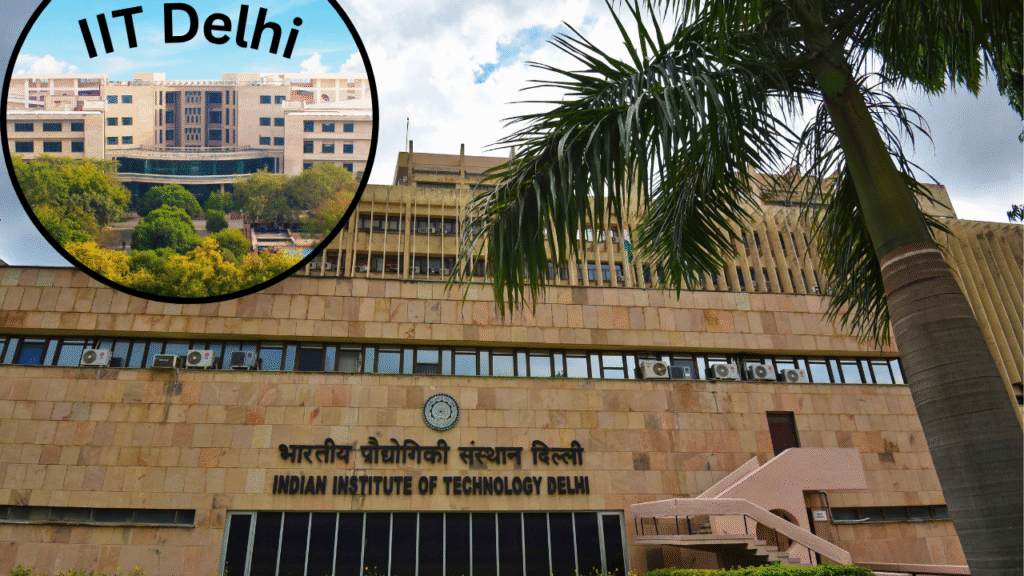
IIT Delhioffers admission through GATE but some seats are vacant for the industry-sponsored candidates for MTech. It also offers a part-time MTech program for working professionals. You may have to clear their own entrance exam to get admission. Your graduation CGPA also matters as a part of the admission process.
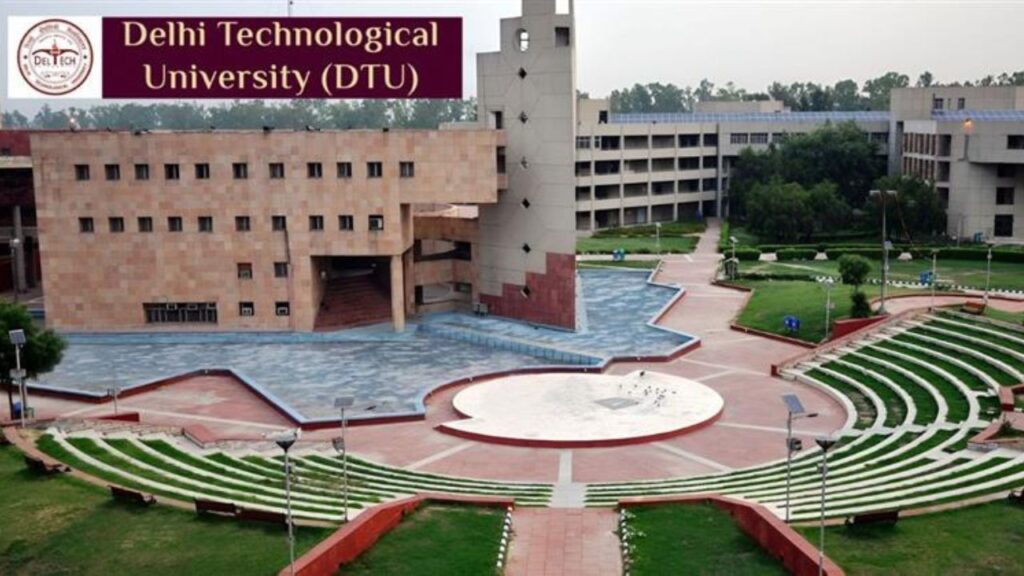
If you are searching for the best college for MTech program in Delhi then this is one of the best in engineering where you can get quality education and placement opportunities. If candidates do not have GATE scores then they must pass the entrance test for the admission. DTU approves candidates with above 60% marks in their Bachelor’s degree.
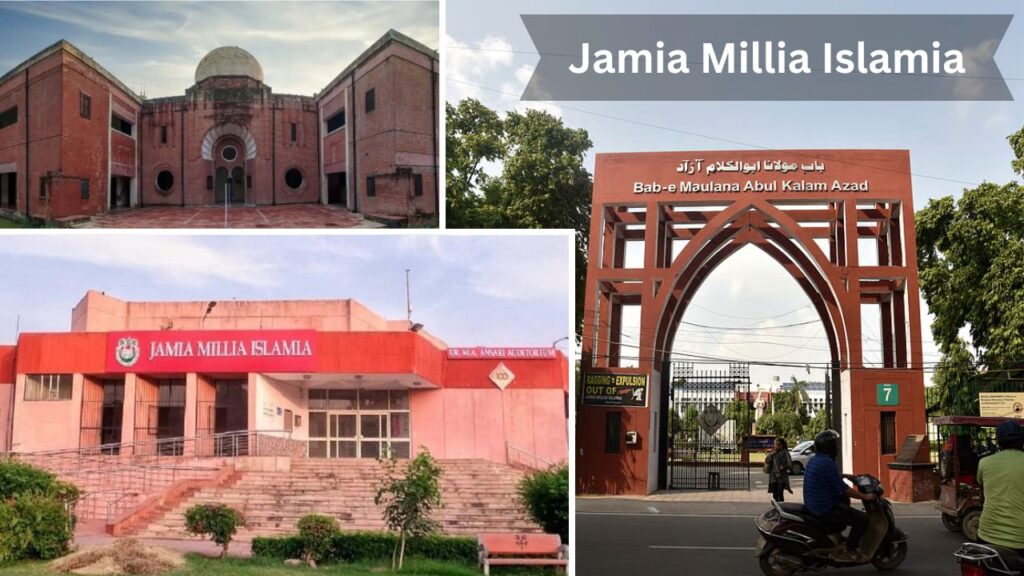
Jamia Milliam Islamiais one of the oldest universities that offers various programs. MTech from this college will be worth your career opportunities. Admission is conducted via GATE but it also offers MTech through their own entrance exam.
Fee (Approx.)
₹18,350–₹56,590
MTech Specialization
Computer Engineering, Env. Science & Engineering, ECE, Mechanical, Nanotechnology, Power Systems, Control Systems, Data Processing, Thermal Engineering, Energy Science, Production & Industrial, Earthquake Engg.
Average to Highest Placement
₹5–₹22 LPA
Aligarh Muslim University
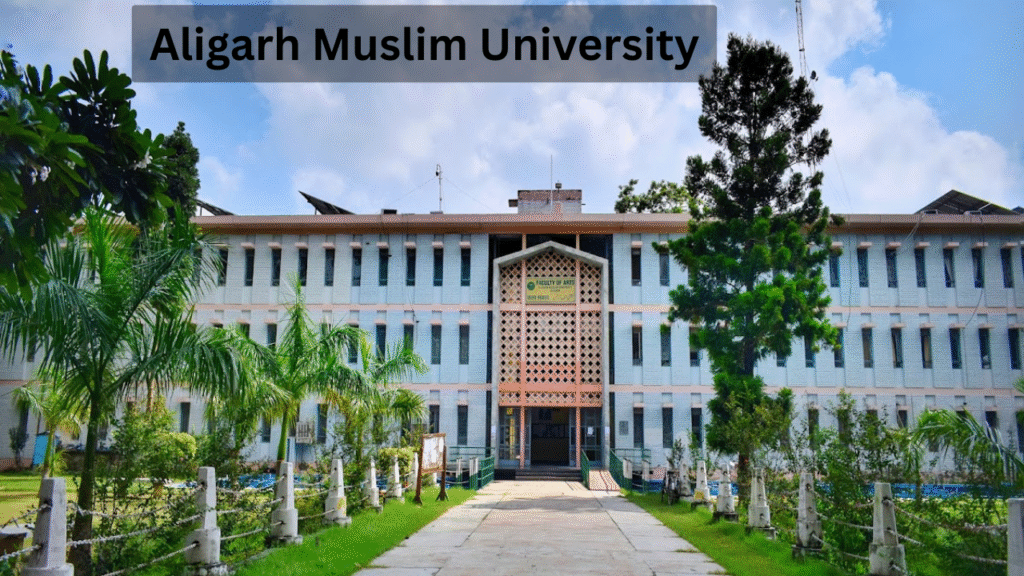
MTech offers vast opportunities to the AMU students with good placement opportunities. That’s not it, AMU offers a professional program on a low budget so every student can get equal opportunity for higher education. The admission is done through GATE or their own entrance exam. You can take that entrance exam and secure your seat in MTech.
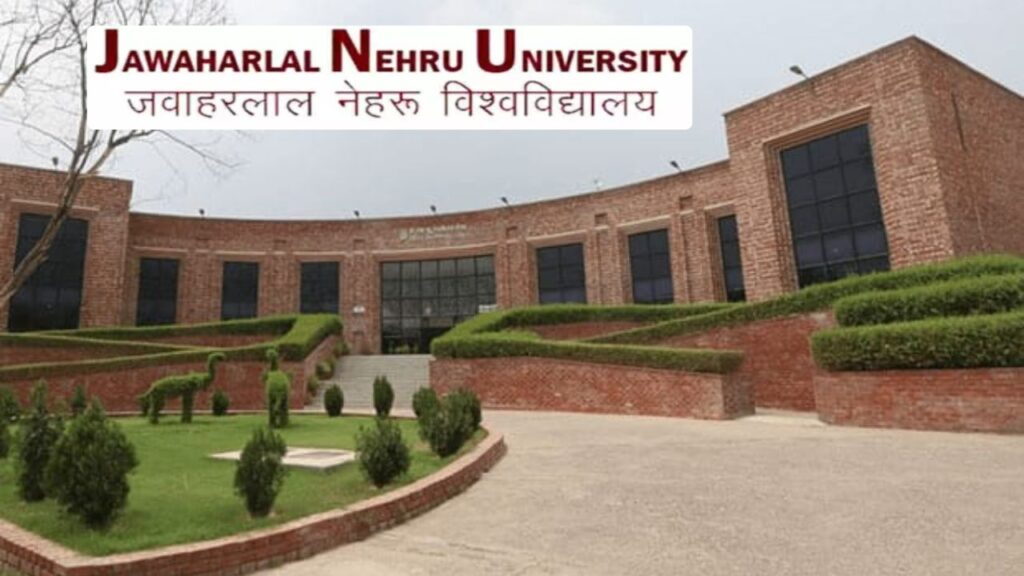
JNU offers MTech at lower price, students can easily pursue their higher education but they must have cleared the JNU entrance exam for the admission. Candidates must score 55% above in graduation.
Fee (Approx.) for MTech in other field
₹1.28 Lakhs for entire course
Fee (Approx.) for MTech in CS
₹385 per year
MTech Specialization
Computer Science & Technology is a key specialization available at JNU. Other specializations are limited as JNU primarily focuses on niche areas.
Average to Highest Placement
₹11 to ₹33 LPA
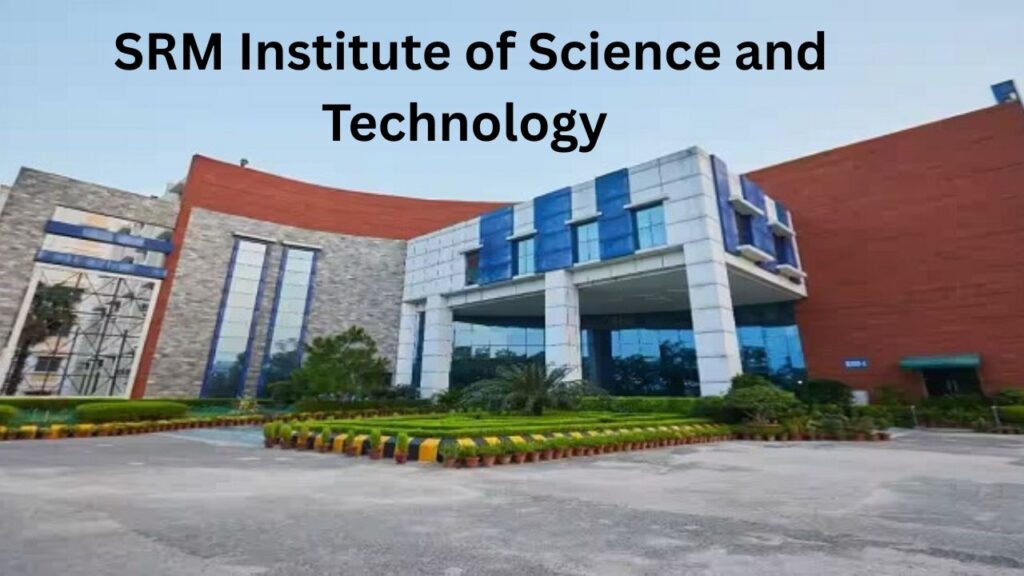
SRM Institute of Science and Technology
This is a private institute which offers MTech in Computer Science, Electronics, and many more. A degree is valuable if you want a good position in the industry, many companies hiring students from this college with a good package. The admission is done through SRMJEEE PG entrance exam other than GATE.
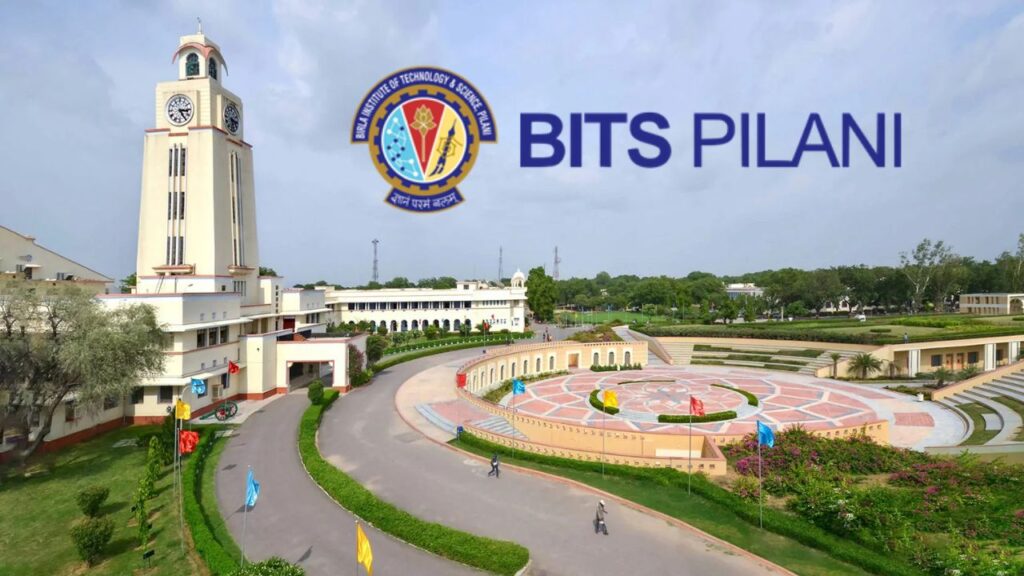
BITS Pilani: This is one of the best colleges for MTech programs, you can get admission through your GATE score or BITS HD Test. If you hold a bachelor’s degree with above 60% score in engineering then you are eligible for this program.
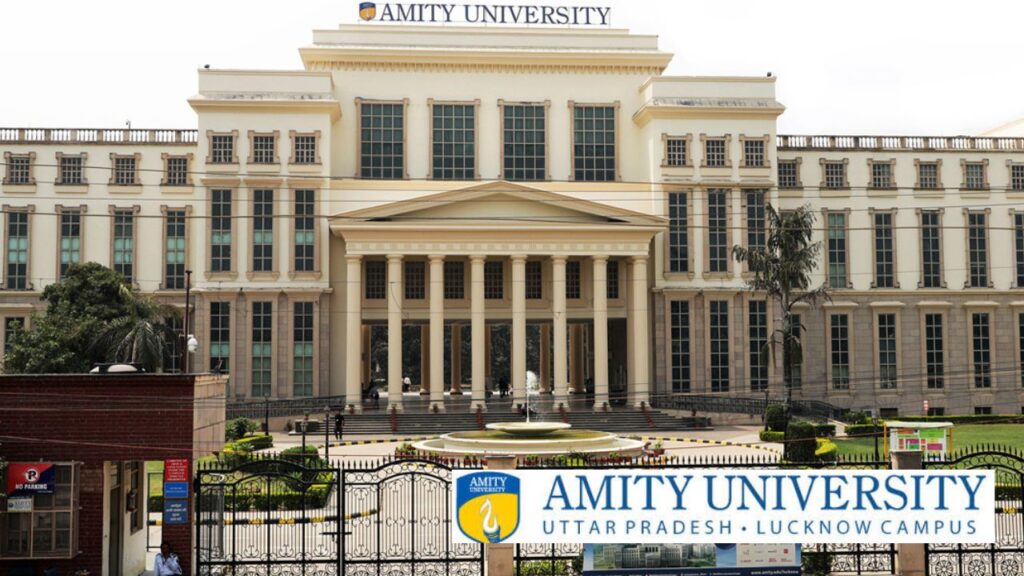
Amity is also a private university and offers a good education to the MTech students. Students can get admission through other entrance exams and it depends on your graduation marks. The campus is a good and well-oriented research facility for students.
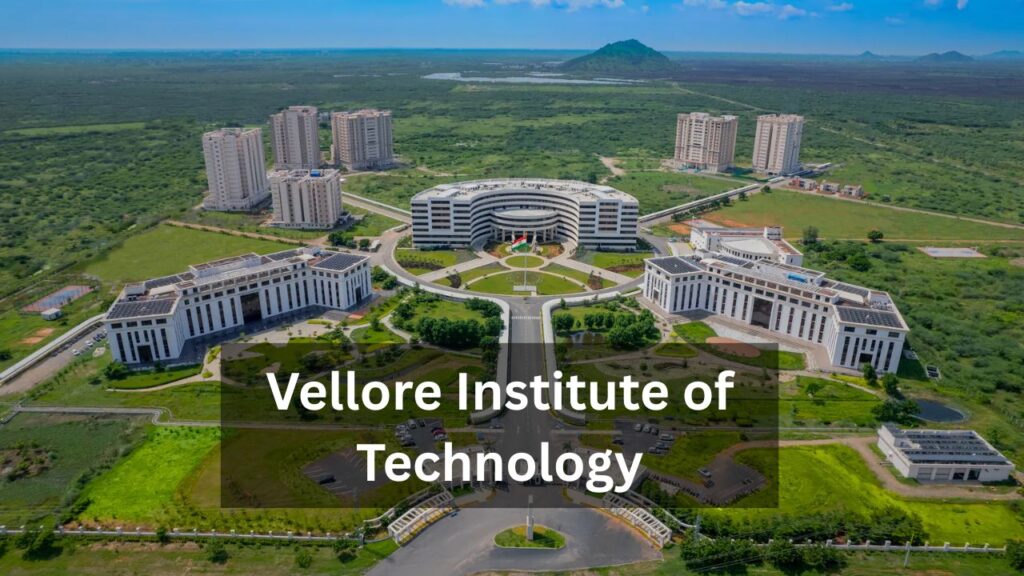
VIT also takes industry-sponsored students and its highly advanced courses are in demand for the industries. An MTech from VIT is worth your career growth and high salary. The admission is done through their own entrance exam.
Fee (Approx.)
₹3.85 Lakh for 2 years
MTech Specialization
Mechanical, Computer Science, Civil, Electronics, Advanced IT programs
Average to Highest Placement
₹9 to ₹60 LPA
Conclusion
There are Best MTech Colleges in India without GATE which can open doors to the best opportunities in the top companies. They offer a good salary package because the colleges have provided quality education and industry exposure through their assessments that make them smart and adaptive in industry work.
Whether you choose Government or private college for admission in MTech. Kindly check their exam fees and admission dates on their official websites. The fee and placement packages we mentioned here are based on approximate data. You must check on their official procedures before applying.
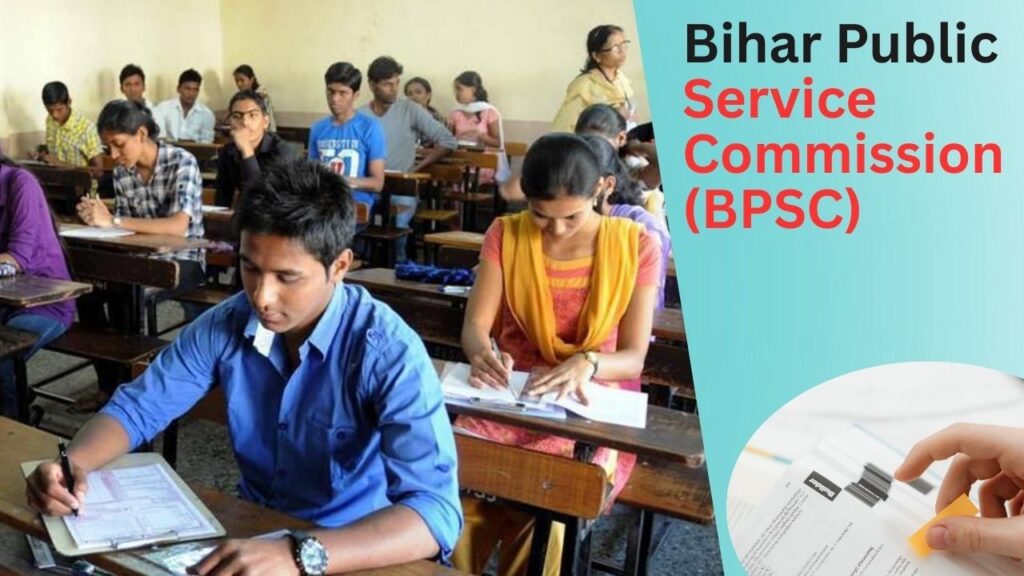
If you are among those dreaming for a Bihar government job then you must have heard about BPSC exams. Perhaps you observed some of your friends studying thick books or maybe you stumbled across those BPSC Toppers interviews that suddenly fill your YouTube recommendations list. You have to know that Bihar Public Service Commission will offer a great opportunity for various posts such as DSP, BDO, SDM and others.
So, let’s crack the details of Bihar Public Service Commission including Full Form, Exam, and Selection Process.
What is BPSC?
Bihar Public Service Commission is a government organization in short BPSC. It’s essentially the gatekeeper to some of the best government jobs in Bihar. It was established in 1956 and functions as a constitutional body to select the eligible and suitable candidates for multiple state civil services and administrative positions.
The BPSC mostly refers to the BPSC Combined Competitive Examination, popularly known as BPSC CCE. This is the top exam for jobs like Sub-Divisional Magistrate (SDM), Deputy Superintendent of Police (DSP), Block Development Officer (BDO), and other posts under Class I and II officers. If you want to be the guy who actually runs district administrations, implements policies on the ground, or maintains law and order, this is your path in.
The BPSC 2026 Exam
So, If you are going to participate in BPSC 2026 examination then this is for your information: Bihar Public Service Commission is a bit predictable when you compare it with some other state PSC. But “predictable” is not easy. It means you can plan better.
The BPSC CCE 2026 is expected to be conducted in a three-phase examination process established as the standard:
Stage One: The Preliminary Examination
This is your screening test. It’s a single paper objective type 150 marks. The syllabus includes General Studies (History with special emphasis on Bihar, Geography, Polity, Economy, Current Affairs and General Science).
Here’s the thing about BPSC Prelims: it’s qualifying in nature. Your marks here don’t count for the final merit list, but you have to clear this hurdle to move on. Bihar Public Service Commission cut-off changes every year according to number of vacancies and difficulty level but in general 105-115 out of 150 would keep you in safe zone.
Stage Two: The Main Examination
Here is where the real contest takes place. BPSC Mains is quite straightforward in comparison to UPSC Mains which has nine papers:
General Hindi (Qualifying, 100 marks)
General Studies Paper I (300 Marks)
General Studies Paper II (300 Marks)
Optional Subject Paper I (300 marks)
Optional Subject Paper II (300 marks)
The General Studies is all pervasive: History, Geography, Indian Polity, Economy, Science & Technology and Current Events. But here’s a crucial tip: Bihar specific knowledge is given a lot of importance. The panel loves to quiz you on Bihar’s freedom struggle movements, its rivers and geography, state policies, and recent development schemes.
Fifth subject (Optional Subject) is the one You can capitalize in your favor. Options include History, Geography, Political Science and Economics as well as Agriculture, Botany and Mathematics. Choose carefully—this is a topic you really like, because you will be writing two detailed papers on it.
Stage Three: The Personality Test (Interview)
If you clear Mains, you will have to attend an interview for 120 marks. It’s not just a personality check; the panel also wants to gauge your administrative skills, knowledge of the socio-economic problems of Bihar and whether you’re capable of thinking on your feet.
They may question you on a particular law and order issue in a district, your opinion of the education system in Bihar, or even the reason why you want to enter the civil services to begin with.
Eligibility For the Bihar Public Service Commission
Age Limit
Category
Minimum Age
Maximum Age
General
20 years
37 years
OBC
20 years
40 years
SC/ST
20 years
42 years
Qualification for Bihar Public Service Commission
Any graduation degree will work including BA, BSc, BCom, B.Tech, MBBS, etc. The commission does not differentiate for your graduation stream. Anyone who has completed their graduation is eligible to apply a graduate in history has the same eligibility as an engineering graduate.
Physical Requirements
Posts such as DSP (Police) have physical requirements for height, chest measurements, as well as vision norms. These are not applicable for administrative posts like SDM, however.
Place of residence
Although the BPSC is a state commission, there is a catch. Some posts are filled on the basis of Indian domicile candidates while others are open for all Indian citizens. It will be mentioned in the notification very explicitly, so go through it carefully.
Selection Process
Here is a bit of information that most aspirants do not get to know instantly: Clearing each stage of the BPSC examination is not the purpose. It’s just a matter of how high you get your ranking to achieve your preferred post.
After the Interview, your final merit list is prepared in the BPSC on the basis of your Mains marks (out of 800) + Interview marks (out of 120) – altogether 920 marks. It is of no consideration here, the Prelims score. Based on this merit list, seats are allotted and candidates have to opt for their preferred cadre (SDM, DSP, BDO etc.) as per their ranking and category reservation.
Preparing for BPSC 2026 is not a piece of cake but with a smart approach and genuine zeal to join in Bihar administration, everything is achievable. Understand the syllabus completely, read Bihar paper religiously, practice answer writing from day one for Mains & Current Affairs.
Keep in mind that Bihar Public Service Commission exam is taken by thousands every year but only a few become. It’s not intelligence that differentiates most of us – it’s consistency, the right guidance, and not giving up when the syllabus seems unmanageable.
Your path to becoming a Bihar civil servant begins with a single step: knowing what you’re getting into. Now that you do, the real prep starts.
In today’s world, students must choose their field in which they have interest. Whether you choose BTech vs BSc vs BA in 2025, the future scope is consistently growing, if you follow the right direction. The right direction means if you are interested in teaching then BSc and BA is a good option but if you want to grow in the tech industry then BTech is the right option for you. Focus and the right college is also a matter to build your established career.
Graduation is the first step in your career so take it wisely. The primary focus of BTech is Engineering & Technology. While BSc opens a path for you in science and research areas. BA is leading you towards further education to get a specialization in any specific subject. Students who are preparing for government exams can also pursue BA after 12th but many posts require other degrees. Before taking any action, you must check eligibility carefully for your future scope.
Tips To Choose the Field for Graduation
Remember your passion, what you want to become in future? By acknowledging these questions, you can find the answer within yourself and then check the path to reach there. Once you know where to go, you will not get confused about your education. BA and BSc are easy courses, meanwhile BTech is hard, so if you want to become an engineer then you must pursue a BTech degree.
If you want to become a Teacher, Journalist, Social Worker, HR, or Government Employee then BA is the best option for you. You can pursue other Technical courses and Specializations after BA. If you are interested in Teaching Science, Research, Nursing, or Higher Degrees, you can pursue a BSc.
Comparison of BTech vs BSc vs BA
BTech (Bachelor of Technology), BSc (Bachelor of Science), and BA (Bachelor of Art) are highly demanding careers which offer a wider range of opportunities to the students. Their comparison is primarily focused on the career scope, course duration, course fees, eligibility and course curriculum.
Course Content of BTech vs BSc vs BA
BTechis a professional degree to deliver hands-on learning for engineering and technology. To advance technology with innovative minds is the motive of the industries. Colleges maintain their curriculum of BTech with application-based skills to get their students industry ready. It covers technical and applied aspects of specific engineering disciplines such as Mechanical, Civil, Computer Science, Chemical, Electrical, and Information Technology.
BSc is a graduation degree with more theoretical education in pure science like Physics, Chemistry, Zoology, Botany, Computer Science, IT, Statistics, Economic, Aeronautics, etc. It offers core concepts on the theories of science & technologies which get you focused on more research methodologies and theoretical understanding.
BAis involved in more Literature, History, Economics, Psychology, Sociology, Political Science, Geography, Journalism, Public Administration, and Social Work. It focuses on more theoretical concepts, creative writing and analytical skills, that is why it is perfect for those who want to become a professor in any of the subjects.
BTech is entirely four years with one year internship.
Standard BSc is a three year course which can be extended in specific programs such as Integrated program or BSc Honors.
BA standard degree is a total of three years course but BA honors is extended for four years.
Eligibility for BTech, BSc, BA Courses
BTech & BSc graduation requires a 10+2 marksheet with science subjects including Physics, Chemistry, Biology & Mathematics. Admission in BSc can be done through an entrance test or direct admission. During BTech admission, you may have to clear JEE Mains/ Advanced which is hard to score well.
Students can take admission in BA after completing their 10+2 in any stream. It is not necessarily important to come from a science or commerce background. Students from arts, commerce, or science are eligible for BA.
Best Future Scope for BTech vs BSc vs BA
BTech Graduates are developing skills in engineering roles in departments of IT, Manufacturing, Chemical, Electrical, Production, Civil, Biomedical. After BTech, students can get a high salary in engineering roles from the top companies like Tata, IBM, Amazon, TCS, Infosys, Cisco, Godrej, and Siemens.
BSc Graduates are offering students a diverse range of opportunities to become job ready but for a higher scope, you should consider a master’s degree after BSc. There are some other specializations in technical courses, data science, and machine learning that can be helpful for getting a job in tech industries. You can also pursue higher education in pure science to become a lecturer or professor.
BA degree is offering many opportunities in further education for research, teaching, nursing, and creative arts & writing. Students can take a BA degree to establish a career in any specific field of subject. It offers many opportunities in the departments like HR, Media & Journalism, Social Work, Event Management, Hotel Management, Content Writer, Digital Marketing, Business Analyst, and Government Sector. Some of these require a diploma or certificate course for applying to the particular role.
How Can You Choose the Best Course?
There is a final answer for that because it all depends on your interest and budget. Let’s start from the lower budget course to the highest budget course:
Choose BA if:
You want to become a teacher, professor, analyst, content creator, digital marketing, sales executive, owning a business or preparing for a government job.
You can’t afford the heavy expenses of the course.
You are working professionally and want to continue your education.
You want to pursue another degree (MA, BEd, LLB) or diploma and don’t want to burden yourself with a ton of syllabus.
Choose BSc if:
You are interested in science and want to research into this field.
You want to become a professor in a science subject.
You cannot afford BTech so you can choose BSc with a technical subject.
You are not prepared for the entrance tests, direct admission can happen in BSc.
You want further studies after graduation.
Choose BTech if:
You want to become an Engineer, interested in Physics, Chemistry, and mathematics.
You can afford to study from a recognized college.
You want the highest salary package after graduation.
You want a structured program to grab industry opportunities.
Higher education like MTech for leadership roles in tech-driven industries.
How do BTech, BSc, and BA degrees differ in career prospects
A comparison table will be good to observe the differences easily among them:
Degree
Key Career Prospects
Typical Roles
Salary and Opportunities
BTech
Technology, engineering, IT, manufacturing
Software engineer, mechanical engineer, data scientist, IT consultant
Higher starting salaries, strong industry demand, direct recruitment in technical roles
BSc
Research, academia, pharmaceuticals, environment, government
Research scientist, lab technician, data analyst, teacher
Modest starting salaries, very good with advanced qualifications, flexible career paths
BA
Humanities, social sciences, media, civil services
Journalist, teacher, public relations officer, civil servant
Generally requires higher studies for career growth, diverse but less technical roles
Conclusion
Whether it is a debate of BTech vs BSc vs BA, you can choose your degree according to your interest and need for your career scope. Let’s explore the differences in each degree’s details and career scope which can help you to decide the right degree for you. It’s a turning point of your life after 12th, you can’t decide just in a second. You have to list out your choices, interest, and budget then come back to this article to explore every detail for the BTech, BSc, and BA degree future scope.
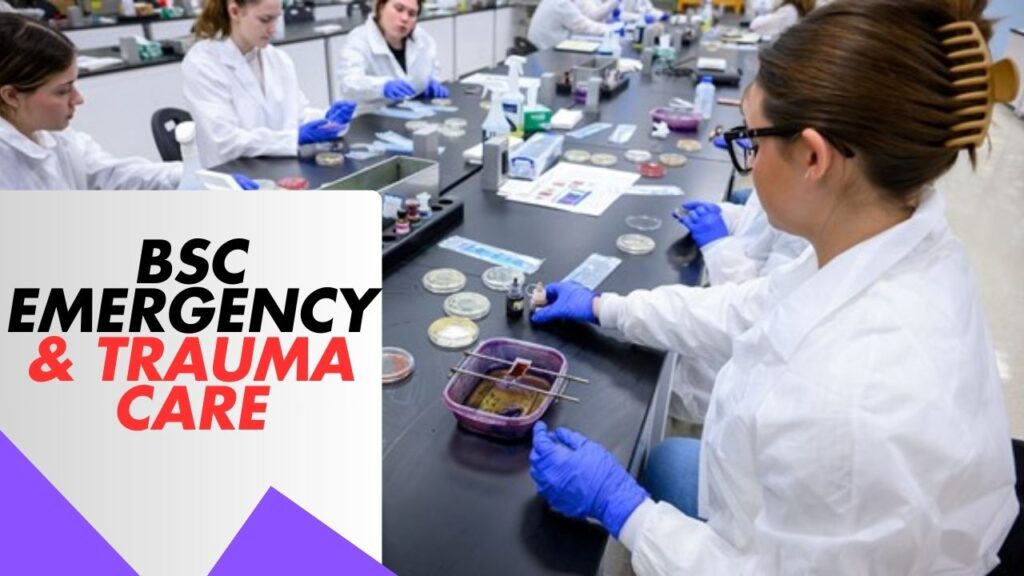
In the intense hospital setting, there is a place where seconds count and the word “routine” hasn’t been uttered in years. It’s the Emergency Room (ER) after BSc Emergency and Trauma Care. Although the faces with which we most commonly associate life saving are those of the doctors and nurses, there is an equally specialised group of para-professionals working with them: Emergency and Trauma Care Technologists.
Requirement for BSc Emergency and Trauma Care
A candidate must possess 10+2 in Science (PCMB/PCMC) & it’s important to know that some colleges asked for a 45%- 55% minimum score. This course prepares students to pursue a career on an emergency basis like when an urgent requirement of a doctor arise in an emergency room, on an operating table etc.
English is normally compulsory subject in class 12th and you should be minimum of 17 years of age at the time of the admission, medical fitness certificate is also required at times.
Duration and Course Subjects
The 3-4-year BSc Emergency and Trauma Care course enables students with the necessary skills and knowledge to deliver care to the traumatized and the emergency patient. The content sequentially increases in complexity starting with the basic sciences and advancing to clinical interventions.
The following topics are repeatedly addressed:
Basic Sciences
Human Anatomy
Physiology
Biochemistry
Pathology
Microbiology
Emergency Care
Emergency Medical Services
Pre-hospital Trauma Life Support
CPR & Airway Management
Hemorrhage Control
Clinical Emergencies
Medical Emergencies
Trauma & Surgical Emergencies
Pediatric and Special Population Emergencies
Critical Care Technology
The program is focused on theoretical and clinical training, designed to equip students to manage high-stakes trauma environments with both assurance and thoroughness.
Semester Breakdown
Semester
Core Subjects
1st/2nd
Anatomy, Physiology, Biochemistry, Intro to EMS, Pharmacology
3rd/4th
Medical Emergencies, Trauma Emergencies, Pathology, Biostatistics
5th/6th
Disaster Management, Patient Monitoring, Advanced Life Support
Mail Skill You Must Have
While the “BSc” part of the title sounds academic, the job is deeply emotional. You will become a patient’s life-saver on the worst day of their life.
Empathy in the moment is a talent they don’t always rate you on, but it’s the most important one you’ll have. You’re not just treating a body but also confronting the panic and worry and sorrow of the people surrounding it. Those relatives, too, are often in over their heads, and those patients are frightened. You’ve got to be a genuinely kindhearted person to remain calm, tell them everything will be all right and comfort them while you are doing something like firing up a ventilator.
Career Goal
The demand for graduates from the BSc Emergency and Trauma Care course continues to grow within the health care industry, with opportunities for employment with both public and private providers, transport focused roles in emergency situations, and roles such as the immediate stabilization of patients. It is one of the best courses which open your professional way with good packages because experience in this field has many different responsibilities.
Roles & Responsibility
Role
Responsibility
Trauma Technician
Take part in Trauma Cases with surgeons and ER doctors to stand as a pillar on saving lives.
Emergency Medical Technician (EMT)
Quick Response to save life’s on the spot emergencies techniques.
Flight Paramedic
Working on air ambulances or rescue helicopters for remote locations.
Critical Care Assistant
Managing patients in the ICU who require constant monitoring.
Disaster Management Officer
Working with Social Work Organisations like NGOs or governments to plan responses to natural disasters.
Top Employers
Sector
Examples
Hospitals
Apollo, Fortis, Max Healthcare, Medanta
Ambulance Services
GVK EMRI, Air Ambulance
Government/Other
Indian Red Cross, Fire Department Emergencies, Disaster Organizations
Jobs Salary After BSc Emergency & Trauma Care
The BSc Emergency and Trauma Care salary in India varies as per the job position, skills, experience, work location (metros like Delhi, Bangalore provide higher salary) and type of the company. For 3 to 5 years of experience, the salary can be 5 — 8 lakhs per year along with allowances for shifts or overtime.
Salary by Role
Role
Fresher Salary (₹/month)
Experienced salary in LPA
Emergency Medical Technician
20,000-40,000
3-7
Trauma Care Technician
25,000-50,000
5-8
ER Coordinator
30,000-55,000
5-9
Disaster Specialist
40,000-70,000
6-10
How to Get Government Jobs After This Degree
For government job after BSc Emergency and Trauma Care, concentrate on the paramedical recruitment in state health departments, NHM, and hospitals as these are the very places that consider this as a preferred degree for EMT and trauma-related Jobs.
Preparation includes watching portals, acquiring certifications such as BLS/ACLS, and passing written tests or interviews.
Steps to make a career in government healthcare or allied services:
Get updated: Get into the habit of visiting the official websites regularly i.e. NHM, State Health Society, ESIC, AIIMS, and 108 Ambulance Services. These sites raise alerts for complainants for job notification, recruitment-related news and other information which might help you get one step closer to your dream job.
Boost your profile: Having professional certification can do wonders in polishing up your resume. Courses like BLS (Basic Life Support), ACLS (Advanced Cardiovascular Life Support) and ITLS (International Trauma Life Support) bring weightage to your profile. Along with these certifications, relevant field experience 1-2 years will make a great difference in your selection.
Apply and Prepare: Apply online for exams that generally comprise multiple choice questions (MCQs) on anatomy, emergency care, and general information.
Recruiter
Roles
7th CPC Salary
NHM/State Health Societies
EMT/Paramedic
Rs 25500—81100 at Level-4 Rs 35400—1,12,400 at Level-6
AIIMS/Government Hospitals and ESIC
Trauma Technician, ER Assistant
Rs 25000—50,000 entry role
Armed Forces/Disaster Bodies
Ambulance Technician
Varies by level
The Future of Emergency Care
As medicine becomes more specialized, the need for full-time trauma providers is growing exponentially. We are going from “general” care to “specialized,” rapid response. With the advent of smart ambulances and telemedicine, an BSc Emergency and Trauma Care alumnus is no longer a mere “aide”, they are a high-tech clinician leading the cutting-edge of medicine.
A BSc Emergency and Trauma Care is not just an academic qualification; it is a key which opens the door to the human condition. It is a profession for the strong, the fast-thinking and the kind. If you’re looking for a career in which you’ll keep on learning, and where you can tell people, “You really needed me today,” this is the road for you.