Candidates can check the DFCCIL Answer Key 2025 on the official website of the Dedicated Freight Corridor Corporation of India Limited and raise an objection before the result. The DFCCIL Answer Key uploaded on the official website on 18 July 2025. The portal will open till 22 July 2025, download the Answer Key for MTS, Junior Manager, and Executive recruitment exam.
Candidates can download the answer key 2025 by login on the official website. You can find the direct login link in the Links Section of the article.
Post Name
Multi-Tasking Staff, Executive, Junior Manager
Exam Conducting Body
Dedicated Freight Corridor Corporation of India Limited
Click on the official website link to redirect on DFCCIL official website.
Click on Log in, the page will appear, enter your ID and Password.
Submit to log in with your account, the Answer Keywill appear on the screen.
Download the answer keyand match your responses.
Raise Objection for DFCCIL Answer Key
If you find any error, you can raise an objection only if you can prove the right answer with reliable sources or proof. You can raise an objection till the last date after that the final answer will be declared and no objection will be raised after that. The result will be declared after the objection has been reviewed.
The PCS exam is the most hardest exam in India which offers many prestigious level jobs in the government sector. PCS Rank Wise Post is allotted according to the candidates marks in the exam. It offers many higher level administrative posts like SDM, DSP, BDP, CTO, and others. This exam is held annually to recruit thousands of candidates for different posts, and prepare strategically for higher rank posts.
Let’s explore the PCS exam and posts for understanding their authority and power in administration.
What Is The PCS Exam?
Provisional Civil Services offers a diverse range of posts in the government sector and is conducted by different State Public Services Commissions including UPPSC, BPSC, MPPSC, RPSC, etc. But the post name and exam pattern will be the same in all the states. Posts rank may slightly differ from each other but posts are related to state administration and law enforcement. The exam pattern includes:
Prelims
Mains
Interview
How Are Posts Allotted in PCS Exams?
There are various factors for allotting the post on different level, let’s look into these factors:
Final rank in the merit list (Mains + Interview). Selection is based on the PCS state-level exam rank. If the two candidates have the same score then the cast-category of the candidates will decide in the selection process. The third factor is the number of vacancies in that post.
PCS Rank Wise Post List 2025
Likely Rank
Post Name
1
Deputy Collector (Sub Divisional Magistrate/SDM)
2
Deputy Superintendent of Police (DSP)
3
Block Development Officer (BDO)
4
Assistant Commissioner (Commercial Tax)
5
District Commandant, Home Guards
6
Subordinate Revenue Officer
7
Assistant Regional Transport Officer
8
District Social Welfare Officer
9
District Panchayat Raj Officer
10
Accounts Officer
Special PCS Posts And Their Powers
Don’t you wonder? Why does the PCS Rank Wise Post matter? Because a candidate’s post determines their authority, power, responsibility, and salary within the state administrative system.
The powerful posts allotted to top rankers in the PCS exam. The top three posts are Sub Divisional Magistrate (SDM), Deputy SuperIntendent of Police, and Deputy Collector are all administrative powers and control district level operations directly impact governance and policy implementation.
Higher powers such as SDM, DSP, & CTO are placed on the top level of the government administration of the state because they are responsible for revenue management, development works, jurisdiction over law and order and public service delivery.
Meanwhile, lower ranked positions are also responsible for government department works and administrative jurisdiction but they have less authority and power for taking decisions.
Higher positions rankers get fast promotion while initial posting and lower rankers have to face slower growth to become on the post like Indian Administrative Services (IAS). The salary and additional perks are good on a higher level with social recognition, they have more prestiges compared to lower level.
Other Top Level Posts in PCS Exam
Block Development Officer
He has authority within the block in rural or semirural areas to lead administration for the development of projects for public welfare and implementation in government schemes. He supervises both state and central government policies in that area.
District Commandant, Home Guards
District Commandant is a head of Home Guard volunteers and works with the police and administration for law and order for handling disaster and public safety.
Subordinate Revenue Officer
He is responsible for collecting and saving the data of land in the sub-district. Government schemes implementation also comes under the Subordinate Revenue Officer responsibility for agriculture and land reforms. These decisions are directed by the higher revenue officials and SDMs.
Assistant Regional Transport Officer
He enforces public travel law and order to resolve issues of driving license, permission for transport, and registrations of vehicles. Assistant Regional Transport officer is responsible for road safety campaigns and accident investigations.
District Social Welfare Officer
District level authority and power to manage and implement welfare schemes for low cast and schedule tribes communities. Works as a mediator between communities and district administration for their well-being.
District Panchayat Raj Officer
Panchayat councils of villages are supervised by District Panchayat Raj Officer. Implantation for rural development schemes are monitored by him and he is responsible for these operations running smoothly in the area.
Account Officer
Account officer handling the government department’s account and financial administration to manage budget and deliver financial reports to the government administrations.
SDM vs DSP – Which Is Better?
SDM and DSP both positions are highly respectable but their work and authority is different from each other –
Sub Divisional Magistrate– SDM:
This is the highest administrative officer post in the department to ensure the governance runs smoothly under the law and order. This involves both desk and field duties and offering great professional growth to ADM then DM level.
Deputy Superintendent of Police – DSP:
He is the head of the police subdivision and has authority for law enforcement. A very respectable uniformed post, DSP is responsible for commanding over police stations and getting promoted to SP and DIG.
How to Get Top Rank for SDM or DSP Post?
The higher posts are responsible to change and implement governance that is why they are placed at the higher places in the state hierarchy.
Your rank must lie within top 100 to get SDM or DSP post.
To score on that level you must focus on high-scoring subjects.
Practice and learn consistently for Mains.
Improve english grammar and take mock tests daily.
Keep updated with events, current affairs, and government policies.
Conclusion
PCS Rank Wise Post is important to understand if you are preparing for PCS exams because your exam scores will decide your position. If your goal is SDM or DSP then you should get 70-100 rank (General Category) and 120-160 rank (reserved category). With the right strategy you can prepare smartly for this exam and get the position.
PCS rank not just decides your job but also your future of growth, salary, and authorities. So, start aiming your goal with smart strategy and hard work.
If you are an Indian student in Class 10, 11, or 12, chances are you’ve heard a version of this line at least a dozen times. The age-old battle between Medicine and Engineering is a part of our DNA. For generations, these two streams have been seen as the ultimate tickets to a successful, secure, and respectable life.
The world is rapidly changing in 2025 with a lot of new career options for students. But when it comes to choosing between two different careers, everyone gets confused: Which path is better? Medical or Engineering?
It’s a big decision of your life, both careers need your full potential whether you are preparing for NEET or JEE. It affects your life and your parent’s life too. Choose your path which aligns with your interest and skills.
The First Hurdle: The Challenging Road of Education
Before you can even dream of a stethoscope or a high-tech lab, you have to cross the battlefield of entrance exams. This is the first and most critical difference.
The Exam: This is a single entrance exam for admission in MBBS. In 2024, over 23 lakh students fought for just over 1 lakh MBBS seats. The competition is insane.
The Challenge: Tons of topics to cover in Physics, Chemistry, and especially Biology, inside and out. It’s less about complex problem-solving and more about incredible memory, accuracy, and speed.
The Journey: The path is long. The time period is 5.5 years for MBBS with an internship certificate. After becoming a doctor at beginner level. You must do a postgraduate degree (MD/MS) to become professional, which is another 3 years after clearing another tough entrance exam, NEET-PG.
The Cost: Government medical colleges are very affordable (a few lakhs for the entire course). But getting a seat is like winning a lottery. You must be ready to invest ₹50 lakh to over ₹1 crore for MBBS course and more for postgraduation.
JEE (for Engineering): The Sprint of Logic
The Exam: This is a two-step process. JEE Main is the first filter. If you clear it, you can get into NITs and other good colleges. Admission in IITs is tough, you need to clear JEE Advanced.
The Challenging Step: If you are interested and have deep understanding in Maths, chemistry and physics, preparing for JEE isn’t that hard for you. But you must prepare with right strategy to beat the competition and get a chance for better college option. Because without a valuable degree, you will not get a high package of jobs.
The Journey: A B.Tech degree is 4 years long. After this, you are an engineer and can start working immediately. A postgraduate degree (M.Tech) is an option, not a necessity, unless you want to get into research or specialised teaching roles.
The Cost: The fee for IITs and NITs is around ₹8-12 lakhs for the entire course, which is much more affordable than private medical colleges. Private engineering colleges have a huge range, from a few lakhs to ₹20-25 lakhs.
The stress of Kota coaching factories, the pressure from family, the fear of “wasting a year” – it’s real for both aspirants. A medical journey requires your time and money to become a doctor. You have to make commitments for this career.
Engineering: it offers a diverse range of opportunities on national and international level.
The word ‘engineer’ is broad. The opportunities in 2025 depend heavily on your branch.
Computer Science & IT: This is the king of the jungle right now. With AI, Machine Learning, Data Science, and Cybersecurity booming, a skilled software engineer from a good college can land a job even before their final exams.
Electronics & Communication: This field also requires engineers for running a network, designing for semiconductors, and automation. ECE engineers can get a lot of opportunities with a good salary package.
Mechanical & Civil: These are ‘evergreen’ branches. If students have skills and ability to construct, manufacture, and renewable energy then they can pick this career for their career.
Abroad: IIT or NIT qualified engineers are well-respected globally. With the right skills you can work on large projects abroad such as the US, Europe, and Australia.
Medical: Job security, secure future, and Respect in society
With an increasing health crisis, everyone needs a doctor who can cure and treat them. After MBBS, Medical training is also mandatory for every student. India has a huge shortage of doctors, with a doctor-patient ratio far below WHO recommendations.
In India: A doctor will never be jobless. You can have plenty of options like your own clinic, work in government or private hospitals. After specialization (e.g., cardiologist, dermatologist, oncologist), you will be demanded everywhere. The respect you get from society is unparalleled.
Abroad: MBBS degree is a door to open many options abroad but to work in countries like the US or UK, you need to clear their licensing exams (USMLE for the US, PLAB for the UK). Indian doctors can apply for them after a few years of experience in India because it is tough and expensive but the financial rewards and quality of life can be extraordinary.
Salary & Financial Growth
This is where the paths differ significantly.
Engineering: if you have done engineering in computer science from a reputed college or IIT, you can get a good placement package from top companies. IITs can get a starting package of ₹20-30 LPA. For other branches and colleges, it might be in the ₹6-12 lakh range. Your professional growth depends on how fast you can update your skills.
Medical: The financial journey is a slow burn. During your internship and PG residency, you earn a stipend, not a salary (around ₹25,000 to ₹80,000 per month depending on the state and college). The real earning starts after you are nearly 30 years old. But once you are a specialist, your earning potential is immense and stable. A successful specialist in a city can earn lakhs per month, far surpassing most engineers.
The Verdict: Engineering gives you a 6-8 year head start in earning. Medicine promises higher and more stable lifetime earnings, but you have to wait for it.
Success isn’t just about your bank balance. It’s about being happy.
A Doctor’s Life:
Heavy responsibility of a patient, being available for emergencies. So, this is not just a regular desk job. You need deal with many new things:
The Bad: The hours are brutal. Health crises can happen anytime-anywhere but being a doctor it’s your responsibility to be available for your patients. There are no weekends or festivals when there’s an emergency. Be ready to deal with everyday life and death situations. The small mistake can cost a life, so being focused and emotionally stable is mandatory to handle.
The Good: The job satisfaction is on another level. The feeling of saving a life or healing someone is a reward that money can’t buy. The trust and respect you receive from your patients and community are profound.
An Engineer’s Life:
Being an engineer is about creating and solving problems.
The Bad: Especially in the IT sector, there’s pressure of deadlines, project delivery, and constantly learning new technologies to stay relevant. Burnout is a real risk. Your job security is often tied to the performance of your company and the economy.
The Good: You often have more predictable work hours (though this can vary wildly). You have your weekends off. The work sometimes gives you hard challenges, but a lot of benefits like you can start your own side business after years of experience. You get to build things that millions of people might use, which is a great feeling.
What Should YOU Choose?
Forget about your friend’s suggestions. Forget about what your relatives will say. Ask yourself these questions with an honest heart.
Choose Engineering if:
You are fascinated by how things work. You are able to solve complex problems within less time and have a logical and analytical mind.
You love to solve quizzes from Maths and Physics.
Quickly understands new technologies and skills throughout your life. You don’t have a problem with quick changes in your professional world.
You want a faster entry into the professional world and want to start earning relatively early.
You are a creator and a builder at heart, whether it’s software, machines, or bridges.
Choose Medical if:
You have a deep, genuine desire to help people directly. Your primary motivation is service.
You have incredible patience and are prepared for a decade-long educational journey before you are fully settled.
You have quickly memorized diagrams and names of the phenomenon. You must adapt a habit to study consistently for very long hours.
You love to care about others and have strength to handle the pressure of life and death situations calmly.
You want lifelong respect and a long-term future for your career.
In the end, there is no “better” field. There is only a “better fit” for you. A happy and successful engineer will always do better in life than a frustrated and burnt-out doctor, and vice-versa.
Success in 2025 and beyond will not come from choosing the most popular or the highest-paying stream. It will come from choosing the path where your natural interests and skills lie. It will come from choosing a profession that you won’t just ‘do’ for a living, but one that you will be proud to live every single day. So, talk to your parents, talk to people from both fields, and most importantly, listen to your own heart. The right answer is right there.e-old battle between Medicine and Engineering is a part of our DNA. For generations, these two streams have been seen as the ultimate tickets to a successful, secure, and respectable life.
Starting to prepare for the SSC CGL exam to establish your career in the government job is the dream success in many student’s lives. But understanding how you can achieve this success among the lakh of students is important. Many students give up because it is hard to achieve high rank for post selection. There — Best GC Teacher for SSC CGL is needed to strategically prepare and cover every topic.
Many students make a mistake to take the General Studies section lightly and get doomed. This part is crucial in this exam to boost your final score. Unlike Math or Reasoning, GS covers many subjects —
History
Geography
Indian Polity
General Science
Economics’
Static GK
So, let’s explore the Best GS teachers for SSC CGL exam, their unique styles and platforms.
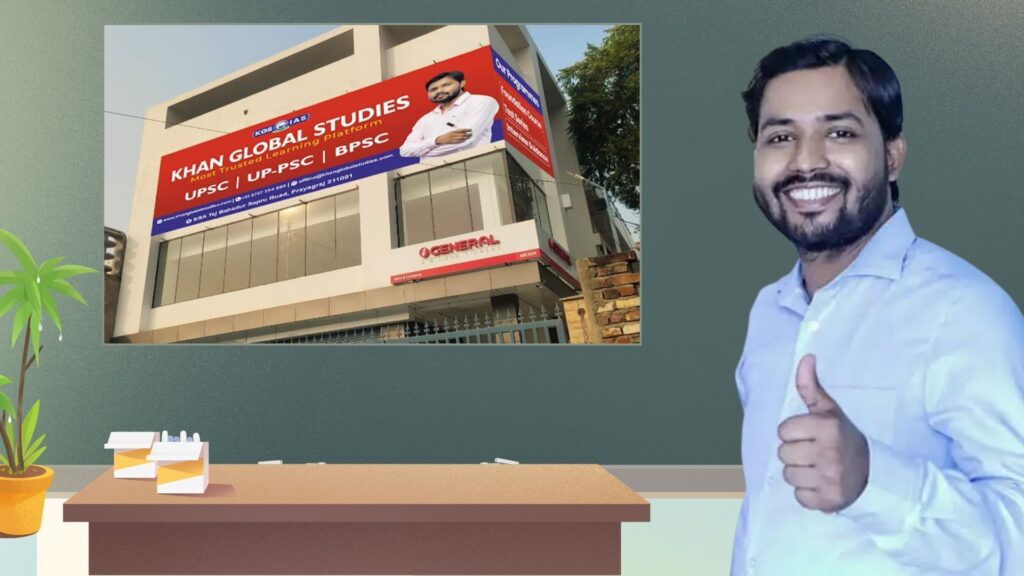
Khan Sir
Khan Sir is an Indian educator who offers a wider range of courses through Youtube which makes 19 million subscribers within three years and is still consistently growing. He provides both offline and online coaching glasses with extensive coverage of core subjects. His general studies courses are designed for strategic preparation for competitive exams like SSC CGL. He motivates students through his lectures. He is using practical examples for simplifying the complex concepts of subjects including History (Ancient, Medieval, Modern), Geography (Physical, Indian, World), Polity (Indian Constitution), Economics, Science, and Current Affairs.
The “GS Crash Course by Khan Sir & Team,” is basically designed for SSC CGL aspirants to understand more precisely concepts. Khan Global Studies offers test series, daily quizzes, sessions for solving doubts, previous year questions and a vast range of study material.
Many students praised his teaching style and ability to explain every concept with real world examples which makes it easier to learn for students. KGS delivers high-quality education at an affordable price which makes it a well-equipped facility for rural students who are unable to join offline classes.
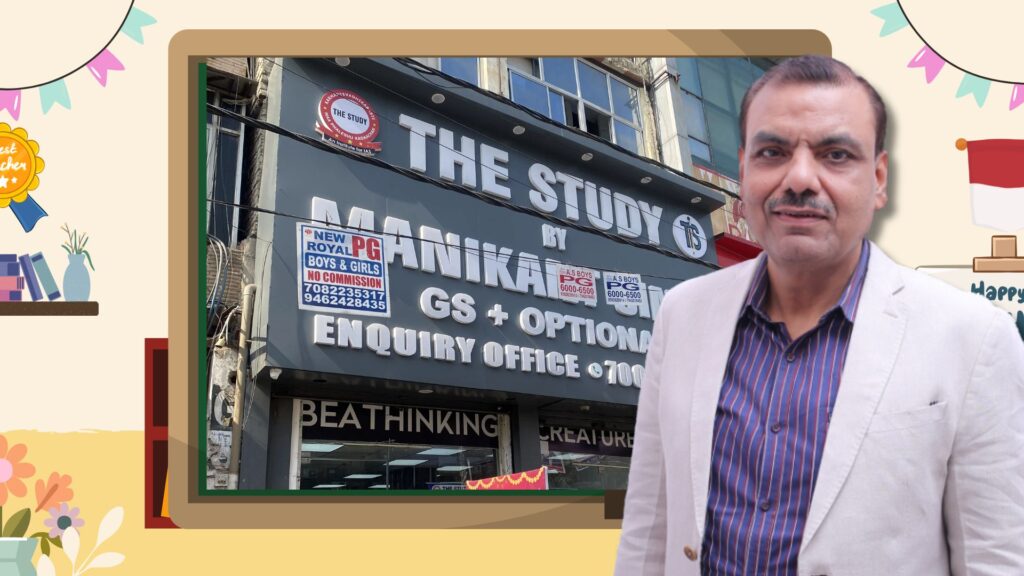
Manikant sir (The Study IAS)
Manikant Singh is an experienced educator who offers a wider range of lectures which focuses on core subjects for competitive exams like SSC CGL. His strong fundamental pursuit of General Studies, especially History which is beneficial for the aspirants. The Study IAS offers both offline and online platforms for students to access all the available resources for the exam.
Students are showing good response because of his teaching style to explain each concept with clarity through his experience. His strong potential to provide strategic requirements for the preparation of SSC CGL exam is helpful.
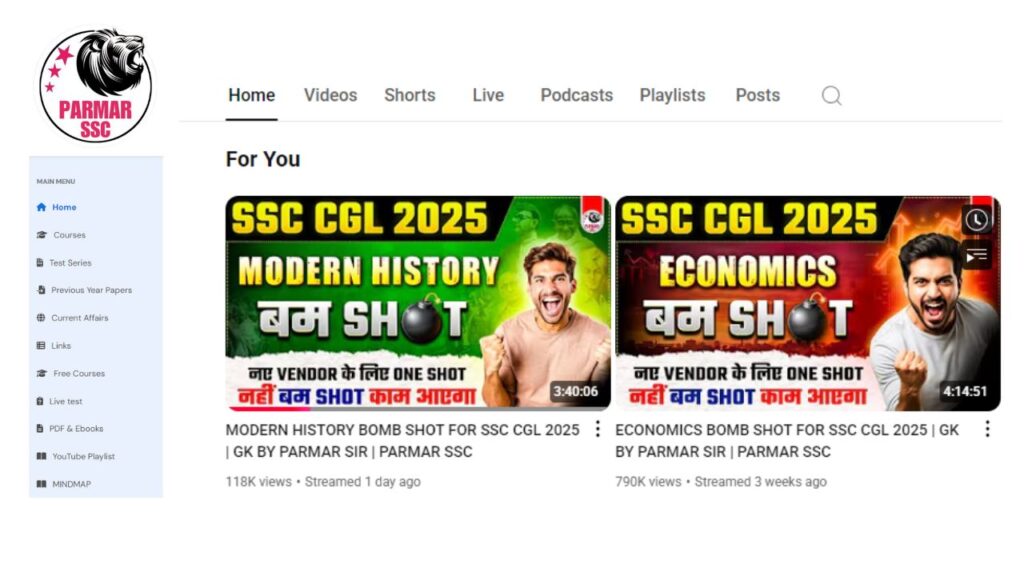
Parmar Sir (Parmar SSC)
Parman sir is highly recommended by most of the former students who have appeared in SSC CGL exam. His experienced knowledge of General Studies is basically providing the core content that is relevant to this competitive exam. His teaching style is different and also offers a variety of courses and test series through Youtube channel and Parmar Academy.
The course is specifically designed to cover subjects like Basic GK, History, Polity, Geography, and Science. His content is focused on strategic preparation by analyzing and solving previous year’s questions. Students can learn every core topic in both languages (Hindi & English).
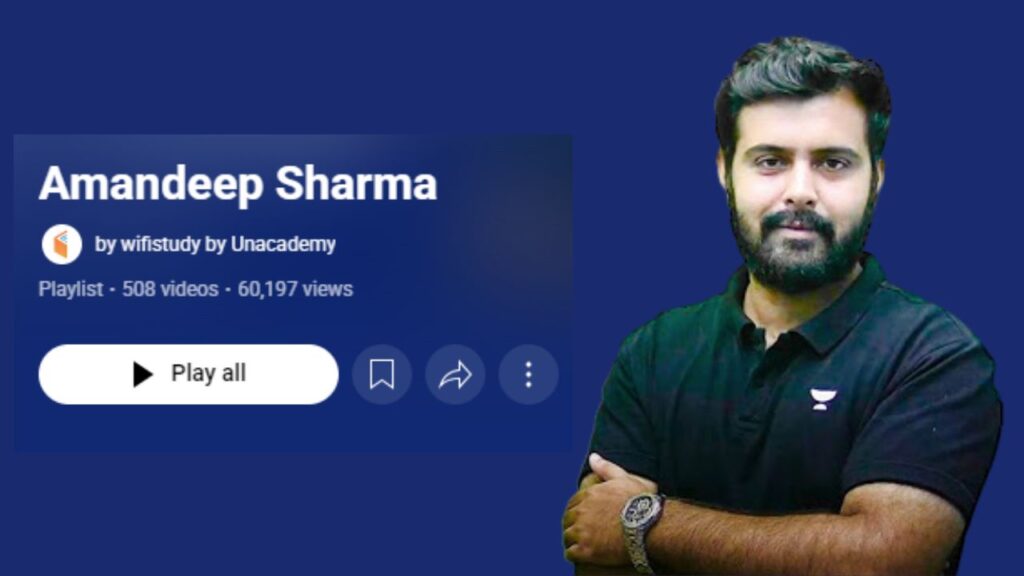
Amandeep Sharma
Amandeep Sharma specializes in General Studies and provides online education though learning platforms like Unacademy and Testbook. He is also known for his teaching ability to make complex problems easily understandable for the students through previous year questions technique and explanation style.
He has more than 5 years experience teaching over 100,000 students for many competitive exams, especially SSC CGL. Some of his lectures are also available on Youtube where students can start preparing for SSC CGL.
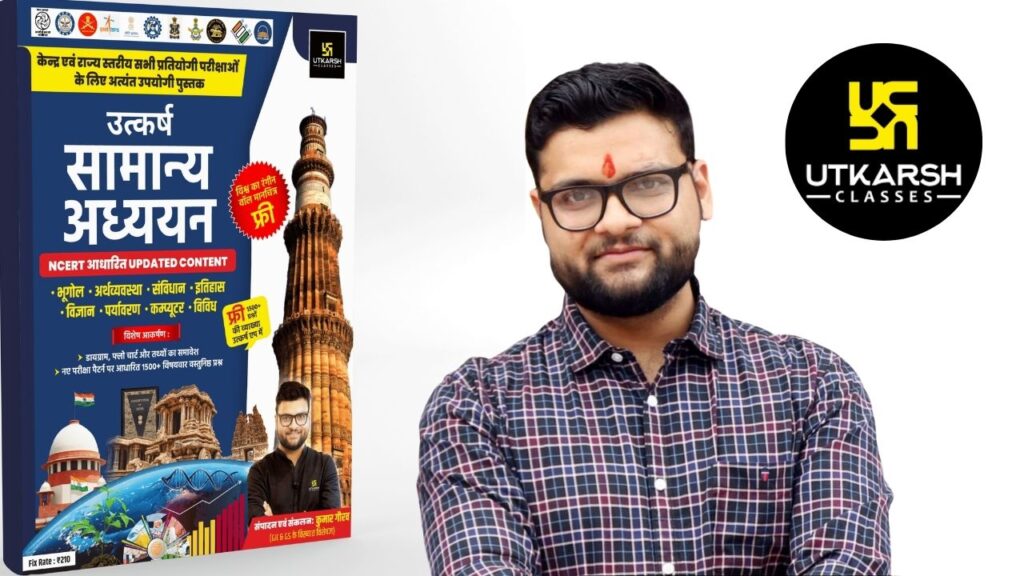
Gaurav Kumar by Utkarsh
Gaurav Kumaris a General Studies educator who focuses on current affairs as well to provide every topic detailed explanation for SSC aspirants. He is providing online classes focused on topics such as history, geography, polity, static GK, and basic science, integrating them with current affairs. Ideal for students who want to cover every topic with deeper knowledge and relevant current events.
His engaging style often uses storytelling, mnemonics, and unique examples to make learning more easier. Classes are both free & paid through Utkarsh Classes app and on youtube.
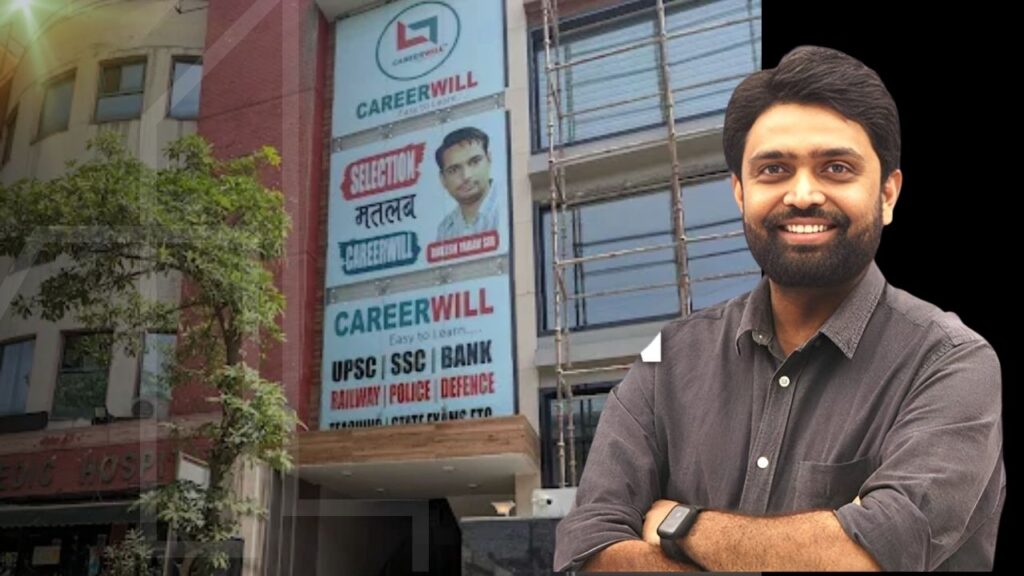
Abhishek Suman by Careerwill
Abhishek Suman is an online educator with proficient knowledge of General Studies to prepare students for competitive exams like SSC CGL. His history lessons are not boring, this unique ability makes him the best history teacher. He covers variety of topics which comes in a question paper including Polity, Static GK, and modern and ancient history.
Students who want to study with detailed explanations for each topic can consider taking his lessons. He is teaching on Careerwill and also prepares previous year questions for helping students to simplify the complex topics with a vast range of GK syllabus.
Smart Preparation Strategy and Time Management
You can’t just read every topic in GS, you need to prepare strategically. Just remember these factors while learning:
Weightage of the section: check previous year’s papers to analyze questions and which topic has covered up more. While Polity and Static GK has come more often and covers vast areas of the section.
Focus on Concepts: don’t just rote learning, understanding each concept will help remember for a long time.
Make Short Notes: Short notes, bullet points, and charts are helpful to remember and in quick revision.
Daily revision: Take 20-40 minutes extra for revising everything you have studied.
PYQ’s Practice: practice makes a man perfect, applies on the competitive exam, solving previous year questions will help you analyze how much you understand the topic.
Time Management: you have to divide your time accordingly for all topics and give extra time to your weak concepts.
General Studies is an important section of SSC CGL exam paper which students have to prepare. But it’s hard to prepare without a mentor. These Best GS Teachers for SSC CGL are delivering each topic in detail with a unique way of teaching to help you beat the competition.
NTA UGC NET JRF online form is open for candidates who have Master’s degree or equivalent through the official NTA website. The form will not be accepted after 28 October 2026 so fill the form quickly if you also want to sit in the exam. The exam will be held after two months when the application gets closed.
The National Testing Agency released the notification and opened the application on 8 October 2026. Anyone who misses it can still apply between 29 and 31 October by paying a late fee of ₹500, with the last successful transaction on 31 October. After that, there is no form to fill at all.
NTA opens a correction window after all the applications are submitted so any mistakes in the application form can be fixed between 2 and 4 November. But try to fill in the correct information at once because some fields are usually locked during correction.
The computer-based test runs from 14 to 19 December 2026. NTA has not yet announced exam city intimation, admit card release, answer key or result dates. Those will appear on the official site. The dates are also described as tentative in the notification, so keep checking the NTA site.
Event
Date
Online applications open
October 8, 2026
Regular application and fee deadline
October 28, 2026
Late application window (₹500 late fee)
October 29–31, 2026
Form correction window
November 2–4, 2026
UGC NET December 2026 exam
December 14–19, 2026
Exam city and admit card dates
To be announced
Who Can Fill the NTA UGC NET JRF Online Form
The basic requirement is a Master’s degree or equivalent. General, General-EWS and unreserved candidates need at least 55% marks, without rounding off. OBC-NCL, SC, ST, PwD/PwBD and third-gender candidates need 50%.
Final-year Master’s students and those awaiting results can apply too. They are admitted provisionally and get JRF or Assistant Professor eligibility only after passing with the required percentage.
Age matters only for the fellowship. Upper limit for JRF — 30 years
Age relaxation of OBC-NCL, SC, ST, PwD/PwBD and third-gender, women, and experienced get 5 years. An LL.M. degree earns 3 years. Assistant Professor eligibility and Ph.D. admission have no upper age limit.
NET is not a recruitment drive, and there is no fixed vacancy count. NTA qualifies roughly 6% of the candidates who appear for Assistant Professor eligibility. Within that group, the JRF cutoff is higher, so a “pass” can still leave you without the fellowship.
JRF Online Form Fees
General/unreserved
₹1,150
General-EWS and OBC-NCL
₹600
SC, ST, third-gender and PwD/PwBD
₹325
The fees will not be refunded by NTA once the form is filled and submitted successfully. So fill carefully and don’t try to fill at the last minute.
How to Fill the NET JRF Online Form
Start on ugcnet.nta.nic.in and open the December 2026 application link.
You need a mobile number and email that belong to you, since NTA sends all communication there, along with your Master’s marksheet.
Registration now runs through the Meri Pehchaan (National Single Sign-On) platform, so create or log in to that account first.
Enter your personal and educational details, upload a live photograph and signature, review everything, pay the fee, and submit.
Download the confirmation page and keep it. You’ll need it later.
Keep your documents ready before you begin:
A photograph of 10-200 KB showing about 80% of your face, ears included, on a white background is required. The signature file must be 10-50 KB. Category or disability certificates go in as PDFs, and the disability certificate must be 50-300 KB. Rejected uploads are the commonest reason for a stalled form, so resize files before you start.
Documents and payment must be submitted carefully without any error. Only completing Step 1 and 2 leave your application ignored.
Exam Pattern and Preparation
The question paper has two parts. One part is covered with common questions to access the knowledge and research of teachers. There are a total of 50 questions that come from aptitude, reasoning, reading comprehension, and general knowledge. The second part is covered with 100 questions from the subject you select. There is no negative marking so don’t leave the question and the test is worth 200 marks altogether.
If you wanna finish in time then try to solve each question in 72 seconds. Check previous year papers and practice mock tests because it will increase your time to solve one question. You will get only 180 minutes for this paper.
Complete the application form by October 28. Upload the documents first and your information on the desk. Complete the application form by submitting the fee and prepare for the exam. The examination city will be announced soon on the official website.
Check out their time-to-time for latest updates and admit cards because it is the entry card for your entrance in the examination hall. Give the exam carefully and wait for the result.
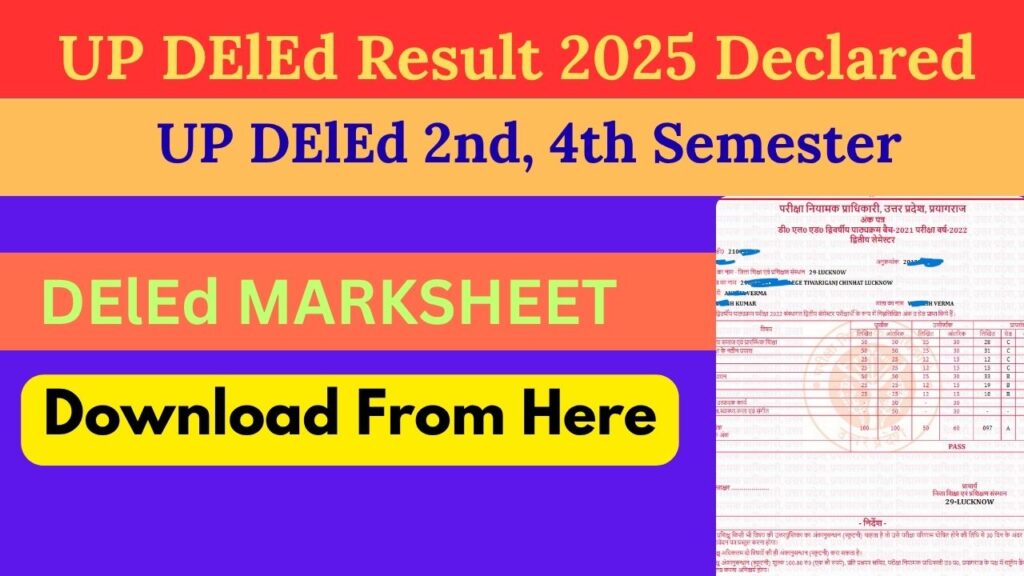
UP DElEd Result 2025 Declared by the Uttar Pradesh Regulatory Authority for 2nd and 4th semester exam. Students who want to download their result from the official website or the link mentioned in the article below. Batch 2022 and 2023 students can break their patience to see their result.
If you have appeared in the examination then check your result from the direct link.
There are a total of 2,33,350 seats available for the DElEd. The total number of students of batch 2023 present in the examination is 160159 but 102408 students have passed this exam and 57691 have failed. 246 students did not appear in the exam, 44 results have not been completely declared, 13 results were stopped by the council and 3 have been caught cheating.
Whereas, fourth semester students of 2022 batch are 57,415 in numbers but 45,528 students have passed in the examination.