UP Board Exam Date 2026 – Latest Time Table, Schedule & Updates

UP Board Exam Date 2026

UP Board Exam Date 2026 has been announced — and it will be the moment for students across Uttar Pradesh to stop waiting and start preparing. The Uttar Pradesh Board (UPMSP) has released the modified schedule for Class 10 and Class 12 on the official website upmsp.edu.in, Students can now check the revised time table for UP Board 2023 on the official site. As exams are from 18 February to 12 March 2026, students can now prepare study plan accordingly and stay free from last moment pressure. 

Whether you are finalizing your notes, giving last minute practice tests, or cramming difficult calculations, holding the official schedule brings a ne find structure to your day. To cater to the large number of candidates the board has also declared two shifts for the exam that will be conducted in well-organized manner at the centers across the state. 

So, the final schedule is here now, students can get ready for the first step in their life for their career journey. 

Revised Exam Dates For UP Board 2026

The board examinations for class 10 and 12 of this session (2026) will be conducted from 18 February to 12 March 2026. Now everyone can get relief about the exam dates because it’s time to prepare yourself for the final exam. The official time table was published in early November 2025 and it makes everyone’s life easier who is preparing for one of India’s biggest state board exams.​

So, whether you are cracking your last mock tests or memorizing those hard formulas, keep remember that this marksheet will be a valuable asset for the lifetime and make sure to mark these dates on your calendar. 

Two Shifts for the Board Exams

The board has mentioned that the exams will be conducted in the morning and afternoon to manage the large number of students:  

Morning Shift8:30 am to 11:45 am
Afternoon Shift2:00 pm to 5:15 pm

This system is better to handle the huge crowds, and it would allow everyone ample time to get to the exam site and take the paper with no rush whatsoever.​

Pro tip: It is wise to arrive at your exam center at least an hour before your shift begins. This will help you avoid facing last minute hassles or getting delayed and start your exam with a peaceful mind. 

Dates & Subjects For Board 2026

Some important dates and topics are as follows for the UP Board exams. This is a sample of how the major subjects for classes 10 and 12 are spread roughly across the dates, though the exact subject wise date sheet may vary:   

UP Board High School (Class 10)

DateShiftSubject
18/February/20268:30 am – 11:45 amHindi
18/February/20262:00 pm – 5:15 pmElementary Hindi
19/February/20268:30 am – 11:45 amComputer
20/February/20268:30 am – 11:45 amSocial Science
23/February/20268:30 am – 11:45 amEnglish
25/February/20268:30 am – 11:45 amScience
27/February/20268:30 am – 11:45 amMathematics
28/February/20268:30 am – 11:45 amSanskrit
9/March/20268:30 am – 11:45 amUrdu
12/March/20268:30 am – 11:45 amAgriculture

Note: For Class 12th, the afternoon shift will be given mostly but please check on the official website for accurate timing details of each paper.

To view or download a detailed subject-wise routine, you can visit the official website of UPMSP (upmsp.edu.in) and get the latest PDF timetable. 

What Changed in the Revised Time Table?

The most important modification of the schedule for 2026 is that the schedule adjustment applies to certain big papers such as Hindi. Earlier, Hindi (Both Class 10 & 12) was conducted in the same shift but due to the large number of students, the UP Board has now divided them. For instance, Class 10 Hindi will be held in the morning shift, and Class 12 Hindi will be held in the evening shift on the day. ​

The segregation is expected to check the latest rush at exam centers and the smooth and fair conduct of exams. In the same vein, the board also changed the shift for the Class 12 Sanskrit exam to lessen congestion. 

Exam Center Allocation

The UP Board is also adopting a digital, computer-based center allotment process for 2026. Within a radius of 7 – 15 km from your school or residence, you will be assigned an exam centre. This digital policy is aimed at ensuring that students do not have to travel too far and the centres are determined based on availability of infrastructure, safety etc.​

The process of center determination has already been initiated and it will be finalized by December 2025 so students can expect to know their exact centers for various courses. 

How to Download the Official Date Sheet

  1. Getting your official exam dates is super simple:
  2. Visit the Official UP Board Website: upmsp.edu.in 
  3. Check for the link “UP Board Time Table 2026” or “Date Sheet 2026” on the main page.
  4. Press the link of Class 10 or Class 12 as your requirement.
  5. Save the PDF and take a printout for future reference.
  6. Always trust on the official UPMSP website for the latest updates and don’t believe in rumours from non-official sources. 

Related Exam Updates 

  1. September 1, 2025 was the last date of submission of fee for board examination. School has confirmed all your details are correct or not on 6th of September 2025. Ensure that your details are correct before submission as corrections could be problematic afterwards.
  2. Correction Period: For any error in the registration form, a correction window was open from September 12 – 20, 2025.
  3. Admit Card: You’ll get your admit card through your school, or you can download them from the official site.​
  4. Lab Tests: These shall be held separately prior to the theory test, tentatively in January – February 2026. To be informed on dates by your school.

Useful Tips to Prepare for UP Board Exams

  • Make a revision schedule: The exam dates are now out, so decide on your revision topics and give yourself days to focus on tricky subjects.
  • Solve previous years’ papers: It makes you familiar with the pattern and important questions.
  • Schedule rest stops and downtime: You’re not getting any points for working yourself to the bone – you need to rest and relax to be able to focus.
  • Keep in touch with your teachers: Ask for help if you need it – don’t be afraid. 
  • The official updates, reschedules, or other notices would be announced on the UPMSP website only. 
  • Check regularly, as your admit card and practical exam dates are approaching.Don’t believe in rumours— rely on only official announcements for information about your board exams. 

Conclusion

The UP Board exam 2026 syllabus is now well-organized and clear, and some steps have been taken to make the experience fair and smooth for the students. The 2026 Olympics will take place from February 18 to March 12, 2026, and with all the major updates already out of the way, it’s time to set your mind to preparation with a calm and clear plan.

Keep in mind that you don’t need to work hard for a board exam to do well but work smart and timely. Good luck to all the candidates! may you get the results you want for all your efforts. 

Leave a Comment

Your email address will not be published. Required fields are marked *

CSBC Driver Constable Recruitment 2025 Begins – 4361 Vacancies Out, Apply at csbc.bihar.gov.in!

CSBC Driver Constable Recruitment 2025

CSBC has officially announced the Driver Constable Recruitment 2025. Candidates who are waiting for this position can download the notification to check the full details of the recruitment. Always check updates on the official website to fill out the application. 

Check the eligibility criteria before applying for this post. The initial pay of Driver Constable is around Rs. 30,000 to Rs. 40,100 per month including allowances as per Pay Level 3.

CSBC Driver Constable Recruitment 2025 – Short Details

Exam Conducting BodyCentral Selection Board of Constables
Post NameBihar Police Driver Constable 
Vacancies4361
Status Notification Released
Selection ProcessWritten Exam, PET/PST, Driving Test
Eligibility12th marksheet, driving licence
Official NotificationClick Here

CSBC Driver Constable Recruitment 2025 – Key Dates

Notification Released17/July/2025
Application Starts On21/July/2025
Last Date For Registration20/August/2025
Last Date for Fee Payment20/August/2025
Exam DateUpdate Later
Application Fee
Gen/OBC/EWSRs. 675
SC/ST/FemaleRs. 180

Eligibility For CSBC Driver Constable Recruitment 2025

Qualification

Candidates have to pass 12th in any stream to be eligible for this position. If they have an equivalent education, they can also apply. Candidates must vary the educational qualification and age limit to meet the standard for eligibility criteria.

Age Limit

Minimum Age20 years for all categories
Maximum AgeGeneral–Male: 25 years OBC/EBC–Male: 27 years General/OBC/EBC–Female: 28 years SC/ST–both: 30 years

Necessary Documents for CSBC Driver Constable Recruitment 2025

  • Passport Size Photo
  • Signature
  • Educational certificate (marksheet)
  • Adhaar or PAN card
  • Income Certificate
  • Caste Certificate
  • Other certifications if you belong to special categories
Important Links
Application LinkUpdate Later
Download NotificationClick Here
Official WebsiteClick Here

Leave a Comment

Your email address will not be published. Required fields are marked *

Top Companies in IIT Placements 2025: Top Hiring Firms, Salary Trends & Full Details

Top Companies in IIT Placements 2025

The Indian Institutes of Technology (IITs) have yet again proven their exceptional placement performance in 2025, with Top Companies in IIT vying for the brightest minds from India’s top engineering colleges. This year’s placement season has seen a wide range of records being broken, record high salary packages, more international offers, and companies from more diverse sectors attending the campus recruitment drives. So here’s a (rough) full picture of which companies are recruiting picking up on which salary issues, and the trends within the ever-morphing IIT scene. 

Record-Breaking Numbers and Overall Trends

The very fact the 2024-25 placement season has been outstanding for IIT students appears to be an under-statement. As per the latest official figures, top IITs like IIT Delhi and Bombay have received over 1,200 job offers each, and more than 1,150 unique students have been placed in the first phase alone. What’s more heartening is the jump in offers in all salary buckets including the premium packages of more than one crore per annum. For instance, IIT Bombay has received 22 offers beyond the one crore mark in 2024-25 as against 16 in the previous year, a stupendous rise of 37.5%

The highest salary package in India among IITs hovered at a staggering ₹2.2 crore per annum, offered by Da Vinci Derivatives, an IIT Bombay CSE student for a position at Amsterdam. Meanwhile, the international packages have gone even higher at the top IITs, with the highest international offer at IIT Bombay at ₹3.67 crore per annum. These figures signify an exceptionally lucrative market for the IIT graduates in India as well as abroad. 

The Tech Giants Lead the Charge

With reference to hires from IITs, the large tech firms continue to dominate. Microsoft, Google, Amazon, Apple, Meta and Qualcomm are the biggest recruiters in pretty much all the IITs. These companies — known as the MAANG or FAANG firms — compete fiercely for talent and are willing pay top packages for it. 

The Tech Giants Lead the Charge

At IITB, it was again Google, Microsoft, Amazon and NVIDIA that turned out to be the biggest hiring companies. IITB reports suggest, M.Tech CSE students from IIT Bombay got offers in the range of ₹30 to ₹46 LPA with an average of ₹30 LPA. The CSE students at IIT Delhi received even higher average packages, hovering at around ₹34 LPA and with maximum figures reaching as high as ₹48 LPA from Google, Microsoft and Atlassian

Emerging Sectors and Diverse Opportunities

While technology continues to dominate recruitment, the 2025 placements season saw a considerable number of hiring from the finance, consulting, and core engineering domains. At IIT Delhi, the placement breakup shows that 34% of the total placement was in core technical companies, followed by 

  • IT – 20%, 
  • Consulting – 14% and 
  • Management – 13%. 

This diversification is indicative of a changing career landscape for IIT graduates.​

Emerging Sectors and Diverse Opportunities

In the finance and consulting arena, companies such as Goldman Sachs, BCG (Boston Consulting Group), McKinsey, JP Morgan Chase, Barclays and American Express are well represented on IIT campuses. These firms provide typical packages between ₹35 and ₹45 LPA for beginners, with substantial growth in the money for high performers. 

SectorKey CompaniesTypical Package Range (LPA)Offer Share % 
Technology (IT)Google, Microsoft, Amazon, NVIDIA, Qualcomm, Atlassian30-4820%
Core TechnicalTexas Instruments, Intel, Micron Tech, Tata, Reliance20-3534%
ConsultingBCG, McKinsey, Barclays35-4514%
FinanceGoldman Sachs, JP Morgan, American Express35-454%
Management/AnalyticsMeesho, OLA, PayU, Quadeye25-4013% / 7%

Average Packages and Salary Trends

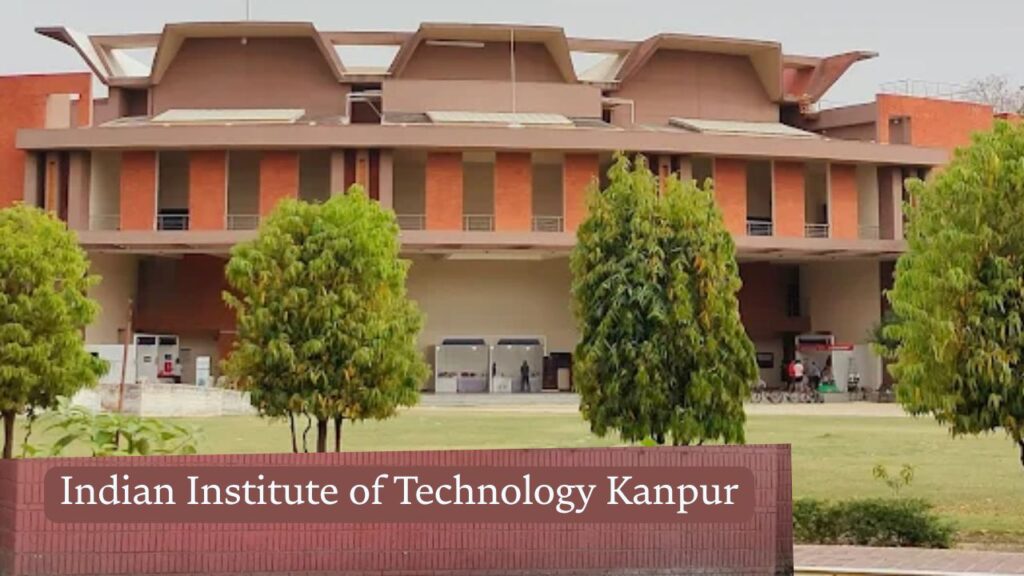
There is now a trend in salaries in 2025 toward increasing when compared to past years. The average package offered by IIT Bombay rose from ₹21.8 LPA in 2023-24 to ₹23.5 LPA in 2024-25 – an increment of 7.7%. The average package reported by IIT Delhi is around ₹32 LPA for all programmes with an average of around ₹21.9 LPA being offered to BTech students and ₹32 LPA to MTech students. Students at IIT Kanpur were offered an average package of ₹ 26.27 LPA and IIT Madras continues to keep its average package competitive at approximately ₹17-20 LPA for all its programmes.​

Interesting is also how salaries differ depending on branch. The best packages are still offered to Computer Science and Engineering (CSE), for which the median predefined offers also exceed ₹30 LPA at top IITs. After that comes Electrical Engineering and then mechanical, civil engineering students generally get packages between ₹15-25 LPA based on which sector they go for. 

Global Opportunities and International Offers

Among the most eye-popping trends in the 2025 placement season has been the uptick in overseas offers. With all-India (national) offers counting towards overall highest packages, IIT Delhi witnessed more than 50 international offers in Phase 1 from over 15 companies across countries including USA, Japan, Netherlands, South Korea, Taiwan, UAE, and the UK. This indicates rising global demand and better pay packages for graduate-level engineers from India, as well as multinational companies increasingly hiring IIT graduates for global roles.​

The salaries of firms providing roles for the international are notably higher, which is between 30-50% increase on domestic norms especially for roles in developed countries. The offer by Da Vinci Derivatives of ₹3.67 crore for an Amsterdam is an illustration of this trend. 

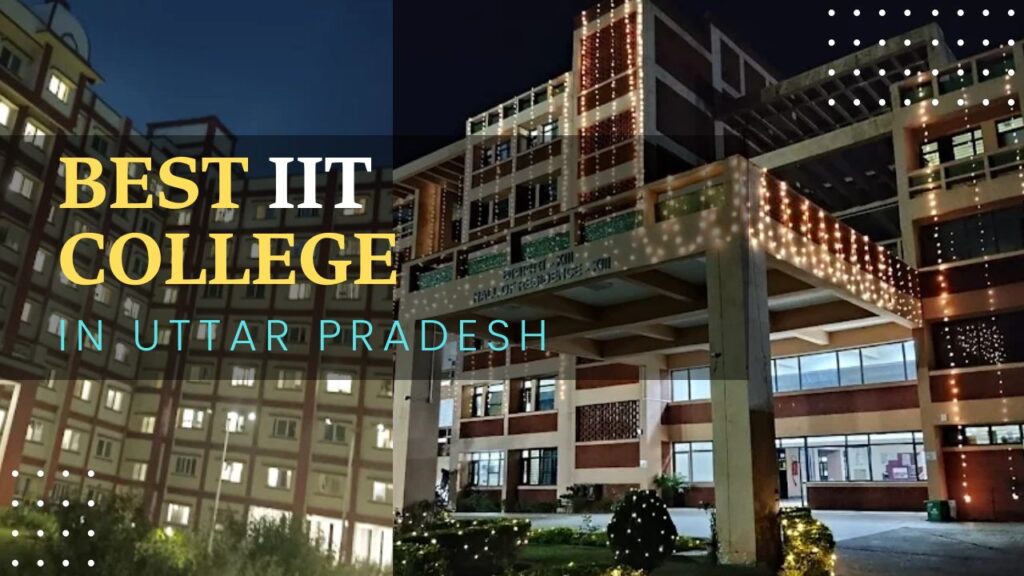
Read More 👉 Best IIT College in Uttar Pradesh – Complete Ranking & Admission Guide

Sector-Wise Breakdown and Career Paths

Recruitment has gotten more and more multifaceted. Although software development engineers and data scientists are paid the most in the tech industry, core engineering roles, especially at companies such as Tata, Reliance, BPCL and Schlumberger, lure students focused on manufacturing, energy and infrastructure. 

Public sector undertakings (PSUs): Organisations PSU are – ISRO, DRDO, BARC they always remain to be answer to bring in the best brains, it’s just the pay package is slightly low, but they offer Job Security, Prestige, and for those who want to make a long term career they offer Career Growth.​

Zomato, Ola, Swiggy, Flipkart and other startups/unicorns have also been leading recruiters, especially for those students who are attracted to growing-stage companies and entrepreneurial environments. These companies usually have competitive packages including stock options and have energetic work cultures. 

Lowest Packages and Market Reality For IITians

While the highest salaries make the headlines, it is essential to look at the overall picture. At IIT Bombay, the lowest packages were reported at ₹4 LPA for the year 2024-25, a steep fall from the ₹5.4 LPA in the previous year. This decrease is indicative of the tightening recruitment at entry level by companies and the influence of economic cycles on entry-level jobs in certain industries. 

Tips for IIT Students in the Current Job Market

IIT students now who are about to go in for placements can glean quite a few pointers from 2025 trends. 

  • For one, technical excellence and programming ability especially would be unlikely to diminish for technology roles. 
  • Second, gaining domain knowledge through internships greatly enhances placement potential– internship conversion rates to PPOs (Pre-Placement Offer) continue to be robust at most IITs. 
  • Third, the increasing number of AI and data analytics positions means that skills in machine learning and data science can be extremely useful. 
  • And finally, don’t forget that foreign opportunities may lead to significantly better paychecks and career advancement. 

Conclusion

The placement seasons of IIT’s in 2024-25 can undoubtedly be called as a landmark year with the highest ever packages, varied sectoral participation and opportunities extending across the globe. With companies such as Microsoft, Google, Amazon, and Goldman Sachs battling for top talent and average pay packages trending upward, IIT graduates continue to be among the most in-demand professionals in India and beyond. 

Adaptable, knowledgeable, and able to think critically—even in the face of rapidly changing landscapes in higher education and the corporate world— these qualities among others that IIT students possess which ensures that they are valuable assets to employers across the globe. 

For prospective engineers dreaming of trying out for IIT admissions, these placement trends act as a strong inspiration showing how great career and financial benefits await them, down the line, if they make it to these premier institutions. 

Leave a Comment

Your email address will not be published. Required fields are marked *

Top Agriculture College in Uttar Pradesh: Courses, Fees & Admission Details

Top Agriculture College in Uttar Pradesh

Uttar Pradesh is one of the most agriculturally capable states in India and its Top Agriculture Colleges in Uttar Pradesh are a testimony to this heritage. Whether you are a student passionate about sustainable farming, agricultural innovation, or agribusiness, Uttar Pradesh state has some of the best centers to develop your career in this important sector. If you want to study agriculture in UP, this blog is for you to see the list of top colleges, know about courses, fee structure and the admission process. 

Why Choose Agriculture Education in Uttar Pradesh?

Farming in Uttar Pradesh isn’t just small-scale ploughing anymore. The state’s agricultural schools combine research and state-of-the-art technology with practical work in the field to give students the skills necessary for 21st-century farming. 

In areas such as crop science, agricultural engineering, agribusiness and sustainable farming methods, these colleges provide students with the tools to become leaders in the agricultural industry. 

The Top Agriculture Colleges in Uttar Pradesh

1. Chandra Shekhar Azad University — (CSAUAT), Kanpur

The CSAUAT is a leading Indian agricultural university and played a pivotal role in laying the foundation for the development of the university system of agriculture in the state right from the beginning in 1975. Located in the heart of the agro-based state of Uttar Pradesh, this Government institute has built a name for itself for a long time now.​ 

Chandra Shekhar Azad University

Courses Available – B.Sc.(Hons) Agriculture, B.Tech in Dairying Technology, B.Tech Dairying, M.Sc. Agri in different specializations like Agronomy, Plant Pathology, Soil Science, and Ph.D. courses. 

Fees: The B.Sc. (hons.) The annual fees of B.Sc Agriculture is about ₹1.07 lakhs per semester (The total fee is ₹4.28 lakhs for 4 years), which is very reasonable under this course. B.Tech courses are charged at about ₹1.50-1.64 lakhs per annum.​

Admission: Applicants can apply if they are passed 10+2 with 50% minimum marks (with PCM/PCB subjects) and applicable for the UPCATET entrance exam. The counseling procedure is on merit.​

Placement & Career Growth: It will let you earn around ₹3-5 LPA package which is quite enough for freshers. Some even receive packages as high as ₹7 LPA, depending on their skills. 

2. Sam Higginbottom Agriculture University, Prayagraj

A leading private deemed university, SHUATS is recognized for its integrated approach of farming systems and industry relevant curriculum. The campus is located at Prayagraj and has state of the art infrastructure for imparting agricultural education.​

Sam Higginbottom Agriculture University

Courses are B.Sc Agriculture, B.Tech in Agricultural Engineering, M.Sc Agriculture in various disciplines, PG Diploma/ Diploma in food technology. 

Fees: B.Sc. (Hons.) Agriculture fees is ₹1,08,000-1,20,000 per year at various universities in India. But SHUATS is much better when it comes to scholarships, candidates who are eligible can get waivers ranging from 30-40% on the fees, plus additional concessions for christian students.​

Eligibility: Candidates must have passed 10+2 in PCM/PCMB/PCB with minimum of 45% marks. The admission is merit based on an entrance test conducted by the university, usually in the month of May.​

Placement & Career Prospects: The salary package is exceptional, the one can earn around ₹6.20 lakhs. The package is based on the skills of the students that can be up to ₹3 LPA. 

3. NDUAT — Narendra Deva University of Agriculture 

The NDUAT is an agricultural university, It focuses primarily on horticulture and crop science. It is a government institution in Ayodhya and provides good quality education at low cost.​

Narendra Deva University of Agriculture 

Courses available: B.Sc. (Hons) in Agriculture, B.Tech specialisations, M.Sc. courses in B.V.Sc. & A.H. (Veterinary), as well as B.F.Sc. (Forestry).​

Fees: The B.Sc. (Hons.) Agriculture course fee is around ₹1.05 lakhs for 4 years, while B.Tech fees range between ₹1.64-1.70 lakhs. 

Admissions: The minimum qualification is 10+2 with 50% marks in the PCB/PCM group of subjects. Admission is based on UPCATET entrance examination and then counseling on merit.​

Placement & Career Prospects: The candidates who graduated have a placement with an average package of ₹3 LPA in both private and government sectors. 

4. Sardar Vallabhbhai Patel Agriculture University  

SVPUAT is the best university which is located in Meerut, making it easy for students. With all the government funding support, SVPUAT is known for its research on crop improvement and agriculture mechanization.

Fees: The fees for the whole course in AY is around ₹45,000 which is one of the cheapest in the state.

Placement: The strong ties with agribusiness companies, research institutes and government agencies enable graduates to obtain good placements. 

5. Teerthanker Mahaveer University (TMU), Moradabad

TMU is one of the best private universities in uttar pradesh with world class infrastructure and industry oriented syllabus.​

Teerthanker Mahaveer University

Course Offered: B.Sc. Agriculture, M.Sc. Agriculture courses based on ICAR norms.​

Fees details: The total duration of B.Sc. (Hons. ) Agriculture at TMU is 4 years The fees for B.Sc. (Hons.) The duration of B.Sc Agriculture is 3 years and for M.Sc. Agriculture 2 years. The tuition fee is Rs 45,000 per semester for MSc Agronomy. 

Facilities: There are world-class labs, practical training, and strong linkages with the industry, in the university. 

Understanding the UPCATET Entrance Exam

Most of the government agricultural universities in Uttar Pradesh take their admissions via UPCATET(Uttar Pradesh Combined Agriculture and Technology Entrance Test). 

Here’s what you need to know:​

Exam Details: The exam is held every year in offline mode by the universities. For UG courses, the exam is generally conducted in June. 

Eligibility: 10+2 passed students having science subject (PCM, PCB or with Agriculture subject) with a minimum of 50% marks are eligible to apply. There is a benefit for reserved category students, they can get marks relaxation up to 5%.​

Exam Pattern: The UPCATET contains 200 questions from general knowledge, agriculture science, mathematics, and English. The examination will last for 3 hours.​

Age Limit: Applicants must be aged between 16-22 years for UG courses at the time of admission. 

Read More:- ITI Admission Fees in Government College: Complete Fee Structure Guide

Course Overview

The first years of agriculture in UP colleges are generally the basic courses in crop production, soil science, plant pathology, entomology and agricultural economics. Students specialize as well, choosing from such options as horticulture, seed technology, agricultural extension, agricultural engineering. 

A number of courses have fieldwork components and the Rural Agricultural Work Experience (RAWE) allows students to work with farmers as they confront challenges of farming in the field.  

Career Growth & Salary Package 

There are many opportunities for the graduates of agriculture. For the freshers agriculture college students —- the packages will be near about ₹20,000-35,000 per month for job profiles like agricultural assistant and farm supervisor etc in the entry level The amount varies with the university from which students have passed. 

Professionals at an intermediate level with 2-3 years of experience can earn around ₹40,000-60,000 per month. The salary of Agriculture Officer or Agriculture Development Officer in the government lies between 35,000 – 60,000 Rs per month

Conclusion

Selecting an agriculture college in Uttar Pradesh is all about shaping the future of India. Be it a renowned government college like CSAUAT or a up-to-the-minute private university like SHUATS, you will find a route that leads you both with practical experience in the real world of life and a theoretical academic purity. 

With manageable fees, quality faculty, research opportunities and robust placements, the agriculture colleges in UP prove to be the best when it comes to anyone with a zeal and passion to bring a change in the agriculture scenario of India. 

Leave a Comment

Your email address will not be published. Required fields are marked *

How to Crack State PSC Exams in First Attempt: Strategy & Resources

Govt. jobs are undoubtedly one of the most safe and respected career options in India and passing the State Public Service Commission (PSC) exam in first attempt is a dream for many aspirants. As the competition is rising and the syllabus is vast, it sometimes feels like a difficult mountain to scale. But, with the right approach, intelligent study techniques, and diligent efforts, passing the exam is not an impossible dream. The crux is to understand the syllabus in depth, follow the right resources and adhere to a disciplined schedule that would cover both prelims & mains preparation.

Quick Thoughts Gathering to Begin With

  1. Download official syllabus + all past papers of 8 years.
  2. Make a list of books you own/need (start with NCERTs).
  3. Select optional subject.
  4. Put together a weekly schedule you can live with.
  5. Create a one-pager daily current affairs file.
  6. Enroll in test series / good coaching (online/offline) and commit to weekly mocks.
  7. Start your NCERTs (goal: 2–3 chapters/day).

Big-picture study strategy (what to study & why)

Build bedrock knowledge first: NCERTs (6–12) for History, Geography, Economics, and Pol. These give a clean conceptual base.

Proceed to standard books for each subject (more below). Read for understanding, not rote.

Current affairs daily — newspaper + short notes. Link events to static syllabus.

Notes + revision cycle — Make short revision notes (1–2 pages) per topic; revise them frequently.

Practice smartly: MCQs for prelims + answer writing under time pressure for mains. Mains wins jobs — practice answer structure & linking facts to syllabus keywords.

Mocks & feedback: Do full length mocks and get answers evaluated (peer/mentor) and you improve your answer style and technique of scoring.

Recommended core resources (common, high-utility) 

(You will need to add in your state-specific books / local history that you must have from your state board / PSC Recommended Readings)

  1. Cover Basics 

NCERTs 6–12 — History, Geography, Pol. Science, Economics (start here).

Indian Polity — M. Laxmikanth (efficient + concise for governance & state-centred comparative questions).

Modern Indian History — Spectrum’s A Brief History of Modern India / Bipin Chandra (for depth).

Indian Economy — Ramesh Singh or any good concise economy book, supplemented with RBI / Economic Survey summaries.

Geography — Certificate Physical & Human Geography (G.C. Leong) or equivalent concise books.

Environment & Ecology — normal environment compendium/ class notes, track Recent Events.

State-specific history & polity — whatever books your PSC cites, in addition to local gazetteers and state government documents.

  1. Current affairs & general reading

One daily national newspaper (The Hindu / Indian Express) or their summaries. Government releases: Press Information Bureau (PIB), state government portals, official reports (for schemes and facts). Monthly magazines or current affairs compendiums (good for revision).

  1. Practice

Collection of previous years’ PSC papers (must have). A good questionbank or mock test series (free/paid) for practicing in time bound manner. Answer writing notebooks (keep one for mains answers). 

Sample schedules — choose according to the time you have

If you have 12 months

1st to 4th month: complete NCERTs + standard books for GS I–III fundamentals; decide optional & finish fundamentals.

Months 5 to 8: Complete other standard books + begin consolidating notes; begin on PYQs.

9th and 10th months: High-intensity test series – full-length prelim mock test every week; augments revision of weak topics.

Months 11–12: Final run through + daily PYQs + last-mile current affairs. Mains answer practice (if prelim cleared).

If you have 6 months

1st month: Preparation for NCERTs + syllabus mapping + optional selection.

2nd to 4th month: Read standard books, prepare short notes, solve MCQs and PYQs.

Month 5: Rigorous mock tests (prelim-benchmarked); Time management to be calibrated.

Month 6: Re-visit everything + frequent mock tests + current affairs wrap-up.

If you have three months

  • Fast NCERT reading + priority standard book chapters on some important subjects.
  • Study 7-10 hours a day: current affairs in the morning, theory in bulk in mid-day, MCQs + past papers in the evening.
  • Mocks repeatedly at intervals of 3-4 days Analyze each. 

Prelims strategy (objective test)

A good preparation strategy would be to start with the NCERTs along with one standard book per subject to establish a strong base. While learning content, same importance should be given to speed and accuracy by daily practicing MCQs gradually going to 500 – 1000 in a week. To gain maximum returns in minimum time, concentrate on high-yield topics such as Polity, the Constitution, Economy (primarily basic indices), Geography (with emphasis on map work), Environment, and Current Affairs. The Previous Year Questions (PYQs should be backbone of your preparation as it helps you to identify the areas/themes which the exam repeatedly tests). 

Also Read : Top 10 List of Exams Conducted by UPSC After Graduation in 2025

Mains strategy (subjective / descriptive)

Start writing answers from the early days of preparation, while upgrading yourself with the ability to write a good structured answer that has an introduction, a well-structured body (with headings or bullet points, if necessary) and a brief conclusion or way forward. Static knowledge and linking current affairs with theoretical knowledge need to be a part of answers as they give depth and relevance to answers. At the mid-stage of your preparation, doing a full answer paper every week – both essays and GS papers — is useful in developing regularity and you can increase the frequency as the exam comes closer. Regular assessment or peer review also is necessary, as it improves presentation as well as the density of content, leading to more effective answers. 

Interview / personality test

Prepare short biographical stories related to: accomplishments, academic projects, work experience and expertise in optional subjects. Stay informed on regional issues and national affairs. Conduct mock interviews with mentors or peers, concentrate on clear communication, serenity, and concise responses. 

Common Mistakes to Avoid

  • Learning everything superficially diminishes its utility; depth is much more valuable than breadth across different fields at surface level isn’t very rewarding.
  • Disregarding previous years’ papers is the biggest blunder as these papers bring out the themes that repeat, the patterns of questions and the areas to be concentrated.
  • Not timing yourself while you practise MCQs or while writing answers results in bad speed and poor accuracy in the exam.
  • Too many resources create noise and confusion, while focusing one’s attention on too few resources creates blind spots. A small set of high quality, reliable resources is the best bet for clarity and retention.
  • Avoiding regular revision destroys the power of retention; one should revise systematically and at frequenter intervals to be able to recite confidently and be assured of long term recall. 

Conclusion

How to Study Smart for First Attempt State PSC (Public Service Commission) Exam It is not about studying for countless hours, but it is about studying smart by keeping focus and being consistent. This trip requires a very clear mind, discipline, and a problem-solving attitude. Candidates with the right resources and guidance, along with consistent practice and revision, can not only cram for the exam but gain the confidence to ace at the Interview round. Wait for it… Success in the competitive exam is for those who start early, prepare strategically and have a firm belief till last that they will pass the exam. 

Leave a Comment

Your email address will not be published. Required fields are marked *

Top Government Jobs for Medical Students in 2025 You Shouldn’t Miss!

Top Government Jobs for Medical Students in 2025

Choosing a government job after a medical degree is a wise option for your career. Find top government jobs for medical students and stay updated on the recruitment notification. The competition is high, and it’s not easy to get a job in the medical field. The selection process might be difficult with a lot of competition but keep focus on preparation. With the right preparation, you can be a medical officer in defense or other public sectors.

Medical Officer

Becoming a Medical Officer is worth the MBBS degree. Many MBBS graduates prefer to become a Medical Officer in a government hospital rather than in any private hospital. The role requires the responsibility to provide healthcare services, manage the hospital, and treat patients.

Government hospitals recruit medical officers through examinations such as the State Public Service Commission, the Union Public Service Commission, and the National Health Missions.
This post allows you to diagnose patients, manage hospitals, and lead junior staff. Rural areas require such types of public services for health care.

Eligibility: You must have an MBBS degree and valid registration in any medical council.
Salary range: The starting salary is 50,000 and rises to 100,000/month. Government hospitals pay the doctors according to their experience and location.
Selection Process: The recruitment for this job starts with the written exam, and then the shortlisted candidates are called for an interview. After these processes, candidates will be selected for a medical officer position if they clear the interview.

Armed Forces Medical Services

If you want your future to be a little more adventurous, join the Armed Forces Medical Services. It provides medical services to the Army, Navy, and Air Force medical units to heal them during national emergencies. If you are physically and medically fit then this post is a good match for you. It’s a respectable post and has a great pay-scale. After clearing the examination, you will be called for an interview and then a medical examination. You must meet the medical standards of this position even if you passed all the stages.

Eligibility: MBBS graduate and valid certification from MCI.
Salary range: Medical officers in the army have starting salaries of 75,000, plus additional benefits. The salary will increase with experience and performance.
Selection Process: Candidates shortlisted for the interview are given a level of commissioned officer.

Combined Medical Services

MBBS graduates can work with the central government agencies UPSC CMS exam. Combined Medical Services gives roles like General Duty Medical Officer (GDMO), etc. The work depends on the job role but mostly involves outpatient care, emergency, and administration. These roles are assigned in organizations like the Railway, Municipal Corporations, and the Central Health Services.
The recruitment process happens each year, and candidates should have prepared well to clear the exam and achieve their goals. These roles offer a stable career, respect, and a chance to secure long-term benefits.

Eligibility: Graduate with MBBS with valid registration from MCI.
Salary range: 56,100 to 1,77,500 per month, salary range varies on the candidate’s experience.
Selection process: After clearing the UPSC exam, candidates are shortlisted for the interview and selected for their role.

AIIMS and Other Central Government Institutes

JIPMER, AIIMS, and PGIMER are the exam-conducting bodies that recruit medical professionals for roles like Junior Resident, Senior Resident, and Medical Officers. These jobs are well-paid and reputed jobs for Indian doctors.

Working with these research centers is the best chance to improve practical skills and exposure to medical research.

Posts: Doctor, healthcare professional, research scientist, administrative.
Eligibility: MBBS or MD graduates with medical certificate.
Salary range: These posts give a huge pay scale once you get experience. Candidate’s starting salary is 35,000 then rise to 1,77,500 with additional benefits.
Selection process: Written Exam, Interview for the respective post.

Indian Council of Medical Research

If you want to go into the research and public health field not just clinical practice then explore various opportunities by ICMR. It has a big role playing in biomedical research. If you’re interested in epidemiology, clinical trials can step into this role. You can apply for roles like Research Officer, Project Associate, or Scientist but it offers a promotion with more experience.

You have to focus and study hard to be able to beat this competition and secure a role for your lifetime stability.

Posts: Scientists B/C/D, Research (Junior, Senior), Administrator.
Salary range: These posts have a good pay-scale. Candidate’s starting salary is 35,000 and with experience it will increase to 1,77,500 per month.
Selection process: Screening test, Interview.

State Health Services

There are several health departments in India that frequently announce vacancies for doctors, dentists, and practitioners. Some states often offer posts including Community Health, Rural Medical Officer, or District Medical Officer. Recruitment for these roles is through state PSCs. If you wish to have a good salary and job security, you can consider applying for this role after MBBS.

Posts: Medical Officer, District Medical Officer
Salary range: Candidate’s starting salary is 50,000 and with performance, it will increase to 1,00,000 per month.
Selection process: The candidates are recruited through exams then they are shortlisted for an interview.

Public Sector Undertakings (PSUs)

Not just engineers but PSUs also recruit for medical field candidates where companies like Coal India, ONGC, BHEL, NTPC, and GAIL give the posts according to the interview base. Many students score well in MBBS so they’re recruited directly by PSUs but interview is mandatory for these roles. If you’re seeking a less hectic medical career then this is the perfect role for you. The pay scale is highly impressive and also has additional perks.

Posts: The work involves implementing government schemes for healthcare and other initiatives.
Salary range: The salary ranges between 40,000 to 1,20,000 per month.
Selection process: Recruited by public health sectors like NTPC or BHEL.

Conclusion

Working in government organizations after a medical degree is a great deal of pride. You serve the nation whether as an army medical officer or just in a government hospital. People who can’t afford private hospital expenses come to the government hospital. Your work directly affects public health, especially for the rural people. However, it is difficult to secure a government job in the medical field but you can achieve it with the right preparation and stay updated for the latest jobs. Keep an eye on recruitment notifications on official websites to apply for government jobs.

Leave a Comment

Your email address will not be published. Required fields are marked *

Scroll to Top