UPSSSC Lekhpal Online: If you are busy preparing for government exams in Uttar Pradesh, now is the time for good news. The wait for one of the most awaited recruitments is finally over! The Uttar Pradesh Subordinate Services Selection Commission (UPSSSC) has started the UPSSSC Lekhpal Online Recruitment 2025.
With a whopping 7,994 vacancies, this is not just a job alert, it’s a golden chance for thousands of aspirants like you to get a high paying government job. The application link has been activated from yesterday i.e. December 29 2025, so let’s get straight to the point and have a look at what all you need to know to grab this opportunity.
Key Dates & Details at a Glance
Event
Date
Application Start Date
29/December/2025
Last Date to Apply
28/January/2026
Fee Payment Deadline
28/January/2026
Correction Window Closes
4/February/2026
Application Fee
₹25 (For all categories)
Age Limit
18–40 Years
Vacancy Breakdown For Lekhpal
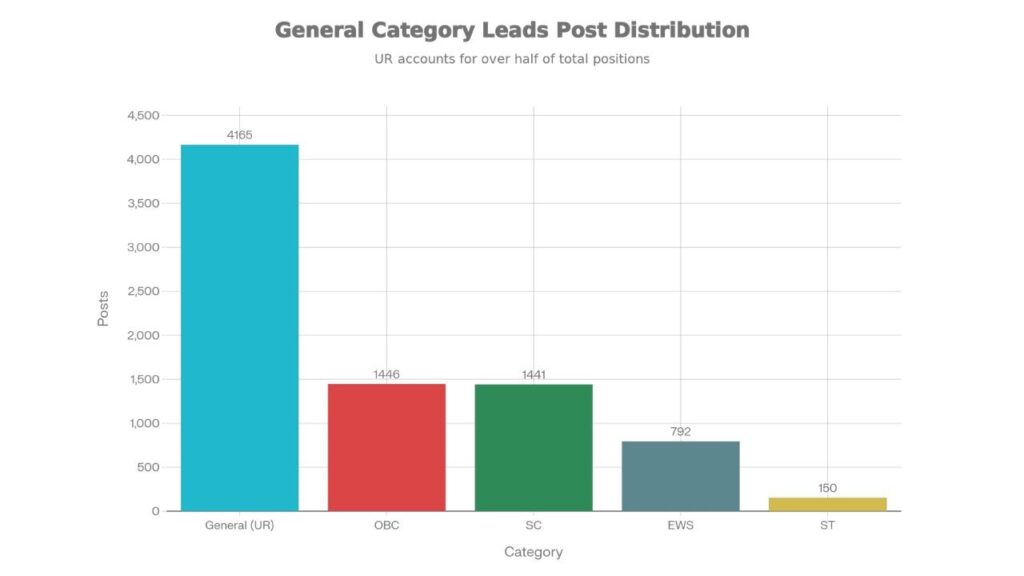
Knowing the rival is the first step. The commission has made available a clear breakdown of the 7,994 seats for various categories. Look out the chart whether you are from the General category or seeking a reservation? Here is the breakup of posts:
Distribution for UPSSSC Lekhpal in a Category-wise
Firstly, the General (UR) Category is on the top with more than 4000 seats and then there is an almost equal split between OBC and SC candidates. This huge number of vacancies will make the cutoff competitive yet manageable with good preparation.
Are You Eligible?
Before you hurry to the cyber cafe or switch on your laptop, let us confirm your eligibility. The rules are simple but hard:
Educational Qualification: The candidate should have completed 10+2 from any recognized board.
Top PET Requirement: And this is the most important part. You must hold a valid score card from UPSSSC PET 2025. The Mains exam will be short listed solely on your PET 2025 normalised score.
UPTET Online Form 2026 portal is open to receive applications from the interested candidates or who want to make a career in teaching. D.El.Ed students or you have been around looking for this moment can apply now on the official website. Because after 4 long years, a whole new set of rules will be established, UPTET Online Form 2026 might just be your opportunity to make a difference in education.
Aspirants who wish to apply for these jobs in UP Schools must check their eligibility first, instructions, fees and the updates of this form.
Keep The Dates Marked for UPTET Online Form 2026
Event
Date
Notification Released
20/March/2026
Online Applications Start
27/March/2026
Application Deadline
26/April/2026
Correction Window Close
01/May/2026
Exam Dates
2—4/July/2026
UPTET Certificates Validity
Before, the qualification lapsed after five years, compelling a lot of aspirants to appear again in the exam just to remain qualified. Now, once you clear UPTET 2026, you are good for life. No more worries about expire-dates and reappear-ing every two years.
Another important update: The requirements for eligibility have been relaxed. As per the recent notification, all the D.El.Ed trainees including in-service assistant teachers are eligible to apply. This brings to a big problem where previously nearly 3 lakh aspirants were left out. If you are training at present or you are teaching already, you can teach, you’re in the running.
Understanding the Basics: Paper 1 vs. Paper 2
Before you are going to fill in the form in hurry, you should know that which paper is applicable to you:
Paper 1 is for candidates who wish to teach Classes 1 to 5 (Primary Level)
Paper 2 is applicable for aspirants who want to teach Classes 6 to 8 (Upper Primary Level)
Both Papers if you want to remain eligible from Class 1 to 8
Paper 1 is for people who adore the energy of young children and want to establish foundational skills. Paper 2 is tough because it is prepared for those teachers who can teach more deeper topics to older children. Taking both the examination is best shot if you are confused.
Application Fees for UPTET Online Form 2026
Category
One Paper
Both Papers
General/OBC
₹600
₹1,200
SC/ST
₹400
₹800
Persons with Disabilities
₹100
₹200
Step-by-Step Guide to Fill The Form
Keep the valid documents, photo, ID ready to fill the application because one small error can lead you to miss this opportunity.
Step 1: Visit the official portal, which is the official website of UPTET and register with email or phone, and generate your profile.
Step 2: Adhaar ID, Passport size photo, Signature on Paper, Marksheets of passed qualification be ready to be scanned or attached.
Step 3: Login on the site again to complete the UPTET Online Form 2026 application.
Step 4: Fill every block of each section and re-check it then attach your valid documents.
Step 5: Submit the form with paying its fees through online payment methods.
Step 6: Make sure to keep the copy of the application with yourself in a hard copy.
Eligibility Details for the Applicants
For Paper 1 (Primary Level):
D.El.Ed/BTC pursuing or completed students are eligible to apply.
Any degree + B.Ed completed students with a minimum 50% score.
12th + 4-year B.El.Ed completed course is required to fill this application.
For Paper 2 (Upper Primary)
2-year D.El.Ed/BTC + Any Degree
Graduation/Masters + B.Ed also required
4-year BSc/B.El.Ed course + 12th Marksheet
Candidates who are fit in this range 18 to 35 years can apply.
The UPTET Online Application Form 2026 is your chance to make your dream to become a teacher come true. You can take this exam which is valid for lifetime now and its eligibility is expanded. So, apply before the timeline ends.
As you can face server crashes or document mishaps or panic while filling the form. Begin your preparation today, we will collect your documents this week and it further guide you through the entire process.
Educational boards have different advantages and disadvantages for students in India. Schools are the first stage for students to build their knowledge and shape their minds for a career. A student’s entire future depends on it. If you are a parent or educator then you must understand that when it comes to the classic debate of CBSE vs State Board, there is no one-size-fits-all answer.
There are factors including a student’s learning style, future goal, or central/state opportunities which can help you to decide the right one. So, let’s walk through this guide which explains the core differences between CBSE and State Board to help you make the right decision.
What is The CBSE Board?
CBSE offers a standard curriculum for students, schools authorized by CBSE board offer the same syllabus whether it is in Mumbai or Lucknow. This is best for students who change their cities frequently, so their studies won’t be disturbed. It is managed under the Union Government and heavily focused on Science and Mathematics. Schools offer both medium English and Hindi.
What is a State Board?
In India, every state has its own educational board for schools. The curriculum is designed to have one state’s language along with English as the primary language. For example, Hindi/Sanskrit in UP board and Marathi in Maharashtra board. It is focused heavily on the state’s geography, history, culture with leaning more towards science and mathematics.
Best board for students who are aiming for state-level government exams or jobs. The lessons are also easy and point-to-point that will help students to easily understand their topic within less time.
Core Differences in CBSE vs State Board
To understand which board is better, we need to compare them across several critical parameters.
1. Curriculum and Syllabus
CBSE: The syllabus has been designed considering NCERT curriculum which is more inclined towards integrated theory and practical aspects. Students who have high level of analytical thinking can easily handle the CBSE syllabus as it is not based on rote learning.
State Board: They punch a lighter syllabus but are heavily skewed towards a local language, history and geography. That curriculum would not be gone into with the same depth in CBSE.
2. Difficulty Level and Grading
CBSE: The exam structure is tough and built to test students’ reasoning skills. Scoring basically depends on continuous and multiple exams in a year which reduces the pressure of a single final exam. overall difficulty level is high in CBSE board for students.
State Board: Traditionally, this has come down to relatively simple calculations and memory-based tests. The end of year board examination is the most important one. In general, students consider that it is simpler to get high marks in the State Board exams as questions are more direct.
3. Alignment with Competitive Exams
If student wanted to make their career in government sector then choose accordingly.
CBSE: If the goal is to crack national-level entrance exams like the JEE or NEET as these are the biggest exams for engineering and medical students, CBSE board students have advantage because their exam curriculum are same as students’ high school syllabus.
If student is thinking about central government jobs like IRS or defence job, the analytical foundation built by CBSE gives them a distinct edge.
State Board: State boards are excellent if the target is state-level engineering and medical entrance exams (like UPSEE or MHT-CET). They are also highly beneficial for state civil services exams, as the localized curriculum provides a strong base in regional general knowledge.
4. Extracurriculars and Holistic Development
CBSE: There is an active promotion of academic and non-academic activities by the board. The majority of the CBSE schools possess strong infrastructure in sports, arts, and debate and consider them as part of the curriculum.
State Board: It’s all studied-based. There are some extracurricular activities, but these are generally subordinate and become dependent on the management of the particular school and what they can provide.
The decision ultimately boils down to what you envision for the student’s future.
Choose CBSE if:
You are moving all over India because of your parent’s job.
The student is targeting national-level exams (JEE, NEET) or central government jobs.
You need a syllabus that’s focused on concepts and their application, and not on memorising.
You want the best of both worlds, academically and extra-curricularly with the extracurricular side not taking a back seat.
You are looking for a balanced approach with equal focus on extracurricular development.
Choose State Board if:
You live in one state permanently and have no intention of moving.
The student intends to enter the civil service, but only in that particular state.
You want the student to be well versed in regional languages and local customs.
The student is involved heavily in passions outside of school (like competitive sports or music production) and needs a more forgiving academic schedule.
Conclusion
No board is naturally “best” or “worst.” They are just for different uses.
The CBSE board reigns supreme for national competitiveness and standardized pan-India education. It equips students for the tough national exams and is very analytical in its method of teaching. hly analytical approach to learning.
State Boards provide a localized, accessible, and culturally relevant education. They tend to be more flexible, granting students additional time to partake in outside activities or to prepare for opportunities at the state level.
Evaluate students’ strengths, talk about their long-term objectives and what board is best suited for their individual path. Choose the right one over the best.
UPSSSC Excise Constable Recruitment 2026 you are one who desires an opportunity to serve in a conservative but respectable and challenging government job in Uttar Pradesh, then this might very well be the dream you were waiting for. Uttar Pradesh Subordinate Services Selection Commission Notification: Uttar Pradesh Subordinate Services Selection Commission (UPSSSC) has released the notification for Excise Constable (Abkari Sipahi) Recruitment 2026 on 6th April 2026 — a ray of hope for thousands of job seekers.
There are a total of 722 posts in this recruitment which gives an opportunity to eligible and aspiring candidates to join a prestigious organization like Excise Department of Uttar Pradesh. If you are a first time user of government job portals, you must be aware that having a complete knowledge of the recruitment process is very important.
Let’s go deep into the every information you should know about this most expecting recruit – Important Dates, Eligibility, Physical Standards, Exam Pattern.
Overview of the Recruitment
The Uttar Pradesh Subordinate Service Selection Commission (UPSSSC) recruits for the office of the Excise Commissioner, U.P., Prayagraj through its examination. There are 722 posts in all in the General and Special Recruitment category under both the heads. The following is a small report on the distribution of these vacancies:
Category
Total
Unreserved (UR)
246
Other Backward Classes (OBC)
215
Scheduled Castes (SC)
174
Scheduled Tribes (ST)
26
Economically Weaker Sections (EWS)
61
Important Dates to Remember
Deadline disaster is an aspirant’s worst nightmare ever. These dates are for your reference; make sure you mark them down so that you don’t encounter any last minute rush!
Event
Date
Official Notification Release Date
06/April/2026
Online Application Start Date
04/June/2026
Last Date to Apply Online
24/June/2026
Last Date for Application Fee Payment
24/June/2026
Last Date for Application Correction/Modification
01/July/2026
Admit Card and Exam Date
To be announced soon
Don’t wait until June 24 to complete your form. Server traffic is known to spike dramatically in the last few days, which can cause panic and potential payment transaction failures.
There are certain eligibility criteria that the candidate needs to fulfill to apply for this post, as set by the UPSSSC. Prior to collecting your files, make certain that you really meet the following criteria:
Educational Qualifications & The PET Mandate
The most essential list of academic qualifications is quite simple – you should have passed your Class 12th (Intermediate) examination from a recognized board of exat in India.
But here the actual door opener is going to be the UPSSSC PET (Preliminary Eligibility Test) 2025. You should have appeared in PET 2025 examination and possess a valid scorecard with a positive (more than zero) normalised score. If you didn’t take the PET 2025, then you can’t apply for this particular recruitment cycle.
Age Limit
Below 18 Years are not allowed and age relaxation is given for reserved category candidates (SC, ST, OBC) after the maximum age of 40 Years is given for all category candidates.
Note: Having a NCC ‘B’ Certificate will increase your chances for the selection after the examination.
Physical Standards Must Match for Your Job Rules
Excise constables don’t have the luxury of working from the comfort of their desks. It also involves a lot of fieldwork, raids and active patrolling. So the physical standards are a must.
Physical Measurement Test (PMT):
A male candidate should not be shorter than 167.6 cm. The chest size should be 80 cm when unexpanded and 85 cm when inflated (a minimum extension of 5 cm is rigorously enforced). Female Applicants: must have a minimum weight of 45 kg and a minimum height of 152 cm (147 cm for SC/ST categories).
Physical Efficiency Test (PET – Running):
You must be physically fit to complete the given task. If you are giving hours to your study then workouts and running is also important for you to get selected.
For men, 3 miles running complete in 25 minutes
For women, completing 1.5 miles running in 14 minutes
Wanting both the girls and boys to finish the run within a time that indicated their endurance and speed was nothing new. To make sure you are running close to the required standards, start training now.
Selection Process for UPSSSC Excise Constable
The Abkari Sipahi wears the uniform in several rigorous phases of execution.
Your UPSSSC PET 2025 normalized score will solely decide your shortlist. The ones who get shortlisted for the written exam will be formally invited to appear in the Mains examination.
Main Written Exam: The major test on your specialized knowledge which tests your intellectual mettle.
Physical Measurement & Efficiency Test (PMT & PET) : As already told you that the condition of your physical for the post of handling position of will before you that you can bite in a very tough condition.
Checking of Documents and Medical Examination: The final administrative and medical examinations before the letter of appointment.
Understanding the Exam Pattern
The Main Written Exam is intended to test your overall general awareness, general logical reasoning and specialized subject knowledge to a large extent.
Parameter
Details
Total Questions
100 Objective MCQs
Total Marks
100
Duration
2 Hours (120 minutes)
Negative Marking
¼ deducted for each incorrect answer.
The syllabus is too broad. Part 1 includes History of India, Geography, Current Affairs, Data Interpretation, and a few legal issues related to the Policies of Uttar Pradesh excise. In Part 2 you are examined on your Computer and IT skills, and Part 3 is devoted to UP-specific General Knowledge.
Step-By-Step Application Process
On 4th June 2026 the application window will be opened, follow these easy steps to apply for yours so effortlessly:
Access the Official Website: Visit the official site of UPSSSC at upsssc.gov.in.
Get the Notification: Check latest announcement for Excise Constable (Aabkari Sipahi) Recruitment 2026 for the available vacancies.
Authentication: Sign In with your UPSSSC PET 2025 Registration Number. This is important, you basic information will be extracted and updated.
Complete the Form: Write and recheck every information about education and personal details carefully to avoid any errors.
Upload the Documents: Photo and Signature must be in a mentioned formatted size to scan and upload.
Fee Submission: The fee is astonishingly low—just ₹25 for all categories (General, OBC, EWS, SC, ST and PH). This basically works like an online processing fee. You can also make use of Credit/Debit card, Net Banking, UPI or SBI E-challan.
Send once Finish: Check all your entries carefully. When you are perfect,submit the form and get the print out for your future reference.
To crack the exam, you need to prepare yourself with the right strategies before applying for this post. So you can make a place for yourself among 722 people. Here are some pro tips to help you prepare:
Equalize the Plane and the Bookcase: During study don’t forget about the material world. Intervals Start Adding To Your Running Stamina Early. One big mistake many candidates make is to start campaigning only after the written exam results are out.
As UP GK and state excise law covers major parts of the syllabus, you by reading specialized books on these topics can gain a good hand over other competing candidates in the examination.
Accept Mock Tests: Blind guesses are detrimental since there’s 0.25 negative marking. Logical elimination will also be studied and time management by giving mock tests.
Keep Up: Allocate 30 minutes daily to read newspapers, focusing on national news and technical advancements as a portion of the syllabus to follow current affairs.
Conclusion
The UPSSSC Excise Constable Recruitment 2026 is a great opportunity for all the candidates who have the PET 2025 scorecard and pass class 12th. That is a rare combination of work profile that is active, societal respect and job security.
The notification is already out and the application window will open in June, so the clock is ticking. Collect your required materials, plan your daily study routine and begin your physical training regimen now. All you need to do to take advantage of this opportunity and walk away with a fulfilling career for life is be consistent, disciplined, and have the right strategic thinking.
Uttar Pradesh is one of the most agriculturally capable states in India and its Top Agriculture Colleges in Uttar Pradesh are a testimony to this heritage. Whether you are a student passionate about sustainable farming, agricultural innovation, or agribusiness, Uttar Pradesh state has some of the best centers to develop your career in this important sector. If you want to study agriculture in UP, this blog is for you to see the list of top colleges, know about courses, fee structure and the admission process.
Why Choose Agriculture Education in Uttar Pradesh?
Farming in Uttar Pradesh isn’t just small-scale ploughing anymore. The state’s agricultural schools combine research and state-of-the-art technology with practical work in the field to give students the skills necessary for 21st-century farming.
In areas such as crop science, agricultural engineering, agribusiness and sustainable farming methods, these colleges provide students with the tools to become leaders in the agricultural industry.
The Top Agriculture Colleges in Uttar Pradesh
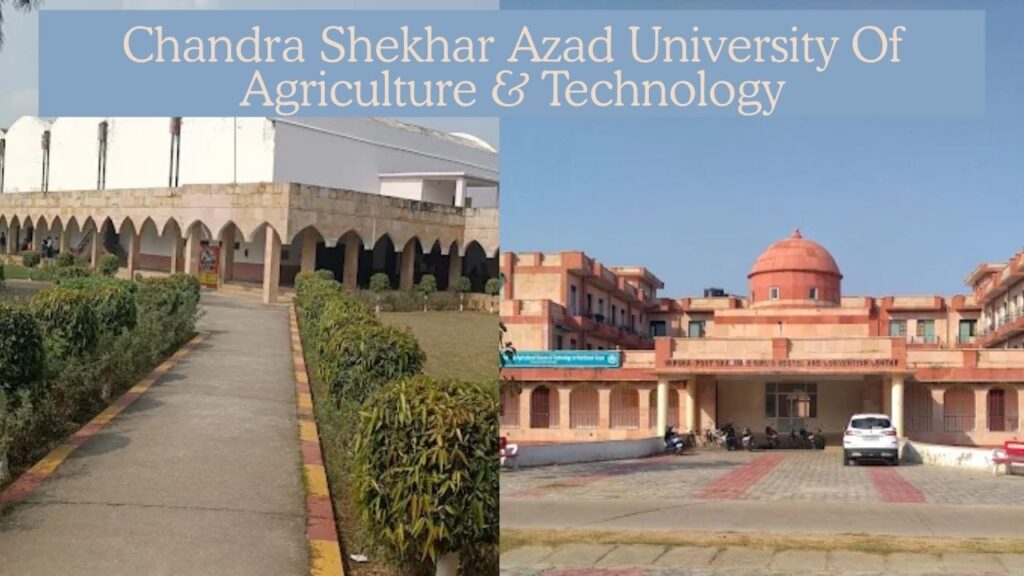
1. Chandra Shekhar Azad University — (CSAUAT), Kanpur
The CSAUAT is a leading Indian agricultural university and played a pivotal role in laying the foundation for the development of the university system of agriculture in the state right from the beginning in 1975. Located in the heart of the agro-based state of Uttar Pradesh, this Government institute has built a name for itself for a long time now.
Courses Available –B.Sc.(Hons) Agriculture, B.Tech in Dairying Technology, B.Tech Dairying, M.Sc. Agri in different specializations like Agronomy, Plant Pathology, Soil Science, and Ph.D. courses.
Fees: The B.Sc. (hons.) The annual fees of B.Sc Agriculture is about ₹1.07 lakhs per semester (The total fee is ₹4.28 lakhs for 4 years), which is very reasonable under this course. B.Tech courses are charged at about ₹1.50-1.64 lakhs per annum.
Admission: Applicants can apply if they are passed 10+2 with 50% minimum marks (with PCM/PCB subjects) and applicable for the UPCATET entrance exam. The counseling procedure is on merit.
Placement & Career Growth: It will let you earn around ₹3-5 LPA package which is quite enough for freshers. Some even receive packages as high as ₹7 LPA, depending on their skills.
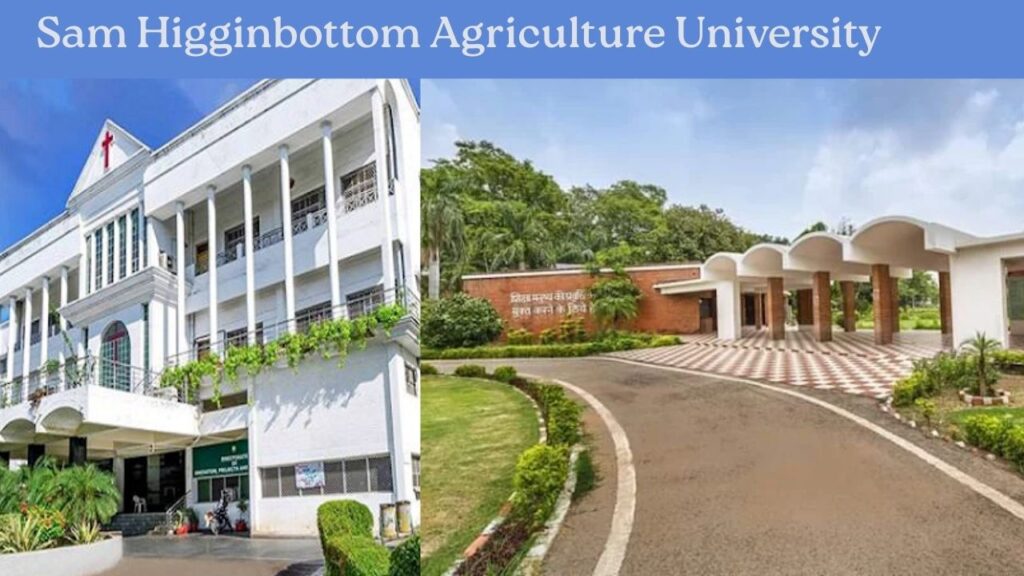
2. Sam Higginbottom Agriculture University, Prayagraj
A leading private deemed university, SHUATS is recognized for its integrated approach of farming systems and industry relevant curriculum. The campus is located at Prayagraj and has state of the art infrastructure for imparting agricultural education.
Courses are B.Sc Agriculture, B.Tech in Agricultural Engineering, M.Sc Agriculture in various disciplines, PG Diploma/ Diploma in food technology.
Fees: B.Sc. (Hons.) Agriculture fees is ₹1,08,000-1,20,000 per year at various universities in India. But SHUATS is much better when it comes to scholarships, candidates who are eligible can get waivers ranging from 30-40% on the fees, plus additional concessions for christian students.
Eligibility: Candidates must have passed 10+2 in PCM/PCMB/PCB with minimum of 45% marks. The admission is merit based on an entrance test conducted by the university, usually in the month of May.
Placement & Career Prospects: The salary package is exceptional, the one can earn around ₹6.20 lakhs. The package is based on the skills of the students that can be up to ₹3 LPA.
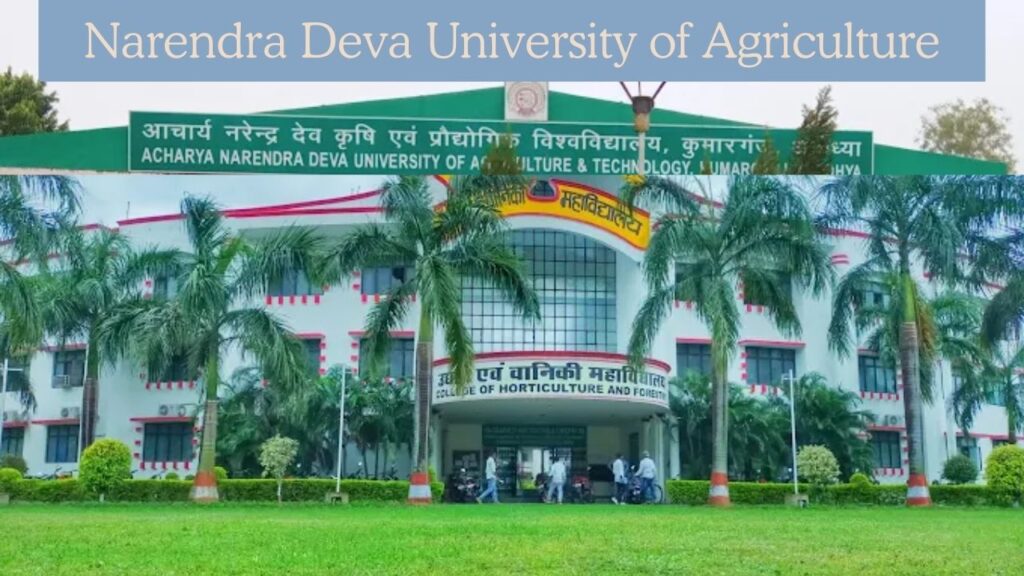
3. NDUAT — Narendra Deva University of Agriculture
The NDUAT is an agricultural university, It focuses primarily on horticulture and crop science. It is a government institution in Ayodhya and provides good quality education at low cost.
Courses available: B.Sc. (Hons) in Agriculture, B.Tech specialisations, M.Sc. courses in B.V.Sc. & A.H. (Veterinary), as well as B.F.Sc. (Forestry).
Fees: The B.Sc. (Hons.) Agriculture course fee is around ₹1.05 lakhs for 4 years, while B.Tech fees range between ₹1.64-1.70 lakhs.
Admissions: The minimum qualification is 10+2 with 50% marks in the PCB/PCM group of subjects. Admission is based on UPCATET entrance examination and then counseling on merit.
Placement & Career Prospects: The candidates who graduated have a placement with an average package of ₹3 LPA in both private and government sectors.
4. Sardar Vallabhbhai Patel Agriculture University
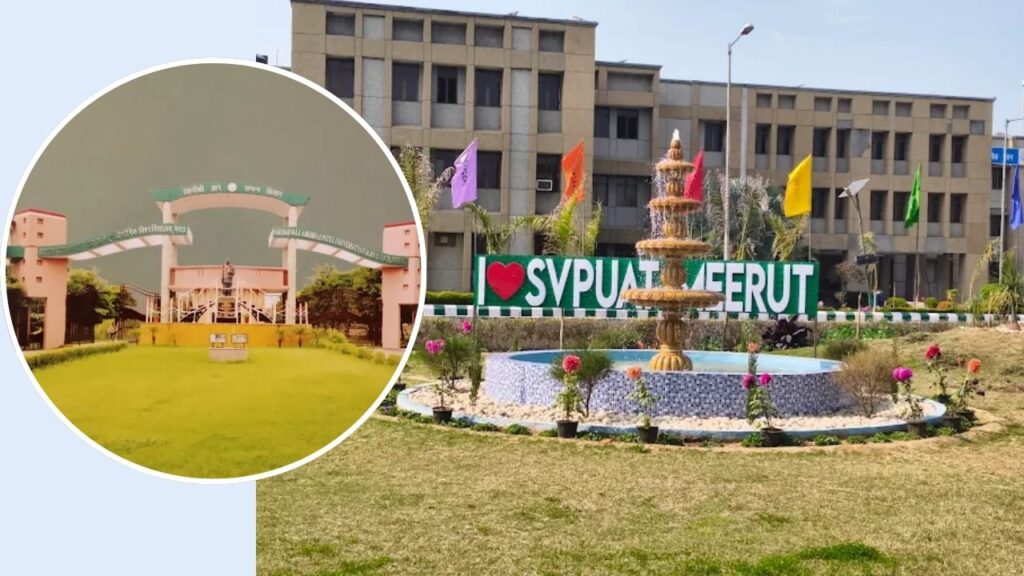
SVPUAT is the best university which is located in Meerut, making it easy for students. With all the government funding support, SVPUAT is known for its research on crop improvement and agriculture mechanization.
Fees: The fees for the whole course in AY is around ₹45,000 which is one of the cheapest in the state.
Placement: The strong ties with agribusiness companies, research institutes and government agencies enable graduates to obtain good placements.
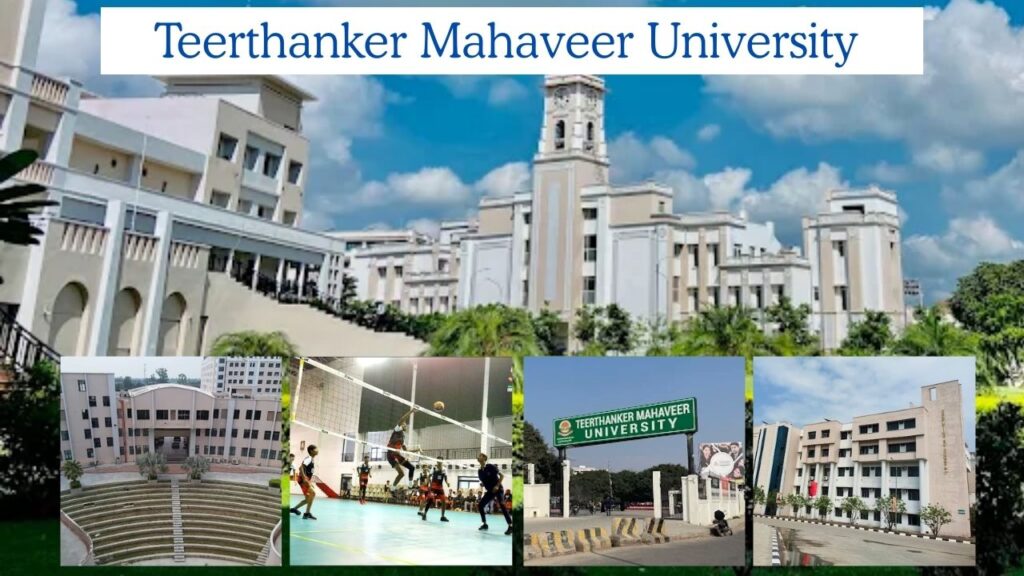
5. Teerthanker Mahaveer University (TMU), Moradabad
TMU is one of the best private universities in uttar pradesh with world class infrastructure and industry oriented syllabus.
Course Offered: B.Sc. Agriculture, M.Sc. Agriculture courses based on ICAR norms.
Fees details: The total duration of B.Sc. (Hons. ) Agriculture at TMU is 4 years The fees for B.Sc. (Hons.) The duration of B.Sc Agriculture is 3 years and for M.Sc. Agriculture 2 years. The tuition fee is Rs 45,000 per semester for MSc Agronomy.
Facilities: There are world-class labs, practical training, and strong linkages with the industry, in the university.
Understanding the UPCATET Entrance Exam
Most of the government agricultural universities in Uttar Pradesh take their admissions via UPCATET(Uttar Pradesh Combined Agriculture and Technology Entrance Test).
Here’s what you need to know:
Exam Details: The exam is held every year in offline mode by the universities. For UG courses, the exam is generally conducted in June.
Eligibility: 10+2 passed students having science subject (PCM, PCB or with Agriculture subject) with a minimum of 50% marks are eligible to apply. There is a benefit for reserved category students, they can get marks relaxation up to 5%.
Exam Pattern: The UPCATET contains 200 questions from general knowledge, agriculture science, mathematics, and English. The examination will last for 3 hours.
Age Limit: Applicants must be aged between 16-22 years for UG courses at the time of admission.
The first years of agriculture in UP colleges are generally the basic courses in crop production, soil science, plant pathology, entomology and agricultural economics. Students specialize as well, choosing from such options as horticulture, seed technology, agricultural extension, agricultural engineering.
A number of courses have fieldwork components and the Rural Agricultural Work Experience (RAWE) allows students to work with farmers as they confront challenges of farming in the field.
Career Growth & Salary Package
There are many opportunities for the graduates of agriculture. For the freshers agriculture college students —- the packages will be near about ₹20,000-35,000 per month for job profiles like agricultural assistant and farm supervisor etc in the entry level The amount varies with the university from which students have passed.
Professionals at an intermediate level with 2-3 years of experience can earn around ₹40,000-60,000 per month. The salary of Agriculture Officer or Agriculture Development Officer in the government lies between 35,000 – 60,000 Rs per month.
Conclusion
Selecting an agriculture college in Uttar Pradesh is all about shaping the future of India. Be it a renowned government college like CSAUAT or a up-to-the-minute private university like SHUATS, you will find a route that leads you both with practical experience in the real world of life and a theoretical academic purity.
With manageable fees, quality faculty, research opportunities and robust placements, the agriculture colleges in UP prove to be the best when it comes to anyone with a zeal and passion to bring a change in the agriculture scenario of India.
UPPSC Assistant Teacher Online Form application portal opens for 10 days on the official website of UPPSC. Candidates are advised to fill before 28 August 2025, correction in the application form will be made until 4 September 2025. Uttar Pradesh Public Service Commission put every detail regarding the Assistant Teacher exam in the official notification.
Post Name
Assistant Teacher
Exam Conducting Body
Uttar Pradesh Public Service Commission
Vacancies
7466
Initial Salary Range
60,000 – 70,000 per month
Selection Process
Written Exam, Document Verification, & Medical Examination
UPPSC Assistant Teacher Online Form Dates
Application Starts On
28/July/2025
Last Date for Registration
28/August/2025
Correction Last Date
4/September/2025
Fee payment last date
28/August/2025
Exam date
Update Soon
Application Fee
General/OBC/EWS
Rs. 125
SC/ST
Rs. 65
PH
Rs. 25
Eligibility Criteria For UPPSC Assistant Teacher
Completed graduation in any subject.
B.Ed & UPTET qualified candidates can apply for this post.
The age limit varies between 21 years to 40 years.
Age relaxation is given to the reserved categories, read the notification for full details.