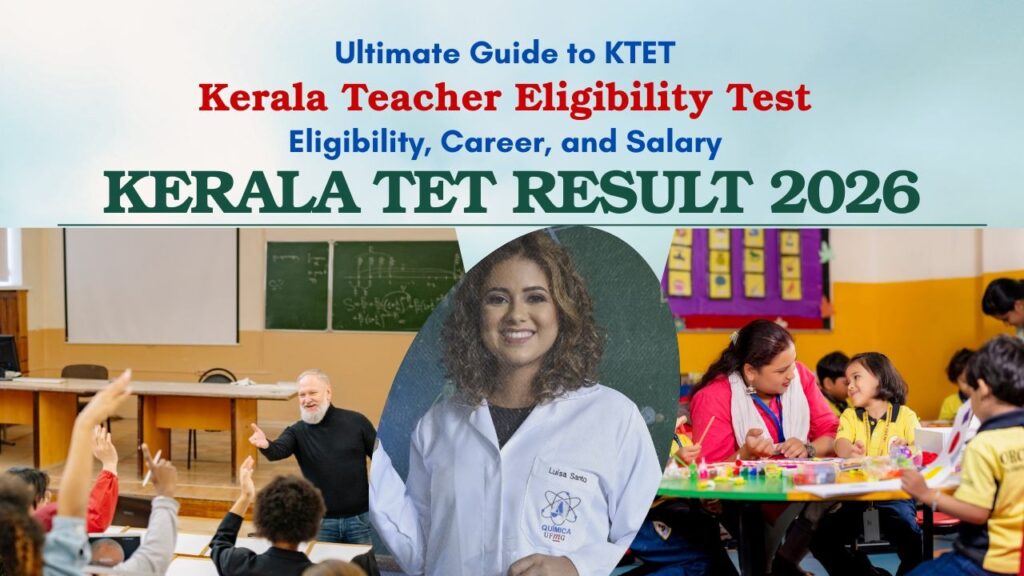
Ultimate Guide to KTET Scores, Kerala TET Result 2026, Eligibility, Career, and Salary

Kerala TET

There are a lot of students who filled the application form for teaching in Kerala and appeared in the exam. They can check their Kerala TET Result 2026 on the official website of Kerala Pareeksha Bhavan. Many candidates wonder about the salary and professional growth at this stage, so here is the full detailed guide to Kerala TET exam. From eligibility to selection process, everything is here.

Achieving a qualifying score on the Kerala Teacher Eligibility Test (KTET) will help to achieve a teaching career. If you missed the 2026 cycle, you can apply next year but knowing every detail lets you understand how to crack the exam.

Overview of Kerala TET Result 2026 

The Kerala Teacher Eligibility Test was conducted smoothly over two days, morning and afternoon shifts due to a large number of applicants.

Exam NameKerala Teacher Eligibility Test (KTET)
Conducting BodyKerala Pareeksha Bhavan (KPB)
Exam CycleDecember Session (Exams held Feb 21 & 23, 2026)
Result Declaration DateMay 26–27, 2026
Official Websitehttps://ktet.kerala.gov.in
Credential RequiredCategory, Registration Number, and Date of Birth
Certificate ValidityLifetime Validity

What is the Kerala TET (KTET) Exam?

Students in Kerala who are dreaming about becoming an educator, The Kerala Teacher Eligibility Test (KTET) is specifically structured to prepare you for teaching and provide you with an official certificate to be able to teach in school. Kerala Pareeksha Bhavan conducts this exam to check whether a candidate has the right knowledge and teaching skills to handle students effectively.  

KTET is designed to evaluate applicant’s psychological understanding of children, teaching methods and proficiency in subjects. There four separate categories for specific educational tier:

Category I (Lower Primary): Focus on Classes 1 to 5. 

Category II (Upper Primary): For those who can teach Classes 6 to 8. 

Category III (High School): Focuses on relevant subjects for Classes 9 to 12 

Category IV: Special teachers (foreign language or Arts) and Physical Education instructors. 

Why is The Kerala TET Exam Important? 

If you want to become an Educator then you need to clear this exam and please remember that this exam will allow you to teach school across Kerala only, not any other state.

Mandatory Entry Requirement 

The state government makes this test mandatory to clear for teaching. Without a valid KTET scorecard, you cannot legally apply for teaching vacancies advertised by the Kerala Public Service Commission (KPSC) or state-aided institutions. 

Lifelong Validity Benefits 

KTET certificates now come with lifetime validity, that’s a huge relief for the teaching professionals. You never have to go through the stress of retaking the test to renew your qualification status. 

Professional Credibility and Up-skilling 

Preparing for the KTET naturally moulds you into a well-rounded teacher. As it covers the curriculum which increases your understanding of educational psychology and child development. 

Step-by-Step Procedure to Check Kerala TET Result 2026

  1. Open your web browser and visit the official Kerala Teacher Eligibility Test website.
  2. Find KTET Result 2026″ link in the notice or on the homepage.
  3. Use the drop-down menu to select your specific exam category and type your Registration Number and DOB to login.
  4. Check the result and verify your name and marks to make sure that it’s yours, then download the PDF.

Eligibility Criteria for Kerala TET

CategoryClasses CoveredMinimum Educational Qualifications
Category IClasses 1–5Passed 12th with 45% marks, plus Trained Teachers’ Certificate OR Diploma in Elementary Education
Category IIClasses 6–8BA/BSc/BCom with 45% marks + Bachelor of Education (BEd) OR Higher Secondary + 4-year Bachelor in Elementary Education (BElEd)
Category IIIClasses 9–12Master’s degree with 50% marks + BEd degree
Category IV (Specialist/Language)Specialist / Language subjectsCertificate, Diploma, or degree in the specific language/subject plus Training Certificate

Minimum Qualifying Marks (Cut-Offs) 

The 150 objective-type multiple-choice questions of the KTET exam carry one mark for right answers. There is no negative marking for incorrect selections. But candidates have to score above the cut offs and its varying by their category:

  • 90 out of 150 marks — General/Unreserved Category 
  • 82 out of 150 marks — Reserved Categories (SC/ST/OBC/PH)  

Selection Process for Kerala TET

Once you got Kerala TET Result 2026 scorecard, you must follow the further path to secure a job:

Document Verification: Immediately after qualifying, you must report to the designated District Educational Officer (DEO) for a thorough physical document verification. Authorities will check your certificates, ID, and educational certificates.

Eligibility Certificate: Once the DEO confirms your documents are original, you will get a formal, valid-for-life KTET Eligibility Certificate. 

Applying via KPSC: You must monitor KPSC notification for teacher eligibility so that you can apply for government school.

Career Prospects and Salary Structure

The doors will be open for you for the lifetime of teaching. You can apply everywhere in Kerala for stability, high community respect, and a rewarding compensation package. 

Diverse Career Pathways

Primary School Teacher (LPST): Guiding children through their formative learning years.

High School Assistant (HSA): Specializing in core thematic subjects like Physics, Mathematics, Social Science, or Literature for older students.

Specialist Educator: Instructing students on Arts and curriculum activities which grow their mind into creativity. Give training on the grounds and manage sports development as a Physical Education teacher.

Institutional Growth: Experience in teacher matters, you will be promoted to the seniority level like Headmaster/Headmistress in a same school without any exam or interview..

Expected Salary Scale

Candidates after clearing KTET examination can easily get the teaching job in Kerala schools. They receive income according to their level of teaching, higher classes require more attention and effort. Primary Teachers get between ₹35,600 to ₹75,400 per month. And High School Teachers earned ₹41,300 to ₹87,000 per month

People also give private tuitions or join coaching centers to earn passive income. The exam increases the chance of getting more valuable offers in future.

Read More 👉 Complete Guide to NTA UGC NET to Become a Teacher

Conclusion 

Kerala TET Result 2026 is out now and candidates can check using their registration number and DOB. Once you get your scorecard, you have to check the teacher jobs notification in Kerala for securing a high paying teaching job.

If you haven’t applied this year, you can apply next time but knowing every detail regarding this examination will help you understand how to clear the examination and most importantly check whether you are eligible or not.
Leave a Comment

Your email address will not be published. Required fields are marked *

Sashastra Seema Bal (SSB): Full Form, Role, Recruitment 2026 & Complete Guide

Sashastra Seema Bal

If you have been curious about the invisible line of defence that protects the tranquil borders of India with Nepal and Bhutan or you are aspiring to join India’s paramilitary forces, wait no more, this is for you. Sashastra Seema Bal is one of the Central Armed Police Forces (CAPF) of India which maintains the security levels to increase protection and defend against enemies. SSB is extremely important but relatively less known. 

So let’s get down to the details of what Sashastra Seema Bal is, eligibility to grab a job and how the selection process works. 

Full Form SSB?

SSB is an abbreviation for Sashastra Seema Bal (meaning “Armed Border Force” in English). But then, there’s an interesting snippet of history here. Prior to 2001 this agency was in fact called the Special Service Bureau . The change of name reflected a fundamental change of role — from being mainly an intelligence and internal security organisation to a specialized border guarding force. 

Many people get Sashastra Seema Bal and Services Selection Board (which is responsible for selecting the officers for Army, Navy and Air Force) mixed up, but they are two very different bodies.Though they both go by the acronym ‘SSB’, Sashastra Seema Bal comes under the Ministry of Home Affairs and not the Ministry of Defence. 

Critical Role of Sashastra Seema Bal in India

SSB has the pivotal task of securing India’s borders with Nepal and Bhutan – two of the most friendly neighbors of India but borders that need to be constantly kept under watch for smuggling, illegal immigration and other security threats.The force covers some 2,400 kilometers of border – about 1,751 with Nepal and 699 with Bhutan. 

These days, the force are armed with high-tech surveillance gadgets such as unmanned aerial vehicles (UAVs), micro UAVs, hand-held thermal imagers, CCTV systems integrated with automatic face recognition and auto number-plate recognition systems, and satellite phones. Over ₹5,001 crore was sanctioned for the modernization of the Sashastra Seema Bal, with ₹4,775 crore already spent during the period of 2015-16 and 2025-26. 

SSB Recruitment 2026

If you are planning to appear for SSB then 2026 brings good news for you. The organization declared the notice about huge recruitment for the various categories posts under the SSB Recruitment 2026.

Constable Recruitment 2026

The biggest vacancy notification dated 16/March/2026 is for a total of 827 posts of Constable in various trades and Driver posts. The online registration will be available from 21/March/2026 to 20/April/2026. 

PostVacancies
Constable (Driver)553 (Male only)
Constable (Veterinary)34
Constable (Washerman)74
Constable (Barber)43
Constable (Tailor)41
Constable (Gardener)41
Constable (Cobbler)25
Constable (Carpenter)7
Constable (Water Carrier)5
Constable (Waiter)3
Constable (Nursing Orderly)1

Head Constable Recruitment 2026

In addition to Constable recruitment, SSB has released a recruitment notification of 233 candidates for Head Constable. These are specialized Communication, Electrician, Steward and Veterinary posts etc. Also, there are 51 Sub-Inspector posts for the special medical and technical categories like Staff Nurse, Pioneer and Communication experts. 

Candidate’s Eligibility?

Students who passed their 10th this year can join this participation in order to achieve a government job. Constable (Tradesman/Driver) posts are a good entry level position for high-school students. But a heavy vehicle driving license is a must for the post of Driver. 

For the head constable, you need to have 10th and 12th class marksheet in your hand and lie between the age limit of 18 to 25 years for the post of Constable and 18 to 27 years for the post of Head Constable, relaxable for reserved categories in accordance with the government instructions. 

Selection Process

The rigorous and multilayered SSB selection process is meant to weed out candidates who are not physically fit, mentally alert and technically knowledgeable:

PET: It measures your physical endurance by making you run, do long jump, high jump and other tasks.

PST (Physical Standard Test): Measurement of height, chest expansion and weight according to norms.

Written Examination: It is an objective type test on content General Knowledge, Mathematics, Reasoning and Languages.

Skill Test/Trade Test: Practical test of your trade skill (driving, tailoring, etc)

Verification of documents: verification of educational certificates, dob proof, adhar card, etc., of identity proof category certificates

Medical Examination: A complete physical examination to ascertain whether or not the individual is fit enough to serve. 

Salary and Benefits

Sashastra Seema Bal provides good pay under 7th Central Pay Commission. The constables are in Pay Level-3 having a basic pay of ₹21,700 and Head Constables are given Pay Level-4 with a basic pay of ₹25,500. The salary may vary with respect to post and the posting place, as per them it lies somewhere between ₹30,000 to ₹45,000+ starting monthly salary with allowances which includes Dearness Allowance, House Rent Allowance, Transport Allowance and Border area allowances (special) also.

Other benefits include free medical facilities for the employee and family, leave travel concession, pension benefits, and the glory of serving the nation in a uniformed force. 

Read More:- PA, DEO, LDC & Steno Posts Exam Date 2026 is Out Check Bihar Vidhan Parishad Site

How to Apply

  1. Applications are to be filled up through online mode only at the official website of Sashastra Seema Bal. 
  2. So check on the SSB site for registration.
  3. After registration, you can fill your application form with correct details.
  4. Candidates should keep the scanned copy of their photograph, signature, educational certificates etc. and other category certificates handy before applying. 
  5. Attach these documents along with application and pay the requisite fees of the form.
  6. Click on submit and save a hard copy with yourself.

Tips for Aspiring Candidates

If SSB Recruitment 2026 is in your plans, here are some useful tips for you:

  • Begin your preparation early: Physical fitness is not like a candle which can be lit up or confined easily.
  • Start running and strength training at least two to three months before the PET. 
  • Trade in mind: If you are applying for the post of tradesman, you should work regularly at your trade.
  • Stay active: Regularly check the Sashastra Seema Bal site for notice and recent updates because they don’t connect you directly. 
  • Documents: Take all the valid documents in your hand within the proper format. 
  • Medical fitness: Have a pre-medical check-up to detect any potential trouble at an early stage. 

Conclusion

Sashastra Seema Bal provides a once in a lifetime chance to serve the nation and experience the thrills and gratification of paramilitary life. Whether you are 10th pass or12th pass, the 2026 recruitment drive is a golden chance for you. The application process is set to start on March 21, 2026, and with more than 1,000 vacancies notified, this is the time to apply. 

Keep in mind that Sashastra Seema Bal selection is not just for getting a job in the government department, but it is for joining a force that defends India and our Himalayan neighbor’s peace. If you are devoted, fit and committed to serve, Sashastra Seema Bal may be your door to a fulfilling career in service of the country. 

Leave a Comment

Your email address will not be published. Required fields are marked *

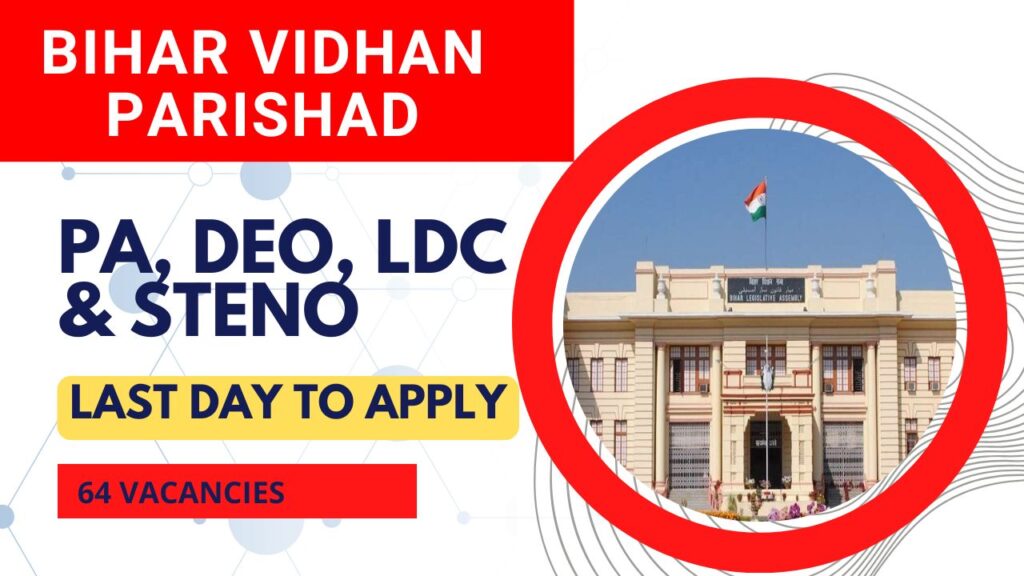
Bihar Vidhan Parishad PA, DEO, LDC & Steno Recruitment 2026

Bihar Vidhan Parishad

Bihar Vidhan Parishad BVP Recruitment 2025: Bihar Vidhan Parishad (BVP) under Government Of Bihar has invited BVP Recruitment application for 64 vacancies of Personal Assistant, Data Entry Operator (DEO), Lower Division Clerk (LDC), Stenographer posts. Eligible candidates can apply from 28 November 2025 to 05 January 2026. The applicant must be above 18 years of age and there is an age limit for maximum which is 42 years on 01 August 2025. For more information, candidates can visit the official website or read the notification. 

If you are an intermediate pass or graduate or a sure shot middle class, you are sure to get posts in Bihar Vidhan Parishad: the door is open for all. 

Dates, Application Fee & Short Details of Bihar Vidhan Parishad Recruitment

OrganizationBihar Vidhan Parishad
PostsPersonal Assistant, DEO, LDC & Stenographer Post
Vacancy 64
Application FeeRs. 100/
Last Date To Apply05/January/2026
Fee Payment Last Date07/January/2026
Exam DateUpdate Soon
Official WebsiteClick Here
PositionVacanciesMinimum QualificationStarting Salary of a Candidate
Personal Assistant—PA7UG Degree/Stenography 100 wpm & also Typing Speed 30 wpm₹44,900 accor. to 7th pay Level 7
Data Entry Operator—DEO35Intermediate Marksheet/133 keystrokes per minute₹25,500 accor. To the (Level 4)
Lower Division Clerk—LDC10Intermediate Marksheet/Speed should be 30 wpm₹19,900 – ₹63,200 (Level 2)
Stenographer12Graduation/Stenography 80 wpm/Typing 30 wpm₹25,500 – ₹81,100 (Level 4)

The position of DEO is undoubtedly the star of this recruitment with a staggering 35 vacancies – your chances of selection are truly bright! But don’t rule out the PA position if you have the stenographic skills, the pay is unbelievable at Level 7, it affords the best financial package of any job. 

Read More :- A Complete Guide to Cybersecurity Courses for Beginners and Career Switchers

Age Limit For Bihar Vidhan Parishad Recruitment

Minimum Age Limits

PostMinimum Age
DEO / LDC18 Years
Steno / PA21 Years

Maximum Age Limits

CategoryMaximum Age
General / EWS Male37 Years
General / EWS Female40 Years
BC / EBC (Male & Female)40 Years
SC / ST (Male & Female)42 Years

Follow These Instructions to Apply For These Posts

  1. Interested and eligible candidates may apply online for Bihar Vidhan Parishad posts on 05 January 2026.
  2. Click under the “Apply Online” tab in the Useful Links section below to redirect to the submission page.
  3. Or, Apply directly from the official website of Bihar Vidhan Parishad for the post. 
  4. Submit the application form after you finish carefully. 
Useful Links
Apply OnlineClick Here
Download NotificationClick Here
Official WebsiteClick Here

Leave a Comment

Your email address will not be published. Required fields are marked *

BSc Radiology and Imaging Technology: Course, Eligibility, Fees & Career

BSc Radiology and Imaging Technology

BSc Radiology and Imaging Technology is a three-year program (with one-year internship that is mandatory in most of the institutions) that equips the students with the knowledge of medical imaging. The core science portion of the curriculum (focusing on physics, chemistry, and biology) is integrated with clinical imaging courses including: anatomy and pathology, radiographic procedures, sonography techniques, ultrasound physics, computed tomography (CT), magnetic resonance imaging (MRI), and radiation protection. 

The Bachelor of Science in Medical Radiology and Imaging Technology is becoming the backbone of diagnostic medicine today. This transformation is being driven by three coalescing factors: the full enforcement of National Commission for Allied and Healthcare Professions (NCAHP) Act 2021, the adoption of advanced artificial intelligence (AI) in diagnostic workflow, and the growing world-wide need for expert imaging technologists. 

The course is intended to prepare competent technologists (“radiographers”) who will be well versed in the operation of contemporary imaging equipment and have a solid foundation in the science of diagnostic radiology. 

Who is a Radiology Technologist?

The Radiology Technologist/Radiographer is a clinical scientist who holds at least a B.Sc. or M.Sc. degree in Radiography. They don’t just know how to run the machines, they understand the physics behind the formation of images, the physiological basis of pathology and the important issues surrounding patient safety and radiation protection. 

Why Has This Course Become Important in Diagnostics?

Imaging is at the heart of diagnostics, which are critical to contemporary medicine; more than 80% of hospital care relies on them. B.Sc. In addition to machinery handling the Technician holder needs to perform a large part in the day to day imaging workflow by the year 2026 MRIT graduates holders can expect to be involved with state of the Art technology like PET-MRI, SPECT-CT, Protocol Optimization, Post Processing, QC. 

Also this line job is work during recession. There is a long-term demand for skilled radiographers, particularly those trained in PACS and RIS, as the population of India grows older, lifestyle ailments become more common, and digital healthcare is enhanced under the ‘Ayushman Bharat Digital Mission’. 

Entrance Exams & Eligibility Details For Admission 

NEET UG 2026

National Eligibility cum Entrance Test (NEET UG) shall be the single entrance examination for admission to all the undergraduate allied and healthcare courses like BSc Radiology and Imaging Technology from the academic year 2026-27, according to NCAHP. 

AIIMS — 2026 Paramedical Entrance Test

Along with NEET, there is the AIIMS entrance Test which is held by AIIMS for paramedical courses leading to B.Sc. and M.Sc. The date of AIIMS B.Sc. Paramedical 2026 exam is tentatively on 30 May 2026. 

Note:- Candidates are requested to cross-check this with official notification as some calendars mention July for Examination, however May is the only projected window as per academic calendar.

How to apply:

  • Basic Registration: The schedules released in 2026 March/April. You can create a Registration ID.
  • Final Registration: Involves the generation of a Unique Code (RUC), payment of application fee, usually in May 2026.

Test Format: This computer-based test will consist of 90 multiple-choice questions (MCQs) on biology/mathematics, chemistry, and physics and will last for 90 minutes. Any wrong answer can take away ⅓ marks.

Admissions at JIPMER & PGIMER

JIPMER (Puducherry): B.Sc admissions The admissions to the B.Sc shall be The Allied Health Science at JIPMER (Puducherry) for the year 2026 will be on the basis of the NEET UG scores. JIPMER normally holds its own counseling for these seat(s). 

PGIMER (Chandigarh): The institution holds a separate CBE, these are usually conducted in the months of August/September. The process of application normally commences in June. 

State and Private University Tests

CUET (Common University Entrance Test): Central universities, such as Banaras Hindu University (BHU), utilise the CUET. The essential subject combination for Radiology is Physics, Chemistry, and Biology / Mathematics.

Manipal: in MAHE, Phase 1 is scheduled for April 2026 for admission test, and the next Phase 2 for May 2026. 

CMC Vellore: It is a tough Institute level CBT (Computer Based Test) followed by a Step-2 evaluation (Practical tests and interviews.) 

Eligibility Criteria 2026

Educational qualification: Should be passed class 12th board with physics, chemistry and biology (pcb) and English. Some of the institutes like AIIMS allow mathematics (pcm) for Radiology courses.

Minimum Marks: For the general/EWS/OBC category, it is 50% aggregate and for the SC/ST category, it is 45%.

Read More:- Supreme Court Law Clerk Recruitment 2026 Notification Details

List of Colleges For BSc Radiology and Imaging Technology

There are 140+ colleges around India that offer BSc Radiology and Imaging Technology without taking too much fees, especially in government colleges. If you have interest in lab technologies or figuring out body structures and making reports then take admission for securing your career in this field.

CollegeLocationApprox. FeesNotes 
AIIMS—New DelhiDelhi₹4,500Elite training facility as it is Top-ranked college
PGIMERChandigarh₹10,500Members are mindful and placements opportunities
JIPMERPuducherry₹94,000Excellent internships
AIIMS—RishikeshUttarakhand₹46,000High packages up to ₹24L
GMCHChandigarh₹39,000Affordable govt option
Integral UniversityLucknow, UP₹3.15LGood infra, local pick
Parul UniversityVadodara₹4.6LPrivate, placements ₹6L avg
SGT UniversityGurgaonVariesModern facilities

Academic Curriculum for the Course 

Theory and laboratory practice are included in the curriculum of BSc Radiology and Imaging Technology. The following topics were covered: Human anatomy/physiology, Imaging Physics, General Radiography, Ultrasound Imaging, CT Scanning, MRI Basics, Radiobiology and Radiation Protection, Digital Image Processing, and General Patient Care. 

BSc Radiology and Imaging Technology is a four year degree course. The first three years were spent attending didactic lectures, practical laboratory courses, and clinical observations. The fourth year is a required, full-time clinical internship during which the student serves as a student technologist at a hospital. 

PhaseDurationFocus Areas
Year 1Semesters 1-2Basic Medical Sciences, Communication Skills, Computer Basics
Year 2Semesters 3-4Core Radiography, Radiation Physics, Conventional Imaging
Year 3Semesters 5-6CT, MRI, USG, etc Interventional Radiology
Year 4Semesters 7-8Clinical Internship, Logbook, Project Work

The 2026 Curriculum is intended to establish progressively developing competencies. 

Year 1: The Foundation

The goal is to give the student a foundation in the human body and the hospital setting.

  • Human Anatomy & Physiology: This Is Not a “Fly By” Tour Students are required to study detailed osteology (bones) to learn how to position for radiographic.
  • They are taught body systems physiology to understand how to administer contrast media.
  • General Physics: The basic laws of physics applicable to the production of radiation.
  • Clinical Pathology & Biochemistry: Basics of blood tests (creatinine, urea) which are important prior to contrast administration.
  • English & Communication: Necessary to describe techniques to patients and to calm them. 

Year 2: The Core

Students access the realm of diagnostic imaging in BSc Radiology and Imaging Technology.

  • Radiation physics: The production of X-rays, their interaction with matter, and the design of X-ray tubes.
  • Radiographic Positioning, the science and art of positioning the patient to radiograph the body part (i.e. Towne’s view for skull, Skyline view for patella).
  • Darkroom to Digital: Darkrooms may be a thing of the past, but knowing the history is key. Emphasis is placed upon Computer Radiography (CR) and Direct Digital Radiography (DR) modalities.
  • Radiation Protection: Students learn the ALARA (As Low As Reasonably Achievable) concept along with shielding and dose limit for worker and patient. 

Year 3: The Advanced Frontier

This is the year when the high-end modalities that shape contemporary radiology are covered.

  • Computed Tomography (CT): CT Physics, generations of scanners, helical vs. axial scanning, and protocols for different body regions.
  • Magnetic Resonance Imaging (MRI): Principles of the complicated physics of nuclear magnetic resonance, safety issues related to ferromagnetic materials, and pulse sequences.
  • Ultrasonography (USG): Essentials of acoustics, transducer design, and the technologist’s function in the operation of the sonographer.
  • Interventional Radiology (IR): Orientation to the Cath Lab Sterility and Equipment utilized in Angiography.   
  • Radiation and Radioactivity in Nuclear Medicine Basics of PET-CT Handling of Radioisotopes including Technetium-99m. 

Year 4: The Internship

The purpose of the internship is to transition a student to a worker. Interns rotate through different departments, including X-ray, CT, MRI, Emergency and ICU. They need to keep a logbook of cases they have done, and are evaluated on their technical skills and dealing with patients. 

BSc Radiology and Imaging Technology Career Scope & Salary

Skilled radiographic professionals are sought after in India’s growing healthcare sector. Radiology technicians also work in public and private hospitals, diagnostic laboratories (pathology and imaging centres), government health schemes, private practitioners and emerging digital health platforms including teleradiology and artificial intelligence (AI) imaging start-ups. 

BSc Radiology and Imaging Technology

Clinical Roles

  • Radiologic Technologist: The typical baseline position. Duties are to perform x-rays, triage patients and maintain radiation safety .
  • CT Technologist: So, what’s the place in the hierarchy. Knowledge of cross-sectional anatomy and contrast administration is required.
  • MRI Technologist: A step up. MRI scanners are complicated, and patient safety (screening for metal) is critical. The technologists here typically make 20-30% more than a general radiographer.
  • IR Technologist: The Cath Lab Experience. In a stressful environment, high volume dealing with cardiac and vascular interventions. You’ve got to wear thick lead aprons for long hours – but when you’re done, you’re king and you’ve got money in your pocket.
  • Mammographer: Expert in breast imaging. Because of the sensitive nature of the exam, female technologists are preferred for this position. 

Sector & Role Wise Salary (2026)

RoleExperienceSectorApprox. Monthly Salary (INR)
Jr Technologist0-2 YearsPrivate sector Hospital Rs 18–25k
Jr Technologist0-2 YearsAIIMS/Govt (Contract)Rs 25–35k
Sr Technologist5+ YearsCorporate HospitalRs 45–60k
MRI Specialist3-5 YearsDiagnostic ChainRs 35–50k
Application Specialist2-5 YearsMedical Device Co.Rs 50–80k + other allowance
Govt. PermanentEntry LevelGovernmentRs 45–55k (Initial + Allowance)

Who is Ideal For this Course?

BSc Radiology and Imaging Technology course is for students who like science and technology and want to work in the health sector. The ideal candidate: is detail oriented, is able to follow protocols which are critical for safety, is comfortable using computers and complex machinery, and can interact with patients (explain procedures, position patients). A BSc radiology student should be well versed with biology and physics and should also be calm and responsible because any mistake in imaging can impact the diagnosis. 

Future Value of BSc Radiology and Imaging in Healthcare

In India’s upcoming healthcare scenario, BSc Radiology and Imaging Technology are a must-have. With the proliferation of private hospitals and diagnostic chains in Tier II/III cities, the need for imaging services is on the rise.

Technologies, such as AI-based image analysis, hybrid imaging (e.g. PET/CT), etc, indicate that the profession will continue to be hitech. So BSc (Hons) in Radiography graduates will play a vital role in connecting technology and patient care. The course produces practical professionals who can contribute immediately to hospitals’ diagnostic teams, which is critical in a country like India, where there is a shortage of doctors. 

Conclusion

In a day and age when technology and medicine are coming together closer than ever, the Radiology Technologist is at the controls of the medical world’s most powerful machines. For individuals who are detail-oriented, have a caring nature, and technical mind, BSc Radiology and Imaging Technology offers a fulfilling, stable and ever-changing career. 

Leave a Comment

Your email address will not be published. Required fields are marked *

Indian Army SSC Technical 68th Men Recruitment: Details for Engineering Graduates

Indian Army SSC Technical 68th Men Recruitment

If you’re an engineering graduate eyeing a career in uniform, the wait is over. Indian Army SSC Technical 68th Men Recruitment is going on. The Indian Army has thrown open applications for the 68th Short Service Commission (Technical) Course, Men, set to commence in April 2027. Alongside it, the 39th SSCW Tech entry has been announced for women candidates. Together, the two intakes will fill 381 vacancies, and this piece breaks down everything a male candidate needs to know before hitting submit.

How Many Seats Are Actually Available

There are overall 381 posts, out of which 350 are for SSC Tech 68th Course for male candidates and 31 posts are for SSCW Tech 39th Course for female candidates. That’s a meaningful jump from recent cycles, where vacancy counts hovered in the double digits, so this is genuinely one of the larger technical intakes the Army has floated in a while.

Important Dates You Cannot Miss

The online application portal for male candidates opens from 9/July/2026 to 7/August/2026. That’s a short window for filling out the application form. 

ItemDetails
Opening date (male)9/July/2026
Closing date (male)7/August/2026
DurationLess than 30 days

Applications are submitted exclusively through the official Join Indian Army website, joinindianarmy.nic.in. No offline forms, no third-party portals — anything else claiming to process your application should be treated as a scam.

Who Can Apply

Eligibility is fairly specific, and getting it wrong is the easiest way to get your application rejected at the shortlisting stage itself.

Age limit: Candidates must be between 20 and 27 years old as reckoned against the course commencement benchmark.

Educational qualification: You need a B.E./B.Tech degree in a relevant engineering discipline from a recognized university. Final-year students aren’t excluded either — they can apply provided they submit proof of having cleared the degree, along with semester-wise mark sheets, by the time the selection process demands it.

Marital status: The entry is open only to unmarried male candidates.

Nationality: Applicants must be Indian citizens, or in specific cases, subjects of Nepal or Bhutan, or persons of Indian origin holding the requisite eligibility certificate.

The Selection Process For Indian Army SSC Technical 68th Men Recruitment

Here’s something that surprises a lot of first-time applicants — there’s no written entrance test for SSC Tech entries. Selection runs entirely on academic merit and a structured evaluation process. Once your application is cleared based on your records which you have provided, you’re called for the Services Selection Board interview.

The SSB interview is conducted over several days that takes assessment step-by-step to check the candidate’s leadership potential and mental resilience. There are group tasks, and personal interview rounds that are structured in a way that test skills of candidates rather than just textbook knowledge. 

Those who clear the SSB are required to appear for medical examination, and the medical board recommends the merit list after taking medical fitness into consideration. 

Where and How Long the Training Runs

Candidates who qualify in the final merit list will be put through the 49 weeks training at Officers Training Academy(OTA), Gaya, Bihar. Should the course commence as planned in April 2027, the training would end in the beginning of 2028 and exact training calendar will be confirmed by the Indian Army closer to the start of the course. 

During training, cadets receive a monthly stipend of ₹56,100, which cushions the transition before commissioning.

Read More 👉 Government Jobs After Graduation in India: Complete Guide for 2026

What You Earn Once Commissioned

On successful completion of the training, candidates are commissioned as Lieutenants in Pay Level 10 having a minimum pay of ₹56,100 which can go up to ₹1,77,500 in Level 10 as per the 7th CPC Pay Matrix. With military allowances and field area pay, and other perks added, a fresh lieutenant’s effective pay package normally works out to about the ₹17-18 lakh per annum figure although that doesn’t include free medical coverage or travel concessions. 

As officers move up the ranks — Captain, Major, and beyond — pay levels rise accordingly, all the way up to the Chief of Army Staff at Level-18.

Conclusion 

If you’re an engineering graduate looking for a career that combines technical work with leadership responsibility and long-term financial security, this is one of the more accessible entry points into the Indian Army officer cadre — no written exam, a straightforward merit-based shortlisting process, and one of the larger vacancy counts seen in recent SSC Tech cycles. The application window is short, though, so candidates planning to apply should start gathering their engineering mark sheets and eligibility documents well before 9 July 2026.

Leave a Comment

Your email address will not be published. Required fields are marked *

Supreme Court Law Clerk Recruitment 2026 Notification Details

Supreme Court Law Clerk Recruitment 2026

Supreme Court Law Clerk Recruitment 2026 of India announced notification released on 20 January 2026 and opened the portal to receive applications for Law Clerk-cum-Research Associate (LCRA) for the year 2026, marking a fantastic opportunity for budding legal minds. Supreme Court Law Clerk Recruitment is a paid position with 200 seats available and the stipend amounting to ₹80,000 per month, making it a prestigious and fulfilling experience.

The applications started on February 7, 2026 and should be sent through the official website of the Supreme Court of India (sci.gov.in). Interested candidates are advised to send their application before the last date 10th March 2026. This is an extraordinary opportunity to acquire priceless experience in the legal industry. 

Date Schedule for Supreme Court Law Clerk Recruitment

PhaseDate/Details
Notification20/January/2026
Application Window20/January —- 7/Feb 
Exam10/March/2026 
InterviewsJune/2026
JoiningAugust/2026

Quick Eligibility Check

  • You can apply if you are a fresh LLB graduate from the 3-year or 5-year program with a cumulative score of 55% across all years and have a degree from a University/Institute recognized by NLU or from the top-10 NIRF ranked law schools (2020-2024).
  • In the academic department, the standard is well defined and just: you require 55% marks in graduation minimum, with relaxation to 50% for SC/ST candidates. 
  • Age: As on 01/08/2026 Candidate should be under 32 years and above 20 years.
  • There’s no experience required but you have to go full-time no side hustles.

Its merit-based magic: shortlisting will be on the basis of a written exam (objective + subjective on law/constitution) followed by an interview for the toppers. Question on constitutional, IPC, current affairs. 

Read More👉 Allied Medical Courses Roadmap 2026: Eligibility, NEET, Courses & Career Scope

Selection Process

Candidates have to fill out the application form to access the admit card for the examination. Follow the three phase selection process for Law Clerk Recruitment 2026, online MCQ test, Written test then prepare yourself for interview. 

How to Fill Application and Fees

  1. You need to register yourself on the official website of SCI.
  2. Login with your credential to fill the entire details required to complete the form and check again.
  3. Submit Rs. 750 via online payment to complete the process 
  4. Print out your form for offline reference.
Useful Links
Download NotificationClick Here
Apply NowClick Here
Official WebsiteClick Here

Leave a Comment

Your email address will not be published. Required fields are marked *

Scroll to Top