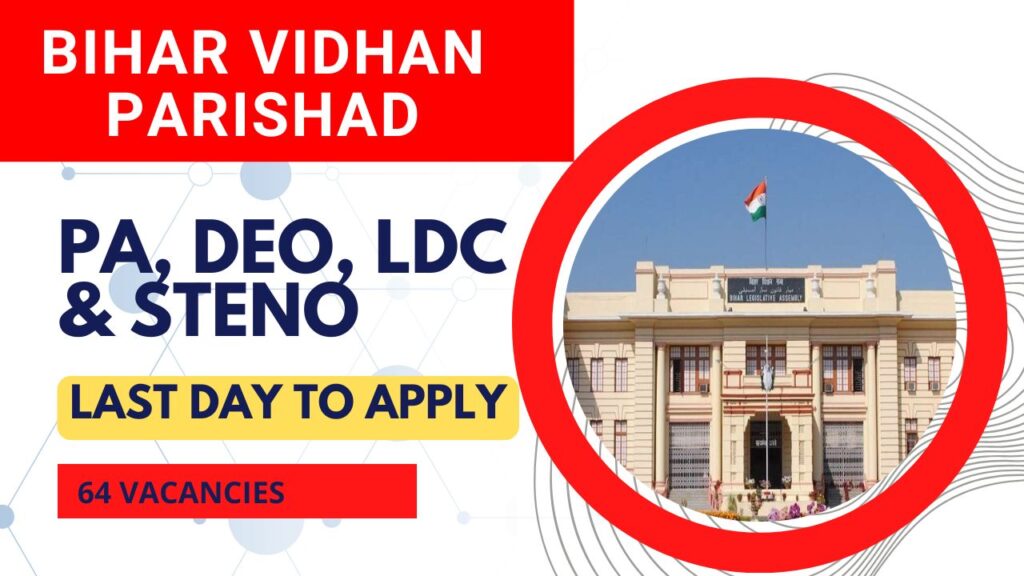
Bihar Vidhan Parishad BVP Recruitment 2025: Bihar Vidhan Parishad (BVP) under Government Of Bihar has invited BVP Recruitment application for 64 vacancies of Personal Assistant, Data Entry Operator (DEO), Lower Division Clerk (LDC), Stenographer posts. Eligible candidates can apply from 28 November 2025 to 05 January 2026. The applicant must be above 18 years of age and there is an age limit for maximum which is 42 years on 01 August 2025. For more information, candidates can visit the official website or read the notification.
If you are an intermediate pass or graduate or a sure shot middle class, you are sure to get posts in Bihar Vidhan Parishad: the door is open for all.
Dates, Application Fee & Short Details of Bihar Vidhan Parishad Recruitment
UG Degree/Stenography 100 wpm & also Typing Speed 30 wpm
₹44,900 accor. to 7th pay Level 7
Data Entry Operator—DEO
35
Intermediate Marksheet/133 keystrokes per minute
₹25,500 accor. To the (Level 4)
Lower Division Clerk—LDC
10
Intermediate Marksheet/Speed should be 30 wpm
₹19,900 – ₹63,200 (Level 2)
Stenographer
12
Graduation/Stenography 80 wpm/Typing 30 wpm
₹25,500 – ₹81,100 (Level 4)
The position of DEO is undoubtedly the star of this recruitment with a staggering 35 vacancies – your chances of selection are truly bright! But don’t rule out the PA position if you have the stenographic skills, the pay is unbelievable at Level 7, it affords the best financial package of any job.
As India steadily moves forward with its vision of becoming Viksit Bharat by 2047, the year 2025 serves as a milestone of double-speak reflecting the government’s developmental agenda. The central government has announced an array of progressive and inclusive Government Schemes this year to boost the economy, enhance social welfare and ensuring that the fruits of development reach the last mote of the country.
These interventions cover the full spectrum of agriculture, education, employment, entrepreneurship and skill development indicating a comprehensive approach to building the nation. For lobbying farmers and upskilling youth to backing gig workers and opening up education, the 2025 policy roadmap aims to fortify India’s base for enduring growth.
All these schemes have transformative aspirations – generating millions of jobs, reforming technical education, raising rural productivity levels, and increasing access to health care and research. They collectively reflect a clear intent to inclusive development and self-reliance in ensuring that the story of India’s progress touches each and every citizen.
Pradhan Mantri Viksit Bharat Rozgar Yojana
Among the most challenging 2025 job schemes is the Pradhan Mantri Viksit Bharat Rozgar Yojana (PMVBRY) launched on 15 August 2025, with a whopping outlay of Rs. If successful, this employment-linked incentive scheme would lead to the creation of 3.5 crore jobs in two years, with maximum benefit going to first time job seekers entering workforce.
The new scheme is aimed at the youth who makes up 68 percent of the country’s population first-time employees would be eligible to receive up to Rs 15,000 in two installments and the employers will get an incentive of up to Rs 3,000 per month for the hire of new staff. The scheme has a special emphasis on manufacturing and MSME sectors and extends financial assistance by way of direct benefit transfer to incentivise formal employment and cover social security.
MERITE Scheme: Transforming Technical Education
The MERITE Scheme is expected to provide around 7.5 lakh students the benefits of enhanced quality, equity and governance in technical education in line with National Education Policy 2020. Major interventions comprise internship options, updation of curriculum aligned with the industry, faculty development programmes, research centres and skill labs for increasing the employability and diminishing the unemployment of engineering graduates.
The PM Dhan-Dhaanya Krishi Yojna was announced by prime minister Narendra Modi in October 2025. Inspired from Aspirational Districts Programme, this scheme focuses on 100 low-productivity districts of the country covering around 1.7 crore farmers, of which the majority are small and marginal.
The schema subsumes 36 existing schemes of agriculture and allied sectors and is being implemented through 11 ministries with focus on districts which have low crop productivity, medium cropping intensity and have been identified as “having languishing status of credit flow”. The programme is expected to enhance irrigation facilities, increase crop productivity, facilitate greater access to credit and storage facilities and promote sustainable farming practices.
PM Internship Scheme
The Prime Minister’s Internship Scheme was launched on 3 October, 2024 with an aim to provide 1 crore paid internship in top 500 companies of India for a period of five years. The scheme provides 1.25 lakh seats for institutions which are of 12 months duration during 2024-25 and out of that duration, 6 months is to be spent in gaining practical experience. Interns in the age group 21-24 years get a monthly stipend of Rs. 5,000 and a one-time assistance of Rs.6,000 along with industry exposure in 24 sectors, ranging from IT, banking, automotive, manufacturing to hospitality.
One Nation One Subscription
From January 1, 2025, the One Nation One Subscription scheme for students and faculty will cover 13,000 international scholarly journals from 30 leading publishers, allowing 1.8 crore students and researchers of 6,500+ government higher education and R&D institutions to access these journals. Backed by Rs.6000 crore for 2025-2027, ONOS is set to remove subscription barriers and duplication, providing free access to research of publishers including that of Oxford, Cambridge and Elsevier, thus making it easier to conduct interdisciplinary research and democratising knowledge in all Indian institutions – including those in tier 2 and tier 3 cities.
Healthcare for Gig Workers
In a major social security boost, the government also said it had registered 1 crore gig and platform workers on the e-Shram portal, offering them healthcare coverage under PM Jan Arogya Yojana (Ayushman Bharat). The program acknowledges the expanding workforce in the gig economy and offers some formal social security protection to workers in ride sharing, food delivery and other platform-based services who, until now, were without universal health insurance coverage.
Conclusion
The 2025 government schemes seem to be focused on the overall development of a nation including employment generation, skill building, farm output, excellence in education, support to entrepreneurs and social welfare. These schemes pitch in billions of dollars in investments and underline the government’s dedication to realising Viksit Bharat by 2047. If you are a farmer, student, entrepreneur, job seeker or researcher, these schemes can help you find paths to empowerment, prosperity and inclusive growth. Keep track of the eligibility requirements and how to apply through the official portals to make the most out of these programmes that are transforming the future of India.
Bachelor of Computer Applications is a great option for a career in the IT and software Industry. Many students get confused while choosing the top college for their undergraduate program, especially tech courses. A guide for BCA Colleges in Noida with Fee Structure will help them choose the right one. Not every college provides practical training, strong curriculum, and industry exposure which helps students to be prepared for the job in top tech companies like Amazon, Google, Infosys, Microsoft, HCL, TCS, and many others.
BCA is good for maintaining skills in coding, database management, web dev, and data structures and algorithms. So, if you are interested in any of these then you can choose this course but with the right college, you can get real knowledge and practice to acquire those skills.
There are no advantages to just having a degree, placement also matters when paying fees for your studies, studying hard to get a strong output then a good college matters the most.
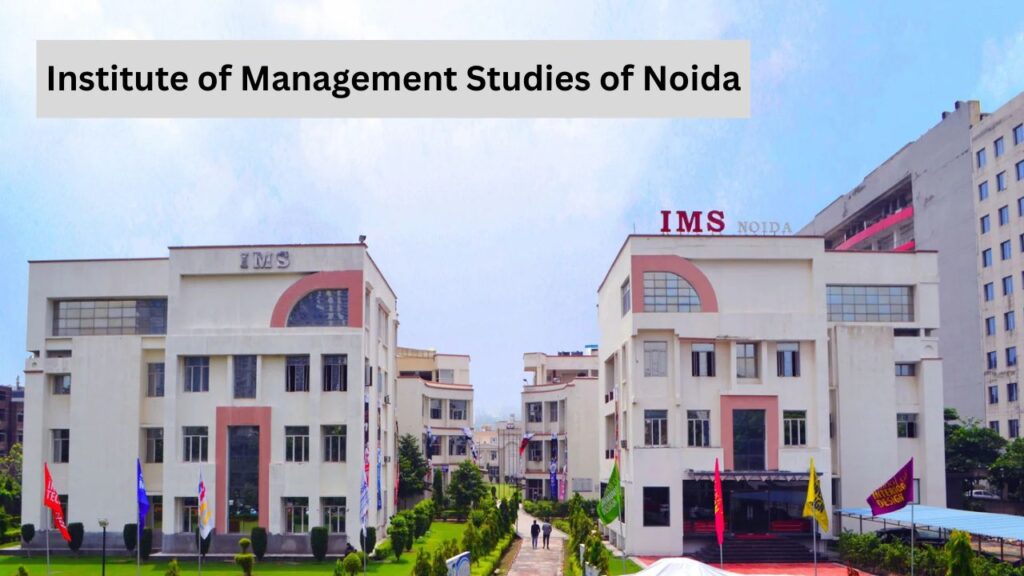
Institute of Management Studies of Noida
IMS is a private institute that offers various undergraduate and postgraduate courses. The BCA curriculum is as good as AKTU’s. If you have thought about choosing a career in tech then BCA is a good option. This college focuses on practical learning that helps students to polish their skills to be industry-ready. Industry exposure provides them with ideas of real-world projects and how to implement technical concepts to find solutions.
Admissions
For admission in BCA, this college selects students based on the Joint Entrance Exam. Students who are interested in the tech world and do not prefer B.Tech can take admission here.
Placements
IMS Noida is the top college for UG programs as it has a well-maintained record of placement and connection to industries. Students can get job opportunities after BCA and it is also ranked 2nd for offering BCA in Uttar Pradesh.
Fee
One-year fee for BCA in IMS is around Rs. 1.65 Lakhs. Candidates who can afford the fee expense can consider this college for BCA as it is best for that.
Jaypee Institute of Information Technology University
JIIT University is a great choice for students who want to join tech professionals. It offers world-class education and is recognized by the UGC. If you don’t want just a degree but also developed tech skills for industry purposes then BCA from this college is the right option for you. Computer science is a flagship department that focuses on advanced concepts such as AI, ML, Cloud Computing, and IoT.
Admission
This high-facility college selects its students through entrance exams and their 12th-class marks. Students can get their admission in this college if they have met the eligibility criteria of 60% merit score.
Placements
JIIT offers various opportunities to grow a career in the tech field. Many top tech companies are recruiting candidates from this college and offer a package of around 7 lakhs.
Fee
BCA fee is around 1.57 Lakhs for one year. Meanwhile, the B.Tech fee is double that of the BCA fee. So, students who want to study in this college but B.Tech is too expensive, consider BCA as a good option.
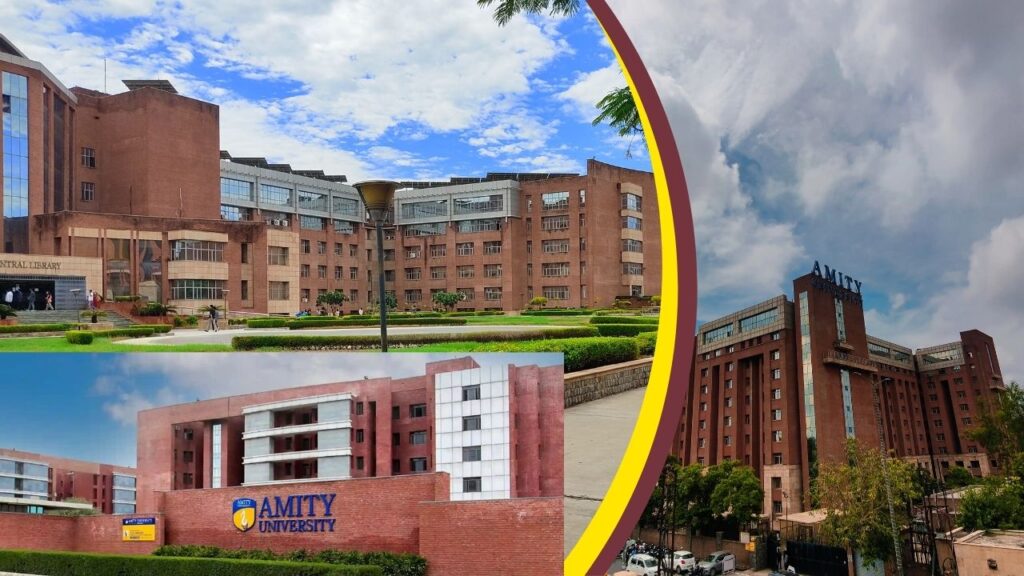
Amity University Noida
After 12th with science, students must get confused about where they should take admission for BCA. Amity University is a top university in Noida that offers high-tech labs, emphasizes innovation, and industry exposure. These are all best for the students who are learning to work in tech industries. College’s engineering programs accredited by IET. The top-ranked institution is a good option for BCA.
Admission
You want admission in air-conditioned stylish classrooms with a huge library then apply now. Admission in Amity University is based on merit of 12th.
Placement
Amity offers a strong alumni network and maintains good connections with the world leaders, giving students a chance to interact with them. MNCs like Wipro, TCS, and Accenture are recruiting from this campus.
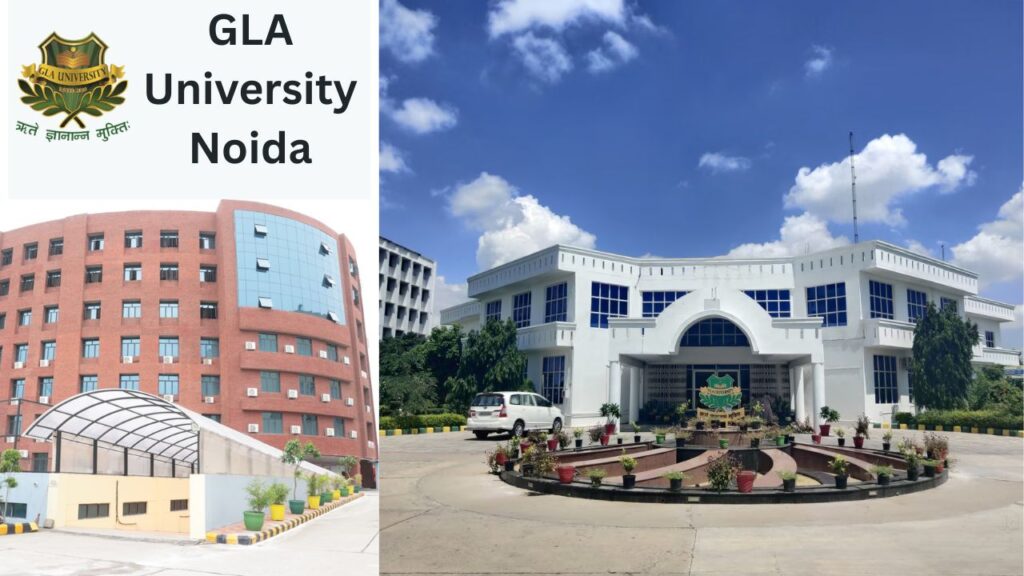
GLA University Noida
Focuses on advanced computer science and IT concepts to provide its students with great knowledge. They can get knowledge and skills required for the top industry placements.
Admission
Must have 12th class marksheet with 50% minimum score. The GLA entrance test is required for the BCA course.
Placement
The placement record is high with an average package of 7 LPA. Students can get a lot of opportunities as they are trained for industry-ready. Top recruiters are IBM, Infosys, HCL, and many more. You can get a chance to work abroad with a high package.
Fee
BCA total fee is nearly Rs. 4.8 lakhs. It’s half of the B.Tech fee of this college.
Bachelor of Computer Science is a great option for students who are interested in computer science and information technology. To work in this field requires enhanced skills and real knowledge of coding, networking, and media.
Admission
Admission is based on your 12th standard marks. Minimum 50% score from a recognized university by the student is required for the admission.
Placement
Placement chances are good, many Indian and global companies are recruiting from here. Average package is around 9.06 LPA for BCA students by companies like HCL, Yamaha, and others.
Fee
BCA fee is around Rs. 4.56 lakhs. It offers the best facilities and strong faculty support for students.
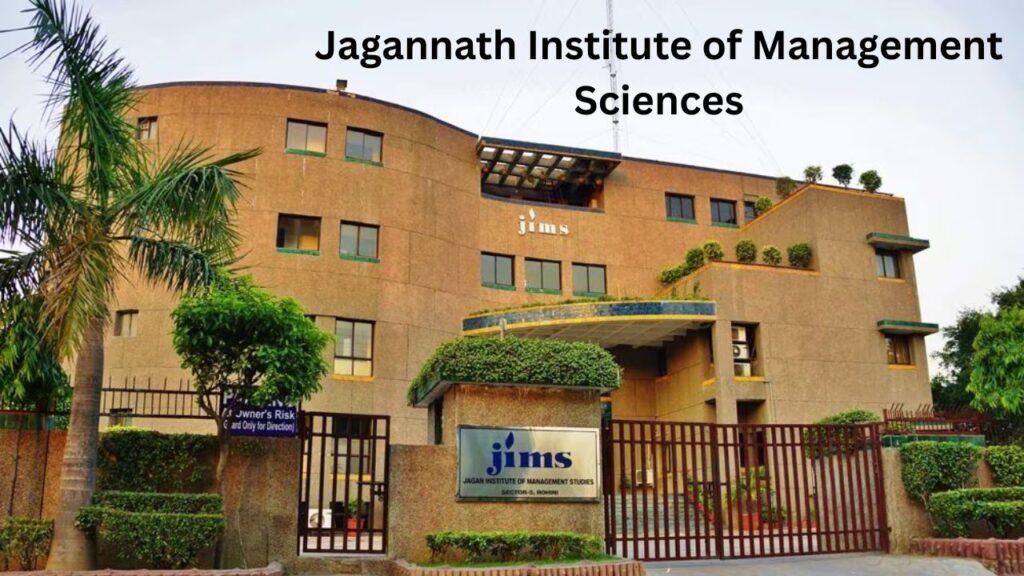
Jagannath Institute of Management Sciences
It offers industry-oriented curriculum to its students to improve their ability to provide innovative solutions to real-world problems. BCA is not just theory-based programme as it is related to tech then practical assignment is necessary for the students.
Admission
Apply now for admission in BCA through entrance test (JET) for BCA. Faculty provides full support and strong concepts in their curriculum. The decision for admission to this college is a great choice.
Placement
Strong placement record is proof that most students get a job in top companies that offer great salary packages. They can get the highest salary package of up to 9 LPA.
Fee
BCA fee is Rs 96,000 approximately. This is a one-year fee that offers a modern classroom, WiFi, hostel, and library. You can check the exact fee amount on their official website.
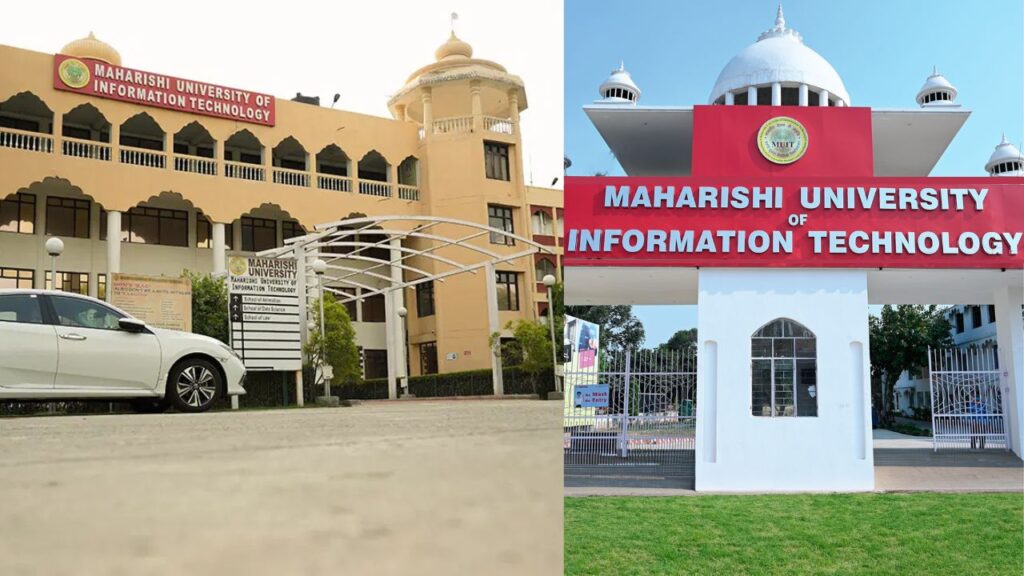
Maharishi University of Information Technology
This is a private university with many undergraduate and postgraduate programs. This university offers BCA programs with a strong curriculum, well-equipped labs, experienced faculty, and internship programs.
Admission
Students can get admission to this college based on their merit in 12th class. Apply online on their official website in the Computer Science Department. Check the admission dates then apply.
Placement
They offer great support in industry exposure to give students a chance to understand concepts of advanced technologies in companies. No worries about placement because the top tech companies like Intel, Mahindra, and Dell are recruiting from this college.
Fee
Maharishi University of Information Technology offers BCA around Rs. 80,000. It is a yearly fee for this course but some students can afford it.
Conclusion
If you are looking for an undergraduate program in computer science then these Top BCA Colleges in Noida with Fees, placement & Admission Details can help you choose the right college. This can be overwhelming when all top colleges are best in your interest, you can select one by aligning them with your budget, location preference, and faculty response.
Opting for MTech at IIT Delhi is not merely registering for a degree it is an investment towards your future, career and your net worth. As many engineering students from India apply to join IIT Delhi for its strong academics and unbeatable placement records, however the biggest question among these is always How much is the IIT Delhi MTech fee structure and what is the overall financial investment to get an MTech.
Breaking Down IIT Delhi MTech Fee Structure 2025
Fee Component
Amount
Tuition Fee (2 years)
₹3,00,000
Other Fees
₹80,600
Total Tuition Fees
₹3,81,000
Semester-wise Tuition
₹95,000
The overall expense for MTech students in 2025 is that the total fee comes close to ₹3.81 lakhs. This amount covers all the needs of the institute for two years, including tuition, an annual charge, and several optional fees. Each and every General, OBC, and EWS student has to shell out ₹3 lakh for tuition fees. Over and above that, around Rs 81,000 is charged for services such as amenities, exam fees and registrationAdmission security and deposits are separate but are not a major concern as they’re refundable on graduation.
Living in a hostel is an added cost — and IIT Delhi is reasonable as well as efficient in this regard. The normal hostel fee is around ₹86,000 per annum and mess bill, cost of living is extra, however these are still within limits if compared to private accommodation or city based rentals. Living on campus is not only about saving money, the convenience, access to on-campus resources, and vibrant student community truly enhance the educational experience.
Fee Payment Schedules Made Simple
IIT Delhi is empathetic towards the realities of students. Rather than a wire one-time payment, the fees can be paid in installments either annually or each semester – the bulk of the payments amount approximately to ₹1.9 lakhs annually. This setup allows some breathing room — whether you’re relying on a scholarship, personal savings or family support. Upon admission, new students pay a lump sum that includes their first tuition payment and all nonrecurring fees (such as deposits and insurance). Payments are due at the beginning of each term or each year after that, and you’ll be kept up to date with automated reminders.
Specializations and Tailored Costs
Specialization fees are uniform, irrespective of specialization of your choice — Computer Science, VLSI Design, Data Science, Structural Engineering, Power Electronics etc. Each MTech branch at IIT Delhi for 2025 will be charged ₹3.81 lakhs for General/OBC/EWS students. However, substantial waivers are provided to SC/ST and PwD candidates, enabling them to pursue top-tier education for a lot more talent.With 49 MTech specializations available, you don’t have to worry about “hidden” charges for popular or emerging streams.
Financial considerations should never deter one’s educational aspirations, and IIT Delhi is just great at throwing open doors in the form of scholarships and financial aid. From the GATE fellowships point of view, each qualifying student is awarded a monthly fellowship which is more than enough to bear the costs of living and studies. On the other hand merit-bursaries provide an incentive to perform well, and for the less fortunate it makes sure finances aren`t an obstacle to get into university. Category waivers are automatic — SC, ST, and PwD students are exempt from paying tuition fees in full, and only a small annual fee applies.
Better still, over and above the Institutional Support, you get to waive fees under Govt schemes (central and state) as well. There are separate scholarships for women, economically weaker sections, and innovation/entrepreneurship themes, and all the application processes are straightforward and transparent. The result?Almost every candidate finds that, whether on account of merit or need, the aggregate financial obligation at IIT Delhi for her/him is a good deal less than the sticker price.
Total Expense Of The M.Tech at IIT Delhi
In addition to the usual ₹3.81 lakh tuition fees, hostel and living expenses are to be anticipated. Bid meals, living daily, material educational, y cargos al azar del campus, una realidad Todo incluido para estudiantes General/OBC/EWS se ubica cerca de ₹4.7 lakh para dos años. For SC/ST or PwD candidates, the number falls due to waivers to around ₹1.6 lakh – and in many cases less with strong scholarship cover.
Career Prospects After M.Tech at IIT Delhi
Here is the killer: MTech graduates from IIT Delhi have one of the highest placement records and average salaries in India. Highest packages hover around the ₹24–30 lakh per annum for CSE, DS, VLSI Design etc and average for all streams lies around ₹11–24 lakh. Recruiters include big global tech giants (think Google, Amazon, Microsoft), top Indian corporates, automotive innovators, and government PSUs. Alumni networks, career progression and R&D opportunities made IIT Delhi renowned – and they keep pushing its graduates ahead of the curve.
In practical terms, this results in an immediate return on investment. Most alumni have recovered the money they spent in fees within a year of graduating. Either way, the “IIT” tag is not just prestige — it’s an entry pass to elite opportunities, startup culture, cutting-edge research, and rapid professional growth.
Conclusion
The 2025 MTech from IIT Delhi is still a good value for money for any engg grad. The institute lives up to every promise when it comes to quality academics, a transparent fee structure, a robust scholarship program, and unparalleled placement outcomes. If you are enrolling make sure you have a look at the exact fee breakup by specialization, see scholarship possibilities and get ready for two years of bonfire and brews in your glass. For many tens of thousands of hopefuls, the cost is not a barrier — it is a bridge to a fruitful future.
DSSSB MTS Recruitment 2026: The Delhi Subordinate Services Selection Board (DSSSB) has released the Notification for the Recruitment of Multi Tasking Staff (MTS) vacancies for the Year 2026. There are 714 posts in all. The application form submission will start from 17th December, 2025 and will end on 15th January, 2026. Eligible and interested candidates may apply online from the official DSSSB website. Candidates can check the detailed notification for eligibility criteria, application fee, age limit, salary, selection procedure, etc.
Follow the link to download the detailed notification and to apply. Hope you apply if you qualify. Information regarding eligibility criteria, application fee, age limit, salary and selection process is provided in the notification. Make sure you have gone through the official notification before you apply.
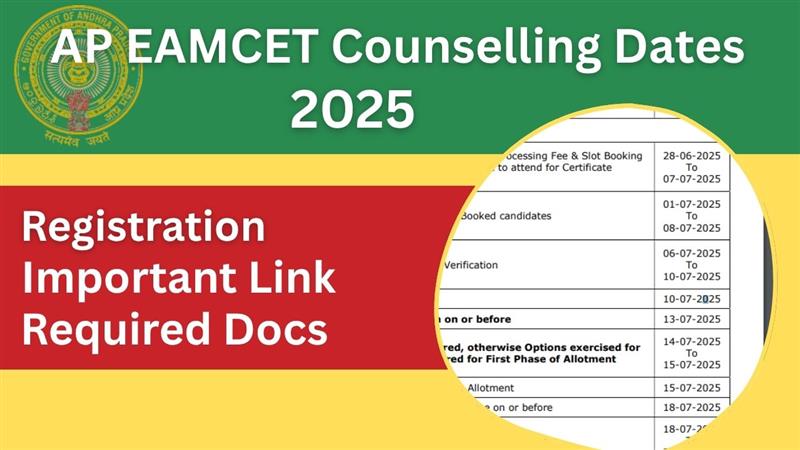
Students applying for admission for Engineering, Agriculture and Medical in Telangana can check their counselling dates for further process to complete their admission process. Telangana Council of Higher Education has conducted online counselling, AP EAMCET Counselling Dates 2025 Released started on 28 June 2025.
It is important to know the event dates, you can lose your chance for admission in various colleges, without completing all the necessary steps. You can download notifications through the link mentioned in the important links section.
Let’s look into the counselling dates to follow up and important documents that are required for the admission.
TS EAMCET 2025 – Counselling Dates
Basic information filling, Fee Payment, Slot Booking through helpline, Certificate verification.
28 June – 7 July, 2025
Certificate verification
July 1 – July 8, 2025
Exercising of options after certificate verification
July 6 – July 10, 2025
Freezing of options
10 July 2025
Display of mock seat allocation
On or before 13 July, 2025
Any Modification
July 14 – July 15
Freezing of options for first round of seat allotment