How to Verify If a Job Offer Is Real or Fake? Top 7 Signs to Watch!

How to Verify If a Job Offer Is Real or Fake

In the new digitized India, fake job offers are becoming common. Let’s take a look at how to verify if a Job Offer is real or fake. Whether a private or government job, scams often happen in both sectors. Mostly, freshers get wrapped up in scammer’s false offer letters because they don’t have a clue from the real industry. Scammers often use real companies’ names to fool you out and ask for money as a security deposit. Here are the signs that can help you to spot a fake job offer and protect yourself.

Always remember the fact that real companies never ask for any kind of money from you. They hire on the basis of a person’s qualifications and skills. If they ask you any of the following:

  • Registration Fee
  • Internship Fee
  • Security Deposit
  • Job Guarantee

They‘re scamming you, and freshers get stuck into this thing once in their lifetime because they are easily manipulated by seeing a chance to start their career. No reputable company charges you to give a job, whether it’s a government or private. 

If they are offering Rs. 50,000 or Rs. 1 Lakh per month for just entry-level jobs. Think about it, getting a job with such a salary and without any experience is kind of a miracle, and miracles don’t happen in real time. These are usually fake because real companies check your skills and experience before offering big packages.

Real companies always hire you after an interview session whether it’s a government or private sector. If they say “NO INTERVIEW REQUIRED”, they are a red flag. Even if they ask for an interview on WhatsApp or Google Meet, you must check their company’s visibility on Google or LinkedIn. If they are not seen on any of the social platforms then it is a fake company. There are several rounds in the selection process:

  • Application review
  • HR round
  • Written Test
  • Technical Interview (if applying in the technical round)
  • Assessment
  • Experience Proof (if you have any)
  • Document Verification when you get selected after the interview.

Fake company’s emails or offer letters does not contain any of the following:

  1. Email ID: Fake company has emails including gmail.com or yahoo.com. However real companies own their domains like tcs.com or hdfcbank.com 
  2. Grammar Mistakes: You can check the spelling mistakes or errors in their mail or offer letter because they usually do that. If the scammers are pro they can send you a fluent message. So, try other things to check.
  3. Company Logo or details: Real offer letters always present their logo and company details like location, contact, and terms are clearly written on the letter.

If you are suspicious about the job offer, you must check their company name, details, and address. People who were scammed before by the same company also shared reviews on social media platforms. Search for the company first and don’t just be impressed by vague job descriptions like “work from home” or online project”.

If they say that job vacancies will be filled up sooner and accept the offer letter now. It is a really big fish in the pond, real companies always will give you time to think about it. So, take your time to check everything out about the company. Fake recruiters often say these things:

  • Hurry! Limited seats.
  • Confirm today or you will lose the job.
  • Register now with half payment. 
  • They ask you to pay anything like a security fee.

If they post online about the hiring check their company page, people reviews, or employees. If others have been cheated they usually post on social media for others to be aware of the scam. Real company has an official website, LinkedIn profile, and no bad reviews.

If a company asks for your Aadhaar Card, PAN Card, or Bank Details before the interview or official joining. It’s a fake company that wants to take advantage, freshers or experienced are advised to not share any personal details before the official joining. 

Try to use a trusted platform for the job:

Big companies review your resume on these websites and then ask for the interview round if they’re satisfied with your resume. The interviews are usually taken by the interviewer on screening or on-site.

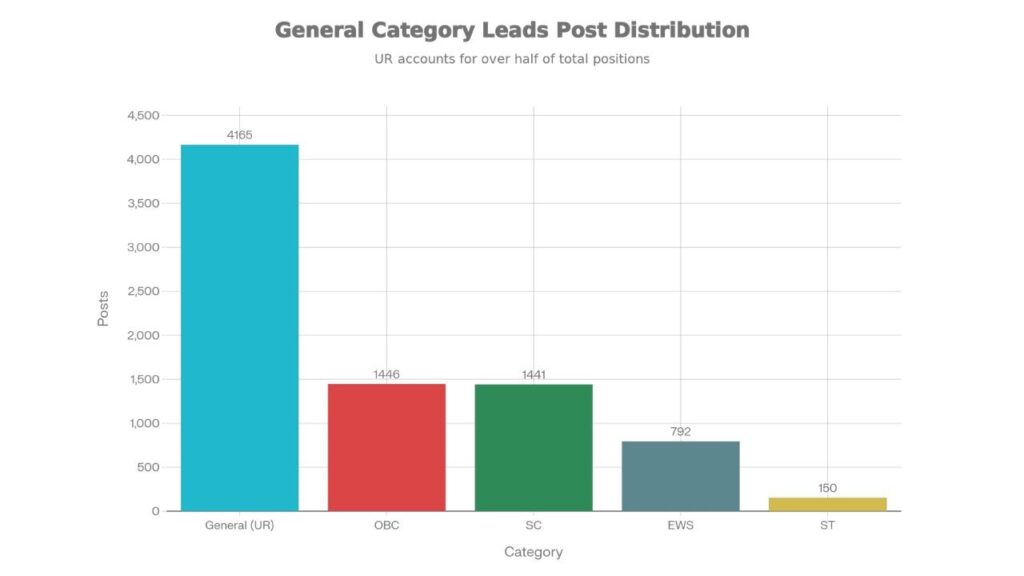
Read More 👉 UP Lekhpal Vacancy 2025 – 7994 Posts Opening Soon! Eligibility, Exam Dates & How to Apply

Government Jobs often recruit candidates by a competitive examination by the particular organization. The announcement of the vacancies on the various posts will be presented on the official website. 

There are a lot of advertising papers on the wall in India that promise government jobs without an exam or get selected directly for government jobs. They are scamming you surely, making money in the name of a government job is common in India. 

If you ever cross paths with any agent who claims to get you hired because he has some connection on the inside in any sector like Railways/SSC/UPSC. They ask you to pay 50k or 60k for direct selection, never give them money.

Government jobs are only given through the examination and any details about the job process or list of candidates that are selected always came through from an official website for every government organization. There is no middleman who can get you a job.

Scammers copy the real website that looks like the real website and fool people around. Here is an example of a fake and real website difference:

  • Fake: sscrecruitment.com
  • Real: ssc.nic.in

Spot fake claims from coaching centres like:

  • 100% job guarantee in SSS/Railway.
  • Get placement after the course.

Be alert of these scams because no coaching centres can guarantee to give you a government job or help you get one. Only your exam performance and qualifications decide your selection for a government job.

You can apply for a government job through their official website. Whether you are applying in Railways, Scientist, Clerk, IAS, IPS, or any other post. The official websites for government jobs are:

If you are applying for a private job or government job, always double-check the offer letter and recruitment process. In both sectors, people are hired only by their performances, whether it’s experience, assessment, or merit list. The candidates who clear out the rounds of the selection process can get a job. If you don’t know How to Verify If a Job Offer Is Real or Fake? You can check out the signs to spot fake offers. Getting a real job takes effort, no shortcut can replace that.

Leave a Comment

Your email address will not be published. Required fields are marked *

DFCCIL Answer Key 2025 OUT: Download Response Sheet & Raise Objections Till July 22!

DFCCIL Answer Key 2025 OUT Direct Link to Check Now

Candidates can check the DFCCIL Answer Key 2025 on the official website of the Dedicated Freight Corridor Corporation of India Limited and raise an objection before the result. The DFCCIL Answer Key uploaded on the official website on 18 July 2025. The portal will open till 22 July 2025, download the Answer Key for MTS, Junior Manager, and Executive recruitment exam.

Candidates can download the answer key 2025 by login on the official website. You can find the direct login link in the Links Section of the article. 

Post NameMulti-Tasking Staff, Executive, Junior Manager
Exam Conducting BodyDedicated Freight Corridor Corporation of India Limited
Vacancies642
Exam Date10 & 11 July, 2025
Official WebsiteClick Here

Read More 👉 RPSC Various Post Recruitment 2025: 12121 Vacancies Out – Grab Your Chance to Apply Today!

DFCCIL Answer Key Important Dates

Answer Key Release Date18/July/2025
Exam Date10 & 11 July 2025
Raise Objection Date18 July 2025
Raise Objection last date22 July 2025
Result dateUpdate Soon

Guide to Download the DFCCIL Answer Key

  1. Click on the official website link to redirect on DFCCIL official website.
  2. Click on Log in, the page will appear, enter your ID and Password.
  3. Submit to log in with your account, the Answer Key will appear on the screen. 
  4. Download the answer key and match your responses.

Raise Objection for DFCCIL Answer Key

If you  find any error, you can raise an objection only if you can prove the right answer with reliable sources or proof. You can raise an objection till the last date after that the final answer will be declared and no objection will be raised after that. The result will be declared after the objection has been reviewed. 

Important Links
Answer Key LoginClick Here
Download NoticeClick Here
Official WebsiteClick Here

Leave a Comment

Your email address will not be published. Required fields are marked *

Best Books & Online Resources for Banking Exam Preparation 2025

The preparation of banking exams starts with the best books banking exam because it is a hard task and at the same time interesting for the aspirants who want to establish their career in the finance domain. Every year 1 lakhs plus aspirants appear for these competitive exams like IBPS, SBI, RBI and other banking exams at state level. What can you do to give yourself the best chance to succeed among such fierce competition? 

What Started Out as a 100% Prep for the 2025 Exam Has Now Evolved Into a Prep with Traditional Materials and a Little Bit of Technology of the Digital Age.. If you are seeking professional-endorsed textbooks or want to enjoy online courses, apps for mobile or interactive, view these product selections loaded with high quality. 

The banking exams are considered to be the toughest competitive exam in India. The way to success is to choose the right study books and make use of the good online study materials. Here is a complete list of the best books and online resources that you can use to enhance your chances of success in banking exams 2025.

Essential Books for Banking Exam Preparation

Quantitative Aptitude & Data Interpretation

R.S. Aggarwal’s “Quantitative Aptitude for Competitive Examinations” is the only quantitative exam preparation guidebook for competitive exam preparation. This all-inclusive book comprises all the basic topics from arithmetic, algebra, geometry and data interpretation along with a plethora of practice problems with their solutions and explanations. The updated 2025 edition features more than 10,000 practice questions and 40 video lessons.

Rajesh Verma’s “Fast Track Objective Arithmetic” is a very good book for shortcuts and tricks which are very important for time limited banking exams. The strength of the book is based on tricks and shortcuts which have vital importance in success in competitive exam.

Arihant’s “Data Interpretation & Data Sufficiency” also ensures depth preparation for the techniques to solve DIs based on Pie charts, Bar charts, Line charts, Caselets. This approach is more result-oriented and can help candidates to perform better in or break this one of the highest scoring sections of banking exams. 

English Language

S.P. Bakshi “Objective General English” is a step by step guide to grammar and comprehension which help the students to understand the way of writing and based on that How to use. This is the most appreciated and recommended book for the topic Sentence Correction and Reading Comprehension.

“Word Power Made Easy” – Norman Lewis is Still the Best Vocab Builder. A Quick Review of. Its drill-and-kill approach to vocabulary building will help anyone crushing banking exams.

High School English Grammar and comprehension. Wren and Martin This book contains basic grammar which is needed for the banking exam. This classic text strengthens and solidifies essential grammatical principles, both simple and complex, that serve as the foundation of English language mastery. 

Reasoning Ability

R.S. Aggarwal’s A Modern Approach To Verbal & Non-Verbal Reasoning is a very good book which covers the whole verbal and non verbal reasoning topics in depth with good number of questions. This complete coverage of the book allows you to attempt all kinds of reasoning question in the banking exams.

M.K. Pandey’s “Analytical Reasoning” is all about analytical reasoning with detailed solutions and higher order problems. This book is great for most challenging puzzles and most difficult seating arrangements.

Kiran Prakashann Reasoning Books comprises of topic wise syllabus specifically for banking exams with solutions which are easy to understand and tricks to save the time in solving. 

Banking Awareness & General Knowledge

“Banking Awareness” published by Arihant is the best book to study from for the section of banking awareness, it covers all the topics related to banking, financial awareness and general current affairs. The revised edition 2025 includes Union Budget 2025-26 and Economic Survey 2024-25 and is very useful for today’s exam patterns.

Now “Banking Awareness” by Disha Experts is all new revised content with solutions of previous years’ questions. This book is written specifically for the banking exams with live examples of the banking sector.

The latest national and international affairs are like annotated with his General Knowledge Books Manohar Pandey. These books will enable the aspirants to keep pace with the fast-moving current affairs. 

Read More 👉 Top BCA Colleges in Noida with Fees, Courses & Admission Details 2025

Online Resources for Banking Exam Preparation

Mock Test Platforms

Testbook provides a complete mock test series including thousands of tests for different types of banking examinations. Their platform consists of a wealth of information with analysis of performance, tests for each section and simulations with unlimited tries possible along with guidance of professionals.

Oliveboard powers analytics using AI and enables adaptive learning on their mock test platform. The exam style tests are meticulously prepared for the candidates to practice with simulated environment to enhance their speed, accuracy and confidence.

PracticeMock provides candidates with the opportunity to practice with a series of full-length and section-wise tests, each simulating the actual test with explanations and other features to assist you in your preparation for the exam. 

Video Learning Platforms

Adda247 is the most sought after Indian government exam preparation platform with more than 9 million subscribers on Youtube. They provide well-structured courses, live classes, class recordings and all subject study materials for banking exams.

Unacademy lets you study from the best teachers in India and courses for various languages. Their platform features live and recorded classes and provides very good explanations and a detailed coverage of banking exam syllabus.

Physics Wallah (PW) has dedicated courses for banking – IBPS, SBI, RBI, and NABARD with live classes, video lectures, mock tests, and study materials.Their Bank Mahapack caters to 20+ exams comprising of 100+ batches and 2000+ live classes. 

Free Online Resources

Youtube has offered a wider range of tutorials on Banking Exam Preparations. Students can start preparing for free with a good internet connection and dedication. Some of the most popular tutorials are — Saurav Sir from Adda247,  Ashish Arora from Studified, BE BANKER, Bankers Point and BANKERS BUDDY cover everything about banking exam preparation through free video content. These channels give you live session regularly concept explanation and current affairs.

Free Mock Tests and PDFs

Download PDFs and take daily mock tests for free from Smartkeeda & Cracku. IIKD Online is offering free coaching classes for the students through more than 200 video lectures, 20+ mock tests and 5,000+ practice questions. 

Conclusions

Succeeding in a banking exam is not a cup of tea, it requires a lot of hard work but not just hard work as strategizing is also very important. The best books banking exam and online resources featured in this article will provide a comprehensive base material for your study process starting from conceptual clarity to timed practice.

Select your study material carefully according to the exam you want to take – IBPS, SBI, RBI and so on, and what learning mode works best for you. Take the best of traditional reading and the best of technology and you can’t go far wrong.

Remember: Consistency + Quality = Success

With a seemingly right mindset and study plan, your dream for banking exam in 2025 is definitely achievable. 

Leave a Comment

Your email address will not be published. Required fields are marked *

Top Companies in IIT Placements 2025: Top Hiring Firms, Salary Trends & Full Details

Top Companies in IIT Placements 2025

The Indian Institutes of Technology (IITs) have yet again proven their exceptional placement performance in 2025, with Top Companies in IIT vying for the brightest minds from India’s top engineering colleges. This year’s placement season has seen a wide range of records being broken, record high salary packages, more international offers, and companies from more diverse sectors attending the campus recruitment drives. So here’s a (rough) full picture of which companies are recruiting picking up on which salary issues, and the trends within the ever-morphing IIT scene. 

Record-Breaking Numbers and Overall Trends

The very fact the 2024-25 placement season has been outstanding for IIT students appears to be an under-statement. As per the latest official figures, top IITs like IIT Delhi and Bombay have received over 1,200 job offers each, and more than 1,150 unique students have been placed in the first phase alone. What’s more heartening is the jump in offers in all salary buckets including the premium packages of more than one crore per annum. For instance, IIT Bombay has received 22 offers beyond the one crore mark in 2024-25 as against 16 in the previous year, a stupendous rise of 37.5%

The highest salary package in India among IITs hovered at a staggering ₹2.2 crore per annum, offered by Da Vinci Derivatives, an IIT Bombay CSE student for a position at Amsterdam. Meanwhile, the international packages have gone even higher at the top IITs, with the highest international offer at IIT Bombay at ₹3.67 crore per annum. These figures signify an exceptionally lucrative market for the IIT graduates in India as well as abroad. 

The Tech Giants Lead the Charge

With reference to hires from IITs, the large tech firms continue to dominate. Microsoft, Google, Amazon, Apple, Meta and Qualcomm are the biggest recruiters in pretty much all the IITs. These companies — known as the MAANG or FAANG firms — compete fiercely for talent and are willing pay top packages for it. 

The Tech Giants Lead the Charge

At IITB, it was again Google, Microsoft, Amazon and NVIDIA that turned out to be the biggest hiring companies. IITB reports suggest, M.Tech CSE students from IIT Bombay got offers in the range of ₹30 to ₹46 LPA with an average of ₹30 LPA. The CSE students at IIT Delhi received even higher average packages, hovering at around ₹34 LPA and with maximum figures reaching as high as ₹48 LPA from Google, Microsoft and Atlassian

Emerging Sectors and Diverse Opportunities

While technology continues to dominate recruitment, the 2025 placements season saw a considerable number of hiring from the finance, consulting, and core engineering domains. At IIT Delhi, the placement breakup shows that 34% of the total placement was in core technical companies, followed by 

  • IT – 20%, 
  • Consulting – 14% and 
  • Management – 13%. 

This diversification is indicative of a changing career landscape for IIT graduates.​

Emerging Sectors and Diverse Opportunities

In the finance and consulting arena, companies such as Goldman Sachs, BCG (Boston Consulting Group), McKinsey, JP Morgan Chase, Barclays and American Express are well represented on IIT campuses. These firms provide typical packages between ₹35 and ₹45 LPA for beginners, with substantial growth in the money for high performers. 

SectorKey CompaniesTypical Package Range (LPA)Offer Share % 
Technology (IT)Google, Microsoft, Amazon, NVIDIA, Qualcomm, Atlassian30-4820%
Core TechnicalTexas Instruments, Intel, Micron Tech, Tata, Reliance20-3534%
ConsultingBCG, McKinsey, Barclays35-4514%
FinanceGoldman Sachs, JP Morgan, American Express35-454%
Management/AnalyticsMeesho, OLA, PayU, Quadeye25-4013% / 7%

Average Packages and Salary Trends

There is now a trend in salaries in 2025 toward increasing when compared to past years. The average package offered by IIT Bombay rose from ₹21.8 LPA in 2023-24 to ₹23.5 LPA in 2024-25 – an increment of 7.7%. The average package reported by IIT Delhi is around ₹32 LPA for all programmes with an average of around ₹21.9 LPA being offered to BTech students and ₹32 LPA to MTech students. Students at IIT Kanpur were offered an average package of ₹ 26.27 LPA and IIT Madras continues to keep its average package competitive at approximately ₹17-20 LPA for all its programmes.​

Interesting is also how salaries differ depending on branch. The best packages are still offered to Computer Science and Engineering (CSE), for which the median predefined offers also exceed ₹30 LPA at top IITs. After that comes Electrical Engineering and then mechanical, civil engineering students generally get packages between ₹15-25 LPA based on which sector they go for. 

Global Opportunities and International Offers

Among the most eye-popping trends in the 2025 placement season has been the uptick in overseas offers. With all-India (national) offers counting towards overall highest packages, IIT Delhi witnessed more than 50 international offers in Phase 1 from over 15 companies across countries including USA, Japan, Netherlands, South Korea, Taiwan, UAE, and the UK. This indicates rising global demand and better pay packages for graduate-level engineers from India, as well as multinational companies increasingly hiring IIT graduates for global roles.​

The salaries of firms providing roles for the international are notably higher, which is between 30-50% increase on domestic norms especially for roles in developed countries. The offer by Da Vinci Derivatives of ₹3.67 crore for an Amsterdam is an illustration of this trend. 

Read More 👉 Best IIT College in Uttar Pradesh – Complete Ranking & Admission Guide

Sector-Wise Breakdown and Career Paths

Recruitment has gotten more and more multifaceted. Although software development engineers and data scientists are paid the most in the tech industry, core engineering roles, especially at companies such as Tata, Reliance, BPCL and Schlumberger, lure students focused on manufacturing, energy and infrastructure. 

Public sector undertakings (PSUs): Organisations PSU are – ISRO, DRDO, BARC they always remain to be answer to bring in the best brains, it’s just the pay package is slightly low, but they offer Job Security, Prestige, and for those who want to make a long term career they offer Career Growth.​

Zomato, Ola, Swiggy, Flipkart and other startups/unicorns have also been leading recruiters, especially for those students who are attracted to growing-stage companies and entrepreneurial environments. These companies usually have competitive packages including stock options and have energetic work cultures. 

Lowest Packages and Market Reality For IITians

While the highest salaries make the headlines, it is essential to look at the overall picture. At IIT Bombay, the lowest packages were reported at ₹4 LPA for the year 2024-25, a steep fall from the ₹5.4 LPA in the previous year. This decrease is indicative of the tightening recruitment at entry level by companies and the influence of economic cycles on entry-level jobs in certain industries. 

Tips for IIT Students in the Current Job Market

IIT students now who are about to go in for placements can glean quite a few pointers from 2025 trends. 

  • For one, technical excellence and programming ability especially would be unlikely to diminish for technology roles. 
  • Second, gaining domain knowledge through internships greatly enhances placement potential– internship conversion rates to PPOs (Pre-Placement Offer) continue to be robust at most IITs. 
  • Third, the increasing number of AI and data analytics positions means that skills in machine learning and data science can be extremely useful. 
  • And finally, don’t forget that foreign opportunities may lead to significantly better paychecks and career advancement. 

Conclusion

The placement seasons of IIT’s in 2024-25 can undoubtedly be called as a landmark year with the highest ever packages, varied sectoral participation and opportunities extending across the globe. With companies such as Microsoft, Google, Amazon, and Goldman Sachs battling for top talent and average pay packages trending upward, IIT graduates continue to be among the most in-demand professionals in India and beyond. 

Adaptable, knowledgeable, and able to think critically—even in the face of rapidly changing landscapes in higher education and the corporate world— these qualities among others that IIT students possess which ensures that they are valuable assets to employers across the globe. 

For prospective engineers dreaming of trying out for IIT admissions, these placement trends act as a strong inspiration showing how great career and financial benefits await them, down the line, if they make it to these premier institutions. 

Leave a Comment

Your email address will not be published. Required fields are marked *

Difference Between CBSE and ICSE: Which Board is Better for Your Future?

Students studying in classrooms representing CBSE and ICSE boards, highlighting differences in learning styles

Finding out the Difference Between CBSE and ICSE is important because it matters for the future of students. In India, ICSE (Indian Certificate of Secondary Education) affiliated schools are expensive but recognized internationally, and have become popular among students who want to achieve international opportunities. 

And CBSE (Central Board of Secondary Education) has a wide range of affiliated schools which makes it cheaper but effective for national-level exams. Both have different teaching methods, syllabus structure, exam pattern & marks, and career opportunities.

This comparison is not for making it good or bad, showing their strengths and weaknesses will help students to decide better for their future.

Overview of CBSE and ICSE

CBSE – Central Board of Secondary Education

  • CBSE board is run under the Government of India.
  • A wider range of schools are affiliated to CBSE.
  • It is more on the side of theoretical education and focuses on subjects like Science & Maths.
  • Popular among aspirants of NEET, JEE, NDA, and UPSC as it covers all the exams syllabus concisely. 

ICSE – Indian Certificate of Secondary Education

  • Council for the Indian School Certificate Examinations (CISCE) is a private education board which governs ICSE board.
  • As compared to CBSE, schools affiliated to ICSE in India and abroad are less in numbers.
  • It focuses on both theoretical and practical knowledge equally on all subjects including arts, science, and languages.
  • Its balanced education is valued internationally.

Curriculum and Teaching Style

CBSE curriculum is more structured and straightforward, it does not contain any extra details on any topic which makes it less but precise for exams. It prioritizes subjects like Science and Mathematics, designed with theoretical conceptual knowledge which makes it ideal for competitive exams. Other subjects like English and Hindi have fewer chapters and syllabi in comparison to ICSE. It is best for the engineering, medical, or government exams focused students.

ICSE curriculum is designed with lengthy explanations and balanced across subjects. It also focuses on other subjects like Literature, language and practical projects for balanced education. ICSE boards students have to study in-depth of each subject. That feels burdened sometimes but it improves analytical ability. It is best for overall knowledge, communication skills, and global recognition opportunities seeking students.

Read More 👉 Meet the Best History Teacher for Competitive Exams Who Can Boost Your Score

Difficulty Level

CBSE is easier in comparison to ICSE as it has a concise syllabus that covers easily within less time. It encourages more theoretical knowledge than projects. Students can easily clear exams with less academic pressure but it improves basic knowledge. ICSE is more detailed on every topic and stressing on projects, lab world, internal assessments making it heavier for children to cover. But it is best for building overall skills that improves analytical thinking.

Examination Pattern and Grading System

CBSE follows a continuous and comprehensive evaluation system to reduce exam stress and declaring results in CGPA Cumulative Grade Point Average system. Questions in the exam are based on the NCERT books. 

ICSE follows marks-based evaluation and grades are assigned according to the percentage. Questions asked in exams need both depth of knowledge and analytical ability to represent the answer. In the final result, 20-30% makes are dependent on the internal assessments so projects are becoming necessary.

Recognition in India and Abroad

CBSE is recognized in major schools in India, making it best for students who plan to continue study in India. It is popular among the JEE, NEET, NDA and UPSC aspirants. ICSE is recognized globally by foreign universities. Developing language and communication skills with its english-oriented syllabus can help students to continue their studies in foreign universities. 

Language and Communication Skills

If students want to continue their studies abroad, develop communication skills, and aim for jobs where language like English will be needed then ICSE is the best option because CBSE is more focused on Science and Maths. However, CBSE emphasizes English and Hindi but not on the higher level.

Which is More Expensive?

Many government schools are affiliated to CBSE board which make it affordable for the students. Private CBSE schools also have affordable fees in comparison to ICSE affiliated schools. More expensive due to their huge curriculum, projects, and emphasis on quality teaching.

Career and Competitive Exams

Competitive exams aspirants prefer to study in CBSE affiliated schools because it covers a more concise syllabus on important subjects like Economics, Maths and Science. However, ICSE boards schools produce creative minds. They emphasize on English Language & Literature, and analytical skills to help students secure their career in international companies.

Pros and Cons at a Glance

CBSE ProsCons
Easier syllabusLack of strong foundation in English and humanities
Affordable FeesLimited application-based learning
20,000+ schools
Ideal for competitive exams
ICSE ProsCons
Tough syllabusMore-time consuming
International RecognitionExpensive schools
Strong English and analytical skillsLess useful for Indian competitive exams
Encourages overall development

Which Board Should You Choose?

It totally depends on your future goals, aiming to make your career in the medical field, engineering, or government sector then CBSE is a good option because it contains an overall concise syllabus that is needed to study in most of the Indian entrance exams. CBSE board students also can go abroad but they have to study hard even on their english and communication skills. Where ICSE is providing overall development, students can go abroad for higher studies with strong language skills and well-rounded knowledge. 

Both boards have their strengths and weaknesses, for making the right decision, students should choose their board according to their interest, learning style, and career plan. 

FeatureCBSEICSE
Curriculum FocusScience & Math oriented, exam-basedBalanced syllabus, includes languages & arts
Difficulty LevelEasier, conciseDetailed, more challenging
Teaching StyleTheoretical, less projectsPractical, project-based, strong English focus
RecognitionBest for Indian exams (NEET, JEE, UPSC)Internationally valued, good for global studies
EvaluationCGPA/percentage, NCERT-style questionsMarks-based, detailed assessment + projects
LanguageModerate EnglishStrong English & literature
AvailabilityWidely available, govt. & private schools, affordableLimited, mostly private and costlier
ExtracurricularAcademics priority, fewer activitiesEqual focus on academics & extracurriculars
Best ForStudents preparing for Indian competitive examsStudents aiming for holistic or overseas education

Conclusion

Which board is best is a little bit complex, you must know the Difference Between CBSE and ICSE before you select your board. Students and parents both have to understand what are the career goals and which board is good for their children. Some students are not able to handle the tough syllabus of ICSE and some students want to go abroad, so it should be according to your plan not by other people’s recommendation.

Leave a Comment

Your email address will not be published. Required fields are marked *

Time Management Tips for Students and Government Job Aspirants

Time Management Tips

The reality is that most people don’t have a problem with time. They have a problem with managing time. The Time Management Tips for students and government job aspirants is important. For instance, two students may have identical 24 hours, the same syllabus, and the same exam date — yet end up in completely different places on result day. It’s because almost always how they spend their hours. 

This guide analyses the time management principle that really applies for us Indians — students in school & college, competitive exam aspirants for SSC, RRB, UPSC, banking and state-level, entrance exam students aiming for IIT, NEET, or law entrances, and working professionals attempting to study after holding a full day at the office. The circumstances may vary, but the fundamental discipline is one and the same. 

Why Time Management Tips Actually Matters 

It’s not that they don’t know “time management is important,” it’s just that no one actually has time to do it, not that they need it any more than the rest of us do. For exam candidates in particular, bad time management means not only less revision. It has three very real and very specific costs. 

First, it makes your syllabus look bloated. A topic that should take roughly three weeks gets stretched out over two months, not because it’s difficult, but because you’re learning in fragmented, distracted sessions rather than in concentrated blocks. 

Second, it kills your mock test performance. Candidates who are poor at managing their prep time tend to be procrastinators and pick up the easy topics first and push the difficult topics towards the end, so that by the time mocks begin, half the syllabus feels like a stranger under exam pressure. 

Third, and this is the one no one talks about nearly enough, it destroys your confidence. When you’re always feeling “behind,” you begin to question your own competence, even though the real problem was never intelligence — it was planning. 

Effective time management is not a matter of finding more hours in the day. It’s realizing that you actually already have the time, you just need to make it work. 

Time Management Tips for Students

Students who are balancing regular academics, tuition and assignments along with personal life also need a system which is practical and not a strict timetable copied from a top scorer’s Instagram post. 

Start with a weekly map, not a daily one. Daily to-do lists come crashing down as soon as one thing goes wrong — a pop quiz, a family gathering, feeling too tired. A weekly perspective allows you to reschedule your responsibilities without thinking you are having a bad day. Block out any non-negotiable obligations (class time, work, sleeping) and then plan your study periods around those. 

Use the “two-subject rule” for evenings. Attempting to cover every topic every day tends to result in none of them being covered very well. Choose two topics each night and dive in, cycling through the week. Depth outperforms breadth in terms of real retention. 

Protect your first hour after school. Most students spend the golden hour after school on their phones scrolling “just for ten minutes” which ends up being ninety. That first hour, when the day’s lessons were still fresh, was the best time for revision — not for new topics. 

Treat sleep as part of your study plan, not separate from it. Sleep deprivation to “make more time” is the most common error students make, and it backfires almost every time. Retention falls off a cliff with poor sleep, so those extra two hours often result in less learning than one focused hour on a well-rested brain. 

Time Management Tips for Government Job and Recruitment Exam Preparation

Preparation for government exams — SSC CGL, SSC JE, RRB NTPC, RRB ALP, Agniveer, UPSSSC, banking exams, state PCS has its own trap: it has a huge, fixed syllabus that remains more or less unchanged every year, making it very easy to remain stuck in a “preparation phase” without feeling ever ready. 

Reverse-engineer your timeline from the exam date, not from the syllabus. Most aspirants begin by telling themselves “I’ll finish RC, quant, then GK” without even assessing if that speed is even sustainable till the exam. Count backwards instead: How many weeks are there until the exam, how many subjects do you have to learn, and how many practice tests do you want to do before the D-day. This one change detects date problems three months in advance rather than three weeks before the test. 

Separate “learning time” from “practice time” clearly. Many candidates confuse these two processes — theory reading and question practice in one session and slow themselves down in both. Assign some fixed duration blocks solely for concept learning, and some solely for solving past year papers & mocks in a timed environment. They develop different abilities.

Make a weekly slot for current affairs you gear towards a level, don’t squash it in as a bit of leftover time. For exams like ssc, rrb,state level recruitment exam current affairs/general awareness is often pushed to “whenever i find time to study”,which is usually never. Settle for one or two brief daily sessions instead of waiting for free moments that never come. 

Mock tests deserve a full time slot, not a rushed one. Scheduling simulation the real exam length is as important as doing the questions. Your practice test should honor that 90 minutes of pressure since it should help simulate the real exam (and the review afterward) — not just the solving. 

Time Management Tips for Entrance Exam Aspirants

Entrance exams such as JEE, NEET, CLAT, and CUET operate on a different time scale as compared to the recruitment exams – they meld board exam stress with competitive exam intensity, and that too, in the same academic year. 

Sync your school syllabus and entrance syllabus instead of running two separate tracks. An enormous portion of time is wasted due to students studying the same subject chapter twice — once for boards, and once for the entrance exam in entirely separate sittings. Studying the two simultaneously, at entrance-level depth from day one, is months ahead of the full prep cycle. 

Rotate subjects daily instead of exam-cramming one at a time. These exams cover more than one subject at a time, so you have to keep your mind warmed up in all of them and not just be sharp on one subject and rusty on the others. A steady rotation — even if uneven in the number of hours per subject, keeps all the subjects “alive” in your mind. 

Track mistakes, not just completed chapters. Sorting out what you have achieved in the syllabus feels productive, but it doesn’t tell you information about what is actually going wrong. Keep a list of mistakes you make again and again when doing practice questions — that list is your revision material that will be the most efficient in the last month. 

Read More 👉 Data Science vs AI: Which Career Is Better?  

Time Management Tips for Working Professionals Preparing Alongside a Job

This may be the most difficult version of the problem since the constraint is not motivation — it’s literally hours in the day. Working professional-level test such as a government exam or a career-switch entrance exam does not have the luxury of a 8-hour study day. 

Accept the 90-minute reality and plan around it. The majority of working people truly have only about 60 to 120 minutes of concentrated work time in a day, divided between early morning and late evening. Struggling against this reality by aiming for 5 hours a day is just setting yourself up for failure and guilt. Schedule for the attainable during a weekday, and save the heavy-duty work for weekends — full-length mocks, madly difficult topics, revision marathons. 

Use commute and break time for low-effort, high-repetition tasks. Formulas, vocabulary, current affairs and short revision notes can easily be crammed into a commute or a lunch break. Save your truly fresh, high-powered hours — typically in the morning for the subjects that actually demand thinking of the deep kind. 

Don’t try to “catch up” by sacrificing entire weekends repeatedly. Burnout for working professionals generally results from this very pattern: lean weekdays, and then trying to fit a week’s worth of goals into Saturday and Sunday. It lasts for a couple of weeks, then crumbles. A sustainable pace beats a heroic one that quits come month three.  

Tell your workplace and family what you’re doing, even loosely. Candidates who do not share details of their preparation for the exam generally end up with more distractions during their study sessions as no one with whom they dwell or live is aware that those hours are sacrosanct. A modest notice - “I study from 6 to 7:30 every day” – cuts interruptions more effectively than any planner or app could. 

The One Habit That Ties All of This Together

Across students, government exam aspirants, entrance candidates, and working professionals, the single most useful habit is the same: reviewing the week, not just planning it. Most people plan on Sunday and then never look back until the next Sunday. Spending fifteen minutes reviewing what actually got done versus what was planned and being honest about why the gap happened is what turns a time management system from a wishlist into something that actually works over months of preparation.

Time management Tips for exams was never really about finding more hours. Every aspirant, regardless of which exam they’re preparing for, is working for the same 24 hours as everyone else. What separates a good result from a missed one is usually not effort — it’s whether those hours were spent on the right things, at the right time, consistently enough to matter.

Conclusion

Time management tips for students and government job aspirants is important for sustaining consistency in preparation for SSC, UPSC, RRB, banking, work, or JEE, NEET exams. Begin with attainable goals in mind, focus on the most important things, check in on your progress each week, and then rest appropriately. Little bit of betterment you make up every day adds together over months of training. 

Leave a Comment

Your email address will not be published. Required fields are marked *

Scroll to Top