BBAU counselling dates have been released for the PG programme 2025-26. Candidates are shortlisted in the merit list who have scored well in the entrance exams. Now they have to prepare for the next round of the counselling which is document verification and fee submission. Total of three phases of the admission process, those who cannot find their name in the first phase can wait for the second phase merit list. Candidates are advised to follow up on the important dates through notification. You can download it from the link mentioned below in the article.
BBAU PG Admission Procedure
The candidates should give the CUET PG exam, which is an entrance exam for admission to postgraduate programs. Students can get admission in BBAU according to their CUET PG score. Next step, candidates should register themselves on the admission portal and select their choices in the course. The merit list will be declared on the official website, and shortlisted candidates can verify their documents. Candidates who are selected according to their CUET score can submit their fees through the online SAMARTH portal.
If you have been eyeing a career for yourself in Bihar’s judiciary, then your wait is now over. Bihar BPSC APO Recruitment 2026 has already started Bihar Public Service Commission is inviting applications for 300 posts in the Prosecution Department. Apply Now for BPSC APO, if you are a fresh law graduate or an advocate in search for stability with government, then this may be the perfect job opportunity for you!
Important Dates You Can’t Miss
Close Schedule for Bihar BPSC APO Recruitment 2026, So Please Mark Your Calendar Accordingly. The online submission of application was commenced on 27 February 2026 following the issuance of notification dated 25 February 2026. The essential thing was that until 20 March 2026 (date of closing of application) you can only make your application via the official site.
Exam Schedule is important to remember by those who are applying for this application because preparation goes along the way accordingly. It’s a smart move if you consider dividing your syllabus to this timetable until 15 JULY 2026, the date of the preliminary exam. That means if you begin now, you have about four months to get ready for it. It is a tough competitive post for government exams, so every day is important, so don’t waste this head start.
Event
Date
Notification Release
25/February/2026
Application Start
27/February/2026
Application End
20/March/2026
Prelims (Tentative)
15/July/2026
Breaking Down the Bihar BPSC APO Recruitment 2026 300 Vacancies
Let’s get numerical since knowing the distribution of vacancies already gives you an idea of your competitors. The 300 posts of Bihar BPSC APO Recruitment 2026 are evenly distributed with a particular emphasis on gender representation across the categories. Here’s what the landscape looks like:
The Unreserved (UR) category is allotted the maximum number of 129 posts, out of which 41 are for women. Next is the category by EBC (Extremely Backward Class) which comes at 64 posts (22 for women), followed by the SC aspirants that can avail 42 posts (15 for women). EWS candidates can contest 29 posts (10 for women), BC candidates can challenge for 25 posts (9 for women), while ST candidates are left with 7 posts (2 for woman). There’s also a special BC Women category with 4 posts.
Category
Posts
Women Reserved
UR
129
41
EWS
29
10
SC
42
15
ST
7
2
EBC
64
22
BC
25
9
BC Women
4
–
Total
300
99
What is more significant is the 35% horizontal reservation for women, which means 99 posts are specifically earmarked for women candidates. It is a big leap for equal representation of women in the prosecution services and also showcases Bihar’s stand for women empowerment in the legal profession.
Who is Eligible For BPSC APO?
Before you get too excited about the numbers, let’s make sure you qualify. The eligibility criteria are simple – you need an LLB degree from a recognized university, and you have to be eligible to practice as an advocate. Qualified means recognized Your law degree should be recognized and valid as per the Bar Council.
Students who cross the age of 21 are eligible as of 1 August 2026. The maximum age limit varies from category to category. The relaxed age limits are indeed a boon for aspirants from reserved categories as it allows them a bit more time, a bit more space to prepare, a bit more time to mature and seamlessly enter their career.
Getting chosen as an APO is a marathon, not a sprint, with three separate phases. First is the Preliminary examination – an objective test which is qualifying in nature. Think of it as the gatekeeper, you have to pass it and go to the next step, it is not counted towards final credit.
Then begins the real fight: the Mains Examination. This essay type of test has 1000 marks and here the real merit list is prepared. Personal Interview is the last step for your personality which is for 100 marks and it’s important to have good performance in both Mains and Interview rounds to be a part of the final merit list.
Exam Pattern for Bihar BPSC APO Recruitment 2026
The Prelims paper is a 4-hour marathon of 250 marks, split between General Studies (100 marks) and Law (150 marks). This 40:60 figure is a guide as to where to put your emphasis – although general knowledge is important, it’s your legal knowledge that will make you stand out.
The Mains exam is tougher, with 8 papers in General Studies, Hindi, English, Bharatiya Nyaya Sanhita 2023, Bharatiya Sakshya Adhiniyam 2023, Criminal and Civil Procedure, Constitutional Law and other applicable laws. Take note of the focus on recent legal changes such as the Bharatiya Nyaya Sanhita 2023 – this is not just about memorising old laws, but keeping abreast with India’s changing legal system.
Attractive Paycheck
So, let’s get to the practicalities – the pay. The chosen applicants will be placed in Pay Level-9 with a salary of ₹53,100 to ₹1,67,800 plus allowances including Dearness Allowance (DA) and House Rent Allowance (HRA). This, in Bihar’s context, is a cushy government package that provides financial security along with professional prestige.
How to Apply: The Digital Route
The entire process of applying to Bihar BPSC APO Recruitment 2026 is online at bpsc.bihar.gov.in.
First of all you have to make the OTR (One Time Registration) then you can fill the main application form.
To ensure a smooth and paperless process, submit your documents via DigiLocker.
You will receive a confirmation after submitting your form and paying the application fee, save it for your reference.
Pro tip: Don’t wait until the last week. Last-minute bugs and server crashes, are to be expected in the hot recruitments. Apply early, double check your details and keep a copy of the official notification pdf for your reference.
Conclusion
The Bihar BPSC APO Recruitment 2026 is not just an opportunity for one to grab any of those 300 posts, but an avenue towards serving justice, making a good career, and assisting the legal system of Bihar. Last date to receive the applications is 20th March 2026, so hurry now. Sharpen your legal acumen, brush up on current affairs and treat this examination with respect. Your path to becoming an Assistant Prosecution Officer begins with one step — a click on an official website link and Make it count!
Central Board of Secondary Education (CBSE) is going to hold the Group A, B & C Tier-1 examination for various posts including Racing Officer, Assistant Secretary, Assistant Director, Accounts Officer, Junior Translation Officer, Junior Accountant, Junior Assistant, Assistant Professor and Superintendent. From 31 January 2026 To 01 February 2026. Candidates who will qualify the examination will be recruited for these posts as per the final result to be declared by CBSE.
In December 2025, the application form was filled and candidates who are waiting for the exams can now check their admit card. If the link is still not open then check again after a few hours on the official website of cbse.nic.in.
To download these, candidates will need the Application Number and Date of Birth. And no need to carry the exam hall ticket after downloading it for the exam.
CBSE Group A, B & C Important Dates
Event
Date
Notification Date
02/December/2025
Application Start
02/December/2025
Apply Online Last Date
27/December/2025 (Extended)
Fee Payment Date
27/December/2025
Correction Date
29 & 30/December/2025
Exam City Date (Tier-1)
17/January/2026
Admit Card Date (Tier-1)
Before Exam
Exam Date (Tier-1)
31/January/2026 to 01/February/2026
Result Date
Notify Later
CBSE Group A, B & C Recruitment – Age Limit
Criteria
Details
Minimum Age
18 Years
Maximum Age
27 / 30 / 35 Years (Post-wise)
Note
For detailed age relaxation rules, read the official CBSE Notification 2025
Group A Posts – Vacancy & Eligibility
Post Name
Vacancies
Study
Assistant Secretary
08
Undergraduate Required
Assistant Professor & AD (Academics)
12
PG Degree (55% marks) or equivalent from a recognised university (category-wise relaxation applicable)
Assistant Professor & AD (Training)
08
PG Degree or equivalent from a recognised university
Assistant Professor & AD (Skill Education)
07
PG Degree or equivalent from a recognised university
Accounts Officer
02
Graduate/postgraduate in Economics, Commerce, Accounts, Finance, Business Studies or Cost Accounting or any other professional qualification like MBA (Finance), CA, ICWA.
Group B Posts – Vacancy & Eligibility
Post Name
Vacancies
Study
Superintendent
27
Bachelor’s degree in any discipline having basic knowledge of computer and typing speed 35 WPM in English or 30 WPM in Hindi.
Junior Translation Officer
09
PG Degree in Hindi or English or equivalent
Group C Posts – Vacancy & Eligibility
Post Name
Vacancies
Study
Junior Accountant
16
Intermediate Marksheet; Necessary Subjects including Accountancy / Commerce / Economics / Business Studies / Finance with good typing speed
Junior Assistant
35
Intermediate Marksheet; speed of typing should be 35 WPM in English or 30 in WPM in Hindi.
How To Download Your CBSE Group A, B & C Admit Card 2026?
1. Visit the official CBSE website or tap on the direct link given below.
2. Search and click on the link for CBSE Group A, B & C Admit Card/Hall Ticket 2026 Download.
3. Fill in your Application Number and Date of Birth in the given column.
4. Press “Submit”.
5. Your admit card will be displayed on the screen. Save it or take a print out for future reference.
6. Bring with you a hard copy of your admit card and a valid photo ID when you appear for the examination and submit the same at the examination centre.
Are you searching for Government Job Vacancy in UP? You have come at the right place! Since UP is the most populous state in India, it has been always throwing excellent job notifications in various departments and sectors. UP has something for you whether you mark as 10th pass, graduate or post graduate professional. So, let us get started with the latest government jobs in UP and apply easily.
Why Government Jobs in Uttar Pradesh?
There is a huge demand for the UPSC posts in the state as it provides the best job guarantee, salary and the work environment. Such jobs offer a level of security that often cannot be matched in the private sector. The possibilities are endless – from education to health, from administration to engineering. Added to this, the state government also holds the recruitment for various posts, for thousands of the same, pretty regularly; so there is a good chance for the people to apply for the same.
Current Major Job Vacancies in UP (November 2025)
The state have very recently notified some big vacancies and you must not miss these. Here are the highlights:
Position
Total Posts
Eligibility
Application Deadline
Official Portal
Anganwadi Worker & Helper
4,405+
10th/12th Pass
3/December/2025
upanganwadibharti.in
Junior Aided Teacher
1,894
UG Degree + B.Ed
5/December/2025
basiceducation.up.gov.in
UPSSSC Group C Posts
Multiple
10th/12th/Diploma
Varies
upsssc.gov.in
UPPSC Combined Exam
200+
Graduate/Post-Graduate
Varies
uppsc.up.nic.in
Anganwadi Recruitment
A major recruitment drive that is going on is for the post of Anganwadi Worker and Helper. This is especially good news for women applicants looking for regular government jobs. The Women and Child Development Department has a massive vacancy with thousands of posts in different UP districts.
Min: 18 years & Max: 35 yearsReserved category candidates get age relaxation
Education Required
Marksheet of 10th or 12th standard with good scores
If you’ve just finished 12th standard, this is a very easy point of entry into government service. The application process is all online, and there are great benefits—health insurance, provident fund, pension security.
Junior Aided Teacher Positions
Directorate of Education, UP has released the notification for recruitment of 1894 Junior Aided Teacher posts. This comprises 1,504 Assistant Teacher posts and 390 Headmaster posts at non government aided junior high schools in the State.
The application’s last date is December 5, 2025, so candidates are advised to fill it without losing any more time. It is a great opportunity for teachers and subject experts who want to influence the future generation and avail the benefits of government jobs.
The process of applying for a government job in UP may appear complex, but it is very simple when you know the steps to follow.Here Is A Simple Way To Get Through It For You:
Step 1: Get Your Documents Ready
Before you start filling any application form, you should have the following documents handy:
Scanned copy of Aadhaar card (or any other valid ID)
Recent passport size photograph (JPG/PNG Format)
Educational qualification certificates
Caste/Category certificate (if applicable)
Birth certificate or Class 10 marksheet
Active email ID and mobile number
Step 2: Visit the Official Portal
Visit the department’s official website (eg upanganwadibharti.in, basiceducation.up.gov.in, etc). Do not click on any links in the e-mails or from unknown sources – instead type the address of the government portal in your browser.
Step 3: Register Yourself
Sign up with your basic details such as phone number or email ID. If you are applying for UPPSC or UPSSSC, then complete the OTR (One-Time Registration) process first.
Step 4: Fill the Application Form
You can find the application form whenever the government conducting body will release the notification on their particular website. You must have to check regularly for these updates for not missing out any chance to fill the application.
Step 5: Attach All The Necessary Documents
You must fill correct details of yourself in the boxes and verify it with a document, so you have to attach your valid documents in a format (PDF or JPG, up to 1 MB) before submitting the application. Also rename it because some websites don’t accept special symbols.
Step 6: Pay the Application Fee
Sign up with your basic details. If you are applying for UPPSC or UPSSSC, then complete the OTR (One-Time Registration) process first.
Step 7: Submit and Download
Double-check all information prior to submission. When submission is successful, download a receipt and print it out for your records.
Government services in Uttar Pradesh pay well and the benefits are great, making them very attractive. The salary per month depend on the cadre and ranged from 19,900 to 63,200 or more. Employees can also avail additional benefits like:
Dearness Allowance (DA), which is revised periodically to compensate the inflation.
HRA of ₹700 to ₹2,000 per month.
A good health coverage for you and your family.
Pension facility after retirement to stay financially secure.
Enjoy your work-life balance with paid leaves, and other allowances.
These are the perks that ensure a bright and secure future, and hence making it an ideal career option in government jobs in UP.
Pro Tips for Success
Don’t wait until the last day! Technical difficulties on deadline days are common. Apply at least 3-4 days prior to the deadline.
A single error in your application can dooms it. double-check all the fields before submitting.
Write down your application number, registration ID and password and keep it safe for future use.
Read the notification properly and the information related to the document’s format, specification.
Get alert on official portals and follow them on social media for any new announcement, date of exam.
Conclusion
The government of Uttar Pradesh is busy hiring in multiple sectors, providing thousands of posts for candidates belonging from various educations. Entry-level or senior, a position for literally everyone. The trick is to keep informed, have your paperwork ready, and apply strategically.
It’s time to make your move! Head over to the official websites, verify your eligibility and apply for the desired posts before the deadline. Keep in mind that government jobs provide you with financial benefits as well as social respect, job stability, and professional development and – hence, they are the best options to go in your career in this era.
Most of the students prefer to study in private colleges because of the faculty support in education, practical training, and placement opportunities. If you have completed 12th with PCB, you must pursue a medical degree from the best colleges. So, I have listed some of the Top Private Medical Colleges in South India.
If you are from South India and confused about the college for medical studies then this guide will help you select the one. Every student must clear NEET-UG before stepping into the medical field. It is the most common entrance exam for admission to colleges.
Top Private Medical Colleges in South India
1. St. John’s Medical College
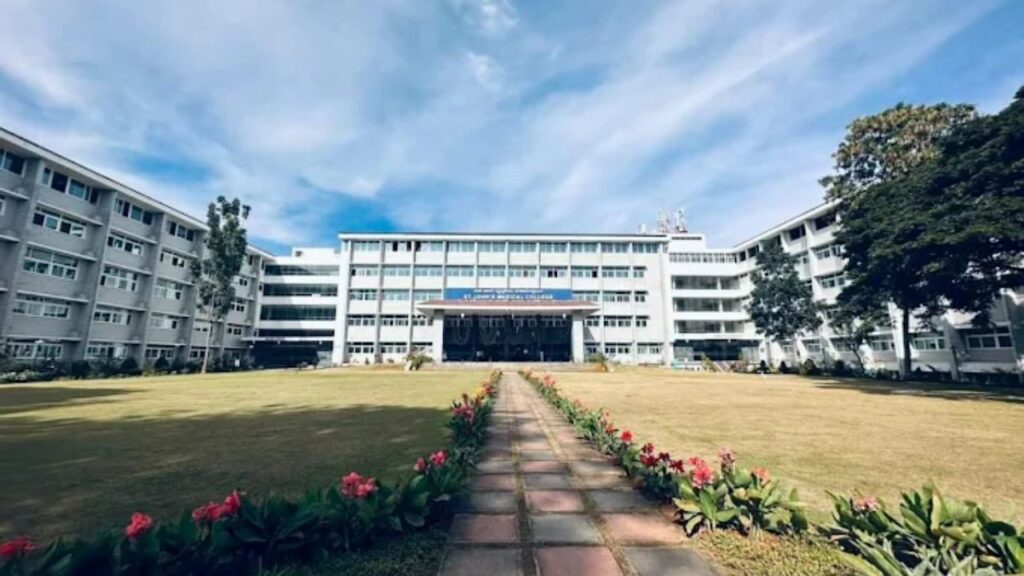
St. John’s Medical College: This private college is situated in Karnataka and is the oldest college. If you want to study in this reputed college then you should prepare for the entrance to take admission. It has a legacy of producing some of the finest medical professionals who serve both in India and abroad. The college is known for its value-based education, strong research backing, and vast hospital network.
Admission Process
Fee (General)
Placement & Package
NEET-UG required; apply via Karnataka state counseling (KEA); seats under General + Management quota
Approx ₹6.28 lakhs/year
Placements in St. John’s Hospital or through govt postings; avg. ₹7–10 LPA (PG); ₹20k–₹25k/month internship
2. Narayana Medical College
Narayana Medical College in Andhra Pradesh. If you are a citizen of this state, you can take admission here. It also has a flow of patients as it integrates college and hospital which helps students gain real-time clinical experience. It has one of the largest private teaching hospitals in the region and offers advanced training in medicine and surgery.
Admission Process
Fee (General)
Fee (Management)
Placement & Package
NEET-UG mandatory; apply via Dr. NTRUHS counseling portal; management quota for non-local students
₹12.50 lakhs/year
₹24+ lakhs/year
Good absorption into Narayana Hospital network; avg. ₹6–8 LPA after PG; ₹15k–₹20k/month internship
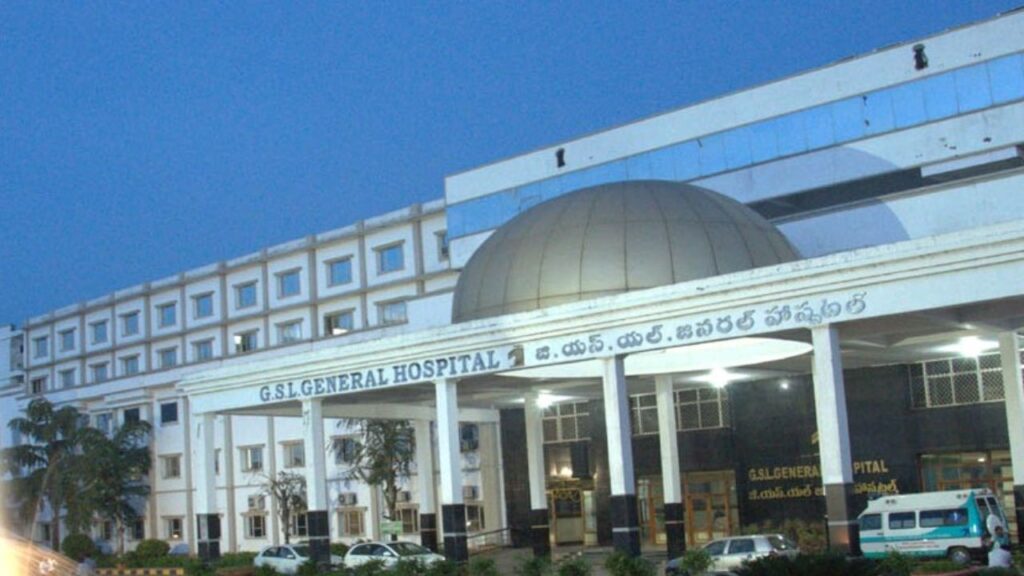
3. GSL Medical College, Rajahmundry
GSL Medical College is best for those students who want a good education but at an affordable fee. The infrastructure is modern, and the hospital on campus sees a good variety of patients, allowing students to learn practically from early on.
Admission Process
Fee (General)
Fee (Management)
Placement & Package
NEET-UG, Dr. NTRUHS counseling; management seats at higher fees
₹12 lakhs/year
₹24 lakhs/year
Andhra hospitals/PG; Avg. ₹5–6 LPA after PG; ₹18k/month internship
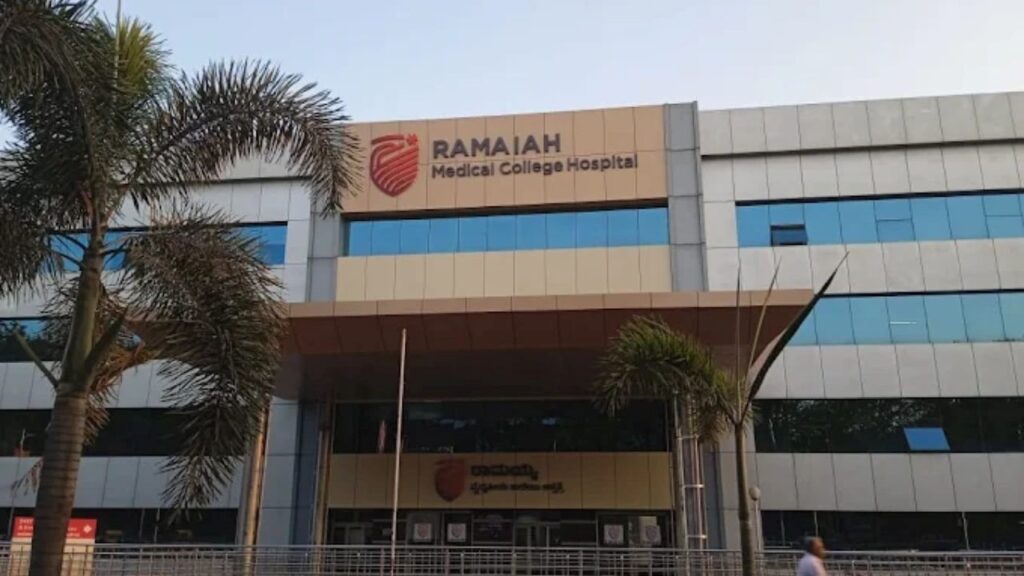
M.S. Ramaiah Medical College is offering high class education and advanced practical training to the future doctors. It’s known for high academic standards, overall world collaboration, and a strong hospital for clinical training.
Admission Process
Fee
Placement
Average Package
NEET-UG qualification is a must, Seat allotment happens through KEA-CET and All-India counseling. NRI and management quota are available.
₹10.9 lakhs for one year for general students ₹40+ lakhs for the Mgmt/NRI students.
Students can choose to study for further medical courses and medical opportunities also happen in the college.
The salary package depends on the skills and knowledge of the students. Average salary package is ₹8–12 LPA
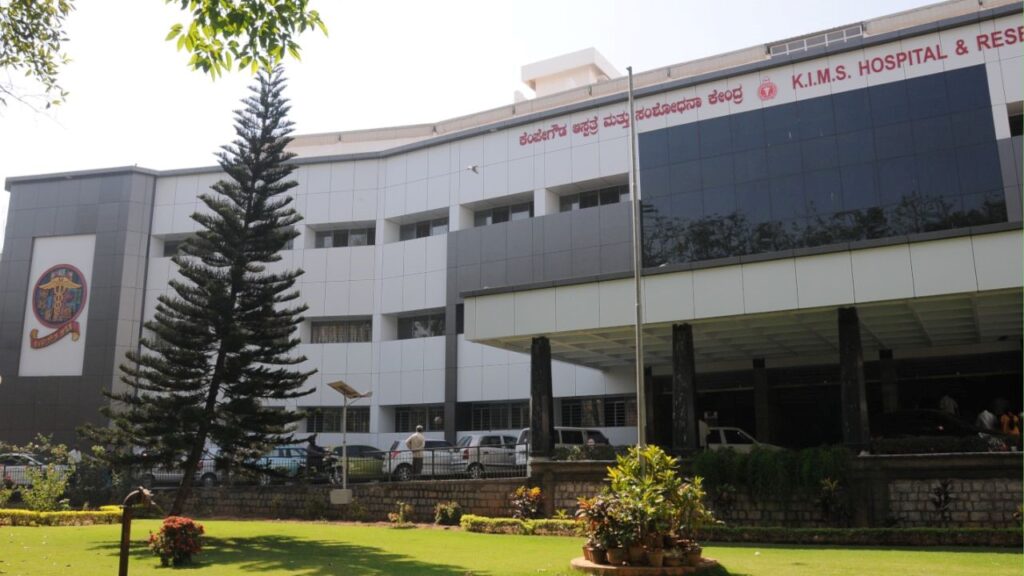
5. Kempegowda Institute of Medical Sciences
KIMS is a well-established private college with a strong hospital setup. Students have got the opportunity for practical training. The institution is affordable compared to other top private options, making it a favorite for middle-income families.
Admission Process
Fee
Placement
Average Package
Students have to clear NEET-UG and apply via KEA counseling (Karnataka). Management quota also available
₹7.1 lakhs per year (General), ₹35+ lakhs (Mgmt)
Self hospital offers and other hospital offers are also given to the students.
Students can have a lot of opportunities from this college and average package is around ₹5–8 LPA after PG; ₹20k/month during internship
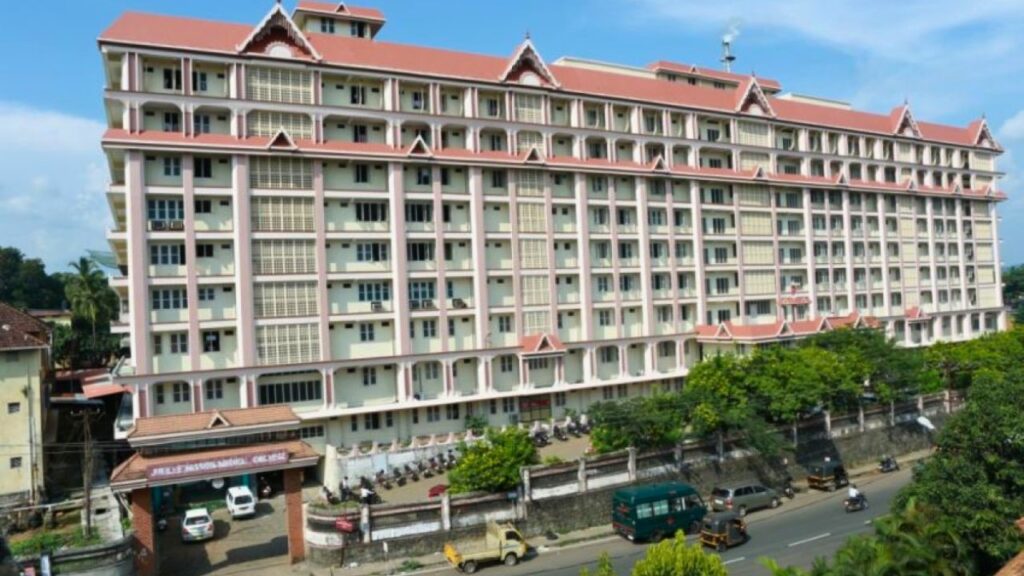
6. Jubilee Mission Medical College
Jubilee Mission Medical College: Jubilee Mission is a church-run institution known for its ethical approach to medicine and patient care. It offers quality education with emphasis on hands-on training and moral values.
Admission Process
Fee
Placement
Average Package
NEET-UG is required Apply through Kerala state counseling (CEE Kerala). Management and NRI quotas available
₹7.5 lakhs for one yearIt vary upon the courses
High number of students pursue PG; some absorbed into church-run hospitals
Students can get the salary package around ₹6–9 LPA (post-PG); ₹22k per month internship.
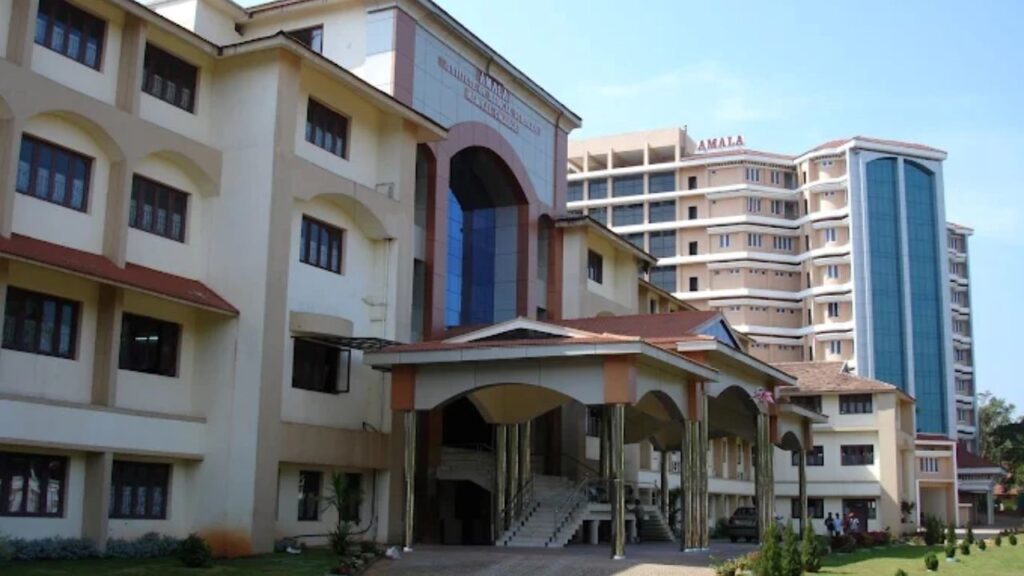
7. Amala Institute of Medical Sciences
Amala Institute of Medical Sciences: Amala offers medical courses such as MD, MS, and MBBS for students to establish their career in the medical field. It offers students practical training opportunities in a hospital environment. It provides a peaceful learning environment and good exposure through its well-equipped hospital.
Admission Process
Fee
Placement
Average Package
NEET-UG is mandatory.Students can apply via CEE Kerala. Seats under general, management, and NRI quotas
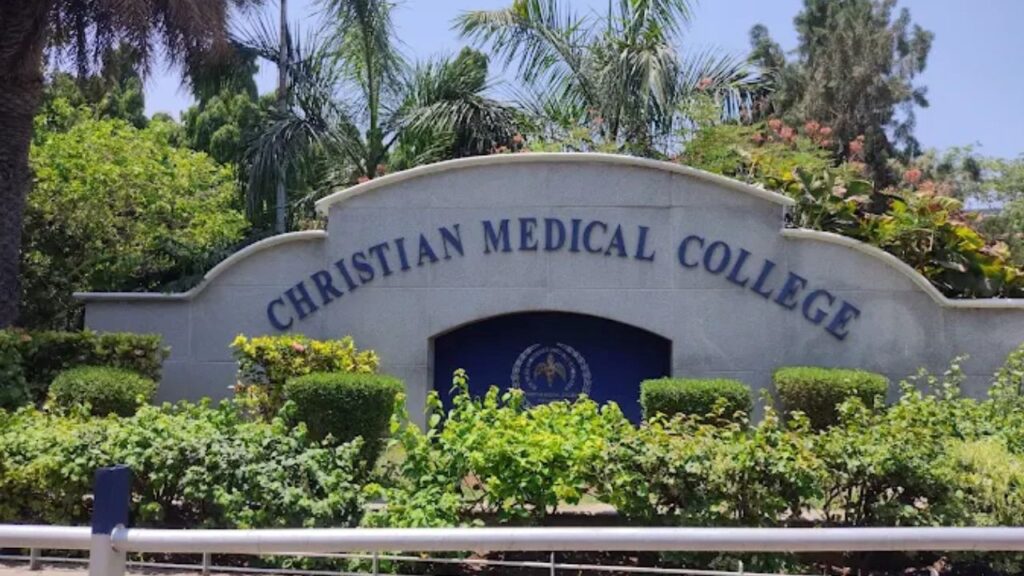
Christian Medical College (CMC): If you want to be a doctor in India’s best hospitals, this college provides excellent healthcare education and research. Although it’s a minority institution, it offers world-wide opportunities. With its top-notch education making it extremely hard to get into.
Admission Process
Fee
Placement
Average Package
NEET-UG required Must clear CMC’s own selection criteria after NEET Minority Christian candidates given preference
Approx ₹48,530/year (highly subsidized)
Top placements in India and abroad
₹10–15 LPA (PG level); internship ₹20–25k/month
9. SRM Medical College
SRM Medical Collegeis best in providing world class education and training to the students for improving their medical skills. It has good hostel facilities and student diversity.
Admission Process
Fee
Placement
Average Package
Admission via NEET-UG Apply through MCC AIQ or direct via SRM NRI quota available
₹25 lakhs/year (MBBS); ₹35–40 lakhs for PG
Absorption in SRM Hospital; good PG placements
₹6–8 LPA after PG; ₹20k/month during internship
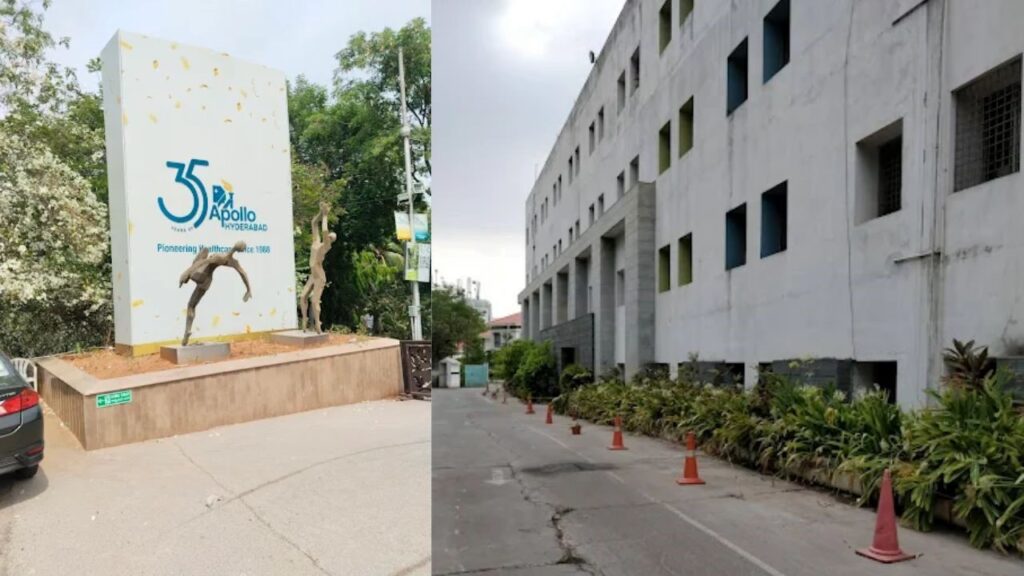
10. Apollo Institute of Medical Sciences and Research
Apollo Institute of Medical Sciences and Research: This institute offers one of the best corporate-style clinical exposures as it is connected to Apollo hospital. Students get trained under experienced doctors in a real-world hospital setting.
Admission Process
Fee
Placement
Average Package
Must qualify NEET-UG Apply through Telangana state counseling (KNRUHS) Management quota available
₹15.6 lakhs/year (General),
Apollo Group directly hires top interns and PGs
₹7–9 LPA; internship stipend around ₹25k/month
Conclusion
While deciding to grow in the medical field, the best college is the first step you consider for better opportunities and practical training. Choose according to your budget, goals, and career path among the Top Private Medical Colleges in South India.
As per the Uttar Pradesh Public Service Commission, English & Biology LT Grade teacher result declaration was held on 24th feb 2026. The merit lists will be available for candidates who appeared in these examinations to check and download from the official website of uppsc. Candidates were required to authenticate the details on the portal in order to view their result. Candidates are suggested to evaluate their result and download it as soon as possible as the merit list will be accessible for a short duration.
Uttar Pradesh Public Service Commission Details at a Glance
Check the Official site of UPPSC: for Obtaining the notification when it is released.
Go to the Results Tab: At the official website, and click on the LT Grade Teacher result
Enter Details: To check your score, you must submit some information, including that related to you such as your Roll Number and Verification Code. (Make sure you submit the same information that was used in your UPPSC Application.
Save or Print Your Result: Obtain your results and take a print out for future reference.
Details Included in the Result
There are many important points of the UPPSC merit list through which the performance and eligibility of the candidates, who appeared in the examination, could be known effectively.
Candidate Roll Number: Providing the roll number of each candidate is a good practice as it facilitates verification and identification of the results.
Candidate Name: The names of qualified candidates in the merit list to be considered for the next rounds of selection process.
Category: The candidate’s category (General/ OBC/ SC/ ST) is also mentioned in the merit list which is considered while checking the rank and the eligibility of the candidate as per reservation policies.
Marks Obtained: This shows the marks obtained by each candidate in the examination, which is important for candidates to know how they performed in the exam and also for the sake of transparency.
Cut-off Marks: In addition, the cut-offs for each category are also provided, i.e., the minimum marks needed to qualify for further process.
Rank: Candidates are ranked on their performance, and such rank becomes the relative position amongst the other candidates.
GovUpdatewala is your trusted source for real-time updates on government exams and jobs in India. We provide verified info on SSC, UPSC, Banking, Railways, Defense, and Teaching exams. From syllabus and patterns to important dates and career tips — we support aspirants at every step.