Best Nursing Colleges in Lucknow with Fees, Courses & Admission 2025

Nursing Colleges in Lucknow

If you are compassionate about caring for people then nursing will open up a path for a dynamic and rewarding career. Nurses are in demand in health care centers, private, and government hospitals. Degree, diploma, and certification courses are available in the Best Nursing Colleges in Lucknow with details of admission, fee, and placement opportunities.

Many students aim for a stable career, personal fulfillment, and a chance to care for others. Nursing is the best option for them, and it is easy. 

Some colleges admit students through entrance exams and some conduct direct admissions. Whether you pursue a Bachelor’s degree or a Diploma, you can get a lot of opportunities in this field.

Best Nursing Colleges in Lucknow

King George’s Medical University

Nursing students at King George’s Medical University in Lucknow during clinical training

King George’s Medical University: You can make a golden career if you get a chance to pursue nursing from the KGMU which is located in Lucknow, Uttar Pradesh. NAAC A+ accredited and experienced faculty can provide you with advanced knowledge. B.Sc Nursing from the Medical University costs between Rs. 48,000 and Rs. 3,00,000 for the entire course. Students can get a lot of opportunities after this course, average packages offer around Rs. 7.2LPA.  

Era University
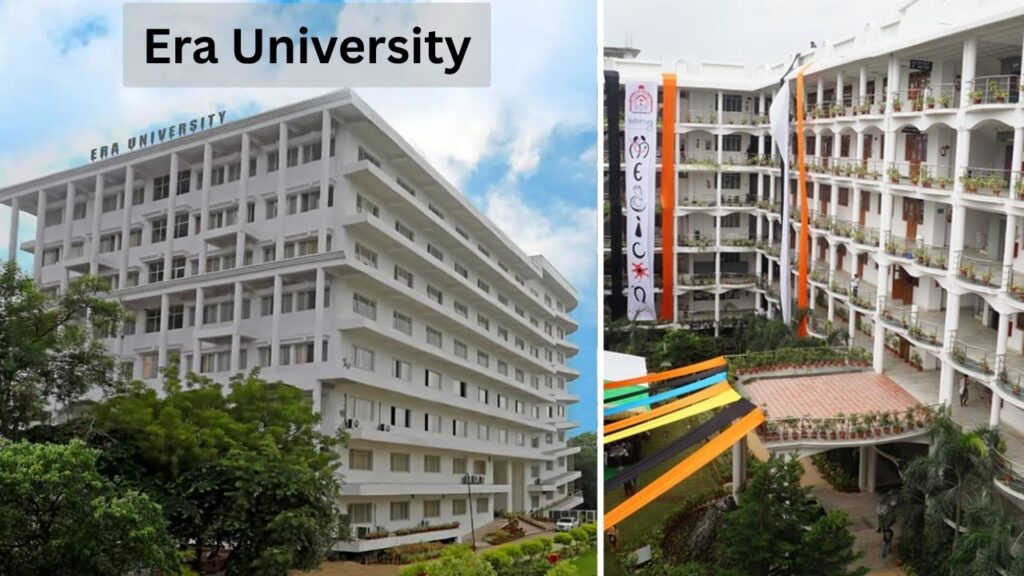
Era University nursing lab with students learning under faculty supervision.

Era University is new but growing faster with its advanced medical courses. The advancement in practical training will help students to learn and research. Admission is processed based on class 12th marks. The nursing course annual fee is around Rs. 50,000. The modern infrastructure and experienced faculty are strongly supportive in providing students with effective learning. 

Dr. Ram Manohar Lohia Institute of Medical Sciences
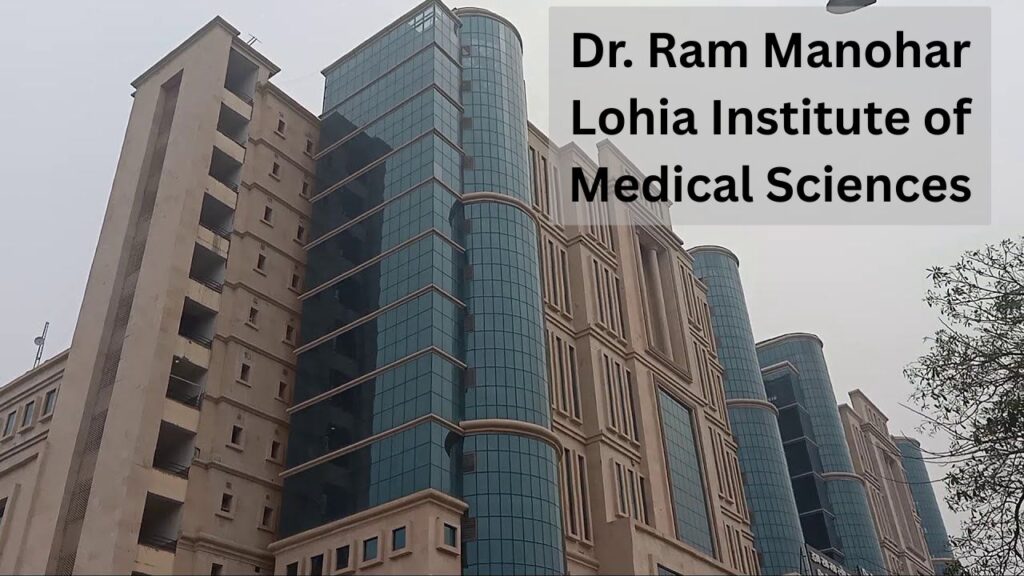
Students at RMLIMS Lucknow attending a nursing class.

RMLIMS is a government institution that offers many medical courses that have great value. The total fee of Rs. 3.90 lakhs for the RMLIMS Nursing course. Admission happens through CNET with a good score. Students can secure positions in the government hospitals.

Atal Bihari Vajpayee Medical University
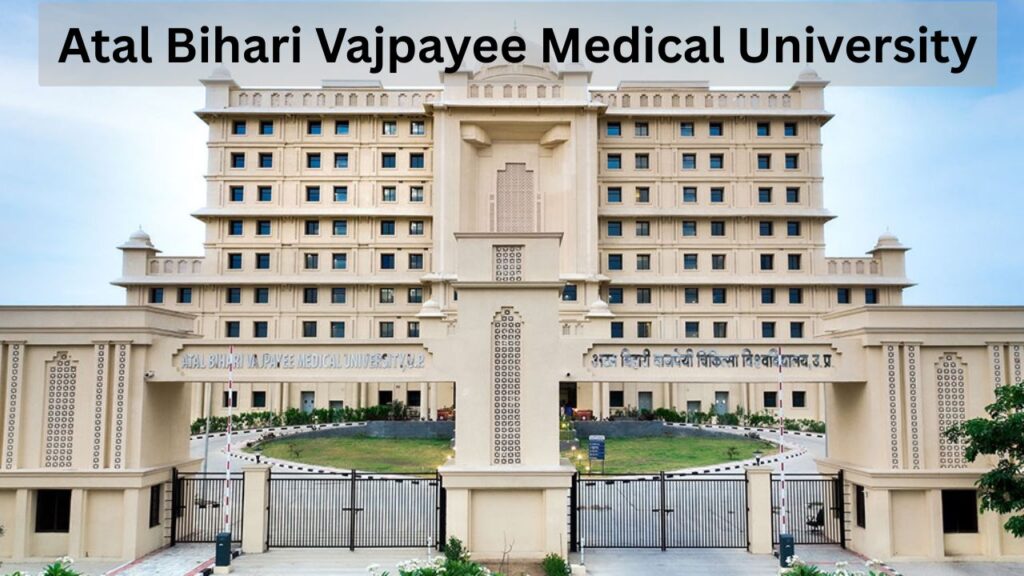
 Nursing students engaged in a group discussion at Atal Bihari Vajpayee Medical University.

Atal Bihari Vajpayee Medical University: This is a government institute for medical courses, with nursing as one of them. Students pursuing nursing courses from this college can get opportunities with top packages and a stable life. Students must appear in the CNET exam for admission. Total fee of Rs. 1.25 lakhs for the graduate program in nursing. Placement in government hospitals and research institutes is possible from this college. 

SR Group of Institutions
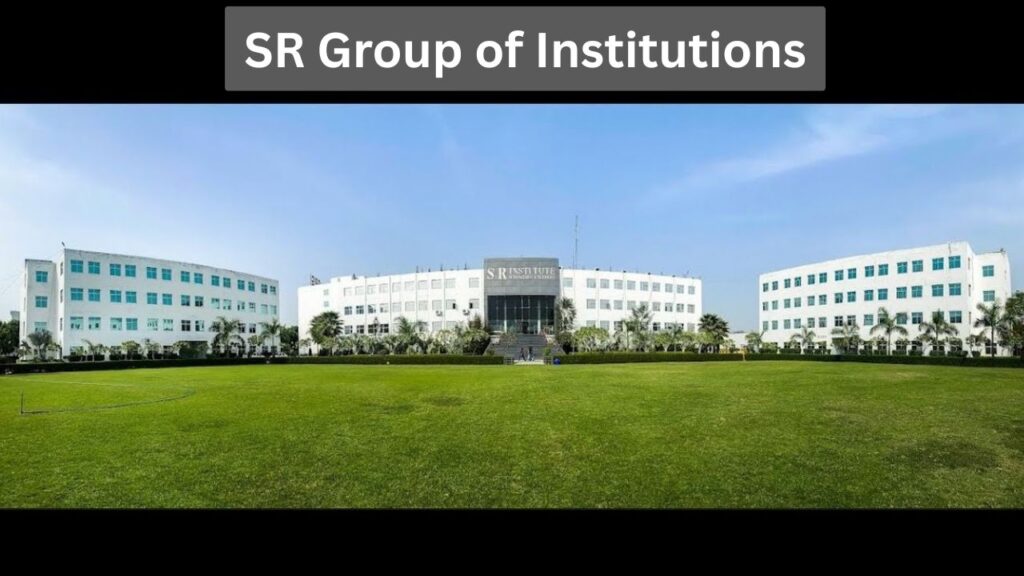
SR Group nursing students practicing patient care in a skills lab.

SR Group of Institutions: This is the best private institution for nursing courses as it offers practical training and a modern lab which helps students to engage with their work practically so they can gain skills and improve themselves to work more confidently and perfectly. The nursing course fee is around Rs. 58,000. Students get various opportunities after completing the course due to the institute’s support in placement. 

Integral University
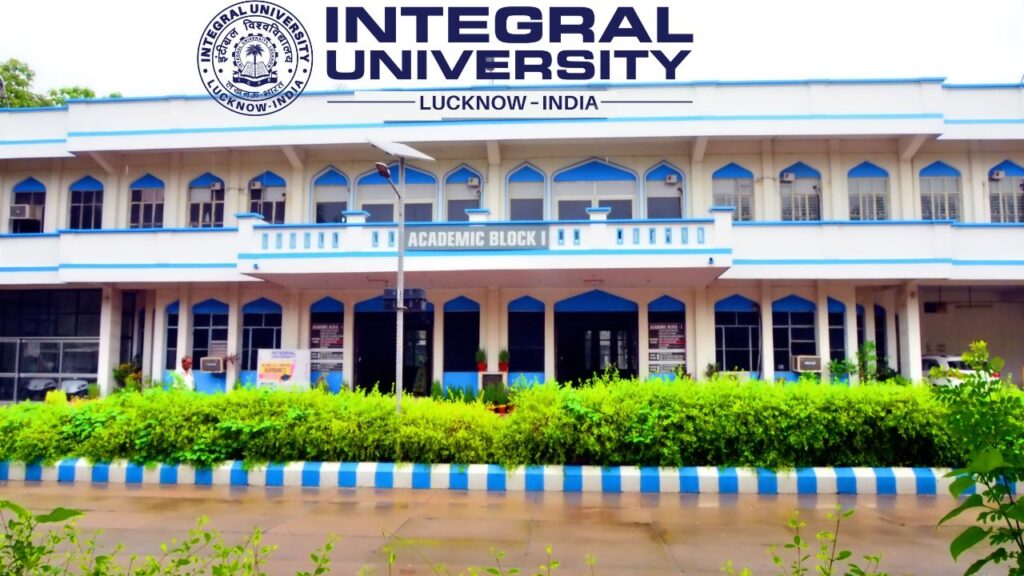
Integral University, Lucknow

Integral University has a strong faculty and is best for providing educational quality but it can be costly for most students. B.Sc Nursing fee is around Rs. 1.45 lakh for a year. Total sum up of 5.6 lakh for the 4-year course which can be expensive. So, if you can afford it then you can take admission by applying online on the official website. 

Bora Institute of Allied Health Sciences

This institution offers various courses and nursing is one of them. Total fee for B.Sc Nursing is approximately Rs. 4.50 lakh. BIAHS is a world-class institute that conducts admissions through CNET. Be sure to score well on the entrance exam for admission. 

Read More 👉 Medical vs Engineering: Which Career Will Make You More Successful in 2025

Career Opportunities With Nursing Course

Nursing courses from these colleges offer a lot of opportunities in private and government hospitals, health centers, and research labs. Nurses are in high demand in India because of their skills and work ethic. Graduating from a top college can secure a high package in the best organizations. You can also go abroad for higher studies and work there in healthcare.

Why Choose Lucknow for Nursing?

These top institutions in Lucknow are not just best in faculty and their campus but for educational qualification and training. Nurses trained from these colleges are best in their work because the high-quality practical exposure and understanding of their purpose to care for people is their motive from the beginning of their course. Ethics ensures that students are not just skilled professionals but compassionate caregivers, this is about more than medicine.

Types of Nursing Courses

Degree Courses

  • B.Sc Nursing is a graduation degree for students who want both theoretical and practical training in their studies.
  • Post Basic B.Sc Nursing is the best option for those who have completed their diploma and want to have a UG degree to upgrade their education qualifications.
  • M.Sc Nursing is a postgraduate program for those students who have completed their graduation and aim for leadership roles.
Course NameDurationEligibilityTypical FeesCareer Outcome
B.Sc Nursing4 years10+2 (Science: PCB & English), 45-50% marks₹20,000–₹2.5 lakh/yrRegistered Nurse, Staff Nurse
Post Basic B.Sc Nursing2 yearsGNM + Registered Nurse License₹40,000–₹1.75 lakh/yrSenior Nurse, Supervisor
M.Sc Nursing2 yearsB.Sc Nursing/Post Basic B.Sc Nursing₹50,000–₹2 lakh/yrNurse Educator, Manager

Diploma Courses

  • GNM is a diploma course for those who can’t afford degree programs; a diploma in nursing is also valuable. Many students start working after graduation and continue their studies for better positions.
  • ANM is best for those who are compassionate about maternal and child health care. Mostly demanding of community health workers.
Course NameDurationEligibilityTypical FeesCareer Outcome
GNM (General Nursing & Midwifery)3 years + 6 months internship10+2 (Any stream, 40-45% marks)₹10,000–₹5 lakh totalStaff Nurse, Clinical Nurse
ANM (Auxiliary Nurse Midwifery)2 years10+2 (Any stream, 40-45% marks)₹15,000–₹80,000/yrCommunity Health Worker

Certificate Courses

These are the short-term courses for those who aim to enter nursing but can’t afford expensive degrees and have a long time for their studies. These are the best options but jobs are mostly offered for maternal care and home care.

Course NameDurationEligibilityTypical FeesCareer Outcome
Certificate in Maternal and Child Health Nursing6 months–1 year10+2 or Nursing Diploma₹3,000–₹35,000Maternal/Child Health Aide
Certificate in Home-based Health Care6 months10+2 or Nursing Diploma₹3,000–₹35,000Home Care Nurse

Conclusion 

Nursing is about caring for patients at their most vulnerable state. With the help of these courses, you can enhance your skills to provide care in hospitals, health centers, and NGOs. Make sure to choose the right college for professional skills and practical training. These Best Nursing Colleges in Lucknow can offer you practical exposure, ethical foundation, and a culture of compassion to grow your career. Strong mentorship and support are the most encouraging parts. Graduates have placement options in India and abroad are high.

Leave a Comment

Your email address will not be published. Required fields are marked *

IIT BHU Fees for BTech: Tuition, Hostel & Other Charges Explained

IIT BHU fees for 4 years btech

Students must be aware of the entire IIT BHU fee structure if they are planning to pursue the B.Tech degree for 4 years, as the Institute operates on an income- and category-based system. IIT BHU is considered one of the best value for money engineering colleges in India with good placements and govt backed fee waivers and the fee is moderate as compared to many other IITs. 

The overall academic fee for four years for General/OBC/EWS students having an annual family income of more than ₹5 lakh is almost ₹10.4 lakh, while due to hefty tuition fee waivers, the students coming from lower income groups or reserved categories are charged a lot less. Students should also keep in mind that in addition to tuition realistic these fees are as well as hostel and mess charges while calculating up the actual four-year budget.  

IIT BHU B.Tech Fees Overview

IIT BHU (Varanasi) has a caste cum income-based fee structure and hence what you have to pay depends both on your caste category as well as your annual income. Academic fees include the fees for tuition, examination, registration, hostel seat rent and other institutional charges, but mess fees must be paid separately every semester.​

For a General/OBC/EWS student with income above ₹5 lakh per annum, the total academic cost for 4 years of B.Tech (not including mess and personal expenses) comes to around ₹10.41 lakh. The addition of hostel and mess makes the true 4 year cost regularly cross ₹11.5-12 lakh, based on yearly revisions and your lifestyle. 

IIT BHU B.Tech Fees Fee Structure Table

The following is the approximate fee structure of B.Tech course of IIT BHU for 4 years for various categories and income slabs (Mess charges are not included). These figures are for indicative purpose for 2025-entry students and are subject to minor changes in future circulars. 

CategoryAdmission CostSemester FeeFirst-Year Total4-Year Total 
GEN/OBC/EWS with Income less than ₹5L₹15,750​₹1,06,350₹1,21,600​₹10,00,000
GEN/OBC/EWS with Income less than ₹1-5L₹15,750₹39,683₹54,933~₹3,20,000
GEN/OBC/EWS with Income less than ₹1L₹15,750₹6,350₹21,600~₹50,000
SC/ST/PwD with no income limitations₹15,750₹6,050₹21,300~₹48,000

Fee Structure in More Detailed Way

One-Time Charges at Admission₹5,750
Refundable Deposits at Admission₹9,000
Tuition Fee₹1,00,000
Additional Charges₹16,500 per semester

Realistic Budget: Academic + Hostel + Mess

While academic fees only are quoted in brochures, parents should calculate fees with hostel and mess included so as to not suffer a financial shock later. IIT BHU Hostel fee (seat rent plus utilities) is very nominal compared to fees, but mess bills are a hefty recurring cost.​

  • Seat rent for the hostel and utilities: a few thousand rupees per semester (added to the normal semester fee).
  • Mess advance: usually ₹15,000–17,000 a semester – rates depend on the mess committee.
  • Estimated four-year mess cost: ₹1.2–1.4 lakh (based on eight regular semesters and modest inflation has been taken into account).
  • General/OBC/EWS Candidates who have their house income less than 5 lakh have a good all inclusive practical 4 year budget (academics+hostel+mess) would be around 12 lakh. 

This is the lower fee budget particularly for those who receive full or partial tuition waivers, students with lower-income can have a shot at IIT BHU. 

Read More 👉 UP Board Exam Date 2026 – Latest Time Table, Schedule & Updates

Comparison With Other Top Universities

In order to get a sense of how affordable IIT BHU is, it makes sense to compare its 4-year B.Tech fee with that at other reputed institutes like IIT Delhi and BITS Pilani. The following amounts (approximates) are for General/OBC/EWS students with income above ₹5 lakh per year and do not include hostel/mess. 

InstituteApprox. 4-Year Academic Fees Verdict
IIT BHU₹ 10.4 lakhAmong the lowest 4-year IIT fees. 
IIT Delhi₹ 8.6–8.7 lakhSlightly lower than most IITs; very strong ROI. 
BITS Pilani (any campus)₹ 19–22 lakhNearly 2x IIT BHU; private, higher annual tuition.

Both IIT BHU and IIT Delhi receive government subsidies that make the cost of tuition approximately ₹8–10 lakh for 4 years.​

Since BITS Pilani is a private deemed institution the fees are much higher, the total cost for 4 years (including hostel and mess) can easily cross ₹22-24 lakh. 

Fee Comparison With IIT Delhi And BITS Pilani

4-year BTech Academic Fee Comparison (2025)

IIT BHU and IIT Delhi 4-year fees are about ₹10.4 lakh and ₹8.6 lakh respectively for the same duration. Meanwhile, tuition fees at BITS Pilani vary from ₹19 lakh to ₹22 lakh for 4 years, not inclusive of inflation and full residential expenses. 

For students who are granted income-based fee waiver or belong to SC/ST/PwD categories, IIT BHU becomes significantly better option over private colleges, as their burden of tuition fees is substantially reduced or waived off. This balance of modest fees, good placements and central government support is what makes IIT BHU one of the best ROI engineering options now available in India. 

Conclusion

The B.Tech fee at IIT BHU is kept as per the income slabs of students, Hindi Medium assistance patches are provided. With substantial waivers for economically backward sections and SC/ST/PwD students, and government subsidies making the aggregate academic fee lesser than most of the premier institutes, IIT BHU promises one of the best ROI among the top engineering colleges. 

The bottomline is that the 4-years cost of attendance remains affordable when compared to private institutes like BITS Pilani, whose fees can run to almost twice this amount, even after adding hostel and mess charges. If you are a student who wants a good mix of fees, quality education with good placements, IIT BHU is a very cost-effective and future proof bet. 

Leave a Comment

Your email address will not be published. Required fields are marked *

PCS Rank Wise Post List 2025: Which Rank Gets SDM, DSP & More?

PCS Rank Wise Post List

The PCS exam is the most hardest exam in India which offers many prestigious level jobs in the government sector. PCS Rank Wise Post is allotted according to the candidates marks in the exam. It offers many higher level administrative posts like SDM, DSP, BDP, CTO, and others. This exam is held annually to recruit thousands of candidates for different posts, and prepare strategically for higher rank posts.

Let’s explore the PCS exam and posts for understanding their authority and power in administration.

What Is The PCS Exam? 

Provisional Civil Services offers a diverse range of posts in the government sector and is conducted by different State Public Services Commissions including UPPSC, BPSC, MPPSC, RPSC, etc. But the post name and exam pattern will be the same in all the states. Posts rank may slightly differ from each other but posts are related to state administration and law enforcement. The exam pattern includes: 

  • Prelims
  • Mains
  • Interview

How Are Posts Allotted in PCS Exams?

There are various factors for allotting the post on different level, let’s look into these factors:

Final rank in the merit list (Mains + Interview). Selection is based on the PCS state-level exam rank. If the two candidates have the same score then the cast-category of the candidates will decide in the selection process. The third factor is the number of vacancies in that post.  

PCS Rank Wise Post List 2025 

Likely RankPost Name
1Deputy Collector (Sub Divisional Magistrate/SDM)
2Deputy Superintendent of Police (DSP)
3Block Development Officer (BDO)
4Assistant Commissioner (Commercial Tax)
5District Commandant, Home Guards
6Subordinate Revenue Officer
7Assistant Regional Transport Officer
8District Social Welfare Officer
9District Panchayat Raj Officer
10Accounts Officer

Special PCS Posts And Their Powers 

Don’t you wonder? Why does the PCS Rank Wise Post matter? Because a candidate’s post determines their authority, power, responsibility, and salary within the state administrative system. 

The powerful posts allotted to top rankers in the PCS exam. The top three posts are Sub Divisional Magistrate (SDM), Deputy SuperIntendent of Police, and Deputy Collector are all administrative powers and control district level operations directly impact governance and policy implementation. 

Read More 👉 Meet the Best Physics Teacher for NEET Online – Top Choice for 2025

PCS Rank Wise Post Scope & Perks

Higher powers such as SDM, DSP, & CTO are placed on the top level of the government administration of the state because they are responsible for revenue management, development works, jurisdiction over law and order and public service delivery. 

Meanwhile, lower ranked positions are also responsible for government department works and administrative jurisdiction but they have less authority and power for taking decisions.

Higher positions rankers get fast promotion while initial posting and lower rankers have to face slower growth to become on the post like Indian Administrative Services (IAS). The salary and additional perks are good on a higher level with social recognition, they have more prestiges compared to lower level.

Other Top Level Posts in PCS Exam

Block Development Officer 

He has authority within the block in rural or semirural areas to lead administration for the development of projects for public welfare and implementation in government schemes. He supervises both state and central government policies in that area.

District Commandant, Home Guards

District Commandant is a head of Home Guard volunteers and works with the police and administration for law and order for handling disaster and public safety.  

Subordinate Revenue Officer

He is responsible for collecting and saving the data of land in the sub-district. Government schemes implementation also comes under the Subordinate Revenue Officer responsibility for agriculture and land reforms. These decisions are directed by the higher revenue officials and SDMs.

Assistant Regional Transport Officer

He enforces public travel law and order to resolve issues of driving license, permission for transport, and registrations of vehicles. Assistant Regional Transport officer is responsible for road safety campaigns and accident investigations.

District Social Welfare Officer 

District level authority and power to manage and implement welfare schemes for low cast and schedule tribes communities. Works as a mediator between communities and district administration for their well-being.

District Panchayat Raj Officer

Panchayat councils of villages are supervised by District Panchayat Raj Officer. Implantation for rural development schemes are monitored by him and he is responsible for these operations running smoothly in the area. 

Account Officer

Account officer handling the government department’s account and financial administration to manage budget and deliver financial reports to the government administrations. 

SDM vs DSP – Which Is Better?

SDM and DSP both positions are highly respectable but their work and authority is different from each other –

Sub Divisional Magistrate – SDM

This is the highest administrative officer post in the department to ensure the governance runs smoothly under the law and order. This involves both desk and field duties and offering great professional growth to ADM then DM level.

Deputy Superintendent of Police – DSP:

He is the head of the police subdivision and has authority for law enforcement. A very respectable uniformed post, DSP is responsible for commanding over police stations and getting promoted to SP and DIG. 

How to Get Top Rank for SDM or DSP Post?

The higher posts are responsible to change and implement governance that is why they are placed at the higher places in the state hierarchy. 

  • Your rank must lie within top 100 to get SDM or DSP post.
  • To score on that level you must focus on high-scoring subjects.
  • Practice and learn consistently for Mains.
  • Improve english grammar and take mock tests daily.
  • Keep updated with events, current affairs, and government policies.

Conclusion

PCS Rank Wise Post is important to understand if you are preparing for PCS exams because your exam scores will decide your position. If your goal is SDM or DSP then you should get 70-100 rank (General Category) and 120-160 rank (reserved category). With the right strategy you can prepare smartly for this exam and get the position.

PCS rank not just decides your job but also your future of growth, salary, and authorities. So, start aiming your goal with smart strategy and hard work.

Leave a Comment

Your email address will not be published. Required fields are marked *

Railway Protection Force Constable: Salary, Selection, and Exam Details – complete guide

Railway Protection Force Constable

RPF is one of the most popular and important central forces of India, providing a secured career and good remuneration both for male and female aspirants. If you are dreaming of getting a prestigious government job which provides security for your job and financial stability, RPF Constable is your stepping stone for a bright future. So let’s go deep down to the bottom with everything you need to know about this great career. 

Understanding RPF Constable Salary

The compensation package is fairly competitive for those who do not have a long track record in government employment. An RPF constable gets a basic pay of Rs. 21,700 per month for an RPF constable which looks low at first, but with various allowances the total amount becomes pretty attractive. 

Your salary after allowances addition is usually between Rs.26,000 to Rs.32,000 per month with the variation being based on the city of posting and the type of allowance you are entitled to. The consolidated monthly remuneration (all-inclusive) is between Rs. 37,420 and Rs. 44,460 which is equal to Rs. 3.12 lakhs to Rs. 3.84 lakhs annually.

There are different components of salary in the salary structure that makes your take-home pay higher. You get a Dearness Allowance (DA) of Rs 10,850 which is 50 per cent of your basic pay as a you help me keep pace with inflation. The HRA depends upon your place of posting and it lies between 8 – 30 percent of your basic salary. Transport Allowance and City-wise Others benefits add further to your income. 

The RPF salary becomes more alluring because of the regular increments, which are granted at the end of every year of the service. Moreover, you also avail medical facilities, pension schemes as per 7th Pay Commission recommendations and many more benefits which ensure financial stability for life. 

Read More 👉 Top B.Tech Colleges in India: Latest Ranking & Admission Guide

The Selection Process

The process to become an RPF Constable from a wannabe has a selection process that is fairly straightforward and designed to winnow out the best and fittest. Knowing the steps will give you a strategic edge in your preparation and you can rest assured when you go through the recruitment. 

Stage 1: Computer-Based Test (CBT)

The first barrier is the Computer-Based Test, which is the entirety of the selection process. The CBT comprises a 120 marks, 120 multiple-choice questions exam, and you are given 90 minutes to take it. You get one mark for each right answer, but here is the catch: you get one-third of a mark deducted for every wrong one, so choose wisely.​

The exam is held in Hindi, English, and in some regional languages so that aspirants from all backgrounds can take it without any difficulty. The level is of 10th standard but don’t take it lightly as questions asked would be based on your overall learning not only from memorizing. 

Stage 2: Mandatory Physical Efficiency Test and Physical Measurement Test (PET & PMT) For Candidates

Only the candidates, who qualify the CBT, are called for the Physical Test, This phase has two parts, which are both important in your selection.​

The Strength, Endurance and Fitness test tries out your strength, stamina and fitness through real activities. Male candidates are required to run 1600 meters in 5 minutes 45 seconds while female candidates are required to run 800 meters in 3 minutes 40 seconds. You only get one try for the running event—no second chances here, so train hard. And you also have the long jump and high jump tests where you’re given two tries. 

Leaping 14 feet in the long jump and 4 feet in the high jump is a requisite for male candidates. Female aspirants have much relaxed parameters: 9 feet for long jump and 3 feet for high jump. Note: ex-servicemen are not required to take the PET but they do have to clear the PMT.​

The Physical Measurement Test (PMT) measures your height and chest measurements against certain standards. The male applicants must hold a minimum height of 165 cm (160 cm for SC/ST categories), with an unexpanded chest measurement of 80 cm and an expanded chest measurement of 85 cm. Height requirements for Female Candidates is 157 cm (152 cm for SC/ST Categories). These measurements are to make sure you comply with the physical standards exigent of this job. 

Stage 3: Document Verification (DV)

Those who qualify in the PET and PMT are called for document verification, where your eligibility stands verified. You need to submit the originals for age proof, educational qualification, caste certificate (if any) and identity proof. 

Stage 4: Medical Examination

The end stage in selection is a medical examination in) depth by RPF medical officers. You should be fit according to medical category ‘B-1’ as per Indian Railway medical manual in order to consider for the post. 

RPF Constable Syllabus

First analyze the syllabus then start your preparations accordingly. The RPF Constable CBT syllabus consists of three crucial components considered equal in weightage covering other aspects of your aptitude.​

General Awareness (50 questions)

Here, you will be examined on the things happening now, history of India, geography, polity, Indian economy and general science. Topics such as Indian Constitution, fundamental rights and duties, directive principles, economic theories, environment, sports, art and culture and major breakthroughs in science are part of the Topics. So keep yourself updated with the current affair and a little bit knowledge of Indian history, geography and general knowledge for this section.  

Arithmetic (35 questions)

Mathematics is not only an instrument of calculation here, nevertheless it is also a matter of thinking and reasoning. The maths section covers number system, percentage, ratio and proportion, simple and compound interest, profit and loss, mensuration, time and work, speed and distance along with elementary algebra. Most of the questions focus on testing your conceptual understanding of math that you can relate to real-life, so it’s always better to have an idea on concepts than mug up formulas.  

General Intelligence & Reasoning (35 questions)

Your Mind & Reasoning ability are tested on topics like Analogies, Coding-Decoding, Number Series, Syllogism, Blood Relations, Seating Arrangement, and Non-Verbal Reasoning. Your performance in this region will get a healthy boost from developing logical thinking and practicing pattern recognition. 

Preparing Strategically for Success

To crack RPF Constable Exam, do preparation in a systematic way. Firstly, comprehend the syllabus in depth, then solve previous year papers on a large scale. Divide your time according to the level of each question in study time since each topic has equal weight. Information is updated frequently at the official RPF website (rpf.indianrailways.gov.in/RPF), so keep visiting for more notifications.

Don’t wait until the date of the PET slowly approaching for physical preparation. Start your workout regimen now—running, jumping and strength training should be daily activities. Academics are important, but so is physical fitness in this selection. 

Your RPF Constable career is tough but highly satisfying. After all, a little planning, hard work and a bit of luck is all you need to make your way through this process and reach a coveted post that will provide you not only with financial security and job stability, but respect in society, as well. Begin preparing now and earn your living in the Railway Protection Force. 

Conclusion

Being an RPF Constable is not only a government job but a career to serve in among the most disciplined and respected central forces of India. The financial outlook is good and long-term because you get a good starting salary with allowances, plus regular increments, medical benefits and pension security.

The selection procedure, although tough, transparent is doable with the right mix of brains and brawn. Having a knowledge of syllabus, daily practice for CBT and starting physical training for PET/PMT at an early stage will help you a lot in achieving success. 

If you have the right attitude, are disciplined, and able to concentrate hard, then the RPF Constable post can provide you with the pride and social standing besides financial independence and job security. Begin your preparation today, be consistent, and march confidently towards a bright future with RPF. 

Leave a Comment

Your email address will not be published. Required fields are marked *

RRB Isolated Categories Recruitment 2026 Exam: Posts, Eligibility & Salary

RRB Isolated Categories Recruitment 2026

Railway Recruitment Boards (RRB), indianrailways.gov.in has issued notification for the job vacancies for RRB Isolated Categories Recruitment 2026  now available. The recruitment is being conducted for a total of 311 vacancies for various posts such as Senior Publicity Inspector, Lab Assistant Grade III (Chemist & Metallurgist), Chief Law Assistant, Junior Translator (Hindi), Staff & Welfare Inspector, Public Prosecutor, and Scientific Assistant/Training.

The RRB CEN 08/2025 – RRB Isolated Categories Recruitment 2026  Application submission has started for this RRB vacancy online from 30/December/2025 to 29/January/2026. Interested and eligible candidates may apply online through the official RRB website.

Candidates are requested to read the full notification very carefully to clear all the essential facts of eligibility criteria, Fee, Age Limit, Salary, Selection process and other important instructions. Here is the direct link to apply online for the RRB Isolated Categories Recruitment 2026 along with detailed information. 

RRB Isolated Categories Recruitment 2026  Event Dates

EventDate
Notification Date17/December/2026
Application Start Date30/December/2025
Apply Online Last Date29/January/2026
Fee Payment Last Date31/January/2026
Correction DateAs Per Schedule
Admit CardBefore Exam
Application Fee
Gen/ OBC/ EWSRs. 500
SC/ ST/ EBC/ Female/ TransgenderRs. 250

Age & Education Eligibility

PostMinimumMaximum Years careerpower+1​
Senior Publicity Inspector1833
Lab Assistant Grade III1830
Chief Law Assistant1840
Junior Translator (Hindi)1833
Staff and Welfare Inspector1838
Public Prosecutor1838
Scientific Assistant/Training1835
Post NameVacanciesEligibility Requirements careerpower+2​
Senior Publicity Inspector15Graduation with a diploma in Public Relations, Advertising, Journalism or Mass Communication from a recognized University/Institute. 
Lab Assistant Grade III (Chemist/Metallurgist)3912th passed with Physics & Chemistry from a recognized board.
Chief Law Assistant22Bachelor’s in Law + 3 years practice as a leader at Bar from recognized university.
Junior Translator (Hindi)202Master’s in Hindi/English + Diploma/Certificate in Translation from recognized university.
Staff and Welfare Inspector24Bachelor’s + Diploma in Labour/Social Welfare/Labour Laws/LLB (Labour Laws)/PG in Personnel Mgmt/MBA(HR)/PG in HRM from recognized institutions.
Public Prosecutor7Bachelor’s in Law + 5 years practice as advocate at Bar from recognized university.
Scientific Assistant/Training2Master’s in Psychology from a recognized university.

Salary Scale For RRB Isolated Categories Recruitment 2026 

The base Salary starts at Rs. 19,900/- then it can go higher up to Rs. 44,900/- per month according to the post. So, candidates can now hurry to fill the application for this golden opportunity. 

Read More:- CBSE Group A, B & C Admit Card 2026 Download Link, Exam Date

Follow These Steps to Apply Online for RRB Isolated Categories Recruitment 2026

  1. Read the Notification: Download the RRB Isolated Categories Notification 2026 (PDF) and read it thoroughly to have the eligibility criteria.
  2. Visit the Official Website: Indian Railways Recruitment 2023 Apply Online at indianrailways.gov.in
  3. Fill the Application Form: Fill in the application form with as your personal, educational and contact details in an accurate manner.
  4. Upload Documents: In the specified format, upload the necessary papers including photos and signatures.
  5. Pay the Application Fee: Pay the application fee using any of the supported online payment methods.
  6. Submit & Print: Before submitting the application form, check it thoroughly, submit it and then take a printout of the application form for the record. 
Useful Links
Apply NowClick Here
Download NotificationClick Here
Official WebsiteClick Here

Leave a Comment

Your email address will not be published. Required fields are marked *

CAT Exam Syllabus 2025: Complete Section-Wise Guide to Crack the Test

The Common Admission Test can open the doors for India’s most prestigious colleges. Students get stressed with the syllabus most of the time and get confused, so it is important to know the CAT exam syllabus 2025 section-wise. This can help you understand the important topics that must be considered prior while preparing. The powerful strategy to prepare for any competitive exam is according to exam pattern. Read the full article to assess this knowledge which can help you beat the CAT exam. 

It’s not about a lot of time and resources, just the right planning to assess important knowledge is required. Whether you are an average student or brighter one but CAT is not that simple as you think. Masters from top colleges matter in your placement. If you really want to take admission in an MBA or other postgraduate program, you need to clear the CAT exam.

Exam Pattern Overview

CAT is conducted online through a computer-based test format. The total 68 questions come in the examination which get distributed into three sections. This 120 minutes exam carries 204 marks to decide your future in your education journey. However 40 minutes is given for each section with +3 marks if the answer is correct but negative marking of -1 for each wrong answer. There’s no negative marking for TITA (Type In The Answer) questions.

Section-wise Distribution

Verbal Ability & RC carries 72 marks for 24 question
Data Interpretation & Logical Reasoning carries 66 marks for 22 questions
Quantitative Aptitude carries 66 marks for 22 questions

Section 1: Verbal Ability & Reading Comprehension (VARC)

This section covers 36% of the paper. It focuses on RC more than grammar means 16 questions come from the Reading comprehension so it covers 66% of VARC section. While Verbal ability covers 33% of the section. The reading comprehensive features 4 passages with 4-5 questions per passage. The topic in these passages is almost relevant to niches like economics, psychology, literature, and current affairs. 

Verbality Ability comprises 8 questions From:

  • Para summary question
  • Para jumbles 
  • Odd sentence out
  • Sentence completion tasks

Section 2: Data Interpretation & Logical Reasoning (DILR)

This section 32% of the exam paper and considered most unpredictable questions come from the Data Interpretation & Logical Reasoning section. While the questions are in the sets of 3-4 questions, making it difficult to solve easily. 

Topics of Data Interpretation & Logical Reasoning questions:

Data InterpretationLogical Reasoning
Tables and charts analysisPuzzles and arrangements
Bar graphs and pie chartsSeating arrangements
Line graphs and scatter plotsBlood relations and family trees
Caselets with numerical dataCoding-decoding problems
Syllogisms and Venn diagrams

Section 3: Quantitative Aptitude (QA)

Quantitative aptitude holds 32% weightage in the paper. It covers Arithmetic and Algebra topics, making it the hardest section. 

Topics of Quantitative Aptitude Questions

Arithmetic (8-9 questions)Algebra (5-7 questions)Geometry (2-3 questions)Modern Mathematics
Ratios and ProportionsLinear equations and inequalitiesCoordinate geometryPermutations and combinations
Percentages and their applicationsQuadratic equationsMensurationProbability
Profit, Loss, and Simple/Compound InterestFunctions and graphsTriangles and circlesLogarithms and surds
Time, Work, and Distance problemsProgressions and series
Mixtures and Allegations

Topic-wise Weightage Analysis

Highest Priority Topics:

Reading Comprehension16 questions
Arithmetic8 questions
Algebra5-7 questions
Puzzles & Arrangements8-10 questions

Medium Priority Topics:

Data Interpretation8-9 questions
Geometry3 questions
Verbal Ability8 questions

Lower Priority Topics:

Modern Mathematics2-3 questions
Number Systems1-3 questions

Effective Preparation Strategy

Preparing for the CAT isn’t that easy but with right strategy planning you can clear out the exam. There is no need to rote memorization because these subjects require focus and proper time to understand every concept. 

CAT needs comprehensive preparation with proper time duration like 6 to 9 months. Know your weaknesses, so you can distribute your time more on that topic. Divide all three sections with specific duration to complete your preparation properly.

Read More 👉 Best BCA Data Science Colleges in Chennai for a Future-Ready Career

Daily Practice Target

  • Deep analysis and carefully 2-3 Reading comprehension daily is important
  • Solve 2-3 sets of Data Interpretation and logical reasoning to understand and filled in your brain
  • Daily solve at least 15-16 questions from the quantitative aptitude section. Try to solve easy problems first then go to the hard topics.

Mock Test Strategy

After preparing for 2 months, get ready to take mock tests section-wise and extend your mock test practice before the exam. Because analyzing every question helps you keep remembering the concepts and maintain your confidence.

Resource Selection

Choose online resources to prepare fast because the latest notes and mock tests can help you a lot during preparation for the CAT exam. Stick to single quality resources, don’t switch every time and focus on concept clarity rather than multiple resources and question papers. 

Conclusion

Success in CAT requires strength, strategic preparation, and daily practice for clearing every doubt. Focus on high priority topics first then move on the medium priority to balance every section easily. Remember that quality study is more helpful to clear the exams rather than a lot of study material and wasting time on unnecessary topics. So, it is important to prepare according to the CAT exam syllabus 2025 section-wise for best outcome.

Leave a Comment

Your email address will not be published. Required fields are marked *

Scroll to Top