Best Online Coaching for UPSC – Top IAS Preparation

Cracking the UPSC exam isn’t that easy, you need the right strategy to prepare and beat the competition. These Best Online Coaching for UPSC will help you to cover every topic with practice test series that help you pinpoint your weak points and clear every doubt. The syllabus is vast and maintaining consistency is difficult, these online coachings offering both interactive session and recorded session to cover up. 

In a rising online education, these coaching are also growing as most of the students prefer to take online classes rather than finding offline coachings. Some of the most talked about online platforms are Drishti IAS, Vision IAS, Physics Wallah, Vajiram & Ravi, Clear IAS, Insight IAS, and Nirnay IAS.

Let’s check their best features and overview details to decide which one is right for you.

Drishti IAS

The Drishti IAS is most popular platform for IAS preparation, ideal for UPSC aspirants from both Hindi and English medium. It offers a structured and motivational teaching style which is helpful during UPSC preparation as it is the hardest exam. 
Best Features:

  • It is best for students who can give 15 to 16 months to this course with 400+ live classes. 
  • Extensive study material can help for learning
  • Excellent test series to improve regular practice, total of 24 mains and prelims tests available for 3 years.
  • No language barrier, it is easy for every student.

Vajiran and Ravi

Vajiram and Ravi coaching originated offline and marked a name in the top UPSC coachings and is now available online that delivers the same quality teaching for UPSC aspirants. 
Best Features:

  • Ideal for those who wanted to cover every topic with depth, 1000+ hours of lectures needed plenty of time.
  • Detail study and notes are also available for quality learning
  • Consistently maintain its record for producing toppers for years
  • Cost effective for providing best learning to ensure clarity for every doubt.

Read More 👉 Best Online Coaching for Bank Exam: Master Every Topic for Success

Clear IAS

Clear IAS is also one of the best online coaching which provides a super 50 program for specifically UPSC preparation. It is well-known for its focus on more personal guidance and small batches.  Ideal for aspirants who prefer self-paced learning with doubt clearing sessions at low fees.
Best Features

  • There are a large number of recorded lectures which can provide detailed learning for UPSC.
  • 700+ hours lectures and 1500+ study material
  • Test series to maintain daily practice for doubts clarity, mentorship support, and interview guidance.

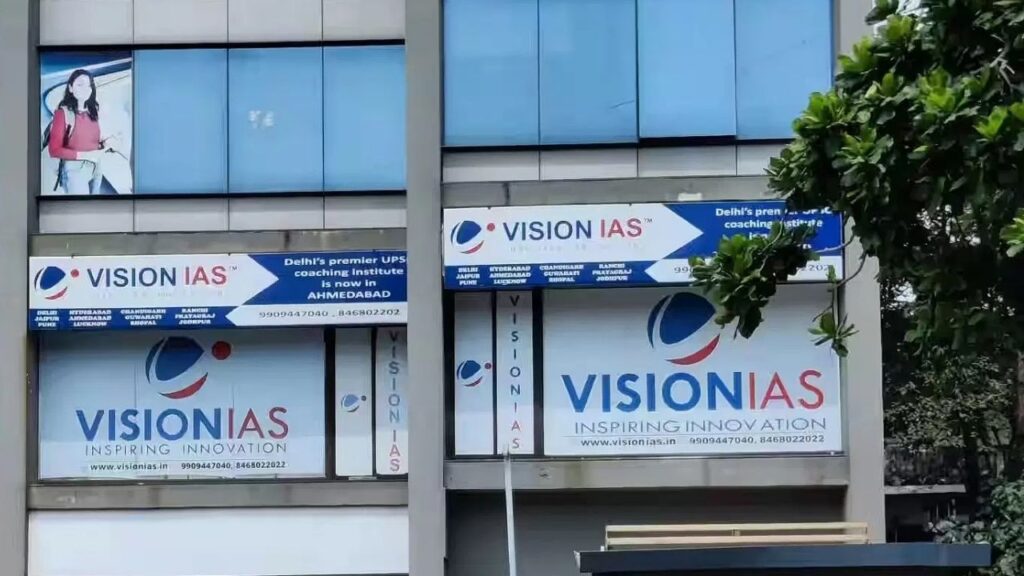
Vision IAS

Vision IAS provides the best test series which are helpful to become habitual with the exam environment. It is famous for its analytical function that helps to track student’s practice records.
Best Features

  • Students can check their weak areas due to their recording track of assessments and make it strong by working on it.
  • Flexible batches is accessible to every aspirant
  • Free Resources is a great advantage for preparation. Topic-wise specific content, current affairs, and previous year questions are available for free. 

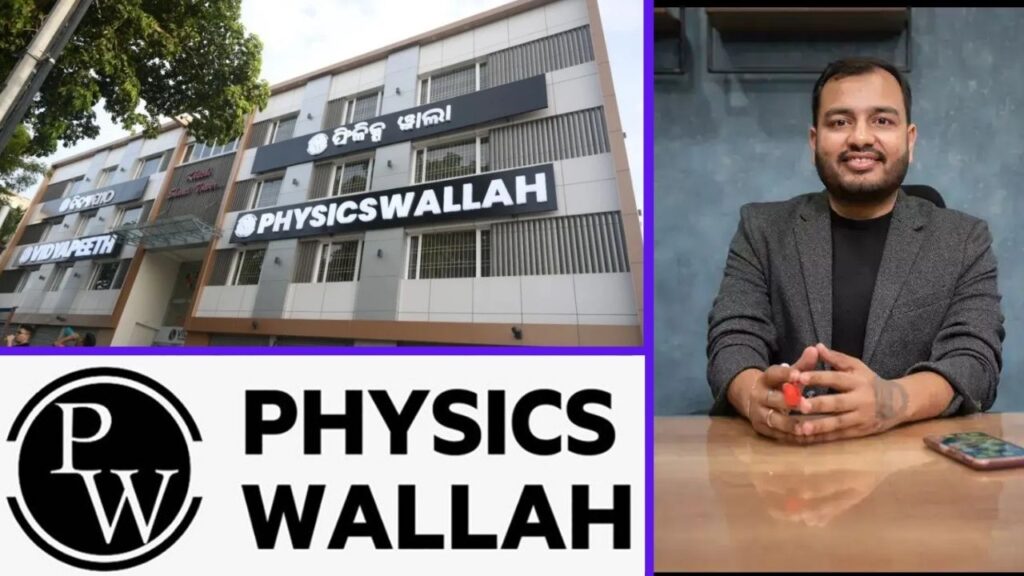
Physics Wallah

Physics Wallah is rapidly growing coaching and its UPSC preparation course is effective for cracking the exam. Its main advantage is delivering conceptual learning that helps students to remember and quickly adapt new concepts.
Best Features

  • Affordable price is accessible to everyone 
  • The teaching style is student-friendly that helps in complex problems to understand quickly.
  • Best for beginner students who began to prepare for UPSC
  • Strengthen every weak concepts and clear every doubt
  • Mentor support and recorded sessions.

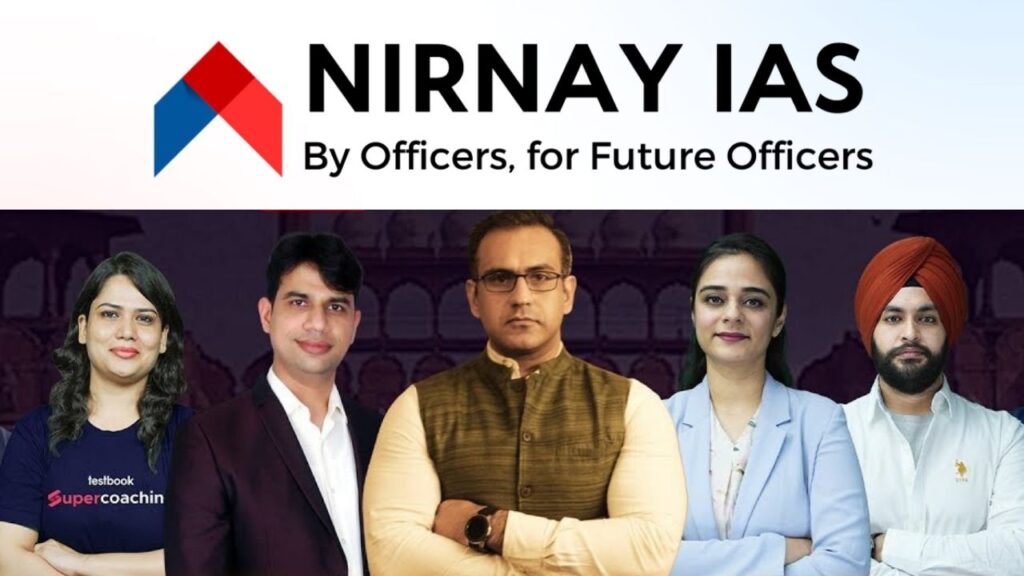
Nirnay IAS

Nirnay IAS is available on the testbook platform which offers well-structured courses and practice-oriented strategy for UPSC preparation. It has gained attention in a little time due to its practice material and offline resources to self-study.
Best Features

  • Students who prefer to learn at their best time.
  • No regular classes, 30+ structured courses are best for quick preparation.
  • Cover prelims, mains, and other preparation topics
  • Mock test and previous years  papers for best practices 
  • Recorded lectures helpful to working professionals who don’t have time for live classes

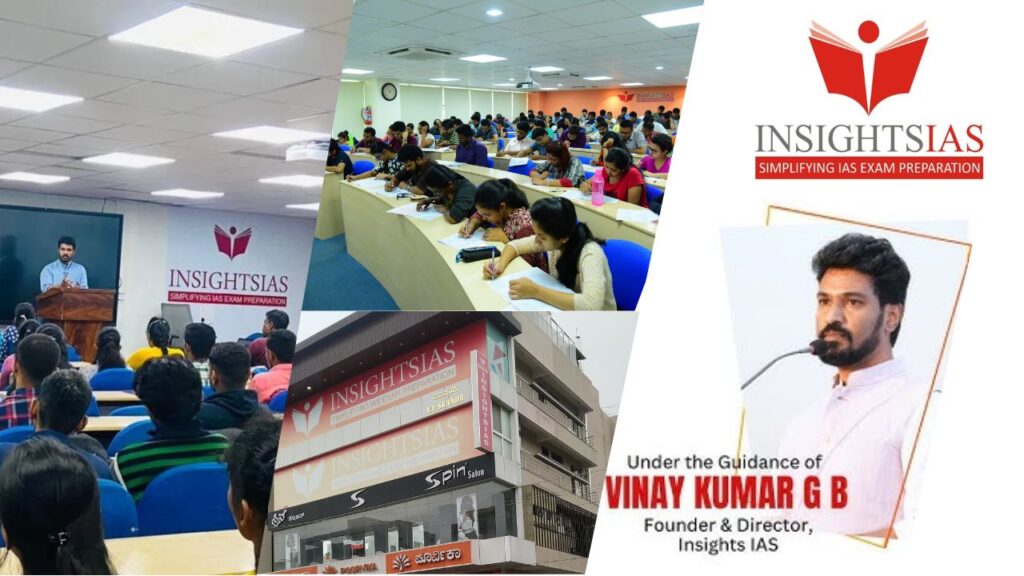
Insights IAS

Insight IAS is also best for UPSC preparation at a low price. Aspirants can begin their preparation with quality study resources and test series with reasonable prices.
Best Features

  • Strong test series that structured properly for both prelims and mains
  • Best for beginners and advanced with its foundation courses 
  • Well-designed topic notes and syllabus clarity for effective learning
  • Affordable courses, every student can get quality education at their own pace
Coaching NameKey StrengthBest Suited For
Drishti IASBilingual, motivational teachingStructured, mentor-led prep
Vision IASAnalytics & test feedbackData-driven learners
Physics WallahSimplified basics, low costBeginners on budget
Nirnay IASModular & practice-heavySelf-paced learners
Vajiram & RaviLegacy, detailed coverageSerious long-term prep
Clear IASAffordable with mentorshipSelf-motivated learners
Insights IASBudget + good contentDisciplined planners

How to Choose the Right Platform

Identify your learning style – if you need someone to push or motivate you consistently for UPSC, Drishti & Vision provide teacher interaction which might help you. Clear IAS, Nirmay or Insights are best for those who prefer to learn at their own pace.

Check your budget – PW, Clear IAS, and Insight are affordable but if you are ready to invest more, Vajiram & Ravi or Vision offers premium packages.

Test Series – if you want insightful and exam-focused test series then Vision and Insights are the best option. Drishti IAS is also providing detailed study and exam based test series.

Conclusion

The Best Online Coaching for UPSC isn’t the one with popularity or your friend is joining, someone’s opinion doesn’t help you to get the right platform. The right platform matters because every student’s mind works differently, they understand differently. Even in their preferred language, they are unable to grasp the concept of the topic. So, it might be best for you to take a demo class from online coachings, if you understand well about the topic due to clear explanations, or teaching style that might be your destined platform for UPSC preparation.


Leave a Comment

Your email address will not be published. Required fields are marked *

SSC vs UPSC: The Ultimate Showdown for India’s Most Demanding Government Job Exams

SSC vs UPSC

This is not merely a comparison of two exams — SSC vs UPSC, it’s a life long career decision which makes you a completely different person in a very different category. But preparation for each exam is tougher than you can think of. So, if you are investing your time, money, mind and health in building something then choose wisely after a deep research.

Oh, I’ve seen people lose their mid-20s to these books. To assist you in determining which “beast” is worth your sanity, let’s take a look under the hood of what you will actually be asked to do on these exams in 2026. 

The Nature of the Struggle

Government jobs are a result of both, but the type of mental strength needed is different.

UPSC: The Marathon of Depth UPSC isn’t an exam, it’s a personality overhaul. It wants you to have an opinion on the morality of AI and the irrigation regimes of the 16th century. This is a three-stage process which requires your ability to think.

SSC: The Sprint of Precision

SSC CGL is like being a human calculator with the reflexes of a pro gamer. It’s a “Group B” and a “Group C” race where velocity is primacy. Solving, strategic methods, and puzzle-like questions are given for UPSC to check the ability of candidates. 

Numbers Matters in SSC vs UPSC

In SSC

The UPSC examination is considered the “rock face” in the mountain climbing of exam-taking required fortitude to overcome it. Whereas the SSC CGL is compared to a fast-flowing river, representing a different type of challenge because of the sheer number of applicants. With a mind boggling 15 to 20 lakh candidates competing for a mere 8,000 to 10,000 seats, the contest is cutthroat and requires equal parts of strategy and determination. 

It’s like repulsive physics up here. There are a lot of competitors out there and you have to beat them (1000) to secure your space in UPSC but SSC have only 200 to beat. “Better odds,” right? Not exactly. Since the SSC syllabus is more “teachable,” the difference between the topper and the person who misses out is often as little as half a mark. One bad day, one slow calculation, and you’re out. 

In UPSC

UPSC seems like a high-brow, high stakes game of poker. There are 10 to 12 lakh people applying every year. The final list is made up of only around 1,000. That equates to a success rate of 0.1%. 

To give you some perspective, you are more likely to be struck by lightning in some parts of the world than to find your name in the PDF. It’s a “predictable brutality” — you know the mountain is cruel, you know most people fall off, and you accept heartbreak as part of the journey. 

The Intellectual Demands

UPSC doesn’t matter whether you have memorised a date; it wants to know whether you know why that date changed history.

The Connection Game: You are not just learning Economics; you’re learning how a global oil crunch pinches a farmer in Vidarbha. You are not just studying Geography; you are seeing how climate change is redrawing political maps.

The “Mains” Marathon: Think 20 essay-style answers, in three hours — again, for five days in a row. You have to sound like a policy analyst, a philosopher and a centrist bureaucrat all at once.

Most former aspirants have said that It’s not the facts you need to know, It’s an opinion that sounds both brash and impeccably centrist. You have to give them exactly what they want and not make it look like you’re trying too hard. 

If UPSC is a philosophical discussion then SSC is like 100 meter race. Raw, mechanical speed is far more important than intellectual “depth.”

The Human Calculator: In the Quantitative Aptitude section, you are required to solve 25 difficult problems in 15 minutes. There’s no time to “think” about the beauty of a formula; you either know the shortcut, or you’re out.

The “Autocorrect” Reflex: The English portion is not about enjoying literature. It’s about finding a grammatical mistake faster than a spell-checker.

It’s less about “understanding the world” and more about pattern recognition. You practice until your hands are faster than your mind. 

The Duration of Torture

That is where SSC will tend to actually trump in “demanding” level status, ironically enough.

An informed crack at UPSC lasts 12 to 18 months. If you flop Prelims, you start the cycle all over next year. If you crash Mains, you wait for another year. It’s a sadistic but a defined loop.

The SSC exams in 2017 were also postponed to the year of 2022, that means you can be stuck for three years with no reason in just one attempt due to paper leaks and re-exams. The unpredictability as to when one’s work will be judged is in stark contrast to the regimented, mechanical routine of the UPSC exams, which prevent candidates from experiencing such wait-weariness. 

Fees and Investments

Prepping for the UPSC is like holding a blue-chip stock that might plummet to zero. The Price Tag: Between coaching fees and the rent exploding in Delhi, you’re talking about ₹2-3 lakhs a year, no sweat.

The “Social Contract”: What it means for most families is a dowry or a deposit on a house. They’ll for 2 or 3 tries because the payoff—the white curtained car, the bungalow, the prestige—is the ultimate Indian trophy.

The Normalized Sacrifice: The ecosystem has made it “okay” to miss out on your mid-twenties making zero rupees as your parents raid their retirement accounts. It’s a visible, high-stakes investment. 

SSC preparation is “cheaper” in theory, but it exacts a much higher price from you: your energy. An Income Tax Inspector or a CBI Sub-Inspector draws a decent, respectable income. But let’s get real: you don’t get the mandatory red beacon and the massive government complex that signify “success” in the local Whatsapp group.

As a result of the stakes feeling “lower,” a lot of SSC aspirants don’t have the luxury of studying for 12 hours in a library. They study on the Metro, they do math problems on lunch breaks at a soul-crushing 9-to-5, they record English vocabulary to listen to on their commutes.

The tiring juggle of working a dead-end job and studying for a high-speed competitive exam goes unseen. Nobody throws a party for the guy who hit the books after working a 10-hour day, but that mental fatigue is totally unbeatable. 

FactorUPSC InvestmentSSC Investment
Financial CostHigh (Coaching + Living)Low to Medium
Time Cost3–5 years of “Gap”1–2 years (often while working)
Social PayoffGenerational ShiftUpward Mobility
Safety NetUsually Parent-fundedUsually Self-funded

Mental Health is Also at Risk

Above all the books and the balances, there is a still, psychological tax that these exams extract every day. It’s the sort of stress that doesn’t appear on a marksheet, but you can see it in the way an aspirant’s posture evolves over three years. 

The UPSC doesn’t merely consume your days, it seeks to consume your spirit. After five years of informing relatives that you are “preparing,” you stop being a person who has hobbies, a favorite sport, or a personality. You become a “Potential Officer.” Your entire worth is tied to a PDF list that comes out once a year.

Losing is not just about getting fired; it feels like the universe is telling you that you’re not good enough. The Interview (Personality Test) is the ultimate mind-game. You sit opposite senior bureaucrats who will determine whether you possess “Officer Like Qualities” in a 30-minute conversation. It makes you question everything you say, every way you sit, and, eventually, who you really are. 

While UPSC is a question of identity, SSC is a matter of looking over the shoulder all the time. It’s an anxiety rooted in volume and mathematical enigma.

The Notification Trap: CGL, CHSL, MTS, GD, Stenographer— the notifications never end. It seems like you’re always “missing out” on something. If you are not submitting it, you are running late. It’s what makes life feel like an endless assembly line of exams.

The “Normalization” Nightmare: This is where the despair kicks in. Comprising multiple rounds of examination in several shifts, the commission “normalizes” everyone’s scores. You could get 180/200 on a “hard” shift and 190/200 on an “easy” shift and still not know how you did.

Mathematical helplessness: You can calculate your raw marks the moment the answer key comes out, but you have no idea whether the “system” will lift you up or knock you down. It’s like running a race where you determine the finish line by how everyone else ran. 

Read More:- Bihar Public Service Commission (BPSC): Full Form, Exam, Eligibility & Selection Process

Honest Truth Nobody Tells You

That’s what the coaching institutes don’t tell you: both exams are turning out to be less about merit and more about stamina. What separates someone who clears these exams from someone who doesn’t is often not intelligence, but the means to sit at a desk for 10 hours a day, to put off weddings and festivals, to see friends get promoted while you take mock tests.

The hardest exam is the one that you’re failing right now. That one that keeps you up at night wondering whether you burned out your best years. It’s the one that your parents increasingly ask “beta, backup plan kab banaoge?”.

In my opinion, do not move towards picking what others say, just analyze what’s right for you. Which type of job role you are interested in and the kind of life you want. UPSC gives you the authority to shape policy. SSC gives you the security to design your own life. Both are valid. Both are brutal. Both will take everything you have — and then ask you for more. 

Conclusion

SSC vs UPSC If intellectual rigor and prestige pressure are what make the examination “demanding,” then UPSC wins hands down. You have to read newspapers as if they were religious texts, you have to learn subjects ranging from anthropology to zoology, and you have to gain the ability to talk about Indo-China relations with diplomatic nuance.

But if “demanding” means the intensity of competition, the unpredictability, and the absolute pain of outlasting millions, then SSC could be even more brutal these days. The exam has turned into a default choice for every graduate who wants a government job security without the elitist obstacle of the UPSC. The result is a bloodbath of competition, where even 99 percentile scores sometimes do not guarantee selection.

Leave a Comment

Your email address will not be published. Required fields are marked *

UPSC Principal and Vice-Principal Recruitment 2026: Must Check Complete Details

UPSC Principal and Vice-Principal Recruitment 2026

UPSC Principal and Vice-Principal Recruitment 2026 has started and now is the time to grab the chance if you want to become a government school head. UPSC has only put out a short notice so far. The detailed advertisement including the one with the actual syllabus, exam pattern, and category-wise vacancy split hasn’t dropped yet. So here’s a full breakdown of the recruitment drive.

If you’re an educator eyeing a senior administrative role in the government school system, this is  the largest hiring drive right now.

Overview of UPSC Principal and Vice-Principal Recruitment 2026

UPSC released the short notice for UPSC Principal and Vice-Principal Recruitment 2026 on 21 July 2026, for hiring multiple candidates for this position. This is a huge chance for educators in India, if you are one of them and want to apply then hurry. The online application form will be accepted from 25 July 2026 to 14 August 2026.

Here’s the vacancy split:

  • Principal: 124 posts (Pay Level-12), including 7 reserved for Persons with Benchmark Disability (PwBD)
  • Vice-Principal: 704 posts (Pay Level-10)
  • Total: 828 posts

That’s a heavily Vice-Principal-weighted drive — for every Principal vacancy, there are roughly five to six Vice-Principal openings. If you’re an aspirant with fewer years of leadership experience, the odds naturally favor the Vice-Principal track.

Important Dates for UPSC Principal and Vice-Principal Recruitment 2026 

You should start preparing for collecting the documents and be ready to apply on 25/July/2026.

EventDate
Notification released21 July 2026
Online application start25 July 2026
Last date to apply (online)14 August 2026 (till 11:59 PM)
Last date for fee payment14 August 2026
Exam / selection dateTo be notified later

Eligibility Needed for this Recruitment

Education Requirement: The short notice indicates that candidates need a Master’s degree from a recognized university and a Bachelor of Education (B.Ed) or equivalent qualification, along with relevant teaching and administrative experience. 

Experience: Exact experience requirements (how many years and in what role you have worked before) has not been confirmed yet – that kind of detail is usually in the full notification. But still min 10 years as PGT/TGT in recognised schools for principal post is needed and min 2 years as PGT or 3 years as TGT in recognised schools for Vice‑Principal.

Age Limit: The maximum age is placed between 35 and 50 years depending on the post, and is reckoned as on 14 August 2026 (the last date of application). The relaxation in age will be applicable as per the standard rules of Govt. of India for reserved category. If you’re close to a cutoff, don’t eyeball it — run your date of birth through an age calculator against 14 August 2026 before you assume you’re eligible.

Application Fee

Reported fee for General/OBC/EWS male candidates is Rs. 25, payable online via net banking, debit/credit card, or UPI. As always with UPSC, women candidates and SC/ST/PwBD candidates typically get fee exemptions — but confirm this against the official notification rather than a secondary source once it’s out.

Scope in UPSC Principal and Vice-Principal Recruitment 2026 

A few things make this recruitment worth paying attention to beyond the headline vacancy count:

It’s Group-A territory. Selected Principals will function as Group-A gazetted officers, which puts this squarely in the same administrative tier as many other UPSC-recruited posts — not just a teaching promotion, but a genuine entry into government administrative service.

Pay Level-12 for Principal is a serious jump. For anyone currently at a lower pay level in the school, this is a meaningful step up the ladder, not a lateral move.

828 posts in one go is unusually large. Government recruitment drives of this size don’t come around often, which also means competition will likely be intense, especially for the 124 Principal seats.

Read More 👉 NICL Assistant Online Form 2026: Apply Online & Eligibility

What to Do Right Now

  1. Don’t wait for the detailed notification to start preparing your documents. Educational certificates, experience certificates, and category certificates take time to compile — start pulling these together now.
  2. Double-check your age eligibility against 14 August 2026 using the post-wise limits once confirmed.
  3. Register or update your One-Time Registration (OTR) on the UPSC ORA portal if you haven’t already — this step trips up more candidates at the last minute than almost anything else.
  4. Keep checking upsc.gov.in directly, not just other sites, but check the official website and notification for every update on this recruitment. 

How to Fill Application Form for UPSC Principal And Vice-Principal Recruitment 2026 

Click on https://upsconline.nic.in/ora to redirect on the official website.

  1. If you are new then do One‑Time Registration with a valid Mobile number and email ID.
  2. Login to apply for Principal and Vice‑Principal recruitment 2026 or go to the recruitment section.
  3. Fill the application form with your correct information like Personal Details, education, teaching experience, Reservation Details, Posting Preference etc.
  4. Once you fill it now upload the documents of the same detail as you mentioned in the application form.
  5. Preview & Verify then submit Application Fee if you don’t belong to the reserved category.
  6. Submit and save the form for your records.

Conclusion 

This is a genuine opportunity for experienced educators to move into senior administrative roles within Delhi’s government school system, with a clear pay grade jump and Group-A status attached. But the sensible move right now is preparation, not panic — get your documents in order, watch the official portal for the detailed notification, and apply well before the 14 August deadline rather than in the final scramble.

Leave a Comment

Your email address will not be published. Required fields are marked *

How to Crack UPPSC RO/ARO Without Coaching  

Crack UPPSC RO/ARO Without Coaching

Every year, lakhs of students in Uttar Pradesh start their RO/ARO preparation the same way — by joining a coaching institute the moment they decide to attempt the exam. It feels like the safe choice. Everyone around you is doing it, the institutes promise structured guidance, and the fear of “missing something important” pushes you toward enrolling even before you’ve opened a single book on your own.

I can’t speak for your specific goals, but what a lot of successful RO/ARO candidates will tell you once they’ve actually passed the test is: coaching never made the difference. What mattered was whether they understood the exam, built a routine around it, and stayed consistent long enough to see results. 

If you fall into the category of not being able to afford coaching or if you’re just an individual who likes to learn on his own terms, there’s no issue in attempting RO/ARO exams. You can start your preparations by yourself with the right guide. Proper syllabus, exam pattern, right schedule, responsibility are the core steps to take to prepare for the exam.

1. Understand Exam Pattern to Make the Right Strategy

You probably saw or heard that self-study failed many students not because they lacked intelligence but because they didn’t understand the exam’s purpose and importance. There are stages in the exams to clear and each one requires a different kind of preparation.

  1. UPPSC RO/ARO has a Preliminary exam to check how well you know General Studies and General Hindi and it rewards speed and accuracy over depth. 
  2. The Mains, on the other hand, wants you to write with clarity and present arguments, not just recall facts. 
  3. And the Typing Test, ignored by most aspirants until the last month, has quietly ended the dreams of candidates who cleared both written exams but never practiced typing seriously.

Before you buy a single book, spend two or three days just going through the official syllabus and the last five years of question papers. You’ll notice patterns almost immediately — certain topics from Indian History, Indian Polity, and UP-specific General Knowledge repeat in some form every year. This is the kind of pattern-recognition that coaching institutes charge lakhs to hand you on a platter. You can get there yourself with a notebook and some patience.

2. Build a Study Routine That Doesn’t Depend on Motivation

Coaching institutes work partly because they impose a schedule on you — classes at fixed times force a kind of discipline that self-study doesn’t naturally have. When you’re preparing alone, motivation runs out fast, usually within the first three weeks. What replaces it is routine.

Pick a time of day when your mind is sharpest — for most people, that’s early morning — and treat that slot as non-negotiable, exam day or not. Break up your week so that you have each subject in a chunk of the day, instead of bouncing around among all of them every day. A general division that helps for RO/ARO is General Studies in the morning, Hindi grammar and comprehension in the afternoon, and revision and mock tests in the evening. The exact hours matter less than the consistency of showing up.

What trips up most self-study candidates isn’t laziness — it’s the absence of a feedback loop. In a coaching class, a teacher tells you when you’re falling behind. Alone, you have to build that feedback into your own routine. Keep a simple tracker, even a basic notebook works, where you log what you studied and how confident you feel about it. Revisit that tracker every Sunday and be honest about the gaps.

Read More 👉 Data Science vs AI: Which Career Is Better?  

3. Choose the Right Books Instead of Too Many Books

One of the biggest traps for self-study aspirants is book overload. When you ask about which books toppers used, they might give you different answers. But each one of them has the topics which are frequently asked in the previous question papers. So, choose the book which you can understand when you read. Stick to that particular book per subject rather than jumping between multiple books hoping one of them “clicks.”

For General Studies, a common NCERT-based core syllabus in History, Geography, Polity and Economy is a much better option than jumping straight into exam-specific guides. Once your basics are solid, move to a UP-specific General Knowledge book, since a noticeable chunk of the RO/ARO paper focuses on state-level facts that national-level books simply don’t cover. For Hindi, focus heavily on grammar rules and previous year papers rather than generic Hindi literature books — the exam tests application, not literary depth.

Newspapers are non-negotiable, but read them with intent. Don’t read every article; scan for anything related to government schemes, UP-specific developments, and national events with policy implications. Ten focused minutes with a newspaper beats an hour of aimless reading.

4. Practice Like the Exam Is Already Tomorrow

Self-study candidates often make the mistake of treating mock tests as an afterthought — something to do once the syllabus is “finished.” In reality, mock tests should start early, even when you know only half the syllabus. Testing yourself regularly does two things coaching classes usually do for you: 

  • It shows you where your weak areas actually are 
  • And it trains your brain to work under time pressure

Solve at least one previous year’s paper or a full-length mock every week, and don’t just check your score — go through every wrong answer and understand why you got it wrong. Was it a factual gap, a silly mistake, or a comprehension issue? Each of these needs a different fix, and lumping them together as “I need to study more” won’t get you anywhere.

The typing test deserves its own separate practice schedule starting at least two months before your written exams are clear, not after. Waiting until results are declared to start practicing typing is one of the most common and avoidable mistakes RO/ARO aspirants make.

5. Find Your Community, Even Without a Classroom

The one genuine advantage of coaching is the peer group — people preparing for the same exam, sharing doubts, comparing notes, and keeping each other accountable. You can recreate this without paying for it. Online communities of RO/ARO aspirants, study groups on messaging apps, and even a couple of serious friends preparing for the same exam can replace this function almost entirely.

Use these groups to clarify doubts, share useful resources, and occasionally test each other. Just be careful they don’t turn into distraction hubs — the goal is accountability, not endless discussion about strategy that never converts into actual studying.

Read More 👉 Top 10 Mistakes to Avoid While Preparing for UPPSC RO/ARO

The Real Difference Between Coached and Self-Taught Candidates

Coaching gives structure to people who can’t build it themselves. If you can build that structure on your own — a study routine, the right books, regular self-testing, and a support system for accountability then there’s genuinely nothing coaching offers that you can’t replicate. 

What ends up separating candidates who clear RO/ARO from those who don’t isn’t whether they paid for classes. It’s whether they stayed consistent long enough, tested themselves honestly, and treated every mock test result as information rather than judgment.

Self-study for RO/ARO isn’t the harder path. It’s simply the path that asks more of your discipline instead of your wallet — and for a lot of aspirants across UP, that trade has worked out just fine.

Conclusion — How to Crack UPPSC RO/ARO Without Coaching

Clearing the UPPSC RO/ARO exam without coaching is entirely achievable if you get started with the right attitude and strategy. The course, past year papers, textbooks, sample tests, and current affairs are all available online nowadays. Because in the end, your success is going to be determined by the work that you do every day, not by how much money you spend on prep. The real challenge isn’t finding resources—it’s using them consistently.

Leave a Comment

Your email address will not be published. Required fields are marked *

UPPSC APO Admit Card 2026 Out: Check Exam Center and Date

UPPSC APO Admit Card 2026

The wait has ended for thousands of law graduates in Uttar Pradesh. UPPSC APO Admit Card 2026 Out – Download Uttar Pradesh Public Service Commission Assistant Prosecution Officer Hall Ticket at official website of UPPSC. If you’ve been studying the books, memorizing sections of the newly written laws, and keeping track of every notification, this is the “green light” you’ve been waiting for.

The post of Assistant Prosecution Officer (APO) is among the most prestigious posts in the state’s legal system, and with 182 vacancies this year, the competition is fierce as ever. This is your ultimate guide to everything on the admit card, about the exam and how to survive the last days of your preparation. 

Key Dates for UPPSC APO 2026

EventImportant Date
Admit Card Release Date12/March/2026
Exam Date22/March/2026
Exam Timing9:00 AM – 11:30 AM (Single Shift)
Official WebsiteClick Here

UPPSC APO eligibility

Candidates should have done LLB from a recognised university by UGC and approved by Bar Council of India. They should be citizens of India (or in case of special provisions for subjects of Nepal/Bhutan, Tibetan refugees prior to 1962, or certain migrants). The reservation benefits are applicable for the Uttar Pradesh Domicile holders only, rest of the candidates will be treated in unreserved category. 

Age Criteria

From 21-40 years old candidates are allowed for this exam and age relaxation detail given below: 

CategoryAge RelaxationMax Age
SC/ST/OBC (UP)+5 years45
PwD (UP)+15 years55
Women (UP domicile)+5 years45
Ex-servicemenService yearsPer 

The 2026 Exam Pattern

This year is crucial as the syllabus is revised to include the repeal of old colonial-era laws and their replacement with the new Indian legal regimes. The Prelims are a screening test, your marks for them will not get added to your final merit list, but you will have to clear the cut-off for them to be eligible for Mains. 

Prelims Structure (150 Marks)

General Knowledge (50 Marks): This section includes Indian History, National Movement, World Geography and Current Affairs.

Law (100 marks): The big change here is you’re no longer tested on the old IPC, CrPC and Evidence Act, but on the Bharatiya Nyaya Sanhita (BNS), Bharatiya Nagarik Suraksha Sanhita (BNSS) and Bharatiya Sakshya Adhiniyam (BSA).

Add U.P. Police Act and the Indian Constitution both for better preparation.

Beware of Negative Marking! There is a penalty or mark deduction of 0.33 (1/3rd) for every incorrect answer. If you don’t know the answer, you’re usually better off not guessing blindly. 

Follow These Steps to Download Your UPPSC APO Admit Card 2026

The process has been made digital and is fairly simple to execute through the One-Time Registration (OTR). How to download hall ticket without any glitch:-

  1. Go to the Portal: Visit the website of UPPSC.
  2. Locate the Link: Find the “Important Alerts” section. A link will be available to Download UPPSC APO Admit Card 2026.
  3. Input Your Information: To retrieve your hall ticket, you must have OTR number, Date of Birth and Gender.
  4. Confirmation: Type Captcha as is or select Captcha as you are told to from the screen.
  5. Download, Print and Save: As soon as your admit card is displayed on your screen, download it. 
  6. Pro-tip: Print at least 2–3 copies. Put one in your bag, one in your house for backup. 
CategoryFee (₹)
General/OBC/EWS125
SC/ST/Ex-Servicemen65
PwD25

Selection Stages

  • Preliminary Exam: Paper objective type with negative marking (150 marks, 2 hours) on General Knowledge and Law; only for screening, with 0.33 negative marking.
  • Mains Exam: 500 marks of question paper came which you have to solve in Descriptive manner. It contains law and general studies questions and its important one as the marks are included in the final merit list.
  • Interviews (50 marks) are given on the basis of their interview which is conducted mostly on legal knowledge, communication and suitability.

Read More:- Indian Navy Agniveer SSR / MR Recruitment 2026: Eligibility, Dates, Salary & Apply Online

Merits Stage-Wise

StageMarksPurpose
Prelims150 (qualifying)Screening
Mains500Core evaluation
Interview50Personality 

Success Roadmap

Next StepsAction
TodayDownload/print admit card (OTR no. + DOB needed)
Daily (Mar 16-21)2 mocks + weak area revision (new laws priority)
Exam DayCarry ID and Admit Card, Arrive on Time

Preparation Tips

It’s important to prepare well for 150-mark prelims as it’s an entry gate for the mains and avoid guesses because of 0.33 negative marking. After prelims, focus on descriptive Mains (500 marks) where your legal depth will shine, and an interview of 50 marks that tests clarity and conviction. You’ve already the qualification, and you have paid the fees, and you’ve cleared the first hurdle — now take the plunge with discipline for one of 182 most coveted legal posts in UP. 

Conclusion

The UPPSC APO Admit Card 2026 release is coming near and it is a final chance for those follower who is wants to get 182 APPO post in Uttar Pradesh. The exam is set to be held on March 22, so candidates can now gear up for their last phase of preparation by revising important legal concepts, attempting mock tests, and making sure that they have all the requisites for the exam day. 

Leave a Comment

Your email address will not be published. Required fields are marked *

UPSC CDS 1 Recruitment 2026 Notification, Eligibility, Application Dates Guide

UPSC CDS 1 Recruitment 2026

The Union Public Service Commission (UPSC) has notified the Combined Defence Services (CDS) Examination 1 for the year 2026. This recruitment is for a number of academies that are the Indian Military Academy (IMA), Indian Naval Academy, Air Force Academy and Officer Training Academy and the number of vacancies is 450+.

The application form filling process will start from 10th/December/2025 and the last date to apply for the UPSC CDS 1 2025 will be 30th/December/2025. Interested and Eligible candidates are advised to read the official notification before apply online for understand the eligibility, Application Fee, Age Limit, Salary, Selection Process before applying for it.

Candidates need to visit the UPSC official website for detailed information and application. Before the time ends, you need to make sure that each one of the necessary information is filled accurately. 

Follow These Dates To Apply

Application Start10/December/2025
Last Date For Application30/December/2025
Fee Payment last date30/December/2025
Correction DateUpdate Soon
Admit Card DateUpdate Later
Exam Date12/April/2026

UPSC CDS 1 Age Limit & Application Fee

CategoryAge LimitPosts Expected
IMA & INA 19 — 24 years450+
Air Force 20 —- 24 years
OTA 19 —- 25 years
Gen/ OBC/ EWS₹200
SC/ ST0

UPSC CDS 1 Vacancy & Educational Qualification

The courtesy details of UPSC CDS 1 Eligibility 2025 are mentioned below:

  1. Indian Military Academy (IMA): The candidate will have to hold a Bachelor’s Degree in any discipline/stream from any recognized University/Institution in India.
  2. Indian Naval Academy: The candidate must hold a Bachelor’s Degree in Engineering or equivalent from a recognized university/institute in India.
  3. Air Force Academy: Candidate should have passed 10+2 with Physics and Mathematics in any stream from a recognized board or have a Bachelor of Engineering/Bachelor of Technology or similar qualification from recognized university.
  4. Officer Training Academy: The Candidate must have a Bachelor’s degree in any Discipline/stream from any recognized university or Institution in India.

For more and latest updates you can go through the official UPSC CDS 1 Recruitment 2025 Exam Notification. 

Read More 👉 Railway Protection Force Constable: Salary, Selection, and Exam Details – complete guide

Salary & Allowances

The candidate can earn up to Rs 1,77,500 per month with allowances as per government norms. The starting salary can be less with Rs 56,100 for entry level candidates.

Guide to Apply UPSC CDS 1 Online

How to Apply for UPSC CDS 1 Recruitment 2025: Apply Online through the official website of UPSC.

1. Know Details from UPSC CDS 1 Notification 2025 PDF.

2. Click on the “apply online” link or go to the Official UPSC website: upsc.gov.in.

3. Fill UPSC CDS 1 2025 Online Application Form.

4. Upload all the documents as per the notification.

5. Remit the requisite application fee by one of the modes available.

6. Take a print out of the application form once it is filled for your records. 

Apply OnlineLink Activate Soon
Download NotificationLink Activate Soon
Official WebsiteClick here

Leave a Comment

Your email address will not be published. Required fields are marked *

Scroll to Top