The exam dates for SSC CGL are officially announced and SSC CGl Admit Card will be released soon. The candidate’s details include name, date of birth, exam center, roll number, and exam name is listed in the SSC CGL Admit Card. students can check the official website onceSSCCGL Exam Date & Admit Card 2025 out.
The tier 1 exam will be held from 12th September to 26th September 2025 to fill out the vacancies of about 14,582 candidates for Group B and Group C positions.
The admit card is important to take for the examination hall as it mentions the date and shift of the exam along with other necessary details.
If you are preparing for a government job, consider these top Highest Paying Government Jobs in India. Whether you have a background in science, commerce, or arts are eligible in various sectors. Becoming a scientist in the government sector is the best decision for engineers who want to take a chance on space research and solar system activities.
PSUs and Railways also offer high-paying jobs with additional benefits like allowance and career growth. So, choose the right path for your career to establish financial stability. Private sector doesn’t provide job security, pensions, and other perks while government sectors provide more than high salaries.
1. Highest Paying Government Scientists
ISRO Scientist OR Engineer (Indian Space Research Organization)
ISROScientists are highly trained engineers and researchers in India. They optimized their research on space exploration missions such as moon operations and other planets. They are innovative in designing and developing systems that capture real-time data of weather, disaster, or any other activity on the globe. Launching space materials to become the no.1 leader in technology around the whole world.
Eligibility: You must have a bachelor’s degree in Engineering or Technology like ECE, ME, CE, etc.
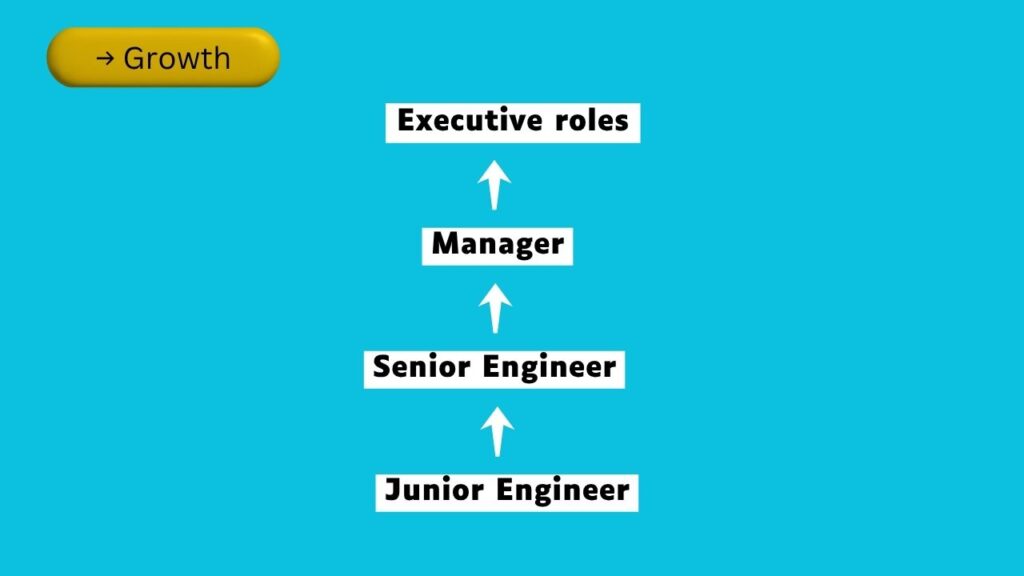
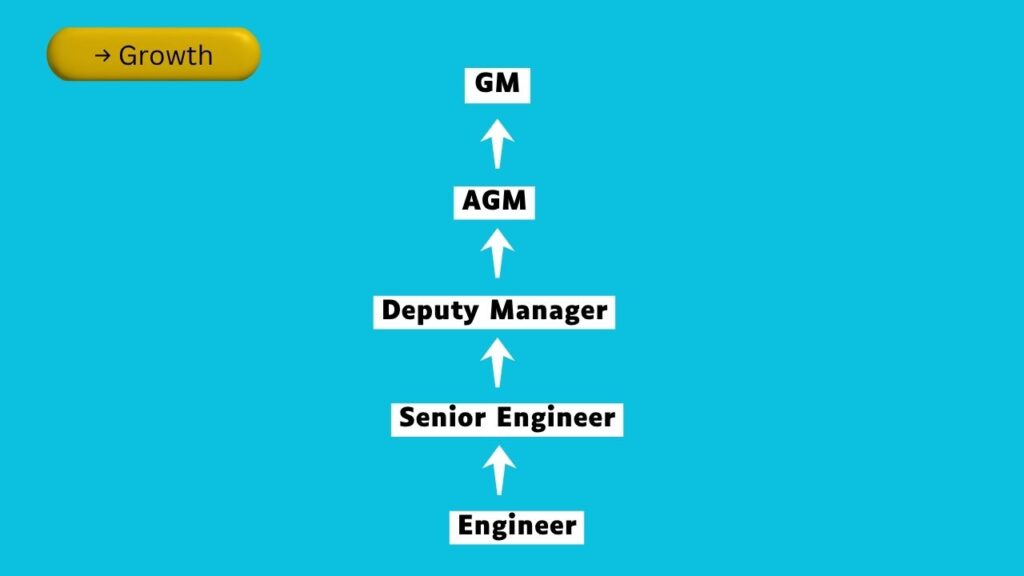
Career Progression: Level 10 to director levels with increment of salaries, level includes leadership and projects heads with also great responsibilities. Scientists evolving in big projects and achievements can have a chance to grow to the next level fast, the higher the level, the bigger the responsibilities but worth it all.
DRDO Scientists or Engineers (Defense Research & Development Organization)
DRDO Scientists are greatly admired because they are the most talented engineers who are responsible for specializing the defense technologies such as missiles, electronic materials, radars, and many more things that are helping our Armed Forces to stay ahead while under attack. They build advanced communication systems so they cannot be easily hacked, and research on new technologies like AI, ML & Cybersecurity to ensure support for the operational needs. Working with the military and shielding them with technologies is one of the pride jobs.
Eligibility: Master’s degree in Engineering like MS/PhD. To enter into a scientist position at DRDO, you must clear the entrance like SET or GATE.
Salaries (7TH Pay Commission):
Scientist B – Rs. 56,000 per month.
Scientist C – Rs. 67,700.
Scientist D – Rs. 78,800.
Scientist E – Rs. 1,23,100.
Scientist F – Rs. 1,31,100.
Scientist G – Rs. 1,44,200.
Secretary Level – Rs. 2.25 lakhs.
Benefits:
Housing Allowance up to 24%
Travel Allowance
Dearness Allowance
Medical and LTC
Professional Allowance per year.
Merit-Based Promotion
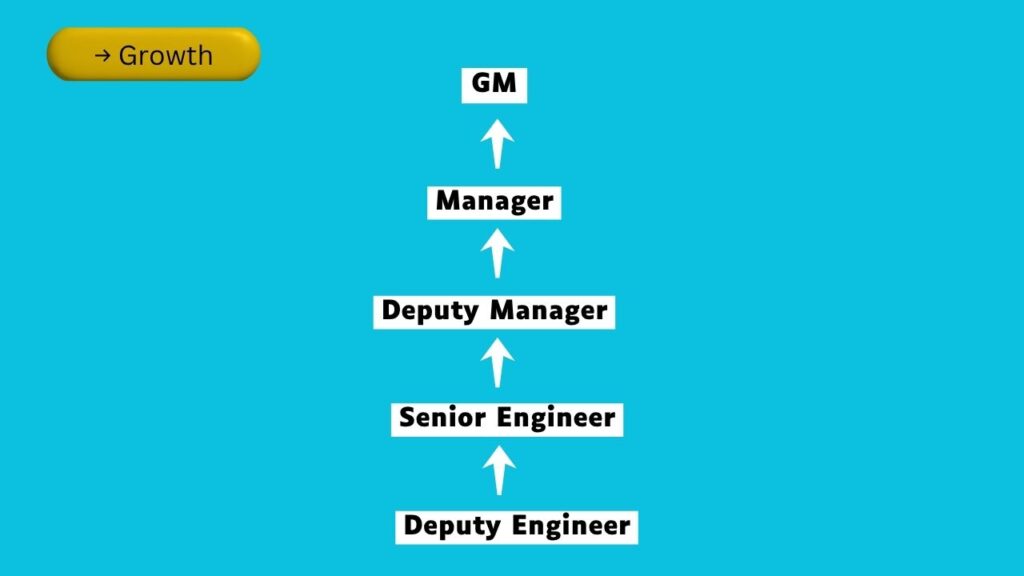
Career Progression: DRDO offers personal training in their institutions at Pune and Mussoorie are DIAT & ITM respectively. Whether you want to acquire higher qualifications as a DRDO scientist or a chance for foreign deputation for training for specific assignments, you can go on further with any option.
2. Highest Paying Railway Jobs
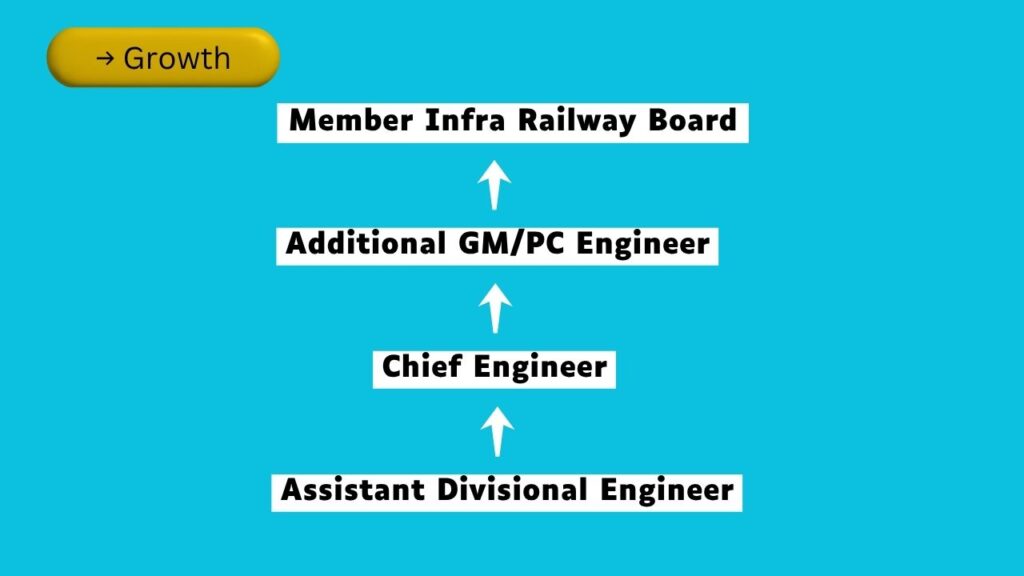
IRSE Officers (Indian Railway Service of Engineers)
Working for infrastructure, maintenance, and railway track construction is part of the IRSE officer’s job. Safety, bridges, and tunnel development and maintenance are also under this job. The major projects also involved new railway lines, and coordination with other departments for operations like these.
Eligibility: B.tech or BE in Civil Engineering. For entering into an IRSE position in Indian Railway, you must clear the UPSC ESE exam.
Salaries:
Entry-Level: Rs. 56,100 + allowance per month.
Senior-Level: Rs. 35 lakhs per year.
Benefits:
Housing Allowance up to 50%
Travel Allowance
Dearness Allowance
Medical and LTC
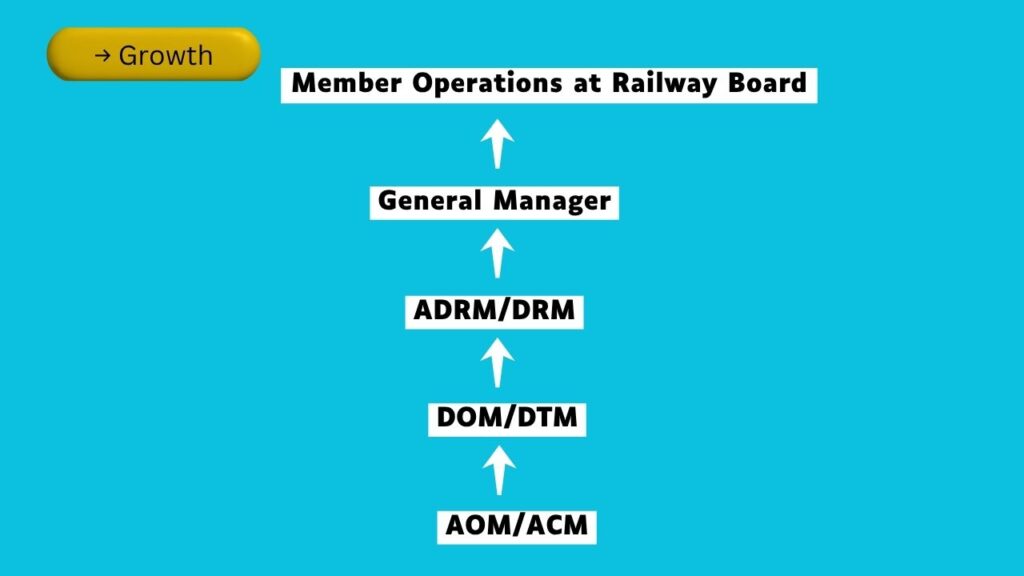
IRTS Officers (Indian Railway Traffic Service)
IRTS officers simply manage train operations, logistics, and other commercial disciplines that ensure the train reaches on time. The time track really disturbs other processes if they’re delayed due to a lack of attentiveness. So IRTS makes sure to check every process and transport that goods and passengers on time. Planning schedules for trains, and supervising operations both on trains and stations. Handling logistics and managing tickets to deliver the best services.
Eligibility: 50% of recruitment happens directly, and 50% is promoted from Group B. Candidates must have cleared the UPSC Service Exam.
Salaries:
Basic Salary – Rs. 56,000 per month.
Mid-Level Pay – Rs. 15 lakhs.
Senior-Level Pay – Rs. 2 lakhs.
Benefits:
Housing Allowance up to 24%
Travel Allowance
Dearness Allowance
Training at IIM & IIT
3. High Paying Job in Indian Administration
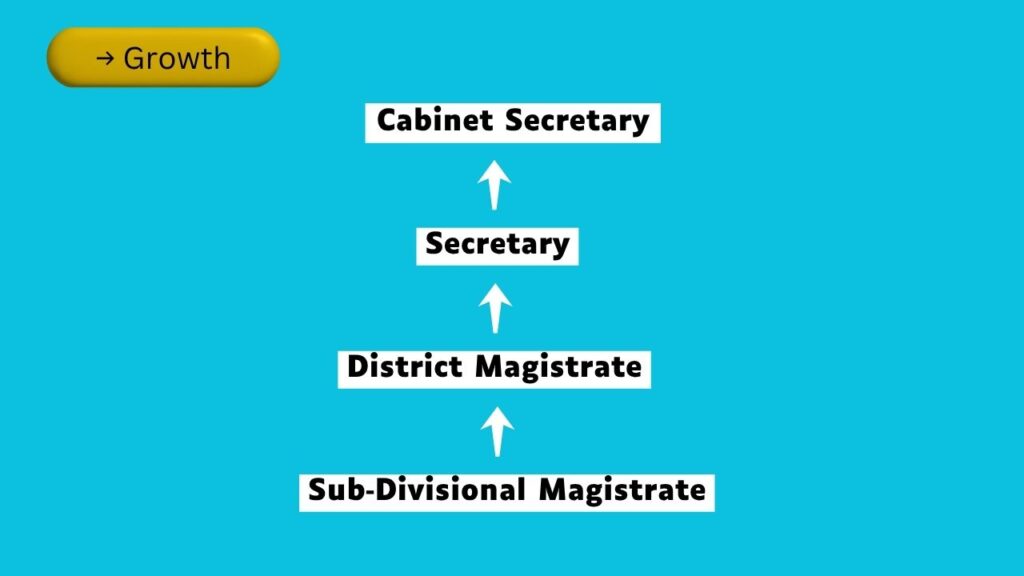
IAS Officer (Indian Administrative Service)
IAS officers are highly respected in Indian Society. The responsibility that comes with a badge is the top-level administration, where the administrator manages government policies, schemes, and daily operations related to states or cities at the national level. By acting as District Magistrates or Collectors they are maintaining law and order within the country. They have the responsibility to advise ministers, formulate policies, and ensure establishing success by managing any disaster.
Eligibility: Candidates must have cleared the UPSC Service Exam after passing their Graduation in any stream.
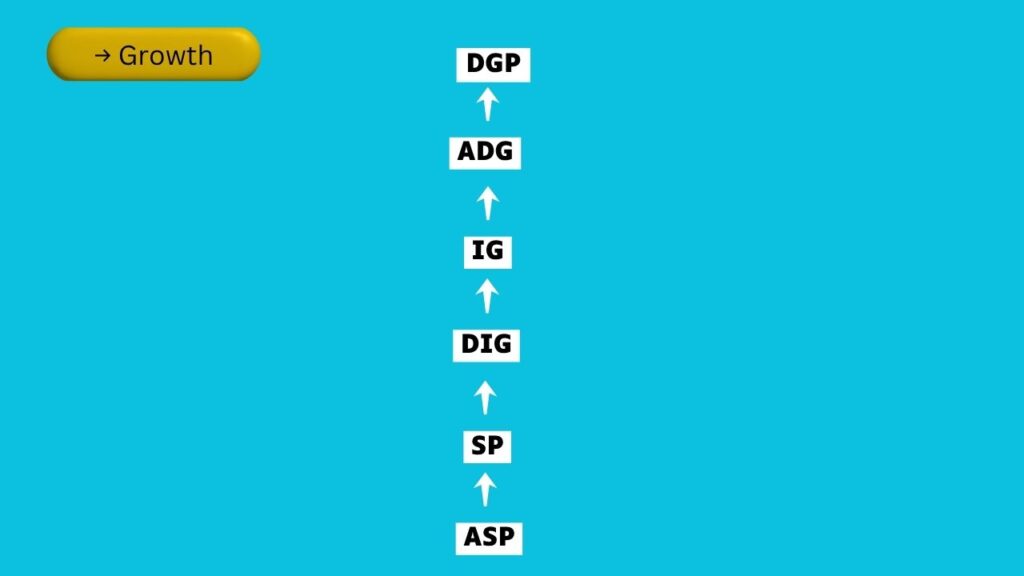
Indian Police Service: Leaders who lead police departments in states by investigating crimes, controlling any drug activities, and catching serial killers. Maintaining peace and preventing terrorism are their core responsibilities. Supervising team, implementing technologies in policy, and handling security under the protocol. Great responsibilities pay on a high-scale.
Eligibility: Candidates must have cleared the UPSC Service Exam after passing their Graduation in any stream.
Salaries:
Basic Salary (DSP/ASP) – Rs. 80,000 per month.
Mid-Level Pay (SP) – Rs. 1.2 lakhs.
Senior-Level Pay (DGP) – Rs. 2.5 lakhs.
4. Public sector Jobs
National Thermal Power Corporation (NTPC)
NTPC is the largest organization in India for producing electricity from coal and gas. India’s reliable energy sector is responsible for serving energy around the country. They are establishing production, also expanding India’s renewable energy with solar and wind power projects.
Eligibility: Candidates must have cleared the PSU Exams. B.tech or Engineering degree with GATE scores.
Salaries: Basic Salary – Rs. 60,000 per month. Additional allowances like housing, dearness, medical, and pension.
Oil & Natural Gas Corporation (ONGC)
Oil & Natural Gas Corporation: It explores and drills for oil to make power that supplies to the industries, houses, and vehicles. Produces gas and oil for supply all over India and reduces reliance on other countries. It acts as empowering the country and cutting ties with other countries.
Eligibility: Candidates must have cleared GATE or PSU exams. B.tech or Engineering degree.
Salaries: From Rs. 60,000 to 1.8 Lakhs per month to 1.4 Lakhs per month. Additional allowances like housing, dearness, medical, and pension.
Bharat Electronics Limited
BELis responsible for leading in radars, missile systems, and NAV systems. It specializes in providing national-level security and defense systems mainly in electronics.
Eligibility: Candidates must have cleared GATE or BEL exams. B.tech or Engineering degree in electronics or telecommunication.
Salaries: From Rs. 1.5 Lakhs – 2.5 Lakhs per month. Additional allowances like housing, dearness, medical, and pension.
Hindustan Aeronautics Limited (HAL)
HALworks for defense in the air, they manufacture aero-engines, aircraft, and helicopters for the Indian armed forces. Most of the defense production is handled by the Hindustan Aeronautics Limited. The recruitment process for the jobs in the organization happens through the PSU exams.
Eligibility: Candidates must have cleared GATE or PSU exams. B.tech in aerospace or engineering in any other related field.
Salaries: From Rs. 1.25 Lakhs per month. Additional allowances like housing, dearness, medical, and pension.
5. High-Paying Jobs in Government Banks
There are a lot of bank jobs in the government sector that you can apply for if you are interested in finance, accounting, and management. Government bank’s roles including Probationary officer, Specialist Officer, and Managerial Roles are high-paying positions.
Eligibility:
Probationary Officer (PO): Graduation in any stream.
Clerk: Graduation in any stream from a recognized college.
Specialist Officer (SO): Engineering degree for IT officer and MBA for marketing officer (relevant degree for specific posts).
Managerial Position: Post-Graduation with experience.
Benefits: Housing allowance, Travel allowance, and dearness allowance.
Defense services are highly respectable jobs in India that provide job security, pride, and high salaries. It requires both focus and physical fitness for selecting the roles in defense service, especially on the high-level jobs that pay high salaries.
Eligibility:
Indian Army: 12th in any stream and Passed the NDA/CDS exam.
Soldier Ranks: 10th and 12th passed from a recognized board (depending on the roles).
Indian Air Force (IAF):
Graduate in Physics + Maths for Pilots roles.
Engineering degree for technical roles.
Graduation in any stream for non-technical roles.
Indian Navy: Officer Cadre roles required NDA/CDS pass + INET for specific branches.
BPSC AEDO Syllabus: It gives me immense pleasure to believe that a graduate can make such a difference by choosing to be in the education sector or education administration and directly impacting the lives of so many students. The Bihar Public Service Commission (BPSC) has recently made the entry for the position of Assistant Education Development Officer (AEDO). With 935 posts available, this is a golden chance for the candidates who want to get permanent and reputed government jobs in Bihar. l
But clearing a state level competitive exam is not a cakewalk. It needs a very strategic planning, strong study schedule and well understanding of examination pattern. Decoding theBPSC AEDO Syllabus is your starting line and most vital step, however attaining the job also depends on knowing fully the position that you are going to fill.
This is the complete guide for BPSC AEDO syllabus in which you can get each and every information regarding this exam. From understanding the job profile and expected salary to analyzing the syllabus and best books, this article is your guide for everything you should know.
What is the BPSC AEDO Job Profile?
The reality of the job must be understood before beginning preparation. The Assistant Education Development Officer (AEDO) post is a combined administrative and supervisory post. The AEDO is the vital link between the state’s education department and the schools at the ground level.
As an Assistant Education Development Officer, you ensure the execution of educational policies and keep a watch on schools in that area to see if they adhere to the minimum standards of education and infrastructure.
Key Responsibilities of an AEDO:
Educational Supervision: AEDO officers must check the working of government schools in their region consistently to speed things.
Scheme Implementation: Monitoring every government schemes to be implemented properly.
Analysis & Reporting: To generate believable reports with information such as student enrollments, attendance rates, dropout rates, and pass rates for students across courses.
Administrative Mediation: Redressing grievances of teaching staff, resolving logistical issues, ensuring adequate supplies and proper functioning of schools.
Quality Control: To conduct inspections for up keep the good quality in teaching and to ensure the syllabus is covered as per the state board.
There is no typical desk day in this position. You’ll need to be out in the field or on campus, talking regularly with staff at schools, and taking the lead on identifying and addressing any administrative roadblocks.
Salary and Perks: Why is the AEDO Role Highly Sought After?
Apart from the prestige and societal level impact associated with the post, the BPSC AEDO post provides very good salary and excellent job security.
Salary is given under the Pay Level 5 as the government’s pay matrix.
Basic Pay: ₹29,200 per month.
Allowances:
Dearness Allowance (DA),
House Rent Allowance (HRA),
Travel Allowance (TA),
Medical Allowances
The initial in-hand salary ranges between ₹40,000 to ₹45,000 per month.
Growth/Promotion: One can become a DEO or take up other high administrative posts in the Bihar Education Department from an AEDO with the experience of years and departmental promotions.
Eligibility Criteria and Essential Skills Required
Educational & Age Criteria:
Category
Minimum Age
Maximum Age
Educational Qualification
–
Any Stream’s Bachelor’s Degree in any discipline from a recognized university
Unreserved (UR) Male
21 years
37 years
Women (All Categories)
21 years
40 years
OBC/EBC
21 years
40 years
SC/ST
21 years
42 years
Essential Skills for Success:
Fluency in Hindi and English: You need to have good communication skills in Hindi and English while dealing with teachers, government officials and the public.
Analysis: Reporting requires you to collect data on student enrollment, for example, or financial records then analyze that information to come to conclusions.
Leadership and Mediation: You may need to negotiate disputes within administration to hold the line on discipline and maintain orderly learning conditions.
Versatility: You were to expect to go and work at different blocks, and more than you expects at getting curve balls in logistics.
Complete BPSC AEDO Syllabus and Exam Pattern
Understanding the exam pattern very well will only help you to crack the written exam. Here is a brief about BPSC AEDO exam pattern
The BPSC AEDO papers are in the objective type questions (MCQs) format spread over three papers. The two-hour papers are of 100 marks each.
Guideline on Negative Marking: 1/3rd of the mark allocated to the question will be deducted for each wrong answer. Precision is just as important as the number of tries.
Paper
Subject
Total Marks
Duration
Nature of Exam
Paper 1
General Language (English – 30, Hindi – 70)
100
2 Hours
Qualifying (Min. 30% in both separately)
Paper 2
General Studies
100
2 Hours
Evaluated for Merit
Paper 3
General Aptitude
100
2 Hours
Evaluated for Merit
The Detailed BPSC AEDO Syllabus
A focused plan of preparation depends on the exclusive understanding of the given official BPSC AEDO Syllabus. Let us now discuss each paper:
Paper 1: General Language (Qualifying)
This exam is to check your basic grammar knowledge. You will have to obtain a minimum score of 30% in both English and Hindi parts minimum for your other papers to be evaluated.
English (30 Marks):
Basic Grammar,
Vocabulary,
Synonyms & Antonyms,
Idioms & Phrases,
Sentence Correction,
Reading Comprehension.
Hindi (70 Marks):
Hindi Vyakaran (Grammar),
Sandhi,
Samas,
Paryayvachi Shabd (Synonyms),
Vilom Shabd (Antonyms),
Muhavare (Idioms),
Unseen passages.
Paper 2: General Studies (Merit-Based)
History: Indian History both old and new. Bihar contribution in Independence of India.
Geography: Indian Geography. Focus on Bihar economic and physical geography which covers Drainage, soil and mineral wealth of Bihar.
Indian Polity & Economics: Indian Constitution, governance and Policies implemented by the Central Government.
Basic Science: Biology, Physics, and Chemistry of 10th class.
Current affairs & General Knowledge: Big events and global summit of India specifically current events of Bihar in last 10-12 months.
Paper 3: General Aptitude (Merit-Based)
General Quantitative Aptitude should best be learned by building your fundamentals with clear concepts of class 6th to 8th level books that are worked on in a very plain and simple way on all the necessary things. Concentrate on the following Chapters – Number Systems, Ratio and Proportion, Simplification, Averages, Profit and Loss, Percentages, Simple and Compound Interest, Time and Work, Speed and Distance and some Basic of Mensuration (2D and 3D).
Also, reasoning plays a vital role, so you must practice topics like Number and Alphabet Series, Analogies, Coding Decoding, Blood Relations, Syllogism and non-verbal reasoning topics like Mirror Images & Paper Folding on a regular basis.
The data interpretation is also very important aspect in the exams, where you have to frame questions on the basis of tabular data, pie chart and bar graph and solve them, so on these fronts you need along with gre speed you also require gre accuracy.
Best Books for BPSC AEDO Preparation
With so much information out there, it’s natural to feel intimidated about where to start. The trick is to have a small number of dependable books, go through them a few times and not to hoard too much revision material. Below are some of the best books recommended for each section:
For General Language:
Objective General English by S.P. Bakshi (Arihant Publications)
Samanya Hindi by Lucent Publications
For General Studies:
General Knowledge by Lucent Publications
Bihar Samanya Gyan by Manohar Pandey or Crown Publications
NCERT Books (Class 6th to 12th)
Monthly Current Affairs Magazines or News Paper
For General Aptitude:
Quantitative Aptitude for Competitive Examinations by R.S. Aggarwal (S. Chand)
Fast Track Objective Arithmetic by Rajesh Verma (Arihant)
A Modern Approach to Verbal & Non-Verbal Reasoning by R.S. Aggarwal
Pro Preparation Strategy to Crack the Exam
Having the right textbooks and knowing the syllabus is only half the battle. How you organize your daily study routine, now that’s the killer, that’s what’s really going to make or break you.
Don’t Disregard Paper 1: Many students end up underestimating the language paper because it is “acting as a gatekeeper”. But if you are not getting minimum 30 per cent in both Hindi and English, you will be disqualified no matter how many marks you are getting in others papers. Form a habit of completing at least 45 minutes language sessions daily.
Concentrate on Bihar-centric issues: Geography, history and current affairs of Bihar carry more weightage in GS. Consider “Bihar Special” as a separate paper and study accordingly.
Be good at managing your time: You have 100 questions in the Aptitude section to be solved in 120 minutes. It provides you 1 minute for each question. Practice learning to skip the harder and more time-consuming questions and answering the simpler questions first.
Mock Tests are non-negotiable: Start taking full-length mock tests not later than 2 months prior to the exam. It will get you used to the 1/3rd negative marking pattern. Analyze the questions you get wrong to see where you are weak and to improve your guessing.
Revise Consistently: Use your weekends to go over everything you learned during the week. Keep your notes brief and clear so you can quickly review them in the last weeks.
BPSC AEDO exam is a good way to get a respected and secure job in government service. The competition will be hard but well disciplined based on complete knowledge of BPSC AEDO Syllabus and Exam Pattern will make you ahead from the rest. Get your material, prepare a realistic timetable and start your preparation now. To qualify the state level public service exams, constancy counts more than severity.
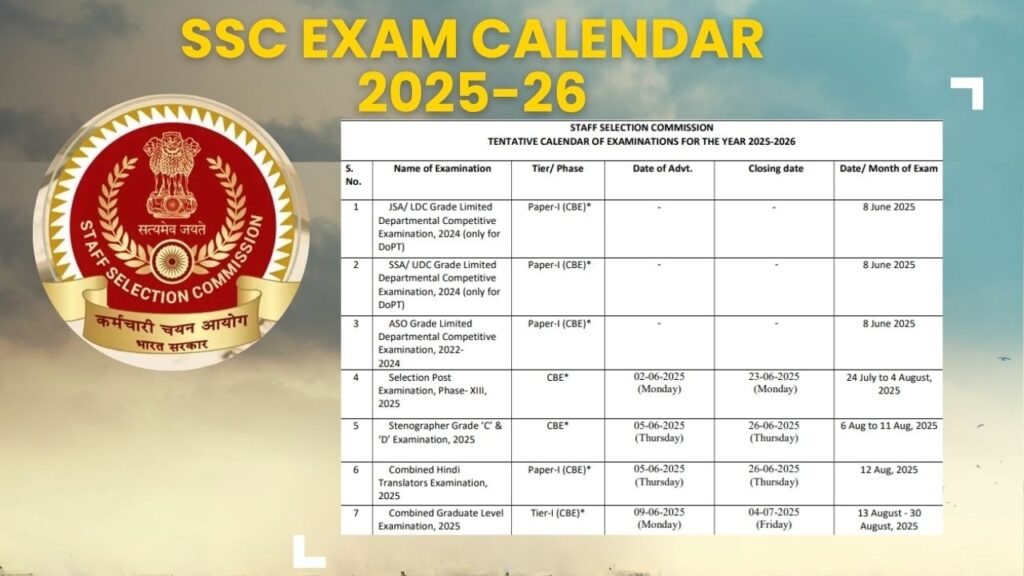
The SSC has announced the SSC Exam Calendar 2025–26 on its official website, so start preparing for the upcoming exams. More than 10 lakh candidates appear out of 50 exams conducted by the SSC every year after 10th, 12th or graduation for jobs in various central government departments and ministries.
This year SSC Calendar (Important Dates) for SSC Exam 2025 (20, 25, 26) contains all info regarding SSC Exams for CGL, CHSL, JE GD Constable, Delhi Police, Steno orga, Stenographer post holders. Candidate can check important events such as notification release date, application dates, exam dates from the schedule to know about the upcoming events which should be useful in your preparation.
Check Out The SSC Exam Calendar 2025-26
More than five million candidates take the SSC exams for government jobs once in a year after either 10th, 12th or graduation. The revised SSC calendar includes all notification, application, and exam dates for the 2025-26 cycle, providing transparency and a clear path for the candidates.
Exam Name
Schedule Period
SSC Constable (Driver)-Male in Delhi Police Exam
July to December 2025
Head Constable (Ministerial) in Delhi Police
July to December 2025
Head Constable (AWO/TPO)
July to December 2025
Constable (Executive)
July to December 2025
Grade C Stenographer
July to February 2026
Constables and Rifleman in Assam
October to February 2026
JSA/LDC
January to March 2026
SSA/UDC
January to March 2026
ASO
January to March 2026
Key Details for Aspirants
All SSC examinations are held at the designated centers across all over India in Online mode only.
Updates are posted on the official SSC website (https://ssc.gov.in). Aspirants are advised to track the notifications and deadlines for application.
Dates of the examination are liable to change due to unforeseen circumstances, keep watching official notifications for updates if travelling or taking study leaves.
There are more levels/phases to the selection process; CGL, CHSL and JE have additional rounds after Tier 1.
Admit cards, syllabus and other directions for the candidates are issued just before the exam, so keep visiting the official website of SSC regularly.
Follow the Guide to Download the SSC Exam Calendar 2025-26
1. Go To The Official Website of SSC, which is mentioned in this article.
2. Now Search for the SSC exam calendar in the Notification on SSC Exam Schedule 2025-26.
3. Open the link and download the calendar in pdf file OR you can just download it directly from the link section of this article.
4. Download the pdf file in your device.
5. Keep this file save or print for future uses.
The SSC timetable for the 2025-26 session is designed as per the pattern of previous years and it clearly indicates that there are 5 stages in the exam process.Changes or modifications, if any, will be notified on the official website of SSC.
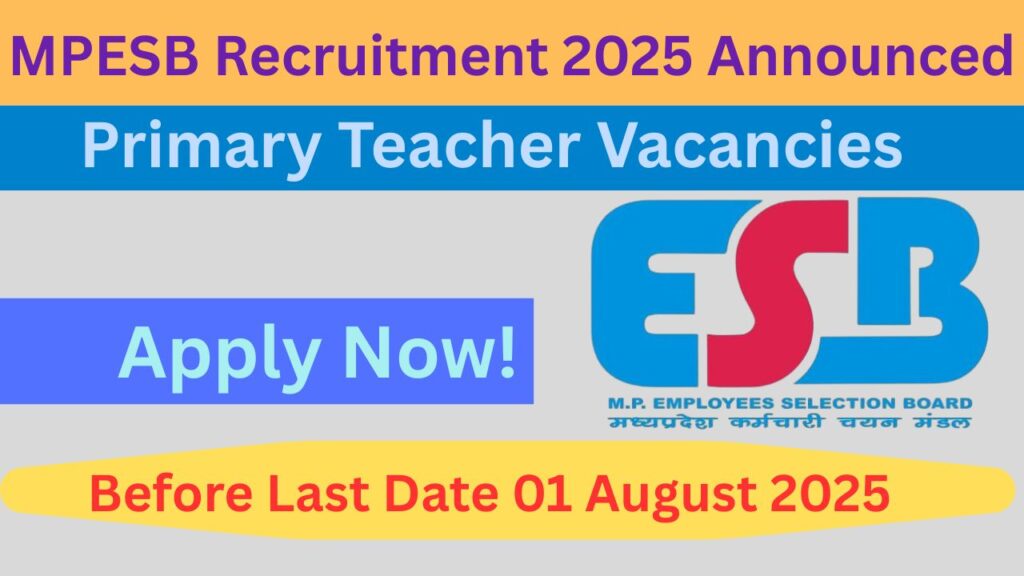
Candidates who want to apply for a Primary School Teacher job can now apply online through the official website. MPESB recruitment 2025 starts on 18 July 2025, and the portal will open until 01 August, 2025. There are several posts for Primary School Teachers, Apply now to secure the position. This post’s salary range is nearly Rs. 25,300 with additional benefits.
The minimum age limit is 21 years and the maximum is 40 years. Age relaxation of 5 years will be given to reserved categories. Read the official notification for full eligibility information.
MPESB Recruitment 2025 Highlights
Exam
Primary School Teacher Selection Test
Board
Madhya Pradesh Employees Selection Board
Purpose
MPESB is conducting an exam w is mandatory for Primary School Teachers. Recruitment will be based on merit list.
Vacancies
13089
Selection Process
Written Exam, Merit List, and Document Verification
After a long wait, it’s now or never for those aspiring for a government job in the healthcare and paramedical sector in Madhya Pradesh. The Madhya Pradesh Employees Selection Board — commonly referred to as MPESB has released the notification for its MPESB Group 5 Paramedical Recruitment 2026, and it is the one among the state’s highest job hirings this year. You definitely don’t want to snooze on this one – 291 vacancies are up for grabs in multiple departments.
Are you a just qualified diploma holder, an experienced lab technician, or a trained staff nurse seeking to go into government service, this MPESB Group 5 Paramedical Recruitment 2026
has the right opportunity for you. Let’s break down all the details for you to understand.
What is MPESB?
Madhya Pradesh Employees Selection Board is also known as (MP Vyapam) and it is the right platform for the unbiased and merit based recruitment in Government Job in the State. Located in Bhopal – Chayan Bhawan, it conducts exams from Group 1 to Group 5 across various domains like education, healthcare, police and so on.
It brings the notification, make the online registrations, issue the hall tickets, answer key and result – everything in the name of transparency. MPESB facilitates the recruitment process, From technical and administrative posts to health service and field posts, MPESB conducts thousands of recruitment every year.
Quick Overview For MPESB Group 5 Paramedical Recruitment 2026
Detail
Information
Conducting Body
Madhya Pradesh Employees Selection Board (MPESB)
Recruitment Name
MPESB Group 5 Paramedical Recruitment 2026
Total Vacancies
291 Posts
Application Start Date
13/March/2026
Application End Date
27/March/2026
Correction Window
13/March/2026 – 01/April/2026
Exam Date
15/April/2026 onwards
Official Website
esb.mp.gov.in
Application Mode
Online Only
Posts Available and Vacancy Breakdown
The 291 posts are spread over 9 departments in Madhya Pradesh and consist of a good blend of clinical and non clinical work in the department of health. The following positions are available:
Post Name
Department/Location
Total Vacancies
Ayurveda Compounder
Directorate of AYUSH
125
Unani Compounder
Directorate of AYUSH
30
Homeopathy Compounder
Directorate of AYUSH
20
Lab Attendant
GMC Ratlam/Vidisha
18
Staff Nurse
ESI Services Indore
7
Pharmacist Grade-2
Various
15+
Others (Technician, Dresser, etc.)
Multiple MCs/ESI
Remaining 76
Who Can Apply?
Qualification
Completed 12th grade with subjects including Phy, Che, and Bio and any diploma or certificate in the field of Paramedical by the recognized government of India.
This eligibility criteria makes sure that the aspirants have the basic academic as well as the professional training needed for paramedical field.
Further, you must have valid registration with the Madhya Pradesh Para-Medical Council (MP Sah-Chikitsiya Parishad). The detailed eligibility criteria are post-wise and are given in the official notification.
Age Limit
Age Minimum: 18 years (s) as on date of Advt.
Max Age: 40 years (General/Unreserved candidates)
Maximum Age Limit is 45 Years for SC, ST, OBC, Women, PwD, Gov. Employees, Home Guard of MP and Ex-Servicemen
The age has been calculated as per your date of birth mentioned in the High School or Higher Secondary certificate. No candidate shall be above 45 years of age as on the last date for receipt of application under any circumstance, except certain contractual employees and categories notified under Rule 14 of the MP government rules.
Nationality
Under the MP Civil Services Recruitment Rules 1961, the candidate must be a citizen of India or a Citizen of Nepal. Non-MP resident candidates can apply only for OPEN/UR category posts and shall not be entitled to any kind of reservation or age relaxation.
How to Apply — Step by Step
Application process is going online for MPESB Group 5 Paramedical Recruitment 2026, so you must follow these steps to apply:
Open the official website of MPESB to apply for this recruitment.
Join the recruitment tab and now click on the Recruitment Notification for the subject MPESB Group 5 Paramedical Post Recruitment 2026
Sign up with your mobile number, Email ID, and some personal information
Enter your name, parents’ name, education qualification and other required details in the application form.
Upload a photograph, signature and your certificates if you are from a relevant category
Make payment either online/offline for application/Examination fee.
After submitting the form, keep your application no for future use.
The fee is non-refundable and the fee amount is different for each category. You may pay online with Credit Cards, Debit Cards, Net Banking, IMPS, Cash Cards, or Mobile Wallets.
How Will You Be Chosen?
The method of selection is simple and on the basis of meritorious:
Online Written Examination: The online written examination will consist of one objective type paper of 100 marks. The examination will be held from 15 April 2026 in two shifts.
Document Verification: The shortlisted candidates will be intimated for the verification of the original certificates.
The final candidates will have to go through a medical fitness test for the post as a part of the last selection stage.
There is no interview for this recruitment because selection is based on the Merit score of exam, so prepare well for the examination.
Exam Pattern & Syllabus
The test is a test of both general awareness and technical know-how. It has 100 questions and all questions carry 1 mark which means that the time duration of 2 hours would need to be utilized to solve a total of 100 questions.
The exam is conducted in both online, or OMR sheets mode and the best part is that there is no negative marking, so go ahead and attempt every question without worrying about losing marks.
General Section (25 Marks):
This section is for your general knowledge and talent. It contains questions from GK, Hindi, English, Maths, Science, Logical/Interest based reasoning.
Technical Section (75 Marks):
This is the major part of the exam and tailors subject-specific knowledge of the post you have applied for. such as candidates applying for the posts of Lab Technician may get questions from Pathology and Biology or for Nursing candidates may ask questions from Anatomy, Pharmacology and other medical related subjects.
In the GK section, questions are broadly asked from history and geography of mp and India, Govt. schemes, and Today Updates.
Tips for Applicants
Here are some words of friendly advice so you don’t get caught up in this:
Don’t wait for the last date, apply as soon as possible because there is a huge competition out there.
Verify all information twice before submitting. Corrections are allowed only up to 01.04.2026 with a fee for modification.
It is necessary to have that your MP Para-Medical Council Registration is Active and Valid before applying.
Before you begin, keep scanned copies of your photo, signature and all certificates ready.
Start preparing for the written exam – 100marks, objective type, no second chance after the window closes.
Conclusion
MPESB Group 5 Paramedical Recruitment 2026 is indeed good news for all the healthcare professional and paramedical job seekers of Madhya Pradesh. It is not every day that you get an opening where there are 291 vacancies, a clean merit-based selection process, and the support of a reputable Government board.
Submit your application between 13 to 17/March/2026 and read the official notification properly and collect your documents then apply. Jobs in government health care are stable, provide a well-defined career path, and allow you to truly serve your community. This could be your moment.
Best of luck to everyone. Good preparation and no error in your application!