BCA vs BTech – Which Course Offers Better Career Opportunities in 2025?

BCA vs BTech 

Among the first questions that a prospective student aiming for a career in the field of technology wants to know is which option is better BCA vs BTech. While they are not the same in terms of learning format, technical detail, and career trajectory, both degrees lead to great jobs in software and IT. BTech vs BCA where BTech is more focused on engineering principles, hardware systems, and complex programming whereas BCA focuses more on applications development, software and other IT tools. 

In 2025, the tech industry is evolving faster than ever, with cybersecurity, data science, and artificial intelligence leading the charge. Because of this, it is important to know how these two courses complement each other with respect to your goals. The following comparison will help you to ascertain whether BCA or BTech is the best route for kickstarting your dream career, be it for rushing straight into the IT field with hands-on application or pursuing core engineering roles with advanced specialization. 

BCA & BTech Course Learning Approach

ParameterBCABTech
Duration3 years4 years
FocusSoftware application & IT toolsEngineering in both software & hardware development, operating systems
CurriculumCoding, website/application development, DBMS, practical projectsAlgorithms & data structures, maths, hardware, Coding
DepthApplication & programmingIn depth technical & engineering involve programming
FlexibilityRegular or Often available onlineMainly available offline (online BTech degree doesn’t have any value)
Feeaffordable for many students (approx 3 lakh – 4 lakh)Higher (approx. 8 lakh – 10 lakh)
EligibilityQualified 12th with from any stream but some colleges required mathsQualified 12th in science with math as a mandatory subject
Admission ProcessMerit-based entrance (some colleges need entrance test)Entrance test (JEE Main, CET, other) score is required for the admission

BCA is a practical course and is best suited for those who want to make a quick entry into the world of software. BTech gives you deep technical and engineering knowledge for specialised roles, and a wider technology career. 

Industry Demand After the Course

Both degrees are highly demanded in 2025 because they hold knowledge of advanced technology. Candidates who want to enter the tech field can prefer to have any one of the degrees as per their future goals but they lead to different types of roles and levels of specialization.

BCA Career Options

  • Software (Web/App) Developer, 
  • Network Administrator
  • Database Administrator
  • IT Support
  • Cybersecurity Analyst
  • Digital Marketer

Candidates can upskill while pursuing the degree with other valuable certificates like Google, AWS, IBM. IT companies, startups, web & app firms, digital agencies, government IT departments look forward first to the candidates who hold upskill certificates.

BTech Career Options

  • Software Engineer
  • Data Scientist
  • System Architect
  • Network and security engineer
  • AI/ML Engineer
  • R&D and core engineering roles

BTech students get hired through placement in top companies like TCS, Infosys, Wipro from India’s best colleges. Other tech companies also hired BTech students who have passed with good scores and clear interview sessions.

BTech allows you to go for core, technical and high end jobs and BCA is good for entry level jobs in software, IT and application fields. Specialized and senior roles generally choose BTech holders, but you can grow with time if you are an ambitious BCA graduate with some certifications or MCA degree. 

Read More :- RRB NTPC 2025 Exam – Application Dates, Eligibility & Vacancy Details

Salary Difference in BCA vs BTech

DegreeStarting SalaryHigher End
BCA₹2–8 LPAUp to ₹10 LPA
BTech₹4–9 LPAUp to ₹20 LPA

Especially from top-notch universities or in technical role, BTech students get better pay starting point and better growth in salary. The market seems to clearly favour BTech at the junior and mid level, but BCA holders can bridge the gap by way of additional study (MCA) and relevant certifications. 

Technical Depth & Industry Alignment

AspectBCABTech
Programmingmostly coding for softwareAdvanced programming, plus theory and engineering in both software & hardware
HardwareLimited to noneIn-depth (circuits, architecture, hardware)
MathModerate levelHigh level
AI/ML, Data ScienceBasic introduction in some collegesMandatory, core to the topic
Projectacademic projectsRegular labs, real-world projects, mandatory major project
InternshipOptional (applicable in some colleges)Usually mandatory for industry exposure

Eligibility and Career Growth 

Most of the students can afford BCA and it is available in a wider range, so it’s easy to access this degree. No difficult exams have to pass to get the admission. It is a better option for students who are weaker in maths and they can get quick entry in the job market as it finishes in three years.

Students who want a higher starting salary and they can afford a higher cost of the degree. But they must pass highly competitive exams to get the admission for four years course as it is valued for core technical and leadership tracks.

Both degrees allow for further studies:

BCA → MCA, MBA, MSc

BTech → Masters, MS, PhD for Research, MBA (Digital Marketing)

Which Degree Offers Better Career Opportunities?

Eventually, BTech has more broad, profound and lucrative prospects, especially for people who wish to become leaders in engineering and core technology, R&D or specialized areas.

BCA is an excellent option for the students who want to make a career in software and IT industry and earn full quick entry in the industry at affordable practical education. It is suitable for application developers, IT support, and those who intend to taking up an MCA or MBA in future owing to its three year duration, ease of enhancement in form of certifications and focus on practical knowledge. 

Conclusion

BTech, on the other hand, still offers better career options in the long run, better salary prospects and a possibility of more options of technical specialization. That said, for students who prioritized affordability, speed in entering the workforce, or niche IT/application roles. BCA remains a sensible pick. Think about your strengths and long-term goals, your time and financial investment, and your interest and ability in core engineering vs. applied software. If both degrees were done with determination and continued education along with adaptability in the fast paced tech world, they can both lead to successful careers. 

Leave a Comment

Your email address will not be published. Required fields are marked *

BSc Radiology and Imaging Technology: Course, Eligibility, Fees & Career

BSc Radiology and Imaging Technology

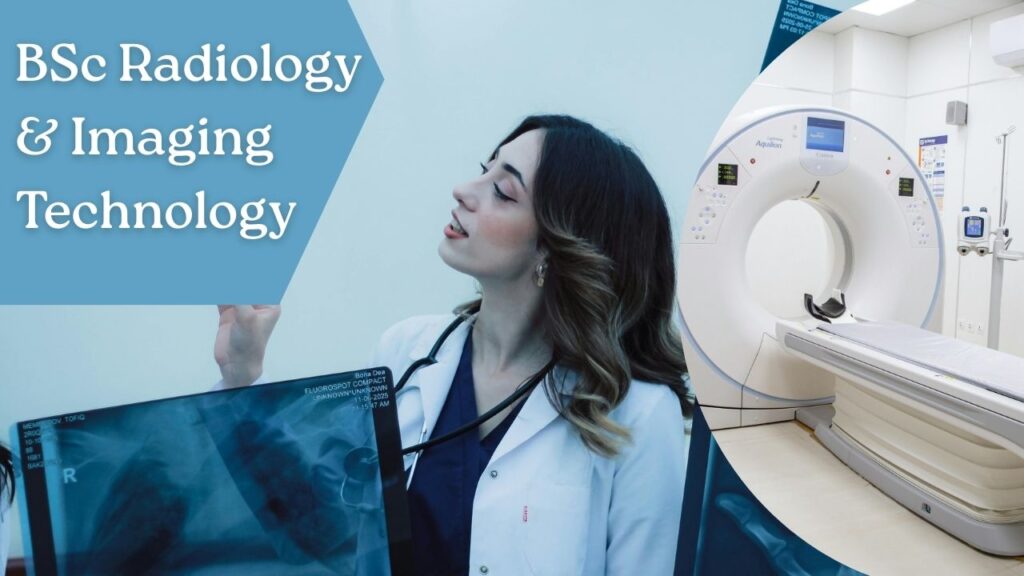
BSc Radiology and Imaging Technology is a three-year program (with one-year internship that is mandatory in most of the institutions) that equips the students with the knowledge of medical imaging. The core science portion of the curriculum (focusing on physics, chemistry, and biology) is integrated with clinical imaging courses including: anatomy and pathology, radiographic procedures, sonography techniques, ultrasound physics, computed tomography (CT), magnetic resonance imaging (MRI), and radiation protection. 

The Bachelor of Science in Medical Radiology and Imaging Technology is becoming the backbone of diagnostic medicine today. This transformation is being driven by three coalescing factors: the full enforcement of National Commission for Allied and Healthcare Professions (NCAHP) Act 2021, the adoption of advanced artificial intelligence (AI) in diagnostic workflow, and the growing world-wide need for expert imaging technologists. 

The course is intended to prepare competent technologists (“radiographers”) who will be well versed in the operation of contemporary imaging equipment and have a solid foundation in the science of diagnostic radiology. 

Who is a Radiology Technologist?

The Radiology Technologist/Radiographer is a clinical scientist who holds at least a B.Sc. or M.Sc. degree in Radiography. They don’t just know how to run the machines, they understand the physics behind the formation of images, the physiological basis of pathology and the important issues surrounding patient safety and radiation protection. 

Why Has This Course Become Important in Diagnostics?

Imaging is at the heart of diagnostics, which are critical to contemporary medicine; more than 80% of hospital care relies on them. B.Sc. In addition to machinery handling the Technician holder needs to perform a large part in the day to day imaging workflow by the year 2026 MRIT graduates holders can expect to be involved with state of the Art technology like PET-MRI, SPECT-CT, Protocol Optimization, Post Processing, QC. 

Also this line job is work during recession. There is a long-term demand for skilled radiographers, particularly those trained in PACS and RIS, as the population of India grows older, lifestyle ailments become more common, and digital healthcare is enhanced under the ‘Ayushman Bharat Digital Mission’. 

Entrance Exams & Eligibility Details For Admission 

NEET UG 2026

National Eligibility cum Entrance Test (NEET UG) shall be the single entrance examination for admission to all the undergraduate allied and healthcare courses like BSc Radiology and Imaging Technology from the academic year 2026-27, according to NCAHP. 

AIIMS — 2026 Paramedical Entrance Test

Along with NEET, there is the AIIMS entrance Test which is held by AIIMS for paramedical courses leading to B.Sc. and M.Sc. The date of AIIMS B.Sc. Paramedical 2026 exam is tentatively on 30 May 2026. 

Note:- Candidates are requested to cross-check this with official notification as some calendars mention July for Examination, however May is the only projected window as per academic calendar.

How to apply:

  • Basic Registration: The schedules released in 2026 March/April. You can create a Registration ID.
  • Final Registration: Involves the generation of a Unique Code (RUC), payment of application fee, usually in May 2026.

Test Format: This computer-based test will consist of 90 multiple-choice questions (MCQs) on biology/mathematics, chemistry, and physics and will last for 90 minutes. Any wrong answer can take away ⅓ marks.

Admissions at JIPMER & PGIMER

JIPMER (Puducherry): B.Sc admissions The admissions to the B.Sc shall be The Allied Health Science at JIPMER (Puducherry) for the year 2026 will be on the basis of the NEET UG scores. JIPMER normally holds its own counseling for these seat(s). 

PGIMER (Chandigarh): The institution holds a separate CBE, these are usually conducted in the months of August/September. The process of application normally commences in June. 

State and Private University Tests

CUET (Common University Entrance Test): Central universities, such as Banaras Hindu University (BHU), utilise the CUET. The essential subject combination for Radiology is Physics, Chemistry, and Biology / Mathematics.

Manipal: in MAHE, Phase 1 is scheduled for April 2026 for admission test, and the next Phase 2 for May 2026. 

CMC Vellore: It is a tough Institute level CBT (Computer Based Test) followed by a Step-2 evaluation (Practical tests and interviews.) 

Eligibility Criteria 2026

Educational qualification: Should be passed class 12th board with physics, chemistry and biology (pcb) and English. Some of the institutes like AIIMS allow mathematics (pcm) for Radiology courses.

Minimum Marks: For the general/EWS/OBC category, it is 50% aggregate and for the SC/ST category, it is 45%.

Read More:- Supreme Court Law Clerk Recruitment 2026 Notification Details

List of Colleges For BSc Radiology and Imaging Technology

There are 140+ colleges around India that offer BSc Radiology and Imaging Technology without taking too much fees, especially in government colleges. If you have interest in lab technologies or figuring out body structures and making reports then take admission for securing your career in this field.

CollegeLocationApprox. FeesNotes 
AIIMS—New DelhiDelhi₹4,500Elite training facility as it is Top-ranked college
PGIMERChandigarh₹10,500Members are mindful and placements opportunities
JIPMERPuducherry₹94,000Excellent internships
AIIMS—RishikeshUttarakhand₹46,000High packages up to ₹24L
GMCHChandigarh₹39,000Affordable govt option
Integral UniversityLucknow, UP₹3.15LGood infra, local pick
Parul UniversityVadodara₹4.6LPrivate, placements ₹6L avg
SGT UniversityGurgaonVariesModern facilities

Academic Curriculum for the Course 

Theory and laboratory practice are included in the curriculum of BSc Radiology and Imaging Technology. The following topics were covered: Human anatomy/physiology, Imaging Physics, General Radiography, Ultrasound Imaging, CT Scanning, MRI Basics, Radiobiology and Radiation Protection, Digital Image Processing, and General Patient Care. 

BSc Radiology and Imaging Technology is a four year degree course. The first three years were spent attending didactic lectures, practical laboratory courses, and clinical observations. The fourth year is a required, full-time clinical internship during which the student serves as a student technologist at a hospital. 

PhaseDurationFocus Areas
Year 1Semesters 1-2Basic Medical Sciences, Communication Skills, Computer Basics
Year 2Semesters 3-4Core Radiography, Radiation Physics, Conventional Imaging
Year 3Semesters 5-6CT, MRI, USG, etc Interventional Radiology
Year 4Semesters 7-8Clinical Internship, Logbook, Project Work

The 2026 Curriculum is intended to establish progressively developing competencies. 

Year 1: The Foundation

The goal is to give the student a foundation in the human body and the hospital setting.

  • Human Anatomy & Physiology: This Is Not a “Fly By” Tour Students are required to study detailed osteology (bones) to learn how to position for radiographic.
  • They are taught body systems physiology to understand how to administer contrast media.
  • General Physics: The basic laws of physics applicable to the production of radiation.
  • Clinical Pathology & Biochemistry: Basics of blood tests (creatinine, urea) which are important prior to contrast administration.
  • English & Communication: Necessary to describe techniques to patients and to calm them. 

Year 2: The Core

Students access the realm of diagnostic imaging in BSc Radiology and Imaging Technology.

  • Radiation physics: The production of X-rays, their interaction with matter, and the design of X-ray tubes.
  • Radiographic Positioning, the science and art of positioning the patient to radiograph the body part (i.e. Towne’s view for skull, Skyline view for patella).
  • Darkroom to Digital: Darkrooms may be a thing of the past, but knowing the history is key. Emphasis is placed upon Computer Radiography (CR) and Direct Digital Radiography (DR) modalities.
  • Radiation Protection: Students learn the ALARA (As Low As Reasonably Achievable) concept along with shielding and dose limit for worker and patient. 

Year 3: The Advanced Frontier

This is the year when the high-end modalities that shape contemporary radiology are covered.

  • Computed Tomography (CT): CT Physics, generations of scanners, helical vs. axial scanning, and protocols for different body regions.
  • Magnetic Resonance Imaging (MRI): Principles of the complicated physics of nuclear magnetic resonance, safety issues related to ferromagnetic materials, and pulse sequences.
  • Ultrasonography (USG): Essentials of acoustics, transducer design, and the technologist’s function in the operation of the sonographer.
  • Interventional Radiology (IR): Orientation to the Cath Lab Sterility and Equipment utilized in Angiography.   
  • Radiation and Radioactivity in Nuclear Medicine Basics of PET-CT Handling of Radioisotopes including Technetium-99m. 

Year 4: The Internship

The purpose of the internship is to transition a student to a worker. Interns rotate through different departments, including X-ray, CT, MRI, Emergency and ICU. They need to keep a logbook of cases they have done, and are evaluated on their technical skills and dealing with patients. 

BSc Radiology and Imaging Technology Career Scope & Salary

Skilled radiographic professionals are sought after in India’s growing healthcare sector. Radiology technicians also work in public and private hospitals, diagnostic laboratories (pathology and imaging centres), government health schemes, private practitioners and emerging digital health platforms including teleradiology and artificial intelligence (AI) imaging start-ups. 

BSc Radiology and Imaging Technology

Clinical Roles

  • Radiologic Technologist: The typical baseline position. Duties are to perform x-rays, triage patients and maintain radiation safety .
  • CT Technologist: So, what’s the place in the hierarchy. Knowledge of cross-sectional anatomy and contrast administration is required.
  • MRI Technologist: A step up. MRI scanners are complicated, and patient safety (screening for metal) is critical. The technologists here typically make 20-30% more than a general radiographer.
  • IR Technologist: The Cath Lab Experience. In a stressful environment, high volume dealing with cardiac and vascular interventions. You’ve got to wear thick lead aprons for long hours – but when you’re done, you’re king and you’ve got money in your pocket.
  • Mammographer: Expert in breast imaging. Because of the sensitive nature of the exam, female technologists are preferred for this position. 

Sector & Role Wise Salary (2026)

RoleExperienceSectorApprox. Monthly Salary (INR)
Jr Technologist0-2 YearsPrivate sector Hospital Rs 18–25k
Jr Technologist0-2 YearsAIIMS/Govt (Contract)Rs 25–35k
Sr Technologist5+ YearsCorporate HospitalRs 45–60k
MRI Specialist3-5 YearsDiagnostic ChainRs 35–50k
Application Specialist2-5 YearsMedical Device Co.Rs 50–80k + other allowance
Govt. PermanentEntry LevelGovernmentRs 45–55k (Initial + Allowance)

Who is Ideal For this Course?

BSc Radiology and Imaging Technology course is for students who like science and technology and want to work in the health sector. The ideal candidate: is detail oriented, is able to follow protocols which are critical for safety, is comfortable using computers and complex machinery, and can interact with patients (explain procedures, position patients). A BSc radiology student should be well versed with biology and physics and should also be calm and responsible because any mistake in imaging can impact the diagnosis. 

Future Value of BSc Radiology and Imaging in Healthcare

In India’s upcoming healthcare scenario, BSc Radiology and Imaging Technology are a must-have. With the proliferation of private hospitals and diagnostic chains in Tier II/III cities, the need for imaging services is on the rise.

Technologies, such as AI-based image analysis, hybrid imaging (e.g. PET/CT), etc, indicate that the profession will continue to be hitech. So BSc (Hons) in Radiography graduates will play a vital role in connecting technology and patient care. The course produces practical professionals who can contribute immediately to hospitals’ diagnostic teams, which is critical in a country like India, where there is a shortage of doctors. 

Conclusion

In a day and age when technology and medicine are coming together closer than ever, the Radiology Technologist is at the controls of the medical world’s most powerful machines. For individuals who are detail-oriented, have a caring nature, and technical mind, BSc Radiology and Imaging Technology offers a fulfilling, stable and ever-changing career. 

Leave a Comment

Your email address will not be published. Required fields are marked *

Top 7 Best B Pharma Colleges in Lucknow You Must Know in 2025

Pursuing a BPharma means you are going to enter in the drugs and medicine fields. Students can make their career bright by choosing the best college for their further education because the best college not only offers a degree but also offers industry knowledge, support in their training, and strong curriculum. Top 7 Best B Pharma Colleges in Lucknow stand a chance to provide you placement opportunities in pharmaceutical companies with good salary packages.

Lucknow is a growing education hub in almost every field. So, let’s look into the college’s details to help you decide which one aligns with your requirement and meets the budget area. 

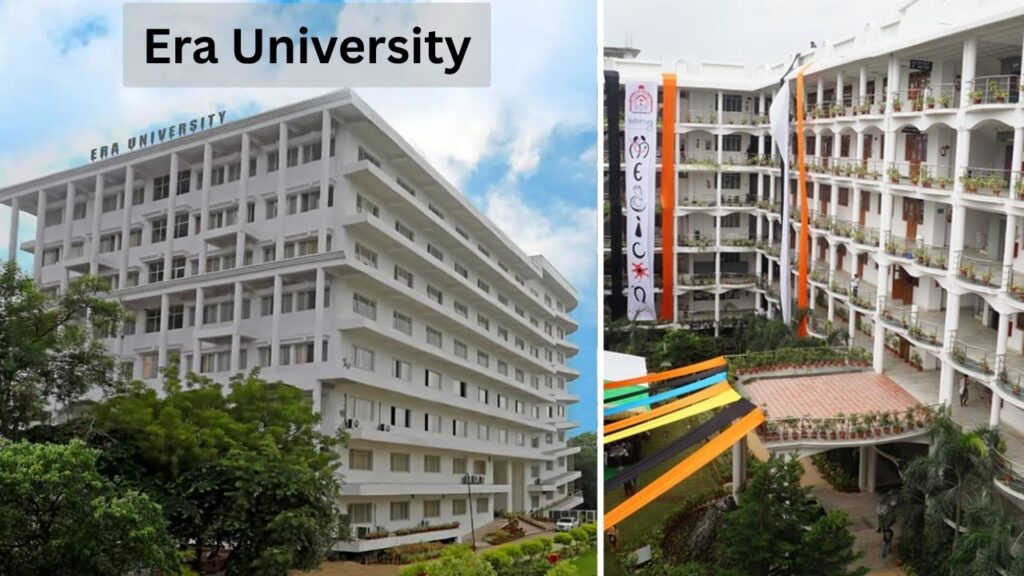
ERA University

Most of the students prefer to get admission in Era University for medical and pharmacy courses including B.Pharma. It is the best college in Lucknow for providing quality education with both theory and practical knowledge. BPharma 

Era University nursing lab with students learning under faculty supervision.

Era University fee, placement record, and admission process:

BPharma Total Fee₹5,60,000
Placement₹4 lakh per annum (achieve 90% placement rate)
Admission Process10+2 in Science stream (Biology, Physics, Chemistry)Test-based selection

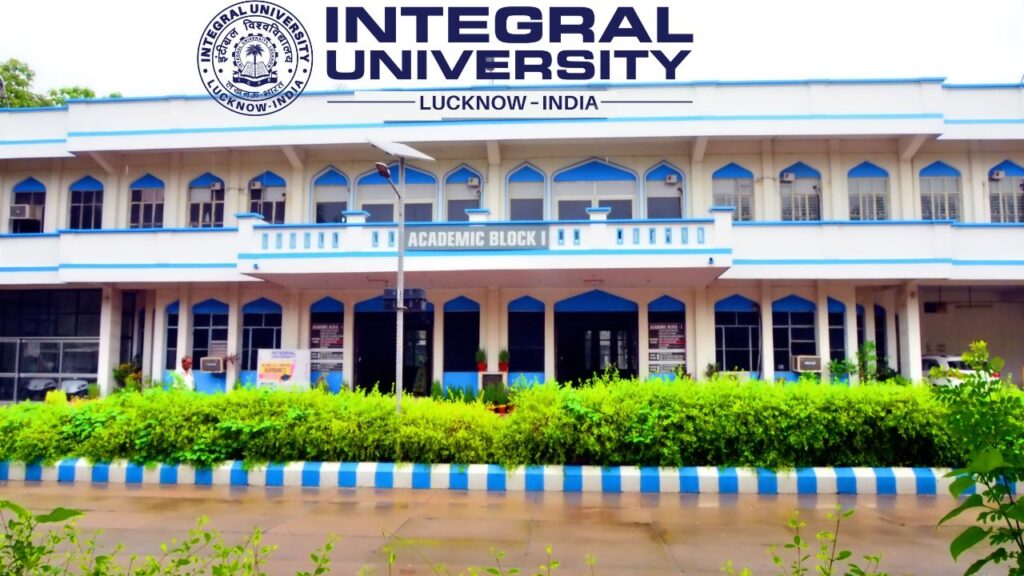
Integral University

Integral University offers various courses across diverse fields. It has become the best university in Lucknow and offers a four year BPharma program with a quality education, practical assessments, and good placement to most of the students. 

Integral University, Lucknow

Integral University fee, placement record, and admission process:

BPharma Total Fee₹5,20,000 (additional fee may vary the final amount)
Placement₹3–4 lakh per annum (achieve 85% placement rate)Highest package can go up to ₹32.57 LPA
Admission Process10+2 in Science stream (Biology, Physics, Chemistry)Entrance: IUET (Integral University Entrance Test)100 seats for BPharma every year

Saroj Institute of Technology & Management

Saroj Institute of Technology is a private college which offers pharmacy courses that make your career shine in pharmaceuticals. Many companies hired students from this college through placement drives. Students can take admission in the popular programs including B.Pharma, D.Pharma, and M.Pharma.

Saroj Institute of Technology & management fee, placement record, and admission process:

BPharma Total Fee₹2.82 lakh (additional fee may vary the final amount)
DPharma Total Fee₹1 lakh
M.Pharma Total fee₹1.5 lakh
Placement₹3.8–4.2 LPA (achieve 90% placement rate)Highest package can go up to ₹7 lakh LPA
Admission Process10+2 in Science stream (Biology, Physics, Chemistry)Entrance: CUET scoreCounselling after selection

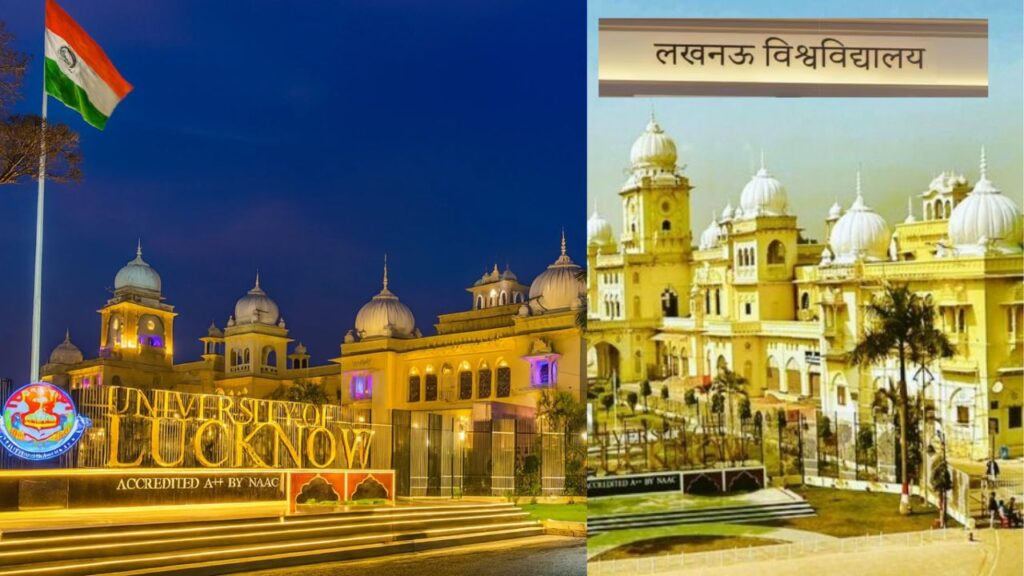
University of Lucknow

This well-known University of Lucknow offers students a better scope in their pharmacy field. This government university offers a four year BPharma program with a strong curriculum, training, and placement opportunities. Curriculum includes pharmacy practices, human anatomy, pharmaceutical analysis etc.

University of Lucknow fee, placement record, and admission process:

BPharma Total Fee₹4.8 lakh (additional fee may vary the final amount)
Placement₹3–4 LPA 
Admission Process10+2 with Physics, Chemistry, Biology/MathematicsEntrance: UPTAC counseling & UPSEE score

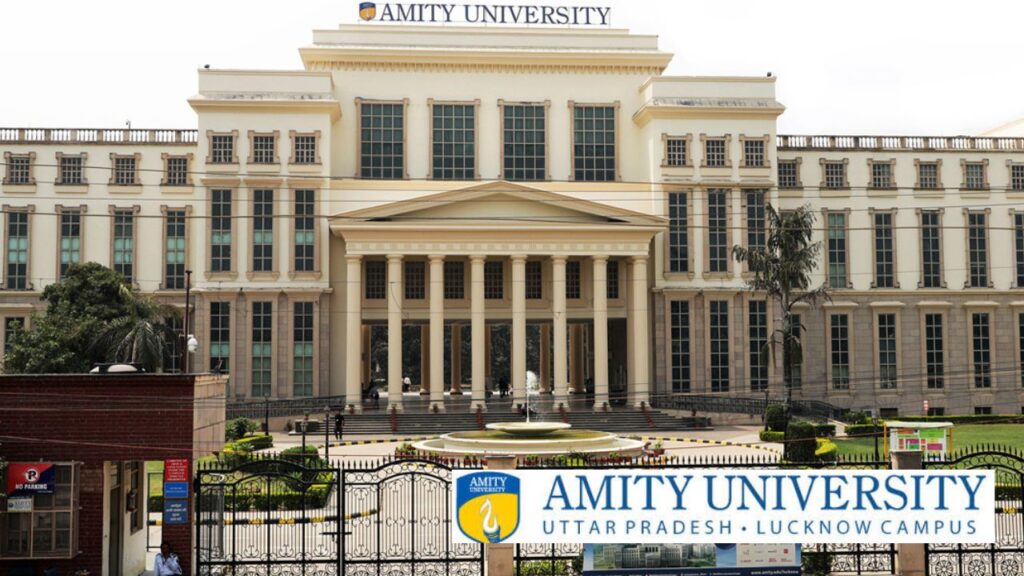
Amity University Lucknow Campus

Amity University is the most prestigious university of India which offers a diverse range of courses. Students can make their future brighter by pursuing BPharma course from this college. It can open up their opportunity in the pharmaceutical industry. It offers a strong curriculum with pharmacognosy, pharmaceutical analysis, health education, hospital training and placement support including skill-building workshops, strong industry connections, and internship opportunities.

Amity University, Lucknow Campus

Amity University Lucknow Campus fee, placement record, and admission process:

BPharma Total Fee₹6.8 (additional fee may vary the final amount)
Placement₹3–4 LPA it can go up to ₹6 LPAmajor pharmaceutical firms take part in Amity’s placement drives
Admission Process10+2 with Physics, Chemistry, Biology/MathematicsEntrance: scores from Amity JEE or any other national/state-level entrance exam score 

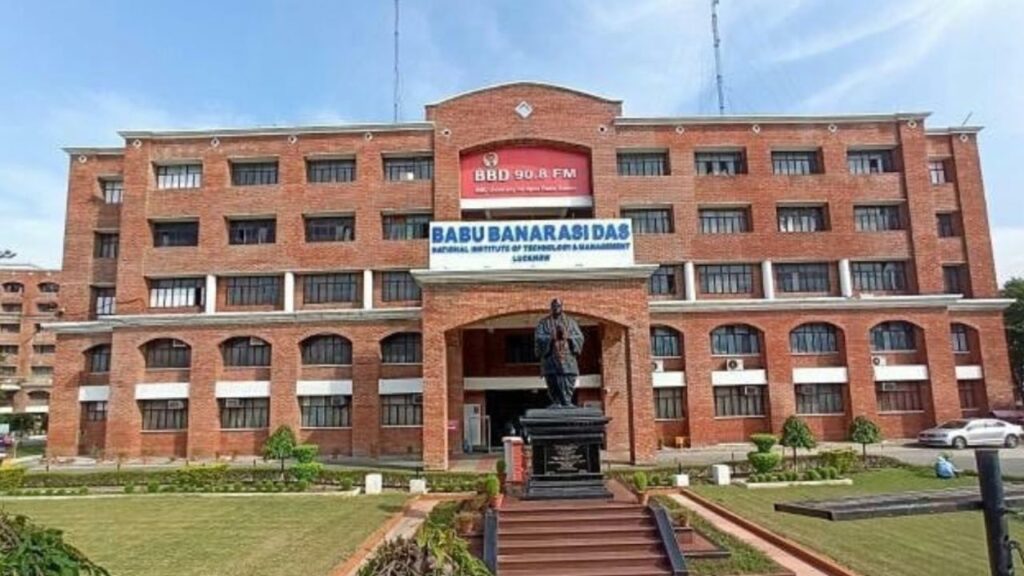
Babu Banarasi Das University

BBDU is considered as Lucknow’s best college which offers many programs including BPharma. It is a four year program designed for providing pharmaceutical careers to the students who are interested in pharmacy and drugs.

Babu Banarasi Das University - BBD University

Babu Banarasi Das University fee, placement record, and admission process:

BPharma Total Fee₹5.2–5.8 lakh (additional fee may vary the final amount)
Placement₹3–4 LPA it can go up to ₹6 LPAmajor pharmaceutical firms take part in Amity’s placement drives
Admission ProcessMinimum 50% in 10+2 with Physics, Chemistry, Biology/MathematicsEntrance: scores from NEET, UPSEE or any other national/state-level entrance exam score 100 seats for BPharma every year

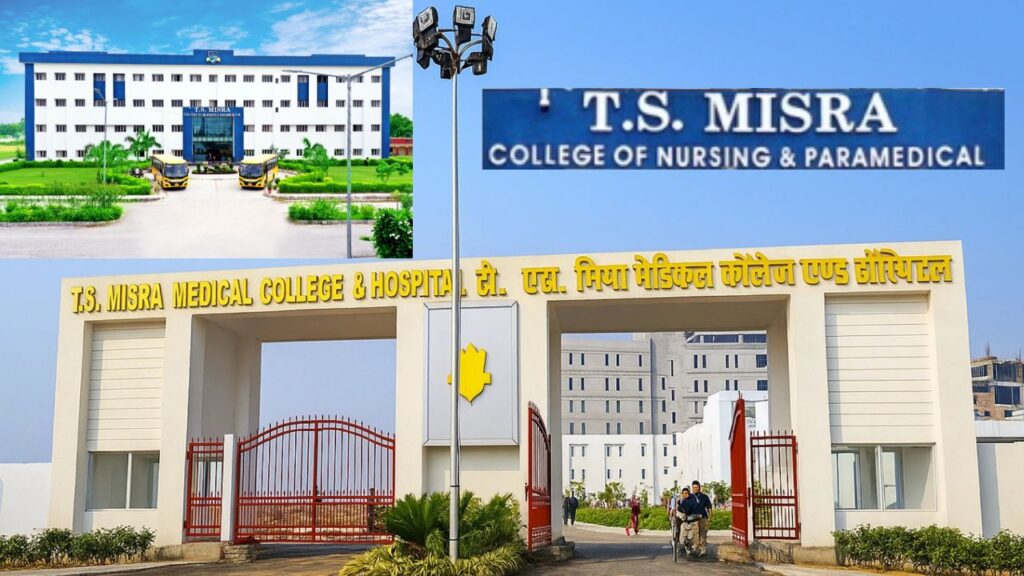
T.S.Mishra University, Lucknow

T.S Mishra University is a well-known university for BPharma course due to its strong curriculum, experienced faculty members, and practical approach. It produced industry-ready professionals with their designed course. It offers a 4 years BPharma course with 3 months of compulsory hospital training and 1 month of industrial training.

T.S.Mishra University fee, placement record, and admission process:

BPharma Total Fee₹4.1 lakh (additional fee may vary the final amount)
Placement₹3–4 LPA it can go up according to your resume
Admission Process10+2 with Physics, Chemistry, Biology/MathematicsEntrance: merit-based selectionUniversity’s entrance tests60 seats for BPharma every year

Conclusion 

Students can see all the best BPharma colleges in Lucknow in detail and choose the right one. These colleges offer practical and theoretical knowledge for pharmaceutical sciences which can help students to build their foundation in the field of medicine & Drugs.

Leave a Comment

Your email address will not be published. Required fields are marked *

Bihar DElEd Entrance Result 2025 OUT: Check Marks, Rank & Admission Status

Bihar DElEd Entrance Result 2025 OUT

On November 26, 2025, the BSEB Bihar DElEd Result 2025 was formally announced by the authority. Candidates who filled the applications in a period from January 11, 2025, to February 5, 2025 can check their result for Bihar D.El.Ed 2025 from the link given below. You need the date of birth and roll number to access the scorecard. Now the result is here of those applicants, so visit the official website to download the scorecard and check merit list/cut off marks or copy the link given below & paste it in the new tab of the window. 

Application Start Date11/January/2025
Application Last Date05/February/2025
Fee Payment Last Date06/February/2025
Correction Date13 —- 17 May/2025
Exam Date26/August/2025
Answer Key Date11 —- 13/October/2025
Result Date26/November/2025

Eligibility & Application Fee Key Details For BSEB DElEd

The two-year Bihar DElEd course is open to the candidates who have passed 12th standard or an equivalent examination from a recognized board or institution in India. Candidates who are above 17 years old can apply and there is no age limit. 

Reserved category candidates are required to pay ₹760, and those belonging to the General/OBC/EWS categories are required to pay ₹960. It is advised to read BSEB Bihar DElEd Exam Notification 2025 for full fledged details. 

Read More 👉 IIT BHU Fees for BTech: Tuition, Hostel & Other Charges Explained

Step-By-Step Guide to Download Result 

The result of the diploma is on The Bihar School Examination Board (BSEB) Patna official website. For the marks print out you need to kindly follow these steps:

1. Go to the official website which is mentioned in the below section.

2. Link with naming “BSEB Bihar DElEd Result 2025” is posted, you can find and click on it.

3. Fill in the roll number/ application number and date of birth.

4. Press the “Submit” button.

5. Now BSEB Bihar DElEd Result 2025 will be appeared on your screens.

6. Download and take a printout of your scorecard or keep it for future reference.

Make sure to have all the necessary credentials in order to make the process hassle-free. 

Useful Links
Check ResultClick Here
NotificationClick Here
Official WebsiteClick Here

Leave a Comment

Your email address will not be published. Required fields are marked *

MPPGCL AE/ JE Recruitment 2025 Officially Out – Gov Update Wala Has All the Details!

MPPGCL AE JE Recruitment

MPPGCL has officially announced the release of notification for MPPGCL AE/JE Recruitment 2025 on their official website. Candidates can start filling application forms before the portal will close on 21/Aug/2025. Download the official notification for more post-vise eligibility details. You can find a direct link for the official application form link in the article below.

Short Details For MPPGCL AE/ JE Recruitment 2025

Recruitment BoardMadhya Pradesh Power Generating Company (MPPGCL)
PostAssistant Engineer, Plant Assistant, Officer Assistant, Junior Engineer, & other various post
Level of ExamState-Level
PurposeMadhya Pradesh Government is enlisting candidates through this exam for various posts.
Total Posts346
Exam ModeOnline/CBT
Official WebsiteClick Here

MPPGCL AE/ JE Recruitment Dates

Application Starts On23/July/2025
Last Date for Application21/Aug/2025
Last Date for Fee Submission21/Aug/2025
Exam DateUpdate Soon
Admit CardUpdate Soon

Read More 👉 HTET 2025 Admit Card Out: Download Now from bseh.org.in for 30-31 July Exam

MPPGCL AE/ JE Recruitment Eligibility

Candidates can apply for JE post if they are above 18 years old. The minimum age for other posts is 21 years and maximum age is 43 years

Assistant EngineerBachelor’s degree in Engineering such as BE/B.TechObtaining score must be above 65% (Gen/OBC) or 55% (Reserved Category)
Junior EngineerDiploma/Bachelor’s degree in Engineering such as BE/B.TechObtaining score must be above 65% (Gen/OBC) or 55% (Reserved Category)
Other Post10+2 is mandatory in most of the posts. 

Steps To Fill MPPGCL AE/ JE Recruitment Application Form

Step 1Click on the link to the official website. The link will redirect you to the official website of MPPCGL, Haryana.
Step 2On the Official Website, Click on Careers, the new page will open.
Step 3Click on the link “Direct Recruitment For AE/JE” 
Step 4Register yourself by entering your correct details.
Step 5Pay the Application Fee after checking all the details carefully.
Step 6Save the copy of application for future preference
Application Fee
GeneralRs. 1200
EWS/OBC/SC/STRs. 600
Payment ModeOnline
Important Links
Application LinkClick Here
Download NotificationClick Here
Official WebsiteClick Here
HomepageClick Here

Leave a Comment

Your email address will not be published. Required fields are marked *

CBSE Group A, B & C Admit Card 2026 Download Link, Exam Date

CBSE Group A, B & C Admit Card

Central Board of Secondary Education (CBSE) is going to hold the Group A, B & C Tier-1 examination for various posts including Racing Officer, Assistant Secretary, Assistant Director, Accounts Officer, Junior Translation Officer, Junior Accountant, Junior Assistant, Assistant Professor and Superintendent. From 31 January 2026 To 01 February 2026. Candidates who will qualify the examination will be recruited for these posts as per the final result to be declared by CBSE. 

In December 2025, the application form was filled and candidates who are waiting for the exams can now check their admit card. If the link is still not open then check again after a few hours on the official website of cbse.nic.in

To download these, candidates will need the Application Number and Date of Birth. And no need to carry the exam hall ticket after downloading it for the exam. 

CBSE Group A, B & C Important Dates

EventDate
Notification Date02/December/2025
Application Start02/December/2025
Apply Online Last Date27/December/2025 (Extended)
Fee Payment Date27/December/2025
Correction Date29 & 30/December/2025
Exam City Date (Tier-1)17/January/2026
Admit Card Date (Tier-1)Before Exam
Exam Date (Tier-1)31/January/2026 to 01/February/2026
Result DateNotify Later

CBSE Group A, B & C Recruitment – Age Limit

CriteriaDetails
Minimum Age18 Years
Maximum Age27 / 30 / 35 Years (Post-wise)
NoteFor detailed age relaxation rules, read the official CBSE Notification 2025

Group A Posts – Vacancy & Eligibility

Post NameVacanciesStudy
Assistant Secretary08Undergraduate Required
Assistant Professor & AD (Academics)12PG Degree (55% marks) or equivalent from a recognised university (category-wise relaxation applicable)
Assistant Professor & AD (Training)08PG Degree or equivalent from a recognised university
Assistant Professor & AD (Skill Education)07PG Degree or equivalent from a recognised university
Accounts Officer02Graduate/postgraduate in Economics, Commerce, Accounts, Finance, Business Studies or Cost Accounting or any other professional qualification like MBA (Finance), CA, ICWA. 

Group B Posts – Vacancy & Eligibility

Post NameVacanciesStudy
Superintendent27Bachelor’s degree in any discipline having basic knowledge of computer and typing speed 35 WPM in English or 30 WPM in Hindi. 
Junior Translation Officer09PG Degree in Hindi or English or equivalent

Group C Posts – Vacancy & Eligibility

Post NameVacanciesStudy
Junior Accountant16Intermediate Marksheet; Necessary Subjects including Accountancy / Commerce / Economics / Business Studies / Finance with good typing speed
Junior Assistant35Intermediate Marksheet; speed of typing should be 35 WPM in English or 30 in WPM in Hindi. 
CategoryGroup A PostsGroup B & C Posts
Gen / OBC / EWS₹1750/-₹1050/-
SC / ST / ESM / PH / All Female₹250/-₹250/-
Total Posts124

Read More 👉 RBI Bank Office Attendant Recruitment 2026: Notification, Apply Online & Details

CBSE Group A, B & C Admit Card 2026 Download 

How To Download Your CBSE Group A, B & C Admit Card 2026?

1. Visit the official CBSE website or tap on the direct link given below.

2. Search and click on the link for CBSE Group A, B & C Admit Card/Hall Ticket 2026 Download.

3. Fill in your Application Number and Date of Birth in the given column.

4. Press “Submit”.

5. Your admit card will be displayed on the screen. Save it or take a print out for future reference.

6. Bring with you a hard copy of your admit card and a valid photo ID when you appear for the examination and submit the same at the examination centre. 

Apply nowClick Here
Admit CardLink Activate Soon
Official WebsiteClick Here

Leave a Comment

Your email address will not be published. Required fields are marked *

Scroll to Top