Supreme Court Law Clerk Recruitment 2026 of India announced notification released on 20 January 2026 and opened the portal to receive applications for Law Clerk-cum-Research Associate (LCRA) for the year 2026, marking a fantastic opportunity for budding legal minds. Supreme Court Law Clerk Recruitment is a paid position with 200 seats available and the stipend amounting to ₹80,000 per month, making it a prestigious and fulfilling experience.
The applications started on February 7, 2026 and should be sent through the official website of the Supreme Court of India (sci.gov.in). Interested candidates are advised to send their application before the last date 10th March 2026. This is an extraordinary opportunity to acquire priceless experience in the legal industry.
Date Schedule for Supreme Court Law Clerk Recruitment
Phase
Date/Details
Notification
20/January/2026
Application Window
20/January —- 7/Feb
Exam
10/March/2026
Interviews
June/2026
Joining
August/2026
Quick Eligibility Check
You can apply if you are a fresh LLB graduate from the 3-year or 5-year program with a cumulative score of 55% across all years and have a degree from a University/Institute recognized by NLU or from the top-10 NIRF ranked law schools (2020-2024).
In the academic department, the standard is well defined and just: you require 55% marks in graduation minimum, with relaxation to 50% for SC/ST candidates.
Age: As on 01/08/2026 Candidate should be under 32 years and above 20 years.
There’s no experience required but you have to go full-time no side hustles.
Its merit-based magic: shortlisting will be on the basis of a written exam (objective + subjective on law/constitution) followed by an interview for the toppers. Question on constitutional, IPC, current affairs.
Candidates have to fill out the application form to access the admit card for the examination. Follow the three phase selection process for Law Clerk Recruitment 2026, online MCQ test, Written test then prepare yourself for interview.
How to Fill Application and Fees
You need to register yourself on the official website of SCI.
Login with your credential to fill the entire details required to complete the form and check again.
Submit Rs. 750 via online payment to complete the process
Those Candidates who are interested in MVI can apply for BPSC Motor Vehicle Inspector Recruitment 2025. The Motor Vehicle Inspector is a technical post for inspecting vehicles for public safety on roads, and emission standards. BPSC conducts this recruitment to fill MVI positions in Bihar Transport Department. Candidates can apply online for this government post 10/06/2025 to 03/07/2025. Check out the important dates, structure, and syllabus to prepare before applying.
Summary of BPSC Motor Vehicle Inspector Recruitment 2025
Exam Conducted
Bihar Public Service Commission (BPSC)
Post Name
Motor Vehicle Inspector (MVI)
Vacancy
28
BPSC Motor Vehicle Inspector Recruitment 2025
To fill the Motor Vehicle Inspector Bihar Government conduct this process. Candidates who passed 10th or diploma are eligible for this exam
Objective type Questions from all the 3 subjects: Mechanical Engineering, General Studies, Motor Vehicle Laws
Interview
For candidates qualified in written exam only appear in Interview
Document Verification
Final stage with certificate checking
Educational Qualification
Candidates who pass 10th from any recognised board are eligible for this exam. A diploma is required to this role from any recognized institute or board in Engineering. Valid driving license is mandatory. Check the eligibility criteria on the official website of the Bihar Government.
Documents Required
Class 10 Marksheet to prove that you have passed the 10th
Diploma Certificate for ensuring the knowledge you gain in engineering
Nainital Bank Recruitment 2025: Nainital Bank invites applications from eligible candidates for the posts of Clerk CSA, PO and SO. The application process started on 12 December 2025 and the last deadline for applying is 01/January/2026. The candidates need to be 21 years old at least and the maximum age limit is 40 years. For more information visit the official website to see the notification.
Event
Date
Online Apply Start Date
12/December/2025
Online Apply Last Date
01/January/2026
Last Date for Fee Payment
02/January/2026
Exam Date
18/January/2026
Admit Card Release
Before Exam
CSA CLERK Form Fees
Rs. 1000
PO/SO Form Fees
Rs. 1500
The Eligibility For the Clerk CSA, PO and SO Recruitment
The age limit for different posts in Nainital Bank are: While the candidates for the posts of CSA, PO and IT officer must be aged between 21 to 32 years. The age limit for the posts of Manager IT and Manager Risk (Grade-II) is from 25 years to 35 years. Likewise, applicants for the posts of CA or Manager-Law (Grade-II) must be 25 to 40 years of age. Nainital Bank also grant the relaxation of age as per policy.
The agency has declared 175 jobs in different posts. These are 71 vacancies for the post of Customer Service Associate (CSA) / Clerk, 64 vacancies for Specialist Officers (SO) and 40 vacancies for Probationary Officers (PO). Eligible aspirants may apply for the posts applicable to them after reading the instructions.
Follow These Steps To Apply Online
Browse the official website of Nainital Bank and go to the Recruitment tab. Click on the link for Nainital bank Recruitment.
Log in with your username and password and fill out the multi-page form one relevant step at a time with your personal information, education, employment, and post preferences.
Kindly upload your latest passport size photograph and signature in the given format.
Attach you valid documents which support your claim of education qualifications and ID proof.
Pay the application fee online through various payment methods, and finalize the application by click on submit.
Imagine being the silent crusader for every correct diagnosis, working your magic inside blood samples, body fluids and tissue slides to find secrets that physicians need to know to save lives. That is the magic of BSc Medical Laboratory Technology (MLT). If you are scientific, you love precise work, and want a solid and stable career in health care, but don’t want the frenetic pace of working directly with patients, this degree could be just right for you.
In India, where healthcare is booming, MLT professionals are highly sought after. So, here we go through all you need to know to be able to dig in to this sleeper powerhouse discipline.
What is BSc Medical Laboratory Technology (MLT)?
The BSc MLT course is basically a three years long undergraduate course (six-month internship in some colleges) which is designed to make you a medical lab technologist. You’ll learn the art and science of analyzing body fluids, tissues, cells and microbes in clinical laboratories. Consider it detective work in a white coat: gathering samples, running tests on machines such as microscopes, analyzers and polymerase chain reaction (PCR) units, and producing results that influence treatments for everything from infections to cancer.
The curriculum is a mix of biology, chemistry and technology.
Year 1 involves Fundamentals such as human anatomy, physiology and biochemistry.
Clinical microbiology, hematology (study of blood), and immunology by year 2.
The final year is a rush with supplements such as histopathology (study of tissues), blood banking and molecular diagnostics. Practical laboratory sessions constitute 40-50 per cent of the course, so prepare for a lot of practicals.
The best of institutions like AIIMS Delhi, Manipal University, Jipmer Pondicherry provide it with world class facilities, often including certification in lab automation.
Who Can Jump In? Eligibility and Admission Scoop
You are considered eligible if you have obtained at least 50% in Physics, Chemistry, and Biology (PCB) from a recognized board – relaxed to 45% for reserved categories. Most private colleges don’t require NEET, while government ones may require state-level exams like KCET or MHT-CET. Most private unis are merit-based or have their own tests.
The admission season is followed after 12th boards, May-July. Apply online on the college portals– application fees range between Rs 500 to Rs 2000. Pro tip: Create a beachhead profile with science projects or volunteer work in labs; it shines in interviews.
Fees, Scholarships, and ROI
Cheap but really beneficial—that’s BSc MLT for you. The fee of government colleges range around 10,000–50,000 per year, so the total fees of the course would be approximately 30,000 — 1.5 lakh.
The cost of private colleges is high and ranges between 1–3 lakh per year (rough 3–9 lakh in total). 4-5 lakhs can be charged by the top class institutes such as Symbiosis, Pune. In the range of ₹50,000 — ₹1 lakh per annum will be your hostel and books additional cost.
Scholarships reduce the burden: Post-Matric for SC/ST from the State and Central government, merit scholarships from AICTE.
Most of the institutions have 20-50% waivers for the toppers. ROI is stellar, starting salary ₹3-6 LPA, scaling to ₹8-15 LPA in 5 years. Compare that with the cost of the course, and it’s quite a smart bet.
Skills You’ll Gain From BSc MLT Course
This isn’t just book learning, it’s skill-building gold. You’ll learn phlebotomy (blood drawing), use high-tech equipment such as flow cytometers, learn quality control and even bioinformatics for genetic testing.
Soft skills: Accuracy, good attention to detail, and ethics required—there is potential for misdiagnosis if a single mistake is made.
A day in the life: Mornings are often spent collecting samples, then running tests such as CBC, ELISA, and cultures. The position also requires calibration of instruments and result reporting via LIS software.
Hospital shifts can be demanding (8–12 hours), whereas diagnostic labs usually provide ordinary 9 to 5 hours office-based positions.
Graduates are not left in labs for eternity. 70% of alumni are hired as lab techs or supervisors (₹25k-50k/month in the beginning) by hospitals (Apollo, Fortis).
₹30k-60k work offer with diagnostics like Dr. Lal PathLabs or Metropolis.
Government jobs through ssc, esic or state health services are also there with a good package of ₹35k+ along with benefits, crack exams ssc, junior paramedical.
So what about Advanced options?
You may select from choices such as MSc MLT, PGDM in Hospital Management, or a PG Diploma in Cytotechnology, Histopathology or Forensics. A Salary of ₹10–20 LPA is possible. On the international front, the US and Canada are among the top seekers of certified MLTs. Professionals are able to make $50,000 or more per year by passing the ASCP exams.
Career Role
Avg Starting Salary (₹ LPA)
Top Employers
Lab Technician
3-5
Hospitals, Clinics
Medical Lab Supervisor
5-8
Diagnostic Chains
Blood Bank Technologist
4-6
Red Cross, Govt Hospitals
Research Associate
4-7
ICMR, Pharma Cos
Quality Control Analyst
5-9
Biotech Firms
Challenges and the Bright Side
There are also challenges including long hours, exposure to biohazards (so the right PPE is the must), and having to keep pace with new technology, including AI-driven diagnostics. But the advantages are clearly more than the disadvantages.
The fact that healthcare jobs are expanding rapidly (at about 15% each year, according to NITI Aayog), private labs provide a superior work-life balance, and the soft assurance that your work really helps people, even if it’s behind the curtains.
Conclusion
In a society that worships doctors and nurses, BSc Medical Laboratory Technology (MLT) is the silent force behind 70% of medical decisions. If you are detail oriented, love science, and want to future proof your career, then go for it. India’s healthcare industry requires an additional two million laboratory professionals by the year 2030, your spot awaits.
Check NAAC-accredited colleges and start prepping. This degree is more than just a credential, it is the key to a fulfilling life that is recession-proof in healthcare.
In India, the two powerful career paths in government jobs have always been in debate — Bank PO vs SSC CGL, both are highly competitive, prestigious, and give assurance for lifetime financial stability. Students aiming for a government job will probably get confused in one question – which one is better? By exploring both Bank PO and SSC CGL post details will help you make a decision, but make sure that your interest aligns with the job.
What is Bank PO?
A Bank PO is an entry-level job in the government banks. Candidates must clear the main exams including IBPS PO and SBI PO to get selected and complete the training and probation period to become Assistant Manager.
What is SSC CGL?
SSC CGL is offering Group B and Group C posts in different central government departments. The recruitment process is conducted by Staff Selection Commission through exams for jobs in ministries, CBI, tax department and more.
Eligibility Criteria For a Bank PO & SSC CGL
It has some eligibility criteria, for this job candidate’s must match to this criteria:
The nationality of the candidate must be Indian. Candidates subjected to Nepal/Bhutan and Tibetan refugees who came before 1 january 1962 to Indian permanently are also eligible for this post.
Candidates completed their graduation from a recognised university or college are eligible for a Bank PO job. Age limit must vary between 20 to 30 years, as per government rules age relaxation is given to reserved category.
For SSC CGL, candidates must have a degree of graduation in any field and age must vary between 18 and 32 years old.
This is often the main point for the comparison in these two job posts because of their attractive salaries. Here is the detailed salary structure for your help in this decision.
Bank PO Salary
The entry-level job in various ministries is offering an attractive pay, especially in leading banks like the SBI or IBPS. The initial salary for an entry-level is around Rs. 48,480. It will become higher when you add allowance and perks.
The total monthly salary will be around Rs 70,000 to Rs 85,000 for a new Bank PO. It also provide very generous perks of this job that includes:
Dearness Allowance: Due to inflation, regular adjustment in the basic pay will happen on the basis of your salary package.
House Rent Allowance: Banks often provided House to PO, especially on relocations.
City Compensatory Allowance: Bank will provide compensation for higher cost of living in metro cities.
Medical Finances: For any health issues, you can get 100% medical coverage.
Low-Interest Loans: Bank PO can get the most beneficial offer of availability of personal, home, and car loans with lower interest.
Other allowances like travel can also provide you.
The SSC CGL salary varies upon the level -– 7th Pay Commission. But its salary is based on the specific post and Pay Level it falls under. Overall, Pay-Level includes the highest paying job is Assistant Audit Officer and Assistant Accounts Officer offers basic pay salary around Rs 47,600 which falls under the Pay Level 8. Posts like Inspector of Income Tax or Assistant Section Officer have a basic pay around Rs. 44,900 that falls into Pay Level 7.
In-hand salary for a high-level SSC CGL post can range between Rs. 65,000 and Rs 70,000. It can go higher with the experience and post level that will reach around Rs. 75,000 to Rs 80,000 per month. The allowance pay also given to employee:
Dearness Allowance: Based on the percentage of the basic pay.
House Allowance: It is given to almost every SSC CGL employee according to the city, it gets higher for metro cities.
Transport Allowance and Other Allowance like leave travel concession, medical coverage are also given.
Career Growth and Promotions
Aspirants need to check growth opportunities, not just paycheck because now these two paths have different roads.
Bank PO Career Growth
Career growth is fast in the banking sector as it depends on the candidate’s performance and experience. A PO can aspire to become a Manager of the Bank’s branch by clearing internal exams. The promotion can be stepped up with hard work and dedication. Candidates can reach to the higher positions like Deputy General Manager within a few years of hard work. It’s proven that most of the managing directors in public sector banks started their career as Probationary Officer (PO).
The promotion hierarchy (lowest to higher positions) for a Bank PO is as follows:
Probationary Officer (Assistant Manager)
Deputy Manager
Manager
Chief Manager
Assistant General Manager
Deputy General Manager
General Manager
SSC CGL Career Growth
Central government jobs have slower career growth, the promotion is based on the years of commanding and departmental exams. It varies upon the department’s number of vacancies. An Income Tax Inspector can get their first promotion after 7-9 years experience. Job security and financial stability is guaranteed but rapid promotions are not as fast as the Banking sector. SSC CGL freshers will have to spend long years to reach the highest level position.
The promotion hierarchy for SSC CGL employee as (Inspector in a department)
Mostly administrative, desk-based, or inspection-focused
Starting Salary (in-hand)
₹70k – ₹85k+ with attractive perks
₹65k – ₹75k+ depending on post and location
Career Growth
Very fast, performance-based. Quick promotions possible
Slower, mostly seniority-based. Predictable but gradual
Work-Life Balance
Less balanced, long hours, high pressure
Generally good, fixed hours, comparatively stress-free
Transfers
Frequent, including rural postings
Less frequent, relatively more stable
Ideal For…
Ambitious, dynamic individuals aiming at fast career growth
Those preferring stability, work-life balance and job security
How to Make the Right Choice?
No definite answer for this because it depends on the candidate’s personal perspective and life priorities.
If a candidate wants to thrive quickly and handle a target-driven environment can choose a Bank PO job. It offers rapid career growth and high income. When the priority is work-life balance and job security, you have to patiently wait for career growth. So, candidates who are willing to settle down with a desk-job in one place can choose the SSC CGL path.
Conclusion
It has always been a Bank PO vs SSC CGL because both offer respectable career paths and financial stability for entire life. This article will provide you with detailed information on the salary and career growth for both professional paths. It helps you to make the right decision for your career. The right choice will shape your life, so make it correct.
Aspirants of competitive exams like UPSC, SSC, RRB, State PSC think history is the hardest subject, the truth, it is hard without the right guidance. To understand the facts behind the history instead of rote learning, you need the best history teachers for competitive exams. History is an important subject among all other subjects because it demonstrates the past events across the country, generations and world.
History is divided into its past in three periods — Ancient, Medieval, and Modern, so if you are preparing for a government exam then consider History is an important role in prelims, mains, and even interviews.
And the right teacher will simplify timelines, connect events and make you remember the logic behind every topic. This will help you remember quickly during the exam or interviews.
Let’s explore the details of these teachers to understand why they are the best:
Praveen Sir
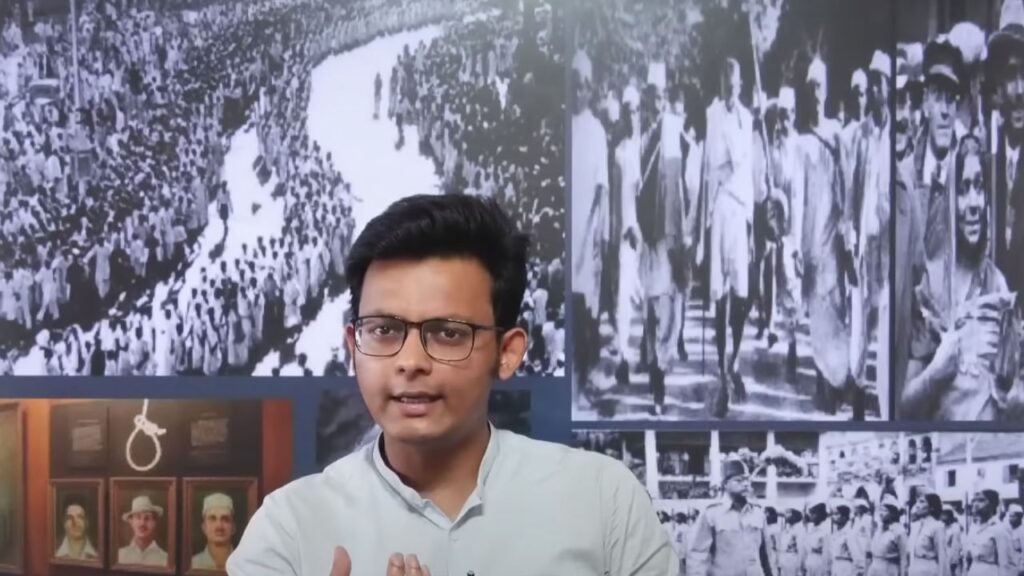
Praveen Sir is the top ranked teacher for providing best lectures of History online. Many students cleared their exams because his clear explanations and structural approach is quite helpful. Students understand easily because he breaks down complex topics into simple storytelling with factual accuracy.
He makes hard topics like cultural development, Mughal administration, and freedom movement remembered with systematic notes and practical examples.
Abhishek Suman
Abhishek Suman is a popular History teacher and is growing his numbers by providing interesting History Lectures. He makes boring topics become interesting with his explanation of events, he elaborates them with reasoning and connecting them with the present. Students appreciate him for clearing small doubts, especially in modern history.
Khan Sir
Every aspirant knows Khan Sir from Patna because he is the most famous and growing teacher for the preparation of competitive exams. His teaching style is funny but effective, using real life relatable examples and humour to make every tough topic easier. Students praised his lectures that helped them to understand world history & Modern History.
Awadh Ojha Sir
Awadh Ojha Sir is ideal for UPSC aspirants who struggle to understand modern Indian History. His deep analysis and straightforward teaching style make every student attentive through his lecture. Students admire his passion and dedication for Modern History. His in-depth explanation and motivation pushes students to stay consistent.
Rishabh Sir
Rishabh Sir is also a best history teacher, he focuses on strategically preparing for the government exam. He teaches in a structured way to get students ready for the History Exam. ideal for those students who don’t want to give big time for history but cover up every important topic. He also provides compact notes and highlights on youtube for Ancient, Medieval, and Modern History.
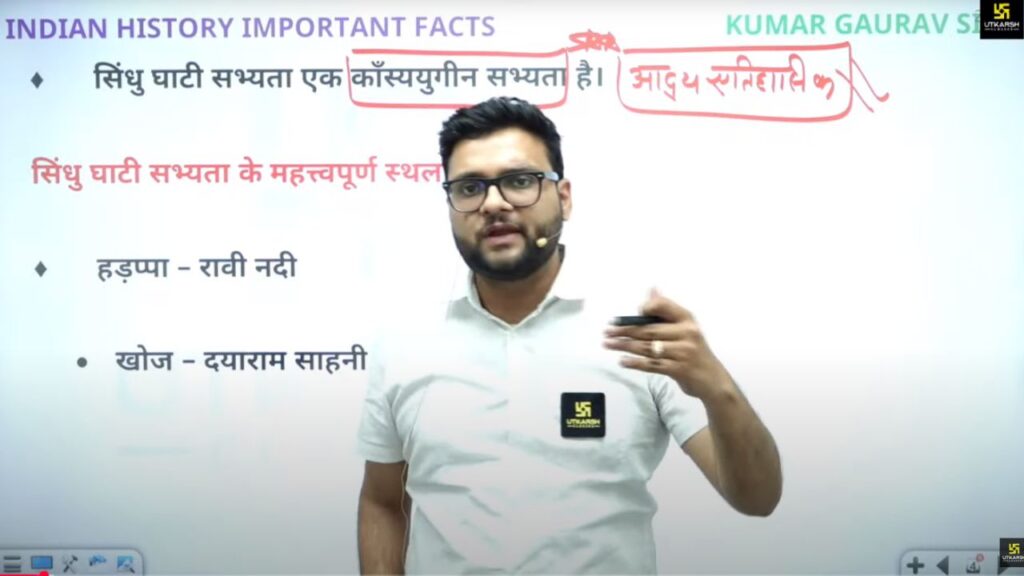
Kumar Gaurav
Kumar Gaurav’s methodological and calm teaching style is connecting events chronologically, it helps students to understand events without getting lost. He is the best for those who are not good with dates and events.
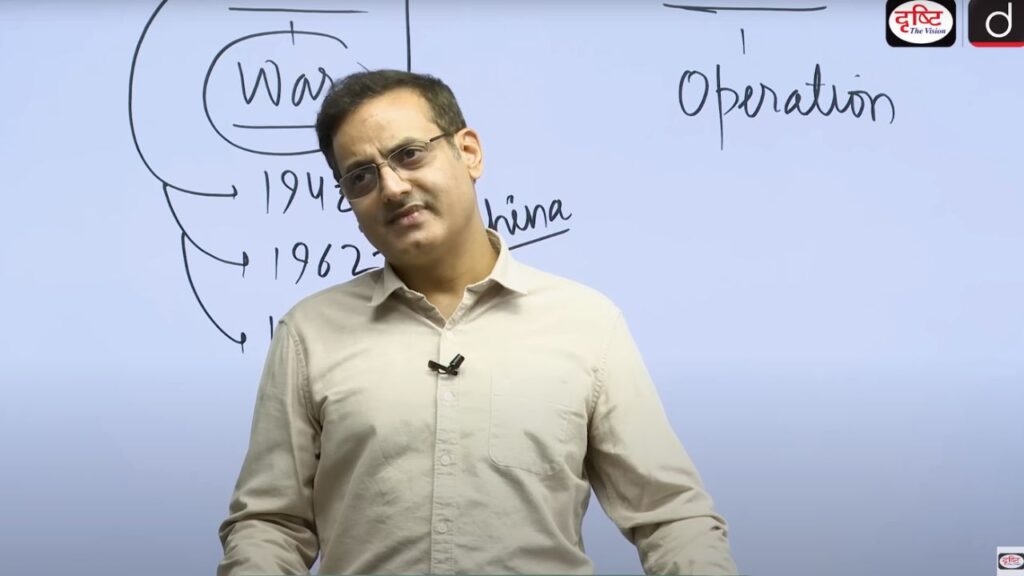
Dr. Vikas Divyakirti
Dr. Vikas Divyakirti is a founder of Drishti IAS, he motivates students to stay consistent. He emphasizes every event in History, connecting them with culture, society, and polity which makes it easier for students to understand easily. His deeper knowledge of history and integration with philosophy and polity make lectures a key success to interview stages.
Sumit Sir
Sumit Sir is focusing on exam-oriented teaching, stressing on previous year question practice to ensure students are aligned with the exam pattern. He helped clear the student’s confusion in difficult parts. He also provides exam notes and takes revision classes which is extremely useful before exams.
Why Choosing the Right History Teacher Matters
There is no single answer for the right teacher because it depends on the student’s mind and thinking. Some students get irritated or sleepy during History lessons because they get bored and don’t even understand the topic’s heading. The right teacher comes when you find the lessons more interesting and easy rather than difficult and boring.
These factors can help you find your right mentor
Teaching Style: Take a demo class of a few teachers and check which teacher’s explanation you understand better. Find the right mentor whose style aligns with your preparation needs. Exam Orientation: You prefer to study according to the exam pattern. Resources: Good teachers always provide concise notes, practice questions. Motivation: beyond just a teacher, they also inspire students to stay consistent.
History is not just a subject of delusion and theory, it is the journey of society, culture, and politics from years to years. The right teacher can make this interesting rather than boring events which makes it hard to remember.
Choose the right one in the list of Best History Teachers for Competitive Exams because he can make the burden go away. With the strong preparation in History can help you score high in any competitive exams.