Bihar BSSC Inter Level Online Form 2025: Apply Online, Dates & Eligibility

Bihar BSSC Inter Level

For the large number of 12th pass candidates in Bihar, the BSSC: Bihar Staff Selection Commission Inter Level Recruitment 2025 will be a great opportunity to get a government job. With 23,175 vacancies to fill in various departments, this is the biggest employment drive for intermediate-holders this year. The extended deadline allows applicants more time to work on their applications and apply strategically.

The booking procedure is simple and you can complete it in just a few minutes from online. Candidates need to visit the official BSSC portal for one time registration they need to enter personal and educational details, upload necessary documents (photograph, signature and certificate) and pay the application fee of Rs.100 through online payment mode. What makes this recruitment even more attractive is the fact that the fee is the same for all categories and hence it is affordable for all the candidates who are eligible to apply. 

Important Dates For BSSC Inter Level Online Form

EventDeadline
Application Start15/October/2025
Last Date to Register & Pay Fee15/January/2026
Final Application Submission18/January/2026
Preliminary ExamUpdate Soon

Eligibility Requirements For this Post

CriteriaDetails
Educational Qualification12th Pass (Intermediate)
Age (General Male)21–37 years
Age (General Female)21–40 years
Reserved CategoriesAge relaxation of 3–5 years applicable

Exam Pattern

The tier 1 exam consists of 2 hours 15 minutes duration and there are 150 questions on General Studies, Science, Mathematics and Mental Ability with multiple choice format. Shortlisted candidates are eligible to appear in mains examination and then document verification. 

Read More:- Best Government Jobs for Engineers in India 2026

Guide to Fill Online Form For BSSC Inter Level

  1. First of all, you should read the Bihar BSSC Inter Level Notification 2025 PDF thoroughly.
  2. Then click on the Apply Online link provided below or visit the bssc.bihar.gov.in the official website.
  3. Complete your BSSC Inter Level 2025 Online Application Form.
  4. Upload all necessary documents.
  5. Submit the fee as it’s demanded.
  6. At last, take the print of the application form for the future reference. 

Don’t miss out on this opportunity. The deadline is extended till January/2026 and a number of thousands of candidates are getting ready. Keep your documents ready, verify eligibility, and apply before the deadline. 

The basic pay level is Pay Level-4 with great pay of Rs 1900 to Rs 2,400, it lies upon a pay scale between Rs. 5200 to Rs 20,200 per month.

Apply OnlineClick Here
Download NotificationClick Here
Official WebsiteClick Here

Leave a Comment

Your email address will not be published. Required fields are marked *

Meet the Best Current Affairs Teacher for SSC CGL Who Can Boost Your Score

For the students preparing for the SSC CGL exam, the Current Affair section is important to cover up. Many students think that it is an easy section and it will get your score with a little preparation and strategy. These Best Current Affairs Teachers for SSC CGL will help you make every update remember their context. 

They’re not only helping you in keeping updated but they also gave you SSC CGL relevant current events which can come in the exam. Check news daily, read newspaper or e-news, follow social media news channels, read magazines and make revision for each topic.

Previous year papers might be not helpful so try mock quizzes and practice questions daily. These teachers have also shared a lot of MCQs, you can try and improve your speed and accuracy.

You better be consistent through your preparation, otherwise it won’t be helpful if you forgot everything you learn.

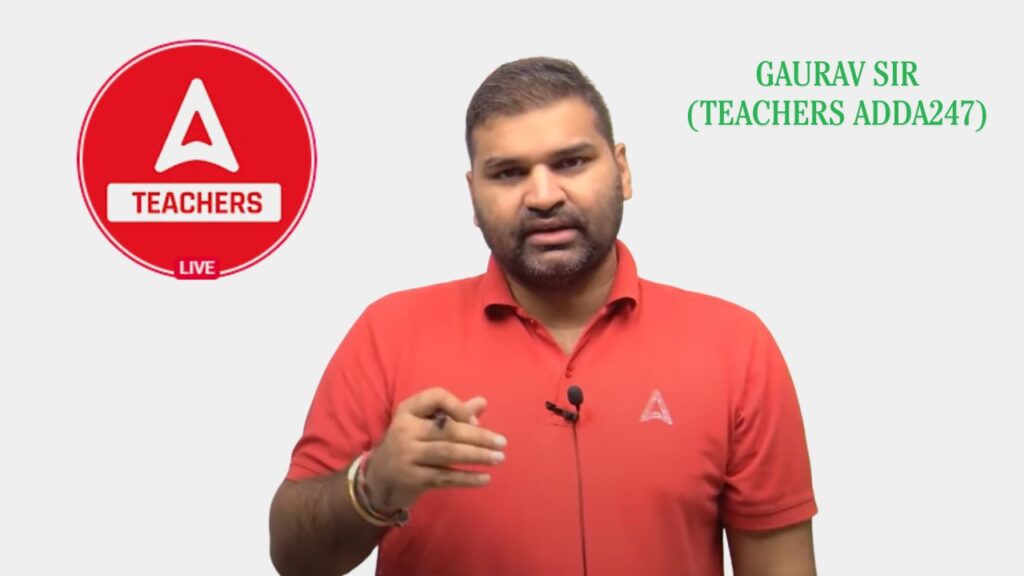
Gaurav Sir (Adda247)

Gaurav Sir (Adda247) best current affairs teacher for SSC CGL preparation

Gaurav Sir is known for his ability of connecting current events to static GK which help students to memorize everything. He encouraged a comprehensive understanding of current events rather than just rote memorization. His engaging and interactive teaching style involves deep explanations and real-life examples to elaborate concepts that help understanding complex topics easily.

Ideal for those students who want to understand the “why” behind the news. Gaurav Sir will help you to understand every topic beyond the headline. He is teaching serious topics in a friendly way that will be remembered by every student with a deep understanding of context. He also provides revision classes to keep tracking the previous sessions.

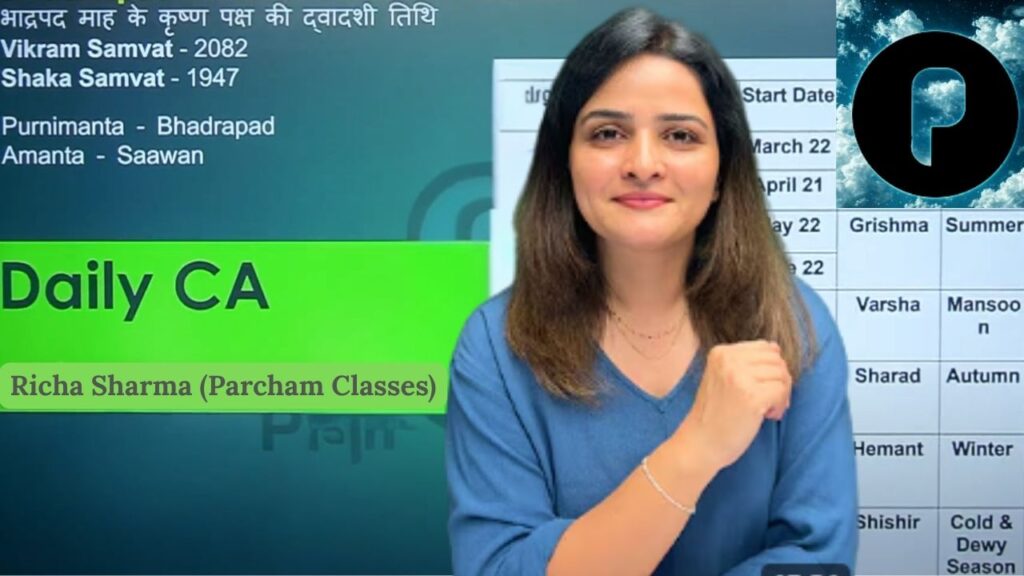
Richa Sharma (Parcham Classes)

Richa Sharma is best to help SSC aspirants for concise and exam-oriented preparation. Richa Ma’am’s teaching style is clear and structured which helps every student to understand current events that are relevant to SSC CGl. She specifically makes point-to-point notes for easy memorization and applies other techniques such as mnemonics to help in revision.

Richa Sharma (Parcham Classes) best current affairs teacher for SSC CGL

She is best for those students who prefer to prepare the current affair section with less time & efforts. It’s hard for many students to remember dates, names, and numbers. Richa Ma’am fits them because she uses simple flowcharts and bullet points to simplify the topic. You can easily remember them and cover all the topics within a short period of time.

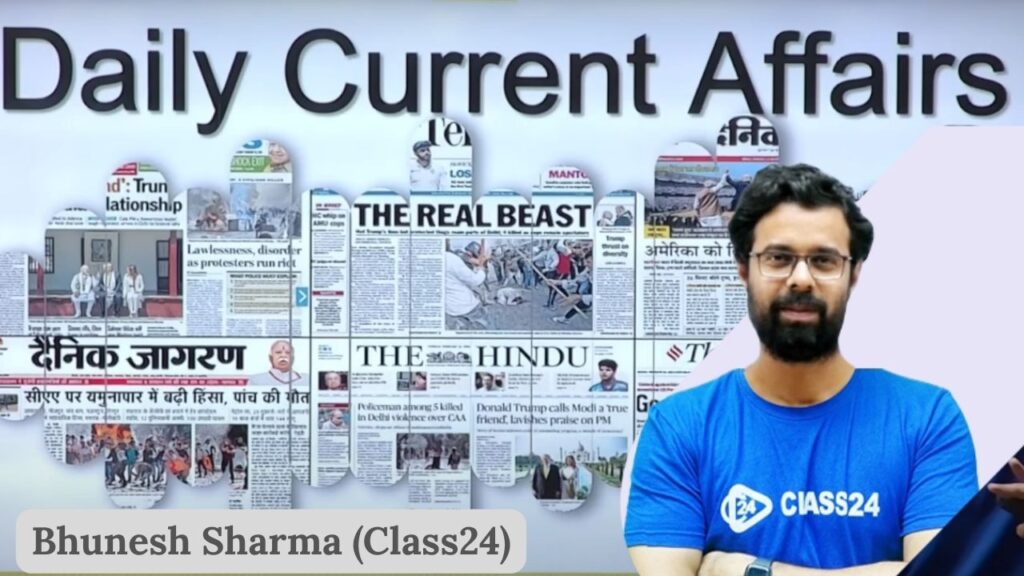
Bhunesh Sharma (Class24)

Bhunesh Sharma is experienced and popular for his lucid explanation which helps to understand complex topics of current affairs easily. He uses visuals and diagrams in its teaching to memorize every concept. Most importantly, it’s easily available for every student who is preparing for the SSC CGL Exam. 

Bhunesh Sharma (Class24) best current affairs teacher for SSC CGL

If you have a problem in understanding current affairs then Bhunesh Sir is best, he simplifies every topic with his friendly teaching style. Be ready for the In=depth analysis on a complex topic which can help you understand its core reasons, making you able to solve every question confidently.

Gaurav Maurya from Testbook

For daily current affairs updates, watch Gaurav Maurya sir lectures because he gives updates in a very good explanation which helps many students to understand it. The factual accuracy and exam relevant topic in his sessions makes it a more precise choice for SSC CGL aspirants. He will prepare you for the exam in a short period of time.

Gaurav Maurya from Testbook best current affairs teacher for SSC CGL

He focuses on relevant information which can come in the SSC’s objective exam. Students can score well in current affairs sections if they cover all the Gaurav Maurya sessions. He prepares students for the competition with quizzes and practice questions in his classes. You can get all the daily information in one place. 

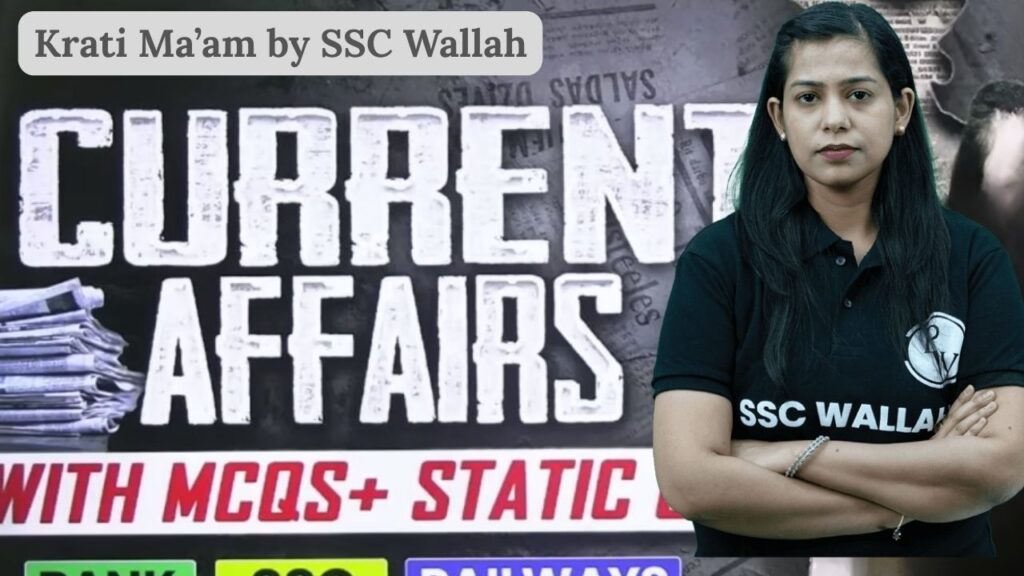
Krati Ma’am by SSC Wallah

Krati Ma’am by SSC Wallah best current affairs teacher for SSC CGL

Krati Ma’am is a perfect teacher for students who get bored easily. Her intrusive way of teaching can help SSC CGL aspirants to memorize each current affairs topic with interactive elements and discussion. She keeps you motivated for your preparation and guides you through the entire session. 

Her fun and energetic session is excellent for students who get distracted easily. Krati Ma’am focuses on motivating and encouraging students to follow their journey with focus and positivity. Her teacher methods including storytelling, playing quizzes, and interactions are excellent. 

Finding Your Ideal Current Affairs Guru: A Personalized Approach

It is hard to find the best teacher for current affairs. This section seems easy but it is not, many students try so hard to remember each event but can’t help themselves. A short guide to help you make a right choice:

Know Your Needs

Level of Understanding: Current affairs is your weakness or you are a  beginner then understanding each and every thing with deep-analysis is important.

Time Commitment: Each subject needs time but decide how much time you can give to the Current Affairs section to cover every topic.

Learning Style: Know which teaching style helps you understand complex topics easily — engaging, visualising, or quick facts.

Exam Focus: These SSC CGL focused teachers can help you prepare fast and easily, you just have to know which one can simplify fast for you. 

Explore and Experiment

Watch Demo Lectures: if you are still confused which one is right for you, watch demo sessions of a few teachers so you can see their teaching style.

Check Reviews and Testimonials: Many students who have already taken their lectures have shared their feedback on social media. You can have their opinion.

Consider Multiple Sources: once you select any teacher, it doesn’t mean you can’t access another teacher’s resources or study material. You can take one or two teachers’ lessons and notes to get well-rounded daily updates.

Evaluate Effectiveness

Assess Your Retention: practice questions and solve test series to know about your memorization. It helps to understand if you forgot the information taught by the teacher.

Track Your Progress: observing changes in your current event knowledge and performance in mock test

Stay Updated on Exam Trends: It’s important that your teacher prepares you for the SSC CGL new exam pattern. 

Conclusion

If you are thinking about clearing SSC CGL examination and score well, focus on every section including current affairs is important. Best Current Affairs Teacher for SSC CGL will help you get ahead on the preparation and enhance your chances of success in the examination. You must understand the fact that each teacher brings a unique strength to the table and the “best” one for you is the one that aligns with your preferences. 

Leave a Comment

Your email address will not be published. Required fields are marked *

JEE Main Result 2026 – Eligibility, Syllabus, Dates, Pattern Explained

JEE Main Result

The JEE Main 2026 exam has been made the necessary academic test for Indian engineering aspirants since now for the engineering aspirants. On 16th February 2026, candidates who appeared for the exam will be able to check the JEE Main Result 2026 for January session. JEE Main is a system that requires one to be mentally strong, strategically enduring and regulation-tight  not only about ability. 

JEE Main Result the gateway exam for prestigious technical institutions in the country including the National Institutes of Technology (NITs), Indian Institutes of Information Technology (IIITs), and Centrally Funded Technical Institutes (CFTIs) the exam goes through a scale of participation that is unprecedented globally. Because it also serves as the single entrance path to the JEE Advanced, it represents a major turning point for the Indian education system. 

The information shows a strong increase in registrations with more than 1.35 million candidates for Session 1 alone. This demographic bulge requires a granular analysis of the test’s structural elements, including eligibility rules and the statistical normalization of scores. 

NTA Reforms & Administrative Changes in JEE Main 2026

In a bid to ensure the sanctity of the procedure, the NTA has brought in game changing measures:

  • Biometric Security : Now there is a “Live Photograph” taken during application that restricts impersonation.
  • Operative Changes: The test will be given on multiple dates and will require an advanced statistical “normalization” process to equate different levels of difficulty.
  • JEE Main Result Timeframes: Although administrative delays such as the Session 1 result postponement from February 12 to February 16, 2026 — do induce stress, they are vital for thorough validation of data. 

Examination Schedule and Timeline 

The NTA has adopted a two-tier system for the hour long sessions, offering candidates a tactical cushion. This enables students to view the January attempt as a baseline and the April attempt as a fine-tuning move.

The JEE Main Result 2026 Session 1 

Paper 1 (B.E. / B.Tech) was held on January 21, 22, 23, 24, and 28 over multiple days, while Paper 2 (B.Arch/Planning) was held on January 29.

The JEE Main Result delay is due to the complexity of the normalization process, it is now expected on February 16. For the NTA to be fair, it must normalize the scores within the millions of data points. 

Session 2 Dates 

EventSession 1 (January)Session 2 (April)
Application WindowConcluded1—25/Feb/ 2026
Exam Dates21–29/Jan/20262–9/Apr/2026
JEE Main Result Declaration16/Feb/202620/Apr/2026 (Expected)

Eligibility Architecture: The 75% Rule and Beyond

It is necessary to know the funnel of eligibility to avoid getting disqualified in the stage of admission process.

Age and Attempts Age: There is no upper age limit for JEE Main, however some institutions may have their own fixed limits.

The Three-Year Window: You should have passed Class 12 in 2024, 2025 or appearing in 2026.

Attempts: The exam can be attempted for three consecutive years by the candidates. 

The Performance Threshold

But the access to NITs, IIITs and CFTIs is limited by eligibility criteria that includes:

General/OBC-NCL/EWS: Minimum 75% in aggregate in class 12th.

SC/ST: 65% aggregate minimum.

Option 2: Be in the Top 20 percentile of your respective Board. 

State of Eligibility

Your ‘Home State Quota’ will be decided on the basis of the state of examination of your Class 12, not your residential status. For example, a student of Bihar coaching in Kota (Rajasthan) will come under Rajasthan Home State quota. 

Read More:- Railway RRB ALP Admit Card 2026: Download Now From Direct Link

Examination Pattern For JEE Main

AspectDetails
Exam ModeComputer-Based Test (CBT); focuses on application and speed.
Total Marks300
Duration3 Hours
SubjectsPhysics, Chemistry, Mathematics (each with two sections)
Section A20 Mandatory MCQs per subject
Section B10 Numerical Value Questions (NVQs) per subject; attempt any 5
Penalty Rule-1 negative marking for both MCQs and NVQs; precision required

Subject-Wise Syllabus Breakdown

Mathematics, Physics and Chemistry have strategic places where one must focus to improve performance:

Mathematics:  

Learn Calculus and Algebra well as they are the basics.Don’t ignore Vectors and 3D Geometry as these are very easy and carry good amount of marks in examinations.Also focus on Coordinate Geometry, Matrices and Statistics for high yield.

Physics:  

Concentrate on concepts and the use of the formulas. Modern Physics, Semiconductors = very good marks, not much calculation. Things are inevitably going to move around in your lab, so you need to be comfortable with experimental skills, especially Vernier Calipers and Error Analysis, handy points as well.

Chemistry:  

Chemistry is a very efficient subject for which you could save a lot of time and spend more time in Mathematics.  

Physical Chemistry: Be good at numericals to do well.  

Inorganic Chemistry: Be good in p-block trends;solidify your knowledge of Coordination Compounds.  

Organic Chemistry: Learn the reaction mechanisms and Biomolecules,bcoz they are very important.

Your study time can be better used and your score can be higher by focusing on these areas with the greatest yield. 

Post-Session 1 Roadmap to April

Reviewing how you did in January is the first step towards doing well in April.

  • Category A (98+ Percentile): Begin dedicating 70% of your time to JEE Advanced questions.
  • Category B (90-98 Percentile): Look for “low-hanging fruit.” Earn higher accuracy in Physics and Chemistry to enter the elite group.
  • Category C (<90 Precentile): Go back to basics. Concentrate your efforts on the most common chapters that ask questions instead of covering all the syllabus. 

The “Golden Window”

To Those Who Are Taking Boards In Feb-March The gap between the last Board exam and JEE on April 2 is crucial. Prepare Board to learn NCERT concepts which are directly used in the questions of Inorganic Chemistry and theoretical Physics. 

JoSAA & CSAB Counselling Process 2026

Admissions counselling for engineering in India is not limited to just ranking, as the Centralised Joint Seat Allocation (JoSAA) Authority in six rounds of seat allotment. Candidates may opt Freeze to accept and confirm their seat, Float to accept their seat and appear for seat updation in subsequent rounds, or Slide to retain the seat and try for an improved branch in the same institute. If there are still vacant seats after the JoSAA rounds, the procedure is continued by CSAB through special rounds which tend to be the last chance for many students with lower ranks to get an admission in a reputed NITs and other top institute. 

Conclusion

JEE Main 2026 is not just a good entrance exam—it is a good portal to sift through all the engineering institutes in the top Indian engineering colleges. Success is based on more than just knowledge: you also need to have a plan, be consistent, and make smart decisions. From understanding the exam pattern and eligibility criteria to utilising both attempts to the maximum and managing JoSAA–CSAB counselling effectively, every step will determine your outcome. Clarity, discipline, long term vision and direction in studying helped these students not only to qualify, but to open the right “doors” for their future. 

Leave a Comment

Your email address will not be published. Required fields are marked *

Time Management Tips for Students and Government Job Aspirants

Time Management Tips

The reality is that most people don’t have a problem with time. They have a problem with managing time. The Time Management Tips for students and government job aspirants is important. For instance, two students may have identical 24 hours, the same syllabus, and the same exam date — yet end up in completely different places on result day. It’s because almost always how they spend their hours. 

This guide analyses the time management principle that really applies for us Indians — students in school & college, competitive exam aspirants for SSC, RRB, UPSC, banking and state-level, entrance exam students aiming for IIT, NEET, or law entrances, and working professionals attempting to study after holding a full day at the office. The circumstances may vary, but the fundamental discipline is one and the same. 

Why Time Management Tips Actually Matters 

It’s not that they don’t know “time management is important,” it’s just that no one actually has time to do it, not that they need it any more than the rest of us do. For exam candidates in particular, bad time management means not only less revision. It has three very real and very specific costs. 

First, it makes your syllabus look bloated. A topic that should take roughly three weeks gets stretched out over two months, not because it’s difficult, but because you’re learning in fragmented, distracted sessions rather than in concentrated blocks. 

Second, it kills your mock test performance. Candidates who are poor at managing their prep time tend to be procrastinators and pick up the easy topics first and push the difficult topics towards the end, so that by the time mocks begin, half the syllabus feels like a stranger under exam pressure. 

Third, and this is the one no one talks about nearly enough, it destroys your confidence. When you’re always feeling “behind,” you begin to question your own competence, even though the real problem was never intelligence — it was planning. 

Effective time management is not a matter of finding more hours in the day. It’s realizing that you actually already have the time, you just need to make it work. 

Time Management Tips for Students

Students who are balancing regular academics, tuition and assignments along with personal life also need a system which is practical and not a strict timetable copied from a top scorer’s Instagram post. 

Start with a weekly map, not a daily one. Daily to-do lists come crashing down as soon as one thing goes wrong — a pop quiz, a family gathering, feeling too tired. A weekly perspective allows you to reschedule your responsibilities without thinking you are having a bad day. Block out any non-negotiable obligations (class time, work, sleeping) and then plan your study periods around those. 

Use the “two-subject rule” for evenings. Attempting to cover every topic every day tends to result in none of them being covered very well. Choose two topics each night and dive in, cycling through the week. Depth outperforms breadth in terms of real retention. 

Protect your first hour after school. Most students spend the golden hour after school on their phones scrolling “just for ten minutes” which ends up being ninety. That first hour, when the day’s lessons were still fresh, was the best time for revision — not for new topics. 

Treat sleep as part of your study plan, not separate from it. Sleep deprivation to “make more time” is the most common error students make, and it backfires almost every time. Retention falls off a cliff with poor sleep, so those extra two hours often result in less learning than one focused hour on a well-rested brain. 

Time Management Tips for Government Job and Recruitment Exam Preparation

Preparation for government exams — SSC CGL, SSC JE, RRB NTPC, RRB ALP, Agniveer, UPSSSC, banking exams, state PCS has its own trap: it has a huge, fixed syllabus that remains more or less unchanged every year, making it very easy to remain stuck in a “preparation phase” without feeling ever ready. 

Reverse-engineer your timeline from the exam date, not from the syllabus. Most aspirants begin by telling themselves “I’ll finish RC, quant, then GK” without even assessing if that speed is even sustainable till the exam. Count backwards instead: How many weeks are there until the exam, how many subjects do you have to learn, and how many practice tests do you want to do before the D-day. This one change detects date problems three months in advance rather than three weeks before the test. 

Separate “learning time” from “practice time” clearly. Many candidates confuse these two processes — theory reading and question practice in one session and slow themselves down in both. Assign some fixed duration blocks solely for concept learning, and some solely for solving past year papers & mocks in a timed environment. They develop different abilities.

Make a weekly slot for current affairs you gear towards a level, don’t squash it in as a bit of leftover time. For exams like ssc, rrb,state level recruitment exam current affairs/general awareness is often pushed to “whenever i find time to study”,which is usually never. Settle for one or two brief daily sessions instead of waiting for free moments that never come. 

Mock tests deserve a full time slot, not a rushed one. Scheduling simulation the real exam length is as important as doing the questions. Your practice test should honor that 90 minutes of pressure since it should help simulate the real exam (and the review afterward) — not just the solving. 

Time Management Tips for Entrance Exam Aspirants

Entrance exams such as JEE, NEET, CLAT, and CUET operate on a different time scale as compared to the recruitment exams – they meld board exam stress with competitive exam intensity, and that too, in the same academic year. 

Sync your school syllabus and entrance syllabus instead of running two separate tracks. An enormous portion of time is wasted due to students studying the same subject chapter twice — once for boards, and once for the entrance exam in entirely separate sittings. Studying the two simultaneously, at entrance-level depth from day one, is months ahead of the full prep cycle. 

Rotate subjects daily instead of exam-cramming one at a time. These exams cover more than one subject at a time, so you have to keep your mind warmed up in all of them and not just be sharp on one subject and rusty on the others. A steady rotation — even if uneven in the number of hours per subject, keeps all the subjects “alive” in your mind. 

Track mistakes, not just completed chapters. Sorting out what you have achieved in the syllabus feels productive, but it doesn’t tell you information about what is actually going wrong. Keep a list of mistakes you make again and again when doing practice questions — that list is your revision material that will be the most efficient in the last month. 

Read More 👉 Data Science vs AI: Which Career Is Better?  

Time Management Tips for Working Professionals Preparing Alongside a Job

This may be the most difficult version of the problem since the constraint is not motivation — it’s literally hours in the day. Working professional-level test such as a government exam or a career-switch entrance exam does not have the luxury of a 8-hour study day. 

Accept the 90-minute reality and plan around it. The majority of working people truly have only about 60 to 120 minutes of concentrated work time in a day, divided between early morning and late evening. Struggling against this reality by aiming for 5 hours a day is just setting yourself up for failure and guilt. Schedule for the attainable during a weekday, and save the heavy-duty work for weekends — full-length mocks, madly difficult topics, revision marathons. 

Use commute and break time for low-effort, high-repetition tasks. Formulas, vocabulary, current affairs and short revision notes can easily be crammed into a commute or a lunch break. Save your truly fresh, high-powered hours — typically in the morning for the subjects that actually demand thinking of the deep kind. 

Don’t try to “catch up” by sacrificing entire weekends repeatedly. Burnout for working professionals generally results from this very pattern: lean weekdays, and then trying to fit a week’s worth of goals into Saturday and Sunday. It lasts for a couple of weeks, then crumbles. A sustainable pace beats a heroic one that quits come month three.  

Tell your workplace and family what you’re doing, even loosely. Candidates who do not share details of their preparation for the exam generally end up with more distractions during their study sessions as no one with whom they dwell or live is aware that those hours are sacrosanct. A modest notice - “I study from 6 to 7:30 every day” – cuts interruptions more effectively than any planner or app could. 

The One Habit That Ties All of This Together

Across students, government exam aspirants, entrance candidates, and working professionals, the single most useful habit is the same: reviewing the week, not just planning it. Most people plan on Sunday and then never look back until the next Sunday. Spending fifteen minutes reviewing what actually got done versus what was planned and being honest about why the gap happened is what turns a time management system from a wishlist into something that actually works over months of preparation.

Time management Tips for exams was never really about finding more hours. Every aspirant, regardless of which exam they’re preparing for, is working for the same 24 hours as everyone else. What separates a good result from a missed one is usually not effort — it’s whether those hours were spent on the right things, at the right time, consistently enough to matter.

Conclusion

Time management tips for students and government job aspirants is important for sustaining consistency in preparation for SSC, UPSC, RRB, banking, work, or JEE, NEET exams. Begin with attainable goals in mind, focus on the most important things, check in on your progress each week, and then rest appropriately. Little bit of betterment you make up every day adds together over months of training. 

Leave a Comment

Your email address will not be published. Required fields are marked *

Courses for Interior Designing in India: Admission, Colleges & Careers

Courses for Interior Designing in India

If you are the type of person who regularly moves your furniture around, cleans windows to get the perfect paint color, or critiques lighting in every restaurant you dine in, maybe you have a calling. Your Search for Courses for Interior Designing starts when the question pops up: How do you get paid to have that passion? 

In these days, interior design is no longer just about “making things look pretty.” It is a complex mix of architecture, psychology, technology, and art. Whether you are a high school graduate looking to pursue a degree or a working professional residing in Lucknow wanting to make a creative pivot, this guide is your blueprint. Let’s talk about everything you need to know to about the interior design courses, colleges, and careers. 

Why Formal Education Matters

Let’s be real for a second. You may have a great eye for decorating, but professional interior design is a whole other story. It deals with strength of materials, building codes, ergonomics, and space planning.

A formal course will teach you the “grammar” of design. You are taught to talk with contractors, architects and clients. You go from saying, “I think this blue looks nice,” to, “This particular shade of teal offsets the warm undertones of the timber flooring and captures the natural light coming in from the north-facing window.” 

Types of Courses

Course TypeDurationEligibilityWhat You’ll Get
Bachelor’s —B.Des / B.Sc3-4 YearsB.Sc Or B.Des require 10th & 12th marksheet from Science StreamIn-depth technical knowledge related to Designing
Diploma / Advanced Diploma1-2 YearsKey Formula for fast entry in careerFocused on Practical more than theory, Skill Polishing
Certificate Courses3-6 MonthsHobbyists or professionals adding a specific skill (like CAD or V-Ray).Specific skills only. Prefer for less professional people
Professional Level (M.Des / M.Sc)2 YearsAfter having a degree of B.Des/B.Arch. These masters courses offered for specific specializationResearch-oriented, higher leadership roles, and teaching opportunities.

Top Colleges 

  • NID—National Institute of Design
  • CEPT University—Ahmedabad
  • IIT Delhi, Bombay
  • VIT
  • IIAD—Indian Institute of Art & Design
  • IMS Design
  • Amity University, Lucknow
  • Integral University
  • Gov. Girls Polytechnic
  • Babu Banarasi Das University 

What Will You Actually Learn?

Your course will probably be part art and part engineering. There’s a chance that you will be spending your first year hours hand-sketching and studying Color Theory. In your final year, you will be making hyper-realistic 3D renders that look like photographs. 

The “Hard” Skills (Tech You Need to Master in 2025):

To make it in the business these days, you have to know your way around a computer. These are the software tools you’ll probably end up knowing inside and out when you graduate:

AutoCAD - 2D blueprints industry standard It’s non-negotiable.

SketchUp: The Simplest 3D Building Tool Out There. Consider it as digital clay.

Revit / BIM – essential on large commercial jobs where you need to work closely with architects.

AI Homestyler: more recent and cloud based AI tools that are rising in popularity as they render fast. 

Read More :- UP Police Computer Operator Grade-A Online Form 2025: Apply, Dates & Eligibility

The “Soft” Skills:

  • Client Management: How to tell a client their idea won’t work without offending them.
  • Budgeting: planning of champagne dreams on a beer budget.
  • Project Management: Getting the plumbers, electricians and carpenters to not kill each other. 

Career Scope & Salary

Driven by an expanding middle class and real estate boom, India is witnessing an upsurge in the interior designing industry.

Various paths for a Interior Designers:

Residential Designer: Homes, apartments, villas. (High emotional connection with clients).

Commercial/Corporate Designer: Offices, co-working spaces. (Higher budgets, strict deadlines).​

Hospitality Designer: Hotels, cafes, restaurants. (Very creative, high visibility).

Set Designer: Design sets for movie or tv (Big in Mumbai/Hyderabad). 

Salary Expectations

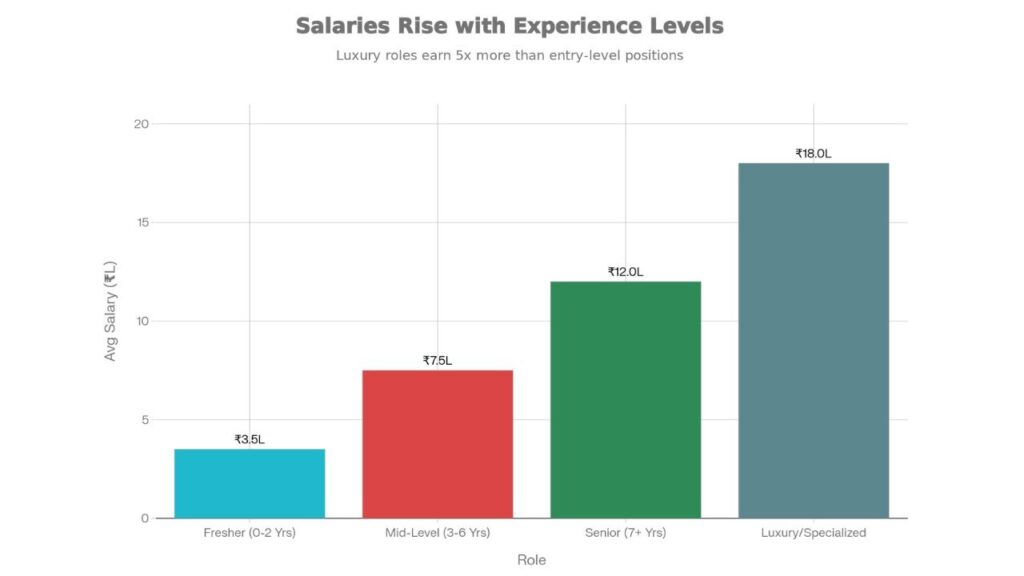
Entry-level compensation can be humdrum, but expansion is meteoric once you acquire a portfolio. Specialized positions, particularly in Luxury or Commercial sectors, offer much greater pay.

The chart exhibits how, even though you may begin as a junior at about ₹3.5 Lakhs per annum, it does pay off after all. A Senior Designer with 7+ years of experience can earn comfortably north of ₹12 Lakhs, and if you start your own firm or get into luxury consulting, the sky’s the limit (₹18 Lakhs+).

Admission Procedure For B.Des/M.Des in Major Colleges

For premiere govt colleges (like NID) you will have to appear for entrance exams like NID DAT or UCEED. They test your drawing ability, creativity, and spatial logic.

In case of private universities (such as Amity or Integral in Lucknow), admissions are essentially on the basis of marks secured in 12th and DAT (Design Aptitude Test) or portfolio review. 

And build a portfolio, even if you’re not studying design. Draw a corner of your room. Redesign your kitchen on paper. Capture the textures you like. Your potential and passion matters, not perfection.

Conclusion

Courses for Interior designing are not for the weak hearted. Dusty job sites, demanding clients, and nights spent staring at a computer screen. But it is also hugely gratifying. There is a unique thrill in walking into a space you designed — watching people live, laugh and work in a place that began as a sketch in your notebook.

If you like to mix creativity with logic, and art with engineering, this is the year to look forward to for starting out. Whether you opt for a degree from Amity Lucknow or a diploma to begin your career at the earliest, the world is holding its breath for your designs. 

Leave a Comment

Your email address will not be published. Required fields are marked *

RRB RPF New Vacancy Notification 2026: Details Explained For RPF Constable

RRB RPF New Vacancy Notification 2026

RRB RPF New Vacancy Notification 2026 is still not released yet but it will come soon. Candidates who wanted to apply for RPF Constable post should check the official website for the official notification regularly to not miss the details and date for application form. 8000+ vacancies are expected to be released in this recruitment drive.

But before applying for this post, interested candidates must know every detail from educational qualification to selection process. Understanding these details will help you prepare to crack the examination and secure your position.

Major Change For RPF Constable Recruitment 2026 

Railway Recruitment Board (RRB) was conducting RPF Constable recruitment for years but now the conducting is changed. The examination taken under the Staff Selection Commission (SSC) authorities. 

RRB RPF Constable 2026 Breakdown

Job Profile & Duties 

Maintaining law and order on the train and railway station to keep the passengers and railway employees safe. There’s different types of violent people — thieves, killers, attackers and keeping the normal public safe from them is RRB RPF Constable duty. 

Not only people, but the system also should work smoothly without interruption, collecting information, and tracking railway security issues also comes under RPF Constable responsibility. 

This is not a 9 to 5 scheduled job, it’s a field job with an attentive mind. Controlling and maintaining the most crowded place in India is not that easy. Whether you are on the patrolling duty on the station or responding to emergencies, you will face new challenges everyday. 

Eligibility Criteria 

CriteriaDetails
NationalityIndian Citizen
Education10th Pass / Matriculation from a recognized board
Age Limit (General)18 to 25 years

Age Relaxation Category-Wise

CategoryAge relaxation
SC / ST5 years 
OBC-NCL3 years 
Ex-servicemenService period deducted, plus relaxation as per category rules 
Widowed OR divorced women2 years for UR/EWS, 5 years for OBC-NCL, 7 years for SC/ST 
Central govt employees with 3 years regular service / J&K domicile special case5 years for UR/EWS, 8 years for OBC-NCL, 10 years for SC/ST 

Physical standards

CategoryMale heightFemale heightMale chest
UR / OBC165 cm 157 cm 80 cm unexpanded, 85 cm expanded 
SC / ST160 cm 152 cm 80 cm unexpanded, 85 cm expanded 

Exam Pattern (CBT) 

You have to finish the 120 questions that come from Arithmetic, Reasoning, & General Awareness within a given time. Practice mock tests daily to maintain your accuracy and speed for finishing the paper in 90 minutes. But your answer must be accurate because if not, 1/3rd marks is going to be deducted for each wrong answer.

SubjectQuestionsMarks
General Awareness5050
Arithmetic3535
General Intelligence & Reasoning3535
Total120120

PET pattern

PET includes sports in which your body endurance will be measured like 1600 m run for men and 800 m run for women. The exam is not hard if you practice daily for 1 hour, the exam also consists of high jump and long jump.

TaskMaleFemale
Run1600m in 5 min 45 sec800m in 3 min 40 sec
Long Jump14 feet9 feet
High Jump4 feet3 feet

Selection Process 

This is not a single-stage process, the selection process for RPF Constable 2026 has three stages to pass by the candidates.

  • First stage: Computer Based Test in which your knowledge is tested through an exam. The questions come at 10th class difficulty level from Math, General Knowledge, and Logical. 
  • Second stage: You will be called for the second stage if you clear out the first stage with a good score. Candidates get only one chance to clear the PET & PMT.
  • Third stage: After passing these two stages, shortlisted candidates based on merit are called for document verification.

After DV, candidates 

RPF Constable 2026 Application Process

  1. RPF Constable 2026 application will be available on the official site of RRB or SSC soon.
  2. Visit the site and register yourself.
  3. Remember that credentials to login again and fill the form.
  4. Education qualification, personal details, and ID document will be uploaded along with the application in which you have filled these details.
  5. Continue to submit with the requisite amount of fee then download the application form for proof.

RPF Constable Salary & Allowances 

RPF Constable Salary is under Level 3 of the 7th CPC, so the basic pay is ₹21,700 per month which increases additional allowances such as DA, HRA, and Transport Allowance. 

City ClassMonthly In-Hand Salary
Class X (Metro — Delhi, Mumbai, Kolkata)~ Rs. 39,000
Class Y (Mid-size cities)~ Rs.37,420 
Class Z (Small towns/villages)~ Rs. 32,766 

RPF Constable Career Growth & Promotions 

Candidates who are in the Constable position can get a senior role as Head Constable then apply for Assistant Sub-Inspector (ASI) through departmental examination but most of the constables get promoted after years of experience. 

The highest positions are Sub-Inspector (SI) and Inspector where your salary also increases and you get other perks but overall responsibilities are also increased as of the senior post. 

Candidates not getting immediate promotion like in the private sector but they will get promoted based on their years of service, qualifying departmental exams, and Consistent performance appraisal.

Constable get their salary increases over time after 3 or 5 years on the same service. They also provide continued training to polish your skills.

Read More:- UPSSSC Pharmacist Eligibility, Selection Process, How To Prepare For Exam 2026

Conclusion

RRB RPF Constable 2026 is an excellent opportunity for candidates who want to build their career in the government sector and have a bright future along with providing respect and security in their life. From safeguarding railway passengers to ensuring law and order within one of the world’s biggest railway systems, the position carries a big responsibility and pride. 

RRB RPF New Vacancy Notification 2026 will be released soon by RRB for recruitment of Male and Female candidates. Now you must aware about the RRB RPF exam pattern which includes different stages exam pattern to complete analysis of the examination. With proper guidance and determination, getting selected as an RPF Constable can be a stepping stone to a flourishing career in railway security. 

Leave a Comment

Your email address will not be published. Required fields are marked *

Scroll to Top