Top AI & ML Colleges in Delhi: Courses, Eligibility Fees & Placements

AI and ML Colleges in Delhi

If you are dreaming to write your own algorithm for faces, business trend predictions, automation power then artificial intelligence and machine learning from best AI and ML Colleges in Delhi is the best option for you. If you’re a student in Delhi preparing for engineering entrance exams, you’re in luck. Artificial intelligence, and machine learning are transforming entire industries, and Delhi boasts a few truly outstanding establishments to educate the future AI engineer.

Now let me take you on a complete tour of best AI and ML colleges in Delhi— the ones that are not only making engineers but innovators who have already started making ripples in global tech companies. 

Why AI & ML Education Matters Now More Than Ever

Before entering into colleges, let’s get why AI and ML are the hottest career them right now. So, you can find AI talent in every industry – healthcare, finance, automobiles, entertainment. Data scientists make somewhere between ₹6-10 lakh per year, ML engineers fetch ₹7-11 LPA, and niche AI engineers are making ₹8-12 LPA straight out of college. The top performers? They are getting packages in crores from the likes of Google, Microsoft and Goldman Sachs.

But here is the reality: that’s no guarantee that all college degrees are the same. Not only will the institute you choose impact what you learn, but also the opportunities that come your way. 

Delhi’s Top AI & ML Colleges
Delhi's Top AI & ML Colleges

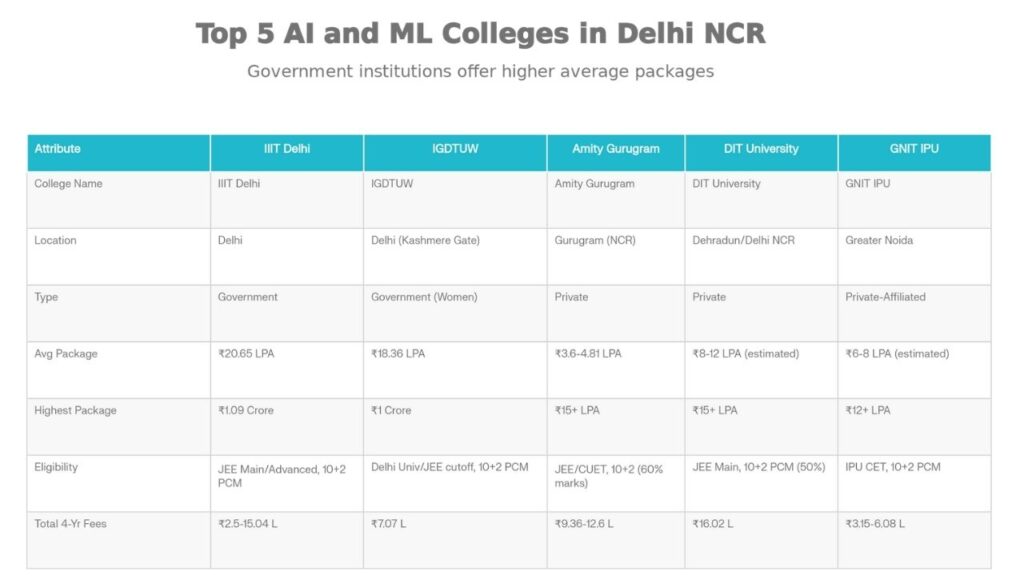
Comprehensive Comparison of Top AI and ML Colleges in Delhi NCR

1. IIIT Delhi: The Gold Standard

If there’s one institute that is known for offering world class AI and IT education in Delhi, it would be IIIT Delhi. This New Delhi-based government institute is essentially the IIT for information technology — prestigious, rigorous, and without a doubt excellent.​

Why IIIT Delhi Stands Out:

IIIT Delhi is not simply offering instruction in AI, it is doing cutting-edge research in machine intelligence. With professors who are active researchers and the average batch size small enough to actually mentor the students, the exposure here is none other than a startup and not a classroom. 
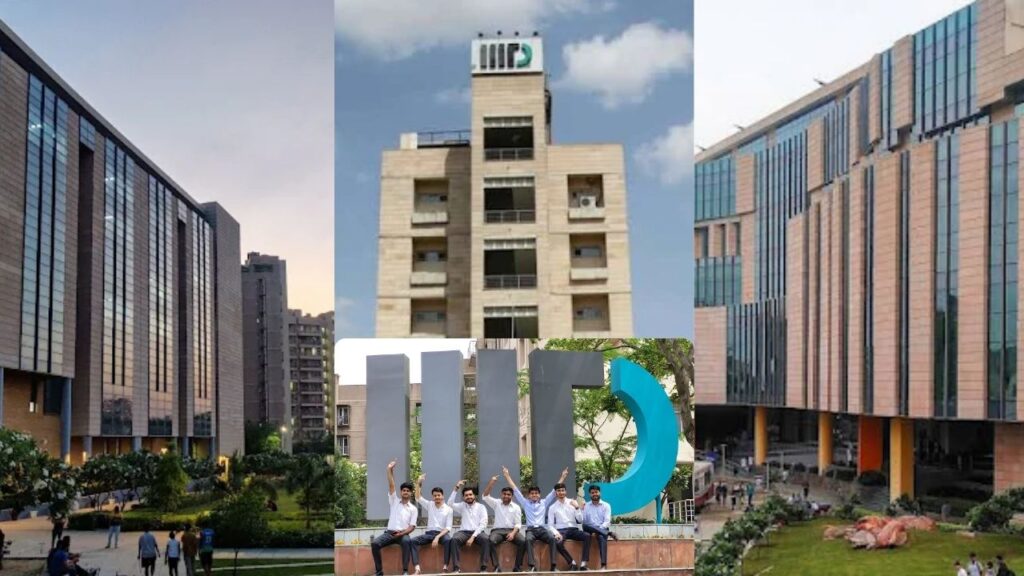
IIIT Delhi The Gold Standard

Academics & Curriculum:

The curriculum is demanding – involving data structures, algorithms, machine learning basics in Year 1-2, and then delving into deep learning, computer vision, and specialized options in Years 3-4. What makes it special? Real-world projects in which students solve meaningful problems, internships at such places as Google and Amazon, and an emphasis on research as well as engineering. 

Salary packages and Placement:

Average Package₹20.76 LPA
Highest PackageFrom ₹51.31 LPA to ₹1.09 Crore
Placement Rate89.32%
RecruitersMicrosoft, Adobe, Goldman Sachs, Google
Total 4-Year Cost₹2.5-15.04 lakhs

Admission

The IIIT Delhi admission cutoff is tough and it is usually based on a good rank in JEE Main/Advanced in the range of 1000-2000 for general category students. But the precise cutoff keeps on changing year to year.  

2. IGDTUW: The Rising Star for Women Engineers

Being at a very convenient location at Kashmere Gate , the IGDTUW (Indira Gandhi delhi Technical university for women) is the good government engineering college only for girls and is biting the dust some of the best engineers in delhi.

A Game Changer for Women in Tech:

IGDTUW is known for producing women engineers who are not content to take part in tech—they lead it. The B.Tech in AI & Machine Learning course in this university is contemporary and aligned with industry needs. 

Affordability: A 4-year degree will cost you just ₹7.07 lakhs—bringing quality AI education within your reach.

Excellent Placement Record : Highest package of ₹1 crore, average CTC of ₹18.36 LPA

Close-Knit Community: Denser batches bring better mentorship and community standardship

Government College Quality: Top faculty, rigorous curriculum, zero compromise on standards 
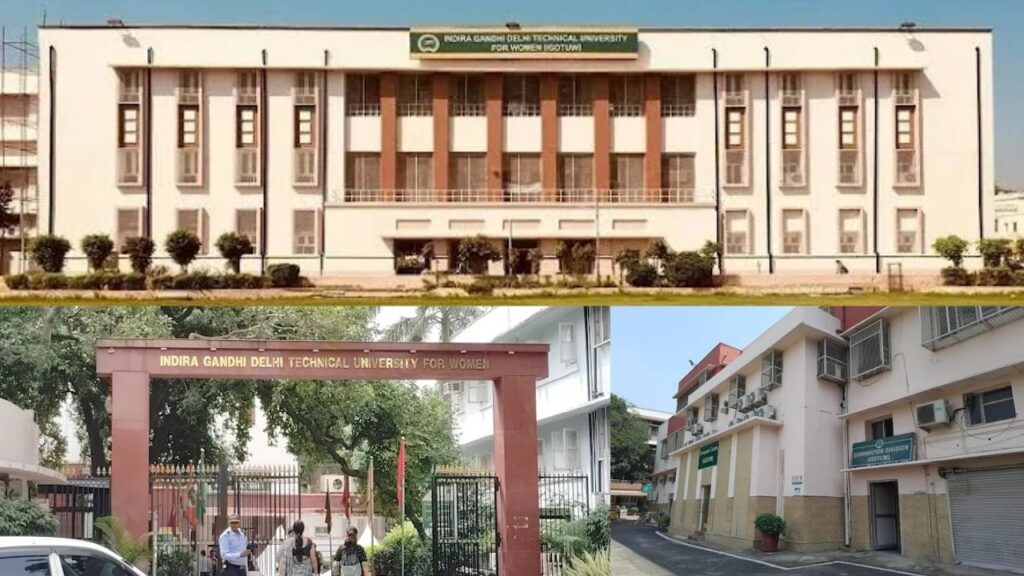
IGDTUW The Rising Star for Women Engineers

Placement Excellence

With full-time offers amounting to 463, pre-placement offers stacking to 128, and 95+ internship offers, IGDTUW is truly proving that government colleges can match the pace and offer of private institutes. 

Major recruiters: Amazon, Google, TCS and Infosys.

Admission: Delhi University entrance exam or JEE cut-off. 10+2 with PCM with minimum 50% marks.

Several students neglect to opt for IGDTUW considering government colleges are an old-age tag. Wrong. This place has state-of-the-art labs, faculty that is connected to the industry, and a record that shows women engineers from here are being hired by every single major tech company. 

3. Amity University Gurugram

If you want a private college that has a good industry connection with a flexible mode of learning, the B.Tech in AI & ML Amity offer in Gurugram (near Delhi) is one to check out.

What Amity Offers:

Amity boasts its corporate tie-ups and curriculum within the industry. The campus feels less like a traditional college and more like a corporate campus — with modern facilities, industry mentors and tech talks.

Course Structure:

The teaching includes Python, machine learning algorithms, deep learning, computer vision and hands-on projects starting from Year 1. They focus on theory as well as coding. 
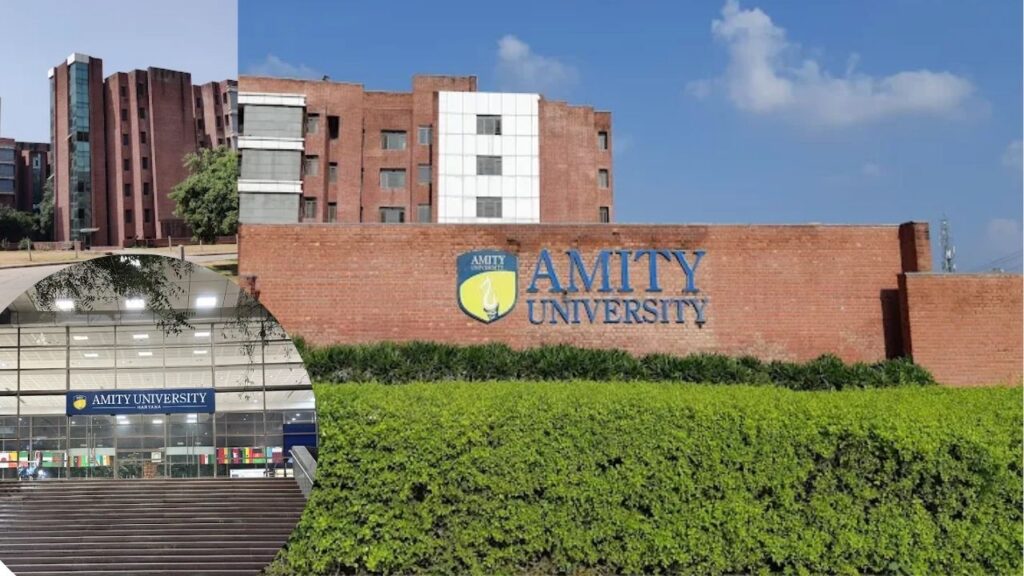
Amity University Gurugram

The Reality of Placements

Average Package₹4.8 LPA
Fee Range for entire course₹9.36-12.6 lakhs
IndustriesWipro, TCS, Amazon

Amity University is less stringent in terms of the admission process as compared to IIIT Delhi, IGDTUW etc. The average salary provided by Amity might be less but the university concentrates on different learning patterns and discourages students from multiple competitive entrance exams.  

Students can get admission through JEE Main, CUET or through merit-based with 60% in 12th class exam. This may be a good option for people who want to study at a reputable college but without the heat of entrance exams. 

4. DIT University (AI, ML & Robotics Focus)

Though located in Dehradun, DIT University emerged as a preferred foray for students from Delhi in the domain of AI, ML and Robotics. 

The curriculum here is specifically made for AI/ML/Robotics – so the electives and specializations are focused like a laser beam on making specialists, rather than generalists. 
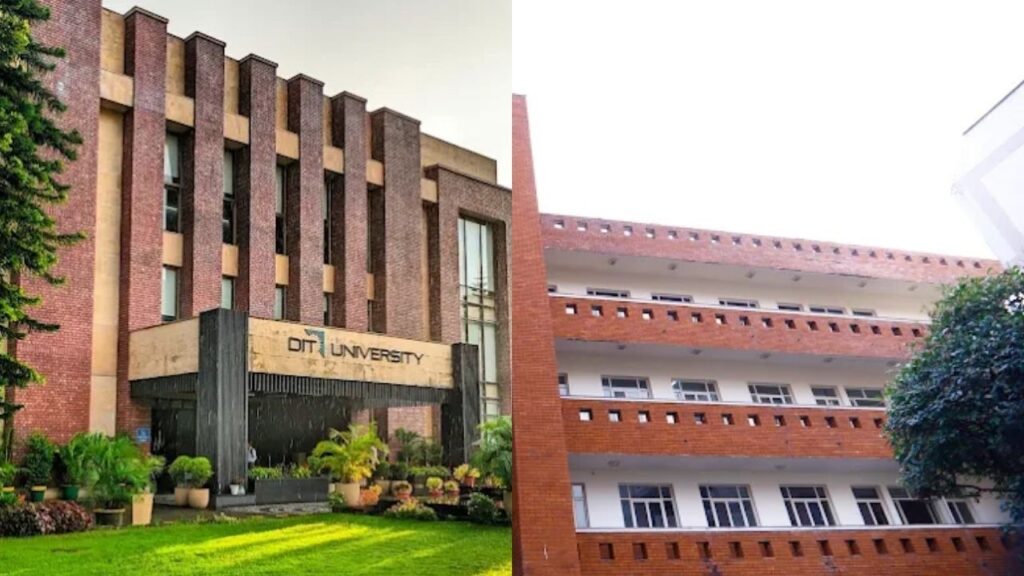
DIT University

Program Highlights:

  • Robotic integration from Year2
  • AI ethics and responsible AI (growing in importance)
  • Industry partners with tech startups
  • A full 4-year program spanning a variety of aspects 

Fees & Placements:

Fees₹16.02 lakhs
Scholarships14% for Uttarakhand domicile; merit-based scholarships available
Average Package₹8-12 LPA

5. GGSIPU Affiliated Colleges Network

Guru Gobind Singh Indraprastha University (GGSIPU) the nod to B.Tech AI & ML in its affiliated colleges in Delhi/NCR, and this has been one of the most affordable options for AI education.
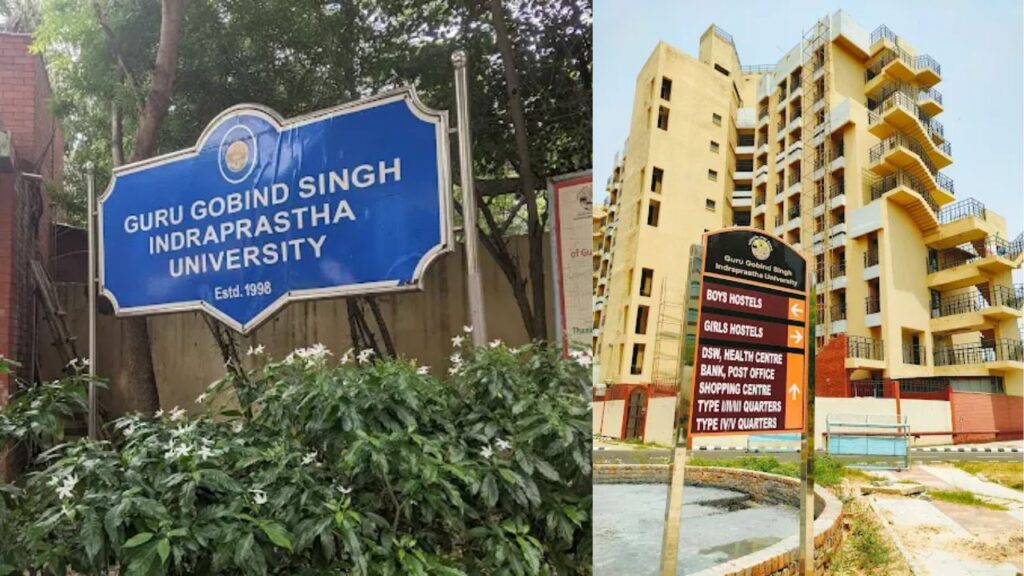
GGSIPU Affiliated Colleges Network

Popular GGSIPU Colleges:

Echelon Institute of Technology (Faridabad): GGSIPU affiliated, 17.5 acres campus, placements with TCS, Infosys, Wipro

GNIT IPU: (Greater Noida): Top 150, Modern Labs, Affordable Fees

MAIT (Maharaja Agrasen Institute): Established, well known GGSIPU college in delhi 

AdvantageBasic programming (C, Python, Java) (3)Machine learning algorithms such as Support Vector Machines, Random Forest, neural networks to analyze and model complex datasets.Advancements in Deep Learning have significantly enhanced capabilities in fields like Natural Language ProcessingMachine learning, computer vision and roboticsEthical considerations for AI.Practical projects in every term. 
Fees₹3.15-6.08 lakhs
Placement Range₹4-8 LPA , top performers can get up to Rs. 12 LPA
AdmissionIPU CET (entrance exam)/ merit-based

Admission Process For Government Colleges

  1. Clear JEE Main or appear for Delhi University cut off exam
  2. Participate in JoSAA counseling
  3. Submit choices, verify documents, pay seat confirmation fees
  4. Report to college

Admission Process For Private Colleges (Amity, DIT, GGSIPU):

  1. Take entrance exam (JEE Main, CUET or an exam conducted by college)
  2. A few colleges provide direct admission on basis of 12th marks
  3. Management quota seats are available with additional fees
  4. Installments for payments is generally available 

Read More :- Courses for Interior Designing in India: Admission, Colleges & Careers

Course Curriculum—-What You’ll Learn

Years 1-2 (Basics)Main Topic of Mathematics such as Calculus, Linear AlgebraStatisticsPhysics and ChemistryProgramming in C, fundamentals of computingBasic engineering concepts
Year 2 (Specialization Begins)DSA–Data Structures and AlgorithmsDatabase Management SystemsOOPsFoundations of Machine LearningIntroduction to AI
Year 3 (Core AI/ML)Vision & Neural StudyDeep Machine LearningNatural Language ProcessingOperating SystemsInternet of ThingsDesign and Analysis of Algorithms
Year 4 (Internship)Industry exposureAdvanced Computer VisionDifferent categories field such as Blockchain, Cyber Security, RoboticsMajor projects and internships

Fee Comparison Of AL & ML Colleges in Delhi

CollegeType4-Year Total FeeAffordability
IIIT DelhiGovernment₹2.5-15.04 LHighly Affordable
IGDTUWGovernment₹7.07 LMost Affordable
GGSIPU CollegesPrivate-Affiliated₹3.15-6.08 LVery Affordable
DIT UniversityPrivate₹16.02 LPremium
Amity GurugramPrivate₹9.36-12.6 LModerate

Breakdown of AI & ML Fee Structure

Study—materials₹20,000-30,000
Software—licenses₹10,000-15,000
Project equipment and competition participation₹15,000-25,000
Hostel (if required)It will be ₹40,000 — 80,000 yearly

Scholarships Available

Fee Waivers – Merit based fee waivers are available for top JEE scorers ranging from 25-50% in fees. 

Also, read – How to apply for Government schemes scholarship for students on the National Scholarship Portal. 

Companies such as Tata Trusts and Aditya Birla Foundation also offer corporate scholarships. 

Placement After Graduation

Placements are everyone’s priority, so here is the Tier-wise list of the highest placement growth: 

Top Tier (IIIT Delhi)89%+ placement rate₹20.65 LPA averageEvery major tech company hires hereInternational opportunities common
Strong Tier (IGDTUW, Top GGSIPU Colleges)95%+ placement rate₹8-18 LPA averageGood mix of startups and MNCsGrowing international placements
Good Tier (Amity, DIT, Other GGSIPU)75-85% placement rate₹4-12 LPA averageMore startup heavySlower path to top-tier companies

Conclusion

The AI & ML revolution isn’t coming—it’s already here. Every company is creating an AI team – whether a startup or a Fortune 500. Where you go to college will affect your career path, but keep in mind: the college opens doors, but you have to walk through them.

Get good grades, build projects, contribute to open-source, and network with industry professionals. Whether you are studying at IIIT Delhi or a GGSIPU college, it is your hustle and curiosity, not the college name on your degree that will take you places.

The top AI & ML colleges in Delhi for you aren’t necessarily the most expensive or the most prestigious—it’s the one that fits your goals, your budget, and your learning style. Delhi has it all for every student. Make the right decisions, and put in your sweat, and who knows? You might just be the next AI engineer building the algorithms that change the world. 

Leave a Comment

Your email address will not be published. Required fields are marked *

Regular vs Distance Education: Which Is Better for You?

Student comparing Regular vs Distance Education with books and a laptop, symbolizing classroom learning and online flexibility

Choosing the right educational path after 12th with any stream is confusing. Many students want to work while pursuing their higher education and some of them want to focus on their studies properly. Regular vs Distance Education is best in their own perspective, whether you have an educational background in science, commerce or arts. Let’s look into this topic further to differentiate both the topics in more detail. To resolve the confusion, analyze – Which one holds more value? Which option is best for your career? 

I have seen many students and parents discussing this issue and get confused. Let me tell you one thing, it depends on your degree. Theoretical degree – you can get from distance but not MBBS or B.Tech because it requires practical experience.

In this article, we will look at both options by giving every detail of both education, so you can make a smart choice that fits your life, your goals, and your budget.

What is Regular Education?

Think of regular education as the traditional “college life” you see in movies. You have to:

  • Attend classes on a fixed schedule.
  • Go to a physical campus every day.
  • Talk and be responsive to your teachers and classmates face-to-face.
  • Some colleges are strict about the 75% attendance percentage.

Students who aim to learn not from just books but also from being part of a college community, participating in events, and living the campus life. 

What is Distance Education?

Distance education, also known as Open and Distance Learning (ODL), is all about flexibility. 

  • You study further in your choice of career from anywhere in India.
  • Take resources at your preference such as online materials, videos, and books.
  • You can study at your preferred time and have no issues with attending daily classes.
  • No face-to-face Interaction with teachers and students. Interaction happens mostly on online platforms or weekends.
  • You can manage work and study parallely. 

Top government-recognized universities like IGNOU and private ones like Symbiosis are offering distance education in India.

Quick Comparison for Regular vs Distance Education

FeatureRegular EducationDistance Education
LocationFixed CampusAnywhere in India
ScheduleDaily classesFlexible
CostVery High (Tuition + Living)Very Low (Mainly tuition)
InteractionFace-to-face with teachers/peersVirtual (Online forums, email)
DisciplineDriven by teachers & timetableRequires high self-discipline
Best ForPractical, lab-based coursesTheory-based courses, upskilling

Regular Education – Pros & Cons

Pros:

  • Networking Growth: You can have a chance to grow your network in the same field for more career benefits. Strong relations to both students and teaching can develop your communication skills.
  • Direct Teacher Guidance: You can respond to teacher’s questions and ask them individually to clear your doubt. Some teachers are good at encouraging students for their career.
  • Campus Life: Extra curricular activities and sports can be beneficial for your mental and physical health. Overall development is something you only get on campus.

Cons:

  • Expensive: Some students can’t afford college fees, but they need to hold the degree to grow in their career. 
  • No Flexibility: You cannot work a full-time job if you are attending regular classes. Part-time jobs can give you any experience for your career. If you want to prepare for any competitive exam then distance education is a good option.
  • Relocation for Studies: Students who live in lower regions have to move out for studies and it will be difficult for them.

Read More 👉 BTech vs BSc vs BA in 2025: Which Degree Offers the Best Future Scope?

Distance Education – Pros & Cons

Pros:

  • Affordable: Anyone can afford distance education fees because these are half of the regular degree fees.
  • Earn While You Learn: You can do both at the same time – working full time and take your lessons whenever you get free. 
  • Prepare for Competitive Exam: You can also prepare for the competitive exams.
  • Accessible from Anywhere: A student from a small town can get a degree from a top university in Delhi without leaving their hometown.

Cons:

  • Needs Self-Discipline: You need to focus on self-study because there is no teacher to push you.
  • The Digital Divide: While Improving, Still many students do not have laptop or wifi access to their home for study.
  • Limited Practical Labs: You can pursue master degree or theoretical education from distance education but for engineering and medical, you need hands-on lab experience.

Who Should Choose Regular Education?

  • Recent School Pass-outs (12th Graders): If you are young and want the full college experience, and your family can afford it, regular mode is a great choice.
  • Students Pursuing Technical/Lab Courses: For degrees like B.Tech, MBBS, or pure sciences, the hands-on practical training in a regular college is essential. These courses are not valuable for career and UGC also prohibits them.
  • Structured Environment: Many students are not able to study on their own so they need big support from teachers to help them stay on track.

Who Should Choose Distance Education?

  • Working Professionals: If you are already in a job and want to upskill for a promotion (e.g., getting an MBA), distance education is perfect.
  • Homemakers: women who can’t afford to attend regular classes because of their responsibilities can choose to continue their study from distance education 
  • Competitive Exam Aspirants: UPSC, SSC, Railways or banking aspirants often take a distance B.A. or B.Com degree to meet the eligibility criteria while focusing on their main preparation.
  • Students in Rural: They mostly need to move out for education and some students can afford this, they can get quality education at their doorstep.

Career Scope & Recognition in India

This is the most important part. The University Grants Commission (UGC), the main body for higher education in India, has officially stated that degrees from Regular, Distance (ODL), and Online modes are to be treated as equivalent.

This means if a job requires a B.Com degree, a B.Com from IGNOU is just as valid as a B.Com from Delhi University for applying to that job, including government jobs. In 2025, Indian companies care more about your skills and whether your degree is from a UGC-recognized university, not the mode you studied in.

Universities Delivers Regular & Distance Education

Top Universities for Regular Degree

Read More 👉 MTech vs MBA in 2025: Who Earns More and Why? Find Out Now!

Top Universities for Distance Degree

Top Universities for Both (Distance & Regular)

  • NMIMS 
  • Amity University
  • Lovely Professional University

Conclusion

There is no single answer for this confusion, you must think about the option that aligns with your career, situation and budget.

Choose Regular Education if: 

  • You can afford
  • You are a recent school graduate
  • You want an immersive campus experience

Choose Distance Education if: 

  • You need flexibility
  • want to study while working 
  • limited budget
  • focused on a competitive exam.

In today’s India, both paths can give you a better career if you have developed skills in yourself. There is no 100% guarantee in both education that you can get a placement. What can give you guarantee is your hard work and improved skills. The right path is the one that takes you to your destination without derailing your life.

Leave a Comment

Your email address will not be published. Required fields are marked *

Medical vs Engineering: Which Career Will Make You More Successful in 2025

Medical vs Engineering

If you are an Indian student in Class 10, 11, or 12, chances are you’ve heard a version of this line at least a dozen times. The age-old battle between Medicine and Engineering is a part of our DNA. For generations, these two streams have been seen as the ultimate tickets to a successful, secure, and respectable life.

The world is rapidly changing in 2025 with a lot of new career options for students. But when it comes to choosing between two different careers, everyone gets confused: Which path is better? Medical or Engineering? 

It’s a big decision of your life, both careers need your full potential whether you are preparing for NEET or JEE. It affects your life and your parent’s life too. Choose your path which aligns with your interest and skills.

The First Hurdle: The Challenging Road of Education

Before you can even dream of a stethoscope or a high-tech lab, you have to cross the battlefield of entrance exams. This is the first and most critical difference.

NEET (for Medical): The Marathon of Memory

  • The Exam: This is a single entrance exam for admission in MBBS. In 2024, over 23 lakh students fought for just over 1 lakh MBBS seats. The competition is insane.
  • The Challenge: Tons of topics to cover in Physics, Chemistry, and especially Biology, inside and out. It’s less about complex problem-solving and more about incredible memory, accuracy, and speed.
  • The Journey: The path is long. The time period is 5.5 years for MBBS with an internship certificate. After becoming a doctor at beginner level. You must do a postgraduate degree (MD/MS) to become professional, which is another 3 years after clearing another tough entrance exam, NEET-PG.
  • The Cost: Government medical colleges are very affordable (a few lakhs for the entire course). But getting a seat is like winning a lottery. You must be ready to invest ₹50 lakh to over ₹1 crore for MBBS course and more for postgraduation.

JEE (for Engineering): The Sprint of Logic

  • The Exam: This is a two-step process. JEE Main is the first filter. If you clear it, you can get into NITs and other good colleges. Admission in IITs is tough, you need to clear JEE Advanced.
  • The Challenging Step: If you are interested and have deep understanding in Maths, chemistry and physics, preparing for JEE isn’t that hard for you. But you must prepare with right strategy to beat the competition and get a chance for better college option. Because without a valuable degree, you will not get a high package of jobs. 
  • The Journey: A B.Tech degree is 4 years long. After this, you are an engineer and can start working immediately. A postgraduate degree (M.Tech) is an option, not a necessity, unless you want to get into research or specialised teaching roles.
  • The Cost: The fee for IITs and NITs is around ₹8-12 lakhs for the entire course, which is much more affordable than private medical colleges. Private engineering colleges have a huge range, from a few lakhs to ₹20-25 lakhs.

The stress of Kota coaching factories, the pressure from family, the fear of “wasting a year” – it’s real for both aspirants. A medical journey requires your time and money to become a doctor. You have to make commitments for this career.

Read More 👉 Top Engineering Govt Jobs in India 2025 – High Salary

Career Scope & Opportunities in 2025?

Engineering: it offers a diverse range of opportunities on national and international level.

The word ‘engineer’ is broad. The opportunities in 2025 depend heavily on your branch.

  • Computer Science & IT: This is the king of the jungle right now. With AI, Machine Learning, Data Science, and Cybersecurity booming, a skilled software engineer from a good college can land a job even before their final exams. 
  • Electronics & Communication: This field also requires engineers for running a network, designing for semiconductors, and automation. ECE engineers can get a lot of opportunities with a good salary package.
  • Mechanical & Civil: These are ‘evergreen’ branches. If students have skills and ability to construct, manufacture, and renewable energy then they can pick this career for their career.
  • Abroad: IIT or NIT qualified engineers are well-respected globally. With the right skills you can work on large projects abroad such as the US, Europe, and Australia.

Medical: Job security, secure future, and Respect in society

With an increasing health crisis, everyone needs a doctor who can cure and treat them. After MBBS, Medical training is also mandatory for every student. India has a huge shortage of doctors, with a doctor-patient ratio far below WHO recommendations.

  • In India: A doctor will never be jobless. You can have plenty of options like your own clinic, work in government or private hospitals. After specialization (e.g., cardiologist, dermatologist, oncologist), you will be demanded everywhere. The respect you get from society is unparalleled.
  • Abroad: MBBS degree is a door to open many options abroad but to work in countries like the US or UK, you need to clear their licensing exams (USMLE for the US, PLAB for the UK). Indian doctors can apply for them after a few years of experience in India because it is tough and expensive but the financial rewards and quality of life can be extraordinary.

Salary & Financial Growth

This is where the paths differ significantly.

  • Engineering: if you have done engineering in computer science from a reputed college or IIT, you can get a good placement package from top companies. IITs can get a starting package of ₹20-30 LPA. For other branches and colleges, it might be in the ₹6-12 lakh range. Your professional growth depends on how fast you can update your skills.
  • Medical: The financial journey is a slow burn. During your internship and PG residency, you earn a stipend, not a salary (around ₹25,000 to ₹80,000 per month depending on the state and college). The real earning starts after you are nearly 30 years old. But once you are a specialist, your earning potential is immense and stable. A successful specialist in a city can earn lakhs per month, far surpassing most engineers.

The Verdict: Engineering gives you a 6-8 year head start in earning. Medicine promises higher and more stable lifetime earnings, but you have to wait for it.

Read More 👉 Top 10 Central Universities in India 2025 – NIRF Ranking with Full Details

Work-Life Balance & Job Satisfaction

Success isn’t just about your bank balance. It’s about being happy.

A Doctor’s Life:

Heavy responsibility of a patient, being available for emergencies. So, this is not just a regular desk job. You need deal with many new things:

  • The Bad: The hours are brutal. Health crises can happen anytime-anywhere but being a doctor it’s your responsibility to be available for your patients. There are no weekends or festivals when there’s an emergency. Be ready to deal with everyday life and death situations. The small mistake can cost a life, so being focused and emotionally stable is mandatory to handle.
  • The Good: The job satisfaction is on another level. The feeling of saving a life or healing someone is a reward that money can’t buy. The trust and respect you receive from your patients and community are profound.

An Engineer’s Life:

Being an engineer is about creating and solving problems.

  • The Bad: Especially in the IT sector, there’s pressure of deadlines, project delivery, and constantly learning new technologies to stay relevant. Burnout is a real risk. Your job security is often tied to the performance of your company and the economy.
  • The Good: You often have more predictable work hours (though this can vary wildly). You have your weekends off. The work sometimes gives you hard challenges, but a lot of benefits like you can start your own side business after years of experience. You get to build things that millions of people might use, which is a great feeling.

What Should YOU Choose?

Forget about your friend’s suggestions. Forget about what your relatives will say. Ask yourself these questions with an honest heart.

Choose Engineering if:

  • You are fascinated by how things work. You are able to solve complex problems within less time and have a logical and analytical mind.
  • You love to solve quizzes from Maths and Physics.
  • Quickly understands new technologies and skills throughout your life. You don’t have a problem with quick changes in your professional world.
  • You want a faster entry into the professional world and want to start earning relatively early.
  • You are a creator and a builder at heart, whether it’s software, machines, or bridges.

Choose Medical if:

  • You have a deep, genuine desire to help people directly. Your primary motivation is service.
  • You have incredible patience and are prepared for a decade-long educational journey before you are fully settled.
  • You have quickly memorized diagrams and names of the phenomenon. You must adapt a habit to study consistently for very long hours.
  • You love to care about others and have strength to handle the pressure of life and death situations calmly. 
  • You want lifelong respect and a long-term future for your career.

In the end, there is no “better” field. There is only a “better fit” for you. A happy and successful engineer will always do better in life than a frustrated and burnt-out doctor, and vice-versa.

Success in 2025 and beyond will not come from choosing the most popular or the highest-paying stream. It will come from choosing the path where your natural interests and skills lie. It will come from choosing a profession that you won’t just ‘do’ for a living, but one that you will be proud to live every single day. So, talk to your parents, talk to people from both fields, and most importantly, listen to your own heart. The right answer is right there.e-old battle between Medicine and Engineering is a part of our DNA. For generations, these two streams have been seen as the ultimate tickets to a successful, secure, and respectable life.

Leave a Comment

Your email address will not be published. Required fields are marked *

Bihar Public Service Commission (BPSC): Full Form, Exam, Eligibility & Selection Process

Bihar Public Service Commission (BPSC)

If you are among those dreaming for a Bihar government job then you must have heard about BPSC exams. Perhaps you observed some of your friends studying thick books or maybe you stumbled across those BPSC Toppers interviews that suddenly fill your YouTube recommendations list. You have to know that Bihar Public Service Commission will offer a great opportunity for various posts such as DSP, BDO, SDM and others.

So, let’s crack the details of Bihar Public Service Commission including Full Form, Exam, and Selection Process. 

What is BPSC?

Bihar Public Service Commission is a government organization in short BPSC. It’s essentially the gatekeeper to some of the best government jobs in Bihar. It was established in 1956 and functions as a constitutional body to select the eligible and suitable candidates for multiple state civil services and administrative positions.

The BPSC mostly refers to the BPSC Combined Competitive Examination, popularly known as BPSC CCE. This is the top exam for jobs like Sub-Divisional Magistrate (SDM), Deputy Superintendent of Police (DSP), Block Development Officer (BDO), and other posts under Class I and II officers. If you want to be the guy who actually runs district administrations, implements policies on the ground, or maintains law and order, this is your path in. 

The BPSC 2026 Exam

So, If you are going to participate in BPSC 2026 examination then this is for your information: Bihar Public Service Commission is a bit predictable when you compare it with some other state PSC. But “predictable” is not easy. It means you can plan better.

The BPSC CCE 2026 is expected to be conducted in a three-phase examination process established as the standard: 

Stage One: The Preliminary Examination

This is your screening test. It’s a single paper objective type 150 marks. The syllabus includes General Studies (History with special emphasis on Bihar, Geography, Polity, Economy, Current Affairs and General Science). 

Here’s the thing about BPSC Prelims: it’s qualifying in nature. Your marks here don’t count for the final merit list, but you have to clear this hurdle to move on. Bihar Public Service Commission cut-off changes every year according to number of vacancies and difficulty level but in general 105-115 out of 150 would keep you in safe zone. 

Stage Two: The Main Examination

Here is where the real contest takes place. BPSC Mains is quite straightforward in comparison to UPSC Mains which has nine papers:

  • General Hindi (Qualifying, 100 marks)
  • General Studies Paper I (300 Marks)
  • General Studies Paper II (300 Marks)
  • Optional Subject Paper I (300 marks)
  • Optional Subject Paper II (300 marks)

The General Studies is all pervasive: History, Geography, Indian Polity, Economy, Science & Technology and Current Events. But here’s a crucial tip: Bihar specific knowledge is given a lot of importance. The panel loves to quiz you on Bihar’s freedom struggle movements, its rivers and geography, state policies, and recent development schemes. 

Fifth subject (Optional Subject) is the one You can capitalize in your favor. Options include History, Geography, Political Science and Economics as well as Agriculture, Botany and Mathematics. Choose carefully—this is a topic you really like, because you will be writing two detailed papers on it. 

Stage Three: The Personality Test (Interview)

If you clear Mains, you will have to attend an interview for 120 marks. It’s not just a personality check; the panel also wants to gauge your administrative skills, knowledge of the socio-economic problems of Bihar and whether you’re capable of thinking on your feet. 

They may question you on a particular law and order issue in a district, your opinion of the education system in Bihar, or even the reason why you want to enter the civil services to begin with. 

Eligibility For the Bihar Public Service Commission

Age Limit

CategoryMinimum AgeMaximum Age
General20 years37 years
OBC20 years40 years
SC/ST20 years42 years

Qualification for Bihar Public Service Commission

Any graduation degree will work including BA, BSc, BCom, B.Tech, MBBS, etc. The commission does not differentiate for your graduation stream. Anyone who has completed their graduation is eligible to apply a graduate in history has the same eligibility as an engineering graduate. 

Physical Requirements

Posts such as DSP (Police) have physical requirements for height, chest measurements, as well as vision norms. These are not applicable for administrative posts like SDM, however.

Place of residence

Although the BPSC is a state commission, there is a catch. Some posts are filled on the basis of Indian domicile candidates while others are open for all Indian citizens. It will be mentioned in the notification very explicitly, so go through it carefully. 

Selection Process

Here is a bit of information that most aspirants do not get to know instantly: Clearing each stage of the BPSC examination is not the purpose. It’s just a matter of how high you get your ranking to achieve your preferred post.

After the Interview, your final merit list is prepared in the BPSC on the basis of your Mains marks (out of 800) + Interview marks (out of 120) – altogether 920 marks. It is of no consideration here, the Prelims score. Based on this merit list, seats are allotted and candidates have to opt for their preferred cadre (SDM, DSP, BDO etc.) as per their ranking and category reservation.

Read More:- Sashastra Seema Bal (SSB): Full Form, Role, Recruitment 2026 & Complete Guide

Conclusion

Preparing for BPSC 2026 is not a piece of cake but with a smart approach and genuine zeal to join in Bihar administration, everything is achievable. Understand the syllabus completely, read Bihar paper religiously, practice answer writing from day one for Mains & Current Affairs.

Keep in mind that Bihar Public Service Commission exam is taken by thousands every year but only a few become. It’s not intelligence that differentiates most of us – it’s consistency, the right guidance, and not giving up when the syllabus seems unmanageable.

Your path to becoming a Bihar civil servant begins with a single step: knowing what you’re getting into. Now that you do, the real prep starts. 

Leave a Comment

Your email address will not be published. Required fields are marked *

Best Government Jobs for Engineers in India 2026

Best government jobs for engineers

If you are an engineer at the crossroads of your career and question if you should jump into the private sector rat race or check out government jobs for jollies, we have some good news for you. The Indian government and its PSUs are going to recruit a massive number of engineers in 2026, and this might be your golden opportunity to get a job with immense stability, good pay and superb benefits. Now, let’s take a look at Best Government Jobs for Engineers in India 2026 that are waiting for you. 

Why Government Jobs Matter for Engineers

Here’s the thing about government jobs that many young engineers seem not to realize: government jobs offer something that’s increasingly hard to come by in this volatile economic climate — stability and long-term security, even if it means starting with a lower salary (and slower pace of promotion) than you might get in the private sector. You won’t have to worry about sudden lay-offs when the market takes a dive, and your job security is guaranteed by the power of the whole nation to back you up.​

The pay scale in government service has also undergone a sea-change. A recently qualified engineer in a government job is paid somewhere between ₹3,00,000 and ₹4,50,000 per year, with regular, foreseeable increments based on your years of service. Further, government jobs have full medical coverage, housing allowances, pensions schemes, flexible working hours and good leave policies – benefits that are all but vanished in private organisations. 

Top Government Job Categories for Engineers in 2026

1. PSU Recruitment Through GATE

PSUs (Public Sector Undertakings) are the behemoths of India’s industrial sector, and they are hiring in a big way in 2026. Over 50 major PSUs such as IOCL, ONGC, NTPC, BHEL, Power Grid, GAIL are on recruiting mode for engineering graduates. These organizations pay a competitive salary of ₹40,000 to ₹80,000 per month for entry level jobs with quick career advancement.​

If you have done well in your B.Tech / B.E., then good GATE (Graduate Aptitude Test in Engineering) score will help you in getting through. GATE scores are valid for 3 years, so you can still be content even if you haven’t appeared for it yet, so start booking your seats on these high profile jobs. 

Major PSUs to recruit in 2026 are Power Grid Corporation (for electrical engineers), IOCL (for mechanical, electrical and computer science engineers), ONGC (for offshore and onshore engineering posts), NTPC (for thermal, hydro power projects) and GAIL (for pipeline and energy management posts). 

2. UPSC Engineering Services Examination (ESE)

This is the highest and most difficult scale of government engineering jobs. The UPSC Engineering Services Exam is the door to Grade A and Group B posts in services like the Indian Engineering Service, Indian Telecommunication Service and Indian Engineering Service, Central Water Engineering Service, Border Roads Engineering Service etc.​

UPSC Engineering Services Examination

The Date for the ESE 2026 (prelims) is 8th February 2026 and for mains is 21st June 2026. The competition is fierce, but so are the prizes. Selected candidates are placed at pay level 10 of 7th Pay Commission matrix, which implies good salary growth along with prestige. The job involves huge responsibilities and the opportunity to make a real impact in driving the infrastructure and development projects in India. 

Selection procedure is a 3-step process: preliminary exam (500 marks), the mains exam (600 marks), and personality test (200 marks).

3. SSC Junior Engineers and Assistant Engineers

The SSC JE recruitment is conducted for multiple Ministerial and Departmental posts under group “B” between its two divisions Central Public Work Department and Survey of India and other such Departments of the Government of India. These jobs are Group B (non-gazetted) positions at Level 6 and the pay-scale is Rs 55,000 to Rs 65,000 per month after the take home is calculated in allowance.

What makes SSC JE positions so desirable, is that old people can sit for the exam. It’s a pretty simple format for an exam all about engineering basics and common sense/general knowledge. The promotion prospect is fixed and you can get promoted to Assistant Executive Engineer (AEE) after getting experience which in turn you can get promoted to Executive Engineer , salary wise you can earn up to 1,80,000 p.m. as an Executive Engineer. 

4. Indian Railways and Infrastructure Projects

Indian Railways, having a large rail network in the world, is constantly recruiting engineers in track maintenance, signal systems and infrastructure development. These posts also carry special allowances for field posting and provision of accommodation in various parts of India.

Indian Railways and Infrastructure Projects

On the same lines, NHAI, CPWD, state public works departments also recruit civil engineers from time to time. If you like the idea of watching your work become real highways, bridges, and other public works, these agencies provide tremendously fulfilling careers. 

5. Defense and Space Research Organizations

For engineers with an interest in high-tech and national security, ISRO (Indian Space Research Organisation), DRDO (Defense Research and Development Organisation) and BEL (Bharat Electronics Limited) are dream organisations. ISRO also hires in large numbers for satellite programmes, launch vehicles and space applications. DRDO is related to defense technology development.​

These jobs are mentally stimulating, have cutting-edge equipment, and give you a deep feeling of having played a part in your country’s technological progress. The pay is competitive, though often little lower than the best PSUs, but the feeling of a fulfilling career and the scope for innovation are unmatched. 

Engineering Branches with Maximum Government Job Opportunities

If you are still studying in college or if you are planning to choose a specialization, then these are the engineering branches which will have maximum demand for government jobs in 2026:

Civil Engineering roles are plenty in Infrastructure development, Railways, and Water resources projects. Mechanical Engineering finds good demand with manufacturing PSUs and thermal power stations. Electrical Engineering is always sought after in power generation, transmission and distribution. CSE & ECE has been the most sought after branch with the arrival of the digital age, leading to many opportunities in telecommunications, space programmes and defence research. 

Read More 👉 Nainital Bank Recruitment 2025: Clerk, PO, SO Exam Date & Details

How to Prepare and Apply

The path is well-defined: Your academic performance should be of high standard – most government bodies ask for a minimum of 60-65% in your engineering stream. Second, for those going for PSU jobs, crack GATE exam in 4-6 months of focused-study. Third, for the coveted ESE examination, if you can bear to start early, score high, because competition is tough but rewards are great.

Start with official website of recruiting bodies such as UPSC, SSC, GATE and individual PSU websites. Create job alerts on government job websites, subscribe to official notifications on Facebook and Twitter, and do not forget to apply for the jobs. Many positions close within days of notification. 

Is a Government Job Right for You?

Government work is for you, if you care more for stability than getting rich quickly, like the predictability of your daily schedule, and want to do something useful for the country. The salary increment may look like a slow pace compared to the private sector counterparts at the start, but you can enjoy better lifetime earning and security through pension schemes and long term benefits.​

There are more openings than ever before across government agencies for the year 2026. If you are a fresh graduate or an individual with experience looking for a career change, your time is now. With focus, the right approach, and a bit of luck, securing a top government engineering position in 2026 can be less of a pipe dream and more of an attainable objective. 

So start preparing today and you may be launching a multidimensional government career offering security, advancement and the satisfaction of playing a part in India’s development story by the turn of the year. 

Conclusion

Best Government Jobs for Engineers in India 2026 aren’t just about steady pay—they are about establishing a stable, respected, and mission-driven career. There is massive hiring across PSUs, UPSC Engineering Services, Railways, infrastructure bodies and premier organisations like ISRO, DRDO where engineers have more national development converging with professional growth opportunities than ever before. 

The private sector might offer faster rewards, yet government jobs have security for life, predictable growth and benefits which really stand the test of time. If you want to prepare smartly and stay focused, then 2026 could be the year that you transition from being lost in the career wilderness to a future defined by stability, impact, and pride for having served the nation.

Leave a Comment

Your email address will not be published. Required fields are marked *

Data Science vs AI: Which Career Is Better?  

Data Science vs AI

Students in this generation really got stuck on choosing a stable career. In India, the choice is not limited between doctor or engineer anymore, there are a lot of options such as Data Science and Artificial Intelligence. Both are growing fields that offer wider opportunities. Continue reading to understand why Data Science vs AI comparison is important.

Most students couldn’t differentiate these two courses since they are somehow interconnected, every AI engineer needs data science fundamentals, and every good data scientist today is expected to know basic machine learning but work responsibilities, eligibility, and salary is different.

What Data Science Really Involves

Data Science, at its core, is about making sense of information that already exists. You’re looking at sales numbers, customer behaviour, hospital records, whatever the industry, and pulling out patterns that help a business make a decision. 

Data scientists at Paytm or JPMorgan often involve arranging raw data using manual coding and models to analyze trends, behaviour, and developing dashboards that allows managers to anticipate what might happen in the following quarter. The job depends a lot on statistics, SQL, Python and increasingly on data visualization tools to turn complex datasets into actionable insights. 

What AI Really Involves

Artificial Intelligence, on the other hand, is a trained model to automatically read data and process it without needing to be handled manually by any human. If Data Science is about interpreting the past, AI is about building machines that can act in the present or future. 

This includes machine learning models, deep learning, computer vision, natural language processing, and now heavily, generative AI and agentic systems. An AI engineer is more of a software builder than an analyst because constructing an AI model that not only reads data but also processes it with its own brain. 

Eligibility: Who Can Actually Get In

For Data Science Courses

The eligibility bar is comparatively relaxed. If you’ve cleared class 12 with Maths, Statistics, or Computer Science as a core subject, you can walk straight into a B.Tech, BSc or BCA in Data Science. 

For postgraduate programs, you need a bachelor’s degree in engineering, science, commerce, or even economics, along with basic statistics knowledge. This is why so many commerce and arts graduates in India are successfully switching into data roles through PG diplomas.

For AI Courses

AI is stricter about your technical background. Most AI degree programs, especially the IIT B.Tech in Artificial Intelligence, expect you to clear JEE Advanced, which means your foundation in Maths and Physics has to be genuinely strong from school itself. 

For M.Tech and PG-level AI programs, GATE scores are usually mandatory, and the cutoffs at institutes like IIT Patna and IIT Kharagpur are competitive. 

If you’re coming from a non-technical background, entering AI usually means starting with an online certification first and building up your programming and linear algebra skills before you can even think about a formal AI degree.

Best Courses for Data Science

If you want the government-institute route, the IIT Madras BS in Data Science and Applications is one of the most respected options right now, since it’s fully online and doesn’t require JEE, only a qualifier exam. 

IIT Roorkee & Kanpur, and IIIT Bangalore also offer certificate programs for both Data Science and AI. Other private universities like Christ University, NMIMS, and Symbiosis are recommended highly from former students and educators across India for offering BSc or MSc in Data Science.

If you are working professional and want to upgrade your career skills without spending three years to get a degree then shorter bootcamp-style programs from Scaler, DataTrained, and Great Learning are the best options for you. They provide courses that are designed specifically for getting a job within six to twelve months.

Best Courses for AI

If you have cleared JEE Advanced, B.Tech in Artificial Intelligence from IIT Hyderabad, IIT Madras, IIT Kharagpur, and IIT Gandhinagar are the right options for you to start your career journey in AI.

If you are a working professional, the IIT Roorkee Executive Program in Applied Data Science and AI, delivered through Jaro Education, has become a common pick because it doesn’t require you to quit your job. IIM and ISB executive AI programs are aimed specifically at managers who want to lead AI-driven teams rather than build models themselves, so that’s a different crowd entirely.

If you’re just testing the waters before committing money, NPTEL’s free AI and ML courses through IIT Madras are a genuinely good starting point, and they carry an official certificate for a token fee.

Read More 👉 Technical Government Jobs in India: A Complete Guide for Engineers and Diploma Holders

Fees: What You’ll Actually Pay

Data Science Courses Fees 

  • A Data Science course in India can be found at every possible cost. Free learning options are NPTEL, YouTube, and financial-aid courses on Coursera. 
  • Short online certification programs generally cost around ₹30,000, while structured postgraduate programs from training institutes typically range from ₹70,000 to ₹1.6 lakh. 
  • If you are looking for a degree such as BSc, MSc, or MBA in Data Science, the fees will be in the range of ₹1.5 lakhs to ₹4 lakhs. 
  • Certificate courses offered by IITs are generally in the range of ₹80,000 to ₹2.5 lakh, varying with the course content and duration. 

AI Courses Fees

  • AI courses are typically a little more expensive than Data Science courses since they may provide access to high-end computing resources or specialized labs, plus more industry-relevant training. 
  • Short online certification courses usually range from ₹20,000 to ₹50,000 and structured professional programmes—like the executive certification from the IIT—come at a cost of around ₹1.5 lakh and upwards. 
  • The fee for a four-year B.Tech in Artificial Intelligence at an IIT ranges from Rs 8.8 lakh to Rs 12 lakh, institute and fee structure wise. 
  • The executive AI programs of top business schools including IIMs and ISB are meant for the working professionals and usually vary from ₹3 lakh to ₹5 lakh for six to twelve months duration courses. 

So if budget is your biggest constraint right now, Data Science is genuinely the more affordable entry point, especially if you go the online-certificate-plus-portfolio route instead of a full degree.

Data Science vs AI Career Scope that Leads Better Opportunities

An entry-level data scientist in India can expect to earn from ₹3.5 LPA to ₹6 LPA in companies as data analyst, business intelligence analyst, junior data scientist. With 3 to 5 years experience and expertise in machine learning or big data tools like Spark, a candidate’s salary can go up to ₹15 LPA to ₹25 LPA.

Typically, the starting salary for AI roles is a bit higher at around ₹6 LPA to ₹10 LPA for a fresher AI or ML engineer, and experts working in NLP, computer vision, or generative AI at senior level are drawing ₹20 LPA to ₹40 LPA, sometimes more if they are working with LLM-based systems at a product company. 

Why does AI pay more at the top end? 

It’s not magic, it is because there are less people who can actually build these systems, and deploy these systems than there are people who look at a data set and analyse it. 

What Should You do After Completing the Course

Finishing the course is the easy part. If you have completed a Data Science course, your first step should be creating 3 to 4 real projects using publicly available datasets from Kaggle, preferably related to Indian industries like retail, fintech, or agriculture, as recruiters in this region love to see work that’s locally relevant. 

Learn to use SQL a little more than just the basics, learn how to tell a business story with your visualisations in Power BI or Tableau, and start applying for data analyst positions even before you feel “ready” because they all expect you to be learning on the job anyway. 

If you have recently completed an AI course, then your attention should be on deploying models rather than merely training models. You should write code on a Jupyter notebook and be able to turn it into an actual production run using tools like Docker and some minimal MLOps. 

Also publish the codes on GitHub because interviewers trust your hard work and concepts more than your certificate. And for where the industry is going, get serious about generative AI frameworks and agentic workflows, because that’s where the strongest demand for new hires is today, not in vanilla supervised learning, alone. 

Which One Should You Actually Pick

If you enjoy working with numbers that already exist, you like storytelling through data, and you want a lower-cost, faster entry into a paying job, Data Science is the safer and quicker route. If you’re strong in maths and coding, you’re patient enough to handle a steeper learning curve, and you want to be closer to building the technology rather than interpreting it, AI offers a higher ceiling, both in salary and in long-term relevance, but it demands more from you upfront, in both eligibility and course investment.

There isn’t a universally “better” choice here, there’s only the one that matches what you’re good at and what you’re willing to put in over the next two to three years. Most people building serious careers today don’t pick one and abandon the other anyway, they start in Data Science to build the foundation, and move into AI once they’ve got the fundamentals locked in.

Read More 👉 How To Prepare Current Affairs For Government Exams: A Complete Strategy

Conclusion

It’s better to understand the difference between Data Science vs AI before getting more confused. There is no single factor, but your budget, schedule, eligibility, and level of knowledge might affect your decision. 

Most importantly, your interests also matter. Getting confused in them is easy because they are somehow connected but work, courses, fees, and salary are totally different.  

Leave a Comment

Your email address will not be published. Required fields are marked *

Scroll to Top