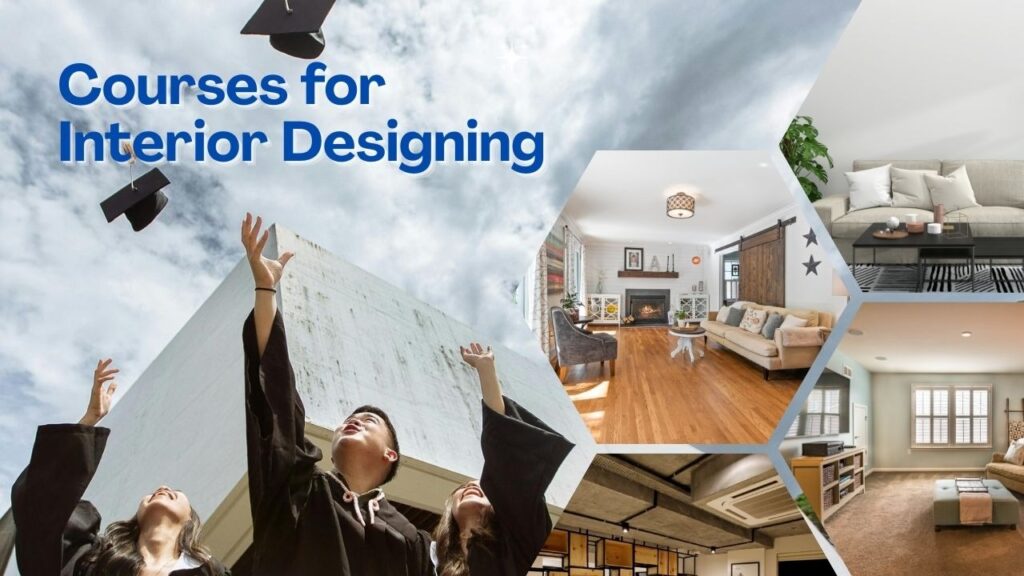
If you are the type of person who regularly moves your furniture around, cleans windows to get the perfect paint color, or critiques lighting in every restaurant you dine in, maybe you have a calling. Your Search for Courses for Interior Designing starts when the question pops up: How do you get paid to have that passion?
In these days, interior design is no longer just about “making things look pretty.” It is a complex mix of architecture, psychology, technology, and art. Whether you are a high school graduate looking to pursue a degree or a working professional residing in Lucknow wanting to make a creative pivot, this guide is your blueprint. Let’s talk about everything you need to know to about the interior design courses, colleges, and careers.
Why Formal Education Matters
Let’s be real for a second. You may have a great eye for decorating, but professional interior design is a whole other story. It deals with strength of materials, building codes, ergonomics, and space planning.
A formal course will teach you the “grammar” of design. You are taught to talk with contractors, architects and clients. You go from saying, “I think this blue looks nice,” to, “This particular shade of teal offsets the warm undertones of the timber flooring and captures the natural light coming in from the north-facing window.”
Types of Courses
| Course Type | Duration | Eligibility | What You’ll Get |
| Bachelor’s —B.Des / B.Sc | 3-4 Years | B.Sc Or B.Des require 10th & 12th marksheet from Science Stream | In-depth technical knowledge related to Designing |
| Diploma / Advanced Diploma | 1-2 Years | Key Formula for fast entry in career | Focused on Practical more than theory, Skill Polishing |
| Certificate Courses | 3-6 Months | Hobbyists or professionals adding a specific skill (like CAD or V-Ray). | Specific skills only. Prefer for less professional people |
| Professional Level (M.Des / M.Sc) | 2 Years | After having a degree of B.Des/B.Arch. These masters courses offered for specific specialization | Research-oriented, higher leadership roles, and teaching opportunities. |
Top Colleges
- NID—National Institute of Design
- CEPT University—Ahmedabad
- IIT Delhi, Bombay
- VIT
- IIAD—Indian Institute of Art & Design
- IMS Design
- Amity University, Lucknow
- Integral University
- Gov. Girls Polytechnic
- Babu Banarasi Das University
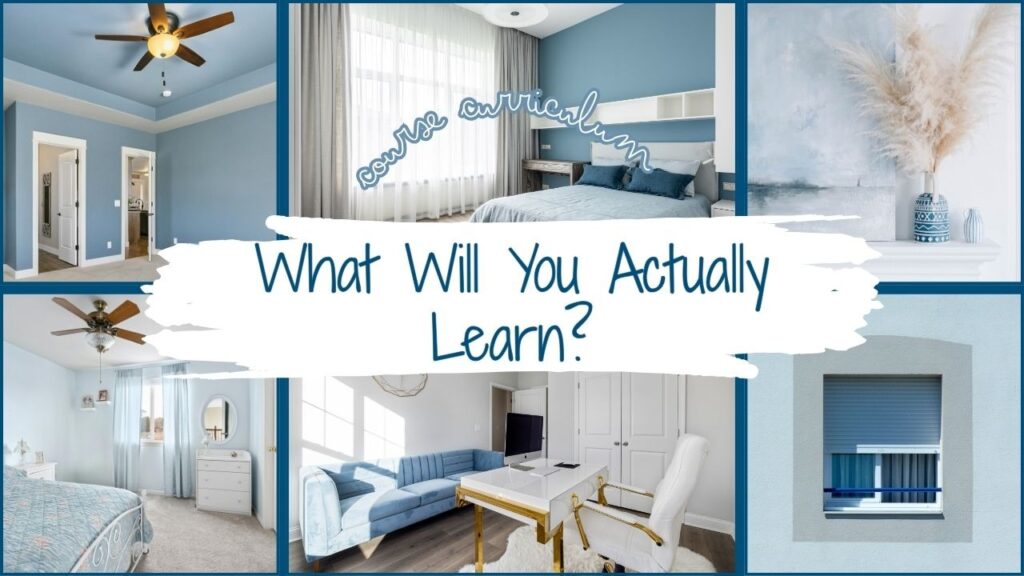
What Will You Actually Learn?
Your course will probably be part art and part engineering. There’s a chance that you will be spending your first year hours hand-sketching and studying Color Theory. In your final year, you will be making hyper-realistic 3D renders that look like photographs.
The “Hard” Skills (Tech You Need to Master in 2025):
To make it in the business these days, you have to know your way around a computer. These are the software tools you’ll probably end up knowing inside and out when you graduate:
AutoCAD - 2D blueprints industry standard It’s non-negotiable.
SketchUp: The Simplest 3D Building Tool Out There. Consider it as digital clay.
Revit / BIM – essential on large commercial jobs where you need to work closely with architects.
AI Homestyler: more recent and cloud based AI tools that are rising in popularity as they render fast.
Read More :- UP Police Computer Operator Grade-A Online Form 2025: Apply, Dates & Eligibility
The “Soft” Skills:
- Client Management: How to tell a client their idea won’t work without offending them.
- Budgeting: planning of champagne dreams on a beer budget.
- Project Management: Getting the plumbers, electricians and carpenters to not kill each other.
Career Scope & Salary
Driven by an expanding middle class and real estate boom, India is witnessing an upsurge in the interior designing industry.
Various paths for a Interior Designers:
Residential Designer: Homes, apartments, villas. (High emotional connection with clients).
Commercial/Corporate Designer: Offices, co-working spaces. (Higher budgets, strict deadlines).
Hospitality Designer: Hotels, cafes, restaurants. (Very creative, high visibility).
Set Designer: Design sets for movie or tv (Big in Mumbai/Hyderabad).
Salary Expectations
Entry-level compensation can be humdrum, but expansion is meteoric once you acquire a portfolio. Specialized positions, particularly in Luxury or Commercial sectors, offer much greater pay.
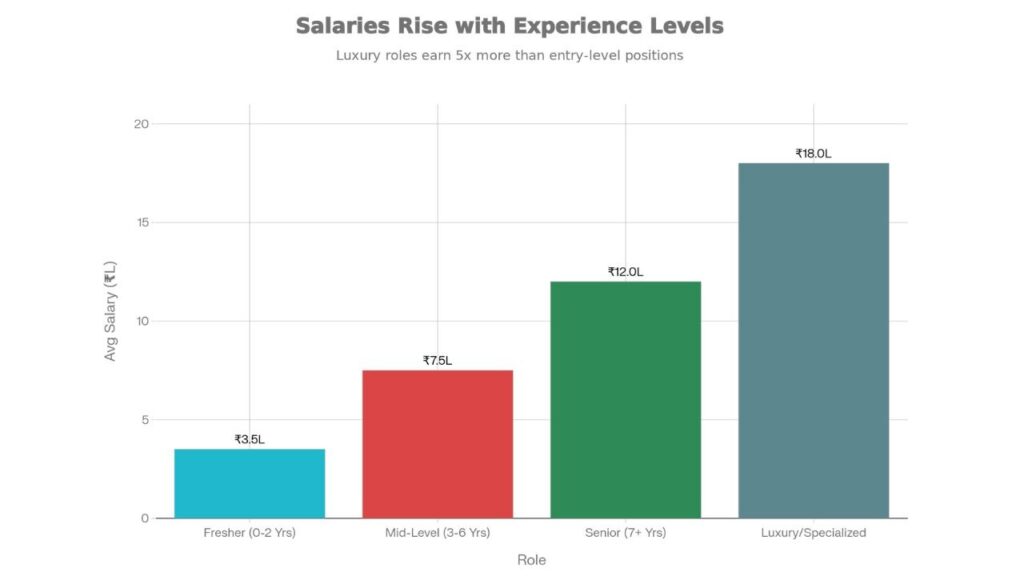
The chart exhibits how, even though you may begin as a junior at about ₹3.5 Lakhs per annum, it does pay off after all. A Senior Designer with 7+ years of experience can earn comfortably north of ₹12 Lakhs, and if you start your own firm or get into luxury consulting, the sky’s the limit (₹18 Lakhs+).
Admission Procedure For B.Des/M.Des in Major Colleges
For premiere govt colleges (like NID) you will have to appear for entrance exams like NID DAT or UCEED. They test your drawing ability, creativity, and spatial logic.
In case of private universities (such as Amity or Integral in Lucknow), admissions are essentially on the basis of marks secured in 12th and DAT (Design Aptitude Test) or portfolio review.
And build a portfolio, even if you’re not studying design. Draw a corner of your room. Redesign your kitchen on paper. Capture the textures you like. Your potential and passion matters, not perfection.
Conclusion
Courses for Interior designing are not for the weak hearted. Dusty job sites, demanding clients, and nights spent staring at a computer screen. But it is also hugely gratifying. There is a unique thrill in walking into a space you designed — watching people live, laugh and work in a place that began as a sketch in your notebook.
If you like to mix creativity with logic, and art with engineering, this is the year to look forward to for starting out. Whether you opt for a degree from Amity Lucknow or a diploma to begin your career at the earliest, the world is holding its breath for your designs.