IIT Delhi MBA Fees – Complete Details on Tuition, Hostel And Other Charges

IIT Delhi

The IIT Delhi MBA is considered one among the best return on investment management course in India. Offering a perfect blend of quality education, good industry connect at a manageable fee, it enables students to dream big without the fear of being burdened with debts in private b-school cost. For 2025-27 batch, the total IIT Delhi MBA Fees 2025 is 12.17 lakhs which makes it one of the cost effective option in top management institutes of India. 

IIT Delhi makes quality affordable with a transparent detailed batch-wise payment plan, clearly defined hostel and academic fees, and several options for financial assistance. In addition, the program provides a good return on investment (ROI) as the average placement package is ₹25.82 LPA, which further adds to the enunciation as a top choice for prospective business leaders. 

IIT Delhi MBA Fee Structure 

IIT Delhi MBA fee is ₹ 12.17 lakhs for 2025-27 batch and this makes it one of the least expensive top Indian b-schools. The fee is designed so that the students can derive maximum benefit from it, but still, it should be within the reach of students coming from varied financial backgrounds.  

Complete Breakdown of Detailed Fee Components

The tuition fee for the two-year course is ₹12,00,000, which is payable in four equal installments of ₹3,00,000 per semester. All the education fees, materials for courses and learning resources and even the use of campus facilities are covered by these fees. The total cost of accommodation in the dormitory for two years is Rs. 17,200 or 8,600 per semester.
Complete Breakdown of Detailed Fee Components

Mess fees are to be paid extra and they vary according to consumption, hostel fees are Rs 8,600 per semester. Semester fees are 22,400 for academic and administrative purposes which include the use of internet, sports equipment, library and student-welfare programs. 

Total tuition fees₹12,00,000
Per semester₹3,00,000
Total hostel₹17,200
Per semester hostel₹8,600
Academic charges₹22,400

First Semester Payment Structure

The admission fee structure is categorized based on the candidate’s classification. The fee for the first term for candidates in the General, OBC, and EWS categories is ₹3,31, 000, inclusive of hostel fees and other relevant expenditure like tuition. Those who belong to the SC, ST or PwD categories, however, get a Tuition Fee Waiver. First term fees are drastically reduced for these categories to Rs 31, 000, which is only for the hostel and other miscellaneous expenses. This tiered fee system also reflects a commitment to ensuring equitable access to education, as well as to financial viability for marginalized populations. 

How IIT Delhi MBA Fees Compare with Other Top Colleges

Comparison of MBA Fees Across Top Indian Colleges
How IIT Delhi MBA Fees Compare with Other Top Colleges

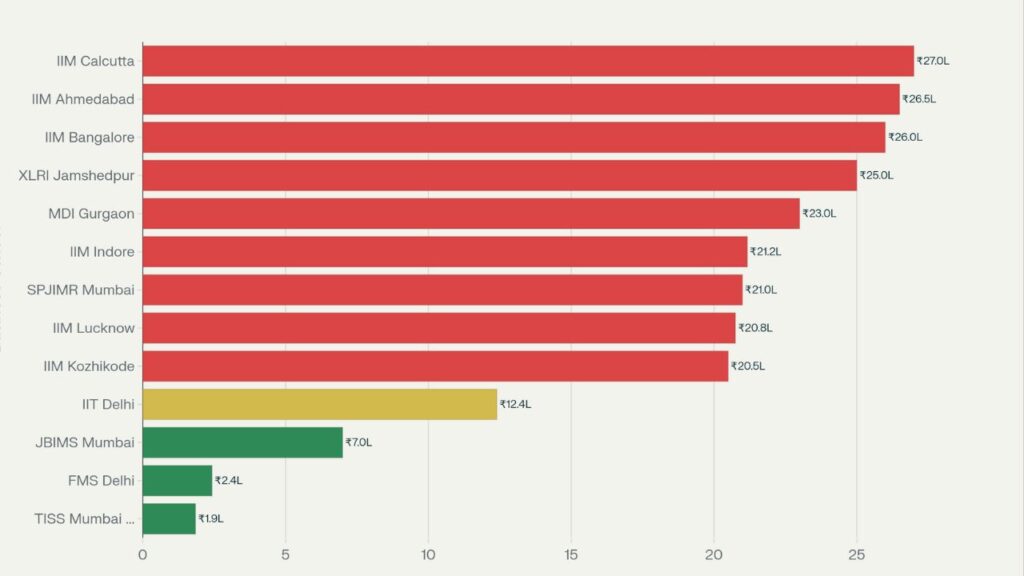
IIT Delhi offers great value for money as compared to other top b-schools in India. The fee structure makes it a kind of cross between the premium IIMs and the dirt cheap government ones. 

Old IIMs (Higher Fee Range)
IIM Calcutta₹27.00 lakhs
IIM Bangalore₹26.00 lakhs
IIM Ahmedabad₹26.50 lakhs
Newer IIMs (Moderate Fee Range)
IIM Lucknow₹20.75 lakhs
IIM Kozhikode₹20.50 lakhs
IIM Indore₹21.17 lakhs
Private B-Schools
XLRI (Xavier School of Management) Jamshedpur₹25.00 lakhs
ISB (Indian School of Business) Hyderabad₹40.50 lakhs
MDI (Management Development Institute) Gurgaon₹23.00 lakhs
SPJIMR (Shreyans Prasad Jain Institute of Management & Research ) Mumbai₹21.00 lakhs
Budget-Friendly Government Colleges
FMS (Faculty of Management Studies) Delhi₹2.43 lakhs
JBIMS (Jamnalal Bajaj Institute of Management Studies) Mumbai₹7.00 lakhs
TISS (Tata Institute of Social Sciences) Mumbai₹1.85 lakhs

Although these institutes charge very minimal fees, IIT Delhi gives a middle path with a reasonable fee structure and excellent results. 
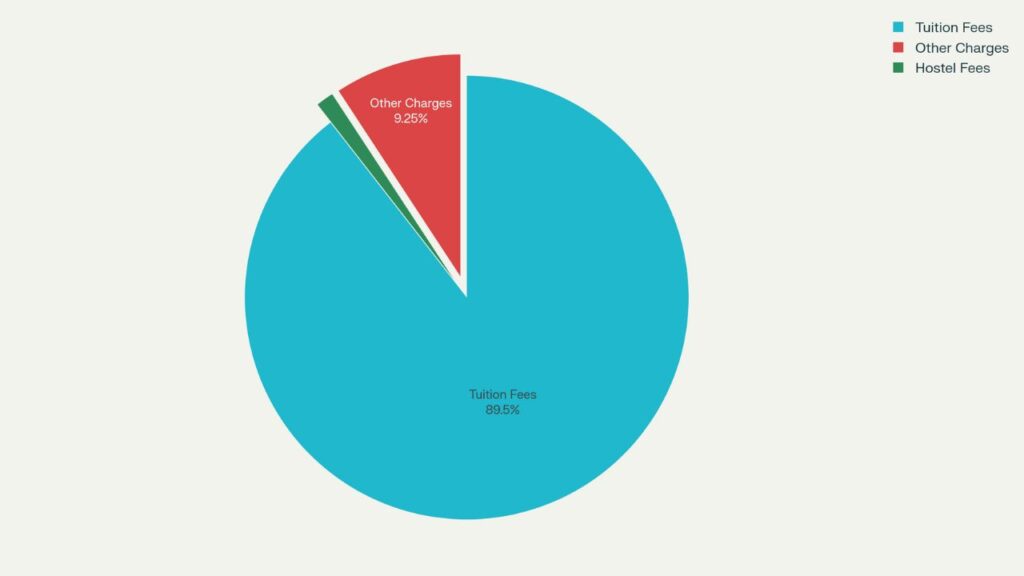
IIT Delhi MBA Program Cost Breakdown (Total ₹12.17 Lakhs)

Return on Investment Analysis

The exceptional 2024 Placement Performance demonstrates that IIT Delhi’s MBA Program offers a tremendous return on investment (ROI). Graduates are offered an average salary package of ₹25.82 LPA, the highest package is an impressive ₹41.13 LPA while the median package is ₹24.45 LPA. The program’s remarkable 100 percent placement record is a testament to its strong industry relations and career support. It is the most lucrative choice for an aspiring management professional for a total programme fee of ₹ 12.17 Lakhs. Students have managed their expenses for a few months after they start working. 

Financial Support and Scholarship Options

IIT Delhi provides several support to the students who want to pursue MBA to ensure that everyone gets a chance of education. SC/ST/PwD students are entitled for 100% tuition fee waiver under category based benefits except for hostel and other fees. Furthermore, meritorious students are also eligible for merit scholarships, which are awarded on the basis of their programme-wide academic performance. Also, due to prestige of the institute, education loan for MBA course can be availed from all major banks. And given the school’s elite status, those loans typically carry competitive interest rates. 

Payment Schedule and Methods

In order to ensure transparency and ease of understanding for all students, the fee payment follows a semester-wise structured format. As per the schedule of payment, the fee for the 1st semester is to be paid at the time of admission. Fees are payable at the beginning of each subsequent semester. For your convenience, the fee can also be paid in two installments over two years, making finances a little easier to manage. 

Multiple modes of payments are available for easy transactions. Students can pay online from the time of official portals which ensures the safe and efficient process. Bank loans are disbursed by demand drafts. To suit different taste, there is also bank transfer payment option. This systematic procedure keeps the payment process formal and transparent, at the same time ensuring flexibility and accessibility to the students. 

Why Choose IIT Delhi MBA
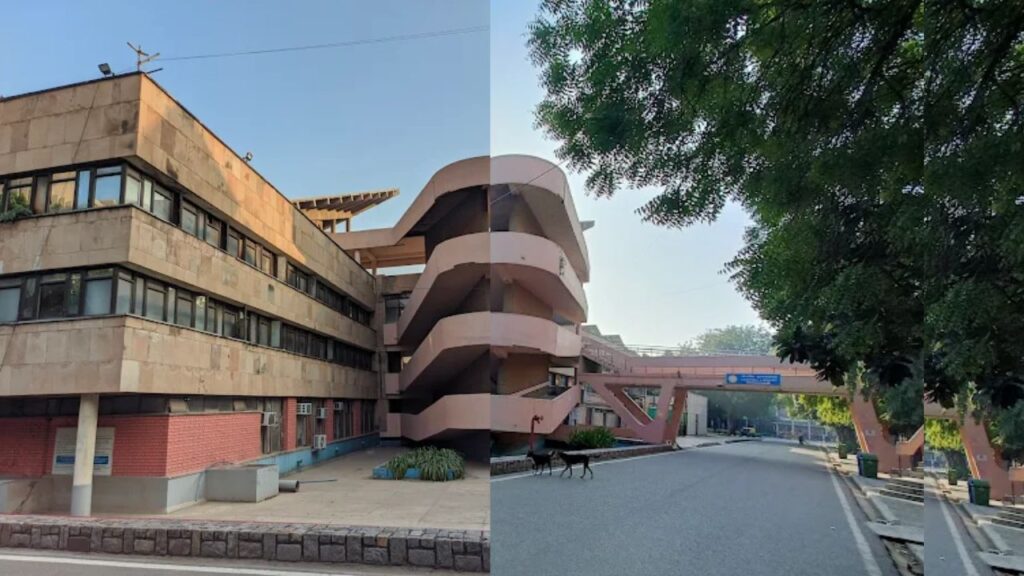
Why Choose IIT Delhi MBA

Academic Excellence

The institute, which was ranked 4th in Management by NIRF 2024, is renowned for its outstanding academics and is supported by a strong faculty having rich research and industry experience. The curriculum is broad-based and focuses on experiential learning to ensure that the students are well-prepared to face real-world challenges. 

Industry Connections

It has great industry connections, and excellent placement support with top recruiters due to its vast alumni network in prestige companies, recurring industry interactions and guest lectures. 

Facilities & Location Advantage

The modern facilities on the state of the art campus include a well-equipped library, state of the art computer laboratories, sports and leisure facilities. Opportunity to work in corporate offices and the institution is located strategically in Delhi NCR, the emerging business hub of India making it the best for commerce studies.

Read More:- DSSSB Recruitment 2025 – Latest Vacancy, Eligibility & Application Details

Conclusion

For Indian business schools, the IIT Delhi MBA delivers the best price, quality and outcomes combination you can get. With a total fee of Rs 12.17 lakhs, it holds itself at a higher standard than many of the private IIMs while giving exceptional value for money when compared with the ones that are more prestigious. Given the reputed brand, good placements and affordable fees, it is an excellent value for money for MBA aspirants. 

Transparent breakdowns of fees and category-wise concessions ensure accessibility to students from diverse backgrounds. When viewed from the perspective of ROI, career opportunities and ranking experience, IIT Delhi MBArr its place among the topmost feasible options in India in business school arena. 

Leave a Comment

Your email address will not be published. Required fields are marked *

How to Take Admission in Delhi University in 2025 – Full Process Explained!

How to Take Admission in Delhi University

Delhi University is a great university for UG, PG and doctoral programs which attracts thousands of candidates from all over the country. If you are planning to take admission to the most popular university then you must know about the admission process. So, here’s a guide for you which helps you get ready for the procedure.

DU offers a plenty of programs for Arts, Science, and Commerce students. First, know your interest that aligns with the future goal. It will help you select the field of study and decide which program you have to take admission. Admission process is same but eligibility criteria and cutoff marks is different on most of the programs.

DU offers multiple courses in every stream through the entrance exams for the particular field. So, score well in exams to get a admission in Delhi University, here are the following exams: 

  • CUET Examination

DU offers UG courses such as BA, B.Com, B.Sc, BBA, MA, MCA, M.Sc, and B.Ed through the Common University Entrance Test.  

  • JEE Main

Candidates who are willing to take admission in the Engineering programs such as B.Tech have to appear in the JEE examination.

  • CAT Examination

DU offers an MBA program through the CAT examination, you must appear in the examination and score well in that to get an admission.

  • CLAT Examination

For LLB and LLM programs, candidates have to pass the CLAT exam.

  • UGC NET/CSIR NET/NTA 

These are the examinations for admission in PhD.

Candidates must have cleared the entrance exam for their courses then register for CSAS. Its full form is Common Seat Allocation System and this is the stage where you have to fill your college preferences and courses.


This round takes time because it’s a lengthy process, seat allotment based on your scores of the entrance exam, preference you fill, and category you belong to. Seat availability is critical in some cases, you can freeze your seat if you are satisfied with the given seat or wait for the next round.

Once you freeze the seat which is offered by the university. Your admission is confirmed after your acceptance. 

Read More 👉 Top 10 MBA Colleges in Lucknow You Shouldn’t Miss in 2025

Check your eligibility for the particular program you are choosing to take admission. For UG courses you must pass 12th class, for PG courses, it requires a graduation marksheet. Admission in PG courses may require a CUET PG score.

  1. Visit the official website of DU
  2. Search for the SOL admission portal, when you click on that the registration page will appear then click on the registration link.
  3. Enter your information in the form carefully to complete the registration.
  4. Log in with your registration number and password.
  5. Fill out the rest of the details with correct information to further proceed.
  6. Carefully fill in the details, so it cannot be incorrect.
  7. Attach the required documents required for the application in your admission.
  8. Submit application fee then download the copy.
  9. You can check application status from your account.

DU offers plenty of programs for students to study higher education. DU offers programs in streams like Arts, Science, Commerce, Management, Law, and Engineering. The admission in these streams through their entrance exams respectively.

If you are a working professional, parent, or any other responsibilities, you can pursue degrees such as BA, B.Com, MA, M.Com, and M.Sc without any entrance exam. SOL is beneficial for most of the students who can’t attend the college regularly due to any reason. 

NCWEB is designed specially for women who cannot attend full time courses due to responsibilities, work, or any other reasons. Women who prefer weekends or evening classes to complete their education can take admission but it happens through merit score. 

Students who want specializations in any field can also think of Delhi University as the best option for them. The various fields of specializations which DU offers are – English, Hindi, Economics, and Political Science, Physics, Chemistry, Mathematics, Law, and Management.

Delhi University primarily takes students through entrance exams but there are certain programs and modes of study where students can take admission without appearing in the entrance exam. 

SOL – It is designed to provide education for students who cannot attend the regular classes due to work, distance, or any other reason. SOL offers many UG & PG programs without an entrance exam.

CoursesAdmission processMode
BA, B.Com, MA, M.Com, M.ScAdmission is based on MeritDistance education

Some UG Courses based on Merit – DU affiliated colleges are offering some UG programs like B.Com, BA, and many other courses without an entrance exam.

Read More 👉 Top Government Jobs After MBA | Best Careers 2025 Guide

Course NameWho Can Apply?How Selection Happens?
BA OR BA (Hons)10+12th from any stream  (50% score minimum)Through CUET UG + CSAS Counselling
B.Sc OR B.Sc (Hons)10+12th (50% score minimum) in science streamThrough CUET UG + CSAS Counselling
B.Com OR B.Com (Hons)Passed 12th (50% score minimum) in commerce streamThrough CUET UG + CSAS Counselling
B.Tech Passed 12th with PCM, minimum 60% marksJEE Main + JAC Counselling
BA LLB / BBA LLBAccomplish 12th or equivalent (50% score minimum) CLAT UG + CLAT Counselling
BBA10+12th or equivalent (50% score minimum) Through CUET UG + CSAS Counselling
B.El.EdAccomplish 12th or equivalent with 50%Through CUET UG + CSAS Counselling
BFAAccomplish 12th or equivalent (45% score minimum)Through CUET UG + CSAS Counselling
B.Lib.I.ScAccomplish 12th or equivalent (45% score minimum)Through CUET UG + CSAS Counselling
Course NameWho Can Apply?How Selection Happens?
MABachelor’s degree (50% score minimum)CUET PG + CSAS Counselling OR Merit-Based
M.ComB.Com/B.Com (Hons) (50% score minimum)CUET PG + CSAS Counselling
M.ScB.Sc in relevant subject with at least 50% marksCUET PG + CSAS Counselling
MBABachelor’s degree in any discipline CUET PG + Group Discussion & Interview 
MCABCA or equivalent degreeCUET PG + CSAS Counselling
B.EdGraduation degree (50% score minimum)CUET PG + CSAS Counselling
LLBUG OR PG degree in any with at least 50% marksCUET PG + CSAS Counselling
LLMLLB (3-year or 5-year) (50% score minimum)CUET PG + CSAS Counselling
M.TechB.Tech/BE in relevant field (60% score minimum)CUET PG + CSAS Counselling
M.EdB.Ed/B.El.Ed or equivalent (60% score minimum)CUET PG + CSAS Counselling
Points Details
Who can apply?– Master’s degree (55% score minimum) marks – 5% relaxation for reserved category
How do you get selected?First Option  – Through UGC-NET, UGC-CSIR NET, DBT-JRF, ICMR-JRF, once you pass this, you can appear directly for an interview.Second Option  – You must appear for the CUET-PhD entrance test. If you don’t want to take the first option.  – Next step for selected candidates is an interview.  – Everyone (including exempted candidates) must attend the interview.
What happens after selection?– Merit list is prepared based on entrance and interview performance.- Selected candidates must verify original documents in person at the department.- Seats are filled as per department’s decision and university norms.
Other important points– Final subject relevance is decided by the Departmental Research Committee (DRC).- No PhD through distance mode at DU.

Leave a Comment

Your email address will not be published. Required fields are marked *

Top IT Government Jobs in India You Must Apply for in 2025

Top IT Government Jobs in India

If you are an IT graduate or tech enthusiast looking for a well-paying and stable career then you can consider IT Government Jobs in India. This is the best option for job security and competitive salaries but also offers career growth and work-life balance. There are top  IT government jobs in India that you should know before applying and check the eligibility criteria, salary, and the selection process for each job. If you are scared from sudden layoffs in the private sector or no retirement benefits. You can choose this path for an excessive amount of perks.

Best IT Government Jobs in India 

Scientist/Technical Assistant – National Informatics Centre (NIC)

This is the top-tier position in the government involving high-end projects for national development. IT professionals are selected by the NIC in the government sector. Vacancy notice is presented on the NIC official website. The job roles are Scientific Officer, Technical Assistants, Scientist-B, these roles offer a great salary and benefits.

DepartmentMinistry of Electronics & Information Technology
RoleSoftware Development, System Management, Cybersecurity
EligibilityProfessional degree is required for this roleB.TechMasters in Computer Application (MCA)M.Sc (IT or CS)
Career GrowthPromotion to Scientist ‘C’,  Scientist ‘DProgression to Senior Technical Assistant or Scientist roles 

Important Skills

  • Candidates should be experts in coding.
  • Command on concepts of cybersecurity, cloud computing, and AI.
  • Ability to Collaborating with teams.
  • Problem-solving and analytical thinking are mandatory skills for this role.

Selection Process

Written ExaminationObjective test focusing on logical reasoning, quantitative aptitude, and IT/Computer Science
Skill TestShortlisted candidates has to give Hands-on assessment of IT skills 
InterviewAssessment of domain expertise, problem-solving skills, and understanding of IT solutions.

Assistant Programmer OR Data Processing Assistant 

This post is filled through the competitive exams like SSC CGL or SSC Selection Post. The positions come under the Group B or C but have fixed hours, growth, posting, or promotion to the next level and also increase salary according to the level. 

DepartmentSSC (Staff Selection Commission)
RoleSoftware coding, troubleshooting, database maintenance
EligibilityBachelor’s in Computer Science/IT, Certifications in programming, networking.
ExperienceFreshers are eligible for entry-level positions
Age LimitGenerally between 18 to 30 years
Career GrowthPromotion to Senior Programmer, System Analyst, Data Manager and Technical Officer roles

Important Skills

  • Expert in programming languages like PHP, Java, Python.
  • Understanding of MYSQL or Oracle.
  • Candidates should be able to solve IT issues within a minimum time period.
  • Problem-solving and analytical thinking.

Selection Process

Written ExaminationObjective test focusing on logical reasoning, quantitative aptitude, and Computer Science
Skill TestShortlisted candidates has to give technical assessment 
InterviewOn technical skills and job responsibility

ISRO Scientist/Engineer – SC (Computer Science)

ISRO is one of the top popular IT developers because it has developed top level projects. The job in ISRO required professional skills in a specific field. The recruitment process occurs to fill the vacancies and is completed by the written test and interview.  IT Professional’s top-notch choice for their career as a ISRO Scientist. There are opportunities for the ISRO workers such as Work on Space, Excellent training programs, Growth, housing, and medical allowances.

DepartmentIndian Space Research Organisation
RoleSoftware development, control systems, data analytics
EligibilityB.E/B.Tech in CS or IT with 65%+
Age LimitMaximum 28 years for Gen, SC/ST has 5 years relaxation, OBC has 3 years relaxation
Career GrowthPromoted to Higher scientific roles, Promotions are based on years of experience and performanceOpportunity for Specialization in space applications, AI, cybersecurity

Important Skills

  • Good knowledge in software development tools and environments.
  • Candidates should be proficient in programming languages.
  • Candidates should be Expert in networking, and cybersecurity.
  • Problem-solving and analytical thinking.
  • AI and ML knowledge would be good for understanding current time tasks.

Selection Process

Written ExaminationObjective test focusing on Operating Systems, Networking, and DSA.
InterviewTechnical round and HR round
Medical ExaminationCandidates must meet ISRO’s medical and fitness standards

Read More 👉 Top Government Jobs After MBA in 2025 You Shouldn’t Miss!

DRDO – Scientist ‘B’ or Technical Officer

If you can clear the GATE exam and get a high score then you can be considered a DRDO scientist or technical officer. Just apply through the official website of DRDO for these job roles, there are a large number of vacancies for technical officers. You can also take the CEPTAM exam for this job role. You can get a chance to work on High-tech defence-related IT project. The Research-oriented environment is actually the impressive Secure government job with attractive pay.

DepartmentDefence Research & Development Organisation
RoleSecure AI/ML-based projects
EligibilityB.Tech/M.Tech in any field like electronics or mechanical
Age LimitGenerally up to 35 years
Career GrowthScientist ‘B’ promoted to Scientist ‘C’, ‘D’, Technical Officers promoted to Senior Technical Officer and Chief Technical Officer positions.

Selection Process

Written ExaminationTechnical paper based on IT concepts
InterviewShortlisted candidates are called for an interview. This process checks the ability in their technical expertise 

IB ACIO (Assistant Central Intelligence Officer) – Tech

The Assistant Central Intelligence Officer is a high position in the IB, you have to maintain your technical skills for this role. You must have technical expertise as the role demands advanced skills to handle the government task related to intelligence and security. Position also involves strategic-level cybersecurity work, management of technical equipment, Handsome salary with risk allowances, and coordinated intelligence efforts.

DepartmentIntelligence Bureau
RoleCyber surveillance, network monitoring, IT analysis
EligibilityB.Tech in Computer Science/IT/ECEKnowledge of cybersecurity, networking, or Command on computer language
Age Limit18-27 years (age relaxation for reserved category)
Career GrowthPromotion to senior level deputy positions

Important Skills

  • Good knowledge of networking and cybersecurity.
  • Candidates should be able to handle data analysis tools.
  • Have a good knowledge in surveillance technologies.
  • Ability to work under pressure in confidential and high-stakes scenarios.

Selection Process

Written ExaminationA technical paper based on the expertise mention by the candidate
InterviewShortlisted candidates are called for an interview. This process checks the ability in their Skills
Medical Fitness TestIB has some medical standards, candidates should meet the requirement.

Tips to Crack IT Government Exams in 2025

Check out the official website of government recruitments for these job roles. Notices updated on the website to fill the vacancies.

Prepare yourself for technical and aptitude tests. Most of the exams have the same topic like reasoning, GK, and technical topics.

Prepare with online resources because they offer great test series.

Code consistently for coding roles, Especially for NIC, ISRO, and DRDO roles.

Conclusion

IT government jobs will come in a large number of vacancies. Grab the opportunity now for the technical roles in the government sector as soon as possible and enjoy the lifetime freedom from private sectors incapability of providing high salaries to the developers or engineers. If you are good in coding or IT concepts you should consider the government roles for better career growth and also start preparation to beat the interview and skill test to get selected for the job roles.

Leave a Comment

Your email address will not be published. Required fields are marked *

High-Paying Police, Army & Security Jobs After 12th You Can’t Miss!

In India, many students want to wear a police uniform after completing their 12th. They are passionate about serving the nation, maintaining law and order, and holding authority. Let’s look into some Top Police Jobs after 12th Pass in both state & central police departments. If you are also planning to join the police, this guide will help you to know the details of every post and make it easier for you to choose which one is right for you.

Police Constable

The constable post is very common and students can easily get this job after 12th in India. The role comes with responsibilities including patrolling, filling FIRs and assisting high-level officers.  

CategoryDetails
Eligibility12th pass from a recognized board
Age Limit18 – 25 years (Age relaxation for SC/ST/OBC)
Selection Process1. Written Exam2. Physical Efficiency Test (Running, Long Jump, etc.)3. Medical Test4. Document Verification
Salary per month₹21,700 – ₹69,100 
Future OpportunitiesFrom Constable post, candidates can achieve higher level position like Sub-Inspector & Inspector

Home Guard

Students who want to volunteer for part-time, this is a good option for them. Many states welcome students after 12th directly into this post with fixed contracts and decent pay. 

CategoryDetails
EligibilityMinimum 10th / 12th pass
Age Limit18 – 35 years
Selection Process1. Physical Test2. Interview3. Basic Training
Salary₹15,000 – ₹25,000 per month (varies by state)
Future OpportunitiesCan be promoted to senior Home Guard roles; in some cases absorbed into State Police

Indian Reserve Battalion (IRB) Constable

IRB is a more challenging job because it is usually deployed in high-security zones, this is a special armed police post which requires strong physical fitness. The Future Opportunities are good in this job. 

CategoryDetails
Eligibility12th pass with strong physical fitness
Age Limit18 – 25 years
Selection Process1. Physical Test (Running, High Jump)2. Written Exam3. Medical Check-up
SalaryRanges between ₹21,000 – ₹60,000 
Future OpportunitiesFrom Constable post, candidates can achieve higher level position like Sub-Inspector & Inspector 

Read More 👉 Bank PO vs SSC CGL: Which Offers Better Salary and Career Growth?

State Armed Police

State Armed Police is different in each state, it is responsible for internal security. Students who want to join a special security and law enforcement unit can actually apply for this job.

CategoryDetails
Eligibility12th pass candidates with good physical standards
Age Limit18 – 25 years
Selection Process1. Physical Efficiency Test2. Written Exam3. Medical Exam
Salary₹25,000 – ₹60,000 per month
Future OpportunitiesPromotion opportunities into leadership roles with years of service

Special Police Officer (SPO)

Special Police Officers (SPO) are trained for the high securities, which are needed in the states like J&K and Chhattisgarh. It is a contractual basis job that often leads to permanent positions in some states. 

CategoryDetails
Eligibility12th pass with local residency proof
Age Limit18 – 30 years
Selection Process1. Physical Fitness Test2. Interview
Salary₹20,000 – ₹35,000 per month
Future OpportunitiesSPO (Special Police Officer) → Chance to be absorbed as permanent Constable in some states

Railway Protection Force (RPF) Constable

Railway Protection Force Constable are responsible for safety of the passengers in the train and railway property. This post comes under the central police organization. Students who wish to work at a high job security with good income can consider this as the best option.

CategoryDetails
Eligibility12th pass from a recognized board
Age Limit18 – 25 years
Selection Process1. CBT (Computer Based Test)2. PET/PMT (Physical Efficiency & Measurement Test)3. Medical Test
Salary₹26,000 – ₹32,000 per month + allowances
Future OpportunitiesRPF Constable → Head Constable → ASI → SI

Border Security Force (BSF) Constable (General Duty)

Wanting to serve on the border for guarding the nation, a Border Security Force post is an opportunity to do that. But students must strongly fit in their health to apply for this position after 12th. Internal security operations also come under this post.

CategoryDetails
Eligibility12th pass, physically fit, Indian citizen
Age Limit18 – 23 years
Selection Process1. Written Test2. Physical Efficiency Test3. Medical Test
Salary₹21,700 – ₹69,100
Future OpportunitiesFrom Constable post, candidates can achieve higher level position like Sub-Inspector & Inspector

Salary Overview of Police Jobs After 12th

PostStarting Salary/Month
Constable (State Police)₹30,000
Home Guard₹25,000 
IRB Constable₹45,000 
State Armed Police₹35,000 
SPO (Special Police Officer)₹29,000 
RPF Constable₹44,460 
BSF Constable₹32,985

Other benefits of these posts

  • There are several other benefits which comes with these post after selecting like allowances – housing, dearness, travel
  • Permanent job surety with a government job can be great for life.
  • After retirement, candidates are getting pension according to their level of post. 

Read More 👉 Top 6 Best Engineering Colleges in Varanasi You Must Know in 2025

How to Apply for Police Jobs After 12th

  1. There are various government official websites, and keep following their latest updates to apply for the particular position. 
  2. The recruitment portal will open for a few days to apply online for state or central government jobs.
  3. When the application portal will open, don’t waste a single minute and apply early.
  4. Before applying, you must prepare for the exam, conducted as a recruitment process. 
  5. Upload documents and pay the exam fees. 
  6. Candidates must be physically fit to pass the physical test. 
  7. After clearing the test, wait for the result.

Conclusion

Police jobs after 12th are the best option for the students who want to work in the field and are proud to serve the nation. Whether you apply for state police constable, RPF, and Home Guard, each role provides a strong Future Opportunities and financial security. Strategic preparation for the exam can get you selected for the job. Be consistent with your studies and build an impactful career. 

Leave a Comment

Your email address will not be published. Required fields are marked *

Difference Between CBSE and ICSE: Which Board is Better for Your Future?

Students studying in classrooms representing CBSE and ICSE boards, highlighting differences in learning styles

Finding out the Difference Between CBSE and ICSE is important because it matters for the future of students. In India, ICSE (Indian Certificate of Secondary Education) affiliated schools are expensive but recognized internationally, and have become popular among students who want to achieve international opportunities. 

And CBSE (Central Board of Secondary Education) has a wide range of affiliated schools which makes it cheaper but effective for national-level exams. Both have different teaching methods, syllabus structure, exam pattern & marks, and career opportunities.

This comparison is not for making it good or bad, showing their strengths and weaknesses will help students to decide better for their future.

Overview of CBSE and ICSE

CBSE – Central Board of Secondary Education

  • CBSE board is run under the Government of India.
  • A wider range of schools are affiliated to CBSE.
  • It is more on the side of theoretical education and focuses on subjects like Science & Maths.
  • Popular among aspirants of NEET, JEE, NDA, and UPSC as it covers all the exams syllabus concisely. 

ICSE – Indian Certificate of Secondary Education

  • Council for the Indian School Certificate Examinations (CISCE) is a private education board which governs ICSE board.
  • As compared to CBSE, schools affiliated to ICSE in India and abroad are less in numbers.
  • It focuses on both theoretical and practical knowledge equally on all subjects including arts, science, and languages.
  • Its balanced education is valued internationally.

Curriculum and Teaching Style

CBSE curriculum is more structured and straightforward, it does not contain any extra details on any topic which makes it less but precise for exams. It prioritizes subjects like Science and Mathematics, designed with theoretical conceptual knowledge which makes it ideal for competitive exams. Other subjects like English and Hindi have fewer chapters and syllabi in comparison to ICSE. It is best for the engineering, medical, or government exams focused students.

ICSE curriculum is designed with lengthy explanations and balanced across subjects. It also focuses on other subjects like Literature, language and practical projects for balanced education. ICSE boards students have to study in-depth of each subject. That feels burdened sometimes but it improves analytical ability. It is best for overall knowledge, communication skills, and global recognition opportunities seeking students.

Read More 👉 Meet the Best History Teacher for Competitive Exams Who Can Boost Your Score

Difficulty Level

CBSE is easier in comparison to ICSE as it has a concise syllabus that covers easily within less time. It encourages more theoretical knowledge than projects. Students can easily clear exams with less academic pressure but it improves basic knowledge. ICSE is more detailed on every topic and stressing on projects, lab world, internal assessments making it heavier for children to cover. But it is best for building overall skills that improves analytical thinking.

Examination Pattern and Grading System

CBSE follows a continuous and comprehensive evaluation system to reduce exam stress and declaring results in CGPA Cumulative Grade Point Average system. Questions in the exam are based on the NCERT books. 

ICSE follows marks-based evaluation and grades are assigned according to the percentage. Questions asked in exams need both depth of knowledge and analytical ability to represent the answer. In the final result, 20-30% makes are dependent on the internal assessments so projects are becoming necessary.

Recognition in India and Abroad

CBSE is recognized in major schools in India, making it best for students who plan to continue study in India. It is popular among the JEE, NEET, NDA and UPSC aspirants. ICSE is recognized globally by foreign universities. Developing language and communication skills with its english-oriented syllabus can help students to continue their studies in foreign universities. 

Language and Communication Skills

If students want to continue their studies abroad, develop communication skills, and aim for jobs where language like English will be needed then ICSE is the best option because CBSE is more focused on Science and Maths. However, CBSE emphasizes English and Hindi but not on the higher level.

Which is More Expensive?

Many government schools are affiliated to CBSE board which make it affordable for the students. Private CBSE schools also have affordable fees in comparison to ICSE affiliated schools. More expensive due to their huge curriculum, projects, and emphasis on quality teaching.

Career and Competitive Exams

Competitive exams aspirants prefer to study in CBSE affiliated schools because it covers a more concise syllabus on important subjects like Economics, Maths and Science. However, ICSE boards schools produce creative minds. They emphasize on English Language & Literature, and analytical skills to help students secure their career in international companies.

Pros and Cons at a Glance

CBSE ProsCons
Easier syllabusLack of strong foundation in English and humanities
Affordable FeesLimited application-based learning
20,000+ schools
Ideal for competitive exams
ICSE ProsCons
Tough syllabusMore-time consuming
International RecognitionExpensive schools
Strong English and analytical skillsLess useful for Indian competitive exams
Encourages overall development

Which Board Should You Choose?

It totally depends on your future goals, aiming to make your career in the medical field, engineering, or government sector then CBSE is a good option because it contains an overall concise syllabus that is needed to study in most of the Indian entrance exams. CBSE board students also can go abroad but they have to study hard even on their english and communication skills. Where ICSE is providing overall development, students can go abroad for higher studies with strong language skills and well-rounded knowledge. 

Both boards have their strengths and weaknesses, for making the right decision, students should choose their board according to their interest, learning style, and career plan. 

FeatureCBSEICSE
Curriculum FocusScience & Math oriented, exam-basedBalanced syllabus, includes languages & arts
Difficulty LevelEasier, conciseDetailed, more challenging
Teaching StyleTheoretical, less projectsPractical, project-based, strong English focus
RecognitionBest for Indian exams (NEET, JEE, UPSC)Internationally valued, good for global studies
EvaluationCGPA/percentage, NCERT-style questionsMarks-based, detailed assessment + projects
LanguageModerate EnglishStrong English & literature
AvailabilityWidely available, govt. & private schools, affordableLimited, mostly private and costlier
ExtracurricularAcademics priority, fewer activitiesEqual focus on academics & extracurriculars
Best ForStudents preparing for Indian competitive examsStudents aiming for holistic or overseas education

Conclusion

Which board is best is a little bit complex, you must know the Difference Between CBSE and ICSE before you select your board. Students and parents both have to understand what are the career goals and which board is good for their children. Some students are not able to handle the tough syllabus of ICSE and some students want to go abroad, so it should be according to your plan not by other people’s recommendation.

Leave a Comment

Your email address will not be published. Required fields are marked *

Best Government Jobs for Engineers in India 2026

Best government jobs for engineers

If you are an engineer at the crossroads of your career and question if you should jump into the private sector rat race or check out government jobs for jollies, we have some good news for you. The Indian government and its PSUs are going to recruit a massive number of engineers in 2026, and this might be your golden opportunity to get a job with immense stability, good pay and superb benefits. Now, let’s take a look at Best Government Jobs for Engineers in India 2026 that are waiting for you. 

Why Government Jobs Matter for Engineers

Here’s the thing about government jobs that many young engineers seem not to realize: government jobs offer something that’s increasingly hard to come by in this volatile economic climate — stability and long-term security, even if it means starting with a lower salary (and slower pace of promotion) than you might get in the private sector. You won’t have to worry about sudden lay-offs when the market takes a dive, and your job security is guaranteed by the power of the whole nation to back you up.​

The pay scale in government service has also undergone a sea-change. A recently qualified engineer in a government job is paid somewhere between ₹3,00,000 and ₹4,50,000 per year, with regular, foreseeable increments based on your years of service. Further, government jobs have full medical coverage, housing allowances, pensions schemes, flexible working hours and good leave policies – benefits that are all but vanished in private organisations. 

Top Government Job Categories for Engineers in 2026

1. PSU Recruitment Through GATE

PSUs (Public Sector Undertakings) are the behemoths of India’s industrial sector, and they are hiring in a big way in 2026. Over 50 major PSUs such as IOCL, ONGC, NTPC, BHEL, Power Grid, GAIL are on recruiting mode for engineering graduates. These organizations pay a competitive salary of ₹40,000 to ₹80,000 per month for entry level jobs with quick career advancement.​

If you have done well in your B.Tech / B.E., then good GATE (Graduate Aptitude Test in Engineering) score will help you in getting through. GATE scores are valid for 3 years, so you can still be content even if you haven’t appeared for it yet, so start booking your seats on these high profile jobs. 

Major PSUs to recruit in 2026 are Power Grid Corporation (for electrical engineers), IOCL (for mechanical, electrical and computer science engineers), ONGC (for offshore and onshore engineering posts), NTPC (for thermal, hydro power projects) and GAIL (for pipeline and energy management posts). 

2. UPSC Engineering Services Examination (ESE)

This is the highest and most difficult scale of government engineering jobs. The UPSC Engineering Services Exam is the door to Grade A and Group B posts in services like the Indian Engineering Service, Indian Telecommunication Service and Indian Engineering Service, Central Water Engineering Service, Border Roads Engineering Service etc.​

UPSC Engineering Services Examination

The Date for the ESE 2026 (prelims) is 8th February 2026 and for mains is 21st June 2026. The competition is fierce, but so are the prizes. Selected candidates are placed at pay level 10 of 7th Pay Commission matrix, which implies good salary growth along with prestige. The job involves huge responsibilities and the opportunity to make a real impact in driving the infrastructure and development projects in India. 

Selection procedure is a 3-step process: preliminary exam (500 marks), the mains exam (600 marks), and personality test (200 marks).

3. SSC Junior Engineers and Assistant Engineers

The SSC JE recruitment is conducted for multiple Ministerial and Departmental posts under group “B” between its two divisions Central Public Work Department and Survey of India and other such Departments of the Government of India. These jobs are Group B (non-gazetted) positions at Level 6 and the pay-scale is Rs 55,000 to Rs 65,000 per month after the take home is calculated in allowance.

What makes SSC JE positions so desirable, is that old people can sit for the exam. It’s a pretty simple format for an exam all about engineering basics and common sense/general knowledge. The promotion prospect is fixed and you can get promoted to Assistant Executive Engineer (AEE) after getting experience which in turn you can get promoted to Executive Engineer , salary wise you can earn up to 1,80,000 p.m. as an Executive Engineer. 

4. Indian Railways and Infrastructure Projects

Indian Railways, having a large rail network in the world, is constantly recruiting engineers in track maintenance, signal systems and infrastructure development. These posts also carry special allowances for field posting and provision of accommodation in various parts of India.

Indian Railways and Infrastructure Projects

On the same lines, NHAI, CPWD, state public works departments also recruit civil engineers from time to time. If you like the idea of watching your work become real highways, bridges, and other public works, these agencies provide tremendously fulfilling careers. 

5. Defense and Space Research Organizations

For engineers with an interest in high-tech and national security, ISRO (Indian Space Research Organisation), DRDO (Defense Research and Development Organisation) and BEL (Bharat Electronics Limited) are dream organisations. ISRO also hires in large numbers for satellite programmes, launch vehicles and space applications. DRDO is related to defense technology development.​

These jobs are mentally stimulating, have cutting-edge equipment, and give you a deep feeling of having played a part in your country’s technological progress. The pay is competitive, though often little lower than the best PSUs, but the feeling of a fulfilling career and the scope for innovation are unmatched. 

Engineering Branches with Maximum Government Job Opportunities

If you are still studying in college or if you are planning to choose a specialization, then these are the engineering branches which will have maximum demand for government jobs in 2026:

Civil Engineering roles are plenty in Infrastructure development, Railways, and Water resources projects. Mechanical Engineering finds good demand with manufacturing PSUs and thermal power stations. Electrical Engineering is always sought after in power generation, transmission and distribution. CSE & ECE has been the most sought after branch with the arrival of the digital age, leading to many opportunities in telecommunications, space programmes and defence research. 

Read More 👉 Nainital Bank Recruitment 2025: Clerk, PO, SO Exam Date & Details

How to Prepare and Apply

The path is well-defined: Your academic performance should be of high standard – most government bodies ask for a minimum of 60-65% in your engineering stream. Second, for those going for PSU jobs, crack GATE exam in 4-6 months of focused-study. Third, for the coveted ESE examination, if you can bear to start early, score high, because competition is tough but rewards are great.

Start with official website of recruiting bodies such as UPSC, SSC, GATE and individual PSU websites. Create job alerts on government job websites, subscribe to official notifications on Facebook and Twitter, and do not forget to apply for the jobs. Many positions close within days of notification. 

Is a Government Job Right for You?

Government work is for you, if you care more for stability than getting rich quickly, like the predictability of your daily schedule, and want to do something useful for the country. The salary increment may look like a slow pace compared to the private sector counterparts at the start, but you can enjoy better lifetime earning and security through pension schemes and long term benefits.​

There are more openings than ever before across government agencies for the year 2026. If you are a fresh graduate or an individual with experience looking for a career change, your time is now. With focus, the right approach, and a bit of luck, securing a top government engineering position in 2026 can be less of a pipe dream and more of an attainable objective. 

So start preparing today and you may be launching a multidimensional government career offering security, advancement and the satisfaction of playing a part in India’s development story by the turn of the year. 

Conclusion

Best Government Jobs for Engineers in India 2026 aren’t just about steady pay—they are about establishing a stable, respected, and mission-driven career. There is massive hiring across PSUs, UPSC Engineering Services, Railways, infrastructure bodies and premier organisations like ISRO, DRDO where engineers have more national development converging with professional growth opportunities than ever before. 

The private sector might offer faster rewards, yet government jobs have security for life, predictable growth and benefits which really stand the test of time. If you want to prepare smartly and stay focused, then 2026 could be the year that you transition from being lost in the career wilderness to a future defined by stability, impact, and pride for having served the nation.

Leave a Comment

Your email address will not be published. Required fields are marked *

Scroll to Top