Regular vs Distance Education: Which Is Better for You?

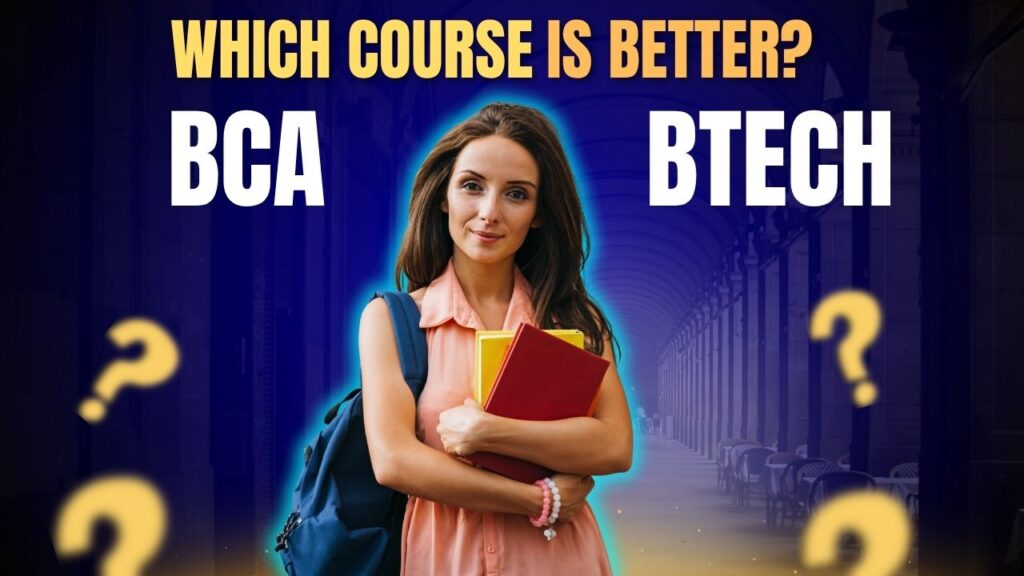
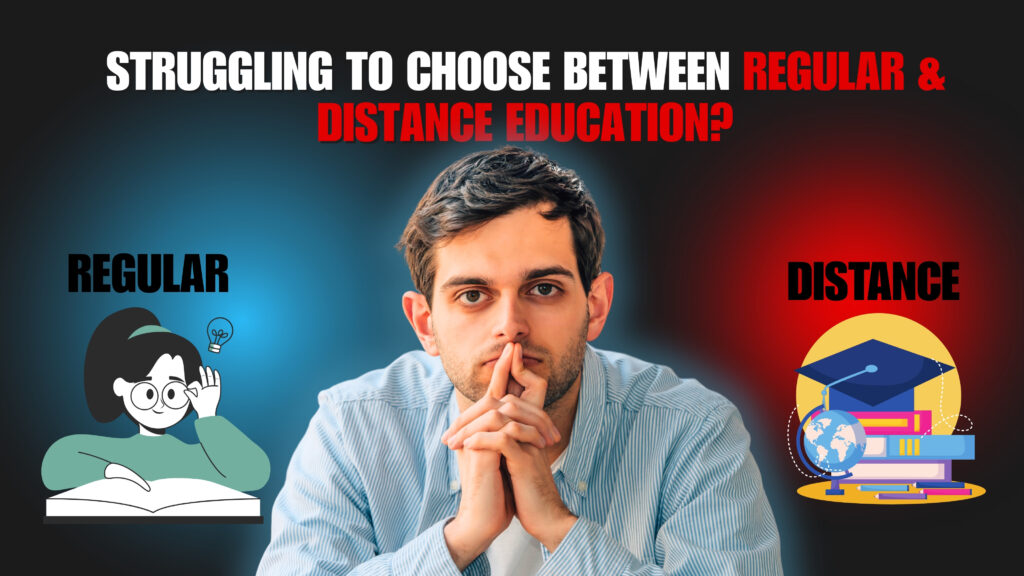
Student comparing Regular vs Distance Education with books and a laptop, symbolizing classroom learning and online flexibility

Choosing the right educational path after 12th with any stream is confusing. Many students want to work while pursuing their higher education and some of them want to focus on their studies properly. Regular vs Distance Education is best in their own perspective, whether you have an educational background in science, commerce or arts. Let’s look into this topic further to differentiate both the topics in more detail. To resolve the confusion, analyze – Which one holds more value? Which option is best for your career? 

I have seen many students and parents discussing this issue and get confused. Let me tell you one thing, it depends on your degree. Theoretical degree – you can get from distance but not MBBS or B.Tech because it requires practical experience.

In this article, we will look at both options by giving every detail of both education, so you can make a smart choice that fits your life, your goals, and your budget.

What is Regular Education?

Think of regular education as the traditional “college life” you see in movies. You have to:

  • Attend classes on a fixed schedule.
  • Go to a physical campus every day.
  • Talk and be responsive to your teachers and classmates face-to-face.
  • Some colleges are strict about the 75% attendance percentage.

Students who aim to learn not from just books but also from being part of a college community, participating in events, and living the campus life. 

What is Distance Education?

Distance education, also known as Open and Distance Learning (ODL), is all about flexibility. 

  • You study further in your choice of career from anywhere in India.
  • Take resources at your preference such as online materials, videos, and books.
  • You can study at your preferred time and have no issues with attending daily classes.
  • No face-to-face Interaction with teachers and students. Interaction happens mostly on online platforms or weekends.
  • You can manage work and study parallely. 

Top government-recognized universities like IGNOU and private ones like Symbiosis are offering distance education in India.

Quick Comparison for Regular vs Distance Education

FeatureRegular EducationDistance Education
LocationFixed CampusAnywhere in India
ScheduleDaily classesFlexible
CostVery High (Tuition + Living)Very Low (Mainly tuition)
InteractionFace-to-face with teachers/peersVirtual (Online forums, email)
DisciplineDriven by teachers & timetableRequires high self-discipline
Best ForPractical, lab-based coursesTheory-based courses, upskilling

Regular Education – Pros & Cons

Pros:

  • Networking Growth: You can have a chance to grow your network in the same field for more career benefits. Strong relations to both students and teaching can develop your communication skills.
  • Direct Teacher Guidance: You can respond to teacher’s questions and ask them individually to clear your doubt. Some teachers are good at encouraging students for their career.
  • Campus Life: Extra curricular activities and sports can be beneficial for your mental and physical health. Overall development is something you only get on campus.

Cons:

  • Expensive: Some students can’t afford college fees, but they need to hold the degree to grow in their career. 
  • No Flexibility: You cannot work a full-time job if you are attending regular classes. Part-time jobs can give you any experience for your career. If you want to prepare for any competitive exam then distance education is a good option.
  • Relocation for Studies: Students who live in lower regions have to move out for studies and it will be difficult for them.

Read More 👉 BTech vs BSc vs BA in 2025: Which Degree Offers the Best Future Scope?

Distance Education – Pros & Cons

Pros:

  • Affordable: Anyone can afford distance education fees because these are half of the regular degree fees.
  • Earn While You Learn: You can do both at the same time – working full time and take your lessons whenever you get free. 
  • Prepare for Competitive Exam: You can also prepare for the competitive exams.
  • Accessible from Anywhere: A student from a small town can get a degree from a top university in Delhi without leaving their hometown.

Cons:

  • Needs Self-Discipline: You need to focus on self-study because there is no teacher to push you.
  • The Digital Divide: While Improving, Still many students do not have laptop or wifi access to their home for study.
  • Limited Practical Labs: You can pursue master degree or theoretical education from distance education but for engineering and medical, you need hands-on lab experience.

Who Should Choose Regular Education?

  • Recent School Pass-outs (12th Graders): If you are young and want the full college experience, and your family can afford it, regular mode is a great choice.
  • Students Pursuing Technical/Lab Courses: For degrees like B.Tech, MBBS, or pure sciences, the hands-on practical training in a regular college is essential. These courses are not valuable for career and UGC also prohibits them.
  • Structured Environment: Many students are not able to study on their own so they need big support from teachers to help them stay on track.

Who Should Choose Distance Education?

  • Working Professionals: If you are already in a job and want to upskill for a promotion (e.g., getting an MBA), distance education is perfect.
  • Homemakers: women who can’t afford to attend regular classes because of their responsibilities can choose to continue their study from distance education 
  • Competitive Exam Aspirants: UPSC, SSC, Railways or banking aspirants often take a distance B.A. or B.Com degree to meet the eligibility criteria while focusing on their main preparation.
  • Students in Rural: They mostly need to move out for education and some students can afford this, they can get quality education at their doorstep.

Career Scope & Recognition in India

This is the most important part. The University Grants Commission (UGC), the main body for higher education in India, has officially stated that degrees from Regular, Distance (ODL), and Online modes are to be treated as equivalent.

This means if a job requires a B.Com degree, a B.Com from IGNOU is just as valid as a B.Com from Delhi University for applying to that job, including government jobs. In 2025, Indian companies care more about your skills and whether your degree is from a UGC-recognized university, not the mode you studied in.

Universities Delivers Regular & Distance Education

Top Universities for Regular Degree

Read More 👉 MTech vs MBA in 2025: Who Earns More and Why? Find Out Now!

Top Universities for Distance Degree

Top Universities for Both (Distance & Regular)

  • NMIMS 
  • Amity University
  • Lovely Professional University

Conclusion

There is no single answer for this confusion, you must think about the option that aligns with your career, situation and budget.

Choose Regular Education if: 

  • You can afford
  • You are a recent school graduate
  • You want an immersive campus experience

Choose Distance Education if: 

  • You need flexibility
  • want to study while working 
  • limited budget
  • focused on a competitive exam.

In today’s India, both paths can give you a better career if you have developed skills in yourself. There is no 100% guarantee in both education that you can get a placement. What can give you guarantee is your hard work and improved skills. The right path is the one that takes you to your destination without derailing your life.

Leave a Comment

Your email address will not be published. Required fields are marked *

Allied Medical Courses Roadmap 2026: Eligibility, NEET, Courses & Career Scope

Allied Medical Courses Roadmap 2026: Eligibility, NEET, Courses & Career Scope

In the constantly changing healthcare environment, the focus is changing. Doctors and nurses may be the public face of medicine, but there is a whole engine room of professionals holding the system together: the Allied Health Professionals. To become one, you need to break down the Allied Medical Courses Roadmap.

If you have ever asked yourself questions like “who runs that fancy MRI machine?”, “who handles the complex chemistry of a pathology lab?”, or “who assists a runner to walk again after a devastating injury?”, you have now become the proud owner of a glimpse into the world of Allied Health. 

As the 2026 Union Budget announced the addition of ten new allied health disciplines and targets to train one lakh professionals in five years, there is no better time to chart your path in this domain. 

What are Allied Medical Courses?

Allied Health Sciences (AHS) are career options in the healthcare sector where professionals work in tandem with doctors and provide diagnostic, technical, therapeutic and other support services. These courses are specialized rather than comprehensive like an MBBS. They’re the hands-on, practical side of medicine—taking the technology and therapy and making them work to save lives. 

Who Can Choose Allied Medical Courses?

These are the courses that are available for science stream students after 12th, and they consist of theory, practicals and also internships. Unlike MBBS, they are open (3-4 years), cheap (₹50k-₹5 lakhs total), and now NEET-compulsory under NCAHP for uniformity. Perfect for students looking at colleges like King George’ Medical University or the privates. 

Allied Medical Courses Roadmap

Charting a course for this vocation from high school to the hospital is going to be a bit of a balancing act, particularly with new rules set to be implemented in 2026. 

1. The Foundation (Class 12)

Allied health programs require a science core including physics, chemistry, and biology (PCB). Although certain diploma courses earlier admitted students from other streams, the drift in 2026 is towards making science a single stream for clinical jobs. 

2. The Entrance Era (NEET 2026 onwards)

As per the notification of National Commission for Allied and Healthcare Professions, NCAHP dated 31st May 2023 NEET UG is going to be made compulsory for admissions in various undergraduate allied courses from 2026-27. It implies that the “non-NEET” option to some of the best institutes is being gradually closed, which will help enhance the quality and professional recognition of the graduates. 

3. Choosing Your Path: Degree vs. Diploma

Bachelor’s Degree (B.Sc./BPT): Normally 3 to 4.5 years. They offer more theoretical knowledge and are oftentimes necessary for obtaining work permits in other countries.

Diploma (DMLT/DRT): 2 years in general. These “accelerated” tracks offer a practical focus on talent for students interested in moving quickly into the workforce. 

Read More:- UPSC Civil Services IAS/IFS Pre Recruitment 2026:  Notification, Dates & Apply Complete Guide

Top Allied Medical Specializations for 2026

CourseFocus AreaRole
BSc (MLT) — Medical Lab Technology Studying samples like blood, tissue, and other body fluids.Lab Technologist
Bachelor of Physiotherapy — BSc (BPT)Helping in regaining strength through Physical rehabilitation Physiotherapist
BSc with Radiology & ImagingScanning through X-rays, CT scans, and MRIs to detect injuriesRadiology Technologist
B.Sc. Anaesthesia & OT TechSupporting surgeons and managing ICUs.OT Technician
B.Sc. Cardiac Care TechnologyMonitoring heart health and ECGs.Cardiac Technician

Why Choosing an Allied Medical Courses Roadmap is Right?

Entry to workforce more quickly

While an MBBS requires 5.5 years (plus specializations), most allied health programmes make you career-ready within 3 to 4 years. This is your lane if you just want to start making a difference and earning sooner.

High Demand

There is a massive demand for healthcare technicians worldwide and skilled professionals capable of meeting that demand are difficult to find, making it a path to high opportunity around the globe. Expansion of the Regional Medical Hubs (introduced in 2026 Budget) is expected to generate thousands of jobs in diagnostics and rehabilitation in India alone. 

Technological Integration

If you’re a gadget geek or tech enthusiast, then Allied Health is the way to go. You don’t just read charts, you’re running some of the most sophisticated AI-enabled machines on the earth. 

Future Scope and Salary

The era when Allied Health was considered a “plan B” is behind us. By 2026, the starting salaries of freshers can vary from ₹2.5L per annum to ₹5L per annum based on the specialization. Specialized positions such as Perfusionists or Cardiac Technicians also attract even higher premiums.

Additionally these degrees have great international mobility. Countries such as the UK, the UAE and Canada have specific visa tracks for Allied Health workers, so this is really your ticket to a global career. 

Conclusion 

The Allied Medical Courses Roadmap isn’t a secret trail anymore — it’s a fast moving highway. With a government emphasis on skilling and the standardization of entrance exams, these professions are enjoying a newfound prestige.

If you love science but don’t want to go to medical school for ten years, the Allied Health track is a balanced, tech-forward, and profoundly satisfying way to go. 

Leave a Comment

Your email address will not be published. Required fields are marked *

Courses for Interior Designing in India: Admission, Colleges & Careers

Courses for Interior Designing in India

If you are the type of person who regularly moves your furniture around, cleans windows to get the perfect paint color, or critiques lighting in every restaurant you dine in, maybe you have a calling. Your Search for Courses for Interior Designing starts when the question pops up: How do you get paid to have that passion? 

In these days, interior design is no longer just about “making things look pretty.” It is a complex mix of architecture, psychology, technology, and art. Whether you are a high school graduate looking to pursue a degree or a working professional residing in Lucknow wanting to make a creative pivot, this guide is your blueprint. Let’s talk about everything you need to know to about the interior design courses, colleges, and careers. 

Why Formal Education Matters

Let’s be real for a second. You may have a great eye for decorating, but professional interior design is a whole other story. It deals with strength of materials, building codes, ergonomics, and space planning.

A formal course will teach you the “grammar” of design. You are taught to talk with contractors, architects and clients. You go from saying, “I think this blue looks nice,” to, “This particular shade of teal offsets the warm undertones of the timber flooring and captures the natural light coming in from the north-facing window.” 

Types of Courses

Course TypeDurationEligibilityWhat You’ll Get
Bachelor’s —B.Des / B.Sc3-4 YearsB.Sc Or B.Des require 10th & 12th marksheet from Science StreamIn-depth technical knowledge related to Designing
Diploma / Advanced Diploma1-2 YearsKey Formula for fast entry in careerFocused on Practical more than theory, Skill Polishing
Certificate Courses3-6 MonthsHobbyists or professionals adding a specific skill (like CAD or V-Ray).Specific skills only. Prefer for less professional people
Professional Level (M.Des / M.Sc)2 YearsAfter having a degree of B.Des/B.Arch. These masters courses offered for specific specializationResearch-oriented, higher leadership roles, and teaching opportunities.

Top Colleges 

  • NID—National Institute of Design
  • CEPT University—Ahmedabad
  • IIT Delhi, Bombay
  • VIT
  • IIAD—Indian Institute of Art & Design
  • IMS Design
  • Amity University, Lucknow
  • Integral University
  • Gov. Girls Polytechnic
  • Babu Banarasi Das University 

What Will You Actually Learn?

Your course will probably be part art and part engineering. There’s a chance that you will be spending your first year hours hand-sketching and studying Color Theory. In your final year, you will be making hyper-realistic 3D renders that look like photographs. 

The “Hard” Skills (Tech You Need to Master in 2025):

To make it in the business these days, you have to know your way around a computer. These are the software tools you’ll probably end up knowing inside and out when you graduate:

AutoCAD - 2D blueprints industry standard It’s non-negotiable.

SketchUp: The Simplest 3D Building Tool Out There. Consider it as digital clay.

Revit / BIM – essential on large commercial jobs where you need to work closely with architects.

AI Homestyler: more recent and cloud based AI tools that are rising in popularity as they render fast. 

Read More :- UP Police Computer Operator Grade-A Online Form 2025: Apply, Dates & Eligibility

The “Soft” Skills:

  • Client Management: How to tell a client their idea won’t work without offending them.
  • Budgeting: planning of champagne dreams on a beer budget.
  • Project Management: Getting the plumbers, electricians and carpenters to not kill each other. 

Career Scope & Salary

Driven by an expanding middle class and real estate boom, India is witnessing an upsurge in the interior designing industry.

Various paths for a Interior Designers:

Residential Designer: Homes, apartments, villas. (High emotional connection with clients).

Commercial/Corporate Designer: Offices, co-working spaces. (Higher budgets, strict deadlines).​

Hospitality Designer: Hotels, cafes, restaurants. (Very creative, high visibility).

Set Designer: Design sets for movie or tv (Big in Mumbai/Hyderabad). 

Salary Expectations

Entry-level compensation can be humdrum, but expansion is meteoric once you acquire a portfolio. Specialized positions, particularly in Luxury or Commercial sectors, offer much greater pay.

The chart exhibits how, even though you may begin as a junior at about ₹3.5 Lakhs per annum, it does pay off after all. A Senior Designer with 7+ years of experience can earn comfortably north of ₹12 Lakhs, and if you start your own firm or get into luxury consulting, the sky’s the limit (₹18 Lakhs+).

Admission Procedure For B.Des/M.Des in Major Colleges

For premiere govt colleges (like NID) you will have to appear for entrance exams like NID DAT or UCEED. They test your drawing ability, creativity, and spatial logic.

In case of private universities (such as Amity or Integral in Lucknow), admissions are essentially on the basis of marks secured in 12th and DAT (Design Aptitude Test) or portfolio review. 

And build a portfolio, even if you’re not studying design. Draw a corner of your room. Redesign your kitchen on paper. Capture the textures you like. Your potential and passion matters, not perfection.

Conclusion

Courses for Interior designing are not for the weak hearted. Dusty job sites, demanding clients, and nights spent staring at a computer screen. But it is also hugely gratifying. There is a unique thrill in walking into a space you designed — watching people live, laugh and work in a place that began as a sketch in your notebook.

If you like to mix creativity with logic, and art with engineering, this is the year to look forward to for starting out. Whether you opt for a degree from Amity Lucknow or a diploma to begin your career at the earliest, the world is holding its breath for your designs. 

Leave a Comment

Your email address will not be published. Required fields are marked *

MPESB Recruitment 2025: Primary Teacher Vacancies Announced – Apply Now!

Candidates who want to apply for a Primary School Teacher job can now apply online through the official website. MPESB recruitment 2025 starts on 18 July 2025, and the portal will open until 01 August, 2025. There are several posts for Primary School Teachers, Apply now to secure the position. This post’s salary range is nearly Rs. 25,300 with additional benefits.

The minimum age limit is 21 years and the maximum is 40 years. Age relaxation of 5 years will be given to reserved categories. Read the official notification for full eligibility information.

MPESB Recruitment 2025 Highlights

ExamPrimary School Teacher Selection Test
BoardMadhya Pradesh Employees Selection Board
PurposeMPESB is conducting an exam w is mandatory for Primary School Teachers. Recruitment will be based on merit list.
Vacancies13089
Selection ProcessWritten Exam, Merit List, and Document Verification
Official WebsiteClick Here

MPESB Recruitment 2025 Key Dates

Application Starts18/July/2025
Application Last Date01/July/2025
Fee Payment Last Date01/August/2025
Correction Last Date06/August/2025
Exam Date31/August/2025
Admit CardBefore The Exam

Read More 👉 Agniveer Answer Key 2025 Out – Download From Direct Link

Steps to Apply MPESB Recruitment 2025

Official website for the MPESB recruitment is added in the article. You can go to the website or apply directly from here.

  1. Check out the Application Link on the official website.
  2. Click on the link then the registration page will appear.
  3. Fill in the required details to register. 
  4. Attach the documents if needed then pay the application fee.
  5. Click on submit once you re-check the details.
  6. Download the copy of the application for future use.
Application Fee
Gen/EWS/Other stateRs. 560
OBC/SC/STRs. 310
Payment ModeOnline

MPESB Recruitment 2025 Important Links

Apply NowClick Here
Download RulebookClick Here
Official WebsiteClick Here

Leave a Comment

Your email address will not be published. Required fields are marked *

Essential Government Exams for 12th Pass Students in 2026: A Complete Guide

Essential Govt Exams for 12th Pass 2026 Guide

Post 12th Government exams are the best means to get a lucrative job in the government sector in India. Due to high salaries, job security, and lifetime benefits, these exams are dream of lakhs of students. In 2026, as we look to the future, several big recruitment cycles in Railways, SSC, Banking, Defence and Police departments are expected to be announced, which will once again pour in its biggest ever recruitment for 12th pass candidates.

Whether you are going to appear for RRB, SSC CHSL, MTS, Police or Defence services i.e. NDA or Navy, you can get complete information about Eligibility, Salary, Age Limit, Exam Pattern. If you have been looking for Govt exams for 12th pass 2026 then what you are reading is the most exhaustive 2026 roadmap for government jobs after 12th you will find online. 

Railway Exams (RRB)

RRB NTPC is one of the most popular railway recruitment to apply for jobs in Commercial Cum Ticket Clerk, Accounts Clerk Cum Typist, Junior Clerk Cum Typist etc. 

Railway Exams
Image Creadit : govupdatewala
  • 3,058 Posts are notified with the pay scale between ₹ 19,900 to ₹ 35,400. 
  • 12th pass or equivalent with 50% marks in aggregate is minimum eligibility. 
  • Selection Process: The selection will be two CBT (CBT 1 & CBT 2), typing skill test and document verification. 
  • Age Limit: 18-30 years. 

RRB Group D is one of the biggest recruitment by Indian Railways. Amidst the ongoing exams from November 2025 to January 2026, the recruitment process will extend to 2026. This exam can be appeared by both 10th and 12th pass candidates and it will be about 1 lakh of vacancy every year. Posts such as Track Maintainers, Helpers and more under Level 1 category. Salary ranges from ₹18,000 to ₹35,000, in most cases. The selection includes CBT, PET, Document Verification, Medical Examination. 

SSC (Staff Selection Commission) Exams

SSC CHSL (10+2) 2022 is conducted for the posts of LDC (lower division clerk), DEO (data entry operator). As per the 2025-26 calendar, this exam is generally held in September with the dates of the exam scheduled from 8-18 September 2025 and the following cycles continuing in 2026. The minimum qualification is 12th pass in from a recognized board. 

SSC MTS (Multi-Tasking Staff) is a non-technical post but the pay is lucrative. As per SSC schedule, notifications are usually issued in the month of June with exams in the month of September-October cycles. The pay scale is between ₹18,000 and ₹29,200 according to the post and experience. 

SSC (Staff Selection Commission) Exams
Image Creadit : govupdatewala

Recruitment for 2026 will be conducted in January-February 2026 with an expected 25,000-50,000 vacancies. The age limit is 18-23 years and the aspirants must be 12th pass. The selection procedure is Computer-Based Test (CBT), Physical Standard Test (PST), Physical Efficiency Test (PET) and Medical Test. 

SSC Stenographer (Grade C & D) is a 12th class level exam of SSC that requires good typing skills in English or Hindi. These are usually published around June-July and later in the year the exam is conducted. 

IBPS Banking Exams

IBPS RRB Clerk has Pre (Online) examinations on 06, 07, 13 & 14 December 2025 and IBPS RRB Clerk Mains 2025 on 01 February 2026. These roles generally offer pay per packages from ₹18,000 per month upwards. Age limits for the candidates is 18 to 28 years depending on the post. 

IBPS Banking Exams
Image Creadit : govupdatewala

The IBPS PO 2026 will probably follow the pattern of former cycles, the notifications to be released around August 2026, application process in August-September 2026, Preliminary Exam in October 2026, and Mains in November 2026. Applications are invited from eligible candidates to fill the posts of Electronic Engineer (EE) for this position PO requires generally a graduate degree; however, watch the notifications as for some posts the eligibility is 12th pass. 

Police & Armed Forces Recruitment

SSC Delhi Police Constable Recruitment 2020 is out @ssc.nic.in, Apply online for 7565 posts via 10+2 or equivalent. Age Limit 18-25 years. Selection Procedure is Computer Based Examination (CBE), Physical Endurance Test (PE&MT) and Document Verification. Candidates should possess a valid driving license (2-wheeler or 4-wheeler) for LMV (Motorcycle/Car). Salary Generally Salary ₹25,000-40,000 Per month. 

Recruitment for the police is state dependent The State Police in most states recruit for the position of Constable in the year 2026. The Age limit is generally between 18-25 years with relaxations for reserved categories. Education qualification is 10th/12th pass. Written Exam, Physical Efficiency Test (PET), Physical Standard Test (PST), Medical Test and Document Verification are the part of selection procedure. 

Police & Armed Forces Recruitment
Image Creadit : govupdatewala

12th Pass From a Recognized Board is Required for Indian Navy (Sailor SSR) Recruitment. Sailor jobs are the highest paying in this country to compete with salary packages. Age is usually 17.5 to 21 years. 

Indian Coast Guard Navik GD (General Duty) is for those candidates who have passed 12th with Physics and Mathematics. The age limit is 18-22 years for 260 vacancies declared for 01/2026 and 310 for 02/2026.The selection process consists of Written Exam(Stage I), Physical Fitness Test, Document Verification and Medical Examination. 

Indian Coast Guard Navik DB (Domestic Branch) is not only for the 10th pass candidates but 12th pass students can also apply. This is a little more within reach for the 12th pass candidates. 

NDA (National Defence Academy)

  • It happens two times a year, usually in April and September. 
  • The minimum age is 16.5, Candidates born between January 2, 2008, and January 1, 2011 are eligible to apply for 2026. 
  • For Air Force and Naval Wings you need to have passed 12th with Physics & Chemistry as compulsory subjects. 
  • There is no age relaxation in any category. 
  • The selection procedure consists of Written Exam( Mathematics and General Ability Test), SSB Interview and Medical Test. 

Read More 👉 SEBI Officer Grade A Recruitment 2025: Key Dates and Application Process 

2026 Government Exams Calendar

QuarterKey Exams Preparation Focus
Q4 2025 RRB Group D & Clerk Prelims/SSC GD/IBPS (on-going)Intensive prep is needed
Q1 2026 NDA/Police/NTPC/SSC GD Multiple exam focus
Q2 2026 NDA/SSC CHSL/Railway further processNDA, CHSL applications and initial preparation
Q3 2026 SSC CHSL exams/SSC MTS/Bank PO recruitmentInitial preparation
Q4 2026 Banking exams/ Stenographer exams/final recruitment cyclesFinal major exams

Strategic Preparation Tips

Choose the examinations according to your interests and strengths, do not attempt all at once. Stability and pension benefits are the other advantages of the railway jobs. It’s competitive to clear the Banking exams but the salary growth is amazing. 

  • A study planner will help you to schedule every topic for a limited time. You must focus on subjects including quantitative aptitude, reasoning, English, general awareness. 
  • Previous year question papers & Mock Test helps to understand the pattern and importance of the particular topic. 
  • Keep track of the notifications on the official website for the latest updates regarding exam date/pattern. 
Exam EligibilityAge LimitStarting SalaryHighest PaySelection Process
RRB NTPC12th Pass with 50%18–30 yrs₹19,900  ₹35,400CBT 1 & 2, Typing, DV
RRB Group D10th / 12th Pass18–33 yrs₹18,000  ₹35,000CBT, PET, DV, Medical
SSC CHSL12th Pass18–27 yrs₹25,500 ₹81,100CBT 1, CBT 2, Skill Test
SSC MTS10th / 12th Pass18–23 yrs₹18,000  ₹29,200CBT, PET, PST, Medical
SSC Stenographer C & D12th Pass + Typing18–30 yrs₹25,000  ₹81,100CBT + Skill Test
IBPS RRB Clerk12th / Graduation (varies)18–28 yrs₹18,000+Prelims + Mains
Delhi Police Constable12th Pass + Driving License18–25 yrs₹25,000 ₹40,000CBE, PET, PMT, DV
State Police Constable10th/12th Pass18–25 yrs₹20,000  ₹45,000Written + PET + Medical
Indian Navy SSR12th PCM17.5–21 yrs₹35,000₹45,000Written, PFT, Medical
Indian Coast Guard Navik GD12th with PCM18–22 yrs₹25,000₹35,000Written, PFT, DV, Medical
NDA 12th PCM 16.5–19.5 yrsStipend + Officer PayWritten + SSB + Medical

Conclusion

The preparation for government exams in the 12th standard itself is a smart move to secure a bright future. Well with thousands of job vacancies expected in 2026, Railways, SSC, Police, Defence, Banking you name it is raining vacancies, the wait is finally over and it is time for aspirants to start structured preparation. 

Pick your exam wisely based on interest and strength, uniformed services, clerical posts, railways, defence and stick with practice tests and mock exams. If you want a job that’s solid with long-term perks, this is the time to go. Begin at the right time, maintain your focus and the right opportunity will be yours. 

Leave a Comment

Your email address will not be published. Required fields are marked *

Top B.Tech Colleges in India: Latest Ranking & Admission Guide

BTech Colleges in India

When thinking about starting a career in engineering then choosing among the top BTech Colleges in India is the priority for every student. The race for a Bachelor of Technology (BTech) course has gotten much tougher and thrilling as there are plethora of options for would-be engineers across the country. If you’re a Class 12 student planning to appear for entrance exams or a parent navigating the admissions maze, this one-stop guide will give you an overview of the current scenario of top BTech colleges in India, their rankings, placements and admission criteria. 

Understanding the Current Landscape: NIRF Rankings 2025

Indian BTech Colleges NIRF Ranking 2025 is considered as the standard for deciding the best BTech colleges in India. As per the updated list, IIT Madras ranked 1st once again for the ninth straight year, further consolidating its hold on engineering. The top five Engineering institutes in India according to NIRF 2025 are IIT Madras, IIT Delhi, IIT Bombay, IIT Kanpur, and IIT Kharagpur.​

 IIT Madras, IIT Delhi

But the story is not all IITs, the NIRF Rankings are not limited to the only IITs. As far as the National Institutes of Technology (NITs) are considered, only NIT Trichy emerges among the top 10 at rank 9 in the list, which speaks about the immense competition in rankings. Following NIT Trichy we have the older NITs like NIT Roorkela, NIT Suralgkal, we have NIT Calicut who all regularly get top 25! 

NIT Roorkela and NIT Suralgkal

Private institutes have also made a place for themselves, with BITS Pilani at Rank 11 and VIT Vellore at Rank 16 in NIRF 2025. These colleges are no joke, they do provide a world class education and you will have no problem finding employment. 

The Tier System

In addition to the usual rankings, a number of industry insiders grade schools according to tiers based on placement results, presence of recruiters, and number of competitive cutoffs. This gives a more refined sense of the college pecking-order. 

Tier 1 (Premier Institutes) consists of the legendary IITs such as IIT Bombay, IIT Delhi, IIT Madras, IIT Kanpur, IIT Kharagpur, IIT Roorkee, IIT Hyderabad, and IIT Guwahati. These are also engineering colleges which dream destinations for most engineering aspirants. Indian academics are tough and placement records are also excellent.​

IIT Kanpur and IIT Bombay

Tier 1.5 (Strong and Competitive) has institutes such as IIT BHU (Varanasi), IIT Indore, BITS Pilani, IIT Ropar, IIT Gandhinagar, NIT Trichy, NIT Surathkal, and NIT Warangal. These universities have good academics and employment potential and have gained significant traction in reputation. 

Tier 2 (Well established with Consistent Track Records) Institutes of the second tier like IIT Mandi, IIT Jodhpur, IIT Bhubaneswar, IIT ISM Dhanbad, NIT Rourkela, NIT Calicut, BITS Goa, BITS Hyderabad, and the likes, boast of consistent placement records coupled with strong alumni network. These are established institutes and provide assured opportunities for students for career growth and links with industry.  

Placement Statistics

While selecting a college, the chief concern is usually the placement. Let’s dig into the real figures. The average salary package at IIT Bombay soared to ₹23.5 LPA in the 2024 placement drive, showing a 7.7% rise from last year’s ₹21.8 LPA. The highest package at IIT Bombay soared to a staggering ₹3.67 crore, with 22 students bagging offers scaling the ₹1 crore per annum mark. 

The placement rate for IIT Bombay’s BTech programme is a healthy 74.53%, with 1,475 students placed out of 1,979 registered. Curiously, Computer Science Engineering is the most in demand branch with 230 offers, then closely matched by Electrical Engineering (232) and again by Mechanical Engineering (229).​

The average package at IIT Kanpur hiked up to ₹26.27 LPA, whereas IIT Delhi saw an average package of ₹17.60 LPA with a highest package of ₹2.05 crore. These statistics attest to the amazing value top engineering colleges provide their students. 

Admission Process For B.Tech

Anyone with ambitions to be a part of these institutions should know the process of meteoric rise, which is Understanding the process of admissions is essential for any aspirant who wants to get into these esteemed organizations. The route for BTech admission in India: Your Class 12 results and entrance exams largely decide your fate.​

NIT Trichy

An all India examination termed JEE Main is required to be passed by the candidates for admission to the institutes like IITs, NITs. Candidates are required to qualify in JEE Advanced, which is the next level after JEE Main, for seeking admission to IITs. JEE Advanced for admission to IITs can be attempted only by JEE Main rank holders (JEE Main is qualifying exam for JEE Advanced), and seat allotment in IITs is done on the basis of JEE Advanced ranks alone. 

The eligibility criteria is simple, but important: candidates should have completed class 12th (science stream with physics, chemistry, and mathematics) with minimum marks of 50% to 75% which varies as per the institute and category. For reserved category contenders the qualification is generally 65%.​

Admission Process For B.Tech

The BTech admission schedule is designed in a manner that helps you to plan well in advance. Application period: It may be from November to March of next year, subject to specific entrance examination. 

Entrance exams are generally held in April-June, followed by counselling and seat allotment after the exams then classes usually start around August or September. 

Cutoff Ranks Matters

In top colleges, an applicant with a JEE Main rank less than 5,000 can expect to get one of the top five NITs. For example, NIT Trichy’s Computer Science Engineering has an opening and closing rank of 1000-2000 in general category, NIT Surathkal’s CSE has ranks in the range of 1500-3500. 

General 91-95
EWS 79-83
OBC-NCL77-81
SC 58-62
ST 44-48

Under this category, the likely cutoff percentile for JEE Main 2025 is General (91-95), EWS (79-83), OBC-NCL (77-81), SC (58-62), ST (44-48). But, all these are predictions based on the past year’s trends of the exam, the actual figure of cutoff may be different. 

Popular BTech Specializations

The present day BTech courses are not only confined to traditional engineering branches. Computer Science Engineering (CSE) leads the list as the most preferred branch for a bright career in software development, data science and cybersecurity. 

Popular BTech Specializations

But today the BTech branches in the specializations are far more than the CSE. Mechanical Engineering, Civil Engineering, ECE (Electronics and Communication Engineering), and IT (Information Technology) are still the standard choice but some new fields are emerging that are taking over the engineering world. AI and Data Science, Cyber Security, Cloud Computing, Biomedical Engineering, and Robotics and Automation Engineering are the courses currently making waves owing to high demand in industry. ​

Emerging disciplines such as these are the future of engineering, and firms looking to attract the best graduates in those niche are already hard-pressed to come up with competitive salary packages. 

Understanding the Financial Reality

It is also necessary to consider the expenses related to BTech. The entire course fee amount for government colleges like NITs and IITs is generally between ₹8.35 lakhs and ₹9.17 lakhs which is really affordable considering the kind of opportunities these institutes offer.​

Private universities such as BITS Pilani have much higher fees at ₹23.9 lakh for the full course, although they do have a variety of advantages such as more flexible curricula and better placement results.​

With a low fee structure of ₹8.35 lakh, IIT BHU, Varanasi also has the highest ROI of 239.52%, due to a median package of ₹20 LPA. 

Conclusion

Selecting a BTech college is among the most crucial decisions in your academic life. Despite the importance of rankings and placement statistics, you must keep in mind your interests, what you want to do in your career and your personal circumstances. If you’re going for the elite IITs, the perpetually decently performing NITs, or the private ones like BITS Pilani, do remember that your success depends as much on how hard you work as how good your education institution is.

Start your JEE Main preparation today, aim for a good rank, and keep track of the dates of the admission process. After all the efforts and proper guidance, it’s not going to be long before you’re striding down the hallways of the top engineering colleges in India, ready to make a mark on the world. 

Leave a Comment

Your email address will not be published. Required fields are marked *

Scroll to Top