MPESB Recruitment 2026: Form Reopens on 13 October for Group 3 Sub Engineer & Other Posts

MPESB Recruitment 2026

The MPESB Recruitment 2026 application form reopens on 13 October and closes on 27 October 2026. This is the Madhya Pradesh Employees Selection Board’s combined drive for Group 3 Sub Engineer, Sahayak Manchitrakar (Draftsman), Technician and equivalent posts, and the rules have shifted since the first notice.

Look into the MPESB recruitment drive to understand eligibility criteria, age limit, how to apply for the different posts to get the well-paying job. Keep follow up the dates for the next phase on the official website.

MPESB Group 3 Sub Engineer Recruitment 2026 Date

MPESB posted the first Group-3 notice on 18 August for 1,040 posts which was cancelled and brought next month the combined recruitment exam of Group 3 posts. The application window was opened from 29 August to 12 September 2026 then it shut down. 

The MPESB Group 3 Sub Engineer recruitment 2026 application re-opens because the number of posts increased and the reservation roster was revised. Anyone who applied earlier can edit their form during the correction window.

The form is open again because the number of posts increased and the reservation roster was revised. Anyone who applied earlier can edit their form during the correction window.

EventDate
First application window29 Aug – 12 Sep 2026
Reopened form starts13 Oct 2026
Last date to apply27 Oct 2026
Correction window13 – 28 Oct 2026
Computer-based testDec 2026 – Jan 2027 (exact date not confirmed)

Posts and Vacancies

The pre-reopening notification counted 1,700 posts across 131 post codes, spread over departments, directorates and polytechnic colleges. Because posts were added, that total is probably out of date, and the reopened notice does not give one grand figure. 

The Public Works Department lists 225 and 68 Sub Engineer posts in two groups, Indore Development Authority has 41 and 3, Survey and Land Records has 14 Surveyor posts, and Geology and Mining has 4 Mineral Surveyor posts. Polytechnic colleges add Laboratory Technician and Draftsman posts in ones and twos.

Education and Age Requirement 

Different posts require different qualifications from you so apply for the post that matches your degree. If you have done graduation in engineering then you can apply for Group-3 Sub Engineering post. Candidates must check the official notification before applying.

  • Age: 18 to 40 years
  • MP relaxation: SC, ST, OBC and women candidates of Madhya Pradesh can get up to 45 years, subject to official rules. 
  • Aadhaar: registration is mandatory.
  • Employment exchange: Madhya Pradesh residents need a live registration. Check yours is active before you open the form, because an expired one is the kind of problem that surfaces on the last day.

Application Fee

Unreserved candidates pay ₹500 per post. SC, ST, OBC, EWS and PwD candidates who are Madhya Pradesh residents pay ₹250. Backlog posts under direct recruitment carry no fee. The portal charge is reported at ₹20 for the kiosk or MP Online route.

How to Apply Online MPESB Recruitment 2026

  1. Open esb.mp.gov.in and log in to your MPESB profile.
  2. Look at the notification and click on “Group-3 Combined Recruitment Exam” which will redirect you to the form page.
  3. Choose whichever post you are trying for based on your education.
  4. Upload documents that are required with your application and pay the fee.
  5. Submit and use the correction window to fix errors. But review the application before submit to avoid any correction later.

Documents such as ID, education certificates, domicile, and employment exchange card ready before you start filling the application form.

Exam Pattern and a Prep Tip

The exam dates are still unconfirmed but you can prepare yourself for the 200 marks question paper which also cuts off 0.25 marks if you give the wrong answer. This is a computer-based test held in two shifts for 3-hours. The test provides you bilingual in Hindi and English, with four options per question. 

After the test, you are called for the document verification and a medical exam, and this is where you have to be sure that you must have the proof of the information you are provided in the application and no health issues.

The application closes at the end of the month and exam starts after two months so there is a lot of time for you to start three-hour mocks now and track how many questions you skip. Blind guesses will eat up your marks, so aim to learn which question you can skip without losing your rank. This practice will also reduce your time to solve every question.

Read More 👉 NTA UGC NET JRF Online Form 2026: Last Date, Fees, Eligibility and How to Apply

Conclusion

If you have a diploma and engineering degree in any field, you can fill the form. Don’t wait for the 27 October, apply early to secure your position.

If you applied in September, log in during the correction window and recheck your post preferences, since the added posts may offer better options than the ones you picked. If your qualification only loosely fits a post, read that department’s recruitment rule first, because a rejected application costs you the fee and the cycle.


Leave a Comment

Your email address will not be published. Required fields are marked *

Best Government Jobs in Jharkhand in 2025

The demand for government jobs in Jharkhand is increasing day by day. Many youths want to get government jobs through their education and hard work, because government jobs provide job security, good salary, and many other benefits. If you too want to make your career through a government job, then many good government jobs are available in Jharkhand in 2025.

In this blog, you will get information about the Best Government Jobs in Jharkhand in 2025. The table given below gives a list of top 15 government jobs in Jharkhand, which includes the name of each job, department, eligibility, and official website link. You can apply for these jobs according to your qualification.

While preparing for a government job, it is important to understand your exam pattern and syllabus properly. Regularly check the official website for exams of Jharkhand Public Service Commission (JPSC), Jharkhand Staff Selection Commission (JSSC), and other government departments.

Top 15 Government Jobs in Jharkhand in 2025

S.No.Job TitleDepartment/OrganizationEligibilityOfficial Website
1Jharkhand Administrative Service (JAS) OfficerJharkhand Public Service Commission (JPSC)Graduation in any discipline, JAS Examjpsc.gov.in
2Jharkhand Police Sub-InspectorJharkhand Police DepartmentGraduation + Physical Standardsjhpolice.gov.in
3Assistant ProfessorJharkhand Higher Education DepartmentPost Graduation + NET/SETjpsc.gov.in
4Junior Engineer (Civil)Public Works Department (PWD)Diploma/Degree in Civil Engineeringjssc.in
5Accounts AssistantJharkhand Rural Development & Panchayati RajGraduation in Commerce/Financejssc.in
6Forest Range OfficerForest Department (JPSC)Graduation in Science or Engineeringjpsc.gov.in
7Medical OfficerHealth & Medical Education DepartmentMBBS from recognized institutejpsc.gov.in
8Revenue Officer (Patwari)Revenue DepartmentGraduation + local language knowledgejssc.in
9Staff NurseHealth DepartmentB.Sc Nursing / GNMjssc.in
10Teacher (PGT/TGT/PRT)School Education DepartmentB.Ed + Graduation/Post Graduationjssc.in
11Veterinary Assistant SurgeonAnimal Husbandry Department (JPSC)Degree in Veterinary Sciencejpsc.gov.in
12FiremanFire and Emergency Services Department10+2 + Physical Fitnessjssc.in
13Junior AssistantVarious Departments via Jharkhand Staff Selection Commission (JSSC)10+2/Graduation + Typing Skillsjssc.in
14Agriculture Extension OfficerAgriculture DepartmentB.Sc in Agriculturejpsc.gov.in
15Food Safety OfficerHealth & Family Welfare DepartmentDegree in Food Tech / Pharmacyjpsc.gov.in

BSNL Recruitment 2026: Apply Online for 120 SET Vacancies, Eligibility & Full Details

BSNL Recruitment 2026

Bharat Sanchar Nigam Limited (BSNL) has been releasing multiple vacancies for various posts under its BSNL Recruitment 2026 notification and it is a very good opportunity for the young and energetic candidates to apply for this largest Telecom PSU of the country. The news has created a wave of excitement among the job seekers across the nation, and for those who were waiting to take their first step into the industry, they can’t get a better opportunity.

BSNL, the Indian state-owned telecom company has released a notification for Senior Executive Trainee (SET) Recruitment 2026. There are a total of 120 prestigious vacancies to be filled by professionals. The last date to submit an application for this job is 15 April 2026.

Dates For BSNL Recruitment 2026

EventDate/Details
Notification release29/January/2026
Application start05/February/2026
Last date to apply15/April/ 2026 (extended)
Application correctionAround April 8–23, 2026 
Exam dateTo be notified later

Breaking Down the Vacancies

Let’s get down to the numbers, because that’s really what matters when you’re plotting your career move. Out of 120 posts, 95 posts are reserved for Telecom Stream and 25 posts for the Finance Stream. The category wise distribution goes like this: 51 general, 31 OBC, 18 SC, 9 ST and 11 for EWS candidates.

StreamVacancies
Telecom95 
Finance25
Total120 

What makes this BSNL Recruitment 2026 all the more interesting is that BSNL has unequivocally given preference to technical knowhow – nearly 80% of the posts are in the telecom operations domain, underscoring the firm’s commitment to ramp up its core infrastructure and services. 

Eligibility Scale

For Telecom Stream A full-time B.E/B.Tech with minimum 60% marks in the following related disciplines is required: Electronics and Telecommunication, Electronics, Computer Science, Information Technology, Electrical, Instrumentation. The essential point being “full-time”; a distance learning degree or part-time degree is not acceptable. 

The Finance Stream, too, is very specific: you must be an ICSI member, in other words, a qualified Chartered Accountant (CA) or Cost and Management Accountant (CMA). This is no compromise either.

You should be between 21 and 30 years of age as on March 7, 2026. Apart from this, if you belong to reserved categories, you are allowed some relaxation: 3 years for OBC candidates, 5 years for SC/ST candidates, and 10 years for Persons with Benchmark Disabilities (PwBD). The exact duration depends on their category. 

How Much You Can Earn?

Selected candidates will receive according to the IDA E-3 pay scale with the pay ranging from ₹24,900 to ₹50,500 per month. Add into the mix House Rent Allowance (HRA), Dearness Allowance (DA), Travel Allowance (TA), and a variety of other perks for which PSUs are renowned and it is a very tempting salary package when you add the job security and work-life balance of the job. 

The Selection Process

BSNL is not giving these posts on a platter. The process is stringent and intended to select the best. This is how it is done:

  • Initially, you will appear in a Computer Based Test (CBT) containing 200 multiple choice questions for 3 hours. 
  • It is a two part test: a general aptitude test containing 40 questions and a technical or finance knowledge test having 160 questions, this depends on your stream. 
  • Candidates who are guessing blindly can face the deduction of 0.25 marks if their guess will go wrong so it may not be the best strategy. 
  • You must achieve Minimum 45% marks in each section and 50% marks overall if you belong to the General Category. Candidates from other categories need 35% in each section and 45% overall is enough to pass the exam. 
  • If you clear the written exam, you will be called for document verification and medical examination. 
  • Clear all these hurdles, and you’re in but with a condition. There is also a boundation that you must serve 2 year probation and 5 year service period.

Step-by-Step Guide to Apply

  1. You can find the link of application process on BSNL Official Website. 
  2. Register with your valid email ID and mobile number.
  3. Enter all your details (Personal and Education) correctly, even a single error can cost you the chance.
  4. Upload your photo, signature, you require certificates
  5. General/OBC/EWS candidates should pay a fee of ₹2,500 and SC/ST/PwBD candidates are exempted from half the application fee i.e. ₹1,250. 2,500 online.
  6. Submit and download or print your Print off your records, and any evidence of submission for your application to keep safe. 

Read More:- SSC vs UPSC: The Ultimate Showdown for India’s Most Demanding Government Job Exams

Conclusion

BSNL Recruitment 2026 is a golden chance for the candidates who want to make a good career in the infrastructure of India. With 120 vacancies, the National Company Law Appellate Tribunal (NCLAT) is inviting applications from freshly graduated engineering and CA/CMA professionals who are looking forward to a career-building or establishing job in the public sector. The application deadline has been extended to 15 April 2026, plenty of time to get ready.

Ensuring that you have all the paperwork and documents in order Getting your technical skills ready up to scratch Getting yourself comfortable with the CBT (Computer- Based Test) format Remember, preparation is key if you want to ace the exams. 

For those who are looking to start their career in the Indian Telecom industry, especially BSNL,then it is recommended to visit this official site. Get the Latest Notification for knowing about BSNL Recruitment 2026 Procedure of Application and eligibility criteria. Making that initial move might lead to a bright future in the industry.

How to Crack UPPSC RO/ARO Without Coaching  

Crack UPPSC RO/ARO Without Coaching

Every year, lakhs of students in Uttar Pradesh start their RO/ARO preparation the same way — by joining a coaching institute the moment they decide to attempt the exam. It feels like the safe choice. Everyone around you is doing it, the institutes promise structured guidance, and the fear of “missing something important” pushes you toward enrolling even before you’ve opened a single book on your own.

I can’t speak for your specific goals, but what a lot of successful RO/ARO candidates will tell you once they’ve actually passed the test is: coaching never made the difference. What mattered was whether they understood the exam, built a routine around it, and stayed consistent long enough to see results. 

If you fall into the category of not being able to afford coaching or if you’re just an individual who likes to learn on his own terms, there’s no issue in attempting RO/ARO exams. You can start your preparations by yourself with the right guide. Proper syllabus, exam pattern, right schedule, responsibility are the core steps to take to prepare for the exam.

1. Understand Exam Pattern to Make the Right Strategy

You probably saw or heard that self-study failed many students not because they lacked intelligence but because they didn’t understand the exam’s purpose and importance. There are stages in the exams to clear and each one requires a different kind of preparation.

  1. UPPSC RO/ARO has a Preliminary exam to check how well you know General Studies and General Hindi and it rewards speed and accuracy over depth. 
  2. The Mains, on the other hand, wants you to write with clarity and present arguments, not just recall facts. 
  3. And the Typing Test, ignored by most aspirants until the last month, has quietly ended the dreams of candidates who cleared both written exams but never practiced typing seriously.

Before you buy a single book, spend two or three days just going through the official syllabus and the last five years of question papers. You’ll notice patterns almost immediately — certain topics from Indian History, Indian Polity, and UP-specific General Knowledge repeat in some form every year. This is the kind of pattern-recognition that coaching institutes charge lakhs to hand you on a platter. You can get there yourself with a notebook and some patience.

2. Build a Study Routine That Doesn’t Depend on Motivation

Coaching institutes work partly because they impose a schedule on you — classes at fixed times force a kind of discipline that self-study doesn’t naturally have. When you’re preparing alone, motivation runs out fast, usually within the first three weeks. What replaces it is routine.

Pick a time of day when your mind is sharpest — for most people, that’s early morning — and treat that slot as non-negotiable, exam day or not. Break up your week so that you have each subject in a chunk of the day, instead of bouncing around among all of them every day. A general division that helps for RO/ARO is General Studies in the morning, Hindi grammar and comprehension in the afternoon, and revision and mock tests in the evening. The exact hours matter less than the consistency of showing up.

What trips up most self-study candidates isn’t laziness — it’s the absence of a feedback loop. In a coaching class, a teacher tells you when you’re falling behind. Alone, you have to build that feedback into your own routine. Keep a simple tracker, even a basic notebook works, where you log what you studied and how confident you feel about it. Revisit that tracker every Sunday and be honest about the gaps.

Read More 👉 Data Science vs AI: Which Career Is Better?  

3. Choose the Right Books Instead of Too Many Books

One of the biggest traps for self-study aspirants is book overload. When you ask about which books toppers used, they might give you different answers. But each one of them has the topics which are frequently asked in the previous question papers. So, choose the book which you can understand when you read. Stick to that particular book per subject rather than jumping between multiple books hoping one of them “clicks.”

For General Studies, a common NCERT-based core syllabus in History, Geography, Polity and Economy is a much better option than jumping straight into exam-specific guides. Once your basics are solid, move to a UP-specific General Knowledge book, since a noticeable chunk of the RO/ARO paper focuses on state-level facts that national-level books simply don’t cover. For Hindi, focus heavily on grammar rules and previous year papers rather than generic Hindi literature books — the exam tests application, not literary depth.

Newspapers are non-negotiable, but read them with intent. Don’t read every article; scan for anything related to government schemes, UP-specific developments, and national events with policy implications. Ten focused minutes with a newspaper beats an hour of aimless reading.

4. Practice Like the Exam Is Already Tomorrow

Self-study candidates often make the mistake of treating mock tests as an afterthought — something to do once the syllabus is “finished.” In reality, mock tests should start early, even when you know only half the syllabus. Testing yourself regularly does two things coaching classes usually do for you: 

  • It shows you where your weak areas actually are 
  • And it trains your brain to work under time pressure

Solve at least one previous year’s paper or a full-length mock every week, and don’t just check your score — go through every wrong answer and understand why you got it wrong. Was it a factual gap, a silly mistake, or a comprehension issue? Each of these needs a different fix, and lumping them together as “I need to study more” won’t get you anywhere.

The typing test deserves its own separate practice schedule starting at least two months before your written exams are clear, not after. Waiting until results are declared to start practicing typing is one of the most common and avoidable mistakes RO/ARO aspirants make.

5. Find Your Community, Even Without a Classroom

The one genuine advantage of coaching is the peer group — people preparing for the same exam, sharing doubts, comparing notes, and keeping each other accountable. You can recreate this without paying for it. Online communities of RO/ARO aspirants, study groups on messaging apps, and even a couple of serious friends preparing for the same exam can replace this function almost entirely.

Use these groups to clarify doubts, share useful resources, and occasionally test each other. Just be careful they don’t turn into distraction hubs — the goal is accountability, not endless discussion about strategy that never converts into actual studying.

Read More 👉 Top 10 Mistakes to Avoid While Preparing for UPPSC RO/ARO

The Real Difference Between Coached and Self-Taught Candidates

Coaching gives structure to people who can’t build it themselves. If you can build that structure on your own — a study routine, the right books, regular self-testing, and a support system for accountability then there’s genuinely nothing coaching offers that you can’t replicate. 

What ends up separating candidates who clear RO/ARO from those who don’t isn’t whether they paid for classes. It’s whether they stayed consistent long enough, tested themselves honestly, and treated every mock test result as information rather than judgment.

Self-study for RO/ARO isn’t the harder path. It’s simply the path that asks more of your discipline instead of your wallet — and for a lot of aspirants across UP, that trade has worked out just fine.

Conclusion — How to Crack UPPSC RO/ARO Without Coaching

Clearing the UPPSC RO/ARO exam without coaching is entirely achievable if you get started with the right attitude and strategy. The course, past year papers, textbooks, sample tests, and current affairs are all available online nowadays. Because in the end, your success is going to be determined by the work that you do every day, not by how much money you spend on prep. The real challenge isn’t finding resources—it’s using them consistently.

UPSSSC Lekhpal Online Form 2025: Apply Online for 7,994 Revenue Posts

UPSSSC Lekhpal Online

UPSSSC Lekhpal Online: If you are busy preparing for government exams in Uttar Pradesh, now is the time for good news. The wait for one of the most awaited recruitments is finally over! The Uttar Pradesh Subordinate Services Selection Commission (UPSSSC) has started the UPSSSC Lekhpal Online Recruitment 2025. 

With a whopping 7,994 vacancies, this is not just a job alert, it’s a golden chance for thousands of aspirants like you to get a high paying government job. The application link has been activated from yesterday i.e. December 29 2025, so let’s get straight to the point and have a look at what all you need to know to grab this opportunity. 

Key Dates & Details at a Glance

EventDate
Application Start Date29/December/2025
Last Date to Apply28/January/2026
Fee Payment Deadline28/January/2026
Correction Window Closes4/February/2026
Application Fee₹25 (For all categories)
Age Limit18–40 Years

Vacancy Breakdown For Lekhpal

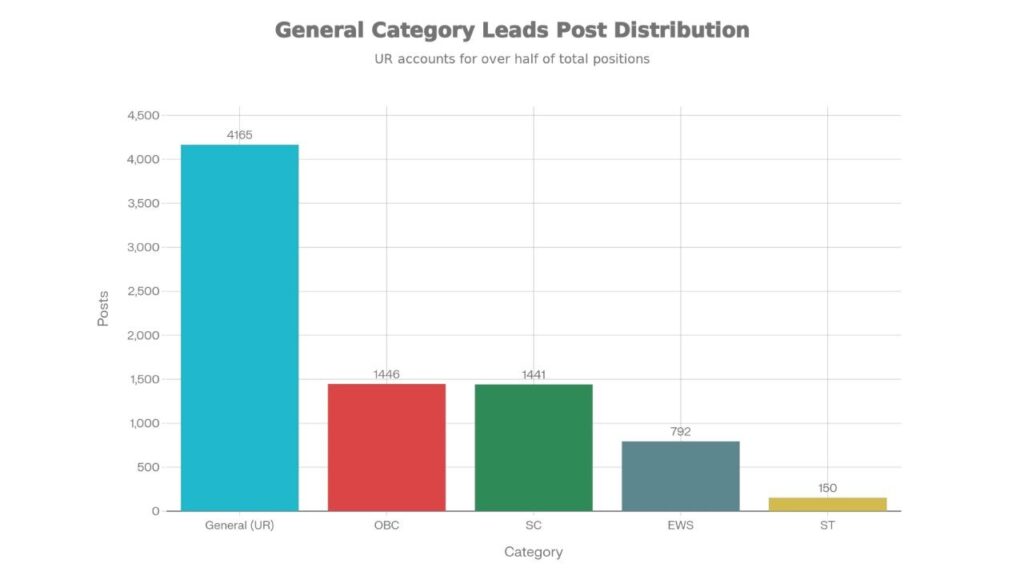
Knowing the rival is the first step. The commission has made available a clear breakdown of the 7,994 seats for various categories. Look out the chart whether you are from the General category or seeking a reservation? Here is the breakup of posts: 

Vacancy Breakdown For Lekhpal

Distribution for UPSSSC Lekhpal in a Category-wise

Firstly, the General (UR) Category is on the top with more than 4000 seats and then there is an almost equal split between OBC and SC candidates. This huge number of vacancies will make the cutoff competitive yet manageable with good preparation.  

Are You Eligible?

Before you hurry to the cyber cafe or switch on your laptop, let us confirm your eligibility. The rules are simple but hard:

Educational Qualification: The candidate should have completed 10+2 from any recognized board.

Top PET Requirement: And this is the most important part. You must hold a valid score card from UPSSSC PET 2025. The Mains exam will be short listed solely on your PET 2025 normalised score. 

Read More:- Best Courses for Business Analyst: Learn, Certify & Grow

How to Apply For UPSSSC Lekhpal Online

  1. Visit the official website of UPSSSC Lekhpal Online
  2. Click on the live notice link of Lekhpal recruitment.
  3. Sign in with your PET 2025 Registration Number. Most of your details will be auto-filled.
  4. Post your recent passport size D.O.B. & signature if not already posted.
  5. Make the application processing fee of ₹25.
  6. Apply and keep a print out of the form for future reference. 
Useful Links
Apply OnlineClick Here
Download NotificationClick Here
Official WebsiteClick Here

CBSE vs State Board: Choose the Right Board For Primary Education

Comparison of Different Boards

Educational boards have different advantages and disadvantages for students in India. Schools are the first stage for students to build their knowledge and shape their minds for a career. A student’s entire future depends on it. If you are a parent or educator then you must understand that when it comes to the classic debate of CBSE vs State Board, there is no one-size-fits-all answer.

There are factors including a student’s learning style, future goal, or central/state opportunities which can help you to decide the right one. So, let’s walk through this guide which explains the core differences between CBSE and State Board to help you make the right decision.

What is The CBSE Board?

CBSE offers a standard curriculum for students, schools authorized by CBSE board offer the same syllabus whether it is in Mumbai or Lucknow. This is best for students who change their cities frequently, so their studies won’t be disturbed. It is managed under the Union Government and heavily focused on Science and Mathematics. Schools offer both medium English and Hindi.

What is a State Board?

In India, every state has its own educational board for schools. The curriculum is designed to have one state’s language along with English as the primary language. For example, Hindi/Sanskrit in UP board and Marathi in Maharashtra board. It is focused heavily on the state’s geography, history, culture with leaning more towards science and mathematics. 

Best board for students who are aiming for state-level government exams or jobs. The lessons are also easy and point-to-point that will help students to easily understand their topic within less time.

Core Differences in CBSE vs State Board

To understand which board is better, we need to compare them across several critical parameters.

1. Curriculum and Syllabus

CBSE: The syllabus has been designed considering NCERT curriculum which is more inclined towards integrated theory and practical aspects. Students who have high level of analytical thinking can easily handle the CBSE syllabus as it is not based on rote learning. 

State Board: They punch a lighter syllabus but are heavily skewed towards a local language, history and geography. That curriculum would not be gone into with the same depth in CBSE.

2. Difficulty Level and Grading

CBSE: The exam structure is tough and built to test students’ reasoning skills. Scoring basically depends on continuous and multiple exams in a year which reduces the pressure of a single final exam. overall difficulty level is high in CBSE board for students. 

State Board: Traditionally, this has come down to relatively simple calculations and memory-based tests. The end of year board examination is the most important one. In general, students consider that it is simpler to get high marks in the State Board exams as questions are more direct. 

3. Alignment with Competitive Exams

If student wanted to make their career in government sector then choose accordingly. 

CBSE: If the goal is to crack national-level entrance exams like the JEE or NEET as these are the biggest exams for engineering and medical students, CBSE board students have advantage because their exam curriculum are same as students’ high school syllabus. 

If student is thinking about central government jobs like IRS or defence job, the analytical foundation built by CBSE gives them a distinct edge.

State Board: State boards are excellent if the target is state-level engineering and medical entrance exams (like UPSEE or MHT-CET). They are also highly beneficial for state civil services exams, as the localized curriculum provides a strong base in regional general knowledge.

4. Extracurriculars and Holistic Development

CBSE: There is an active promotion of academic and non-academic activities by the board. The majority of the CBSE schools possess strong infrastructure in sports, arts, and debate and consider them as part of the curriculum. 

State Board: It’s all studied-based. There are some extracurricular activities, but these are generally subordinate and become dependent on the management of the particular school and what they can provide. 

Read More:- Skill Development Courses For Indian Students

Which Board Should You Choose?

The decision ultimately boils down to what you envision for the student’s future.

Choose CBSE if:

  • You are moving all over India because of your parent’s job.
  • The student is targeting national-level exams (JEE, NEET) or central government jobs.
  • You need a syllabus that’s focused on concepts and their application, and not on memorising.
  • You want the best of both worlds, academically and extra-curricularly with the extracurricular side not taking a back seat. 
  • You are looking for a balanced approach with equal focus on extracurricular development.

Choose State Board if:

You live in one state permanently and have no intention of moving. 

The student intends to enter the civil service, but only in that particular state. 

You want the student to be well versed in regional languages and local customs.  

The student is involved heavily in passions outside of school (like competitive sports or music production) and needs a more forgiving academic schedule.

Conclusion

No board is naturally “best” or “worst.” They are just for different uses.

The CBSE board reigns supreme for national competitiveness and standardized pan-India education. It equips students for the tough national exams and is very analytical in its method of teaching. hly analytical approach to learning.

State Boards provide a localized, accessible, and culturally relevant education. They tend to be more flexible, granting students additional time to partake in outside activities or to prepare for opportunities at the state level. 

Evaluate students’ strengths, talk about their long-term objectives and what board is best suited for their individual path. Choose the right one over the best. 

Scroll to Top