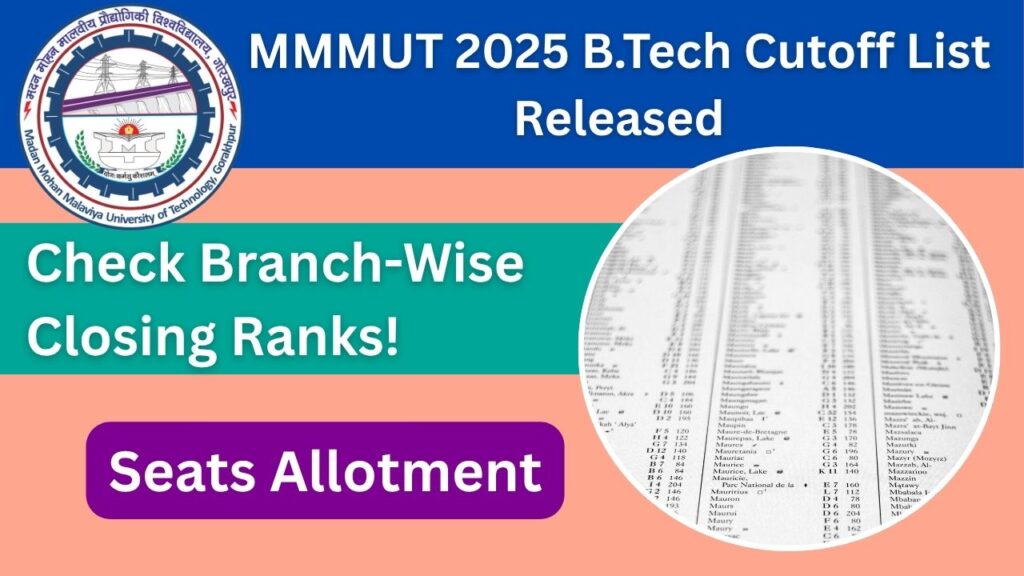
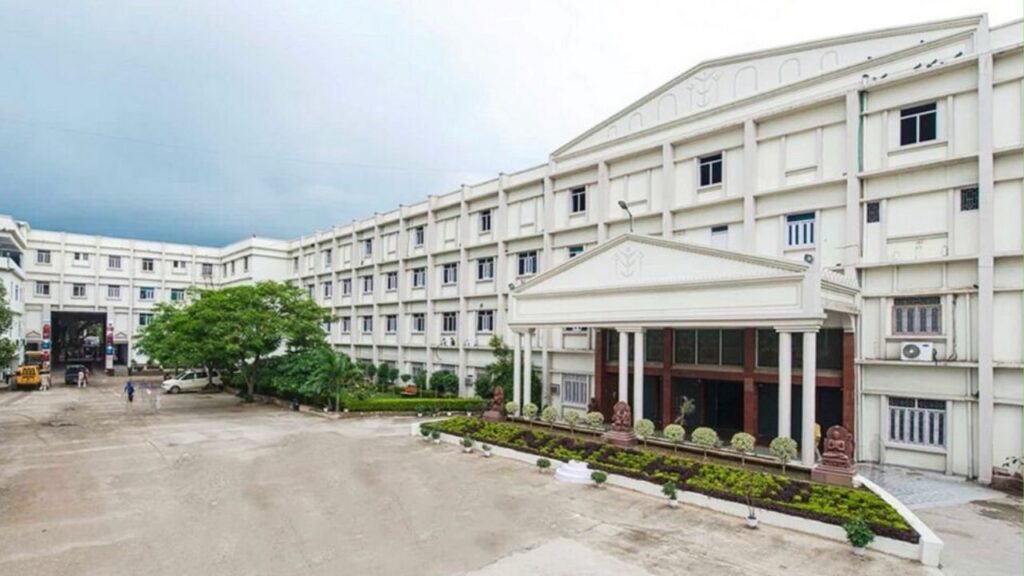
Madan Mohan Malaviya University (MMMU)of Technology in Gorakhpur, is highly known for its engineering university. More than thousands of students apply here each year. For the session 2025-26, MMMUT announced their B.Tech session 2025-26 cutoff list. Students who are waiting to see the cutoff list can check now. The total seats is 1089 in which applied students count is 4039. You can check B.tech seat allotment for various branches.
Total Applicants
4039
Total Seats
1189
For UP Students
1086 seats
Applicants from UP
3700
Applicants from Other States
339
MMMUT 2025 B.Tech Cutoff List Details
Branch
Seats
Seats for Computer Science
255
Seats for Electronics and Communication
180
Seats for Electrical Engineer
120
Seats for Civil Engineering
120
Seats for Information Technology
120
Total Seats
1089
MMMUT 2025 B.Tech Seat Allotment by Choice Order
First Choice
285
Second Choice
225
Third Choice
149
Fourth Choice
95
Fifth Choice
109
Sixth Choice
148
Seventh Choice
54
Eighth Choice
25
Branch-wise Opening And Closing Ranks
Branch
Uttar Pradesh
Other State
CSE
18091 – 62179
40229 – 66331
IT
62574 – 72492
66468 – 74765
ECE
35553 – 80967
65896 – 83366
IoT
73543 – 84249
83901 – 89347
EE
58540 – 97588
86406 – 99383
ME
76387 – 108446
86327 – 107423
CE
66915 – 120088
82024 – 120311
ChE
98938 – 122513
104671 – 116448
Key Insights in Post Allotment Process
Document Verification: continued till 2 July 2025 after the seat allotment.
Opening and Closing ranks: are highly competitive for CSE and IT branches.
Efficient Seat allotment: 60% students received one of their top three choices.
Majority of seats: allotted to the Uttar pradesh students.
Most of the students prefer to study in private colleges because of the faculty support in education, practical training, and placement opportunities. If you have completed 12th with PCB, you must pursue a medical degree from the best colleges. So, I have listed some of the Top Private Medical Colleges in South India.
If you are from South India and confused about the college for medical studies then this guide will help you select the one. Every student must clear NEET-UG before stepping into the medical field. It is the most common entrance exam for admission to colleges.
Top Private Medical Colleges in South India
1. St. John’s Medical College
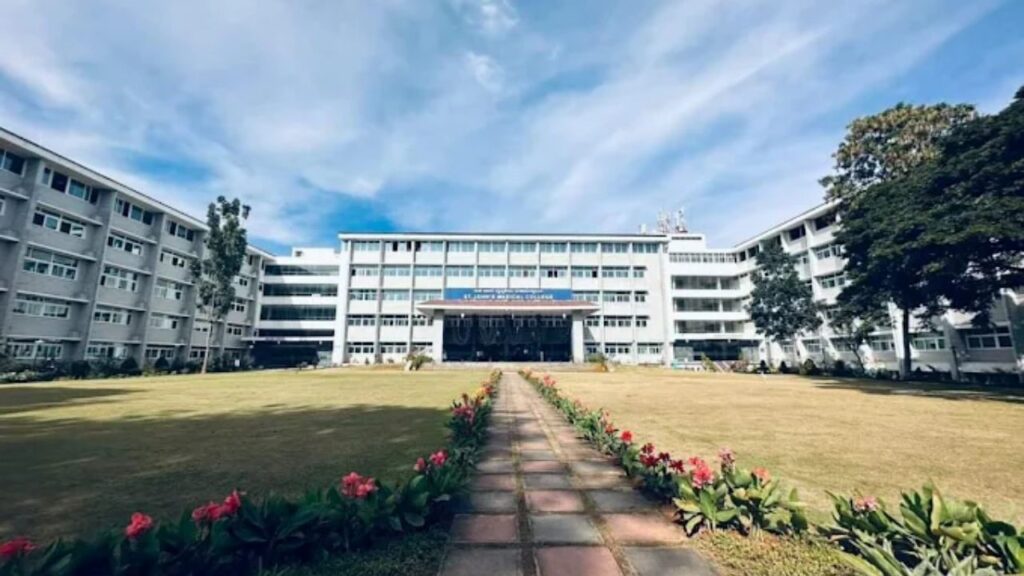
St. John’s Medical College: This private college is situated in Karnataka and is the oldest college. If you want to study in this reputed college then you should prepare for the entrance to take admission. It has a legacy of producing some of the finest medical professionals who serve both in India and abroad. The college is known for its value-based education, strong research backing, and vast hospital network.
Admission Process
Fee (General)
Placement & Package
NEET-UG required; apply via Karnataka state counseling (KEA); seats under General + Management quota
Approx ₹6.28 lakhs/year
Placements in St. John’s Hospital or through govt postings; avg. ₹7–10 LPA (PG); ₹20k–₹25k/month internship
2. Narayana Medical College
Narayana Medical College in Andhra Pradesh. If you are a citizen of this state, you can take admission here. It also has a flow of patients as it integrates college and hospital which helps students gain real-time clinical experience. It has one of the largest private teaching hospitals in the region and offers advanced training in medicine and surgery.
Admission Process
Fee (General)
Fee (Management)
Placement & Package
NEET-UG mandatory; apply via Dr. NTRUHS counseling portal; management quota for non-local students
₹12.50 lakhs/year
₹24+ lakhs/year
Good absorption into Narayana Hospital network; avg. ₹6–8 LPA after PG; ₹15k–₹20k/month internship
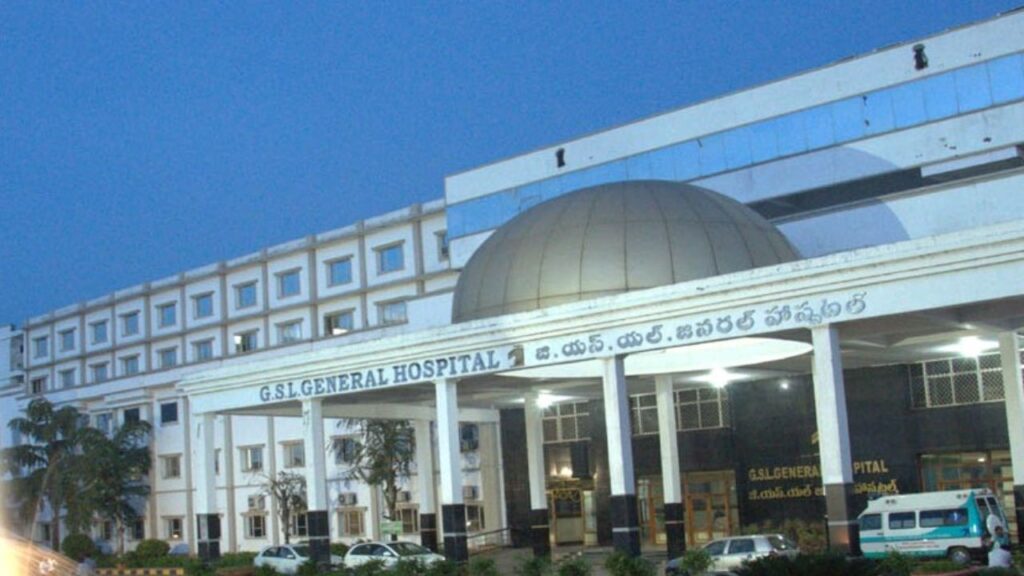
3. GSL Medical College, Rajahmundry
GSL Medical College is best for those students who want a good education but at an affordable fee. The infrastructure is modern, and the hospital on campus sees a good variety of patients, allowing students to learn practically from early on.
Admission Process
Fee (General)
Fee (Management)
Placement & Package
NEET-UG, Dr. NTRUHS counseling; management seats at higher fees
₹12 lakhs/year
₹24 lakhs/year
Andhra hospitals/PG; Avg. ₹5–6 LPA after PG; ₹18k/month internship
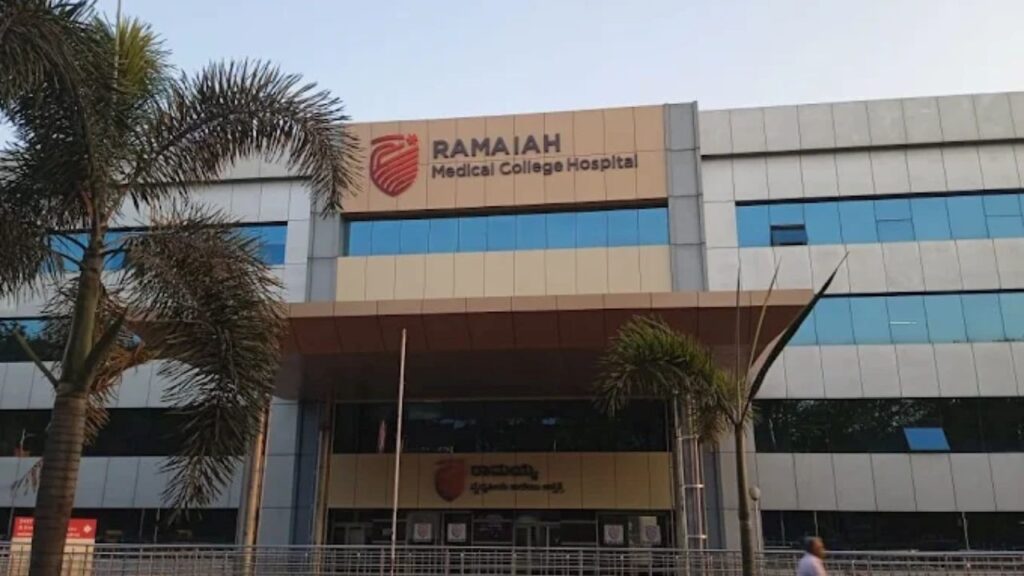
M.S. Ramaiah Medical College is offering high class education and advanced practical training to the future doctors. It’s known for high academic standards, overall world collaboration, and a strong hospital for clinical training.
Admission Process
Fee
Placement
Average Package
NEET-UG qualification is a must, Seat allotment happens through KEA-CET and All-India counseling. NRI and management quota are available.
₹10.9 lakhs for one year for general students ₹40+ lakhs for the Mgmt/NRI students.
Students can choose to study for further medical courses and medical opportunities also happen in the college.
The salary package depends on the skills and knowledge of the students. Average salary package is ₹8–12 LPA
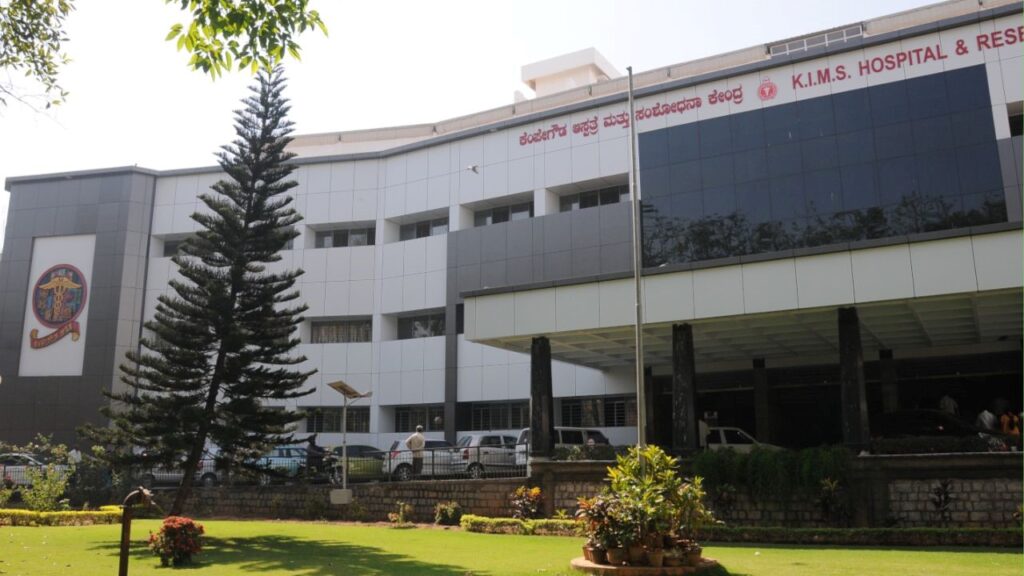
5. Kempegowda Institute of Medical Sciences
KIMS is a well-established private college with a strong hospital setup. Students have got the opportunity for practical training. The institution is affordable compared to other top private options, making it a favorite for middle-income families.
Admission Process
Fee
Placement
Average Package
Students have to clear NEET-UG and apply via KEA counseling (Karnataka). Management quota also available
₹7.1 lakhs per year (General), ₹35+ lakhs (Mgmt)
Self hospital offers and other hospital offers are also given to the students.
Students can have a lot of opportunities from this college and average package is around ₹5–8 LPA after PG; ₹20k/month during internship
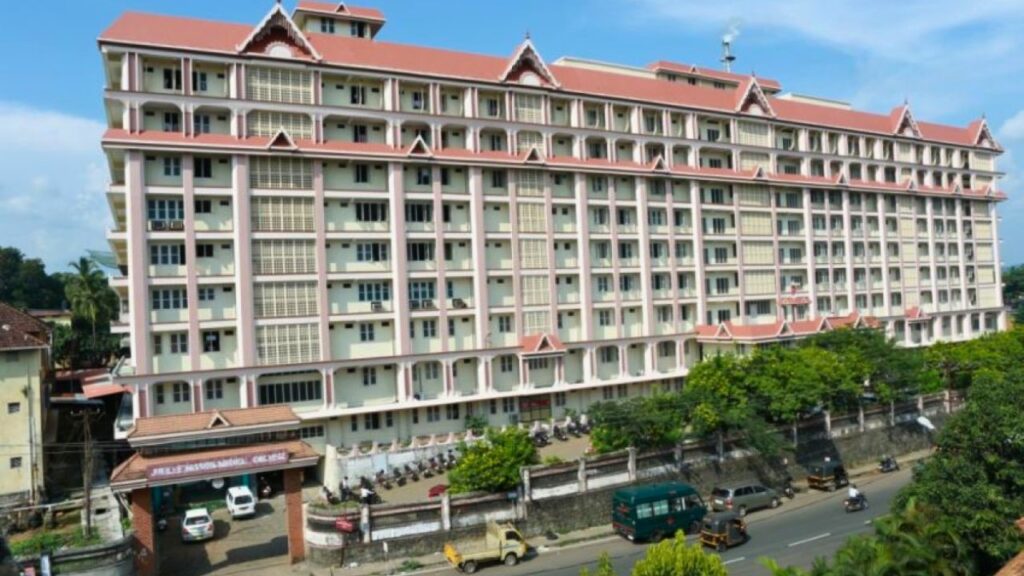
6. Jubilee Mission Medical College
Jubilee Mission Medical College: Jubilee Mission is a church-run institution known for its ethical approach to medicine and patient care. It offers quality education with emphasis on hands-on training and moral values.
Admission Process
Fee
Placement
Average Package
NEET-UG is required Apply through Kerala state counseling (CEE Kerala). Management and NRI quotas available
₹7.5 lakhs for one yearIt vary upon the courses
High number of students pursue PG; some absorbed into church-run hospitals
Students can get the salary package around ₹6–9 LPA (post-PG); ₹22k per month internship.
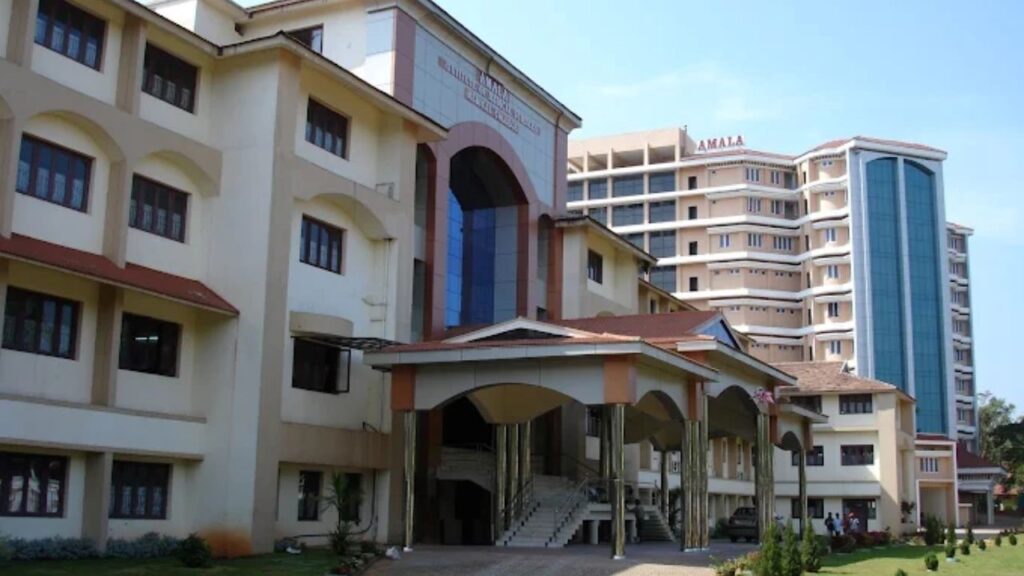
7. Amala Institute of Medical Sciences
Amala Institute of Medical Sciences: Amala offers medical courses such as MD, MS, and MBBS for students to establish their career in the medical field. It offers students practical training opportunities in a hospital environment. It provides a peaceful learning environment and good exposure through its well-equipped hospital.
Admission Process
Fee
Placement
Average Package
NEET-UG is mandatory.Students can apply via CEE Kerala. Seats under general, management, and NRI quotas
Christian Medical College (CMC): If you want to be a doctor in India’s best hospitals, this college provides excellent healthcare education and research. Although it’s a minority institution, it offers world-wide opportunities. With its top-notch education making it extremely hard to get into.
Admission Process
Fee
Placement
Average Package
NEET-UG required Must clear CMC’s own selection criteria after NEET Minority Christian candidates given preference
Approx ₹48,530/year (highly subsidized)
Top placements in India and abroad
₹10–15 LPA (PG level); internship ₹20–25k/month
9. SRM Medical College
SRM Medical Collegeis best in providing world class education and training to the students for improving their medical skills. It has good hostel facilities and student diversity.
Admission Process
Fee
Placement
Average Package
Admission via NEET-UG Apply through MCC AIQ or direct via SRM NRI quota available
₹25 lakhs/year (MBBS); ₹35–40 lakhs for PG
Absorption in SRM Hospital; good PG placements
₹6–8 LPA after PG; ₹20k/month during internship
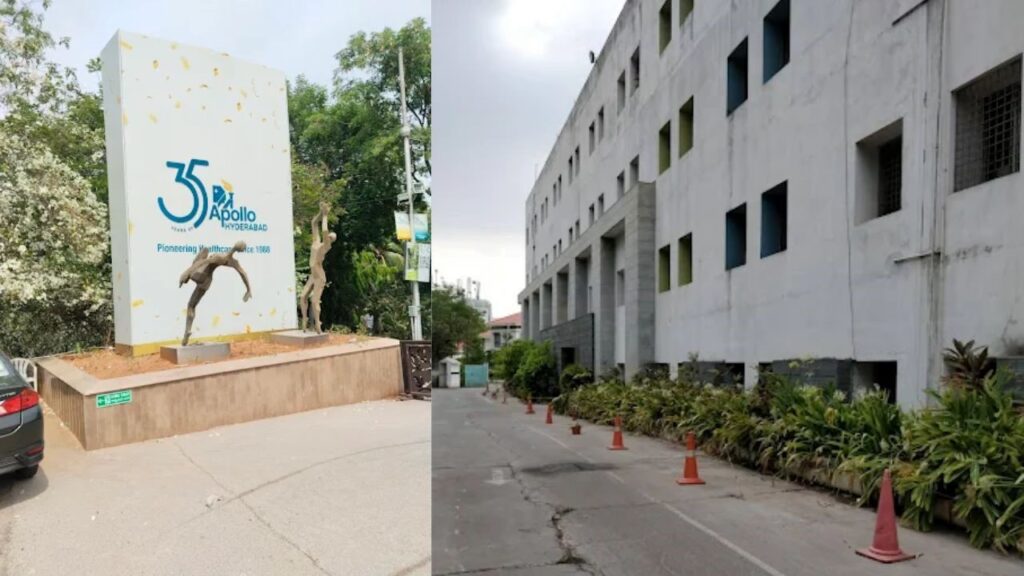
10. Apollo Institute of Medical Sciences and Research
Apollo Institute of Medical Sciences and Research: This institute offers one of the best corporate-style clinical exposures as it is connected to Apollo hospital. Students get trained under experienced doctors in a real-world hospital setting.
Admission Process
Fee
Placement
Average Package
Must qualify NEET-UG Apply through Telangana state counseling (KNRUHS) Management quota available
₹15.6 lakhs/year (General),
Apollo Group directly hires top interns and PGs
₹7–9 LPA; internship stipend around ₹25k/month
Conclusion
While deciding to grow in the medical field, the best college is the first step you consider for better opportunities and practical training. Choose according to your budget, goals, and career path among the Top Private Medical Colleges in South India.
The wait has ended for thousands of law graduates in Uttar Pradesh. UPPSC APO Admit Card 2026 Out – Download Uttar Pradesh Public Service Commission Assistant Prosecution Officer Hall Ticket at official website of UPPSC. If you’ve been studying the books, memorizing sections of the newly written laws, and keeping track of every notification, this is the “green light” you’ve been waiting for.
The post of Assistant Prosecution Officer (APO) is among the most prestigious posts in the state’s legal system, and with 182 vacancies this year, the competition is fierce as ever. This is your ultimate guide to everything on the admit card, about the exam and how to survive the last days of your preparation.
Candidates should have done LLB from a recognised university by UGC and approved by Bar Council of India. They should be citizens of India (or in case of special provisions for subjects of Nepal/Bhutan, Tibetan refugees prior to 1962, or certain migrants). The reservation benefits are applicable for the Uttar Pradesh Domicile holders only, rest of the candidates will be treated in unreserved category.
Age Criteria
From 21-40 years old candidates are allowed for this exam and age relaxation detail given below:
Category
Age Relaxation
Max Age
SC/ST/OBC (UP)
+5 years
45
PwD (UP)
+15 years
55
Women (UP domicile)
+5 years
45
Ex-servicemen
Service years
Per
The 2026 Exam Pattern
This year is crucial as the syllabus is revised to include the repeal of old colonial-era laws and their replacement with the new Indian legal regimes. The Prelims are a screening test, your marks for them will not get added to your final merit list, but you will have to clear the cut-off for them to be eligible for Mains.
Prelims Structure (150 Marks)
General Knowledge (50 Marks): This section includes Indian History, National Movement, World Geography and Current Affairs.
Law (100 marks): The big change here is you’re no longer tested on the old IPC, CrPC and Evidence Act, but on the Bharatiya Nyaya Sanhita (BNS), Bharatiya Nagarik Suraksha Sanhita (BNSS) and Bharatiya Sakshya Adhiniyam (BSA).
Add U.P. Police Act and the Indian Constitution both for better preparation.
Beware of Negative Marking! There is a penalty or mark deduction of 0.33 (1/3rd) for every incorrect answer. If you don’t know the answer, you’re usually better off not guessing blindly.
Follow These Steps to Download Your UPPSC APO Admit Card 2026
The process has been made digital and is fairly simple to execute through the One-Time Registration (OTR). How to download hall ticket without any glitch:-
Go to the Portal: Visit the website of UPPSC.
Locate the Link: Find the “Important Alerts” section. A link will be available to Download UPPSC APO Admit Card 2026.
Input Your Information: To retrieve your hall ticket, you must have OTR number, Date of Birth and Gender.
Confirmation: Type Captcha as is or select Captcha as you are told to from the screen.
Download, Print and Save: As soon as your admit card is displayed on your screen, download it.
Pro-tip: Print at least 2–3 copies. Put one in your bag, one in your house for backup.
Category
Fee (₹)
General/OBC/EWS
125
SC/ST/Ex-Servicemen
65
PwD
25
Selection Stages
Preliminary Exam: Paper objective type with negative marking (150 marks, 2 hours) on General Knowledge and Law; only for screening, with 0.33 negative marking.
Mains Exam: 500 marks of question paper came which you have to solve in Descriptive manner. It contains law and general studies questions and its important one as the marks are included in the final merit list.
Interviews (50 marks) are given on the basis of their interview which is conducted mostly on legal knowledge, communication and suitability.
It’s important to prepare well for 150-mark prelims as it’s an entry gate for the mains and avoid guesses because of 0.33 negative marking. After prelims, focus on descriptive Mains (500 marks) where your legal depth will shine, and an interview of 50 marks that tests clarity and conviction. You’ve already the qualification, and you have paid the fees, and you’ve cleared the first hurdle — now take the plunge with discipline for one of 182 most coveted legal posts in UP.
Conclusion
The UPPSC APO Admit Card 2026 release is coming near and it is a final chance for those follower who is wants to get 182 APPO post in Uttar Pradesh. The exam is set to be held on March 22, so candidates can now gear up for their last phase of preparation by revising important legal concepts, attempting mock tests, and making sure that they have all the requisites for the exam day.
BBAU counselling dates have been released for the PG programme 2025-26. Candidates are shortlisted in the merit list who have scored well in the entrance exams. Now they have to prepare for the next round of the counselling which is document verification and fee submission. Total of three phases of the admission process, those who cannot find their name in the first phase can wait for the second phase merit list. Candidates are advised to follow up on the important dates through notification. You can download it from the link mentioned below in the article.
BBAU PG Admission Procedure
The candidates should give the CUET PG exam, which is an entrance exam for admission to postgraduate programs. Students can get admission in BBAU according to their CUET PG score. Next step, candidates should register themselves on the admission portal and select their choices in the course. The merit list will be declared on the official website, and shortlisted candidates can verify their documents. Candidates who are selected according to their CUET score can submit their fees through the online SAMARTH portal.
In today’s world, students must choose their field in which they have interest. Whether you choose BTech vs BSc vs BA in 2025, the future scope is consistently growing, if you follow the right direction. The right direction means if you are interested in teaching then BSc and BA is a good option but if you want to grow in the tech industry then BTech is the right option for you. Focus and the right college is also a matter to build your established career.
Graduation is the first step in your career so take it wisely. The primary focus of BTech is Engineering & Technology. While BSc opens a path for you in science and research areas. BA is leading you towards further education to get a specialization in any specific subject. Students who are preparing for government exams can also pursue BA after 12th but many posts require other degrees. Before taking any action, you must check eligibility carefully for your future scope.
Tips To Choose the Field for Graduation
Remember your passion, what you want to become in future? By acknowledging these questions, you can find the answer within yourself and then check the path to reach there. Once you know where to go, you will not get confused about your education. BA and BSc are easy courses, meanwhile BTech is hard, so if you want to become an engineer then you must pursue a BTech degree.
If you want to become a Teacher, Journalist, Social Worker, HR, or Government Employee then BA is the best option for you. You can pursue other Technical courses and Specializations after BA. If you are interested in Teaching Science, Research, Nursing, or Higher Degrees, you can pursue a BSc.
Comparison of BTech vs BSc vs BA
BTech (Bachelor of Technology), BSc (Bachelor of Science), and BA (Bachelor of Art) are highly demanding careers which offer a wider range of opportunities to the students. Their comparison is primarily focused on the career scope, course duration, course fees, eligibility and course curriculum.
Course Content of BTech vs BSc vs BA
BTechis a professional degree to deliver hands-on learning for engineering and technology. To advance technology with innovative minds is the motive of the industries. Colleges maintain their curriculum of BTech with application-based skills to get their students industry ready. It covers technical and applied aspects of specific engineering disciplines such as Mechanical, Civil, Computer Science, Chemical, Electrical, and Information Technology.
BSc is a graduation degree with more theoretical education in pure science like Physics, Chemistry, Zoology, Botany, Computer Science, IT, Statistics, Economic, Aeronautics, etc. It offers core concepts on the theories of science & technologies which get you focused on more research methodologies and theoretical understanding.
BAis involved in more Literature, History, Economics, Psychology, Sociology, Political Science, Geography, Journalism, Public Administration, and Social Work. It focuses on more theoretical concepts, creative writing and analytical skills, that is why it is perfect for those who want to become a professor in any of the subjects.
BTech is entirely four years with one year internship.
Standard BSc is a three year course which can be extended in specific programs such as Integrated program or BSc Honors.
BA standard degree is a total of three years course but BA honors is extended for four years.
Eligibility for BTech, BSc, BA Courses
BTech & BSc graduation requires a 10+2 marksheet with science subjects including Physics, Chemistry, Biology & Mathematics. Admission in BSc can be done through an entrance test or direct admission. During BTech admission, you may have to clear JEE Mains/ Advanced which is hard to score well.
Students can take admission in BA after completing their 10+2 in any stream. It is not necessarily important to come from a science or commerce background. Students from arts, commerce, or science are eligible for BA.
Best Future Scope for BTech vs BSc vs BA
BTech Graduates are developing skills in engineering roles in departments of IT, Manufacturing, Chemical, Electrical, Production, Civil, Biomedical. After BTech, students can get a high salary in engineering roles from the top companies like Tata, IBM, Amazon, TCS, Infosys, Cisco, Godrej, and Siemens.
BSc Graduates are offering students a diverse range of opportunities to become job ready but for a higher scope, you should consider a master’s degree after BSc. There are some other specializations in technical courses, data science, and machine learning that can be helpful for getting a job in tech industries. You can also pursue higher education in pure science to become a lecturer or professor.
BA degree is offering many opportunities in further education for research, teaching, nursing, and creative arts & writing. Students can take a BA degree to establish a career in any specific field of subject. It offers many opportunities in the departments like HR, Media & Journalism, Social Work, Event Management, Hotel Management, Content Writer, Digital Marketing, Business Analyst, and Government Sector. Some of these require a diploma or certificate course for applying to the particular role.
How Can You Choose the Best Course?
There is a final answer for that because it all depends on your interest and budget. Let’s start from the lower budget course to the highest budget course:
Choose BA if:
You want to become a teacher, professor, analyst, content creator, digital marketing, sales executive, owning a business or preparing for a government job.
You can’t afford the heavy expenses of the course.
You are working professionally and want to continue your education.
You want to pursue another degree (MA, BEd, LLB) or diploma and don’t want to burden yourself with a ton of syllabus.
Choose BSc if:
You are interested in science and want to research into this field.
You want to become a professor in a science subject.
You cannot afford BTech so you can choose BSc with a technical subject.
You are not prepared for the entrance tests, direct admission can happen in BSc.
You want further studies after graduation.
Choose BTech if:
You want to become an Engineer, interested in Physics, Chemistry, and mathematics.
You can afford to study from a recognized college.
You want the highest salary package after graduation.
You want a structured program to grab industry opportunities.
Higher education like MTech for leadership roles in tech-driven industries.
How do BTech, BSc, and BA degrees differ in career prospects
A comparison table will be good to observe the differences easily among them:
Degree
Key Career Prospects
Typical Roles
Salary and Opportunities
BTech
Technology, engineering, IT, manufacturing
Software engineer, mechanical engineer, data scientist, IT consultant
Higher starting salaries, strong industry demand, direct recruitment in technical roles
BSc
Research, academia, pharmaceuticals, environment, government
Research scientist, lab technician, data analyst, teacher
Modest starting salaries, very good with advanced qualifications, flexible career paths
BA
Humanities, social sciences, media, civil services
Journalist, teacher, public relations officer, civil servant
Generally requires higher studies for career growth, diverse but less technical roles
Conclusion
Whether it is a debate of BTech vs BSc vs BA, you can choose your degree according to your interest and need for your career scope. Let’s explore the differences in each degree’s details and career scope which can help you to decide the right degree for you. It’s a turning point of your life after 12th, you can’t decide just in a second. You have to list out your choices, interest, and budget then come back to this article to explore every detail for the BTech, BSc, and BA degree future scope.
Madras University has officially posted the results on their official website, Students who have given the examination of the V and VI semesters can check their results now. You can also check the result by following the direct link in this article. Those who are unsatisfied with the scores get an advantage to revaluation as per the university’s rules.
Students can get their results with details such as name, registration number, year, subject-wise marks, obtained and total marks, and result status.