ITBP Head Constable Education & Stress Counsellor Recruitment 2026 Online Form For 16 Post

ITBP

Candidates with a Psychology degree or a B.Ed. have a golden chance to secure a stable and well-paying job right now. ITBP Head Constable (Education & Stress Counsellor) post application form is active until 27 October 2026. Apply early to hold your seat because the Indo-Tibetan Border Police Force announced only 16 available positions.

Everything about ITBP Head Constable from schedule to how to fill the form is given below. Read and check the official notification before applying for this post.

Overview of ITBP Head Constable Recruitment 2026

DetailInformation
PostHead Constable (Education & Stress Counsellor), Group C, Non-Gazetted
Vacancies16 (14 male, 2 female)
Notification date22 September 2026
Application window28 September to 27 October 2026
Advertisement No.CBC 19143/11/0011/2627
PayLevel 4, ₹25,500 to ₹81,100 (7th CPC)
Apply atrecruitment.itbpolice.nic.in

Don’t confuse this with the other ITBP Head Constable drive from the same month, for Motor Mechanic. That one is male-only and has 21 posts. Women can apply here, and that’s the main reason this notification is worth a closer look.

Who Can Apply for ITBP Head Constable (Education & Stress Counsellor)?

You need a bachelor’s degree with Psychology as a subject, or a bachelor’s degree plus a B.Ed. or Bachelor of Teaching. One is enough. A history graduate with a B.Ed. is eligible. A BA Psychology graduate can also apply without a teaching qualification. Final-year students don’t, because the degree must be completed by the closing date.

The age band is 20 to 25 years as on 27 October 2026. That is narrower than the usual 18 to 25 for ITBP constable posts. The relaxations up to 28 for OBC (non-creamy layer) and 30 for SC/ST candidates, with extra relaxation for ex-servicemen. Confirm your relaxation period in the official notification PDF.

The application fee is reported as ₹100 for male General, OBC and EWS applicants, with women, SC/ST candidates and ex-servicemen exempt. 

ITBP Head Constable Vacancy 2026

Fourteen seats are for men and two for women. Beyond that, the category-wise split is unclear. The two women’s seats make that category the tightest on a per-seat basis. The pool of applicants is also smaller than for a general constable drive, since the role needs a specific degree. Smaller doesn’t mean easy, though. Sixteen seats is sixteen seats.

Apply Now 👉 Canara Bank Apprentice Recruitment 2026: 3,500 Seats, Online Form Closes 17 October

ITBP Head Constable Selection Process: Physical Tests Come First

The order is Physical Efficiency Test (PET), Physical Standard Test (PST), written examination, document verification, then a Detailed Medical Examination, with a Review Medical Examination available on appeal. Putting the physical stages before the written paper is the opposite of what many exam-takers expect. A candidate who scores well on psychology and fails the run is out.

PET Standards

CategoryRaceLong JumpHigh Jump
Male1.6 km in 7 minutes 30 seconds11 feet3.5 feet
Female800 metres in 4 minutes 45 seconds9 feet3 feet

Written Examination

This is a Computer-Based Mode exam with 100 objective questions and each mark carries one mark. There is no negative marking and you are given only two hours to complete it. The paper is prepared in bilingual language so it won’t be difficult to understand the question.

Qualifying this exam is important to go to the next stage of the selection process. ITBP prepares merit lists according to written examination scores.

Documents and Medical Test

At document verification, candidates must produce original certificates, including educational qualification proof—such as a recognised degree with Psychology, or a degree along with B.Ed./B.T.—along with matriculation, category and domicile documents where applicable.

The final stage is the DME, conducted under CAPF medical guidelines. Candidates found medically unfit may be considered for the RME, where applicable.

None of the later dates are out yet. PET/PST, the written exam, document verification and the medical will be announced separately on the ITBP portal. The exam pattern, number of questions and negative marking aren’t public either. 

ITBP Head Constable Salary

The selected candidates get a job and their starting salary at ITBP Head Constable is ₹25,500 and a ceiling of ₹81,100. It is disbursed under Pay Level 4 on the 7th CPC matrix. The allowances including Dearness, house, posting-based allowance are also added in the salary.

Postings can include border and high-altitude locations, which carry extra allowances. A newly appointed candidate at the starting basic pay of ₹25,500 will generally receive a monthly gross salary above the basic pay after allowances, while net pay depends on deductions 

How to Apply for ITBP Head Constable Education & Stress Counsellor 2026

  1. Open the official website of ITBP and register yourself first with the correct Email and Mobile number. Then login to fill the Head Constable (Education & Stress Counsellor) application form. 
  2. Fill the exact details asking in each box of application form, upload your documents along with your photo, sign, and pay the fee to process the application.
  3. Before submitting, review every detail carefully, because edits aren’t allowed afterwards. Download the confirmation page.
  4. Keep ready your 10th certificate (for date of birth), your degree marksheets, your Psychology proof or B.Ed. certificate, and your category certificate if you’re claiming reservation. 
  5. If you’re relying on an “equivalent” to a B.Ed., expect to produce an equivalence certificate at document verification.

One prep tip: start your running now, before you open any psychology notes. The PET comes first and failing it ends your application regardless of your marks.

👉 Gemini 4 Argon: How the New AI Model Can Help Students and Teachers

Conclusion

Apply if you meet either degree route and fall within the age band. The competition is thinner than for a mass constable drive, and Level 4 pay is secure central government pay. Skip it if your degree has neither Psychology nor a B.Ed., because document verification is where those applications end. 

If you’re a woman with a qualifying degree, apply early. Two seats won’t wait for the last week. Submit at least three days before 27 October so a portal crash doesn’t decide your future.


Leave a Comment

Your email address will not be published. Required fields are marked *

Bank PO vs SSC CGL: Which Offers Better Salary and Career Growth?

In India, the two powerful career paths in government jobs have always been in debate — Bank PO vs SSC CGL, both are highly competitive, prestigious, and give assurance for lifetime financial stability. Students aiming for a government job will probably get confused in one question – which one is better? By exploring both Bank PO and SSC CGL post details will help you make a decision, but make sure that your interest aligns with the job.

What is Bank PO?

A Bank PO is an entry-level job in the government banks. Candidates must clear the main exams including IBPS PO and SBI PO to get selected and complete the training and probation period to become Assistant Manager. 

What is SSC CGL?

SSC CGL is offering Group B and Group C posts in different central government departments. The recruitment process is conducted by Staff Selection Commission through exams for jobs in ministries, CBI, tax department and more.

Eligibility Criteria For a Bank PO & SSC CGL

It has some eligibility criteria, for this job candidate’s must match to this criteria:

The nationality of the candidate must be Indian. Candidates subjected to Nepal/Bhutan and Tibetan refugees who came before 1 january 1962 to Indian permanently are also eligible for this post. 

Candidates completed their graduation from a recognised university or college are eligible for a Bank PO job. Age limit must vary between 20 to 30 years, as per government rules age relaxation is given to reserved category. 

For SSC CGL, candidates must have a degree of graduation in any field and age must vary between 18 and 32 years old. 

Also Read: Best Online Coaching for Bank Exam

The Financial Showdown: Salary and Allowance

This is often the main point for the comparison in these two job posts because of their attractive salaries. Here is the detailed salary structure for your help in this decision.

Bank PO Salary

The entry-level job in various ministries is offering an attractive pay, especially in leading banks like the SBI or IBPS. The initial salary for an entry-level is around Rs. 48,480. It will become higher when you add allowance and perks. 

The total monthly salary will be around Rs 70,000 to Rs 85,000 for a new Bank PO. It also provide very generous perks of this job that includes:

Dearness Allowance: Due to inflation, regular adjustment in the basic pay will happen on the basis of your salary package. 

House Rent Allowance: Banks often provided House to PO, especially on relocations.

City Compensatory Allowance: Bank will provide compensation for higher cost of living in metro cities.

Medical Finances: For any health issues, you can get 100% medical coverage.

Low-Interest Loans: Bank PO can get the most beneficial offer of availability of personal, home, and car loans with lower interest.

Other allowances like travel can also provide you.

Also Read: IBPS PO vs SBI PO Which Is Better?

SSC CGL Salary

The SSC CGL salary varies upon the level -– 7th Pay Commission. But its salary is based on the specific post and Pay Level it falls under. Overall, Pay-Level includes the highest paying job is Assistant Audit Officer and Assistant Accounts Officer offers basic pay salary around Rs 47,600 which falls under the Pay Level 8. Posts like Inspector of Income Tax or Assistant Section Officer have a basic pay around Rs. 44,900 that falls into Pay Level 7. 

In-hand salary for a high-level SSC CGL post can range between Rs. 65,000 and Rs 70,000. It can go higher with the experience and post level that will reach around Rs. 75,000 to Rs 80,000 per month. The allowance pay also given to employee:

Dearness Allowance: Based on the percentage of the basic pay.

House Allowance: It is given to almost every SSC CGL employee according to the city, it gets higher for metro cities.

Transport Allowance and Other Allowance like leave travel concession, medical coverage are also given.

Career Growth and Promotions

Aspirants need to check growth opportunities, not just paycheck because now these two paths have different roads.

Bank PO Career Growth

Career growth is fast in the banking sector as it depends on the candidate’s performance and experience. A PO can aspire to become a Manager of the Bank’s branch by clearing internal exams. The promotion can be stepped up with hard work and dedication. Candidates can reach to the higher positions like Deputy General Manager within a few years of hard work. It’s proven that most of the managing directors in public sector banks started their career as Probationary Officer (PO).

The promotion hierarchy (lowest to higher positions) for a Bank PO is as follows:

  • Probationary Officer (Assistant Manager)
  • Deputy Manager
  • Manager
  • Chief Manager
  • Assistant General Manager
  • Deputy General Manager
  • General Manager

SSC CGL Career Growth

Central government jobs have slower career growth, the promotion is based on the years of commanding and departmental exams. It varies upon the department’s number of vacancies. An Income Tax Inspector can get their first promotion after 7-9 years experience. Job security and financial stability is guaranteed but rapid promotions are not as fast as the Banking sector. SSC CGL freshers will have to spend long years to reach the highest level position.

The promotion hierarchy for SSC CGL employee as (Inspector in a department)

  • Inspector
  • Income Tax Officer/Superintendent
  • Assistant Commissioner
  • Deputy Commissioner
  • Commissioner
FeatureBank PO (SBI/IBPS etc.)SSC CGL Officer (AAO/Income Tax/Excise/Other posts)
Job ProfileManagerial, customer-facing, target-drivenMostly administrative, desk-based, or inspection-focused
Starting Salary (in-hand)₹70k – ₹85k+ with attractive perks₹65k – ₹75k+ depending on post and location
Career GrowthVery fast, performance-based. Quick promotions possibleSlower, mostly seniority-based. Predictable but gradual
Work-Life BalanceLess balanced, long hours, high pressureGenerally good, fixed hours, comparatively stress-free
TransfersFrequent, including rural postingsLess frequent, relatively more stable
Ideal For…Ambitious, dynamic individuals aiming at fast career growthThose preferring stability, work-life balance and job security

How to Make the Right Choice?

No definite answer for this because it depends on the candidate’s personal perspective and life priorities.

If a candidate wants to thrive quickly and handle a target-driven environment can choose a Bank PO job. It offers rapid career growth and high income. When the priority is work-life balance and job security, you have to patiently wait for career growth. So, candidates who are willing to settle down with a desk-job in one place can choose the SSC CGL path.

Conclusion

It has always been a Bank PO vs SSC CGL because both offer respectable career paths and financial stability for entire life. This article will provide you with detailed information on the salary and career growth for both professional paths. It helps you to make the right decision for your career. The right choice will shape your life, so make it correct.

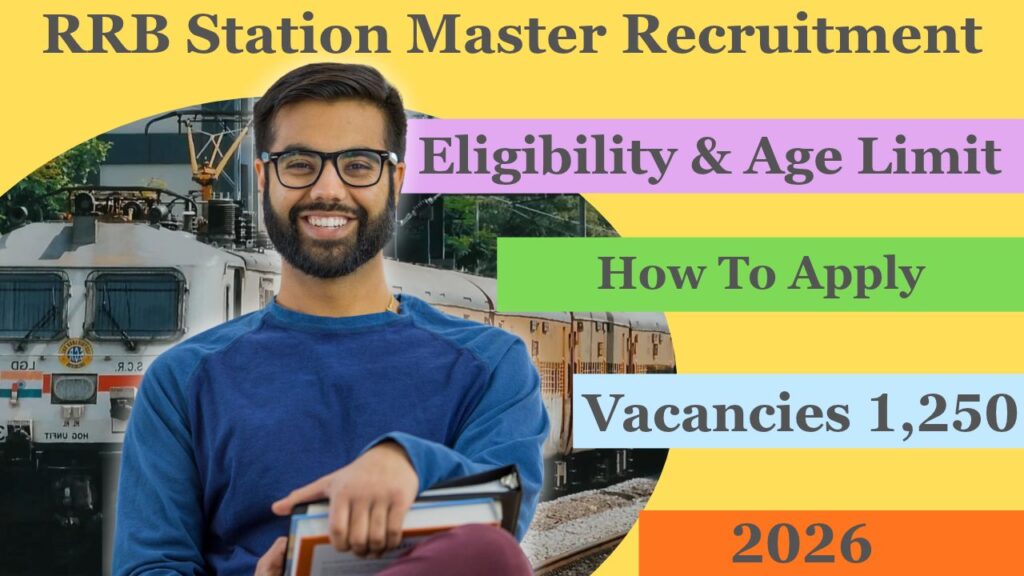
RRB Station Master Vacancy 2026: Eligibility, Apply Online

RRB Station Master Recruitment 2026

RRB published a short notice for RRB Station Master Recruitment 2026 on its official website. Candidates who are eligible for the post can apply when the application portal gets open between 27 October 2026 to 25 November 2026. Prepare your official documents that are required to attach with the application.

ItemDetails
RecruitmentRRB Station Master Recruitment 2026–27
NotificationCEN No. 08/2026
VacanciesApproximately 1,265
Apply Now Click Here
Official websitesrrb.indianrailways.gov.in / rrbapply.gov.in
Pay levelLevel-6, 7th CPC; basic pay ₹35,400 per month plus allowances
SelectionSingle-stage CBT, CBAT, Document Verification, Medical Examination 

There has been a development in Station Master recruitment, it is being conducted separately for all 21 RRBs and is not part of the regular RRB NTPC recruitment. But the selection process is the same – CBT, CBAT, Document verification and medical exam. The total vacancy is about 1,250.

See Full Detailed New RRB Station Master Syllabus 2026

RRB Station Master Recruitment 2026 Timeline

EventDate
Short notice released21 October 2026
Detailed notification expected26/27 October 2026
Online application starts27 October 2026
Last date to apply25 November 2026, 11:59 PM
Exam DateUpdate Later

Application Fee

  • General/OBC/EWS: ₹500 
  • SC/ST/PwBD: ₹250 
  • Candidates should confirm the refund amount and rules before submitting the application fee. The refund is expected to be around Rs.400 for general and Rs.250 for reserved category candidates.

Educational Eligibility 

The detailed educational qualification will be known after the full notification for RRB Station Master is published before the application process. 

Basic education requirement: candidates must hold a graduation degree in any disciple from a recognized university. There is no minimum score declaration yet.

Age Limit to Apply For Station Master

CategoryExpected age limit
UR / EWS20 to 30 years 
OBC-NCL20 to 33 years (3-year relaxation) 
SC / ST20 to 35 years (5-year relaxation) 
PwBDSubject to post suitability and medical standards; confirm in detailed CEN 
Ex-servicemenAs per applicable Railway recruitment rules 

What Are The Medical Standards for Station Master

A candidate must be good and fit to apply as station master. The Station Master requires A-2 medical standard so make sure you have:

TestRequired standard for Station Master
Distant vision6/9, 6/9 without glasses; no fogging test 
Near visionSnellen 0.6, 0.6 without glasses 
Colour visionMust be normal; tested using Ishihara charts 
Binocular visionMust pass 
Field of visionMust pass 
Night visionMust pass 
MyopiaMust meet prescribed myopic-vision requirements

You should know that candidates who have low distant-vision are generally allowed for Glasses/contact lenses. The post requires standard specified 6/9 vision without glasses. Color blindness candidates are not eligible. I suggest you test your eye-sight before applying for this position. 

How to Apply for RRB Station Master Recruitment 2026

Wait for the 27 October 2026 to open the application portal then you can fill out your details but check the official notification before applying. 

  1. Open the RRB website and search for the Station Master application link after 27 October.
  2. Read the detailed notification and if you are eligible for this position, click for new registration.
  3. Verify your email and mobile number then login again. 
  4. Fill out the details correctly including personal details, highest education, and preferences then recheck every spelling or error so your application won’t be revoked later.
  5. Upload your ID, sign, photo, and required certificates in a mentioned format and size.
  6. Preview then submit. Pay the amount that is required to complete the process.
  7. Download and save the copy of the application for future references.

Documents Required:

  • Aadhaar card with updated photograph and biometrics.
  • Class 10 certificate for name and date of birth.
  • Graduation degree or provisional certificate, as applicable.
  • Category certificate for SC/ST/OBC/EWS, if applicable.
  • PwBD, ex-servicemen, minority, or EBC certificate, if claiming that category.
  • Recent passport-size photograph and signature in the prescribed digital format.
  • Valid mobile number, email ID, and online payment method.

RRB Station Master Salary

Once you pass all four stages of recruitment, the starting salary would be around Rs. 35,400 per month which raises later with experience. This is Pay Level-6 post under the 7th Central Pay Commission but in-hand salary station master get is around Rs. 67,684 including allowances.

Conclusion

RRB Station Master recruitment 2026 are announced with a short notification but detailed notification will be published on 27 October 2026 with clear eligibility criteria for candidates. Until then, prepare your health and test your eye-sight to avoid wasting time later. RRB follows the strict rules so it is hard to secure a position in a railway sector. 

Once you fill out the RRB Station Master recruitment application, check the exam pattern and syllabus to clear the CBT exam. The selection process has four stages: CBT, CBAT, document verification and medical exam. Candidates have to pass all the stages to get selected.

Best Government Jobs in Delhi

Delhi, the capital of the country offers numerous roles across various departments. A large number of organizations are located in Delhi. Explore the Best Government Jobs in Delhi as it is a more convenient location for the freshers for easy settlement in the territory. There are a lot of facilities where anyone can settle down easily. Additionally, locals of Delhi have got a chance to work in their hometown, ideal for those who prefer not to relocate.

S.NoJob TitleDepartment/OrganizationOfficial Website Name & Link
1Sub Inspector (Executive)Delhi PoliceStaff Selection Commission
2Assistant ProfessorAll India Institute of Medical Sciences (AIIMS), DelhiAIIMS Delhi
3Nursing OfficerPost Graduate Institute of Medical Education and Research (PGIMER), DelhiPGIMER
4Junior Engineer (Civil)Delhi Public Works Department (PWD)Delhi Administration
5Lower Division Clerk (LDC)Delhi Subordinate Services Selection Board (DSSSB)DSSSB
6Medical OfficerDelhi Health ServicesDelhi Health Department
7Assistant RegistrarDelhi UniversityDelhi University
8Police ConstableDelhi PoliceDelhi Police
9Stenographer Grade IIDSSSB, DelhiDSSSB
10Junior ResidentDelhi State Cancer Institute (DSCI)DSCI
11Data Entry OperatorGovernment Medical College and Hospital (GMCH), DelhiGMCH
12Accounts OfficerDelhi Municipal CorporationDelhi Administration
13Scientist/Engineer ‘SC’Indian Space Research Organisation (ISRO), DelhiISRO
14Senior AssistantDelhi UniversityDelhi University
15Fire OperatorDelhi Fire ServicesDelhi Administration

Best Government Jobs in West Bengal in 2025

If you are willing to work in a government sector and prefer to stay in your state, look for the Best Government Jobs in West Bengal. It is hard to beat the competition for these exams but the students who prepare well can achieve a high score and secure a government job in West Bengal.

S.No.Job TitleDepartment/OrganizationEligibilityOfficial Website
1WBCS Officer (Executive)West Bengal Public Service Commission (WBPSC)Graduationpsc.wb.gov.in
2Assistant TeacherWest Bengal School Service Commission (WBSSC)Graduation + B.Ed.westbengalssc.com
3Police Sub-Inspector/ConstableWest Bengal Police10th / 12th Pass / Graduationwbpolice.gov.in
4Staff NurseWest Bengal Health Recruitment Board (WBHRB)GNM / B.Sc. Nursingwbhrb.in / wbhealth.gov.in
5Food Sub-InspectorWBPSC12th Passpsc.wb.gov.in
6Lower Division ClerkVarious Departments10th / 12th Passpsc.wb.gov.in
7Judicial Service (Judge)West Bengal Judicial ServiceLaw Graduatepsc.wb.gov.in
8Engineer (Civil/Electrical/Mech)WBSEDCL, PWD, Municipal ServicesB.E. / B.Techwbsedcl.in / wb.gov.in
9Block Development Officer (BDO)WBPSCGraduationpsc.wb.gov.in
10Forest Ranger / GuardWest Bengal Forest Department12th Pass / Graduationwbpsc.gov.in
11Accountant / Audit OfficerWB Audit & Accounts ServiceGraduation (Commerce)psc.wb.gov.in
12Railway Jobs (Group C & D, NTPC)Indian Railways10th / 12th Pass / Graduationrrcer.com / indianrailways.gov.in
13Postal Assistant / GDSWest Bengal Postal Circle10th Passindiapost.gov.in
14Fire Services Officer / FiremanWest Bengal Fire Services10th / 12th Passwb.gov.in
15Data Entry Operator / TechnicianHealth / Education / Various Departments12th Pass / Graduationwbhealth.gov.in / wb.gov.in

How to Crack UPPSC RO/ARO Without Coaching  

Crack UPPSC RO/ARO Without Coaching

Every year, lakhs of students in Uttar Pradesh start their RO/ARO preparation the same way — by joining a coaching institute the moment they decide to attempt the exam. It feels like the safe choice. Everyone around you is doing it, the institutes promise structured guidance, and the fear of “missing something important” pushes you toward enrolling even before you’ve opened a single book on your own.

I can’t speak for your specific goals, but what a lot of successful RO/ARO candidates will tell you once they’ve actually passed the test is: coaching never made the difference. What mattered was whether they understood the exam, built a routine around it, and stayed consistent long enough to see results. 

If you fall into the category of not being able to afford coaching or if you’re just an individual who likes to learn on his own terms, there’s no issue in attempting RO/ARO exams. You can start your preparations by yourself with the right guide. Proper syllabus, exam pattern, right schedule, responsibility are the core steps to take to prepare for the exam.

1. Understand Exam Pattern to Make the Right Strategy

You probably saw or heard that self-study failed many students not because they lacked intelligence but because they didn’t understand the exam’s purpose and importance. There are stages in the exams to clear and each one requires a different kind of preparation.

  1. UPPSC RO/ARO has a Preliminary exam to check how well you know General Studies and General Hindi and it rewards speed and accuracy over depth. 
  2. The Mains, on the other hand, wants you to write with clarity and present arguments, not just recall facts. 
  3. And the Typing Test, ignored by most aspirants until the last month, has quietly ended the dreams of candidates who cleared both written exams but never practiced typing seriously.

Before you buy a single book, spend two or three days just going through the official syllabus and the last five years of question papers. You’ll notice patterns almost immediately — certain topics from Indian History, Indian Polity, and UP-specific General Knowledge repeat in some form every year. This is the kind of pattern-recognition that coaching institutes charge lakhs to hand you on a platter. You can get there yourself with a notebook and some patience.

2. Build a Study Routine That Doesn’t Depend on Motivation

Coaching institutes work partly because they impose a schedule on you — classes at fixed times force a kind of discipline that self-study doesn’t naturally have. When you’re preparing alone, motivation runs out fast, usually within the first three weeks. What replaces it is routine.

Pick a time of day when your mind is sharpest — for most people, that’s early morning — and treat that slot as non-negotiable, exam day or not. Break up your week so that you have each subject in a chunk of the day, instead of bouncing around among all of them every day. A general division that helps for RO/ARO is General Studies in the morning, Hindi grammar and comprehension in the afternoon, and revision and mock tests in the evening. The exact hours matter less than the consistency of showing up.

What trips up most self-study candidates isn’t laziness — it’s the absence of a feedback loop. In a coaching class, a teacher tells you when you’re falling behind. Alone, you have to build that feedback into your own routine. Keep a simple tracker, even a basic notebook works, where you log what you studied and how confident you feel about it. Revisit that tracker every Sunday and be honest about the gaps.

Read More 👉 Data Science vs AI: Which Career Is Better?  

3. Choose the Right Books Instead of Too Many Books

One of the biggest traps for self-study aspirants is book overload. When you ask about which books toppers used, they might give you different answers. But each one of them has the topics which are frequently asked in the previous question papers. So, choose the book which you can understand when you read. Stick to that particular book per subject rather than jumping between multiple books hoping one of them “clicks.”

For General Studies, a common NCERT-based core syllabus in History, Geography, Polity and Economy is a much better option than jumping straight into exam-specific guides. Once your basics are solid, move to a UP-specific General Knowledge book, since a noticeable chunk of the RO/ARO paper focuses on state-level facts that national-level books simply don’t cover. For Hindi, focus heavily on grammar rules and previous year papers rather than generic Hindi literature books — the exam tests application, not literary depth.

Newspapers are non-negotiable, but read them with intent. Don’t read every article; scan for anything related to government schemes, UP-specific developments, and national events with policy implications. Ten focused minutes with a newspaper beats an hour of aimless reading.

4. Practice Like the Exam Is Already Tomorrow

Self-study candidates often make the mistake of treating mock tests as an afterthought — something to do once the syllabus is “finished.” In reality, mock tests should start early, even when you know only half the syllabus. Testing yourself regularly does two things coaching classes usually do for you: 

  • It shows you where your weak areas actually are 
  • And it trains your brain to work under time pressure

Solve at least one previous year’s paper or a full-length mock every week, and don’t just check your score — go through every wrong answer and understand why you got it wrong. Was it a factual gap, a silly mistake, or a comprehension issue? Each of these needs a different fix, and lumping them together as “I need to study more” won’t get you anywhere.

The typing test deserves its own separate practice schedule starting at least two months before your written exams are clear, not after. Waiting until results are declared to start practicing typing is one of the most common and avoidable mistakes RO/ARO aspirants make.

5. Find Your Community, Even Without a Classroom

The one genuine advantage of coaching is the peer group — people preparing for the same exam, sharing doubts, comparing notes, and keeping each other accountable. You can recreate this without paying for it. Online communities of RO/ARO aspirants, study groups on messaging apps, and even a couple of serious friends preparing for the same exam can replace this function almost entirely.

Use these groups to clarify doubts, share useful resources, and occasionally test each other. Just be careful they don’t turn into distraction hubs — the goal is accountability, not endless discussion about strategy that never converts into actual studying.

Read More 👉 Top 10 Mistakes to Avoid While Preparing for UPPSC RO/ARO

The Real Difference Between Coached and Self-Taught Candidates

Coaching gives structure to people who can’t build it themselves. If you can build that structure on your own — a study routine, the right books, regular self-testing, and a support system for accountability then there’s genuinely nothing coaching offers that you can’t replicate. 

What ends up separating candidates who clear RO/ARO from those who don’t isn’t whether they paid for classes. It’s whether they stayed consistent long enough, tested themselves honestly, and treated every mock test result as information rather than judgment.

Self-study for RO/ARO isn’t the harder path. It’s simply the path that asks more of your discipline instead of your wallet — and for a lot of aspirants across UP, that trade has worked out just fine.

Conclusion — How to Crack UPPSC RO/ARO Without Coaching

Clearing the UPPSC RO/ARO exam without coaching is entirely achievable if you get started with the right attitude and strategy. The course, past year papers, textbooks, sample tests, and current affairs are all available online nowadays. Because in the end, your success is going to be determined by the work that you do every day, not by how much money you spend on prep. The real challenge isn’t finding resources—it’s using them consistently.

Scroll to Top