SBI Clerk Recruitment 2025 Out – 5000+ Vacancies! Apply Now Before Last Date

SBI Clerk Recruitment 2025

The SBI Clerk Recruitment 2025 is started as it was released officially on the SBI website. You can check the notification for the entire process details of the recruitment. The examination is expected to happen on 20th September 2025, if you want to apply for this post then fill the form before the closing date. 

Short Details for SBI Clerk Recruitment 2025

Post NameClerk
OrganizationState Bank of India
Vacancy6589
Exam ModeOnline
Recruitment ProcessPrelims, Mains, Language Proficiency Test
SalaryRs. 46,000 
Official WebsiteClick Here

Key Dates for SBI Clerk Recruitment 2025

Notification Release Date5th/August/2025
Application Starts On6/ August/2025
Application Ends On26/August/2025
Exam Date (prelims)20–28 September 2025 (expected)
Exam Date (mains)15–16 November 2025 (expected)

Eligibility Criteria for SBI Clerk Recruitment 2025

Education: Candidates must have a valid graduation degree from a recognized university or college. Final year students can also apply but they must have proof of the passed graduation exam at the time of selection.

Age Limit20 to 28 years
Age Relaxation
OBC/EWS3 years
SC/ST5 years
Disabled Gen10 years
Disabled OBC13 years
Disabled SC/ST15 years
Widowed/Divorced females7 years

Also Read: IBPS PO vs SBI PO Which Is Better? Full Comparison 2025

How to Apply Online?

  1. You need to visit the official website of the Bank mentioned in the article.
  2. Click on the recruitment for SBI clerk 2025
  3. First register yourself with your name and phone number then fill out the entire application.
  4. Enter the valid details in the application form.
  5. Attach the documents with the application to click on submit
  6. Once the application is done, you can download its copy on your device.
Important Links
Download NotificationClick Here
Apply OnlineClick Here
Official WebsiteClick Here

Leave a Comment

Your email address will not be published. Required fields are marked *

Gemini 4 Argon: How the New AI Model Can Help Students and Teachers

Gemini 4 Argon

Gemini 4 Argon is the new AI model which is specifically designed to handle complex, long-horizon professional workflows. Google announced it on September 30, 2026. It helps students and teachers in advanced reasoning & knowledge work but it is available first to trusted cyber defenders in Google’s Fairwind Program. You cannot switch it on in the Gemini app today.

A Class 12 student preparing for JEE Main sits with 400 pages of handwritten notes. A college lecturer has 90 answer scripts to grade and a lecture to build before Monday. Both are the kind of long, messy, multi-step work that every AI model since 2023 has promised to help with and mostly fumbled halfway through. Gemini 4 Argon is Google’s attempt to fix that, and it launched only days ago.

Everything below about students and teachers is therefore an informed projection from Google’s stated capabilities, not a report from classrooms. Google’s announcement did not include any education-specific features.

What Google Announced About Gemini 4 Argon

Gemini 4 Argon is the first model in the Gemini 4 generation. Google DeepMind’s flagship frontier AI model built for real-world coding, complex knowledge in industries such as software engineering, finance, and legal drafting. It arrives after Google dropped its planned Gemini 3.5 Pro. Google chose to focus on developing Gemini 4 instead.

Three specifics matter for anyone thinking about study and teaching use:

Longer output. Argon’s output limit rises to 1 million tokens, up from 64,000. A token is roughly three-quarters of an English word, so this is about the difference between getting a long essay back and getting an entire textbook chapter’s worth of material back in one go. Exact output ceiling is unconfirmed because Google didn’t publish the full documentation. Vals AI lists a 1M-token context window but caps output at 262K tokens.

Multimodal input. Gemini 4 Argon takes text, image, video and file inputs which suggests that notebook images, tough topics in a recorded lecture and previous year question papers can go in a single chat and give you conclusions.

Sustained multi-step work. Google’s Gemini product lead, Tulsee Doshi, called it an “incredibly well-rounded” model that excels at running long, multi-step tasks. That is the capability most relevant to teachers, and also the one least tested by outsiders so far.

Who Can Use Gemini 4 Argon?

Due to its advanced capabilities—especially in cybersecurity—Google is rolling out Argon cautiously. Access is restricted to select cyber defenders, public institutions, and government pre-release access programs. 

Google says wider rollout will start with paid API customers and Google AI Ultra subscribers, and it has not announced a public release date. Google AI Ultra is the company’s most expensive consumer plan, so even when access widens, free Gemini users and students on cheaper plans may be last in line. Nothing Google has published mentions the free app or the Google AI Pro tier.

Google hasn’t announced a launch date for India, no pricing details, and not any documentation about accessing hindi or regional-language performance. Anyone who tells you a date for India is guessing. As of the latest reports, Google has published no API model ID for Argon.

WHY FREE USERS CAN’T ACCESS THE Gemini 4 Argon?

Google says it can autonomously find, validate, and patch critical software vulnerabilities, which is exactly what attackers would also want, so Google is starting with vetted defenders. That is a reasonable explanation for the staged rollout, though it also means classroom access may arrive later than a pure education product would.

What The Benchmark Numbers Say About Gemini 4 Argon

Most of the figures below come from Google’s own announcement, so independent testing of Gemini 4 Argon is still catching up.

On Vals AI’s index, Argon ranks first with 68.90%, ahead of Claude Sonnet 5.5 at 67.04%. On AutomationBench, Zapier’s test of end-to-end business tasks, Google says Argon ranks first with 51.3%. Google reports 91.7% on LVBench for long-video understanding, the most useful figure, it helps students and teachers in complex topics. 

Independent analysis from Artificial Analysis is more measured. It found Argon matches OpenAI’s GPT-6 Astra on its Intelligence Index at about 60% of the cost per task, at discounted launch prices. The same analysis notes Argon uses far more output tokens per task than GPT-6 Astra, so the savings come from low token prices rather than efficiency. And on one agentic coding test, Argon scored 57% against Claude Sonnet 5.5’s 64%. Argon is competitive, not unbeatable.

How students could use Gemini 4 Argon

Treat the following as plausible uses given what the Gemini 4 Argon model is built to do, not as features Google has announced.

Turning a mountain of material into a study system 

Current AI models will lose the accuracy and logical understanding in long threads or when you provide them huge input sizes. Google designed this model to fill that gap, it accepts syllabus PDF, numbers of images, question paper then structured a revision plan for you. It also analyzes your weak spots and never forgets two hours before conversation. That is the practical meaning of “long-horizon” for a student.

Learning from video 

If the LVBench result holds up in real-world use, that means it is helpful for students to upload a recorded lecture and ask for explanations about depth elements inside the topics which you find hard to understand. Sometimes searching for a particular thing to understand is painful, but recorded lectures can be helpful in this way.

Writing feedback that isn’t generic 

A stronger writing model is most useful for students to write a statement of purpose for a postgraduate application and essay for an English exam. So there won’t be a lot of edits and errors in a context that wastes your time. Google specifically lists creative writing among Argon’s trained strengths.

Already existing Gemini models are weaker but working efficiently, after testing them by giving full-length JEE mock tests to Gemini which was posted on Physics Wallah and Careers360 with immediate feedback and a customized study plan, it proved that those features are available today so no need to wait.

How teachers could use Gemini 4 Argon

Again, these are projections. Google’s announcement is aimed at professionals and developers, not schools.

Marking and feedback at scale

The sustained multi-step ability matters most here. A teacher can upload marking schemes and answer sheets of students to generate draft scores with reasons for a teacher to review. That is a practical workflow of an AI model. Drafting matters because a model that gets 95% of high-stakes board or university papers right still isn’t a reliable grader. It’s a first pass that needs human review.

Lesson and assessment preparation

A teacher can use help to make a lesson plan for a week by uploading chapter’s outline, questions, and also generate differentiated worksheets for stronger and weaker students. It can also make a question paper according to the pattern.  Long output limits help because you can request a full unit in one pass rather than stitching together fragments.

Administrative work 

Argon’s strongest announced use is enterprise knowledge work across documents, which maps onto school and college paperwork: circulars, timetables, attendance reports, accreditation files. It is less glamorous than lesson planning, but it is where teachers lose the most hours.

Where Gemini 4 Argon falls short

Beyond the access limits, there are real reasons to stay cautious.

First, most of the performance claims are Google’s own, and independent testing is limited because the model isn’t broadly available. Google disputes the idea that testing is thin, and told CNBC that employees have been testing Gemini 4 versions for weeks. That is internal testing, which is not the same as the open scrutiny a public release brings.

Second, speed and cost. Vals AI lists a latency of 46 minutes for its full test suite, and the Magai review flags slow responses at high reasoning settings. A student cramming the night before an exam will notice slow.

Third, price. Google’s introductory rates of $2 per million input tokens and $10 per million output tokens will eventually double to $4 and $20. At current rates, that is far below what a school or coaching institute would spend on individual student plans, but it is a developer-facing price, not what a student will pay. Consumer pricing in India has not been announced.

Fourth, the general risk with any AI model in education: confident wrong answers. A model that can sustain long tasks can also sustain a long error. Anything graded, anything citing facts, and any solution to a numerical problem still needs checking against the textbook.

Useful Gadget 👉 Google Launches Fitbit Air in India: Features, Price and Availability

Gemini 4 Argon Also Fits in The Business World

Once access widens, Argon can be accessible for software teams working on real codebases, and analysts and lawyers drafting long filings or pulling evidence out of charts, filings, and video.

Software Engineers & Developers: Teams tackling massive codebases, complex repository-wide migrations, or intricate multi-step debugging will find Argon invaluable. Thanks to its strong performance on coding benchmarks like DeepSWE and its massive output window, it can handle extensive code generation and architectural overhauls in a single trajectory. 

Cybersecurity Professionals: Due to its heavy training in security operations, vetted cyber defenders and authorized security teams (such as those in the Fairwind Program) use Argon to proactively find, validate, and patch vulnerabilities across complex software systems. 

Enterprise Data & Research Analysts: Professionals who deal with document-heavy workflows—such as cross-referencing dense financial disclosures, legal frameworks, or extensive data charts can leverage its multi-step reasoning to synthesize massive amounts of text and data accurately.

AI & Model Evaluation Teams: Organizations and researchers benchmarking cutting-edge frontier models use Argon to test long-horizon reasoning, agentic task execution, and reliability under heavy cognitive loads against competing models like Claude Opus and GPT.

Conclusion

There is no Gemini 4 Argon to log into right now because this model isn’t launched yet. Gemini existing models are also working well for students, so there is no need to wait and buy. But for more complex work and tasks, such as worksheet generation or feedback comments on a single class’s assignments, Argon is needed.

Don’t upgrade a subscription for Gemini 4 Argon, don’t trust any site claiming early access, and check Google’s official blog for the announcement. If your institution is considering an AI tool, ask the vendor for documented accuracy numbers in your subject and language, not a model name.

Top B.Tech Colleges in India: Latest Ranking & Admission Guide

BTech Colleges in India

When thinking about starting a career in engineering then choosing among the top BTech Colleges in India is the priority for every student. The race for a Bachelor of Technology (BTech) course has gotten much tougher and thrilling as there are plethora of options for would-be engineers across the country. If you’re a Class 12 student planning to appear for entrance exams or a parent navigating the admissions maze, this one-stop guide will give you an overview of the current scenario of top BTech colleges in India, their rankings, placements and admission criteria. 

Understanding the Current Landscape: NIRF Rankings 2025

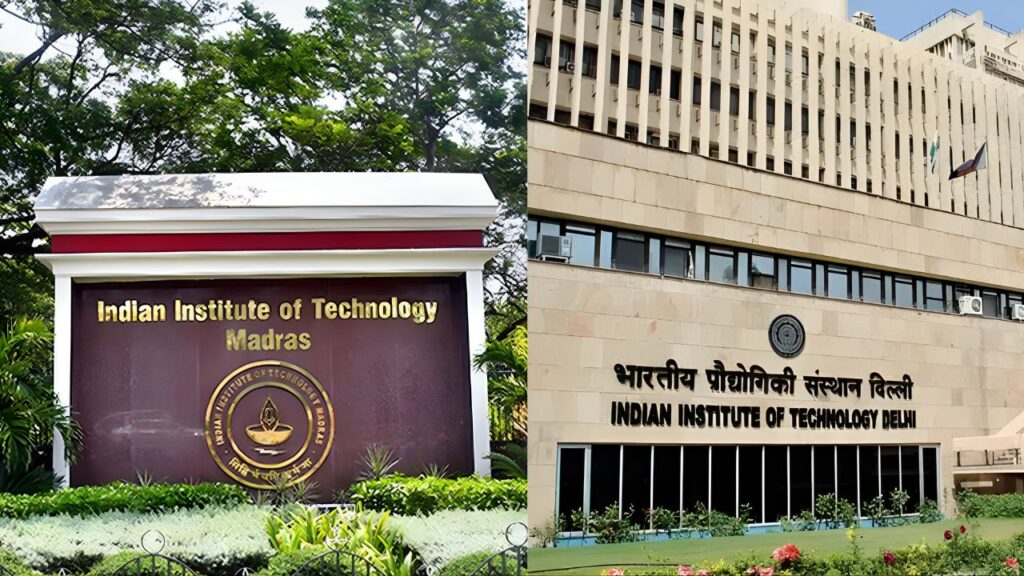
Indian BTech Colleges NIRF Ranking 2025 is considered as the standard for deciding the best BTech colleges in India. As per the updated list, IIT Madras ranked 1st once again for the ninth straight year, further consolidating its hold on engineering. The top five Engineering institutes in India according to NIRF 2025 are IIT Madras, IIT Delhi, IIT Bombay, IIT Kanpur, and IIT Kharagpur.​

 IIT Madras, IIT Delhi

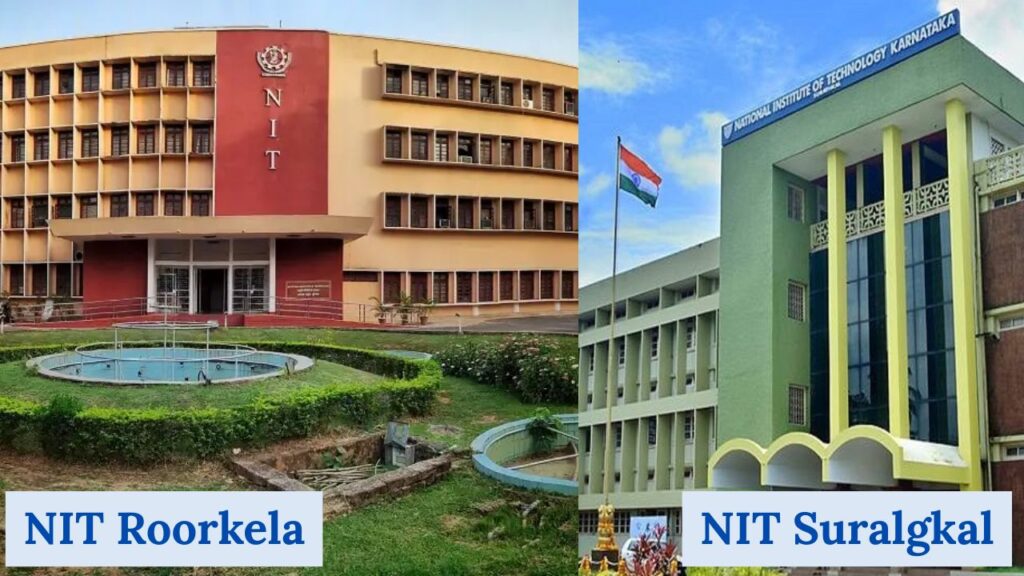
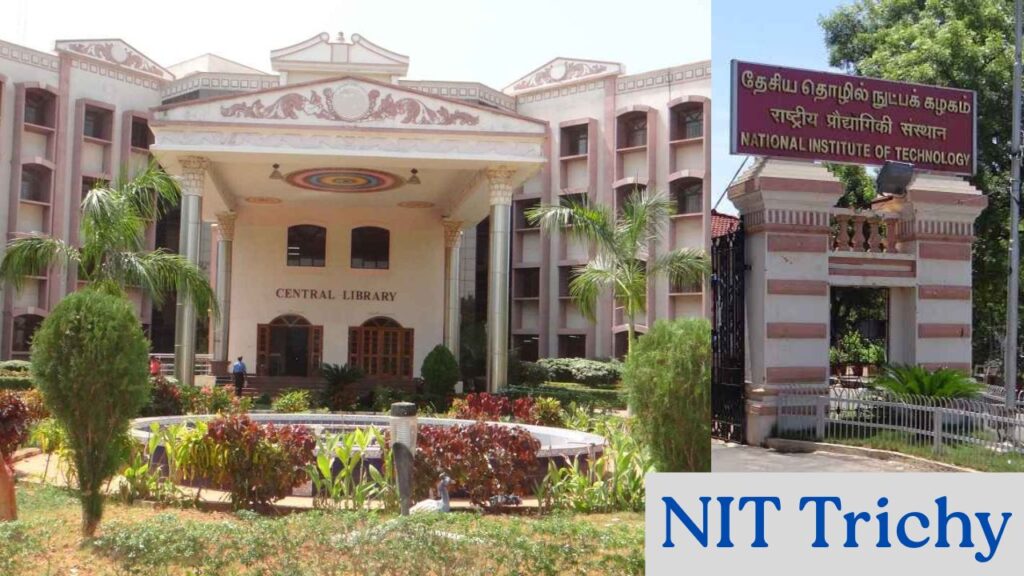
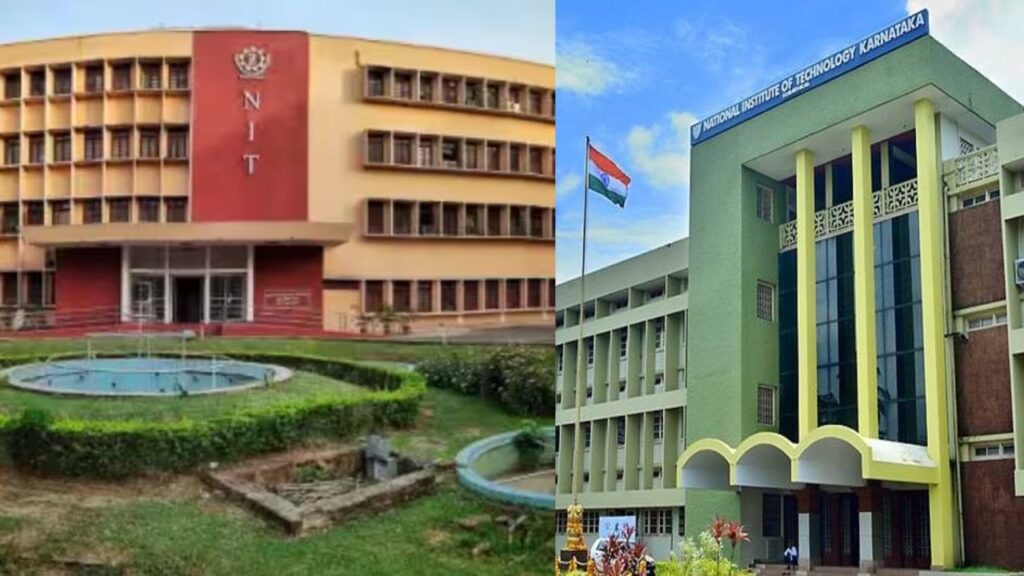
But the story is not all IITs, the NIRF Rankings are not limited to the only IITs. As far as the National Institutes of Technology (NITs) are considered, only NIT Trichy emerges among the top 10 at rank 9 in the list, which speaks about the immense competition in rankings. Following NIT Trichy we have the older NITs like NIT Roorkela, NIT Suralgkal, we have NIT Calicut who all regularly get top 25! 

NIT Roorkela and NIT Suralgkal

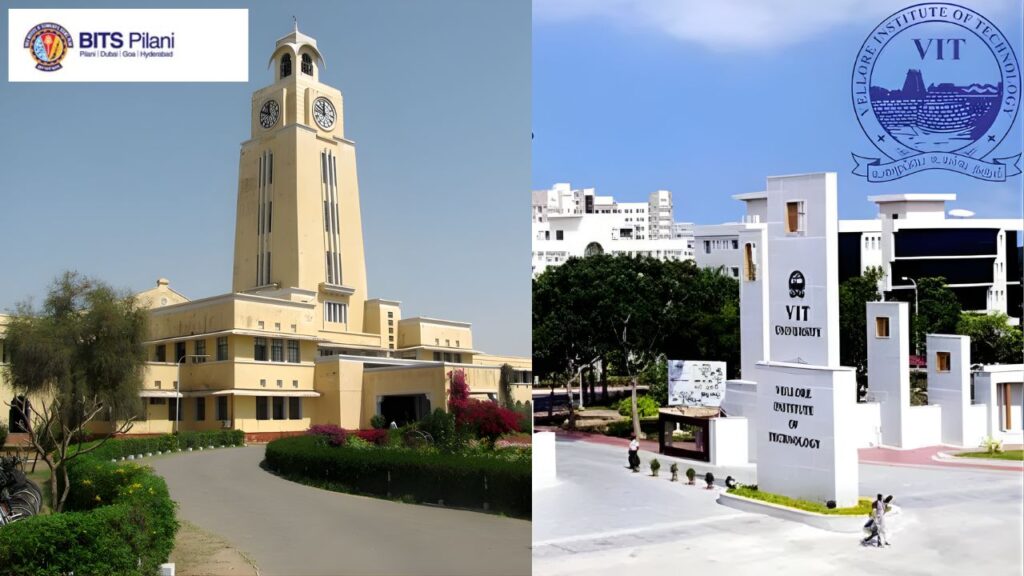
Private institutes have also made a place for themselves, with BITS Pilani at Rank 11 and VIT Vellore at Rank 16 in NIRF 2025. These colleges are no joke, they do provide a world class education and you will have no problem finding employment. 

The Tier System

In addition to the usual rankings, a number of industry insiders grade schools according to tiers based on placement results, presence of recruiters, and number of competitive cutoffs. This gives a more refined sense of the college pecking-order. 

Tier 1 (Premier Institutes) consists of the legendary IITs such as IIT Bombay, IIT Delhi, IIT Madras, IIT Kanpur, IIT Kharagpur, IIT Roorkee, IIT Hyderabad, and IIT Guwahati. These are also engineering colleges which dream destinations for most engineering aspirants. Indian academics are tough and placement records are also excellent.​

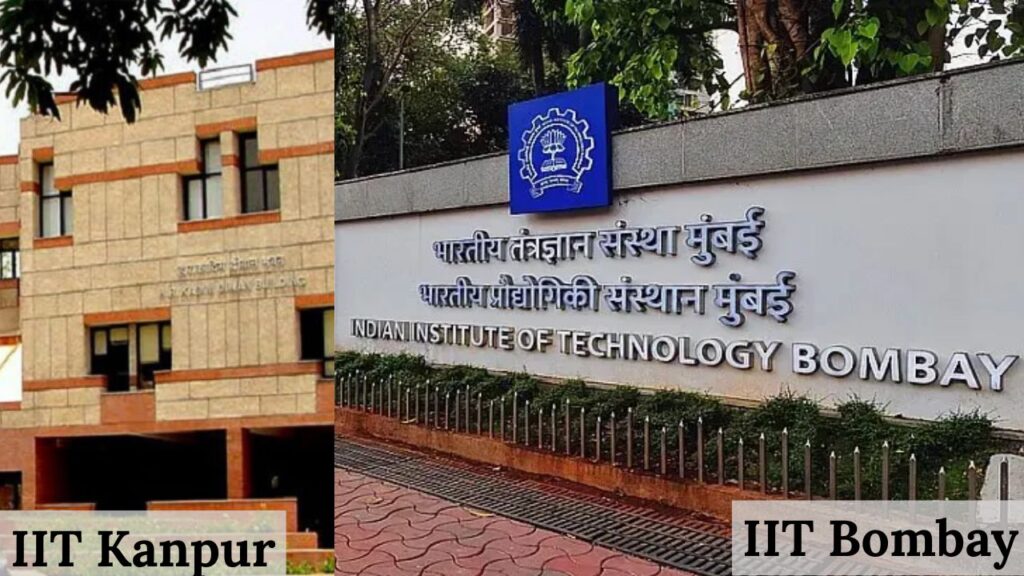
IIT Kanpur and IIT Bombay

Tier 1.5 (Strong and Competitive) has institutes such as IIT BHU (Varanasi), IIT Indore, BITS Pilani, IIT Ropar, IIT Gandhinagar, NIT Trichy, NIT Surathkal, and NIT Warangal. These universities have good academics and employment potential and have gained significant traction in reputation. 

Tier 2 (Well established with Consistent Track Records) Institutes of the second tier like IIT Mandi, IIT Jodhpur, IIT Bhubaneswar, IIT ISM Dhanbad, NIT Rourkela, NIT Calicut, BITS Goa, BITS Hyderabad, and the likes, boast of consistent placement records coupled with strong alumni network. These are established institutes and provide assured opportunities for students for career growth and links with industry.  

Placement Statistics

While selecting a college, the chief concern is usually the placement. Let’s dig into the real figures. The average salary package at IIT Bombay soared to ₹23.5 LPA in the 2024 placement drive, showing a 7.7% rise from last year’s ₹21.8 LPA. The highest package at IIT Bombay soared to a staggering ₹3.67 crore, with 22 students bagging offers scaling the ₹1 crore per annum mark. 

The placement rate for IIT Bombay’s BTech programme is a healthy 74.53%, with 1,475 students placed out of 1,979 registered. Curiously, Computer Science Engineering is the most in demand branch with 230 offers, then closely matched by Electrical Engineering (232) and again by Mechanical Engineering (229).​

The average package at IIT Kanpur hiked up to ₹26.27 LPA, whereas IIT Delhi saw an average package of ₹17.60 LPA with a highest package of ₹2.05 crore. These statistics attest to the amazing value top engineering colleges provide their students. 

Admission Process For B.Tech

Anyone with ambitions to be a part of these institutions should know the process of meteoric rise, which is Understanding the process of admissions is essential for any aspirant who wants to get into these esteemed organizations. The route for BTech admission in India: Your Class 12 results and entrance exams largely decide your fate.​

NIT Trichy

An all India examination termed JEE Main is required to be passed by the candidates for admission to the institutes like IITs, NITs. Candidates are required to qualify in JEE Advanced, which is the next level after JEE Main, for seeking admission to IITs. JEE Advanced for admission to IITs can be attempted only by JEE Main rank holders (JEE Main is qualifying exam for JEE Advanced), and seat allotment in IITs is done on the basis of JEE Advanced ranks alone. 

The eligibility criteria is simple, but important: candidates should have completed class 12th (science stream with physics, chemistry, and mathematics) with minimum marks of 50% to 75% which varies as per the institute and category. For reserved category contenders the qualification is generally 65%.​

Admission Process For B.Tech

The BTech admission schedule is designed in a manner that helps you to plan well in advance. Application period: It may be from November to March of next year, subject to specific entrance examination. 

Entrance exams are generally held in April-June, followed by counselling and seat allotment after the exams then classes usually start around August or September. 

Cutoff Ranks Matters

In top colleges, an applicant with a JEE Main rank less than 5,000 can expect to get one of the top five NITs. For example, NIT Trichy’s Computer Science Engineering has an opening and closing rank of 1000-2000 in general category, NIT Surathkal’s CSE has ranks in the range of 1500-3500. 

General 91-95
EWS 79-83
OBC-NCL77-81
SC 58-62
ST 44-48

Under this category, the likely cutoff percentile for JEE Main 2025 is General (91-95), EWS (79-83), OBC-NCL (77-81), SC (58-62), ST (44-48). But, all these are predictions based on the past year’s trends of the exam, the actual figure of cutoff may be different. 

Popular BTech Specializations

The present day BTech courses are not only confined to traditional engineering branches. Computer Science Engineering (CSE) leads the list as the most preferred branch for a bright career in software development, data science and cybersecurity. 

Popular BTech Specializations

But today the BTech branches in the specializations are far more than the CSE. Mechanical Engineering, Civil Engineering, ECE (Electronics and Communication Engineering), and IT (Information Technology) are still the standard choice but some new fields are emerging that are taking over the engineering world. AI and Data Science, Cyber Security, Cloud Computing, Biomedical Engineering, and Robotics and Automation Engineering are the courses currently making waves owing to high demand in industry. ​

Emerging disciplines such as these are the future of engineering, and firms looking to attract the best graduates in those niche are already hard-pressed to come up with competitive salary packages. 

Understanding the Financial Reality

It is also necessary to consider the expenses related to BTech. The entire course fee amount for government colleges like NITs and IITs is generally between ₹8.35 lakhs and ₹9.17 lakhs which is really affordable considering the kind of opportunities these institutes offer.​

Private universities such as BITS Pilani have much higher fees at ₹23.9 lakh for the full course, although they do have a variety of advantages such as more flexible curricula and better placement results.​

With a low fee structure of ₹8.35 lakh, IIT BHU, Varanasi also has the highest ROI of 239.52%, due to a median package of ₹20 LPA. 

Conclusion

Selecting a BTech college is among the most crucial decisions in your academic life. Despite the importance of rankings and placement statistics, you must keep in mind your interests, what you want to do in your career and your personal circumstances. If you’re going for the elite IITs, the perpetually decently performing NITs, or the private ones like BITS Pilani, do remember that your success depends as much on how hard you work as how good your education institution is.

Start your JEE Main preparation today, aim for a good rank, and keep track of the dates of the admission process. After all the efforts and proper guidance, it’s not going to be long before you’re striding down the hallways of the top engineering colleges in India, ready to make a mark on the world. 

RRB Paramedical Staff Recruitment 2026: Apply Now For Railway Health Sector

RRB Paramedical Staff

If you’re a B.Sc nursing graduate or a diploma holder in pharmacy, searching for a good salary job will end here. Application for the RRB Paramedical Staff 2026 closes on 14 October 2026 so don’t waste time and fill the form. This is a single-stage railway health-sector recruitment with no interview, and the application window is nearly shut. 

RRB Paramedical Staff 2026 Dates 

EventDate
Indicative notice in Employment News12 September 2026
Online application start15 September 2026
Last date to apply online14 October 2026 (11:59 PM)
Last date for application fee payment16 October 2026
Application correction/modification window17–26 October 2026
Scribe details submission window27–31 October 2026
CBT exam dateTo be announced
Admit cardBefore the exam; expected around 4 days prior
ResultTo be announced

Don’t rely on the later date. Pay today, and check the exact deadline on your regional RRB website. Eligible scribe candidates have 27 to 31 October to submit their scribe details. While the CBT date has not been announced yet.

How Many Vacancies Are There?

There are a total 590 vacancies for RRB Paramedical Staff 2026 which is distributed across different positions and responsibilities. Pick your posts according to your interest and eligibility not on the number of vacancies.

PostVacancies
Nursing Superintendent365
Pharmacist (Entry Grade)118
Health & Malaria Inspector Grade II43
Lab Assistant Grade II31
Radiographer / X-Ray Technician25
ECG Technician4
Optometrist2
Dialysis Technician1
Audiologist & Speech Therapist1
Total590

Eligibility, Age Limit and Pay by Post

Qualifications vary by post. A Pharmacist needs a D.Pharm with registration under the Pharmacy Act. A Lab Assistant Grade II needs Class 12 science plus DMLT. 

If candidates have a B.Sc degree with Chemistry as a subject and a one year diploma of Health/Sanitary Inspector then apply for Health and Malaria Inspector. So the education decides your future and is going to apply here. 

The most high-paying job is the Nursing Superintendent post which requires B.Sc in Nursing. The notification may allow a diploma route for nursing, so read the post-wise clause before assuming either way.

Age is counted as on 1 January 2027. The initial pay and age limits for the main posts are below.

PostPay LevelInitial PayAge (as on 01.01.2027)
Nursing Superintendent7₹44,90020–40
Health & Malaria Inspector Gr. II6₹35,40018–33
Pharmacist (Entry Grade)5₹29,20020–35
Radiographer X-Ray Technician5₹29,20019–33
ECG Technician4₹25,50018–33
Lab Assistant Gr. II3₹21,70018–33

SC and ST candidates get 5 extra years and OBC (non-creamy layer) candidates get 3. Reserved-category candidates applying against unreserved vacancies get no relaxation. DA, HRA and other allowances come on top under railway rules, so the in-hand figure will be higher.

Apply Now: RRB Station Master Recruitment 2026

Application Fee and Refund

General, OBC and EWS candidates pay ₹500, of which ₹400 is refunded after appearing in the CBT. SC, ST, Ex-Servicemen, PwBD, female, transgender, minority and EBC candidates pay ₹250, fully refunded after appearing. The refund is paid only if you sit the exam. A no-show forfeits it.

Selection Process and Exam Pattern

Selection is a single CBT followed by document verification and a medical examination, with no interview. The CBT has sections on professional ability, general arithmetic, general intelligence and reasoning, and general science and general awareness.

The paper has 100 questions in 90 minutes with one-third negative marking. No section-wise question split, but check the CEN PDF before you plan your preparation around it.

One Prep Tip That Matters

Treat your education as a main source of scoring in your respective field but don’t ignore the general sections. Skip the questions that you are not sure about because there is a negative marking and it costs you a lot.

Prepare your core topics in the post you are going to apply for. Then add timed mocks for arithmetic and reasoning, where most candidates lose marks they could have kept.

Conclusion

If you hold a B.Sc in Nursing, the Nursing Superintendent post has the highest pay (Level 7, ₹44,900) and by far the most seats, so it offers the best odds. A pharmacy diploma holder should go for Pharmacist, with 118 seats at Level 5. Candidates with DMLT or Class 12 science can aim for Lab Assistant, but with only 31 seats, expect heavy competition.

If you qualify for more than one post, the form asks you to pick your preferred RRB and post preference order, so rank them by pay level and seat count, not by what looks easiest. If you haven’t applied yet, do it before midnight tonight.

Top IET Lucknow CSE Placements – Highest Packages, Recruiters & Career Growth in 2025

IET Lucknow CSE Placements

IET Lucknow CSE is expected to witness a similar cut-throat competition in 2025 as well as it has been the top choice among the engineering candidates in the state of Uttar Pradesh. With growing placements, robust academics and an exploding tech ecosystem, the institute still shines through as a safe bet for students looking for careers in software, IT and emerging tech.

This guide will simplify everything you need to know about what to expect IET Lucknow CSE for this year in a practical, straightforward. If this is the course for you or if you are advising someone on college choices, these insights will give you a good idea what 2025 studying CSE at IET really means. 

Quick Overview of IET Lucknow CSE

Eligibility & Admission45% score in 12th, JEE Main/CUET with cutoff AIR 47,364-55,000, and counselling
Total Fee₹3.44-4.04 lakhs for 4-year course
Core TopicsProgramming, DSA, DBMS, Networking, AI/ML, Web Development, Cybersecurity, Operating System & Design
Placement RecordsRate: 80-90%, Package: ₹6-8 LPA

Eligibility & Admission For IET Lucknow CSE 

The applicant must have a 45% score in 12th or given its equivalent examination from a recognized board then apply for the admission in IET CSE course. Physics and Mathematics are compulsory and then one subject from Chemistry, Biology, Biotechnology, Technical Vocational Subjects or Computer Science is taken. 

Applicants from the general category should have at least 45% mark on aggregate in these subjects. Applicants for reserved seat quota should produce the valid certificate during the counselling. Please remember that 75% is nothing but a cut-off and that generality-based for admission to IET Lucknow. 

You are required to qualify in an entrance examination for admission as the entrance is not on merit basis for the B.Tech CSE course. It is mandatory to have a valid score in the JEE Main or CUET (UG) entrance examination. You have to apply for Uttar Pradesh Technical Admission Counselling (UPTAC) after getting the required score. 

The admission into various courses depends on your All India Rank in JEE Main or CUET UG and availability of seats. During the counselling, seat allotment is normally done on the basis of Common Rank List (CRL), considering category-wise quota. Important papers like your mark sheet, proof of identity, admit card/score card of the entrance exam, caste/domicile certificate etc. have to be submitted during document verification. 

All procedures to the application and admissions process must be done through the official portals of UPTAC and IET Lucknow. 

2025 Fee Structure For IET Lucknow CSE 

The total fee amount for the course is ₹3.40 lakhs in tuition and ₹34,100 for caution money, exam fees and other incidentals. Students are required to pay roughly Rs 1.05 lakh for the first year that covers the tuition and annual and one-time charges. The price of hostel stay without mess charges is around Rs 58,000 per annum, these are not education fees. The total fee for the course is around Rs 25.02 lakhs, making it way higher for NRI candidates.

Core Curriculum Topics

The scope of topics is broad and comprehensive to prepare the students with a solid background of computer science and discipline related areas. 

Programming knowledge is predicated on knowledge of data structures and programming concepts in such languages as C, C++, Python, and Java. Mathematics for computing includes topics in discrete mathematics, probability and statistics, linear algebra, and numerical methods, designed to enhance the student’s analytical thinking. In order for students to develop an overall understanding of computational theory, core courses in computer science focus on algorithms, computational theory, compiler design, operating systems, database management systems (DBMS), computer organization, and microprocessors. 

These topics were taught at an appropriate level to make students well grounded in computer science and related areas. Programming is based on data structures and programming principles in such languages as C, C++, Python, and Java. Mathematics for computing Discrete mathematics, probability and statistics, linear algebra and numerical methods to develop thinking skills are covered in this subject. In addition, core computer science classes include algorithms, theory of computation, compiler design, operating systems, dbms (database management systems), computer architecture, and microprocessors to allow for a full understanding of computational concepts. 

Students are now taught web technologies, cloud computing, object-oriented programming, and software engineering to prepare for industry use in web-based software development. Examples of network and security topics include modern connectivity and security concerns such as computer networks, information security, cryptography, network protocols. Also as advanced electives students can take courses-in machine learning, data mining, pattern recognition, natural language processing either in data science or artificial intelligence. 

The work experience is gained via lab work, industry training/internships and major project in the pre-final and final year of the course. Students can also pursue electives in more specific areas of interest and emerging technology like image processing, embedded systems, Internet of Things (IoT), high-performance computing.

Read More:-   Check IBPS Clerk 2025 Prelims Result – Latest Update & Direct Link

Placement Excellence

CSE branch has good placement opportunities with about 70-80% students getting placed. The average salary package is Rs. 6 to Rs. 8.5 LPA with a median of Rs. 6.15 lakh per annum.

Surprisingly, the highest package offered in this branch is as high as Rs. 13.5 lakh per annum, suggesting high paying jobs in top-notch companies. 

Top recruiters are reputed software and 50+ IT companies such as TCS, Amazon, Deloitte etc which generally release jobs for SDE (Software Development Engineers) - largest application to all Engineering streams and the highest paying jobs. Applications for internships open from the second year itself, with stipends up to ₹2 LPA in reputed firms, giving an early practical exposure. 

Career Growth Opportunities

Approximately 35% of graduates go on to complete higher education such as an MBA or M.Tech. The school has a strong alumni network that excels at multinational tech companies that provide mentorship and networks. In addition, vertical 24×7 incubation support is provided to entrepreneurs, stimulating a vibrant startup ecosystem. 

Revenues earned by AI and ML professionals is uniformly high and comparable to ER&D engineers with professionals earning between ₹10 and ₹16 LPA. NITIE promotes entrepreneurship through vibrant clubs like Innovation and Incubation Center (IIC) and the Entrepreneurship Cell (E-Cell) on campus, where students have the opportunity to transform their ideas into business ventures.  

How to Maximize Placements

  1. For achieving the success in your academic and professional life you are required to focus on these:
  2. Keep your CGPA 7.0+ or more so that you would have good academic record.
  3. Spend some time on competitive programming solving 200+ problems on LeetCode to improve your coding.
  4. Try to get some good summer internships from your 2nd year onwards.
  5. You can specialize in the field of AI/ML, DevOps or so on for best-paying jobs and best/utilising your education.
  6. Have a good GitHub profile with some real projects that demonstrate your technical skills.
  7. Join hackathons, coding competitions, etc.. to improve your problem solving skills and network! 

Why Choose IET Lucknow CSE?

Affordable fees (₹3.44-4.04 lakhs for 4 years), strong placements (80-90%, ₹8-9 LPA) and presence of some premium recruiters makes IET Lucknow CSE a very good investment. It has a 85% home state quota and hence very much easy for uttar pradesh residents. Growing packages for AI/ML roles, an enthusiastic startup culture and more – the institute offers many career options beyond traditional jobs. 

Conclusion

The Department of CSE at IET Lucknow, consistently shares steady placement, industry-oriented training, and a holistic technical exposure — all at a much reasonable fee than most of the engineering institutes in India. With an average package of 6-8 LPA, the institute has top recruiters like TCS, Amazon, Deloitte etc. and the campus culture revolves around coding, internships and innovation, giving students great preparation for both company roles and higher studies.

In case if you care for quality of learning, good return of investment, and good career growth in software, AI/ML, research, or entrepreneurship field to name a few, then IET Lucknow CSE is your safe and value for money option for 2025. 

ICET Result 2025 Live: TS TG Rank Card Out, Download Your Scorecard Now!

ICET Result 2025 Live: TS TG Rank Card Out, Download Your Scorecard Now!

TSCHE has announced the result of the examination held on 8 June and 9 June, Candidates can now check their results online. This exam is an entrance key for admission to MCA and MBA programs across Telangana. Candidates can find the link to the official website in the article to check their results. 

If you don’t know how to download your result, there is a step-by-step guide to check and download your ICET result. After the result declaration, shortlisted candidates can now prepare for the counselling round. It will be announced later on the website. Keep checking for updates on the counselling process.

Details For The ICET Result 2025 

Conducting BodyTelangana State Council of Higher Education
Exam NameIntegrated Common Entrance Test
PurposeThe Telangana government conducts this exam as an entrance exam for admission in Universities and affiliated colleges across Telangana.
Total candidates64,398
Cut-Off score25%
Result release date 07/July/2025
Check ResultClick Here
Official WebsiteClick Here

Read More 👉 BBAU PG Admission 2025: Dates, Fees, Eligibility & Offered Courses Revealed!

How to Check TC ICET 2025 Result

  1. You can click on the link “Check Result”.
  2. Page appears on the official website on your browser.
  3. Enter your credentials to check the result. (Registration number, DOB)
  4. Result will show up on the screen.
  5. You save and download it for a hard copy.

Minimum Marks for ICET 2025

TSCHE has set some limitations for the examination qualifying marks. According to their rule, minimum qualifying marks for general and OBC candidates must be at least 50 marks out of 200. Meanwhile, there are no minimum marks for reserved categories like SC/ST. 

These minimums will have to be acquired by the students to secure admission in universities for MCA and MBA programmes. 

Scroll to Top