Bihar Public Service Commission (BPSC): Full Form, Exam, Eligibility & Selection Process

Bihar Public Service Commission (BPSC)

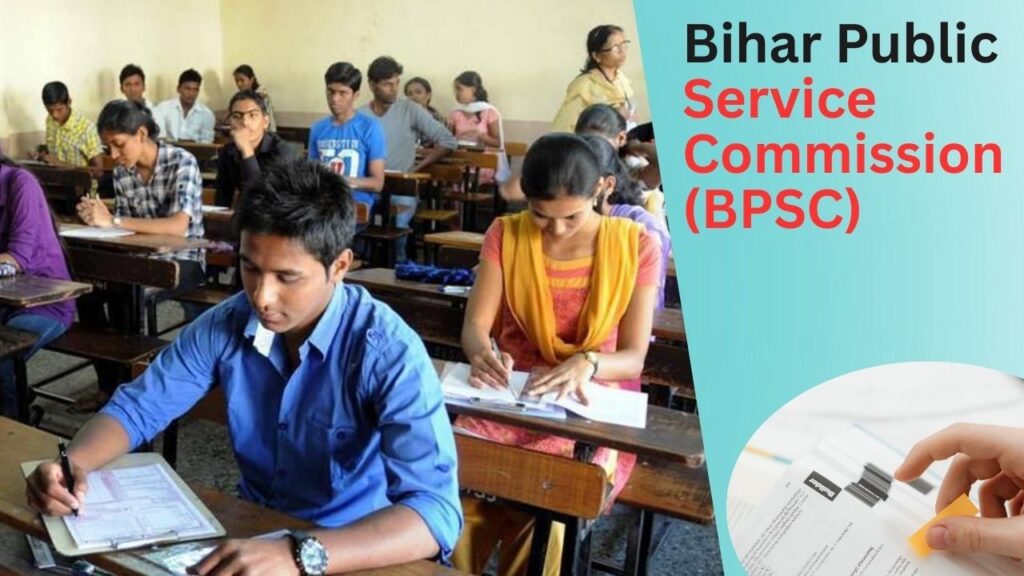
If you are among those dreaming for a Bihar government job then you must have heard about BPSC exams. Perhaps you observed some of your friends studying thick books or maybe you stumbled across those BPSC Toppers interviews that suddenly fill your YouTube recommendations list. You have to know that Bihar Public Service Commission will offer a great opportunity for various posts such as DSP, BDO, SDM and others.

So, let’s crack the details of Bihar Public Service Commission including Full Form, Exam, and Selection Process. 

What is BPSC?

Bihar Public Service Commission is a government organization in short BPSC. It’s essentially the gatekeeper to some of the best government jobs in Bihar. It was established in 1956 and functions as a constitutional body to select the eligible and suitable candidates for multiple state civil services and administrative positions.

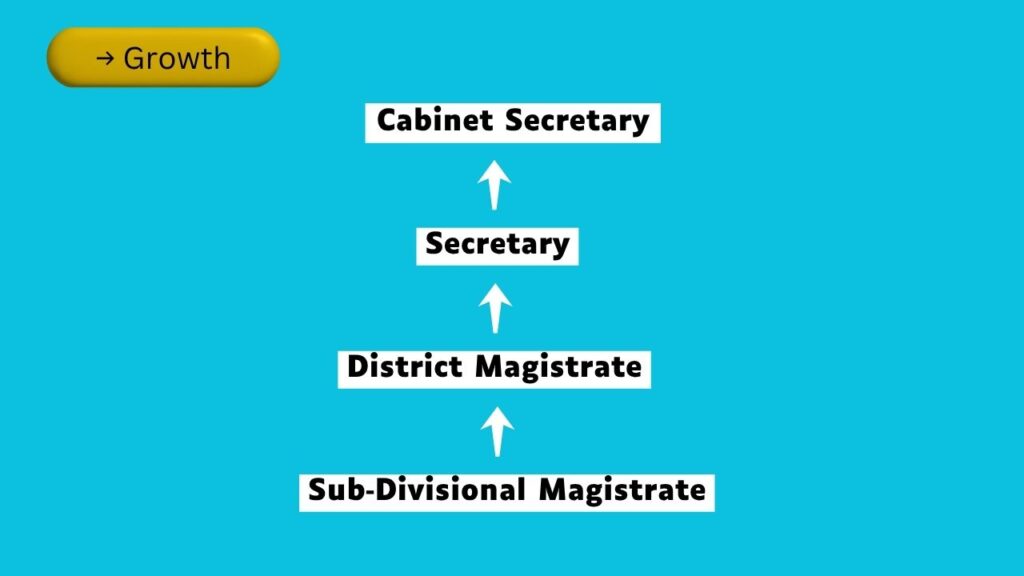
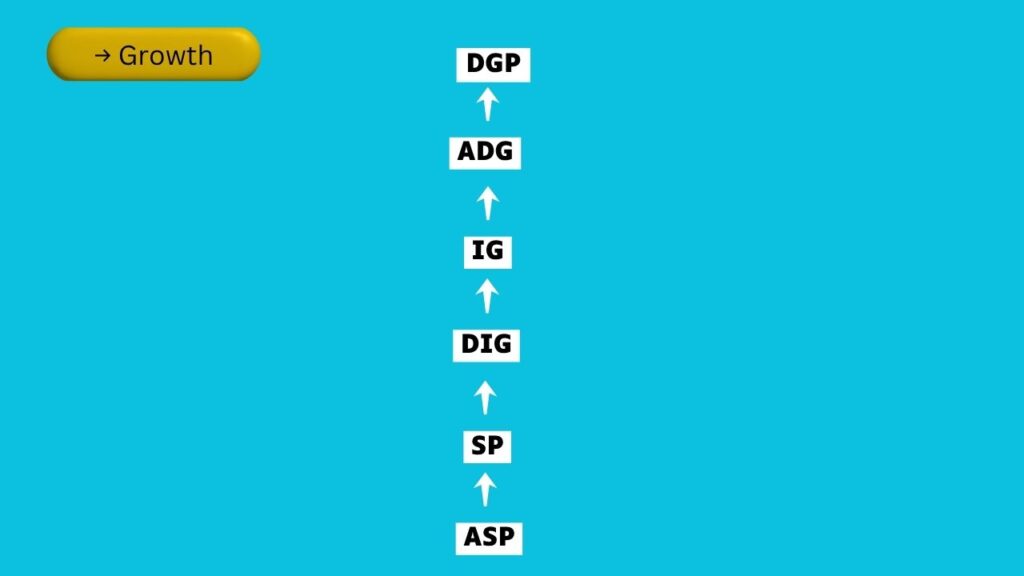
The BPSC mostly refers to the BPSC Combined Competitive Examination, popularly known as BPSC CCE. This is the top exam for jobs like Sub-Divisional Magistrate (SDM), Deputy Superintendent of Police (DSP), Block Development Officer (BDO), and other posts under Class I and II officers. If you want to be the guy who actually runs district administrations, implements policies on the ground, or maintains law and order, this is your path in. 

The BPSC 2026 Exam

So, If you are going to participate in BPSC 2026 examination then this is for your information: Bihar Public Service Commission is a bit predictable when you compare it with some other state PSC. But “predictable” is not easy. It means you can plan better.

The BPSC CCE 2026 is expected to be conducted in a three-phase examination process established as the standard: 

Stage One: The Preliminary Examination

This is your screening test. It’s a single paper objective type 150 marks. The syllabus includes General Studies (History with special emphasis on Bihar, Geography, Polity, Economy, Current Affairs and General Science). 

Here’s the thing about BPSC Prelims: it’s qualifying in nature. Your marks here don’t count for the final merit list, but you have to clear this hurdle to move on. Bihar Public Service Commission cut-off changes every year according to number of vacancies and difficulty level but in general 105-115 out of 150 would keep you in safe zone. 

Stage Two: The Main Examination

Here is where the real contest takes place. BPSC Mains is quite straightforward in comparison to UPSC Mains which has nine papers:

  • General Hindi (Qualifying, 100 marks)
  • General Studies Paper I (300 Marks)
  • General Studies Paper II (300 Marks)
  • Optional Subject Paper I (300 marks)
  • Optional Subject Paper II (300 marks)

The General Studies is all pervasive: History, Geography, Indian Polity, Economy, Science & Technology and Current Events. But here’s a crucial tip: Bihar specific knowledge is given a lot of importance. The panel loves to quiz you on Bihar’s freedom struggle movements, its rivers and geography, state policies, and recent development schemes. 

Fifth subject (Optional Subject) is the one You can capitalize in your favor. Options include History, Geography, Political Science and Economics as well as Agriculture, Botany and Mathematics. Choose carefully—this is a topic you really like, because you will be writing two detailed papers on it. 

Stage Three: The Personality Test (Interview)

If you clear Mains, you will have to attend an interview for 120 marks. It’s not just a personality check; the panel also wants to gauge your administrative skills, knowledge of the socio-economic problems of Bihar and whether you’re capable of thinking on your feet. 

They may question you on a particular law and order issue in a district, your opinion of the education system in Bihar, or even the reason why you want to enter the civil services to begin with. 

Eligibility For the Bihar Public Service Commission

Age Limit

CategoryMinimum AgeMaximum Age
General20 years37 years
OBC20 years40 years
SC/ST20 years42 years

Qualification for Bihar Public Service Commission

Any graduation degree will work including BA, BSc, BCom, B.Tech, MBBS, etc. The commission does not differentiate for your graduation stream. Anyone who has completed their graduation is eligible to apply a graduate in history has the same eligibility as an engineering graduate. 

Physical Requirements

Posts such as DSP (Police) have physical requirements for height, chest measurements, as well as vision norms. These are not applicable for administrative posts like SDM, however.

Place of residence

Although the BPSC is a state commission, there is a catch. Some posts are filled on the basis of Indian domicile candidates while others are open for all Indian citizens. It will be mentioned in the notification very explicitly, so go through it carefully. 

Selection Process

Here is a bit of information that most aspirants do not get to know instantly: Clearing each stage of the BPSC examination is not the purpose. It’s just a matter of how high you get your ranking to achieve your preferred post.

After the Interview, your final merit list is prepared in the BPSC on the basis of your Mains marks (out of 800) + Interview marks (out of 120) – altogether 920 marks. It is of no consideration here, the Prelims score. Based on this merit list, seats are allotted and candidates have to opt for their preferred cadre (SDM, DSP, BDO etc.) as per their ranking and category reservation.

Read More:- Sashastra Seema Bal (SSB): Full Form, Role, Recruitment 2026 & Complete Guide

Conclusion

Preparing for BPSC 2026 is not a piece of cake but with a smart approach and genuine zeal to join in Bihar administration, everything is achievable. Understand the syllabus completely, read Bihar paper religiously, practice answer writing from day one for Mains & Current Affairs.

Keep in mind that Bihar Public Service Commission exam is taken by thousands every year but only a few become. It’s not intelligence that differentiates most of us – it’s consistency, the right guidance, and not giving up when the syllabus seems unmanageable.

Your path to becoming a Bihar civil servant begins with a single step: knowing what you’re getting into. Now that you do, the real prep starts. 

Leave a Comment

Your email address will not be published. Required fields are marked *

IIT Delhi Recruitment 2025: Latest Job Vacancies, Eligibility, and Application Process

IIT Delhi Recruitment 2025

Do you aspire to work at India’s leading institutions? The Indian Institute of Technology IIT Delhi Recruitment 2025is a golden chance for engineers, scientists, and academicians to excel in research, teaching or technical support. This year’s recruitment drive has plenty of jobs for freshers as well as experienced professionals. Here’s all you need to help build a great application. 

The Opportunity Awaits

Tuck yourself in among the green corridors of IIT Delhi, bookended by the finest brains in India. The hiring there is more than just filling vacancies. It is interested in motivated individuals who will advance science and technology.  

The institute have positions ranging from Senior Project Scientist to Project Attendant and faculty positions including Assistant Professor.Whether you are a senior seasoned professional or a new graduate, there is a role that could spark your career 

Decoding the Vacancies

The announcement describes eight project vacancies for several technical positions. Here’s a snapshot:

  • Senior Scientist: If you’ve got an M.Tech in Computer Science and a flair for pioneering work, this is your ticket. ​
  • Senior Assistant/Junior Assistant: For B.Tech or BE in Computer Science holders, these are stepping stones to a research oriented future.​
  • Scientist (Civil Engineering): If civil structures are your passion and you have a minimum of 3 years experience in the field, you’re in!​
  • Attendant: Just like aspirants of the position of Technician in the IITs, this is also an inclusive call considering even those with an experience of three years post 12th standard, which makes it easy to apply for a lot of people.​
  • Project Manager: If you’ve 8–12 years of experience & leadership is your essence, then you have a chance in there. 

There are vacancies for faculty, mainly Assistant Professors, in numerous departments (with Grade distinctions according to experience) for those holding a doctorate and possessing teaching skills. 

Selection: More than Just a Test

The scrutiny at Iit Delhi is but a fair one. Project posts are decided on the basis of your academic record, past experience and by how you come across in the personal interview. For numerous jobs in technology, the walk-in interview style is straightforward and more fun, no drawing it out. 

Academic and certain administrative roles have a two-stage process: testing and a presentation and a panel interview, to assess your knowledge of the subject and your teaching style. Good time management and clear communication also go a long way here. 

Are You Eligible?

Every position has different educational requirements. Senior positions require you to possess a Master’s or a PhD. B.Tech/BE candidates apply for project posts, while support posts offer chances to all those who have completed their 12th standard, provided they have work experience. This kind of approach is coming IIT Delhi’s ecosystem with a diverse team. 

The faculty and executive positions involve not only academic milestones but also practical experience in well-known organizations or the industry. Be sure to read the notification properly — this is the key to losing out on your dream job on a technicality. 

Read More 👉 WBSSC Result 2025 Declared – Direct Link to Check Your Score & Rank

How to Apply: Step-by-Step Guide

Follow Notification: Initially you can grab the official notification from the IIT Delhi site.​

Get your documents in order: You should have your educational certificates, mark sheets, experience letters, and ID proofs in a file that you can submit.

Attend the Interview: For most project posts, walk-in interviews mean that you just need to appear at the institute’s address on a particular date.

Online/Offline Application: Certain positions require online applications—access the application form using the recommended browser, and complete the form with exact details as mentioned in the notification. For special notifications (e.g. Project Manager) please attend the offline process before deadlines.

Check the Eligibility: Before applying make sure that you fulfill all the eligibility criteria- it will save your time as well as disappointment. 

Tips for Success

  • Walk in interviews for which you need to Arrive early; Punctuality always makes a good first impression.
  • If you’re invited for an interview, have crisp answers ready about your projects, your strengths, and your goals.
  • Study technical topics related to your position, as the interviewers will like that you know more than the basics.
  • Have your documents all in order, in both digital and hard copy format. 

The Promise of IIT Delhi

Work at IIT Delhi is the perfect combination of rigorous academics and real social impact. You will be joining new projects, training new leaders, and collaborating with experts from abroad. The transparent and objective selection process assesses each candidate on skills, past work, and goals. 

The Closing date for IIT Delhi Recruitment 2025 Application is on the way. So get ready, give it your all and prepare to be transformed. 

Conclusion

The IIT Delhi placement 2025 will give you an opportunity to get into one of the best institutes in India. The result is a spirit of innovation, excellence and focus that permeates every aspect of daily activity. Whether you’re a new graduate seeking your first research position or an experienced professional ready to lead teams, the numerous job opportunities cater to all skill sets. The fair wages, solid job growth, and inspiring work place make this more than just a job. It enables you to contribute to creating a narrative which directs India’s science and tech development. Be prepared well, keep visiting for updates and all the best for a bright career at IIT Delhi. 

Leave a Comment

Your email address will not be published. Required fields are marked *

IIT Delhi MBA Fees – Complete Details on Tuition, Hostel And Other Charges

IIT Delhi

The IIT Delhi MBA is considered one among the best return on investment management course in India. Offering a perfect blend of quality education, good industry connect at a manageable fee, it enables students to dream big without the fear of being burdened with debts in private b-school cost. For 2025-27 batch, the total IIT Delhi MBA Fees 2025 is 12.17 lakhs which makes it one of the cost effective option in top management institutes of India. 

IIT Delhi makes quality affordable with a transparent detailed batch-wise payment plan, clearly defined hostel and academic fees, and several options for financial assistance. In addition, the program provides a good return on investment (ROI) as the average placement package is ₹25.82 LPA, which further adds to the enunciation as a top choice for prospective business leaders. 

IIT Delhi MBA Fee Structure 

IIT Delhi MBA fee is ₹ 12.17 lakhs for 2025-27 batch and this makes it one of the least expensive top Indian b-schools. The fee is designed so that the students can derive maximum benefit from it, but still, it should be within the reach of students coming from varied financial backgrounds.  

Complete Breakdown of Detailed Fee Components

The tuition fee for the two-year course is ₹12,00,000, which is payable in four equal installments of ₹3,00,000 per semester. All the education fees, materials for courses and learning resources and even the use of campus facilities are covered by these fees. The total cost of accommodation in the dormitory for two years is Rs. 17,200 or 8,600 per semester.

Complete Breakdown of Detailed Fee Components

Mess fees are to be paid extra and they vary according to consumption, hostel fees are Rs 8,600 per semester. Semester fees are 22,400 for academic and administrative purposes which include the use of internet, sports equipment, library and student-welfare programs. 

Total tuition fees₹12,00,000
Per semester₹3,00,000
Total hostel₹17,200
Per semester hostel₹8,600
Academic charges₹22,400

First Semester Payment Structure

The admission fee structure is categorized based on the candidate’s classification. The fee for the first term for candidates in the General, OBC, and EWS categories is ₹3,31, 000, inclusive of hostel fees and other relevant expenditure like tuition. Those who belong to the SC, ST or PwD categories, however, get a Tuition Fee Waiver. First term fees are drastically reduced for these categories to Rs 31, 000, which is only for the hostel and other miscellaneous expenses. This tiered fee system also reflects a commitment to ensuring equitable access to education, as well as to financial viability for marginalized populations. 

How IIT Delhi MBA Fees Compare with Other Top Colleges

Comparison of MBA Fees Across Top Indian Colleges

How IIT Delhi MBA Fees Compare with Other Top Colleges

IIT Delhi offers great value for money as compared to other top b-schools in India. The fee structure makes it a kind of cross between the premium IIMs and the dirt cheap government ones. 

Old IIMs (Higher Fee Range)
IIM Calcutta₹27.00 lakhs
IIM Bangalore₹26.00 lakhs
IIM Ahmedabad₹26.50 lakhs
Newer IIMs (Moderate Fee Range)
IIM Lucknow₹20.75 lakhs
IIM Kozhikode₹20.50 lakhs
IIM Indore₹21.17 lakhs
Private B-Schools
XLRI (Xavier School of Management) Jamshedpur₹25.00 lakhs
ISB (Indian School of Business) Hyderabad₹40.50 lakhs
MDI (Management Development Institute) Gurgaon₹23.00 lakhs
SPJIMR (Shreyans Prasad Jain Institute of Management & Research ) Mumbai₹21.00 lakhs
Budget-Friendly Government Colleges
FMS (Faculty of Management Studies) Delhi₹2.43 lakhs
JBIMS (Jamnalal Bajaj Institute of Management Studies) Mumbai₹7.00 lakhs
TISS (Tata Institute of Social Sciences) Mumbai₹1.85 lakhs

Although these institutes charge very minimal fees, IIT Delhi gives a middle path with a reasonable fee structure and excellent results. 

IIT Delhi MBA Program Cost Breakdown (Total ₹12.17 Lakhs)

Return on Investment Analysis

The exceptional 2024 Placement Performance demonstrates that IIT Delhi’s MBA Program offers a tremendous return on investment (ROI). Graduates are offered an average salary package of ₹25.82 LPA, the highest package is an impressive ₹41.13 LPA while the median package is ₹24.45 LPA. The program’s remarkable 100 percent placement record is a testament to its strong industry relations and career support. It is the most lucrative choice for an aspiring management professional for a total programme fee of ₹ 12.17 Lakhs. Students have managed their expenses for a few months after they start working. 

Financial Support and Scholarship Options

IIT Delhi provides several support to the students who want to pursue MBA to ensure that everyone gets a chance of education. SC/ST/PwD students are entitled for 100% tuition fee waiver under category based benefits except for hostel and other fees. Furthermore, meritorious students are also eligible for merit scholarships, which are awarded on the basis of their programme-wide academic performance. Also, due to prestige of the institute, education loan for MBA course can be availed from all major banks. And given the school’s elite status, those loans typically carry competitive interest rates. 

Payment Schedule and Methods

In order to ensure transparency and ease of understanding for all students, the fee payment follows a semester-wise structured format. As per the schedule of payment, the fee for the 1st semester is to be paid at the time of admission. Fees are payable at the beginning of each subsequent semester. For your convenience, the fee can also be paid in two installments over two years, making finances a little easier to manage. 

Multiple modes of payments are available for easy transactions. Students can pay online from the time of official portals which ensures the safe and efficient process. Bank loans are disbursed by demand drafts. To suit different taste, there is also bank transfer payment option. This systematic procedure keeps the payment process formal and transparent, at the same time ensuring flexibility and accessibility to the students. 

Why Choose IIT Delhi MBA

Why Choose IIT Delhi MBA

Academic Excellence

The institute, which was ranked 4th in Management by NIRF 2024, is renowned for its outstanding academics and is supported by a strong faculty having rich research and industry experience. The curriculum is broad-based and focuses on experiential learning to ensure that the students are well-prepared to face real-world challenges. 

Industry Connections

It has great industry connections, and excellent placement support with top recruiters due to its vast alumni network in prestige companies, recurring industry interactions and guest lectures. 

Facilities & Location Advantage

The modern facilities on the state of the art campus include a well-equipped library, state of the art computer laboratories, sports and leisure facilities. Opportunity to work in corporate offices and the institution is located strategically in Delhi NCR, the emerging business hub of India making it the best for commerce studies.

Read More:- DSSSB Recruitment 2025 – Latest Vacancy, Eligibility & Application Details

Conclusion

For Indian business schools, the IIT Delhi MBA delivers the best price, quality and outcomes combination you can get. With a total fee of Rs 12.17 lakhs, it holds itself at a higher standard than many of the private IIMs while giving exceptional value for money when compared with the ones that are more prestigious. Given the reputed brand, good placements and affordable fees, it is an excellent value for money for MBA aspirants. 

Transparent breakdowns of fees and category-wise concessions ensure accessibility to students from diverse backgrounds. When viewed from the perspective of ROI, career opportunities and ranking experience, IIT Delhi MBArr its place among the topmost feasible options in India in business school arena. 

Leave a Comment

Your email address will not be published. Required fields are marked *

Rajasthan High Court Peon Recruitment 2025 Out for 5670 Posts – Apply Online Now!

Rajasthan High Court Peon Recruitment 2025

Candidates who are waiting to apply for the Peon post in various departments such as Rajasthan High Court, State Judicial Academy, Legal Services, District Court, and District Legal Services can apply now. Rajasthan High Court Peon Recruitment 2025 process starts from 27 June 2025. Candidates are advised to fill out the application form before the last date of registration.  

Post Peon
OrganizationRajasthan High Court
Vacancies5670
Application Starts 27 June 2025
Application Ends26 July 2025
Initial Salary for this postRs. 17,700 to Rs. 56,200 per month
Official WebsiteClick Here

Recruitment Steps for the Rajasthan High Court Peon Recruitment 

The selection for this post happens in 5 stages – written exam, candidates who have passed the exam are eligible for the interview. Document verification, Medical examination, and when candidates have passed all these stages, his/her name is shortlisted in the list.

Read More 👉 Bihar Police Constable Admit Card 2025 Released – Download in 1 Minute from csbc.bihar.gov.in

Steps to Apply Online Form

  • Click on the link given on the official website or directly from this article.
  • Fill out the empty boxes with the required details.
  • Attach the necessary documents with the application.
  • You have to pay an application fee to complete your application and submit it.
  • Save it for future reference.

Eligibility For Rajasthan High Court Peon

Candidates must pass their 10th for applying to this position. Good knowledge of Devnagri and Rajasthan culture. Candidates are advised to check these eligibility details more from the notification.

Application Fee
Gen/OBC Rs. 640
SC/ST/PWDRs. 450
NCL (OBC/MBC/EWSRs. 550
Important Links
Online RegistrationClick Here
Download NotificationClick Here
Official WebsiteClick Here

Leave a Comment

Your email address will not be published. Required fields are marked *

Meet the Best Hindi Teacher for Competitive Exams Who Can Boost Your Success

Best Hindi Teachers for Competitive Exams – SSC, UPSC, Railway & State Level

Best Hindi Teacher: If you aim to clear the competitive exams like SSC, UPSC, RRB, & state-level exam, right guidance for best scoring is important. And for that, the choice of a teacher matters. While preparing for other subjects likeGeneral Knowledge, Mathematics, Reasoning, and English. Don’t forget to focus on Hindi because it is most important in many government exams. Hindi teachers not only help you by providing the core syllabus but they will prepare strategically for the exam. These teachers have a unique teaching style that will help you understand grammar, comprehension, Letter Writing, Unseen Passages and vocabulary.  

Aspirants can learn easily through their guidance including exam pattern, mock test, and shortcut methods that will help you to memorize. Few teachers provide live sessions, recorded videos, notes, and quizzes, so you can easily prepare for the examination. 

Mock test series will help you in revision and remember that every teacher has their unique way to explain hindi. Take a demo class to select the right teacher whose explanation reaches into your mind. 

Explore best Hindi teachers, they are known for their deep knowledge, best teaching style and make complex concepts of grammar easy for students.

Nitin Sir

Nitin Sir from Study91 is known for clear explanations with a practical approach. He doesn’t just explain from books but tries to relate with real-life examples from newspapers or stories to make the hardest grammar rules easy for students to understand.

Nitin Sir Hindi Teacher Study91

Students easily memorize it, but most importantly they understand why grammar rules are used. He also gives plenty of questions to practice which is the real key to success.

Vivek Sir

Vivek Sir’s creative style of teaching makes him one of the best Hindi teachers in India. Hindi is a language of culture and creativity, according to Vivek Sir. That clearly showed his mastery of story-based teaching style which makes grammar memorable. He uses humour, short stories that don’t make students bored in Hindi classes.

Vivek Sir Hindi Teacher for SSC, Railway, TET

Ideal for those who don’t memorize anything easily and it’s hard for preparing Hindi for exams like Railway, SSC or TET. His method is effective to recall in exams quickly, so these techniques will make students remember even under pressure.

Dr. Ajay Anurag

Dr. Ajay Anurag is a best educator of Study IQ and reputed for his deep knowledge in Hindi grammar and literature. Students looking for one teacher who can teach them both grammar and literature, Ajay Sir is the best choice.

His concept-based teaching makes you understand each topic easily in minimum duration. But he doesn’t rush topics, he explains “why” behind every grammar rule.

Students who don’t just want to learn but understand Hindi topics can easily access his systematic and well-structured lessons. He also provides study material which is so detailed and exam-focused that it makes it easier for the students who are preparing for government exams.

Jitendra Soni (KGS – Khan Global Studies)

He is the best educator of KGS who is extremely popular for his Hindi Foundation Batch. Jitendra Soni is focused on friendly-tone, conduct doubt-clearing sessions, and handwritten notes.

Jitendra Soni Hindi Teacher KGS

Students can simply understand every topic due to his explanation of lengthy stories, complex topics of grammar, and comprehension. Once you have taken his demo class or follow on YouTube, you will know how interactive and energetic his sessions are.

Vishal Sir (Mission Selection) 

Vishal Sir is a well-known Hindi teacher on the growing platform Mission Selection. Vishal Sir is popular among the students because of his exam-oriented preparation method. His short explanations are impactful, he helped many students with shortcuts, tricks, and practical approaches.

Vishal Sir Hindi Teacher Mission Selection

He is the best teacher for Police, SSC GD, Railway, Constable, and state-level exams preparations. Students who want to complete this subject within less time, they can follow Vikas Sir.

Arun Sir

Arun Sir is an excellent teacher who teaches many students for the competitive exams. He focuses on Hindi grammar complex topics to provide a detailed explanation which can help students to understand Hindi in more depth. His command over vocabulary, comprehension, and writing are valuable for the exams like SSC, Railway, and UPSC. 

Arun Sir Hindi Teacher for SSC and UPSC

Students can easily understand his way of teaching as breaking complex topics into simpler parts including real-life examples. He helps students to practice mock tests and previous year questions for building their strong foundation on Hindi.

Naveen sir

Naveen Sir is a master of answer writing, if you are preparing for UPSC or state exam then you should make your descriptive writing good in Hindi. You will become an expert in essay writing, letter writing, and precise writing in Hindi with his consistent training.

Naveen Sir Hindi Teacher for UPSC Answer Writing

He is an ideal teacher for students who want to improve their writing skills and present their answers in clean, structured, and detailed.

Other Recommended Hindi Teachers

Apart from the above names, there are a few more respected teachers who can provide you best lessons for Hindi in competitive exams:

Dr Vikas Divyakirti (Drishti IAS) – He teaches Hindi Literature with depth and clarity, making him ideal for UPSC aspirants.

Alok Sir (Adda247) – Alok Sir is focused on short-trick and not go for lengthy explanations that makes him ideal for SSC aspirants

Ritesh Sir – he also helps students to prepare for the SSC exam because he makes Hindi grammar easy through continuous practice.

Read More 👉 Meet the Best Current Affairs Teacher for SSC CGL Who Can Boost Your Score

Why these teachers stand out

Apart from their unique teaching styles, they have the same common qualities that make them best Hindi teachers.

Simple explanation – they explain every topic in easy language that helps every student to understand easily.

Practical Approach – their style including examples from newspapers, current events, and daily-life that make Hindi more understandable.

Focus on Practice – continuous practice of questions from previous year and test series, they ensure that every student solves enough questions to mentally prepare for the exam.

Motivation & Support – Hindi is so difficult for some students who came from convent schools, these teachers inspire them to make learning enjoyable.

Read More: Best Online Coaching for Bank Exam: Master Every Topic for Success

Final Thoughts

When students are focusing on tough subjects to clear competitive exams, they often forget to prepare Hindi to fuel their score. With the right teacher, Hindi can become your strongest subject. These Best Hindi Teachers for Competitive Exams have already taught many successful students now you could become next.

If you give you full potential for your exam with their guidance, you can clear the most toughest exams. They focus on exam patterns and important topics that need to be prepared well for government exams.

Leave a Comment

Your email address will not be published. Required fields are marked *

RPF Sub-Inspector Exam: Your Complete Guide to 2025 Recruitment

RPF Sub-Inspector Exam

The RRB RPF Sub-Inspector exam is considered as one of the toughest national level exam in India and it is conducted by Railway Recruitment Board under the Ministry of Railways. The exam is held to select eligible and committed candidates for the post of Sub Inspector in Railway Protection Force, a specialized security force which ensures the safety of railway passengers, railway premises, and vital rail components in every zone of Indian Railways. 

RPF SI Recruitment is prestigious post and government job and it has good salary package, so, that is way it is most demanded exam in our country. The exam is conducted as computer based test (CBT) in 15 languages apart from English such as Hindi, Urdu, Tamil, Telugu, Kannada, Odia, Malayalam, Marathi, Gujarati, Bengali, Assamese, Punjabi, Manipuri and Konkani, for the convenience of candidates from all corners of the country. 

Eligibility Rules for RPF Sub-Inspector

Will you be entitled for the RPF Exam or not? Those who fulfill the Railway Protection Force eligibility criteria can apply for this prestigious job.

Age Limit: The upper age is 28 years on 1st July of the year of recruitment and the lower is 20 years. However, various relaxations applicable for different categories is stated as below: 

SC/ST5 years 
OBC 3 years 
domiciled Candidates from J&K and LadakhOR Central Government employeesUR/EWS – 5 yearsOBC – 8 yearsSC/ST – 10 years
WidowsUR/EWS – 2 yearsOBC – 5 yearsSC/ST – 7 years

Educational Qualification: The candidate should possess a Bachelor’s Degree in any stream from a recognized university for RPF Sub-Inspector exam. The requirement of Graduation is in place to get a basic intellectual knowledge which is required to hold duties of administration and leadership in security services. 

Nationality: You must be an Indian citizen for this recruitment.

Physical Fitness Standards: Basic eligibility does not specifically state this, nonetheless candidates have to be physically fit to meet with the standards laid down in the efficiency test and physical measurement which are critical to the selection procedure. 

Read More 👉 UPSSSC Mukhya Sevika Salary 2025 – Check Pay Level, Job Profile & Perks

RPF SI Job Recruitment Vacancies 

Posting choices are due to the candidates holding down their preferred location during the filling of the preference form as the posts are spread across multiple railway zones in India which include Eastern Railway, Southern Railway, RPSF (Railway Protection Special Force) and many other zones. Since candidates can opt for postings near their home state/region, this zonal arrangement makes the exam less inaccessible. 

Exam Pattern and Question Distribution

The knowledge of exam pattern is needed for the strategic preparation. The RPF SI exam is a single level exam which is conducted in the form of an online computer-based test, having multiple choice questions, which is of 2 hours duration. 

There are three sections in the RPF SI Exam:

General Awareness (50 Questions, 50 Marks): This section is an evaluation of your knowledge about Indian history, the Indian constitution, polity, geography, Indian economy, the general science, sports, current national and international events and also a few questions on current governments recently introduced. The questions test both your static and dynamic awareness or knowledge of current affairs. 

Arithmetic (35 Questions, 35 Marks): The arithmetic section includes questions on number systems expansion, simplification by BODMAS rule, ratio and proportion, percentage, profitable loss, interest calculation on SI and CI, time and work question average time related queries and simple topic of algebra.

General Intelligence and Reasoning (35 Questions, 35 Marks): Assess your ability to think logistically and solve problems through verbal and non-verbal reasoning and General Intelligence via questions on Analogies, Classifications, Coding Decoding, Series Completion, Blood Relations, Directions, Logical Reasoning and Pattern Recognition.

To promote accuracy rather than the recklessness of wild guesses, each correct answer is awarded one mark, while for each wrong answer one-third of a mark is deducted. The exam is available in fifteen different Indian languages but most of the candidates opt either Hindi or English.

Topic-Wise Syllabus Breakdown

General Awareness Topics

  • Domestic and International news, political scenes, social conditions, notable events and progress, awards and accolades.
  • Indian history is divided into independence movements, ancient India, medieval India, modern India and significant historical personalities.
  • Indian Constitution: Sections and their significance, process of making amendments, rights to the individuals and guiding principles of state policy
  • Physical and Global geography, environmental concerns, and Indian geography basics.
  • Economy: Goods and services inflation rate, stock market economy, macroeconomic microeconomic budgetary terms
  • Public Law — The legal institutions, gov. etc.
  • General Science: All Physics, Chemistry and Biology topics for Class 10–12
  • Athletics, such as football, great players, artistic genres, music, dance, literary, performing arts performances sport and culture. 

Arithmetic Topics

  • Number system: prime and composite numbers, divisibility, whole numbers, and HCF, and LCM
  • Simplification: BODMAS rule application, square roots, decimals, and fractions
  • Ratio and Proportion: Sharing issues, partnerships, direct and indirect proportion, and mixtures
  • Percentage: Simple percentage calculations, percentage increase or decrease
  • Cost price, selling price, profit and loss, discount and percentage of profit and loss
  • Simple and compound interest: applications of principal, rate and time, and formulae
  • Time and Work: Pipe and cistern problems, work and work efficiency, work with wages
  • Average: Weighted averages, age-related averages, and averages formulas
  • Algebra: Basics of algebraic expressions and linear equations 

General Intelligence and Reasoning Topics

Analogies: Finding relationships between word pairs

Classification: Categorizing similar items and identifying the odd one out

Coding- Decoding: Decoding the pattern of coded messages

Finding pattern in numerical or alphabetic series is called Completion of series.Blood Relations: Understanding family relationships

Directions: Solving puzzles on directions

Logical Reasoning: Understanding the statement and making the argument

Finding unseen patterns in logical or visual series 

Selection Process For RPF Sub-Inspector 

RPF SI Selection Process is the multi-level RPF SI selection process that aims to assess the candidates on various parameters. Understanding all stages enable you to be prepared in every possible way.

Computer-Based Test (CBT) at Stage 1: The initial challenge is a 90-minute pen and paper test consisting of 120 questions. A high score is required to advance to the second stage, as this round finishes off a large number of applicants. 

Stage 2: The candidates who clear the CBT are called for the Physical Efficiency Test (PET) and Physical Measurement Test (PMT). The PMT is a measurement of height and chest for male applicants, and height for female applicants. The Physical Efficiency Test examines physical stamina by way of demanding routines. 

Stage 3 Document Verification (DV): The PET/PMT qualified candidates are called for the document verification. At this stage, the information provided by the candidates is matched with the original educational certificates, caste certificate and identity proofs. 

Stage 4 involves a complete Medical Examination by CAPF/Govt. Your medical examination confirms that you have the physical ability to do your demanding job. 

Salary and Job Benefits

The RPF Sub-Inspector post is attractive for various reasons like good income, stable government job and good facility.

Salary Structure 

The 7th CPC has fixed the minimum pay for RPF SI as Rs 35,400 per month with a grade pay of Rs 4,200. Yet the net pay, after subsidy and deductions, is Rs. 43,000 and Rs. 54,162 per month.

Additional Allowances and Benefits

Medical Facilities: Comprehensive coverage for the healthcare of you and your family

Travel and Transfer Allowance: Assistance with relocating and traveling for work

Pass and Privilege Ticket Orders: Discount train travel for you and your family

Education Support: Support for your children’s education

Provident Fund (PF): A provident fund is a savings cum retirement benefit scheme available to all salaried classes of individuals

Gratuity: Lumpsum on exit 

Application Fee and Where To Apply

The fee structure is designed keeping in mind everyone and also in compliance with the government norms. Rs 500 as the fee for General, OBC, and EWS candidates. SC, ST, PH ( hearing impaired) candidates and all women candidates are required to pay only Rs.250.

You do the entire application online at the RRB site (rpf.indianrailways.gov.in). This allows you to apply from anywhere in India. 

Preparation Tips and Strategy

Success in RPF SI exam requires a solid study plan along with theoretical knowledge and that of practicing. Candidates must focus on the General Awareness section by keeping them updated with current affairs on a monthly basis, practice regular mock test for improving accuracy, and to be able to perform in a limited time. The sensible marking scheme and relatively small extent of syllabus make this test attainable with concentrated 4-6 months of preparation. 

Conclusion

The RPF SI exam provides a golden opportunity to all the educated candidates to get a respectable government job. It means steady work, good pay and a major part in keeping the nation safe. Determination, good Study material and regular Practice can make your Dream of becoming RPF Sub-Inspector into Reality. 

Leave a Comment

Your email address will not be published. Required fields are marked *

Scroll to Top